Happy Birthday, Laura Ingalls Wilder!

Today is the birthday of two of my favorite authors: Charles Dickens and Laura Ingalls Wilder. Sherry at Semicolon posted a great tribute to Charles Dickens that I really enjoyed reading, so I thought I might borrow  a couple of ideas from her format to do the same for Laura. Mine won’t be as extensive because I am just now sitting down to the computer and want to post this today – but maybe I’ll expand on it for next year.

Some facts about Laura you may or may not know:

  • She was born on February 7, 1867 and died February 10, 1957 (that’s why we hold the Laura Ingalls Wilder Reading Challenge in February).
  • She didn’t start writing the Little House books until she was in her 60s.
  • She had originally written one book called Pioneer Girl, but was advised to expand it. This manuscript has just been published for the first time (it was out of stock when I ordered it and I am eagerly awaiting it!)
  • Laura’s daughter, Rose, was already a successful writer by the time Laura started writing, and the two collaborated on the Little House books. There is a great deal of controversy over exactly how the collaboration worked: some say Rose basically wrote them, others say she merely helped shape them. My opinion, from what I have read, is the latter, and I am wary of writers that claim to “know” one way or the other.
  • Before Laura wrote her books, she wrote a column for the Missouri Ruralist: most, if not all, of those columns have been compiled into a book called Little House in the Ozarks (liked to my review.) There are over 140 articles or columns arranged by topic, and the topics range from WWI, women’s progress, and “the greatness and goodness of God,” but most are just observations drawn from everyday life.
  • There was a Japanese series based on Laura’s novels called Laura, The Prairie Girl.
  • Both Laura and Almanzo were fairly short. She was 4’11” and he was 5’4″. They had the kitchen in the last house built for their height.
  • When asked why she didn’t write more books, one time she replied that the money she received from them cost her more in taxes. “She never found taxes on those who had labored their way to prosperity to be an incentive for even more labor” (Stephen W. Hines, I Remember Laura, p. 97). But another time she said that if she wrote more, she’d have to get into some of the sad times of her life (p. 122).

Some of my favorite quotes of Laura’s from her columns in Little House in the Ozarks:

  • “Let’s be cheerful! We have no more right to steal the brightness out of the day for our own family than we have to steal the purse of a stranger. Let us be as careful that our homes are furnished with pleasant and happy thoughts as we are that the rugs are the right color and texture and the furniture comfortable and beautiful” (p. 37).
  • “It is a good idea sometimes to think of the importance and dignity of our everyday duties. It keeps them from being so tiresome; besides, others are apt to take us at our own valuation” (p. 130).
  • “Just as a little thread of gold, running through a fabric, brightens the whole garment, so women’s work at home, while only the doing of little things, is like the golden gleam of sunlight that runs through and brightens all the fabric of civilization” (p. 207).
  • “Here and there one sees a criticism of Christianity because of the things that have happened [during WWI]…. ‘Christianity has not prevented these things, therefore it is a failure’ some say. But this is a calling of things by the wrong names. It is rather the lack of Christianity that has brought us where we are. Not a lack of churches or religious forms but of the real thing in our hearts” (p. 265).

Favorite moments in Laura’s books:

  • When Mr. Edwards endured an arduous journey to bring Christmas presents to the Ingalls girls.
  • When Pa played his fiddle in the evenings.
  • When they thought they lost their dog, Jack, and he found them.
  • The church Christmas party where Laura gets her fur cape and muff.
  • The girls bringing in all the firewood during a storm when Ma and Pa are away after they heard about a house of children who froze.
  • When Laura admires the kitchen Almanzo built for her in the first home together.

Fun links about Laura:

I think Laura is one of those people who gets prettier as they age. Here are pictures of her at different stages of life:

1884:

laura_ingalls_wilder

1918:

Laura-Ingalls-Wilder-1918

1936:

lauraingallswilder1936

Every time I read Laura’s books, I admire the strength and resolve of their family. It wasn’t a perfect family, but there was love, industry, strength, and much more to respect and learn from.

Book Review: Emily Climbs

EmilyFor Carrie‘s Lucy Maud Montgomery Reading Challenge and her Reading to Know Classics Book Club for January, I read Emily Climbs by L. M. Montgomery, the second in her Emily of New Moon series. In the first book (reviewed here), Emily’s father had died and she was taken in by his people, the proud Murray clan. They did right by her in taking her in and taking care of her, but she and her Aunt Elizabeth, with whom she stayed, clashed at nearly every turn. Finally toward the end of the book they came to something of an understanding.

In this second book, Emily wants to go with her friends to high school in another town, Shrewsbury. Aunt Elizabeth says she may if she will board with her Aunt Ruth and if she will agree not to write during the years she is at school. Aunt Elizabeth has always felt that Emily’s “scribblings” were a waste of time, but to Emily they were a much-needed outlet. Emily refuses this. Cousin Jimmy, always her friend and champion, suggests a compromise: that Emily not write any fiction during that time, but she would be free to write articles and poems and write in her journal. Emily doesn’t think this idea is much better at first, but finally she and Aunt Elizabeth agree.

Aunt Ruth is in many ways worse than Aunt Elizabeth. She is much harsher, suspicious of everything Emily does and not believing her explanations. Emily finds some consolation in the beautiful landscape outside her window and in her friends, despite the various scrapes they get into.

When some of her writing is actually published, her family begins to wonder if it might be worthwhile after all, and when it opens a possible opportunity to leave the area and write as a career, Emily is sorely tempted.

The Emily books are more autobiographical than the Anne books, and if much of what Emily went through is what Maud went through, I can understand a bit why she was so unhappy as an adult. To be honest, I really didn’t like this book much at all until the last few chapters. Of course I didn’t expect them to be just like the Anne books: they would be redundant if they were. There are similarities between the two: both are orphaned and taken in to live with a single older lady who is a bit stern, with an older male relative who softens the situation. Both have a love of nature and imagination. The towns of both are full of busybodies and gossips. Each has a close friend and an arch-enemy. But there is a charm and a winsomeness about the Anne books that is largely missing in the Emily books, in my opinion anyway. There is a harshness and cattiness in the books, and even in Emily herself. She is quite sarcastic and rightly earns her aunt’s accusation of being impertinent. Her friend Ilse’s primary characteristic is her temper. When someone questions Emily after hearing that Ilse had slapped a Mrs. Adamson, Emily replies, “Mrs. Adamson needed it. She’s an odious woman — always crying when there’s no need in the world for her to cry. There’s nothing more aggravating.” If I had read this when my kids were younger, I don’t think I would have recommended it to them, at least not without a lot of discussion.

There are also a couple of weird psychic experiences in the book. When a biographer of L. M. M.‘s talked about pagan influences and attributed much of the nature loving in the Anne books to paganism, I disagreed, but this book makes me think she might possibly be right. Even one of Emily’s teachers tells her one of her poems is “sheer Paganism.” Emily comments often that there seems to be a someone or something urging that kind of thing in her thinking.

There were a couple of things I liked. When Emily first comes to her room at Aunt Ruth’s house and doesn’t like anything about it, she looks out the window at a beautiful scene that gladdens her heart. She says to herself, “Oh, this is beautiful. Father told me once that one could find something beautiful to love everywhere. I’ll love this.” In a later chapter, while reading a book that had belonged to her father, Emily says, “The book I’m reading tonight is a wonderful one – wonderful in plot and conception — wonderful in its grasp of motives and passions. As I read it I feel humbled and insignificant — which is good for me. I say to myself, ‘You poor, pitiful little creature, did you ever imagine you could write? If so, your delusion is now stripped away from you forever and you behold yourself in your naked paltriness.'” It’s an experience I think every would-be writer probably has at some point and shows a rare glimpse of humility in her. She does determine to keep writing and do her best and improve along the way. I also was much amused by a later chapter involving a meeting with a famous author and a dog.

I was pretty sure I was not going to go on and read the last book in the series, but near the end of this one there were some improvements. It doesn’t exactly redeem itself, but there are signs that Emily is maturing and that her family  is starting to see and appreciate her in new ways and vice verse, so probably by the next book that trend will continue. But if I do read it, I’ll save it for next year’s L. M. M. Reading Challenge.

L. M. Montgomery Reading Challenge Reading to Know - Book Club


(This will also be linked to Semicolon‘s Saturday Review of Books.)

 

Book Review: Becoming More Than a Good Bible Study Girl

LysaA few years ago I served a very brief stint as a book reviewer for a particular publisher. I love to read and love to talk about books, so what could be better than being given books for FREE to review, right? But the publisher sent me six books at a time every month. They didn’t expect me to read and review all six every month, but still – I didn’t want reviewing for a publisher to take over my reading time, so I dropped out. One of the books I received for review during that time was Becoming More Than a Good Bible Study Girl by Lysa TerKeurst. I don’t think I had heard of Lysa before that time (since then I have read two of her other books), but this title caught my eye. I determined to read it “sometime,” and it got put in a box of unread books all awaiting the opportunity to see the light of day. I did get it out at one point and put it on a bookshelf – but still didn’t get to it. That’s one reason the TBR Challenge is good for me. At any rate, the copy I have is an advanced reader copy from 2009 (ahem…blush!), and on the back it says it is an “uncorrected proof,”  so it may be  a bit different in places from the version you can buy today. But the bulk of it should be the same.

When I first saw this book, I thought it was going to be about getting more from one’s Bible study. Though Lysa does discuss that in a couple of chapters, the overall purpose of the book is to move Bible study from our to-do list and just acquiring knowledge, to living out what God is teaching us, to enjoy a deeper connection with God.

Lysa says in the first chapter:

I want my life with Jesus to be fulfilling. I want my beliefs to work no matter what life throws at me. I want to be so certain of God’s presence that I never feel like I have to face anything in my own strength or rely on my own perspectives. My strength will weaken during hard times. My perspectives get skewed by my emotions.

I want total security no matter what happens. In other words, I want my relationship with Jesus to be enough to keep me sane and together and still fully devoted. Is this possible? True fulfillment no matter what?

Fulfillment means to be completely satisfied. How might our lives look if we were so filled with God’s truths we could let go of the pain of our past, not get tripped up by the troubles of today, or consumed by worries about tomorrow?…Just going through the motions [of prayer, Bible study, etc.] will not in and of themselves fill our souls. They must be done with the great expectation and heart cry for God to lead us into a deeper and more life-changing connection with Him (p. 25).

The rest of the book fleshes out that purpose, discussing being “good enough” (and how we aren’t except through Christ), not feeling like we measure up, our relationships, our thoughts, our ministries, when our “ugly comes out,” when we’re hurt or offended by God.

A few more quotes I noted:

“Why doesn’t Jesus work for me?” is never the right question. Instead, when circumstances shift and we feel like we fall short, we should ask, “How can I see Jesus even in this?” (p. 41).

Don’t we get into God’s Word so it can get into us? So that it can interrupt us, change us, satisfy us? How sad to simply settle for learning facts about the Bible when it was meant for so much more (p. 74).

Just because you…achieve what you always thought would make you feel special does not fix that deep-down internal insecurity. External achievement never equals internal acceptance (pp. 86-87).

Too many of us live with an uncontrolled thought life. It is possible to learn to identify destructive thoughts and make wiser choices. Instead of letting those thoughts rumble freely about in my mind, I make the choice to harness them and direct them toward truth (pp. 99-100).

Grace doesn’t give me a free pass to act out how I feel, with no regard to His commands. Rather, His grace gives me consolation in the moment, with a challenge to learn from this situation and become more mature in the future (p. 123).

Satan would love for us to pick ourselves apart, to obsess on the negative. When we do, we become hyper self-focused and take our eyes off of Jesus and the mission set before us. Many of us spend years trying to hide or fix what we perceive as personal flaws. Jesus would love for us to see ourselves as a package deal of unique qualities that He – the author and perfecter of our faith – saw as necessary for the life He’s calling us to live (p. 164). (She’s not talking here about not confessing sin: she discusses that in other places, but here she is referring to accepting how God made us).

Ask Jesus to help you fully understand the joys of obedience. Also, ask Him how you can be a woman fully committed to obedience without slipping into a legalistic approach to life. We must always remember our goal is pursuing revelations of Him. Our focus can’t be just following rules but following Jesus Himself (pp. 174-175).

I realized that most times it’s not the big things along my spiritual journey that tempt me to get off track. It’s a culmination of small daily aggravations I know God could fix but doesn’t. But what if instead of seeing these aggravations as inconveniences, I saw them as reminders to draw near to God? (p. 197).

How I long never to diminish God by loving lesser things. Rather, I want to make much of God by diminishing lesser things. May I make less of me, less of this world, less of the temporary…so that I may be a vessel more full of God, more full of eternal perspectives, more full of His everlasting! (p. 200).

Having a set of goals is a good thing for many people. But when a goal takes your focus off God and His daily intentions for you, it can cause trouble. Being driven by my plans can shift the focus of my heart from following God and being open to His unfolding invitations, to following only that which leads me closer to my desires. For me, I started falling into a trap of making plans each day around what I wanted to see happen. Anything that wasn’t part of my plan became a distraction and an unwelcome interruption (p. 211).

I have many more marked but should probably stop there. I particularly liked the chapters “Beyond Sunday Morning,” where she talks about looking at a verse phrase by phrase to discern its meaning, and “Unlikely Lessons From a Pineapple,” a great chapter talking about drawing lessons from the lives of people in the Bible, even familiar ones that we might feel we’ve known all there is to know since we were children.

I was especially blessed by a chapter where she talks about waiting for God’s timing in our calling and serving Him in the mundane, everyday tasks He has placed before us until then, realizing that they are our ministry unto Him, not a hindrance or interruption of our ministry. I came to that chapter the day after posting The Back Burner, which is along a similar vein, and was touched at God’s timing and confirmation of the truths He had been teaching me.

I appreciated Lysa’s personal experiences, transparency, and sense of humor throughout the book, but most of all I appreciated her high view of Scripture that was not an end in itself but a means of knowing and experiencing God.

There were just 2-3 minor places where I disagreed with her interpretation or application just a smidgen, but they’re not big enough to go into. I would just mention one place where, in communion with God, things were flooding her mind that she felt were from the Lord, she says, “Bits and pieces of Scripture were woven throughout, and it made me smile. It confirmed that this was, in fact, God speaking” (p. 197-198). Satan uses Scripture, too (Matthew 4), and just because thoughts come to our minds that contain Scripture doesn’t mean they are automatically from the Lord. A lot of cults have been founded on bits of Scripture wrongly interpreted and taken out of context. I’m not trying to diminish the experience she was telling about, and I feel sure she’d agree with what I am saying, but just the way it was phrased could, I thought, be confusing to some readers who might think that if a thought contained Scripture, that meant it was confirmation from the Lord.

Overall I thought this was a wonderful book that fulfilled its purpose to encourage women to go beyond checking the boxes in their Christian lives to deepening their relationship with God.


(This will also be linked to Semicolon‘s Saturday Review of Books.)

The Laura Ingalls Wilder Reading Challenge 2015 Sign-up Post

Welcome to the fourth annual Laura Ingalls Wilder Reading Challenge! We hold it in February because her birthday  (February 7, 1867) and the day of her death (February 10, 1957) both occurred in February, so this seemed a fitting time to commemorate her.

Many of us grew up reading the Little House books. I don’t know if there has ever been a time when there wasn’t interest in the Little House series since it first came out. They are enjoyable as children’s books, but they are enjoyable for adults as well. It’s fascinating to explore real pioneer roots and heartening to read of the family relationships and values.

For the reading challenge in February, you can read anything by, about, or relating to Laura. You can read alone or with your children or a friend. You can read just one book or several throughout the month — whatever works with your schedule. If you’d like to prepare some food or crafts somehow relating to Laura or her books, that would be really neat too.

If you’d like to read something other than the Little House books, I’ve listed a few others under Books Related to Laura Ingalls Wilder, but that list is by no means exhaustive.

Let us know in the comments whether you’ll be participating and what you think you’d like to read this month. That way we can peek in on each other through the month and see how it’s going (that’s half the fun of a reading challenge). On Feb. 28, I’ll have another post where you can share with us links to your posts or let us know what you read for the month. Of course if you want to post through the month as you read, that would be great. You don’t have to have a blog to participate: you can just leave your impressions in the comments if you like. And I just may have a prize at the end of the month for one participant. 🙂

My own plans are to read By the Shores of Silver Lake and possibly The Long Winter if time allows. I’ve ordered Pioneer Girl, the recently published annotated manuscript of Laura’s first autobiographical writing from which sprang the Little House books, but it is out of stick and not expected to ship until the end of February. But maybe it will get here in enough time for the challenge.

Feel free to grab the button for the challenge to use in your post:

Laura Ingalls Wilder Reading Challenge
<div align="center"><https://barbarah.wordpress.com/2015/01/19/the-laura-ingalls-wilder-reading-challenge-2015/" title="Laura Ingalls Wilder Reading Challenge"><img src="https://barbaraleeharper.com/wp-content/uploads/2011/11/liw.jpg"   alt="" width="144" height="184""" alt="Laura Ingalls Wilder Reading Challenge" style="border:none;" /></a></div>

What’s On Your Nightstand: January 2015

 What's On Your NightstandThe folks at 5 Minutes For Books host What’s On Your Nightstand? the fourth Tuesday of each month in which we can share about the books we have been reading and/or plan to read.

I don’t know where this month has gone! But it’s almost over, and it’s time again for another Nightstand post.

Since last time I have completed:

Where Treetops Glisten: Three Stories of Heartwarming Courage and Christmas Romance During World War II by Cara Putnam, Sarah Sundin, and Tricia Goyer, reviewed here.

Let Every Heart Prepare Him Room:Daily Family Devotions for Advent by Nancy Guthrie, reviewed here.

Come Thou Long Expected Jesus:Experiencing the Peace and Promise of Christmas, compiled by Nancy Guthrie, reviewed here.

Traveling Toward Sunrise by Mrs. Charles Cowman of Streams in the Desert fame, not reviewed.

Daily Light on the Daily Path, not reviewed but referred to often: I have been using it to start my devotional time for years.

Lizzy and Jane by Katherine Reay, reviewed here.

The Masqueraders by Georgette Heyer, reviewed here.

I’m currently reading:

The Pound a Day Diet by Rocco DiSpirito. I can’t even say I am actually currently reading it, but I started it some months back and laid it aside. I need to wrap this one up.

Emily Climbs by L. M. Montgomery for Carrie‘s L. M. M. Reading Challenge this month and her Reading to Know Classics Book Club.

War and Peace by Leo Tolstoy. This is a 60+ hour audiobook, and I am about 4 hours in, so I’ll be at it a while. I thought about going through some shorter classics from my Back to the Classics Challenge list first, so I’d feel like I had gotten more accomplished, but decided to go ahead and plunge in with this one. It’s finally starting to get interesting.

A Promise Kept by Robin Lee Hatcher

Becoming More Than a Good Bible Study Girl by Lysa TerKeurst

A Million Little Ways: Uncover the Art You Were Made to Live by Emily Freeman. Had just barely started this when I remembered the LMM challenge, but I will get back to it.

Next up:

By the Shores of Silver Lake by Laura Ingalls Wilder, 5th in her Little House series for my Laura Ingalls Wilder Reading Challenge in February. More info. on that below.

Pioneer Girl by Laura Ingalls Wilder

 Out of a Far Country: A Gay Son’s Journey to God. A Broken Mother’s Search for Hope by Christopher & Angela Yuan, 2011, recommended by Tim Challies.

To See the Moon Again by Jamie Langston Turner is not on any of my reading lists, so it may get pushed back again, but it is one I got for Christmas and would like to read sooner rather than later.

The Laura Ingalls Wilder Reading ChallengeIn February I host the Laura Ingalls Wilder Reading Challenge. More information is here, and I’ll have a sign-up post on Feb. 1 where you can let us know what you’ll try to read. I invite you to join us!

Book Review: Lizzy and Jane

Lizzy and JaneKatherine Reay’s Dear Mr. Knightley was one of my favorite books read in 2014, so I was eager to read her next one, Lizzy and Jane.

Elizabeth is the chief chef in a New York restaurant, but something has been “off” in her cooking lately, and she can’t quite put her finger on the problem. The restaurant owner decides to bring in a celebrity chef to increase excitement, traffic, and sales. Discouraged, Elizabeth suddenly decides to go visit her sister, Jane, in Seattle.

She’s been avoiding Jane for a number of reasons. When their mother died from cancer, instead of coming together to comfort each other, the family withdrew and splintered. Now Jane is battling her own cancer, and Elizabeth didn’t feel she could face it until now. In the first few minutes after Elizabeth arrives at Jane’s house, it’s clear that there is more to the problems in their relationship than different ways of handling grief. Their attempts to reconnect are something like one step forward and two backward as they make attempts and then fall back into old patterns.

Jane’s appetite has been affected by her treatment, and Lizzy makes it her mission to experiment with different foods and combinations to come up with something Jane can eat, but at first it’s more about Elizabeth recapturing her spark and fire for cooking and needing a victory in that department than it really is about Jane.

Dear Mr. Knightley was replete with quotes and allusions to classic literature, specifically Jane Austen’s. This book doesn’t have quite as many, but it still has plenty. Elizabeth’s mother had loved all things Jane Austen and had especially loved having Elizabeth read Austen’s novels to her when she wasn’t feeling well: consequently, Elizabeth has been avoiding them in her grief. Yet Jane likes the same reading while receiving her chemo treatments, so Elizabeth rediscovers them by reading to Jane and learns to enjoy them again despite the connection with her mom’s illness. Apparently Elizabeth never forgets a food reference in the books she reads, and as she cooks for Jane and then another cancer patient, finding out what books they like is a part of discovering their tastes and preferences. It was fun to read food references from Dickens, Hemingway, Austen, and even The Wind in the Willows.

Though the girls were named after the main characters in Pride and Prejudice, Lizzie felt they

…portrayed too intimidating a relationship for me — always had. Lizzy and Jane Bennet understood each other, championed each other without fail, and possessed an unbreakable bond. Even Darcy could not find fault in their relationship or conduct — and he could find fault with most things. But Elinor and Marianne [from Sense and Sensibility]? They had more conflict, rubbed more, barked more…They felt more real, more flawed, and yet their bond was as strong, as enduring, and as beautiful (pp. 96-97).

The faith element in the book is not heavy-handed: Elizabeth had buried what she had known, like so many other things, after her mom’s death, but during this time she rediscovers and renews her faith.

There were a few thoughts or discoveries about food that spoke to me as well. Even though I was a Home Economics major, I was never into gourmet cooking, so a lot of the spices and pairings Elizabeth uses are totally foreign to me (cinnamon in tomato-based dishes? Chili powder in chocolate? Isn’t that backwards? 🙂 ) In fact, my worst ever report card grade in college was in my Food Prep class (blush!) But somehow my family has survived my cooking for 35 years and even seems to like it pretty well most of the time. 🙂 (My main problem wasn’t preparing food so much as it was not managing my time well and not getting assignments in on time.) A lot of times, actually, I wish cooking was not a main part of my job, but on the other hand I don’t think I’d really enjoy other people doing the cooking all the time. At any rate, these quotes reminded me that preparing food is not just about food:

[Mom] wasn’t a good cook; she was a loving cook (p. 110).

Great writers and my mom never used food as an object: instead it was a medium, a catalyst to mend hearts, to break down barriers, to build relationships. Mom’s cooking fed body and soul (p. 111).

“Mrs. Conner is sad and she hurts and it’s spring. The orange cake will not only show we care, it’ll bring sunshine and spring to her dinner tonight. She needs that.”
“It’s just a cake.”
“It’s never just a cake, Lizzy” (p. 111).

“You’re creating more than a meal; you’re creating sustenance and meeting needs that are way beyond nutritional” (p. 139).

It’s never about the food — it’s about what the food becomes, in the hands of the giver and the recipient (p. 172).

I really enjoyed the story, the food references, the literary allusions, and especially the characters. They’re flawed but realistic (even though most people I know don’t go at each other like they do: our family tends to retreat and get quiet when angry). I enjoyed how each of them grew in some way.

I did not like one reference to a symptom of Jane’s that wasn’t overt – I don’t know if everyone would even catch it – but it was a little TMI. Would a cancer patient experience it, and would two sisters talk about it in the privacy of their own home? Yes, but still…it was mentioned in a humorous way that wasn’t really necessary to the story and had me thinking, “Did she really just allude to what I think she alluded to?” Another blot in the book, in my opinion, was the use of a word that’s common today and a synonym for gutsy, but refers to male anatomy. Jarring and unnecessary. I mention these things not only because I feel strongly about them but also because I know many of you would want to be forewarned. By the world’s standards, they’re minor, but Christians are held to a higher standard. These have caused my bright, shiny, high regard for Reay to dim just a bit, and I so hope she’s not going further that direction in future books, but I think the story overall is a worthy one.

(This will also be linked to Semicolon‘s Saturday Review of Books.)

Book Review: The Masqueraders

MasqueradersI had not heard of Georgette Heyer until the last few years when I saw her name pop up on various blogs. Since I’ve been trying to read classics that I am not familiar with, I wanted to give one of her books a try. I thought I had remembered that Bekah enjoyed The Masqueraders, but as I tried to find her review of it, I couldn’t, so I guess I must have seen it recommended by someone else. At any rate, I decided to give it a listen.

The story was published in 1928 but set in the mid 1750s in Britain just after just after some rebellions by groups called the Jacobites, who wanted to restore King James II and his line to the throne. You can read more about them here if you’re interested, but let’s just say they were on the wrong side of the political climate at the time and their involvement would have been found treasonous.

To escape detection, brother and sister Robin and Prudence travel in disguise, he as Kate Merriot and she as Kate’s brother Peter. Prudence is a little tall for a woman and Robin a little short for a man, so that works to their advantage. Stopping by an inn on their travels, they overhear an argument between an older man and a teenage girl. Apparently the girl had said she would elope with the man but has changed her mind, and he is not taking it well. The Merriots decide to intervene by having their servant stage a distraction while they get the girl to safety. They discover her name is Letitia, or Lettie, and she is not only young and naive, but bored. She thinks her father has promised her to another older man, Sir Anthony Fanshawe, whom she does not want to marry, and that and a desire for “romance” and excitement led her to consent to Gregory Markham’s proposal, until she saw a side of him she did not like. Fanshawe soon arrives at Lettie’s father’s request, assures Lettie that he is not planning to marry her, and sees her back to London.

The Merriots end up in London as well, and renew their acquaintance with Lettie, meet her father, and become the darlings of London society. They meet several times with Sir Anthony, who comes across as sleepy and unobservant, but Prudence/Peter thinks he sees more and understands more than he lets on. Sir Anthony evidently desires to take Peter under his wing, and he/she finds herself attracted to him.

Meanwhile Robin has fallen hard for Lettie, but neither sibling can risk unmasking. Plus they are waiting to hear from their father, whom they call “the old gentleman.” He is the master planner for their adventurous schemes, and they discover his new one is very bold indeed and requires a masquerade of his own.

When I first started this audiobook, I admit it seemed a little silly to me at first. But it wasn’t long before I was drawn into the story, especially after it took a more serious turn.

I don’t know if all of Heyer’s heroines are this way, but Prudence is a strong female character as opposed to the more typical damsel-in-distress Victorian ideal (which is more like Lettie, although even Lettie proves to be not quite so flighty as she seems at first). Pru, as those who know her call her, is strong not only because she portrays a man and has had to learn to sword fight and such, but also because of her bravery, quick wits, and loyalty. But her strength doesn’t preclude her appreciation that “it was a fine thing to be so precious in a man’s eyes.”

I read a little more about Heyer at Wikipedia. That article says she “essentially established the historical romance genre and its subgenre Regency romance. Her Regencies were inspired by Jane Austen” – so wouldn’t that mean Jane Austen actually established Regency romances? I don’t know. But Heyer is known for her historical romances and thrillers: for several years she published one of each every year. Though she was evidently very popular in her day, she “was ignored by critics…none of her novels was ever reviewed in a serious newspaper” and she “was also overlooked by the Encyclopedia Britannica. The 1974 edition of the encyclopedia, published shortly after her death, included entries on popular writers Agatha Christie and Dorothy Sayers, but did not mention Heyer.”

I did enjoy learning more about Heyer and sampling one of her books. I will probably try another some time, but I am not eager to do so right away. The smattering of “damns” and minced oaths got on my nerves, I thought one man was unnecessarily killed in the story, and I could not stand “the old gentleman’s” arrogance, but overall I liked the suspense and intrigue of the plot as well as the humor sprinkled throughout. I thought the narrator did an excellent job as well.

(This will also be linked to Semicolon‘s Saturday Review of Books.)
The Laura Ingalls Wilder Reading Challenge 2015

The month of February contains the dates of Laura Ingalls Wilder’s birth and death, so it seems a fitting month to focus on her life and writings. This is our fourth year to do so, and I have enjoyed it each time. Many of us grew up reading the Little House books. I don’t know if there has ever been a time when there wasn’t interest in the Little House series since it first came out. They are enjoyable as children’s books, but they are enjoyable for adults as well. It’s fascinating to explore real pioneer roots and heartening to read of the family relationships and values.

On Feb. 1 I’ll have a sign-up post where you can let us know if you’ll be participating and what you’d like to read. That way we can peek in on each other through the month and see how it’s going (that’s half the fun of a reading challenge). You can read anything by or about Laura. You can read alone or with your children or a friend. You can read just one book or several throughout the month — whatever works with your schedule. If you’d like to prepare some food or crafts or activities somehow relating to Laura or her books, that would be really neat too. In the past I think some have made food or clothing from the styles of the day: Annette even had a Little House-themed birthday party for one of her daughters, (and, unrelated to the challenge but just from her own interest she started the Little House Companion blog: you might find some neat ideas for activities and Laura-related books there.

On Feb 28 I’ll have a wrap-up post with a Mr. Linky so you can link back to any posts you’ve written for the challenge or to a wrap-up post. You do not have to have a blog to participate: if you don’t, you can just share with us in the comments that day what you’ve read.

Need some ideas beyond the Little House books themselves? Annette, as I mentioned, has shared several books for children here. I compiled a list of Books Related to Laura Ingalls Wilder, and some others are listed in the comments. Laura fan extraordinaire and historian Melanie Stringer has a treasure trove of information at Meet Laura Ingalls Wilder.

Have fun gathering your materials and planning what to read and do, and I’ll see you back here Feb. 1!

Here is a code for a button for the challenge:

Laura Ingalls Wilder Reading Challenge
<div align="center"><https://barbarah.wordpress.com/2015/01/19/the-laura-ingalls-wilder-reading-challenge-2015/" title="Laura Ingalls Wilder Reading Challenge"><img src="https://barbaraleeharper.com/wp-content/uploads/2011/11/liw.jpg"   alt="" width="144" height="184""" alt="Laura Ingalls Wilder Reading Challenge" style="border:none;" /></a></div>

Reading Plans

I’ve mentioned that, while I enjoyed the several reading challenges I participated in last year, I felt a little constricted and constrained by them, too. It’s hard to balance: I like some intentionality in my reading, and that brings some books into my planning that I might not otherwise get to, and a challenge is supposed to be challenging. 🙂 But I like a certain amount of freedom, too, to read on a whim or pick up something and start right in without thinking that I can’t because I have all these lists to finish. So this year I decided to think about what I wanted to read, and then if that happened to fit into any plan, fine, and if not, I’d make my own plan. As it turned out, I will be able to participate in a few challenges this year.

I know I’ll be participating in Carrie‘s Lucy Maud Montgomery Reading Challenge this month, reading the second and possibly the third in the Emily series.

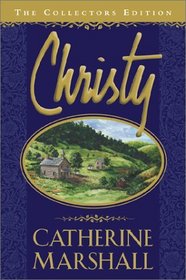
Reading to Know - Book ClubI’ll also be reading a few from Carrie‘s Reading to Know Classics Book Club for the year: Christy by Catherine Marshall; The Little Prince by Antoine de Saint-Exupéry; probably one or two from Grimm’s Fairy Tales, maybe Laddie by Gene Stratton Porter, and then I’ll be hosting the September discussion on The Screwtape Letters. A couple on the list I just read last year, so it is a little too soon to reread them.

The Laura Ingalls Wilder Reading Challenge

In February I host the Laura Ingalls Wilder Reading Challenge (and I heartily invite you to as well! I’ll have more information about it soon and a sign-up post on Feb. 1), where we read anything by or about Laura. I am planning to read the next one or two in the series. The first couple of years I read a lot of books about Laura as well as some books of her magazine columns, and I think I’d like to just stick with her Little House series for now – though I am awfully tempted by decided to go ahead and read Pioneer Girl (especially after this review of it) since it fits a category in the classics challenge below.

The Back to the Classics Challenge:

backtotheclassics2015BUTTON

I didn’t grow up reading a lot of classics, and I have made a deliberate effort to catch up with some of them in the last few years.

Karen changed the format for the Back to the Classics Challenge 2015: readers can choose books within the 12 categories listed, and reading six, nine, or twelve will earn you entries in a drawing for a $30 Amazon or Book Depository gift card. More information is here. Books have to be at least 50 years old. Sign-up is open through March 31. We don’t have to declare which books we’ll be reading in order to sign up, and we can change our minds during the year, but so far I am planning on:

1.  A 19th Century Classic — any book published between 1800 and 1899: Little Dorrit by Charles Dickens (Finished 7/22/15)
2.  A 20th Century Classic — any book published between 1900 and 1965: The Masqueraders by Georgette Heyer, 1928 (Finished 1/19/15)
3.  A Classic by a Woman Author: Emily Climbs by L. M. Montgomery, second in the Emily of New Moon series. (Finished 2/4/15)
4.  A Classic in Translation. a book written originally in a language not your own: One Day in the Life of Ivan Denisovich by Aleksandr Solzhenitsyn, I set that one aside for Quo Vadis: A Narrative of the Time of Nero by Henryk Sienkiewicz (Finished 9/19/15)
5.  A Very Long Classic Novel — a single work of 500 pages or longer: War and Peace by Leo Tolstoy (Finished 4/20/15)
6.  A Classic Novella — any work shorter than 250 pages: The Little Prince by Antoine de Saint-Exupéry (Finished 6/22/15)
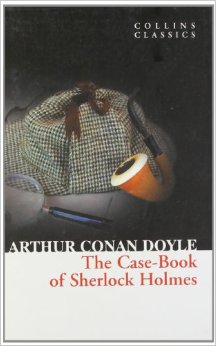
7.  A Classic with a Person’s Name in the Title: The Case-Book of Sherlock Holmes by Sir Arthur Conan Doyle (Finished 5/20/15).
8.  A Humorous or Satirical Classic. The Screwtape Letters by C. S. Lewis. Serious subject, but written in a satirical form. (Finished 9/26/15).
9.  A Forgotten Classic. This one is hard to evaluate – there are classics I have never heard of but ay be well known to others. But I am going to go with The Dead Secret by Wilkie Collins. It’s one of his earlier works and not one of his more well-known ones. (Finished 11/7/15).
10.  A Nonfiction Classic: Pioneer Girl by Laura Ingalls Wilder, published only recently but written in 1929 0r 1930. I wasn’t sure that would qualify since it was so recently published, so I chose instead The Problem of Pain by C. S. Lewis. (Finished 9/19/15)
11.  A Classic Children’s Book: By the Shores of Silver Lake by Laura Ingalls Wilder, 5th in her Little House series. (Finished 2/18/15)
12.  A Classic Play. I don’t have any ideas for this one yet. Suggestions? Decided on Pygmalion by George Bernard Shaw. (Finished 7/30/15)

TBR Pile Challenge:

2015tbrbuttonThe TBR Pile Challenge is for reading books we have on hand or have on a TBR list but haven’t gotten to yet. I really enjoyed the this challenge last year and like the idea of incorporating books I have on hand into my reading instead of just piling on new ones.  At first I wasn’t sure if I wanted to commit to reading twelve (though I have way more than that both in physical books and on my Kindle app) and thought about just choosing a smaller number – six or so – for my own purposes and not signing up for this official challenge. But once I started sorting through my books on hand (some even in a box in the closet!) and on my Kindle app, I found several I was excited about getting to, so here they are:

1. A Million Little Ways: Uncover the Art You Were Made to Live by Emily Freeman, 2013. I got this because I really liked her Grace For the Good Girl. I got it right at the beginning of last year but it got pushed aside for some of the other challenges. (Finished 3/30/15)

2. He Is There and He Is Not Silent by Francis Schaeffer, 1972. I can’t tell you how many years I have had this on my shelf, but I wouldn’t if I could because it would be too embarrassing. (Finished 4/22/15)

3. Gentle Savage Still Seeking the End of the Spear: The Autobiography of a Killer and the Oral History of the Waorani by Menkaye Aenkaedi with Kemo and Dyowe, 2013. Those who have been reading here a long time know that the whole story of the five missionaries who were killed trying to reach the Waorani, known then as Aucas, and the subsequent way God opened the hearts of this tribe to receive Jesus as Savior and Lord means a great deal to me and has impacted my life exponentially. This book was told by Menkaye, one of the killer of the missionaries who later became a father and grandfather figure to Steve Saint and his family, descendants of one of the five men. (Finished 5/24/15)

4. Strait of Hormuz by Davis Bunn. I like Bunn and his Marc Royce series, but this is another that kept getting pushed aside while I worked on other reading challenges.(Finished 6/9/15)

5. Better to Be Broken by Rick Huntress, 2012. (Finished 3/2/15)

6. The Fairest Beauty by Melanie Dickerson, 2013, a retelling of Snow White. (Finished 6/17/15)

7. My Emily by Matt Patterson, a family’s story of a young daughter born with Down’s Syndrome who is then diagnosed with leukemia. (Finished 3/4/15)

8. The Swan House by Elizabeth Musser, 2001. I really enjoyed her Words Unspoken (it was one of my top ten from 2010), so I wanted to read more from her. (Finished 4/18/15)

9. Out of a Far Country: A Gay Son’s Journey to God. A Broken Mother’s Search for Hope by Christopher & Angela Yuan, 2011, recommended by Tim Challies. (Finished 3/8/15)

10. Growing Up Amish: A Memoir by Ira Wagler. Saw this highly recommended by a number of people. (Finished 5/31/15)

11. Becoming More Than a Good Bible Study Girl by Lisa TerKeurst, 2009. Have had this on hand, meaning to get to it, for years. (Finished 2/1/15)

12. Either Live Like a Narnian by Joe Rigney, 2013, or The Narnian by Alan Jacobs, 2009, or both if I have time, for Carrie’s Chronicles of Narnia Reading Challenge in July. I have both already in my Kindle app – just have to decide which to start with. (Finished 7/24/15)

We’re allowed two alternates in case there is a book we just can’t get into, so I’ll choose The Captive Maiden by Melanie Dickerson, 2013 (a retelling of Cinderella) (Finished 6/28/15) and something by Ann Tatlock, if I can be that unspecific. I have six of her books in my Kindle app.

Sign-up for the TBR Challenge is open here through January 15, so you have time if you’d like to join in. The only stipulations are that the books on your list have to be ones you have never read before and have to have been published before January 1, 2014 (unfortunately! I had to cross two off my list because they were just published last year.). Those who complete the challenge by the end of the year are eligible for a drawing for a $50 Amazon or Book Depository gift card.

Non-fiction:

I think I will sign up again for the 2015 Non-fiction Reading Challenge, as I read a number of non-fiction books anyway. I will aim for the “Seeker” level, which is 11-15 books.

Nonfiction Reading Challenge hosted at The Introverted Reader
Image courtesy of Serge Bertasius Photographyat FreeDigitalPhotos.net

So…it looks like these will keep me busy for a while. 🙂 Do you have any reading plans for the year?

Book Review: The Snow Queen

Audible.com offers an end-of-year gift to its members in the way of a free short classic audiobook. Past offerings have been  A Christmas Carol,  The Wizard of Oz, and The Cricket on the Hearth: this past year it was The Snow Queen by Hans Christian Andersen (as of right now it is still free for members – don’t know how long it will be).

Snow QueenYou probably know that Frozen, Disney’s blockbuster movie last year, was supposedly based on The Snow Queen, but there is little resemblance besides a woman who “was beautiful but all made of ice: cold, blindingly glittering ice; and yet she was alive, for her eyes stared at Kai like two stars, but neither rest nor peace was to be found in her gaze,” an ice palace, and a talking reindeer (among other talking animals and even flowers) and some of the themes. All of the main characters’ names are different. But it is a pleasant story nonetheless, though maybe a little weird in places.

The tale is told in seven shorter stories. It begins with a troll (or sprite or hobgoblin or demon – different translations tell it a little differently) who made a mirror which causes those who look into it to see to see only the bad and nothing good or beautiful. In fact, the bad was magnified and the real distorted. After terrorizing everyone they could with the mirror, the fellow creatures of this being decided to take this mirror to heaven to “mock the angels,”  but in the process it fell and broke into millions of small pieces and splinters.

The next story tells of two childhood friend, Gerda and Kai (or Kay, depending again on which book you read), and their innocent play and love for each other, until one day Kai gets one of these splinters in his eye and heart, which changes him and makes him quite disagreeable. Then one day he sees the Snow Queen, mentioned already, whom Kai’s grandmother had told them of. He is frightened of her and draws back. But another day when all the boys are hooking their sledges up to carts and carriages to pull them, Kai ends up unknowingly fastening his to the Snow Queen’s vehicle. Too late he realizes who she is: she won’t stop, and she takes him to her palace far away. Her kiss numbs him and makes his heart grow colder.

Everyone in the village thinks he has died, but Gerda is convinced he has not, so she goes to look for him. Several more of the intervening stories tell of the people and creatures she meets along the way, some who help and some who hinder her.

There are vivid contrasts – light vs. darkness, warmth vs. coldness, innocence and purity vs. evil. In one segment it is said,

“I can give her no greater power than she has already”, said the woman; “Don’t you see how strong that is? How men and animals are obliged to serve her, and how well she has got through the world, barefooted as she is. She cannot receive any power from me greater than she now has, which consists in her own purity and innocence of heart. If she cannot herself obtain access to the Snow Queen, and remove the glass fragments from little Kai, we can do nothing to help her.”

I’ve wondered if the Snow Queen was inspiration for C. S. Lewis’s White Witch in Narnia. There are similarities, but the White Witch’s personality is much more developed – maybe because she spans several books whereas the Snow Queen is just in this one story – and she is more overtly evil. But the scene in which Edmund is taken into the White Witch’s sleigh and folded into her robes is very reminiscent of the Snow Queen doing the same with Kai.

There is also something of a religious element. I realized after reading this that I know very little about Andersen’s background, so I don’t know what he believed, but the children quote a fragment of a hymn which says, “Roses bloom and cease to be, But we shall the Christ-child see,” and later when Gerda is in trouble she prays the Lord’s Prayer, and angels come to help her. Near the end, “The grandmother sat in God’s bright sunshine, and she read aloud from the Bible, ‘Except ye become as little children, ye shall in no wise enter into the kingdom of God.’ And Kay and Gerda looked into each other’s eyes, and all at once understood the words of the old song, ‘Roses bloom and cease to be, But we shall the Christ-child see.'”

I found some of the intervening chapters, particularly one where Gerda is talking to flowers to see if they know anything about Kai, and they tell their stories, not only a little strange but also not really contributing much to the plot. But overall it is a sweet story of good triumphing over evil, of loyalty, of loving someone despite their flaws, of resilience when facing hardship and adversity. You can find the whole story online in various places with minor variations in the text (like the spelling of Kai/Kay’s name). Some day I’d like to read a nicely illustrated book version of the story.

(This will also be linked to Semicolon‘s Saturday Review of Books.)