Saturday Sightings

  • Ever have one of those days, when something seemed a bit…”off” but you just couldn’t put your finger on it…

(This was in an e-mail, so I don’t know the original source.)

If you are familiar with the movie Castaway, here is an alternate ending:

(For some reason when I preview this page, the video isn’t showing up. If you can’t see it you can find it here.)

  • I agree with Gretchen at Lifenut’s reaction to a commercial indicating that mothers who use paper plates are better because they are not taking precious time away from their loved ones by washing dishes. It’s a bad commercial on many points: do we want to designate Bad Moms vs. Good Moms on the basis of paper plates? Especially in these days of “going green,” adding to landfills seems a poor way to spend time with the family. As I commented there, loading my dishwasher takes 5-10 minutes most nights, hardly a dent in the family’s time together, but if we washed them the old fashioned way, we’d spend time together all helping. Families can bond together while working as well as (maybe even better than) playing together.
  • I also agree with Gretchen’s post here “Well-rounded isn’t just for balls.” While sports and other activities are valuable, in all too many instances they seem to just take over a family’s life. I was glad mine only wanted to be in organized sports a few years. I don’t know how parents do it for so many years.

First lessons in trust

Yesterday we had a consultation with the same orthodontist who shepherded my older two boys through their season of braces.

It seems Jesse has the complete opposite problem they did. They had overbites: he has a pretty pronounced underbite. His teeth have compensated by tipping inward: if they were straight, they would overlap his top teeth.

And that presents a problem: if they straighten the teeth without adjusting the skeletal problem of his jaw, he’d probably be worse off than leaving his bottom teeth crooked.

Thankfully the top teeth are pretty much ok, so when he smiles or when school pictures are taken it isn’t obvious he has anything wrong.

This particular type of problem is one that, when fixed orthodontically, can revert back if he grows significantly within the next few years. And at age 15, he probably does have a great deal more growing to do. So for now we wait and see what happens with his growth. They have their measurements from the x-rays they took, and we’ll go in about every six months to see how things are going. Once there has been no major growth within a six-month period, then we’re probably safe to start treatment.

Hopefully some of the jaw problem will grow in the right way. But if that doesn’t happen, or if the jaw situation gets worse…then we are looking at possible surgery to remove part of the jawbone. The doctor hopes that won;t be necessary, but felt he needed to mention the possibility in order to give us the complete picture. If he didn’t mention it now, and then brought up the need in a year, we would wonder why it hadn’t been mentioned.

I was wishing, however, that he hadn’t told me all of this in front of Jesse. I don’t want him to worry about the possibility for the next year especially when we can’t do a thing about it except wait and see how he grows.

As we got in the car afterward. I asked Jesse, “You’re not worried about the possibility of surgery are you?” He seemed to have taken it in stride.

But he answered, “Yeah, I kind of am.”

So we went back over what the doctor had said and discussed the need to pray about it and hope for the best, but to also trust the Lord that if He allows it, He will help us through it.

Later I got to thinking that this may well be the first major issue Jesse has had to pray and trust the Lord for. He’s too young to remember when I first got TM, and though we have prayed about things as a family and for our church and friends, and I have shared answers to prayer with the boys, but this is the first big thing to affect Jesse directly. And in the grand scheme of things, of course, it is not as big a deal as cancer or a heart transplant or that sort of thing, but, still, facing any surgery can be scary.

My heart’s desire all along for all of my boys has been that they develop their own relationship with the Lord. They have all made professions of faith and I think have seen the Lord work in our family. But part of that relationship is trusting the Lord through trial, or, in this case, learning to give the situation over to Him and trust Him for it while waiting for the outcome. In my desire as a parent to ease my children’s way through life, I can’t shield them from everything. And that is probably a good thing, because if I want them to be mature spiritually when they leave our home, they will have to go through some of these kinds of situations.

So, though if I had had the choice I would have shielded Jesse from the possibility of surgery, God in His wisdom allowed it as a first experience in learning to trust.

Elisabeth Elliot: A Quiet Heart

This is an excerpt from Elisabeth Elliot’s book Keep A Quiet Heart which was also sent yesterday as a part of Back to the Bible’s e-mail devotionals from Elisabeth’s writings.

A Quiet Heart

Jesus slept on a pillow in the midst of a raging storm. How could He? The terrified disciples, sure that the next wave would send them straight to the bottom, shook Him awake with rebuke. How could He be so careless of their fate?

He could because He slept in the calm assurance that His Father was in control. His was a quiet heart. We see Him move serenely through all the events of His life–when He was reviled, He did not revile in return. When He knew that He would suffer many things and be killed in Jerusalem, He never deviated from His course. He had set His face like flint. He sat at supper with one who would deny Him and another who would betray Him, yet He was able to eat with them, willing even to wash their feet. Jesus in the unbroken intimacy of His Father’s love, kept a quiet heart.

None of us possesses a heart so perfectly at rest, for none lives in such divine unity, but we can learn a little more each day of what Jesus knew–what one writer called the negligence of that trust which carries God with it. Who would think of using the word negligence in regard to our Lord Jesus? To be negligent is to omit to do what a reasonable man would do. Would Jesus omit that? Yes, on occasion, when faith pierced beyond reason.

This “negligent” trust–is it careless, inattentive, indolent? No, not in His case. Jesus, because His will was one with His Father’s, could be free from care. He had the blessed assurance of knowing that His Father would do the caring, would be attentive to His Son’s need. Was Jesus indolent? No, never lazy, sluggish, or slothful, but He knew when to take action and when to leave things up to His Father. He taught us to work and watch but never to worry, to do gladly whatever we are given to do, and to leave all else with God.

Purity of heart, said Kierkegaard, is to will one thing. The Son willed only one thing: the will of His Father. That’s what He came to earth to do. Nothing else. One whose aim is as pure as that can have a completely quiet heart, knowing what the psalmist knew: “Lord, You have assigned me my portion and my cup, and have made my lot secure” (Psalm 16:5 NIV). I know of no greater simplifier for all of life. Whatever happens is assigned. Does the intellect balk at that? Can we say that there are things which happen to us which do not belong to our lovingly assigned “portion” (This belongs to it, that does not”)? Are some things, then, out of the control of the Almighty?

Every assignment is measured and controlled for my eternal good. As I accept the given portion other options are cancelled. Decisions become much easier, directions clearer, and hence my heart becomes inexpressibly quieter.

What do we really want in life? Sometimes I have the chance to ask this question of high school or college students. I am surprised at how few have a ready answer. Oh, they could come up with quite a long list of things, but is there one thing above all others that they desire? “One thing have I desired of the Lord,” said David, “this is what I seek: that I may dwell in the house of the Lord all the days of my life…” (Psalm 27:4 KJV). To the rich young man who wanted eternal life Jesus said, “One thing you lack. Go, sell everything” (Mark 10:21 NIV). In the Parable of the Sower, Jesus tells us that the seed which is choked by thorns has fallen into a heart full of the worries of this life, the deceitfulness of riches, and the desire for other things. The apostle Paul said, “One thing I do: forgetting what is behind and straining towards what is ahead, I press on toward the goal to win the prize for which God has called me heavenward in Christ Jesus” (Phil 3:13-14 NIV).

A quiet heart is content with what God gives. It is enough. All is grace. One morning my computer simply would not obey me. What a nuisance. I had my work laid out, my timing figured, my mind all set. My work was delayed, my timing thrown off, my thinking interrupted. Then I remembered. It was not for nothing. This was part of the Plan (not mine, His). “Lord, You have assigned me my portion and my cup.”

Now if the interruption had been a human being instead of an infuriating mechanism, it would not have been so hard to see it as the most important part of the work of the day. But all is under my Father’s control: yes, recalcitrant computers, faulty transmissions, drawbridges which happen to be up when one is in a hurry. My portion. My cup. My lot is secure. My heart can be at peace. My Father is in charge. How simple!

My assignment entails my willing acceptance of my portion-in matters far beyond comparison with the trivialities just mentioned, such as the death of a precious baby. A mother wrote to me of losing her son when he was just one month old. A widow writes of the long agony of watching her husband die. The number of years given them in marriage seemed too few. We can only know that Eternal Love is wiser than we, and we bow in adoration of that loving wisdom.

Response is what matters. Remember that our forefathers were all guided by the pillar of cloud, all passed through the sea, all ate and drank the same spiritual food and drink, but God was not pleased with most of them. Their response was all wrong. Bitter about the portions allotted they indulged in idolatry, gluttony, and sexual sin. And God killed them by snakes and by a destroying angel.

The same almighty God apportioned their experience. All events serve His will. Some responded in faith. Most did not.

“No temptation has seized you except what is common to man. And God is faithful; he will not let you be tempted beyond what you can bear. But when you are tempted, he will also provide a way out so that you can stand up under it” (1 Corinthians 10:13 NIV).

Think of that promise and keep a quiet heart! Our enemy delights in disquieting us. Our Savior and Helper delights in quieting us. “As a mother comforts her child, so will I comfort you” is His promise (Is 66:13, NIV). The choice is ours. It depends on our willingness to see everything in God, receive all from His hand, accept with gratitude just the portion and the cup He offers. Shall I charge Him with a mistake in His measurements or with misjudging the sphere in which I can best learn to trust Him? Has He misplaced me? Is He ignorant of things or people which,in my view, hinder my doing His will?

God came down and lived in this same world as a man. He showed us how to live in this world, subject to its vicissitudes and necessities, that we might be changed-not into an angel or a storybook princess, not wafted into another world, but changed into saints in this world. The secret is Christ in me, not me in a different set of circumstances.

He whose heart is kind beyond all measure
Gives unto each day what He deems best,
Lovingly its part of pain and pleasure,
Mingling toil with peace and rest.
–Lina Sandell, Swedish

Sorry for the length — I really am aware of the need to make my blog posts shorter — but there was just nothing I could cut out.

Though I have read the book before, parts of it multiple times, and frequently given a copy as a gift, this entry really struck home. I read it again today.

I seem to be able to trust in the Lord’s wisdom and control more for the major trials of life than for the little everyday irritations like getting stuck in traffic or dealing with malfunctioning technology. Even though on one level I know the Lord is in control and has a reason for everything He does and allows, there is still part of me that chafes under certain circumstances that seem like such a waste of time and energy. But even those He allows, and I need to rest and trust in Him. “The secret is Christ in me, not me in a different set of circumstances.”

Taking every thought captive

I found this very helpful and practical thought in the September 6 reading of Joy and Strength, compiled by Mary Tileston:

Bringing into captivity every thought to the obedience of Christ. 2 Corinthians 10:5

Some have found it a useful thing when their minds have wandered off from devotion and been snared by some good but irrelevant consideration, not to cast away the offending thought as the eyes are again lifted to the Divine Face, but to take it captive, carry it into the presence of God and weave it into a prayer before putting it aside and resuming the original topic. This is to lead captivity captive.
~ Charles Brent

Jesus, I Am Resting

One of my favorite hymns:

Jesus, I am resting, resting,
In the joy of what Thou art;
I am finding out the greatness
Of Thy loving heart.
Thou hast bid me gaze upon Thee,
And Thy beauty fills my soul,
For by Thy transforming power,
Thou hast made me whole.

O, how great Thy loving kindness,
Vaster, broader than the sea!
O, how marvelous Thy goodness,
Lavished all on me!
Yes, I rest in Thee, Belovèd,
Know what wealth of grace is Thine,
Know Thy certainty of promise,
And have made it mine.

Simply trusting Thee, Lord Jesus,
I behold Thee as Thou art,
And Thy love, so pure, so changeless,
Satisfies my heart;
Satisfies its deepest longings,
Meets, supplies its every need,
Compasseth me round with blessings:
Thine is love indeed!

Ever lift Thy face upon me
As I work and wait for Thee;
Resting ’neath Thy smile, Lord Jesus,
Earth’s dark shadows flee.
Brightness of my Father’s glory,
Sunshine of my Father’s face,
Keep me ever trusting, resting,
Fill me with Thy grace.

~ Jean S. Pig­ott, 1876.

Two helpful sermon outlines

I mentioned in yesterday’s post a couple of helpful sermon outlines in the flyleaves of an old Bible. I wanted to share them because they are so helpful and practical. Unfortunately I did not date them, but they were from sermons by Dr. Mark Minnick, whose ministry we sat under and were blessed by from about 1979 to 1993 or so. These are just the “bare bones” of the messages. One explains why baptism does not save us, and the other is about confession of sin.

Neither of these is meant to be an exhaustive study of every verse on the topic. If anything doesn’t make sense or sound right, it is most likely due to my faulty note-taking.

Why We Know Baptism Does Not Save

1. Paul makes a distinction between baptism and the gospel:

I Corinthians 1:14-17: “I thank God that I baptized none of you, but Crispus and Gaius; Lest any should say that I had baptized in mine own name. And I baptized also the household of Stephanas: besides, I know not whether I baptized any other. For Christ sent me not to baptize, but to preach the gospel: not with wisdom of words, lest the cross of Christ should be made of none effect.”

2. Baptism isn’t included in the definition of the gospel:

I Corinthians 15:3-4: “For I delivered unto you first of all that which I also received, how that Christ died for our sins according to the scriptures; And that he was buried, and that he rose again the third day according to the scriptures…”

3. The condition for baptism is belief: belief comes first:

Acts 8:36: “And as they went on their way, they came unto a certain water: and the eunuch said, See, here is water; what doth hinder me to be baptized?

37 And Philip said, If thou believest with all thine heart, thou mayest. And he answered and said, I believe that Jesus Christ is the Son of God.”

4. I Peter 3: 20 says that baptism is “not the putting away of the filth of the flesh, but the answer of a good conscience toward God.” In itself it doesn’t cleanse us: it is usually just the first act of obedience after salvation.

5. Our salvation is by grace, through faith, not through any works of ours.

Ephesians 2:8-9: “For by grace are ye saved through faith; and that not of yourselves: it is the gift of God: Not of works, lest any man should boast.”

Isaiah 64:6: “But we are all as an unclean thing, and all our righteousnesses are as filthy rags; and we all do fade as a leaf; and our iniquities, like the wind, have taken us away.”

Galatians 2:16: “Knowing that a man is not justified by the works of the law, but by the faith of Jesus Christ, even we have believed in Jesus Christ, that we might be justified by the faith of Christ, and not by the works of the law: for by the works of the law shall no flesh be justified.”

Titus 3:5: “Not by works of righteousness which we have done, but according to his mercy he saved us, by the washing of regeneration, and renewing of the Holy Ghost.”

Baptism is immensely important as a symbol of our identification with Christ, but it is symbolic. (For more on this subject, this is an excellent explanation).

Confession of Sin

What is sin?

1. Failure to glorify God

2. Failure to believe God

Hebrews 11:6: “But without faith it is impossible to please him: for he that cometh to God must believe that he is, and that he is a rewarder of them that diligently seek him.”

Romans 14:23b: “Whatsoever is not of faith is sin.”

— Making decisions out of a faithless heart.

— Acting apart from faith.

— Letting fears keep us from doing what we ought to do.

3. Failure to do good.

James 4:17: “Therefore to him that knoweth to do good, and doeth it not, to him it is sin.”

4. Failure to do righteousness.

I John 5:17a: “All unrighteousness is sin.”

5. Acting against conscience.

–Offending the conscience of self or others.

— An act not done on good faith before God.

Romans 14:22-23: “Hast thou faith? have it to thyself before God. Happy is he that condemneth not himself in that thing which he alloweth. And he that doubteth is damned if he eat, because he eateth not of faith: for whatsoever is not of faith is sin.”

I Corinthians 8:12: “But when ye sin so against the brethren, and wound their weak conscience, ye sin against Christ.”

6. Offense against the law.

I John 3:4: “Whosoever committeth sin transgresseth also the law: for sin is the transgression of the law.”

Consequences of sin and failure to confess

1. Broken fellowship.

2. Lost prosperity: Proverbs 28:13: “He that covereth his sins shall not prosper: but whoso confesseth and forsaketh them shall have mercy.” (See also Psalm 38, I Corinthians 11:23-32, James 5:14-20.) (My aside: this isn’t saying all trouble is a result of sin in the life of the person experiencing the trouble [e.g., Job] but all sin in the life will bring trouble.)

3. Irremedial chastisement: II Chronicles 36:16: “But they mocked the messengers of God, and despised his words, and misused his prophets, until the wrath of the LORD arose against his people, till there was no remedy.”

Why people do not confess sin

1. They reject God’s definitions.

2. They rationalize away their guilt.

Psalm 50:21

— They don’t “feel convicted,” they think they’re a special case, they were born with the problem. The point is, what does God’s Word say about it?

— They’ve shut their ears from hearing Him for so long that they don’t hear Him any more.

Romans 2:1-5: They have experienced His goodness and forbearance and therefore think they are all right instead of realizing He is being gracious.

3. Pride

— Proverbs 16:18: “Pride goeth before destruction, and an haughty spirit before a fall.”

Luke 18:9-14: the publican and the Pharisee. “Every one that exalteth himself shall be abased; and he that humbleth himself shall be exalted.”

4. Fear of consequences

— Leviticus 26:40-42: “If they shall confess their iniquity, and the iniquity of their fathers, with their trespass which they trespassed against me, and that also they have walked contrary unto me; And that I also have walked contrary unto them, and have brought them into the land of their enemies; if then their uncircumcised hearts be humbled, and they then accept of the punishment of their iniquity: Then will I remember my covenant with Jacob, and also my covenant with Isaac, and also my covenant with Abraham will I remember; and I will remember the land.”

Remedy

Proverbs 28:13: “He that covereth his sins shall not prosper: but whoso confesseth and forsaketh them shall have mercy.”

I John 1:9: “If we confess our sins, he is faithful and just to forgive us our sins, and to cleanse us from all unrighteousness.”

This isn’t in these notes, but I have heard many times over that to confess here means to say the same thing about our sin that God does: not to sugarcoat it, make excuses, downplay it, but to acknowledge that what we did was a sin against God.

Flyleaf favorites

My alarm clock didn’t go off Sunday afternoon, so I woke up from my nap about an hour later than usual, about 20 minutes before church was due to start. Needless to say, I was late. Jim and the boys went on ahead while I finished getting ready. He had my Bible, but I grabbed another, older one because sometimes if I am very late I stay in the lounge in the ladies’ room, where there are some chairs and couches, or on a bench in the lobby so as not to distract from the preaching.

This older Bible was on the verge of falling apart, but it was a treasured friend for several years. I began looking at notes I had jotted on the front and back flyleaf pages — in fact there were several blank pages in the back for just that purpose. It was a blessing to go over some of those quotes and notes I hadn’t thought about for years.

One near the front is Jonathan Goforth’s Seven Rules for Daily Living, which, according to this note, he wrote in the flyleaf of his Bible in 1894.

1. Seek to give much — expect nothing.
2. Put the very best construction on the actions of others.
3. Never let a day pass without at least a quarter of an hour spent in the study of the Bible.
4. Never omit daily morning and evening private prayer and devotion.
5. In all things seek to know God’s Will and when known obey at any cost.
6. Seek to cultivate a quiet prayerful spirit.
7. Seek each day to do or say something to further Christianity among the heathen.

All worth remembering!

Here is something from a beloved former pastor, Jesse Boyd, now with the Lord, for whom our Jesse was named:

Worship without service is a hollow farce.
Service without worship is a hectic fervor.
But worship which issues in service is a holy force.

That says so much so succinctly.

There are places in the back where I put a topic heading and then added pertinent verses as I found them. There are verses to help when afraid, verses that showed the Trinity, verses about the Deity of Christ, and verses that refute hyper-Calvinism. There are sermon notes about the baptism of the Holy Spirit, confession of sin (this one is really enlightening: I might make it a separate post one day), what kind of healing is meant in Isa. 53 when it says, “By His stripes we are healed,” and why baptism does not save. The last one was really helpful to me because there are a couple of verses that almost make it sound like baptism saves. I am debating with myself as to whether to make that a separate post or to include it here. I don’t want it to get lost down here, so I think I will post it separately one day this week.

There are multitudes of little notes and quotes from sermons or from study throughout this Bible, too, but many are squished into teeny spaces and margins with not the best handwriting in the first place. But the ones on the flyleaves have been standout for many years and I have referred to them often. Jesse even told me that when he used this Bible for a while, Jonathan Goforth’s rules spoke to him.

The only note I have on the flyleaf of my current Bible is a list of verses dealing with assurance of salvation from a sermon or a study of I John.

How about you? Any inspirational quotes or sermon notes on your Bible flyleaves?

Poetry Friday

Seeing Poetry Friday around the Internet has revived my love of poetry. I never really stopped loving it, but I stopped exploring it, content when a gem was found in my path. But now I am going back to old favorites and finding new ones.

One of the poets I most enjoyed learning about while I was in college was John Donne, an Anglican priest converted from Roman Catholicism, who is known as a metaphysical poet. According to this article that simply means he compared “two vastly unlike ideas into a single idea, often using imagery,” as opposed to “the conceits found in other Elizabethan poetry, most notably Petrarchan conceits, which formed clichéd comparisons between more closely related objects (such as a rose and love).” Most of his poems focus on love, death, or religion, the last “a matter of great importance to Donne. Donne argued that it was better carefully to examine one’s religious convictions than blindly to follow any established tradition, for none would be saved at the Final Judgment by claiming ‘a Philip, or a Gregory, A Harry, or a Martin taught [them] this‘” (Greenblatt, Stephen. The Norton anthology of English literature Eighth edition. W. W. Norton and Company, 2006. pp. 600–602.)

I enjoyed reading several of Donne’s poems, but the one I wanted to share today is “A Hymn to God the Father”:

Wilt thou forgive that sin, where I begun,
which is my sin, though it were done before?
Wilt thou forgive those sins through which I run,
and do run still, though still I do deplore?
When thou hast done, thou hast not done,
for I have more.

Wilt thou forgive that sin, by which I won
others to sin, and made my sin their door?
Wilt thou forgive that sin which I did not shun
a year or two, but wallowed in a score?
When thou hast done, thou hast not done,
for I have more.

I have a sin of fear that when I’ve spun
my last thread, I shall perish on the shore;
swear by thyself, that at my death thy Son
shall shine as he shines now, and heretofore.
And having done that, thou hast done,
I fear no more.

According to this source, the multiple use of the word “done” was a play on his own name, which was pronounced the same way. I think many Christians have gone through this process of confessing sin only to realize “I have more,” but thank God “where sin abounded, grace did much more abound: That as sin hath reigned unto death, even so might grace reign through righteousness unto eternal life by Jesus Christ our Lord” (Romans 5: 20b-21.)

Poetry Friday is hosted at Charlotte’s Library today.

By the way, Poetry Friday participants are very careful about copyright restrictions: if I refer to a modern poem and would deprive the author of potential income by copying his poem, I would only quote a few lines and link back to his site. But with older poems like this, they are quoted in multiple places on the Internet and in textbooks, and the copyrights involved, as far as I can tell, apply to the text about the poem rather than the original poem (and if I quote any of their comments I link back to them as well). Someone please correct me if I am wrong on that understanding.

Faithful in little things

The following quotes are from today’s reading of Joy and Strength compiled by Mary Wilder Tileston:

It is required in stewards that a man be found faithful.
–1 CORINTHIANS 4:2

TOO many people are not faithful in little things. They are not to be absolutely depended upon. They do not always keep their promises. They break engagements. They fail to pay their debts promptly. They come behind time to appointments. They are neglectful and careless in little things. In general they are good people, but their life is honeycombed with small failures. One who can be positively depended upon, who is faithful in the least things as well as in the greatest, whose life and character are true through and through, gives out a light in this world which honors Christ and blesses others.
–J. R. MILLER

Duties retire evermore from the observation of those who slight them.
–SARAH W. STEPHEN

Great thoughts go best with common duties. Whatever therefore may be your office regard it as a fragment in an immeasurable ministry of love.
–BROOKE FOSS WESTCOTT

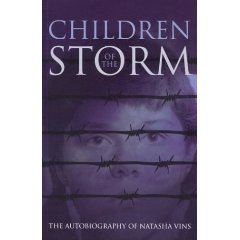
Book Review: Children of the Storm

Some of you may remember the name of Georgi Vins. He was a Ukrainian pastor in prison for his “religious activities” in the Soviet Union several years ago. I was a BJU student praying for him in the Slavic Mission Prayer Band in the late 70s, and it was with great joy I heard years later that he had been exiled to the USA in exchange for Soviet spies.  Children of the Storm, written by his daughter, Natasha, and published by BJU Press, tells of her perspective during those years of persecution.

Natasha was about nine years old when persecution began in her school (though ridicule of Christianity had begun years before), and it seemed to increase as the years went by. Teachers would hold her up for ridicule in front of her classmates and blame her for her class’s not making it into certain competitions. She was assigned to write a report on a boy held up as a Soviet hero who turned his father in to the KGB for keeping back a little of his grain for his starving family. The other children began to taunt and threaten her or just avoid her. She was threatened with being removed from her home and “re-educated.” These things struck a chord with me when I first read this book because my youngest was at the age Natasha was when some of this was happening, and I just could not imagine him going through these things. Yet as it all struck me as so sad, the Lord reminded me that He marvelously kept her through that time. And she was not even saved yet!

In later years she had a teacher who had similar interests, befriended her, was kind to her, and then began to undermine her Christian beliefs. This time Natasha listened, thought some of what her teacher said made sense, and began to question. When her father came home from a prison camp and she had an opportunity, she talked with him. Imagine coming home from being in prison for your faith to have your own daughter question your faith. Yet he did not express anger or disappointment: he just answered her questions as best he could. Not long afterward Natasha was saved.

At this time and place one truly had to count the cost of following Christ. Natasha was denied finishing her studies in her field of choice because of her Christianity. Her father had had to go “underground” by this time and sent word that he would like her to join him in the printing ministry. She helped for many years in vital ways, and even got to see her father here and there. Once they were to meet with someone who at the last minute had to postpone meeting with them for a couple of hours. Natasha and her father used the time to walk around the city and talk. He thought it highly likely that he would be arrested again, and his talks with her that day helped her to make it through the time when he was indeed arrested. Imagine having to prepare your child not for the remote possibility but for the very real likelihood of your imprisonment…and to do so in a way that does not leave her mourning or sad or bitter or feeling sorry for you or herself, but leaves her strengthened and resting in the Lord.

Natasha’s grandmother was also arrested when she was in her sixties and thought she would die in prison, yet the Lord delivered her.

The book tells also of Natasha’s mother and siblings, of visits to her father and grandmother in prison, of the persecuted church, of struggling to maintain a Christian attitude toward persecutors, of their reaction when her father was suddenly and unexpectedly exiled, of the family’s preparing to join him, of their impressions of America: one of the younger siblings was astounded that everyone carried Bibles to church. Natasha wept upon seeing a Christian bookstore. They left Russia with sorrow because it was their homeland, but before too long they began to see how the Lord could use them in the USA.

The epilogue of the book tells of the Lord’s help through their adjustments to the US, and then opportunities for ministry by publishing newsletters and several books and establishing a mission. After 11 years of exile, in 1990, Pastor Vins was able to make several return trips to the former Soviet Union, visiting and preaching openly, discussing with church leaders how the mission in America could best help them. He passed away Jan. 11, 1998, leaving not only a continuing ministry, but a legacy of godly man and his family.