Don’t Let Truth Become Cliche

People who write about writing tell us to avoid cliches. I read one article that advised tucking a few cliches into dialogue, if you’re writing fiction, so the conversations sound normal and familiar. Generally, though, cliches are considered trite and unoriginal. There’s nothing modern readers and publishers like so much as an original idea or a twist on an old one.

While I agree with all of the above, one day it dawned on me that the problem with cliches are not the phrases themselves. The problem is us. Most of the definitions and articles I looked up said that a phrase became a cliche through overuse. Why was the phrase overused? Because it aptly or creatively expressed something people identified with. But people heard it so much, they got tired of it. Then the phrase lost its luster, if not its meaning. The phrase still meant what it always did, but we don’t hear it the same any more. We gloss over it or even get irritated by it.

Most of us use cliches thoughtlessly out of habit—thus the admonition to watch for and eliminate them from our writing and speech. But some cliches are used to stop a conversation, according to Wikipedia. For instance, if you’re telling someone your troubles, and they respond, “That’s just the way the cookie crumbles” or “Into each life some rain must fall” (though the latter is from a poem), they’re not really interested in hearing you.

It’s possible to let truth become cliche spiritually as well, isn’t it?

In the church I attended in my teens and college years, we sang “Victory in Jesus” quite a lot. In another church my husband and I attended several years ago, a frequent congregational song was “Til the Storm Passes By.” In another place, it seemed like I heard “Be Thou My Vision” almost every week. For a while, I almost cringed when I heard these songs announced or heard their opening notes.

But was there anything wrong with the songs? No, they are all wonderful expressions of Biblical truth. The fact that they seemed overused was a problem in my own heart.

What about Romans 8:28: “And we know that for those who love God all things work together for good, for those who are called according to his purpose.” Granted, sometimes people use this verse like a band-aid on cancer. They mean well, but they want to “fix” the problem instead of weeping with those who weep, and then the verse becomes a conversation-stopper. But does the frequency with which we hear this verse null its meaning and effectiveness? It shouldn’t.

If someone quotes or refers to Psalm 23, should I glibly think, “Shepherd, sheep, got it,” and move on?

When Israel complained about eating manna, honestly, I can identify with them. But God faulted them for grumbling and murmuring. They forgot the miracle of God’s provision in the wilderness—a wilderness they were wandering in due to their own sin and failure.

In Malachi, Israel was offering to the Lord animals that wouldn’t even be fit for a governor (1:8), much less for a sacrifice for God. Then the people complained, “What a weariness this is” (1:13).

It’s good to be familiar with God’s Word. Throughout the Bible, God expects us to know Scripture enough to be able to think about it in our everyday lives. So if some parts of the Bible seem trite or overly familiar to us, the solution is not to scale back on our Bible reading.

What can we do then?

We can pray with the psalmist, “Open my eyes, that I may behold wondrous things out of your law” (Psalm 119:18). We can remember the incredible privilege it is that the Creator of the universe wants to speak to us. “How precious to me are your thoughts, O God! How vast is the sum of them!” (Psalm 139:17). If God’s Word isn’t feeling so precious and wondrous lately, we can ask God to help us see it that way.

We can pray for revival. “Will you not revive us again, that your people may rejoice in you?” (Psalm 85:6). “My soul clings to the dust; give me life according to your word!” (Psalm 119:25. Other translations say “quicken,” “revive, “preserve.”) Three times in Psalm 80, the writer asks God to “Turn us again, O God, and cause thy face to shine; and we shall be saved.”

We can ask God to search our hearts and lead us to repentance if need be. “For thus says the One who is high and lifted up, who inhabits eternity, whose name is Holy: ‘I dwell in the high and holy place, and also with him who is of a contrite and lowly spirit, to revive the spirit of the lowly, and to revive the heart of the contrite'” (Isaiah 57:15).

We can ask God to restore our delight in Him and His Word.

Delight yourself in the Lord, and he will give you the desires of your heart (Psalm 37:4).

I delight to do your will, O my God; your law is within my heart (Psalm 40:8).

Great are the works of the Lord, studied by all who delight in them (Psalm 111:2).

Blessed is the man who walks not in the counsel of the wicked, nor stands in the way of sinners, nor sits in the seat of scoffers; but his delight is in the law of the Lord, and on his law he meditates day and night.

We can return to our first love. “But I have this against you, that you have abandoned the love you had at first. Remember therefore from where you have fallen; repent, and do the works you did at first” (Revelation 2:4-5). Maybe thinking back through our testimony, God’s dealings with us when we first knew Him, revisiting our “Ebenezers,” those times we saw evidence of God’s working in our lives, will stir up that first love.

Practically, maybe interrupting our regular scheduled Bible reading plan to read through some psalms or passages that have held special meaning for us in the past might help. So might reading the Bible in a different translation than you’re used to. Slowing down to focus on the words, maybe reading them out loud, can keep us from racing through a passage. A college professor years ago advised looking up the definitions of all the words in a verse, especially if the verse was familiar.

There was a young man in my youth group years ago who, whenever he was asked to pray, asked that we’d learn something new from the Bible that day. We’ll continually be learning new things from the Bible; we’ll never exhaust it in this life. But sometimes we need reminders of what we’ve heard and learned before. “Therefore I intend always to remind you of these qualities, though you know them and are established in the truth that you have. I think it right, as long as I am in this body, to stir you up by way of reminder, since I know that the putting off of my body will be soon, as our Lord Jesus Christ made clear to me. And I will make every effort so that after my departure you may be able at any time to recall these things” (2 Peter 1:12-15).

John Newton wrote a lovely hymn called “Waiting for Spring.” First he talks about God’s promise that the seasons will continue, so we have the assurance that “Winter and spring have each their use” and winter will give way to spring. He says, “Believers have their winters too.” “Though like dead trees awhile they seem,” the spiritual life God placed in them will cause them to bloom again. He closes with this prayer:

Dear LORD, afford our souls a spring,
Thou know’st our winter has been long;
Shine forth, and warm our hearts to sing,
And thy rich grace shall be our song.

May God shine in and warm our hearts and renew our love for Him and His Word.

(I often link up with some of these bloggers.)

Ways to Disagree Without Tearing Each Other Down

You never replace the toilet paper roll.

Why do you always do it the way I asked you not to?

How many times do I have to ask you not to do that?

You must be stupid to think that way.

When humans mix together for any length of time, friction develops. Even the brightest friendships and most dewy-eyed romances experience conflicts after a while. We each have our own history, preferences, ways of doing and thinking things. It’s inevitable that we’ll clash over something.

On top of all that, the Bible says we’re all sinners. We all want our own way. As someone once said, we’re all the stars of our own movies.

While disagreement is inevitable, some ways of disagreeing harm the relationship. All the statements at the beginning of this post are belittling. Disagreeing in ways that tear each other down will cause anger, resentment, and pain. If not dealt with, those jabs can harm and build walls between people. They may even destroy relationships. Even if the participants remain friends or married, they’ve injured each other so many times that the warmth is gone and they just go through the motions.

So how do we handle disagreements in ways that aren’t harmful?

I’m no expert, but after 47 or so years of being a Christian and reading God’s word, 40+ years of marriage, and more than that of living and interacting with people, I’ve learned a few things that I’d like to pass along. And though many of the illustrations I share pertain to marriage, most of these are true of any relationship.

No one is perfect. We know not to expect perfection, yet we get irritated at each other’s imperfections. I read that one man felt his wife wanted him to be a combination of Billy Graham, Dwayne Johnson, and Cary Grant*: a spiritual giant, a superb physical specimen, handsome, suave, and romantic all.the.time. The pressure was wearing on him. We have to manage our expectations and let each other just be human and imperfect. Elisabeth Elliot wrote:

My second husband once said that a wife, if she is very generous, may allow that her husband lives up to eighty percent of her expectations. There is always the other twenty percent that she would like to change, and she may chip away at it for the whole of their married life without reducing it very much. She may, on the other hand, simply decide to enjoy the eighty percent, and both of them will be happy ( From Love Has a Price Tag).

Understand each other’s personality and needs. Introvert/extrovert, indoor person/outdoor person, serious/fun people and other combinations are bound to clash. Even if personalities aren’t exact opposites, they also aren’t going to be exactly the same all the time. Each personality has its strengths and weaknesses. Honest discussions help, explaining how you feel or how things affect you, without accusation or assumptions. Perhaps offer a trade-off: “I’d love to go with you to that event if I can have some quiet time afterward to decompress.”

Take time to understand the other person’s perspective. Once when I was taking items to donate to the thrift store, my husband asked me to be sure to get a receipt for tax purposes. I balked at first: I felt that using donations to lessen taxes was like getting credit for what we gave, and weren’t we supposed to give without the left hand knowing what the right was doing (Matthew 6:1-4)? He explained that he wasn’t seeking credit, but he didn’t want to give the government any more in taxes than he had to. He saw it getting the receipt for a tax deduction as wise stewardship. Similarly, years ago I was on an email subscriber list for transverse myelitis patients and caregivers (before Facebook and even before message boards). A new technology was in the news that involved unused embryos leftover from in vitro fertilization treatments. Though the technology gave great hope to those who were paralyzed, those of us who believed life began at conception couldn’t condone it. You can imagine the blowup such a conversation could devolve into. To everyone’s credit we had a civil discussion with most of us understanding the others’ position even though we didn’t agree.

Don’t assume motives or accuse. Especially avoid always and never–they just make the other person defensive. Instead of, “You always leave your socks on the floor. What do you think I am, your maid?” perhaps say, “When you leave things lying around, it makes me feel like you expect me to pick up after you, like you think of me as a maid.” He’s probably not thinking at all of leaving things for her to pick up. He just forgot or overlooked some things. He would have picked them up eventually. But explaining rather than accusing will help him see things from her perspective. And yes, sometimes the situation is reversed and she’s the messy one.

Remember the relationship. Once I heard a speaker describe a wife having just cleaned her floors when her husband and children walked in with muddy shoes. The speaker admonished women to remember the relationship in such a case rather than lashing out. I thought to myself, “What about their remembering the relationship and respecting her ruined work that will now have to be redone?” While it’s true both sides should remember the relationship, the point was that we shouldn’t pounce on each other with angry words. The relationship is more important than the ruined floors. That doesn’t mean we have to be passive or never share when things bug us. But we don’t have to tear each other down in the process. The group discussion I mentioned a couple of paragraphs above probably went so well because the participants had forged relationships over years of sharing struggles and encouraging each other.

Does everything have to be our way? The classic little tiffs like how to squeeze the toothpaste tube or which way the toilet paper goes can grate against the nerves. But, really, is it that big a deal? Maybe you can compromise: do the toothpaste his way and the TP your way. I don’t know how many times I’ve heard men fuss about their wives pulling the seat up in the car and forgetting to set it back for their husband’s longer legs, or wives complaining about husband’s leaving the toilet seat up. Seriously, why can’t everyone adjust these things as they need them without fussing about them?

Don’t bring up a litany of past offenses. Some translations of 1 Corinthians 13:5 say love “keeps no record of wrongs.” When we wrong each other, we need to discuss it, confess it, forgive each other, and leave it in the past rather than bringing the same things up again later.

Don’t let offenses build up. Those of us who have a hard time speaking up when something bothers us need to avoid letting things build until we explode. Some of us don’t explode, but we seethe with resentment which comes out in coldness. None of those responses is healthy. It’s hard sometimes to know when to bring something to someone’s attention or when to overlook a fault. Proverbs 19:11 says, “Good sense makes one slow to anger, and it is his glory to overlook an offense.” But Jesus gave a detailed process for handling an offense in Matthew 18. Perhaps one aspect is whether the person committed an actual sin (robbing a bank, abusing someone) which needs to be reported and whether they just were inconsiderate or said something we took wrong. We can and should let some things go. We shouldn’t nag and nitpick about every little thing. But if we’re going to overlook something, we need to truly overlook it rather than just avoiding confrontation.

Don’t belittle or berate. I wince when I hear women talking to their husband as if they were talking to children–or even talking in ways they shouldn’t even use with children. Ephesians 5:33 tells wives to respect husbands—we can talk about things that bother us respectfully. “But what if he’s not acting in a manner worthy of respect?” I like to turn this around: that same passage tells husbands to love wives as they love themselves. Do we always act in a manner worthy of love? Would we want our husband to withhold love until we get our act together? This is a grace we can give each other: to treat each other with love and respect even when we don’t deserve it. Isn’t that how God loves us? All of us are to “Do nothing from selfish ambition or conceit, but in humility count others more significant than yourselves” (Philippians 2:3).

The Golden Rule says to treat others as we would like to be treated. How would we like to be treated if something is upset with us or angry about something we’ve done?

Be “quick to hear, slow to speak, slow to anger” (James 1:19). This is one of the most crucial things: listen first and wait to react. Many of us know and believe these other truths, but in the heat of the moment will say things we regret.

Attack the problem, not the person. Internet exchanges are notorious for devolving into name-calling, stereotyping, generalizing, and putting down. Yet we do that in everyday life as well. If in our thoughts or words we begin belittling or attacking the other person, we need to pull back and put our focus on the specific problem at hand.

Apologize when wrong. We’ve had relatives that could not seem to apologize after a blow-up. When they had cooled off, they might bring some little gift to try to smooth things over. We had to accept that was just their way and we weren’t likely to change them. But apologizing and asking for forgiveness are often the first steps in healing the breach. “Whoever conceals his transgressions will not prosper, but he who confesses and forsakes them will obtain mercy” (Proverbs 28:13).

Forbear and forgive easily. “Put on then, as God’s chosen ones, holy and beloved, compassionate hearts, kindness, humility, meekness, and patience, bearing with one another and, if one has a complaint against another, forgiving each other; as the Lord has forgiven you, so you also must forgive” (Colossians 3:12-13). Ephesians 4:1-3 and 31-32 echo the same. One former pastor used to say forbearance (as the KJV puts “bearing with”) was just good old fashioned putting up with each other. I used to get stuck on forgiveness when I felt the other person didn’t deserve it. But the parable of the unforgiving servant in Matthew 18:21-35 (told by Jesus in answer to Peter’s question about how many times he should forgive his brother) helped me have the right focus. The man was forgiven an insurmountable debt he owed, but then wouldn’t forgive another a much smaller amount. God has forgiven us an insurmountable debt of sin. Nothing that anyone else has done to us compares to our sin against Him. Can’t we, by His grace, forgive others their comparatively smaller sins against us?

Don’t grieve the Spirit. Ephesians 4 talks about the change that should be evident in our lives when we believe on Christ. Verse 29 says to “Let no corrupting talk come out of your mouths, but only such as is good for building up, as fits the occasion, that it may give grace to those who hear.” Verse 32, mentioned above, tells us to let bitterness, anger, and such be put away from us and  to “Be kind to one another, tenderhearted, forgiving one another, as God in Christ forgave you.” Sandwiched between those two is verse 30: “And do not grieve the Holy Spirit of God, by whom you were sealed for the day of redemption.” We lift that verse out of context and generalize it. It does apply to many things. But originally it’s right here in the context of speech, anger, and bitterness. Have we realized that the way we disagree with each other can actually grieve the Spirit of God?

Look to Christ.He committed no sin, neither was deceit found in his mouth. When he was reviled, he did not revile in return; when he suffered, he did not threaten, but continued entrusting himself to him who judges justly” (1 Peter 2:22-23).

Attempting these things shows us quickly that they are beyond us. We need help. Elisabeth Elliot said in A Lamp for My Feet:

How can this person who so annoys or offends me be God’s messenger? Is God so unkind as to send that sort across my path? Insofar as his treatment of me requires more kindness than I can find in my own heart, demands love of a quality I do not possess, asks of me patience which only the Spirit of God can produce in me, he is God’s messenger. God sends him in order that he may send me running to God for help.

What have you found that helps you deal with conflict in non-destructive ways?

_______
*I don’t remember if those were the exact names, other than Billy Graham’s.

**Abuse is something we should never overlook and put up with. If you are being abused by a spouse, boyfriend, friend, or bully, please seek out a trusted person that you can confide in.

(I often link up with some of these bloggers.)

An Old Poem For a New Year

Last week, I listened to Elisabeth Elliot’s Gateway to Joy series about aging. In one episode titled Being Part of the Permanent, she quoted a stanza of a poem by John Greenleaf Whittier. The words so seized me, I had to stop and look them up.

The poem is titled My Birthday. Whittier was 64 when it was published, a significant age in the 1800s. Though all the poem is a touching look at an “older” birthday, the first few stanzas seem to me to apply also to a new year. We’re not so far from the beginning of this one, so perhaps they’ll speak to you as they did to me. The stanza Elisabeth quoted is at the end of what I am sharing here, but there are many more stanzas besides.

Beneath the moonlight and the snow
Lies dead my latest year;
The winter winds are wailing low
Its dirges in my ear.

I grieve not with the moaning wind
As if a loss befell;
Before me, even as behind,
God is, and all is well!

His light shines on me from above,
His low voice speaks within,–
The patience of immortal love
Outwearying mortal sin.

Not mindless of the growing years
Of care and loss and pain,
My eyes are wet with thankful tears
For blessings which remain.

(I often link up with some of these bloggers.)

God Is Not Going to Slap the Cookie From Your Hand

Many decades ago, during my college years, an administrator said that most religions of the world emphasized trying to earn God’s favor. Christianity, however, declared that it’s not by trying, but trusting—trusting the perfect, sinless Son of God who took our place on the cross we deserved.

These words were a relief to me. I had been familiar with Ephesians 2:8-9 for a few years by then: “For by grace you have been saved through faith. And this is not your own doing; it is the gift of God, not a result of works, so that no one may boast.” But I still had to reassure myself that salvation was not a matter of being “good enough,” but rather resting in His goodness.

I had to learn the same principle in my Christian walk. Even after salvation, my standing with God was not a matter of trying to be good enough. My works were not to earn His approval. I would never be more saved or more loved than I already was. My walk, or sanctification, or growth was as much a matter of faith as my salvation. It was still Christ’s righteousness, not mine, that counted before God. The whole book of Galatians was written to people who thought they had to obey certain rules in order to be right with God:

 Let me ask you only this: Did you receive the Spirit by works of the law or by hearing with faith? Are you so foolish? Having begun by the Spirit, are you now being perfected by the flesh? Did you suffer so many things in vain—if indeed it was in vain? Does he who supplies the Spirit to you and works miracles among you do so by works of the law, or by hearing with faith—just as Abraham “believed God, and it was counted to him as righteousness”?

It’s given immeasurable rest to my spirit to know I can always “with confidence draw near to the throne of grace, that we may receive mercy and find grace to help in time of need” (Hebrews 4:16).

The same college administrator made another statement at another time that has stayed with me all these years: “God’s not going to do your math homework for you.”

I don’t recall the context of that statement. Perhaps there were college students who thought prayer took the place of study. I can understand, as one who prayed my way through various lessons. I’m sure there were courses that were passed only through prayer. But they also required mental and physical effort.

Since then, I have amended that administrator’s statement about what God is not going to do:

God is not going to slap your fifth cookie out of your hand.

God is not going to turn off the TV when the sex scene starts.

God is not going to have devotions for you.

God is not going to make you take the opportunity you’re afraid of.

And so on.

I tend to be overly analytical. I’ve spent a great deal of thought on what’s God’s part and what’s our part in the Christian life. I can’t say I have it all figured out, even now. My tendency is to want to sort it out neatly in a series of points. God does this: 1, 2, and 3. And we do this: 1, 2, and 3. But I don’t think it works like that.

I do know this: As I said, our standing before God and His love for us are totally dependent on His grace, not our actions. My ups and downs, stumblings, faults, and failures don’t threaten His love for me or my salvation.

But Jesus did say, “If you love me, you will keep my commandments” (John 14:15).

We don’t keep His commandments to earn His love or favor or salvation.

But we keep His commandment from His love and favor and salvation.

Because He loves us, saved us, changed us, we’re new creations.

We don’t put down the cookie because we’ll lose points with God if we eat it. But His Spirit dwells within us, and part of His fruit is self-control.

We don’t turn off the sex scene because we’ll go to hell if we don’t. We turn off the sex scene because we love a pure and holy God.

We don’t have time in prayer and the Bible because we’ll have a bad day if we don’t. We spend time with God because He is our Father, and we want to hear His great and precious thoughts.

We don’t take the scary opportunity because God won’t love us if we don’t, but because we want to do what He has called us to.

We can’t do anything without Him.

Abide in me, and I in you. As the branch cannot bear fruit by itself, unless it abides in the vine, neither can you, unless you abide in me. I am the vine; you are the branches. Whoever abides in me and I in him, he it is that bears much fruit, for apart from me you can do nothing (John 15:4-5).

But as we walk through the day, seeking grace to help in time of need, asking for His strength, step by step, we yield to Him.

What do we do when we see a “Yield” traffic sign? We let the other drivers have the right of way.

What do we do when we yield to God? We let Him have His way. We acquiesce to His will.

The fact that our salvation is by grace through faith doesn’t mean there is no effort to the Christian life. Grace does not preclude obedience. Grace is not good just for forgiveness. Grace enables obedience.

The verses that seem to most clearly show our effort and His working:

But by the grace of God I am what I am, and his grace toward me was not in vain. On the contrary, I worked harder than any of them, though it was not I, but the grace of God that is with me. (1 Corinthians 15:10).

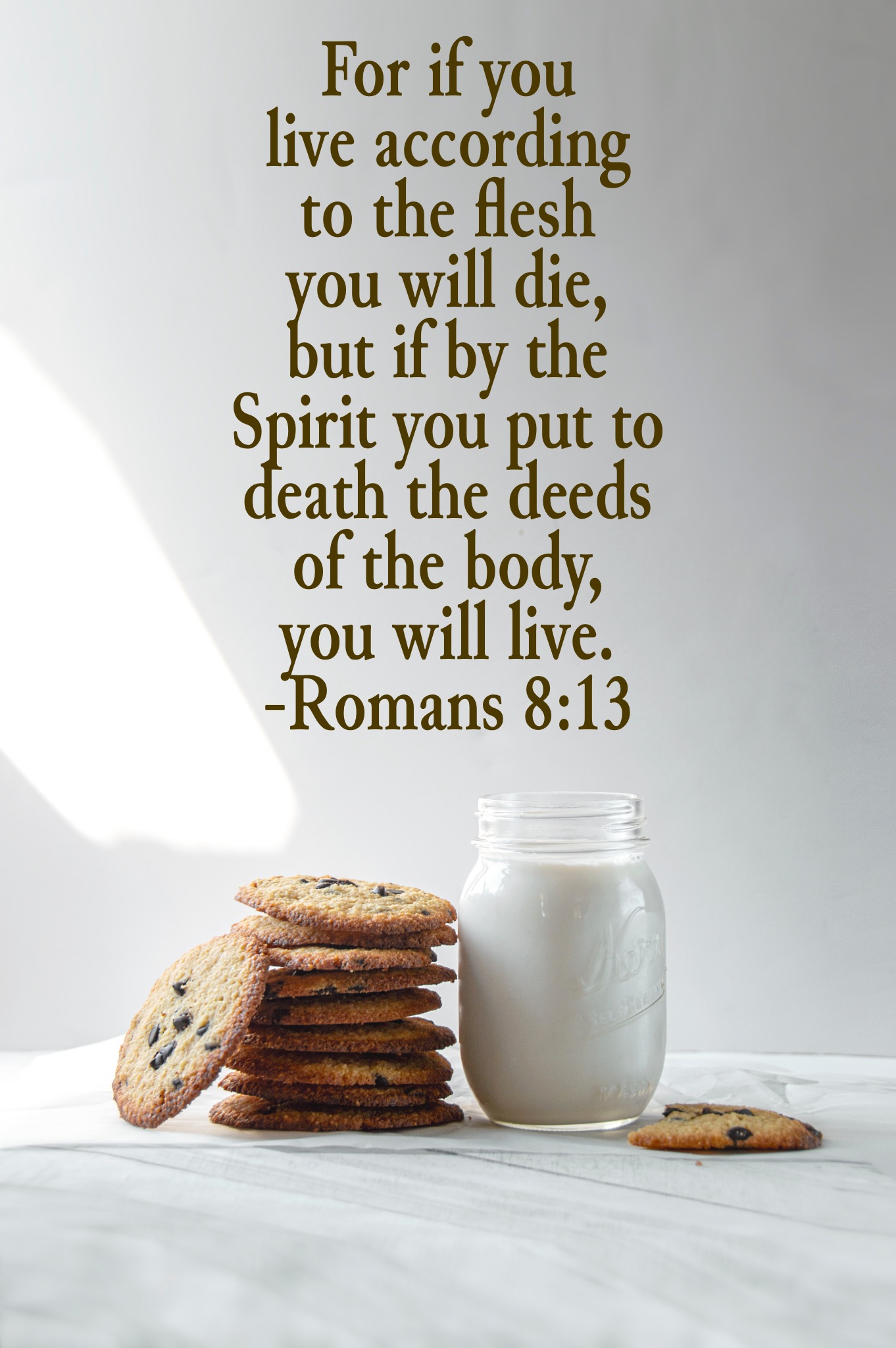
For if you live according to the flesh you will die, but if by the Spirit you put to death the deeds of the body, you will live (Romans 8:13).

So maybe there is no actual dividing line between God’s part and our part as we seek to live for Him. We don’t muster up the strength or will to serve Him on our own—we feed on His Word for our nourishment and strength and ask for His grace and help through prayer. Maybe it’s like the man with the withered hand or the paralyzed man in Scripture whom Jesus told to do the very things they could not do. With faith and obedience came enabling.

(I often link up with some of these bloggers.)

Blameless?

I can’t wear white until I get to heaven.

At least, I can’t wear white without frustration. I invariably spill food or find scuffs and stains from unknown sources that speckle my white garment.

I can wash white clothes, with varying degrees of success. But eventually they turn gray or yellowish.

So I prefer to wear clothes that make the occasional spill or scuff less noticeable.

Four times since December 30, my Daily Light on the Daily Path devotional book, compiled from Scripture by Samuel Bagster, has had readings about being blameless. Here are a few:

And it is my prayer that your love may abound more and more, with knowledge and all discernment, so that you may approve what is excellent, and so be pure and blameless for the day of Christ, filled with the fruit of righteousness that comes through Jesus Christ, to the glory and praise of God (Philippians 1:9-11).

And may the Lord make you increase and abound in love to one another and to all, just as we do to you, so that He may establish your hearts blameless in holiness before our God and Father at the coming of our Lord Jesus Christ with all His saints (1 Thessalonians 3:12-13).

Therefore, beloved, since you are waiting for these, be diligent to be found by him without spot or blemish, and at peace (2 Peter 3:14).

Sometimes the word “blameless” caused me the same kind of frustration as a white shirt. My flesh fails daily. How can I ever be blameless?

Well, first of all, we’re not only forgiven, but also cleansed when we trust Christ for our salvation.

Christ loved the church and gave himself up for her, that he might sanctify her, having cleansed her by the washing of water with the word, so that he might present the church to himself in splendor, without spot or wrinkle or any such thing, that she might be holy and without blemish (Ephesians 5:25-27).

And you, who once were alienated and hostile in mind, doing evil deeds, he has now reconciled in his body of flesh by his death, in order to present you holy and blameless and above reproach before him (Colossians 1:21-22)

In 1 Corinthians 6:9-10, Paul lists some of the kinds of people who will not inherit the kingdom of God. Then he says in verse 11:

And such were some of you. But you were washed, you were sanctified, you were justified in the name of the Lord Jesus Christ and by the Spirit of our God.

The ESV Study Bible comments on this passage:

God has already declared the Corinthians Christians to be ‘righteous’ (see Rom. 5:1; 8:1, 33). God was able to do this because the ‘righteousness’ that belongs to Christ, due to his perfect life, has become ‘our . . . righteousness’ (1 Cor. 1:30; see also 2 Cor. 5:21). Paul’s point in 1 Cor. 6:1-11 is that the Corinthians need to live in a way that is consistent with this verdict and status (p. 2198).

If you’re familiar with the Corinthians at all, you know they weren’t living as people washed and sanctified. They weren’t going to lose their salvation, but they needed to live in light of it. We’ll never be perfect in this life, but our lives should reflect the change God has made in us. We should be continually growing more and more like our Savior.

It can be easy, as Christians, to take grace for granted. I have my sins that I continually battle with; I am sure you have yours. We can be tempted to accept that they are a part of who we are. Under the umbrella of being “authentic,” we can even wallow in our “mess” in ways that make it seem we’re proud of it.

Sure, we want to be real with people. We don’t want to portray ourselves as anywhere near perfection or above anyone.

But the Bible continually points us higher. It’s not that we rely on God’s goodness to save us and ours to walk with Him. No, we depend on His goodness all the way. We don’t compare ourselves to each other. But we strive to be like Christ. Not in our own efforts or strength, but relying on His. We rest in His grace, but we don’t presume on it.

For if you live according to the flesh you will die, but if by the Spirit you put to death the deeds of the body, you will live (Romans 8:13).

Do all things without grumbling or disputing, that you may be blameless and innocent, children of God without blemish in the midst of a crooked and twisted generation, among whom you shine as lights in the world (Phil 2:14-15).

Beloved, I urge you as sojourners and exiles to abstain from the passions of the flesh, which wage war against your soul. Keep your conduct among the Gentiles honorable, so that when they speak against you as evildoers, they may see your good deeds and glorify God on the day of visitation (1 Peter 2:11-12).

Not just forgiven, but actively living unblameable before the world.

Abstain from every form of evil. Now may the God of peace himself sanctify you completely, and may your whole spirit and soul and body be kept blameless at the coming of our Lord Jesus Christ. He who calls you is faithful; he will surely do it (1 Thessalonians 5: 22-24).

This shows both our effort–our abstaining–as well as God’s keeping us. Isn’t it interesting that verse 24, which we take out of context and apply to all kinds of other things, was a promise given to encourage us of God’s faithfulness to sanctify and keep us?

But how do we live a blameless life when we’re so prone to go our own way?

Our relationship with the Father, the Son, and the Holy Spirit. Back in Romans 8, our relationship with God is woven through the passage. We’re in Christ Jesus (verses 1-2); in the Spirit (verse 9); Jesus is in us (verses 10-11); we call God our Father (verses 14-16); the Spirit helps us in our weakness (verse 26); God foreknew us and predestined us to be like Christ (verses 29-30); nothing can separate us from God’s love (verses 31-37). These truths of our relationship with the Father, Son, and Holy Spirit are throughout the Scripture.

Remember you are a temple of God. Not your own. Bought with a price.  Flee from sexual immorality. Every other sin a person commits is outside the body, but the sexually immoral person sins against his own body. Or do you not know that your body is a temple of the Holy Spirit within you, whom you have from God? You are not your own, for you were bought with a price. So glorify God in your body” (1Corinthians 6:18-20).

Word of God. “So put away all malice and all deceit and hypocrisy and envy and all slander. Like newborn infants, long for the pure spiritual milk, that by it you may grow up into salvation” (1 Peter 2:1-2).  “How can a young man keep his way pure? By guarding it according to your word. With my whole heart I seek you; let me not wander from your commandments! I have stored up your word in my heart, that I might not sin against you” (Psalm 119:9-11).

Prayer. “Keep back your servant also from presumptuous sins; let them not have dominion over me! Then I shall be blameless, and innocent of great transgression” (Psalm 19:13).

Confession: “If we confess our sins, he is faithful and just to forgive us our sins and to cleanse us from all unrighteousness” (1 John 1:9).

Don’t just “don’t,” but “do“—actively follow right.  Flee also youthful lusts; but pursue righteousness, faith, love, peace with those who call on the Lord out of a pure heart” (2 Timothy 2:22).

Don’t make provision for the flesh. “Let us walk properly as in the daytime, not in orgies and drunkenness, not in sexual immorality and sensuality, not in quarreling and jealousy. But put on the Lord Jesus Christ, and make no provision for the flesh, to gratify its desires” (Romans 13:13-15).

Be renewed in our minds. Ephesians 4 shows the difference being a Christian should make in our lives. Paul urges us to “walk in a manner worthy of the calling to which you have been called” (verse 1) and explains why. In the middle he calls us to “put off your old self, which belongs to your former manner of life and is corrupt through deceitful desires, and to be renewed in the spirit of your minds, and to put on the new self, created after the likeness of God in true righteousness and holiness” (Ephesians 4:22-24).

Abide in Christ. “Abide in me, and I in you. As the branch cannot bear fruit by itself, unless it abides in the vine, neither can you, unless you abide in me. I am the vine; you are the branches. Whoever abides in me and I in him, he it is that bears much fruit, for apart from me you can do nothing” (John 15:4-5).

Yield to God. “Neither yield ye your members as instruments of unrighteousness unto sin: but yield yourselves unto God, as those that are alive from the dead, and your members as instruments of righteousness unto God” (Romans 6:13).

Walk in the Spirit. “Walk by the Spirit, and you will not gratify the desires of the flesh) Galatians 5:16).

Beholding His glory. “And we all, with unveiled face, beholding the glory of the Lord, are being transformed into the same image from one degree of glory to another. For this comes from the Lord who is the Spirit” (Corinthians 3:18). Ultimately, our change comes as we behold Him.

Does this all seem a little overwhelming, a little too much to keep up with? It’s probably supposed to, to remind us that we can’t do it on our own. The word “walk” in Galatians 5 is encouraging to me because a walk is a series of steps. I don’t have to worry about the whole pathway of the rest of my life. I just have to take this step yielding to Him, walking in fellowship with Him.

I think of this similarly to parents and children. In most cases, parents love children even when they mess up or wills clash. They’ll do everything they can to help a child do right. A child isn’t ever going to stop being his parents’ child, even if they aren’t on good terms. But a child who loves and respects his parents will want to do what they say and please them, even though sometimes he fails.

As a father shows compassion to his children, so the Lord shows compassion to those who fear him. For he knows our frame; he remembers that we are dust” (Psalm 103:13-14). But He also said, “If you love me, you will keep my commandments” (John 14:15). We don’t do His will to earn or increase His love, but to show our love to Him. And when we fail, we come to Him for cleansing and forgiveness and carry on.

Now to him who is able to keep you from stumbling and to present you blameless before the presence of his glory with great joy, 25 to the only God, our Savior, through Jesus Christ our Lord, be glory, majesty, dominion, and authority, before all time and now and forever. Amen. (Jude 24-25).

(I often link up with some of these bloggers.)

Books Shape Our Thinking

A couple of times in our lives, my husband and I attended churches where we didn’t quite agree with everything, but we felt these churches were the closest we could find to our own understanding of Scripture. The differences weren’t a matter of false teaching or heresy: they were areas where good people could differ and should be able to give each other grace. We felt as long as the Bible was preached and taught rather than a particular system, then everything would be okay.

In one church, over time, we began to notice that everyone from the pastor to Sunday School teachers to lay leaders began quoting the same authors. Then their vocabulary began changing to match the authors they revered. Concepts that used to be alluded to were now main points. Sermons and lessons changed emphasis to feature points from these authors, and Bible passages were viewed through their lens. When one man spoke about this belief system as being “in the club,” it almost seemed a little cultish.

In another church, the issue wasn’t a particular belief system. But every Christian bestseller that came along was eventually taught in our church. When we moved, I found sermon notes from our first year there which were rich and meaty and directly from the Bible. Later sermons were second- or third-hand thoughts from popular books.

One of my favorite writers reads and quotes authors that I am uncomfortable with because their view of Scriptural truth seems a little skewed to me. Instead of following standard hermeneutics, principles for interpreting Scripture, they twist things a little to get a different outcome more in line with popular culture. They are not quite heretical yet, but this subtle shift will lead that way if continued. This lovely author, with so much talent and potential, is getting more entrenched in this kind of thinking every year. It grieves me to see it.

We’ve seen a couple of young men we’ve known get caught up in belief systems that, again, I don’t think are heretical, but I don’t agree with. It wouldn’t be a problem except that these belief systems now dominate their conversation and online presence. They like to bait and argue over their points of belief. Even though they are not being heretical, their ministry and outreach has been hijacked into debating rather than gently persuading people of God’s truth.

We observed over the course of years a definite shift in thinking and beliefs in each of these cases. The speaker or writer didn’t come to their new views from their Bible reading, but from the books they read. Those books then colored their view of Scripture.

One of our former pastors used to frequently quote Charlie “Tremendous” Jones as saying, “You will be the same person in five years as you are today except for the people you meet and the books you read.

If that’s true, and I think it may be, we need to be watchful about what we read. Of course, these days many people read online articles and listen to podcasts as well.

Does this mean we should only read books where we know we’ll agree with everything? Not necessarily. It’s good to exercise discernment. Sometimes when we are entrenched in our own tenets and lingo, we can get a little myopic.

But we should filter everything we read through the Scriptures. The Bible tells us to “test everything; hold fast what is good” (1 Thessalonians 5:21). Early Christians were called noble because they checked everything even the apostle Paul said against the Scriptures.

We need to be careful not to swallow everything an author says just because they use Scripture or religious talk. The devil does that. “Satan disguises himself as an angel of light. So it is no surprise if his servants, also, disguise themselves as servants of righteousness. Their end will correspond to their deeds” (2 Corinthians 11:14-15). With Eve, Satan questioned what God said and then skewed His meaning. He quoted and misapplied Scripture when tempting Jesus. Peter said of Paul’s writing:

There are some things in them that are hard to understand, which the ignorant and unstable twist to their own destruction, as they do the other Scriptures. You therefore, beloved, knowing this beforehand, take care that you are not carried away with the error of lawless people and lose your own stability. But grow in the grace and knowledge of our Lord and Savior Jesus Christ.(2 Peter 3:16-18).

Some writers don’t go that far–they are not exactly heretical. But a subtle shift in emphasis can skew their teaching, and therefore our thinking. Then a particular facet of their understanding becomes a hobbyhorse. So we need to be discerning not just with writing we might be prepared to be on guard with, but also with popular writing.

We need to make sure we are spending more time with the Bible itself than even books about the Bible. If we’re spending thirty minutes a day in a theological book and ten minutes in the Bible, we’re off balance. One former pastor used to say that bank tellers were instructed in discerning counterfeit money not by studying counterfeits, but by studying the real thing. The more familiar they were with legal money, the more easily they could tell when something was a little off with money they were handling. “Do your best to present yourself to God as one approved, a worker who has no need to be ashamed, rightly handling the word of truth” (2 Timothy 2:15). As we read and study, we need to pray with the psalmist, “I am your servant; give me understanding, that I may know your testimonies!” (Psalm 119:125). Then our “powers of discernment” will be “trained by constant practice to distinguish good from evil” (Hebrews 5:14).

We need to ask God to search our hearts, show us our blind spots, and “Open my eyes, that I may behold wondrous things out of your law” (Psalm 119:18).

I love good books. I’ve had my thinking shaped in good ways by authors who faithfully studied and represented God’s truth shared in His Word. I especially love writers and teachers who, like the Levites in Nehemiah’s time, “read from the book, from the Law of God, clearly, and they gave the sense, so that the people understood the reading” (Nehemiah 8:8).

But we need discernment to know when a teacher is giving the sense of the Word itself or twisting it a bit for their own purposes or from their own mistaken understanding.

And we need to be careful that our thoughts, understanding, and resulting actions are shaped by the Bible itself.

(I often link up with some of these bloggers.)

When God Changes Your Plans

Probably many of you have set plans or goals for the new year. I don’t usually have time to think about it much until the rest of the family’s first work day after Christmas. Then, when I have some quiet moments to myself, I can sort through what I’d like to do in the year ahead.

I don’t make resolutions. I used to be against them as a set-up for failure until I did a study on the “I will” statement in the Bible. Then I saw anew 2 Thessalonians 1:11-12 where Paul prays that God “may fulfill every resolve for good.” So it’s not wrong–and in fact, it’s much needed—to resolve by God’s grace and prayer to make changes. We’re not going to float into godly living. We can’t do it on our own, but we need to “think on [our] ways” and then “turn [our] feet to your testimonies” (Psalm 119:59).

Still, though a new year is a good time to take stock, I am more likely to make those kinds of changes as I see the need for them rather than on Jan. 1.

But I do like to make plans for the year. Sometimes the tasks are mundane: reorganize the pantry or closet; complete the dress I started last year (or the year before. . . ), etc. Sometimes the listed items are more involved and will take a major shift, like the changes that will need to take place if I am ever going to finish this book I am trying to write.

I know better than to make plans first and then ask God to bless them. I try to remember to pray, asking God’s guidance as I make plans. I take into account James’ admonition:

Come now, you who say, “Today or tomorrow we will go into such and such a town and spend a year there and trade and make a profit”— yet you do not know what tomorrow will bring. What is your life? For you are a mist that appears for a little time and then vanishes. Instead you ought to say, “If the Lord wills, we will live and do this or that.” (James 4:13-15).

When I pray and plan that way, I feel that any interruption or change of plans is a signal that something’s wrong. Did I sin? Did I miss God’s guidance? Is Satan trying to trip me up? Is someone else sinning against me? I prayed asking for God to guide me, so these plans must be His will.

But sometimes the change is part of the plan. I don’t know why God seems to lead people one way and then changes courses. Maybe to increase their trust and dependence, maybe because there was something they were to learn or do along the way. Sometimes interruptions are the ministry, not a hindrance to ministry.

Whatever the case, I am coming to learn that God’s highest blessing may not be having my plans and dreams turn out like I want.

Coming through this last Christmas season, I was struck once again by Mary’s willingness to have her plans totally overturned when the angel announced that she was chosen to mother the Messiah.

We don’t know what Mary’s plans for life were except that she was betrothed to Joseph, a carpenter. He seemed to be a quiet, godly man of character. They would not be well off, but I am sure Mary planned a cozy domestic life with a good man and a house full of children.

She did receive those things, but with a major twist. Her firstborn child would come before she knew a man physically, and that child would not end up leading a quiet, obscure life once He came to adulthood.

We don’t know if Mary realized everything that bearing and carrying Christ would mean: the gossip, the possibility that she would lose Joseph, the sorrow to come at Jesus’ death. But she was willing to do whatever God wanted her to do.

I think of Moses, who had thought he was supposed to help his fellow Israelites in Egypt. But that hadn’t worked out so well. Now he was resigned to keeping his father-in-law’s flock in Midian. Then suddenly God speaks to him from a burning bush. Yes, God planned for him to aid Israel, but He had a much bigger plan than Moses had imagined.

Numerous people in Scripture were stopped in their tracks to change course at God’s direction: Abraham and Sarah were sent from Ur to a land of God’s promise; David was called from tending sheep to being anointed king; Zechariah and Elizabeth found out they’d be having a baby at an advanced age; all the disciples were called from their occupations to follow Christ.

We knew a young couple on deputation to be missionaries when one of their children developed leukemia. One of our former pastors was in seminary when he was in a car accident that left him a quadriplegic.

I think Elisabeth Elliot probably assumed she would be on a foreign mission field all her life. And when Joni Earcekson Tada went diving one day as a teenager, she had no idea how her life was about to change. But where would we be without the testimonies of these two dear ladies that came about as a result of their changed plans?

Sometimes it’s hard to know when an obstacle to our plans is from God or Satan. Isobel Kuhn‘s mother was violently opposed to Isobel’s going to Bible college. Isobel received wise advice from a mentor about how to pray and wait for God to open the way. He taught her to pray something like, “Lord, if this obstacle is from you, I accept it. If it is from Satan, I refuse him and all his works.” This stood her in good stead in later years when she and her husband were on furlough, ready to go back to China, and they received word that the way was closed. The other missionaries were ready to acquiesce and take it as the Lord’s will, but Isobel felt strongly that God wanted them to go. She didn’t argue, but she went quietly into another room and prayed—and soon they received the okay to go.

So it’s good to pray and wait when a situation isn’t clear. But when a change in plans is obviously from God, we need to accept it. I’m afraid I am more like Moses, arguing with God, or reluctant like Gideon, or, sadly, sometimes even resistant like Jonah, whether changes are minor or life-altering. Oh, for grace to be like the disciples who dropped their fishing nets or left their tax desk immediately when the Savior called, or like Mary, who readily yielded herself to God’s will.

Often it seems that when God changes our plans, the end result is a greater usefulness and greater display of His power and glory than we had imagined. And that’s what it’s all about, isn’t it?

(I often link up with some of these bloggers.)

Why Does God Make Us Wait?

When our children were little, my husband and I learned that it wasn’t always a good idea to tell them about an upcoming event until it was nearly time for it.

If the event was a happy one, we’d get dozens of questions a day. How many days? What will we do? Can’t we do it sooner?

If the event was not one they were looking forward to, we’d get questions as well. Do we have to? Can’t we put it off?

With that in mind, I wondered why God promised Abraham a son without telling him the promise would be so long coming to fruition. Or why He had David anointed king so long before David came to the throne. Or why He told Adam and Eve about a coming Redeemer without letting them know He wasn’t coming for a few millennia. Or why we have no idea when His promised return will occur.

Doesn’t God know how torturous it is for us to wait? Besides the big-picture waiting, we often have to wait for a mate, financial provision, test results at the doctor’s office, and so one. How do we navigate waiting on a large or small scale?

I think first of all, God wants to grow our faith by our waiting. He doesn’t delight in torturing us. “He knows our frame; he remembers that we are dust” (Psalm 103:14). But we need to trust in His timing. He sent the promised Messiah “in the fullness of time.” Hundreds of threads came together to form the perfect time and setting for Jesus to be born. We don’t always know the details behind a wait, but we can trust God has good reason for it. One reason for the wait for Jesus to return is found in 2 Peter 3:9: “The Lord is not slow to fulfill his promise as some count slowness, but is patient toward you, not wishing that any should perish, but that all should reach repentance.”

I think God also wants to grow our patience. As a parent, I can’t hide all coming events from my children until I am ready for them to know. Waiting for Christmas or a birthday or a special occasion can stretch a child’s limits, but they need to be stretched. They need to learn delayed gratification and patience in waiting. So do we.

I think God also wants to teach us to live in light of His promise. When we know someone is coming or something is going to happen, we plan for it and around it. For example, Abraham’s expectation of Isaac shaped his decisions. Abraham sometimes made wrong decisions, trying to manipulate circumstances to accomplish God’s will instead of waiting for God’s timing. Mary and Joseph’s lives were changed forever by the news that Mary would bear Jesus. 2 Peter 3:11 says, “Since all these things are thus to be dissolved, what sort of people ought you to be in lives of holiness and godliness.”

God also wants us to wait in readiness. When I was old enough to babysit my siblings, my parents would give us an expectation of when they’d return. If they planned to be home by 5, guess when we’d start getting the house picked up and in order? Around 4:45. If we knew exactly when Jesus was going to return, imagine how many people would live for self all their lives and “get right” just before He came. Jesus told His disciples to “be like men who are waiting for their master to come home from the wedding feast, so that they may open the door to him at once when he comes and knocks” (Luke 12:36). Jesus promised, “Blessed is that servant whom his master will find so doing when he comes” (verse 43). But the servant who lived self-indulgently and mistreated others would be severely punished (verses 45-48). Peter tells us. “The end of all things is at hand; therefore be self-controlled and sober-minded for the sake of your prayers” (1 Peter 4:7).

God also wants to give us hope. 1 Thessalonians 4:13-18 tells us to encourage (some translations say comfort) each other with the hope that He will someday come for us. That hope isn’t a flimsy wish, but a confident expectation. When we get discouraged with our world, it helps to know this isn’t all there is.

Waiting also creates anticipation. Half the fun of Christmas is getting ready for it. Graduation, wedding days, having children all come with years of excited anticipation before them. There is an almost delicious joy when something you’re waiting for finally comes to fruition, a joy that wouldn’t have been quite the same without the wait. And when the wait is for something less joyful, the time can be used in preparation as well. Before I had surgery a few years ago, I read a book about fear and anxiety in the days leading up to it. Though the time was difficult and challenging, it increased my faith and dependence on God.

God knows just what to tell us about upcoming events, good or bad. As one old song says:

If we could see, if we could know, we often say,
But God in love a veil doth throw
Across our way;
We cannot see what lies before,
And so we cling to Him the more,
He leads us till this life is o’er;
Trust and obey.

That first Christmas, “the hopes and fears of all the years are met in Thee tonight (“O Little Town of Bethlehem” by Phillips Brooks). Finally, the “fullness of time” came at just the right moment. Now we wait for His second return, and Peter tells us. “Therefore, beloved, since you are waiting for these, be diligent to be found by him without spot or blemish, and at peace. And count the patience of our Lord as salvation” (2 Peter 3:14-15a).

How does God want us to wait? Not like Abraham, manipulating circumstances. Not like those who forgot or denied His promise or did their own thing. But like Anna and Simeon, in hope, expectation, anticipation, relying on His promises, busy about His business.

The Lord is good to those who wait for him, to the soul who seeks him (Lamentations 3:25).

I wait for the Lord, my soul waits, and in his word I hope (Psalm 130:5).

(I often link up with some of these bloggers.)

Is Love More Important than Doctrine??

Some would say so. The reasoning goes that the Bible says God is Love. It doesn’t say God is doctrine. Therefore, love trumps doctrine.

Part of the confusion or disagreement comes from what is meant by doctrine. I’m using the word here as the truth God declares about Himself and His requirements for us.

And the Bible also says God is truth.

Jesus said, “I am the way, and the truth, and the life. No one comes to the Father except through me” (John 14:6).

The Holy Spirit is “the Spirit of truth” (John 14:17; 15:26; 16:13).

Some translations of Deuteronomy 32:4 say God is “a God of truth and without iniquity, just and right is he.”

Not only is God truth, but His Word is characterized as truth.

The psalmist declared, “The sum of your word is truth, and every one of your righteous rules endures forever” (Psalm 119:160).

Jesus prayed, “Sanctify them in the truth; your word is truth” (John 17:17).

God wants us to respond to Him in truth.

Jesus said, “God is spirit, and those who worship him must worship in spirit and truth” (John 4:24).

“The LORD is near to all who call on him, to all who call on him in truth” (Psalm 145:18).

Most of the books of the Bible warn against false doctrine, false prophets, and false teachers in the strongest terms. It’s not loving to cut corners on truth for the sake of not sounding adamant. It’s not loving to God or to others to teach something untrue about Him or about how He wants us to live.

But it’s also not loving to bludgeon people with truth like a club.

And it’s wrong to elevate every little disagreement to the same level as doctrine. There are areas where we can’t give any ground: the deity and humanity of Christ, our need for salvation, Christ’s death on the cross for our sins, salvation by grace through faith, the resurrection, the Bible as God’s Word, and so on. But there are areas in Scripture where good people can disagree and should give each other grace. Too many Christians spend way too much time and effort on these issues than on declaring unequivocal truth and loving each other and the lost.

We don’t need to put love and doctrine in competition with each other. We need them both. Both are aspects of God, and both should permeate our lives.

(I often link up with some of these bloggers.)

Celebrating His Coming by Neglecting His Presence

Several years ago, a couple from our church invited us to their home for dinner.

I had long admired the wife. She was one of those people about whom I wondered, “How does she do all she does?” She had the same number of children I did, close to the same ages. She was active in several church ministries. She sewed for herself, her daughter, her home, and for other people. Her home was not only clean every time I saw it, it was nicely decorated.

Meanwhile, I felt I was barely keeping my head above water as a wife and mother. I concluded that God gave people different capacities. Maybe she was a ten-talent person, while I . . . was not.

As we enjoyed our visit at this couple’s home, the wife often popped up to go check on or do something. I understood that. As a hostess, you have to check on the kids or the potatoes or whatever. But her forays away from us seemed excessive. I wondered if we caught them at a busy time, and if so, why they didn’t reschedule. I mused that maybe she was the type of person who couldn’t sit still for very long, and maybe that’s how she got so much done.

I am not so needy a guest that I want 100 per cent of the hostess’s time and attention. But I confess to feeling just a little neglected.

As a child, I often saw a plaque in peoples’ houses which contained words about Jesus being the unseen guest of the home. Some time after I became a Christian, I understood that when we accept Jesus as our Lord and Savior, He is not just an occasional guest. He is with us all the time. He is Lord. It’s His house.

Through our church’s Bible reading program the last few years, I’ve particularly noted God’s desire and effort to be with His people. First, He walked with Adam and Eve in the garden. When they sinned, they broke fellowship with Him. When He delivered Israel from Egypt, He instructed them to build a tabernacle. Later, after they settled in the promised land and David was king, he wanted to build a temple. Both tabernacle and temple had a heavy curtain between the holy place and the most holy place. No one could just barge in there. Only the high priest could enter once a year with a sacrifice for the people’s sins. When Jesus died on the cross, that curtain was torn in two, signifying that the ultimate sacrifice had been made and the way was now open to God. His kingdom was within those who believed on Him. Someday, when He comes again, we’ll dwell with Him as we never have before.

God desires our fellowship, to the point of sacrificing what was dearest to Himself. This season of the year, we run amok doing so many sweet and lovely things fraught with nostalgia, ostensibly for the sake of remembering the birth of His Son. Yet, in a sense we leave Him sitting at the table, neglected. It’s not that He needs us. He loves and and desires our fellowship. And we need Him.

Yes, He is with us all the time. With even our closest human relationships, much of our time and conversation together occurs while doing something else: shopping, cooking, working in the yard, etc. But even in those relationships, we sense a need to sometimes just stop, lay everything else aside, focus on and listen to each other.

How much more should we spend that focused time with our Lord? Yes, we can talk with Him all through the day, thanking Him for a good parking place or a good sale or a beautiful sunset, telling Him the concerns on our hearts, singing along with the hymns on our playlist. But sometimes we just need to sit with Him, spend time in His Word, listening, learning, worshiping. loving.

We are prone to celebrate the fact that He came by neglecting Him now that He is here. We need wisdom in the use of our time, simplifying, maybe laying some things aside. But most of all we need to remember who and what we’re actually celebrating. Let’s not neglect His presence. Like Mary, let’s choose the good portion, sitting at His feet and listening.

(I often link up with some of these bloggers.)