Loving as Jesus loved

img_0019

Some years ago I read in a missionary biography about a woman who struggled for years to truly love the people she came to minister to. Finally she stopped looking at herself, her failures, her lack, and began thinking of God’s love for her. And almost unconsciously on her part, God changed her heart, to the point that people commented to her husband on the change.

I thought I knew which writer shared that, but I’ve looked through her books and haven’t found that passage. Yet that lesson has come back to me many times over. I feel the same lack, and pray often for repentance, forgiveness, and change.

How does the Bible tell us spiritual change comes? II Corinthians 3:18: But we all, with open face beholding as in a glass the glory of the Lord, are changed into the same image from glory to glory, even as by the Spirit of the Lord.

Jesus said, in John 13:34, “A new commandment I give to you, that you love one another: just as I have loved you, you also are to love one another.” He had said it before in John 15:12, “This is my commandment, that you love one another as I have loved you,” just after the section about about in Him. Ephesians 5:1-2 say: “Therefore be imitators of God, as beloved children. And walk in love, as Christ loved us and gave himself up for us, a fragrant offering and sacrifice to God.

So how did Jesus love? This is a topic worthy of much more study, but after just a brief time of thought, I have plenty to meditate on:

Jesus us loved us “while we were yet sinners” Romans 5:8. He didn’t wait for us to clean up our act before He extended love to us.

He loved us before we loved Him: “We love because he first loved us” 1 John 4:19. He took the initiative.

He gave Himself.

Grace to you and peace from God our Father and the Lord Jesus Christ, who gave himself for our sins to deliver us from the present evil age, according to the will of our God and Father. Galatians 1:3-4.

 I have been crucified with Christ. It is no longer I who live, but Christ who lives in me. And the life I now live in the flesh I live by faith in the Son of God, who loved me and gave himself for me. Galatians 2:20.

Therefore be imitators of God, as beloved children. And walk in love, as Christ loved us and gave himself up for us, a fragrant offering and sacrifice to God. Ephesians 5:1-2.

 For there is one God, and there is one mediator between God and men, the man Christ Jesus, who gave himself as a ransom for all, which is the testimony given at the proper time. 1 Timothy 2:5-6.

Who gave himself for us to redeem us from all lawlessness and to purify for himself a people for his own possession who are zealous for good works. Titus 2:14.

That giving involved inconvenience, weariness, misunderstandings, false rumors, humiliation, pain, and death.

He ministered to others when He was the only One who deserved to be ministered to.

He laid down His life for us. “By this we know love, that he laid down his life for us, and we ought to lay down our lives for the brothers” 1 John 3:16. “Greater love has no one than this, that someone lay down his life for his friends” John 15:13.

He loved not only in word but in deed.

Early in my Christian life, I had trouble forgiving others because I’d get stuck going over and over what they did to me, how wrong it was, and how they didn’t deserve forgiveness. And then I encountered the parable of a man who was forgiven a devastating amount that would have been the absolute ruin of him, yet wouldn’t forgive his fellow man a very small amount. That made clear to me like nothing else that forgiveness wasn’t based on how small or large the wrong or how “deserving” the wrongdoer was. It was based on God’s forgiveness of me. I had wronged Him so much more than anything anyone else has done to me, yet He fully forgave. In light of that, how can I withhold forgiveness from anyone else?

Similarly, my love for others is not based on whether they deserve it and doesn’t come from my paltry efforts. Oswald Chambers said in the My Utmost for His Highest reading for April 30, “The springs of love are in God, not in us. It is absurd to look for the love of God in our hearts naturally; it is only there when it has been shed abroad in our hearts by the Holy Spirit.” When the Holy Spirit sheds abroad His love in my heart, when I abide in Him, when I behold His great love for me, then His love will fill and overflow from me to others.

(Sharing with Inspire Me Mondays,  Testimony Tuesday, Wise Woman, Tell His Story, Woman to Woman Word-Filled Wednesday, Thought-provoking Thursday)

Save

Save

Save

Save

Save

Not What My Hands Have Done

Not what my hands have done can save my guilty soul;
Not what my toiling flesh has borne can make my spirit whole.
Not what I feel or do can give me peace with God;
Not all my prayers and sighs and tears can bear my awful load.

Your voice alone, O Lord, can speak to me of grace;
Your power alone, O Son of God, can all my sin erase.
No other work but Yours, no other blood will do;
No strength but that which is divine can bear me safely through.

Thy work alone, O Christ, can ease this weight of sin;
Thy blood alone, O Lamb of God, can give me peace within.
Thy love to me, O God, not mine, O Lord, to Thee,
Can rid me of this dark unrest, And set my spirit free.

I bless the Christ of God; I rest on love divine;
And with unfaltering lip and heart I call this Savior mine.
His cross dispels each doubt; I bury in His tomb
Each thought of unbelief and fear, each lingering shade of gloom.

I praise the God of grace; I trust His truth and might;
He calls me His, I call Him mine, My God, my joy and light.
’Tis He Who saveth me, and freely pardon gives;
I love because He loveth me, I live because He lives.

~ Horatius Bonar


When God wants me to do something I don’t want to do

img_0047

I had another interesting intersection between my devotions, messages at church, and my other reading last week.

I’m in Exodus in my Bible reading just now, and I can always empathize with Moses’s reaction when God calls him to lead the children of Israel out of Egypt. Overwhelmed, he he responds with all the reasons he couldn’t possibly do such a thing, and God graciously promises His provision in every facet.

Who am I? Why would they listen to me? I will be with thee.

What if they ask me what God sent me to them? I AM THAT I AMThus shalt thou say unto the children of Israel, the Lord God of your fathers, the God of Abraham, the God of Isaac, and the God of Jacob, hath sent me unto you

They will not believe me, nor hearken unto my voice: for they will say, The Lord hath not appeared unto thee. God provided three signs to demonstrate before Israel.

O my Lord, I am not eloquent…I am slow of speech, and of a slow tongue. Who hath made man’s mouth? or who maketh the dumb, or deaf, or the seeing, or the blind? have not I the Lord? Now therefore go, and I will be with thy mouth, and teach thee what thou shalt say.

God was very patient with Moses until, at this point, Moses says, “O my Lord, send, I pray thee, by the hand of him whom thou wilt send.” I’m not sure exactly what all that means, but it seems to indicate he’d really rather God sent someone else. God tells him his brother Aaron will be his spokesperson, and sends him on his way.

I would probably have had all the same objections Moses did, and more. They make sense and seem quite valid, except that God promises to overcome each one, no matter how the situation seems to appear at this vantage point.

Some of our Sunday evening services have dealt with Jonah, who, as you know, disobeys God’s command to preach to the Ninevites and goes in the opposite direction. His reasons are less sympathetic; in fact, they are wholly unnoble. The Bible doesn’t say he was afraid of them or afraid to speak to them. He was afraid they would actually respond to his message, and he was so prejudiced against them that he did not want that result. His chastening was pretty severe, and he repented in the belly of a fish. But his heart still wasn’t entirely right. “It displeased Jonah” when the people of Nineveh repented. In fact, he tells God that was why he didn’t want to come to them in the first place, because “Therefore I fled before unto Tarshish: for I knew that thou art a gracious God, and merciful, slow to anger, and of great kindness, and repentest thee of the evil” (Jonah 4:2).

Then, when I’ve had time after my devotions, I’ve been reading in The Women of Christmas: Experience the Season Afresh with Elizabeth, Mary, and Anna by Liz Curtis Higgs. Around the time I was reading about Moses in my Bible and hearing about Jonah in church, I came to the section about Mary in this book. What a contrast. She may have had concerns and fears, but didn’t voice them. Or she may have just believed that God was sufficient to take care of whatever the repercussions would be. No objections. No “what ifs.” No apparent anxieties or apprehensions. Just, “Behold the handmaid of the Lord; be it unto me according to thy word.

I found in my quote file this from Elisabeth Elliot, though I failed to note which book or newsletter it came from:

The story of the glory of heaven brought into a common, little house in Nazareth to a simple peasant girl, who must have been amazed and baffled, but she was instantly obedient. How often you and I insist on explanations and understanding before we’re willing to be obedient. There are many things in God’s world that will never be understood until we obey. Her response, Mary’s response—”Let it be to me according to your word. I am the handmaid of the Lord” — should be our response, too, shouldn’t it? Whatever He asks us to do.

I haven’t been called to anything of the magnitude of these three, but sometimes my response is more like Moses’s to what God has called me to do. First, “Who, me?!” Then, “I can’t, for all these very good reasons.” Sometimes, “That’s not my spiritual gift.” And sometimes, sad to say, “I know You will be with me; I know You will enable and provide. But I’d really rather not.” I’d like my nice, quiet, even life with very few and very minor bumps in the road, if that’s ok.

But that’s not ok. My life is not about my ease and comfort, or at least it’s not supposed to be. It’s about glorifying God and allowing Him to work through me in whatever way He wants to. I may not feel equal to the task, but that’s ok. That reminds me the strength to do it is not my own, but His. His provision and enabling usually comes at the time of obedience, not before. And what times I have cooperated with Him in this way, it has been wonderful to see how He has worked and to experience His presence through those things. When we believe on Jesus Christ as our Savior, we know God is with us by faith even if we don’t always feel it. But somehow when we trust Him through difficult things, we experience His presence and help and grace in ways not known before.

Sometimes I get to the, “Yes, Lord, I am Yours: Your will be done” after reluctance, objections, repentance, and reassurance. I hope, like Mary, to get to the place where I can go there directly.

(Sharing with Inspire Me Monday, Literary Musing Monday, Testimony Tuesday, Woman to Woman Word-Filled Wednesday, Thought-provoking Thursday)

Save

Save

Save

Save

When Love Came Down to Earth

As I was getting ready for church this morning and had some music shuffling on my phone, this song came up. It’s not a Christmas song, but it could be, especially the first stanza. I posted it once before a few years ago, but it is one that never fails to speak to my heart when I hear it.

When love came down to earth
And made His home with men,
The hopeless found a hope,
The sinner found a friend.
Not to the powerful
But to the poor He came,
And humble, hungry hearts
Were satisfied again.

What joy, what peace has come to us!
What hope, what help, what love!

When every unclean thought,
And every sinful deed
Was scourged upon His back
And hammered through His feet.
The Innocent is cursed,
The guilty are released;
The punishment of God
On God has brought me peace.

Come lay your heavy load
Down at the Master’s feet;
Your shame will be removed,
Your joy will be complete.
Come crucify your pride,
And enter as a child;
For those who bow down low
He’ll lift up to His side.

What joy, what peace has come to us!
What hope, what help, what love!

~ Stuart Townend

Happy Thanksgiving!

35276-cc_tgiving_4_2016-1100w-tn

More Than a Day

As Thanksgiving Day rolls around,
It brings up some facts, quite profound.
We may think that we’re poor,
Feel like bums, insecure,
But in truth, our riches astound.

We have friends and family we love;
We have guidance from heaven above.
We have so much more
Than they sell in a store,
We’re wealthy, when push comes to shove.

So add up your blessings, I say;
Make Thanksgiving last more than a day.
Enjoy what you’ve got;
Realize it’s a lot,
And you’ll make all your cares go away.

By Karl Fuchs

thanksgiving-blessing

To give thanks is not the same as “feeling thankful.” To give thanks in the midst of pain and problems is to take a step of faith based on the command of 1 Thessalonians 5:18: God tells us to give thanks in all circumstances (not just those we can handle or feel on top of). For what things can you give thanks, even while you’re hurting? ~ Joni Eareckson Tada

28346-cc_tg_simplethings_2014_1100j-1100w-tn

thanksgiving-word-leaf

(This leaf is among free printables at Blooming Homestead. The first and third pictures are from crosscards.com.)

funny-thanksgiving

We have so much to be thankful for!
Hope you have a wonderful, blessed Thanksgiving Day!

Save

Come, Let Us Return to the Lord

I experienced an interesting and heart-warming intersection in my devotions this morning.

I always start out with the day’s reading from Daily Light on the Daily Path, and today’s passages were all about coming back to God in repentance and being lovingly welcomed and forgiven by Him.

Then in my Bible reading, I was in Genesis 44-45 today, a picture of that very thing in the life of Joseph forgiving his brothers who had sold him into slavery 22 years before.

Blessed truth, that He’s waiting and wooing us back to Himself! It reminded me of several songs that perfectly express it, the foremost that came to my mind being this one:


Book Review: The Loveliness of Christ

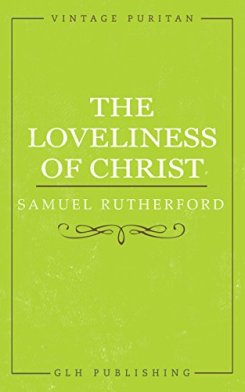
loveliness-of-christPuritan Samuel Rutherford’s writings were the inspiration for one of my favorite hymns (“The Sands of Time Are Sinking“) and he’s the author of one of my favorite quotes, but I had never read anything else from him. So when The Loveliness of Christ came through on a 99 cent Kindle sale last week, I decided to give it a try.

I was disappointed that the selections weren’t essays or letters (except for a few letters at the very end): rather, the book is mainly a selection of quotes gleaned from Rutherford’s letters. The writing is a little hard to understand in places, but there are some gold nuggets here.

After a brief biography of Rutherford, the quotes are listed. I am not sure if they are in random of chronological order: except for the full-length letters at the end, we don’t know to whom or when they were written.

Here are some that most spoke to me:

You will not get leave to steal quietly to heaven, in Christ’s company, without a conflict and a cross.

Christ’s cross is such a burden as sails are to a ship or wings are to a bird.

Let our Lord’s sweet hand square us and hammer us, and strike off the knots of pride, self-love and world-worship and infidelity, that He may make us stones and pillars in his Father’s house.

The devil is but God’s master fencer, to teach us to handle our weapons.

They are not lost to you that are laid up in Christ’s treasury in heaven. At the resurrection ye shall meet with them: there they are, sent before but not sent away. Your Lord loveth you, who is homely to take and give, borrow and lend.

O, what I owe to the file, to the hammer, to the furnace of my Lord Jesus!

Why should I start at the plow of my Lord, that maketh deep furrows on my soul? I know He is no idle husbandman, He purposeth a crop.

How sweet a thing were it for us to learn to make our burdens light by framing our hearts to the burden, and making our Lord’s will a law.

Our fair morning is at hand, the day-star is near the rising, and we are not many miles from home. What does it matter if we are mistreated in the smoky inns of this miserable life? We are not to stay here, and we will be dearly welcomed by Him to whom we go.

When we shall come home and enter to the possession of our Brother’s fair kingdom, and when our heads shall find the weight of the eternal crown of glory, and when we shall look back to pains and sufferings; then shall we see life and sorrow to be less than one step or stride from a prison to glory; and that our little inch of time – suffering is not worthy of our first night’s welcome home to heaven.

Let not the Lord’s dealings seems harsh, rough, or unfatherly, because it is unpleasant. When the Lord’s blessed will bloweth cross your desires, it is best in humility to strike sail to him and to be willing to be laid any way our Lord pleaseth: it is a point of denial of yourself, to be as if ye had not a will, but had made a free disposition of it to God, and had sold it over to him; and to make of his will for your own is both true holiness, and your ease and peace.

Welcome, welcome, Jesus, what way soever Thou come, if we can get a sight of Thee! And sure I am, it is better to be sick, providing Christ come to the bedside and draw by the curtains, and say, “Courage, I am Thy salvation,” than to enjoy health, being lusty and strong, and never to be visited of God.

Faith liveth and spendeth upon our Captain’s charges, who is able to pay for all.

Glorify the Lord in your sufferings, and take his banner of love, and spread it over you. Others will follow you, if they see you strong in the Lord; their courage shall take life from your Christian carriage.

Ye may yourself ebb and flow, rise and fall, wax and wane; but your Lord is this day as he was yesterday; and it is your comfort that your salvation is not rolled upon wheels of your own making, neither have ye to do with a Christ of your own shaping.

If Christ Jesus be the period, the end and lodging-home, at the end of your journey, there is no fear, ye go to a friend…ye may look death in the face with joy.

My Lord Jesus hath fully recompensed my sadness with His joys, my losses with His own presence. I find it a sweet an a rich thing to exchange my sorrows with Christ’s joys, my afflictions with that sweet peace I have with Himself.

The favorite quote I mentioned at the beginning was here only in part: I had seen it in one of Amy Carmichael’s writings as having been a comfort to her when one of the children at her compound died. It was written by Rutherford to someone who had lost a child. The larger quote is “Ye have lost a child: nay she is not lost to you who is found to Christ. She is not sent away, but only sent before, like unto a star, which going out of our sight doth not die and vanish, but shineth in another hemisphere. We see her not, yet she doth shine in another country. If her glass was but a short hour, what she wanteth of time that she hath gotten of eternity; and ye have to rejoice that ye have now some plenishing up in heaven.”

As a collection of quotes, some quite thought-provoking and others requiring thought to process, it seemed to work best to read a few a day rather than trying to take in a lot at one sitting. Even doing that, though, it only took about a week to read.

As you can see from the sampling of quotes here, some of the themes of Rutherford’s writing include the goodness of God in the face of any circumstances, His ability to use those circumstances to shape us, the joy of Christ in this life but especially in the life to come.

I’m glad I spent time with this little book and I’m sure I will again in the future. I’m even inspired to go on to the fuller Letters of Samuel Rutherford some day.

Genre: Christian non-fiction
Potenti
al objectionable elements: None
My rating: 10 out of 10

(Sharing with Semicolon‘s Saturday Review of Books and Carol‘s Books You Loved )

Books you loved 4


Save

Save

Save

Save

A God We Don’t Understand

When Adoniram Judson first went to Burma, six long years passed before anyone fully received his message and was converted. A few years later he was arrested and accused of being a spy when his country was at war with Burma. His feet were tied to poles that were then raised so that only his shoulders rested on the ground. Prisoners were executed daily, and no one knew when their time would be next. They were taken on a death march to another prison. Finally he was released after two years. But his brave and faithful wife died from a fever, with their child soon following after – their third child to have died. For a while Adoniram built what he called a hermitage in the woods where he would go off to be alone. He dug an empty grave and spent time looking at it and contemplating death. On the third anniversary of his wife’s death, he wrote, “God is to me the Great Unknown. I believe in Him, but I find Him not.”

After C. S Lewis’s wife died, in his grief he wrote, “Not that I am (I think) in much danger of ceasing to believe in God. The real danger is of coming to believe such dreadful things about Him. The conclusion I dread is not ‘So there’s no God after all,’ but ‘So this is what God’s really like.'”

The book of Job is filled with his laments and questionings of God. Jeremiah accused God of deceiving him.

Our 52 year old pastor died of pancreatic cancer right in the middle of a fruitful ministry. A young mom in our church died suddenly and totally unexpectedly due to a reaction to a drug, leaving behind a grieving  husband and two children. The 3 year old grandson of friends has been diagnosed with leukemia; the 25 year old daughter of friends is fighting breast cancer, the 6 year old relative of a brother-in-law was shot in cold blood at his school. When I started writing this, a hurricane was barreling toward the east coast after having already passing over several islands.

In some ways man’s inhumanity to others is understandable in that God gives people free will, and many choose to exercise it away from Him rather than toward Him. It doesn’t explain why a teenager would shoot a child except that it’s an extreme example of exercising self-will to sin against another.

We can even come to terms with death in the big picture view of the result of living in a fallen world.

But a child getting leukemia, adults dying in their prime, death and destruction from storms — that’s a little harder to come to grips with.

He doesn’t always explain why He allows what He does. Sometimes He just wants us to trust Him. But sometimes I think He doesn’t explain because we just wouldn’t understand.

I always told myself that I would never be one of those parents who said something must be done “Because I said so!” But I learned early on that you can’t always explain something to a child. They don’t have the understanding, the context, or the experience to comprehend why certain things are required of them and why others things are denied them. At times they think that the parents who are trying to do what’s best for for the children they dearly love are horribly unfair. Sometimes they just want what they want when they want it and they don’t care about any reasons why they can’t have it.

It helps to remind ourselves there are Scriptural reasons for suffering. It helps even more to go back to what we know of the character of God. He is kind. He is good. He is love. He loves us. Nothing that happens to us negates any of those truths.

Amy Carmichael, when pondering some of the same questions, wrote:

Yet listen now,
Oh, listen with the wondering olive trees,
And the white moon that looked between the leaves,
And gentle earth that shuddered as she felt
Great drops of blood. All torturing questions find
Answer beneath those old grey olive trees.
There, only there, we can take heart to hope
For all lost lambs – Aye, even for ravening wolves.
Oh, there are things done in the world today
Would root up faith, but for Gethsemane,

For Calvary interprets human life;
No path of pain but there we meet our Lord;
And all the strain, the terror and the strife
Die down like waves before his peaceful word,
And nowhere but beside the awful Cross,
And where the olives grow along the hill,
Can we accept the unexplained, the loss,
The crushing agony – and hold us still.

Children who love their Father know that when He says, “All things work together for good to them that love God,” He must mean the best good, though how that can be they do not know….

What does a child do whose mother or father allows something to be done which it cannot understand? There is only one way of peace. It is the child’s way. The loving child trusts.

I believe that we who know our God, and have proved Him good past telling, will find rest there. The faith of the child rests on the character it knows. So may ours, so shall ours. Our Father does not explain, nor does He assure us as we long to be assured… But we know our Father. We know His character. Somehow, somewhere, the wrong must be put right; how we do not know, only we know that, because He is what He is, anything else is inconceivable. For the word sent to the man whose soul was among lions and who was soon to be done to death, unsuccored, though the Lord of Daniel was so near, is fathomless: “And blessed is he whosoever shall not be offended in me.”

There is only one place we can receive, not an answer to our questions, but peace — that place is Calvary. An hour at the foot of the Cross steadies the soul as nothing else can. “O Christ beloved, Thy Calvary stills all our questions.” Love that loves like that can be trusted about this.

And when Job, Adoniram Judson, and so many others mentioned come out on the other side of the trial, though they may not have answers to their “whys,” they often testify that they know God better, felt His goodness and grace like never before, found Him good and faithful and trustworthy, found themselves upheld in ways they could not have imagined. Adoniram Judson wrote in a letter, “The love of Christ! The breadth and length and depth and height of the love of Christ! If I had not felt certain that every additional trial was ordered by infinite love and mercy, I could not have survived my accumulated sufferings.”

As one whom his mother comforts, so I will comfort you…Isaiah 66:13a

I believe that I shall look upon the goodness of the Lord in the land of the living!
Wait for the Lord; be strong, and let your heart take courage; wait for the Lord! Psalm 27:13-14

For I consider that the sufferings of this present time are not worth comparing with the glory that is to be revealed to us. Romans 8:18

Surely he has borne our griefs and carried our sorrows. Isaiah 53:4a

img_1866

(Sharing With Inspire Me Monday, Testimony Tuesday, Tell His Story, Woman to Woman Word Filled Wednesday, Thought-provoking Thursday. Linking does not imply 100% endorsement.)

Save

Save

Save

Save

Save

Love Through Me, Love of God

Love through me, Love of God;
There is no love in me.
O Fire of love, light Thou the love
That burns perpetually.

Flow through me, Peace of God;
Calm River, flow until
No wind can blow, no current stir
A ripple of self-will.

Shine through me, Joy of God;
Make me like Thy clear air
That Thou dost pour Thy colors through,
As though it were not there

O blessed Love of God,
That all may taste and see
How good Thou art, once more I pray:
Love through me—even me.

~ Amy Carmichael

Across the Will of Nature

img_1852

Across the will of Nature
Leads on the path of God;
Not where the flesh delighteth
The feet of Jesus trod.
O bliss to leave behind us
The fetters of the slave,
to leave ourselves behind us,
the graveclothes and the grave.

~ by Gerhard Tersteegen

The first two lines of this poem have been coming to mind often the last few days, so I had to look them up. It’s the first stanza of a poem which Amy Carmichael found inspirational. I had thought it was one of Amy’s, but I probably just first came across it in her biography.

There was a little ditty going around when my kids were teens: “Just two choices on the shelf: pleasing God or pleasing self.” One of my sons just hated that because it made it sound like any personal choice, from liking meatloaf to walks on an autumn day, were directly opposed to God. That’s one problem with reducing doctrine to a catchy phrase.

On the other hand, it is true that we have an old nature that above all else wants its own way, and often that runs contrary to what God wants or what other people want. That’s been my problem this week (well, really, my whole life. Some years ago I did a Bible study on wanting our own way – it was quite eye-opening). There are duties in my life that I really wish I did not have to deal with, but as they are squarely in my path, placed there, I am sure, by God, they’re mine to do. I wrestle with this often, and know there is nothing to do but do them and pray for a better attitude. I wish I could once for all work this out in my thinking and have the “don’t want to” go away forever. But it doesn’t work like that.

I’m sure that’s one reason Jesus said, “If any man will come after me, let him deny himself, and take up his cross daily, and follow me. For whosoever will save his life shall lose it: but whosoever will lose his life for my sake, the same shall save it” (Luke 9:23-24).

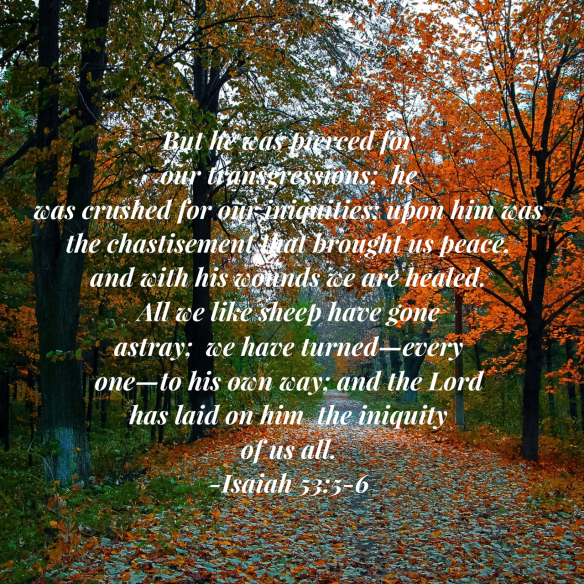
I’m immeasurably thankful that, though “All we like sheep have gone astray; we have turned—every one—to his own way,” God, in His love and patience, did not leave us there. Instead, “the Lord has laid on him the iniquity of us all” (Isaiah 53:6).

Love is patient and kind; love does not envy or boast; it is not arrogant or rude. It does not insist on its own way; it is not irritable or resentful…1 Corinthians 13:4-5

See also:

The Captain of My Fate
Wanting Our Own Way

(Sharing with Inspire Me Monday)

Save

Save

Save