Thanksgiving Is Not a Feeling

Thanksgiving is not a feeling

I often feel a little awkward when a group leader wants participants to share something we’re thankful for right off the bat. I hope she won’t call on me first so I have a little time to think.

In the midst of a heavy trial is another time it is hard to be thankful. The weight of what we’re going through overshadows thankful feelings.

Then other times, nothing bad is going on, but life just seems mundane, unexciting. If someone asks us what we’re thankful for at those times, we’d likely draw a blank.

These are all occasions when we might not feel thankful. But thanksgiving isn’t a feeling. It’s an action. And, ironically, giving thanks even when we don’t feel thankful often leads to feeling thankful.

It doesn’t usually take a lot of thought to find reasons to be thankful. And if you’re like me, once you get started, it’s hard to stop!

When going through a trial, I can be thankful that:

  • God is with me.
  • He promised to give me grace and help me.
  • He knows just how much to allow.
  • He loves me.
  • He is interested in my growth even if I am not.
  • He has a purpose in all He allows and works it for my good.

When life is mundane, I can be thankful that:

  • A respite is provided from busyness.
  • God is with me, even in the small moments.
  • When I do things as unto the Lord, they are important even if they are not big.
  • Quiet days provide time to listen to others.

When life is busy, I am thankful that:

  • God gives strength.
  • God quiets my racing heart.
  • God gives peace.
  • Rest is coming.

Any day, I can be thankful that:

  • God saved me.”Giving thanks unto the Father, which hath made us meet to be partakers of the inheritance of the saints in light: Who hath delivered us from the power of darkness, and hath translated us into the kingdom of his dear Son: In whom we have redemption through his blood, even the forgiveness of sins” (Colossians 1:12-14).
  • God comforts me. “For the LORD shall comfort Zion: he will comfort all her waste places; and he will make her wilderness like Eden, and her desert like the garden of the LORD; joy and gladness shall be found therein, thanksgiving, and the voice of melody” (Isaiah 51: 3).
  • God helps me. “The Lord is my strength and my shield; in him my heart trusts, and I am helped; my heart exults, and with my song I give thanks to him” (Psalm 28:7).
  • God loves me. “Let them thank the Lord for his steadfast love, for his wondrous works to the children of man!” (Psalm 107:8).
  • God forgives me. “I will give thanks to you, O Lord, for though you were angry with me, your anger turned away, that you might comfort me” (Isaiah 12:1).

We often look to our circumstances for reasons to be thankful. But we can be thankful for God Himself and His wonderful attributes:

  • Oh give thanks to the LORD, for he is good; for his steadfast love endures forever!” (I Chronicles 16:34; Ezra 3:11; Psalm 106:1; 107:1; 118:1, 29; 136).
  • Sing unto the LORD, O ye saints of his, and give thanks at the remembrance of his holiness” (Psalm 30:4).
  • Let us come before his presence with thanksgiving, and make a joyful noise unto him with psalms. For the LORD is a great God, and a great King above all gods” (Psalm 95:2-3).
  • I will give thanks to the Lord with my whole heart; I will recount all of your wonderful deeds” (Psalm 9:1).

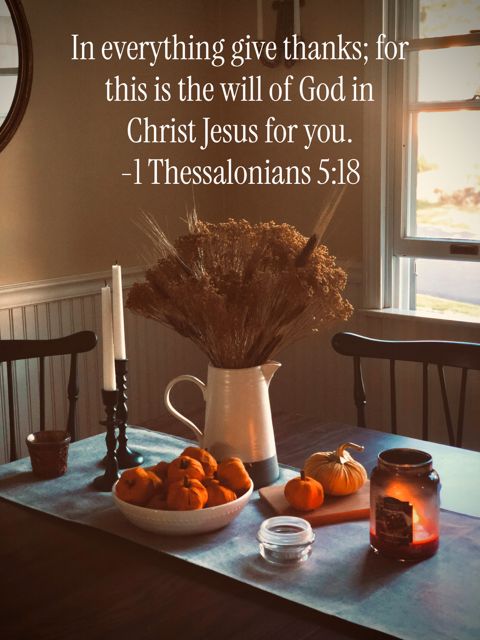
Among the many admonitions and encouragements to be thankful in the Bible is this, from 1 Thessalonians 5:18: “In everything give thanks; for this is the will of God in Christ Jesus for you” (NKJV). In everything–all circumstances, the ESV says–there is something for which we can be thankful.

Thanksgiving often spontaneously overflows when news is good or something happy occurs. But when we’re going through something hard, thanksgiving isn’t easy. The Bible says sometimes praise is a sacrifice. When we remind ourselves who our God is, what He has promised us, and how He loves us, we can find abundant reasons to thank Him.

1 Thessalonians 5:18

(I often link up with some of these bloggers.)

Joys and Sorrows of Mother’s Day

The Joys and Sorrows of Mother's Day

Mother’s Day is fraught with mixed emotions.

It’s good to honor mothers. The Bible does. One of the ten commandments tells us to honor our parents. Motherhood has taken a beating by society over the last several years. Moms carry a heavy load, often unseen and unappreciated. They need all the encouragement and support they can get.

But Mother’s Day is profoundly sad for others.

Some grieve the death of their children, or their estranged children or wayward children.

Some have mothers who are still here physically but far away mentally or emotionally, mothers who rarely, if ever, showed love, mothers who abandoned them, mothers who have died. For those who feel abandoned or unloved by parents, may you truly know “When my father and my mother forsake me, then the LORD will take me up” (Psalm 27:10).

Some would love to be mothers, yet God has not granted that request. Mother’s Day only adds to their pain. I appreciate Wendy Alsup’s thought that “God uses both the presence and the absence of children in the lives of His daughters as a primary tool of conforming us to Christ.”

Some moms grieve that their families don’t acknowledge this day at all, and they feel more taken for granted than ever. Erin has some good advice for managing expectations.

Some downplay the day. They would rather have their family appreciate them year-round, not just on a certain designated day. And, true, it doesn’t make sense to disrespect someone every other day and then buy them flowers and a card on Mother’s Day. But I always look at special days in the same vein as Thanksgiving. Yes, we’re supposed to be thankful every day, but Thanksgiving reminds us of all we have to be thankful for. Jesus’ resurrection impacts our lives every day, but it receives special focus at Easter. So Mother’s Day, Valentine’s Day, or someone’s birthday are just opportunities to tell someone you love that you appreciate them.

For many, all the talk of ideal mothers on Mother’s Day makes them feel their failures all the more. They feel like “perfect mother,” or even “good mother,” are titles they can never aspire to. God took our faults and foibles into account when He made us mothers. He knows we’re made of dust. We confess our sins to Him and lean on Him moment by moment for grace and help and strength to mother as He wants us to. “Let us then with confidence draw near to the throne of grace, that we may receive mercy and find grace to help in time of need” (Hebrews 4:16).

My mother and all of my older mother figures are gone now. I try to honor their memories. I am thankful for so many women who were examples to me and made me a better woman, wife, and mother. I hope I can encourage others as these ladies did me.

For those whose families show their love this day, and for those who have a mother to celebrate today, I wish you joy.

For those who sorrow, I pray for the peace that passes understanding. May His merciful kindness be for your comfort, according to His word unto you (Psalm 119:76).

Proverbs 31:25

(Revised from the archives.)

(I often link up with some of these bloggers.)
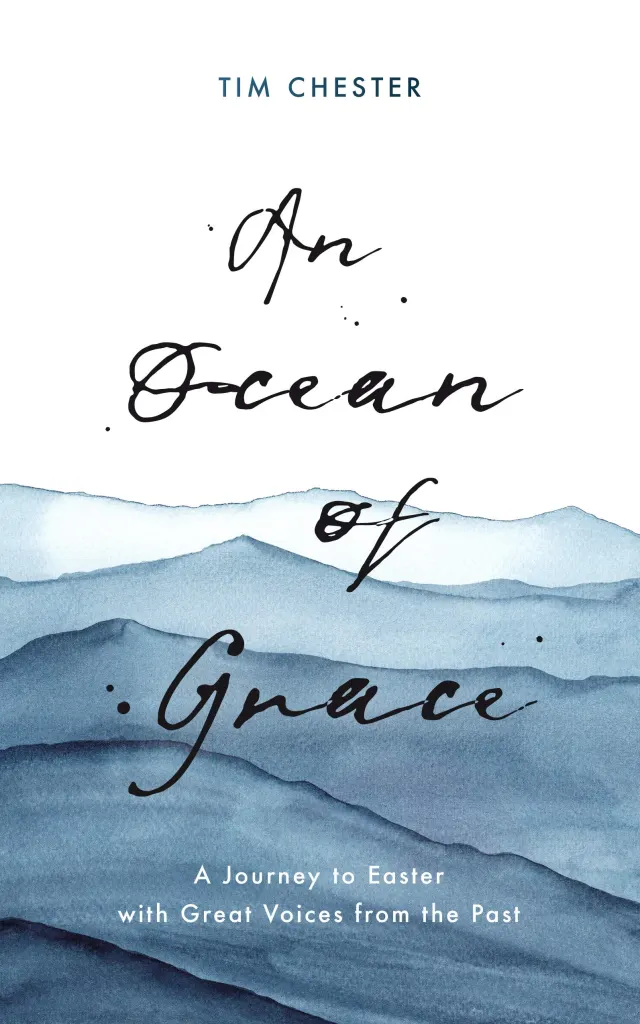
Review: An Ocean of Grace

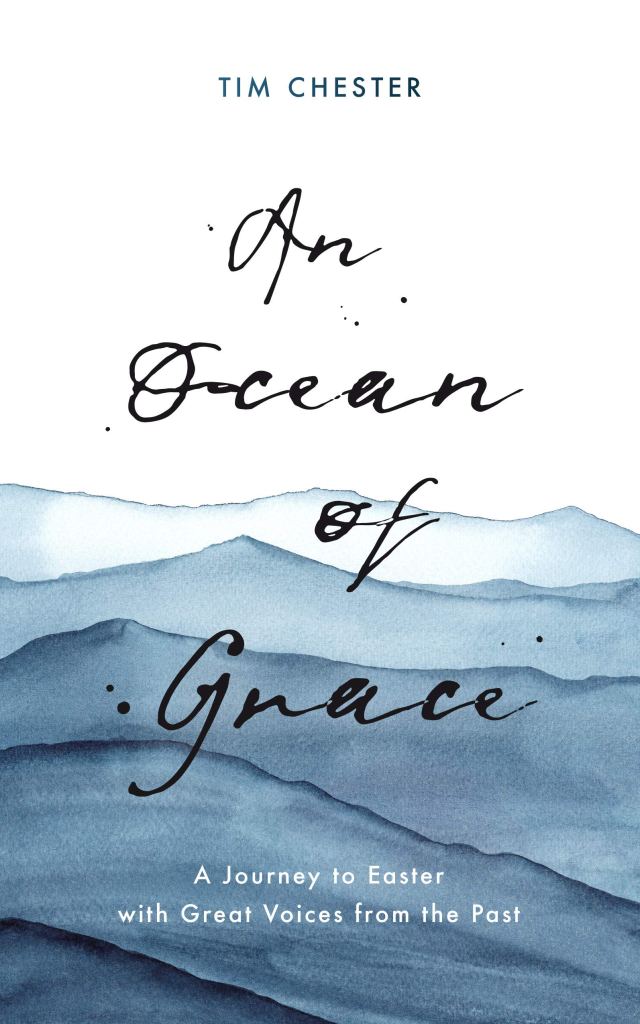
Ocean of Grace

Tim Chester collected collected thoughtful writings about Christ’s death and resurrection and edited them into An Ocean of Grace: A Journey to Easter with Great Voices of the Past.

Some of the selections are from familiar pens: Augustine, Martin Luther, and Charles Spurgeon. Others are more obscure: Cyril of Alexander from the fifth century, Gregory of Myssa from the fourth, Cyprian of the third, and many others. I was delighted to see a piece by Anne Steele, an eighteenth-century female hymn writer. And I was surprised to see a selection from Catherine Parr, Henry VIII’s last wife, leading me to read a little more about her online. I think Spurgeon is the most recent of the authors included.

These selections are divided into daily readings from Ash Wednesday to Easter. They are grouped into themes for each week: The Light of Love, The Welcome of Grace, The Exchange of Places; The Assurance of Faith, The Gift of Christ, and The Victory of God.

In his introduction, Chester says he removed archaic language except for poetry and hymns while trying to retain the “voice” of the original authors. He also says many “descriptions have been turned into a prayer addressed to God or an exhortation addressed to our own souls.” He doesn’t say why, but he also turned what I think were prose selections into a free-verse style of poetry. I wish he had kept the selections closer to the originals–but then maybe I wouldn’t think so if I read the originals.

I began reading this book late in the season due to finishing a previous study. Because of that, and because the selections were fairly short, I read two or three a day. I think that may have lessened the impact of them. If I read this book again, I’ll plan to read one a day as the author intended.

Nevertheless, I did receive much food for thought and warmth for heart by reading this book. I have many places marked, but I will try not to overwhelm you with quotes.

In an excerpt from Catherine Parr’s The Lamentations of a Sinner, she spends several lines listing her sins and Christ’s merits. She concludes:

Shall I fall in desperation?
No, I will call upon Christ,
 the Light of the world,
  the Fountain of life,
   the relief of all careful consciences,
    the Peacemaker between God and man,
     and the only health and comfort of all true repentant sinners.

By his almighty power he can save me
and deliver me out of this miserable state.
For this is the life everlasting, O Lord,
 to believe you to be the true God,
 and him whom you sent, Jesus Christ.
By this faith I am assured,
and by this assurance I feel the forgiveness of my sins:
 this is what gives me confidence,
 this is what comforts me,
 this is what quenches all despair (p. 10).

This line of Puritan Stephen Charnock’s “A Discourse of the Knowledge of Christ Crucified” stood out to me: “May all the charms of sin be overcome by this ravishing love” (p. 27). He goes on to say:

How can we, with thoughts of the cross alive in our hearts, sin against so much tenderness, compassion and grace, and all the other perfections of you, our God, which sound so loud in our ears from the cross of Jesus? Shall we consider him hanging there to deliver us from hell and stain, and retain any desire to walk in the way which led him there? Can we take any pleasure in that which caused so much pain for our best friend? Can we love that which brought a curse better than him who bore the curse for us?” (pp. 26-27. I put this in paragraph form just to save time formatting).

This from Isaac Ambrose also stood out to me: “Surely his death is more satisfactory to God than all your sins can possibly be displeasing to God” (p. 94).

This was from Thomas Watson: “We cannot lift up Christ higher in heaven, but we may lift up him in our hearts. So let us believe him, adore him and love him, and exalt him in our lives, for all the doxologies and prayers in the world do not exalt Christ as much as a holy life” (p. 132).

I loved this closing poem from Henry Vaughan titled “Easter Hymn”:

Death, and darkness get you packing,
Nothing now to man is lacking,
All your triumphs now are ended,
And what Adam marred, is mended;
Graves are beds now for the weary,
Death a nap, to wake more merry;
Youth now, full of pious duty,
Seeks in thee for perfect beauty;
The weak and aged tired, with length
Of days, from thee look for new strength;
And infants with thy pangs contest
As pleasant, as if with the breast.
Then, unto him, who thus hath thrown
Even to contempt thy kingdom down,
And by his blood did us advance
Unto his own inheritance,
To him be glory, power, praise,
From this, unto the last of days! (p. 154).

I had a couple of formatting complaints in the book. Chester writes verse references as, for example, Isaiah 61 v 10 rather than Isaiah 61:10. The latter has been used for centuries. I have never seen the former except in Chester’s books. I wondered if perhaps it’s done that way in the UK, but I have read several books from authors from various countries without having seen this way of writing Bible references. I Googled “how to write Bible verse references” just to see if this is a new style, and I didn’t see it mentioned in any source I looked at. It’s not a big deal in the grand scheme of things. It’s more a commentary on my heart to say it irritated me. But I tried to overlook it

The other complaint is not unique to Mr. Chester, but is to all the books I have from The Good Book Company. They put the table of contents in the back of the book rather than in the front after the title page. That doesn’t make sense to me. I use the Table of Contents to look at where a book is going, not where it has been. When I am considering a new book, I look at the front cover, the back cover, the description, the table of contents, and the first few paragraphs or pages. If I look at a sample on Amazon, they usually only include the first several pages. If the Table of Contents is in the back, I am not able to see it in the sample.

I also wish Chester had listed the titles of all the readings in the Table of Contents rather than just the main section headings.

Again, these are minor issues compared to the content of the book.

There were just two or three places where I put a question mark or didn’t quite agree with how something was worded. But overall, I enjoyed this book and plan to use it again for Lenten reading in the future.

(I often link up with some of these bloggers.)

If Jesus Had Not Been Resurrected

If Jesus Had Not Been Resurrected

There’s an old Christmas song I’ve only heard a few times titled “If Jesus Had Not Come” by Albert C. Norton and Donald P. Hustad. The songwriters list several consequences we would face if Jesus never came to earth. Then the rousing chorus affirms:

But Jesus came! He came to earth,
And men beheld His manger birth!
The shepherds heard the angels sing,
The wise proclaimed Him Lord and King!
He died, He rose; and by His blood,
We too become the sons of God;
We preach the gospel in His name!
For Jesus came! Yes, Jesus came!

This Easter week, I’m thinking about what the consequences would be if Jesus had not been raised from the dead.

No resurrection for us. 1 Corinthians 15:20-23 says Jesus was the “firstfruits of those who have fallen asleep. For as by a man came death, by a man has come also the resurrection of the dead. For as in Adam all die, so also in Christ shall all be made alive. But each in his own order: Christ the firstfruits, then at his coming those who belong to Christ.” If He wasn’t raised from the dead, we won’t be, either. “If in Christ we have hope in this life only, we are of all people most to be pitied” (verse 19).

Futile faith. “If Christ has not been raised, then our preaching is in vain and your faith is in vain . . . And if Christ has not been raised, your faith is futile and you are still in your sins” (1 Corinthians 15:14, 17).

No meaning in life. Paul questions the worth of the dangers he endured for gospel’s sake if there is no resurrection. “If the dead are not raised, ‘Let us eat and drink, for tomorrow we die'” (1 Corinthians 15:30-32).

Death’s sting. Paul concludes his “resurrection chapter” with this: “For this perishable body must put on the imperishable, and this mortal body must put on immortality. When the perishable puts on the imperishable, and the mortal puts on immortality, then shall come to pass the saying that is written: ‘Death is swallowed up in victory.’ ‘O death, where is your victory? O death, where is your sting?'” (1 Corinthians 15:53-55). But if Jesus is not risen, death’s sting is still with us.

No hope. Peter begins his epistle by saying, “Blessed be the God and Father of our Lord Jesus Christ! According to his great mercy, he has caused us to be born again to a living hope through the resurrection of Jesus Christ from the dead” (1 Peter 1:3). But if there is no resurrection, we don’t have a living hope.

No inheritance. Peter speaks of an “inheritance that is imperishable, undefiled, and unfading, kept in heaven for you” which encourages us in our trials. But we’ll never receive that inheritance if there is no resurrection. (Ephesians 1 also speaks of our inheritance.)

No seeing loved ones again. When a loved one dies, or when facing our own death, one comfort is that we’ll see our loved ones again if they’ve believed on the Lord. Paul shares in 1 Thessalonians 4:13-18 that those who have already died will be reunited with those of us who are still alive when Jesus returns. Therefore we do “not grieve as others do who have no hope.” But without that hope, we’ll be swallowed up in grief.

No comfort. After sharing the expectation that we’ll see our loved ones again after death, Paul tells us to comfort (some versions say encourage) one another with these words. Likewise, Peter says we can rejoice in our sufferings when Jesus’ glory is revealed (1 Peter 4:12-14). But with no resurrection, there is no comfort.

No power. Paul prays that we may know “what is the immeasurable greatness of his power toward us who believe, according to the working of his great might that he worked in Christ when he raised him from the dead and seated him at his right hand in the heavenly places” (Ephesians 1:19-20). But with no resurrection, there is no resurrection power.

No intercession. Hebrews 7:25 says Jesus “is able to save to the uttermost those who draw near to God through him, since he always lives to make intercession for them.” I can’t imagine being without His prayers!

No wrongs set right. One of our comforts in a world where there are so many wrongs is that some day they will be set right. Paul preached that God “has fixed a day on which he will judge the world in righteousness by a man whom he has appointed; and of this he has given assurance to all by raising him from the dead” (Acts 17:31). But without the resurrection, those wrongs will never be righted.

No seeing Jesus. In this life, we love and believe in Jesus, though we do not see Him (1 Peter 1:8). We look forward to that “blessed hope, the appearing of the glory of our great God and Savior Jesus Christ, who gave himself for us to redeem us from all lawlessness and to purify for himself a people for his own possession” (Titus 2: 13-14). If he’s still buried, we won’t see Him.

No motivation. Paul concludes all he says about resurrection by encouraging, “Therefore, my beloved brothers, be steadfast, immovable, always abounding in the work of the Lord, knowing that in the Lord your labor is not in vain” (1 Corinthians 15:58). But without resurrection, our work would be largely in vain and we’d lose our impetus to keep going.

Facing God’s wrath. Paul writes of the Thessalonians who “wait for his Son from heaven, whom he raised from the dead, Jesus who delivers us from the wrath to come” (1 Thessalonians 1:10). But if Jesus was not raised from the dead, we’re not delivered.

How bleak and hopeless life would be if Jesus had not been raised from the dead.

But, thank God, He has been raised! Not only that, He is the resurrection! He told Martha, “I am the resurrection and the life. Whoever believes in me, though he die, yet shall he live” (John 11:25).

I love how Krissy Nordhoff and Michel Neale expressed the joy of Jesus’ resurrection in The Mercy Tree (these are some middle verses and the chorus):

Hope went dark that violent dayThe whole earth quaked at love’s displayThree days silent in the groundThis body born for heaven’s crown.
 
And on that bright and glorious dayWhen heaven opened up the graveHe’s alive and risen indeedPraise Him for the Mercy Tree!
 
Death has died, love has wonHallelujah!, Hallelujah!Jesus Christ has overcomeHe has risen from the dead.

May we rejoice in all Jesus accomplished through His life, death, and resurrection! Hallelujah!

1 Peter 1:3

(I often link up with some of these bloggers.)
Winter Fire: Christmas with G. K. Chesterton

Winter Fire: Christmas with G. K. Chesterton

I’ve not read G. K. Chesterton except for one novel, The Man Who Was Thursday, and a few pithy quotes. The quotes were enough to entice me to read more. So I was excited to see Winter Fire: Christmas with G. K. Chesterton by Ryan Whitaker Smith.

When I looked at the sample of the book at Amazon, however, I was disappointed that the book seemed to be less of Chesterton and more on Smith commenting on Chesterton. I eventually decided to get the book anyway, and I am glad I did.

Smith says that reading Chesterton is an “acquired taste,” and I agree. I would not have gotten nearly so much out of Chesterton’s quotes here without Smith drawing out the meaning.

If you’re not familiar with Chesterton, Wikipedia says he “wrote around 80 books, several hundred poems, some 200 short stories, 4,000 essays (mostly newspaper columns), and several plays. He was a literary and social critic, historian, playwright, novelist, and Catholic theologian and apologist, debater, and mystery writer.” He was a columnist for several newspapers and even wrote some Encyclopedia Britannica entries (including the one for Charles Dickens). He might be known best for his Father Brown stories about a priest who also does detective work.

He was baptized into the Church of England as a child, dabbled in the occult, then came back to the Anglican church as an adult, and later converted to Catholicism. I am curious how and why he embraced Catholicism but haven’t read enough to know his thinking. But “Christian themes and symbolism appear in much of his writing.”

Smith says Chesterton wrote prolifically about Christmas, much more than could be included in this book.

Winter Fire contains thirty days of readings, with Smith expanding on, explaining, and giving the cultural background to quotes about Christmas from some of Chesterton’s essays. After each reading is a Bible verse and questions for thought.

Then there are a variety of Chesterton’s other writings: several poems, a few essays, and a couple of short stories. Finally, Smith included recipes and games prevalent at the time Chesterton lived (1874-1936). The weirdest game, called Snapdragon, involved raisins doused in brandy, then set on fire. Then children tried to reach into the fire quickly and grab a raisin.

One of the readings here inspired a blog post, A Christmas Boomerang, and I have another post or two in mind based on thoughts read here.

Smith says the title of this book “is taken from a quote featured in the reading for Day 13: ‘Christ is not merely a summer sun of the prosperous but a winter fire for the unfortunate.’ The image of a fire burning amid the frosts of winter seemed a fitting image to draw from for a book that not only celebrates the comfort, joy, and revelry of Christmas, but the mercy of God who has called us to His everlasting feast” (p. 12). He writes that “The purpose of our journey is not so much to dwell in ‘the place from which Christmas came,’ but to allow that place to dwell in us, to return to our own country with christened eyes, to look upon our everyday surroundings with a baptized imagination” (p. 17).

I have scores of quotes marked, but I’ll try to share just a few:

In the majestic march of Progress, we have first vulgarised Christmas and then denounced it as vulgar. Christmas has become too commercial; so many of these thinkers would destroy the Christmas that has been spoiled, and preserve the commercialism that has spoiled it” (Chesterton, p. 32).

I have never understood what people mean by domesticity being tame; it seems to me one of the wildest of adventures (Chesterton, p. 45).

Omnipotence and impotence, or divinity and infancy, do definitely make a sort of epigram which a million repetitions cannot turn into a platitude. It is not unreasonable to call it unique. Bethlehem is emphatically a place where extremes meet. (Chesterton, p. 84).

Christmas did not merely borrow certain traditions from paganism; it survived paganism. It was a stronger thing than all the pagan world could offer. It was fiercer than its creeds, more potent than its rituals (Smith, p. 116).

The land endures the harshness of winter in order to be reborn in the vigor of spring. Everywhere we look, nature is rehearsing resurrection, preparing for the day when all things will be made new, when measurable time gives way to immeasurable eternity (Smith, p. 128).

These are a couple of stanzas from Chesterton’s poem “The House of Christmas”:

A Child in a foul stable,
Where the beasts feed and foam;
Only where He was homeless
Are you and I at home;
We have hands that fashion and heads that know
But our hearts we lost—how long ago!
In a place no chart nor ship can show
Under the sky’s dome.

To an open house in the evening
Home shall men come,
To an older place than Eden
And a taller town than Rome.
To the end of the way of the wandering star,
To the things that cannot be and that are,
To the place where God was homeless
And all men are at home.

The book cover, texture, and illustrations have a lovely old-fashioned feel to them.

Chesterton uses a lot of irony, and often. as Smith says, is “saying several things at once” (p. 11). I have question marks at a couple of places in the book. But I was inspired, taught, and encouraged by much that I read, and I am sure I’ll read this again in future Advent seasons.

(Sharing with Bookish Bliss Quarterly Link-Up)

A Christmas Boomerang

A Christmas Boomerang

Boomerangs, according to G. K. Chesterton, are “things that return.” He names sleep and a new day as boomerang blessings–something we experience which comes back to us to experience again. No matter how many times we go to sleep and wake up again, we continue to enjoy those recurring cycles.

In Winter Fire: Christmas with G. K. Chesterton, Ryan Whitaker Smith comments that feasts in the Jewish calendar were like boomerangs, recurring reminders of God’s grace in delivering and providing for His people. He quotes Chesterton again:

It is the very essence of a festival that it breaks upon one brilliantly and abruptly, that at one moment the great day is not and the next moment the great day is . . . The thing is done at a particular time so that people may be conscious of a particular truth; as is the case with all ceremonial observances, such as the Silence of Armistice Day or the signal of a salute with the guns or the sudden noise of bells for the New Year. They are all meant to fix the mind upon the fact of the feast or memorial, and suggest that a passing moment has a meaning when it would otherwise be meaningless (pp. 68-69).

Whitaker goes on to say, “As the Israelites’ festivals were a perpetual retelling of the same story, so are our Christian traditions a form of continually re-grounding ourselves in the narrative of redemption. The consistent ‘return of old things in new times,’ Chesterton tells us, . . . . the regularity of our holiday rituals is a way of maintaining godly sanity in an unstable and unpredictable world” (p. 56).

Our modern church and personal calendars may not follow the feasts given Israel in the Old Testament. But regular observances with their symbols and rituals remind us of great truths.

Christmas reminds us:

We need a Savior. She will bear a son, and you shall call his name Jesus, for he will save his people from their sins” Matthew 1:21).

God loves us enough to rescue us at great cost to Himself.For God so loved the world, that he gave his only Son, that whoever believes in him should not perish but have eternal life.” (John 3:16).

God’s timing is perfect. “But when the fullness of time had come, God sent forth his Son, born of woman, born under the law, to redeem those who were under the law, so that we might receive adoption as sons” (Galatians 4:4-5).

And so much more.

May the “boomerang blessing” of Christmas never be stale or empty, but rather a regular reminder that God loved us enough to send His Son to be our Savior, to die for our sins so we could become His.

"She will bear a son, and you shall call his name Jesus, for he will save his people from their sins." Matthew 1:21

(I often link up with some of these bloggers.)
Traditions: Blessing or Burden?

Traditions: Blessing or Burden?

Christmas brims with traditions. Some point back to long centuries: lights to represent the light of the world, stars to remind us of the one that led the wise men, gifts exchanged in commemoration of the gifts brought to the Christ child.

Martin Luther is often credited with the first Christmas tree. Charles Dickens (perhaps unwittingly) set in motion our modern-day idea of Christmas with feasting and charity.

But personal traditions that form within families or individual lives are often the dearest.

One of the things I love best about decorating the Christmas tree together as a family is the memories inspired by the ornaments as we bring them out of boxes and hang them.

Once, one of the boys hung a snowflake ornament on the ceiling when I wasn’t looking. It took me a while to notice it, and then I couldn’t reach it to take it down. Now the plastic snowflake ornament shows up in various places almost every year: a curio cabinet, among figurines on the mantle, and all sorts of ceiling spots.

Of course, Christmas isn’t the only time for traditions. On our anniversary, my husband and I place cards for each other under the other’s pillow, and we read them last thing before we go to sleep.

One Valentine’s Day, I made mini meat loaves in the shape of hearts one year, and now it’s a tradition to have “meat hearts” that day.

Each holiday and season has its own rhythms and rites.

Traditions can form around everyday occurrences, too–football game snacks, bedtime rituals, celebrating milestones like graduation, raises, and promotions, etc.

Traditions enhance our celebrations, strengthen our relationships and sense of belonging, give us cheerful practices to anticipate and look back on with fondness. Traditions within a larger culture can help form a cultural identity.

But traditions can sometimes be a problem:

When one person wants everything the same and another wants something new. A few years ago, a friend on Facebook asked what new things people were making for Thanksgiving. I thought “New? For Thanksgiving?” 🙂 We look forward to having the same things each year. But we’ve made some adjustments as needed and are open to other suggestions. Maybe, if there’s conflict, the main dishes could be agreed upon with the side dishes changing each year.

When seasons of loss or sorrow overshadow the holidays. Sometimes it’s a comfort to do the same familiar things even when the person you did them with is no longer there. But for some, those same rituals would be painful. And there might be different tendencies within the same family. There is no one right answer except to be sensitive to each other.

Sometimes a loss can trigger a new tradition. We knew a couple whose daughter was killed by a drunk driver. They helped host a yearly holiday dinner for other families who had suffered through a similar loss. One friend’s widowed grandmother missed the rose her husband used to give her on their anniversary. The family made sure someone brought her a rose every year after that. After my mother passed away, my family in TX met to go together to the cemetery every year with a small Christmas tree or arrangement.

When new additions are added to the family. A friend was talking with her oldest son and new daughter-in-law about the holidays. Things seemed to be up in the air, and with three more young people at home who would be marrying over the next few years, my friend felt she needed to set some boundaries so the yearly celebration wasn’t an upheaval. She simply shared when they had their usual Christmas dinner and went from there.

When children marry (or parents remarry), each couple has another whole side of the family with its traditions to deal with. Hopefully, new blendings of traditions will come into the mix. But each couple will not be able to do all the things both families always do.

When circumstances interfere. For several years, our Thanksgiving tradition was to get together with a family my husband was close to from his home church. One year, we visited friends in one state overnight before traveling on to the other friends’ home for Thanksgiving. Our car broke down in the first friend’s driveway. We had to find someone to tow it away and fix it plus rent a car for the rest of the trip. We ate at Burger King on the way. Our youngest got carsick on winding mountain roads. We finally arrived just as the family we were visiting was having their evening leftovers from the noon meal.

Sometimes you just have to go with the flow and make the best of it. But those holidays that turned out different than expected are sometimes the most memorable ones.

When there are too many traditions to keep up with. We can add things to do each year until we’re over-scheduled, stressed, and frustrated. If traditions are making us tired, irritable, and wanting to be left alone, they’re doing the opposite of what they’re supposed to.

When my kids were little, December was stuffed with school programs, piano recitals, church group get-togethers, and so much more. One year we just didn’t get around to making Christmas cookies. No one seemed to notice, so we skipped that activity for several years.

I love Christmas cards and letters, but I know many who have stopped sending them due to expense and time.

Perhaps a family meeting is needed to discern what activities mean the most to each person, and some traditions can be removed or rotated from year to year.

When a tradition has outlived its usefulness or no longer carries meaning, but we can’t let go of it. I heard of a family who was discussing who was going to make a particular traditional dish for Christmas when they realized that none of them liked that dish. It was started by someone who had passed away years ago.

Sometimes we maintain a tradition for one or a few people as an expression of love to them. But if everyone is doing the same things just because “That’s what we always do,” it’s okay to let some traditions go.

A tradition is not an end in itself. We shouldn’t regard an occasion as ruined if we don’t get to incorporate a particular tradition. We need to be flexible; as life changes, we need to change and adapt with it.

And we need to remember what the tradition is for: to celebrate, to show love, to draw people together, and to make fond memories.

If some traditions are more of a burden than a blessing, we can remember to “pursue what promotes peace and what builds up one another.” (Romans 14:19, CSB).

Romans 14:19, CSB

(I often link up with some of these bloggers.)
Happy Independence Day!

Happy Fourth of July

Our country has its share of problems, but I wouldn’t want to live anywhere else!

Happy birthday, America!

Have a safe Fourth.

Our fathers’ God, to Thee,
Author of liberty,
To Thee we sing;
Long may our land be bright
With freedom’s holy light;
Protect us by Thy might,
Great God, our King.

~ Samuel Francis Smith

Honoring Fathers

Honor your father and mother. Exodus 20:12

It’s not easy to be a father.

TV comedies portray most fathers as bumbling fools.

Society argues about what is masculine or feminine and whether masculinity is “toxic.”

Pressures arise from different fronts: how to provide for the family yet have time to spend with them; deal with disciplinary issues; keep up home and yard maintenance; answer questions, guide children, and point them to God.

No father is perfect, of course. Some fathers are very far from it. Only God is all a Father should be. But the best fathers seek His help to try to show in some measure what He is like. Some have fatherly hearts and mentor others when they have no children of their own.

We don’t thank fathers and father figures nearly enough. Today we honor fathers, though most of them would be embarrassed and not want a fuss made.

Our thanks, O God, for fathers who follow in Your way,
And who, with glad and trusting hearts, exalt You ev’ry day.

Our thanks, O God, for fathers who show, by word and deed,
Commitment to Your will and plan, and Your commandments heed.

Our thanks, O God, for fathers who meet You oft in prayer,
And who, for all life’s toil and care, find strength and wisdom there.

How blessed are the children who in their fathers see
The tender Father-love of God, and find their way to Thee.

Author unknown

(I often link up with some of these bloggers.)
The Tomb Is Empty that We Might Be Filled

The tomb is empty that we might be filled.

Some people only think about Jesus at Christmas. Perhaps they are inspired by sweet paintings of a mother and child and promises of peace on earth and good will to men.

But Jesus is no longer in the manger.

He grew up to be a man, led a righteous life, kept all of God’s law in our place, and died on the cross for our sins. His death on the cross canceled our sin debt, demonstrated His love, reconciled us to God, took the punishment for our sins, made it possible for us to be saved, and more.

But Jesus is no longer on the cross.

Some of His last words were “It is finished.” He had done everything necessary to make it possible for people to be saved.

He was taken down from the cross and buried in a borrowed tomb.

But Jesus is no longer in the tomb.

When friends came to care for His body, instead they found an angelic messenger declaring, “He is not here; He is risen, just as He said.” “God raised him up, ending the pains of death, because it was not possible for him to be held by death” (Acts 2:24, CSB).

Jesus’ resurrection testifies that Jesus is the Son of God, validates His claims, removes death’s sting, gives hope in sorrow, show’s God’s power, and so much more.

Now Jesus is sitting at the right hand of the Father, praying for us, and preparing a place for us to be with Him. Yet He also dwells in our hearts through faith. “Christ in us” is “the hope of glory” (Colossians 1:27).

The manger, the cross, and the tomb are all empty—that we might be filled with His presence, pardon, power, and peace.

Emptied that Thou shouldest fill me,
A clean vessel in Thy hand;
With no pow’r but as Thou givest
Graciously with each command.

Witnessing Thy pow’r to save me,
Setting free from self and sin;
Thou who boughtest to possess me,
In Thy fullness, Lord, come in.

Mary E. Maxwell, “Channels Only”

“If you come to seek His face, not in the empty sepulchre, but in the living power of His presence, as indeed realizing that He has finished His glorious work, and is alive for evermore, then your hearts will be full of true Easter joy, and that joy will shed itself abroad in your homes. And let your joy not end with the hymns and the prayers and the communions in His house. Take with you the joy of Easter to the home, and make that home bright with more unselfish love, more hearty service; take it into your work, and do all in the name of the Lord Jesus; take it to your heart, and let that heart rise anew on Easter wings to a higher, a gladder, a fuller life; take it to the dear grave-side and say there the two words ‘Jesus lives!’ and find in them the secret of calm expectation, the hope of eternal reunion.” —John Ellerton

Jesus is the resurrection and the life. Whoever believes in Him will live though he dies.

This post was inspired by a short piece written by Terry Rayburn.

I often link up with some of these bloggers.