Book Review: Songs of the Morning: Stories and Poems for Easter

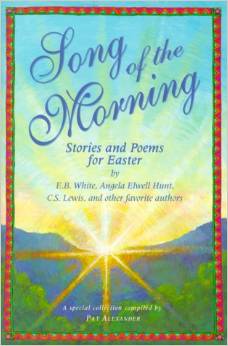
Song of the MonringSongs of the Morning: Stories and Poems for Easter was compiled by Pat Alexander and includes excerpts from the writings of C. S. Lewis, E. B. White, Dickens and others, some (mostly poems) written by children. I had bought it ages ago from a clearance section, put it on my shelf, noticed it it off and on through the years, and kept forgetting about it at Easter time. Finally this year I remembered to pull it out in the weeks preceding Easter. I like to read something devotional pertaining to Easter during that time, and while this wasn’t that exactly, it was both pleasant and beneficial.

I don’t think I realized, or I had forgotten, that it was geared primarily to children, probably the same age as those who would be able to read the Narnia series. But adults can gain from it, too.

I like that it couches the Easter story within historical context. The first section is “How It All Began” and begins with a short excerpt from a children’s Bible about God creating the world and sin entering in (Pat Alexander also wrote The Lion’s Children’s Bible, which I had not heard of before this, so I don’t know how well it expresses Biblical truth, but the excerpts I read here were fine). Then there are Narnia excerpts about the founding of Narnia and the White Witch and a couple of other sources to further illustrate those truths.

Other sections follow a similar pattern and focus on the birth of Christ, the triumphal entry on Palm Sunday, the crucifixion, and the resurrection. There’s also a section of “The Greatest Love,” with several historical and story illustrations of sacrificial love (like Sydney Carton’s in A Tale of Two Cities and a story about a boy’s dog risking its life to save the boy’s), one called “It’s All Right,” dealing with how new life in Christ should affect our lives in practical terms, like forgiveness of others, and a final one called “A New Beginning.”

The stories come from a variety of countries. Some are old, some are new. Some are from adults’ work, some from children’s books. Some are fun, some are serious. Pat did a fine job putting all these sources together. It doesn’t look like the book is in print any more, but there are copies that can be purchased online, or perhaps you can keep an eye out for it at library sales and such.

(This review will also be linked to Semicolon‘s Saturday Review of Books.)

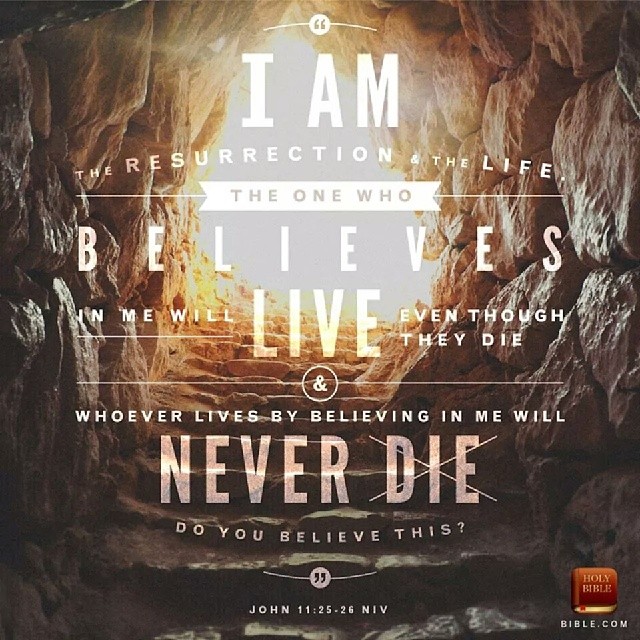
He Is Risen Indeed!

10299841_641701779216757_2112017931_n

Happy Easter!

Valentine’s Cards

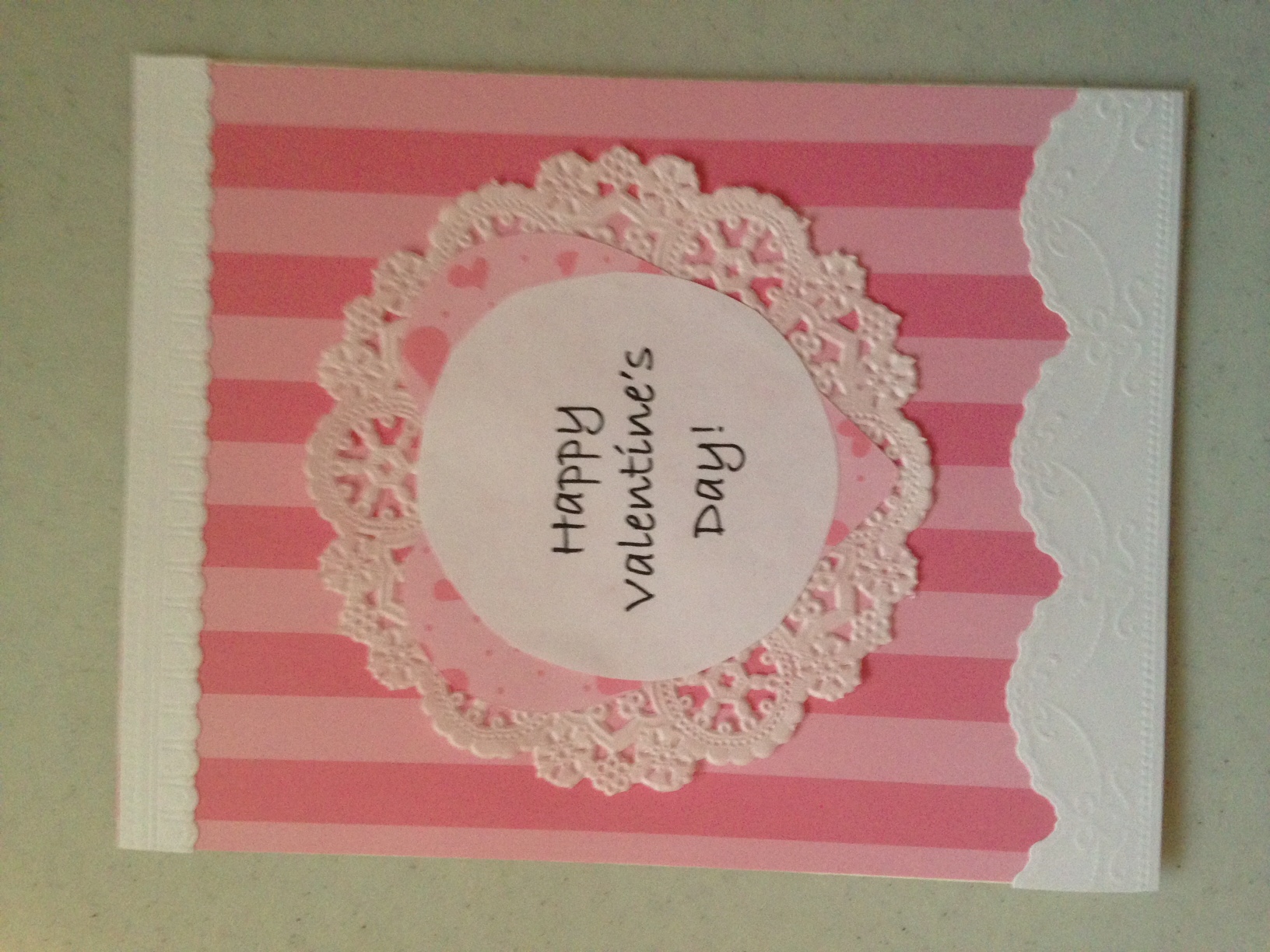
I have an embarrassingly large supply of materials  to make cards. Most have been picked up on sales or with coupons. I have used some over the years to make personal cards or for projects for our ladies’ group and missionaries, but I have quite a lot on hand still. Often by the time I think of making a card for an event. I don’t have enough time. But this year I determined it make Valentine’s Day cards for the family, and I thought I’d show them to you. I perused my Cards and Papercrafts and Valentine’s Ideas Pinterest boards for inspiration and used a few there as springboards but came up with a few others on my own.

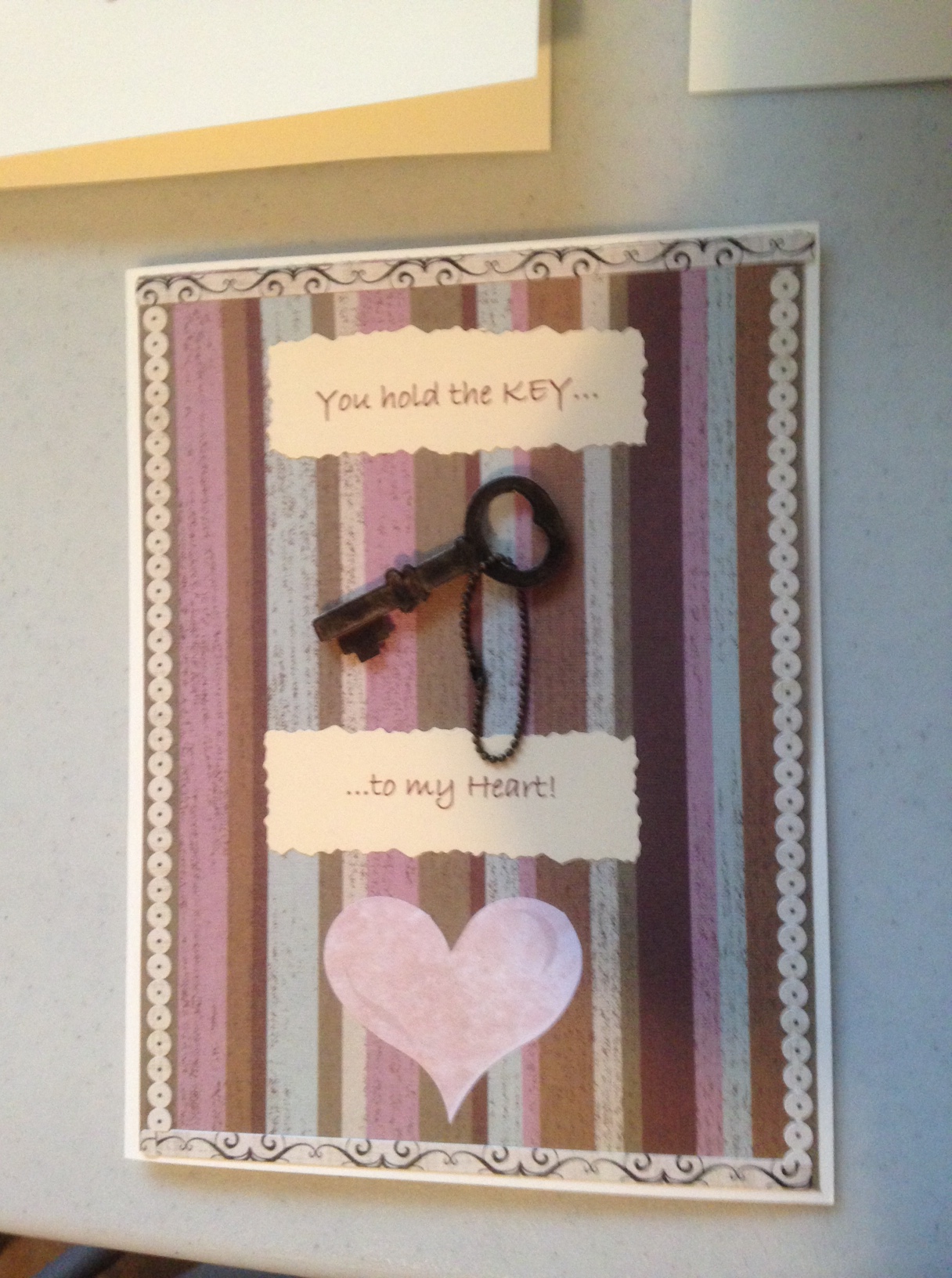
This was Jim’s:

IMG_1039

The key is a little 3-d sticker and the only thing I bought especially for these cards: everything else I had on hand. He’s enjoyed joking that keys to my heart can be bought at Hobby Lobby. 🙂

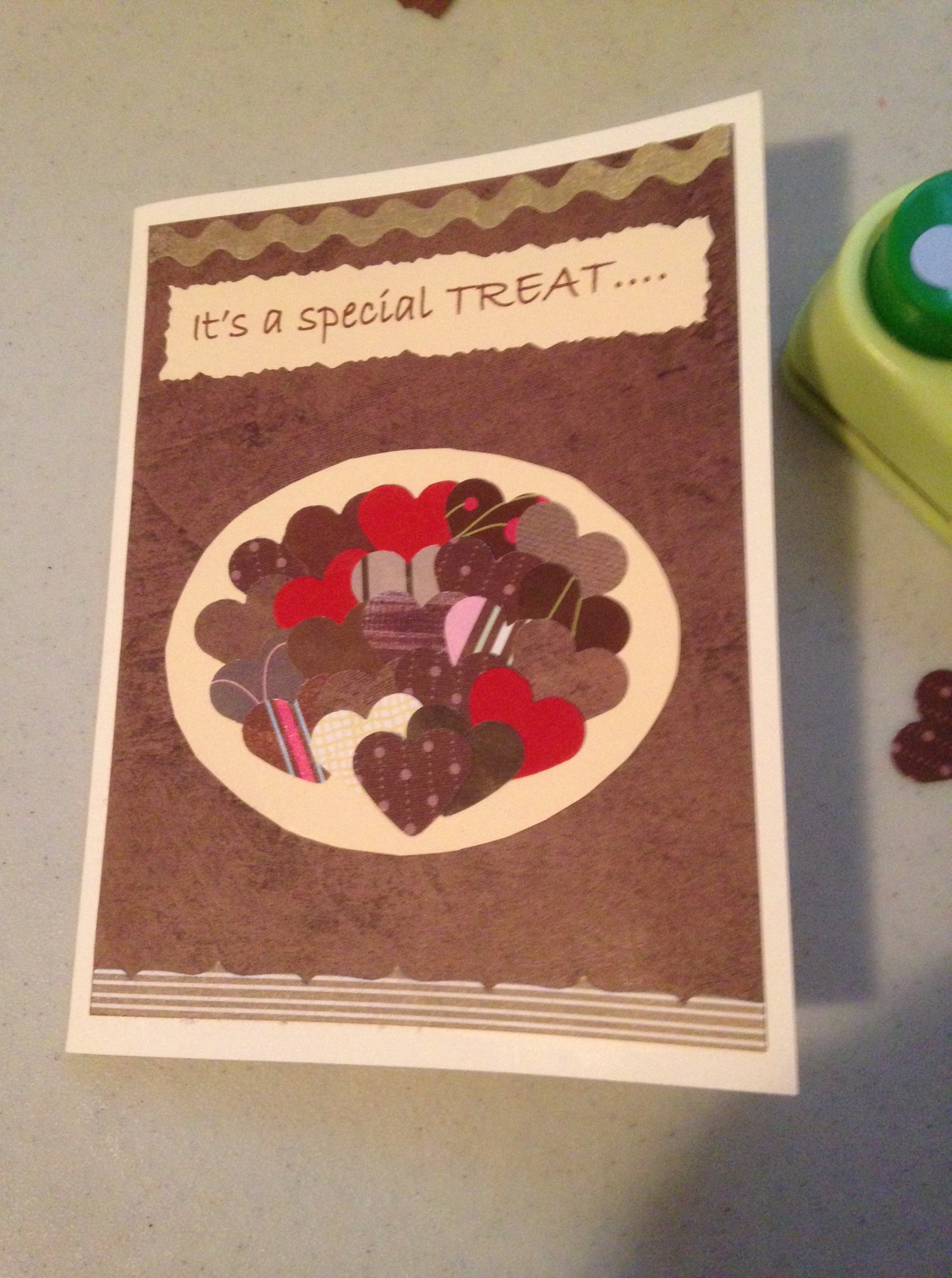
This was Jeremy’s:

IMG_1035

The inside said “…To wish you a Happy Valentine’s Day.” I think the brown hearts look like chocolate, and they’re a great way to get hearts on a man’s card so it’s more masculine looking than the pink ones I gravitate to. 🙂 I usually make heart-shaped chocolate cupcakes decorated with sprinkles or icing for Valentine’s Day, and I thought these were reminiscent of those or of chocolate candies. Most of the hearts of various sizes on the cards were made with punches.

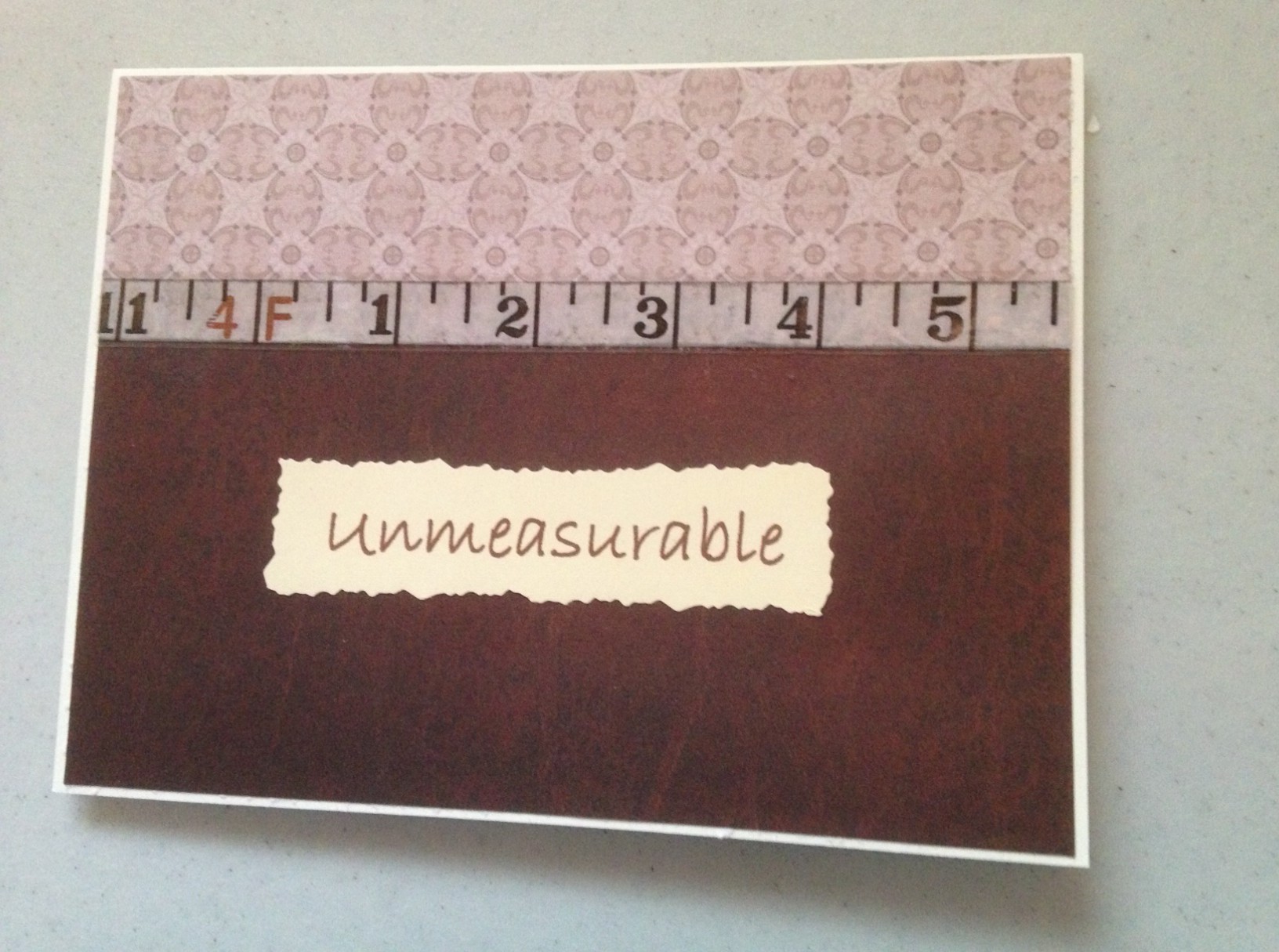
This was Jason’s:

IMG_1041

The inside says “That’s our love for you,” meaning it’s so great it can’t be measured. I just realized last night or some time this morning that I didn’t have a heart on his. Sorry about that, Jason! Here’s one for you: 🙂

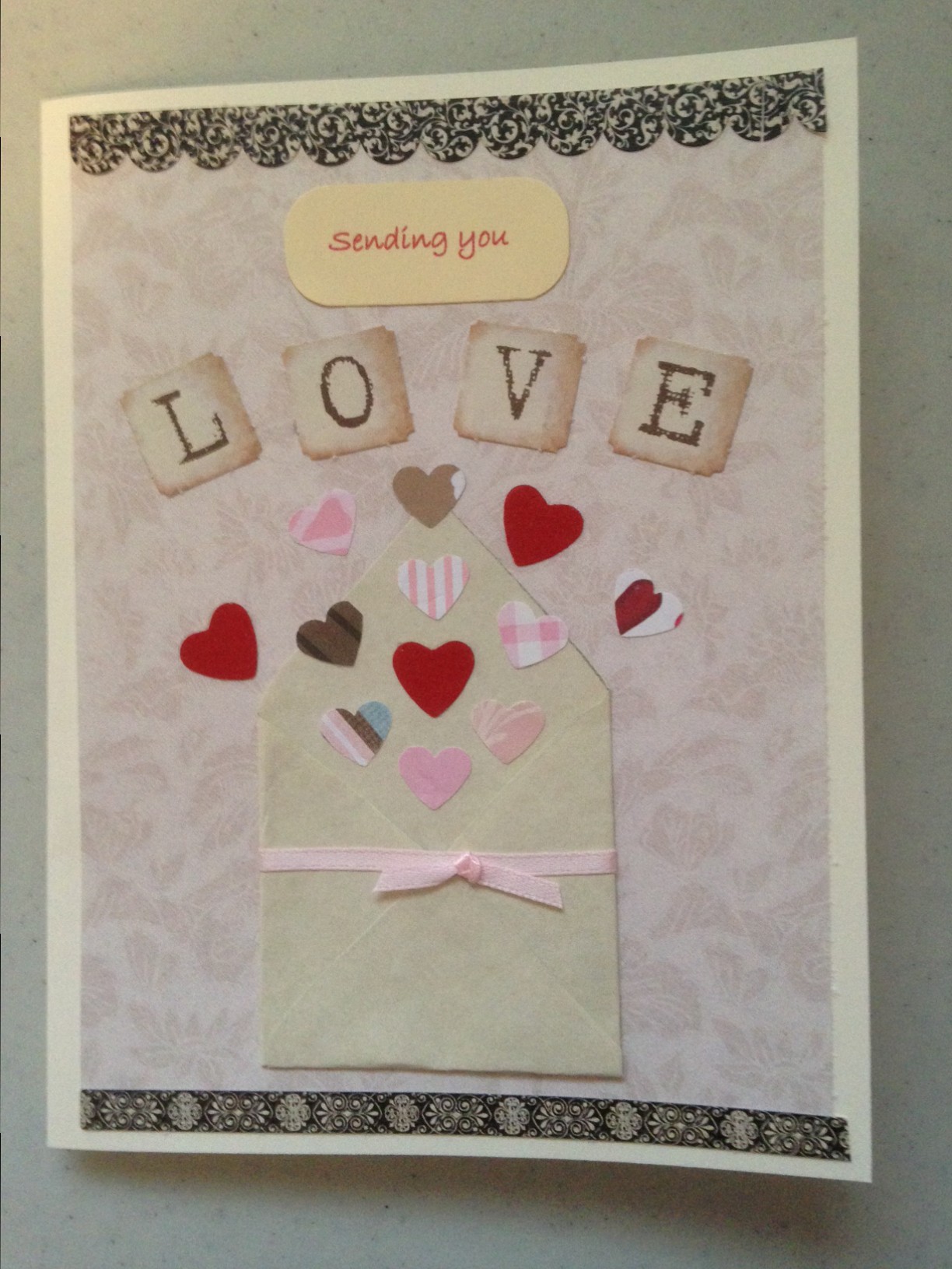
This was Mittu’s:

IMG_1044

The inside says “On Valentine’s Day and every day!” The little envelope was made with help from a template I found by searching online for “small envelope templates.” I have a neat punch that rounds off corners and used that for the words here. By the way, the words were all printed out on the computer with the Bradley Hand ITC font except for the letters for “LOVE” here, and those were from a page of punch-out letters. My own handwriting, I’m sorry to say, would not make for a pretty card. The words on the other cards I cut out with a scissors with a torn-paper-looking edge. That one is a little more forgiving than, say, a scalloped edge. I have a hard time cutting in a straight line, so this particular scissors helps. I have a mini paper cutter for longer straight lines.

This was Timothy’s:

IMG_1042

The inside says, “To our favorite snuggle buddy.” It was inspired by this pin, but when I tried to click through to the site to see if the card maker had instructions or a pattern, I couldn’t find the original site, nor could I find it by searching Google using the terms I thought I had originally found it with. So I had to wing it (pun intended. 🙂 ). Then I realized this card was going to be from both my husband and I, so I needed more than just one adult with the baby bird.

This one was Jesse’s:

IMG_1040

I think the inside just said “Happy Valentine’s Day!”

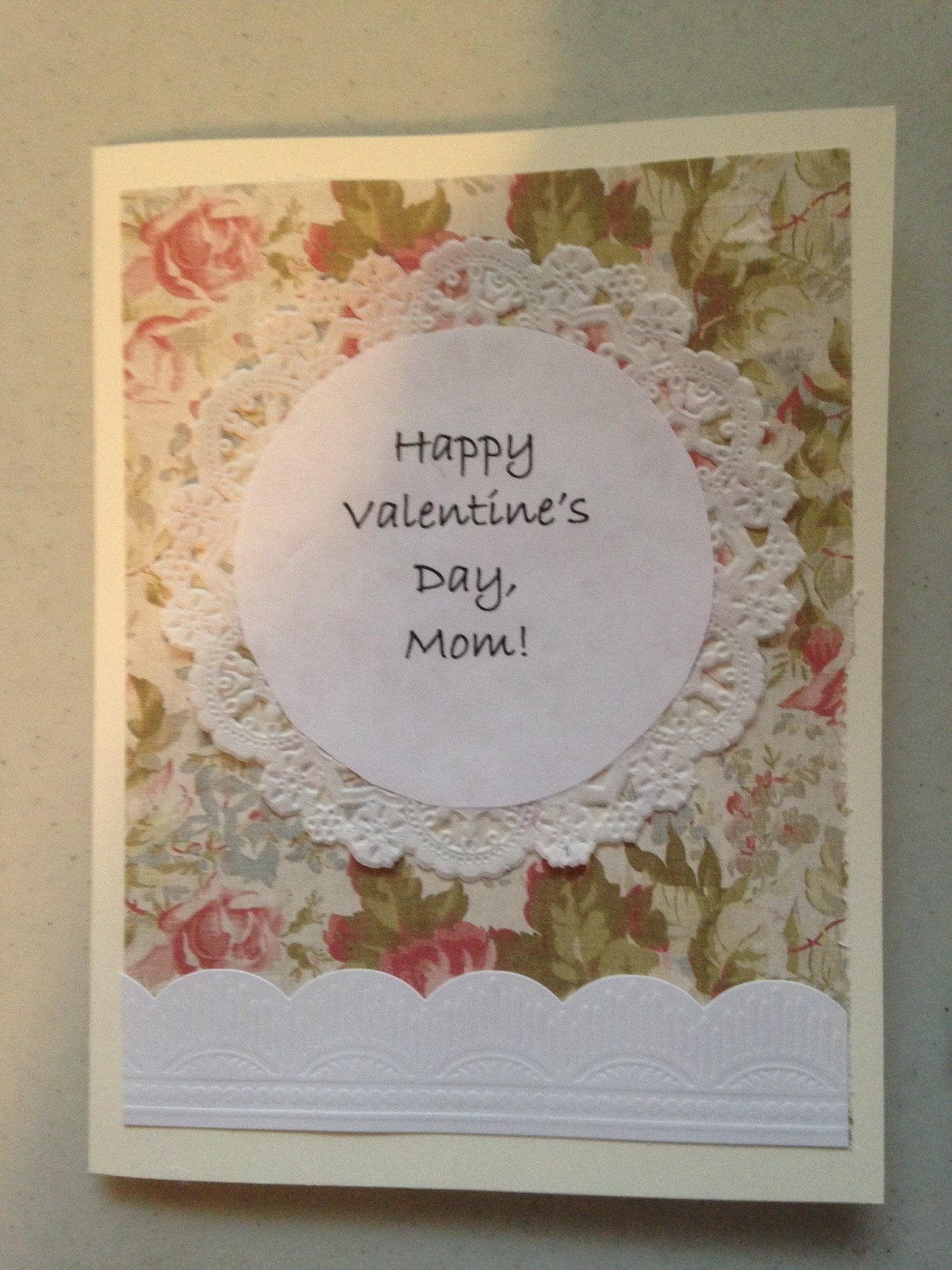
With the last two, I was running out of both time and ideas, so they are somewhat similar. This was Great-Grandma’s (or Mom, to my husband and me):

IMG_1046

Sorry about the shadow on this one. The inside says, “Your example has taught us how to love….May we show you as much love as you have shown us.”

This was for Jesse’s girlfriend, Meaghan:

IMG_1045

All of the borders were from packages of stick-on strips – very handy! And Hobby Lobby has them on sale 1/2 price pretty frequently in the scrapbooking section.

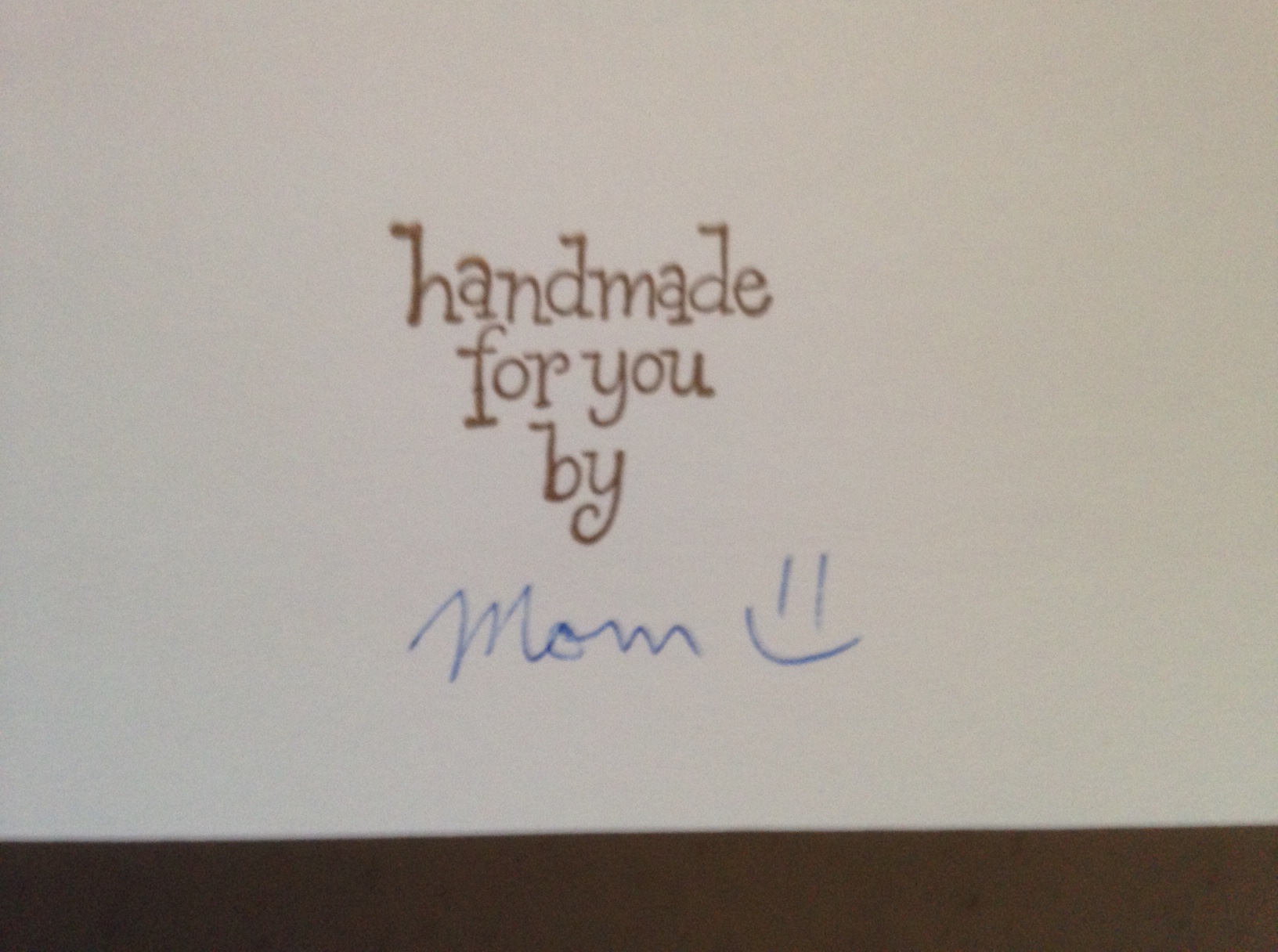
And on the back of each card was this stamp with either Mom, Grandma, or Barbara written in accordingly:

IMG_1047

They were a lot of fun to make, though they did take quite a bit of time. Actually once I decided what to do for each one and chose the decorative papers, it didn’t take long to put them together: the decision-making was the hardest part.

I’m hoping this will jump-start me into making more cards rather than buying them this year. It will probably depend on how much time I have before each occasion and whether I remember to start on then in time. But I think they add a nice touch.

Occasionally I’ve thought about starting an Etsy shop to sell things like this. But I’d also like to do more writing and various other things, so I am not sure of which way the Lord would have me use my time yet. So for now I’ll just do them as I have time for the family and think about the possibility of expanding on them later.


Quotes about love beyond Valentine’s Day

balloon

In the past I have written about how much I love Valentine’s Day, how we celebrate it, foods we use, favorite love songs, quotes, etc., and I plan to enjoy some of those things to the hilt today (I hope you can, too!) This year I wanted to do something different. All of those other things are fun, but real love (not just romantic love, but loving our families, our neighbors, and even our enemies) involves more and is often difficult, especially when our different wills, desires, or habits clash. These quotes help me in the everyday life, rubber meeting the road kind of challenges of loving other people. Maybe they’ll be a help to you, too.

The springs of love are in God, not in us. It is absurd to look for the love of God in our hearts naturally; it is only there when it has been shed abroad in our hearts by the Holy Spirit.

— Oswald Chambers, My Utmost for His Highest, April 30

Love means to love that which is unlovable; or it is no virtue at all.

– G K Chesterton

To love those whom we do not like means that we treat them as if we did like them — to choose to act kindly toward them even though we do not like them….The Bible does not ask us to like the brethren, it asks us to love them, and that means, therefore, something like this: we may not like certain Christians. I mean by that, there is none of this instinctive, elemental attraction; they are not the people whom we naturally like; yet what we are told is that to love them means that we treat them exactly as if we did like them. Now, the men and women of the world do not do that; if they do not like people, they treat them accordingly and have nothing to do with them. But Christian love means that we look beyond that. We see the Christian in them, the brother or sister, and we even go beyond what we do not like, and we help that person. Love your brethren — that is the exhortation with which we are concerned.

— Martyn Lloyd-Jones on I John 3:16-18 in his book Children of God

How many of you will join me in reading this chapter (I Corinthians 13) once a week for the next three months? A man did that once and it changed his whole life. Will you do it? It is for the greatest thing in the world. You might begin by reading it every day, especially the verses which describe the perfect character. “Love suffereth long, and is kind; love envieth not; love vaunteth not itself.” Get these ingredients into your life. Then everything that you do is eternal. It is worth doing. It is worth giving time to. No man can become a saint in his sleep; and to fulfill the condition required demands a certain amount of prayer and meditation and time, just as improvement in any direction, bodily or mental, requites preparation and care. Address yourselves to that one thing; at any cost have this transcendent character exchanged for yours.

– Henry Drummond, The Greatest Thing in the World

Being in love is a good thing, but it is not the best thing. There are many things below it, but there are also many things above it. You cannot make it the basis of a whole life. It is a noble feeling, but it is still a feeling. Now no feeling can be relied on to last in its full intensity, or even to last at all. Knowledge can last, principles can last, habits can last; but feelings come and go. And in fact, whatever people say, the state called “being in love” usually does not last. If the old fairy-tale ending “They lived happily ever after” is taken to mean “They felt for the next fifty years exactly as they felt the day before they were married,” then it says what probably was never was or ever could be true, and would be highly undesirable if it were. Who could bear to live in that excitement for even five years? What would become of your work, your appetite, your sleep, your friendships? But, of course, ceasing to be “in love” need not mean ceasing to love. Love in this second sense — love as distinct from “being in love” is not merely a feeling. It is a deep unity, maintained by the will and deliberately strengthened by habit; reinforced by (in Christian marriages) the grace which both parents ask, and receive, from God. They can have this love for each other even at those moments when they do not like each other; as you love yourself even when you do not like yourself. They can retain this love even when each would easily, if they allowed themselves, be “in love” with someone else. “Being in love” first moved them to promise fidelity: this quieter love enables them to keep the promise. It is on this love that the engine of marriage is run: being in love was the explosion that started it.

– C. S. Lewis, Mere Christianity

The labor of self-love is a heavy one indeed. Think whether much of your sorrow has not arisen from someone speaking slightingly of you. As long as you set yourself up as a little god to which you must be loyal, how can you hope to find inward peace? – A.W. Tozer

As we remember the lovingkindness of the Lord, we see how good it was to find our own strength fail us, since it drove us to the strong for strength. – Spurgeon

Walk worthy of the vocation wherewith ye are called, With all lowliness and meekness, with longsuffering, forbearing one another in love; Endeavouring to keep the unity of the Spirit in the bond of peace. Ephesians 4:1b-3.

Love is patient and kind; love does not envy or boast; it is not arrogant or rude. It does not insist on its own way; it is not irritable or resentful; it does not rejoice at wrongdoing, but rejoices with the truth. Love bears all things, believes all things, hopes all things, endures all things. I Corinthians 13:4-7, ESV.

 

Book Review: Let Every Heart Prepare Him Room

Let Every HeartForgive me for spending the first week of the year catching up with Christmas reviews. As I said yesterday, I don’t usually have the computer time when I finish these to talk about them, and when I do I feel it’s probably too far past Christmas. But Let Every Heart Prepare Him Room: Daily Family Devotions for Advent by Nancy Guthrie is another that I’ve read several times now and want to share more about with you.

This book is written in a much different style than her compilation of essays in Come Thou Long Expected Jesus that I discussed yesterday. It’s written for use as a family devotional, so the language is in a simper style that I think very young children could comprehend, but I enjoyed it even as an adult reading for myself. Each chapter ends with a prayer, some discussion questions, and a few more Scriptures on the topic of the chapter. There are 31 readings: I like that it doesn’t stop at Christmas but extends through the month. (I know I said I liked that Come Thou Long Expected Jesus only had 22 readings, but those in this book are short enough that I don’t think it would be a problem to keep up with all month). The sizing of the book, too, is small enough that I think children would be comfortable holding it and taking a turn at the family reading.

In addition, there are lined pages where you can jot down anything you want to remember about the discussions aroused from the readings and a few pages of Christmas songs with their history.

The readings cover several topics that you would expect, but also a few you might not have thought of, such as this quote:

When you look at something through a magnifying glass, it looks much bigger than it actually is. Is that what Mary meant when she said, “My soul magnifies the Lord”? Was she trying to make God look bigger than He actually is?

 We can never make God bigger or greater than He is. The truth is, we can never fully take in or understand God’s greatness. But we can magnify Him. We magnify God not by making Him bigger than He truly is, but by making Him greater in our thoughts, in our affections, in our memories, and in our expectations. We magnify Him by having higher, larger, and truer thoughts of Him. We magnify Him by praising Him and telling others about His greatness so they can have bigger thoughts about Him, too.

 Sometimes we wonder why we aren’t happy, why we make sinful choices, why we feel distant from God. Often it’s because we have small thoughts about God and magnified thoughts of ourselves, our wants, our rights, our accomplishments. Mary, the one God chose to be the mother of His Son, could have easily allowed thoughts of herself to become larger, even prideful. But instead of magnifying herself, she magnified the Lord (p. 29).

And this:

Sometimes we are given a gift that we think is not really useful to us, and therefore we never take it out of the box. We stash it away in a closet or on a shelf somewhere in case we need it someday. Sadly, that’s what some people do in regard to Jesus. They want to keep him handy for when something comes along that they can’t handle on their own, but for now they have no interest in making him part of their day-to-day lives, and so they put him on the shelf. They simply don’t believe he is as good as the Bible says he is, and so they have no real or lasting joy in having received this great gift (p. 79).

Day 17’s reading on “Glory Revealed” is one that especially stood out to me.

I appreciate Nancy’s thoughtfulness and depth in these devotionals, even couched as they are in simple language.

I’ve used this book several times, once with Jesse when he was younger and then on my own. It’s one I am sure I will use again, and I am happy to recommend it to you.

(This will also be linked to Semicolon‘s Saturday Review of Books.)


Book Review: Come Thou Long-Expected Jesus

Long Expected JesusI’ve read Come Thou Long Expected Jesus:Experiencing the Peace and Promise of Christmas, compiled by Nancy Guthrie, many times, but somehow I have never reviewed it. Probably because, like this year, I’ve finished it right in the busiest of the Christmas season, and by the time I had time to go over it, felt it was too far past Christmas to review. But I am not letting that happen this year. 🙂

In Nancy’s preface, she tells of Christmases where all the activities had been accomplished, but her heart wasn’t truly prepared. Then she tried to find a book of Christmas readings, but the ones she found did not minister to her. She wanted to find a “book with short readings on Advent themes from a number of different writers I trust and respect; that reflected a high view of Scripture; and that put the incarnation in the context of God’s unfolding plan of redemption” (p. 10). When she couldn’t find such a book, she set out to create one, reading and editing multitudes of sermons and writings from well-known theologians and Bible teachers.

There are 22 selections on various aspects of Advent, from Mary to conception by the Holy Ghost to Joseph to the shepherds to Jesus’s humility and others, from such teachers and preachers as Charles Spurgeon, Augustine, Martyn Lloyd-Jones to Tim Keller, John MacArthur, J. I. Packer, and Ray Ortland. I don’t know all of the authors, so I wouldn’t endorse everyone 100%, but I don’t think I read anything in this particular volume that I had a problem with, at least not that I noted or can recall.

In many ways it is hard to review a book like this, with so many authors and topics. But I’ll share just a few quotes that stood out to me:

Ligon Duncan III on Joseph: “God is calling Joseph to believe his word and to act in accordance with it. And Joseph does just that. He accepts God’s word and he trusts God’s word and he relies upon God’s word and he re-orients his life to conform to that word. What a tremendous act of faith on the part of Joseph and what an example of obedience to God’s word in spite of circumstance” (p. 53).

From “For Your Sakes He Became Poor” by J. I. Packer (originally from Knowing God): “We see now what it meant for the Son of God to empty himself and become poor. It meant a laying aside of glory; a voluntary restraint of power; an acceptance of hardship, isolation, ill-treatment, malice and misunderstanding; finally, a death that involved such agony–spiritual even more than physical–that his mind nearly broke under the prospect of it. It meant love to the uttermost for unlovely human beings, that they ‘through his poverty might become rich.’ The Christmas message is that there is hope for a ruined humanity–hope of pardon, hope of peace with God, hope of glory–because at the Father’s will Jesus Christ became poor and was born in a stable so that thirty years later he might hang on a cross. It is the most wonderful message that the world has ever heard, or will hear.

We talk glibly of the ‘Christmas spirit,’ rarely meaning more by this than sentimental jollity on a family basis. But what we have said makes it clear that the phrase should in fact carry a tremendous weight of meaning. It ought to mean the reproducing in human lives of the temper of him who for our sakes became poor at the first Christmas. And the Christmas spirit itself ought to be the mark of every Christian all the year round.

…The Christmas spirit does not shine out in the Christian snob. For the Christmas spirit is the spirit of those who, like their Master, live their whole lives on the principle of making themselves poor — spending and being spent — to enrich their fellow men, giving time, trouble, care, and concern, to do good to others — and not just their own friends — in whatever way there seems need (pp. 70-72).

From “Good News of Great Joy” by Raymond C. Ortlund, Jr.: “God is terrifying to guilty sinners, even though he is in himself gloriously beauitful. But God is pursuing us, even though we avoid him. He himself has taken the initiative to break through our terror” (p. 99).

From the same chapter: “Our good intentions are not strong enough to control our evil impulses. We need a Savior to rescue us from ourselves” (p. 100).

From “The Lessons of the Wise Men” by J. C. Ryle: “Let us beware of resting satisfied with head knowledge. It is an excellent thing when rightly used. But a person may have much of it, and still perish everlastingly. What is the state of our hearts? This is the great question. A little grace is better than many gifts. Gifts alone save no one; but grace leads on to glory” (p. 111).

There are so many others I’d love to share. Packard’s and Ortlund’s chapters impacted me the most this time, I think. There was a lot that was deep and thought-provoking in both, especially Ortlund’s on God’s glory.

Our family doesn’t celebrate Advent liturgically or ceremonially, with different candles on different days and all that, but I do like to, as Nancy wrote at the beginning, spend some time preparing for Christmas with some kind of Advent reading. This book, so far, has been the best book I have found for that. I like that it is 22 essays rather than 24 or 25 or 31: it gives one some leeway to begin early in December but not fall behind if a day or two is missed. Though the chapters are longer than the average devotional booklet, they’re not too long to read in a sitting, and I have found I do better at this stage of life with sustained thought on topics like this rather than “grab and go” devotionals. But most of all I like the richness and the depth. I had used it for several years, laid it aside for a few years, and rejoiced to read it again this year. I’m sure I will read it again many times.

(This will also be linked to Semicolon‘s Saturday Review of Books.)

Happy New Year!

I had to have a tooth pulled yesterday, so there were no big New Year’s Eve parties for us. 🙂 Actually, we usually have a quiet evening at home on that night anyway. I don’t like to be out when there are going to be even more drunk drivers than usual, and our church wasn’t having its usual Wednesday night services. I thought about rescheduling my oral surgery for another time, but figured this would actually work out for the best since Jim would be home anyway. I wasn’t sedated – just had local numbing. Of course I’ve been dealing with varying degrees of pain since the numbness wore off, but it is not as bad as it was yesterday afternoon.

I don’t usually do New Year’s Resolutions, but I do usually like to reflect a bit on the coming year and things I need to work on. So far I haven’t really had time to: maybe next week. But in last night’s Daily Light reading, I came across these verses, which will give me plenty to think about in the next year:

Giving all diligence, add to your faith virtue; and to virtue knowledge; and to knowledge temperance; and to temperance patience; and to patience godliness; and to godliness brotherly kindness; and to brotherly kindness charity. I Peter 1:5-7

I pray, that your love may abound yet more and more in knowledge and in all judgment. That ye may approve things that are excellent; that ye may be sincere and without offence till the day of Christ. Being filled with the fruits of righteousness, which are by Jesus Christ, unto the glory and praise of God. Philippians 1:9-11

And for my friends here, I saw this last year and was moved by it:

A New Year’s Prayer

May God make your year a happy one!
Not by shielding you from all sorrows and pain,
But by strengthening you to bear it, as it comes;
Not by making your path easy,
But by making you sturdy to travel any path;
Not by taking hardships from you,
But by taking fear from your heart;
Not by granting you unbroken sunshine,
But by keeping your face bright, even in the shadows;
Not by making your life always pleasant,
But by showing you when people and their causes need you most,
and by making you eager to be there to help.
God’s love, peace, hope and joy to you for the year ahead.

Anonymous

crown-the-year-new-year-550x320

(Graphic from crosscards.com)

At the Close of the Year

dec-31-calendar

Excerpts from “At the Close of the Year”

 ~ by John Newton

 Let hearts and tongues unite,
And loud thanksgivings raise:
‘Tis duty, mingled with delight,
To sing the Saviour’s praise.

 In childhood and in youth,
His eye was on us still:
Though strangers to his love and truth,
And prone to cross his will.

 And since his name we knew,
How gracious has he been:
What dangers has he led us through,
What mercies have we seen!

 Now through another year,
Supported by his care,
We raise our Ebenezer here,
“The Lord has help’d thus far.”

 Our lot in future years
We cannot now foresee,
He kindly, to prevent our fears,
Says, “Leave it all to me.”

 Yea, Lord, we wish to cast
Our cares upon thy breast!
Help us to praise thee for the past,
And trust thee for the rest.


Merry Christmas!

We hope you and yours have a lovely day with all its activities, especially remembering our dear Saviour born for our salvation.

Infant holy, Infant lowly, for His bed a cattle stall;
Oxen lowing, little knowing, Christ the Babe is Lord of all.
Swift are winging angels singing, noels ringing, tidings bringing:
Christ the Babe is Lord of all.

Flocks were sleeping, shepherds keeping vigil till the morning new
Saw the glory, heard the story, tidings of a Gospel true.
Thus rejoicing, free from sorrow, praises voicing, greet the morrow:
Christ the Babe was born for you.

Tra­di­tion­al carol, trans­lat­ed from Po­lish to Eng­lish by Edith M. Reed, 1921

Who Is He?

Who is He in yonder stall
At Whose feet the shepherds fall?
Who is He in deep distress,
Fasting in the wilderness?

Refrain:

’Tis the Lord! O wondrous story!
’Tis the Lord! the King of glory!
At His feet we humbly fall,
Crown Him! crown Him, Lord of all!

Who is He the people bless
For His words of gentleness?
Who is He to Whom they bring
All the sick and sorrowing?

Refrain

Who is He that stands and weeps
At the grave where Lazarus sleeps?
Who is He the gathering throng
Greet with loud triumphant song?

Refrain

Lo! at midnight, who is He
Prays in dark Gethsemane?
Who is He on yonder tree
Dies in grief and agony?

Refrain

Who is He that from the grave
Comes to heal and help and save?
Who is He that from His throne
Rules through all the world alone?

’Tis the Lord! O wondrous story!
’Tis the Lord! the King of glory!
At His feet we humbly fall,
Crown Him! crown Him, Lord of all!

~ Ben­ja­min R. Han­by, 1866