Book Review: Courageous

CourageousCourageous is a novelization by Randy Alcorn of a movie by the same name written by  Alex and Stephen Kendrick and produced by the same church that produced Facing the Giants and Fireproof. I’ve never seen the film, but when the audiobook was on sale I decided to check it out.

The basic theme of the book is encouraging fathers to be men of integrity and to take the responsibility to raise their children in a godly manner as well as mentoring other young men. The story follows four men who are policemen and a fifth who is not on the force but becomes a good friend. Law enforcement has to be one of the toughest jobs on families, so I can see why the authors chose that profession for their characters.

A couple of the fathers are on the right track but need guidance and wisdom and maybe a little course correction, at least for one of them, before major trouble hits. One means well but is alienating his son with his lack of involvement and interest. Another fathered a child in a former relationship but hasn’t seen mother or child in years. When a tragedy strikes one of them, it sends repercussions throughout their whole group.

A subplot involves a gang that is wreaking havoc in the town of Albany, Georgia, their various encounters with the police force, and one fatherless wannabe gang member in particular.

Though the premise of the story is a good one, the writing is driven more by the points the author wants to make than by the plot or the characters, an accusation often aimed at Christian fiction. Nevertheless, the points are good ones, and if you think of it more as an extended parable or sermon illustration than a novel it’s a little easier to take.

I enjoyed a phone interview with Alcorn at the end of the audiobook in which he discussed the ramifications of expanding a two-hour screen play into a full length novel, when usually the process goes the opposite direction. I appreciated, too, the point he made that a film will reach many people, but when people read a book, they’re spending 10 or more hours with it and thus the principles involved have a longer time to affect the reader’s thinking.

One little quibble I had with the story involved the resolution that the fathers all eventually sign. One father came up with it after studying out what the Bible had to say about being a godly father, and when he told the others about it, they wanted to sign it, and eventually word of it and promotion for it went out to the whole church. The resolution sounds like a good thing in itself, but like so many of these kinds of things, the emphasis shifts to it rather than the principles behind it. After the resolution, instead of a character saying, “I can’t do this…” or “I must do this…” because of Biblical instruction or principle, they say I can’t or I must do such and such “because I signed the resolution.” When I was composing this post in my head before sitting down to write, my mind went to various scenarios where we tend to shift our focus to the tool rather than the reason for it: starting a Bible study program to aid in reading and understanding the Bible, and then getting caught up in the tenets of the program rather then delving deeper into the Bible, or having an accountability group to encourage one another in a certain area, and then experiencing a subtle change in our thinking to want to look good in the eyes of the members rather than growing in holiness before God. Small groups are not my favorite thing, but I do acknowledge they can be beneficial, and I acknowledge that they work best if everyone in the group participates, yet that participation doesn’t mean that every member must say something every meeting. I tend to say something if I have something to say, but sometimes I’m processing, sometimes I’m still on the point made ten minutes ago when the rest of the group has moved on, etc. Once when I hadn’t said anything in a couple of meetings, our group leader spoke to my husband and wondered if he should call on me during the meetings – perhaps he thought I was shy and needed the encouragement to speak out (though calling on a shy person in public would NOT be an encouragement to them!) My husband, thankfully, said that would probably not be the thing to do. Then a few days later, our leader’s wife called to ask me to do something for an upcoming activity, in what seemed a subtle attempt to “get Barbara involved,” when I was involved and participating all along, even if I wasn’t saying anything. That kind of thing puts pressure on a person to feels she has to dream up something to say every week so people don’t think she’s unspiritual, which is totally fake and, again, turns the focus on the tool (getting everyone to participate by making everyone speak in small group) rather than on the reason the group is meeting in the first place.

Please forgive the rabbit trail. 🙂 I don’t have a problem with the resolution itself (or any of these other tools), but with this tendency to focus on the tool rather than using the tool to help us focus on the Lord. I did also appreciate a point Alcorn made in the phone interview, that this book and film are not “the” tools, but just some tools that churches or groups could use. Most churches who preach and teach anything about godly fatherhood would incorporate the principles in the book, but it helps some to have a vehicle like this in which to do so, and that’s primarily what the authors wanted to do: to provide a film and book that would be food for thought and and encouragement to people in their walk with God.

I finished the book a week or two ago but had wanted to see the film before writing this review. However, there is no telling when I might get time for that, so I wanted to go ahead and get this review up. I thought the audiobook narrator, Roger Mueller, did a wonderful job reading the book, but I could have done without the dramatic music between chapters.

(This will also be linked to Semicolon‘s Saturday Review of Books.)

31 Days of Missionary Stories: Clint and Rita Vernoy: On Ethnocide and Raising Children in the Jungle

VernoysClint and Rita Vernoy are missionaries that our church in SC supported. I found Rita’s blog through a link from Susan‘s, and as I looked around I realized that this was one of our missionaries! Rita blogged at The Jungle Hut for several years and then moved to Livin’ la Rita Loca. Both sites have some great windows into life as a missionary.

I met Clint a couple of times when they were home on furlough, but Rita was not able to come either time. They ministered in the jungles of Venezuela for several years until the Communist government forced all foreign missionaries out. This post tells of their heartbreak at leaving a people and country they had come to love. They currently minister in Paraguay.

I wanted to highlight a couple of posts of theirs that I think would be very helpful and informative to read.

Let’s Define Ethnocide! is Clint’s response to a comment that he was committing “ethnocide,” purposely destroying an ethnic group or culture, by his missionary activities. I have mentioned a couple of times in this series that this sentiment is increasing in our culture these days, and Clint’s answer is a great one to read to inform yourself not only for your own information, but to answer these accusations when you come across them. Besides the spiritual benefit, which is huge but of course unrecognized or unacknowledged (or condemned) by a secular culture, missionaries generally also improve the hygiene, health, and quality of life of those to whom they minister while still keeping the culture intact. Who among us would still want to live as people did during the American Revolution or Little House on the Prairie days without the improvements and progress we have experienced since then? Rita also expanded on this in What About the Culture? I strongly encourage you to read both of these posts.

Another post I wanted to highlight is Rita’s daughter’s response to an anonymous commenter who said “that we had raised our children in an abusive environment by forcing them to live in the jungle in a mud hut without the amenities of civilization.” She assures, “While we appreciate your concern about our childhood, rest assured…we’re fine. Not a single one of us regrets our childhood, it was an awesome adventure, and we are grateful.” The rest of the post expands on some of the advantages and results of having grown up in the jungle.

I don’t know if anyone in the family has written a post on this yet – I haven’t seen one –  but I’d love to read Clint’s story of eating grub worms for the first time. 🙂 It was hilarious when he told it at church, though I am sure it didn’t feel so funny when it happened.

And if you have time, another great and thought-provoking post written for their mission board’s magazine is How Far Is Enough?

(You can see other posts in the 31 Days of Missionary Stories here.)

Legacy of an Adopted Child

November is National Adoption Month, so I’d like to take at least a couple of posts to highlight adoption. Today I want to share a poem that touched my heart, and later I want to highlight how adoption has impacted our family.

I first saw this in a Dear Abby column some years ago, cut it out — and just found it again last week.

Legacy of an Adopted Child

Once there were two women who never knew each other,
One you do not remember — the other you call Mother.

Two different lives shaped to make yours one.
One became your guiding star — the other became your sun.

The first gave you life and the second taught you to live in it.
The first gave you a need for love and the second was there to give it.

One gave you a nationality; the other gave you a name.
One gave you the seed of talent; the other gave you an aim.

One gave you emotions; The other calmed your fears.
One saw your first sweet smile; the other dried your tears.

One gave you up – It was all that she could do.
The other prayed for a child and God led her straight to you.

And now you ask me through your tears the age old question through the years:
Heredity or Environment – Which are you the product of?

Neither my darling, neither –
Just two different kinds of love.

~ Author Unknown

I’m not naive enough to think that all children placed for adoption are given in love: I have known people who adopted or were foster parents to children from abusive situations. But even then, the gift of life, allowing that child a chance to live in a loving family, to grow up, experience life, and become a productive adult, is always a better answer than abortion.

Book Review: Raising Real Men

I first became aware of this book through the M.O.B (Mothers of Boys) Society web site.* I enjoy Hal and Melanie’s occasional columns there, usually full of wisdom and practical insight, as they are raising six boys themselves.

The premise of Raising Real Men: Surviving, Teaching, and Appreciating Boys by Hal and Melanie Young is that what society and moms find negative about boys is part of what defines them as men and should be trained rather than squelched. For instance, a natural bent toward leadership in a pint-sized immature young boy with a sin nature will look bossy and controlling. Risk-taking in a young guy will look like recklessness. The goal is to develop those qualities in a right way rather than just squashing them. And moms in particular, who prefer peaceful, docile children, need to understand that boys act, think, and respond differently. That doesn’t mean we let them run rampant: too often destructive behavior is excused  with a “That’s just the way boys are” attitude. But we pray for them, teach them, train them, lead them to the Lord, and help them, with God’s help, to become mature young men.

The Youngs discuss various aspects of this training, from acceptable risk-taking, competition, heroes, dealing with violence, purity, money matters, work ethics and experience, differences in learning, chivalry, gender roles, household duties, preparing for marriage and careers, and transitions as boys mature.

Here are a few quotes from the book that stood out to me:

God has placed in our boys a desire to be in charge, because one day they will be in charge. Today’s boys will be the fathers, and bosses, and elders, and statesmen of tomorrow. We’ve got to teach them how to submit to authority without destroying their leadership (p. 24).

Adults sometimes equate a desire for adventure with immaturity and recklessness. The Bible makes a distinction and so should we. The desire to conquer, to win against the odds, to do great things — these can be admirable ambitions. The willingness to pit one’s nerve against an unsettling foe is frequently called for in Scripture…On the other hand, overconfidence and rashness is soundly criticized (p. 48).

Our boys should be active and adventurous, but careful of themselves at the ultimate extreme, understanding that life is a gift and their bodies are the temple of the Holy Spirit. To risk life meaninglessly is foolishness; note that God’s gifts of boldness and courage are not for self-fulfillment or entertainment but for greater service to Him (p. 53).

Every family has some way they can teach their sons to be faithfully independent in a step-by-step way….It doesn’t seem fair to keep sons under constant instruction and supervision, with no chance to stand on their own, then give them complete responsibility and freedom when they come of age…Think of it like teaching a baby to walk — first you hold their hands, then you stand just a bit away, then farther away. If they stumble, you can catch them — to a point (p. 63).

When God asked Adam and Eve [questions], He wasn’t looking for information; He was forcing them to confront their fall from innocence (pp. 89-90).

This is the difficultly with “time-out” punishments that focus on exclusion from the fellowship of the family. Exclusionary punishments send the child away from the love and wisdom of his parents to brood in a corner, feeling angry and sorry for themselves in the lack of discipline and teaching. The fear of abandonment and rejection is deep in a small child. How much better to correct the sin and heal the broken fellowship quickly! (p. 91).

It was especially gratifying to read someone else saying that about “time-outs.” I had always felt that they weren’t the best way to discipline. There were some times we sent a child to his room to wait while we got our emotions under control (and gave them time to do the same) or prayed or thought about what to do. If they were sometimes in a bad mood that wouldn’t be rectified (boys have their “moods” as well as girls), we’d say something like, “If you want to be in a bad mood, that’s up to you, but you’re not going to inflict it on the rest of the family. You can go to your room til you’re feeling more sociable.” Usually it didn’t take long for a change in attitude to come. But where definite disciple is needed, it’s so much better to deal with it effectively and get it over with.

To me the heart and summation of the book came at the end:

Our boys need to be comfortable in their own skins. Not all men are athletes just like not all are intellectuals. Manliness is much more than brute force, it’s a heart attitude of confidence and boldness to accomplish the mission given by God (p. 243).

There were maybe a couple of minor things I disagreed with: one equated shyness with selfishness. I believe shyness is a personalty characteristic and not intrinsically selfish, but it can manifest itself in selfishness. Being an intensely shy person myself, the realization that my responses could hurt or offend people or curb ministry to them helped me a great deal in opening up and reaching out when I’d naturally feel more comfortable pulling back and remaining quiet.

The book almost assumes its readers are home-schoolers, but that is probably because the Youngs home school and are writing from their experience, and much of the book came from talks given to home school associations and such. But one does not have to home school to benefit from the book.

When I was growing up, fathers were quite authoritarian: nowadays the pendulum has swung to the other extreme and fathers are portrayed on TV as bumbling fools and “manhood” is looked down upon. As a mom of three grown boys, I am glad to recommend this balanced treatment on the topic with its encouragement to raise real, godly men to authentic Biblical manhood.

___________
*Disclaimer: While I recommend the M.O.B. Society web site, I do not agree with every little thing every writer there says nor with every ad there.

(This review will also be linked to Semicolon‘s Saturday Review of Books.)
Book Review: Created For Work

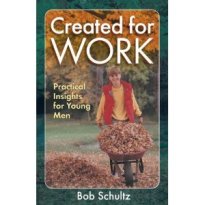
After enjoying Boyhood and Beyond: Practical Wisdom for Becoming a Man by Bob Schultz with my youngest son, we tried another of his books, Created for Work: Practical Insights for Young Men. The title attracted me because I think developing a strong work ethic in young people is becoming a lost art and because people generally have a negative view of work. It was a revelation to me years ago to realize that God created and ordained work before the fall of man into sin: it’s not part of the Curse, though it is harder because of the Curse.

I don’t recall that Schultz brought out that aspect of work, but he brought out many others, using his own work and experience as an independent contractor as a backdrop for many of his insights. He discusses things you’d expect concerning work, like diligence, initiative, working within the rules, finishing well, etc. But he brought out other things I would not have thought of: looking at things from a boss’s perspective, dealing with a loss of confidence, irritations between coworkers, admitting when you’re wrong and learning from it, the dangers of diligence (becoming self-satisfied and indulgent after success), and even the way the Lord brings you into contact with other people through your work to whom you can minister. Another valuable insight was that of balancing initiative: his example was a young man who saw a neighbor’s fallen tree and decided to cut it up into firewood for them, only to discover afterward they had planned to take it to the mill to be turned into lumber.

There were just a couple of places where I disagreed with the author a bit. In one chapter titled “Great Grandpa Cornelius,” Schultz is encouraging boys to be diligent workers even before they’re of age to work at an outside job, and I agree with that. But he makes the statement, “If someone provides your food, shelter, and education, you’re a liability” (p. 42). I wouldn’t say that to a boy in the home. He goes on to say that you had no choice as a baby to have others work for you, but as soon as you can you want to work to become an asset. And I agree with that as well. From the time our boys were little, though they had jobs in the home and allowances that were loosely tied to each other, the main reason for their jobs wasn’t to earn an allowance or even to “help” their parents, but to pull together as a family and contribute to the family and to get in the habit or working. So I agree with all of that in principle, I agree with teaching boys (and girls) to work for a variety of reasons, but I still wouldn’t call being provided for as a boy at home being a liability. When he gets to be 30 or so, well, that’s different. 🙂

In another chapter titled “My Instructor,” he describes a time when his boss wanted him to install trim with costly wood in a beauitful, expensive home. He was worried because he hadn’t had much experience with the particular type of work his boss wanted him to do, worried enough to lose sleep the night before the job. He felt God was telling him that since He created the world and told Solomon how to build the temple and Noah how to build the ark, He could tell him how to do this job. And He did, through a painter who came through and gave him an off-the-cuff tip. I can’t argue with his experience, and I’ve had the experience as well of being stuck in the middle of some task, praying for wisdom, and feeling that God gave me the idea of what to do about it. But I wouldn’t want someone to take this particular experience as a substitute for owning up that you don’t know how to do a particular job or seeking out instruction on how to do it beforehand.

And finally, in a chapter on unemployment compensation he writes that he feels that such is government aid and that instead of filing for unemployment, he should find other work he can do as unto the Lord and for His kingdom, such as yard work for a widowed neighbor, etc. My husband and I feel that unemployment compensation is a form of insurance rather than a “handout” and is a legitimate and responsible way to care for one’s family between jobs. I do agree with the other principles in the chapter, however, that ultimately we work for God, not for money, though He usually provides through a job, and that there are many useful things one can do during a jobless time, like work for others and get ones’ tools ready and prepared for the next opportunity.

The space and time to explain those few caveats makes it looks I disagree with more than I agree with, and that’s not the case: I think this is a valuable resource for boys and young men. If I’d had this when my boys were younger, I think I would have gone over it with them then as well as again as older teenagers about to leave home.

(This review will also be linked to Semicolon‘s Saturday Review of Books.)
A Real Home

I just rediscovered this in my files and thought I’d share it with you. I don’t remember where I first saw it: it says it came from the Yankee Kitchen Cookbook, 1969.

A Real Home

A Real Home is a gymnasium. The ideal of a healthy body is the first one to give a child.

A Real Home is a lighthouse. A lighthouse reveals the breakers ahead and shows a clear way past them.

A Real Home is a playground. Beware of the house where you “dassen’t frolic”–there mischief is brewing for someone.

A Real Home is a workshop. Pity the boy without a kit of tools or the girl without a sewing basket. They haven’t learned the fun of doing things, and there is no fun like it.

A Real Home is a forum. Honest, open discussion of life’s great problems belongs originally in the family circle.

A Real Home is a Secret Society. Loyalty to one’s family should mean keeping silent on family matters–just this and nothing more.

A Real Home is a Health Resort. Mothers are the natural physicians.

A Real Home is a cooperative league. Households flourish where the interest of each is made the interest of all.

A Real Home is a business concern. Order is a housewife’s hobby. But order without system is a harness without a horse.

A Real Home is a haven of refuge. The world does this for us all: it makes us hunger for a loving sympathy and a calming, soothing touch.

A Real Home is a Temple of Worship.

~Author unknown.

(Graphic courtesy of Graphic Garden)

What do adults “owe” parents?

Recently we watched “Guess Who’s Coming to Dinner?” The major issue in the film is interracial marriage, but that’s not what I want to discuss today (Roger Ebert has a great review of the film here.

Something that stood out to me was the speech Sidney Poitier’s character made to his father. His father is opposed to his son’s marrying a white woman, and when Poitier’s character tells his father to “shut up and let me think,” his father indignantly begins to list what he and his wife sacrificed for their son and what he owes them.

If I transcribed it correctly, the part that especially caught my ear and provided food for thought for several days was this:

I owe you nothing…You did what you were supposed to do because you brought me into this world, and from that day you owed me everything you could ever do for me, just like I will owe my son if I ever have another. But you don’t own me. You can’t tell me when or where I am out of line or try to get me to live my life according to your rules….Not until your whole generation has lain down and died will the dead weight of you be off our backs…You’ve got to get off my back.

Admittedly, both characters were having pressured-filled days, and the son later softened his tone and professed his love for his father.

I don’t want to critique this from a Christian viewpoint because I know it wasn’t written that way, and there was fault of both sides in that scene, but for now I want to take this concept of what adult children “owe” their parents out of the context of the film and just ponder it.

Truly parents shouldn’t do what they do for children for “payback,” and neither should they hold it over their offsprings’ heads as a manipulation to do things their way out of guilt, though there may be times a little adjustment in the kids’ perspective is in order. There comes a time a man has to “leave his father and his mother, and shall cleave unto his wife” (Genesis 2:24; Mark 10:7; Ephesians 5:31), to step out on his own as an adult, and come to his own convictions and rules.

But there are things we do owe parents even after we’re out of the home and out from under their direct authority.

Honor

The fifth of the ten commandments was not given only to children: “Honour thy father and thy mother: that thy days may be long upon the land which the LORD thy God giveth thee.” We usually apply it to children, but children aren’t specified in that passage. Even when we’re out from under a parent’s direct authority, we’re still to honor them. Even if they’re not everything they ought to be (who among us is?), we’re still to honor them.

Respect

This is perhaps a part of honor. Leviticus 19:32 says, “Thou shalt rise up before the hoary head, and honour the face of the old man, and fear thy God: I am the LORD,” and Proverbs 16:31 says, “The hoary head is a crown of glory, if it be found in the way of righteousness.” Proverbs 23:22 says, “Hearken unto thy father that begat thee, and despise not thy mother when she is old.” I wrote some thoughts about this a while back here. Society today does not  value the elderly much, but in God’s economy we’re to greatly respect them. But the tenor of Scripture indicates respect of parents even before they get to be “elderly” — you can’t read far through Proverbs especially without picking up on that attitude.

A Hearing

The book of Proverbs is a father’s instruction to his son, except for the last chapter which is a mother’s instruction. I don’t know that all of that instruction is aimed at a minor child. Other places in the Bible, as well, urge us to listen to advice, instruction, and even rebuke from those who are wiser and more mature than we are, and parents should surely be among the first we’d listen to, because they know us best and are the most interested, usually, in our well-being and outcome. Again, not every parent’s every piece of advice is going to be on target, but it shouldn’t be dismissed out of hand: it should at least be given a fair hearing and then evaluated in light of God’s Word and prayer.

Appreciation

Honestly, I can’t think of a Bible verse for this one, but if gratitude and appreciation for what others have done are good character traits, they should certainly be applied to parents. I’ve written before about how children don’t fully understand what’s been done for them until they’re older, usually when they have children of their own. Even now that I am in my 50s and my mother has passed away, there are new realizations sometimes of things she went through, and I can’t tell her now that I understand and appreciate it, but I hope she knows.

Care

In I Timothy 5:1-15, Paul instructs the younger pastor Timothy in how the church should care for the widows in its number, and he says in verse 4, “But if any widow have children or nephews, let them learn first to shew piety at home, and to requite their parents: for that is good and acceptable before God.” Jesus called out the Pharisees and scribes for allowing people to give to them what should have gone to care of parents.

Then of course, there are the Biblical “one anothers” that should govern Christians’ interaction with each other. Sometimes, sadly, we neglect those most with those closest to us.

Parents are fallible people. They’re not always on target; sometimes they might be a little out of touch. Sometimes they’re out and out wrong — I came from a non-Christian home and have written before about having to learn to respect my parents out of obedience to God even when they were doing things I couldn’t respect. On the other hand, sometimes teen or adult kids think a parent is a little too free with unsolicited advice when that advice is something they really need to hear. Parents shouldn’t nag and manipulate; kids shouldn’t ignore and disrespect. Sometimes parents do have to pull back and let their children make and learn from their own mistakes, but sometimes a parent’s advice will save a son or daughter from a serious problems and heartache. It’s a delicate balance. But if those involved are seeking the Lord’s best, He will help them find that balance and best way of interacting, and even if only one side is actively seeking to honor Him in their dealings, He will aid them.

Moms of Boys Blog Hop

Mothers of BoysThe M.O.B. Society (Mothers of Boys) is having a blog hop in order to get to know each other better.

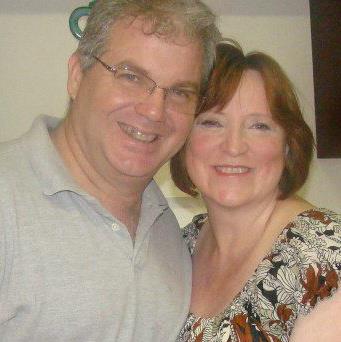
Welcome! My name is Barbara H. and I am in my early 50s. My husband Jim and I have been married for 31 years. My boys are almost 27, 24, and almost 18 (we’re in the middle of “birthday season” when the odometer rolls over for several in our family). I have one beautiful daughter-in-law, married to my middle son. Only my youngest lives at home and he is just starting his senior year of high school, so I am treasuring his last full year at home and helping him pray about college and majors and such. My mother-in-law lives in a nearby assisted living facility but we bring her over often and go visit her almost daily.

This is our last Christmas photo:

After spending most of our married lives in SC, the Lord moved us to TN almost a year ago. It’s been a year of changes and adjustments, but then, that’s life, isn’t it?

My blog is a hodgepodge. I love to write about books I have read, my family, thoughts from the Bible, encouragement to younger women, and anything else that captures my attention. I love to love as well and I think I have a fair share of humor sprinkled throughout my blog.

Some of my posts that might be of particular interest to younger moms are:

Encouragement for mothers of young children.
Motherhood advice.
Encouragement for homemakers.
A Quiet Spirit.
A mother’s nightly ritual– an original poem.
I Corinthians 13 for mothers.
Parenting teens.
Missing something? No, I don’t think so after all.
The ideal house.

The M.O.B. Society hosts asks us about favorite books of our boys. When they were little they loved Curious George, The Little Engine That Could, Golden Books, The Bible in Pictures for Little Eyes, Mike Mulligan, Keep the Lights Burning, Abbey, Jesse Bear books by Nancy White Carlstrom, books by Robert McCloskey, P. D. Eastman. My oldest, as he got into his pre-teens, liked Cloudy With a Chance of Meatballs, Encyclopedia Brown, Roald Dahl books, and developed a liking for science fiction.

I hope you enjoy your visit here, and I am looking forward to “meeting” you!

The Week In Words and a Giveaway Winner

”"

Welcome to The Week In Words, where we share quotes from the last week’s reading. If something you read this past week  inspired you, caused you to laugh, cry, think, dream, or just resonated with you in some way, please share it with us, attributing it to its source, which can be a book, newspaper, blog, Facebook — anything that you read. More information is here.

Here are a few that spoke to me this past week:

Seen at Semicolon:

“When the storytelling goes bad in society, the result is decadence..” ~ Aristotle

That seems a very true development in our society.

From a friend’s Facebook:

“Your children need a relationship with Christ more than they need comforts, sports, education or popularity. You are their primary source for knowing Him.” ~ J Kenney

From the May 30 reading of The Invitation by Derick Bingham concerning John 12:28:

Christ was willing t0 suffer whatever was necessary if only the glory of God would be promoted. If people were to think better of His Father through what they saw in Him, that was what really mattered.

The second sentence struck me as the essence of what it means to glorify God.

From Mine Is the Night by Liz Curtis Higgs, p. 33:

However grim Reverend Brown’s countenance, however dour his sermons, this was where she would spend each Sabbath, finding a secret joy in the holy words themselves.

This was both an encouragement and  rebuke to me. I’ve admitted to getting frustrated and discouraged with particular types of preaching that are the speaker’s “take” or thoughts about the text rather than a drawing out and a giving the sense of the text itself, or preaching that is a ranting and raving style. But if I have “ears to hear,” I can take great joy in the Word of God itself that is being presented.

And finally the winner of the giveaway of Warren Wiersbe’s With the Word and a couple of other little surprises from last week’s WIW is Katrina at Callapidder Days! Thanks so much to all who entered!

If you’ve read anything that particularly spoke to you that you’d like to share, please either list it in the comments below or write a post on your blog and then put the link to that post (not your general blog link) in Mr. Linky below. I do ask that only family-friendly quotes be included. I hope you’ll visit some of the other participants as well and glean some great thoughts to ponder.

Don’t forget to leave a comment, even if you don’t have any quotes to share! 🙂

Missing something? No, I don’t think so after all.

When we were preparing to move last summer, I unearthed a whole stack of family-oriented magazines from several years back. In more recent years I had marked and torn out what I was interested in (or checked and bookmarked the article online) and then passed it on to a friend, but this stack must have accumulated and then been forgotten before I started doing that.

I brought them with us to look through as I had time and just got to them last week. Many had turned-down corners noting something I wanted to consider doing with my own sons. I started looking at the dates of the magazines: many were from the time my youngest was in his toddler to preschool to early elementary years.

At first I started to kick myself and feel really guilty that I had never done all these neat activities with my children.

But then, I thought, “Now, wait just a minute!” We did do lots of things together:

We sat on the floor and made Lego creations.

We read books. Lots and lots of books. We made regular trips to the library and every library day afternoon was spent in happy reading all the new treasures.

We built tracks and loops for Hot Wheels cars.

We did puzzles.

We colored and painted.

We made various Play-Dough creations.

We had a multitude of Little People sets, thanks to my mom, and played seemingly endless scenarios with them.

We played untold rounds of a game called something like Memory Match (like Concentration from my childhood), Hi Ho Cheerio, Sorry, Candyland, and other games.

We took walks.

We went to the park.

We visited friends.

We played in the sandbox.

We blew bubbles.

We went to the zoo.

Even going to the grocery store was considered fun at certain ages.

We may not have done some of those neat unique activities in the magazines, but we did a lot of fun things and spent a lot of time together. I’ve thought to myself that I hoped that my lack of keeping up with baby books as I would have liked was due to my actually spending time with my kids.

Were those magazines a waste, then? I don’t think so. I did use some ideas over the years, but even the ones I missed using had a positive influence. Just like visiting a craft store or craft show or craft blogs sparks my own creative juices even if I never do the specific crafts I see, I think family magazines and idea books and these days mommy blogs can inspire my own goals with my family. But they need to be kept as an inspiration, a creativity-sparker, a supplement to our own real lives, not a burden, a guilt-producer, a competition against other moms and kids, an addition to an already crowded schedule.

As long as we’re spending both quality time and quantities of time together, nourishing our relationships, learning and growing, we don’t have to worry that we’re not keeping up with whatever everyone else does. Attentive time together is what matters most.

This post will be linked to “Works For Me Wednesday,” where you can find a plethora of helpful hints each week at We Are THAT family on Wednesdays, as well as  Women Living Well.