Does God Know You?

Does God know you?

Some of the scariest Bible verses to me are Matthew 7:21-23:

Not everyone who says to me, ‘Lord, Lord,’ will enter the kingdom of heaven, but the one who does the will of my Father who is in heaven. On that day many will say to me, ‘Lord, Lord, did we not prophesy in your name, and cast out demons in your name, and do many mighty works in your name?’ And then will I declare to them, ‘I never knew you; depart from me, you workers of lawlessness.

The people here were doing and saying “religious” things, even calling Jesus Lord. But He professed not to know them.

Of course, He is omniscient. He knows everything about everyone. But He doesn’t know these people in the sense of having a relationship with them.

How can this be? 

Many passages talk about doing, not just hearing, the Word of God. But the reverse is true as well. It’s possible to do religious things without knowing God at all. The Pharisees were famous for knowing the Old Testament law but missing the point of it.

It’s possible to grow up in or become part of Christian culture without really knowing the Lord.

How can we know that we know Him and He knows us?

Psalm 1:6 says, “The Lord knows the way of the righteous, but the way of the wicked will perish.” That righteousness isn’t our own–we could never measure up to the perfect righteousness required. “We have all become like one who is unclean, and all our righteous deeds are like a polluted garment. We all fade like a leaf, and our iniquities, like the wind, take us away.” (Isaiah 64:6).

Philippians 1:11 speaks of the “righteousness that comes through Jesus Christ.” Only He is righteous enough. And He graciously gives His righteousness to us when we repent of our sins and believe in Him. 

He himself bore our sins in his body on the tree, that we might die to sin and live to righteousness. By his wounds you have been healed (1 Peter 2:24).

For our sake he made him to be sin who knew no sin, so that in him we might become the righteousness of God (2 Corinthian 5:21).

He saved us, not because of works done by us in righteousness, but according to his own mercy, by the washing of regeneration and renewal of the Holy Spirit, whom he poured out on us richly through Jesus Christ our Savior, so that being justified by his grace we might become heirs according to the hope of eternal life (Titus 3:5-7).

“The Lord knows those who are his” (2 Timothy 2:19). He’s the good shepherd who knows His sheep (John 10:14). He “knows those who take refuge in him” (Nahum 1:7).

Do you know God? Does He know you?

Please read here for more information.

John 17:3

(I often link up with some of these bloggers.)

If Jesus Had Not Been Resurrected

If Jesus Had Not Been Resurrected

There’s an old Christmas song I’ve only heard a few times titled “If Jesus Had Not Come” by Albert C. Norton and Donald P. Hustad. The songwriters list several consequences we would face if Jesus never came to earth. Then the rousing chorus affirms:

But Jesus came! He came to earth,
And men beheld His manger birth!
The shepherds heard the angels sing,
The wise proclaimed Him Lord and King!
He died, He rose; and by His blood,
We too become the sons of God;
We preach the gospel in His name!
For Jesus came! Yes, Jesus came!

This Easter week, I’m thinking about what the consequences would be if Jesus had not been raised from the dead.

No resurrection for us. 1 Corinthians 15:20-23 says Jesus was the “firstfruits of those who have fallen asleep. For as by a man came death, by a man has come also the resurrection of the dead. For as in Adam all die, so also in Christ shall all be made alive. But each in his own order: Christ the firstfruits, then at his coming those who belong to Christ.” If He wasn’t raised from the dead, we won’t be, either. “If in Christ we have hope in this life only, we are of all people most to be pitied” (verse 19).

Futile faith. “If Christ has not been raised, then our preaching is in vain and your faith is in vain . . . And if Christ has not been raised, your faith is futile and you are still in your sins” (1 Corinthians 15:14, 17).

No meaning in life. Paul questions the worth of the dangers he endured for gospel’s sake if there is no resurrection. “If the dead are not raised, ‘Let us eat and drink, for tomorrow we die'” (1 Corinthians 15:30-32).

Death’s sting. Paul concludes his “resurrection chapter” with this: “For this perishable body must put on the imperishable, and this mortal body must put on immortality. When the perishable puts on the imperishable, and the mortal puts on immortality, then shall come to pass the saying that is written: ‘Death is swallowed up in victory.’ ‘O death, where is your victory? O death, where is your sting?'” (1 Corinthians 15:53-55). But if Jesus is not risen, death’s sting is still with us.

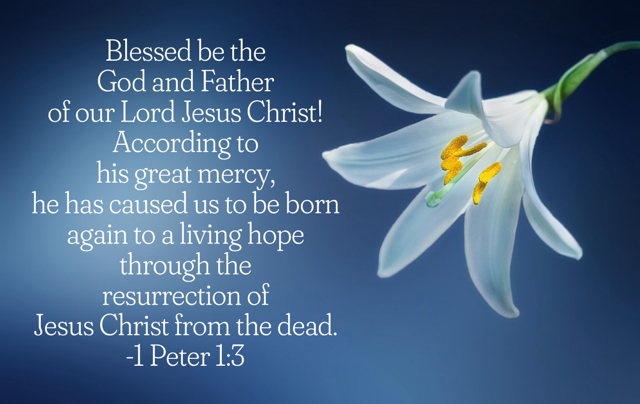
No hope. Peter begins his epistle by saying, “Blessed be the God and Father of our Lord Jesus Christ! According to his great mercy, he has caused us to be born again to a living hope through the resurrection of Jesus Christ from the dead” (1 Peter 1:3). But if there is no resurrection, we don’t have a living hope.

No inheritance. Peter speaks of an “inheritance that is imperishable, undefiled, and unfading, kept in heaven for you” which encourages us in our trials. But we’ll never receive that inheritance if there is no resurrection. (Ephesians 1 also speaks of our inheritance.)

No seeing loved ones again. When a loved one dies, or when facing our own death, one comfort is that we’ll see our loved ones again if they’ve believed on the Lord. Paul shares in 1 Thessalonians 4:13-18 that those who have already died will be reunited with those of us who are still alive when Jesus returns. Therefore we do “not grieve as others do who have no hope.” But without that hope, we’ll be swallowed up in grief.

No comfort. After sharing the expectation that we’ll see our loved ones again after death, Paul tells us to comfort (some versions say encourage) one another with these words. Likewise, Peter says we can rejoice in our sufferings when Jesus’ glory is revealed (1 Peter 4:12-14). But with no resurrection, there is no comfort.

No power. Paul prays that we may know “what is the immeasurable greatness of his power toward us who believe, according to the working of his great might that he worked in Christ when he raised him from the dead and seated him at his right hand in the heavenly places” (Ephesians 1:19-20). But with no resurrection, there is no resurrection power.

No intercession. Hebrews 7:25 says Jesus “is able to save to the uttermost those who draw near to God through him, since he always lives to make intercession for them.” I can’t imagine being without His prayers!

No wrongs set right. One of our comforts in a world where there are so many wrongs is that some day they will be set right. Paul preached that God “has fixed a day on which he will judge the world in righteousness by a man whom he has appointed; and of this he has given assurance to all by raising him from the dead” (Acts 17:31). But without the resurrection, those wrongs will never be righted.

No seeing Jesus. In this life, we love and believe in Jesus, though we do not see Him (1 Peter 1:8). We look forward to that “blessed hope, the appearing of the glory of our great God and Savior Jesus Christ, who gave himself for us to redeem us from all lawlessness and to purify for himself a people for his own possession” (Titus 2: 13-14). If he’s still buried, we won’t see Him.

No motivation. Paul concludes all he says about resurrection by encouraging, “Therefore, my beloved brothers, be steadfast, immovable, always abounding in the work of the Lord, knowing that in the Lord your labor is not in vain” (1 Corinthians 15:58). But without resurrection, our work would be largely in vain and we’d lose our impetus to keep going.

Facing God’s wrath. Paul writes of the Thessalonians who “wait for his Son from heaven, whom he raised from the dead, Jesus who delivers us from the wrath to come” (1 Thessalonians 1:10). But if Jesus was not raised from the dead, we’re not delivered.

How bleak and hopeless life would be if Jesus had not been raised from the dead.

But, thank God, He has been raised! Not only that, He is the resurrection! He told Martha, “I am the resurrection and the life. Whoever believes in me, though he die, yet shall he live” (John 11:25).

I love how Krissy Nordhoff and Michel Neale expressed the joy of Jesus’ resurrection in The Mercy Tree (these are some middle verses and the chorus):

Hope went dark that violent dayThe whole earth quaked at love’s displayThree days silent in the groundThis body born for heaven’s crown.
 
And on that bright and glorious dayWhen heaven opened up the graveHe’s alive and risen indeedPraise Him for the Mercy Tree!
 
Death has died, love has wonHallelujah!, Hallelujah!Jesus Christ has overcomeHe has risen from the dead.

May we rejoice in all Jesus accomplished through His life, death, and resurrection! Hallelujah!

1 Peter 1:3

(I often link up with some of these bloggers.)

The Cross Is the Measure

The Cross Is the Measure

We talk about the cross of Christ lightly these days. We’ve gotten so used to the news that Jesus died on a cross for our sins that we’ve lost the horror of it.

Perhaps you’ve heard or read, as I have, the physical description of how a person died on a cross. I’m not going to go into all that detail here, but it would have been agonizing. When you consider that Jesus had been beaten, scourged, had nails driven into His hands and feet and was being held up by them as His body sagged–it’s almost too much to think about.

The cross was considered a shameful death as well. It was public. People not only gawked as Jesus gasped for breath, but they mocked Him. He was unclothed. His loved ones had to see and hear all that went on.

Jesus’ cross would have had a spiritual element as well. 1 John 2:2 says, “He himself is the atoning sacrifice for our sins, and not only for ours, but also for those of the whole world” (CSB). The holy, righteous Son of God, who never sinned, bore the sins of everyone else.

But he was pierced for our transgressions; he was crushed for our iniquities; upon him was the chastisement that brought us peace, and with his wounds we are healed (Isaiah 53:5).

But I think the worst part of the cross for Jesus was the temporary breach between His Father and Himself. We don’t thoroughly understand how that worked (though this article gives a good explanation). But we hear Jesus’ agony when He cries out from the cross, “My God, my God, why have you forsaken me?” (Matthew 27:46).

Four times in John 10, Jesus said He lays down His life for His sheep.

Why did Jesus do this?

Because that’s what it took to atone for sin. That’s what sin costs. That’s how awful sin is.  The cross is the measure of sin.

Ye who think of sin but lightly,
Nor suppose the evil great;
Here may view its nature rightly,
Here its guilt may estimate.
Mark the sacrifice appointed!
See who bears the awful load!
‘Tis the Word, the Lord’s anointed,
Son of man, and Son of God.

From “Stricken, Smitten, and Afflicted” by Thomas Kelly

No one else could atone for us; everyone has their own sins that need atonement. Instead, “You were ransomed from the futile ways inherited from your forefathers, not with perishable things such as silver or gold, but with the precious blood of Christ, like that of a lamb without blemish or spot” (1 Peter 1:18-19).

But the cross is also the measure of love.

For while we were still weak, at the right time Christ died for the ungodly. For one will scarcely die for a righteous person—though perhaps for a good person one would dare even to die— but God shows his love for us in that while we were still sinners, Christ died for us (Romans 5:6-8).

For God so loved the world, that he gave his only Son, that whoever believes in him should not perish but have eternal life (John 3:16).

In this the love of God was made manifest among us, that God sent his only Son into the world, so that we might live through him. In this is love, not that we have loved God but that he loved us and sent his Son to be the propitiation for our sins (1 John 4:9-10).

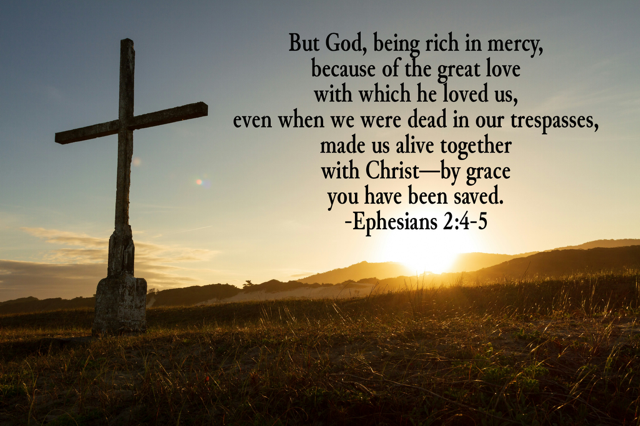
But God, being rich in mercy, because of the great love with which he loved us, even when we were dead in our trespasses, made us alive together with Christ—by grace you have been saved (Ephesians 2:4-5).

The Father was willing to give His Son, and the Son was willing to lay down His life, because they loved us enough to suffer all that was involved in order to redeem us. Hebrews 12:2 says that Jesus, “for the joy that was set before him endured the cross, despising the shame.” A former pastor said that “despising” there doesn’t mean that Jesus hated the shame of the cross, but that He “thought it down.” The Greek word for “despise” can mean scorn or disregard. We would probably magnify the shame if we were on a cross.

But Jesus endured the cross, disregarding the shame, for the joy that was set before Him. What was the joy He looked forward to? I imagine He anticipated His mission being over, being reunited with His Father, and going back to heaven when all was done. But I think a big portion of that joy was accomplishing what was needed to atone for us so we could be with Him. All through Scripture, God expresses a desire to dwell among His people. Jesus’ death and resurrection was going to make that possible.

This time of year, with Easter on the horizon, perhaps we think of Jesus’ death on the cross a little more than usual. Before racing to the joy of Jesus’ resurrection, let’s take time to meditate on His cross–the depth of our sin that necessitated it, and the depth of God’s love to pay so great a price so all who believe in Him could be saved.

Face the cross and see the dying Son.
See the Lamb upon the killing tree.
See His anguish and His tears of love.
Face the cross, He dies to set us free.

Look upon the One without a sin,.
Spotless Lamb upon the killing tree.
Feel His pain and love from deep within,
So great a price, yet paid so willingly.

From “Face the Cross,” words by Herb Fromach, music by David Lantz

Ephesians 2:4-5

More songs about the cross are listed here.

(I often link up with some of these bloggers.)

When Do You Need to Look to Jesus?

Look away to Jesus

I don’t remember what I came to talk about with my elderly pastor’s wife that day four decades ago. Probably some besetting sin, some struggle of faith, some kind of burden. But I remember her shining, earnest face as she repeated, “Look away to Jesus.”

When do you need to look to Jesus?

Do you know where you’re going when you die? Do you have inner peace? Are you burdened with the weight of the world’s problems, and with your own as well? Do you have regrets, guilt, shame? Look to Jesus.

Look to Me, and be saved, All you ends of the earth! For I am God, and there is no other (Isaiah 45:22, NKJV).

Jesus said to him, “I am the way, and the truth, and the life. No one comes to the Father except through me” (John 14:6).

Do you need to change? Are you discouraged because of a lack of transformation and growth? Look to Jesus.

And we all, with unveiled face, beholding the glory of the Lord, are being transformed into the same image from one degree of glory to another. For this comes from the Lord who is the Spirit (2 Corinthians 3:18).

Do you need focus as you run the race of life? Do you stumble and fall spiritually? Look to Jesus.

Let us also lay aside every weight, and sin which clings so closely, and let us run with endurance the race that is set before us, looking to Jesus, the founder and perfecter of our faith, who for the joy that was set before him endured the cross, despising the shame, and is seated at the right hand of the throne of God (Hebrews 12:1b-2).

Do you long for something more than this life has to offer? Do you need hope to persevere? Look to Jesus.

For the grace of God that brings salvation has appeared to all men, teaching us that, denying ungodliness and worldly lusts, we should live soberly, righteously, and godly in the present age, looking for the blessed hope and glorious appearing of our great God and Savior Jesus Christ, who gave Himself for us, that He might redeem us from every lawless deed and purify for Himself His own special people, zealous for good works (Titus 2:11-14, NKJV).

Do you need grace and help and wisdom for every day life? Look to Jesus.

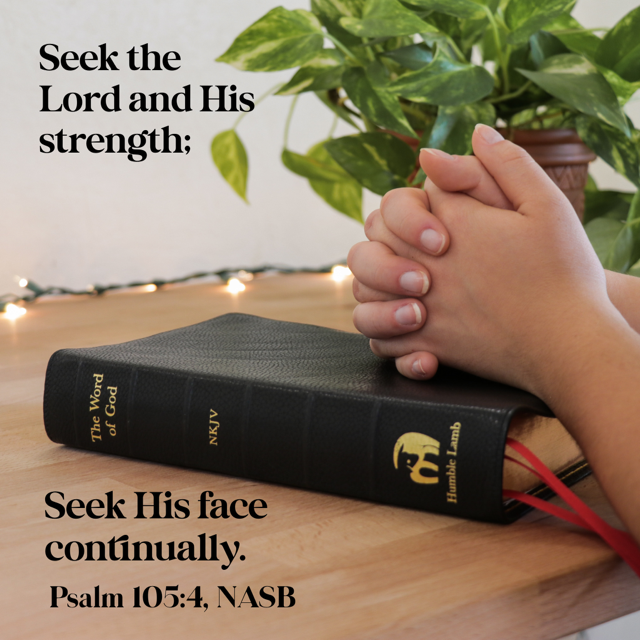
Seek the LORD and His strength; Seek His face continually (Psalm 105:4, NASB).

You have said, “Seek my face.” My heart says to you, “Your face, Lord, do I seek” (Psalm 27:8).

Looking to Jesus day after day,
Trusting His love each step of the way,
Knowing that He so willingly shares
All of my sorrows, troubles and cares.

Refrain:
Looking to Jesus—looking to Him,
Whether the path be sunny or dim;
Holding His hand by night and by day,
Trusting His love each step of the way.

Looking to Jesus when I am sad,
Looking to Jesus when I am glad,
Having no fear of tempest or foe,
Singing His praises, onward I go.

Looking to Jesus when I’m opprest,
Looking to Him for comfort and rest,
Shunning the world, its clamor and strife,
Looking to Him who crowneth my life.

Looking to Jesus me to defend,
Shield and encourage unto the end;
Knowing that He has buried my past,
Looking to Him for glory at last.

James Rowe, Public Domain

Seek the Lord

(I often link up with some of these bloggers.)
Thankful God Is Not a Stranger

Thankful God Is not a Stranger

“I was so thankful, when this happened, that God was not a stranger to me.”

I don’t remember when or where or from whom I heard this. I don’t recall the context or what the “this” was that happened. But this statement has stayed with me for decades.

In my early Christian life, when something negative happened, I’d be shaken. I wonder if this was happening because I’d done something wrong. I’d feel that God was far away. I knew He loved me, but I didn’t feel so loved. I’d ponder all the “what ifs,” which would shake me up even more.

After a few decades of walking with the Lord, I can’t say I’m not still shaken in a crisis. But I’ve wrestled through reasons God allows suffering. I’ve experienced His grace through trials. I know He has reasons for what He allows and He’ll be with me through it all. I may not like certain circumstances, and I may pray to get out of them as soon as possible. But my confidence in God isn’t shaken.

So I can echo and “amen” the unknown author of my beginning statement. God sometimes uses crises to bring people to Himself, or bring them back to Himself if their hearts are wandering. But it’s so much easier to go through a crisis with the God you know and can place your full confidence in. We can be like the psalmist, “not afraid of bad news; his heart is firm, trusting in the LORD” (Psalm 112:7).

However, we don’t just need God in crises, do we? We need Him for everything. “In him we live and move and have our being” (Acts 17:28). We need His wisdom to know how to handle situations that come up. We need His love to show to others. We need His strength in our weakness, His grace when we fail, His encouragement when we’re low.

He conveys these things to us through a couple of means: His Word and His Holy Spirit. But have you ever noticed that the passage about letting God’s Word dwell in you richly in Colossians 3 and being filled with the Holy Spirit in Ephesians 5 are parallel? The same “results” are listed for each one. The Holy Spirit inspired the Word of God, so of course that’s what He would use to equip us. “All Scripture is breathed out by God and profitable for teaching, for reproof, for correction, and for training in righteousness, that the man of God may be complete, equipped for every good work” (2 Timothy 3:16-17). Scripture meets our need for the day as well as fortifying us for the future.

Sometimes that “equipping” comes through other people as they share God’s Word with us. But we need to dig into God’s Word for ourselves as well. Someone has said that God gives birds their food, but He doesn’t throw it into their nests (I’ve heard that attributed to Luther, Spurgeon, and Josiah Gilbert Holland). Though the saying was probably meant to show the need to work for a living, I think it has an application to learning God’s Word as well. God has given us such treasure in Scripture, but we need to read it and mine for it.

Anyone who has been married for several years can tell you that they thought they knew and loved their spouse on their wedding day, but that was nothing compared to ten or twenty or thirty years later. That’s true of long-term friendships as well. Shared conversations, experiences, good times and trials, have deepened the relationship as they got to know each other more thoroughly over the years.

The same is true in our relationship with God. Eternal life starts with coming to know God in repentance and faith: “And this is eternal life, that they know you, the only true God, and Jesus Christ whom you have sent” (John 17:3). But we get to know Him better as we read the Bible, pray, exercise faith, and depend on Him through various circumstances.

The better we know Him, the less likely we are to fall apart in a crisis, to be deceived or led astray, to walk away from our faith. We’ll never be perfect til we get to heaven, but we grow in grace and knowledge of him.

If you don’t know God, I invite you to learn more here. And if you do, keep getting to know Him better and better.

(I often link up with some of these bloggers.)

What Is God’s Highest Calling?

I winced when I heard my mentor-from-afar say that motherhood was the highest calling.

Thirty years ago, hearing such sentiments encouraged me that my decision to stay home to raise my children was a valuable one, contrary to the feminist teaching that stay-at-home moms were somehow lesser beings than career women. And I am sure that’s how this writer and speaker meant her statement.

But where does that sentiment leave women to whom God has not given husbands or children? I know from this speaker’s other writings and speeches that she did not regard single or childless women as any less called by God to serve Him. Maybe in her desire to encourage mothers swimming against the tide of societal pressure, she just didn’t realize how her statement about calling sounded.

I’ve also heard preachers say that being a minister of the gospel is the highest calling. I don’t think they meant it arrogantly. It surely is a privilege to be able to study God’s Word and minister to people with the bulk of your time and life.

But I don’t think the Bible calls motherhood or professional ministry or anything else the highest call of God (unless I’ve missed it. Please feel free to let me know if I have).

In the parable of the talents in Matthew 25:14-30, a man gave three of his servants differing amounts of money and told them to invest it while he was away. When he came back, he called his servants to give an account of what they did with what he gave them. The person with five talents and the one with three each invested their talents and doubled their money. They were each told, “Well done, good and faithful servant. You have been faithful over a little; I will set you over much. Enter into the joy of your master.” The main focus on the passage was on the one servant who didn’t invest anything, but hid his talent away. The master was highly displeased and that servant was punished.

But even though the second servant isn’t the focus, I note that he didn’t grumble, “Well, I could have made ten talents if I had been given five like this other guy. But I was only given three, so this was the best I could do.” No, he was commended for doing what he could with what he had been given.

Paul tells us we’re not wise to compare ourselves with others (2 Corinthians 10:12), yet we all too easily fall into that trap.

What is God’s highest calling? No one profession or ministry. God’s highest calling for each person is to surrender themselves to Him for whatever He asks. He has a place and purpose for each of us.

When we cared for my husband’s mother in our home, hospice sent a bath aide out twice a week. I can’t think of anyone who grew up saying, “I want to give old people baths when I grow up.” But our primary bath aide treated her job as the most important thing she could be doing at the moment. She was efficient, she was on time unless something hindered, she was cheerful. She didn’t gripe about unpleasant aspects of the work. She treated my mother-in-law with dignity and respect. It was like she brought sunshine in with her. But her light came from the Son she loved.

Philippians 2:14-16a tells us we “shine as lights in the world, holding fast to the word of life.”

We can shine His light and make a difference no matter where we are or what God has called us to. Secretaries, executives, doctors, nurses, firefighters, custodians, nursing home residents, all have unique spheres of influence.

In my husband’s first professional job, his supervisor was from a religion where he had been told not to read the Bible. His boss would never have entered a Baptist church, except maybe for a funeral or wedding. So my husband’s only means to share Christ with him were through conversations and working side by side over several years.

Ephesians 2:10 tells us, “For we are his workmanship, created in Christ Jesus for good works, which God prepared beforehand, that we should walk in them.” Those good works are not meant to count for salvation: the previous two verses tell us our salvation is a gift of God, not a result of our works. But from that salvation, from our love and thankfulness, we spend our lives to serve Him. There are things He created us to do, and our highest calling is to do whatever He has put before us with grace.

Does shining our light for the Lord mean nonstop witnessing? No. But when we “do all to the glory of God” (1 Corinthians 10:31), it shows in our lives.

We can shine for God whether we’re comforting a child with a skinned knee, drawing blood, answering a customer service call with a cheerful voice and efficient help, preaching a sermon, washing a patient’s hair, letting someone in our lane of traffic, or having the same conversation for the fifth time with an elderly loved one.

What matters is not the size of our service, but the One for Whom we do it and the love and grace He wants to show others through us.

(I often link up with some of these bloggers.)
Walking Through the Flames

When we were taking care of my mother-in-law in our home, our caregiver would stay with her on Sunday mornings while we went to church. I offered to trade off with my husband for Sunday evening services, but he always chose to stay home with her. I think he wanted to give me a break since I was with her so much while he was at work.

Jesse, our youngest son, was still home at that time. So he and I had about a twenty minute drive to church. I usually plugged my phone into the car speakers with the music on shuffle. Sometimes I turned the music down and we talked. Sometimes he’d fall asleep or play a game on one of his devices. Sometimes one or both of us would sing along softly.

But when “Walking Through the Flames” came on, we sang along together at full voice.

I’m not sure what about this song inspired our outburst. It’s based on Shadrach, Meshach, and Abednego in Daniel 3 who would not bow down to the king’s idol, even when their lives were threatened. Their faith and their words have inspired believers for centuries:

“Our God whom we serve is able to deliver us from the burning fiery furnace, and he will deliver us out of your hand, O king. But if not, be it known to you, O king, that we will not serve your gods or worship the golden image that you have set up” (Daniel 3:17-18).

If you know the story, “Nebuchadnezzar was filled with fury” (verse 19), ordered the furnace to be heated seven times hotter than normal, and had the three Hebrew men tied up and thrown in.

The furnace was so hot, the men who threw Shadrach, Meshach, and Abednego in died. But the three Hebrew men, instead of immediately succumbing to flames, were walking around untied. And what was more, someone else was with them, and “the appearance of the fourth is like a son of the gods” (verse 25).

Nebuchadnezzar called them out and saw that they were not only unhurt, but they were not even singed. They didn’t even smell like smoke. Then “Nebuchadnezzar answered and said, ‘Blessed be the God of Shadrach, Meshach, and Abednego, who has sent his angel and delivered his servants, who trusted in him, and set aside the king’s command, and yielded up their bodies rather than serve and worship any god except their own God'” (verse 28). He decreed that no one in the land could speak against the God of the God of Shadrach, Meshach, and Abednego without dire consequences. Although Nebuchadnezzar was not a believer yet, the next chapter in Daniel tells how he became one. No doubt this incident had a part in establishing his faith in the one true God.

In “Walking Through the Flames” (words are here), Jeanine Drylie retells the story in song and then applies it to us.

But when the hour of trial comes and fire is all around
We’ll find the place we’re walking on is really holy ground.

And praise be to God that the flames will set us free
And praise be to God, we shall gain the victory.

The version in my playlist is sung by Mac Lynch on a CD by the Wilds Christian Camp titled Praise the Everlasting King. Unfortunately, I can’t find that CD or that version of the song online anywhere. But here’s the song by the Northland Baptist Bible College:

I wrote a couple of posts based on truths from this passage of Scripture: “But If Not,” when our pastor was diagnosed with pancreatic cancer, and From “What If” to “Even If.”

These truths and this song will always minister to me. But my heart will also be warmed by the memory of singing this song along with my son in the car on Sunday evenings.

(I often link up with some of these bloggers.)

 

Lamb of God

But he was pierced for our transgressions;
    he was crushed for our iniquities;
upon him was the chastisement that brought us peace,
    and with his wounds we are healed.
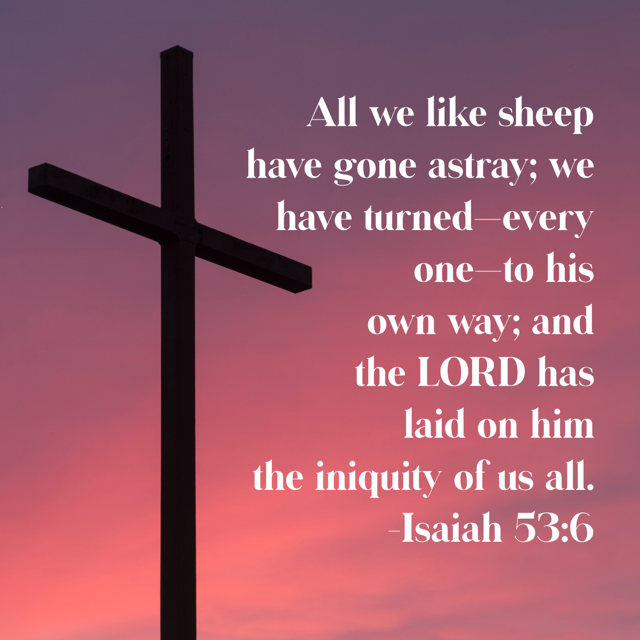
All we like sheep have gone astray;
    we have turned—every one—to his own way;
and the Lord has laid on him
    the iniquity of us all.

Isaiah 53:5-6

Years ago I heard a story about a guest preacher who was just getting ready to board his train after speaking at a church. A man hurried to him, saying he had been in the meeting and was anxious about his spiritual state. Could the preacher take time to talk to him?

The preacher’s train was the last of the night, and it was about to leave. All he had time to tell the man was to read Isaiah 53:6, and then to go in and the first “all” and come out at the last “all.”

The man was puzzled, but when he went home. he looked up Isaiah 53:6: “All we like sheep have gone astray; we have turned—every one—to his own way; and the Lord has laid on him the iniquity of us all.” As the man read the passage several times, understanding dawned. He was a sheep gone astray, stubbornly following his own way. But Jesus took his iniquity. If he trusted in Jesus, he would be saved and forgiven.

I don’t know if this is a true story, but the point it makes is true.

For Christ also suffered once for sins, the righteous for the unrighteous,
that he might bring us to God (1 Peter 3:18).

For God so loved the world, that he gave his only Son,
that whoever believes in him should not perish but have eternal life (John 3:16).

Stricken, smitten, and afflicted,
see him dying on the tree!
‘Tis the Christ, by man rejected;
yes, my soul, ’tis he, ’tis he.
‘Tis the long-expected Prophet,
David’s Son, yet David’s Lord;
proofs I see sufficient of it:
’tis the true and faithful Word.

Tell me, as you hear him groaning,
was there ever grief like his,
friends through fear his cause disowning,
foes insulting his distress?
Many hands were raised to wound him,
none would intervene to save;
but the deepest stroke that pierced him
was the stroke that justice gave.

If you think of sin but lightly
nor suppose the evil great,
here you see its nature rightly,
here its guilt may estimate.
Mark the sacrifice appointed,
see who bears the awful load;
’tis the Word, the Lord’s anointed,
Son of Man and Son of God.

Here we have a firm foundation,
here the refuge of the lost:
Christ, the Rock of our salvation,
is the name of which we boast;
Lamb of God, for sinners wounded,
sacrifice to cancel guilt!
None shall ever be confounded
who on him their hope have built.

Thomas Kelly, 1804

Isaiah 53:6

(I often link up with some of these bloggers.)
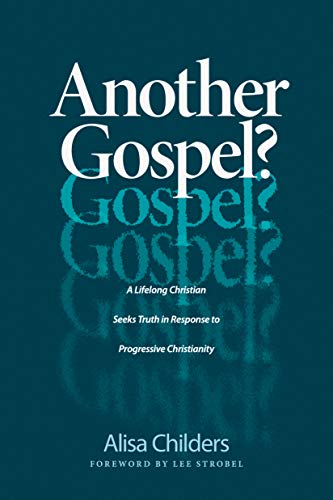
Another Gospel? A Lifelong Christian Seeks Truth in Response to Progressive Christianity

Alisa Childers’ faith wasn’t shaken by an atheist professor or a New Age neighbor.

Her beliefs were dismantled by her pastor.

She knew and trusted him. He had invited a select group of “out of the box thinkers” to a special class, a “safe zone to process our doubts and questions.” Alisa was surprised when he began to question and then to take apart the doctrines she had always believed.

“I wouldn’t hear the term progressive Christianity until years later. But it was clear that this group of people wanted to ‘progress’ beyond the Christianity they had known. They were going through what would practically become a rite of passage in this new and flourishing movement: deconstruction. In the context of faith, deconstruction is the process of systematically dissecting and often rejecting the beliefs you grew up with” (p. 24).

There were things that bothered Alisa about Christianity as it had always been presented, things like massive altar calls where people streamed forward. Did those people know what they were doing? Did their decision “stick?”

But those things didn’t cause her to question her foundational beliefs. Her pastor’s class did. She realized she knew what she believed, but not why. She had grown up in a Christian family who actively ministered to others. But her faith was “intellectually weak and untested” (p. 5).

“When progressive Christianity first entered the scene, its proponents raised some valid critiques of evangelical culture that the church needed to examine and reevaluate. But those progressives who reject essential teachings—like the physical resurrection of Jesus—can confuse unsuspecting Christians and kick the foundation out from under them” (p. 8).

This class led her into a dark pit, “a spiritual blackout—a foray into darkness like I’d never known” (p. 8). What if everything she had ever believed was false? Another girl in the class stood next to her in choir practice one day and said, “It’s funny that we’re all singing these songs and none of us have any idea what we believe!” (p. 28).

That wasn’t good enough for Alisa. “When I have doubts about my faith, or deep nagging questions that keep me up at night, I don’t have the luxury of finding ‘my truth’ because I am committed to the truth. I want to know what is real. I want my worldview (the lens through which I see the world) to line up with reality. God either exists, or he doesn’t. The Bible is his Word, or it’s not. Jesus was raised from the dead, or he wasn’t. Christianity is true, or it isn’t. There is no ‘my truth’ when it comes to God” (p. 10).

“I wanted to progress in my faith . . . in my understanding of God’s Word, my ability to live it out, and m relationship with Jesus. But I didn’t want to progress beyond truth” (p. 25).

Alisa prayed for God to send her a lifeboat. And He did, sending more than one. Alisa took time to study in detail the claims of the foundational doctrines of Christianity. It was a long process. Sometimes her study brought up more questions.

“Slowly and steadily, God began to rebuild my faith. The questions that had knocked the foundation out from under my beliefs—the ones I had never thought to ask, the ones I didn’t know existed—were not simply being answered. They were being dwarfed by substantial evidence and impenetrable logic so robust that I felt like a kid in a candy store—who had just found out that candy exists” (p. 227).

Her faith didn’t look exactly as it had before. She corrected some beliefs and determined some, while important, weren’t essential. But her beliefs in the fundamental truths of historic Christianity were now on a firm foundation.

Another Gospel: A Lifelong Christian Seeks Truth in Response to Progressive Christianity is Alisa’s testimony and the result of her study. She takes a great deal of information and distills it to its essentials in an understandable way.

She quotes from progressive Christianity’s authors to show what they believe and how it differs from historic Christianity. Then she draws from her extensive research to share why she believes the evidence supports historic Christianity.

There’s so much I wish I could tell you and quote from this book. But I’ll touch on just a few issues.

One big difference between historic and progressive Christianity is their views of Scripture. Alisa spends three chapters on the different threads of thought in regard to the Bible and the abundant proof that it is accurate and reliable and authoritative.

Other major differences involve who Jesus is and why He came. Some call the idea of Jesus dying for our sins “cosmic child abuse.” But Jesus said He willingly gave His life. Atonement wasn’t an idea borrowed from primitive religions. It was worked into the fabric of the OT sacrifices and symbols and came into fruition in Jesus’ death for our sins. Many NT books expound on it.

If more churches would welcome the honest questions of doubters and engage with the intellectual side of their faith, they would become safe places for those who experience doubt. If people don’t feel understood, they are likely to find sympathy from those in the progressive camp who thrive on reveling in doubt. In progressive Christianity, doubt has become a badge of honor to bask in, rather than an obstacle to face and overcome (pp. 51-52).

As I navigated through my faith crisis, I realized that it’s not enough to simply know the facts anymore . . . we have to learn how to think them through—to assess information and come to reasonable conclusions after engaging religious ideas logically and intellectually. We can’t allow truth to be sacrificed on the altar of our feelings. We can’t allow our fear of offending others to prevent us from warning them that they’re about to step in front of a bus (p. 11).

The progressive wave that slammed me against the Rock of Ages had broken apart my deeply ingrained assumptions about Jesus, God, and the Bible. But that same Rock of Ages slowly but surely began to rearrange the pieces, discarding a few and putting the right ones back where they belonged (p. 9).

Those of you who have read here for a while know that I am not given to gushy superlative statements. But this is one of the most important books I have ever read. I had seen some of the things Alisa described mentioned here and there, and her book helped those pieces click into the bigger picture.

These doctrines matter. There are many areas where we can differ from other Christians and give each other grace. But it’s not enough to have a nebulous belief in a generic Jesus. It’s vital that we know Who and what we believe in and why.

I strongly encourage you to read this book. It will help you discern the threads of progressive Christianity. It will strengthen your own faith and its foundations. It will help you minister to others.

(I often link up with some of these bloggers.)

Don’t Reject God Because of His People

There are a number of reasons people walk away from Christianity, or at least from church. Some have faced disdain or hurt from those who were supposed to model and minister Christ to them. Some groups or ministry leaders were found to have shocking hidden pasts or current sins. Some movements displayed racist thought in their pasts.

Sometimes leaving a particular group or church or dissociating from an individual is the right thing to do.

But we shouldn’t reject the whole body of God’s truth because some of His people, or those who professed to be His people, fell so far from His ideal. They’re accountable for their sins and failures, but what they do doesn’t void the truth they taught. We’re accountable for the truth we’ve heard despite the vessels it sometimes came through.

Someone once said if you look for the fatal flaw, you’ll find it. And you don’t have to look very far in some cases. That’s because we all have one—or more than one. Some seem worse, or more obvious, than others.

When you look through the Bible, you find people who loved and followed God, yet they failed in spectacular ways. Though we grieve over their falls, we don’t dismiss the truth they taught. We don’t throw out Proverbs because Solomon failed to keep his own admonitions. We lament David’s sins, but we don’t reject the psalms because of them. The disciples fought over who was greatest and fled when Jesus was arrested. Yet God transformed and used each of them in mighty ways.

Instead of throwing out “the baby with the bath water,” we can learn from the failures of others.

We’re all at risk of falling. Proverbs 16:18 warns that “Pride goes before destruction, and a haughty spirit before a fall.” 1 Corinthians 10:12 says, “Therefore let anyone who thinks that he stands take heed lest he fall.” Verse 13 goes on to say that we’re not tempted beyond our ability, but God will provide a way of escape. But we need to look to Him: we can’t take pride that we would never do certain things.

Most have or will experience failure of others. Joseph’s own brothers wanted to kill him and sold him into slavery. Abigail’s husband, who should have been her leader and protector, nearly caused their household to be attacked by the king. Saul, who should have been David’s mentor, instead was jealous and tried to kill David. At some point, we will fail others and they will fail us.

Learn from people who failed what not to do, what precautions could have been taken, etc.

For all the bad ones, there are many good ones. When I worked with the general public, the rude and obnoxious customers and comments hurt and stayed with me a long time. Yet there were many more kind and thoughtful customers than bad ones. Though none is perfect, there are many within Christendom who love God and others well. Don’t let the bad ones obscure the good ones.

Compare what we see and hear with Scripture. Those noble Bereans “received the word with all eagerness, examining the Scriptures daily to see if these things were so” (Acts 17:11). They took what they were told even of Paul and Silas and checked it against Scripture.

Others’ failures don’t nullify truth. In Romans 3:, Paul writes, “What if some were unfaithful? Does their faithlessness nullify the faithfulness of God? By no means! Let God be true though every one were a liar” (Romans 3:3-4). Does that mean faithfulness doesn’t matter, or people get away with being unfaithful? No. God will deal with them. But their unfaithfulness doesn’t make God unfaithful or disprove His truth.

Hold fast. Hebrews 10:23 says, “Let us hold fast the confession of our hope without wavering, for he who promised is faithful.” Then verse 35-36 says, “Do not throw away your confidence, which has a great reward. For you have need of endurance, so that when you have done the will of God you may receive what is promised.”

Stir up others to love and good works. “Let us hold fast the confession of our hope without wavering, for he who promised is faithful. And let us consider how to stir up one another to love and good works,” which, interestingly, takes place in the context of church: “not neglecting to meet together, as is the habit of some, but encouraging one another, and all the more as you see the Day drawing near” (Hebrews 10:23-25). Perhaps some would have been prevented from a fall by a loving friend’s kind rebuke.

Forgive. Most have found that when they refuse to forgive others, the one they end up hurting the most is themselves. Unforgiveness can lead to bitterness and unanswered prayer or keep us from being forgiven. Jesus said, “For if you forgive others their trespasses, your heavenly Father will also forgive you, but if you do not forgive others their trespasses, neither will your Father forgive your trespasses” (Matthew 6:14-15). He taught that we’ve been forgiven so much, we should not withhold forgiveness for lesser sins than the ones we’ve committed against Him (Matthew 18:21-35).

Overcome evil with good” (Romans 12:21). This sentence comes at the end of a section about loving enemies and not avenging ourselves, but leaving vengeance to God. That’s not to say we don’t report or deal with wrong-doing. Sometimes we need to allow consequences to catch up to someone for their own good and for protection of ourselves and others. But we don’t seek to “get them back.” Instead, we go the extra mile and do them good.

Jesus knows what we’re going through. No one has been failed by others as much as Jesus. His family didn’t understand Him. His disciples missed the point of His teaching much of the time. They fled when He was arrested. The people He came to save rejected Him. But He didn’t walk away from them. He loved even when they didn’t love Him. He patiently kept working with them. “Since then we have a great high priest who has passed through the heavens, Jesus, the Son of God, let us hold fast our confession. For we do not have a high priest who is unable to sympathize with our weaknesses, but one who in every respect has been tempted as we are, yet without sin” (Hebrews 4:14-15).

Keep our eyes on Christ. Others will fail us, even those who mean well. “Let us run with endurance the race that is set before us, looking to Jesus, the founder and perfecter of our faith,” (Hebrews 12:2b-3a).

In Psalm 55, David tells of his fear, trembling, horror, and anguish due to the oppression of an enemy. Then he reveals in verses 12-14:

For it is not an enemy who taunts me—    then I could bear it;
it is not an adversary who deals insolently with me—    then I could hide from him.
But it is you, a man, my equal, my companion, my familiar friend.
We used to take sweet counsel together; within God’s house we walked in the throng.

Instead of letting a friend’s betrayal drive him away from the God he professed, David let the situation drive him to God.

But I call to God, and the Lord will save me.
Evening and morning and at noon I utter my complaint and moan, and he hears my voice. He redeems my soul in safety  from the battle that I wage (verses 16-18).

Cast your burden on the Lord, and he will sustain you;
he will never permit the righteous to be moved (verse 22).

When others fail you, betray you, ignore you, or hurt you, they are accountable to God. But don’t walk away from Him because of them. Run to His arms and let Him heal, soothe, encourage, and strengthen you.

“The Lord builds up Jerusalem; he gathers the outcasts of Israel.
He heals the brokenhearted and binds up their wounds.”
(Psalm 147:2-3)

Man may trouble and distress me;
Twill but drive me to Thy breast.
Life with trials hard may press me.
Heaven will bring me sweeter rest.
Oh, tis not in grief to harm me
While Thy love is left to me.
Oh, twere not in joy to charm me
Were that joy unmixed with Thee.

Henry Francis Lyte, “Jesus, I My Cross Have Taken”

(I often link up with some of these bloggers.)