I first wrote this three years ago, but I’ve reposted it before and am doing so again this year, because it seems like almost every year I run into someone having a hard time over the holidays, and maybe this will help. I’ve edited it a bit so the time frames are current.
___________________________________
December could be a rather gloomy month for my family. My mother passed away Dec. 10 eight years ago, my father Dec. 12 fifteen years ago, and my grandmother Christmas Eve a few years prior to that, leading my brother to exclaim once that he just wanted to cancel the whole month. In more recent years the husband of a good college friend passed away in December 21 on our anniversary, and our family dog died the same day.
The death of a loved any any time of year can shadow the whole Christmas season as we miss our normal interactions with that loved one, and several years later, though maybe the pangs aren’t quite as sharp, they’re still there, and it’s not abnormal to be caught off guard by a memory or a longing leading to a good crying jag.
When someone is grieving over the holidays, they may not want to participate in some of the “normal” happy pastimes. It’s not that they don’t ever laugh or enjoy gatherings. But as Sherry said yesterday, “I am enjoying the traditional holiday celebrations, and at the same time they move me to tears, sad tears for things that have been lost this year. I am singing the music, and yet I’m tired of the froth of jingling bells and pa-rumpumpum.” I remember almost wishing that we still observed periods of mourning with wearing black or some sign of “Grief in progress” — not to rain on anyone else’s good time, but just to let people know there was woundedness under the surface, and just as physical wounds need tenderness while healing, so do emotional ones. Normally I love baby and bridal showers and make it a point to attend, but for several months after my mom’s death I did not want to go to them. I rejoiced with those who rejoiced…but just did not want to rejoice in quite that way. I first heard the news of my mom’s death during our adult Sunday School Christmas party, and the next year I just did not want to attend – the grief was still too close to the surface and would probably erupt in that setting where I first heard the news. Even just three years ago when our ladies’ Christmas party was on the anniversary of my mom’s death, I was concerned that at some point during the evening I would have to find the restroom and lock myself in to release some tears (though thankfully that did not happen).
Other events can cast a pall over Christmas: illness, job loss, a family estrangement, etc. One Christmas we were all sick as dogs, and my father-in-law had just had a major health crisis and wanted us to come up from SC to ID to visit. There was just no way we could drag ourselves onto a plane until antibiotics had kicked in a few days later, but we did go, and if I remember correctly, that was the last time any of us except my husband saw him alive, so in retrospect we were glad we went, though it wasn’t the merriest of Christmases. A good friend grieved over “ruining” her family’s Christmas by being in the hospital with a severe kidney infection. Lizzie wrote about visiting her husband in prison for Christmas. Quilly commented yesterday about being homeless one Christmas. Yet both Lizzie and Quilly mentioned reasons for rejoicing in the midst of those circumstances.
If you’re grieving this Christmas, don’t feel guilty if you’re not quite into the “froth” this year. One quote I shared on a Week In Words post earlier had to do with giving yourself time to heal. On the other hand, there may be times to go through with the holiday festivities for family’s sake — and, truly, those times can help keep you from the doldrums. Sherry shared how making a list of reasons to celebrate Christmas helped. Look for the good things to rejoice in. Don’t let the grief turn you into a Scrooge who hates Christmas: your loved one who is gone probably wouldn’t want that to happen. I think they’d probably prefer that you enjoy the best parts of the season while still remembering them in it. E-mom left a valuable comment yesterday that we can treasure up the memories of good Christmases to tide us over the not so good ones, and then look forward to better things ahead. And as I said yesterday, remember that the first Christmas was not all about the froth, either, but was messy, lonely, and painful, yet out of it was born the Savior of the world and the hope of mankind. Rejoice in that hope and promise. Draw near to Him who has borne our griefs and carries our sorrows until grief and sorrow are done away forever.
There are several tracks of interest in A Severe Mercy by Sheldon Vanauken. The first is his love story with his wife, nicknamed Davy, her death, and how he dealt with it (no spoiler there: it’s mentioned up front and the whole book is colored by her death). The second is their journey from condescending atheism to Christianity, and the third is their friendship with C. S. Lewis.
The book begins, of course, with their meeting and falling quickly in love. They had a penchant for naming everything: cars, houses, events, periods in their history. They constructed what they called the Shining Barrier around their love:
The Shining Barrier – the shield of our love. A walled garden. A fence around a young tree to keep the deer from nibbling it. An fortified place with the walls and watchtowers gleaming white like the cliffs of England. The Shining Barrier – we called it so from the first – protecting the green tree of our love. And yet in another sense, it was our love itself, made strong within, that was the Shining Barrier (p. 36).
They promised to share everything in life, even to the point of deciding not to have children (because they couldn’t share in that experience equally and a child might divert their love for each other) and declaring that one would not die without the other.
They called this their pagan love, this era their pagan days, either because they were not believers at this time, or they made idols out of each other and their love, or both.
They had the opportunity to go to Oxford for a time and there met some fellow students who were Christians. They had been rather scornful of Christianity to this point, but these friends were kind, intellectual, wonderful to talk to, and they decided perhaps they should study Christianity out just to find out for themselves what they believed about it and to be fair. They read Pilgrim’s Progress, Augustine’s Confessions, and a multitude of other books, but the ones that impacted them the most were C. S. Lewis’s, who “could…swiftly cut through anything that even approached fuzzy thinking” (pp. 108-109). Vanauken wrote to Lewis a couple of times with questions which Lewis graciously answered. The book details their thought processes during this time, with Davy coming to believe first and Sheldon a couple of months later.
They thrived and grew for months, but eventually realized that Christianity itself was a breach to their “Shining Barrier.” After a while Sheldon “wanted life itself, the colour and fire and loveliness of life. And Christ now and then, like a loved poem I could read when I wanted to. I didn’t want us to be swallowed up in God….But for Davy, to live was Christ…His service was her freedom, her joy” (p. 136). He was jealous of her relationship with God and resented the intrusion of love for Christ for a time but, admitting one “cannot be only ‘incidentally a Christian.’ The fact of Christianity must be overwhelmingly first or nothing,” he eventually came to the point of realizing and being willing for full surrender himself.
Then vague symptoms Davy was having became a serious illness and then a terminal one, and the author shares the details and struggles of that time. He felt the “severe mercy” was God’s taking Davy from him in light of the fact that he still had a tendency to idolize her and their love. Perhaps. We don’t see the whole picture as God does, nor can we know all of His purposes for what He does. Davy was willing to go, even offered up her life to God for Sheldon, and God’s answer to that prayer was evidently what was best for both of them. “[Her death] saved our love from perishing in one of the other ways that love could perish. Would I not rather our love go through death than hate?”
They had visited with C. S. Lewis several times while in Oxford and their correspondence with him continued. It was interesting viewing him as someone’s friend and the impressions he made when he came to their apartment. Some 18 of his letters are included in the book. I enjoyed seeing a dashed-off note sprinkled with abbreviations yet still full of razor-sharp wit and clarity. His encouragement in Sheldon’s grief came full circle when he married Joy Davidson, came to love her, and then saw her through illness and death. Though grieving, Sheldon and Lewis both saw death as “an act which consummates, not…merely stops, the earthly life” (p. 183).
It took me a while to get into the book. My more left-brained practicality couldn’t quite fathom some of the more right-brained conversations they had at first. But after a while much in the book resonated and inspired me, especially their journey to faith and its implications on their lives. I wouldn’t agree with every little point in their theology and doctrine but I don’t feel the need to dissect that here: most of my quibbles were minor. I did enjoy each of the tracks of interest.
(This will also be linked to Semicolon‘s Saturday Review of Books.)
When my mother-in-law first started losing muscle strength and tone, going from a walker to a wheelchair to not being able to feed herself to “total assist,” in the physical therapist’s parlance, it seemed as if her muscles were getting limper and weaker. Now some of them are getting strong in the wrong way. When muscles are disused, they can get contracted. She received physical therapy for a few weeks in the nursing home until she “plateaued,” got to a place where they felt they were not going to see any more improvement. The aides were supposed to continue range-of-motion exercises, but being overworked and understaffed, this was neglected, especially during time she developed a pressure sore and had to remain in bed for weeks. We didn’t realize the extent of the need nor the neglect until she already started contracting. We didn’t know to keep on top of it because we thought they were doing everything they were supposed to do. When she was released from the nursing home, her legs would no longer straighten out completely and both arms tended to be drawn up to her chest.
She received physical therapy at home for four weeks, which helped, but the PT told us it was unlikely that her limbs would get completely uncontracted. They did improve, but she still keeps her left arm pulled up tightly to her chest most of the time. That makes changing clothes and cleaning hard for both her and her caregiver.
A new problem developed in the last few weeks: two fingers on her right hand began contracting, called Dupuytren’s contracture. It is extremely painful to even have the fingers moved. We have a home health nurse who comes out once a week, and she arranged for an occupational therapist to work with her fingers and arm. Of course, he has to gently but persistently open her fingers, try to stretch them out, and massage the offending tendon in her palm, and of course this about sends her through the roof in pain. She was cooperative the first time he came and even laughed and joked a little, but each visit seems to get a little harder. When she sees him she knows it is going to hurt, so she tenses up in anticipation, which makes it worse. The OT and the aide spend most of the therapy session encouraging her to relax. She can relax her arm and fingers, and when she just relaxes and lets him work and works with him, the whole session goes much better and isn’t nearly as painful. But it is hard for her to understand that or to remember it in the midst of discomfort and pain. The last time the OT was here, her muscles were tensing before he even got started.
I have to admit it’s very hard to watch her in pain, especially when she looks at me like, “WHY don’t you do something?! Why are you letting him do this to me?” I’ve even wondered, “Is this worth it? Should we just let her be?” But without some intervention she would get more contracted and in more pain. Plus the crease in her elbow and her closed hands are more prone to skin breakdown and infection if they are not opened up. Even now the aide has to be careful to wash her hands often because she gets a sour smell in them from their being closed up.
A brace is supposed to be on order (sometimes it takes a while to get things through the doctor, insurance company, and Medicare) which will help keep her hand open naturally and hopefully help over the long haul.
I’d appreciate your prayers for her about this, especially for her OT sessions.
There were some lessons for me, though, in my mother-in-law’s latest therapy session. My mind often goes into, “What’s the worst that can happen?” scenarios. If I am catching a cold, it’s probably going to turn into strep throat and lay me out for a week: if someone is late coming home, maybe they were in an accident, etc. I’m much better about that kind of thing than I used to be, but my mind still runs in those tracks sometimes, scaring myself to death with “What ifs?” I wrote an earlier post titled “When Afraid to Surrender” about the fear we sometimes have that if we truly surrender everything to the Lord, He might ask us to undergo some great trial. He does do that to people sometimes. Just ask Job, or Joni Eareckson Tada, or any number of other people. Even knowing that God has many purposes for allowing suffering doesn’t make us look forward to the prospect.
But He doesn’t want us to live in rigid anticipation, waiting for the other shoe to drop. Whatever He allows – and I am convinced every Christian undergoes trials of some kind, whether physical ailments, relationship or family issues, financial struggles, or something else – we know He has a purpose in allowing it and has promised to be with us and to give us His grace as we need it (not before it is needed).
Perhaps you’ve heard of someone who fell or was in an accident that was made worse because they threw their arms straight out ahead of them to brace themselves, and their arms or wrists were broken. I had a tumbling class in college P.E., and our teacher said if you are about to fall, the best thing you can do is roll with it. That tense rigidity only causes harm. It lessens the joy in life we should be experiencing now. It hinders whatever God is trying to do. Like the occupational therapist, He has to gently, patiently, and persistently work with the very areas that are the most painful in order to accomplish the needed good. Tension against His working only makes it harder and more painful: relaxing into His care allows Him to accomplish His purposes with much less pain and fear. He is not just a therapist: He is a loving Father who wants our good.
“Knowing this, that the trying of your faith worketh patience. But let patience have her perfect work, that ye may be perfect and entire, wanting nothing.” James 1:3-4
Hebrews 11 is sometimes called the hall of fame of faith or the Christian Hall of Fame, telling of the victories and triumphs of various people in the Bible. But verse 36 has a rather startling turn: “and others…” were tortured, tried, stoned, made to wander in deserts. That doesn’t sound very victorious. But they all “obtained a good report through faith,” though they had “received not the promise” yet (verse 39).
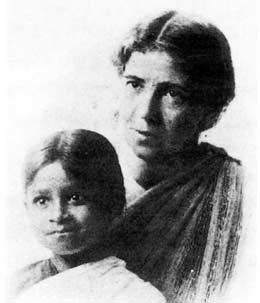
Probably many Christians are more familiar with the name of Amy Carmichael than of some of the other missionaries I’ve mentioned in this series. Most know that she was missionary to India. She began a rather robust itinerant evangelistic ministry with a group of other women, but when God began bringing children her way whose families were going to sell them to temples for illicit purposes, she gradually became convinced that He would have her care for these children, though it meant a drastic change in her ministry and lifestyle. Over time a whole compound known as Dohnavur was developed.
What some may not know is that she was an invalid for the last 20 years or so of her life. She remained in India, still in charge of Dohnavur, still encouraging, advising, praying, and writing, but she was in much pain and had limited mobility those years. In Amy Carmichael of Dohnavur by Frank Houghton, he includes this poem before telling of this part of her life:
Two glad services are ours,
Both the Master loves to bless.
First we serve with all our powers–
Then with all our feebleness.
Nothing else the soul uplifts,
Save to serve Him night and day,
Serve Him when He gives His gifts–
Serve Him when He takes away.
~ C. A. Fox
Elisabeth Elliot said of limitations, “For it is with the equipment that I have been given that I am to glorify God. It is this job, not that one, that He gave me.” The limitations that we think are hindering our ministry are often the very thing God uses to shape our ministry for Him.
One day Amy received a shipment of tracts for the ill. As she read them, they just did not do anything for her. As she pondered that, she realized it was because they were written from well people telling sick people how they ought to feel. Over many years she had written notes of encouragement to various ones in the Dohnavur Hospital (named, in the descriptive Indian way, Place of Heavenly Healing), and some of these were compiled in a book titled Rose From Brier. They are rich in their spiritual encouragement and insight, partly precisely because they were written by one who had shared in the fellowship of sufferings.
In another of Amy’s books, she wrote the following:
This prayer was written for the ill and for the very tired. It is so easy to fail when not feeling fit. As I thought of them, I also remembered those who, thank God, are not ill and yet can be hard-pressed. Sometimes in the midst of the rush of things it seems impossible always to be peaceful, always to be inwardly sweet. Is that not so? Yet that and nothing less is our high calling. So the prayer is really for us all.
Before the winds that blow do cease,
Teach me to dwell within Thy calm;
Before the pain has passed in peace,
Give me, my God, to sing a psalm,
Let me not lose the chance to prove
The fulness of enabling love,
O Love of God, do this for me;
Maintain a constant victory.
Before I leave the desert land
For meadows of immortal flowers,
Lead me where streams at Thy command
Flow by the borders of the hours,
That when the thirsty come, I may
Show them the fountains in the way.
O Love of God, do this for me;
Maintain a constant victory.
Blessed be God, even the Father of our Lord Jesus Christ, the Father of mercies, and the God of all comfort;Who comforteth us in all our tribulation, that we may be able to comfort them which are in any trouble, by the comfort wherewith we ourselves are comforted of God. For as the sufferings of Christ abound in us, so our consolation also aboundeth by Christ. II Corinthian 1:3-5
God hath caused me to be fruitful in the land of my affliction. Genesis 41:52b
Several years ago I had heard of Gracia Burnham’s In the Presence of My Enemies and somewhere read an excerpt from it, but I avoided reading it. I couldn’t face it. I’m not sure why: maybe because it was too fresh, maybe because the people responsible for the Burnham’s captivity were still alive (maybe not the specific people, but the extremist Islamic groups are still active), maybe because in the portion that I read, Gracia was having to deal with something that I struggle with. But the youth pastor at the church we were attending saw a DVD presentation of Gracia sharing her testimony at another church where he was ministering and recommended it to me. I ordered it, watched it, and was so touched on so many levels. I then felt that I had to read the book. (Sadly, the DVD does not seem to be available any more – I couldn’t find it after searching the Web for a while.)
For those who might not be aware, Martin and Gracia Burnham were missionaries with New Tribes Mission in the Philippines: he was a missionary pilot who reminded me a lot of one of my former church’s missionaries who also pilots a small plane. They had gone for a quick weekend get-away to celebrate their anniversary at a resort. They didn’t usually go to the “touristy” areas, but decided to go this once. During their stay, an Islamic extremist group stormed the resort and took guests and a few staff members hostage. Several of the hostages were able to arrange for ransom and were released after a few months. Some were killed along the way. The Burnhams were held for over a year. Martin was killed in a rescue attempt by the Philippine military and Gracia was wounded.
I don’t want to take away from what she shares in the book, so I won’t go into the details of the story here. I do want to mention just a couple of impressions, though.
As the Burnhams struggled with negative thoughts and attitudes toward their captors, I kept finding myself thinking at first, “But they had a right to feel that way!” I knew better, but that was the thought that kept coming. They had to put into practice the Bible’s teaching about loving their enemies, praying for those who were despitefully using them, in a very real way and only by God’s grace.
I also was grieved that I did not pray for them more. Often when I hear reports of stories like theirs on the news, I try at least to pray right then in the midst of whatever I am doing. I may have prayed for them in that way, but I don’t remember. The scripture came to mind to remember those in bonds as if bound with them, and I failed to do that for the Burnhams, but this caused me to determine not to neglect that ministry again.
I was also struck by the Muslim group’s twisted sense of logic. They wanted Islam to rule the world so it would be ruled by “righteousness.” They advocated the cutting off of someone’s hand for stealing — but excused their own stealing because they “needed” the stolen items for their cause. When people died in the course of what they did, it was “their destiny.” They had a strong sense of “justice” but saw mercy as a weakness. When discussing that last point with one of their captors, Martin said, “You know, I hope my children don’t take up the attitude you have. I hope they don’t ever shoot some Muslims because of what you have done to us.” The man to whom they were speaking looked shocked. “Done to you? What is my sin against you? I have never done anything to you.” Martin and Gracia could only look at each other incredulously.
Gracia tells of her very human struggles, like depression, anger, and resentment over their situation and the realization that not only was her attitude not helping, but it was hurting. She writes, “I knew that I had a choice. I could give in to my resentment and allow it to dig me into a deeper and deeper hole both psychologically and emotionally, or I could choose to believe what God’s Word says to be true whether I felt it was or not.” That was a turning point for her as she chose to believe God and handed over her pain and anger to Him. I thought how often we get tripped up over pain, resentment, and anger over much lesser things.
She shares also how the Lord provided for them in unexpected ways, how she and Martin encouraged each other, how they had to battle a captive’s mindset, how they were able to talk about the Lord with their captors and other hostages, as well as the details of how she and Martin originally came together as a couple and what happened in the aftermath of her captivity.
A few years later Gracia wrote To Fly Again: Surviving the Tailspins of Life (linked to my review), which includes an update of how she and her children were doing after all that had happened to them, her recovery from the trauma, and encouragement to others who have gone through any kind of traumatic event.
I found this video on YouTube, and I think some of the footage is from the original DVD:
God’s Word is true no matter what, and thankfully He doesn’t see fit to put all of us through that kind of experience, but when someone who has been through what she has speaks of God’s goodness and faithfulness, the truth of God’s Word and the reality of His Presence….it rings true. There is an authenticity about that person’s testimony. Their faith, their beliefs have been tried in the fires of testing. Gracia’s testimony touched me deeply. I don’t know if I could have gone through what she did – in fact, I’m pretty sure I couldn’t. But God gives His grace for various trials when we need it. Though I hope I never have to face that particular kind of trial, we will all face trials of some kind, and we can trust He will see us through them as he promised.
I Peter 1:6-8:
Wherein ye greatly rejoice, though now for a season, if need be, ye are in heaviness through manifold temptations: That the trial of your faith, being much more precious than of gold that perisheth, though it be tried with fire, might be found unto praise and honour and glory at the appearing of Jesus Christ: Whom having not seen, ye love; in whom, though now ye see him not, yet believing, ye rejoice with joy unspeakable and full of glory…
Evidence Not Seen: A Woman’s Miraculous Faith in the Jungles of World War II tells the story of a few eventful years in the life of Darlene Deibler Rose, who became a POW during WWII while she ministered in New Guinea. She and her new husband, Russell Deibler, left to minister in the field of New Guinea in 1938. They were pioneer missionaries in a quite rugged area.
On one of Russell’s survey visits, the chieftain he was talking with said he believed Russell and the others with him were spirits because they were all men. “Who gave birth to you?” he asked. Russell explained that he did have a wife, but his “chieftain” said she could not come because the trail was so dangerous that many men had died. The chieftain replied, “Your wife would have made it. Wherever we go, the women follow and carry the loads.” He said if she were so weak she could not make it, he would send men to help her. Meanwhile, others of the tribe decided to test whether some of the men were spirits or human by shooting arrows at them to see whether the arrows passed through or killed them, and, unfortunately, some of the tribe members were killed when the government officials who were along shot them in self-defense. On reading this in a letter from Russell, Darlene prayed, “Lord, if those people are ever to believe and understand about you, women are going to have to go there.” Immediately she felt an assurance that she was supposed to go. She dashed out to find their mission leader, who said he had a letter from Russell giving his consent for her to go.
At her first meeting with the people, they shoved her sleeve up to see if her arms were white “all the way up” and wanted to pinch her flesh to see if it was real. The chieftain did not believe she was a woman until she took off her hat and took the pins out of her heir, letting her hair fall over her shoulders. From the first moment she felt that these were her people, and she approached them and the living conditions with grace, courage, and humor.
By May of 1940, they heard that Nazis had invaded Holland; it fell within five days. Soon word came from government officials that their post must be evacuated, though they begged to stay.
They moved to another area, and within five months learned that their post was to be reopened. But then Russell was appointed assistant field chairman by a unanimous vote of the other missionaries. Russell and Darlene were both grief-stricken, but felt it was the Lord’s will, and reminding themselves that they had been willing to go anywhere, remained in Macassar.
Meanwhile, they heard news of war increasing until finally Pearl Harbor was attacked. They sought the Lord’s counsel as they continued to work and hear news reports of the Japanese taking islands near to them. One day a Dutch policeman came and told the missionaries that they had a ship on the coast and wanted to evacuate all foreigners as well as Dutch women and children. Their field chairman, Dr. Jaffray, encouraged them all to take time to pray about whether the Lord would have them stay or go so that they would have His assurance, whatever happened, that they were right where He wanted them to be. None felt led to leave. Three days later they learned that the ship had been torpedoed and sunk with no survivors.
By March 8, 1942, their island had been taken by the Japanese. They let them stay together for a while, until one day they suddenly came to take the men. Russell’s last words to Darlene were, “Remember one thing, dear: God said that he would never leave us nor forsake us.” She never saw him again.
The women were eventually taken to a prison camp, where the bulk of the book takes place. There is not space here to tell of many of the experiences, but God proved Himself faithful many times over, protecting, assuring of His Presence, answering prayer.
The camp commander, Mr. Yamaji, was notoriously cruel. Yet God gave Darlene some measure of favor in his eyes. When news came that Russell had died, Mr. Yamaji called Darlene to his office to try to encourage her somewhat. God gave her grace to tell him she did not hate him, that she was there because God loved her…and God loved him, and perhaps He allowed her to be there to tell him. She shared with him the plan of salvation, and Mr. Yamaji broke into tears and left the room. Yet from then on she felt he trusted her, and years later she heard a report of him that seemed to indicate he had trusted the Lord.
Some time later, Darlene was arrested by the secret police and taken to another prison for “questioning.” The conditions were horrible, to say the least, and Darlene also suffered from dysentery, cerebral malaria, and beriberi. She asked the Lord to heal her of dysentery — and He healed her of all three ailments. One day she saw out of her window someone secretly passing along some bananas to one of the other women. She was in solitary confinement and knew she would never receive one, but she began to crave bananas: though she had been healed, she was still starving. Then, Mr. Yamaji came to the prison to see how she was doing and to tell the secret police that she was not a spy, and after he left he had ninety-two bananas delivered to her! Days later, when she ate the last banana, she was returned to the prison camp.
The book goes on to tell of the end of the war, an opportunity to visit Russell’s grave and speak to some of the men who knew him, the process of getting back to America, rediscovering such “luxuries” as showers, fear upon arriving back in America and not knowing what to do or how to contact her family, the Lord’s provision for that as well. She recuperated at home for a long while, and eventually remarried and went back to New Guinea as a missionary.
Darlene’s story is a marvelous one of the grace of God and her courage, faith, and endurance in the midst of the most trying of circumstances.
Five missionaries working in different outposts in Ecuador in the early to mid-1950s became burdened for a tribe of killers known then as the Aucas. Early encounters with the white man had not gone well when the rubber hunters came to harvest while also “plundering and burning the Indian homes, raping, torturing, and enslaving the people” (p. 14). But the Aucas killed not only white men, but any outsiders and even their own people. “Could Christian love wipe out the memories of past treachery and brutality?” (p. 14). The missionaries hoped so and longed to be a part of reaching this tribe with the love and gospel of Christ. Upheld by the truth that “Thou wast slain, and hast redeemed us to God by thy blood out of every kindred, and tongue, and people, and nation” (Revelation 5:9b), they began to plan and strategize as to how best to reach these hostile people.
Through Gates of Splendorby Elisabeth Elliot is the story of how these five men came to the Lord, came to be called to the mission field, their marriages, and how each was led to become part of “Operation Auca.” It’s no spoiler to say the operation ended in the death of the five, because that fact was known long before the book came to be and was probably a great impetus in it’s writing. But then it is not right, either, to say that is how Operation Auca ended, because God used it in the lives of the Aucas themselves as well as of people all over the world in the decades since. But knowing how the story “ends” lends a poignancy to the men’s lives and words.
The five men were:
Nate Saint, a brilliant pilot whose dreams of flying the big planes was cut short by an illness, but who went on to become a pilot for Missionary Aviation Fellowship, bringing much-needed supplies, human contact, and medical help to missionaries in outpost stations. He had an ingenious engineer’s mind which he used to great effect solving problems and improving life, and a healthy balance between doing everything in his power to ensure success and safety yet trusting God for the outcome.
Jim Elliot, from Portland, OR, intense and passionate, had a burning desire to share Christ with those who had never heard of Him, yet also had a humorous side and felt with George MacDonald that “It is the heart that is not yet sure of its God that is afraid to laugh in His presence” (p. 17).
Pete Fleming, from Seattle, WA, quiet, studious, would probably have been a college professor if he had not felt called to the mission field.
Roger Youderian, of Louistown, MT, severely affected by polio as a child, was called to the missionary field while serving in the military.
Ed McCully, from Milwaukee, WI, was planning to go to law school when a Bible study led him to abandon all to follow Christ wherever he might lead.
Even before Operation Auca was even remotely thought about, most of the men were willing to give themselves even unto death. Jim wrote in his journal:
“‘He makes His ministers a flame of fire.’ Am I ignitible? God deliver me from the dread asbestos of ‘other things.’ Saturate me with the oil of the Spirit that I may be a flame. But flame is transient, often short-lived. Canst thou bear this my soul – short life? In me there dwells the Spirit of the Great Short-Lived, whose zeal for God’s house consumed Him. ‘Make me Thy fuel, Flame of God.'” (p. 17).
Nate Saint, likewise, considered himself “expendable,” saying, “Every time I take off, I am ready to deliver up the life I owe to God” (p. 58), and Pete later wrote:
“I am longing now to reach the Aucas if God gives me the honor of proclaiming the Name among them…I would gladly give my life for that tribe if only to see an assembly of those proud, clever, smart people gathering around the table to honor the Son – gladly, gladly, gladly! What more could be given to a life?” (p. 26).
All of the wives, as well, were willing to live in “primitive” conditions and to be used in God’s service in whatever way He saw fit.
But they were not careless. Every step of Operation Auca was steeped in thought, discussion, sometimes disagreement, and prayer for the best outcome for all involved. And every step looked like it was going well.
What then led the Aucas then to kill the five men? When God opened the tribe to visits later, at first they said it was because they thought the men might be cannibals. In a later book I believe someone was told that the photographs the missionaries had scared them: they thought somehow it involved the soul of the person in the photograph. In Steve Saint’s more recent book, End of the Spear, he was told that an argument had broken out among the Auca men involving a woman, and one man wanted to prevent the bloodshed amongst the tribe and turned their anger towards the white men. It is possible that all of these factors played a part, or that as the Aucas (now known by their own name of Waodani [going by Steve’s spelling of it since he has worked with them for years, but I have also seen it as Huaorani or Waorani]) got to know white people and their language better, they may have felt more of a freedom of expression in later years that they did at first.
I first read this book in college, and the lives of these men and their wives and their dedication and love for the Lord touched me greatly. I have read it many times since, and it never fails to speak to me. The version I read this time is the same one I read in college, a brown around the edges 1977 fifth printing: the first printing was in 1956. It was interesting to see what I had underlined in previous readings and what stood out to me this time. It also touched off a lifetime of reading missionary biographies, reading just about everything Elisabeth Elliot has written and reading several other books about Operation Auca and the lives of those involved.
If you’d like to read more about any of these, I recommend the following:
The Dayuma Story by Rachel Saint, sister of pilot Nate Saint. Dayuma was the Auca girl who had escaped the tribe years earlier, taught the men Auca phrases, and later went back to share the gospel with her tribe.
The Savage My Kinsman by Elisabeth Elliot about her years of working with the Aucas after Jim’s death.
Unfolding Destinies by Olive Fleming Liefeld, widow of Pete Fleming.
End of the Spear by Steve Saint, Nate’s son. If you don’t read any others, I’d recommend this one as it is a more recent book and a fuller account of the events then and since, plus it is just plain good reading.
I’m sure there are other books and biographies out there (I have one of Nate Saint on my bookshelf that I’ve not read yet). but these are the ones I have read. In addition, Elisabeth Elliot touches on the experiences of her time in the Ecuadorian jungle in several of her other books. One of my favorites is in The Savage My Kinsman when she quotes William Cullen Bryant’s poem, “To a Waterfowl,” and applies it to herself, especially the last line: “He, who, from zone to zone, Guides through the boundless sky thy certain flight, In the long way that I must tread alone, Will lead my steps aright.”
There are also several films and film clips of interest:
Through Gates of Splendor, narrated by Elisabeth Elliot, using footage that she, Nate Saint, and Life Magazine had taken.
A “This Is Your Life” feature of Rachel Saint, part 1 and 2.
Beyond the Gates of Splendor, a documentary made 50 years after the events. This is one I would recommend above all the others if you only have time for one. It is in four parts on Vimeo (Part 1, 2, 3, and 4), but I found the audio a bit hard to hear.
I wanted to say just a word, too, to those who criticize missionary efforts and who believe that primitive tribes should be left as they are. By the Waodani’s own admission, the tribe probably would have become extinct now if someone had not come to tell them of a better way of life. Why would anyone want to deny them that? In Spirit of the Rainforest (different people and field, but also a primitive tribe) this rather lengthy quote explains some of their feelings (I started just to link to it, but I feel it is so important that I copied it here):
“The naba wants to know why you want to change the way you live out here in the jungle,” Keleewa said to Hairy after Doesn’t-Miss talked.
Hairy was surprised at the question. “Because we’re miserable out here. We are miserable all the time. The people from Honey [predominantly Christian village] came here and made peace with us many seasons ago and their village keeps getting better. We want that for us. If it means throwing spirits away and getting new ones, we will do it. [This is not something said lightly. Many were under the impression that they would be killed if they tried to get rid of their spirits.] But we need someone to teach us these new ways.”
Hairy didn’t have spirits because he was not a shaman. But he followed everything the spirits told his shaman. I knew my spirits would be very irritated if Hairy quit following the spirits. No one who has killed as often and as long s Hairy could ever stop it…
Doesn’t Miss talked with Keleewa for a while. Keleewa paused and thought how to say what the naba said. Then he told Hairy, “He says there are many people in his land that don’t think that he, or any of us, should be here helping you at all. They say that you’re happy here and that we should leave you alone. He wants to know what an experienced killer like you would say to them.”
Hairy grew even more serious. “I say to you, please don’t listen to the people who say that. We need help so bad. We are so miserable here and out misery never stops. Night and day it goes on. Do those people think we don’t suffer when bugs bite us? If they think this is such a happy place out here in the jungle, why aren’t they moving here to enjoy this beautiful life with us?”
Doesn’t-Miss was quiet. Then he got out of his hammock and walked down the trail…When he was too far away to hear, Hairy said to Keleewa, “Is he stupid? Doesn’t he have eyes? Can’t he see these lean-tos we call houses? Can’t he see us roam the jungle every day, searching for food that isn’t here, so we can starve slower? Can’t he see that our village is almost gone, that this move we are making now is our last hope to stay alive?”
Keleewa was slow to answer. He knew Hairy wouldn’t understand what he was about to say. “Most nabas think just like him,” Keleewa told Hairy, and shook his head because he knew he couldn’t explain why.
“Nobody’s that stupid,” Hairy snapped. “They must hate us. They think we’re animals” (pp. 180-183).
Why would even any non-Christian want to see a whole people group extinguished due to infighting or disease? Especially these days when we clamor to save the spotted owl and other endangered species? Shouldn’t endangered people be at least equally as important as endangered animals?
Would anyone in their right minds really want such practices as burying a widow along with her husband or killing twins or deformed babies to continue? So many primitive tribes practice these kinds of things.
Why deny these people the choice of hearing that there are other ways? Why not allow them to hear the gospel and let them make their own choice? So many who bask in the multitudes of freedoms we have here in the US would rather keep people like this in darkness in the name of preserving their culture. Most missionaries I know of these days consciously and conscientiously try not to “Americanize” the native churches but rather try to respect their culture and form churches within that culture while introducing healthier ways of living and civil practices. Who could possibly have a problem with that?
Thank you, Carrie, for allowing me to choose this book for the Reading to Know Book Club in a year of featuring classics. It truly is a Christian and a missionary classic, and I am glad folks are revisiting it or discovering it for the first time.
I’ll leave you with the song the men sang the night before they launched “Operation Auca,” and from which the title of the book is taken (words and thoughts are here.)
(This will also be linked to Semicolon‘s Saturday Review of Books.)
“It is better to go to the house of mourning, than to go to the house of feasting:
for that is the end of all men; and the living will lay it to his heart.”
Ecclesiastes 7:2
I’ve been laying some things to heart after watching the recording of Julie Herbster’s funeral. Julie was a youngish (39) wife and mom who loved music, sports, literature, and especially her family. But above all she loved her Lord. She passed away just before Easter after a ten month long battle with cancer.
I did not know her well. We “met” on an online Christian forum, where I appreciated her humor, intelligence, grace, wisdom and balance. Her husband was on the staff of The Wilds Christian Camp, which I’ve linked to before, where my kids have attended for many summers. The Wilds was not too far from where we lived in SC at the time, and I invited her to speak at one of our church’s ladies’ luncheons, and she graciously accepted. I was delighted to find her online persona and her real life personality were the same.
I was very sad to hear of her cancer diagnosis last spring, sadder still to hear of her passing. She had five children, ranging from about 8 to 15 in age. I appreciated her pastor’s comment to her husband in the funeral message (I’m paraphrasing). “You’ve wondered how you’re going to minister and live without Julie. I have no earthly idea. But that’s why we’re going to pray for God’s grace for you.” I appreciate a man of God who is honest that not everything in this life makes sense or is to be faced with a smile, and yet affirms, as he also said, “Understanding God is not a prerequisite to trusting Him.”
I was touched by Julie’s having always wanted to be a mom and how she poured her life into her children. Though her husband was in a public ministry, she enjoyed staying in the background. I appreciate how her pastor wove her love for literature, especially Lewis, Tolkien, and MacDonald, into his funeral message, with Lewis’s themes of this life being the Shadowlands and the real world beyond it. I’ve never read MacDonald, but the pastor said Julie saw in her cancer fight and chemo treatments a parallel with his The Princess and the Goblin (which I have never read but now want to), with the goblin mines being the cancer and chemo, but the golden thread that Princess Irene held on to to guide her through them representing Julie’s clinging to the truth of God’s Word to sustain her through this time.
I had never heard one of the sings that was sung at her funeral, but it speaks volumes:
What God ordains is always good: His will is just and holy. As he directs my life for me, I follow meek and lowly. My God indeed In every need Knows well how he will shield me; To him, then, I will yield me.
What God ordains is always good: He never will deceive me; He leads me in his own right way, And never will he leave me. I take content What he has sent; His hand that sends me sadness Will turn my tears to gladness.
What God ordains is always good: His loving thought attends me; No poison can be in the cup That my physician sends me. My God is true; Each morning new I trust his grace unending, My life to him commending.
What God ordains is always good: He is my friend and father; He suffers naught to do me harm Though many storms may gather. Now I may know Both joy and woe; Someday I shall see clearly That he has loved me dearly.
What God ordains is always good: Though I the cup am drinking Which savors now of bitterness, I take it without shrinking. For after grief God gives relief, My heart with comfort filling And all my sorrow stilling.
What God ordains is always good: This truth remains unshaken. Though sorrow, need, or death be mine, I shall not be forsaken. I fear no harm, For with his arm He shall embrace and shield me; So to my God I yield me.
At 36, Joni Eareckson felt that marriage was probably not in God’s plan for her, not only because of her age, but because of her paralysis resulting from a diving accident in her teens. Who would be willing to take on all that would be involved?
After Ken and Joni met at church, then got to know one another, then started dating, Ken felt he could. He knew he loved her and he felt their marriage could work.
Joni was afraid he idealized her. He had read about her before meeting her, accompanied her on mission trips, heard her speak, and even though she tried to be realistic about herself and her humanness (when the leg bag collecting her urine broke in public while on a tour behind the Iron Curtain, she quipped that that was God’s way of not letting the attention and acclaim go to her head), she was afraid some people thought of her more highly than they ought to.
But after much time together and discussion, they married, And though they loved each other dearly, after some years the relentless details involved in Joni’s care began to wear on Ken. He began to pull away, to need time to himself to get away from it all. Soon their lives were on nearly parallel tracks, rarely intersecting. She had had a ministry and association before he came on the scene, and he felt unneeded in her world: he had his teaching and coaching and fishing trips.
Then unexplained and excruciating pain descended on Joni, not only requiring more care, but causing frustration because nothing seemed to help. And then came a cancer diagnosis…
Marriage has its rough spots anyway, but add all these to the mix, and any of them could break a marriage. In Joni and Ken: An Untold Love Story, with Larry Libby, they want to make clear that what pulled them through was not their own strength, but God’s grace when they came to the end of their own strength. They don’t want to come across as super-saints, but as real people who found God’s grace sufficient in the most trying of times “to attain a new level of love rather than simply surviving or grimly hanging on” (p. 15).
I loved Larry Libby’s preface, talking about fairy tales and sad love songs, then musing:
We all dream dreams and know very well that they don’t always work out. Life is particularly hard on high expectations. Things hardly ever fall together the way we would have scripted them. The fact is, if we put our hope in a certain set of circumstances working out a certain way at certain times, we’re bound to be disappointed, because nothing in this life is certain.
So what’s the solution? To give up on dreams?
No, it is to realize that if we belong to God, there are even bigger dreams for our lives than our own. But in order to walk in those bigger dreams, we may face greater obstacles than we ever imagined and find ourselves compelled to rely on a much more powerful and magnificent God than we ever knew before (p. 15).
I know it’s the style these days to have a book jump back and forth in the time line, but it is somewhat confusing and choppy, and I think would have flowed much better maybe by opening with one incident and then flashing back to the beginning and progressing from there to the current time.
There is one kind of odd spot in the book when Joni had a horrible night suffering from pneumonia and prayed that Jesus would manifest Himself to her in a special way. As Ken ministered to her, suddenly she said.”You’re Jesus!” She went on to say that she could feel His touch through Ken’s, could see Him in Ken’s smile. That I can understand, but manifesting Jesus, being a conduit through which He can work, isn’t the same thing a being Jesus. And I think that’s what she ultimately meant.
I scanned some of the reviews on Amazon and was surprised to find some criticism that the book didn’t contain enough or reveal enough. I thought it was quite gracious of the Tadas to reveal as much as they did in order to show God’s grace and to encourage others: the rest really is none of our business.
Overall I loved the book and would recommend it to anyone.
One thing I love about listening to Joni Eareckson Tada is that she’s genuine. She’s no armchair theologian philosophizing about pain and suffering: she has lived it, having broken her neck as a teenager and living in a wheelchair for 45 years. And through it all she acknowledges God’s purposes and perfect plan for her life. “I’d rather be in a wheelchair and know Him that be walking without Him.”
But in this video she pulls back the curtain a little bit to reveal the “low middle years” with her husband, his depression and feeling trapped, her own dissolving in tears over learning she had breast cancer and feeling, “I can’t do this.” I can remember hearing about her breast cancer diagnosis and thinking that that was too much on top of a broken neck and chronic pain (either of which would be “too much” for many people.) Sometimes when we have a major life crisis, we might think, “OK, I’ve had my trial and tribulation, so I’m done: the rest of life will be smooth sailing.” Probably not.
She shares ways God has used her disabilities and suffering, one of which was revealing her sin to her. When I am provoked, I tend to think, “I reacted wrongly because of the provocation,” and then I pray for its removal and think everything will be all right then, But she offers the thought that God allows provocation in order to reveal our sinful reactions to our own hearts, so that we can seek Him for forgiveness and grace to overcome. We can’t say, “That’s not me”…because it is. And we need to learn how to react as Christ did, which we can do only by His grace.
She calls suffering “a splash of hell” but maintains that a “splash of heaven” can be found through intimacy with Christ in the midst of it. And she can say so because she has found it to be true.












 Stray Thoughts