
Looking Up

Quilly has started a once a month Quilldancing Writing Assignment. She gives a prompt and we come up with a story based on it in 500 words or less.

I’ve had to sit out the last couple of months. My first attempt back in January was way over the word limit, and even with cutting out over 200 words, it was still over the word count. This one is a bit under — I had started it a while back and then forgot about it, so I hadn’t developed it any further until this morning. But I like it as is, so I think I am going to pronounce last time’s overage and this one’s lower count as balanced. 🙂
The prompt for today is:

As we all know, “April showers bring May flowers”. This month’s story should include a sudden rain fall and a recalcitrant umbrella. And, since this is National Poetry Month, your story should include a bit of poetry. You can write it yourself or use somebody else’s (be sure to give credit where credit is due); it can rhyme or not; as you wish. See you on the 15th!

My story:

Susan awoke with a start and looked with bleary eyes at her alarm clock. “Oh, no! That thing failed to go off again!” She needed a more reliable clock, but no time to think about that now: she flew into high gear trying to get ready for work.

Along the way, a series of small calamities multiplied her frustrations. The blouse she wanted to wear had a spot on it. In her haste making breakfast her sausage biscuit wasn’t quite warm enough before she had to wolf it down on the go. A train crossing the street out of her neighborhood delayed her even more. She couldn’t miss her boss’s scowl as she scurried to her place. She discovered they were shorthanded, and she ended up having to work through her lunch hour. Her customers seemed particularly demanding and impatient. 5:00 could not come soon enough.

When she finally clocked out, she dashed over to the electronics store to find a new alarm clock. Purchase in hand, she exited the store to discover the clouds that had been threatening all day had finally erupted into a sudden storm. As she unfolded her umbrella, she commented to herself, “I’m glad I brought this thing. At least something went right today.” She had had to park her car quite a ways away, and less than halfway there a gust of wind blew her umbrella inside out.  Cradling her purchase in her elbow, she tried to reach the mechanism on her umbrella to close it while simultaneously trying to jiggle the thing back into its proper form, all to no avail.

Soaked from her struggles, she was on the verge of either screaming or crying when she became aware that a shadow had passed over and she wasn’t feeling the rain any more. She looked up to see a large black umbrella over her. She turned around to look up into the face of its owner. Tall. Handsome. Smiling brown eyes. Crooked grin.

“You know how it is with an April day,” he said.

Her wet bangs were plastered to her forehead and dripping into her eyes. “What?”

“You know that old poem by Robert Frost? “ He quoted with a flourish:

The sun was warm but the wind was chill.
You know how it is with an April day
When the sun is out and the wind is still,
You’re one month on in the middle of May.
But if you so much as dare to speak,
A cloud comes over the sunlit arch,
A wind comes off a frozen peak,
And you’re two months back in the middle of March.

She smiled. “Well, that certainly does sound like April.”

He handed her a handkerchief and asked, “Bad day?”

“It’s starting to get better.”
Magic Skates

Quilly has started something fun — a once a month Quilldancing Writing Assignment. She gives a prompt and we come up with a story based on it in 500 words or less.

If this were for a grade, I would automatically be marked off. I read the prompt, tucked it away in my mind, had a great idea for it in the shower, and as soon as I could pounded out the story at the computer. But I hadn’t reread the prompt and wrote a story about ice skates instead of roller skates. She said that was okay. Then my original attempt was over 800 words! I whittled it down to 558, and I can’t think any more and it’s “due,” so I’ll go ahead and post it. Hopefully I’ll do better next time. I really enjoyed it, even cutting down the words and tightening up the writing. One of my purposes for starting a blog was to work on my writing, and I don’t often write fiction, so this was a great exercise. Thanks, Quilly! The stories for this prompt are all here.

The Prompt:

You received a set of clunky, old-fashioned roller skates from the oldest, most eccentric member of your family. The skates appear to be too small, so you try to return them. S/he insists you try them on. You decide to humor him/her. To your amazement the skates fit. Suddenly you are overcome with the urge to skate and … (tell us what happens next in 500 words or less).

My Story:

Magic Skates

As Gran looked on excitedly, Jenny opened the Christmas present she had been savoring for last. The small box held — child-sized ice skates. She looked at Gran, confused.

“Those are your magic skates, honey. Put them on!” Gran exclaimed.

“But Gran, they’re too small. I’m 18 now.”

“Nonsense! They’re magic! Put them on.”

Gran wasn’t senile, but she didn’t always make sense. So Jenny tried to put them on to humor her or else show her that they really were too small. But as she slid her foot in — they did fit! Perfectly!

“Let’s go to the pond, Honey. I want to see you glide like a swan.”

Jenny didn’t understand, but she followed Gran to the pond. She wobbled on the ice and then found her footing. How exhilarating to sail across the pond!

“Glide, honey, glide!”

Jenny was skating as if she had done so all her life — spins, jumps, everything came naturally. As much as she liked the thrill of the jumps, what she loved most was just…gliding. Especially in a circle, leaning slightly back, arms outstretched. She could glide for hours.

But then she became aware of something beeping in the distance. She slowed and saw through fog a red light flashing in time to the incessant beeping  Had someone lost a cell phone?

She skated closer, the mist cleared, and she saw…not a cell phone, but an IV machine. Suddenly aware of dormant pain that now threatened to take over, she blinked: she was not on the pond but in a hospital bed, and memories crashed over her like waves….the accident, a broken ankle, ribs,  a fractured vertebra. She became aware of Gran’s voice..

“I’m so sorry, honey, that IV ran out before they changed it. I’ve been calling for the nurse.”

Just then a nurse bustled in to change the IV bag. She made small talk without really listening for an answer: “How are you today? I’m sorry about the bag — it’s been so busy. You’ll be feeling better in a few minutes. Such a shame, and so close to the Olympics.”

Jenny’s eyelids squeezed shut lest she cry in front of this stranger. The Olympics. She’d forgotten for just a few blissful moments that her dreams were as shattered as her bones.

As the medicine took effect, Jenny relaxed. Gran whispered, “Before the IV ran out, you had such a peaceful smile on your face.”

“I dreamed you’d given me magic skates. I was gliding on the pond.”

Gran smiled. “That’s what you called the first skates I ever gave you. You took to skating like a swan takes to water. I can’t wait to see you back on the ice.”

Jenny laughed bitterly. “I’ll be doing good to walk, much less skate.”

“Nonsense!” Gran was uncharacteristically stern.

“But Gran…I’ll only be able to glide in my dreams.”

“Dreams are nice to visit, but real life dreams take effort, sweat, and time. You do everything these doctors tell you, and you keep hope alive, young lady.”

“Yes, Ma’am.” Gran was right. Jenny knew she wouldn’t skate if she never tried. It would be as hard…no, harder than training for the Olympics. But she would try.

As she drifted to sleep, she noticed her first child-sized skates hung on her IV pole. Jenny smiled. She would hope, dream..glide.

Laudable Linkage

Just a few things to share from my reading this week:

Shall We Sing of Mary? Chris Anderson shares balanced, perceptive thoughts about this famous song.

Melted snowman cookies, HT to Lizzie. So cute!

Skip to My Lou‘s readers shared a plethora of handmade gifts.

If you’re thinking about someday attending a writer’s conference, some guidelines are here and tips about assembling a writer’s “one sheet” are here.

Senior Olympic Not-Quite-Synchronized Swimming:

Several years ago I posted “If I Were a Goose” — I think I had received it in an e-mail. Earlier this week I heard Paul Harvey reading a slightly different version of the story on th radio, so I looked it up and found it on Youtube as “The Man and the Birds.” Wonderful story, wonderfully told: enjoy!

On my agenda today: getting the Christmas cards out in the mail (after being delayed by the printer running out of four of its six ink cartridges right in the middle of printing out my Christmas letter yesterday!), wrapping presents, a trip to the grocery store, and hopefully starting on a sewing project…intended for Christmas. If I don’t finish it for Christmas, the recipient has a later December birthday, so I’ve got a little breathing room! Have a good weekend.

Laudable Linkage and Videos

A weekly compendium of commendable sites to see

A Blogger’s Prayer. I need to read this regularly.

Teacher Gift Ideas for that last day of school before Christmas break. Or — for anyone if adapted a little bit. Skip To My Lou always comes up with great ideas for these.

The advice in Riding Out the Writer’s Storm by Laura could apply to bloggers as well.

How a writer can write a letter of inquiry.

3-D star ornament with a link to the pattern.

How to use Glossy Accents.

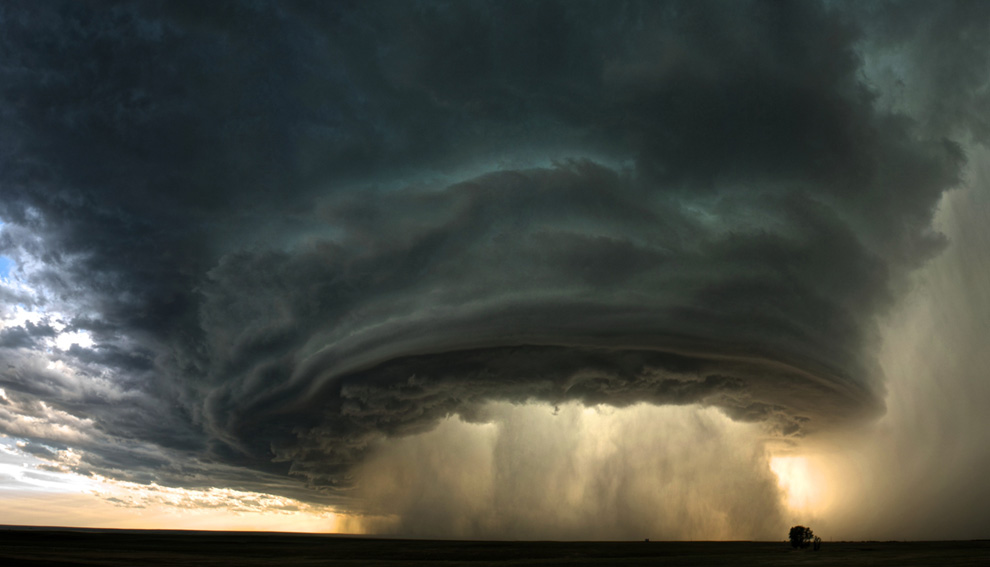
And, HT to Lisa, National Geography’s Photography Contest 2010. Warning — there is a nude one near the bottom. But other than that, some of these are awesome. This one particularly:

I wish I could get this Ducks vs. the Wind video to embed here. It’s very short, cute, and a little sad as a mama duck and her ducklings get literally bowled over by the wind. It just embodied the way we feel sometimes when circumstances are too much for us. I love the way she picked herself up and carried on afterward, though her feathers were more than a little ruffled.

It’s hard to wake up sometimes:

We’ve had Dancing With the Stars — why not Dancing With the Dogs? (HT to Susanne). This one has a lot of talent!

Hope you have a good day! We were planning to get our Christmas tree today, but it is raining a little bit — hope it dries up enough to get one!

Laudable Linkage

Here’s my weekly round-up of riveting recommendations from ’round the Web. 😀

How to Encourage Missionaries During the Holiday Season.

From It was the best of NaNo; it was the worst of NaNo by Johnnie at Kindred Heart Writers I saw a link to the 100 Best First Lines from Novels as listed by the American Book Review. It was pretty interesting — I wonder how long some of these writers had to work to craft a compelling first sentence. Some of them, though, weren’t so compelling to me. Johnnie notes that eight of them start out with “It was…” — considered a major no-no these days because of its passivity, but to me, if what comes just after “It was…” captures your interest and attention, it’s fine. Most of the “It was..” openers were intensely more interesting than the first line to Robinson Crusoe and a few of the others.

Another on writing from Kindred Heart Writers: Self-Editing Tips from Jerry Jenkins.

I must try Chewy Peanut Butter Brownies, recommended by a friend on Facebook. Sounds right up my ally.

How to transfer an image to fabric with gel medium from How About Orange.

Some fall decorating ideas:

How to make leaf trivets from Martha Stewart

Leaf motifs for table linens from Martha Stewart

Maple leaf coasters by the long thread.

And for Christmas, awesomely cute Festive Felt Christmas Trees from allsorts.

And this was sent to me by my oldest son and made me smile for a long time. You can only use a play like this once, though!

Have a great Saturday! I have some mending and cleaning to do.

What makes good writing good and bad writing bad?

btt  button Booking Through Thursday is a weekly meme centering on the subject of books. The question for this week is one I suggested.

Various book memes usually have a question concerning what draws you in to a certain book or author and what turns you off, makes you put down a book unfinished or avoid that author in the future. Almost always people will answer “good writing” to the former and “bad writing” to the latter.

But what makes up good writing and bad writing? Since I suggested this a few weeks ago, I was going to have a really well thought-out response ready. But, alas, I haven’t spent much time with it and am late to the computer today. So just off the top of my head, here are my thoughts of elements of each.

Good Writing

A plot line that is not too simple or too obscure

Characters that I can relate to

Characters with depth, not cliched or one-dimensional

Punchy or beautiful sentences without a lot of wasted words or rambling unnecessary explanations or description

Clarity

Something of truth and possibly beauty that resonate with us even though the times, language, customs, etc. are different

Evokes the feeling of being right there

Believability, even in a fantasy

Bad Writing

Cliches or stereotypes in plot or character

Rambling

Excessive prepositional phrases or linking verbs (He is…or she was…) — action verbs usually make for stronger sentences and show us what the character is feeling rather than telling us.

Transitions that don’t make sense, leaving the reader confused

Foul language. Besides being offensive to me personally, it’s just unnecessary and even lazy in some instances when there are so many great words available.

Most of those characteristics would apply to fiction. Bad non-fiction to me is too or encyclopedic or academic (I don’t know why even textbooks have to seem so dry and dead, but that’s another topic); good non-fiction leads the reader along from point to point in a logical yet interesting fashion. It makes the reader think rather than just disgorging information.

Even still I don’t feel I am really adequately conveying what exactly constitutes good and writing, what engages me or bores me in a book.

What do you think? What makes up good writing or bad writing to you?

(Updated to add: though this meme focuses on books, I thought I’d share a couple of blogs that stand out to me because of the beautiful writing: Lisa Notes and Wrestling With an Angel.)

15 Influential Authors

Diane tagged me with this on Facebook, and I thought I’d post it here as well:

Don’t take too long to think about it. Fifteen authors (poets included) who’ve influenced you and that will always stick with you. List the first fifteen you can recall in no more than fifteen minutes. Tag at least fifteen friends, including me, because I’m interested in seeing what authors my friends choose.

1. Elisabeth Elliot
2. C. S. Lewis
3. C. H. Spurgeon
4. Amy Carmichael
5. Isobel Kuhn
6. Jim Berg
7. Erwin Lutzer
8. David Martin Lloyd-Jones
9. J. Oswald Sanders
10. Jim Elliot
11. Charles Dickens
12. Nancy Leigh DeMoss
13. Darlene Diebler Rose
14. Edith Schaeffer
15. Gracia Burnham

I got the first 10 in three minutes; I had to think a little more about the last five.

I am not going to tag anyone, but let me know if you do this — I’d love to see the list of your most influential authors.

The Gospel and Christian Fiction

The Gospel and Christian Fiction

I have commented many times in book reviews on authors’ treatment of the gospel. After one author recently took me to task for my comments in several e-mails, I thought perhaps I should explain myself further.

A novel is a work of fiction. It’s primary purpose is to tell a story. The very best witness a Christian fiction author can have is to tell his or her story well, just as a painter’s best witness is to do his absolute best job painting rather than inscribing John 3:16 somewhere in it. A story that is a thinly-veiled sermon, doctrinal treatise, or tract will likely turn away readers, especially lost readers who most need the message. Some stories will hopefully be a springboard to awaken a thirst or a need in the reader which will then lead him or her to seek out someone to talk further, but a full exposition of the gospel is a rarity just because of the nature of story-telling.

In addition, the style of writing most prevalent in this era is the “show, don’t tell” variety. Subtlety, suggestion, nuance, illustrating what is going on in the characters’ hearts through their actions are all considered a better form of story-telling than spelling everything out for the reader. The Bible even does this in some places; for example, the book of Esther does not mention God’s name at all, but He is clearly evident in the events. Thus the gospel might be only suggested or referred to, or the author might show the character’s change of belief in the change in his or her actions rather than sharing the details of that character’s conversion.

I do understand and agree with those points. What I have sometimes criticized in book reviews is not so much the amount the the gospel that is presented in a book, but rather the clarity of the gospel. Whatever there is of the gospel in a work of fiction needs to be accurate and not misleading. For example, in one work of Amish fiction, a girl who had gone to live among the Amish to  find answers for her own heart is told, when she finally opens up to talk to someone about her need, to keep living as they are living and following their rules, and eventually it will come to her. I can understand encouraging someone who does not yet understand to keep coming to church and hearing the gospel in the hopes that it will eventually become clear, but the advice given in this book seemed more like, “Keep living like a Christian and eventually it will become real to you.” That is unbiblical advice and confusing to one who is searching.

In another book I read recently, a seeking soul is told that “Jesus invites you to join him on the journey.” There is a sense in which that might be said, but as a stand-alone sentence, I feel that is confusing and misleading.

In other books, a Christian’s faith is attributed to having been in church “all her life.” If that’s the only evidence of a person’s faith, it can be misleading because a lost person would obviously conclude that church attendance is what makes a person a Christian rather than a relationship with Christ, and an unbeliever who attends church might think they’re all right spiritually.

Christian fiction has been criticized in some instances for being formulaic and predictable in that the main character has some crisis of faith and “sees the light.” I don’t really have a problem with that in one sense, because each genre has a certain amount of predictability: you expect the guy and girl to declare their love for each other in a romance, or the good guys to win in a western, or the detective to solve the mystery and find the criminal he is searching for. It’s how each of those things happens which makes them interesting and keeps us reading even when we have a good idea of what will happen in the end. But I do understand how some readers would be turned off by a blatant formula. However, now it seems some authors have swung the pendulum so far the other way that often the gospel is so buried in subtext that it is almost completely hidden. “But if our gospel be hid, it is hid to them that are lost,” Paul says in II Corinthians 4:3. Even if the context of the story precludes a full explanation of the gospel, what is included needs to be correct, accurate, and clear rather than so shrouded it is unclear at best, or at worst, misleading.

I was accused of being insular by the author I first mentioned, of wanting Christian fiction to be such that it would only appeal to Christians. That is totally untrue. Christians are those who would pick up on the nuances of the gospel even when it is not spelled out. It is the lost who wouldn’t understand.

I was also told that to include a gospel presentation would mean writing on a fifth grade level. Again, I disagree. I have seen some wonderful salvation stories in fiction told in an effective way within the context of the story that was beautiful and fit very well in the flow of the story. Not every piece of Christian fiction will have a salvation story: some will deal with those who are already believers, with their problems and issues and growth. But for those involving a conversion experience, it can be done and done well.

I think perhaps I am sensitive to this issue because for many years I sent my mother copies of Christian fiction books I enjoyed, and she loved them, even though she was not a believer at that point. She did want to learn more, and she did benefit from seeing how Christians interacted in books. I did not send her only “conversion story” books: she probably would have gotten turned off if every book was like that. Yet there are some books that I would not have sent to her, not because it was not a “salvation story,” but because it was misleading, and I felt she would have gotten the wrong idea from it.

Rather than being insular and wanting Christians books written just for those who already believe, on the contrary, it is precisely for those who don’t yet understand or believe that I want the gospel to be clear and accurate, as well as for the glory of the Lord who gave us the gospel. Understanding, conceding, and supporting everything I mentioned in the first paragraphs about the nature of fiction, I still do believe and expect that whatever allusion there is to the gospel should not be misleading. I know it can be done: I have read wonderful examples of it.

St. Francis is supposed to have said “Preach the gospel; if necessary, use words.” I agree that a life should back up and reinforce the words we speak, but someone likened this to saying, “Feed starving children, when necessary use food.” Jesus said, “The words that I speak unto you, they are spirit, and they are life” (John 6:63). He also said, “Now ye are clean through the word which I have spoken unto you” (John 15:3). Paul said, “So then faith cometh by hearing, and hearing by the word of God” (Romans 10:17). Words do matter; words are necessary to convey the gospel. Within the medium of Christian fiction those words may not take the same form as a tract or a sermon, but they ought to at least not obscure the truth.

Laudable linkage

I haven’t done one of these in a few weeks. Here are just a few things that caught my eye ’round the Web:

3 Steps For Effective Christian Writing.

God’s Losers and Gainers.

Motherly Greatness.

For those who fear taking their kids to some secular colleges and for those who scoff at them — there is reason for concern. From an article titled Breeders No More:

Identifying himself as a political liberal with no children of his own, Savage acknowledges that he and his fellow liberals have a lower fertility rate than conservatives. Nevertheless, he insists that educated urban liberals need not despair. He expresses confidence “that blue America’s Urban Archipelago can grow larger, more contiguous, and more politically powerful even without my offspring.” How?
“The children of red states will seek a higher education,” he explains, “and that education will very often happen in blue states or blue islands in red states. For the foreseeable future, loyal dittoheads will continue to drop off their children at the dorms. After a teary-eyed hug, Mom and Dad will drive their SUV off toward the nearest gas station, leaving their beloved progeny behind.”
Then what? He proudly claims: “And then they are all mine.”

If you’ve ever been confused by the Biblical feasts and what they mean, e-mom at Chrysalis has a great succinct overview.

Keep Calm and Carry On — Being a Strong Helper After God’s Own Heart.

A few crafty things:

Pillow Box Favors.

How to make cream cheese mints.

Painting furniture step by step.

How to make glazed wall art.

Have a great day!

The Week In Words

Welcome to The Week In Words, where we share quotes from the last week’s reading. If something you read this past week  inspired you, caused you to laugh, cry, think, dream, or just resonated with you in some way, please share it with us, attributing it to its source, which can be a book, newspaper, blog, Facebook — anything that you read. More information is here.

Just a further note — if you’ve posted a quote on your blog this past week, feel free to link it here as well. You don’t have to save it for Mondays. :) And please do read and comment even if you’re not posting quotes.

Here are a few that stood out to me this week:

On several friends’ Facebook statuses:

The happiest people don’t have the best of everything, they just make the best of everything they have.

That speaks much to being content with such things as we have, as we’re instructed to be (Hebrews 13:5-6). It seems no matter how much we have, there is always a craving for more.

I saw this at Semicolon’s:

“It is not enough to simply teach children to read; we have to give them something worth reading. Something that will stretch their imaginations–something that will help them make sense of their own lives and encourage them to reach out toward people whose lives are quite different from their own.”~Katharine Paterson, U.S. National Ambassador for Young People’s Literature

I so agree with this! I am astounded when I hear parents or teachers say, “I don’t care what my kids are reading as long as they’re reading.” We don’t say the same about physical food: “I don’t care what my kids are eating, as long as they’re eating.” Why would we care less about what kids are putting into their brains? I am not talking about the extremes of censorship but rather teaching discernment and providing good books to read (for them and ourselves). There are so many good choices, we don’t need to read shoddy stuff just to have something to read.

Then in an article titled 10 Writing Tips at ChristianWritingToday.com (I got there via Semicolon’s link to 8 Writing Tips From C. S. Lewis on the same site) these first two were the ones that most stood out to me:

1.  Write only when you have something to say. (Playwright David Hare).

2.  The reader is a friend, not an adversary, not a spectator. (Jonathan Franzen)

That second one especially spoke to me: if writing is to be a means of communication rather than just self-expression, writers need to engage the reader, and then not be offended if a reader doesn’t “get” or like something, but rather look for ways to better communicate with the reader (though of course we all understand that we can’t please everybody. But pleasing and effectively communicating aren’t always the same thing.)

Then from an Elisabeth Elliot e-mail devotinal from her book A Lamp For My Feet concerning Romans 12:1-2:

The primary condition for learning what God wants of us is putting ourselves wholly at his disposal. It is just here that we are often blocked. We hold certain reservations about how far we are willing to go, what we will or will not do, how much God can have of us or of what we treasure. Then we pray for guidance. It will not work. We must begin by laying it all down–ourselves, our treasures, our destiny. Then we are in a position to think with renewed minds and act with a transformed nature. The withholding of any part of ourselves is the same as saying, “Thy will be done up to a point, mine from there on.”

That is the sticking point, isn’t it? I want God’s perfect will in my life…unless it means that.

From the same source comes this quote:

If God is almighty, there can be no evil so great as to be beyond his power to transform. That transforming power brings light out of darkness, joy out of sorrow, gain out of loss, life out of death.

Sometimes we boggle at the evil in the world and especially in ourselves, feeling that this sin, this tragedy, this offense cannot possibly fit into a pattern for good. Let us remember Joseph’s imprisonment, David’s sin, Paul’s violent persecution of Christians, Peter’s denial of his Master. None of it was beyond the power of grace to redeem and turn into something productive. The God who establishes the shoreline for the sea also decides the limits of the great mystery which is evil. He is “the Blessed Controller of all things.” God will finally be God, Satan’s best efforts notwithstanding.

We tend to want bad things prevented rather than transformed. That day will come, but it is not now. A friend once said she realized that if God were to wipe out all the evil in the world, He would have to wipe out all of us, for we all sin. I am thankful He transforms us rather than just doing away with us, and and we can trust Him to limit what He allows of evil and trust Him to somehow work it together for good (Romans 8:28) until the day when it is taken out of the way completely.

If you have some family-friendly quotes you’d like to share, please leave the link to your “Week In Words” post (not just to your general blog) with Mr. Linky below. Of course, it is fine to just leave a quote in the comments section if you’d rather. I hope you’ll visit some of the other participants, too: this is a small enough meme so far that it is not hard to visit around with others who love to glean quotes from their reading as well.

The Week In Words Participants

1. bekahcubed 2. Susan 3. Jerrie

Powered by… Mister Linky’s Magical Widgets.

(Mr. Linky is closed for this post: Please see the current Week In Words post to put your new quotes in.)