Laudable Linkage

Laudable Linkage

Here are some of the good reads found this week:

A Biblical Message for Children of Aging Parents. “What I’ve seen time and again is that even the most loving, conscientious children are often riddled with guilt — especially when decisions feel impossibly hard. But Scripture offers clarity, comfort, and guidance for those walking this sacred path.”

To Be Almost Saved Is to Be Completely Lost. “I sometimes wonder how many people in your church and mine have heard the gospel, have thought about its claims, and have perhaps even found themselves agreeing with many of them—yes, Jesus existed; yes, he died for sins; yes, he died for people like me—but have still refused to trust in him. It is one thing to assent to facts, but an entirely different thing to trust in Jesus.”

Learning to Have Conversations with God. “I have often spoken to people who struggle to know how to integrate prayer and Scripture in such a way that they can carry on a conversation with the Lord.” Tim Challies gives some tips for doing that.

One Pentecost Was Enough, HT to Challies. “The lyrics repeatedly declare, ‘We need another Pentecost.’ This simple refrain raises an important theological question: Is this how we should think about Pentecost? Should Christians be praying for another one? Or has God already given us what we’re asking for?”

6 Ways to Lead Better Bible Study Discussions, HT to Challies. I wince when the primary question in a Bible study is “What does this passage mean to you?” This article shares better ways of thinking through the text and drawing out its meaning.

Am I a Mission Colonizer? HT to Challies. “Many people believe that a missionary should never go in the first place. Or that if he does, his work should only be humanitarian. He should never dare to try to persuade someone to change their beliefs. That’s sort of the mantra of our culture today, isn’t it? You can believe whatever you want as long as you don’t impose it on someone else. Kind of ironic, actually. The people who say we shouldn’t impose our beliefs on other people are, in fact, imposing that very belief on other people. They are making personal autonomy the highest value. But who gets to decide that’s the highest value?”

How to Execute: The Discipline of Following Through, HT to Redeeming Productivity. “Most people can make a plan. Planning is fun. You get to dream, scheme, and visualize a future where everything is awesome. But executing plans? A lot of people struggle with that.”

Salvation

Thank God my salvation does not depend on my frail hold on him,
but his mighty grasp on me. Martyn Lloyd-Jones

Friday’s Fave Five

Friday's Fave Five

It’s been a full week! I’m jumping right in with its blessings, along with Susanne and friends at Living to Tell the Story. Feel free to join in!

1. Family time. My oldest son is here from RI and my youngest took a few days off. Jason had to work but has a more flexible schedule. We’ve enjoyed lots of talking, laughing, feasting, and game-playing.

2. Jeremy’s birthday. I’m so glad he could be here for it!

Jeremy's birthday

3. My birthday. My family made it a very special day.

Note to self–close the door to the garbage can cabinet before pictures. 🙂

3. Guys camping trip. All the guys except Jesse went camping Monday through Wednesday. Mittu went up for a while Monday, and she, Jesse, and I went up Tuesday and enjoyed Jim’s grilled burgers. They had a lovely campsite near a lake.

fishing

I didn’t want to do the full camping experience for a number of reasons, but I also felt a little left out of the time together. But maybe with all the health issues of the last few weeks, it was good to have a quiet day at home Monday.

4. Timothy’s thank you card. Timothy loved the camping excursion, especially fishing with Granddad. Mittu drew this picture and Timothy wrote a thank-you note inside to Jim for taking them camping.

I love that she included the little bat (on the left) who flew into the grass of their site, yelped, and died.

5. Power restored. Our power went out about 1:30 this morning. The community Facebook group said it was due to a wreck involving a telephone pole. I was pleased to see many people post comments about praying for those involved in the accident. Thankfully, the temperatures weren’t bad without AC, and Jim has a lot of camping devices to help. Power was just restored a short time ago (thus the lateness of this post).

And that’s it for us! We have a few more days together, and we’re going to enjoy them thoroughly!

How was your week?

Review: Where We Belong

Where We Belong

In Lynn Austin’s novel, Where We Belong, sisters Rebecca and Flora Hawes are traveling across the Sinai Desert on camels.

That’s particularly unusual for 1892. But neither sister is a conventional Victorian woman.

Rebecca was often bored in school as a child, thirsting for adventure. She convinced Flora to go with her to the train station and shipping line to amass information to persuade their father to take them on a trip overseas. He listened to their reasoning and planned a trip for the following summer. Rebecca found she had an affinity for languages, learning French and a little Italian for the trip. Later she added Greek so she could read Homer in his native tongue and Arabic for another trip.

She thought each journey would get the traveling and adventure bug out of her system. Instead, each journey made her want to travel more. Her father had always urged his daughters to find God’s purpose for their lives. But what could God do with a woman who loved travel, adventure, and learning and had enough wealth to finance any journey she wanted to undertake? The answer came in a surprising way.

Flora was a little more pliable and gracious than Rebecca. Flora didn’t usually initiate adventures, but she could be talked into going and always enjoyed them. She, too, struggled with assessing God’s plan for her life and almost let herself be molded into someone else’s plan for her. But then God’s leading became clear.

Each woman’s story is told in a series of flashbacks, always returning to their current desert trek. Their mother died shortly after Flora was born. They live through a meddling aspiring stepmother, the death of their father, and the Great Chicago Fire. A chance purchase of an ancient manuscript in Cairo turns out to be from an early copy of Scripture, fueling Rebecca’s desire to find more. With the recent publication of Darwin’s book and the tide of scientific discovery turning against the Bible’s truths. Rebecca feels that finding proof of such old copies of Scripture will help prove its validity and reliability. Along the way, she finds a much more personal reason for her quest.

The story is divided into five parts, each told from a different point of view: first Rebecca’s, then Flora’s, then Soren’s and Kate’s, two troubled young people that the sisters help, then back to Rebecca’s. At first Soren’s and Rebecca’s stories just seemed added on, but they did end up blending well with the overarching narrative.

Themes include the nature of Christianity, the Bible’s veracity and reliability, the responsibility of privilege, compassion for the less fortunate, being your own unique person, and finding your purpose in the world and the family of God.

I listened to the audiobook narrated by Mary Beth Light, speeding the rate up to 1.2 since the recording was a bit slow.

I saw that the novel was based on two real-life sisters, but the audiobook didn’t include the author’s notes, and my library didn’t have the book for me to look up that information. I didn’t find much information online except for a reference to twin sisters Agnes Smith Lewis and Margaret Dunlop Gibson, who also traveled, spoke many languages, and found one of the earliest copies of the gospels at Saint Catherine’s Monastery in Egypt. It looks like the novel included many details of the sisters lives but changed some, making them sisters rather than twins, describing different men from their real-life husbands, and detailing different charitable work than what’s listed.

I enjoyed the book and the trajectory of the characters’ lives.

When People Are Late to Church

When People are Late to Church

There was a period of time in another church and state when I was sometimes late to services. One man in particular noticed and commented. For instance, one day when I walked in before the service started, he handed me a bulletin and said, “Once in a row!”

I honestly wasn’t late that often. I don’t know if he was teasing or meant his comments as a prod or jab. I don’t know why it didn’t anger or hurt me. I had to work with him in various capacities, so maybe subconsciously I didn’t want there to be trouble between us.

What he didn’t know was that during that time, I started developing IBS (Irritable Bowel Syndrome). I didn’t know that’s what it was at the time. I just knew I was having unexpected, unexplained digestive problems. No matter how much extra time I gave myself to get ready, I couldn’t count on my body cooperating with me.

Granted, I was sometimes late for other reasons. But all too often, my lateness was due to physical issues that I didn’t want to explain.

In fact, the pressure of trying to get there on time, not wanting to draw attention to myself, not wanting to distract anyone by being late, all made the physical issues worse.

Friends who have traveled to other countries talk about the different regard for time in various places. Seeing someone you know and stopping to talk to them is considered more thoughtful and respectful than rushing past them to get somewhere on time.

But in our Western culture, lateness is regarded as disrespect for those you’re meeting with and a lack of discipline.

And that’s often true. It is frustrating to go to a meeting that doesn’t start for fifteen to twenty minutes because several people weren’t there on time. Then the meeting gets done twenty minutes later than planned. Plus, people streaming in late can be distracting.

But sometimes it just can’t be helped.

Once in another church in another state, we were waiting on one of my sons to get done in the bathroom so we could leave for church. We lived in a split-level, and the door leading downstairs was open. As my son in the bathroom upstairs flushed the toilet, we saw water pour from that bathroom floor through the ceiling below in what was our laundry and workroom. The toilet had clogged, and I guess we had never told my son not to keep flushing the toilet in that case. Somehow we mopped up the mess and miraculously still made it to church on time. We hadn’t told anyone about our morning scenario, but the only thing I remember the guest speaker saying that day was “We just don’t know what it takes for some people to get to church.”

While we don’t want to have a casual attitude about arriving at church (or anywhere else) on time, we shouldn’t have an overly judgmental attitude, either.

Sometimes when I am running late due to stomach issues, especially in the first church I mentioned, I’ve thought, “You know, if I am late, everyone is going to notice. But not many will notice if I don’t show up at all. Maybe I should just stay home.”

I saw a meme recently that went something like this: The writer was late to church, and people scowled and frowned at him for disturbing the service. But when he was late to an AA meeting, everyone was concerned and asked, “Is everything okay?” They realized that his lateness may have indicated he almost didn’t make it, and they knew how desperately he needed to be there.

Hopefully we can find a balance between encouraging people to be on time for church for smoother functioning of the body, yet not judging them when they’re not. We should do our best to be at church on time, just as we would for our jobs or catching an airplane (for me, I’ve found I have to get up four hours before leaving in order for medicine to kick in on time). But, as the guest speaker at my former church said, we don’t know what some people go through just to get to church. A latecomer needs to be met with welcoming smiles of “We’re glad you’re here,” not frowns, scowls, or remarks that make them feel they should not have come.

1 Thessalonians 5:14

(I often link up with some of these bloggers.)

Laudable Linkage

Laudable Linkage

Here are some of the posts that stood out to me this week:

None Too Old to Serve the King, HT to Chalmers Blog. “I love this scene with the feeble follower and the deposed king. What a touching moment for David, and a beautiful invitation to Barzillai. It reminds me that I serve the greater King David, and stirs in me the desire to “appear with him in glory” as he rides across the Jordan (Colossians 3:4). Does it do the same for you? I want us to imitate this elderly saint by meeting the King in the wilderness and serving him until our dying day.”

Reading the Bible for the Ten Thousandth Time. “By instinct we know that first-time readers of the Bible need guidance. But long-time readers need help too. In this article we’ll explore some of the ways to combat boredom and lethargy for experienced Bible readers.”

A Biblical Template for Prayers of Confession from Daniel 9. HT to Knowable Word. “For God’s promises and sure word aren’t a reason for inactivity and passivity. They’re fuel for confident prayer.” Though the author makes a case for corporate confession, these principles are true for private prayer as well.

All Those Things We Never Did, HT to Challies. “There remains a powerful temptation in midlife to nurse and rehearse dreams unfulfilled. The loop snags and captures with: We never did this, we never went here, we never bought this . . . The all those things we never did is a thorny and fruitless path, often culminating in a sour, self-centered existence. For the Christian, all those things we never did may humbly be replaced with: Your kingdom come; your will be done.

The Picture on the Nightstand, HT to Challies. “When a marriage is strong, it is a fortress. It shields what is fragile. Spouses are safe. Children thrive. Its strength creates overflowing benefit into entire communities. When a spouse breaks the marriage covenant, the impact is brutal. It exploits vulnerability. Spouses bleed. Children bear the weight. And the effects ripple outward.”

Should You Take Your Children to a Funeral? “Whatever the size or venue, here’s a question for parents to consider: should you take your children to a funeral? My answer is a sure yes, and here are several reasons why.”

The Rare Jewel of Contentment in Childlessness. “Paul’s testimony of contentment encouraged Bethany and me to ask God for that kind of contentment in our state of childlessness. Jeremiah Burroughs describes Christian contentment as ‘that sweet, inward, quiet, gracious frame of spirit, which freely submits to and delights in God’s wise and fatherly disposal in every condition.’”

Silent Women, Speaking Women, HT to Challies. This is one of the clearest explanations I’ve seen on the Bible passages about whether and when women are to teach in church.

Beware the New Notebook Energy. “A new planner gives me an avenue to blame my lack of follow-through on a bad system. If I can blame the system, that saves me from the day-in and day-out-ness of life. I call this New Notebook Energy: fleeing actual responsibility and good habits in favor of reorganizing and starting again.”

Ways to See and Support Foster Families. “All of a sudden, we were a part of the foster system, which came with all of the staff, the rules and regulations, the visits with social workers, the paperwork, the doctor’s visits, and so much more. I quickly realized that before this happened, I didn’t understand how much support the foster families in our church probably needed from me but hadn’t been getting. So I thought I would outline a few things that each of us can do to help foster families in our churches.”

Prayer quote

Ten minutes’ praying is better than a year’s murmuring. Charles Spurgeon

Friday’s Fave Five

Friday's Fave Five

Another week has flown by! I’m joining Susanne and friends at Living to Tell the Story to share the week’s blessings.

1. Jeremy is home! My oldest son flew in from RI yesterday. He was delayed a day when bad weather caused his first flight to take off late, missing his connection to the last flight of the day. But even the process of finding a hotel and shuttle bus went smoothly, and he arrived the next day without any further issues.

2. Messages from Timothy about tornado sirens he had seen and made, from Jeremy about his trip (apparently you don’t have to take your shoes off for security any more!), from Mittu asking to bring dinner over, from the whole family with observations and thoughts to share.

3. An overdue haircut. I was getting pretty shaggy.

4. A visit with the cardiologist PA. He was very apologetic about the delay in getting scheduled for the cardioversion. Their whole floor only gets so many slots at the hospital’s operating rooms next door. And their scheduler was pulled somewhere else in the office when they were short-handed, so she was unable to get to her work (which doesn’t seem wise to me, but I guess in a crunch you do what you have to do to process the patients there). He answered my questions well and felt we could stay at my current medication level.

5. Eating out and take-out. is always appreciated, but especially on a busy week. We’ve always gone to the Kern’s Food Hall with family but ventured out by ourselves this week. Then we got Wendy’s one night and Mexican food another.

How was your week?

Review: Wildwood Creek

Wildwood Creek

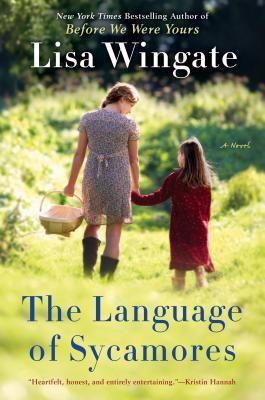
Wildwood Creek is the fourth and final book in Lisa Wingate’s Shores of Moses Lake series. Unlike the others, this is a dual-timeline story.

In the 1850s, Bonnie Rose O’Brien and her family were captured by the Comanche. Her parents were killed, and Bonnie Rose and her younger sister, Maggie May, were held captive for years. Upon their deliverance, Bonnie feels soiled and shameful, even though nothing that happened to her was her fault. When the missionaries she’s staying with recommend her for a teaching position in the wilderness, she sees it as a chance to start over.

In 1861, a man named Harland Delavan is starting a new community called Wildwood to search for gold in Texas. He hires Bonnie as well as others to fill the town’s needs. But he rules with an iron hand. Soon individuals and then whole families disappear without explanation. Rumors and myths spread like wildfire, creating legends that linger through the centuries.

In 2014, Allie Kirkland is following in her father’s footsteps. He was a film director, and her earliest memories involve being with him on set. When he died, Allie’s life was never the same. Her mother remarried a lawyer, and they both urged Allie to work in his firm and major in law. Allie feels she doesn’t fit in with her step-siblings and half-siblings.

When Allie learns of a summer internship for a reality TV show, she jumps at the opportunity and is hired. A famous filmmaker wants to recreate the town of Wildwood near Moses Lake Texas, and have actors represent the townspeople and live as they did while exploring the mysteries of what could have happened to them.

Before long, mysterious things begin to happen in this Wildwood, too. Allie feels a kinship with the young teacher, Bonnie Rose. Can she find out what happened before it’s too late?

It was fun to see some of the characters from the previous books again. That’s one nice thing about reading a series one right after the other–I recognized people I might not have otherwise. I think there’s enough explanation in each book that they could be read alone, but they do build on each other.

Each of the Moses Lake books involves someone whose plans are upended in some way, causing them to reconnect with a faith they’ve neglected. Each story also contains some level of mystery and the importance of community.

Reading four books of one author in succession also brings to light an author’s quirks. I think in every book, someone is said to “flash an eye tooth” at someone. I’d never heard that phrase before–I suppose it’s an idiom for a wide grin.

I listened to the audiobook, which had two different women reading Bonnie Rose’s and Allie’s sections: Morgan Hallett and Heather O’Neill. Then I checked the ebook out via Libby to look at some passages there.

I think this book is the best of the four. My only disappointment is that I was looking forward to the author’s notes about her inspiration for this series and whether any of the details or characters were based in fact, yet there were none. At the end of the third book, the author says her husband, like one of the main characters there, got an unexpected job offer in a small Texas town. So I imagine many of the details of the Moses Lake community came from that experience. I did find a guest blog post from Lisa about the book here and an interview here.

What I Learned from a Traumatic Illness

What I learned from a traumatic illness

September 1 will mark thirty years since I contracted transverse myelitis. TM is an auto-immune disorder in which a virus attacks the spine, triggering the body to attack not only the virus, but the myelin sheath around the nerves of the spine. An attack low on the spine might bring just a little numbness and tingling. But an attack high on the spine can result in quadriplegia, ventilator-dependency, and even death.

I was affected in the middle, in the thoracic region. My symptoms began with a vague feeling of numbness in my left hand, like I had slept on it wrong. Within three hours, my left arm was numb up to my shoulder as were both legs up to my lower torso. I couldn’t walk on my own. I was having trouble going to the bathroom.

I thought I was having a stroke. That’s the only thing I knew of that would cause parts of the body to suddenly go numb.

As it turns out, a number of ailments can cause sudden numbness. There was no one test to diagnose TM. Instead, tests were performed to rule out any other possible related illness. That took eight days in the hospital.

I was sent home with a few prescriptions and a plan for physical therapy.

Thankfully, I progressed from a wheelchair to a walker to a cane to walking unsteadily on my own over the course of a few months. My ability to walk has improved, but I still can’t run, jump, hop, or walk very well on uneven ground. Oddly, my balance is often affected the most when I am standing still with no support. This is due to TM’s effect on my proprioception. I’m usually fine if I can hold on to or lean against something stationery.

I am not as numb as I was, but I still don’t have full feeling in my left hand or lower legs. I have odd little nerve sensations–feeling like something is touching me when it isn’t, feeling a sudden hot sensation where there is no heat, etc. I can’t wear my wedding ring because it causes a pinging, funny-bone sensation in my hand.

But overall, I am thankful that I recovered to the point of being able to function as I needed to, to take care of my family, and to lead a relatively normal life.

I’ve been jotting down several things I have learned through this experience, and I thought I’d share them with you. I know many of you are going through physical trials or have in the past. Though our details might vary, I hope you’ll find camaraderie and encouragement here.

The unsteady trajectory of healing. It seems that often healing is a one step forward–two steps back process, feeling better one day and worse another. Often in the first couple of years after TM, I felt my symptoms were increasing to the same point they were in the beginning. Though TM is usually a one-time event, some people do have more than one attack. But repeated attacks are also signs of multiple sclerosis. So that specter was in view whenever I felt worse.

The hidden work of healing. Sometimes assessing healing is like watching paint dry. There doesn’t seem to be any progress day by day. But over time, healing gradually takes place unawares, until finally one day we can see definite progress from the previous week or month.

Riding the waves. When my husband and I were taking childbirth classes, our teacher invited a couple from her previous class to come in and share their childbirth experience. The new mom said something like this: during labor, when she wondered how many hours she was going to have to do this, she felt weary and defeated. But if she only concentrated on one contraction at a time, she was able to get through them better. She likened it to riding each wave of a surf as it came in.

That illustration has stayed with me all these years through many applications. When symptoms flared up or I had a bad day, I thought, I only have to deal with this day, this moment.

The value of rest. The first few months after TM, if I wanted to go anywhere, I would have to rest up the day of the event. Afterward, it wasn’t a matter of making myself rest: my body crashed and I couldn’t have done anything else anyway.

But I noticed I hardly ever had a cold or any other sickness during that time. I realized that maybe rest was nipping any other colds or viruses in the bud. When I began having heart rhythm issues, I couldn’t take decongestants any more. So rest and Tylenol and cough drops at the first sign of a cold became my go-to treatment. Most of the time, I got over them much faster than usual.

The need to strive. This sounds like a contradiction to the need for rest. It’s hard to balance sometimes. Usually we don’t know we’ve overdone it until it’s too late. But we don’t generally make much progress unless we stretch ourselves beyond what’s comfortable.

The value of an ordinary day. When I was in the hospital and recovering at home, one of the things I most wanted and missed was just an ordinary day like I’d had and hadn’t appreciated before.

The value of my work. As a homemaker, I can sometimes feel my work is not as important as other people’s. But when I couldn’t do my work and saw the extra pressure it put on everyone else to do what I always did, it helped me realize that I did have a helpful contribution to making family life go smoothly.

The value of help. People from church brought meals, cleaned bathrooms, babysat, prayed, sent cards, and let us know they cared. A group of men installed a handrail on the stairs and safety bars in the bathroom.

People often wonder what to do to help in a crisis. It varies according to the person and the situation. But I’d encourage praying about it and then doing what the Lord lays on your heart. For instance, one lady brought over a puzzle, and she and my oldest son sat and worked it at the kitchen table while we talked. We’d had to go back and forth to so many doctor’s visits, either taking the kids with us or to babysitters, and that quiet activity was a balm. Yet if someone had asked me what I needed, I never would have thought of a puzzle and quiet conversation.

The mental cost. This is something I didn’t realize until a few years ago. I was reading of a woman who had been in a horrific accident where she was hit by a bus, flying through the air until she landed on the street with multiple broken bones. On the one year anniversary of her accident, she wrote that she had healed physically, but still suffered triggers that affected her mentally and emotionally.

That statement was like a light bulb coming on in my mind.

For maybe a year or two after TM, I suffered from panic attacks. I didn’t tell anyone. This was in an era when many Christians were adamantly against psychiatry. We had seen a documentary about the dangers of Xanax. I was afraid of being shipped off to a psychiatrist and being put on psychotic drugs.

In fact, I was given Xanax while in the hospital, but no one ever explained why. I don’t remember that it had much of an effect. But I didn’t want to continue it.

So even as I healed physically and enjoyed time with my family and getting back to church, I didn’t realize that I was still shaken up mentally and emotionally. I think part of it is that the world no longer felt secure. We know that anything can happen any time–but when it does, life doesn’t seem safe any more.

In truth, this world was never meant to be our safe place. Our shelter and security comes from God. But it takes a while to remember that, or to apply it in new ways, when our lives are severely shaken.

Mental and emotional healing may take just as much of an up-and-down trajectory as physical healing and may leave us with limps, scars, or tender places.

Things evened out over time, but I wish I had talked to my neurologist or primary care doctor.about all this while it was going on. Thankfully, we understand mental issues better now than we did then.

Lessons from limitations. I’ve written about this before, but one of the biggest lessons was that even though I couldn’t do everything I had done before, that didn’t mean I couldn’t do anything. We all face limitations of some kind–physical, financial, relational, season of life, etc. Our limits don’t hinder our ministry: they just define it.

Happy stress is still stress. A nurse shared this with Mittu when Timothy was in the NICU for 10 1/2 weeks. It rang a bell with me, too. Even with events I am dearly looking forward to, I have to pace myself.

Faith during uncertainty. For the first couple of years after TM, I never knew what my symptoms and capabilities would be any given day. I felt bad when plans with the family had to be canceled, though they were understanding. I didn’t know how long symptoms would go on or what level of recovery I would eventually reach. I was used to getting medical problems fixed, either with medication or a procedure. Living with the unknown for so long was wearing, but it caused us to rely on God moment by moment and trust Him for the future.

The joy of finding others. We got our first family personal computer about six weeks after my diagnosis, and transverse myelitis was the first thing I looked up. I found an email subscriber list of TM patients and caregivers. No one else I knew outside of the medical community had ever heard of TM. To find people who knew what I was talking about, who could answer questions and compare notes, was a godsend.

Dealing with “what ifs.” We lived in a split-level house, and I couldn’t use the stairs at first. Would we need to move? I had three sons, the youngest just two years old. Would I be able to take care of them? We had just started our second year of home schooling. Would I be able to continue? About a third of TM patients don’t regain anything they lost at onset. What if I didn’t? Or what if it got worse? What if I developed MS? What if the doctors missed something? Living with uncertainty isn’t comfortable, but God’s Word assured me He was with me and cared for me. I didn’t know what the future held, but I could trust Him to meet my needs and lead us day by day.

It’s okay to have bad days, to cry, to lament. I used to think that in order to be a good testimony, I had to project “victory” and positivity all the time. That’s not only inauthentic, it’s unrelateable. In the psalms, we see people pouring out their confusion, questions, anguish, physical, mental, emotional, and spiritual pains. Eventually they remind themselves of what they know to be true about God’s character and ways, and they rest in Him even though the circumstances may not have changed.

The comfort of Scripture. Finding help and hope in the Bible was not new to me, but God’s Word helped me in special ways during this time. For example, the night before I was scheduled for an MRI, nearly every medical person who came into my hospital room asked me if I was claustrophobic. I didn’t know–I had never been in a position to feel claustrophobic before. I wanted to tell them that their questions were making me feel claustrophobic! I was told that they could give me something to calm my nerves, but it needed to be done a certain amount of time before the MRI. I opted not to take anything.

They stressed to me the importance of being still in the MRI machine. Before the MRI, the verses from my Daily Light on the Daily Path devotional were all about being still: “Sit still, my daughter” (Ruth 3:18); “Be still, and know that I am God” (Psalm 46:10); “Commune with your own heart upon your bed, and be still” (Psalm 4:4), and others. Those words kept running through my mind while I was in the MRI machine, and I remained calm. I even dozed off.

In the following months, other verses stood out to me. “The Lord strengthen him upon the bed of languishing: thou wilt make all his bed in his sickness” (Psalm 41:3); “In all their affliction he was afflicted, and the angel of his presence saved them: in his love and in his pity he redeemed them; and he bare them, and carried them all the days of old” (Isaiah 63:9); “And he said unto me, My grace is sufficient for thee: for my strength is made perfect in weakness. Most gladly therefore will I rather glory in my infirmities, that the power of Christ may rest upon me” (2 Corinthians 12:9), “Though he cause grief, he will have compassion according to the abundance of his steadfast love; for he does not afflict from his heart or grieve the children of men” (Lamentations 3:32-33), and so many others.

How about you? What has God taught you and how has He helped you in illness?

1 Peter 5:10

(I often link up with some of these bloggers.)
Laudable Linkage

Laudable Linkage

Here are some thought-provoking reads found this week:

The Change Along the Way, HT to Challies. “Ever since mankind was in the Garden, and that fatal first sin was committed, we have tried to shortcut the goals set before us. As with our first mother, we are fickle creatures, seeking always the final product without the process in between. . . .Even our Saviour was tempted in the wilderness to escape the way of the cross for the kingdoms of the world, for the devil knew this inherent weakness in mankind. We long for the glory, and if we can avoid the cross, all the better.”

Can Faith and Fear Coexist in the Life of a Believer? “What separates a person of faith from the crowd? It’s not a lack of fear. The faithful choose to listen to their faith instead of their fears. Faith assures us that God’s invisible presence and power accompanies us as we obey His voice.”

How to Have a Soft Heart. “You can probably think of women who have been cut by life and now wear their pain as sharp edges. But you probably also know women who have walked through as much difficulty and somehow emerged softer. Gentler. More gracious. More trusting. Have you ever wondered how to end up like them?”

Do You Talk Too Much, or not Enough? “The danger in too much talking arises when the entertainment value lies in the drama. And when we enjoy talking, it’s easy for the conversation to drift there. Here are some danger zones where many words can lead to sin.”

Does God Really Care What You Wear This Summer? “Perhaps you’ve wondered it too: does God really care what I wear this summer? Before diving in to answer that question, it may be helpful to consider another: do I really want to know the heart of God on this topic, or am I merely looking for affirmation of my already-formed opinions? In other words, what do I want more? An answer to the question ‘Does God really care what I wear?’ Or am I more concerned with how close I can get to a perceived line of immodesty without going over? “

Dear Weary Caregiver, HT to the Story Warren. “But for those (like me) who need regular reminding, here are three lessons God is teaching me about himself and his ways as I care for my boy. I hope they encourage you as you continue to lay down your life in the service of another.”

Ten Reasons Why I Love Verse by Verse Exposition, HT to Challies. “What is verse by verse exposition? This is when a pastor preaches a book of the Bible, reading and teaching each verse in order to expose it’s meaning. Sure, this can be done poorly, but I think that this approach is super helpful for the church and really beneficial for the preacher. I want to outline ten reasons why I love verse by verse exposition.”

How to Guide Your Children Through the Digital Age, HT to Challies. “Technology is everywhere. There’s no escaping its influence—not only in our own lives but also in the lives of our children. Here are three powerful ways technology is shaping your children and how you can help them respond with wisdom and discernment.”

A Plea to Biblical Counselors Regarding Autism, HT to Challies. “Recently, I’ve heard biblical counselors make unhelpful comments about autism, namely that it’s just a “Big Pharma” money-making scheme. They insist that diagnostic criteria are too vague, making an autism diagnosis too subjective. They even say that biblical counselors have better answers, as if they are better suited to “treat” autism. Biblical counselors, I beg you, do not go down this road, as it will lead to irreparable damage to individuals and families impacted by autism. This road represents a profound misunderstanding of what autism is, how it is diagnosed, and the medical side effects with which these families suffer.”

Corrie ten Boom quote

God sees trouble and grief, which we can lay in His hands where it is safe,
and where we are safe. Corrie ten Boom

Friday’s Fave Five

Friday's Fave Five

I’m sharing this week’s blessings with Susanne and friends at Living to Tell the Story.

1. Cardioversion. Last week I shared that I had been in atrial flutter since July 16, but the cardioversion to correct it wasn’t until Aug. 22. I woke up in atrial fibrillation Saturday, which continued to Tuesday. I called the cardiologist’s office Monday, but they said there was nothing else they could do medicinally, and I could go to the ER if I wanted to. So I did on Tuesday. They did the cardioversion there. It feels very good to have a heart rate in the 50-60 beats per minute range rather than the 90-140 range. My heart is still a little erratic, but hopefully will settle down soon.

2. Good ER staff. The main ER doctor was very helpful and gave clear yet succinct details of what was going on, what the cardioversion involved, etc. Our nurse was really sweet.

3. Texts from Timothy. He texted Wednesday to ask how my heart was and then to ask if he could come over Thursday and make me lunch.

4. Lunch and flowers. Jason, Mittu, and Timothy did come Thursday. Timothy (and Mittu) made lunch. They brought some lovely pink roses, and we visited for a couple of hours.

5. Phone calls done. I had a whole list of phone calls to make to schedule and reschedule various things. I tend to put that kind of thing off until I can’t any more. I got them all done one afternoon. All but one of them involved leaving a message for the other person to call me back. So they’re not totally taken care of yet–but at least the ball is in someone else’s court for the moment.

Bonus: Free produce. A neighbor gave us some of their yellow squash abundance.

That was my week–how was yours?