Laudable Linkage

IMG_0195

I wanted to share these before we get too far away from Christmas since many of these posts relate to it.

Desperation, a Speech, and a Sick Child: Dickens and “A Christmas Carol.” What spurred the writing of Dickens’ most famous Christmas work.

What We Lose if We Ditch the Virgin Birth, HT to Challies.

One part of the Biblical Christmas story that often gets passed over is the murder of male babies in an effort to exterminate Christ. Two articles discerning truth from that horrendous occurrence are The Forgotten Part of the Christmas Story, HT to Challies, and From the Manger to the Cross: Mourning the Slaughter of the Holy Innocents.

Why Modern Christians Should Obey the Ten Commandments, HT to Challies.

ProLife Speaker Ryan Bomberger Publicly Discredited for Making Wheaton College Students and Professors Feel “Unsafe,” HT to Challies: “There is a right to free speech, but not a right to hear only what you want to hear.” “Our society and our colleges are under no obligation to protect frail and vulnerable college students from the discomforts of hearing what they don’t agree with. In my opinion, thin-skinned intellectualism has no place on college campuses. We need to encourage students to learn how to articulate their own ideas, not to try to shut down others from articulating theirs.”

Teach Your Teen How to Read the Bible.

There are usually lots of posts about Bible reading plans at the end of December and beginning of January. Lisa has created a 2-year Bible Reading Plan that I think is really good. I found the “Bible in a year” plans a little too rushed and pressured, so 2 years gives you a little more breathing room. It’s good to have both overview reading, to keep the big picture in mind and to read all of God’s inspired Word, and to do some more intense study on smaller bits as well. Lisa’s plan leaves room for both.

Giving Up Our Rights, HT to Challies. “Consider the formula: Giving up rights = Gospel advancement. Rights are those preferences and freedoms we enjoy as Christians related to what we eat, drink, and enjoy and even some things that we are owed or deserve.”

And, finally, this rang true for me, especially not knowing the day!

Found at Pinterest, apparently from the Letterfolk Instagram account.

Happy last Saturday of 2018!

Friday’s Fave Five

christmas FFF

It’s Friday, time to look back over the blessings of the week with Susanne at Living to Tell the Story and other friends.

I hope you had a wonderful Christmas. Here are some of the best parts of the last week.

1. Our 39th anniversary. I know I mentioned that last week – but it was in the morning before we celebrated. 🙂 We went out to a favorite restaurant while my son and d-i-l stayed with Great-grandma. Then we exchanged cards at bedtime (our ritual for years), and on another night my daughter-in-law made us a special dinner.

2. Having all the family together. My oldest son came in last weekend and is here for several days, and Jason, Mittu, and Timothy have been here quite a bit. Though I hope we’ll always celebrate Christmas together, I don’t take that for granted.

3. Christmas Day, of course, with a special breakfast, reading the Christmas story, the happy chaos of opening gifts and sharing the details associated with them, a great dinner, naptime, and leftovers, pie, and games in the evening.

A couple of Timothy’s new gifts:

collage(1)

4. Christmas cards and newsletters. Though the number dwindles each year, I love sending and receiving Christmas cards, catching up with news in people’s Christmas letters, and seeing family photos.

5. A new iPad mini. I use my iPad mini quite a lot, doing most of my Kindle reading there and playing word games with my sisters, among other things. I have been frustrated with it for months due to extremely slow loading and apps crashing. One app would not update, and when I checked to see why, it said it needed a higher operating system than what I had – and my device apparently didn’t update any further (it’s operating system was 9.-something, while my phone’s is 12.1). So that was evidently what was causing my other problems with the iPad. I told my husband about the issues and asked if he could keep a lookout for a deal on a new iPad mini. He surprised me by giving me one for Christmas. We got it set up last night, and it’s so refreshing to have everything work well and speedily. So I am thankful not only for a good working device, but the thoughtfulness behind it.

Enjoy the rest of 2018!

Favorite Books of 2018

Yesterday I shared a list of the books I read this year. Now I want to highlight my favorites from that list. Only a few were actually published in 2018, but all but one were new to me.

It’s hard to choose! Some had great subjects, great characters, great plots, or great writing. These are the ones that resonated with me the most.

In no particular order, here are my favorite books read this year:

Nonfiction:

ConscienceConscience: What It Is, How To Train It, and Loving Those Who Differ by Andrew David Naselli and J. D. Crowley. Many people are confused about what exactly a conscience is, and what’s for, and how it works. This book was highly helpful, readable, practical, and informative. One quote: “Feeding excuses to your conscience is like feeding sleeping pills to a watchdog” (p. 64).

TrustTrust: A Godly Woman’s Adornment by Lydia Brownback is a treasure of short but purposeful chapters. “Out of his love for you, he is well able to prevent the thing you are so afraid of, and out of that same love he might allow it. Either way, whatever happens, he only allows what is going to work for your eternal happiness and blessing and his glory” (p. 26).

ScarsThe Scars That Have Shaped Me: How God Meets Us in Suffering by Vaneetha Rendall Risner. Vaneetha is one of those people, like Job or Joni Eareckson Tada, about whom you wonder, “How much more can they take?” She was once bitter toward God for what He allowed. But once she realized He had a purpose in everything and trials were His tools, she began to view them in a different light. “I’ve often been devastated when he tells me no, but as I submit to his will in those situations—even with disappointment and tears—he assures me he’s working for my good. I see only part of the picture. He has a purpose in his denials. The Father said no to the Son [in Gethsemane]. And that no brought about the greatest good in all of history. God is not capricious. If he says no to our requests, he has a reason—perhaps ten thousand. We may never know the reasons in this life, but one day we’ll see them all. For now, we must trust that his refusals are always his mercies to us” (emphasis mine).

Anger

A Small Book About a Big Problem: Meditations on Anger, Patience, and Peace by Edward T. Welch. Though I wish this had been laid out like the author’s Running Scared (one of my favorite books of 2015), it’s packed full of great and convicting content. “Jesus…enlarged the boundary of murder so that it includes all kinds of anger. In order to do this, He links them at the level of the heart, where they share the same lineage of selfish desire. We want something–peace, money, respect–and we aren’t getting it. The only difference is in our choice of weapons” (p. 18).

WOTW

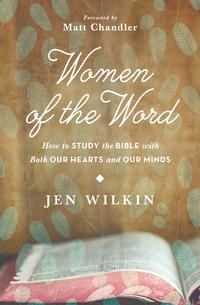
Women of the Word: How to Study the Bible With Both Our Hearts and Our Minds by Jen Wilkin was a reread for me, but it’s still my favorite book of its kind.

Classics:

He Fell In Love With His Wife

He Fell in Love With His Wife by Edward Payson Roe. This 1886 novel is not the first or last about a marriage of convenience in which the participants actually do fall in love with each other, but it’s full of humor, warmth, and pathos. I loved the characters and the story and bought more of Roe’s books after reading this one.

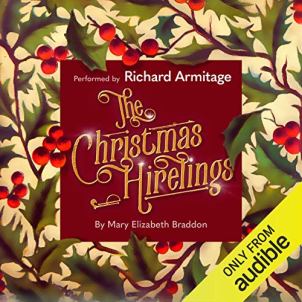
Christmas HirelingsThe Christmas Hirelings by Mary Elizabeth Braddon. An 1894 classic Christmas story that I think could rival Dickens’ Christmas Carol.

Fiction:

Guernsey
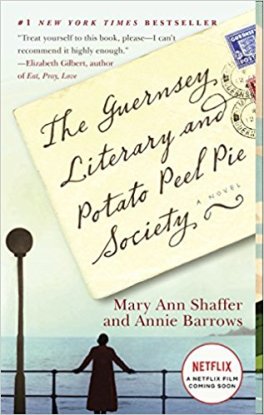
The Guernsey Literary and Potato Peel Pie Society By Mary Ann Shaffer and Annie Barrows. I’ve heard for years how good this is, but I just got to it this year. And it’s every bit as good as I’ve heard. An author discovers that the island of Guernsey was occupied by Germans during WWII. A group of neighbors there invented a literary society first as a cover for getting together to eat a pig which was supposed to have been given to the Germans. Then they had to continue meeting to keep up the ruse. In the meantime, they got to know each other. The author comes to visit them and learn more about their stories. (The movie is wonderful. too!)

Hands
My Hands Came Away Red by Lisa McKay. This is another that was well-spoken of a few years ago, but I just got to it in time for its re-release this year. A group of teens on a backpacking mission trip to Indonesia is stranded when fighting unexpectedly breaks out and their hosts are killed. The kids have to hike through the jungle, facing all kinds of dangers, pushing themselves beyond their limits, struggling with their faith.

JuliaJulia’s Hope by Leisha Kelly. Set in the Depression, a family without resources whose one hope falls through finds an abandoned house. They ask the owner, an elderly woman who could no longer live there alone, if they could live in the home in exchange for fixing it up. In time they offer for her to come back to the home as well, eventually forming a new family. There are many great layers to this one: the father and husband earning back his self-respect, his wife learning to forgive, neighbors helping even when they don’t have much to give. I loved the way the author got me into the characters’ heads and got them into my heart.

Fly AwayFly Away by Lynn Austin. An uptight, introverted Christian professor retired against her will is resentful and depressed and doesn’t know what to do with herself. A laid-back, gregarious atheist grandfather pilot finds he has cancer, and plans to “take off and forget to land” rather than put his family through his slow, painful demise. When they meet, sparks fly. But when she learns his situation, she knows she needs to tell him about the Lord. Her various attempts, first to find someone else to do it, then trying and failing to give him a tract, are comical but sad. I loved the journey on both sides.

Before we were yoursBefore We Were Yours by Lisa Wingate. This novel is based on true circumstances. In the first half of the twentieth century, Georgia Tann operated a children’s home by stealing poor children and brokering adoptions for a price – effectively selling children. This story involves one family’s being torn apart, scattered, and trying to find each other again. Some commented on my review that the book sounded too sad to read, especially when one gets emotionally invested in characters. But it ends in a good place. And, sadly, human trafficking still goes on today, and we need to be aware of it. Besides being a riveting story, the writing is gorgeous.

It took a lot of thought to reduce my favorites to the top twelve above. But there were so many good books I read this year, I can’t help including a few more “honorable mentions”:

  • Adam Bede by George Eliot didn’t sound like something I’d be interested in with its love triangle. But I loved Eliot’s other books so much, I gave this one a chance – and I am glad I did. I love the way Eliot gets us into her characters’ heads.
  • Alvin York: A New Biography of the Hero of the Argonne by Douglas V. Mastriano. True story of a man who went from a conscientious objector due to his faith to winning the Medal of Honor for capturing 132 Germans in WWI. Fascinating story, both for his personal growth, the incident in the Argonne, and his life afterward.
  • Amazing Grace: William Wilberforce and the Heroic Campaign to End Slavery by Eric Metaxas. The author got in the way of his story a bit, but otherwise this was a great biography of Wilberforce.
  • Come Back, Barbara by C. John Miller and Barbara Miller Juliani. Father and daughter tell her prodigal story. Probably most valuable for what he learned about his own mistakes and limitations.
  • Ghost Boy: The Miraculous Escape of a Misdiagnosed Boy Trapped in His Own Body by Martin Pistorius. Hard to read in places, but an amazing story.
  • The Illusionist’s Apprentice by Kristy Cambron. I love that Kristy tackles subjects no one else in Christian fiction does.
  • The Lost Castle by Kristy Cambron covers three different timelines, all connected to a castle in France.
  • The Pattern Artist by Nancy Moser. A maid with a knack for clothing design leaves her employer during a visit to America to try to make her own way.

What were some of your favorite reads this year?

(Sharing with Semicolon, who invites us to share our end-of-year book lists for her last Saturday Review of Books, and Literary Musing Monday, and Carole’s Books You Loved)

Books Read in 2018

I like to read with some intentionality rather than picking books up at random through the year, but I also need flexibility for the unplanned. I enjoy chipping away at the books already on my shelf and Kindle app, but it’s fun to get in on the buzz of a favorite author’s new release or a book currently making the rounds. This year I felt that I hit the perfect reading balance between all those factors. Some of the reading challenges I participated in helped me read with purpose, but I left room this year to incorporate new finds or whims along the way.

I’ll probably finish a couple more books before the end of the year, but I wanted to get my list finished in time for Semicolon‘s last Saturday Review of Books, in which we can post our end-of-year book lists. Today I’ll share all the books I read this year: tomorrow I’ll choose the top 10 or 12 or so. The titles link back to my reviews.

Classics:

Adam Bede by George Eliot

Ben-Hur: A Tale of the Christ by Lew Wallace

The Christmas Hirelings by Mary Elizabeth Braddon

The First Four Years by Laura Ingalls Wilder

Frankenstein by Mary Shelley

He Fell in Love With His Wife by Edward Payson Roe

The Hunchback of Notre Dame by Victor Hugo

Journey to the Center of the Earth by Jules Verne

The Man Who Was Thursday by G. K. Chesterton

The Secret Garden by Frances Hodgson Burnett

20,000 Leagues Under the Sea by Jules Verne

Villette by Charlotte Bronte

Where the Red Fern Grows by Wilson Rawls

Nonfiction:

Alvin York: A New Biography of the Hero of the Argonne by Douglas V. Mastriano

Amazing Grace: William Wilberforce and the Heroic Campaign to End Slavery by Eric Metaxas

Classics of British Literature by John Sutherland was not a book, but a series of lectures about British literature. But since a PDF of his lectures was also provided, and I consulted them frequently, I’m going to count this as a book.

Come Back, Barbara by C. John Miller and Barbara Miller Juliani

Conscience: What It Is, How To Train It, and Loving Those Who Differby Andrew David Naselli and J. D. Crowley

Daily Light on the Daily Path compiled by Samuel Bagster, not reviewed, read yearly for decades now.

Drawing Near to the Heart of God: Encouragement for Your Lifetime Journey by Cynthia Heald

Finding Christ in Christmas by A. W. Tozer

Full Assurance by Harry A. Ironside

Gospel Meditations for Mothers by Chris Anderson, Joe Tyrpak, Hannah Anderson, and others

Ghost Boy: The Miraculous Escape of a Misdiagnosed Boy Trapped in His Own Body by Martin Pistorius

Helen Roseveare: On His Majesty’s Service by Irene Howat

Heaven Without Her: A Desperate Daughter’s Search for the Heart of Her Mother’s Faith by Kitty Foth-Regner

The Highly Sensitive Person by Elaine N. Aron

Homebody by Joanna Gaines

Invincible Louisa by Cornelia Meigs, a biography of Louisa May Alcott

More Than These: A Woman’s Love for God by June Kimmel

Overcoming Your Devotional Obstacles: 25 Keys to Having Memorable Devotions by John O’Malley

Reading People: How Seeing the World through the Lens of Personality Changes Everything by Anne Bogel

Reclaim Your Life from IBS: A Scientifically Proven Plan for Relief without Restrictive Diets by Melissa G. Hunt

Reshaping It All: Motivation for Physical and Spiritual Fitness by Candace Cameron Bure

The Scars That Have Shaped Me: How God Meets Us in Suffering by Vaneetha Rendall Risner

A Small Book About a Big Problem: Meditations on Anger, Patience, and Peace by Edward T. Welch

A Spectacle of Glory: God’s Light Shining Through Me Every Day by Joni Eareckson Tada

The Story of My Life by Helen Keller

Susie: The Life and Legacy of Susannah Spurgeon, Wife of Charles H. Spurgeon by Ray Rhodes, Jr

30 Days of Hope When Caring for Aging Parents  by Kathy Howard

Trust: A Godly Woman’s Adornment by Lydia Brownback

Women of the Word: How to Study the Bible With Both Our Hearts and Our Minds by Jen Wilkin

Christian fiction:

Anchor in the Storm by Sarah Sundin

Another Way Home by Deborah Raney

The Austen Escape by Katherine Reay

Back Home Again: Tales from the Grace Chapel Inn by Melody Carlson

Before We Were Yours by Lisa Wingate

Borders of the Heart by Chris Fabry

The Christmas Bride by Melanie Dobson

The Christmas Heirloom: Four Holiday Novellas of Love through the Generations by Karen Witemeyer, Kristi Ann Hunter, Sarah Loudin Thomas, and Becky Wade

Coming Unglued by Rebeca Seitz

Emma’s Gift by Leisha Kelly

Florian’s Gate by Davis Bunn

Fly Away by Lynn Austin

Hidden Places by Lynn Austin

I’ll Be Home For Christmas: Four Inspirational Holiday Novellas by Lenora Worth, Belle Calhoune, Jill Kemerer, and Allie Pleiter

The Illusionist’s Apprentice by Kristy Cambron

Homeless for the Holidays by P. S. Wells and Marsha Wright

Julia’s Hope by Leisha Kelly

Looking Into You by Chris Fabry

The Lost Castle by Kristy Cambron

The Mountain Between Us by Charles Martin

My Hands Came Away Red by Lisa McKay

My Father’s House by Rose Chandler Johnson

The Pattern Artist by Nancy Moser

Perfect Piece by Rebeca Seitz

Scrapping Plans by Rebeca Seitz

Sins of the Past by Dee Henderson, Dani Pettrey, and Lynette Eason

Someday Home by Lauraine Snelling

The Song of Sadie Sparrow by Kitty Foth-Regner

Tea With Emma by Diane Moody

Twelve Days at Bleakly Manor by Michelle Griep

When the Morning Glory Blooms by Cynthia Ruchti

Other Fiction:

The Incorrigible Children of Ashton Place: Book VI: The Long-Lost Home by Maryrose Wood

Little Blog on the Prairie by Cathleen Davitt Bell

A Long Fatal Love Chase by Louisa May Alcott

The Guernsey Literary and Potato Peel Pie Society By Mary Ann Shaffer and Annie Barrows

Mozart’s Sister by Nancy Moser

I dipped into, but did not read completely Foods That Harm, Foods That Heal by the editors of Reader’s Digest, The Christian Writer’s Market Guide-2018 edited by Steve Laube, Elements of Style by William Strunk and E. B. White.

I laid aside two books I had started, but found enough objectionable content that I did not want to finish.

By my count, that’s 78 books. I’ll have to double check, but that may be a record! Usually I am in the 50-60 range.

It’s been a wonderful year for reading!

 

Wishing you a Happy Christmas!

IMG_1262.png

I hope you have a wonderful time reflecting on God’s great gift to us and the love of people He puts in our lives.

I’ll leave you with my favorite Christmas song:

Infant holy, Infant lowly, for His bed a cattle stall;
Oxen lowing, little knowing, Christ the Babe is Lord of all.
Swift are winging angels singing, noels ringing, tidings bringing:
Christ the Babe is Lord of all.

Flocks were sleeping, shepherds keeping vigil till the morning new
Saw the glory, heard the story, tidings of a Gospel true.
Thus rejoicing, free from sorrow, praises voicing, greet the morrow:
Christ the Babe was born for you.

Tra­di­tion­al carol, trans­lat­ed from Po­lish to Eng­lish by Edith M. Reed, 1921.

Book Review: Finding Christ in Christmas

Tozer ChristmasTozer wrote the words contained in Finding Christ in Christmas, but he didn’t actually write the book. Someone pulled together quotes relating to Christmas and the Advent season from Tozer’s other writings. Thus there’s no flow of logical thought from one entry to the next, (at least, I didn’t pick up on it if it was there). Each is taken out of context, and some leave the reader hanging a bit. Whoever compiled these did not note what writings each of the entries comes from, so there is not a way to look up the context of the entry unless you google a phrase and find a reference online.

Despite those failings, the book contains some nuggets worthy of consideration. I’ve never found Tozer to be a warm, cozy devotional speaker. Rather, he makes us think with his incisive rhetoric. And that, to me, is what gives this book value.

Here are just a few samples:

Thousands each year find their desire for salvation and holiness becoming too acute to bear, and turn to the One who was born in a manger to die on a cross. Then the fleeting beauty that is Christmas enters their hearts to dwell there forever. For who is it that imparts such beauty to the Christmas story? It is none other than Jesus, the Altogether Lovely.

He sacrificed many pure enjoyments to give Himself to the holy work of moral rescue…He pleased not Himself but lived for the emergency; and as He was so are we in this world.

The Law was given by Moses, but that was all that Moses could do. He could only “command” righteousness. In contrast, only Jesus Christ produces righteousness. All that Moses could do was to forbid us to sin. In contrast, Jesus Christ came to save us from sin. Moses could not save anyone, but Jesus Christ is both Savior and Lord.

[On Isaiah 53:2 portraying the Messiah being “a root out of dry ground] Had Israel been like a young woman at the peak of her reproductive powers, the rising of such a prodigy as Jesus from within her might have had some logic in it; but He was born of Israel when her powers had waned and her strength had withered. By no stretch of fancy could anyone who knew Israel in that day have visioned Jesus as her offspring. Israel was dry ground —politically, morally and spiritually effete.

The theology of Christmas too easily gets lost under the gay wrappings, yet apart from its theological meaning it really has none at all.

Though we are keenly aware of the abuses that have grown up around the holiday season, we are still not willing to surrender this ancient and loved Christmas Day to the enemy.

Man is lost but not abandoned. Had men not been lost, no Savior would have been required. Had they been abandoned no Savior would have come.

In our mad materialism we have turned beauty into ashes, prostituted every normal emotion and made merchandise of the holiest gift the world ever knew. Christ came to bring peace and we celebrate His coming by making peace impossible for six weeks of each year. Not peace but tension, fatigue and irritation rule the Christmas season. He came to free us of debt and many respond by going deep into debt each year to buy enervating luxuries for people who do not appreciate them. He came to help the poor and we heap gifts upon those who do not need them. The simple token given out of love has been displaced by expensive presents given because we have been caught in a squeeze and don’t know how to back out of it. Not the beauty of the Lord our God is found in such a situation, but the ugliness and deformity of human sin.

The editors ended the compilation with the last quote, which, though convicting, ends the book on a note of condemnation. I wish they had ended with a quote of hope.

There are readings for December 1 – 25, and each day’s reading ranges from just a paragraph to little more than a page. So the selections are easily readable.

Despite the frustrations I mentioned, I found the book highly beneficial.

(Sharing with Semicolon‘s Saturday Review of Books, and Carole’s Books You Loved)

Friday’s Fave Five

christmas FFF

It’s Friday, time to look back over the blessings of the week with Susanne at Living to Tell the Story and other friends.

I imagine this week is as busy for you as it has been for me, so I’ll make it short and sweet today. 🙂

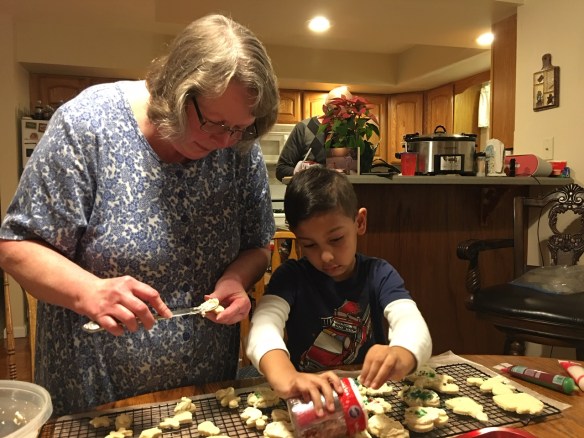
1. Making Christmas cookies with Timothy.

IMG_0005(4)

2. Good food and fellowship! Our church had a potluck dinner after services on Sunday, and then I had lunch out with a friend later in the week.

3. A text from my husband that he was making dinner. And not just any dinner! He had gotten some beef and chicken, marinated them, and cooked them in the sous vide cooker my oldest son had made for him. Not only was that helpful during a busy week, but it was really good!

4. A big answer to a small prayer. I’ll say more about it later, but I acknowledged while bringing it before God that my request was relatively minor in the grand scheme of things. I’d adjust if it wasn’t granted, but it would be a major blessing to me to have the answer I was seeking. To see God abundantly bless in response just touched my heart that He cares about all the concerns of His children.

5. Our 39th anniversary is today!

I hope your week is going well, and I wish you a wonderful Christmas!


Book Review: The Christmas Bride

Christmas Bride The Christmas Bride by Melanie Dobson is based on her own ancestors five generations back who were married by lot. That’s how things were done in the Moravian community, known then in the 1750s as the Unity of the Brethren under Count Nicolaus Zinzendorf. If a man wanted to marry, he went to the brethren with his request. They consulted the lot, which, for them, was a tube with three pieces of paper in it. One said “Yes,” one said “No,” and one was blank, indicating “Wait.” If the answer was yes, the woman still had the opportunity to accept or decline. Sometimes the couple knew each other beforehand and were in love: other times they did not know each other or didn’t really have a relationship, but the man needed to marry to participate in certain forms of ministry. Melanie writes in her afterword that many women were reluctant to marry in this way but accepted it as the will of God. Her own ancestors were married for fifty-eight years. The couple in her book were not based entirely on her ancestors, as she did not know much else about them, but she researched the Moravian customs at the time and represented them faithfully.

This story opens with the wedding of Susanna and Christian Boehler – and several couples in a group wedding. Susanna had seen Christian from afar and admired him, but she did not know him. She was excited about their upcoming ministry to Indians in Pennsylvania and willing to accept marriage as part of God’s will. She was understandably concerned about what her relationship with her husband would be like, but she was willing to be a good wife. Yet, at the end of the ceremony when Christian simply nodded to her and left the building, she was disappointed. What she didn’t know was that Christian had loved another, who was marrying someone else in the same ceremony.

Married couples in the Brethren did not live together at this time in Moravian history. The community was divided into “choirs” – not singers, but groups divided by gender and marital status. the single woman lived in one house, the married women in another, etc. Married couples had the opportunity for a one-hour private meeting once a week in a room for that purpose. Children live in the community nursery.

At first Christian and Susanna were married in name only and lived much as they has as singles. They’re awkward with each other, and Susanna is dismayed when she’s too ill to accompany Christian on his first mission. He’s gone for more than six months, but she finds ways to be useful. She befriends an Indian woman in the community, begins to learn the language, and enjoys visiting the children in the nursery.

Most of the Indians that the Moravians visit are not interested in their message. Some are friendly: others are openly hostile, not just due to a message about a different religion, but because of other issues with the French and British. The Moravians aren’t associated with the fighting and practices of the other white men, but it’s hard for the Indians to distinguish between them. But a few do believe – an individual or a handful here and there.

The rest of the book details the growing ministry to the Indians with its problems and blessings, Christian and Susanna’s getting to know each other amidst fits and starts, and a subplot with Susanna’s friend, Catherine, who comes from a more refined family and has trouble adjusting the the hardships of their life – and who, unbeknownst to Susanna at first, was the woman Christian originally loved.

Melanie’s afterword shares that the separation of families only lasted for about twenty years altogether. The purpose of that separation was so that people couple serve the Lord and community without the problems and distractions of family life. But, as Melanie shows, that separation strained family relationships, and some began to wonder at the wisdom of it.

I don’t know much about Zinzendorf. I heard bits and pieces from his life in a presentation on BBN Radio produced by Moody Bible Institute, but not enough to have a firm grasp of it. From what I understand, he preached and taught the gospel. But I would differ from him in many aspects, family living being a major one.

The physical side of the Boehler’s relationship is an issue in the story, because there was none at first. When they finally do come to love each other in that way,  there’s just a bit more description leading up to it than I care for, but nothing explicit.

This book was originally published under the title Love Finds you in Nazareth, Pennsylvania. Melanie graciously offered the Kindle version of it free under its new title to subscribers of her newsletter.

It was interesting to learn of this background of the Moravians, and I enjoyed the different plotlines. I especially enjoyed the way Christian and Susanna and Catherine grew in their faith through their circumstances.

Book Review: The Christmas Hirelings

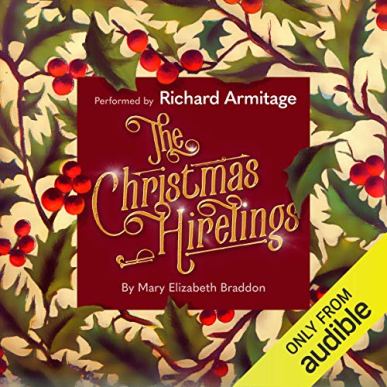
Christmas Hirelings I had never heard of The Christmas Hirelings, written in 1894 by Mary Elizabeth Braddon, but an audiobook of it was Audible‘s free Christmas gift to members, so I tried it out. I loved it! Braddon is known for more “sensational” writings: from what I understand, this is the only story of its kind that she wrote. But it hits all the right notes for a classic Victorian Christmas tale.

The story opens with Sir John Penlyon, his niece Adela, and his good friend Danby. As Sir John grouses about how boring Christmas is, Danby says “Nobody knows how to enjoy Christmas if he has no children to make happy. If one has no children of one’s own, one ought to hire some for the Christmas – week.” He then proposes to do just that, with Sir John’s permission. There’s much discussion about what kind of children should be brought, and Sir John finally tells Danby he can do anything he likes as long as he doesn’t bother Sir John about it.

Then the author switches to Sir John’s backstory and how he came to be a gruff old man alone in his mansion, and his story unexpectedly touched my heart. He was no Scrooge: he was generous and kind, unless crossed. But life’s circumstances had sapped all the joy from his life. At one point he said, “My life was barren, but peaceful. What more did I want?” Much later in the book, Danby said one reason he proposed this experiment was to prove to Sir John that he did indeed have a heart.

The children and Sir John get off on the wrong foot at first until the youngest, four-year-old Moppet, bravely attaches herself to him. One of my favorites of their exchanges:

Moppet: “Little girls sit on their fathers’ knees, don’t they ?”

Sir John: “Sometimes.”

“I mean good little girls. And that isn’t being forward, is it ?”

“No, Moppet, no. Fathers are made to be sat upon.”

The joy of having children around and doing for them enlivens the whole house and all its occupants, until tragedy strikes.

I had an idea where the story was going and who the children actually were by chapter three, but I still enjoyed seeing if I was right (I was) and how everything would play out (not like I expected!)

Oddly, there’s not a Kindle version, but the text is online here. The audiobook was superbly read by Richard Armitage (Thorin Oakenshield in Peter Jackson’s Hobbit movies). I nearly forgot at one point that one man was voicing all the characters. Here’s a bit of background for Audible’s recording with Armitage:

Another free audiobook is available from Librivox. Although the narration can’t compare to Armitage’s, it does have the advantage of a preface from Braddon telling how the book came to be and who Danby and Moppet are based on. The Librivox narration is also on YouTube here.

Thanks so much to Audible for introducing me to this lovely story.

(Sharing with Semicolon‘s Saturday Review of Books and Carole’s Books You Loved)

Christmas Grief, Christmas Hope, Christmas Joy

grave-at-christmas

December’s festivities are tempered with sorrow for some. My mother passed away December 10, my father December 12, and my grandmother Christmas Eve, each in different years. In more recent years a college friend and our only family dog died on December 21. My brother once commented that he just wanted to cancel the whole month.

The death of a loved any any time of year can shadow the whole Christmas season as we miss our normal interactions with that loved one. Grief begins as a flood but slowly transforms into a stream that occasionally overflows its banks. Even several years after a loss, it’s not abnormal to be caught off guard by a memory or a longing leading to a good crying jag.

I mentioned a couple of weeks ago that there is no one right way to celebrate Christmas. That’s true not only among different families or individuals, but even within the same hearts in different years.

When someone is grieving over the holidays, they may not want to participate in some of the “normal” happy pastimes. It’s not that they don’t ever laugh or enjoy gatherings. But as Sherry said, “I am enjoying the traditional holiday celebrations, and at the same time they move me to tears, sad tears for things that have been lost this year. I am singing the music, and yet I’m tired of the froth of jingling bells and pa-rumpumpum.” I remember almost wishing that we still observed periods of mourning with wearing black or some sign of “Grief in progress” — not to rain on anyone else’s good time, but just to let people know there was woundedness under the surface. Just as physical wounds need tenderness while healing, so do emotional ones.

Other events can cast a pall over Christmas: illness, job loss, a family estrangement, etc. One Christmas we were all sick as dogs, and my father-in-law had just had a major health crisis and wanted us to come up from SC to ID to visit. There was just no way we could drag ourselves onto a plane until antibiotics had kicked in. But a few days later we did go, and if I remember correctly, that was the last time any of us except my husband saw him alive. In retrospect we were glad we went, though it wasn’t the merriest of Christmases. A good friend grieved over “ruining” her family’s Christmas by being in the hospital with a severe kidney infection. Another wrote about visiting her husband in prison for Christmas. Quilly commented about being homeless one Christmas.

If you’re grieving this Christmas, don’t feel guilty if you’re not quite into the “froth” this year.  Give yourself time to heal. It’s ok to pull back and have a quieter Christmas. There may be times to go through with some holiday festivities for family’s sake — and, truly, those times can help keep you from the doldrums.

Perhaps a new tradition commemorating your loved one might help. My step-father and sisters who live near my mother’s grave go out together as a family to put up a little Christmas tree there. I’m too far away to join them, but every year on the anniversary of my mom’s death, I have a private little moment of remembrance. A family we used to know whose daughter was killed by a drunk driver requested that their church host a special service in December for those who have lost loved ones in that way. Some men from our former church participated in a biking event together in memory of our pastor who died of liver cancer.

On the other hand, don’t feel guilty for enjoying Christmas. Experiencing joy shows no disrespect to your loved one or your circumstances. Your loved one would want to be remembered but would also want you to be happy. Sherry shared how making a list of reasons to celebrate Christmas helped. Look for the good things to rejoice in. My two friends mentioned above, Lizzie and Quilly, mentioned reasons for rejoicing in the midst visiting prison and homelessness. E-mom left a valuable comment that we can treasure up the memories of good Christmases to tide us over the not so good ones, and then look forward to better things ahead.

As I mentioned before, the first Christmas was not all about the froth, either. It was messy, lonely, and painful, yet out of it was born the Savior of the world and the hope of mankind.

If it weren’t for the hope that Christmas represents, I wouldn’t be able to endure the losses. The Christmas carol “O Holy Night” shares “A thrill of hope, the weary world rejoices, For yonder breaks a new and glorious morn.” “Good Christian Men, Rejoice” comforts, “Now ye hear of endless bliss: Joy! Joy! Jesus Christ was born for this!…Now ye need not fear the grave: Peace! Peace! Jesus Christ was born to save.”

The baby in the manger didn’t stay a baby.  He was no ordinary child: the only begotten Son of the Father came to earth for a special mission. “Mild he lays his glory by, born that man no more may die, born to raise the sons of earth, born to give us second birth.” He taught, He healed, He lived as an example, but His main purpose in coming was to take sin away by bearing it Himself on the cross some 33 years after His birth, so that all who believe in Him could have their sins forgiven and live with Him in heaven some day. I have the hope of eternal life and the hope of seeing my loved ones again. Biblical hope isn’t tremulous: it’s a confident expectation.

But eternal life doesn’t begin at death: it begins the moment God’s gift of faith is received. We have hope not only for life after death, but for joy and peace in the midst of sorrow, for help, grace, strength, love in this life as well. “Thanks be unto God for His unspeakable gift.”

Rejoice in that hope and promise. Draw near to Him who has borne our griefs and carries our sorrows until grief and sorrow are done away forever.

(This post is a blending of a previous post from the archives and a newspaper article published in 2011.)

(Sharing with Inspire me Monday, Literary Musing Monday, Tell His Story, Let’s Have Coffee, Porch Stories, Faith on Fire)