My First Writer’s Conference

I mentioned in Friday’s post an adventure. I spent Friday and Saturday at the Carolina Christian Writer’s Conference!

I had read about writer’s conferences, but attending one was a distant dream. I had never heard of this particular one until Mary mentioned it in a Facebook group we’re both in. I was surprised to see that the conference would take place in a city where I had lived for twelve years. That would take away the anxiety of traveling by myself to a strange new place. Plus it was just overnight, not several days. It seemed smaller than some of the others I had heard about, which would not be so overwhelming as some of the bigger ones. I didn’t think we’d be able to work around my mother-in-law’s care so that I could attend, but my husband said he could be home, and he encouraged me to go. So I did!

Authors, editors, and publisher representatives made up the faculty who presented the workshops. I had read one of the authors, heard of one other, and knew one of the publisher representatives years ago when she was on staff at my sons’ school, but everyone else was new to me. I came away with many of the faculty’s books added to my TBR list.

Four workshops divided into eight sessions each, covering topics like a writer’s social platform, managing time to write, self-editing, storytelling, plot, character arc, book proposals, publishing, and so much more. I wish I could have attended the majority of them! The one most beneficial to me was Craig von Buseck‘s “Fiction Techniques in Nonfiction Writing.” He explained that even though nonfiction informs, persuades, and inspires, it must also entertain or engage the reader, or else the reader will put it down. My writing sometimes tends to be “Just the facts, ma’am,” which might work for a Wikipedia article, but not a book. I gained both ideas and inspiration from Craig’s workshop for fleshing out my writing.

Todd Starnes was the enjoyable keynote speaker, and two panels covered editors’ pet peeves and publishing trends. Friday night after the last session we all divided into genre groups with faculty members available to answer questions.

A “Lightening Learning” session was both fun and informative. All of the faculty were stationed at various tables, and conferees went in small groups from table to table, changing tables at the blow of a whistle. Each faculty member had three minutes to share their favorite writing tip. Though all the tips were beneficial, one faculty member gave me a great idea for narrowing down my target audience.

We had an opportunity to submit an outline and the first ten pages of a manuscript for a critique before the conference, and during the conference we had a fifteen-minute appointment with the person who critiqued our work. That was a humbling experience, but then that was somewhat expected. We can’t improve our writing until we see what we’re doing wrong.

We also had the opportunity to sign up to meet with a faculty member for at least one 15-minute session just to ask questions, share our project and get feedback, etc.

Before the conference when I was trying to determine whether to spend the time, money, and emotional energy to go, I looked over the workshop topics and thought, “You know, I could read about most of this in books or online.” And though that’s true, and though I am sure I will read more, the conference sessions helped distill some of these topics down to their most important essence. Besides all the information and inspiration, one of the biggest takeaways from the conference was encouragement. It’s hard sometimes to know when or how to bring up writing in everyday conversation, but at a writer’s conference, everyone asks what you’re working on, and no one thinks you’re silly or self-promotional. Plus, at an event like this, editors and publishers are encouraging and instructive. They know we don’t know everything we need to and they’re there to help. But once you submit a manuscript to them, you’re down to business, and they expect you to know the ropes. Meeting a variety of editors and publishers gives you some sources to pursue when you do get ready for those steps. It was also encouraging to meeting others at various stages of the writing journey.

And since this was a Christian conference, two of the themes that continually emerged were prayer and responsibility. We need to seek God at every step in the writing process and ask others to intercede for us. And we need to remember that all we do is by His power and grace and for Him. If writing is a calling, we’re responsible to obey God’s call, and if it is a gift, we’re responsible to develop it for His glory.

One other plus for me was meeting Mary Hill at Maryandering Creatively! I have been participating in her Literary Musing Monday for some time now, so it was great to meet in person.

Before the conference Mary had also pointed me to Edie Melson’s The Write Conversation. Her sidebar contains a wealth of information about preparing for a writer’s conference, an invaluable help to me. Edie was also on the conference faculty, and I was sorry to miss her sessions. But I’m delighted to find her site and glean the information there.

I had let a couple of you know privately that I was going and asked for prayer: thank you! I had not traveled by myself since I had to drive from Spartanburg to Knoxville to house-hunt before our move here almost eight years ago (and since college days before that!) I am not a good traveler anyway. During the trip as well as before and after, I kept thinking, “I can’t believe I am doing this!” Excitement battled with fear, anxiety, and even dread at some points, but excitement won out, and God gave me peace. Everything about the trip itself went well: God kept me safe on the road and in parking lots. I spent all of Saturday morning sick in the hotel room, and I was sorry to miss those sessions. I had considered going home once I felt well enough to drive. My dear husband offered to drive up with my son so that he could drive me home and my son could drive his car back, but I didn’t think that would be necessary. I texted a friend to request prayer. I’m so thankful that I felt well enough to attend the Saturday afternoon sessions, as those were the best of the conference for me.

I also enjoyed just the aspect of getting away from everyday responsibilities for a while, and the quiet hotel room provided a counterbalance to all the new experiences and being with so many people. I’m so thankful to my husband for not only allowing me and providing for me to attend but encouraging me to and taking care of things at home while I was gone. It’s not easy being the sole caregiver for his mom, so I appreciate his being willing to do that for a few days.

My emotions definitely hit highs (“Maybe I really can finish a book!”) and lows (What was I thinking?!“) But I came away from the conference challenged and encouraged to move writing from the back burner. I have a lot of work to do, but I gained some good ideas, more direction, and more awareness of what needs to be weeded out. I tend to be wordy (in case you haven’t noticed… 🙂 ), so I need to tighten up in some areas and flesh concepts out in others. My head is still spinning and I am still processing much of what I learned.

If you enjoy writing, I’d encourage you attend a writer’s conference! I am already hoping to attend next year.

Special thanks go to Linda Gilden for organizing everything, for her patience with this newbie, and especially for her warm and encouraging tone in everything she did. Thanks to all the team who helped everything go so smoothly! Great job!

(Sharing with Inspire Me Monday, Literary Musing Monday, Faith on Fire)

Friday’s Fave Five

It’s Friday, time to look back over the blessings of the week with Susanne at Living to Tell the Story and other friends.

Whew – it’s been a busy week. And a colder one – we even had a little snow! Going from winter to spring is a back and forth business here. But spring is ever closer! Here are some highlights of the last week:

1. My husband’s birthday. We all enjoyed celebrating him on his special day.

IMG_0782

2. Ladies group at church. The church we’re visiting had a ladies’ gathering Saturday morning where we discussed a passage we’ve been reading together as a church and prayed together. It has been a very long time since I have been able to attend anything like that, and it was a special time.

3. Lunch at my son and daughter-in-law’s. Usually we gather at our house because of Jim’s mom’s situation and needing someone to be with her. But it worked out to go on a Saturday while her caregiver was here. It was fun!

4. Encouraging texts from friends.

5. An adventure!

Hobbit adventure

I often feel about adventures like hobbits do, but one came up this week! I’ll tell you more about it next week. 🙂


Laura Ingalls Wilder Reading Challenge 2018 Winner

Congratulations to Rebekah for winning the Laura Ingalls Wilder Reading Challenge this year! Thanks to all of those who participated. I hope you enjoyed it as much as I did! I already have plans for next year!

Book Review: Little Blog on the Prairie

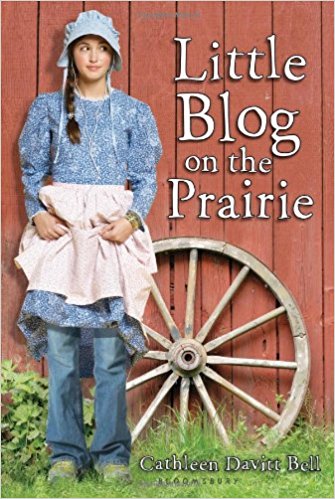
Little Blog  Little Blog on the Prairie by Cathleen Davitt Bell wasn’t on my radar at all, but the title caught my eye while I was passing through the YA section in the library.

The premise: Gen comes from a modern family where each member tends to operate mostly apart from the others. Gen’s mom, a “Little House on the Prairie addict,” decides the whole family would benefit from a vacation to “Camp Frontier,” where everyone is supposed to live like it’s 1890.

No one else in the family is happy about it. Gen only acquiesces when her mom shows her a new cell phone and tells her she can have it when they get back from vacation. But Gen smuggles the phone into camp with her, and when she can find some privacy, she texts her two best friends about how horrible everything is. The friends make a blog out of her texts, which then goes viral, which brings a news crew out to see what’s going on.

Some reviewers objected to Gen’s sarcastic, whiny attitude, but I think they missed the point that she changes during the course of the book. She realizes at one point that her attitude is ruining the experience for her mother, who had looked forward to it. She finds there is satisfaction in seeing the results of hard work. She comes to find that hastily sent words made public can come back to haunt her. It takes the family a long time, but they do learn the value of pulling together and enjoying each other’s company. But the author isn’t saying that going back to a “simpler” time is the answer to modern problems: first of all, they weren’t so simple, and second of all, people without modern conveniences had personal and family issues, too.

Gen is just finishing eighth grade as the book begins, so in my book she’s too young to be kissing a guy near the end and having him tell her that her dress is sexy. There’s mention of an obscene gesture coming from a younger girl. It’s written from a modern secular viewpoint. So for all those reasons I don’t know that I would give the book to a young teen, at least not without some discussion about those and Gen’s attitude. But it does bring out some timeless truths without being heavy-handed about it.

(Sharing with Semicolon‘s Saturday Review of Books)

Still a sinner though a saint

I was in an unfamiliar grocery store that happened to be on my route home, just to pick up a few things, a bit agitated trying to find what I needed in a store with an unfamiliar layout. I found the bagged salads not at an eye-level shelf like I am used to, but on a lower one, so I was bent over, head deep in the produce bins, looking for the freshest pre-made salad. All of a sudden a head appeared right next to mine and a cheery voice asked how I was doing today. I did not immediately think, “Oh, how lovely, this sweet stranger is concerned about my well-being!” Instead I thought, “How absurd!” But I mumbled, “Fine.” The head disappeared but must not have heard me: in just a second or two, it appeared again next to mine, again asking how I was doing. I muttered “Fine” in a definite “I don’t want to be bothered tone,” and the head disappeared.

I found my salad, but my conscience was smitten. Later I saw the woman who had been trying to greet me. She had a rolling cart and some kind of device in her hand, and I found other people in the store with the same apparatus, so I guessed they were doing inventory. She had her back to me, so I didn’t apologize like I should have: I scurried away, shamefaced.

I don’t know if this woman was just extra friendly or if she was trying to be an enthusiastic employee by greeting customers in odd places. I think some stores have tried to put forth a more friendly atmosphere by requiring their employees to cheerily greet any customers within ten feet of them. I don’t mind that in a natural setting, like when I enter the store, or when we pass each other in an aisle. But I have been called to across a large expanse of the store, or interrupted while intently reading a label by someone behind me asking if I am finding everything, or greeted at odd times or in awkward situations by someone inserting themselves unnaturally. I know it’s better to have too much help than not being able to find a salesperson when you need one, and it’s better to have cheerful help than grumpy help. But it’s possible to overdo it.

Some time back a friend shared about how smiling in response to someone at a store led to a nice conversation and a brightened day for all involved. My snippy reaction, unfortunately, probably had the opposite effect.

I have been convicted again and again about my innate selfishness, my preference to withdraw into an introvert bubble rather than to extend myself, my too-quick tendency to irritability, my need to be more loving. I have been a Christian for over 40 years. Shouldn’t there be more progress by now? Shouldn’t I have gotten past some of this by now?

A passage from Conscience: What It Is, How To Train It, and Loving Those Who Differ by Andrew David Naselli and J. D. Crowley (linked to my review) helped me in this regard:

Once you come to Christ and receive that cleansing of conscience, does conscience now fall silent? Quite the opposite! Christians are surprised and sometimes discouraged to find that the condemnations of conscience are even stronger after becoming a child of God. Perhaps you, too, have had thoughts like this: “If I am making progress towards holiness with the help of the Holy Spirit, why do I keep feeling like a worse sinner than before? Becoming a Christian was supposed to relieve my conscience. What’s going on?”

We shouldn’t be surprised when this happens. The moment God accepts you as his child, he gives you the greatest gift he could ever give a child of God: his Holy Spirit to dwell in you. The Holy Spirit comes in to encourage you, comfort you, and be your dearest friend. But he also comes in to reveal to you any sin that is robbing you of joy and to lead you into mortal combat against that sin (Rom. 8:13-14).

When the Holy Spirit comes in, he supercharges your consciousness of sin by writing his laws on your heart (Jer. 31:33-34). He opens your eyes to see sins that you didn’t even know were sins, like pride, greed, and covetousness. He reveals to you all the little idols in your heart’s idol factory. As you read the Bible every day, you see more and more how good and holy God is and how filthy you are.

Don’t expect this struggle to get any easier as you mature in your faith. The war against indwelling sin only grows stronger…

There is generally a proportional relationship between how mature you are as a Christian and how aware you are of your sinfulness. The more you grow by means of grace, the more sensitive you become to your sinfulness. Paul himself increasingly realized his sinfulness: he referred to himself as “the least of the apostles” (1 Cor. 15:9), then “the very least of all the saints” (Eph. 3:8), and finally, the “foremost” of “sinners” (1 Tim. 1:15). Like Paul, you are growing in holiness every day. But you may not feel like it! You’re a saint and a sinner at the same time.

That explains why a Christian often feels so wretched. But then what? If the gap between what we should be and what we really are keeps growing, how can we possibly escape complete despair in the Christian life?…

Only an ever-increasing trust in Christ’s work on the cross can fill this ever-widening gap and keep us from despair. God’s solution for us to have a clean conscience throughout our lives is simple and profound: “If we confess our sins, he is faithful and just to forgive our sins and to cleanse us from all unrighteousness” (1 John 1:9)…

Now we can confidently approach God on the basis of Jesus’s definitive work on the cross. Now we can have a “clear conscience” (Heb. 13:18) (pp. 47-51).

None of us is a saint via sinless perfection or exalted religious experience, but the New Testament calls all true believers in Jesus Christ as Lord and Savior saints. Most of the epistles are addressed to the saints at particular locations. My sin nature won’t be completely eradicated until I get to heaven. That doesn’t mean I can sit back and relax about it or excuse my bad conduct: quite the opposite. I’m to daily seek God’s help and grace to fight against it. As I am in His Word and continue to grow in Him, He will point out more and more of my sinfulness that I am unaware of. So I confess that to Him, and then seek Him for more grace to grow more. I look forward to the time when all sin will be put away, but until then, my sin nature will keep reminding me of my need of Him, and hopefully I will continue to “grow in the grace and knowledge of our Lord and Savior Jesus Christ. To him be the glory both now and to the day of eternity. Amen” (2 Peter 3:18).

Photo courtesy of Pixabay.com.

(Sharing with Inspire Me Monday, Literary Musing Monday, Tell His Story, Woman to Woman Word-filled Wednesday, Writer Wednesday, Coffee For Your Heart, Porch Stories, Wise Woman, Faith on Fire)

Friday’s Fave Five

It’s Friday, time to look back over the blessings of the week with Susanne at Living to Tell the Story and other friends.

The sun is shining brightly today after several overcast, rainy days left fields looking like lakes. The beginning of March feels like spring to me, even though it won’t be “officially” until the 20th. Here are some of the best parts of the last week or so:

1. Sunday lunch with new friends. It’s been….ages since anyone has invited us to their home, so we enjoyed not only being out and having a wonderful meal, but a sweet time of fellowship.

2. A surprise visit. A friend stopped by this week just to drop off some flowers for me and my mother-in-law.

3. Puttering. I wasn’t feeling 100% Saturday and just wanted to stay home, so while my husband worked on outdoor projects, I puttered around inside and ended up with a productive but unpressured day. It’s nice to have those times when nothing is pressing and you can get to those odds and ends chores that keep getting pushed down the to-do list.

4. Sometimes it’s the little things – like finding a better way to organize a shelf.

5. FaceTime. We had not seen my son, daughter-in-law, and grandson in almost a week, and they FaceTimed last night, so we had a nice visit. 🙂

Have  great weekend!

Book Review: Trust: A Godly Woman’s Adornment

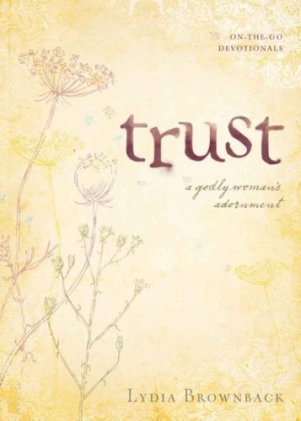
TrustTrust: A Godly Woman’s Adornment by Lydia Brownback is one of a series of “on the go” devotionals for women: small, relatively short books focusing on one main topic.

After an introduction titled “Why Women Fear,” Lydia deals with various aspects of battling fear and anxiety. Each chapter is just two, sometimes three pages long, making it very easy to grab a “nugget” to carry with you through the day.

To give you just a taste, some of the chapter titles are:

The What-If Woman
A Phobic’s Only Reemedy
False Security
Resting on Self-Righteousness
Afraid of the Pain
Whose Fault Is Our Fear?
Control Freaks
The Path to Healing
A Fence Against Fear

And some of the quotes that stood out to me:

The only thing big enough to conquer this kind of fear is God, who rules every detail of every day of your life. Rest assured that nothing can touch you apart from your heavenly Father’s permission. Out of his love for you, he is well able to prevent the thing you are so afraid of, and out of that same love he might allow it. Either way, whatever happens, he only allows what is going to work for your eternal happiness and blessing and his glory (p. 26).

God wants more than our symptom relief. He desires to get at the core of what underlies our fears, which, at the deepest level, have to do with our relationship to him (p. 27).

God allows us to experience fear at times to help us recognize our false foundations, things on which we are resting our security that have no more strength to support us than a mound of whipped cream (p. 28).

God often acts contrary to how we think a good God should act. The answer we think we need seems so logical and clear to our way of thinking, yet God does not provide it. That is where faith comes in. Real faith isn’t the belief that God will do a particular thing; real faith is the conviction that God is good, no matter what he does and however he chooses to answer our prayers (p. 30).

We care much less about long-term results and the glory of God than we do about simply feeling better (p. 48).

“I’d never put my child through what God is doing to me.” But God is a wiser parent than we could ever be. He places us in situations that provoke us, not to cause us to doubt but to strengthen us against our doubts” (p. 72).

God let [Jonah] go his own way, as he does with us when we insist on running our own show; but because God is merciful, he will make sure that any way we take away from him doesn’t work out so well (p. 79).

That very thing you want God to fix may be his instrument to teach you first to depend on him rather than on yourself or on peaceful circumstances (p. 90).

Rather than take God at his word, they just looked at the difficulties. Rather than doubt their own viewpoint, they doubted God’s (p. 97).

The devil is stronger and smarter than we are; so arguing with him won’t help us very much and can actually enhance our difficulty. Jesus has provided us with the way to resist…there are Scripture passages to refute every one of [the devil’s] lies. Immersing ourselves in the Bible is one of the primary ways we keep, or guard, our hearts (p. 130).

This book is a treasure that I am pretty sure I will revisit often. In addition, this experience with Lydia’s book makes me want to check out her others as well.

(Sharing with Semicolon‘s Saturday Review of Books, Literary Musing Monday, Carole’s Books You Loved)

Laura Ingalls Wilder Reading Challenge 2018 Wrap-up

It’s the end of February and that means the end of the Laura Ingalls Wilder Reading Challenge for this year!

A week from today I’ll use random.org to draw a name from the comments on this post to win either The Little House Cookbook compiled by Barbara M. Walker or Laura’s Album: A Remembrance Scrapbook of Laura Ingalls Wilder by William Anderson, or a similarly-priced book related to Laura. A week should give some of us who are still reading time to finish up and post about our reading. You don’t have to have a blog to participate: you can tell us what you read in the comments here. If you have a blog, you can either let us know what you read in the comments or share the links back to any reviews or challenge-related posts from your blog or even from Goodreads if you review books there.

Before I go any further, I need to apologize for something. I had created a book list of books by, about, or somehow related to Laura. Some of them I had not read but had heard about or seen. Two of them turned out to have objectionable content. I have removed them from that list, and I feel terrible that some of you chose those books, probably because of seeing them on that list. I am going to be much more careful about that in the future, and, once again, I sincerely apologize for having books with serious problems on a recommended book list here.

For my own part, I did have to lay aside one I was reading: Death On the Prairie by Kathleen Ernst. It’s a modern-day mystery involving a quilt that might have been owned by Laura, might even have been made by Laura, being given to a historic museum curator named Chloe. She decides to go with her sister, with whom she had not been close lately, on a tour of all the Laura historical sites to consult with others and see if she can find out more information plus, as per the owner’s wishes, decide which of those sites to donate the quilt to. But early on a mysterious death occurs at the first site, which I assume later on is discovered to be a murder, and that somehow involves Chloe. I was irritated by some bad language (damns and hells), and then bothered by some vulgar words, and finally an appearance of the “f” word caused me to shut the book and give up on it. But it wasn’t grabbing me anyway. The writing was a little juvenile in places (one example: “Oh-boy-oh-boy-oh-boy! Chloe thought with giddy glee,” p. 6) and not great in others (“Something quivered beneath Chloe’s ribs, as if one of her heart-strings had been plucked,” p. 8). And, then, it was inaccurate in at least one place: when Chloe visits the site in Burr Oak, Iowa, the tour guide tells them this segment in the Ingalls’ life, where they manage a hotel next to a saloon, is neither in the books nor the TV series. It’s not in the LH books, but it is in the TV series, in season 5. The town is called Winoka there rather than Burr Oak, and the Dakota Hotel rather than the Masters Hotel, and the timing may have been different, but they are definitely helping in a hotel next to a saloon. Anyway, for all of those reasons and a couple more, the story just wasn’t grabbing me, but the language was “the last straw” that made me put it down. It’s too bad, because it sounded like it would have been good. Most of the reviews I’ve seen are positive, so a lot of other people liked it better than I did.

Other than that, for this year’s challenge I read:

The First Four Years by Laura, about her first four years of marriage. The manuscript was found among her papers after her death and published later after Rose’s death. They had quite a rough go of it at first, but in true pioneer spirit they summon the strength to persevere. I quite enjoyed rereading this.

I looked through several of the My First Little House books, designed for 4-8-year-olds. I have not reviewed them nor had a chance to show them to Timothy, but Rebekah has an excellent review here (where I first learned of them!) They are gorgeous, illustrated by Jody Wheeler and Renee Graf, “inspired by the work of Garth Williams with his permission.” I am so glad they kept with a similar style of the books that many of us grew up with. I have not read each of the thirteen books word for word yet, but from what I did read and what Rebekah said, they seem to follow the books very closely, except, of course, for being condensed and adapted for a younger child.

I’m still working on Little Blog on the Prairie by Cathleen Davitt Bell. This was not at all on my radar, but I just happened to notice it while passing through the children’s section of the library. It’s more YA than a children’s book, though, recommended for ages 12 and up. It’s about a modern-day family with several issues going for an extended “Camp Frontier,” where they are supposed to live like they did in the 1890s. The kids, of course, are not excited. The main character, Gen, manages to smuggle in a cell phone, where she texts about the experience to her friends, who put the texts on a blog which then goes viral. There’s a requisite mean girl and cute guy, along with a goth friend and several other characters. So far this seems pretty good – I hope it continues to be! I’ll review it in full when I am done. It’s not really directly related to LIW so far except to reference her a couple of times, like the mom in the family having been “a Laura Ingalls Wilder addict.” (Update: my review is here.)

So that’s my Laura reading this year. 🙂 A few years ago, I thought I might end the challenge with the last book in the LH series, but I have found more LIW books that I want to read, so we’ll look forward to continuing on next year!

In the meantime, I am looking forward to finding out what you read and what you thought about it!

What’s On Your Nightstand: February 2018

Nightstand82The folks at 5 Minutes For Books host What’s On Your Nightstand the last Tuesday of each month in which we can share about the books we have been reading and/or plan to read.

It’s always nice when the fourth Tuesday occurs near the actual end of the month. It’s hard to believe we’re 1/6 through 2018 already! Here’s what I’ve been reading lately:

Since last time I have completed:

The Secret Garden by Frances Hodgson Burnett, reviewed here, including a discussion of the “magic” in the book.

Journey to the Center of the Earth by Jules Verne, reviewed here. Not my favorite of his books, but it’s still a classic after all these years, so probably others like it more than I did.

The Austen Escape by Katherine Reay, reviewed here. A fun Austen-themed vacation turns strange when one of the guests loses her memory and thinks she is actually from that era.

The First Four Years by Laura Ingalls Wilder, reviewed here. Laura and Almanzo’s marriage got off to a rough start with illnesses, crop failure, and debt, but they found the courage and strength to go on.

Trust: A Godly Woman’s Adornment by Lydia Brownback. I just finished this and hope to review it soon. Excellent.

I had to lay aside Death On the Prairie by Kathleen Ernst, a modern mystery set around some of the places Laura lived and involving a quilt that may have been hers. I’ll say more about it tomorrow for the Laura Ingalls Wilder Reading Challenge wrap-up, but the main problem was bad language, though the story itself wasn’t grabbing me anyway.

I’m currently reading:

The Story of My Life by Helen Keller

Frankenstein by Mary Shelley (This may be my biggest surprise book of the year! It’s quite good!)

Little Blog on the Prairie by Cathleen Davitt Bell, about a modern family with problems going to a “Camp Frontier.” Good so far.

Up Next:

Where the Red Fern Grows by Wilson Rawls

The Hunchback of Notre Dame by Victor Hugo

He Fell in Love With His Wife by Edward Payson Roe

Sins of the Past by Dee Henderson, Dani Pettrey, and Lynette Eason

Going Like Sixty by Richard Armour

Reading People: How Seeing the World through the Lens of Personality Changes Everything by Anne Bogel

Happy reading!

“Let patience have her perfect work”

Sometimes when people are going through a hardship or loss or suffering in some way, we want to “fix” it. And that can be good: sometimes the very reason God allows something to come to our attention is so that we can help in whatever way He has prompted us and gifted us to help.

But sometimes in our attempts to fix or set things “right,” we can seem to minimize someone else’s concerns or brush off their situation as not really that hard. Many of us are familiar with Romans 12:15: “Rejoice with those who rejoice, weep with those who weep.” Too often we want to make those who are weeping rejoice instead. That’s not wrong in itself: there’s certainly time for encouragement, for gently helping someone restore their focus, for cheering someone up. But there are also times to just sympathize.

We run a few risks when we don’t take that time to sympathize. The person might not feel heard and validated, and in that case, nothing we say is going to register. Or, we might make them feel somehow “less than” an ideal spiritual Christian for having such a struggle. We not only fail to help them, but also they’re sure not going to open up to us next time.

Here is an example: a single person says she sometimes struggles with loneliness and discontentment. Most Christians rush to point out that we need to find our contentment in Christ and not a human being, that no human being can totally meet our needs, that Paul says being single provides many more opportunities to serve the Lord. And those are all true. But we’re bypassing the cry of her heart: loneliness is hard. And it’s not unspiritual to feel lonely. God is the One who said it wasn’t good for man to be alone and who inspired Solomon to write “two are better than one.” He knows the hardship, yet He allows it for other purposes.

Or someone’s husband dies. We rush to assure that her loved one is in a better place. True, if they’ve believed on Christ. And we’ll see them again. True. But it hurts like everything until that time comes. It hurts when a loved one is away for a week, even with smartphones and Skype and texts and all the ways we have to keep in touch: how much more when they’re away for years with no contact? The Bible calls death an enemy. So while death has lost its sting and we don’t sorrow like those who have no hope, we do still sorrow.

Sometimes we find grace by acknowledging the pain and working through it rather than by downplaying it. I so appreciated the pastor speaking at a funeral of a young mom of five children: he said publicly to her husband, “I don’t know how you’re going to do it. You’re going to need God’s grace.” The husband was probably thinking the same thing, that he had no idea how he was going to carry on parenting five children without his wife while also missing her companionship. How refreshing to have someone acknowledge that rather that quote Romans 8:28, pat him on the back, and go on his merry way. The pastor pointed to the available and needful grace of God without minimizing the hardship.

James 1:3-4 says, “Knowing this, that the trying of your faith worketh patience. But let patience have her perfect work, that ye may be perfect and entire, wanting nothing. The ESV says, instead of patience, steadfastness: the NASB says endurance. If God allows trials to help us grow and strengthen our faith, among other reasons, we need to let it do its work, to work through grief and pain rather than bypassing it. We need to offer comfort and assistance, yes, but without short-circuiting or brushing away the depth or effect of it. Acknowledge it. Empathize with it. Someone once said Job’s friends did more for him when they sat in silence with him for a week than by saying all that they said to him.

True, sometimes we whine or wallow and need to adjust our perspective. Sometimes our thinking is wrong and needs adjustment. James even says to count it joy when we experience trials, not that the trial is joyful, but that God is using it to do a work of some kind in us. Sometimes as a friend or counselor, it’s not easy to know just what to say or how to help. That’s why I am so glad the next verses in James assure us that we can ask God for wisdom. He also reminds us a few verses later to be swift to hear and slow to speak. We need to hear people out and seek God’s wisdom rather than presuming or assuming or rushing in to “set them straight.” Sometimes God does guide and give us something to say in the moment. Sometimes all we can say is, “I don’t know why God is allowing this, but I know He has a reason. It’s hard. I don’t know how to help. But I can listen and pray with you.

When we go through a trial of some sort, usually we just want relief, preferably from a change in circumstances, or at least by finding some way of making the situation easier. And that’s fine, both to pray for and seek for relief. And when people sometimes say the wrong thing, we can avoid bitterness and appreciate that at least they were trying to help. When people don’t understand, we can encourage ourselves in the Lord. Sometimes that lack of understanding is part of the trial. But in the midst of all of that, we need to remind ourselves that “suffering produces endurance, and endurance produces character, and character produces hope, and hope does not put us to shame, because God’s love has been poured into our hearts through the Holy Spirit who has been given to us” (Romans 5:3-5). We can let them do their work; we can trust in and work with God’s processes and purposes; we can ask Him what He wants us to learn through it all. And knowing that God is working something in us, even when we don’t understand, we can “rejoice in our sufferings” (verse 3).

(Sharing with Inspire Me Monday, Literary Musing Monday, Tell His Story, Wise Woman, Woman to Woman Word-filled Wednesday, Writer Wednesday, Coffee For Your Heart, Porch Stories, Faith on Fire)