Book Review: The Wonderful Wizard of Oz

OzI hadn’t planned on reading The Wonderful Wizard of Oz any time soon. It was one of those “Maybe someday…” books to me. But when a great sale on an Audible version read by Anne Hathaway came through some time ago, I went ahead and bought it. And last month when I had several days between the end of my last audiobook and the availability of my next Audible credit at the beginning of the month and looked for a short book to fill the time, this seemed like a perfect choice.

The story is so well-known, I don’t think I need to go over the plot at all, but just in case someone is unfamiliar with it, the main character is Dorothy Gale, a little girl who lives with her Aunt Em and Uncle Henry in Kansas. Everything is pretty grey and cheerless, except Dorothy’s little dog, Toto. When a cyclone heads toward their house, Dorothy doesn’t quite make it to the storm cellar before the house is whisked away and ends up in the land of the Munchkins, right on top of the wicked witch of the East, for which the Munchkins are very grateful. Dorothy wants to get home to Kansas, but they don’t know how to help her: they can only advise that she go to see the great wizard, Oz, in the Emerald City. So she follows the yellow brick road that direction and along the way meets a Scarecrow who wishes he had brains, a Tin Woodman who wishes he had a heart, and a Cowardly Lion who wishes he had courage. They all decide to join her to see if Oz can help them. But Oz doesn’t quite respond the way they want, sending them on a mission to kill the Wicked Witch of the West. And eventually they find the wizard isn’t who they thought he was at all.

Of course, the book has its differences from the well-known movie. We only see 3 Munchkins rather than a townful, there is no “Lions and tigers and bears, oh my!” line, the shoes Dorothy is given from the dead witch are silver rather than ruby (probably due to the effect of which would look best in Technicolor). I enjoyed getting more back story of the characters, especially the Tin Woodman and how he came to be tin when he was originally human. The winged monkeys aren’t inherently evil – they’re mischievous, but they prove helpful in the end. There is an elephant-sized spider, a little town made of china people and buildings, and a race of people called Hammerheads who can shoot their necks out and butt people off the hill they’re guarding. Those are all interesting in themselves, but since they come between Dorothy’s leaving Oz (which is the end of the movie version) and her finally getting back home, they seem a little anticlimactic.

The book was written in 1899 and is considered the first American fairy tale. In the introduction, Baum says he wrote it just for the pleasure of children. He felt that “Modern education includes morality; therefore the modern child seeks only entertainment in its wonder-tales and gladly dispenses with all disagreeable incident.” I would say there is still plenty of “disagreeable incident” in the story, with some of the trials the troop has to undergo, but they are not of the “horrible and blood-curdling” variety he feels are “devised by their authors to point to a fearsome moral to each tale.” I don’t think morals and stories are antithetical, but I agree it’s fine to  have a story just for fun. And though Baum wasn’t necessarily trying to dispense morality, I think an observant reader would glean good traits from the good characters (their kindness, thoughtfulness, bravery, hard work, persistence, etc.).

I found it interesting that in the book, the idea that “There’s no place like home” came from Dorothy herself: it wasn’t something she had to be told by Glinda.

The Scarecrow listened carefully, and said, “I cannot understand why you should wish to leave this beautiful country and go back to the dry, gray place you call Kansas.”

“That is because you have no brains” answered the girl. “No matter how dreary and gray our homes are, we people of flesh and blood would rather live there than in any other country, be it ever so beautiful. There is no place like home.”

When my children were very little, I had trouble with the idea of a “good witch” in the story, so I didn’t let them see the film for a long while. But I eventually came to terms with the idea that fairy tale witches are a completely different thing from real-life ones.

Apparently Baum did not want to write sequels, but the interest and demand was so great that he wrote thirteen of them.

I’m so glad I gave it a go. Anne Hathaway did a marvelous job narrating. I agree with C. S. Lewis’s quote to the effect that a good children’s book should be enjoyable by adults as well. It would be hard to say whether I like the book or the film better. I like them both. They each have their charms.

(This will also be linked to Semicolon‘s Saturday Review of Books.)
Friday’s Fave Five

FFF fall backgroundIt’s Friday, time to look back over the blessings of the week with Susanne at Living to Tell the Story and other friends.

I hope you all had a wonderful Thanksgiving! Here are some of my favorite parts of the last week:

1. Our first babysitting gig with Timothy. Jason’s company has their Christmas party way early before the crowded holiday schedule, so that was his and Mittu’s first outing of significant length since bringing Timothy home. I was a little concerned that Timothy might cry and I wouldn’t find a way to calm him down – so far at that point I give him back to his parents. 🙂 But he did really well and we had a nice evening.

2. Jeremy is home! My oldest son flew in earlier this week.

3. Thanksgiving Day. Scrumptious food, lots of wonderful family togetherness, and much to be thankful for.

4. Help with clean-up. Jeremy and Jesse helped put things away and Jason, Mittu, and Jim cleaned up the kitchen while I had…

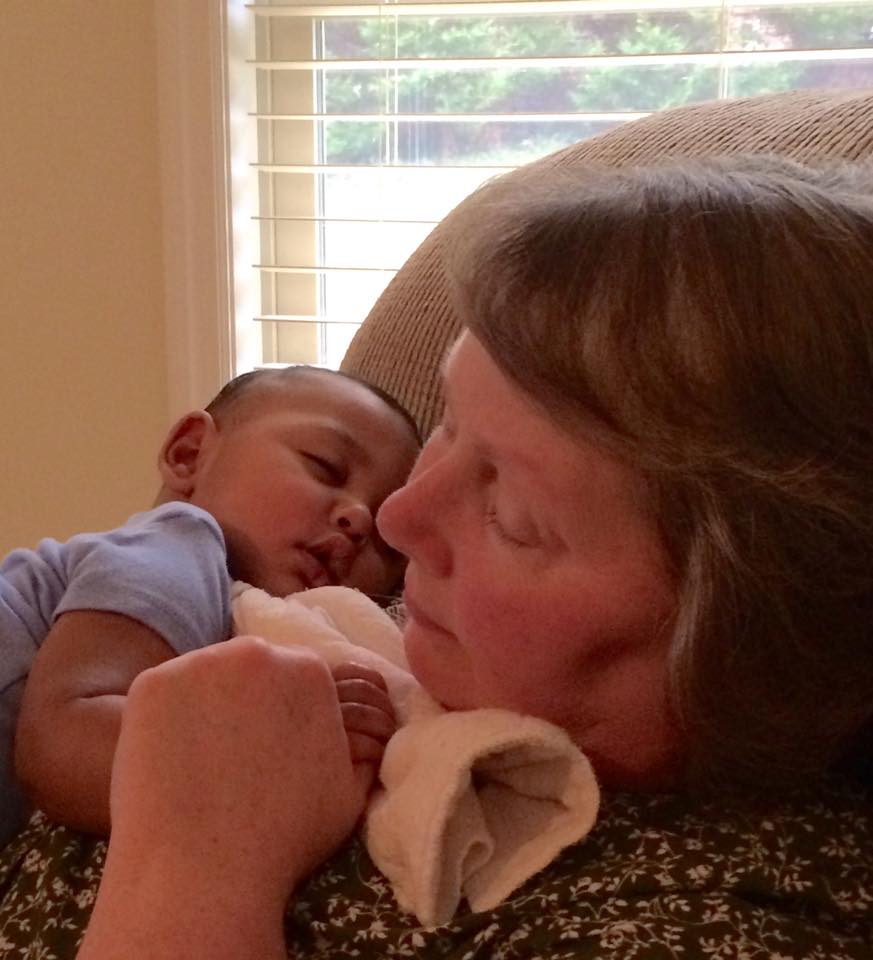
5. An after-dinner nap with my favorite little guy.

Tnap

It doesn’t seem like it should be quite Christmas time yet, despite the Christmas items in stores, but we’re supposed to go get our tree today, so maybe decorating will get me into the holiday spirit. 🙂

Have a great weekend!

Happy Thanksgiving!

Give thanks

“Some people seem to think that if they set apart certain definite days for praise, it is enough. For example, they will be grateful for a whole day once in the year—thinking that this is the way God wants them to show their gratitude. But the annual Thanksgiving Day is not intended to gather into itself the thanksgiving for a whole year; rather it is intended to give the keynote for all the year’s life. Life’s true concert pitch, is praise. If we find that we are below the right pitch, we should take advantage of particular thanksgiving seasons to get keyed up. That is the way people do with their pianos—they have them tuned now and then, when the strings get slack and the music begins to grow discordant—and it is quite as important to keep our life in tune as our piano.” ~ J.R. Miller

I found this quote a few weeks ago and thought it seemed perfect for this season. Now that we’re “tuned up” by remembering the many things we have to be thankful for, and especially remembering the One to whom we owe thanks, may we make thanksgiving a lifestyle rather than a holiday.

I hope you and yours have a wonderful day with family and feasting!

O my God,
Thou fairest, greatest, first of all objects,
my heart admires, adores, loves thee,
for my little vessel is as full as it can be,
and I would pour out all that fullness before thee in ceaseless flow.
When I think upon and converse with thee
ten thousand delightful thoughts spring up,
ten thousand sources of pleasure are unsealed,
ten thousand refreshing joys spread over my heart,
crowding into every moment of happiness.
I bless thee for the soul thou hast created,
for adorning it, sanctifying it,
though it is fixed in barren soil;
for the body thou hast given me,
for preserving its strength and vigour,
for providing senses to enjoy delights,
for the ease and freedom of my limbs,
for hands, eyes, ears that do thy bidding;
for thy royal bounty providing my daily support,
for a full table and overflowing cup,
for appetite, taste, sweetness,
for social joys of relatives and friends,
for ability to serve others,
for a heart that feels sorrows and necessities,
for a mind to care for my fellow-men,
for opportunities of spreading happiness around,
for loved ones in the joys of heaven,
for my own expectation of seeing thee clearly,
I love thee above the powers of language to express,
for what thou art to thy creatures.
Increase my love, O my God, through time and eternity.


~ From The Valley of Vision

Happy Thanksgiving!


What’s On Your Nightstand: November 2014

 What's On Your NightstandThe folks at 5 Minutes For Books host What’s On Your Nightstand? the fourth Tuesday of each month in which we can share about the books we have been reading and/or plan to read.

I don’t know where in the world November has gone. It doesn’t seem like I have gotten much reading in, but sometimes I surprise myself when I actually start listing it.

Since last time I have completed:

The Return of Sherlock Holmes by Arthur Conan Doyle, audiobook, reviewed here.

The Last Bride by Beverly Lewis, 5th in her Home to Hickory Hollow series, reviewed here.

Walking in the Spirit: A Study Through Galatians 5 by Steve Pettit, reviewed here.

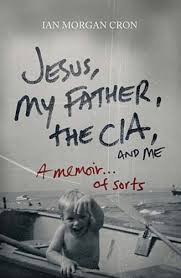
Jesus, My Father, the CIA, and Me: A Memoir of Sorts by Ian Morgan Cron, audiobook, reviewed here.

Nope, no surprises this time – only two actual (paper) books!

I’m currently reading:

Weight of Glory by C. S. Lewis

The Pound a Day Diet by Rocco DiSpirito

Number the Stars by Lois Lowrey for for Carrie’s  Reading to Know Classics Book Club for November

The Gift of the Magi and Other Christmas Stories by O. Henry, Fyodor Dostoevsky, Henry van Dyke, and Leo Tolstoy

Next up:

To Kill a Mockingbird for Carrie’s  Reading to Know Classics Book Club for December

Other than that I am not sure. I got out my Christmas books (some fictional, some devotional) and was surprised to discover a couple I didn’t even know I had and one that I thought I had read but hadn’t. I like to do a little Christmas reading during December but haven’t decided which of these to attempt yet.

Speaking of Christmas books…I am giving some away here.

Some of you might be interested in a post I wrote this month about reasons to read fiction and Christian fiction. It’s one I have been wanting to write for ages, and I was glad to finally do so.

Happy reading!

Book Review: Jesus, My Father, the CIA, and Me

CronI have been wanting to read Jesus, My Father, the CIA, and Me: A Memoir of Sorts by Ian Morgan Cron ever since Lisa’s review of it.

Despite the mention of the CIA in the title, it’s not the primary focus of the book. Ian didn’t know his dad was involved with the CIA until his mid-teens. There had been odd “business trips” when he had thought his father was out of work, his mention of having met people (like President Ford) whom he would not likely have crossed paths with, etc., but the pieces didn’t come together until Cron’s teens.

Cron grew up in England until his father’s work took the family back to the States, where the family set down roots. Cron describes his Irish Catholic upbringing mostly humorously but with a few poignant moments as well. In fact, there is a humorous slant to much of Cron’s writing, but not in connection with his father’s alcoholism. The book focuses primarily on the effect Cron’s father’s alcoholism had on his life: the embarrassment, the anger, the missed concerts, the lack of good example and teaching, the bad example, the lack of relationship.

“’Home is a place you grow up wanting to leave, and grow old wanting to get back to.’ That’s what John Edward Pearce said. But what if your childhood was a train wreck? What if your memories of home are more akin to The Shining than The Waltons? It doesn’t matter. Home is not just a place; it’s a knowing in the soul, a vague premonition of a far-off country that we know exists but haven’t seen yet. Home is where we start, and whether we like it or not, our life is a race against time to come to terms with what was or wasn’t” (p.3).

Ian went from trying to be a “good boy” to win his father’s approval, to trying to be a “bad boy” to get his attention. As happens all too often, he began following in his father’s footsteps with drinking, and then went further with drug experimentation.

But the story is also one of redemption. Though tenderhearted towards spiritual things as a child, Ian felt God had let him down by not answering his prayers concerning his father, and he was highly resistant to any kind of Christian influence. But God brought him to the end of himself. Coming to believe was one step, but overcoming his own alcoholism took much longer, and facing and dealing with the buried emotions and the psychological effects of his relationship with his father took longer still.

As the daughter of an alcoholic, I could identify with much that Ian wrote. Somehow I never had the thought that so many kids have that it must be all my fault. (I knew my dad’s problems were his own. I did learn to lay low and stay under the radar either when he was drinking or when he was angry, and to this day I have problems interacting when I think someone is angry. My first instinct is to retreat.)

Some of the quotes that stood out to me:

“Boys with fathers who, for whatever reason, keep their love undisclosed begin life without a center of gravity. They float like astronauts in space, hoping to find ballast and a patch of earth where they can plant their feet and make a life. Many of us who live without these gifts that only a father can bestow go through life banging from guardrail to guardrail, trying to determine why our fathers kept their love nameless, as if ashamed.”

“My father’s psychological and emotional problems so consumed his visual field that he had trouble seeing anyone but himself , much less a lost, father-hungry kid.”

The author definitely has a way with words, and the book is filled with many descriptive phrases. One disadvantage to listening to the audiobook rather than reading a paper or electronic version is that one can’t flip back through the pages, and I didn’t mark as many quotes as I should have (one can “bookmark” with an audiobook – but not while driving or cooking 🙂 ). The writing seemed a little disjointed in some places, being more thematic than linear. But there is light humor as well as deep sadness, poignancy, beauty and grace. I think those of us who are more conservative need to be reminded that God sometimes uses seemingly unconventional ways and means to reach a person, and that we’re not all cookie cutter Christians.

At one point the author says that many of the Christians he knew, I think in his college years, were fans of John McDowell and C. S. Lewis, but he could never get into them, because he didn’t want to parse God, he wanted to experience Him ecstatically. While I do agree that our Christianity needs to be experiential and not just academic (and I think that’s what he was trying to convey), I have a couple of problems with this line of thinking. For one, voices in our heads aren’t always trustworthy. For another, those men are hardly “just” academic, and many are ministered to by their writings and by thinking through the issues they address. The Bible has a lot to say about knowledge and doctrine. I’ve referenced this here many times before, but Peter had one of the most wonderful experiences possible when he saw Jesus transfigured before his eyes, yet he calls the Scripture (a more sure word of prophecy” – more sure than even that experience (II Peter 1:16-21).

Although I think the book is a worthwhile read, I could not recommend it unreservedly. To me the humor slips into irreverence sometimes, there are a few instances of crudeness (jokes about men’s private parts), the theology was a little wonky in some places. I think this book would be especially good if you or someone within your sphere of influence has had an alcoholic parent or a strained relationship with one.

(This will also be linked to Semicolon‘s Saturday Review of Books.)

Friday’s Fave Five

FFF fall backgroundIt’s Friday, time to look back over the blessings of the week with Susanne at Living to Tell the Story and other friends.
I know we frequently talk about how fast time is flying – but it seems like November is going by with supersonic speed! I can’t believe there is only one week left, and then Christmas season starts – though I know some of you have started already. 🙂

Here are some of my favorites of the last week:

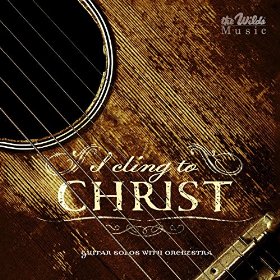
1. A new CD. I just got the Wilds Christian Camp‘s new CD, “I Cling to Christ,” a few days ago, and I have played it multiple times already. Some of the hymns are older, some are newer, a couple are unfamiliar to me, but they are all instrumental pieces with guitar and orchestra. The one word that comes to mind to describe it is soothing.

Wilds CD

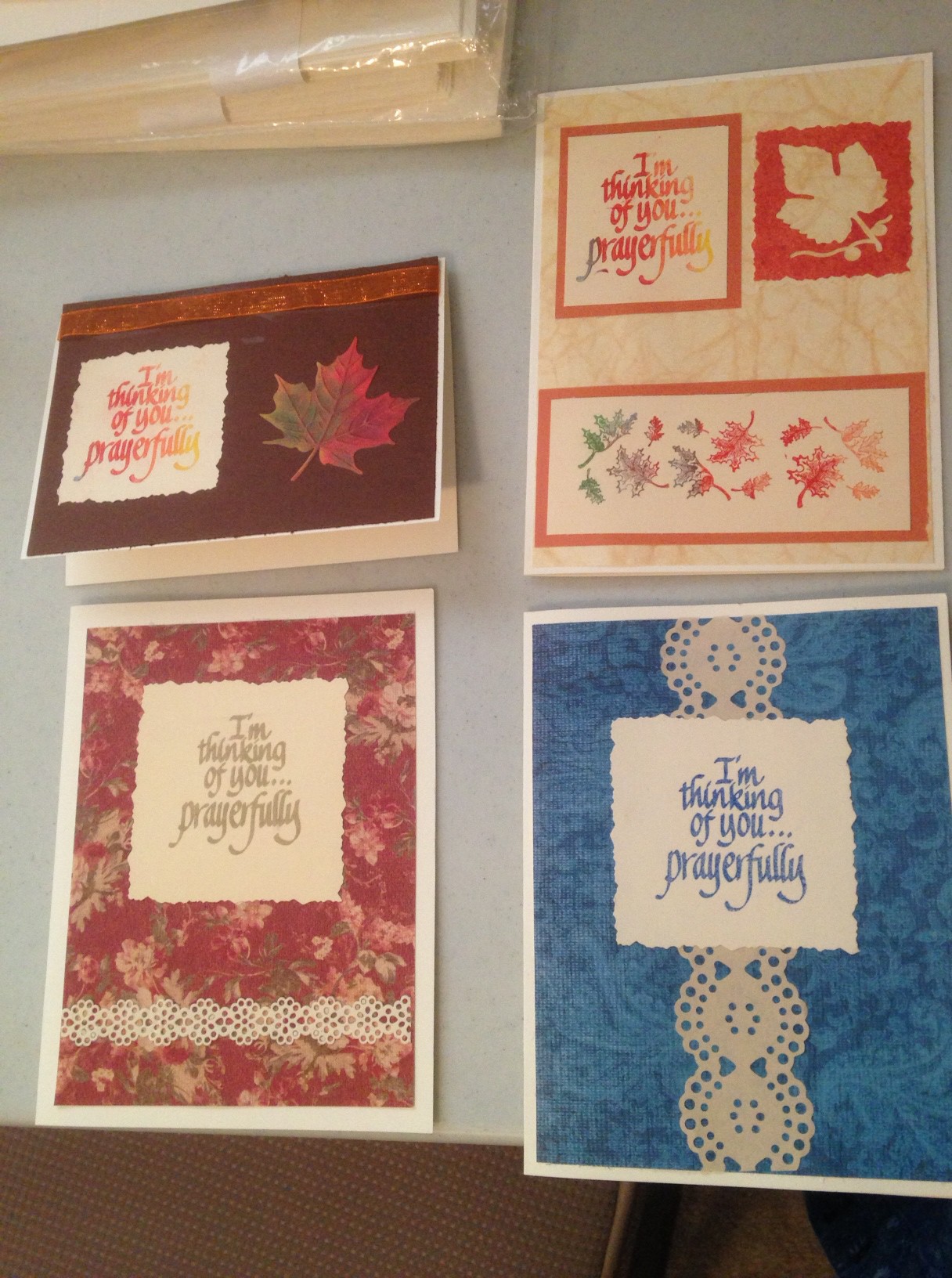
2. Getting a few cards made. Not as many as I hoped to in the time I had, but I’m glad to have a few of these on hand. I don’t even remember where I got this stamp ages ago, but the sentiment just “fits” so often.

photo(5)

3. Throw blankets. We have them draped on almost every chair and couch, and this is the time of year we use them the most, especially in the evenings. They are so just right – not too warm or heavy, but cozy.

4. Pizza delivery. We get take-out pizza from a variety of places, and one is just far enough away to justify paying a delivery fee rather than picking it up ourselves.

5. This post, Stop Waiting For a Zap, hit me right where and when I needed. It had me smiling, wincing, and tearing all at the same time. Her phrase “self-focused grump monster” was so accurate, and will stay with me a long time.

For those of you who live in the US, I wish you an early Happy Thanksgiving! We’re looking forward to our oldest son coming in and having a great time with all the family. I’ll have the monthly What’s On Your Nightstand post on Tuesday and hope to get one more book review up next week, but between visiting and cooking, I may be a little scarce (then again, maybe not – our whole family values some computer time. 🙂 ) I’m sure it is much the same with many of you, so if I don’t “see” you again before then, I hope you have a wonderful time of eating, spending time with family and friends (virtually, if not in person), and thankfulness to the Giver of all gifts.

And…I am giving away some gently-used Christmas books here – stop by if you are interested.

Christmas Book Giveaway

I have accumulated a pile of Christmas books, and some of them I am not likely to read again. So I thought I’d offer them to you. 🙂

I will list what I have with a link back to my review, if I have one for it. If you are interested in any, let me know in the comments on this post (not the posts of the book reviews). If you have one in particular you’d like, mention that title, and if you are the only one who wants it, you will get it. If two or more people want a book, I will use random.org to draw a winner. If you want to list a first, second, and third choice, that’s fine: if you don’t care which one you get, that’s fine, too.

I will draw names the Friday after Thanksgiving and will send them at the cheapest rate, but they should still get there in time for some Christmas reading. I’m sorry, but I will have to restrict these to US addresses due to shipping prices.

So here are your choices:

Wreath of Snow

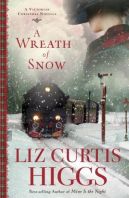
A Wreath of Snow by Liz Curtis Higgs

Christmas at Harrington‘s by Melody Carlson

Treasure of Christmas, a collection of three stories by Melody Carlson (The Christmas Bus, Gift of Christmas Present, and Angels in the Snow).

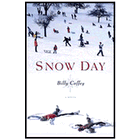
Snow Day by Billy Coffey. One reservation with this one, but otherwise it is good.

25 days

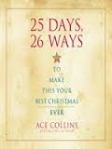
25 Ways, 26 Days to Make This Your Best Christmas Ever by Ace Collins.

If I have linked everything correctly, clicking on the title should take you to my review (some of them are grouped together in shorter reviews), and clicking on the book image will take you to Amazon if you’d like to learn a little more about the books.

The giveaway and comments are now closed. And the winners are……

A Wreath of Snow: Brenda

 Christmas at Harrington’s: Kaycee

Treasure of Christmas: Abi

Snow Day: rcblibrary

26 Days: Michele

I am sending an email to notify each winner. If I do not hear back from them with their address by the end of the week, I will draw a new winner.

Thanks so much for entering!

Book Review: The Last Bride

Last BrideThe Last Bride by Beverly Lewis is the fifth in her Home to Hickory Hollow series but can easily be read as a stand-alone novel. Tessie Ann Miller is the last of five daughters in her family and the only one still unmarried. She loves Marcus King, but her father disapproves of him. He wants to encourage Levi Smucker’s attentions to his daughter. Marcus and Tessie decide their best course of action is to marry secretly, have Tessie remain home with her parents, and then tell them the news when they feel the time is right.

As you can imagine, they set themselves up for a number of problems. I did guess one outcome of their situation, but another totally took me off guard. It happens fairly early in the story, so I can’t say too much about it without spoiling the suspense.

Woven in is a subplot involving Tessie’s sister, who was in a similar situation except that she did end up marrying the man her father preferred. But that situation did not go smoothly either, and she struggles to learn to live with and submit to someone she doesn’t truly love.

There is an undercurrent, if not a theme, on the problems caused by keeping secrets: at least four characters keep secrets from others, for varying lengths of time, but with negative consequences in each case. One of them is Tessie’s own father, who doesn’t reveal the reasons why he wanted his daughters not to marry certain men until the hardships caused by what appears to be his unreasonableness bruise his relationships.

Another undercurrent in the story is the fact that, since many people in the community are related in some degree to each other, there is a plethora of genetic diseases among their children.

One factor common to all the books in this series, besides the fact that they are set in Hickory Hollow, which I believe is the setting for Beverly’s first books, is the presence of Ella May Zook, an older lady whom they call the Wise Woman who gives kind and gentle but helpful advice to the main characters.

I always enjoy Beverly’s books. Hers is pretty much the only “Amish fiction” I read, and I started back before that became a popular genre. I enjoyed following along with what the characters were learning about their walk with God and each other.

(This will also be linked to Semicolon‘s Saturday Review of Books.)

Book Review: Walking in the Spirit

Walking in the SpiritI’ve enjoyed listening to the music of the Steve Pettit Evangelistic Team for years, and have had the privilege of hearing Steve preach in my church a number of times. So when I saw he had written a book titled Walking in the Spirit: A Study Through Galatians 5, I wanted to read it not only because I felt I could trust it (as much as one can trust a human author), but also because this is a subject and a passage I have thought about and wrestled with for years.

Most Christians are familiar with the last few verses in Galatians 5 that talk about the works of the flesh and the fruit of the Spirit. But the context of the chapter, indeed of the whole book of Galatians, has to do with Christian liberty. Some were telling the Galatian believers that they had to keep the OT laws to be a Christian, which is legalism. But some who had gotten hold of the truth that they were no longer under that law went too far the other way: “For, brethren, ye have been called unto liberty; only use not liberty for an occasion to the flesh, but by love serve one another. For all the law is fulfilled in one word, even in this; Thou shalt love thy neighbour as thyself” (verses 13-14). Pettit says true Christian liberty is walking in the Spirit, as opposed to license on one hand (being a slave to one’s flesh) and legalism on the other (being a slave to the law).

Pettit takes us step by step through Galatians 5 and discusses what legalism and Christian liberty are, what it means to walk in the Spirit, the battle between our flesh and the Holy Spirit, the difference between what the Bible calls our “old man” which was crucified when we believed on Christ and the “flesh” that we still battle, and the evidences of the flesh and fruit of the Spirit. He discusses what our relationship to the law is and what use it is (conviction of sin, for one: “I would not have come to know sin except through the Law; for I would not have known about coveting if the Law had not said, “You shall not covet” [Romans 7:7 NASB]. But the law can only tell us it is sin. It can’t fix us or change us. It’s the diagnosis, not the cure).

It’s hard to summarize a book like this beyond that, so I’ll just share a few quotes that stood out to me:

“Seeking to add to the work of Jesus actually takes away from it” (p. 6).

“The flesh seeks to twist a true understanding of freedom into an opportunity to gratify the flesh’s desires. But Christian liberty is freedom from sin, not freedom to sin. When Christians begin to focus on their own personal rights and freedom from restraints, liberty is abused” (p. 14).

“Walking in the Spirit demands a constant pursuit of and response to God’s Spirit. To be complacent and indifferent about one’s walk is to put oneself in a place of spiritual peril. No one is impervious to the allurements of the flesh” (p. 26).

“We are not so strong that we do not need to be warned, and we are not so weak that we cannot be free. We experience this struggle until the day we die” (p. 15).

The Christian life is not about trying harder to obey the law; it is realizing that we are enabled to obey God by the power of the indwelling Spirit” (p. 47).

“The fruits of the Spirit are of such a nature that, when they are present, the law is no longer necessary” (p. 48).

“Sanctification is the process of submitting to the Holy Spirit as He works to produce this fruit in your life, so that your daily life matches up with who you really are now in Christ” (p. 81).

The book is written as a Bible study, with discussion questions and blanks to fill in answers. It would work well in a group study: in fact, some of the questions would have been more profitable with a group contributing their insights.

The book did clear up some things for me or reminded me of things that I know but need to go over again from time to time. There were a couple of places I wish he had gone into a little more detail. But overall I found this book to be not only thoroughly Biblical but also intensely practical.

(This will also be linked to Semicolon‘s Saturday Review of Books.)


No Mere Mortals

Some years ago I read a book someone loaned to me about a Christian man in a Communist country. In his culture, respect for elders was taken to extremes. His and his wife’s lives were severely impacted by the mercurial demands of his mother, but they never felt they should deal with it in any way except to try to please her. It was particularly hard when they all had to live together for a time. In the end he said the Lord used it to smooth some of his rough edges, like a pebble that has been worn round and smooth by being tossed and bumped around in a stream. I wish I could remember the book title or author’s name, because I would love to revisit this book. (By the way, I am not suggesting that mothers-in-law should act that way or that adult children shouldn’t sometimes have some frank discussions with their parents, but this was how this man felt led in his time and culture.)

Around that same time, there was a lady at the church I was attending who, I am sad to say, really rubbed me the wrong way. Unfortunately, that says more about me than it does about her. She was not mean or unkind. I won’t go into the details about what I found so irritating, but I had just about decided that the best way to keep positive thoughts about her and to keep peace in my heart towards her was just to avoid her as much as possible. Then one January, our ladies’ group at church drew names for “secret pals” from others in the group: our primary duty to our secret pal was to pray for her, but we were also encouraged to send notes and small gifts through the year. Guess whose name I drew. Yes, that particular lady. I was tempted to put her name back and draw another, but I decided that was petty, and this woman was one whom I was supposed to especially pray for that year. And praying for her did help. I began to understand a little of why she acted the way she did (for instance, she sometimes seemed to come across as a know-it-all. You almost couldn’t bring up any subject without getting her input and suggested actions. But she was a very intelligent woman, and in her mind she was helping, not “showing off.”)

I don’t remember exactly when those two incidents happened in relation to each other, but in my mind I connected them, and began to think of my “secret pal” as a sandpaper Christian, one designed to smooth off some of my jagged edges.

Though I have moved away and lost touch with that particular lady, it seems like I almost always have one or two sandpaper acquaintances in my life. Again, that is a sad commentary on me more than a reflection on them. I admit sometimes I wonder who is sandpaper to them, but God reminds me that’s His business, and He is working with each of His children to help them grow more Christlike.

I am often discouraged by my lack of love and my abundance of irritation towards people, and it is a frequent matter of prayer. In a quote I saved but can’t find now from a sermon by David Martyn Lloyd-Jones from I John, he makes a distinction between liking and loving and says we are to love people we might not necessarily like, and that helped some. Biblical love, after all, is not just a warm fuzzy feeling. Verses about “forbearing one another in love” help, as does the reminder that God loves them in their imperfections as much as He loves me in mine. Sometimes I have felt that tolerating or forbearing was the best I could do, but God calls me to more. They are His dear children for whom He died, and He wants me to love them as much as I love myself, and even more – as He loves me. A tall order that can only be accomplished by meditating on His great love.

I just started reading C. S. Lewis’s Weight of Glory recently, and one section in the first essay of the same title really helped along these lines. After discussing what our future glorification in heaven means, he writes:

“It may be possible for each to think too much of his own potential glory hereafter; it is hardly possible for him to think too often or too deeply about that of his neighbour. The load, or weight, or burden of my neighbour’s glory should be laid daily on my back, a load so heavy that only humility can carry it, and the backs of the proud will be broken. It is a serious thing to …remember that the dullest and most  uninteresting person you talk to may one day be a creature which, if you saw it now, you would be strongly tempted to worship, or else a horror and a corruption such as you now meet, if at all, only in a nightmare. All day long we are, in some degree, helping each other to one or other of these destinations. It is in the light of these overwhelming possibilities, it is with the awe and the circumspection proper to them, that we should conduct all our dealings with one another, all friendships, all loves, all play, all politics. There are no ordinary people. You have never talked to a mere mortal. Nations, cultures, arts, civilization—these are mortal, and their life is to ours as the life of a gnat. But it is immortals whom we joke with, work with, marry, snub, and exploit—immortal horrors or everlasting splendours. This does not mean that we are to be perpetually solemn. We must play. But our merriment must be of that kind (and it is, in fact, the merriest kind) which exists between people who have, from the outset, taken each other seriously—no flippancy, no superiority, no presumption. And our charity must be a real and costly love, with deep feeling for the sins in spite of which we love the sinner—no mere tolerance or indulgence which parodies love as flippancy parodies merriment. Next to the Blessed Sacrament itself, your neighbour is the holiest object presented to your senses. If he is your Christian neighbour he is holy in almost the same way, for in him also Christ vere latitat—the glorifier and the glorified, Glory Himself, is truly hidden.”

I would disagree with what I think he is saying about the sacrament – I believe it is symbolic and representative and doesn’t contain any glory in itself. It is a wafer, not Christ’s actual body, meant to put us in mind of His body torn for us. But Christ does indwell a fellow child of God.

No mere mortals. No ordinary people. Future glorified saints. Fellow citizens of the household of God. Sons and daughters of the King. These are the ones with whom we have to do. May we treat them accordingly. And may we treat those who are not yet in the family of God as if we are eager for them to be.

Beneath the cross of Jesus
His family is my own—
Once strangers chasing selfish dreams,
Now one through grace alone.
How could I now dishonor
The ones that You have loved?
Beneath the cross of Jesus
See the children called by God.

~ Keith and Kristen Getty

And the King shall answer and say unto them, Verily I say unto you, Inasmuch as ye have done it unto one of the least of these my brethren, ye have done it unto me. Matthew 25:40

Love each other