Book Review: On the Banks of Plum Creek

Plum CreekI wanted to read next On the Banks of Plum Creek by Laura Ingalls Wilder right on the heels of Let the Hurricane Roar (linked to my thoughts) by her daughter, Rose Wilder Lane  while it was fresh in my mind, because they covered some of the same events.

Little House on the Prairie had ended with the Ingalls family having to leave their homestead in “Indian territory” when it was determined that the Indians had rights to the land. On the Banks of Plum Creek opens with the family coming into Minnesota near Walnut Grove (“only three miles away, a nice walk”, Pa says) and trading their horses for the land and crops of a family who is leaving. The family had a little dugout house, and the Ingalls live there until Pa’s wheat crops start to sprout, and he borrows against it to buy lumber and supplies for a new house.

Since they are close to town, Mary and Laura begin to attend school, where they meet the infamous Nellie Oleson, who becomes an instant enemy with her derisive assessment of them as “country girls.” The also meet Reverend Alden and are able to attend church for the first time in a long time.

This book contains some of my favorite “Little House” scenes, like the party where their classmates are invited to the house on the creek and Laura lures Nellie into the area where the crab and leeches are, the church Christmas party where Laura gets her fur cape and muff, the girls bringing in all the firewood during a storm when Ma and Pa are away after they heard about a house of children who froze. It also tells of the awful grasshopper invasion, Pa’s having to go East for work, prairie fires, and the terrible blizzards.

Some of us reading Laura’s letters in books like West From Home have remarked how unemotional her correspondence seems. I’m not sure how much of that comes from her personality and how much from her upbringing. The Ingalls weren’t stoics, but their attitude during any crisis seemed to be to buck up and do what you had to do. Emotion is shown more subtly, as when Pa stops playing his fiddle during stressful times or Ma sits late at the window with the light in it, staring at her hands, worried for her husband, who might be caught out in a blizzard. Once when a visiting child takes a liking to Laura’s rag doll and wants to keep it, Ma admonishes Laura that the child is little and company and should have the doll, and scolds Laura that a great girl like her (about age 8 at this time) should sulk over it. But then later Ma does come around and says she didn’t realize Laura cared so much for the doll and helps her restore it when Laura rescues it from a puddle, and while she doesn’t let them rant, she does understand when they’re strained and stops work to play games with them. Laura is ashamed of herself for crying during Pa’s long absence, saying it would be a shame even for younger Carrie to cry. Laura seems to paint herself as the only family member having bad emotions, like envy and pride.

Once again I marvel at the strength of the early settlers, who regard three miles as a “nice walk” and bear so much without a whimper. I don’t know if we could do today what they did, maybe because we haven’t had to. But then, each generation has its particular trials and hardships.

I liked seeing through Laura’s eyes as she described new things and how she thought when she fell into temptation. I enjoyed visiting with the Ingalls family again, with Pa’s cheerfulness, Ma’s gentleness and resourcefulness, their industriousness and endurance of the whole family as well as their enjoy of simple pleasures, and the interaction of the family as well as getting to know new neighbors from town.

Laura Ingalls Wilder Reading Challenge

(This will also be linked to Semicolon‘s Saturday Review of Books.)

We Are Not Alone

“Lo, I am with you alway, even unto the end of the world. Amen.”
Matthew 28:20b

Friday’s Fave Five

friday fave five 12

Welcome to Friday’s Fave Five, hosted by Susanne at Living to Tell the Story, in which we can share five of our favorite things from the last week,  wonderful exercise in looking for and appreciating the good things God blesses us with. Click on the button to learn more, then go to Susanne’s to read others’ faves and link up your own.

Thanks so much for your prayers for Jim’s surgery. Everything went pretty well. We’ll get the pathology report back in about a week, and the doctor didn’t see any other areas of concern. He was released from the hospital yesterday (Thursday) and had a pretty rough time with nausea and pain for a while, but both are under control with prescription medicines now.

Even with surgery during the week, there were highlights of God’s grace:

1. Kind and capable nurses.

2. Hospital food. I don’t know how it was for the patient as Jim didn’t get to experience much of it, but I had a great lunch of the most tender pot roast I’ve had in a long time plus a chocolate peanut butter pie from the cafeteria. When his mom was in, we had a great turkey and dressing lunch there. I may stop in even when no one is a patient. 🙂

3. Surprises. Our pastor unexpectedly met us when we first went to the hospital and stayed with us until they were almost ready to take Jim to surgery. That meant a lot. Someone probably would have stayed with me during surgery, but I had told the pastor weeks before that I’d rather zone out with a book than have to try to make conversation. But I was glad Jason and Mittu came and stayed, and Jesse came after classes. Then I didn’t know until the next day that after Jason and Mittu left they went to our house and made up a couple of meals to go into the oven and a plate full of sandwiches and brought some soup. And last weekend they had gone away for the weekend for Mittu’s birthday (which was Wednesday, the same day as Jim’s surgery. Happy belated birthday, Mittu! We’ll be celebrating later) and brought us back an order of rolls from Fatz Cafe, one of favorite places that unfortunately we don’t have here. We enjoyed them with a couple of meals.

4. People from church who have been and will be visiting Jim’s mom while he is recuperating.

5. Computer cases and fixes. Something went wrong with my desktop computer last weekend–a corrupted file, Jim thinks. He and my oldest son spent a lot of time getting it back in good working order. And I had been looking for a case for my laptop for some time and finally settled on this one, and was able to apply my gift card from Katrina’s Fall Into Reading Challenge to it. It took me ages to decide on one but I like that this is both classy and feminine and has a bit of storage room for other things as well.

Bonus: Humor helps in many ways!

Surgery day!

Well, today’s the big day — my husband’s surgery to have his kidney removed is this afternoon. (If you missed it I wrote more about it here).

Would appreciate your prayers that he come through the surgery well, that God would guide the doctor, that he have a good and quick recovery with no infection, that his mom’s health and situation will remain stable throughout this time, and that I and the rest of the family will have calm hearts.

I don’t know how much I’ll be online for the next few days. On the one hand, I’ll be waiting through the surgery and then he’ll be sleeping a lot afterward. But while he is recuperating I need to be available for him.

I may update here when he comes out of surgery.

Thanks for your prayers, support, and friendship! ♥

Update: everything went well and we’re in his room now. He’s having a hard time getting comfortable but otherwise ok.

A lady in the waiting room waiting for someone in surgery had an asthma attack and had to be taken to the ER. Kinda scary, but I guess a good place to be if you have to have one.

Our pastor was here when we got here and stayed with us til they had Jim prepped for surgery. That was an unexpected blessing.

Thank you all for your warm thoughts and prayers!

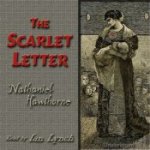
Book Review: The Scarlet Letter

Scarlet LetterThe February selection for Carrie‘s  Reading to Know Book Club is The Scarlet Letter, chosen by Shonya from Learning How Much I Don’t Know. I don’t think I have read it since high school, so I figured it would be good to revisit it, especially when I found it as an audiobook.

As most people know, The Scarlet Letter is about Hester Prynne, whose sin of adultery has produced a child in a 1640 Puritan community and whose punishment is to wear the letter A for “adulteress” on her bosom. I’ve been looking around at other reviews, study guides, and such, and many seem to see the story as a strong woman overcoming the confines of a repressive society. But I saw it described in a couple of places as a psychological romance or drama, and I think that is where the strength of the story is.

The audiobook for some reason leaves out the first chapter in which the narrator finds the scarlet letter in a custom house before telling the story behind it. We first see Hester emerging from the prison, the scarlet A already on her chest, with her child in her arms, sentenced to stand on a public scaffolding for three hours. She had been married, and her husband had sent her on ahead to this country, but her pregnancy became evident too long after arriving for the child to have been her husband’s. In all the intervening time he has not been heard from and is assumed dead. Hester steadfastly refuses to name the other guilty party in her sin.

The first time I read the book, it took me a while to realize who it was. If I were reading it for the first time as an adult, I think I would have figured it out much faster. It was interesting reading it knowing who he was from the outset, as there are clues everywhere. I’ve wrestled with whether to name him or not: I don’t want to destroy the suspense for anyone who hasn’t read it yet, but I don’t know how much I can say about the book without naming him. I’ll give it a try. 🙂

The psychological drama comes in the contrast between Hester’s publicized guilt and its consequences, ostracism from society and the resulting extreme loneliness, versus the consequences her partner in sin’s suppressed guilt: the torment of hearing praises heaped on him for his goodness when he knows he is a hypocrite. At first I thought he kept quiet because he was spineless, but later the author shows he is concerned as well about the negative repercussions his guiltiness could have if it were known, thus he feels “caught,” and his guilt begins to affect him physically.

Hester’s long-lost husband shows up at the first scaffolding scene, but signals to Hester to remain quiet. When he speaks to her later, he swears her to secrecy about his real name and their relationship. He understands, in one sense, her sin, because theirs had not been a marriage of love, and he was much older than she. But he determines to find and exact revenge upon Hester’s partner. He has become a doctor of sorts and goes by the name of Roger Chillingworth, fitting for his cold heart. There is more psychological drama when he thinks he has found the guilty party and determines to “dig” until he knows for sure, and the guilty party thinks he is a friend and doesn’t realize the danger.

The book could be easily divided into sections based on three scenes at the scaffold, where each of the major characters appear each time. The first I’ve mentioned; in the second, the other guilty party has been driven in the middle of the night to the scaffold in his guilt and pain. Self-flagellation, fasting, and vigils have not alleviated his guilt, so he goes himself to the scene of Hester’s shame — yet under cover of darkness, where he is tortured at the thought of being found out. Hester and her daughter, Pearl, happen to be walking by at that same time, and he calls to them to join him. They do, and Pearl asks if he will stand with them the next day at noon. He says no, but he will at the Judgment Day. Then the light of a meteor reveals the face of Chillingworth watching them. The final scaffolding scene takes place near the end of the book, with the same characters, yet in a public setting, where everyone’s fate is resolved.

The book is replete with symbolism: the A, of course, and the different meanings associated with it through the years, Chillingworth’s name and misshapen form representing his heart, Hester’s dressing little Pearl in scarlet, the scenes in the forest, the wild rosebush by the prison door, various manifestations of light and darkness. Pearl herself seems symbolic until the end of the book and acts something like a conscience for her parents. At one point she tells Hester, “the sunshine does not love you. It runs away and hides itself, because it is afraid of something on your bosom.

There are two things I don’t know that keep me from understanding this book more fully. One is Puritan society. I don’t know if how it is viewed here and in general (legalistic, harsh, repressive) is what it really was. This community is totally graceless, but the quotes I have read from Puritans have not been, though I admittedly have not read a great deal of Puritan literature. One source said that Puritans believed that whether you were “elect” or not would show in your life, thus Hester’s partner’s dilemma and struggle between his public persona and private sin. But all of the sources I looked at spoke of either being “elect” or earning one’s way to heaven (which did not seem possible for anyone in the book), yet neglected the real truth of grace that reaches out to the fallen sinner to provide redemption.

The other thing is Hawthorne’s transcendentalism and how it affected his views. I looked into this a bit when rereading Little Women (linked to my thoughts) but didn’t feel I really got a handle on their beliefs. Maybe someone else who read this book for this challenge will have more insight into that.

But I could definitely see the themes and contrasts between judgment and grace, penitence and repentance, and true  versus perceived identity (both Hester’s partner and Chillingworth present different personas from what they really are and tend to self-destruct because of it). I don’t know if I would say I enjoyed the book, but it was an interesting study.

(This will also be linked to Semicolon‘s Saturday Review of Books.)

Laudable Linkage

It has been a while since I’ve shared some of the interesting reading I’ve found online. Maybe some of these will be of interest to you, too.

My Train Wreck Conversion. A leftist lesbian professor who hated Christians becomes one.

How to Call a Prodigal Home.

Top 10 Reasons Our Kids Leave Church.

On abortion, it’s best to err on the side of life.

Why the Good News Turns Bad Without Adam. Repercussions of not viewing Adam as a real historical person.

Muriel’s Blessing. A husband who stepped down from his job to care for his wife with Alzheimer’s contemplates love.

Love or respect? Ways to show respect to husbands, ways you might be conveying disrespect.

Making visitors feel welcome.

Should We Cheer For God? Worship isn’t always loud and exuberant.

13 reasons Christians don’t have to be afraid.

Will the Real Biblical Woman Please Stand Up?

Beauty Is For Everyone. “Excellence, it turns out, is not elitist. Excellence is the most inclusive thing. It is beauty and beauty reaches everyone.”

10 Tips For Making the Most of Online Community.

Ideas to use up your paper scraps, HT to Lizzie.

And a few on writing:

The First 250 Words of Your Manuscript.

Writing Great Thoughts vs. great lines.

Parrot Front and Center or Back Story First?

When They’re Still Here, about loved ones whose memories and personality are fading:

I only watched the first few minutes of this, but someone made a live action version of Toy Story:

And just for fun, my son shared this on Facebook and had us laughing ourselves silly:

Friday’s Fave Five

friday fave five 12

Welcome to Friday’s Fave Five, hosted by Susanne at Living to Tell the Story, in which we can share five of our favorite things from the last week,  wonderful exercise in looking for and appreciating the good things God blesses us with. Click on the button to learn more, then go to Susanne’s to read others’ faves and link up your own.

It’s been another full week, but I guess that’s better than an empty week. 🙂 Here are the highlights:

1. Mom adjusting. As far as we can tell, Jim’s mom is adjusting well to her new situation in a skilled nursing facility. She smiles and is happy to see us. She is still not eating much — that started about a week before she went into the hospital, so we don’t know if she’s still not quite feeling up to par or what. She is also speaking very little, so that makes it harder to communicate what she is thinking and feeling. Thank you for your prayers for her. One of the kids’ Sunday School Classes sent her a Valentine’s card they all signed: that was sweet, and she smiled at the kids’ signatures.

2. An Irish concert. I mentioned last week the  Steve Pettit Evangelistic Team was at our church for a week. They usually end the week with an Irish concert. I was so glad I was able to be there for that one — very enjoyable, and we had several visitors.

3. Sunday night off. After the week of meetings, our Pastor said we would not have services Sunday night, knowing that everyone would be tired after being out several nights during the week, and nursery workers, ushers, etc. would have had extra duty all week. Though we weren’t able to be at every service because of the situation with Jim’s mom, because of all that had been going on with her, it was so nice to just crash after Sunday dinner, even though we usually enjoy Sunday evening services.

4. Valentine’s Day. Jason and Mittu were able to come, we had a special meal, heart-shaped cupcakes, cards, candy, Jim brought Bojangles heart-shaped BoBerry Biscuits, and J&M brought the stuff for chocolate fondue. A fun night! Though now we have enough sugar in the house to put us all in a diabetic coma, LOL! We’ll just have to parcel it out.

Chocolate fondue

5. These flowers my Valentine brought me:

Valentine flowers

I’m also very glad my oldest was safe and didn’t lose power after getting about 2 feet of snow in RI last weekend!

Happy Friday! Hope you have a great weekend!

To celebrate or not to celebrate…

Valentine’s Scrooges. 🙂 That was the only term I could come up with for those whose comments I have seen here and there who hate and despise Valentine’s Day. And I had to add the little smiley so it wouldn’t sound like I was ranting. 🙂

I don’t mind Valentine’s indifference… didn’t grow up celebrating it much, hadn’t thought about it, not a big deal…that’s understandable. But why would anyone hate it, and not just hate it in their own hearts, but feel compelled to rain on everyone else’s parade by forcibly and publicly saying so?

“It’s too commercial.” Well, sure, but like Christmas, you can be as commercial or uncommercial as you want in your own personal celebration. But don’t look down on store-bought cards or restaurant rather than home-made goodies. Not everyone has the time or confidence or bent to “make” things.

“I don’t need a man-made holiday to show my wife I love her.” Well, good for you. I’m sure she appreciates that. ( 🙂 = not ranting!)

“We should show love every day.” True. We should also give thanks every day, but it’s helpful to have a day focused on it at Thanksgiving. We should remember and be glad for the Resurrection at least every Sunday, but it’s wonderful to especially commemorate it at Easter. We should be thankful for our friends and loved ones every day, but it’s nice to especially let them know on their birthdays or anniversaries. Those special, focused celebrations can remind us of what we should be thinking and feeling every day and spur us on. And that’s how I look at Valentine’s Day. I love my dear ones all the time, but it’s fun on this special day to celebrate love even more.

By “celebrate,” I don’t necessarily mean go all out. We’ve always exchanged cards. Some years ago I got some heart-shaped cupcake pans, and Valentine cupcakes became a tradition. Most years that’s all we have done, with maybe some candy for the kids. My husband has frequently brought me candy and flowers on Valentine’s Day. One year I did a Valentine scavenger hunt for the kids, with little clues on half-hearts — they had to find the other half to get their treat. They loved that and wanted to do it again the next year, but it was too hard to keep coming up with clues. Another year I was inspired to make a garland out of heart doilies, but I don’t know what happened to it. I have a heart-shaped wreath by the front door. Nothing major or expensive — just little tokens of the day. We don’t go out to eat on that day — can’t stand the crowdedness. I think I have usually tried to make a special meal that day, but it is only in the last few years I’ve tried to make a Valentine-themed meal like Crescent Heart-Topped Lasagna Casserole or Li’l Cheddar Meat Loaves shaped like hearts (though the boys did tease that the red sauce on the heart meat loaves looked like blood 🙄 🙂 ). And I’m inclined to play some of my favorite sappy love songs while working in the kitchen that day. We’ve always celebrated it as a family rather than leaving the kids with sitters while we go off for a romantic time (nothing wrong with doing that sometimes — we do on anniversaries).

I do understand Valentine’s Day being harder if you’re single with no prospects in sight. I do remember those days. But still, harsh and bitter comments regarding Valentine’s Day aren’t exactly endearing, you know? Some good articles about from singles about singleness on Valentine’s Day are Sweet Sadness and St. ValentineValentine’s Day Single? No Problem, Seriously, Reaching Out on Valentine’s Day, and a couple on singleness but not related to Valentine’s Day: I don’t wait any more and Renegotiating My Seat in God’s House.

An equally disturbing attitude regarding Valentine’s Day was this comment I saw somewhere: “He better get me flowers, or else!” That’s not particularly loveable, either. Valentine’s is about showing love, not sitting back with arms folded, foot tapping, seeing if he is going to “measure up.” I heard an excellent talk some years ago by Gregg Harris: I don’t remember what the overall talk was about, but what stuck with me was the encouragement not to use anniversaries and special occasions as a “test,” but rather to help him to remember (rather than getting mad at him for forgetting) and discussing whether and how you’d both like to commemorate. A Different Approach to Valentine’s Day explores that further.

All in all, in the grand scheme of life and eternity, it doesn’t matter if you celebrate a particular day or not. “One man esteemeth one day above another: another esteemeth every day alike. Let every man be fully persuaded in his own mind. He that regardeth the day, regardeth it unto the Lord; and he that regardeth not the day, to the Lord he doth not regard it” (Romans 14:5-6a). But as for me and my house, we enjoy celebrating holidays. Well, maybe not Groundhogs Day, President’s Day, etc. 🙂 But Valentine’s Day is one of my favorites.

And so I wish all of my bloggy friends a very Happy Valentine’s Day!

gfbirdsvalentine002

What did you read as a kid?


Carrie had someone ask this question in her comments, and she answered yesterday. My response grew into several paragraphs, so I figured it would be better to form them into my own blog post rather than posting a full-fledged post in her comments.

Since I am in my mid-fifties, my childhood was a long time ago. I don’t remember whether my mom read to me, though I assume she did. I LOVED reading in school. The first book I remember reading from is A Child’s Garden of Verses by Robert Louis Stevenson. I must have read several Little Golden Books, because they were familiar to me when I started reading them to my kids. I remember checking out a biography of Martin Luther from the school library in maybe the second grade. My dad did not read much at that time (though he did after he retired), and he thought I was being lazy if I was sitting around reading much. I remember being admonished about that a number of times, so I must have been reading a lot, but it doesn’t seem to have dimmed my enthusiasm. Since I was the oldest of six kids, whatever children’s books we had did not survive the long run through everyone’s use.

I never heard of Anne of Green Gables until I was a young adult (when the Megan Follows films came out) or Narnia until less than 15 years ago. When someone in our church talked about acting in a local production of The Lion, the Witch, and the Wardrobe, I was suspect. 🙂 I think it was probably then that I checked the series out and loved it. I think it’s been in that time frame that I discovered The Hobbit and LOTR, too.

Somehow I even missed Nancy Drew and The Babysitters Club! I do remember reading Little Women  and its sequels many times, and I must have read some of the Little House books, because they were familiar to me later. Then in high school I discovered and loved Dickens with David Copperfield. Somewhere along the way I read Great Expectations and Oliver Twist and didn’t like those quite so well, and attempted A Tale of Two Cities several times over the years before finally getting through it and then instantly rereading it and deeming it my favorite novel. I remember some book from the Scholastic book paper about a girl getting pregnant (and my dad was very angry I was reading that) and one called The Endless Steppe about a girl in Russia

I remember studying a different Shakespeare play each year in high school but not getting much out of it. My sophomore English class was memorable because we made a film, but I don’t remember what we read. That was the early 70s, just coming off the hippie era, and my teacher that year “fit” into that era well.

It was in college that I first discovered missionary biographies, and that was nurtured by the church I attended for the first 14 yeas we were married which had in the monthly ladies’ meetings a librarian who talked briefly each meeting about a book and had them there to check out.

Early married years were when I first discovered Christian fiction with Janette Oke. In high school I had read Not My Will by Francena Arnold, which was kind of a precursor of modern Christian fiction, and it spoke to my heart.

I know we explored good literature in three of my college literature classics, but all I can remember is discovering and loving Anne Bradstreet and then Jane Austen’s Emma. A lady professor who attended my church taught a class on Shakespeare that I really wanted to take, but just couldn’t work it in.

Since I’ve started a blog I’ve purposed to read through some of the classics. I’ve read all of Austen’s books, Les Miserables, The Count of Monte Cristo, and many others. I’m enjoying discovering them as an adult, though I am sorry I missed being exposed to them at a younger age. I also enjoy rereading some of the ones I had read earlier, like Little Women and the Little House books and Dickens. I’ve had fun exploring children’s classics that I missed along the way, like all of the Anne books, Narnia, Caddie Woodlawn, Five Little Peppers and How They Grew (a favorite, though I need to reread it again). And I continue on with biographies, “real-life” stories, Christian fiction and non-fiction, and an occasional secular fiction or non-fiction.

Some favorites I read to my own kids when they were small were the Francis books, Curious George, Clifford, the Little Bear series by Else Holmelund Minark, the Jesse Bear series by Nancy White Carlstrom, Mike Mulligan, The Little Engine That Could, Robert McCloskey books (Make Way for Ducklings and Blueberries for Sal), Dr. Seuss, P. D. Eastman, Keep the Lights Burning, Abbie by Peter Roop one of my all-time favorites, about a girl who has to keep the lighthouse lamps burning when her father is delayed from getting back home due to a storm), The Puppy Who Wanted a Boy by Jane Thayer, the Snipp, Snapp, and Snurr books by Maj Lindman, and of course the Little Golden Books. One of their favorites was Gus the Bus, who goes frolicking off his usual route when his tires get overfilled. We kept that even though it is taped together.

So…what did you read when you were a kid?

(Graphic Courtesy of Grandma’s Graphics.)

Book Review: Let the Hurricane Roar

Let the Hurricane RoarLet the Hurricane Roar by Rose Wilder Lane, daughter of Laura Ingalls Wilder, is also published as Young Pioneers. In some versions the characters are named Molly and David: in others they are Charles and Caroline. The events are based on the same events covered in Laura’s book On the Banks of Plum Creek, though some details have been changed.

I had wondered about the title, since hurricanes don’t generally come to the prairie, but the title comes from a hymn.

Molly and David are very young newlyweds (16 and 18) who head west to claim a homestead. Though they live in a little sod house and don’t have many possessions, they are gloriously happy, especially when a good wheat crop grows and they have a baby son. But disaster strikes in the form of a grasshopper plague that destroys the crop. David had borrowed against the lost crop, so he must travel to look for work. Even though neighbors give up and leave in the face of similar difficulties, Molly stays on through a terrible winter so claim jumpers won’t steal their land.

A former pastor used to bestow high compliments on people when he called them “pioneer stock” — sturdy, dependable, strong, not easily swayed. David and Molly would both qualify for this compliment. I am sure I would not! At least not when it comes to living in a dirt house all alone through several blizzards. The book realistically portrays Molly struggle with being alone, wrestling with all of the “what ifs,” and David’s anger over his failure, poor choices (going into debt), and difficult circumstances, rather than portraying them as always smiling and unflappable.

Some of that “pioneer stock” is shown as well in Molly’s attitude when a neighbor complains about hardships, and Molly thinks to herself, “Well, the land isn’t going to feed you with a spoon!” Quite different from the attitude of many today.

I also liked the description at the beginning that Molly “never quite lost the wonder that she, quiet and shy and not very pretty, had won such a man as David. He was laughing and bold [and] daring.”

It’s obvious Rose loved and admired her grandparents, and I am glad she shared this part of their story with us. Part of her goal in writing it was to “inspire Depression-era readers with its themes of resilience in the face of hardship and the strength of the American character” (The Wilder Life by Wendy McClure, p. 168).

Carrie and Amy both reviewed this book last year — in fact, Carrie’s review is where I think I first heard of it. They both focus more on the relationship between Molly and David than I did, but after rereading their reviews as I came to the end of mine, I do remember that that’s part of what drew me to this book, besides its relationship to Laura. Though the book is not written as a romance per se, and as Amy said, Rose writes with restraint, the realities as true love as opposed to “romance novel fiction” shine through it.

The only blight on this novel is that Rose used this information from her mother’s material without her mother’s knowledge or permission. Laura was understandably upset, and they eventually came to terms with it and moved on.

I was originally going to read Farmer Boy next for the Laura Ingalls Wilder Reading Challenge, but since it is Almanzo’s childhood story and doesn’t need to be read in order, I think I am going to read On the Banks of Plum Creek for Laura’s version of the events in this story while this book is still fresh in my mind.

Laura Ingalls Wilder Reading Challenge

(This will also be linked to Semicolon‘s Saturday Review of Books.)
Save