January Reflections

January Reflections

January has never been my favorite month. But, over the years, I’ve come to appreciate it as a rest month after the busy December holiday activities.

This year, however, it seems like much of January was lost to sickness, being snowed in, and having no hot water for a couple of weeks. I wrote about all of that in a family update, so I won’t repeat it all here.

October is a similar rest month between our “birthday season” and the fall and winter holidays. But Jim’s surgery was schedule last October, so it seemed we missed out on that rest month as well.

We had to rest both months, but recovery rest is not the same as regular rest.

Nevertheless, I am glad those procedures and illnesses did happen during quiet months and not in the middle of Christmas or family celebrations.

The third week of January, we felt we were coming out of a fog and starting to get back to normal. We’ve been steadily improving.

With all of that, we haven’t really had many family activities or outings. Jesse, our youngest, is looking for a house since his apartment rent went up. He and Jim have had some house-hunting excursions. Until this last weekend, either the houses weren’t suitable or went under contract before Jesse could get an offer in. But it looks like we have a good possibility just now, pending inspection and such. We’re praying for God’s leading in this (and rejoicing that looking for a house here means not moving to Washington or Canada, as he had considered doing).

Our church held a parenting seminar last weekend. Thankfully, snow melted and illnesses abated so that Jason and Mittu could go while we watched Timothy. He’s comfortable with us, but had never been away from his parents that long before. But he did well.

Jim retired at the end of last year. But we’re not really sure what our new normal is yet. 🙂 It was nice, through all we dealt with in January, that he didn’t have work on top of everything else. As he has had time, he’s been cleaning out and organizing his office and the garage. At some point he’s going to finish painting the inside of the house. He had done one bathroom and two bedrooms before deciding to save the rest for retirement. When the weather gets warmer, but before it turns hot, we want to sort through our attic and shed and get rid of some things, hopefully sparing our children that task when we’re gone. There’s no shortage of projects, and it’s nice to take them at our own pace.

Watching

We’re very much enjoying the return of All Creatures Great and Small on PBS Masterpiece Theatre.

The only other thing we watched worth mentioning was the old movie Homeward Bound: The Incredible Journey while Timothy was here. That was a family favorite as our boys were growing up, and it was fun not only to see it again but to share it with him.

I didn’t make any cards this month.

Reading

Since last time, I finished (linked to my reviews):

  • I Can Only Imagine by Bart Millard, nonfiction. The story behind the song of the change in an abusive father when he comes to know the Lord.
  • Being Elisabeth Elliot by Ellen Vaughn, the second of a two-part authorized biography.
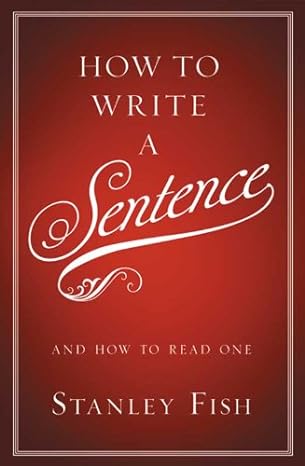
  • How to Write a Sentence and How to Read One by Stanley Fish, nonfiction. I like to read a few writing books each year to keep learning and refining my own writing.
  • Beneath a Golden Veil by Melanie Dobson, fiction, audiobook. A slave-owner’s son cannot follow in his father’s footsteps as a plantation owner, and in fact helps a young slave escape. They end up in Sacramento during the gold rush era with a hotel owner who also surreptitiously helps slaves escape.Even though CA is a “free” state, they all still find themselves in danger. Very good.
  • By Way of the Moonlight by Elizabeth Musser, fiction, audiobook. A young woman’s plans to turn her grandmother’s estate into an equine therapy center fall through when a developer tricks her grandmother into selling the property. Following clues in a cryptic letter the woman learns about her grandmother’s first love and time with a coastal mounted patrol during WWII. Good.
  • The Lies of Saints by Sigmund Brouward, fiction. Third in the Nick Barrett series, Nick helps a detective friend with a mystery involving a two-decade old hazing and apparent suicide of a Citadel cadet and the disappearance of a debutante. Good.
  • The Cost of Betrayal by Dee Henderson, Dani Pettrey, and Lynette Eason, audiobook. Just finished yesterday; review coming tomorrow.

I’m currently reading:

  • Be Skillful (Proverbs): God’s Guidebook to Wise Living by Warren Wiersbe, nonfiction
  • Be Comforted (Isaiah): Feeling Secure in the Arms of God by Warren W. Wiersbe
  • Isaiah for You by Tim Chester
  • Proverbs for Life for Women
  • Adorning the Dark: Thoughts on Community, Calling, and the Mystery of Making by Andrew Peterson
  • Organizing for the Rest of Us by Dana K. White
  • The Winter Rose by Melanie Dobson
  • When I Close My Eyes by Elizabeth Musser

I don’t usually have two of Wiersbe’s “Be” commentaries going at the same time. I’m in Proverbs for my own devotions, and our Bible study group just started Isaiah using the Tim Chester book. I wasn’t going to use Wiersbe’s book on Isaiah since we’re using another. But Isaiah is so long that Wiersbe’s comments are shorter, so it looks like it will be doable.

Blogging

Besides the weekly Friday Fave Fives, Saturday Laudable Linkage, and book reviews, I’ve posted these since last time:

Writing

Our critique group resumed after taking an extended break. We thought, instead of starting a new round of critiques and then breaking for Christmas, we’d just wait to start again til January. I think we all appreciated having more time available to prepare for the holidays.

I happened to be the first one up this time. As always, the comments, corrections, and suggestions were very helpful and left me raring to go and get back into my book project.

I was just telling another friend that I want to be more regular in working on the book. But it would be difficult to just stake out certain times or days to write. We’re in a period of never knowing what a day will bring forth. 🙂 Usually in the afternoons, I read and comment on a few blogs before going to my own writing. But I’m thinking i need to switch that order.

We’ve added another feature to the critique group. We meet for an hour to discuss the presenter of the week’s work. But now we have an extra fifteen minutes for those who can stay to discuss or pick each other’s brains about some aspect of writing or publishing. That’s been both fun and informative.

Looking ahead

I’m eager to turn the calendar page to the next month and leave January behind. I love Valentine’s Day, and my daughter-in-law’s birthday comes in February as well. We’re discussing a possible outing for her birthday which will be fun. And if Jesse’s house offer goes through, we’ll be helping him move.

But one of the best things I like about a new month is we’re that much closer to spring. 🙂

How was your January? What are you looking forward to in February?

(I often link up with some of these bloggers.)

Review: The Lies of Saints

The Lies of Saints novel by Sigmund Brouwer

The Lies of Saints is the third Nick Barrett novel by Sigmund Brouwer, the first two being Out of the Shadows and Crown of Thorns, linked to my reviews.

Nick was born into an elite Charleston family but was considered and outsider because his mother was. After his father’s death and his mother’s abandonment, he was raised in an uncle’s family, always aware he was not really a part of the family except by blood.

The first book had Nick coming back to Charleston after several years due to receiving a clue about his mother’s disappearance. He comes into an inheritance and the family home.

He’s not really a detective or investigator—he teaches astronomy. But a detective friend has been in a serious car accident, and Nick volunteers to help her.

It turns out that the hazing and apparent suicide of a Citadel cadet two decades ago is related to the disappearance of a debutante, both of which are also connected to a current case. As Nick asks questions, he’s repeatedly warned not to stir up this hornet’s nest. But as he continues unraveling surprising connections, he finds himself in danger.

Some favorite quotes:

Merely going through rites was a much easier task than following the spirit behind them (p. 40, Kindle app).

Without God, life was dust and had no meaning. With God, hope transformed life and its sorrows (p. 158).

“I understand,” I said. “I will tell this woman how you feel.”

Life burst into the old woman’s face. She pointed at me, still clutching the shawl. “You, young man, have no idea how I feel!”

It was a well-deserved rebuke. “No,” I said quietly. “I don’t” (p. 160).

Not so fast, my junior-grade sidekick (p. 201).

I don’t often read this kind of book, but it’s nice for a change. I like Brouwer’s breezy style of writing here. Though there are dark and scary turns, there’s a lot of underlying humor and banter as well as a few sweet moments.

You Can Throw Your Weight on God’s Testimony

You can throw your weight on God's testimony.

Often I’ll turn the radio on while I make my breakfast, and usually Dr. Stephen Davey’s program, Wisdom for the Heart, is on at that time.

One day last week, Dr. Davey was speaking from Psalm 19. It’s a familiar passage to many of us. It starts with “The heavens declare the glory of God, and the sky above [firmament in the KJV] proclaims his handiwork,” and then goes on to develop that theme for the next several verses.

The last half of the psalm talks about how God’s character is seen through His Word. Verse 7 starts off another familiar passage: “The law of the Lord is perfect, reviving the soul. . . ” Perhaps you remember, as I do, a song made of these words.

The passage is so familiar, in fact, that it’s easy to zip right through it without stopping to take it in.

But Dr. Davey pointed out something that stopped me in my tracks.

The latter half of verse 7 says, “The testimony of the LORD is sure, making wise the simple.”

Dr. Davey said:

This is legal language; whenever someone is called into court by the prosecution or defense, they give their testimony.  They testify to what they know – what they’ve seen – what they’ve heard.

David writes in legal terminology – God is testifying . . . and whatever and whenever He does, David writes here, The testimony of the Lord is sure.

In other words, you can count on it.  One author* wrote, “You can throw your weight on God’s testimony and it will hold up.”

You can throw your whole weight on God’s testimony.

Does that impact you like it does me?

It’s not that this truth was new to me. But hearing it put that way brought my understanding to a whole new level.

God’s Word is sure. It’s trustworthy. We can stake the whole weight of our souls on it.

BibleStudyTools.org says the Hebrew word translated “sure” here means “to support, confirm, be faithful; made firm, sure, lasting; verified; reliable, faithful, trusty .”

What God tells us about Himself, the world, and ourselves is dependable.

His promises won’t break when we lean on them. That doesn’t mean all our prayers will be answered just the way we hoped, or that life will have a fairy-tale ending. But when He tells us who He is and that He will be with us and take care of us, we can rely on His Word without worry.

I did not grow up in areas where ponds freeze over. But I am familiar with the concept of testing the ice to make sure it’s solid before walking or skating on it. And I have stepped on a bridge, fallen log, or even a piece of flooring and felt it give, wondering if it would hold my weight.

But we’ll never have that experience with God’s Word. It is sure.

Is there a passage you’re staking your soul on today?

Psalm 19:7: The testimony of the LORD is sure.

* Donald Williams, Mastering the Old Testament: Psalms 1-72 (Word Publishing, 1986), p. 153), quoted in Psalm 19:7-9) God’s Inspired Little Book by Stephen Davey on the Wisdom for the Heart Radio Broadcast, 1/22/2024.

(I often link up with some of these bloggers.)
Laudable Linkage

Laudable Linkage

Here are some of the blog posts that spoke to me over the last few weeks:

Will Following my Heart Set Me Free? HT to Challies. “I think that summarises a story that our culture loves to tell: that success in the world means presenting your truest self, pushing off what society tells you to be, to be you. It’s almost like that’s the meaning of life. You are free to be yourself.”

Life Without Romans 8:28. “I have often heard it said that Romans 8:28 is the wrong verse to bring to the attention of those who are grieving, that while it is true in our especially difficult moments, it does not necessarily become helpful until some time has passed. And while I can only speak for myself, it has been my experience that in my lowest moments I have feasted on Romans 8:28, I have run to it like a starving man runs to a meal and I have drunk from it like a parched man drinks from an oasis. I have needed Romans 8:28 and it has both comforted my soul and directed my grief.”

The Irreplaceable Encouragement of Intergenerational Relationships, HT to the Story Warren. “I took a seat at my assigned table for my first Bible study at our new church and was surprised to see a number of gray and white heads dotted among the tables. I wondered, what would it be like to study alongside women who were 20, 30, or more years older than I? Up until this point, my close friendships consisted of almost exclusively people in or near my stage of life.”

3 Verses for Your Work. “If you are reading this right now, you have work to do. I’m not only talking about a paid job but any work you do—paid or unpaid, noticed or behind the scenes. I spend my days working on many things; most of my tasks do not result in a paycheck. Payment does not validate work; God does. Here are three truths and verses that have absolutely transformed my work.”

Can You Be Too Productive? “There seems to be a tension in the way people view productivity these days. On the one side, there is the push to do more, be more efficient, work harder. But in the last few years, another view has grown in popularity. On this side is the pull to slow down, do less, and get more rest.”

On Being an Ambassador: Walking the Tightrope of cultural differences. “As Christians, we get our instruction from the Scripture. We find there early examples of how Christians crossed cultural boundaries in taking the gospel to ends of their world. One instructive example is the preaching of the Apostle Paul. Since God called him to be the apostle to the Gentiles, we should expect that he would deal with widely diverse cultures—and he does.”

The Dress, HT to Challies. A touching meditation on a daughter’s upcoming marriage.

Consider Your Attitude Toward the Local Church, HT to Challies. “We can notice all the problems with our local church on some days and rejoice at God’s goodness to our local church on others. As many people consider the big issues in their lives during January, make sure you are thinking rightly about church this year.”

Why I’m a Better Pastor (for you) than . . . HT to Challies. “Not only do we have unfettered access to the Bible, but we have almost limitless access to some of the very best Bible teaching. What a gift we have. And yet, that begs a question: how is a normal pastor like myself supposed to compete? Why should you even bother with attending your local church?”

Sent to Need. HT to Challies. This is such a good perspective on missions. “I’m not saying that prayerfully planning, dreaming, and casting vision with expectation of what God can do is wrong. I am only asking if it strikes anyone else as odd that we get ‘sent to serve’ before being ‘sent to learn.’  I wish it was more like this: ‘Hi. I am sent to need.‘”

Afflictions sanctified prepare the soul for glory. Richard Sibbes

Friday’s Fave Five

Friday's Fave Five

I was so sorry to miss Friday’s Fave Five last week. It’s the first time in ages I’ve missed. I wrote a family update to share that we’d had layers of sickness and happenings. Thankfully, we’re doing better, though we’re still not 100% healed.

I’m glad to share again with Susanne and friends at Living to Tell the Story.

1. Hot water. Our hot water heater died on Jan. 3. The new one didn’t arrive until Jan. 14. But with snow and ice that next week, Jim wanted to wait to start work on it until he was sure Home Depot would be open and accessible in case he needed anything while working on it. It was finally successfully installed last Friday, the 19th! I’m thankful we had a camp shower, but even more thankful to have a regular one back. Plus it’s nice to wash our hands in warm rather than freezing water.

2. Safety in snow and ice. It’s unusual for our area to get almost ten inches of snow. It’s even more unusual for it to stay around for more than a week. But single-digit temperatures not only kept the snow, it turned it into blocks of ice. We have trucks that put salt and sand on the main roads, but otherwise we’re not equipped to deal with ice and snow since we don’t often have it. School was out for more than a week (though they probably had online classes). Mail trucks didn’t run those days, either, at least not in neighborhoods like ours..

I was thankful that none of our family lost power or had pipes break. In fact, I didn’t hear of anyone we know of experiencing that.

3. Normalcy. I didn’t lose my sense of taste with Covid, but certain things regular things just didn’t have any appeal or hit wrong (that may have been due to illness or medicines as well). My taste is pretty much back to normal and my digestive system is getting there. It’s been nice to get back to normal energy levels and routines. Two of the four infected wounds that set off cellulitis are healed; the two biggest ones concern me because they still look infected. They are improving steadily, though, if slowly. (I’d appreciate your prayers for that to heal completely.)

4. My dear husband took care of me, did all the errands and grocery shopping, heated frozen entrees for himself when all I could eat was canned chicken soup, and figured out how to install a hot water heater, all while he wasn’t feeling well, himself. He’s doing better and tests negative for Covid now, but still has a lingering cough and congestion.

5. A picture of my grandmother. One of my cousins sent me some old photos this week. I asked if he had any of our grandmother, particularly one that looked like it was for a church directory. I’d seen it but somehow never had a copy. Within minutes he messaged it to me. That’s such a treasure. Previously, I’d only had one old blurry one of her on a beach and another about thirty years ago when we visited her on our way to see my family in TX.

I hope you’re staying warm and safe and well where you are

Review: Being Elisabeth Elliot

Being Elisabeth Elliot is the second of a two-part biography of Elisabeth by Ellen Vaughn. The first was Becoming Elisabeth Elliot (linked to my review).

I’ve written more about who Elisabeth was in that first review and her influence in my life here, so I won’t go into all that again.

Vaughn’s was the authorized biography: she had access to all Elisabeth’s remaining journals and many letters.

After spending months agonizing over whether to leave or stay in South America, Elisabeth finally felt God would have her go home and be a writer. This volume begins with Elisabeth’s return to the US from Ecuador in 1963 with her young daughter, Valerie.

But then she struggled with what to write, now that she had the time and freedom to.

Plus she was processing much of what had happened in her life so far. Christian literature and missions meetings were filled with victorious tales which she had not experienced. “She railed against the image-conscious habits of the Evangelical Machine, whose every story must end with glorious conversion and coherent happy endings, lest God look bad” (p. 272). She rethought some of her legalistic upbringing. She found that often, God’s ways were inscrutable. He couldn’t be boxed in, figured out, or predicted.

But she found Him trustworthy nonetheless. He may not respond the way we think He should. But He proves Himself good, wise, and holy.

Her private musings during this time period might be shocking and disturbing to some. But I think many of us ask some of the same questions at points in life.

In her first book after the initial ones about her husband, his friends, and their ministry trying to reach the Waorani tribe (then known as Aucas), she wrote a fictionalized account of her experiences in No Graven Image. The book was not well-received. Many misunderstood that the graven image in question was their man-made perceptions of what God should be like.

Vaughn goes on to tell of Elisabeth’s struggles with writing, her widening speaking ministry, her challenges raising Valerie, her surprising second marriage, her husband’s agonizing death from cancer, and her third marriage to Lars Gren. She mentions how some of her books came into being, especially the first few. I would have liked to learn more about the rest of her books.

I was surprised how often Elisabeth said in her journals that she never sought a platform, never wanted to get in the middle of a public debate on thorny issues (especially femininity in a feminist word). But she felt as God gave her openings, she needed to share His truth.

Though she came across as self-assured, she struggled with self-doubt.

I was surprised to learn that she dearly wanted to write a great work of fiction.

From the time Elisabeth Elliot returned to the United States from Ecuador in the early ’60s, she had devoured classic and modern literature that evoked the human condition against the backdrop of God’s mysterious universe. She wanted to write great novels. She wanted to engage and stir urbane New Yorkers. She wanted to call into being essential human truths through the power of story. She wanted pages that she had written to stir people’s hearts in the same way she was so deeply stirred, her heart and eyes lifted up, by well-crafted literature, visual art, and music (p. 253).

She attempted this, but ultimately felt it was beyond her. Many of us are glad God led her as He did, writing nonfiction for Christian women.

Much of what I would have liked to know more about was lost due to Lars burning “most of her journals from the years of their marriage, a choice he now regrets” (p. 274).

I started this book with reticence because I had heard negative things about it. I thought Vaughn’s writing was engaging and readable. I agree that she shared some things from Elisabeth’s journals about her physical relationship with her second husband, Addison, that would have been best left out. I agree, too, that she inserted herself into the narrative more than she should have. Vaughn’s husband died of cancer right after she wrote about Addison Leitch’s death, and having traveled this journey with Elisabeth through her journals was a help to her. But this would have been better placed in an appendix or afterword. Plus she “argues” with Elisabeth in an imaginary conversation as to whether or not she should have married Lars. In various other places, we’re aware of the author in ways we should not have been.

I appreciated Vaughn’s difficulty in trying to tell the truth about Elisabeth as best she could. I can’t imagine filtering through all the material available to her and trying to discern what to share and what to leave out. Though overall she covers the same ground as Lucy S. R. Austen in her biography, they bring out many different things as well.

Elisabeth never claimed to be perfect and would never wanted to have been portrayed as such. She was more complicated than many knew.

The very last page of the book tells about the Elisabeth Elliot Foundation, which is placing all her writings and radio programs in one spot. At the very bottom, the page says the foundation’s mission is to give “Hope in Suffering, Restoration in Conflict, and Joy and Obedience to the Lord Jesus Christ.” I thought this remarkably echoed Elisabeth’s ministry as well.

Review: How to Write a Sentence and How to Read One

When I was in school, the types of sentences we learned about were declarative, interrogative, imperative, and exclamatory. There were also simple, complex, and compound sentences.

Recently I learned about right-branching sentences.

But Stanley Fish doesn’t write about any of these in How to Write a Sentence and How to Read One.

First he spends time explaining what a sentence is: organization of words in logical relationships.

If one understands that a sentence is a structure of logical relationships and that the number of relationships involved is finite, one understands too that there is only one error to worry about, the error of being illogical, and only one rule to follow: make sure that every component of your sentences is related to the other components in a way that is clear and unambiguous (unless ambiguity is what you are aiming at) (p. 20).

He suggests practicing various forms of sentences without regard to content at first to get used to logical progressions and connections. He compares this to learning scales in music.

He expounds on the subordinating, additive, and satiric styles of sentences.

The subordinating style, he says, is technically called hypotaxis. This involves “the art of arranging objects and actions in relationships of causality, temporality, and precedence” (p. 50).

The additive style, also known as parataxis, involves a “coordinate, rather than a subordinate construction” (p. 62).

The first displays “planning, order, and control”; the latter has the effect of “spontaneity, haphazardness, and chance” (p. 61), even though it might be just as carefully planned.

“Satire, the art in which ‘human vice or folly is attacked through irony, derision, or wit'” (p. 89), is a “content category . . . but there’s a lot of formal skill in writing satire” (p. 90).

Fish has a chapter on each of these styles with numerous examples from literature. He also has a chapter on effective first and last sentences, with abundant examples as well. Many of the examples are well-known; some are obscure.

My one quibble with his examples, though, is that many of them are from older writings and are so long, no editor would allow them today. One random example on page 145 (Kindle version) has 76 words and nine clauses. One can say a lot with that much material! 

Nevertheless, the point is taken that effective sentences are thoughtfully arranged, not randomly scattered. 

Some of my favorite quotes from the book:

Language is not a handmaiden to perception; it is perception; it gives shape to what would otherwise be inert and dead (p. 42).

Content must take center stage, for the expression of content is what writing is for (p. 134).

What you can compose depends on what you’re composed of (p. 138).

Evanescence can be produced by language that in its mundane use sits inert on the page (p. 146).

I think I’ll need to read this book again to benefit from it more. It had the misfortune of being dipped into in bits and pieces among other reads. But I think my brain needs a rest first. I was glad I read this via the Kindle app, where I could tap some of the words I’d never seen before and use the built-in dictionary to find out what they meant.

But I can recommend this book for thoughtful examination of what sentences are and how they can be effectively composed.

Review: By Way of the Moonlight

In By Way of the Moonlight by Elizabeth Musser, Allie Massey’s grandmother, known as Nana Dale, has just died. Nana Dale was an accomplished horsewoman, placing first in several shows and even riding in the Olympics. Their plan had always been that Allie would inherit the grounds, house, and enough money to open an equine therapy business on her grandmother’s property.

But the family learns at the reading of the will that Nana Dale sold the property to a development firm, evidently taken advantage of in her beginning dementia by an unscrupulous contractor.

Now Allie has a limited time to clear the house and have an estate sale before the house is imploded.

Allie is beyond upset. She can’t cope. She even breaks up with her fiance. Nana Dale had left a letter with cryptic instructions to find a cherrywood chest which will have more information. But no one in the family has seen such a chest.

In intermittent flashbacks, we learn of Dale’s life. She had loved horses from her earliest memories. But her father’s business crashed along with the economy during the Depression, and the horses had to be sold. Dale prayed long years that she might find Essie, her beloved filly.

Before the Depression, when her family boarded horses, Dale met a boy named Tommy with a horse named Infinity. The two became friends, even competing as a couple in some events.

The rest of Dale’s story takes us through Tommy’s bout with polio, mounted patrols along the coast during WWII called Sand Pounders, and a daring rescue of a sailor whose ship was torpedoed, which resulted in a major surprise.

In one interview, Elizabeth said part of the story was inspired by her mother’s property in Atlanta. In a series of short videos, Elizabeth takes readers through various areas of the house and grounds that were inspiration for the novel, which was fun to see. She said that there is pressure now, just like in the book, for owners of such properties to sell to developers who want to raze the buildings and put up new cluster houses.

The WWII and Sand Pounders sections of the book are not Elizabeth’s mother’s history. But when she happened upon information about the coastal mounted patrol, she wanted to include them in her book.

Elizabeth says later in her interview that in this book she wanted to “examine the thin line between fighting for what you believe in and developing an unhealthy obsession. Both women learn important lessons about pursuing dreams at all costs, which may cause them to sacrifice something or someone they love.”

I listened to the audiobook read by Susan Bennett. I thought Susan did a great job with the character voices, but the narration seemed too slow. Maybe she thought that was fitting for a Southern accent (the next audiobook I started is also read by Susan, but at a much more normal pace). Also, she had an annoying habit of turning one-syllable words into two syllables, especially at the end of sentences (not to be nitpicky, but after 14+ hours of listening, some things grate). The audiobook didn’t provide any back matter, so I am thankful Elizabeth included information and links to interviews here.

The story itself also seemed a little slow, especially the modern-day part. There’s almost no movement in plot in Allie’s story until near the end.

Nevertheless, overall, this was a good book. One of my favorite quotes, and themes, in the book is “When life gets hard to stand, kneel.”

Another: “Bitterness will rot out your soul. . . You may never get the answer on this side of life to the why. So it’s much better to ask the question, ‘Now that I’m in this place, Lord, what do you want me to do?'”

And “Life ain’t fair. It’s brutal sometimes. . . faith don’t stop the horrible things. But faith helps you walk through those things, whipped and angry and screaming on the inside. Lord don’t mind our screaming and raging. He done shown us how to do it in those psalms of his that King David wrote.”

Elizabeth is one of my favorite authors. Even though I like some of her other books better than this one, I did enjoy this one and can highly recommend it as well.

Family Update

It’s been an interesting January so far, to say the least.

Within the first few days of the year, our hot water heater suddenly died. No warning, no trouble with it—just suddenly no hot water. Jim tried one quick fix that didn’t work. When he started pricing the purchase and installation of new ones, he ran into quotes from $3,600 to $4,200. Someone told us to go to Home Depot, and they’d install it for free. Not anymore. They referred us to a company that quoted us the $3,600 price.

When Jim remarked to one salesperson on the high price, he was told the water heaters run $1,000 to $1,200, they add a 100% mark-up, and the rest is labor.

So, for those prices, Jim researched how to do it himself. He’s pretty handy, but didn’t like to work with pipes.

Our water heater had to be ordered and was due within a week. But it took several days more to arrive.

Over the Christmas holidays, I had developed a large blister on my left calf. My doctor says I retain water that pools in my lower legs, which, for some reason, makes any little cut or nick more prone to infection from the bacteria that normally dwells on our skin. I get occasional small blisters that come and go. Though I’ve never heard anyone else mention this, my doctor says it’s pretty common. He says if I looked at the legs of people my age and older, I’d see a lot of people with the same problem. The legs I see are usually covered, though. 🙂

Once in a great while, a blister get larger. When that happened once before with a quarter-sized blister, the doctor told me to sterilize a needle, puncture and drain the blister, apply antibiotic cream, and keep it covered.

That all worked fine that time. This time, the blister grew to half-dollar size—partly because we were waiting til some Christmas outings were over before dealing with it.

One day, while pulling off the adhesive tape holding the nonstick pad, the tape pulled off a chunk of skin. Then a day or two later, pulling off the band-aid on that wound, a bigger chunk of skin came off.

So we put antibiotic cream on all the wounds, covered them with non-stick pads, then wrapped everything with gauze and taped it rather than my skin.

But the wounds got infected anyway. I saw the doctor and was given doxycycline (I’m allergic to penicillin and sulfa).

When the skin below them turned red (on a Sunday, of course), I planned to call my doctor the next morning. But by mid-afternoon, the redness wrapped around my ankle. So we decided we’d better go to the ER.

I had no idea the ER would be so busy. We were there five hours. I hadn’t thought about wearing a mask and forgot I had some in my purse. Many of the patients and staff had masks on. I asked one nurse if they were seeing an upsurge of Covid cases. She said yes, along with RSV and flu.

Because the ER was so full, they would call us to a curtained-off area to triage, give antibiotics, or whatever, and then send us back to the waiting room.

I was diagnosed with cellulitis and given IV antibiotics as well as an additional prescription to the one I was already on.

I was supposed to see my doctor again on Tuesday. Monday, I developed cold symptoms. I called to ask if they still wanted me to come in. They said yes, but to wear a mask.

Even though I was there mainly to have the cellulitis checked on, they checked out my upper respiratory symptoms as well. I tested negative for flu and strep but positive for Covid.

So far, I had escaped having Covid since it started. Since I was within two days of symptoms, they recommended antivirals. I couldn’t take the usual (Paxlovid) because it would interfere with one of my heart medications, so they gave me another.

My Covid symptoms were very mild—mainly like a cold, and not even the worst cold I’ve had. I don’t know if that’s due to the antivirals or if it was just a mild case.

However, unfortunately, Jim caught a bad cold as well. He tested negative for Covid at first and then positive a few days later. His symptoms were much worse than mine.

The worst part of all this for me is that all the antibiotics plus the antivirals have affected my digestive system. I should have started taking probiotics right away, but waited until I started having stomach trouble. But neither probtiotics or diarrhea medicine has seemed to have an impact. Jim read that the current strain of Covid is reported to have a greater affect on the bowels than previously noted.

I’ve tried to keep my diet very bland, eating mostly crackers, toast, and various kinds of chicken soup. I’ve lost about thirteen pounds.

On top of everything else, I had a day of atrial fibrillation. Thankfully it didn’t last any longer than that. My heart doctor says just to take an extra dose of the medicine I am on and rest, so I did that.

And this week, we received almost ten inches of snow. That’s unusual for eastern TN. But it’s even more unusual for it to stick around. Normally it melts within a day or so. This week, however, we’ve mostly had single-digit temperatures (even below freezing one night). The snow turned into blocks of ice. The main roads are okay, but neighborhood roads are not. Jim has been out several times (he grew up in northern CA and ID, so he’s used to snow and ice). Jason and Mittu can’t get out because their road is a steep incline.

As it stands now, I’ve finished the antibiotics. The two smallest wounds are almost gone. But the bigger two are still there and looking infected. I’m told to soak my leg in Epsom salts once a day and use antibiotic cream.

I had hoped the bowel issues would subside, but so far they have not. I’m still taking probiotics.

Jim is better but still coughing and a little congested.

Our hot water heater did finally arrive! But with all the snow and ice, Jim decided to wait to work on it. He knew he’d need to get parts at Home Depot at some point and would need to wait til he got into it to see what he needed. He didn’t want to get the water turned off, get right in the middle of everything, and then find out Home Depot was closed because of the roads.

But it finally got in yesterday. I’m thankful for the little camp shower we had, but it’s nothing like a regular shower!

So, all of that to say–January has seemed something like a black hole so far.

I’ve often wondered about God’s purpose in sickness. It seems like such a waste when you’re at limited capacity, sleeping a lot, with little energy, and unproductive. I suppose a lot of that just comes from living in a fallen world. Sickness is a part of living on earth and won’t be done away with until heaven.

Plus another “lesson” is that healing takes time. You can help it along, but you can’t rush it. And healing takes priority, no matter what else we’d like to get done.

Our pastor is preaching through Job on Sunday mornings. Though what we’re going through doesn’t hold a candle to Job’s sufferings, it was encouraging to hear that trials don’t mean that God doesn’t care or that you’ve done something wrong. As far as we know, Job was never told the reason behind all his troubles. God didn’t answer his questions. But He showed Job Himself. And that was enough for him.

I don’t know why God allowed all these things to pile up at once. But we’re trusting His grace day by day and pleading for healing for the infected wounds and digestive system.

Psalm 46:1: God is our refuge and strength.

When I Deny the Calling I Am Trying to Fulfill

When I Deny the Calling I Am Trying to Fulfill

You’re probably familiar with the parable of the Good Samaritan in Luke 10: a man is traveling, robbed, beaten, and left for dead. First a priest, then a Levite (someone who had temple duties) saw the man, but passed by on the other side of the road. Finally a Samaritan, who was of a race in conflict with Israelites and the unlikely one to stop, took care of the man at his own expense.

Jesus told this story in response to another conversation: a lawyer, knowing that he was supposed to love God supremely and love his neighbor as himself, wanted to know just who his neighbor was. Verse 29 says he asked this “desiring to justify himself.” He probably thought he was doing a pretty good job.

But Jesus’ story upended the lawyer’s assumptions. Our neighbor is anyone in need, even strangers, even enemies. Ultimately, the Good Samaritan pictures Jesus’ rescue of us spiritually.

Even though those are the primary lessons of the parable, I was recently instructed by a secondary consideration.

We like to rag on the priest and the Levite as being typically self-absorbed, “don’t want to get involved” people. We shake our heads at their lack of compassion toward their fellow countryman.

But there is another layer here. Under Levitical law, if a priest or Levite came in touch with a dead body, they would be ceremonially unclean for a certain amount of time. They couldn’t attend to their duties in the temple if they were unclean without performing certain rituals.

So they didn’t even want to take the chance to see if this beaten man was alive. To protect their calling of serving in the temple, they denied their greater calling of caring for a fellow Israelite in great need.

We’ve probably seen this happen in other situations as well. A father feels so responsible to provide for his family’s needs that he becomes a workaholic, neglecting their greater need of his guidance and presence. An overburdened doctor has so many patients that he shortchanges each one of time and attention in order to get through them all. A pastor bypasses a troubled church member seeking his counsel because he’s scheduled to eat lunch with the visiting guest speaker.

I was convicted years ago when I got short-tempered with one of my children when they interrupted me while I was reading a book. Ironically, the book was How to Be a Good Mom.

We can get so fixated on fulfilling what we think is our calling that we miss it entirely.

I struggle with this most now in desiring to write. I feel writing is something God wants me to do. But I’m discovering most writers struggle with making the time to write. I was encouraged in Elisabeth Elliot’s biography that even she struggled with this.

So the natural response is to stake a claim on my time, push people away, and resent interruptions.

But my first calling is to the people under my own roof. It would be wrong to push them away or resent them when they need me.

And if I want to write to encourage other people, particularly women, in their walk with the Lord, I can’t do that by selfishly manipulating my schedule, grasping for time.

So what’s the answer?

I’m still working on that.

But one thing I need to keep in mind is that my first calling is to love God with all my heart, soul, mind, and strength, and to love others as I love myself.

And then I need to remember that God’s callings are not in conflict. They seem like they are sometimes. But if He wants us to do something, He’s going to make a way to do it.

We don’t need to be manipulative and grasping. We can prayerfully seek God’s will and leading. We may have to lay aside lesser pursuits.

Instead of being territorial with my time, I need to be generous, trusting God to make it enough.

There is a principle throughout the Bible that if we’re generous, we’ll be blessed. But if we grasp and hoard for ourselves, we tend to lose whatever we’re holding onto so tightly.

There is one who scatters, and yet increases all the more, And there is one who withholds what is justly due, and yet it results only in poverty. A generous person will be prosperous, And one who gives others plenty of water will himself be given plenty (Proverbs 11:24-25, NASB).

For whoever would save his life will lose it, but whoever loses his life for my sake will find it (Matthew 16:25).

Give, and it will be given to you. Good measure, pressed down, shaken together, running over, will be put into your lap. For with the measure you use it will be measured back to you (Luke 6:38).

But seek first the kingdom of God and his righteousness, and all these things will be added to you (Matthew 6:33).

On the other hand, being generous with our time doesn’t mean we are always available for everyone else’s whims and can never make plans.

Once, after a busy evening of healing many people, Jesus got up early the next morning to pray alone. The disciples searched for him and told Him, “Everyone is looking for you.” “And he said to them, ‘Let us go on to the next towns, that I may preach there also, for that is why I came out'” (Mark 1:35-39). He didn’t go back to do more healing in the place where they were looking for Him. Healing was part of His calling, but His greater mission was to preach.

How we need to pray for wisdom and guidance as we seek to serve Him and others each day. As we seek His grace to love Him and others well, He will guide us moment by moment.

Commit your work to the LORD, and your plans will be established (Proverbs 16:3).

 To this end we always pray for you, that our God may make you worthy of his calling and may fulfill every resolve for good and every work of faith by his power, so that the name of our Lord Jesus may be glorified in you, and you in him, according to the grace of our God and the Lord Jesus Christ (2 Thessalonians 1:11-12).

Commit your work to the Lord, and your plans will be established. Proverbs 16:3

(I often link up with some of these bloggers.)