The Savior of the World Is Here

Over 2,000 years ago, Gaius Octavian became the Caesar of the Roman Empire. According to Stephen Davey, “for the first time in the four hundred year old kingdom of Rome, the Roman senate voted to give Caesar Octavian the title of Augustus. Augustus meant ‘revered or holy,’ and, until this time, it had been a title reserved exclusively for the gods.” One inscription referred to him as “the savior of the world.”

But during his time on earth, another baby was born to whom that title rightly belonged.

Which of the two would the world believe to be the real Savior? By birth, wealth, fame, and position, most people would have gone with Augustus. How could an unknown baby born to poor parents in Bethlehem claim that title?

But John wrote, “And we have seen and testify that the Father has sent his Son to be the Savior of the world” (1 John 4:14).

Many books could be written and verses shared about how Jesus is the true Son of God and Savior. He claimed those positions for Himself, they were foretold by numerous prophets, His Father testified to them as well as many others.

But though He died to save the world, only those who believe on Him come to know Him as Savior for themselves.

As Moses lifted up the serpent in the wilderness, so must the Son of Man be lifted up, that whoever believes in him may have eternal life.

For God so loved the world, that he gave his only Son, that whoever believes in him should not perish but have eternal life. For God did not send his Son into the world to condemn the world, but in order that the world might be saved through him. Whoever believes in him is not condemned, but whoever does not believe is condemned already, because he has not believed in the name of the only Son of God (John 3:14-18).

If you don’t know Jesus as your own personal Savior, I pray you will believe on Him today.

I wish you all a wonderful, meaningful, joyful Christmas.
I have never heard this song sung at Christmas, but it could be!

I cannot tell why He, whom angels worship,
Should set His love upon the sons of men,
Or why, as Shepherd, He should seek the wand’rers,
To bring them back, they know not how or when.
But this I know, that He was born of Mary,
When Bethl’hem’s manger was His only home,
And that He lived at Nazareth and labored,
And so the Savior, Savior of the world, is come.

I cannot tell how silently He suffered,
As with His peace He graced this place of tears,
Or how His heart upon the Cross was broken,
The crown of pain to three and thirty years.
But this I know, He heals the broken-hearted,
And stays our sin, and calms our lurking fear,
And lifts the burden from the heavy laden,
For yet the Savior, Savior of the world, is here.

I cannot tell how He will win the nations,
How He will claim His earthly heritage,
How satisfy the needs and aspirations
Of east and west, of sinner and of sage.
But this I know, all flesh shall see His glory,
And He shall reap the harvest He has sown,
And some glad day His sun shall shine in splendor
When He the Savior, Savior of the world, is known.

I cannot tell how all the lands shall worship,
When, at His bidding, every storm is stilled,
Or who can say how great the jubilation
When all the hearts of men with love are filled.
But this I know, the skies will thrill with rapture,
And myriad, myriad human voices sing,
And earth to heaven, and heaven to earth, will answer:
At last the Savior, Savior of the world, is King.

–W. Y. Fullerton, 1920

_____
Thanks to Stephen Davey for inspiring these thoughts in his radio message from December 15, The Inside Story.

(I often link up with some of these bloggers.)

The Fifth Avenue Story Society

(I’m sorry not to have a “Laudable Linkage” post today. I just haven’t had time this week to do much online reading. But I did finish an audiobook I wanted to share.)

In Rachel Hauck’s novel, The Fifth Avenue Story Society, five New Yorkers receive a mysterious invitation to join said society at the library on Fifth Avenue.

Lexa is an executive assistant to the owner and originator of a growing fast food chain. She came up with her boss from the early days of the company to bring it into the limelight it enjoys now. Since she practically fulfills the CEO role, she pushes for that position. But her boss holds her off.

Jett is a college professor grieving over the loss of a marriage in which he’s not quite sure what went wrong. He’s writing his dissertation on his favorite author, determined to quell suspicions that the author is a fraud. But he secretly harbors his own doubts.

Chuck is an Uber driver. His angry response when he discovered his wife was cheating led her to acquire a temporary restraining order. Now he just wants to see his kids and be part of their lives.

Coral is the heiress and president of the multi-million dollar cosmetics company her grandmother founded. Coral became known publicly as the “panicked princess” when she fled her marriage to a prince at the last minute. And her first new product seems to be tanking, despite all the early promising test results.

Ed is an aging retired newspaper man. Now an apartment building superintendent, all he wants to do with his remaining time is write his memoir about his wonderful wife and the love they had together before she died.

When the five meet for the first time, no one knows who sent the invitation or why. After their initial wariness, curiosity and the need for friendship encourages them to continue.

Each is a wounded soul. Each has a dark, guarded secret they are not willing to share with the others. But as they get to know one another and their lives entwine, can they trust each other enough to share their deepest selves?

I had read only one Rachel Hauck novel before about nine years ago, and on purpose had not read her again. In that case, the story was mostly okay, but some of the writing grated. I did not see those problems with writing in this book. I enjoyed the characters’ stories quite a lot.

The one thing I didn’t like in this book was references to some of the characters’ intimate lives. There are no explicit sex scenes, but there are more references than I am comfortable with.

I’m also wary when both the author and one of her characters claim that God spoke audibly to them.

Also, each book had one mysterious character. The one in the previous book struck me as something of a fairy godfather. The one here merges as something akin to an angel in disguise, but is more likeable and believable than the character in the previous book I read. I don’t know if such characters are a hallmark of all this author’s books.

I had thought at first that this was a Christian fiction book, then thought that it wasn’t. But late in the story, one character does share her faith journey.

I’m left with mixed emotions. The overall story and the emerging of each character’s situation were very good. I was caught up in their lives and hoping for the best resolution for each of them. But some of these other elements put me off.

Friday’s Fave Five

Merry Christmas Eve Eve! Or Christmas Adam–since Adam came before Eve. 🙂

This has probably been a busy week for all of you, making final preparations for Christmas. But it’s helpful to pause even in the busiest weeks to be thankful for what God has done and allowed. Some of us join Susanne and friends at Living to Tell the Story on Fridays to recount the blessings of the week. Feel free to join in!

1. Our 43rd wedding anniversary. We enjoyed a great meal at a nice restaurant. We even had the same waitress that we did at our last anniversary dinner. The restaurant put flowered confetti on the table and wrote Happy Anniversary in chocolate sauce on our dessert plates. They even added little candles on our plates.

2. Time with all the family. My oldest son flew in last weekend. Jim was off this week. Jesse was as well all but Monday and has been over most days. Jason and Mittu came most evenings until Timothy got sick–we’re hoping and praying all will be well by Christmas and that this won’t spread through everyone.

3. A full Sunday. It was a special blessing to all go to church together Sunday morning. Then we stopped at a favorite Asian restaurant. Then we went to a Christmas concert with the Knoxville Symphony and other groups that afternoon. There were a couple of glitches. We didn’t know the Civic Auditorium had a clear bag only policy—thankfully someone let us know just as I got out of the car, so we didn’t have to traipse back to deposit my purse in the car. And then we didn’t know that the CHR beside our seating selections on our tickets meant “Chair’—as in a row of folding chairs in front of the second tier in the balcony. But once we got settled in and the concert started, we enjoyed ourselves. A few days later, Jim called the KSO office to complain about the folding chairs. We felt that at the very least, they needed to be clear on their web site that certain tickets were for folding chairs rather than regular seating. But at the worst, chairs in the aisle were a fire hazard and would cause a problem in an emergency. They hadn’t even known the auditorium used folding chairs and planned to talk to them. And they offered us free tickets for their first concert next year.

4. Christmas light show. There is a big drive-through light show in Sevierville that we’ve been to a few times. But this year we opted for a smaller new one in Townsend. The lights were great—the biggest one was this scenic mill with a moving water wheel. I think it is supposed to represent the one at Cade’s Cove.

And this one showed Santa camping. 🙂

The web site had said there would be food trucks and vendors—but there weren’t any on Tuesday night. But thankfully Jason and Mittu were familiar with the area and knew of a good restaurant nearby. All the other restaurants we saw were closed, so we were especially thankful they knew of this one. They only had outdoor seating available, but they had several big heaters out there, so we were pretty comfortable.

5. Christmas cards and letters. I always love hearing from friends near and far this time of year.

Bonus: Warmth. It is currently 7 degrees F outside, and it’s supposed to get down to 4 in an hour or two. That’s very cold for East TN! I’m praying everyone’s power stays on. I’m thankful for a warm home, hot beverages, and throw blankets.

I hope you all have a very special Christmas this year, especially in remembering the One who left His comfortable and glorious home to come to Earth, live a perfect life in our place, atone for our sin by taking them on Himself on the cross, and conquer death.

Thou who wast rich beyond all splendor,
All for love’s sake becamest poor;
Thrones for a manger didst surrender,
Sapphire paved courts for stable floor.
Thou who wast rich beyond all splendor,
All for love’s sake becamest poor.

Thou who art God beyond all praising,
All for love’s sake becamest man;
Stooping so low, but sinners raising,
Heavenward by Thine eternal plan.
Thou who art God beyond all praising,
All for love’s sake becamest man.

Thou who art love beyond all telling,
Savior and King, we worship Thee.
Emmanuel, within us dwelling,
Make us what Thou wouldst have us be.
Thou who art love beyond all telling,
Savior and King, we worship Thee.

—Frank Houghton

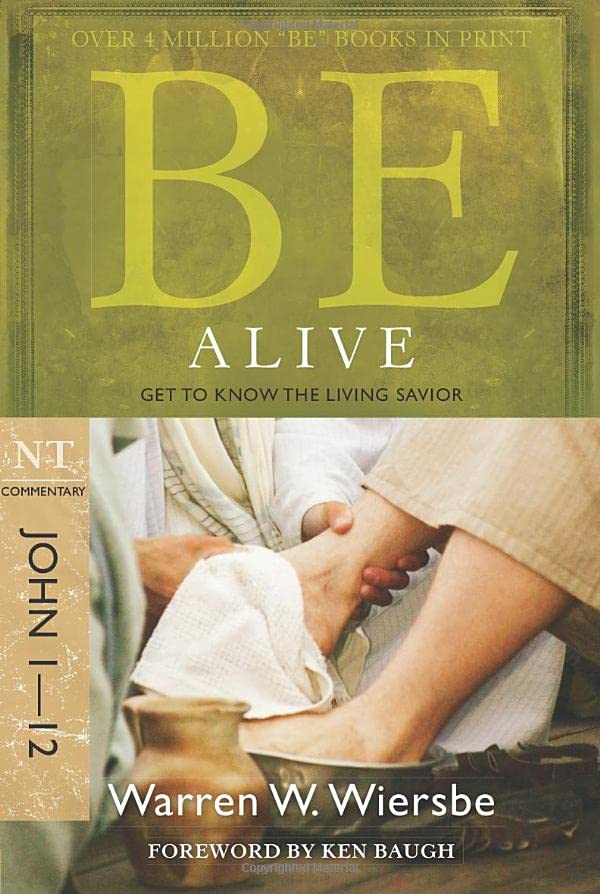
Be Alive: Get to Know the Living Savior

I veered from my Bible reading plan because I wanted to be in one of the gospels over December, and because the plan had not taken me through John in the last few years.

Warren Wiersbe divided his commentary on John into two books, the first being Be Alive (John 1-12): Get to Know the Living Savior.

Each of the four gospels presents Jesus from a different aspect. John’s gospel portrays Jesus as the Son of God.

John shares different titles for Jesus: the eternal, incarnate Word of God (“Much as our words reveal to others our hearts and minds, so Jesus Christ is God’s ‘Word’ to reveal His heart and mind to us”–p. 20); the light of the world; the eternal Son of God; the lamb of God; the Messiah, long promised and prophesied in the Old Testament; the king of Israel; the Son of Man; the good shepherd, the water and bread of life, the door.

When John shares some of the miracles Jesus did, he “seeks to share the inner meaning—the inner significance—of our Lord’s works, so that each miracle is a ‘sermon in action” (p. 38). “Our Lord’s miracles were testimonies (John 5: 36), giving evidence of His divine sonship; but they were also tests, exposing the hearts of the people (John 12: 37ff.). The same events that opened some eyes only made other eyes that much more blind (John 9: 39–41)” (p. 44).

One theme through John’s gospel is Jesus’ “hour.” Throughout, Jesus says His hour was not yet come. Then it was at hand, then it finally culminated in His death for us.

Another theme is that Jesus loves and came to die for the world, not just the Jews.

One of John’s major themes is that Jesus is the Savior of the world, not simply the Redeemer of Israel. He is the Lamb of God who takes away the sin of the world (John 1: 29). “For God so loved the world” (John 3: 16). The Samaritans rightly identified Him as “the Savior of the world” (John 4: 42). He gave His life for the world, and He gives life to the world (John 6: 33). He is the Light of the World (John 8: 12). The universal emphasis of John’s gospel is too obvious to miss. Jesus will bring the “other sheep” who are outside the Jewish fold (John 10: 16; and see 11: 51–52) (p. 190).

The crowds at first flocked to Jesus for His teaching and His provision. They hoped He would throw off Roman oppression and set up His kingdom. Some believed and became loving followers of Christ. Many began to fall away when He spoke of the cost of discipleship and when it became clear that He was not the type of Messiah they had envisioned.

The Pharisees were supposed to be experts in the law of God, but they missed the Savior portrayed in the law.

When a person starts to resist the light, something begins to change within him, and he comes to the place where he cannot believe. There is “judicial blindness” that God permits to come over the eyes of people who do not take the truth seriously. (The quotation of Isa. 6: 9–10 is found in a number of places in the New Testament. See Matt. 13: 14–15; Mark 4: 12; Luke 8: 10; Acts 28: 25–27; Rom. 11: 8.) It is a serious thing to treat God’s truth lightly, for a person could well miss his opportunity to be saved. “Seek ye the LORD while he may be found, call ye upon him while he is near” (Isa. 55: 6)” (p. 194).

John’s gospel is a full and rich portrayal of Christ. There is so much in it, I am not surprised Wiersbe took two books to cover it. I look forward to the next one.

Back to the Classics 2022 Wrap-Up

“A classic is a book that has never finished saying what it has to say” (Italo Calvino, The Uses of Literature).

That’s why I enjoy reading classics: they still speak to us after decades, even hundreds and thousands of years.

I’m thankful that the Back to the Classics Challenge hosted by Karen at Books and Chocolate has expanded my horizons. Without it, I might have never have branched out beyond Dickens, Austen, and Alcott to discover Wilkie Collins, Anthony Trollope, and so many others.

Karen chooses different categories for the challenge each year. The categories this year are (titles are linked to my review of the books):

A 19th century classic. Framley Parsonage by Anthony Trollope
A 20th century classic. The Story of Doctor Dolittle by Hugh Lofting
A classic by a woman author. Mary Barton by Elizabeth Gaskell
A classic in translation. Eugene Onegin by Alexander Pushkin.
A classic by BIPOC author. To Sir, With Love by E. R. Braithwaite
Mystery/Detective/Crime Classic. Dracula by Bram Stoker. Though this is a Gothic novel, the nature and identity of the Count are also a mystery.
A Classic Short Story Collection. Hospital Sketches by Louisa May Alcott
Pre-1800 Classic. The Confessions of St. Augustine.
A Nonfiction Classic. The Four Loves by C. S. Lewis
Classic That’s Been on Your TBR List the Longest. Winnie the Pooh by A. A. Milne. I’m including all four Pooh books as one entry since they are so short.
Classic Set in a Place You’d Like to Visit. The Small House at Allington by Anthony Trollope
Wild Card Classic. The Chronicle of Barset by Anthony Trollope

We’re allowed three children’s classics for this challenge. I just had two: Dr. Dolitte and Pooh.

For completing all twelve categories, my name is entered three times into Karen’s drawing of a $30 prize towards books.

Next week I’ll wrap up my other reading challenges as well as share the books read this year and my top ten or so favorites.

Why Did Jesus Come as a Baby?

“Often in the account of salvation history, the future of God’s plan rests with a baby or a child.” (1).

“In Bible history, very often the birth of a baby has made the difference between defeat and victory for God’s people” (2)

In one sense, every baby born represents a new beginning with potential and hope for the future. But sometimes a baby was a major turning point in Bible history.

The first child born on earth, Cain, killed his brother, Able. Cain was exiled, but God sent Adam and Eve another son, Seth.

God had made a historic covenant with Abraham that his descendants would be as many as the dust of the earth (Genesis 13:14-17) or the stars in the sky (Genesis 15:5). In him all the nations of the earth would be blessed (Genesis 12:1-3). But Abraham had no child with Sarah, his wife, for about 25 years after the promise was made. Finally Isaac, the child of promise, was born.

When God’s people were captive in Egypt, Pharaoh demanded that all the Jewish baby boys be killed. But “By faith Moses, when he was born, was hidden for three months by his parents, because they saw that the child was beautiful, and they were not afraid of the king’s edict” (Hebrews 11:23). Moses grew up to be the deliverer of his people: God used him to bear witness to Egypt through the plagues, to lead Israel out of Egypt and to the promised land, and to give them God’s law.

In another low point in Israel’s history, when injustice was running rampant, one desperate woman prayed for a child that she promised she would give back to the Lord. God gave her Samuel, who was the pivot between the time of the judges and the kings and who called his people back to worship and serve the one true God.

A bitter woman named Naomi had lost her husband and both sons. Now she was alone with her daughter-in-law, Ruth. But God raised up a godly man to marry Ruth and give Naomi a grandson—a grandson whose grandson would be David, the great king of Israel, a man after God’s own heart.

God had promised that the Messiah would come through David’s line. But wicked queen Athaliah killed all the king’s sons—she thought. Jehosheba, the aunt of little Joash, hid him away with a nurse until he could be made king and carry on the Davidic line.

Malachi ends the Old Testament with a promise that God would “send you Elijah the prophet before the great and awesome day of the Lord comes. And he will turn the hearts of fathers to their children and the hearts of children to their fathers” (4:5-6). Then there were 400 years of silence. And suddenly one day, an old, childless priest was startled by an angel’s visit announcing that he and his aged wife, after many long years of now-abandoned prayers, would have a baby who would “turn many of the children of Israel to the Lord their God, and he will go before him in the spirit and power of Elijah, to turn the hearts of the fathers to the children, and the disobedient to the wisdom of the just, to make ready for the Lord a people prepared” (Luke 1:16-17).

And then, in yet another low point in the history of God’s people, when they were under the Rome’s rule, “when the fullness of time had come, God sent forth his Son, born of woman, born under the law, to redeem those who were under the law, so that we might receive adoption as sons” (Galatians 4:4-5).

Why did God send His Son to earth as a baby? I don’t know all the reasons. But here are a few:

To be the Son of Man But he took on our flesh that he might be Son of Man as well as the Son of God.

To defeat death. “Since therefore the children share in flesh and blood, he himself likewise partook of the same things, that through death he might destroy the one who has the power of death, that is, the devil, and deliver all those who through fear of death were subject to lifelong slavery” (Hebrews 2:14-15).

To be made like His brethren (Hebrews 2:17a).

To become a merciful and faithful high priest in the service of God (Hebrews 2:17b).

To make propitiation for the sins of the people (Hebrews 2:17c), To take our sin and punishment on Himself to atone for our sins.

To help those who are being tempted “because he himself has suffered when tempted” (Hebrews 2:18).

Those things explain why He took on flesh. But why as a baby? Partly so that He could live a whole righteous life in our place. But perhaps Charles Spurgeon is on to another reason when he says, “We might tremble to approach a throne, but we cannot fear to approach a manger. Never could there be a more approachable being than Christ.” (3)

“The greatest forces in the world are not the earthquakes and the thunderbolts. The greatest forces in the world are babies” (4). Especially this baby.

____________
1. Warren W. Wiersbe, Be Distinct (2 Kings & 2 Chronicles): Standing Firmly Against the World’s Tides, p. 224.

2. Warren W. Wiersbe, Be Basic (Genesis 1-11): Believing the Simple Truth of God’s Word, p. 94.

3. Charles Spurgeon, Joy to the World: Daily Readings for Advent.

4. Dr. E. T. Sullivan as quoted in Warren Wiersbe, Be Compassionate (Luke 1-13): Let the World Know That Jesus Cares, p. 26.

Thanks to Dr. Wiersbe for emphasizing God’s use of babies in so many of his commentaries and whose thoughts inspired mine.

(I often link up with some of these bloggers.)

Laudable Linkage

I haven’t been reading online much this week, but here are some good things I found::

Delayed Obedience Is Disobedience (Except When It Isn’t). “Though Ezra called the people to act and seemed to do so right away, they pushed back, not because they wanted to delay their obedience, but because they knew the matter was complicated and that it was important to handle it with wisdom, care, and prudence.”

Honoring Dishonorable Parents, HT to Challies. “The holiday season is one in which happy families get together to eat lovely meals and have laughter-filled conversations followed by games of charades or meaningful talks around a fireplace – or at least that’s how Hallmark portrays the holidays. For many of us, however, the holiday season is one in which we face a very difficult problem.”

3 Misconceptions That Many Muslims Have About Christianity and constructive ways to talk to them, HT to Challies.

When Christmas Is Hard, HT to The Story Warren. “This season can be hard. When you’re broken or hurting, the celebrations and decorations can just make you hurt more. The Christmas carols remind you of everything and everyone you’re missing.”

Oh Holy Night, HT to The Story Warren. “It’s neat to think back to the depth of theology I was singing as a young child, having little to no understanding of the true meaning of those lyrics. Yet something resonated.”

18 Games for the Car (Or Any Kind of Travel, HT to The Story Warren. Just in time for Christmas trips.

9 Bible Reading Plans for 2023. Right after Christmas, we start planning for the new year. One of the most frequent resolutions for Christians is to read the Bible regularly.If you don’t have a regular Bible reading plan, or you’d like to change things up, this post offers several options.

Friday’s Fave Five

I didn’t intend to be silent here since Sunday—but it has been a busy week. I’m trying to get as much done for Christmas as I can, as well as pre-company cleaning, before my oldest son gets here this weekend. That way I can relax and enjoy his time here as well as the time the rest of the family has off.

But I enjoy stopping a moment with Susanne and friends at Living to Tell the Story to recount the blessings of the week.

1. Running into old friends. We visited a new-to-us church Sunday and ran into some folks from our church in SC before we moved here 12 years ago. We didn’t know they had moved to the area. It was fun to catch up.

2. A cheerful encounter in an unlikely place. Walmart is (in)famous for only having two checkouts open. I waited patiently in line until the older couple before me bought their purchases. As the older man was putting his change back in his wallet, he told a funny anecdote from “back in the day.” Somehow he turned to me and included me in the story as well. There were two girls at the register (one in training, I guess), and we all laughed. His story only took seconds and didn’t hold up the rest of the line. As he moved on, the lighthearted conversation and laughter continued through my transaction. Funny how one small moment and short encounter can brighten everyone’s day.

3. A return pick-up. One of my online purchases arrived with both the wrong type of item and wrong size. As I initiated a return on the store site, one of the options was to have Fed-Ex pick up the item at my house. That sounded a lot simpler for a busy week than my having to go stand in line at a post office. There was one small glitch when they called me to say the driver had come to the door but didn’t get an answer (while I was in the shower at 8:30 because the notification said he would come after 9…). They offered to reschedule for the next day, but I asked if there was any way possible someone could come back the same day. There was, and he did.

4. Christmas activities clicking along. Cards addressed and mailed, most presents wrapped, a few of the family cards made, cleaning today (Thursday) and tomorrow, big grocery shopping outing Friday. I’m not quite as far along as I’d like to be. But I’ll have some time next week to finish.

5. Sunshine. It has been mostly rainy or overcast for the better part of the last two weeks. I’m glad the temperatures have been in the 40s and 50s so we haven’t had ice and snow. I’m fine if it snows Christmas day or after, but hopefully it won’t before. 🙂 It was so good to see the sun out today.

I hope your Christmas preparations are going well and you’re having some quiet reflective moments about the season as well as some merry ones.

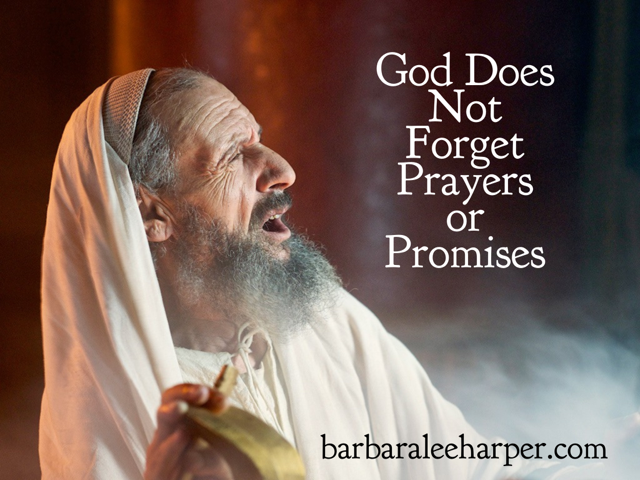
God Does Not Forget Prayers or Promises

400 years of silence.

That’s what Israel experienced after the last words of the Old Testament in Malachi. They had the law of Moses, their history, the poetry and wisdom of the psalms and Solomon’s writings, and the prophetical books.

But they had heard no new word from the Lord in 400 years.

So we can understand Zechariah’s being startled when suddenly an angel appeared before him.

After so long a time of silence, the first message God sends through an angel is, “Do not be afraid, Zechariah, for your prayer has been heard.”

Though I’ve read this passage many times, I was focused on the larger context of how it fit in the birth story of Jesus. I must have glossed over the part about answered prayer. Which prayer? Well, from the angel’s continued message, the prayer about a child.

“Your wife Elizabeth will bear you a son, and you shall call his name John.”

We can forgive Zechariah for being stunned. He replied, “How shall I know this? For I am an old man, and my wife is advanced in years.”

Zechariah had probably long ago given up on those prayers and counted God’s answer as a resounding “No.” And now—at this time, at their ages, they were going to have a baby?

As He so often does, God didn’t answer Zechariah’s “How?” He answered with “Who?”

“I am Gabriel. I stand in the presence of God, and I was sent to speak to you and to bring you this good news.”

God had sent this good news.

And the news wasn’t just good for Zechariah and Elizabeth. This baby would later become known as John the Baptist.

And you will have joy and gladness, and many will rejoice at his birth, for he will be great before the Lord. And he must not drink wine or strong drink, and he will be filled with the Holy Spirit, even from his mother’s womb. And he will turn many of the children of Israel to the Lord their God, and he will go before him in the spirit and power of Elijah, to turn the hearts of the fathers to the children, and the disobedient to the wisdom of the just, to make ready for the Lord a people prepared (Luke 1:14-17).

Gabriel told Zechariah that because the latter did not believe, he would be mute until the promise was fulfilled.

Hannah Anderson suggests that “perhaps God’s reproof was not a punishment for Zechariah so much as an invitation to experience his strength in a way that only happened in weakness. Perhaps God’s ‘now listen’ was not silencing Zechariah so much as quieting him, quieting him long enough to restore his hope” (Heaven and Nature Sing, p. 33).

When Elizabeth did give birth, and neighbors clamored to know the baby’s name, she said “John.” The people were astonished because no one else in their family was known by this name. They appealed to Zechariah, who confirmed by writing, “His name is John,” as the angel had instructed. John, meaning “God is gracious.”

And immediately [Zechariah’s] mouth was opened and his tongue loosed, and he spoke, blessing God” Luke 1:64).

He acknowledged this child would not just bring joy to his and Elizabeth’s life, but he was a part in God’s grand plan of salvation, put in place before the beginning of the world.

And you, child, will be called the prophet of the Most High;
    for you will go before the Lord to prepare his ways,
to give knowledge of salvation to his people
    in the forgiveness of their sins,
because of the tender mercy of our God,
    whereby the sunrise shall visit us from on high
to give light to those who sit in darkness and in the shadow of death,
    to guide our feet into the way of peace (Luke 1:76-79).

Though God sometimes seems silent, He hears and He cares. And though He answers the immediate concern, He has the larger, longer picture in mind. Besides praying for a child, Zechariah had probably also been praying for the coming of the Messiah. Now their child would have a part in God’s grand plan of redemption. It was John the Baptist who said, “Behold, the Lamb of God, who takes away the sin of the world!” (John 1:29) and prepared the way of the Lord.

God had not forgotten His promises then, and He still hasn’t now. He might say “No” or “Not now” when those answers are best. Sometimes the answer to our prayer request is connected to God’s overarching purpose for others as well. When the time is right, He will answer.

(Top photo courtesy of http://www.LumoProject.com.)

(I often link up with some of these bloggers.)

Laudable Linkage

I don’t want to “laud” my own link. But I did want to share a post I’ve shared many times before. My mom passed away 17 years ago today. It seems like every holiday season, someone else I know has lost a loved one that year. So I have shared Christmas Grief, Christmas Hope, Christmas Joy at intervals as an encouragement to those whose loved ones have passed on and who especially miss them this time of year.

I’m once again behind on some blog reading during this busy time, but here are a few posts I enjoyed this week:

What Does It Mean to Enter Into Temptation? HT to Challies. “Jesus doesn’t say, ‘Watch and pray, so you won’t be tempted.’ There is no way you can get into a place in the Christian life where you are no longer tempted. He says, ‘Watch and pray, so that you will not fall into temptation.’ Literally it says, ‘so that you will not enter into temptation.'”

Do You Hear the Bells of Christmas? HT to The Story Warren. “Henry Longfellow was one of the most widely known American poets in the 19th century. What’s not as well-known is a poem he wrote called, I Heard the Bells on Christmas Day which was eventually put to music and has since become a cherished Christmas hymn. What’s beautiful about this Christmas melody is the incredible story that led him to put his pen to paper on Christmas morning, 1863”

Grammar Crash Course: Clauses. “Distinguishing dependent clauses from independent clauses may seem like an obscure and academic thing to do. Not the most thrilling way to occupy one’s morning. But this is perhaps the most important grammatical skill to master for your Bible study.”

Three Biblical Ways to Pray for Your Adult Children. “Prayers for strong marriages, safety on the job, or wisdom in college selection are all good requests from the heart of a Christian mum, but Paul’s three-verse, single-sentence outpouring to God challenges me to lift my sights to motivation and to pray about the drive behind my adult children’s following lives — and to take a careful look at my own.”

African Christianity Thrived Long Before White Men Arrived, HT to Challies. “Crudely put, Christianity is the white man’s religion and has no place amongst true Africans. In an era where forming an African identity aside from Colonialism is high on people’s agenda, it’s a compelling argument to some. Except that it’s not true. For Christianity was present in Africa 1000 years before the first European Colonialists arrived on African shores.”