Laudable Linkage

IMG_0195

It’s been a little longer than usual since I’ve had the opportunity to share some noteworthy reads discovered online the last few weeks, so here goes:

What Does It Mean to Abide in Christ?

3 Tests God Ordains for His Children, HT to Challies.

Self-examination Speaks a Thousand Lies. “God calls us to examine ourselves (2 Corinthians 13:5; Lamentations 3:40), but healthy self-examination is a difficult and dangerous duty….when that introspection makes us self-absorbed instead of Christ-absorbed, we undermine our faith.” “God knows the worst about you and loves you still.”

Don’t Speak Up: On the Spiritual Discipline of Silence, HT to Challies. “As evangelicals, we often feel guilty for not evangelizing more, or not speaking a word of correction to a friend in sin. And sometimes that sense of guilt is correct! But here, Jesus identifies another way we can err: speaking up wrongly, at the wrong times, and to the wrong person.”

Remembering My Friend, Nabeel Qureshi, HT to Challies. I was heartbroken to hear of Nabeel’s passing, though happy that he is no longer in pain and with the Lord. I loved his book Seeking Allah, Finding Jesus and respected his integrity and determination to go where the truth led him, no matter the cost. I have to admit I wondered why God would take someone so young who was doing so much to bring people to Himself. But after a while I thought the better way of thinking would be that we all have a given number of days, not guaranteed to be 80+: are we making the most of them like he did?

Embodying Masculinity in a World That Rejects It. “If I thoroughly study the ‘man’ passages and never work through the ‘all believers’ passages (the rest of the NT), I will completely fail in both.”

Have We Christians Made Marriage Too Complicated? HT to Challies.

God Didn’t Write a Book. “It took the printing press to make the Bible a book, but it didn’t take the printing press to make the Bible the Bible…the Bible is not essentially a book. It is essentially God’s recorded words to humanity, and those words transcend any single medium.”

Modern Media Is a DoS Attack on Your Free Will, HT to Challies. Lots to ponder in this one, but one statement stood out to me: “Democracy assumes a set of capacities: the capacity for deliberation, understanding different ideas, reasoned discourse. This grounds government authority, the will of the people.” And these are largely absent from most social media exchanges.

The Wrong Donations: Some Tough Words on Disaster Relief.

Ten Unfair Expectations of Pastor’s Wives, HT to Challies.

Why I signed the Nashville Statement, HT to Challies. Particularly poignant since Rosaria was once a lesbian feminist.

A Real Life Fall Home Tour. I loved this! Laura Ingalls Gunn (yes, related to that Laura Ingalls!) writes about home decor and posts Pinterest-worthy photos, but this time she showed “real life” scenarios – shoes and “stuff” out, etc. I am tempted to do a similar post, even though I don’t usually write about home decor. I think as homemakers we often strive for that balance between wanting things to look aesthetically pleasing and yet wanting the people who live there to feel comfortable and at home.

Happy Saturday!

Save

Word Studies in the Bible

IMG_0377

Generally it’s better to read a book of the Bible from start to finish, in one or consecutive sittings. You get the whole context then, the way the passage fits within the rest of the book, etc., and you get it the way it was originally intended to be read. But sometimes a topical or word or phrase study can be beneficial, too, either as a break from just reading, or because you have found something you want to study out a bit further.

We have to be careful with word or topical studies that we don’t string together a bunch of unrelated verses out of context. But if we take context into account, sometimes these studies can be real eye-openers. I’ll share a few of my own later.

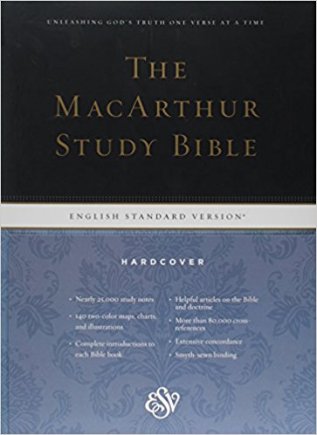
The place to begin is a concordance. You probably have a small concordance in the back of your Bible, and that can be a good starting place. But you’re probably going to want to invest in a Strong’s Exhaustive Concordance, or, if you have a computer, learn to work with some online programs. There are several Bible computer programs you could buy, but for just a basic study like this, free online resources like BibleGateway.com, BibleStudyTools.com, or blueletterbible.org are all fine.

Say you wanted to look up verses about God’s love. You look up “love” in the concordance, and there are tons of verses with that word in it. You go through them and find the ones that deal with God’s love rather than the love of people for each other, and either write them out, or, with a computer you can just “copy and paste” them into your word processing program. As you do this, you’ll find characteristics of God’s love (it is eternal, merciful, etc.), and you might want to organize the verses into categories. Even doing this you won’t find all the verses about God’s love, because some verses that may talk about it may not have the word “love” in the verse, and so won’t show up in that category in the concordance. So if you want to be really thorough, as you study those verses you can look up the cross references or look up the verses just before and after the ones you find in the concordance (that is a good practice anyway to make sure you are taking the verses in context).

If you wanted to take it a step further, you could look up the original Greek or Hebrew words. The Strong’s Concordance will have a number assigned to each word, and you can then look up words by that number. I believe Strong’s numbers are only available for the KJV and NIV. In BibleStudyTools.com, for instance, if you look up John 3:16, then you can click on the “Settings” icon and click on the Strong’s numbers. All the words with a Strong’s number will turn blue, and you can click on any of them to see the definition. If you click on “loved,” you’d be taken to a page which shows you the Greek word there is “agapao,” and you’ll also see the word origin, part of speech, definition, other places in the Bible where this word is used, and other ways the word is translated. You can even listen to what the pronunciation sounds like.

Once in a Child Care class in college, we had to do a study on what the Bible says about child discipline. For that kind of a study, you might go to verses you are already familiar with first, then look up the cross references listed beside them, then look up pertinent words in the concordance, like “rod,” “discipline,” “train,”, “child,” “son,” etc. Then you might go from the actual verses telling about child discipline to examples in Scripture of parents disciplining their children in good or bad ways or examples of how God disciplines us.

When you go back to your regular reading, you’ll likely find other verses that would fit in to your study, and your study will likely heighten what you get out of that passage as you read it again.

I’ve done studies on particular problem areas I’ve wrestled with, like anger, pride, anxiety, gluttony, that have been very helpful.  One pitfall is that it be can be very easy to look these verses up and get them all neatly categorized and organized….and then file them away without really going back to read and study them to see what they teach. But they can be a handy and helpful study guide.

Once I did a study on the words “in Christ” or “in Him.” I had noticed a few verses that detailed some things that we have in Christ and wanted to study it out further. It was a very rich study! Here are just a few of those verses:

Romans 3:24   Being justified freely by his grace through the redemption that is in Christ Jesus.

 Romans 8:1  There is therefore now no condemnation to them which are in Christ Jesus, who walk not after the flesh, but after the Spirit.

Romans 8:38– 98   For I am persuaded, that neither death, nor life, nor angels, nor principalities, nor powers, nor things present, nor things to come, Nor height, nor depth, nor any other creature, shall be able to separate us from the love of God, which is in Christ Jesus our Lord.

 1 Corinthians 1:30   But of him are ye in Christ Jesus, who of God is made unto us wisdom, and righteousness, and sanctification, and redemption.

 1 Corinthians 15:22   For as in Adam all die, even so in Christ shall all be made alive.

 2 Corinthians 2:14   Now thanks be unto God, which always causeth us to triumph in Christ, and maketh manifest the savour of his knowledge by us in every place.

John 1:4   In him was life; and the life was the light of men.

 Colossians 2:10   And ye are complete in him, which is the head of all principality and power.

Another time, to try to fight against my desire for my own way so much of the time, I did a study looking up verses like “own way,” “own understanding,” “own thoughts,” “own sight,” “own eyes,” etc. I ended up with four pages of very convicting notes! Here are just a few:

Isaiah 53:6 All we like sheep have gone astray; we have turned every one to his own way; and the LORD hath laid on him the iniquity of us all.

Proverbs 14:14a The backslider in heart shall be filled with his own ways

Proverbs 21:2 Every way of a man is right in his own eyes: but the LORD pondereth the hearts.

Romans 10:3  For they being ignorant of God’s righteousness, and going about to establish their own righteousness, have not submitted themselves unto the righteousness of God.

Proverbs 1:31 Therefore shall they eat of the fruit of their own way, and be filled with their own devices.

Proverbs  3:5 Trust in the LORD with all thine heart; and lean not unto thine own understanding.

Proverbs  3:7 Be not wise in thine own eyes: fear the LORD, and depart from evil.

Philippians 3:9   And be found in him, not having mine own righteousness, which is of the law, but that which is through the faith of Christ, the righteousness which is of God by faith.

One of the most impactful word studies I did was on the phrase “God is able.” I saw a few verses with that phrase in the March 8 evening reading of Daily Light on the Daily Path, and decided to look up more.  Some of those:

II Chronicles 25:9: And Amaziah said to the man of God, But what shall we do for the hundred talents which I have given to the army of Israel? And the man of God answered, The LORD is able to give thee much more than this. (See II Chronicles 25:1-9 for the bigger picture.)

Daniel 3:17: If it be so, our God whom we serve is able to deliver us from the burning fiery furnace, and he will deliver us out of thine hand, O king.

Daniel 4:37: Now I Nebuchadnezzar praise and extol and honour the King of heaven, all whose works are truth, and his ways judgment: and those that walk in pride he is able to abase.

Matthew 10:28: And fear not them which kill the body, but are not able to kill the soul: but rather fear him which is able to destroy both soul and body in hell.

Acts 20:32: And now, brethren, I commend you to God, and to the word of his grace, which is able to build you up, and to give you an inheritance among all them which are sanctified.

Romans 4:21: And being fully persuaded that, what he had promised, he was able also to perform.

Romans 14:4: Who art thou that judgest another man’s servant? to his own master he standeth or falleth. Yea, he shall be holden up: for God is able to make him stand.

2 Corinthians 9:8: And God is able to make all grace abound toward you; that ye, always having all sufficiency in all things, may abound to every good work…

Ephesians 3:20-21: Now unto him that is able to do exceeding abundantly above all that we ask or think, according to the power that worketh in us Unto him be glory in the church by Christ Jesus throughout all ages, world without end. Amen.

Philippians 3:21: Who shall change our vile body, that it may be fashioned like unto his glorious body, according to the working whereby he is able even to subdue all things unto himself.

2 Timothy 1:12: For the which cause I also suffer these things: nevertheless I am not ashamed: for I know whom I have believed, and am persuaded that he is able to keep that which I have committed unto him against that day.

Hebrews 2:18: For in that he himself hath suffered being tempted, he is able to succour them that are tempted.

Hebrews 7:25: Wherefore he is able also to save them to the uttermost that come unto God by him, seeing he ever liveth to make intercession for them.

James 4:12: There is one lawgiver, who is able to save and to destroy: who art thou that judgest another?

Jude 1:24: Now unto him that is able to keep you from falling, and to present you faultless before the presence of his glory with exceeding joy….

Matthew 9: 28, 29: Believe ye that I am able to do this? . . . Yea Lord. . . . According to your faith be it unto you.

What a great boost to faith, and how much we have to praise our God for!

Have you ever done a word or topical study in the Bible that impacted you? If not, I hope you’ll give a word or topical study a try!

(Sharing with Inspire Me Monday, Literary Musing Monday, Glimpses, Soul Survival)

Book Review: Taking God At His Word

Taking God at His WordTaking God At His Word: Why the Bible Is Knowable, Necessary, and Enough, and What That Means for You and Me by Kevin DeYoung discusses…well, exactly what the subtitle says it does, “unpacking what the Bible says about the Bible.”

He begins with Psalm 119, the longest chapter in the Bible, an acrostic “love song” about God’s Word in language that would seem excessively emotional by many today, even many who read and love the Bible. He wants Psalm 119 to be the goal, the application, that the rest of the book leads to rather than a “ho hum” or skeptical reaction.

I want to convince you (and make sure I’m convinced myself) that the Bible makes no mistakes, can be understood, cannot be overturned, and is the most important word in your life, the most relevant thing you can read each day.

He then goes on to discuss what we should believe about the Word of God – it says what is true, it demands what is right, it provides what is good – and what we should feel about the Word of God – delight in it, desire it, depend on it. He then discusses what we should do with the Word of God (with supporting points for each section).

He discusses the “feeling as though God speaking to us through the Scriptures is an inferior, less exciting, less edifying means of communication. We can’t help but conclude, ‘Yes, the Bible is important, but oh, what a treasure it would be if I could experience God really speaking to me! If only I could hear from the sure and infallible voice of God'” and assures us that that’s exactly what we do have in the Bible.

He devotes a chapter each to God’s Word being enough, clear, final, and necessary, concluding with “Christ’s Unbreakable Bible,” which shows what Jesus believed about and how He responded to the OT Scriptures, and “Stick With the Scriptures.”

A few more quotes:

The authority of God’s Word resides in the written text–the words, the sentences, the paragraphs–of Scripture, not merely in our existential experience of the truth in our hearts.

The goal of revelation is not information only, but affection, worship, and obedience. Christ in us will be realized only as we drink deeply of the Bible, which is God’s word outside of us.

To deny, disregard, edit, alter, reject, or rule out anything in God’s Word is to commit the sin of unbelief.

Just because God cannot be known exhaustively, that does not mean he cannot be known at all.

We should not abandon faith in anything God has taught us merely because we cannot solve all the problems which it raises. Our own intellectual competence is not the test and measure of divine truth. It is not for us to stop believing because we lack understanding, but to believe in order that we may understand (This is a quote from J. I. Packer’s book “Fundamentalism” and the Word of God).

There is an objective standard of truth which supersedes private impressions or experience.

But, someone may ask, doesn’t Jesus sometimes argue that the Old Testament was wrong? Doesn’t he actually correct the Scriptures on a few occasions? It may look that way, but upon closer inspection we see that Christ never corrects a verse of Scripture when rightly interpreted and applied. For example, the claim is made that Jesus relaxed the requirements of the Sabbath, thus violating his own principle and tweaking Scripture to be less rigid. But actually Jesus appealed to Scripture—to the story of David and his men eating the bread of the Presence—to show that the Pharisees were imposing standards which violated the teaching of Scripture (Mark 2: 23–28)…Jesus is not correcting Scripture itself, but the misapplication of it.

Scripture doesn’t tell us everything we may want to know about everything. But it tells us everything we need to know about the most important things.

The author covers a lot of ground in a short book (146 pages) in a way that is thorough, engaging, clear, learned but not full of academese, easily accessible, I believe, for non-Christians, new Christians, or experienced Christians. I enjoy Keven’s writing, and though in other posts and books of his I may not agree with every little point, I don’t recall anything I objected to in this book. Highly recommended.

(Sharing with Semicolon‘s Saturday Review of Books, Carole’s Books You Loved, Literary Musing Monday)


Save

Save

Laudable Linkage

IMG_0195

It’s later in the day than I usually post these, but here are a few good reads discovered in the last week:

Today, More Than Ever, Read Beyond the Headlines. Yes! And the Twitter feeds.

Hard Evidence for a Supernatural Book.

Those Spiritual Gift Tests? Maybe You Ought to Ignore Them.

Please Stop Saying “Christianity Isn’t a Religion, It’s a Relationship” HT to Challies.

10 Suggestions for new Bible College Students, HT to Challies.

White Christian conservatives should oppose protests by white supremacists.

On Waiting and the Lord of the Rings.

Redeeming Princess Culture, HT to Story Warren.

And something from Pinterest that resonated with me:

The Rock higher than I

Laudable Linkage

IMG_0195Here are some noteworthy reads discovered in the last couple of weeks:

Can I Sing “Amazing Grace” If I Was Saved at Six? We tend to forget that if loving God with all our heart, soul, mind and strength is the greatest commandment, then failing in that is the greatest sin, and we have all done that every day!

Reflections on the 50th Anniversary of My Diving Accident.

Bible study resources.

Lies the Modesty Culture Teaches Men. We were just having a family discussion about this recently.

When Your Kids Won’t Bow Down to Your Idols.

I would never forget my child in a hot car…until she did. Good advice to teach little ones (who are old enough to understand) safety tips for such a situation.

And I found this funny on Pinterest – both moms and kids of any age can identify with this. 🙂

Happy Saturday!

What are you seeking?

That question was prompted by yesterday’s Daily Light reading. After my initial response of “Well…um…,” I concluded that I am seeking to know the Lord better each day, to love and serve my family, to attend to the various tasks and ministries that are under my care.

The word “seek” implies activity to me, even urgency. If someone leans back in his chair with feet on the desk and hands clasped behind his head saying, “I sure hope I find…” whatever, he doesn’t seem all that concerned at the moment.

One Greek word in Hebrews for “seek” means “to seek out, search for, investigate, scrutinise, to seek out for one’s self, beg, crave, require.” Another means “to seek [in order to find out] by thinking, meditating, reasoning, to enquire into; to seek after, seek for, aim at, strive after.”

Different passages started coming to mind about seeking, so I looked some up this morning:

But if from thence thou shalt seek the Lord thy God, thou shalt find him, if thou seek him with all thy heart and with all thy soul. Deuteronomy 4:29

 Glory ye in his holy name: let the heart of them rejoice that seek the Lord. Seek the Lord and his strength, seek his face continually. 1 Chronicles 16:10-11

And thou, Solomon my son, know thou the God of thy father, and serve him with a perfect heart and with a willing mind: for the Lord searcheth all hearts, and understandeth all the imaginations of the thoughts: if thou seek him, he will be found of thee; but if thou forsake him, he will cast thee off for ever. 1 Chronicles 28:9

If my people, which are called by my name, shall humble themselves, and pray, and seek my face, and turn from their wicked ways; then will I hear from heaven, and will forgive their sin, and will heal their land. 1 Chronicles 7:14

One thing have I desired of the Lord, that will I seek after; that I may dwell in the house of the Lord all the days of my life, to behold the beauty of the Lord, and to enquire in his temple. Psalm 27:4

Depart from evil, and do good; seek peace, and pursue it. Psalm 34:14

O God, thou art my God; early will I seek thee: my soul thirsteth for thee, my flesh longeth for thee in a dry and thirsty land, where no water is; To see thy power and thy glory, so as I have seen thee in the sanctuary. Psalm 63:1-2

Seek the Lord, and his strength: seek his face evermore. Psalm 105:4

Blessed are they that keep his testimonies, and that seek him with the whole heart...And I will walk at liberty: for I seek thy precepts. Psalm 119:2, 45

Yea, if thou criest after knowledge, and liftest up thy voice for understanding; If thou seekest her as silver, and searchest for her as for hid treasures; Then shalt thou understand the fear of the Lord, and find the knowledge of God. Proverbs 2:3-5.

He that covereth a transgression seeketh love; but he that repeateth a matter separateth very friends. Proverbs 17:9

 Seek ye out of the book of the Lord, and read. Isaiah 34:16a

 Seek ye the Lord while he may be found, call ye upon him while he is near: Let the wicked forsake his way, and the unrighteous man his thoughts: and let him return unto the Lord, and he will have mercy upon him; and to our God, for he will abundantly pardon. Isaiah 55:6-7

But seek ye first the kingdom of God, and his righteousness; and all these things shall be added unto you. Matthew 6:33

 Ask, and it shall be given you; seek, and ye shall find; knock, and it shall be opened unto you: For every one that asketh receiveth; and he that seeketh findeth; and to him that knocketh it shall be opened. Matthew 7:7-8

Charity [Love] suffereth long, and is kind; charity envieth not; charity vaunteth not itself, is not puffed up, Doth not behave itself unseemly, seeketh not her own, is not easily provoked, thinketh no evil; Rejoiceth not in iniquity, but rejoiceth in the truth. 1 Corinthians 13:4-6

If ye then be risen with Christ, seek those things which are above, where Christ sitteth on the right hand of God.Set your affection on things above, not on things on the earth. Colossians 3:1-2

But without faith it is impossible to please him: for he that cometh to God must believe that he is, and that he is a rewarder of them that diligently seek him. Hebrew 11:6

These all died in faith, not having received the promises, but having seen them afar off, and were persuaded of them, and embraced them, and confessed that they were strangers and pilgrims on the earth. For they that say such things declare plainly that they seek a countryFor here have we no continuing city, but we seek one to come. Hebrews 11:13-14;13:14

This is not an exhaustive study, but this topic is worthy of one! There is much more about what we’re to seek, when and how, what we’re not to seek, and especially about God’s seeking us: I will seek that which was lost, and bring again that which was driven away, and will bind up that which was broken, and will strengthen that which was sick” (Ezekiel 34:16a).

I know just stringing together a list of verses may not be the best way to convey what the Scripture says on this topic. But I hope it’s a catalyst for you to seek more about what God wants us to seek.

And God promises that “they that know thy name will put their trust in thee: for thou, Lord, hast not forsaken them that seek thee. Psalm 9:10.

(Sharing with Inspire Me Monday, Literary Musing Monday, Faith on Fire, Wise Woman)

Save

Laudable Linkage

img_0021

Once again, here are some of the reads I found thought-provoking this week:

How to Read the Bible For Yourself.

Walking in the Spirit. Probably the most helpful explanation I have seen of this. I had long ago noticed the similarities between being filled with the Spirit in Ephesians 5:18-33 and letting the Word of Christ dwell in us richly in Colossians 3, and wondered how that worked together. This is the first time I have seen it explained.

How Can I Forgive Myself, HT to Challies. “You do not need to supplement divine forgiveness with any self-forgiveness. Your forgiveness in Christ is complete. Receive it. Remember it. And rejoice in it. If your testimony is, ‘God has forgiven me,’ that is enough!”

For the mom who doesn’t have time to read her Bible. Love this. “Bible time is not only an hour at the crack of dawn, or an intense evening devotion, or a dedicated small group meeting.”

Michelangelo’s David and the Gift of Limitations, HT to The Story Warren.

Do Visitors From Your Church Really Feel Welcome? HT to Challies.

No Time For Widows, HT to Challies. The best part: “Every widow is an individual person. No one likes being lumped into a group and having assumptions made about them based on demographics. The only way to truly help a widow is to get to know her.”

Some questions I’m asking while off to my white evangelical church, HT to Challies.

An Open Letter to the Person Caring for a Loved One With Dementia, HT to True Woman. My own m-i-l was not one to “explode” in anger as is mentioned here, but I know some of you have dealt with that.

It’s Never a Good Time to Invite Kids In.

27 Things People Don’t Realize You’re Doing Because You’re a Highly Sensitive Person, HT to Lisa. I could easily identify with about half of these, and somewhat identify with more.

And a few words of wisdom from Pinterest:

Happy Saturday!

Save

With All Our Minds

I admit I enjoy learning. I liked reading the encyclopedia when I was a child. When I was in college, I once remarked that I could be a professional student. I loved taking classes, and as graduation came, I lamented that I couldn’t get to all of them that I wanted to. But I had a huge college debt already and needed to actually get on with life beyond college.

However, I’ve known women whose eyes glaze over when a pastor or Bible teacher mentions verb tenses or Greek words, things I love because they help me understand the text better. I’ve known some women to fidget, sigh, squirm, and make funny comments during a more academic Sunday School lesson and then become thoroughly engaged listening to a speaker with more froth than substance.

Sometimes these women are gifted in other ways. Some are more outgoing, easily engage with people socially, and are great at making people feel welcome – all things that don’t come naturally to me and that I have to work at.

Just as those of us who are introverted and do not easily begin conversations have to go outside our comfort zones sometimes, so those who are not naturally academically inclined have to go beyond their natural grain sometimes. By “not academically inclined” I don’t mean not smart. There are different kinds of smart, “book smart” being just one of them.

And granted, there are some speakers and writers who overdo the academics with a plethora of multi-syllabled theological terms that only a seminary graduate would know. I’m not talking about that kind of academics. I’m talking about this:

And you shall love the Lord your God with all your heart and with all your soul and with all your mind and with all your strength. Mark 12:30, ESV.

Do not be conformed to this world, but be transformed by the renewal of your mind, that by testing you may discern what is the will of God, what is good and acceptable and perfect.  Romans 12:2, ESV.

Wherefore gird up the loins of your mind, be sober, and hope to the end for the grace that is to be brought unto you at the revelation of Jesus Christ. 1 Peter 1:13, KJV. (The ESV renders “gird up the loins of your mind” as “preparing your minds for action.“)

About this we have much to say, and it is hard to explain, since you have become dull of hearing. For though by this time you ought to be teachers, you need someone to teach you again the basic principles of the oracles of God. You need milk, not solid food, for everyone who lives on milk is unskilled in the word of righteousness, since he is a child. But solid food is for the mature, for those who have their powers of discernment trained by constant practice to distinguish good from evil. Hebrews 5:11-14, ESV.

Be diligent to present yourself approved to God as a workman who does not need to be ashamed, accurately handling the word of truth. 2 Timothy 2:15, NASB.

God doesn’t want to touch just our hearts from His Word, He wants us to use our minds, to engage our brains.

I think one reason that so many spiritual books marketed to women are so shallow, as Aimee Byrd wrote, is that we tend to want to be spoon-fed processed “inspirational” food without having to think too much about it. And, as I wrote recently in regard to doctrine, sometimes we approach the Bible just wanting “something to get me through the day” or something uplifting rather than wanting to study it.

There are times, like when there are young children in the house, or during times of illness or exhaustion, when there is not as much time or our brains aren’t quite as up to exercise as usual.

And we have to be careful to keep things in balance and not become like the Pharisees, who were all academic knowledge and no heart and soul.

But next time we pick up our Bibles or listen to someone preach or teach, let’s seek to be taught, to think, to learn.

Teach me your way, O Lord, that I may walk in your truth; unite my heart to fear your name. Psalm 86:11, ESV.

Put false ways far from me and graciously teach me your law! Psalm 119:29, ESV.

Teach me, O Lord, the way of your statutes; and I will keep it to the end. Psalm 119:33, ESV.

Teach me good judgment and knowledge, for I believe in your commandments. Psalm 119:66, ESV.

Thy Word is Like a Garden, Lord

Thy Word is like a garden, Lord, with flowers bright and fair;
And every one who seeks may pluck a lovely cluster there.
Thy Word is like a deep, deep mine; and jewels rich and rare
Are hidden in its mighty depths for every searcher there.

Thy Word is like a starry host: a thousand rays of light
Are seen to guide the traveler and make his pathway bright.
Thy Word is like an armory, where soldiers may repair;
And find, for life’s long battle day, all needful weapons there.

O may I love Thy precious Word, may I explore the mine,
May I its fragrant flowers glean, may light upon me shine!
O may I find my armor there! Thy Word my trusty sword,
I’ll learn to fight with every foe the battle of the Lord.

Words: Ed­win Hod­der, The New Sun­day School Hymn Book, 1863

(Sharing With Inspire Me Monday, Literary Musing Monday, Woman to Woman Word-filled Wednesday, Faith on Fire)

Laudable Linkage

img_0021

Here are a few of the good reads discovered lately:

The Greatest Work You Can Do, aimed at college students but good for all of us.

Fictitious Forgiveness: Why We Cannot Forgive Ourselves, HT to Challies. “Feeling bad about ourselves over undealt with offenses is God’s objective expression of love, not a feeling to be drowned out by self-actualization and self-pampering.”

Implications or Applications: Biblical Narratives, HT to Proclaim and Defend. Written for preachers but good advice for reading and knowing how to apply Biblical narratives.

Altar of the Feels.

Act Your Age. This is aimed at young men needing to “grow up,” but has some good thoughts for all of us.

Go to Bed for the Glory of God.

6 Surprises Every Premarital Counselor Should Cover, HT to True Woman

Dashing Little Ones Against the Rock HT to Challies. Thoughts on one of the most difficult passages of Scripture.

A few about parenting:

What Your Kids Need Is Your Authentic Christian Life.

Spurgeon’s Secret for Raising Godly Children, HT to Challies. I’d disagree with #8, but otherwise agree with the list.

Teaching Our Children About Work.

And finally, this from Pinterest made me smile.

Happy Saturday!

Save

Why Study Doctrine?

Doctrine can seem like a cold, dry concept, something stuffy theologians fuss over when they should be trying to reach others. We’re more excited by a group study on relationships or parenting or womanhood or just about anything rather than a doctrinal study. We don’t usually approach our time in the Bible or church rubbing our hands eagerly anticipating what doctrine we’ll learn about today. We’re usually looking for help, encouragement, affirmation. We want to feel something. But feelings don’t last. If I get a warm fuzzy spiritual feeling in my devotions, that can dissipate in seconds when someone crosses me or something goes wrong. Winsome sermons and books may inspire me for a short while, but unless there is meat to them, that inspiration won’t last.

But doctrine is vital. You can hardly read a NT epistle without coming across a mention of doctrine and warning against false doctrine. If we think of sound doctrine as a manifestation of God’s truth and character, we can in turn worship Him by knowing and sharing the doctrines of His Word.

A.W. Tozer once wrote that “there is scarcely an error in doctrine or a failure in applying Christian ethics that cannot be traced finally to imperfect and ignoble thoughts about God.”

So what are some advantages to studying right doctrine in the Bible?

Doctrine leads us to true worship. When we don’t worship God for Who He truly is, then we are worshipping a god of our own making, and that is idolatry. Now, of course, all of us are imperfect in our knowledge of Him and are, or should be, ever growing in Him, and He’ll correct our understanding along the way. But that is different from not knowing Him for Who He is due to neglect or misapplication of the Word.

Doctrine increases our intimacy with God. We can’t know Him aright apart from what He has revealed of Himself in His Word. As we learn more of Him, we love Him and worship Him more, and what seemed like “dry doctrine” then does become something that warms and thrills our hearts as the Holy Spirit brings that truth to mind.

Doctrine protects against error and therefore the wrong path. For example, years ago when cult leader David Koresh was in the news, I watched an interview with someone from his compound. I was shocked to hear her say that she was impressed that he knew his Bible so well. Nearly everything he brought from the Bible, he twisted. Knowing doctrine would have kept this person and others from being deceived by him and others like him.

Doctrine bolsters our faith and confidence in God.  Recently I was troubled by a question I had no answer for that cast doubts on God’s character. I still don’t have an answer for it, but I rested on the previously studied truth that He is good, righteous, kind, and merciful.

Doctrine meets our deepest needs at the most basic level. If I am feeling lonely, what most helps except the truth that God is present everywhere, even with me? If I am afraid, what helps most but meditating on God’s power? When a trial comes and people feel forsaken, what most comforts but the precious truth that God will never forsake us? If I am feeling ashamed, sinful, and unworthy, my only help is turning to the only One who can wash away my sin and remind me that I am in Him and beloved by Him.

Doctrine is stabilizing. “So that we may no longer be children, tossed to and fro by the waves and carried about by every wind of doctrine, by human cunning, by craftiness in deceitful schemes” (Ephesians 4:14, ESV). I’ve known women and read women who do just this, float around with whatever is popular with little discernment. 2 Timothy speaks of “silly women laden with sins, led away with divers lusts, Ever learning, and never able to come to the knowledge of the truth” who are “lead captive” by a whole host of wrongdoers in the “perilous last days” (2 Timothy 3:1-7, KJV). By contrast, Titus 2 exhorts us to “speak thou the things which become sound doctrine” (v. 1, KJV).

Doctrine determines deeds. Our beliefs affect our behavior. When a lie seems the only way out of a tough situation, what keeps us from it but the knowledge that it will displease a God whose essence is truth? Even the Titus 2 admonition to older men and women is couched in the context of sound doctrine.

Doctrine honors God. He is the one who determined what sound doctrine us. If we love Him we should want to know what He says and live accordingly. It’s so important to Him, He inspired John to write, “Everyone who goes on ahead and does not abide in the teaching of Christ, does not have God. Whoever abides in the teaching has both the Father and the Son. If anyone comes to you and does not bring this teaching, do not receive him into your house or give him any greeting, for whoever greets him takes part in his wicked works” (1 John 1:10, ESV).

Doctrine is not an end in itself. If it is, then it does become dry and stale. The point of doctrine isn’t to line up our beliefs in neat, orderly systems and leave them there. The point is to know God better, serve Him in the ways He desires, and minister His truth to others.

People concerned about right doctrine can seem pesky and picky, and, true, it’s too easy to be that way. We shouldn’t be nitpicky just to be so. But we should “Be diligent to present yourself approved to God as a workman who does not need to be ashamed, accurately handling the word of truth” (2 Timothy 2:15, NASB), and as kindly and gently as possible bring His truth to bear in our conversations and interactions. We have to remember to let our speech be always “with grace” (Col. 4:6) and to speak the truth in love (Eph. 4:15). We don’t need to “pounce” on every comment or reference another person might make, but graciously seek what the Lord might have us say. We also have to distinguish between clear doctrine and those areas where good people can differ or personal preferences.

II Corinthians 3:18: “But we all, with open face beholding as in a glass the glory of the Lord, are changed into the same image from glory to glory, even as by the Spirit of the Lord” (KJV). We “behold Him” through His Word. And, the more we behold Him, the more we are changed into His likeness.

Learning doctrine doesn’t necessarily mean digging up systematic theology books, though some might like to do so. In our everyday reading and Bible study, it means looking for the truth about God when we read. The Bible is so much more than moralistic stories (“Be like Joseph and Daniel; don’t be like Jonah and Judas”). Look at what God is doing in the passage, what we see of His character and wisdom in what He is doing.

So, don’t be dismayed by that word “doctrine.” II Timothy 4: 3-4 says, “For the time will come when they will not endure sound doctrine; but after their own lusts shall they heap to themselves teachers, having itching ears; And they shall turn away their ears from the truth, and shall be turned unto fables.” That is a warning to us not to turn away from sound doctrine, but also possibly an admission that sound doctrine needs to be “endured.” Learning doctrine may not always feel warm and fuzzy, but the Holy Spirit will use it in our lives in blessed ways.

(Sharing with Inspire Me Monday, Literary Musing Monday, Wise Woman, Tell His Story, Woman to Woman Word-filled Wednesday, Faith on Fire)