Review: The Man Behind the Patch: Ron Hamilton

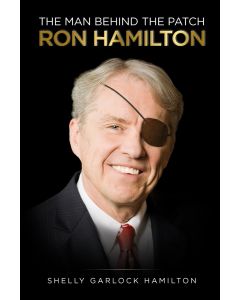
Ron Hamilton and his alter ego, Patch the Pirate, are household names in some places but unknown in others. I wrote something of a tribute to him a couple of years ago after he passed away. His wife wife, Shelly, wrote a biography of him, published last year, titled The Man Behind the Patch: Ron Hamilton.

I first knew of Ron in college. He and Shelly were newly married and GAs (graduate assistants) during my freshman year. They were always active in music both on campus and at the church they attended, which I visited occasionally.

I remember when Rob debuted some new songs he had written at college. “It Is Finished” was inspired by a teacher pointing out that when Christ said “It is finished” from the cross, it was a victory cry. The other two were “Come to the Cross” and “The Blood of Jesus.” I had not known that these songs were part of his requirements to graduate in his major. It’s interesting that these songs continued to be well-known and well-loved all through his career.

I remember when Ron was diagnosed with cancer in his eye. When they did surgery, he wouldn’t know until he woke up whether they had to remove the eye or not. They did. Sometime after his recovery, he gathered together all the notes and verses people had sent him and wrote what became his signature song, “Rejoice in the Lord.”

As Ron wore his eye patch, kids in his church began calling him “Patch the Pirate.” He had written music for adults but then decided to write some for kids as well. He put together a story line with interesting character voices for a children’s recording. Kids loved it, and parents soon begged for more because they were tired of listening to the same album over and over. Thus a children’s ministry was born. A Patch the Pirate adventure has been released every year since then, over forty all together.

He continued to write music for adults and choirs, cantatas, books of music arrangements for his songs. He wrote the words, various people wrote the music, and Shelly arranged them.

One of the trials of their life was when their oldest son developed a mental illness over several years, ending with the taking of his own life. Shelly told his story in Always, Only Good: A Journey of Faith Trough Mental Illness.

Another severe trial came when Ron was diagnosed with early onset dementia. He passed away at his home in 2023.

Shelly tells Ron’s story in three sections, Becoming Patch the Pirate, Life with Patch the Pirate, and Patch’s Long Journey Home. She begins with his early childhood in Indiana, to attending college, meeting and dating Shelly, their marriage and children. Then Ron’s eye surgery and budding career. They took over and managed the music company her dad began, Majesty Music.

Many of the middle chapters are something of a travelogue, along with which recordings came out when, sprinkled with anecdotes. The whole family traveled to churches doing “Patch” concerts until the family grew too big. Ron traveled alone for a while, eventually cutting back to traveling just a bit while becoming the music pastor of a local church.

Shelly was warned that biographies of men by their wives often become hagiography, idealizing the husband. Shelly attempts to show all sides of Ron. He wasn’t perfect–no one is. He was a prankster, and some of his pranks backfired badly.

A couple of other interesting facts I had not known: Ron had a deviated septum, which gave his voice a slight nasal quality. He didn’t know if surgery would change his voice for better or worse, so he decided to leave well enough alone.

Also, he considered doing doctoral work in music at another school and was accepted, but he was told his music would need to be more academic. He considered the offer, but decided to decline. He wanted to “put the cookies on the lowest shelf”–make them accessible to everyone. Shelly wrote later that Ron “chose to compose biblical texts that united with simple, memorable melodies for everyday life and everyday struggles (p. 368).

Ron wrote about 700 songs. Some for children were fun, like “I Love Broccoli” and “The Poochie Lip Disease.” Others focused on character. All of his songs for children and adults were biblically based. I shared some of my favorites in my earlier post about him.

By all accounts, Ron was a humble man. When Shelly once mentioned how many lives he had touched, he said, “I’d like to think God did it.”

This book was nostalgic for me in many ways. I didn’t know Ron and Shelly personally, though I had met them each a couple of times. But since I was in school a few years behind them and lived in the same town for over fourteen years, I was acquainted with their ministry. Then my kids grew up on “Patch the Pirate” tapes, especially in the car and at bedtime. We listened to many of Ron’s albums for adults over the years and sang some of his music in choir. Finally, I followed Shelly’s public Facebook page the last years of Ron’s illness.

I think this book would be especially interesting to anyone familiar with Ron or Patch. But even for those who don’t know him, this is an inspiring account of a humble servant of God using his talents for His glory.

Review: A Boy’s War

A Boy's War by David Michell

David Michell was the tender age of six when he was sent to the Chefoo School, a Protestant boarding school for missionary children in what is now known as Yantai. He and his parents had no idea they would not see each other for six years because the Japanese captured the school during WWII.

David tells his story in A Boy’s War. His parents moved from Australia to be missionaries to China with China Inland Mission, originally founded by Hudson Taylor, in 1930. David was born in China and lived with his parents and older sister until they were later joined by a younger sister. When it came time for school:

In the China of those years the only way for most children of missionaries to get a good education in English was to go away to boarding school. Chefoo offered this opportunity. At Chefoo children of missionaries and a few sons and daughters of business people lived and studied together at the preparatory school, the Boys’ School, and the Girls’ School, getting a truly Christian education for body, mind, and spirit. So good was that education, in fact, that others, non-CIMers, wanted to take advantage of it, too (Location 59, Kindle version.

Some of the school’s famous graduates were Henry Luce of Time Magazine and Thornton Wilder.

On a side note, when I first read in missionary biographies of parents sending their children away to school so young, I was horrified. But home schooling materials were not as available then as now. Plus the British boarding school system had been in place for ages. Parents wanted their older children to have the credentials for college. And in some cases, the environment was such that children were more vulnerable to some of the horrific practices of the parents’ mission field, so parents felt they were safer away at school. These days, many mission boards work with parents to teach their children at home, especially in the younger years.

David tells of his trip to school (“two thousand miles and a six-week journey away,” Location 145) and early days of adjustments. Though he missed his parents and younger sister and had some homesickness and struggles, for the most part he settled in fairly easily.

Many of the teachers had been Chefoo students themselves. Outside the classroom, “housekeepers” helped the children write letters home, mended their clothes, and generally helped where needed. I was touched to see that many of these women were widows who now “mothered” these children.

As early as 1940, the school’s headmaster conferred with the British Embassy about what they should do in the face of the conflict between Japan and China. They decided to keep the school open. However, many children could not travel home at Christmas break due to the dangers, so a larger number than usual were at the school over the holidays. The staff provided a memorable Christmas for them.

They were used to seeing Japanese soldiers in the area, but the military didn’t bother anyone at the school. That changed after Japan attacked the US at Pearl Harbor the following year. Now British and Americans were the enemies. Immediately, Japanese soldiers arrested the headmaster for a month and took over the campus.

Classes and activities were allowed to continue under the watchful eye of the Japanese, but supplies ran low and freedoms were curtailed.

In November, 1942, the whole campus was sent on foot to an abandoned Presbyterian mission at Temple Hill, where conditions were even more crowded and supplies were even fewer.

Then in September 1943, the school was sent on a longer journey to the Weihsien interment camp, where they remained until the end of the war. There they joined some 1,500 other people from all walks of life and several nationalities held by the Japanese.

One of the detainees was Olympic medalist Eric Liddell. He had become a missionary to China after his Olympic feats. He had sent his pregnant wife and two children home, planning to join them later. But the Japanese took over before he could. One chapter of the book is a mini-biography of Liddell. He took an active part in teaching the children, who all called him Uncle Eric. He drew pictures of chemistry equipment they didn’t have so older students could be prepared for their Oxford exams. He arranged races and athletic activities and was generally thought of as a man “whose humble life combined with muscular Christianity with radiant godliness” (Location 1516). Sadly, he died of a brain tumor while at Weihsien.

Another detainee was Herbert Taylor, oldest son of Hudson Taylor, in his eighties, having been a missionary in China for over sixty years.

Though their years in camp were fraught with hardships, the children managed to have adventures as well.

David describes the joy of seeing six American soldiers parachute nearby and the Japanese surrendered.

Then came the scramble to get everyone home and taken care of.

Though David exulted in freedom, he found some aspects hard to adjust to.

In the last chapter of the book, David described going back to Weihsien with a few of his friends from there and their sons on the fortieth anniversary of their rescue. 

I had read this book some decades ago but had forgotten much of it. Reading a frictional account of the Chefoo school’s captivity in When We Were Young and Brave by Hazel Gaynor made me want to revisit this book. I am so glad I did. Hazel’s book may have more emotion, but it’s imagined emotion. David’s book is more factual. While he doesn’t downplay the hardships, he doesn’t go into great detail about them, either. I appreciated what he had to say here:

A situation like Weihsien is fertile soil for producing people of exceptional character. In our eyes, for instance, our teachers were heroes in the way they absorbed the hardships and fears themselves and tried to make life as normal as possible for us.

In fact, I think at times all of us in camp considered ourselves as heroes. We were surviving, some would say even thriving, in the midst of war. By dint of hard work, ingenuity, faith, prayer and perseverance we had transformed a compound that was a hopeless mess into a habitable and in some rare corners, almost an attractive living place (Location 1333).

Someone in the camp, Hugh Hubbard, wrote this of Eric Liddell after his death, but I think it was true of them all:

Weihsien—the test—whether a man’s happiness depends on what he has or what he is; on outer circumstances or inner heart; on life’s experiences—good or bad—or on what he makes out of the materials those experiences provide (Location 1504).

You can read a couple of testimonies of David Michell here and here.

I’m thankful to have reread this book, and for God’s sustaining grace of His people through the hardest of times.

Review: Life Without Limits

When Nick Vujicic was born without arms and legs, his parents were shocked and grieved. They were concerned about how he could ever grow up to be independent. They were devout Christians yet wondered why God would allow such a thing to happen.

Nick wondered the same thing as he got older.

I have to confess, I wondered the same thing. Even with as much comfort and reassurance I’ve received studying God’s reasons for allowing suffering, and as much as I have come to trust His character and will, thinking of a person growing up in this condition was hard to come to grips with.

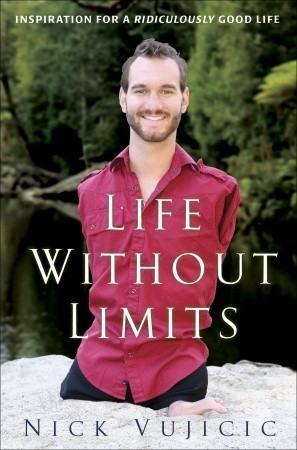
Maybe that’s why I had Nick’s book, Life Without Limits: Inspiration for a Ridiculously Good Life, on the shelf for so long without picking it up. It was one we had bought for my husband’s mother. I remember her saying her tears were streaming as she read this, and she felt she had nothing to complain about after reading this book.

Recently, I saw several Facebook posts from friends about a young wife and mother they knew who ended up in the hospital with several severe infections. The doctor said her condition was a 10 out of 10 on the scale of a serious illness. The treatment reduced blood flow to her limbs, which resulted in amputation of both arms and legs. She’s been in the hospital since December.

As my heart went out to this family and I’ve been praying for them, I decided to pick up Nick’s book to see how he dealt with his situation.

After his parents’ initial shock, they strove to give him as normal a life as possible. He was a determined little boy and found ways to do most things he wanted to do.

However, school was a different story. His family wanted him to attend regular classes rather than special-needs classes. He faced the cruel remarks of some of his classmates, which was depressing. He was even suicidal at one point until his father encouraged him.

Nick found that often he had to be the one to reach out to make people feel comfortable approaching him. That and a good sense of humor helped people to see he was just a regular guy on the inside.

Discussions with others about how he coped with no limbs led to speaking to student, church, and youth organizations. In the years since, speaking became Nick’s vocation and ministry, not only in his native Australia, but around the world.

This book is part memoir, part motivational encouragement. He does include Christian principles but also a lot of secular motivation (love yourself, etc.).

Some of the quotes that stood out to me:

Experiences like that helped me realize that being “different” just might help me contribute something special to the world. I found that people were willing to listen to me speak because they had only to look at me to know I’d faced and overcome my challenges. I did not lack credibility. Instinctively, people felt I might have something to say that could help them with their own problems (pp. 20-21).

As difficult as it might be to live without limbs, my life still had value to be shared. There was nothing I lacked that would prevent me from making a difference in the world. My joy would be to encourage and inspire others. Even if I didn’t change this planet as much as I would like, I’d still know with certainty that my life would not be wasted. I was and am still determined to make a contribution (p. 24).

Often the very challenges that we think are holding us back are, in fact, making us stronger. You should be open to the possibility that today’s handicap might be tomorrow’s advantage (pp. 43-44).

Nick was encouraged by the man who was born blind in John 2. The disciples asked Jesus, “Who sinned, this man or his parents, that he was born blind?” Jesus responded, “It was not that this man sinned, or his parents, but that the works of God might be displayed in him.”

This book was published in 2010. Since then, Nick has gotten married, had four children, written more books and traveled and spoken to even more people.

I appreciated Nick’s attitude and willingness to help and encourage others.

You might be interested in this piece about Nick on Australia’s 60 Minutes program:

(I often link up with some of these bloggers.)

Christopher Robin Milne

As you’re probably aware, A. A. Milne’s children’s books about Pooh and Christopher Robin and the Enchanted Forest were based on his son, his son’s toys, and the family farm, Cotchford, which edged the Five Hundred Acre Wood (which became the Hundred Acre Wood in the Pooh stories).

Though Christopher Robin was Milne’s son’s name, young Christopher wasn’t called that. He went by Billy Moon, or just Moon (which came from his early attempts to say “Milne”).

A. A. Milne was known for plays and other works when he wrote a few poems and then a couple of books based on Christopher and his real childhood toys. He was dismayed that those books overshadowed all else he wrote. He stopped writing related children’s books because he didn’t feel the extensive fame was good for Christopher.

A few months ago, my husband and I watched Goodbye Christopher Robin, about the Milnes and the fame of Pooh and Christopher Robin. My children had grown up with Pooh (mostly the Disney version) and the Milne characters will always have a soft spot in my heart.

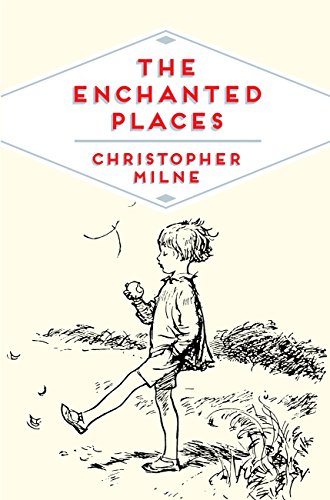
I wanted to learn more about how Christopher (as he was known as an adult) really felt, so I decided to read his book, The Enchanted Places: A Childhood Memoir. I learned shortly thereafter that Christopher had written a sequel titled The Path Through the Trees, so I read that as well, and decided to review them together.

Though there’s a bit of overlap, the first book covers Christopher’s life until he went into the army, and the second covers that time forward. (For convenience sake, I am going to refer to the first as EP and the second as PTT.)

In The Enchanted Places, Christopher tells about his family, his nanny, and growing-up years.

Though the Pooh books were inspired by Christopher Robin’s toys, they also contained his father’s nostalgia about his own childhood.

The Christopher Robin who appears in so many of the poems is not always me. For this was where my name, so totally useless to me personally, came into its own: it was a wonderful name for writing poetry round. So sometimes my father is using it to describe something I did, and sometimes he is borrowing it to describe something he did as a child, and sometimes he is using it to describe something that any child might have done (EP, p. 19).

In the second book, Christopher says that part of his writing the first book had to do with his feelings upon his father’s death. He learned that his mother had destroyed almost everything of his father’s, and at first he was quite angry. Later he came to believe she was right to do so. But he knew that at some point someone would come around wanting to write a biography of A. A., and EP was a place to sort through his remembrances and present “not a full-length study, but just a collection of snapshots” of his father (EP, p. 91). His father “doesn’t wear his heart on his sleeve as [his brothers] do. Alan’s heart is firmly buttoned up inside his jacket and only the merriest hint of it can be seen dancing in is eyes, flickering in the corners of his mouth” (EP, p. 91).

Christopher “quite liked being Christopher Robin and being famous” (EP, p. 81). But in boarding school, “it was now that began the love-hate relationship with my fictional namesake that has continued to this day” (EP, p. 86). The Goodbye Christopher Robin film shows his being bullied at this point, as do a couple of articles I read. He doesn’t specifically say he was in either of these books, but he said the poem “Vespers” “brought me over the years more toe-curling, fist-clenching, lip-biting embarrassment than any other” (p. 23).

Christopher’s lowest point seemed to come after the war when he was looking for a job. He didn’t seem to have any qualifications for anything, a least none that anyone needed. He was a little jealous of his father’s success at his expense then:

But were they entirely his own efforts? Hadn’t I come into it somewhere? In pessimistic moments, when I was trudging London in search of an employer wanting to make use of such talents as I could offer, it seemed to me, almost, that my father had got to where he was by climbing upon my infant shoulders, that he had filched from me my good name and had left me with nothing but the empty fame of being his son.

This was the worst period for me. It was a period when, suitably encouraged, my bitterness would overflow. On one or two occasions it overflowed more publicly that it should have done, so that there seemed to be only one thing to do: to escape from it all, to keep out of the limelight. Sorry, I don’t give interviews. Sorry, I don’t answer letters. It is better to say nothing than to say something I might regret (EP, p. 146).

Christopher says in both books that he was fiercely independent.

However much I wanted to succeed as a bookseller on my own merits, people would inevitably conclude that I was succeeding partly at least on my father’s reputation. They might even think (wrongly) that my father’s money was subsidizing the venture and that–unlike other less fortunate booksellers–I did not really need to make ends meet (EP, p. 148).

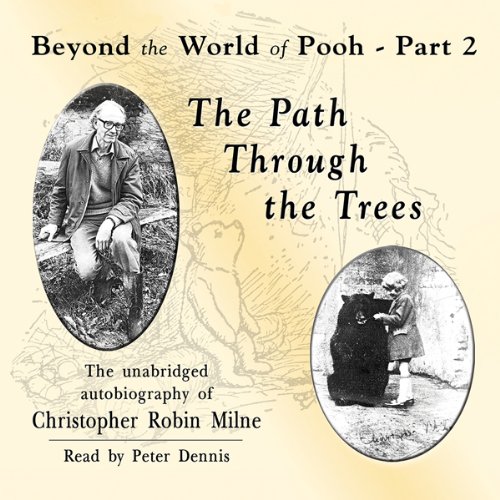
In The Path Through the Trees, (sometimes this title is prefaced with Beyond the World of Pooh, Part 2), Christopher tells of his life from the time he began to make his own choices: his five-year stent in the Army, his finishing college, search for a job, marriage, life as a book-seller.

He’s oddly selective about what he writes, which, of course, he has every right to be. He does say this book is “a personal memoir, not a biography” (PTT, Location 3889) and presents “a disjointed story—but a happy life” (Location 31).

In this second book, he tells a great deal about his first love, a woman named Hedda whom he met in Italy. But he tells us very little about his wife, Lesley, except things they did together. She was his cousin, so he had known her for years. But he doesn’t describe her as a person or how they went from cousins to romance. Likewise, he tells us his daughter, Clare, was born with cerebral palsy, couldn’t walk, had limited use of her arms. But he doesn’t describe her personality or appearance. I don’t know if this quietness was for their protection, a result of his own struggles with fame and too much of his life made public, or what.

He spends a lot of time on how they came to be booksellers, how things progressed with the shop, choices they made, things that affected the market, etc. He defends book-selling as a profession—there appears to have been some who regarded book-selling as a “trade” (which was somehow lower in rank than other professions) or as somewhat mercenary.

He has a chapter on animals they took care of (including a vole and owl in their home). In other circumstances, he might have been a naturalist.

He talks a great deal about Dartmouth, the town where he and Lesley settled and had their bookshop.

When Clare was done going to school and came home to stay, she needed full-time care. Christopher stayed home with her while Lesley continued part-time at the bookshop. This seems to have been one of the happiest times of his life, taking Clare out into nature and devising and making various helps for her needs. He had often said that he had inherited his mother’s hands and his father’s brains, and these devices for Clare employed both. His thoughts about equipment for the disabled was interesting:

It is a sad fact that much of the equipment designed for the disabled is inefficient and nearly all of it is ugly. To some extent the one follows from the other. An efficient design has a natural elegance which needs little embellishment to make it attractive. Whereas the wheel chair issued to Clare was such a mechanical disaster that nothing could have redeemed it. How unfair it is that a person who most needs a chair should so often have just the one–and one so very far from beautiful–while the rest of us, who need chairs only now and again, possess so many (PTT, Location 3233).

But of course the greatest pleasure of all was to see Clare sitting comfortably where before she had been uncomfortable, doing something she had not previously been able to do. And it was a pleasant thought that this was, in a sense, a legacy from her grandparents whom she had never known–a product of the fusion of my father’s fondness for mathematics with my mother’s competent hands. If she had inherited neither, she could at least benefit from the fact that I had inherited both (PTT, Location 3243).

Christopher’s independence caused him to refuse accepting money from the Pooh book sales until Clare came home.

Christopher seems to have been a kind and gentle man, though fiercely opinionated on some topics. He was a classic introvert, a thinker. He describes one scene in the second book where he’s walking home and comes upon a couple searching for elephant hawk caterpillars, which they hoped to take back to their area so the bugs would hatch and breed there. Christopher got home and told Lesley about the encounter. Lesley left a few minutes later and came across the same couple. She commented that her husband had just spoken with them. The man replied, shyly, “I thought he looked like the sort of person who would be interested in my caterpillar,” which Christopher took as “a nice compliment” (PTT, Location 3721). I can somewhat picture him ambling around Dartmouth, as he describes it, enjoying his bookshop, stopping to observe and contemplate nature, willing to talk about moths with strangers.

Though Christopher had some rough spots with both parents, and didn’t see his mother the last fifteen years of her life, he loved them and spoke fondly of them in these books.

Sadly, to me, Christopher “converted to humanism” when he was 24, believing that man invented God rather than the other way around. He states this in the first book, but apparently felt he came across a little too strongly. So in the second book he says that though he does not believe in God, someone else can, and they can both be right (which does not make sense, but apparently he means something like “believe whatever works for you and helps you through life”). A. A. was also an atheist but did not push his beliefs on his son until he shared an atheistic book with Christopher in his twenties.

This article tells some of the differences between the film and reality. There are some things in the films that were not in these books but may have come from other sources (A. A. also wrote a biography, It’s Too Late Now, and both Milnes wrote other books as well). Or, as always happens in movies, the makers may have taken a bit of license. One difference this article doesn’t mention is that though A.A. Milne wrote an anti-war book after WWI, he felt war was justified against Hitler and wrote another book telling why. “Hitler was different: different from anything he had imagined possible; that, terrible though war was, peace under Hitler would have been even more terrible” (PTT, Location 140). The film shows A. A.’s battle with PTSD (though it was not called that then). Christopher doesn’t mention his dad having flashbacks or problems adjusting, but he knew he’d had “sad times” in his life and felt they came out through Eeyore.

Another scene in the film comes when young Christopher asks his father, “Are you writing a book? I thought we were just having fun.” Alan responds that he’s writing book and having fun. I think that was accurate: I don’t think A. A. observed his child’s activities with a mercenary air, pulling from them what he thought would “sell.” Perhaps as happens with many parents, having children brings up memories of one’s own childhood, and A. A. recognized what would resonate not only with other children, but other parents.

I read the Kindle version of both books, but then discovered the second was included in my Audible subscription. So the audio and ebook were synced to where I could go back and forth between them. One advantage to listening was hearing the words in an English accent. I knew, of course, Christopher was English, but I don’t think in accents when reading. The audiobook has a lovely postscript not in the books by Peter Dennis, the narrator of this and the Pooh books and a personal friend of the family. I also checked both books out of the library to see if there were any pictures or other material in them. The first book had pictures of Christopher as a child as well as pictures of some of the places in the books side-by-side with the book’s illustrations of those places.

There’s a scene at the end of the film where Christopher tells his father he had more or less made peace with his childhood namesake. In the army, especially, he came across people whose fond childhood memories included Pooh and were a comfort to them. I didn’t read any sentiments like that in these books, but I hope Christopher did come to something like that realization in real life. Though he didn’t want to be mistaken for his fictional namesake, and though he understandably wanted to be permitted to grow up and away from him, the fictional boy and his toys and their innocence and imagination have touched the hearts of children and parents for decades.

(These books fit within the Nonfiction Reading Challenge celebrity category).

The Man Who Was Q

Charles Fraser-Smith supplied British intelligence and soldiers with a number of innovative gadgets during WWII. When Ian Fleming began writing his James Bond novels, he based the detective’s gadget master, “Q,” on Fraser-Smith. A few months ago, I reviewed Fraser-Smith’s memoir of his war-time activities, The Secret War of Charles Fraser-Smith, the “Q” Gadget Wizard of World War II.

David Porter wrote a full biography of Fraser-Smith in The Man Who Was Q: The True Story of Charles Fraser-Smith, the “Q” Wizard of WWII.

Fraser-Smith’s parents died when he was a child. He was brought up by a missionary family and became a Brethren missionary to Morocco. His ministry was what we’d call a “tent-maker” type today, a phrase coined from when the apostle Paul made tents to support himself for a while. Fraser-Smith directed a large farm for which he hired local workers. He was able to have conversations with them about the Lord while working side by side.

Charles and his wife had to leave Morocco and go back to England when WWII started ramping up. As was told in the previous book, Charles was sharing some of his experiences with a local church one day, especially how he had to come up with innovative ways to do things in Morocco. A British Ministry of Supply official in the audience was impressed by Charles’ innovation and flexibility. A few days later, Charles was invited to work for the Ministry of Supply, but without much information about the work involved. Charles accepted, and his book tells about his experiences obtaining supplies or creating devices to help the British during the war.

Only one chapter here is devoted to Charles’ “Q” activities, since the previous book had already been published.

After the war, Charles was heavily involved in relocating supplies that were no longer needed. He and his wife wanted to go back to Morocco, but a serious illness disrupted their plans.They then began dairy farming, with Charles creating innovative and sometimes controversial improvements in the process. He and he wife continued ministry work in various capacities.

After his wife died of cancer, Charles was involved in a number of ministry enterprises. One was funding a Bible translated into Arabic.

His son talked him into writing about his war experiences, since the period of secrecy he had agreed to was over. Charles did not consider himself very educated or articulate, so two ghost writers worked with him. “Charles was somewhat disappointed that the finished book contained relatively few of his outspoken Christian statements. But enough of his highly individual views, and his remarkable life, characterises the book for the reader to understand that this is no conventional story of espionage and undercover work” (p. 151). The book made him a celebrity, with interviews and showings of some of his gadgets. He wrote a couple of other books, with proceeds going to Arab World Ministries.

An appendix contains a treatise of Charles’ views of how missionary work could be expanded among Arabs by ministering to those who had traveled to Europe so they could go back and be a witness to their own people. He also advocated for unconventional ways (at the time) to minister to them, like hospitality, literature, and other methods. He stresses the importance of establishing indigenous, not westernized churches.

This book was originally written in 1989 and is no longer in print, but I had no trouble finding a used copy. I enjoyed learning more about Charles’ remarkable life.

Book Review: True Strength

I don’t read many celebrity biographies or memoirs. But we had seen Kevin Sorbo in a couple of things, then noticed he starred in Christian-based movies the last several years (he portrayed the atheist professor in God’s Not Dead). And he seems to have become more outspoken about his Christian faith on Twitter and Facebook. I became interested in his story. So when I saw his book, True Strength: My Journey from Hercules to Mere Mortal—and How Nearly Dying Saved my Life, come out on a Kindle sale, I got it.

He grew up in Mound, Minnesota, with small-town values and a strong work ethic. He got some modeling jobs to help pay bills in college, then starting acting in commercials. Soon he got the starring role in three Hercules movies, which then transitioned to a TV series, becoming one of the top shows in its day.

Just as things were going well, Kevin noticed a lump on his shoulder. It turned out to be not cancer, but an aneurysm. A chiropractic maneuver released hundreds of blood clots in his arm and a few in his brain, triggering three mini-strokes. At first, the doctors’ main concern was saving his arm. But Kevin experienced a host of symptoms, from vision loss to lack of balance to buzzing and vibrating in his brain to headaches. The only treatment seemed to be physical therapy and time. Doctors called his health crisis “one in seventy-five million.”

Both because Kevin was a private person, plus he and the producers didn’t want his Hercules persona to be tarnished, the full extent of his condition was not made public. He filmed the rest of the series with minimum camera time, creative use of a body double, and plots that worked around his situation.

Kevin talks about faith in the book, but there’s no real conversion point or switchover. It’s more like he reached back for the faith he had been brought up with and started praying and relying on God to see him through. He rejected the “hellfire and eternal flames of misery on us sinners” that his childhood pastor preached. That in the Bible, but his pastor seems to have used it as a club to beat over people’s heads rather than an invitation. Kevin did believe in a “loving, forgiving God” and acknowledged that:

Before my illness I was fully preoccupied with the material side of life. Moving at the speed of light, I ignored the spiritual side, the unseen. God created this world, but I was determined to live in it to the fullest, to get the most out of it. I figured He would want that

Through his illness, he realized:

My illness made me special—in a way that I never wanted nor expected, yes, but if I was to be special, then I was going to do something with that gift. I wasn’t a half-god or any part god. I was a mere mortal, with human limitations and problems, but I was determined not to behave like a victim anymore.

His dear wife deserves an MVP award: they were engaged when Kevin’s illness struck, and she was his main support all through it.

There are some crude spots in the book, some sexual encounters (though not explicit), and a bit of bad language (though some of it is disguised comic strip-style with keyboard characters).

Even though our situations were very different, my experience with transverse myelitis helped me identify with-some of the neurological issues and the long recovery.

It was also interesting reading about some of the behind-the-scenes aspects of the film industry.

I appreciate Kevin’s sharing his story and wish him and his family all the best.

(Sharing with Carole’s Books You Loved)