Book Review: The Merchant’s Daughter

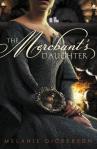
Merchants daughterI picked up The Merchant’s Daughter by Melanie Dickerson on Lisa’s recommendation.

It’s the story of Annabel Chapman in the England of 1352, whose merchant father has died and whose proud family refuses the duty of every villager to work in the lord’s fields. As punishment, someone from her family is required to be his servant for three years, and Annabel offers herself for that position.

Lord Ranulf le Wyse is said to have a very short temper and to have some sort of deformity, making him repulsive to look upon and frightening to Annabel, but she soon discovers a different side to him.

Meanwhile, the bailiff, old enough to be her father and disgusting, has set his sights on her. Unfortunately, her duties at the lord’s house bring her into more contact with him, and even worse, her brother has given the man permission to pursue her.

Annabel feels the only way to both escape the bailiff and have access to the Bible she longs to read for herself is to escape to a nunnery as soon as her servitude is over, but when the opportunity arises, she questions that desire.

This story is based loosely on Beauty and the Beast, so of course I knew where it was ultimately going, but that was actually fun, to see how it corresponded to the fairy tale. It is a realistic retelling, though – no magic wands or spells – but I enjoyed that.

Probably my favorite parts involved Annabel being asked to read the Bible to Lord le Wyse since she is one of the few people in his household who can read Latin. Reading the Bible for herself (not everyone had one: even the local priest did not) has been one of her lifelong desires, and it’s a joy to watch her pore over it and discover its treasures for herself, stopping in her reading to ponder what it says.

This book was a pleasant companion on a recent “sick day,” and I thoroughly enjoyed it. I’m looking forward to checking out Melanie’s other books.

Here’s the book trailer for The Merchant’s Daughter:

Updated: I just discovered that the Kindle edition of this book is on sale for a limited time at $2.99. You don’t have to have a Kindle to get deals on Kindle books: they have apps for computer, tablets, and phones.

(This will also be linked to Semicolon‘s Saturday Review of Books.)

And Carol‘s Books You Loved.

Books you loved 4

What’s On Your Nightstand: May 2013

What's On Your NightstandThe folks at 5 Minutes For Books host What’s On Your Nightstand? the fourth Tuesday of each month in which we can share about the books we have been reading and/or plan to read.

May has seemed like an awfully long month! Here’s what has been passing over my nightstand since last time:

Completed:

The New American Standard Bible. No, not the whole Bible in a month. I like reading the Bible through, for various reasons, but on my own timetable as I feel led rather than in a year. I don’t remember when I started this time around, but I just finished reading through the NASB.

With the Word by Warren Wiersbe, again, not just since last month. I used it as my companion through the Bible this last time: it contains a few paragraphs of commentary on every chapter in the Bible. I have not reviewed it, but I quoted from it extensively when I was hosting The Week in Words.

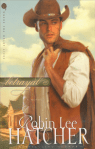
Betrayal by Robin Lee Hatcher, second in the Where the Heart Lives series, reviewed here.

His Ways, Your Walk, focusing on Bible passages written specifically to women, newly published by my friend Lou Ann Keiser, reviewed here.

Comforts From Romans: Celebrating the Gospel One Day at a Time by Elyse Fitzpatrick, reviewed here. Mixed emotions on this one.

The Freedom of Self-Forgetfulness by Tim Keller, more of a booklet, really, at 46 pages. Very good.

My Heart Christ’s Home by Robert Boyd Munger, another small booklet, also good.

Introverts in the Church: Finding Our Place in an Extroverted Culture by Adam S. McHugh. Just finished it Sunday, hope to have a review up in the next day or two. Review is up here. Mixed emotions with this one, too.

Pride and Prejudice by Jane Austen, audiobook. I enjoyed it much more than I did my first time reading the book a few years ago.

Shepherds Abiding, Jan Karon, audiobook.

Currently Reading:

Island of the Blue Dolphins, by Scott O’Dell, selected by Amy at Hope is the Word for Carrie’s Reading to Know Book Club for May. First I forgot about this, then the library didn’t have it, so I’ll be pushing to get this one done.

Bonhoeffer: Pastor, Martyr, Prophet, Spy by Eric Metaxas.

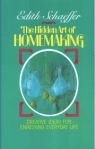
The Hidden Art of Homemaking by Edith Schaeffer along with Cindy at Ordo Amoris who is hosting a read-along book club.

The Greatest Thing in the World by Henry Drummond, a closer look at I Corinthians 13.

Those who know me well know that’s an awful lot of non-fiction for me! I’m aching to get back to stories!

Coming up next:

The English Standard Version of the Bible. I probably won’t mention this month to month.

Through Gates of Splendor, by Elizabeth Elliot, a missionary classic, for Carrie’s Reading to Know Book Club for June, selected by myself.

The Merchant’s Daughter by Melanie Dickerson.

The Duet by Robert Elmer.

Light From Heaven by Jan Karon, last of the Mitford series, via audiobook.

What are you reading?

Book Review: Betrayal

BetrayalBetrayal by Robin Lee Hatcher is the second in her Where the Heart Lives series about three orphans who were separated and try to find each other as adults. Each book focuses on one of the siblings: the first book in the series, Belonging, reviewed here, featured older sister Felicia.

In Betrayal older brother Hugh Brennan has just been released from prison where he had served as a result of his father’s betrayal. He has heard that Felicia is in Idaho and sets out to find her, but then his horse is injured and he has to stop for a while. He comes across the ranch of Julia Grace who, though wary, offers him food, a place to stay, and a few days work while his horse heals. Hugh, of course keeps his background as private as possible.

Julia has secrets of her own. She was plunged into a marriage of convenience to escape a lifetime of shame, but her husband abused and belittled her. He has passed away, and her one security is the ranch he left her, which she steadfastly refuses to sell to her husband’s brother.

Can these two wounded souls ever come to trust each other with their futures as well as the  secrets of their pasts?

I enjoyed the story and the journey Robin led Hugh and Julia through and the things they learned along the way about trust and true security.

(This will also be linked to Semicolon‘s Saturday Review of Books.)

The Hidden Art of Homemaking Book Club

HomemakingI saw at Sherry‘s the other day that Cindy at Ordo Amoris is hosting a read-along book club for the next twelve weeks or so to read Edith Schaeffer’s book, The Hidden Art of Homemaking. I had read this book some time in my early married years, and it had a great impact on me. I had been wanting to revisit it, and this provided the perfect impetus: it will be inspiring and enjoyable to compare thoughts with others while we work through the book. The idea is to discuss a chapter a week and then link up at Cindy’s to compare notes.

Sadly, I could not find my copy of the book! But I did find it online here, and that will tide me over until I can find mine or obtain a new copy.

As a young woman, I wrestled with the idea of wanting my home and even my dress to be attractive. Would we be more effective Christians if we spent less time on mundane, earthly things that will pass away and lived like John the Baptist? Edith’s book helped me greatly in that regard. In the first chapter, “The First Artist,” she goes into great detail observing God’s creativity and artistry in creation. When He created the world, He called it good. And even though it has been marred by sin, still “The heavens are telling of the glory of God; And their expanse is declaring the work of His hands.” (Psalm 19:1). God could have made the world just functional, but He also made it beautiful, not only for our enjoyment, but also that we might see something of Him in His handiwork.

She also discusses the ways in which we’re created in His image, and a part of that image which will reflect Him is in the area of creativity and artistry. We’re limited by the fact that we’re finite and inherently sinful, whereas He is not, but still, we can reflect Him in these areas. In later chapters she’ll acknowledge that we have other priorities and limits on our time and finances, but she’ll discuss simple ways of incorporating art and beauty into the everyday, such as this incident when a tramp came to the door, and instead of handing a sandwich out through a barely-opened screen, she made up a nice tray complete with flowers. She’s not talking about investing big bucks buying high-end art, though there is nothing wrong with that if one can afford it: rather, she’s discussing having an eye and developing a taste for bringing beauty and artistry into even the mundane, to bring enjoyment to others and to reflect His beauty.

We’re also supposed to introduce ourselves with this first post. My name is Barbara. I became a Christian as a teenager. I’ve been married for 33 years and have three boys, one of whom is married, and only the youngest is still at home. No grandchildren yet! I’ve been privileged to be a stay-at-home mom ever since my first pregnancy. Maybe because I did not come from a Christian home, or maybe because God just wired me that way, I’ve had a heart for creating a truly Christian home since before I was married (I even listed homemaking as one of the themes of my life.) I think every woman is a homemaker, because every woman lives in a home, and her home will reflect her personality to some degree, whether she’s single, married, with children or without, and even at this stage in life when the nest is almost empty. My husband has often said that if he lived alone, there probably would be nothing on the walls, and he doesn’t always understand exactly why I have certain things there, but he likes the hominess of it. One of my most treasured comments on my blog was from him on this topic.

Besides homemaking, I enjoy reading, some crafts (mainly stitching and paper crafts), and writing.

Those discussing the first chapter are linking up here this week. I hope you can join in! Even if you can’t read the books right now, I’d love to hear your thoughts on creativity and artistry in homemaking.

What’s On Your Nightstand: April 2013

What's On Your NightstandThe folks at 5 Minutes For Books host What’s On Your Nightstand? the fourth Tuesday of each month in which we can share about the books we have been reading and/or plan to read.

April has been a lovely spring month. Though I’ve been energized to get some projects done, I did get some good reading in as well.

Since last time I have finished:

The Picture of Dorian Gray by Oscar Wilde, both audiobook and Kindle, reviewed here. Not a pleasant book, but an intriguing one. Reviewed here.

The Victory Club by Robin Lee Hatcher about four friends on the homefront in WWII, reviewed here.

Joni and Ken: An Untold Love Story by Ken and Joni Eareckson Tada with Larry Libby. I think this will be one of my top ten books of the year. I appreciate their pulling back the curtain a bit to share not only the love story but the trials and tribulations and persevering “to attain a new level of love rather than simply surviving or grimly hanging on.” Reviewed here.

In This Mountain by Jan Karon (audiobook). Father Tim deals with retirement and wondering what his life has been worth while his wife’s fame as an author goes to new heights. Though it’s a bit darker than the other Mitford books, I very much enjoyed it.

Sense and Sensibility and Northanger Abbey by Jane Austen via audiobook. It has been fun revisiting them. I had reviewed the books earlier here and here, and I enjoyed them much more this time around. I caught much more of Austen’s wit, satire, and irony in each.  I have a feeling that if one were in the same room with Austen at a social occasion, much would be shared in knowing looks and smiles rather than tittered.

The Guardian by Beverly Lewis, third in her new Home to Hickory Hollow series, reviewed here.

I’m currently reading:

Introverts in the Church: Finding Our Place in an Extroverted Culture by Adam S. McHugh. Not enjoying is as much as I thought I would, having a few quibbles with one chapter in particular, but hope to finish and discuss it soon.

Comforts From Romans: Celebrating the Gospel One Day at a Time by Elyse Fitzpatrick.

Up next:

Island of the Blue Dolphins, by Scott O’Dell, selected by Amy at Hope is the Word for Carrie’s Reading to Know Book Club for May, which is covering both adult and children’s classics this year. I’ve never read this, so am looking forward to it.

Betrayal by Robin Lee Hatcher, second in the Where the Heart Lives series.

The Freedom of Self-Forgetfulness by Tim Keller.

His Ways, Your Walk, focusing on Bible passages written specifically to women, newly published by my friend Lou Ann Keiser.

The Hidden Art of Homemaking by Edith Schaeffer along with Cindy at Ordo Amoris who is hosting a read-along book club.

Audiobooks: Pride and Prejudice by Jane Austen and Shepherds Abiding by Jan Karon.

What’s on your nightstand?

Book Review: Joni and Ken: An Untold Love Story

Joni and KenAt 36, Joni Eareckson felt that marriage was probably not in God’s plan for her, not only because of her age, but because of her paralysis resulting from a diving accident in her teens. Who would be willing to take on all that would be involved?

After Ken and Joni met at church, then got to know one another, then started dating, Ken felt he could. He knew he loved her and he felt their marriage could work.

Joni was afraid he idealized her. He had read about her before meeting her, accompanied her on mission trips, heard her speak, and even though she tried to be realistic about herself and her humanness (when the leg bag collecting her urine broke in public while on a tour behind the Iron Curtain, she quipped that that was God’s way of not letting the attention and acclaim go to her head), she was afraid some people thought of her more highly than they ought to.

But after much time together and discussion, they married, And though they loved each other dearly, after some years the relentless details involved in Joni’s care began to wear on Ken. He began to pull away, to need time to himself to get away from it all. Soon their lives were on nearly parallel tracks, rarely intersecting. She had had a ministry and association before he came on the scene, and he felt unneeded in her world: he had his teaching and coaching and fishing trips.

Then unexplained and excruciating pain descended on Joni, not only requiring more care, but causing frustration because nothing seemed to help. And then came a cancer diagnosis…

Marriage has its rough spots anyway, but add all these to the mix, and any of them could break a marriage. In Joni and Ken: An Untold Love Story, with Larry Libby, they want to make clear that what pulled them through was not their own strength, but God’s grace when they came to the end of their own strength. They don’t want to come across as super-saints, but as real people who found God’s grace sufficient in the most trying of times “to attain a new level of love rather than simply surviving or grimly hanging on” (p. 15).

I loved Larry Libby’s preface, talking about fairy tales and sad love songs, then musing:

We all dream dreams and know very well that they don’t always work out. Life is particularly hard on high expectations. Things hardly ever fall together the way we would have scripted them. The fact is, if we put our hope in a certain set of circumstances working out a certain way at certain times, we’re bound to be disappointed, because nothing in this life is certain.

So what’s the solution? To give up on dreams?

No, it is to realize that if we belong to God, there are even bigger dreams for our lives than our own. But in order to walk in those bigger dreams, we may face greater obstacles than we ever imagined and find ourselves compelled to rely on a much more powerful and magnificent God than we ever knew before (p. 15).

I know it’s the style these days to have a book jump back and forth in the time line, but it is somewhat confusing and choppy, and I think would have flowed much better maybe by opening with one incident and then flashing back to the beginning and progressing from there to the current time.

There is one kind of odd spot in the book when Joni had a horrible night suffering from pneumonia and prayed that Jesus would manifest Himself to her in a special way. As Ken ministered to her, suddenly she said.”You’re Jesus!” She went on to say that she could feel His touch through Ken’s, could see Him in Ken’s smile. That I can understand, but manifesting Jesus, being a conduit through which He can work, isn’t the same thing a being Jesus. And I think that’s what she ultimately meant.

I scanned some of the reviews on Amazon and was surprised to find some criticism that the book didn’t contain enough or reveal enough. I thought it was quite gracious of the Tadas to reveal as much as they did in order to show God’s grace and to encourage others: the rest really is none of our business.

Overall I loved the book and would recommend it to anyone.

I linked to this speech of Joni’s before, but it shares a condensed version of some of what is in the book.

(This will also be linked to Semicolon‘s Saturday Review of Books.)

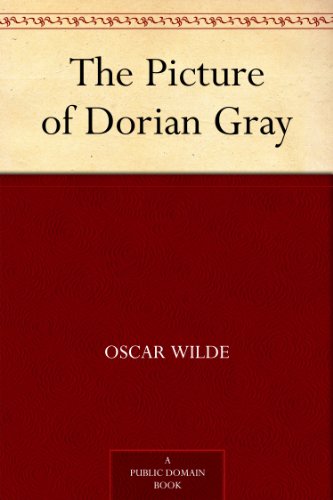
Book Review: The Picture of Dorian Gray

Dorian GrayThe Picture of Dorian Gray by Oscar Wilde begins with a preface from Wilde about art in which he says some pretty preposterous things, such as “There is no such thing as a moral or an immoral book” and “No artist has ethical sympathies. An ethical sympathy in an artist is an unpardonable mannerism of style.” Though this fits in with his views of “art for art’s sake,” his story seems to contradict the view that art is amoral in itself. Since it was added in a later edition of the novel, after the first printing caused a ruckus, perhaps he meant it as a disclaimer.

The story itself begins with an artist, Basil Hallward, and his friend, Lord Henry Wotten, discussing Basil’s painting of an extremely good-looking young man, Dorian Gray. Lord Henry feels the painting is Basil’s best work and wants to know the subject, but Basil demurs, saying that Dorian has come to mean much to him and to have greatly influenced his art. Basil doesn’t want Henry to even meet Dorian, but as fate would have it, Dorian arrives just at that moment. Basil urges Henry not to spoil or badly influence Dorian, but Henry just laughs — and then proceeds to spoil Dorian by telling him how beautiful he is, how sad it is that his youth and beauty won’t last long, how he needs to adopt a new hedonism and live for his senses, that “Nothing can cure the soul but the senses, just as nothing can cure the senses but the soul.” He awakens new feelings and sensations in Dorian such that when Dorian sees the completed painting of himself, he mourns “How sad it is! I shall grow old, and horrible, and dreadful. But this picture will remain always young. It will never be older than this particular day of June…. If it were only the other way! If it were I who was to be always young, and the picture that was to grow old! For that–for that–I would give everything! Yes, there is nothing in the whole world I would not give! I would give my soul for that!”

And mysteriously, somehow that’s what happens. He doesn’t realize it until after he falls in love with an actress and then, when she disappoints and embarrasses him, he mercilessly spurns her. When he next sees the portrait, he notices a hint of cruelty about the mouth that he hadn’t noticed before. At first he thinks he is imagining it, but then he decides to make amends by writing to the actress and apologizing, only to find that she has taken her own life. He doesn’t feel her death as deeply as he thinks he should, and Lord Henry soothes him that it’s all right, it’s even an artistic end to her existence. Thus Dorian decides “Eternal youth, infinite passion, pleasures subtle and secret, wild joys and wilder sins–he was to have all these things. The portrait was to bear the burden of his shame: that was all…For there would be a real pleasure in watching it. He would be able to follow his mind into its secret places. This portrait would be to him the most magical of mirrors. As it had revealed to him his own body, so it would reveal to him his own soul.”

Dorian locks the painting away in an unused upper room so no one else can see its transformation and then proceeds to try every kind of “infinite passion, pleasures subtle and secret, wild joys and wilder sins.” He still wrestles with his conscience at times, but convinces himself that every sin is really someone else’s fault and due to their provocation.

“There were moments, indeed, at night, when, lying sleepless in his own delicately scented chamber, or in the sordid room of the little ill-famed tavern near the docks which, under an assumed name and in disguise, it was his habit to frequent, he would think of the ruin he had brought upon his soul with a pity that was all the more poignant because it was purely selfish. But moments such as these were rare. That curiosity about life which Lord Henry had first stirred in him, as they sat together in the garden of their friend, seemed to increase with gratification. The more he knew, the more he desired to know. He had mad hungers that grew more ravenous as he fed them.”

Though in some quarters he gains a bad reputation, most people feel as one girl did who, when “He had told her once that he was wicked, she had laughed at him and answered that wicked people were always very old and very ugly,” or, as Lord Henry had thought upon first meeting him, “There was something in his face that made one trust him at once. All the candour of youth was there, as well as all youth’s passionate purity. One felt that he had kept himself unspotted from the world. No wonder Basil Hallward worshipped him.” When a later turn to “do good” has no edifying effect on the portrait, he realizes even that desire was filled with vanity and hypocrisy. He retains his youth and beauty for the next eighteen years while the portrait continues to age and degrade, until he comes to an abrupt tragic end.

Though this was not a pleasant book to read, it is fascinating on several levels. At first I felt some sympathy for Dorian in that he seemed innocent and simple until Henry influenced him. But even before that Basil said of him, “As a rule, he is charming to me, and we sit in the studio and talk of a thousand things. Now and then, however, he is horribly thoughtless, and seems to take a real delight in giving me pain. Then I feel, Harry, that I have given away my whole soul to some one who treats it as if it were a flower to put in his coat, a bit of decoration to charm his vanity, an ornament for a summer’s day.” So perhaps Henry just stirred the flames of what was already there.

Lord Henry is an enigma as well. He says perfectly horrible things, such as

“We are punished for our refusals. Every impulse that we strive to strangle broods in the mind and poisons us. The body sins once, and has done with its sin, for action is a mode of purification. Nothing remains then but the recollection of a pleasure, or the luxury of a regret. The only way to get rid of a temptation is to yield to it. Resist it, and your soul grows sick with longing for the things it has forbidden to itself, with desire for what its monstrous laws have made monstrous and unlawful,”

Yet his friends don’t seem to take him seriously, saying things like, “You never say a moral thing, and you never do a wrong thing. Your cynicism is simply a pose.” and “I don’t agree with a single word that you have said, and, what is more, Harry, I feel sure you don’t either.” When Dorian tells Henry that a book he had given him had poisoned him, Henry replies,

“My dear boy, you are really beginning to moralize. You will soon be going about like the converted, and the revivalist, warning people against all the sins of which you have grown tired. You are much too delightful to do that. Besides, it is no use. You and I are what we are, and will be what we will be. As for being poisoned by a book, there is no such thing as that. Art has no influence upon action. It annihilates the desire to act. It is superbly sterile. The books that the world calls immoral are books that show the world its own shame. That is all.”

Yet earlier Dorian muses, “Words! Mere words! How terrible they were! How clear, and vivid, and cruel! One could not escape from them. And yet what a subtle magic there was in them! They seemed to be able to give a plastic form to formless things, and to have a music of their own as sweet as that of viol or of lute. Mere words! Was there anything so real as words?” contradicting both Lord Henry’s opinion and Wilde’s preface.

Henry seems fascinated and delighted by the psychological effect his own words have on Dorian, even though he has no idea of the extremes to which Dorian takes them, yet he morally “gets away with” his horrible influence. Early in the book when he is just hearing about Dorian, he picks a flower to pieces while he talks and listens, symbolic of the destruction his influence will have not only on a beautiful flower but a beautiful person.

There are several take-aways from reading Dorian Gray:

That last reference, oddly, was brought up in the book by Lord Henry, though he quickly denounced the thought that man even had  soul (yet he felt art did). It’s amazing that there are so many Scriptural principles in the story since Wilde, as far as I can tell, was not a believer. I’m not sure what Wilde’s purpose would have been in writing it other than just an interesting story if he didn’t believe there was any morality to it, but despite his beliefs or lack of them, truth shines through.

The Kindle version is free and the audiobook is $2.99 at the time of this writing, and the text is online here and other places.

Reading to Know - Book Club

(This will also be linked to Semicolon‘s Saturday Review of Books.)

What’s On Your Nightstand: March 2013

What's On Your NightstandThe folks at 5 Minutes For Books host What’s On Your Nightstand? the fourth Tuesday of each month in which we can share about the books we have been reading and/or plan to read.

March has been a mixed-up month, with warmer temperatures earlier in the month and snow now after the official first day of spring. Wintry days make me long to curl up with a good book, and I wish I could actually do so more often. But I did get a good bit of reading in.

Since last time I have finished:

Dreams in the Medina by Kati Woronka, courtesy of a free voucher Lisa graciously shared with me, a coming-of-age story about several girls in Syria, reviewed here.

The Secret Thoughts of an Unlikely Convert by Rosaria Champagne Butterfield: a lesbian leftist professor who hates Christians….becomes one. Reviewed here, I am predicting this will be one of my top ten books of the year.

The Last Superhero by Stephen Altrogge, reviewed here. Fun read about an unlikely family of superheroes — an aging grandfather, a klutzy father, and an 8th grade son — going after a new villain.

Escaping My Story by Stephen Altrogge, about a fan of a not-too-great author of spy novels who suddenly finds himself in the real-life plot of one of the novels, with a dire outcome looming. This is the first of something like six installments of a serial novel: I think I’ll wait to review it til I’m done with the series.

Out to Canaan by Jan Karon (audiobook), Book 4 of the Mitford series, in which Father Tim contemplates and prepares for retirement, Mayor Cunningham faces an unlikely opponent, and a mysterious Florida corporation is trying to buy up Mitford property, including Miss Sadie’s Fernbank. Not reviewed, though very much enjoyed.

A New Song by Jan Karon (audiobook), in which Father Tim supplies a pulpit as an interim in Whitecap, an island on the NC coast, gets a disturbing phone call about Dooley back in Mitford, and discovers a mysterious neighbor. Also not reviewed though enjoyed.

Betsy-Tacy and Betsy-Tacy and Tib by Maud Hart Lovelace for Carrie’s Reading to Know Book Club for March, reviewed here.

I’m currently reading:

Introverts in the Church: Finding Our Place in an Extroverted Culture by Adam S. McHugh.

The Picture of Dorian Gray by Oscar Wilde, audiobook. I had forgotten this was coming up later in Carrie’s Book Club. I may save my review for then, or go ahead and write it when I am done and just link back to it then.

The Victory Club by Robin Lee Hatcher set in WWII.

Up Next:

The Guardian by Beverly Lewis, third in her new Home to Hickory Hollow series.

Betrayal by Robin Lee Hatcher, second in the Where the Heart Lives series.

The Freedom of Self-Forgetfulness by Tim Keller.

In This Mountain by Jan Karon (audiobook).

His Ways, Your Walk, focusing on Bible passages written specifically to women, newly published by my friend Lou Ann Keiser. I was honored to be asked to read the manuscript for this before it was published, and it’s so neat to actually see it in print!

After that, I’m not sure. I’ve got scores to choose from.

What’s on your nightstand?

Book Review: The Last Superhero

Last SuperheroA lot of what I had been reading lately required a good bit of concentration, so I was in the mood for something light and fun. Scrolling through my Kindle app downloads, I came across The Last Superhero by Stephen Altrogge. I don’t remember where or who recommended him, but when I saw this book offered for free (at this writing it’s 99 cents), I decided to give him a try.

The story is about a family of superheroes. The grandfather, John Utticus Wagner, is something is a legend in the superhero community. But his son is something of a klutz: he has superhuman strength, but has trouble controlling it. So after nearly killing three professors and causing assorted other problems, he’s kicked out of Superhero College. His wife has super speed…but has trouble stopping. You can imagine the kind of trouble that causes. They decide being superheroes isn’t working out so well for them, so the dad decides to become an accountant. They have Junior, or John Utticus Wagner II, who also has super strength, but without any training, he doesn’t know how to use his, either.

Though the dad has some regrets about not carrying on the family business and some longing to be an able superhero, life goes along pretty well until a new villain, Boom, starts blowing things up around town. Then the three generations of men — an aging superhero, a klutz, and an 8th-grader — decide to go into training to find and defeat him.

Those of you who know me well know this isn’t my usual fare. But it did fit the bill of a clean, light, fun read, at least until a tragedy at the end. The ending sets things up for a sequel, but I don’t know if any is in the works.

Altrogge’s tone had me smiling throughout the books. Here are a few excerpts. The book is written from Junior’s point of view.

Girls like guys who are tall, dark, and handsome, not pale, short, and able to punch a hole in a steel door.

Now you, the reader, probably already know this, but it doesn’t hurt to point out that the last sentence my Grandpa said is something dark and sinister called ‘foreshadowing.’ If this were a movie, the camera would probably zoom in close on Grandpa’s face as he said the words. See, my Grandpa said that he was glad he didn’t have to deal with ‘The Plague’ any more. But maybe they’re not as gone as he thinks. Maybe they’ll play into this story somehow. You probably think you have the whole thing figured out, but trust me, you don’t.

Mom was getting really worked up, and tears began to trickle down her cheeks. As I’m sure you know, it’s a really, really bad sign when your mom starts crying. It can’t get much worse than that. Mom tears are one of the most powerful forces in the universe.

The carpet was so thick I could have made carpet angels.

There are also a number of funny asides about other well-known superheroes, and apparently thee Wagners were behind a number of famous incidents in history. 🙂

I didn’t know, until I looked him up after reading the book, that Altrogge is a pastor and a co-writer at The Blazing Center, a blog I’ve looked at and linked to occasionally. The book isn’t Christian fiction, though there is a Bible verse quoted: it’s just good clean fun. And though I don’t normally like the dad in a story portrayed as a klutz (there’s too much of that on TV), it’s not done here in a disrespectful way: he’s not a clueless idiot, he just doesn’t have quite the superhero capabilities as others do.

Overall I really enjoyed it as a fun weekend read, and I’ve already bought another of Altrogge’s books, Escaping My Story.

(This will also be linked to Semicolon‘s Saturday Review of Books.)

Book Review: The Secret Thoughts of an Unlikely Convert

I don’t know when 148 pages of someone’s life story has impacted me more. There are sections where I have sticky tabs and markings on several pages in a row.

Unlikely ConvertThe Secret Thoughts of an Unlikely Convert: An English Professor’s Journey Into Christian Faith is Rosaria Champagne Butterfield’s story of how she, as an atheist, leftist, feminist, lesbian professor specializing Critical Theory, or postmodernism, and whose specialty was Queer Theory, who hated Christians, encountered and embraced the truths of Christianity in what she calls a “train wreck” of a conversion.

After a few pages detailing how she came to her professorship and worldview, she describes a kind and inquiring letter from a pastor in response to an article she had written.

The Bible makes it clear that reason is not the front door of faith. It takes spiritual eyes to discern spiritual matters. But how do we develop spiritual eyes unless Christians engage the culture with those questions and paradigms of mindfulness out of which spiritual logic flows? That’s exactly what Ken’s letter did for me – invited me to think in ways I hadn’t before (pp. 8-9).

The letter had invited her to call him, and after a week, she did. He invited her to have dinner with him and his wife at their home, and she accepted. She was also at this time doing research for a book on the Religious Right and figured he could answer some of her questions. “Even though obviously these Christians and I were very different, they seemed to know that I wasn’t just a blank slate, that I had values and opinions too, and they talked with me in a way that didn’t make me feel erased” (p. 10). Thus began two years of regular meetings and studying Scripture before she ever set foot in a church, which Ken and his wife knew would probably be “too threatening, too weird, too much” (p. 11) for her. “Good teachers make it possible for people to change their positions without shame. Even as Ken prayed for my soul, he did it in a way that welcomed me into the church rather than made me a scapegoat of Christian fear or an example of what not to become,” (p. 14.)

Gradually she came to believe, but she knew it would cost her. “I clung to Matthew 16:24, remembering that every believer had to at some point in life take the step I was taking: giving up the right to myself, taking up his Cross (i.e., the historicity of the resurrection, not masochism endured to please others), and following Jesus.” “I learned that we must obey in faith before we feel better or different. At this time, though, obeying in faith, to me, felt like throwing myself off a cliff” (p. 22). “One doesn’t repent for a sin of identity in one session. Sins of identity have multiple dimensions, and throughout this journey, I have come to my pastor and his wife, friends in the Lord, and always the Lord himself with different facets of my sin” (p. 23).

She tells of a woman she knew and counseled who was in a Bible-believing church but was in a secret lesbian relationship. Her secret denied her the help and prayers of other believers and only resulted in shame and pretense. When Rosaria asked why she didn’t share her struggle with anyone in her church, she replied, “If people in my church really believed that gay people could be transformed by Christ, they wouldn’t talk about us or pray about us in the hateful way they do” (p. 25). Rosaria then asks readers, “Do your prayers rise no higher than your prejudice? I think that churches would be places of greater intimacy and growth in Christ if people stopped lying about what we need, what we fear, where we fail, and how we sin” (p. 25).

Rosaria was a tenured professor in subjects that would now radically change because of her conversion. When she let it be known that she was now a Christian, both she and her gay friends felt she had betrayed them and turned traitor. “I…was alert to the reality that God had ministry waiting for me. I prayed that I would be strong for the task at hand. Yes, I was still a laughing stock in the gay community. Yes, I was still a traitor and an example of what not to be. But so too was Paul the Apostle shamed among Pharisees, and I trusted that God would take my life and make a place for me” (p. 50).

The rest of the book tells how God did just that, both in her career and ministry to others, leading her to marry a pastor, to eventually adopt four biracial children, and to become a homeschooling mom.

Along the way, she shares an eye-opening perspective of what Christianity looks like to others. For instance, when she moved to a community where there were Bible verses on bumper stickers and placards, instead of it looking like people were sharing a bit of light, it looked to her like the community was for “insiders” only. Christians seemed like “bad thinkers” or even anti-intellectual to her before this journey, using Scripture to shut down conversations rather than to shed light. Unfortunately, that is too often true: instead of truly discussing what the Bible has to say and being “ready always to give an answer to every man that asketh you a reason of the hope that is in you with meekness and fear” (I Peter 3:15b), some Christians take offense at being asked and use Scripture to bludgeon. One of my own family members has been turned off, not so much to all Christian truth, but to Christian community because of this experience.

One theme that comes out throughout the book is the willingness to engage people who are different from us in any way. Thank God the pastor and wife who first shared Christ with her looked past her butch haircut and gay and pro-choice bumper stickers to the need of her heart. But even after she became a Christian, she ran into this phenomenon in various churches. When her husband was the guest speaker at a church and she was getting out of the car holding one of her children while the other was asleep in the car seat, a man said to he, “So, is it chic for white women to adopt black kids these days?” After asking him if he was a Christian, she said, “So, did God save you because it was chic?” When her husband started pastoring a small church plant made up mostly of college students, families would come for a month or so and then leave because of a “lack of fellowship” with people just like themselves. I could step on a small soapbox here: I get so discouraged when people within the same church only want to fellowship with people just like themselves — same age bracket, some marital or parental status, same way of educating or disciplining children, etc., etc.

If I shared everything else I marked, I’d be nearly rewriting the book here, so I can’t do that. But here are just a few more things that grabbed me:

“Since all major U. S. universities had Christian roots, too many Christians thought that they could rest in Christian tradition, not Christian relevance” (p. 7).

“When we read in the book of Romans, “And we know that God causes all things to work together for good to those who love God, to those who are the called according to His purpose” (8:28), we are not to be Pollyanna about this. Many of the ‘things’ we will face come with the razor edges of a fallen and broken world. You can’t play poker with God’s mercy – if you want the sweet mercy then you must also swallow the bitter mercy. And what is the difference between sweet and bitter? Only this: your critical perspective, your worldview. One of God’s greatest gifts is the ability to see and appreciate the world from points of view foreign to your own, points of view that exceed your personal experience”  (p. 125).

“Many people in our community protect themselves from inconvenience as though inconvenience is deadly. We have decided that we are not inconvenienced by inconvenience. The needs of children come up unexpectedly. We are sure that the Good Samaritan had other plans that fateful day. Our plans are not sacred” (p. 126).

When a teenage girl in foster care with mental illness heard a pastor speaking about God’s call, afterward she “approached Pastor Steve and said, ‘Steve, I hear voices all the time. How do I know the difference between hearing the voice of God and hearing the voices of my own sick mind?’ Pastor Steve said, ‘Dear one, we all have the check the voices of our own sick mind with the Bible. Daily. You are no different'” (p. 128).

One thought that came to mind while reading the book was, “Why don’t we see this happening more often?” If the gospel is the power of God unto salvation, and it is, then why don’t we see such transformative conversions more often, and why are those raised in Christian culture often so anemic? Sometimes I long with the Psalmist “To see thy power and thy glory, so as I have seen thee in the sanctuary” (Psalm 63:2). Is it because we don’t share the gospel in a kind and loving way enough? Or is it because not many people are truly willing to examine the claims of the Bible and bring themselves under its authority? Maybe both. I’ve seen online encounters where non-Christians have as much of a “smackdown” way of encountering Christians as Christians do encountering them. I know I would have been scared to death to engage someone like Rosaria before she was saved: I’d have been afraid that I wouldn’t be able to answer her questions and she’d be able to run rings around me with her reasoning ability. But I have to remind myself that those whom God brought across her path with just the right thing to say at the right time were operating under the leadership of the Holy Spirit, not their own wisdom and insight. Sometimes we look for a formula: we see articles or pamphlets about “How to witness to atheists” or whomever else, and those can have some helpful points, but we can’t memorize a script and then present it to people. We need to share a Person and show His love to others and trust Him for the right words to say and pray for His working in hearts.

Rosaria writes now from a Reformed Presbyterian perspective, and since I am not from that perspective, I’d disagree with a few minor points here and there, but I am not going to nitpick about them. I do believe Christians can agree on the big issues and agree to disagree about smaller ones.

There is a condensed version of her testimony here, but I do encourage you to read the book as well. I believe it’s going to go down as one of my top ten of the year.

(This will also be linked to Semicolon‘s Saturday Review of Books.)