Review: Elisabeth Elliot, A Life

I’ve mentioned many times that I considered Elisabeth Elliot my “mentor from afar” for most of my adult life. I discovered her books in college, four decades ago, beginning with Through Gates of Splendor, Shadow of the Almighty, and The Journals of Jim Elliot. I’ve read almost all her books ever since, some of them several times, as well as her newsletters.

Most of you know that Elisabeth was the wife of Jim Elliot, one of five missionaries killed when trying to reach a tribe in Ecuador then known as “Aucas” (now known by their name for themselves, Waorani). A few years later, Elisabeth, her young daughter Valerie, and Rachel Saint, sister of one of the other missionaries, were invited to live with the Waorani. After writing Through Gates of Splendor about “Operation Auca” and the five missionaries, then her husband’s biography, and several articles, Elisabeth began to feel God called her into a ministry of writing. She and Valerie came back to the USA, where Elisabeth spent decades writing, speaking, and teaching.

Elisabeth’s public ministry ended in 2004 when her dementia began to make travel and speaking impossible. She passed away in 2015 at the age of 88. She’s regarded as one of the most influential Christian women of the last 100 years.

It was only a matter of time before biographers started telling her story. In Elisabeth Elliot: A Life, Lucy S. R. Austen harmonizes Elisabeth’s public writing with the journals and letters Austen had access to, which I feel is the strength of this book.

Elisabeth never put herself on a pedestal. She was quite honest about her faults and foibles. Austen takes care to present Elisabeth realistically, not idealistically.

However, I felt that Austen often sat in judgment on Elisabeth’s writing, criticizing such things as her approach to discerning God’s will in her early years, Jim’s behavior as they dated, the difference between what Elisabeth wrote in her journals and what she wrote publicly thirty years later, and so on. I have questions marks and notes of “author judgment” in several margins.

I knew much about Elisabeth’s earlier life from her books and writing. I was looking forward to learning more about what happened after she came back to the USA. But Elisabeth’s earlier life takes up two-thirds of the book, with her last fifty-two years filling only a third. That may be due to several factors: people’s interest in her missionary career; a number of questions and issues about that time; the decreasing number of family letters sent. And then, a lot of the narrative about her time in the States reads like lists of where she traveled and spoke, along with whom she visited and who visited her.

I was heartened to see some of her questions and struggles that emphasized that she was in many ways an ordinary Christian woman dealing with some of the same issues we all do. I was sad to hear of serious issues in her second and particularly third marriages.

Elisabeth seemed, by all accounts, to be a classic introvert. I was sad to see that introversion was thought to be unspiritual in her early life and that she fought against it rather than seeing it as the way God made her.

I was surprised to read that she thought speaking was not her main ministry and, in fact, took away from her writing ministry. I’m thankful to have heard her speak in person twice.

Her views on many things changed and solidified over the years, as happens with most of us. Her journals and sometimes her letters were ways of processing her thoughts. I wouldn’t be too alarmed by some of the views she seemed to hold or wrestled with along the way.

As it happened, I was midway through the book when I turned on the replay of Elisabeth’s radio program, Gateway to Joy, on BBN Radio one morning. She was doing a series called “Jungle Diaries,” reading from her journals of her time in Ecuador. She said she had not looked at them in forty years. She commented that people think she “has it all together,” but her diaries assured that she did not then, and she still did not claim to.

She also commented that her “theology has been developed” since those writings, but what she wrote was raw and real and honest. Then she mentioned that she was shocked to read of her desire to go to the Aucas. She “had no recollection of wanting to go to the Aucas, certainly not that soon after Jim died” (“Jungles Diaries #1:Journal Beginnings,” aired October 16, 2023).

I was quite surprised to hear her say that, as her books indicated that she strongly wanted to go. But then I thought about my own life forty years ago. I was four years married and would soon be expecting my first child. I remember where I worked, where we went to church, who our friends were. But there’s more I don’t remember than I do.

So I feel that Austen often made too much of the differences between what Elliot wrote over a span of forty or more years. But I think Austen tried to be faithful with the material she had.

In writing circles, we’re often told that we might have a perfectly fine manuscript that may be rejected because a similar book has just been published. For that reason, I was surprised to see Austen’s biography come out in-between the two parts of Ellen Vaughn’s “authorized” biography. Perhaps the publishers felt there was sufficient interest in Elisabeth to warrant two biographies of her published so close together. If so, I think they were right.

But I hope sometime someone writes a simple biography of Elisabeth, not analyzing or explaining or annotating, but just telling her story.

One of the main take-aways from listening to or reading about Elisabeth is that her supreme desires were to know and obey God. She was no-nonsense, yet she had a sense of humor. She was sentimental, but she wasn’t unfeeling. She wasn’t perfect, and she wouldn’t say this, but I think she went further than many of us in her spiritual journey.

(Updated to add: I thought I’d share a couple of other, more positive reviews from friends I know and trust: Ann’s is here, and Michele’s is here.)

(I often link up with some of these bloggers.)
Recommended Christmas Devotional Books

Recommended Christmas or Advent Devotional Books

One of the main things that helps me keep a good perspective through December is reading a Christmas or Advent devotional book.

Some years I’ve followed reading plans for Scripture that specifically deal with the coming of Christ, including the prophecies of His birth. I don’t have one on hand, but I’m sure there are plenty online.

Most years, though, I read an Advent devotional book usually in addition to, sometimes instead of, my usual devotional time. So I thought I’d share some of the ones I’ve enjoyed with you. I’ll link the titles back to my reviews.

Heaven and Nature Sing advent devotional.

Heaven and Nature Sing: 25 Advent Reflections to Bring Joy to the World by Hannah Anderson is the newest I’ve read, just published last year. It’s also one of my favorites. Reading this book set me to reading many of Hannah’s other books this year. The title comes from a phrase in Isaac Watt’s “Joy to the World.” Hannah took inspiration from this phrase and wrote twenty-five Advent devotions based on various aspects of nature connected with the birth of Christ. Each devotion is about five pages long and written in an easily readable style.

Sample quote: “Yes, the manger signals something about this baby, but it is not simply his poverty. By being placed in the manger, he is revealed as both the rightful son of Adam charged with caring for his creation and also the eternal Son of God who created them and who provides for them. So instead of filling the manger with hay or corn, he fills it with himself.”

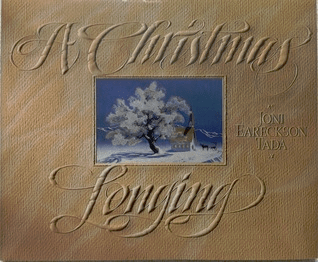
A Christmas Longing by Joni Eareckson Tada

A Christmas Longing by Joni Eareckson Tada is a gorgeous book filled with her art work, drawn by mouth due to her paralysis. It’s made up of 31 readings for each day in December centered on the theme of joy.

Sample quote:”Lives hinge and eternal destinies hang in the balance when men and women come face to face with Jesus the Christ. It isn’t always peaceful. It isn’t always painless. It isn’t always easy. But bowing the knee to Jesus Christ is always right. No matter what.”

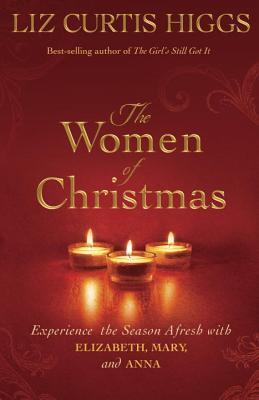
The Women of Christmas by Liz Curtis Higgs

The Women of Christmas: Experience the Season Afresh with Elizabeth, Mary, and Anna by Liz Curtis Higgs. The eight chapters here are longer, around twenty pages or more. So it might not work as a devotional unless you divided the chapters up. But I thoroughly enjoyed this one. Liz did tons of research and study, but the book is warm rather than technical and stiff.

Sample quote: “When I hear women rail that the Bible is misogynistic, I wonder if we’re reading the same book. God loves women, redeems women, empowers women – then and now. On the day we call Christmas, he could simply have arrived on earth, yet he chose to enter through a virgin’s womb. On the day we call Easter, he could have appeared first to his beloved disciple John, yet he chose as his first witness a woman set free from seven demons.”

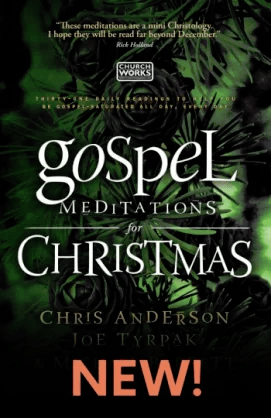
Gospel Meditations for Christmas by Church Works Media

Gospel Meditations for Christmas by Chris Anderson, Joe Tyrpak, and Michael Barrett is divided into 31 pages, one a day through the month of December (or any time, really, since these truths are eternal). Each page lists a Bible passage to read and then delves into some facet of the passage for a handful of paragraphs. The primary focus of the book is various aspects of the Incarnation

Sample quote: “Matthew begins his account of the good news with a record of Jesus’ ancestry. This isn’t some boring list of personal details that Matthew came across in research and decided to include as space-filler. No, this genealogy is Matthew’s attention-grabbing introduction, and it’s jam-packed with significance.”

Expecting Christmas advent devotional

Expecting Christmas is a 40-day devotional by multiple authors. I wished this one was 25 or 31 days so it would fit neatly in December. I didn’t know any of the author names except one (Jennifer Dukes Lee). The selections are short, which is appreciated in a month like December. Each began with a verse or two of Scripture, a page and a half to two pages (at least in the Kindle version) of text, then three questions for refection.

The readings cover a variety of Christmas topics, though several deal with light.

Sample quote: “Mary’s response was one of quiet introspection as she treasured the good news of the gospel in her heart. The shepherds, on the other hand, left young Jesus, glorifying God and praising Him with outward enthusiasm and passion. People celebrate the gospel in different ways.”

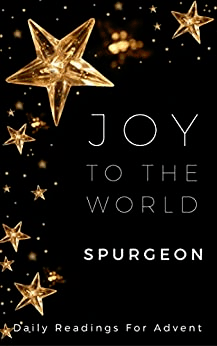
Advent readings by C. H. Spurgeon

Joy to the World: Daily Readings for Advent is made up of excerpts from C. H. Spurgeon’s Christmas sermons. I had read a few books like this with lengthier portions from his sermons (like Good Tidings of Great Joy: A Collection of Christmas Sermons), but they were a little too much for morning devotionals. This one, however, had daily readings of just two to three pages on an iPad mini Kindle app.

Sample quote: “The tabernacle of old was not full of truth, but full of image, and shadow, and symbol, and picture; but Christ is full of substance. He is not the picture, but the reality; he is not the shadow, but the substance. O believer, rejoice with joy unspeakable for you come to Christ, the real tabernacle of God.”

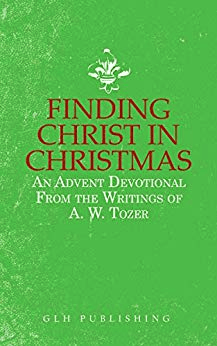
Finding Christ in Christmas, advent devotional by A. W. Tozer

Finding Christ in Christmas: An Advent Devotional by From the Writings of A. W. Tozer has readings for December 1 – 25, ranging from just a paragraph to little more than a page. So the selections are easily readable. I felt the selections were a little haphazard, taken out of context, and some left the reader hanging a bit. But the book contained several great nuggets. Tozer’s writing is not warm and cozy, but it makes one think.

Sample quote: “The Law was given by Moses, but that was all that Moses could do. He could only ‘command’ righteousness. In contrast, only Jesus Christ produces righteousness. All that Moses could do was to forbid us to sin. In contrast, Jesus Christ came to save us from sin. Moses could not save anyone, but Jesus Christ is both Savior and Lord.”

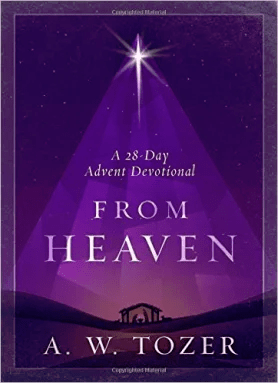
From Heaven, an Advent devotional by A. W. Tozer

From Heaven: A 28-Day Advent Devotional by A. W. Tozer is similar to the book above and overlaps it a bit, but has some different excerpts.

Sample quote: “Even though you may still be unconverted and going your own way, you have received much out of the ocean of His fullness. You have received the pulsing life that beats in your bosom. You have received the brilliant mind and brain within the protective covering of your skull. You have received a memory that strings the events you cherish and love as a jeweler strings pearls into a necklace and keeps them for you as long as you live and beyond. All that you have is out of His grace. Jesus Christ, the eternal Word, who became flesh and dwelt among us, is the open channel through which God moves to provide.”

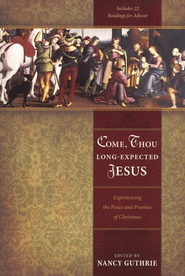
Come Thou Long Expected Jesus:Experiencing the Peace and Promise of Christmas, compiled by Nancy Guthrie, is one I have enjoyed several times. It contains 22 selections on various aspects of Advent, from Mary to conception by the Holy Ghost to Joseph to the shepherds to Jesus’s humility and others, from such teachers and preachers as Charles Spurgeon, Augustine, Martyn Lloyd-Jones to Tim Keller, John MacArthur, J. I. Packer, and Ray Ortland. I don’t know all of the authors, so I wouldn’t endorse everyone 100%, but I don’t think I read anything in this particular volume that I had a problem with.

Sample quote from J. I. Packer: “The Christmas message is that there is hope for a ruined humanity–hope of pardon, hope of peace with God, hope of glory–because at the Father’s will Jesus Christ became poor and was born in a stable so that thirty years later he might hang on a cross. It is the most wonderful message that the world has ever heard, or will hear.”

Let Every Heart Prepare Him Room, a family Advent devotional by Nancy Guthrie

Let Every Heart Prepare Him Room: Daily Family Devotions for Advent by Nancy Guthrie is another I’ve read several times. It designed for families to read together, but works well read by individuals, too. There are 31 readings, each ending with a prayer, some discussion questions, and a few more Scriptures on the topic of the chapter.

Sample quote: “Sometimes we are given a gift that we think is not really useful to us, and therefore we never take it out of the box. We stash it away in a closet or on a shelf somewhere in case we need it someday. Sadly, that’s what some people do in regard to Jesus. They want to keep him handy for when something comes along that they can’t handle on their own, but for now they have no interest in making him part of their day-to-day lives, and so they put him on the shelf. They simply don’t believe he is as good as the Bible says he is, and so they have no real or lasting joy in having received this great gift.”

Those are all the ones I can remember reading or find mention of on the blog.

Do you have any favorite Christmas or Advent devotionals? I’d love to hear your recommendations.

(I often link up with some of these bloggers.)

Review: The Book of Lost Friends

Book of Lost Friends, a novel by Lisa Wingate

The Book of Lost Friends by Lisa Wingate follows two different, but connected timelines in Louisiana.

In 1875, the Civil War has ended, but life is dangerous for Black people. Besides the activities of the Klan, unscrupulous men are willing to steal Black people and ship them off to countries that still buy slaves.

Hannie Gossett is a freed slave, having lived with the Gossetts all her life. She and a few others work as sharecroppers, coming close to the time when the land they’ve been working will be theirs. But Mr. Gossett has been gone for ages. Hannie is afraid his wife, who is most unsympathetic to the freed slaves, will somehow find a way out of keeping her husband’s obligations to them.

Juneau Jane has similar concerns. She’s Gossett’s daughter by his Creole mistress. Her father has told her he has provided for her. But she doesn’t trust that she’ll receive her inheritance unless she can get the legal paperwork to prove she’s entitled to it.

In a set of unexpected circumstances, Hannie, Juneau Jane, and Gossett’s legitimate daughter, Lavinia, find themselves on a journey to Texas to find Mr. Gossett.

Hannie had gone along mainly to help the other two when they were in a bind. But the further west she travels. the more she wonders about her people. When she was young, a man who was supposed to take the Gossett slaves to Texas as refugees during the Civil War sold them along the way instead. Hannie was the only one sent back to Louisiana. But her mother urged her to remember who was sold where. Now Hannie holds out hope that she may yet find some of her family.

At one stop, the girls see notices on a church wall from a newspaper column where Black people sought for information about loved ones they’d been separated from. The girls took the notices and added to them as they traveled.

In 1987, Benedetta (Benny) Silva is a first year teacher in a poor school in Louisiana to help work off her student loans. Her students, for the most part, are uninterested in learning. Most of the other teachers just try to make it through the week without any altercations. Gossett Industries is the major business in town. Members of the Gossett family are in control of much of the area, even the school board, though their own children attend a more prestigious school.

Benny’s landlord is a Gossett, but an illusive one who disassociates himself from the rest of the family. She finally tracks him down to ask about borrowing some books for her class: she’s been told they are sitting in the old Gossett home, unused. He grants permission. What Benny discovers sets of a chain of events that might help her students, but might also cause a rift in town.

In-between chapters, various narrators read examples of the real Lost Friends advertisements (the text of which can be seen here).

Some of the quotes that stood out to me:

I’m trying to impress upon my students that everyone has history. Just because we’re not always happy with what’s true doesn’t mean we shouldn’t know it. It’s how we learn. It’s how we do better in the future. Hopefully, anyway.

Books made me believe that smart girls who didn’t necessarily fit in with the popular crowd could be the ones to solve mysteries, rescue people in distress, ferret out international criminals, fly spaceships to distant planets, take up arms and fight battles. Books showed me that not all fathers understand their daughters or even seek to, but that people can turn out okay despite that. Books made me feel beautiful when I wasn’t. Capable when I couldn’t be.

Stories change people. History, real history, helps people understand each other, see each other from the inside out.

I ponder how we can put a man on the moon, fly shuttles back and forth to outer space, send probes to Mars, and yet we can’t traverse the boundaries in the human heart, fix what’s wrong. How can things still be this way?

The past travels with you. It’s whether you run from it or learn from it that makes the difference.

I loved the historical aspect of this book. It’s important to remember that, as wonderful as the Emancipation Proclamation was, it didn’t solve all the problems Black people had. Though they weren’t enslaved in the 1980s, they were still hindered by the policies and attitudes of the times. I love how the book made connections between the two eras.

I thought the characters were well-developed. I especially loved Hannie, Juneau Jane, Granny T, and “Aunt Sarge.”

I thought the ending overall was rather abrupt. It seemed like the author just wanted to wrap everything up by telling us what happened rather than showing us. But I loved how Hannie’s story ended.

The author dropped a lot of new information about Benny’s background right in the last few minutes of the book. I wondered if I had missed something, if there was a previous book or a sequel. But there doesn’t appear to be at this point.

Though there was much I enjoyed about the book, that plot seemed to drag. I finally realized that was because the author had a penchant for interrupting conversations and scenes with backstory, explanations, and descriptions. I don’t know how many times individual lines of conversation, or one person waiting for a response, would be sandwiched in-between several paragraphs of all this other information.

I listened to the audiobook, wonderfully read by several narrators. The author herself came on at the end to tell a bit about how the story came to be.

I would call this historical fiction rather than Christian fiction. Though others of the author’s books are Christian, there’s not much of a Christian nature here. Hannie mentions prayer, but her faith is mixed in with superstition (which is probably historically accurate for her circumstances).

Though I was frustrated with the writing in places, the overall story is good and worth reading.

Review: Be Exultant

Be Exultant: Wiersbe commentary on Psalms

In my current trek through the Bible, I’ve just finished the book of Psalms. I had not planned to end the book right before Thanksgiving, but I was glad it worked out that way.

Once again, I used Warren Wiersbe’s short “Be” commentary as a companion, along with the ESV Study Bible notes.

Since Psalms is the longest book of the Bible at 150 chapters, Wiersbe divided his commentary on the book into two parts. I reviewed the first one here: Be Worshipful (Psalms 1-89): Glorifying God for Who He Is. The second is Be Exultant (Psalms 90-150): Praising God for His Mighty Works.

As I said in the earlier review, the book of Psalms is Israel’s songbook. The passages cover Israel’s history from creation to the latest happenings of the day, their return after being exiled in Babylon for seventy years.

Though David wrote a majority of the psalms, various other authors contributed as well.

The writers composed in caves, in hiding, in their rooms, under persecution, in celebration.

Many of the psalms are deeply personal, yet benefit the whole congregation.

The psalms are deeply doctrinal, some prophesying of the Messiah to come, many quoted in the New Testament.

But many people value the psalms most for their wide range of emotion, from the highest praise and exaltation to the lowest depths of misery. The psalms give us many examples of someone pouring out their heart to God in confusion, sorrow, pain, or guilt, then reminding themselves of what they know to be true about God.

Here are some of the quotes from Wiersbe’s book that most stood out to me:

Life is brief, so Moses prayed, “Teach us.” Life is difficult, and he prayed, “Satisfy us.” His work at times seemed futile, so he prayed, “Establish the work of our hands.” God answered those prayers for Moses, and He will answer them for us. The future is your friend when Jesus is your Savior and Lord (p. 25, Kindle version).

It is better to suffer in the will of God than to invite trouble by disobeying God’s will (1 Peter 2: 18–25) (p. 26).

This hidden life of worship and communion makes possible the public life of obedience and service (p. 26).

To rely on our faith is to put faith in faith, but to rely on God’s faithfulness is to put faith in the Lord. Our assurance is in the Word of God and the God of the Word (p. 102).

The Word of God performs many wonderful ministries in the life of the devoted believer. It keeps us clean (v. 9), gives us joy (vv. 14, 111, 162), guides us (vv. 24, 33–35, 105), and establishes our values (vv. 11, 37, 72, 103, 127, 148, 162). The Word helps us to pray effectively (v. 58) and gives us hope (v. 49) and peace (v. 165) and freedom (vv. 45, 133) (p. 110).

What a precious treasure is the Word of God (vv. 14, 72, 127, 162; 61: 5)! It is like a deep mine filled with gold, silver, and precious gems, and we must take time to “dig” for these treasures (Prov. 2: 1–9; 3: 13–15; 8: 10–11; 1 Cor. 3: 9–23). A mere surface reading of Scripture will not put spiritual treasure into our hearts. Mining treasure is hard work, but it is joyful work when we “mine” the Bible, as the Spirit guides us into truth. Then, the Spirit helps us to “mint” the treasure so we can invest it in our lives (obedience) and in the lives of others (witness) (p. 131).

Wrong ideas about God will ultimately lead to wrong ideas about who we are and what we should do, and this leads to a wrong life on the wrong path toward the wrong destiny
(p. 193).

I’m thankful once again for Dr. Wiersbe’s insights.

Review: The Wings of Poppy Pendleton

In The Wings of Poppy Pendleton, a novel by Melanie Dobson, the newly rich Pendleton family is trying to find a place among the top Gilded Age society families. Mr. Pendleton had built a stunning castle on Koster Island among New York’s Thousand Islands, and the family is hosting a fete for elite guests. Their almost five-year-old daughter, Poppy, is sleeping in the castle’s tower, supposedly under the care of one of the maids, while the guests party.

But in the morning, Poppy is missing and Mr. Pendleton is dead.

Police, detectives, and curious seekers investigate for years, trying to determine what happened. But Poppy’s disappearance remains a mystery.

In 1992, Chloe Ridell is the only resident on Koster Island. Her grandfather, Cade, had been the caretaker of the castle and island in the Pendleton’s time and decades afterward. Mrs. Pendleton willed the property to Cade, who then passed it along to Chloe.

Chloe is uninterested in the castle and has never been in it. She runs a candy store started by her grandparents, and she just wants to maintain their legacy. But her funds are running low.

Then one stormy night, a young girl shows up on Chloe’s porch. Her name is Emma, but she refuses to say much else about who she is or why she is there. She’s frightened, though, especially of a man named Mitch. Chloe feels led to let Emma stay while her situation is investigated by the police. Eventually, Emma lets Chloe see her scrapbook, which is filled with drawings, magazine cutouts, and descriptions of birds. On the last page is a picture from a news article about the magnificent aviary Mrs. Pendelton’s husband had constructed at her request and filled with dozens of birds and their native trees. The aviary burned down decades ago. But Chloe wonders at the oddity of Emma’s connection to the Pendletons.

Then another visitor shows up out of the blue. A reporter, Logan, arrives in Chloe’s candy shop. Poppy Pendleton’s ninetieth birthday is coming soon. Logan thought it would be a good time to look into her case again. Chloe has no interest. But Logan convinces her that solving the mystery will not only bring justice for Poppy, but it will stop the curious from tramping around her island and asking her questions.

The point of view switches between characters and timelines to uncover what happened to Poppy, her mother, and Emma.

So far I have loved all of Melanie’s novels, and this is no exception. She explores some darker themes than usual. But, sadly, the issues in the story are all too real.

I felt the faith element was woven in naturally and not at all preachy or stilted.

I listened to the audiobook nicely read by Nancy Peterson. Many audiobooks don’t include the author’s afterword or notes, but this one did. Plus Melanie tells a little bit about her research for the novel, with pictures from a trip to the Thousand Islands and its castles, here.

Review: As Dawn Breaks

As Dawn Breaks

In Kate Breslin’s novel, As Dawn Breaks, Rosalind Graham works in a Chilwell munitions factory in England in 1918. Her parents had passed away long ago, and her uncle took Rosalind and her two brothers in. But the arrangement was far from cozy. Rosalind’s uncle is forcing her to marry a ruthless man she doesn’t love.

Shortly before the wedding, Rose’s best friend from the factory, Tilly, sends her to her apartment to get ready for a bridal shower. But while Rose is away, the factory blows up, killing hundreds, including Tilly.

Stunned and devastated, Rose eventually realizes the explosion offers her a way out of her dilemma. She can take on Tilly’s identity and leave, and everyone will think Rose died in the explosion. Though she hates to make her brothers think she’s dead, it’s the only way she can see to help herself and them. She plans to find a job in another town and then retrieve her brothers when she has saved enough money.

Rose/Tilly ends up in another munitions factory in Gretna, Scotland. She’s put in charge of a group, and one of the young women says her family will let her rent a room. She revels in a warm, caring, normal family life.

RAF Captain Alex Baird heads for home in Gretna on an undercover mission. Sources indicate the Gretna factory might be next for the saboteur. Alex is charged with working in the factory to find clues as to what might happen and who might be involved.

Alex is stunned to find a woman, Rose, who he knows as Tilly, renting his bedroom. He didn’t know his father was unable to work and needed to make money by renting out his room. Rose and Alex don’t get on well at first, but eventually they form a bond over their love for his family.

Then Alex receives word to surveil Tilly, who is suspected of having some connection in the Chilwell bombing. Rose knows nothing of Tilly’s involvement and wonders at Alex’s sudden interest in everything she does.

Meanwhile, Alex has secrets of his own that not even his parents know.

I didn’t know, when I read Kate Breslin’s Far Side of the Sea a couple of months ago, that it was the third of a five-part series. As Dawn Breaks is the fourth and has been in my Kindle app for a couple of years now. Each of the books is understandable alone, but it’s fun to follow some of the characters through the series.

I enjoyed the characters, and there was plenty of suspense in wondering what Tilly had been involved in, whether Rose would be blamed, whether the saboteur would be found in time, and other plot lines. I thought one of the threads was wrapped up a little too easily, but overall I enjoyed the book very much.

Review: Made for More

Made for More by Hannah Anderson

In Made for More: An Invitation to Live in God’s Image, Hannah Anderson writes, “the goal of this book is to call women to recover an understanding of ourselves that is more basic than our gender. It’s a call to recover the image of God in our lives—to re-imagine not simply what it means to be a woman but what it means to be a person made in the very likeness of God Himself” (Location 131, Kindle version).

We tend to link our identity to various categories: gender, religion, vocation, location, political affiliation, etc. But such labels not only can’t embrace all of what we are, they can be divisive with people in other categories.

In order to know who we really are, we must first know who our Creator is—“accepting Him for who He is, not who we can conceive Him to be” (Location 287). Acts 17:28, Paul said, “In him we live and move and have our being.” “Simply put, there is one God and He is the Giver of all life. He created the world, and everything in it finds its source, its purpose, and its goal in Him” (Location 263).

Literally translated, imago dei simply means “in the image of God.” But in reality, imago dei means so much more. Imago dei means that your life has purpose and meaning because God has made you to be like Himself. Imago dei means that your life has intrinsic value, not simply because of who you are as an individual, but because of who He is as your God. Imago dei means that your life is sacred because He has stamped His identity onto yours (Location 402).

Yet God did not make us all alike. “We are different from each other and therefore dependent on each other. In other words, while each of us is fully made in the image of God, none of us can fully reflect and represent God alone. Instead we reveal the nature of God together; and as a result, we also find identity together” (Location 470).

Even though God created humans in His image, the first two sought their identity elsewhere, creating an identity crisis for the rest of the human race. “If they disobeyed, they would not simply be rejecting Him—they would be rejecting everything that was true about themselves as well. By choosing to turn from God to something else for knowledge, they would blind themselves to their own nature. And they would die because they would cut themselves off from the only thing that made them alive in the first place—God Himself” (Location 580).

Now, “Instead of living in dependent communion with Him, we fight for autonomy and the ability to rule our own lives; instead of loving and serving each other, we manipulate others to serve our own purposes; instead of exercising creative care of the earth, we consume it in our own greed and lust. Instead of unity, there is disunion; instead of harmony, there is brokenness” (Location 615).

The only way to get back to living in God’s image was for Jesus to identify with us that we might identity with Him.

The greatest identity shift that has ever happened was when God Himself became human and lived and died for us so we once more might live in Him. . .

[Jesus] is both the Image and the perfect Image Bearer, the Creator who deigns to live in His own creation. Despite being God, Jesus humbled Himself, took on human flesh, and came to live and die so that through His very life, death, and resurrection—through His metamorphosis—we ourselves might be changed (Location 764).

However, “Finding identity in Christ cannot be confined to one moment, because union with Christ is not simply an event; it is a state of being, a way of existing” (Location 810).

And that’s just the first third of the book. Hannah goes on to show how being made in God’s image affects what and how we love, our desires, roles, relationships, how we care for creation. Being made in God’s image, reflecting Him, guides our intellect, work, talents, and gifts.

The first book I read of Hannah’s was her advent book, Heaven and Nature Sing: 25 Advent Reflections to Bring Joy to the World, last December. I liked it so well, I wanted to read her other books. Though I didn’t do this on purpose, I ended up reading her books published at that time (two more have been written since) in reverse order according to my interest. Made for More was her first, but I read it last. Every time I considered it, I thought, “But I know what it means to be made in God’s image.” However, even though I knew basically what it meant, I had not considered it in all the depth and fullness and implications Hannah detailed here.

This is a book I should probably reread at regular intervals to remind myself of its truths.

I highly recommend this book to you, whether you have a working knowledge of what it means to be made in God’s image or not. If not, Hannah will explain it well. If so, you’ll understand it more fully and beautifully.

Review: The Rose of Winslow Street

The Rose of Winslow Street book

In The Rose of Winslow Street by Elizabeth Camden, Libby Sawyer and her elderly father were spending their summer visiting with her brother and his family when they received astonishing news. A group of people had moved into their long-time home in Colden, Massachusetts, claiming they owned it.

Michael Dobrescu fled from Romania with his sons, sister, and two friends in 1879. His late uncle had willed him the house on Winslow Street. So Michael took ownership, figuring the court system would work everything out in the long run.

As it turned out, Michael and his family were not gypsies, as Libby’s father asserted. And he did have a valid claim to the house. But Mr. Sawyer did as well.

The two families were at a standoff as the lawyers researched their claims. The townsfolk stood solidly behind the Sawyers, even to the point of refusing to do business with the Dobrescus.

But Libby felt that the family shouldn’t be mistreated, even as she hoped they’d move out soon. She started bringing them baskets of food. She found Michael infuriating and distrustful at first. But over time, she got to know the family and their story.

She grew to care for the Dobrescus, especially Michael. But she could not be disloyal to her father.

I liked that this story was a different premise than anything I had ever read before. It showed well how we can misjudge and make assumptions about people who are different from us.

There are other layers to the story as well. Libby can’t read, though she’s had multitudes of lessons and tutors. Her father thinks her mentally deficient, and Libby has always lived in her “perfect” brother’s shadow, even though she has gifts and talents of her own.

Also, Michael’s sister experienced horrors at the hands of the Ottomans who were fighting the Romanians. Broken and fragile, she has a long road to recovery.

I had never read anything by Elizabeth Camden. I thought the writing was mostly good, but there were a few inconsistencies in the plot line and writing pet peeves that marred it a little.

I’ve been struggling with whether to say this, and I want to say it carefully. Let me preface it by saying I believe a person is saved by believing in Jesus Christ as Lord and Savior, repenting of their sins, relying on His death on the cross for their sins and His perfect life lived in their place. I believe a person can be saved no matter what denomination they are in. I have known Catholics who I believe are saved. But the Catholic church as a whole, though it teaches faith in Christ, also adds extra-biblical requirements from the church. So it concerns me when the main spiritual emphasis in a book is Catholic. It makes sense from a historical standpoint that the Dobrescus are Catholic. But when going further into that denomination is the answer to part of their situation, I see that as a problem from a Christian fiction viewpoint.

I listened to the audiobook when it was free on Audible’s Plus Catalog. I thought narrator Barbara Rosenblat did a wonderful job, especially with the accents.

Review and Giveaway: Chasing Shadows

Chasing Shadows by Lynn Austin

In Chasing Shadows, a novel by Lynn Austin, people of the Netherlands thought they would be safe during WW2 because their country was neutral. But the Nazis invaded and took over anyway.

Lena de Vries is a farmer’s wife with a son and two daughters. She loves her life, though she has frequent arguments with her daughter, Ans.

Ans doesn’t care for farm life and doesn’t embrace her family’s faith. When she has an opportunity to move to Leiden, she takes it. She’s offered a job as a companion to a woman named Eloise with “melancholia”–her symptoms sound like what we would call bipolar disorder today. Eloise is depressed by her losses during WW1. When the Nazis invade, she’s in danger of sinking further. Ans starts helping in small, but ever-increasing ways with the Resistance. When Eloise finds ways she can help, too, she’s energized.

Ans had begun dating a Dutch policeman, Erik. The Nazis took over the police force, but Erik thought the best way to cope was just to get along with them. But they increasingly require more and more, and he and Ans differ about where they should draw the line.

Jewess Miriam Jacobs fled Germany with her father, who procured a teaching position in Leiden. They planned to send for Miriam’s mother later. But when the Nazis came, there was nowhere to escape. The coastline and borders were monitored. Some Jews who had escaped to other countries were turned away. One by one, the Nazis followed the same procedures as they had in Germany: limiting Jewish activity, requiring yellow stars on their clothing, eliminating their positions. When word came that Jews were being deported to settlement camps, Miriam and her father know they have to hide.

Meanwhile, Lena has to learn to let go—first of Ans when she leaves, then her husband Pieter when he trains for fighting, then her teenage son when the Nazis scoop up young men to build trenches and such. She and her husband hide both Jews and Dutch police who went underground rather than work for the Nazis. Though their food supply continues to dwindle, Lena can’t turn away the hungry that come to her farm.

I loved that this book didn’t cover just one thread–the Jewish persecution or the dangers of being in the Resistance or strains on the homefront—but dealt with facets of all of them. It was fully orbed, covering how the war affected and caused suffering for everyone. For instance, when the queen, in exile, orders railroad workers to strike, deportations of the Jews cease and Nazi supplies are stopped–but so are everyone else’s. There was widespread starving, especially in cities. People who had homes chopped up furniture to burn to keep warm, and animals of any kind (including cats and horses) weren’t safe from being caught and eaten.

Plus the three main characters are at different stages in life and at different levels in their faith. And each has to make nearly impossible choices.

I was so attached to these characters that I was sad to let them go when the story was over.

As it happens, I somehow ended up with two copies of this book. I think I bought it on sale but maybe forgot I had already received it for my birthday. Then the audiobook (nicely read by Stina Nielsen) came up free in the Audible “Plus” catalog, and I figured I’d get to it sooner via audio. But I still liked having the print books to refer to certain passages and read the book’s back material.

So I’d like to offer these two paperback books to a couple of my readers. I’m sorry I’ll have to restrict the giveaway to continental US addresses due to postage prices. If you’d like to enter a drawing for a copy of this book, leave a comment on this post. I’ll count all the comments on this post as entries unless you tell me you’d rather not be in the drawing. I’ll draw two names one week from today and contact the winners via email. If I can’t reach you or don’t hear back from you within a couple of days after that, I’ll draw another name.

I wish I could give you all a copy!

The giveaway is closed. Congratulations to Kitty and Sarah!

Review: Aftermath

Aftermath, a suspense novel by Terri Blackstock

Terri Blackstock’s novel, Aftermath, opens with three young women at their favorite band’s concert. As the Libertarian political candidate the band was opening for came to the podium, an explosion rocked the stage area. Only one of the girls, Taylor, makes it out alive.

Just minutes after the explosion, policemen pull aside Dustin Webb’s car. They ask to search his trunk, and, having nothing to hide, he agrees. He’s shocked to see plastics for explosives in his trunk. He insists he doesn’t know how they got there and he didn’t put them there. The officers don’t believe him. They got an anonymous tip that he was the bomber, he worked with bombs in the Army, and his security company had a client which had explosives stolen from them. Everything adds up to Dustin being involved in the bombing.

Desperate, Dustin calls a friend from his past, Jamie Powell. She was the only person who believed in him when she lived next door. Perhaps she’ll believe in him now. They haven’t spoken since he went into the Army, but she’s a lawyer now, and he needs a good one.

Jamie drops everything to help Dustin. She has to fight for the right to represent him with the partners of her firm, who fear the repercussions of defending a suspected terrorist.

Meanwhile, Taylor’s fragile recovery from OCD is threatened by the tragedy she underwent. Despite seeing her psychiatrist, starting a new medicine, and being watched over by her sister, Taylor’s grief and guilt over not staying behind to help her friends escalates her symptoms. She feels the only way she can set things right is to find who did this.

I don’t often read suspense novels, but Terri is a master of them. This one had me on the edge of my seat, yet every character drew my sympathy. The faith element is clear and natural and not heavy-handed. If you like suspense—and even if you don’t—I think you would enjoy this book.