Book Review: Moby Dick

According to Wikipedia, Herman Melville wrote to his publisher that he was working on “a romance of adventure, founded upon certain wild legends in the Southern Sperm Whale Fisheries, and illustrated by the author’s own personal experience, of two years & more, as a harpooneer.” That book was Moby Dick, based on a real whale named Mocha Dick.

Unfortunately, the book did not do well during Melville’s life time. Interest in it was renewed at the centennial of his birth, with many then praising it.

One of literature’s most famous opening lines, “Call me Ishmael,” may indicate that Ismael is not his real name. On the other hand, most of the characters go by one name, first or last, so maybe Ishmael sets the precedent right off the bat. Ishmael is not a full-time seaman. He is a schoolmaster who gets a hankering to go out to sea sometimes when land life gets too much for him. He’s a loquacious narrator, telling minute details of the story, giving several examples of a concept, and going into teacher mode to describe whaling practices, features of the whale, whales depicted in art and why the artists get them wrong, etc. etc.

Ishmael starts off making his way to Nantucket to look for a sailing vessel. He explains that instead of going to sea as a passenger who has to pay, he goes as sailor who gets paid for the voyage. The inns are crowded, so he has to share not only a room, but a bed with a stranger. He’s mortified to discover in the middle of the night that his bedmate is a cannibal, Queequeg. But eventually the two become fast friends.

They are hired for the Pequod, a whaling vessel, by the owners. They don’t meet the captain yet, as he is recovering from an illness.

Even before they set sail, foreshadowings abound that something dire might happen. The preacher in Nantucket gives a sermon about Jonah and a strange man calling himself Elijah gives cryptic warnings.

The sailors meet the three mates with vastly different personalities. Starbuck, the first mate, is 30, thin, serious, pious, a bit superstitious, courageous but not foolish. The second mate, Stubb, was “happy-go-lucky; neither craven nor valiant; taking perils as they came with an indifferent air; and while engaged in the most imminent crisis of the chase, toiling away, calm and collected as a journeyman joiner engaged for the year. Good-humored, easy, and careless, he presided over his whale-boat as if the most deadly encounter were but a dinner, and his crew all invited guests.” It was quite funny to hear how Stubb both scolded and encouraged his crewmen when they were in the thick of capturing a whale. The third mate, Flask, was “short, stout, ruddy young fellow, very pugnacious concerning whales, who somehow seemed to think that the great leviathans had personally and hereditarily affronted him; and therefore it was a sort of point of honor with him, to destroy them whenever encountered.”

We don’t see Captain Ahab until chapter 28. He’s described as grim with grey hair and a scar down one side of his face. He had lost one leg and replaced it with a prosthesis made of whale bone. Later he tells the crew that he had lost his leg in a battle with a legendary white whale named Moby Dick, and his main mission is finding and exacting his revenge on the whale.

As the Pequod meets up with other boats (which meetings are called gams), Ahab has no interest in chatting with the other captains about anything except whether they’ve seen Moby Dick.

If you’re at all familiar with the story, you know the voyage doesn’t end well.

Ahab’s mission is more of an obsession. Though Starbuck tries to talk Ahab out of his vengeance, Ahab won’t listen.

When Melville is telling the story, it’s as exciting, riveting, and hard to put down as anything I’ve ever read. But interspersed between story incidents are detailed explanations and Ismael’s thoughts about everything that could possibly be connected with whales and whaling. Wikipedia cites various theories about the reasons behind the book’s layout. Some of these side excursions are interesting, some boring. With some, you wonder if the narrator is writing tongue in cheek, like when he posits that perhaps St. George’s dragon was actually a whale. He wonders what the stuff the whale spouts is made up of and muses:

He is both ponderous and profound. And I am convinced that from the heads of all ponderous profound beings, such as Plato, Pyrrho, the Devil, Jupiter, Dante, and so on, there always goes up a certain semi-visible steam, while in the act of thinking deep thoughts. While composing a little treatise on Eternity, I had the curiosity to place a mirror before me; and ere long saw reflected there, a curious involved worming and undulation in the atmosphere over my head. The invariable moisture of my hair, while plunged in deep thought, after six cups of hot tea in my thin shingled attic, of an August noon; this seems an additional argument for the above supposition.

When he comments that pirates think themselves above whalers:

I should like to know whether that profession of theirs has any peculiar glory about it. It sometimes ends in uncommon elevation, indeed; but only at the gallows. And besides, when a man is elevated in that odd fashion, he has no proper foundation for his superior altitude. Hence, I conclude, that in boasting himself to be high lifted above a whaleman, in that assertion the pirate has no solid basis to stand on.

Ishmael comments on his own storytelling:

So far as what there may be of a narrative in this book; and, indeed, as indirectly touching one or two very interesting and curious particulars in the habits of sperm whales, the foregoing chapter, in its earlier part, is as important a one as will be found in this volume; but the leading matter of it requires to be still further and more familiarly enlarged upon, in order to be adequately understood, and moreover to take away any incredulity which a profound ignorance of the entire subject may induce in some minds, as to the natural verity of the main points of this affair.

Like a lot of older books, this one has some Christian overtones. But I wouldn’t call it a Christian book. Ismael calls himself a Presbyterian, but I disagreed with Ishmael when he felt that joining in with Queequeg’s worship of a little idol he carried around with him was doing unto his neighbor as he would want his neighbor to do to him—not with all that the Bible says about idols. Starbuck is probably the closest to a genuine Christian. Ahab is full-out blasphemous.

I listened to the audiobook superbly read by Frank Muller. When the narration first started, I was disappointed Muller didn’t give Ishmael and craggy old sea-dog kind of a voice. But then I quickly realized that voice would not have been right for Ishmael as an educated man who was not a full-time sailor. Muller does give that kind of voice to Ahab, though, to great effect. Muller did all the voices and inflections well, and I am thankful I experienced the book with this narration.  I also read some parts online via Project Gutenberg here.

I read (or listened to) Moby Dick for the Back to the Classics Challenge category of a “Classic From Africa, Asia, or Oceania (includes Australia).” Moby Dick covers a lot of territory—in fact a beautifully illustrated map is here. But a great chunk of the plot takes place in the waters between those continents.

(Sharing with Carole’s Books You Loved, Booknificent)
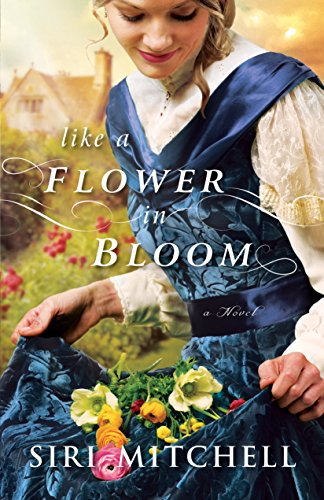
Book Review: Like a Flower in Bloom

 In the novel Like a Flower in Bloom by Siri Mitchell, Charlotte Withersby’s father is a botanist in Chesire, England, in the 1850s. Her mother was a botanist as well, and Charlotte loves to study and illustrate plants. Since her mother died, Charlotte has been her father’s assistant, secretary, and all around right-hand person.

But Charlotte is now 22, and her uncle, the Admiral, thinks it’s high time for her to go into society and find a husband. Charlotte has no interest in either society or matrimony. She loves her work, and she doesn’t think her father can possibly do without her.

But then a long-time correspondent, a Mr. Edward Trimble from New Zealand, shows up on the Withersby’s doorstep. He seems the ideal solution: he can assist Charlotte’s father so the Admiral can introduce Charlotte to society.

Besides Charlotte’s lack of interest, being presented to society is fraught with another  major problem. Charlotte’s father has never had any interest in society. He has always been the somewhat eccentric absent-minded professor type. With only her father as her main companion for life, Charlotte doesn’t know how to dress or act. Fortunately she finds a friend in Miss Templeton, who likes Charlotte’s quirky ways. Miss Templeton is younger but also tasked with finding a husband, something she dislikes as much as Charlotte, but for different reasons.

Charlotte hatches a plan. Since she can’t seem to escape her fate, she’ll go after a husband just to make her father realize that he can’t do without her. Then he’ll call off this nonsense.

But Mr. Trimble proves himself an able assistant, so that her father seems to be able to get along without her very well. And her plan to attract suitors, assisted by Miss Templeton, succeeds only too well.

I’m afraid I didn’t like Charlotte at first. Even the person who came to love her called her “the most maddening, most vexing, most exasperating woman I have ever met.” I didn’t mind the fact that she didn’t know how to fit in society, and I even agreed with her that some conventions seemed silly. But at first she seemed to see only her own viewpoint. Yet, as I got to know her, and as she broadened her horizons and learned a little humility, she grew on me.

One of my favorite quotes from the book:

Conversation, my dear Miss Withersby, is a very fragile creature. You must nourish it if you would have it survive. Its favorite food is a question.

Siri Mitchell’s books are far more than romances. I loved her note at the end of the novel where she explained the different influences that went into this story: women who contributed to the study of botany but could not be published under their own names, the conflicting views of botany between scientists and religious people, the eccentricity of botanists, the unusual collections and plant projects of the times, the Opium wars between Britain and China, the nature of introverts, the concept of a helper in the Bible, Victorian gender roles and expectations. She wove all of these together seamlessly, with warmth and humor. Above all the book illustrates the main theme of being who God created you to be.

(Sharing with Literary Musing Monday, Carole’s Books You Loved, Booknificent)
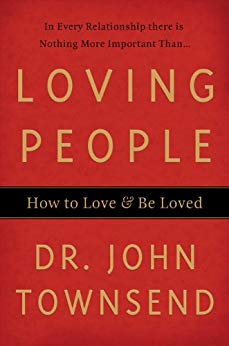
 

Book Review: Loving People

I’ve mentioned several times here that I struggle with my own selfishness and with not being more loving (not thinking of romantic love necessarily, but generally loving others) . Recently I was discussing with a friend that overcoming selfishness is not a once-and-done effort. It requires an every day yielding to God instead of ourselves.

So when Loving People: How to Love and Be Loved by John Townsend came through on a Kindle sale, I got it. I had heard of Townsend but never read him before.

Early in the book, Townsend says:

You may have noticed that the title of this book has a double meaning. Loving can be both a verb (the action of demonstrating love) and an adjective (the description of someone who demonstrates love). The intent here is to bring attention to the reality that both meanings are necessary for each other to exist. If you want to be a loving person, you must actively show love to people. And if you want to love people, you are to be a person characterized by loving.

A few more of his introductory comments about love:

Care and love aren’t the same thing. Almost any of us could say that we truly care about some people. We can freely admit that, and we are glad these people are in our lives. We want what’s best for them. But the reality is often that we don’t know how to treat those we care about in the most loving way. We want to be the best for those people, but we don’t know how to love them in the way that is best. That is, we would like to be close to them, to be a positive influence for them, and to bring them to intimacy and a better life. But there is a disconnect between our care for those we love and how we address or approach them.

Love is much more than good feelings or intentions. It has direction, movement, and purpose. But while we may feel love, we may not be doing love. Most of us don’t know how to experience and become competent in the art form of love.

We cannot force ourselves to feel anything. Feelings are the result of changes inside us. They aren’t a cause; they are an effect. Trying to will ourselves to feel love doesn’t work. Yet when we say that love is only a feeling, we reduce it to something less than what it truly is. As I said earlier, love encompasses and experiences feelings, but love is not limited to feelings. It is much more—genuine love involves the heart, soul, and mind.

In this book, I define love simply as “seeking and doing the best for another.” When we love someone, we bend our heart, mind, and energies toward the betterment of someone else. That is what loving people do. It involves the whole person. It is ongoing and intentional.

As the architect of love, God lives out this definition. He is constantly seeking and doing what is for our best, things that help us connect, grow, and heal. He is actively doing whatever it takes for us to be the people he designed us to be. The ultimate example of his love is, and always will be, in the sacrifice of Jesus for an alienated and broken creation: “For God loved the world so much that he gave his one and only Son, so that everyone who believes in him will not perish but have eternal life.”

He proposes that love is made up of the following components:

  • Connecting—making an emotional bond
  • Truth-Telling—honesty that serves the other person
  • Healing—repairing brokenness
  • Letting Go—giving up what should be surrendered
  • Romancing—the unique love of being a couple

He spends more than a fourth of the book on connecting, which he defines as “a heart-to-heart attachment that goes beyond knowing about someone to actually knowing that person.” He gives multiple examples: one involved a wife who shared problems and frustrations about her day, and her husband, thinking he was being helpful, suggested possible solutions. But she didn’t want solutions, at least, not yet. She wanted the connection: she wanted to know she was truly heard and understood. By contrast, disconnection isn’t just missing someone who is away for a few days, but rather “the inability to feel and experience the warmth of connection over time. It is the absence of the security of being attached. It is the lack of bonding inside.”

I thought truth-telling was an odd inclusion, because of course you don’t lie to people you love. But Townsend means truth-telling as more than just not lying: it means confronting the other person in a kind and loving way when they need to be confronted. “If your loved one’s life is going down the drain, someone needs to say something. Be that person.” “People who are truly loving will confront, limit, and quarantine people who consistently make wrong choices. So keep that distinction in mind: love seeks the best, but it does not enable bad behavior.”

Under healing, he says: “Loving people are the primary agents of restoration.”

About letting go: “Sometimes love means knowing when it is time to let someone go or to let him do something he is going to do. When you accept reality and give up efforts to control someone’s life or change who he is, you are being loving . . . Letting go is the ability to surrender and to allow what is real to exist. By letting go, I mean giving up efforts to control, manipulate, or force someone to do something different.”

About romance: “Romance is a wonderful aspect of love, but it is not as broad or as deep as love itself. Romance must fit into and serve love. Love can never serve romance.”

He discusses the components of each of these aspects and gives numerous examples, illustrations, and balancing considerations.

This book is not a Bible study, so it reads differently from one. Surprisingly absent from a book by a Christian about love was any discussion about the classic biblical passage on love, 1 Corinthians 13 (except for verses 1 and 13). But Townsend provides a biblical basis for most of his points. In the chapter on connection, for instance, I thought, “This is all well and good, but where do you get this from the Bible?” Well, from the One who made the greatest effort to connect with people who were not only uninterested in Him, but opposed to Him. “Therefore he had to be made like his brothers in every respect, so that he might become a merciful and faithful high priest in the service of God, to make propitiation for the sins of the people. For because he himself has suffered when tempted, he is able to help those who are being tempted” (Hebrews 2:17-18).

The last chapter, “Putting It All Together,” didn’t really put it all together for me. I had hoped it would recap the main points. Instead, it contained instructions to “assemble your team” and “measure and evaluate your process of growth.”

I got a lot of helpful points and thoughts from the book, but I can’t say, “Aha! Now I’ve got it!” Townsend brought up aspects of love that I had not heard or read in other pieces on this subject, but he also did not address other aspects that are usually considered.

While Townsend had a lot of good things to say, his style just didn’t gel with me. Not to say there is anything wrong with his style: he is a best-selling author, after all. But many of the conversations he described in the book are just not the kind I can imagine anyone I know having. Real people did have them, but I guess they were very different personalities from mine and my family and friends.

The best advice I’ve heard about love came from a book I have not been able to recall or find again. But the writer said that for years she berated herself for not being more loving. She was a missionary in a difficult area, and she found herself too often irritated with unloving thoughts towards others. The more she tried to become more loving, the more frustrated she became. But then she started to think about God’s love for her, gracious and undeserved. And without even being aware of it at first, resting in His love overflowed into her own heart and actions.

That’s not to say we can’t learn from books like this. I was particularly convicted about connecting, truly listening and empathizing instead of just offering my two cents to fix the other person’s problems.

I’ve heard similar definitions of love before, that’s it’s a self-sacrificing desire to meet the needs of the loved person. And I’ve heard that it’s not just a feeling. Yet I struggle with doing the right thing, but with resentment. That’s part of having a sin nature, I guess, and we’ll never have it down perfectly while here on earth. Maybe in some ways love is doing your best for another despite resentment. But that’s not how God loves. And I want to love more like Him.

What helps you to be a more loving person?

(Sharing with Carole’s Books You Loved, Booknificent)

Book Review: A Constant Heart

 A Constant Heart by Siri Mitchell takes place towards the end of Queen Elisabeth’s reign. The Earl of Lytham, a nobleman who was one of Elisabeth’s courtiers, needed to advance himself in her favor so as so as to earn a pension, knighthood, or something to increase his own fortune. To garner money to finish and maintain his homes, he found a knight paying a good dowry to marry off his daughter. Lytham did not really care about the girl, and was, in fact dismayed that she was beautiful. His first wife had been beautiful—and traitorous and unfaithful.

The earl’s new bride, Margret, had been trained since she was five only to please her future husband. Since it was obvious she could not please the earl personally, she sought to advance his interests at court. But she was an outsider, and a beautiful outsider at that. No one must outshine the queen. Marget’s life as a courtier fell flat until Lady de Winter took her in hand and advised her to do what every other female courtier did: shave her eyebrows, paint her face white with ceruse (a white lead mixed with vinegar), and dye her hair red to look like the queen’s.

The longer Margret stayed at court, the more she discovered the futility of life there. “It was a way of life that seemed to produce nothing of worth and yet consume everything of value.” And she came to understand that few there could be trusted. But she seemed to have no choice but to continually turn herself into what she was not.

And then the most dangerous development occurred. Lytham and Margret came to actually love each other. But no courtier was to love anyone more than his queen.

My thoughts:

I loved the depths of historical research deftly layered into this book. Siri states in a note to readers that the main characters were fictitious, but the circumstances were real. Elisabeth wore the ceruse paint to cover up both signs of aging and the smallpox she had endured. People didn’t realize the negative effects of lead paint until later. I had hoped Siri would also talk about some of the other details of the story in her note, but she didn’t. I did some reading about being a courtier in Elisabeth’s time, and many of the details Siri brought out were mentioned. Siri didn’t go into any of Elisabeth’s many accomplishments: perhaps all or most of those occurred before this last decade of her reign.

Some would want to know that sex is referred to often in the book. Since one method some used to curry favor involved sexual advances, that kind of thing could not help but be mentioned. But nothing is explicit.

I enjoyed Margret’s and Lytham’s journey toward learning to truly love each other and wrestling with just who the sovereign was in their lives. Grace was contrasted with the consuming machinations to court the favor of a capricious monarch. The integrity of a faithful heart was shown to have great value in all eras.

(Sharing with Carole’s Books You Loved, Booknificent Thursday)

Book Review: The Magnificent Ambersons

Booth Tarkington won a Pulitzer prize for The Magnificent Ambersons, set in Indiana in the late nineteenth to early twentieth centuries.

One one level, the story focuses on Georgie Amberson Minifer, only grandchild of the great Major Amberson. “His grandfather had been the most striking figure of success in the town: ‘As rich as Major Amberson!’ they used to say.” The town was proud of the Major, and his mansion was the big finale when people took visitors on a tour. But Georgie was considered a “princely terror” who felt his entitlement even as a child. Many people looked forward to the day when Georgie would “get his comeuppance.”

As a reader, I began to look forward to the same thing and wondered how it would come about. I also wondered if it would be the ruin of him or the making of him. Even though Georgie is not a likeable character at first, one does feel sorry for him during his “comeuppance.”

On another level, the book masterfully conveyed the changes of the times: the advent of the automobile, which many considered just a fad at first; the growth of the little town into a big city with the problems that kind of growth can bring; the decline of “old families” and their pedigrees and the rise of industrialism and entrepreneurship.

But automobiles have come, and they bring a greater change in our life than most of us suspect. They are here, and almost all outward things are going to be different because of what they bring. They are going to alter war, and they are going to alter peace. I think men’s minds are going to be changed in subtle ways because of automobiles; just how, though, I could hardly guess. But you can’t have the immense outward changes that they will cause without some inward ones, and it may be that George is right, and that the spiritual alteration will be bad for us.

The city was so big, now, that people disappeared into it unnoticed, and the disappearance of Fanny and her nephew was not exceptional. People no longer knew their neighbours as a matter of course; one lived for years next door to strangers—that sharpest of all the changes since the old days—and a friend would lose sight of a friend for a year, and not know it

A big part of the first chapter describes the various ways the rich distinguished themselves in fashion, facial hair, architecture, and such. It was an enjoyable observation of changing styles. I found it interesting that the term “hand-me-downs” came not from getting clothes that had belonged to someone else, but from getting them “off the shelf” rather than specially made from a tailor: “Trousers with a crease were considered plebeian; the crease proved that the garment had lain upon a shelf, and hence was ‘ready-made’; these betraying trousers were called ‘hand-me-downs,’ in allusion to the shelf.”

It took me just a bit to get into the story, as it begins with a heap of description. One thing I most appreciated about Tarkington’s writing was his skill in conveying things to the reader through Georgie’s eyes that Georgie himself missed. For instance, various people comment on his father not looking well, but Georgie thinks he looks just as he always did—and then Georgie is surprised to find out his father really is ill. Georgie’s fairly young throughout the book, so he’s forgiven for a bit of immaturity. But his lack of understanding other people or situations comes more from his exalted view of his own opinion.

Gossip can be a problem for anyone, but it’s a partuclar bane for the rich and famous. I found the advice Georgie’s uncle George gave him worth consideration:

In this town, naturally, anything about any Amberson has always been a stone dropped into the centre of a pond, and a lie would send the ripples as far as a truth would.

“Gossip is never fatal, Georgie,” he said, “until it is denied. Gossip goes on about every human being alive and about all the dead that are alive enough to be remembered, and yet almost never does any harm until some defender makes a controversy. Gossip’s a nasty thing, but it’s sickly, and if people of good intentions will let it entirely alone, it will die, ninety-nine times out of a hundred.”

People who have repeated a slander either get ashamed or forget it, if they’re let alone. Challenge them, and in self-defense they believe everything they’ve said: they’d rather believe you a sinner than believe themselves liars, naturally. Submit to gossip and you kill it; fight it and you make it strong. People will forget almost any slander except one that’s been fought.

Nobody has a good name in a bad mouth. Nobody has a good name in a silly mouth, either.

I also found especially interesting the Major’s thoughts when he knows his time is coming near:

The Major was engaged in the profoundest thinking of his life. No business plans which had ever absorbed him could compare in momentousness with the plans that absorbed him now, for he had to plan how to enter the unknown country where he was not even sure of being recognized as an Amberson—not sure of anything, except that Isabel would help him if she could. His absorption produced the outward effect of reverie, but of course it was not. The Major was occupied with the first really important matter that had taken his attention since he came home invalided, after the Gettysburg campaign, and went into business; and he realized that everything which had worried him or delighted him during this lifetime between then and to-day—all his buying and building and trading and banking—that it all was trifling and waste beside what concerned him now.

For those who would want to know, the book has a few objectionable elements: a smattering of bad words and taking the Lord’s name in vain, the condescending view of “darkeys” and a couple of uses of the “n” word, and one character visiting a medium. That character (not Georgie) said he wasn’t superstitious, only believed what the medium said for about ten minutes, and realized he had inadvertently supplied her with information enough for what she told him. But the incident was a major turning point in his attitude, and I was disappointed Tarkington used it to bring that about.

Wikipedia says, “In the 1910s and 1920s, Tarkington was regarded as the great American novelist, as important as Mark Twain.” I’m nor sure why he’s not read as much today. I’m thankful I chose this book for the Classics from the Americas category of the Back to the Classics challenge. I enjoyed Tarkington’s story and insights very much.

I mostly listened to the audiobook read by Peter Berkrot, but I read the last few chapters in the free Kindle version because I can read faster than the narrator does, and I wanted to finish it. It’s also online free through Project Gutenberg. There are a couple of movie versions of the book, but I haven’t seen any of them.

(Sharing with Carole’s Books You Loved, Booknificent Thursday)

Book Review: A Promise in Pieces

In A Promise in Pieces by Emily T. Wierenga, Clara Kirkpatrick and her best friend, Eva, just finished nursing school during WWII. Clara’s father was a pacifist preacher. “Daddy didn’t know the truth about the war . . . he just stood at his pulpit and spouted about peace while men died to make it happen.” Clara and Eva ran away to enlist as nurses.

Clara’s heart was broken many times over caring for soldiers in various states of health in the worst physical settings. On a particularly bad night, she had a patient named Gareth who was dying but singing hymns. He had been a preacher, but he and his wife, Mattie, felt he should go fight to defend people against the evils of Hitler. Gareth’s faith and example rekindled Clara’s. Gareth asked her to take a letter to his wife as soon as she could after the war.

Clara fulfilled Gareth’s wish and went to see Mattie and deliver Gareth’s letter. “Mattie’s home reached out like an old friend, with its shutters around the windows and its welcome mat and white lace at the windows.” Mattie wanted to talk extensively with the last person to see Gareth. The two became friends, and Mattie gave Clara a baby quilt she had made. Since Mattie’s own dream of having a family was now gone, the quilt was too painful to keep.

After the war, Clara became a midwife. When she delivered a baby, she loaned the blanket to the new mother and then embroidered his or her name on the quilt along with a word of blessing. She didn’t think she’d ever marry: she had seen so much loss and devastation, she didn’t want to love someone only to lose them.

But life took Clara and the quilt in surprising directions. She faced more than one tragedy and struggled with the search for significance. “I somehow missed the war, in a mournful, sadistic kind of way. I missed knowing I was needed. I missed fighting for something. I felt a little lost, not having a clear, defined purpose.”

The story is told by Clara as a grandmother sharing the details with her grandson on a family trip. Some parts of it are shared as flashback chapters. Then the last third or so of the book catches up with the family in real time. and continues from there.

Though sad in parts, the story shares Clara’s growth in faith and her finding her purpose. There are sweet and poignant moments throughout.

But there were also a couple of odd places. In one passage she tells her children:

“God is kind of like sugar. He dissolves inside our hearts. So he’s there, and he’s making us sweeter, so to speak, but he isn’t visible.” There was quiet as they ate, and I thought about the love of Oliver and these children and the friendship of Mattie and the dream of the women at the tables, and I thought, in fact, God is so very visible. We just have to have eyes to see him.”

I think she’s just trying to make the point that God works on us invisibly, from the inside out. But I have trouble with the analogy of God “dissolving” in our hearts.

In another place, she speaks of “How we are all God-in-flesh, born to die to ourselves, so others might be saved.” I think she’s just saying that God calls us to lay down our lives for others as He did. But even though He indwells believers, I wouldn’t call us “God-in-flesh” in the same way Jesus was.

I tried to look the author up online, but links to her website, Facebook page, and Twitter accounts all led to error pages or “Page Removed” messages. I found a few articles of hers online but not enough to really know where she’s coming from. Her other books are nonfiction.

This book is part of a “Quilts of Love” series, but from what I can tell, the books are individual stories unconnected to each other except with the quilting theme.

Except for the couple of odd places I mentioned, this was a good story.

(Sharing with Carole’s Books You Loved, Booknificent Thursday)

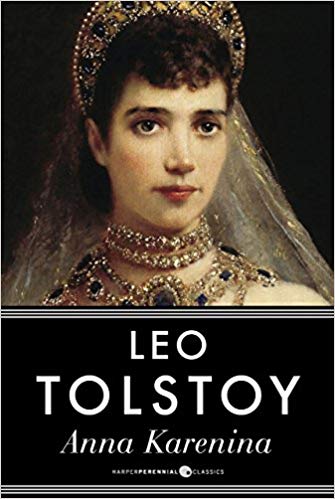
Book Review: Anna Karenina

I had no interest in reading Anna Karenina by Leo Tolstoy for years. I knew it was about a woman who committed adultery, and I figured it would be pretty soap-opera-ish and probably a bit racy.

But Tolstoy did not seem given to raciness in any of his other books that I’d read. Then Carol’s review made me think perhaps there might be more to the story than I’d thought. So I decided to give it a try for my Classic in Translation choice for the Back to the Classics challenge.

The novel has one of literature’s most famous opening lines: “All happy families are alike; each unhappy family is unhappy in its own way.”

Anna doesn’t actually show up until several chapters in. The book opens with her brother, Stepan (also called by his nickname, Stiva, or his last name, Oblonsky, or his full name. All the characters have three polysyllabic Russian names plus nicknames, so it’s a little hard to sort them out at first. But once we get to know them, it’s easier.) Stiva has cheated on his wife, Dolly, who has found out. Stiva doesn’t think adultery is wrong and doesn’t see himself at fault, but he’s sorry he has hurt Dolly. His sister, Anna, is on her way to try to reconcile her brother and his wife.

Anna is described as beautiful, bright, charming, and eager. She doesn’t gloss over Stiva’s behavior, but she asks Dolly is she loves him enough to forgive him. Dolly had been contemplating leaving, but decides to forgive Stiva and stay.

Dolly’s sister, Kitty, has two suitors. Levin is the better man, but he’s socially awkward and lives in the country (and the society people can’t fathom what on earth one does in the country. Later, visitors seem to view time in the country as a holiday, while Levin works almost nonstop.) Count Vronsky is handsome, dashing, well-off, and in the highest society, so Kitty is swept away with him and refuses Levin’s proposal.

But Vronsky has no desire to marry, ever. He has enjoyed Kitty’s affections, but he’s had a string of romantic attachments, thinks marriage and husbands are stupid, and has no plans to settle down—until he meets Anna.

They meet at the train when Vronsky’s mother is coming in on the same train with Anna when she comes to see Stiva and Dolly. Anna and Vronsky are instantly attracted to each other, so much so that at a ball when they dance, Kitty knows Vronsky is lost to her.

Anna resists the attraction at first. Her situation is almost an anatomy of falling into temptation. She was not truly happy in her marriage, but as far as we know, she wasn’t entertaining thoughts of adultery until she met Vronsky. She’s disturbed by the strange attraction and knows it’s not right. When she gets home, some of the sheen is rubbed of the joy she had anticipated in getting back to her son, and all her husband’s faults stand out. Vronsky follows her. She has three groups of friends, and instead of avoiding Vronsky (“making no provision for the flesh“), she hangs out with the group he’s likely to be part of. Eventually, she succumbs. Though she’s ashamed and guilty, she continues to the point of leaving her family to be with Vronsky. Gradually her heart and conscience harden, but her thinking and personality become unstable.

Despite the lack of morals in her set of friends (almost everyone in the society group has an affair going or someone knowingly kept on the side), Anna is an outcast. One source said it was because her affair was out in the open while others kept theirs hidden. There’s also some inequity in that Vronsky can go out in society, but Anna is snubbed.

There are several major characters, but Levin’s story takes up as much of the novel as Anna’s—maybe more. His story runs in the opposite trajectory. He’s said to be based on some extent on Tolstoy. He had faith as a child, but lost it in college and now does not acknowledge himself to be a believer. He’s a landowner and tries to do his best by the people who work for him and who are dependent on him. But he gets frustrated when the peasants won’t agree to new methods or equipment. Though he thinks deeply, he gets lost in the intellectual arguments of his brothers and others. He eventually marries, but doesn’t find home life the bliss he thought it would be. He and his wife argue a lot. But they talk things out and work through them. His lack of faith begins to bother him after his brother dies, and his spiritual journey is a major part of the book. As Anna moves away from stability and happiness, Levin moves toward them.

There are so many layers in this book, it’s hard to sort through what to share. There are multiple discussions about marriage and family, society and city life vs. rural life, affected, hypocritical religion vs. true change of heart, the politics of the day.

Tolstoy does a masterful job painting his characters and helping us understand them. There are so many interesting little insights into people’s motivations and actions. For instance, Anna’s husband, Karenin, is a public official known for Christian values. Yet he fails to do the most Christian thing required of a husband: love his wife as Christ loved the church. His first notice that something is wrong is when Anna is not as attentive to him as she used to be. He only asks that she not bring Vronsky to the house and that she maintain decorum. He may think that he’s being magnanimous by yielding to her desires, but he shows he only cares about appearances. Early on, Anna says things like, “If only he’d fight for me.” His most profound religious moment comes at a crisis when he realizes he needs to forgive her. Yet even then he struggles between what he feels led to do and the “force” that drives him, the opinion of society.

One source I consulted said Anna is a pioneer feminist fulfilling her self-determination. But I don’t think Tolstoy writes her that way. He’s not saying, “Poor girl, society is being so mean to you for making your own choices.” Though he points out the foibles and hypocrisies of society, he portrays Anna as genuinely wrong and self-destructing because of it.

For all the free-thinking society talk of immorality, thankfully there are no sex scenes, and nothing explicit is said or shown.

I’ll warn you that if you look for information about this book, Anna’s end is spoiled rather ruthlessly. That was frustrating to me because I had no idea how she ended and hated finding out when I had barely started the book. After that I tried to steer clear of looking at other sources until I finished reading the book.

I primarily listened to the audiobook nicely read by Maggie Gyllenhaal, but I also read parts of the Kindle version. I wish I had known earlier that the Kindle version translated the frequent French phrases. I lost a bit in the audio by not knowing what was said in those moments. But Maggie brought a lot of emotion and thoughtfulness to the narrative, so I am glad I experienced that.

I’ve seen in several places that Anna Karenina is a major contender for best novel ever written. I don’t think I’d put it on that level. But it’s a rich book that gives one much to ponder.

(Sharing with Carole’s Books You Loved, Booknificent Thursday)

Book Review on Grandparenting

As I mother, I felt compelled to read every Christian book on parenting I could find. I was the chief babysitter for my five younger siblings (my youngest sister was born when I was 17), so I wasn’t inexperienced with children. But the responsibility of having my own weighed on me heavily. I didn’t feel I knew what I was doing, and I didn’t want to ruin them for life.

I haven’t felt quite as compelled as a grandparent. Perhaps having a supporting rather than a major role relieves some of the pressure. Maybe I’ve grown in the Lord and in following His guidance enough now that, even though I haven’t arrived and am not perfect in any category, I don’t feel I need to find a book for every issue (though I do still read a lot). And much of grandparenting seems common sense on top of the same love and courtesy shown to one’s own children.

The first two books I did read by grandparents to grandparents were major disappointments—not the grandparenting advice, but the theological basis of the authors.

But Michele‘s review of There’s a Reason They Call It GRANDparenting by Michele Howe encouraged me to get this book.

Howe’s premise is that there’s a difference between everyday grandparents and grandparents:

Becoming a grandparent is living with eternity in mind—all the time. It means going the extra mile (or more, many more) for the sake of your grandchildren. It will entail sacrifice of every sort. Time. Money. Energy. Sleep. But every sort of giving up and giving away the best of what we have and are is all good . . . in the light of eternity.

Grandparenting is all about bending the knee before our Lord Jesus Christ and asking him for our marching orders. Then we get up from our knees and get busy loving our grandchildren in ways they will remember, value, and appreciate (p. 2).

Grace upon grace. Unconditional love. Total acceptance. Open arms. These are only a few of the attitudes and actions that make grandparents so different from folks who assume a casual role as a grandparent. Which would you rather be: a seemingly insignificant bystander who shows up now and then with a gift but with two closed fists that demand affection from the grandchildren before letting go of the goods; or someone who views every opportunity to interact with grandchildren as having potential eternal impact and takes their love as it comes, without offense? (p. 45).

Howe reminds us that our empty nest years are not about finally having “me time.” We never retire from being a godly influence, especially to our own family.

She highlights the primary roles of prayer, seeking guidance from God, and following the parents’ lead and preferences.

She shares numerous tips and truths. Just a few:

  • Hospitality is not just something we exercise towards those outside our families. We make time and place for our adult children and their families as well.
  • Grandparenting is not about spoiling or over-indulging.
  • We can provide a safe haven when parents fail, as in cases of drug addiction and abuse. Grandparents provide tough love and step in to call authorities in these cases if need be.
  • We need to remember each child is unique.
  • We can make special memories and teaching opportunities out of everyday occasions and tasks.
  • Though sometimes we need to exercise authority, “I never need to yell, demean, or demand. Rather, I can use gentle but firm words to steer them toward making good choices” (p. 29).

Each chapter is only about four pages long and ends with a “take-away action thought,” a prayer, and a few “grand ideas” for how to implement the concepts from that chapter. The thirty chapters could be read one a day over a month, but they’re short enough to read more if desired. I generally read two in one sitting.

To be totally honest, the grandparenting vs. grandparenting repetition became a little wearing after a while. On the other hand, that was probably the most succinct way to make the distinction between casual, aloof, or insensitive grandparents and involved, attentive, spiritually-minded grandparents.

Though I don’t think I learned anything earth-shatteringly new from this book, the gentle nudges, thoughtful reminders, and spiritual focus were all helpful. I’d recommend this book for any stage of grandparenting, perhaps even as a gift to new or upcoming grandparents.

(Sharing with Booknificent, Faith ‘n Friends, Literary Musing Monday,
Carole’s Books You Loved)

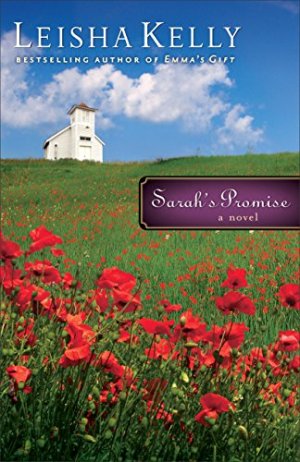
Two Book Reviews: Rachel’s Prayer and Sarah’s Promise

Leisha Kelly’s books about the Wortham family take them from the Depression through WWII. Since I finished the last two within a couple of days of each other, I decided to review them together.

In Rachel’s Prayer, WWII is in full force. Several from the Worthams’ Southern Illinois area enlisted, including Robert, the Worthams’ only son, and three of the next-door Hammond boys. Frank Hammond desperately wanted to, but his limp and inability to read kept him out of the service.

The Hammond’s father, George, handles his sons’ leaving like he handles everything else: by not handling it and withdrawing. He has not handled life well since the first books, but he took a downward turn when his wife died, leaving him with ten children. Throughout this book the family begins to think it’s not just drinking and laziness that affect George. There’s something fundamentally wrong with his thinking. He would probably be diagnosed with depression today.

Rachel is Robert’s girlfriend, and his sister and parents are getting used to the idea that he’s grown up and will probably propose once he gets back home.

With that many young men going off to war, it’s inevitable that some won’t come back and some will come back changed. The folks at home deal with uncertainty and sorrow not only across the sea, but in their own neighborhoods.

But even though there are sad parts to this book, God works through the sadness to strengthen and draw people closer to Himself. Ultimately Sarah finds it good to “to let my future, my heart, and his, rest where he said they belonged: in the hands of God. No other hands could be so capable. None could be more generous, more able to give peace in trials, strength in despair, and understanding in the midst of a confusing world.”

In Sarah’s Promise, Sarah Wortham and Franky Hammond are engaged. Frank is about to leave on a 200-mile journey to help his brother move. Folks are worried because Frank can’t read and the winter weather is iffy. But Frank has a good memory, and his brother has drawn a map and told him the succession of towns he’ll need to pass through.

Everyone assumes Frank will continue on doing wordwork with Sarah’s father. Sarah would like nothing better than to live nearby to the only home she’s ever known. But Frank wants to prove himself. All his life he’s dealt with not only being unable to read, despite desperately wanting to, but also with being thought “different.” Frank tends to think deeply to the point that he’s unaware of what’s going on around him, causing his siblings and especially his father to accuse him of being addle-brained and unable to function without supervision. Frank would love the opportunity to work on his own and provide for Sarah without the safety net of their families, which scares Sarah to death.

While Frank is away, he and Sarah both have praying to do, trials to undergo; lessons to learn. One of the most beautiful parts of the book I can’t share much about without spoiling the climax, but my heart was so touched by a pastor’s ministry to Frank when he was at his lowest, when all his father’s verbal abuse made him think he couldn’t accomplish anything.

I dearly loved all of these books. Leisha had such a skill in bringing us right into the characters’ circumstances and emotions and weaving spiritual truth into the fabric of her stories. I was sad to learn, as I mentioned in a previous review, that she and her teenage son had passed away a few years ago in a car accident. I’m sad for her family but also for readers.

I wanted to list the first four books as well, linked back to my reviews:

  1. Julia’s Hope introduces us to the Worthams, a family at their lowest point that has lost everything in the Depression. They come to an abandoned house and offer to fix it up in exchange for living there, eventually allowing the elderly owner to come back home as well.
  2. Emma’s Gift. Emma, the elderly lady from the first book, dies, as does her neighbor, Mrs. Hammond, mother of ten. The Hammonds and Worthams are not only devastated, but uncertain of their future, as Emma owned the property they all live on.
  3. Katie’s Dream. Sam Wortham’s ne-er-do-well brother brings a young girl and a convincing story that she belongs to Sam. But Sam has never been unfaithful. Why is his brother doing this? Will the town, and most importantly, his wife, believe him? And what do they do about the little girl?
  4. Rorey’s Secret. Rorey, the oldest Hammond daughter, has gotten in with a bad crowd. When a fire starts in the family’s barn, causing serious damage and injuring Mr. Wortham and Bert Hammond, Frank is blamed. He’s innocent but won’t cast the blame on anyone else. Rorey knows the truth, but will she share it?

The last three books are technically the Country Road Chronicles, but they timeline continues through all six. Each could be read as a stand-alone book, but I’d recommend reading them all in order. There’s a Christmas story in the series as well that I haven’t read yet: I’ll save it for December.

I’m going to sorely miss the Worthams and Leisha.

(Sharing with Carole’s Books You Loved, Booknificent)

Book Review: Kill Order

In Adam Blumer‘s new novel, Kill Order, Landon Jeffers is an award-winning pianist diagnosed with brain cancer. After his doctors removed as much of the tumor as they could, they inserted an implant into his brain to continue to fight the remaining cancer.

But that’s not all they inserted.

Landon is recovering from surgery at his mother’s house when he starts having vivid partial memories of a couple of incidents in his childhood. As he tries to unravel what really happened, he also starts having strange dreams. In one, he stole an item from his mother’s neighbor. When he wakes up, he finds evidence that he really did commit the crime.

Then he wakes up one morning with blood on his clothes. As he turns himself in to the police, he learns he can’t be sure whom to trust. He has to find a way to escape whoever’s controlling him.

Adam keeps readers on the edge of their seats. Bits of humor are sprinkled throughout at just the right moments. Landon is not a Christian, but his mother and childhood friend both are, so there is some tension along those lines as well.

Adam had pledged to his readers that he will keep his novels clean. There are no swear words or sexual scenes here.

Adam also makes his books distinctively Christian. I’ve read too many books that are “Christian lite” or that are Christian in name only. I like to see Christian people doing Christian things in Christian fiction, seeking God’s will as they wrestle with issues. I loved how Adam’s characters developed spiritually.

Kill Order is a highly enjoyable, highly recommended book.

I interviewed Adam last week about what sparked the idea behind Kill Order, how he got started writing, and other topics here.

There are a few days left in the contest for to win a signed paperback copy of Kill Order here. Or you can find Adam’s book on Amazon, Barnes and Noble, or Lighthouse Publishing of the Carolinas. At the time of this writing, the Kindle version is only $2.99.

Here is a trailer for the book:

(Sharing with Carole’s Books You Loved, Booknificent)