What’s On Your Nightstand: March 2018

Nightstand82The folks at 5 Minutes For Books host What’s On Your Nightstand the last Tuesday of each month in which we can share about the books we have been reading and/or plan to read.

March has certainly been a mixed month weather-wise and event-wise. But it’s nice to make time for reading here and there.

Since last time I have completed:

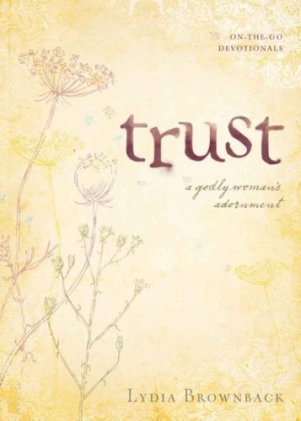
Trust: A Godly Woman’s Adornment by Lydia Brownback, reviewed here. Excellent.

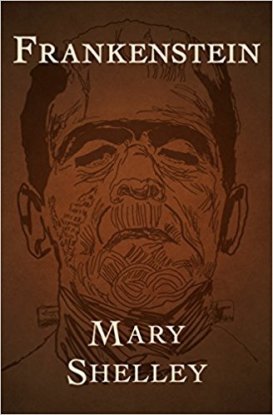
Frankenstein by Mary Shelley, reviewed here. This may be my biggest surprise book of the year! It’s quite good, and different from the movies.

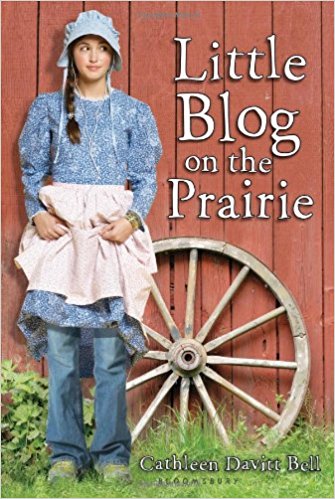
Little Blog on the Prairie by Cathleen Davitt Bell, about a modern family with problems going to a “Camp Frontier.” Reviewed here.

Where the Red Fern Grows by Wilson Rawls, reviewed here. Excellent.

I’m currently reading:

The Story of My Life by Helen Keller

Ben-Hur by Lew Wallace

Sins of the Past by Dee Henderson, Dani Pettrey, and Lynette Eason

Reading People: How Seeing the World through the Lens of Personality Changes Everything by Anne Bogel

Up Next:

The Hunchback of Notre Dame by Victor Hugo

He Fell in Love With His Wife by Edward Payson Roe

Going Like Sixty by Richard Armour

Another Way Home by Deborah Raney

How about you? Read any good books lately?


Laudable Linkage

img_0021

Here is another round of great reads online:

To Great Things That Never Came, HT to Challies. “Despair forgets that there are more pages. It gazes at the brief span of our lives and complains that all should be fulfilled before the page is turned. But hope loves the whole story. Hope breathes, laughs, and draws courage from gazing upon something grander than self.”

How Could God Ask That? A different take on Abraham’s being asked to sacrifice Isaac and other hard stories.

Ever Feel Punished and Passed Over? What We Can learn from Caleb. Some interesting points that hadn’t occurred to me before.

It Takes a Church to Raise a Child. “It takes a church to raise a child because it is in the church that our children find a whole community of adults who love them, who have a deep concern for them, and who are eager to see them come to faith and grow in godly character. This ‘village’ is not there just to keep them in line when they get unruly, but to experience the joy of seeing them grow up in God and grow up for God.”

Why Youth Stay in Church, HT to Story Warren. I personally did not have the advantage of #3, at least the spiritual advantage, though my parents did teach us right and wrong and held us accountable. So young people who are not from Christian homes, don’t despair: God can work abundantly through the first two.

To Be a Princess. “Her histories remind us that the life of a princess is not one to be envied. Those who made their mark on the world were the ones who refused the easy road.”

Telling a Better Story, HT to Challies. “The interviewer asked him how to keep young men from falling into racist and nationalist ideologies. [Jordan] Peterson responded, ‘Tell them a better story.’” The author points out the good of what Jordan said but presents the even better story.

How to Help – Not Hurt – the Singles in Your Church. The “lousy encouragement” especially stood out to me.

Practical Help for Those With Chronic Health Conditions. Good information not only for those with health issues, but for their loved ones and friends as well, to get a picture into their world behind the scenes.

Why Mr. Rogers Still Matters, HT to True Woman.

Compass Book Ratings, HT to Kim. I had often wished there was a rating system or “parental guidance” cautions for books like there is for movies. Now there is!

A cute story: a woman sees a porcupine stuck on its back and helps it out:

Happy Saturday!

Book Review: Where the Red Fern Grows

Red FernI had seen the 1974 film version of Where the Red Fern Grows when my two older boys were elementary-school age, some 25 or so years ago. I enjoyed the film, but I don’t remember if I knew then it was based on a book. I wish we had read it back then! But I was glad to finally listen to it via audiobook this month.

The book begins with an adult Billy Coleman leaving work and coming upon a dogfight. When he sees the dog being attacked is a hound like one he used to have, he rescues it, takes it home, feeds it, and lets it rest, then releases it. That stirs up memories of the dogs he used to have.

Billy had grown up in a poor family in the Ozarks. There was nothing he wanted more than a dog to go coon hunting with – but not just any dog. He wanted hounds. His parents could have gotten him a mongrel dog, but they could not afford a special breed, no matter how much Billy pleaded.

I suppose there’s a time in practically every young boy’s life when he’s affected by that wonderful disease of puppy love. I don’t mean the kind a boy has for the pretty little girl that lives down the road. I mean the real kind, the kind that has four small feet and a wiggly tail, and sharp little teeth that can gnaw on a boy’s finger; the kind a boy can romp and play with, even eat and sleep with.

One day Billy found a magazine some hunters had left behind at their campground and found an ad for two Redbone Coonhounds for $50. Without telling anyone, he performed odd jobs, dug up and sold worms for bait, picked and sold blackberries, and did anything he could think of to earn money. It took him two years, and when he finally showed his savings to his grandfather and told him what they were for, his grandpa helped him order the dogs. But the dogs would be shipped to a town more than a day’s journey away. Billy took off on foot alone to pick up his dogs and bring them back, helped by a kindly station master.

The dogs were a brother and sister. Billy named the brother, who was strong and quick to react, Old Dan. The thoughtful, intelligent girl dog was named Little Ann.

Billy went to work training his dogs to hunt coons, selling coon hides and giving the money to his father, and having many adventures with his dogs. Tragedy struck a couple of times, the second occurrence shaking Billy’s faith.

This is a wonderful “boy and his dogs” and coming of age story, even if readers are not all that interested in hunting. Strong themes of loyalty, perseverance, family, and faith undergird the novel. There are a couple of gruesome parts (one boy has a hunting accident with an ax, a dog in a fight with a mountain lion is severely injured), and the author tells them realistically but not gratuitously. The ending is sad but ultimately hopeful.

People have been trying to understand dogs ever since the beginning of time. One never knows what they’ll do. You can read every day where a dog saved the life of a drowning child, or lay down his life for his master. Some people call this loyalty. I don’t. I may be wrong, but I call it love-the deepest kind of love.

Wikipedia shares the interesting background story of how Wilson Rawls wrote the story, destroyed his manuscript, then wrote it again at his wife’s urging. I also enjoyed reading 12 Things You Might Not Know About Where the Red Fern Grows. Though Rawls wrote for children, his first publisher oddly marketed the book to adults. Sales were slow until Rawls spoke at a conference for teachers and librarians who took the samples of his book back to their schools and libraries, where children loved it.

I listened to the audiobook wonderfully read by Anthony Heald. I didn’t know until just now that there was a 2003 remake of the movie. Some day I would like to see it.

(Sharing with Semicolon‘s Saturday Review of Books, Literary Musing Monday, Carole’s Books You Loved)


Book Review: Frankenstein

I had always associated Frankenstein by Mary Shelley with the black and white horror movies of my childhood. Since I don’t really care for horror movies, I never had an interest in reading it. But in recent years I’ve heard several people say that the book is different from the movies, that the movies provide more of a caricature than a reflection of the story. So I decided to give the book a try.

I was quite surprised! While I would never call Frankenstein nor this type of book a favorite, the story was much more compelling than I originally thought it would be. It was conceived as a result of a gathering with Mary, her lover Percy Shelley, Lord Byron, and others, when they were telling ghost stories and decided to see who could write the best scary story. Mary started this story when she was 18 and it was published anonymously when she was 20. Later editions featured her name as the author.

Frankenstein is often erroneously thought to be the monster’s name: it’s actually the name of the creator. The monster is never named.

The story actually begins with a Captain Robert Walton on a voyage writing home to his sister. He has a thirst for knowledge, a penchant for the “marvelous,” a desire to accomplish something great, and a longing for a true like-minded friend. While in an icy region Walton’s crew spies a gigantic creature driving a sledge guided by dogs across the ice. The next day they come across a man “in wretched condition” on another sledge on an ice floe. The crew brings the man onto the boat and Walton tries to help him. As they talk, the man, who introduces himself as Victor Frankenstein, recognizes in Walton the same ambition and thirst for knowledge that he’d had, so Frankenstein tells Walton his story as a warning.

Victor’s story is recorded in his own words. He had been raised by a good family  in Geneva and had an interest in the sciences. Early in his life he had come across books on alchemy (not the study of turning metals into gold, but “finding a universal solvent and an elixir of life.” according to Dictionary.com). His university studies increased his knowledge to the point that he discovered “the cause of generation and life; nay, more, I became myself capable of bestowing animation upon lifeless matter.”

With feverish excitement he decided to test this knowledge, assembling a new being from body parts of corpses he had been studying. But once the creature was made alive, Victor was repulsed and horrified.

The monster escaped and Victor fell ill. When Victor finally got better, he learned that his younger brother had been murdered, so he went home. While walking alone, Victor saw the monster and felt immediately that the monster was responsible for the murder.

In a later confrontation, the monster told Victor his own story of becoming aware, learning about himself and his world, and being met by fear and hatred from other people. He finally found an abandoned building where he could take shelter. The building was close enough to a small family that he could see their interactions, hear them, and learn from them. He grew to care for them and even did them little favors like chopping wood and setting it beside their cottage. He felt if he could introduce himself to the old, blind father and gain his sympathy, then the father could smooth the monster’s way with the rest of the family, and the creature would finally have someone to love and belong to. But that plan went awry and resulted in the monster’s being driven away.

So the monster found Victor, requested that he make a female monster, and promised that he and his mate would go away and not bother anyone. If Victor refused, the monster would take vengeance on all whom Victor loved. Victor vacillated: he was loathe to make another such creature, but if he did, he would be rid of them. But what if the female refused to go away quietly, and the two monsters wreaked havoc on the rest of the country?

I’ll leave the rest to you to discover what happened. I think my favorite section was the monster’s narrative of being nearly a blank slate and discovering his own impulses, like hunger, learning how to take care of what he needed, having a kindly attitude toward nature and mankind, feeling hurt by rejection which finally boiled over into hatred.

I was surprised to find that Victor was not a scientist as I had always thought, but a student. That explains a little bit why he didn’t have the maturity to think through his actions or to take responsibility for the monster.

Throughout the book both Victor and the monster take refuge in the beauty of nature. That’s not unusual in itself, but it is mentioned so often that I think it has to be Shelley’s contrast between the goodness of the natural and the evil of the unnatural. The fact that the final scenes take place in an icy, barren, dangerous area seems to indicate that both Victor and the monster had progressed far past the comforts of the beautiful, good, and natural.

Writing a scary story may have been Mary’s only purpose. But she may have been commentating on the dangers of pushing the boundaries of the technology of the day and the foolishness of judging by outward appearance. The original subtitle was The Modern Prometheus: in mythology, Prometheus formed humans out of clay, gave them life, and gave them fire though Zeus had forbidden it. For punishment Zeus had Prometheus chained to a rock where an eagle ate his liver: since he was immortal, every day the liver regrew and the eagle ate it again.

A new edition was published in 1831 with a new preface. Schmoop says, “Shelley wasn’t the same bright-eyed 21 year old she’d been in 1818. By 1831, she had lost her husband and two of her children, and the revised edition has a grimmer tone. In the 1831 text, nature is a destructive machine; Victor is a victim of fate, not free will…” This is the version most people are familiar with.

I had a hard time choosing between the audiobooks read by Dan Stevens (Matthew of Downton Abbey) or Derek Jacobi. I finally went with Jacobi’s narration, because I had listened to audiobooks wonderfully read by him before, and he did a superb job with this. I don’t know that I will ever read or listen to this story again, but if I do I’d like to try out Steven’s version just to hear how he handled it. The text is also available here.

(Sharing with Semicolon‘s Saturday Review of Books, Literary Musing Monday, Carole’s Books You Loved)

Laura Ingalls Wilder Reading Challenge 2018 Winner

Congratulations to Rebekah for winning the Laura Ingalls Wilder Reading Challenge this year! Thanks to all of those who participated. I hope you enjoyed it as much as I did! I already have plans for next year!

Book Review: Little Blog on the Prairie

Little Blog  Little Blog on the Prairie by Cathleen Davitt Bell wasn’t on my radar at all, but the title caught my eye while I was passing through the YA section in the library.

The premise: Gen comes from a modern family where each member tends to operate mostly apart from the others. Gen’s mom, a “Little House on the Prairie addict,” decides the whole family would benefit from a vacation to “Camp Frontier,” where everyone is supposed to live like it’s 1890.

No one else in the family is happy about it. Gen only acquiesces when her mom shows her a new cell phone and tells her she can have it when they get back from vacation. But Gen smuggles the phone into camp with her, and when she can find some privacy, she texts her two best friends about how horrible everything is. The friends make a blog out of her texts, which then goes viral, which brings a news crew out to see what’s going on.

Some reviewers objected to Gen’s sarcastic, whiny attitude, but I think they missed the point that she changes during the course of the book. She realizes at one point that her attitude is ruining the experience for her mother, who had looked forward to it. She finds there is satisfaction in seeing the results of hard work. She comes to find that hastily sent words made public can come back to haunt her. It takes the family a long time, but they do learn the value of pulling together and enjoying each other’s company. But the author isn’t saying that going back to a “simpler” time is the answer to modern problems: first of all, they weren’t so simple, and second of all, people without modern conveniences had personal and family issues, too.

Gen is just finishing eighth grade as the book begins, so in my book she’s too young to be kissing a guy near the end and having him tell her that her dress is sexy. There’s mention of an obscene gesture coming from a younger girl. It’s written from a modern secular viewpoint. So for all those reasons I don’t know that I would give the book to a young teen, at least not without some discussion about those and Gen’s attitude. But it does bring out some timeless truths without being heavy-handed about it.

(Sharing with Semicolon‘s Saturday Review of Books)

Book Review: Trust: A Godly Woman’s Adornment

TrustTrust: A Godly Woman’s Adornment by Lydia Brownback is one of a series of “on the go” devotionals for women: small, relatively short books focusing on one main topic.

After an introduction titled “Why Women Fear,” Lydia deals with various aspects of battling fear and anxiety. Each chapter is just two, sometimes three pages long, making it very easy to grab a “nugget” to carry with you through the day.

To give you just a taste, some of the chapter titles are:

The What-If Woman
A Phobic’s Only Reemedy
False Security
Resting on Self-Righteousness
Afraid of the Pain
Whose Fault Is Our Fear?
Control Freaks
The Path to Healing
A Fence Against Fear

And some of the quotes that stood out to me:

The only thing big enough to conquer this kind of fear is God, who rules every detail of every day of your life. Rest assured that nothing can touch you apart from your heavenly Father’s permission. Out of his love for you, he is well able to prevent the thing you are so afraid of, and out of that same love he might allow it. Either way, whatever happens, he only allows what is going to work for your eternal happiness and blessing and his glory (p. 26).

God wants more than our symptom relief. He desires to get at the core of what underlies our fears, which, at the deepest level, have to do with our relationship to him (p. 27).

God allows us to experience fear at times to help us recognize our false foundations, things on which we are resting our security that have no more strength to support us than a mound of whipped cream (p. 28).

God often acts contrary to how we think a good God should act. The answer we think we need seems so logical and clear to our way of thinking, yet God does not provide it. That is where faith comes in. Real faith isn’t the belief that God will do a particular thing; real faith is the conviction that God is good, no matter what he does and however he chooses to answer our prayers (p. 30).

We care much less about long-term results and the glory of God than we do about simply feeling better (p. 48).

“I’d never put my child through what God is doing to me.” But God is a wiser parent than we could ever be. He places us in situations that provoke us, not to cause us to doubt but to strengthen us against our doubts” (p. 72).

God let [Jonah] go his own way, as he does with us when we insist on running our own show; but because God is merciful, he will make sure that any way we take away from him doesn’t work out so well (p. 79).

That very thing you want God to fix may be his instrument to teach you first to depend on him rather than on yourself or on peaceful circumstances (p. 90).

Rather than take God at his word, they just looked at the difficulties. Rather than doubt their own viewpoint, they doubted God’s (p. 97).

The devil is stronger and smarter than we are; so arguing with him won’t help us very much and can actually enhance our difficulty. Jesus has provided us with the way to resist…there are Scripture passages to refute every one of [the devil’s] lies. Immersing ourselves in the Bible is one of the primary ways we keep, or guard, our hearts (p. 130).

This book is a treasure that I am pretty sure I will revisit often. In addition, this experience with Lydia’s book makes me want to check out her others as well.

(Sharing with Semicolon‘s Saturday Review of Books, Literary Musing Monday, Carole’s Books You Loved)

Laura Ingalls Wilder Reading Challenge 2018 Wrap-up

It’s the end of February and that means the end of the Laura Ingalls Wilder Reading Challenge for this year!

A week from today I’ll use random.org to draw a name from the comments on this post to win either The Little House Cookbook compiled by Barbara M. Walker or Laura’s Album: A Remembrance Scrapbook of Laura Ingalls Wilder by William Anderson, or a similarly-priced book related to Laura. A week should give some of us who are still reading time to finish up and post about our reading. You don’t have to have a blog to participate: you can tell us what you read in the comments here. If you have a blog, you can either let us know what you read in the comments or share the links back to any reviews or challenge-related posts from your blog or even from Goodreads if you review books there.

Before I go any further, I need to apologize for something. I had created a book list of books by, about, or somehow related to Laura. Some of them I had not read but had heard about or seen. Two of them turned out to have objectionable content. I have removed them from that list, and I feel terrible that some of you chose those books, probably because of seeing them on that list. I am going to be much more careful about that in the future, and, once again, I sincerely apologize for having books with serious problems on a recommended book list here.

For my own part, I did have to lay aside one I was reading: Death On the Prairie by Kathleen Ernst. It’s a modern-day mystery involving a quilt that might have been owned by Laura, might even have been made by Laura, being given to a historic museum curator named Chloe. She decides to go with her sister, with whom she had not been close lately, on a tour of all the Laura historical sites to consult with others and see if she can find out more information plus, as per the owner’s wishes, decide which of those sites to donate the quilt to. But early on a mysterious death occurs at the first site, which I assume later on is discovered to be a murder, and that somehow involves Chloe. I was irritated by some bad language (damns and hells), and then bothered by some vulgar words, and finally an appearance of the “f” word caused me to shut the book and give up on it. But it wasn’t grabbing me anyway. The writing was a little juvenile in places (one example: “Oh-boy-oh-boy-oh-boy! Chloe thought with giddy glee,” p. 6) and not great in others (“Something quivered beneath Chloe’s ribs, as if one of her heart-strings had been plucked,” p. 8). And, then, it was inaccurate in at least one place: when Chloe visits the site in Burr Oak, Iowa, the tour guide tells them this segment in the Ingalls’ life, where they manage a hotel next to a saloon, is neither in the books nor the TV series. It’s not in the LH books, but it is in the TV series, in season 5. The town is called Winoka there rather than Burr Oak, and the Dakota Hotel rather than the Masters Hotel, and the timing may have been different, but they are definitely helping in a hotel next to a saloon. Anyway, for all of those reasons and a couple more, the story just wasn’t grabbing me, but the language was “the last straw” that made me put it down. It’s too bad, because it sounded like it would have been good. Most of the reviews I’ve seen are positive, so a lot of other people liked it better than I did.

Other than that, for this year’s challenge I read:

The First Four Years by Laura, about her first four years of marriage. The manuscript was found among her papers after her death and published later after Rose’s death. They had quite a rough go of it at first, but in true pioneer spirit they summon the strength to persevere. I quite enjoyed rereading this.

I looked through several of the My First Little House books, designed for 4-8-year-olds. I have not reviewed them nor had a chance to show them to Timothy, but Rebekah has an excellent review here (where I first learned of them!) They are gorgeous, illustrated by Jody Wheeler and Renee Graf, “inspired by the work of Garth Williams with his permission.” I am so glad they kept with a similar style of the books that many of us grew up with. I have not read each of the thirteen books word for word yet, but from what I did read and what Rebekah said, they seem to follow the books very closely, except, of course, for being condensed and adapted for a younger child.

I’m still working on Little Blog on the Prairie by Cathleen Davitt Bell. This was not at all on my radar, but I just happened to notice it while passing through the children’s section of the library. It’s more YA than a children’s book, though, recommended for ages 12 and up. It’s about a modern-day family with several issues going for an extended “Camp Frontier,” where they are supposed to live like they did in the 1890s. The kids, of course, are not excited. The main character, Gen, manages to smuggle in a cell phone, where she texts about the experience to her friends, who put the texts on a blog which then goes viral. There’s a requisite mean girl and cute guy, along with a goth friend and several other characters. So far this seems pretty good – I hope it continues to be! I’ll review it in full when I am done. It’s not really directly related to LIW so far except to reference her a couple of times, like the mom in the family having been “a Laura Ingalls Wilder addict.” (Update: my review is here.)

So that’s my Laura reading this year. 🙂 A few years ago, I thought I might end the challenge with the last book in the LH series, but I have found more LIW books that I want to read, so we’ll look forward to continuing on next year!

In the meantime, I am looking forward to finding out what you read and what you thought about it!

What’s On Your Nightstand: February 2018

Nightstand82The folks at 5 Minutes For Books host What’s On Your Nightstand the last Tuesday of each month in which we can share about the books we have been reading and/or plan to read.

It’s always nice when the fourth Tuesday occurs near the actual end of the month. It’s hard to believe we’re 1/6 through 2018 already! Here’s what I’ve been reading lately:

Since last time I have completed:

The Secret Garden by Frances Hodgson Burnett, reviewed here, including a discussion of the “magic” in the book.

Journey to the Center of the Earth by Jules Verne, reviewed here. Not my favorite of his books, but it’s still a classic after all these years, so probably others like it more than I did.

The Austen Escape by Katherine Reay, reviewed here. A fun Austen-themed vacation turns strange when one of the guests loses her memory and thinks she is actually from that era.

The First Four Years by Laura Ingalls Wilder, reviewed here. Laura and Almanzo’s marriage got off to a rough start with illnesses, crop failure, and debt, but they found the courage and strength to go on.

Trust: A Godly Woman’s Adornment by Lydia Brownback. I just finished this and hope to review it soon. Excellent.

I had to lay aside Death On the Prairie by Kathleen Ernst, a modern mystery set around some of the places Laura lived and involving a quilt that may have been hers. I’ll say more about it tomorrow for the Laura Ingalls Wilder Reading Challenge wrap-up, but the main problem was bad language, though the story itself wasn’t grabbing me anyway.

I’m currently reading:

The Story of My Life by Helen Keller

Frankenstein by Mary Shelley (This may be my biggest surprise book of the year! It’s quite good!)

Little Blog on the Prairie by Cathleen Davitt Bell, about a modern family with problems going to a “Camp Frontier.” Good so far.

Up Next:

Where the Red Fern Grows by Wilson Rawls

The Hunchback of Notre Dame by Victor Hugo

He Fell in Love With His Wife by Edward Payson Roe

Sins of the Past by Dee Henderson, Dani Pettrey, and Lynette Eason

Going Like Sixty by Richard Armour

Reading People: How Seeing the World through the Lens of Personality Changes Everything by Anne Bogel

Happy reading!

Book Review: The First Four Years

One time when Laura Ingalls Wilder was asked why she didn’t write more books, she replied that the money she received from them cost her more in taxes. “She never found taxes on those who had labored their way to prosperity to be an incentive for even more labor.” But another time she said that if she wrote more, she’d have to get into some of the sad times of her life (I Remember Laura by Stephen W. Hines, pp. 102, 97, and 122).

The First Four Years was not originally part of the little House series, according to the introduction. The manuscript was found among Laura’s papers when she passed away, written on the same kind of tablets on which she had written her other books. Her daughter, Rose, entrusted it to her friend and heir Roger Lea MacBride. After Rose passed away, Roger met with Laura’s editors, and they discussed and thought over the issue and decided that, considering what Laura, Rose, and Laura’s fans would want, the manuscript should be published as is.

A fairly short book at 134 pages, it’s also straightforward, and it’s easy to imagine that Laura would have filled in and fleshed it out a bit more than this first draft. But it is still a great story, covering the first four years Laura and Almanzo were married.

They had a rough go of it those years, and I imagine this is what Laura was alluding to when she talked about getting into the sad times of her life.

The story opens just before their wedding, with Laura saying she didn’t want to marry a farmer. She did want to marry Almanzo, however, so she encouraged him to do something else for a living. After debating about the problems and benefits of farming, Almanzo proposed that they give it a three year trial, and Laura agreed.

They had a very simple ceremony, no honeymoon, and on Laura’s second day of marriage, she had to make a meal for all the threshers who came to help with that work. But she was happy to be in her own home. “Laura found doing work alone very different from helping Ma. But it was part of her job and she must do it, though she did hate the smell of hot lard, and the site of so much fresh meat ruined her appetite for any of it” (p. 30).

They enjoyed horseback riding in the warmer evenings and sitting by the fire on cold ones. They dealt with larger dangers of Indians and blizzards and smaller domestic ones of neighbors borrowing and not returning equipment. Soon baby Rose came to them, and Laura discovered “there was a good deal to taking care of babies” (p. 75).

But trials came, too – lost crops, against which they had borrowed money, diphtheria for Laura, a stroke for Almanzo, the loss of another baby, fire, ever-present debt.

Though these things took their toll, and they grieved, there was nothing else to do but pick up and go on. Almanzo seemed characterized by optimism, and though Laura struggled wondering how everything was ever going to work out, eventually she concluded “it would be a fight to win out in this business of farming, but strangely she felt her spirit rising for the struggle” (p. 133).

Once again I marvel at that pioneer spirit. Any one of these trials would send a modern person into depression and counseling for years (please know that I am not making light of depression or the need for counselors). How did people cope then with so much loss? It seems it was just accepted as a part of life. Everyone had struggles, not just the Wilders. Has our relative ease weakened us? I don’t know. But here and there we still find those whose “spirits rise for the struggle,” who overcome overwhelming odds.

I’m so thankful this book was found and published. I enjoyed the peek into Laura and Almanzo’s first years and am inspired by their example.

(Sharing with Semicolon‘s Saturday Review of Books, Literary Musing Monday, Carole’s Books You Loved)