Christmas Spirit Reading Challenge Wrap-up

I participated this Christmas Spirit Reading Challenge for the first time. The basic idea is just to read Christmas-related books between Nov. 21 – Jan. 6, and Michelle listed the following levels:

Main levels:

Candy Cane: read 1 book
Mistletoe: read 2-4 books
Christmas Tree: read 5 or 6 books (this is the fanatic level…LOL!)

Additional levels:
Fa La La La Films: watch a bunch or a few Christmas movies…it’s up to you!
Visions of Sugar Plums: read books with your children this season and share what you read

*the additional levels are optional, you still must complete one of the main reading levels above

I read (each title links to my review of it):

The Christmas Stories of Louisa May Alcott by Louisa May Alcott
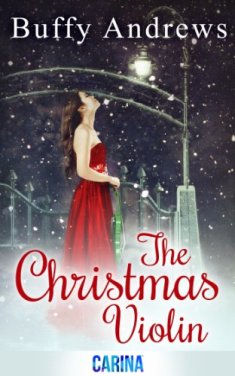
The Christmas Violin by Buffy Andrews
Finding Father Christmas/Engaging Father Christmas by Robin Jones Gunn
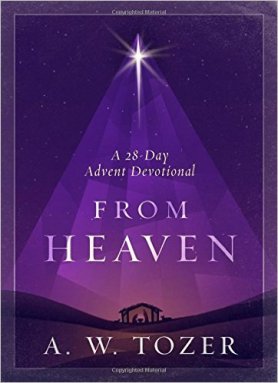
From Heaven: A 28-Day Advent Devotional by A. W. Tozer
A Sandy’s Seashell Shop Christmas by Lisa Wingate
A Patchwork Christmas Collection by Judith Miller, Nancy Moser, and Stephanie Grace Whitson
The Women of Christmas: Experience the Season Afresh with Elizabeth, Mary, and Anna by Liz Curtis Higgs

Oddly, we didn’t see any Christmas movies this year, but we did watch a few specials: Rudolph, A Charlie Brown Christmas, The America’s Got Talent Christmas Spectacular. My children aren’t at read-to age (I know, technically you can read to them no matter how old they are), but my son did read a Christmas Nativity story book on Christmas morning for my grandson and all the rest of us.

I think I am a little overdosed on Christmas reading now, ha! But it was fun!

Save

16 Favorite Books Read in 2016

I don’t normally like to publish two posts in a day, but did so today since they overlap. One of my favorite end-of-the-year activities is compiling a list of books read through the year and then choosing my favorites. I usually aim for 10, or perhaps 10 fiction and 10 non-fiction, but I don’t stick hard and fast to a number. This year 16 stood out to me, 6 non-fiction and 10 fiction. They weren’t all published in 2016 – in fact, I don’t think any of them were. I spent a great deal of the year reading classics and books already in my possession, so I didn’t spend as much time as I would like with new ones. I don’t agree with everything in each one, but something compelling about the book propelled it to a favorite.

Without further ado, here are my favorite books I read this year:

Non-fiction:

Pioneer Girl

Pioneer Girl: The Annotated Autobiography by Laura Ingalls Wilder and Pamela Smith Hill. This is Laura’s memoir, written before the Little House books and from which they were developed. Ms. Hill has done a masterful job of annotating it with just about any aspect any Laura fan wold have a question about.

malala

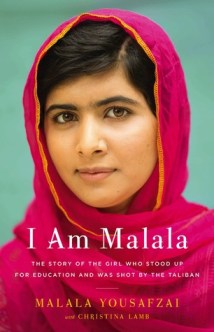
I am Malala: The Girl Who Stood Up For Education and Was Shot by the Taliban by Malala Yousafzai and Christina Lamb. In 2012, 15 year old Malala Yousafzai was shot for having spoken up for girls’ education in Pakistan. This book tells the story of that event and Malala’s life before and after. I enjoyed reading about the culture and her family, and even though we would differ in religion and politics, I have great respect for Malala and her father in particular.

still-here

I’m Still Here: A New Philosophy of Alzheimer’s Care by John Zeisel. Though I would differ with Zeisel religiously, what I appreciated most about this book its gracious and thoughtful approach regarding dealing with those with dementia.

knowable-word

Knowable Word: Helping Ordinary People Learn to Study the Bible by Peter Krol. A very helpful and relatively short and simple approach to getting more from your Bible study.

radical-womanhood

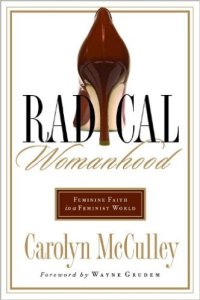
Radical Womanhood: Feminine Faith in a Feminist World by Carolyn McCulley. An eye-opening history of feminism from one who was fully immersed in it and later became a Christian whose views on Christian femininity changed.

What Are You Afraid Of

What Are You Afraid Of: Facing Down Your Fears With Faith by David Jeremiah discusses the universality of fear, different kinds of fear, Biblical examples of people dealing with fear, Biblical principals for dealing with fear. An excellent resource.

Fiction:

Willows

The Wind in the Willows by Kenneth Grahame. It’s hard to fathom that I had never before read this warm, lovely account of Mole, Rat, Badger, and Toad. I admit Toad is my least favorite, but I grew to like him (and even smile over some of his antics) as well.

remains-of-the-day

The Remains of the Day by Kazuo Ishiguro. I had this listed as a classic at first – it reads much like one. A butler recounts his days of service under one man during the WWII era and his adjustments in a new one, revealing his thoughts about life and service. He reminds me a lot of Carson in Downton Abbey except he’s less brusque but more buttoned-up. The author is a master of nuance and “showing, not telling.”

Tranquil

City of Tranquil Light by Bo Caldwell, a novelization of her grandparents’ lives as missionaries in China during the early 20th century. Loved much about this: the characters, the relationships, the way it was told.

Chateau

Chateau of Secrets by Melanie Dobson. A young American woman travels to her French grandmother’s family chateau in France and discovers her grandmother’s history of helping the French Resistance while German soldiers commandeered her house.

long-way-gone

Long Way Gone by Charles Martin, a modern-day prodigal son story set in Nashville. Martin is a master at pulling on heartstrings.

Not-in-the-Heart

Not In the Heart by Chris Fabry. A reporter down on his luck and estranged from his family is asked to write an inmate’s story. The inmate wants to donate his heart to the reporter’s desperately ill son after his execution so some good can come out of his life. But the more research the reporter does, the more convinced he is that the inmate in innocent. Loved this, both the story, the writing, and the “outside looking in” view of Christianity.

The Reunion

The Reunion by Dan Walsh. A maintenance man at a trailer park does his work with excellence and takes a special interest in helping people when he can. No one knows of his heroic deeds in Viet Nam until some of his former fellow soldiers come looking for him. Probably my favorite Walsh book. I love the thought that even the most overlooked people have a story.

Searching for Eternity

Searching for Eternity by Elizabeth Musser. A 14 year old boy is uprooted from his home in France in the 1960s to live with his mother’s family in Atlanta. He has been told his father has left them, but he thinks his father is a spy and may be in danger. Adjusting to school leads to encounters with bullies and an unusual friend. This covers so much and was so good.

secrets

Secrets of a Charmed Life by Susan Meissner. Two sisters are sent away from London to live with a foster mother in the country for their safety during WWII. The oldest, a teenager right on the verge of getting her dream job and thinking she can take care of herself, runs away to go back to London, and ends up having to take her sister as well. The London blitz begins the very day they arrive, and they are separated.

Tuck

Tuck Everlasting by Natalie Babbitt. A girl comes across a family who never ages. Though that sounds ideal, the various family members have discovered it’s not so much. This was quite thought-provoking, but it’s a favorite mainly due to Babbitt’s writing.

So there you have it. 🙂 What were your favorite books read this year?

(Sherry at Semicolon, who hosts the weekly Saturday Review of Books link-up, is allowing us to link up book lists this week: books read, favorite books, books we plan to read next year, etc.)

Save

Books Read in 2016

At the end of the year I like to make a list of books I’ve read or listened to throughout the year. So here’s the record for 2016, divided into a few major categories. Each title links back to my review of it (or should! I’ve had some trouble with links this morning!). I used to separate the audiobooks from the paper ones, but I have them all in there together. :

Non-fiction:

Be Faithful (1 & 2 Timothy, Titus, Philemon): It’s Always Too Soon to Quit! by Warren W. Wiersbe, not reviewed
Be Hopeful (1 Peter): How to Make the Best Times Out of Your Worst Times by Warren Wiersbe, not reveiwed
Be Mature (James): Growing Up in Christ by Warren W. Wiersbe, not reviewed
Be Ready: Living in Light of Christ’s Return (NT Commentary: 1 & 2 Thessalonians) by Warren W. Wiersbe, not reviewed.
Be Real (I John): Turning From Hypocrisy to Truth by Warren Wiersbe
Beyond Stateliest Marble: The Passionate Femininity of Anne Bradstreet by Douglas Wilson
Big Love: The Practice of Loving Beyond Your Limits by Kara Tippetts
C. S. Lewis’ Letters to Children by C. S. Lewis
Don’t Let the Goats Eat the Loquat Trees: The Adventures of an American Surgeon in Nepal by Thomas Hale
Eight Twenty Eight: When Love Didn’t Give Up by Ian and Larissa Murphy
From Heaven: A 28-Day Advent Devotional by A. W. Tozer
Give Them Grace: Dazzling Your Kids with the Love of Jesus by Elyse M. Fitzpatrick and Jessica Thompson
The Hardest Peace: Expecting Grace in the Midst of Life’s Hard by Kara Tippetts
I am Malala: The Girl Who Stood Up For Education and Was Shot by the Taliban by Malala Yousafzai and Christina Lamb
I’m No Angel: From Victoria’s Secret Model to Role Model by Kylie Bisutti
I’m Still Here: A New Philosophy of Alzheimer’s Care by John Zeisel
Knowable Word: Helping Ordinary People Learn to Study the Bible by Peter Krol
The Loveliness of Christ from the letters of Samuel Rutherford
Narrative of the Life of Frederick Douglass
Pioneer Girl: The Annotated Autobiography by Laura Ingalls Wilder and Pamela Smith Hill
Radical Womanhood: Feminine Faith in a Feminist World by Carolyn McCulley
The Renewing of the Mind Project by Barb Raveling
SEAL of God by Chad Williams and David Thomas
Sweet Grace: How I Lost 250 Pounds And Stopped Trying To Earn God’s Favor
by Teresa Shields Parker
Ten Fingers For God: The Life and Work of Dr. Paul Brand
by Dorothy Clarke Wilson
Thin Places: A Memoir on by Mary DeMuth
True Woman 201: Interior Design
by Mary Kassian and Nancy Leigh DeMoss
The Voice of Experience: Stories About Health Care and the Elderly by Samuel and Jane K. Brody
What Are You Afraid Of: Facing Down Your Fears With Faith
by David Jeremiah
The Women of Christmas
by Liz Curtis Higgs
Why Christ Came: 31 Meditations on the Incarnation
by Joel R. Beeke

Classics:

Around the World in 80 Days by Jules Verne
The Christmas Stories of Louisa May Alcott by Louisa May Alcott
A Connecticut Yankee in King Arthur’s Court by Mark Twain
Emily’s Quest by Lucy Maud Montgomery
Great British Short Stories: A Vintage Collection of Classic Tales by various authors
Gulliver’s Travels by Jonathan Swift
Little Town on the Prairie by Laura Ingalls Wilder
The Moonstone by Wilkie Collins
The Old Man and the Sea by Ernest Hemingway
Our Mutual Friend by Charles Dickens
Robinson Crusoe by Daniel Defoe
The Sword in the Stone by T. H. White
The Wind in the Willows by Kenneth Grahame

Christian/Inspirational Fiction:

The Bronte Plot by Katherine Reay
Chateau of Secrets by Melanie Dobson
Every Waking Moment by Chris Fabry
Finding Father Christmas/Engaging Father Christmas by Robin Jones Gunn
Five Brides by Eva Marie Everson
Home to Chicory Lane by Deborah Raney
Leaving Oxford by Janet W. Ferguson
Long Way Gone by Charles Martin
The Methuselah Project by Rick Barry
The Messenger by Siri Mitchell
Not In the Heart by Chris Fabry
One Perfect Spring by Irene Hannon
A Prairie Christmas Collection by Tracie Peterson, Deborah Raney, and others
The Prayer Box by Lisa Wingate
Pride, Prejudice, and Cheese Grits by Mary Jane Hathaway
The Promise of Jesse Woods by Chris Fabry
The Princess Spy by Melanie Dickerson
Rescuing Finley by Dan Walsh
The Reunion by Dan Walsh
A Sandy’s Seashell Shop Christmas by Lisa Wingate
Searching for Eternity by Elizabeth Musser
Secrets of a Charmed Life by Susan Meissner
The Silver Suitcase by Terrie Todd
A Slender Thread by Tracie Peterson
A Sparrow in Terezin by Kristy Cambron
They Almost Always Come Home by Cynthia Ruchti
What Follows After by Dan Walsh

Other Fiction:

The Book Thief by Markus Zusak
City of Tranquil Light by Bo Caldwell
The Christmas Violin by Buffy Andrews
Gilead by Marilynne Robinson
The Green Ember by S. D. Smith
A Man Called Ove by Fredrik Backman
More Things in Heaven and Earth by Jeff High
The Remains of the Day by Kazuo Ishiguro
Tuck Everlasting by Natalie Babbitt

That’s 80 by my count – a record, I think. Audiobooks do increase that number, though I don’t read just to hit a number. Often with audiobooks, I have a Kindle copy (if there is an inexpensive one) as well or a library copy to go back and reread certain parts more closely. About 25 were audiobooks; all but one of the classics were audiobook/Kindle combinations.

I might finish one more by the end of the year. I have not kept up well with my Goodreads account, so many of these are not there. I may even cancel my account there – I am not sure yet.

Overall it was a good reading year. There was one book I was disappointed in, a couple I was surprised to find I didn’t like as much as I had thought I would, a few (in the “other fiction” category) that would have been wonderful except for unnecessary offensive language. But by and large I enjoyed the majority.

I would be doing a list like this anyway, but Sherry at Semicolon, who hosts the weekly Saturday Review of Books link-up, is allowing us to link up book lists this week: books read, favorite books, books we plan to read next year, etc. I’ll be posting my favorites in just a few moments (my top 16 is now up here).

What’s On Your Nightstand: December 2016

What's On Your NightstandThe folks at 5 Minutes For Books host What’s On Your Nightstand? the last Tuesday of each month in which we can share about the books we have been reading and/or plan to read.

It’s the last Nightstand post of 2016! I’m not quite sure how much reading I got done this busy month, so let’s take a look:

Since last time I have completed:

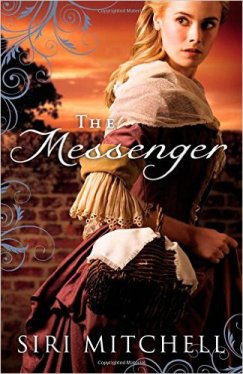
The Messenger by Siri Mitchell, audiobook, reviewed here. A Quaker woman, who is a pacifist and not supposed to have anything to do with war, ends up passing messages for the rebels during their fight for independence for England. Very interesting historical fiction!

The Voice of Experience: Stories About Health Care and the Elderly by Samuel and Jane K. Brody, reviewed here.

From Heaven: A 28-Day Advent Devotional by A. W. Tozer, reviewed here. Some convicting, memorable quotes.

A Sandy’s Seashell Shop Christmas by Lisa Wingate, reviewed here. With some of the characters from The Prayer Box, a woman who hasn’t celebrated Christmas for three years since the loss of her husband finds reasons to. Sweet novella.

Finding Father Christmas/Engaging Father Christmas by Robin Jones Gunn, reviewed here. Nice Christmas read about a woman who goes to England with few clues to try to find out about the father she never knew.

The Christmas Violin by Buffy Andrews, reviewed here. Intersections in the lives of a man grieving the loss of his wife, a woman grieving the loss of her son, and a homeless woman. Intriguing concept, but a bit of a disappointment.

The Christmas Stories of Louisa May Alcott, audiobook, reviewed here.

And a reread, The Women of Christmas by Liz Curtis Higgs. I didn’t review it again, but my review from a few years ago is here. I found it just as edifying as the first time.

So…I did better than I thought, but probably because several of them are very short.

I’m currently reading:

A Patchwork Christmas Collection by Judith Miller, Nancy Moser, and Stephanie Grace Whitson

How to Read the Bible For All Its Worth by Gordon D. Fee and Douglas Stuart

Up Next:

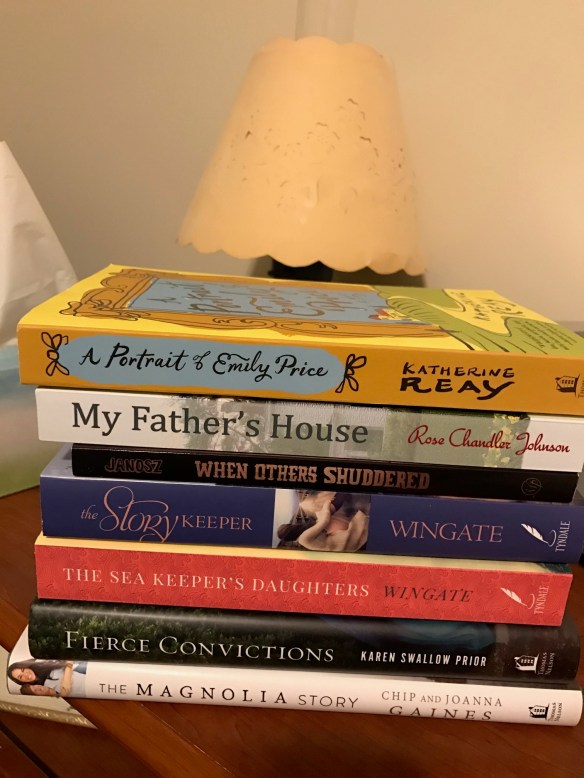
I have a new stack of books received for Christmas:

img_0001

Plus I have books I received from my last birthday and bought for Kindle sales as well. I haven’t worked out my reading plans for next year yet, but The Magnolia Story is likely to be high on the list!

I also posted all the books I read in 2016 here and my top 16 here.

Happy reading!

Save

The Christmas Stories of Louisa May Alcott

christmas-alcott

I wanted to round out my year of audiobook listening with something warm and homey. I considered listening again to Little Women by Louisa May Alcott, but then I came across a collection of her Christmas stories and thought that sounded perfect. The stories recorded here are:

“Gwen’s Adventure in the Snow”: A group of children of varying ages go on a sleighing expedition to their country house and end up getting caught in a snowstorm with their horses running off. The children take refuge in the house and have to try to come up with food and a way to get warm.

“Rosa’s Tale”: Children discussing the legend that animals can speak for an hour after midnight on Christmas hear their horse’s life story.

“What Polly Found in Her Stocking”: a poem about a girl’s stocking presents.

“A Hospital Christmas”: a warm and caring nurse makes Christmas brighter for patients in a military hospital during the Civil War era.

“A Country Christmas”: A girl staying with her aunt in the country invites two city friends to spend the holidays with them.

“Mrs. Podgers Teapot”: A woman who feels she is making her dead husband happy by not remarrying falls in love.

“Peace From Heaven”: Another poem.

“The Quiet Little Woman”: A girl in an orphanage is taken in to a home as a servant and longs for family love.

“A Christmas Dream and How It Came True”: A spoiled little girl has a sort-of Christmas Carol experience.

“A Song”: Another Christmas poem

“Kate’s Choice”: A teenage girl in England has lost her parents and is sent to live with each of her American uncles in order to choose which one to love with.

“Bertie’s Box”: A little boy overhears his mother and aunt talking about a needy family that they might try to do something for if they remember after getting their own plans done, and he decides to take matters into his own hands.

“What Love Can Do”: As two young girls lament the meager Christmas they are facing and share their wishes, a neighbor overhears and puts a little Christmas surprise in front of their door. Another neighbor sees this and adds his own, and so on.

Tessa’s Surprises: Tessa is the oldest daughter of a poor Italian family whose mother died. As she tries to come up with a way to provide a little something for her siblings for Christmas, she decides to go with an older boy who plays a harp to various places in the city to sing and see if she can earn a few pennies.

A Christmas Turkey: A father demoralized by work problems neglects his family.The children want to do various tasks to earn money at least for a nice Christmas dinner for the family and meet with various benefactors in the process.

Becky’s Christmas Dream: Becky is a 12 year old orphan from a poorhouse bound to work for a certain family until she is eighteen. She is sad at being left behind to tend the house while the family goes out to celebrate Christmas. As the clock strikes 12, either the animals and household items start talking or Becky starts dreaming, but either way they tell how they learned contentment in their assigned tasks.

A Merry Christmas: A section from Little Women where the girls give their Christmas breakfast to a poor family and put on a play in the evening.

A New Way to Spend Christmas: An assemblage of people visit an orphanage, touched by the plight of the children and heartened by the example of one ministering to them..

Tilly’s Christmas: A poor girl rescues a bird and is rewarded by an unseen benefactor with a special Christmas.

My favorites were Kate’s Choice and What Love Can Do.

quiet-little-womanI actually have “The Quiet Little Woman” in book form – it’s been on my shelf for years, and I thought I had read it, but as it started, it did not sound at all familiar to me. The book contains that story as well as Tilly’s Christmas and Rosa’s Tale.

All of the stories are in much the same spirit as Little Women: there are morals; encouragements to be brave and good and kind and to work hard and to remember and give to the poor; the simple and homey is revered above the showy and rich. In some places, like Aunt Plumey’s frank opinions in “A Country Christmas, the moral comes on a little strong by today’s standards, but was well received by the hearers in the story. Some of the stories seem more steeped in sentimentally than her books – maybe because the books have other events or maybe because Christmas stories seem to bring that out.

I didn’t look up the dates of all the stories, but the ones I did search out were written after Little Women, some of them published in magazines.

I’ve seen several collections of Alcott’s Christmas stories in print form that contain some combination of these, but I don’t think there is one that matches up exactly with the audiobook. The text of some of them can be found online by searching for the story title.

The narrator gave a valiant effort, even adding a little bit of a whinny to a horse’s voice, but I didn’t quite warm up to her.

But I am glad to have come across these and familiarized myself with some of Alcott’s stories that I hadn’t known before.

(Sharing with Semicolon‘s Saturday Review of Books)

Save

Save

Save

Save

Book Review: From Heaven

from-heavenI like to read a Christmas devotional during December, so I got From Heaven: A 28-Day Advent Devotional by A. W. Tozer when I saw it on a recent Kindle sale for 99 cents since I have enjoyed what I have read of Tozer in the past.

Compiled by unnamed editors at Moody Publishing from Tozer’s various writings and sermons, it is probably different than a book like this that Tozer would have written himself. There is not really a logical progression from point A to point B or developing and building on truths throughout the book. It’s just a series of isolated bits somewhat on the theme of Christ’s coming to Earth in both His first advent, which we celebrate at Christmas, and His second advent, when He returns. That lack of progression or development plus the entries’ being taken out of context from their original sources are the book’s greatest weaknesses. Introductory remarks convey that profits from the book sales will go to help Moody students, so this may have even been assembled as something of a fund raiser.

But it is Tozer, after all, who is a deep thinker and often has something noteworthy to say, which is the book’s greatest strength.

Some of the chapter titles are What the Advent Established, The Meaning of Christmas, The Logic of the Incarnation, Three Truths Behind Christmas, Light and Life to All He Brings.

Some of the quotes that stood out to me:

Even though you may still be unconverted and going your own way, you have received much out of the ocean of His fullness. You have received the pulsing life that beats in your bosom. You have received the brilliant mind and brain within the protective covering of your skull. You have received a memory that strings the events you cherish and love as a jeweler strings pearls into a necklace and keeps them for you as long as you live and beyond. All that you have is out of His grace. Jesus Christ, the eternal Word, who became flesh and dwelt among us, is the open channel through which God moves to provide.

We must love someone very much to stay awake and long for his coming.

Another reason for the absence of real yearning for Christ’s return is that Christians are so comfortable in this world that they have little desire to leave it.

All of the mercy God is capable of showing, all of the redeeming grace that He could pour from His heart, all of the love and pity that God is capable of feeling–all of these are at least suggested in the message that He came!

All of our hopes and dreams of immortality, our fond visions of a life to come, are summed up in these simple words in the Bible record: He came!

The idea that the Old Testament is a book of law and the New Testament a book of grace is based on a completely false theory. There is certainly as much about grace and mercy and love in the Old Testament as there is in the New. There is more about hell, more about judgment and the fury of God burning with fire upon sinful men in the New Testament than in the Old

The only contrast here is between all that Moses could do and all that Jesus Christ can do. The Law was given by Moses—that was all that Moses could do. Moses was not the channel through which God dispensed His grace. God chose His only begotten Son as the channel for His grace and truth, for John witnesses that grace and truth came by Jesus Christ. All that Moses could do was to command righteousness. In contrast, only Jesus Christ produces righteousness. All that Moses could do was to forbid us to sin. In contrast, Jesus Christ came to save us from sin. Moses could not save, but Jesus Christ is both Lord and Savior.

The big thing is to be sure we are not lulled to sleep by a false hope, that we do not waste our time dreaming about days that are not to be ours. The main thing is to make today serve us by getting ready for any possible tomorrow. Then whether we live or die, whether we toil on in the shadow or rise to meet the returning Christ, all will be well.

[This one really helped me with the concept of “of His fullness have we all received” in John 1:16]: If you could ask the deer that goes quietly down to the edge of the lake for a refreshing drink, “Have you received of the fullness of the lake?” the answer would be: “Yes and no. I am full from the lake but I have not received from the fullness of the lake. I did not drink the lake. I only drank what I could hold of the lake.”

Christmas as it is celebrated today is badly in need of a radical reformation. What was at first a spontaneous expression of an innocent pleasure has been carried to inordinate excess.

In our mad materialism we have turned beauty into ashes, prostituted every normal emotion, and made merchandise of the holiest gift the world ever knew. Christ came to bring peace and we celebrate His coming by making peace impossible for six weeks of each year. Not peace but tension, fatigue, and irritation rule the Christmas season. He came to free us of debt and many respond by going deep into debt each year to buy enervating luxuries for people who do not appreciate them. He came to help the poor and we heap gifts upon those who do not need them. The simple token given out of love has been displaced by expensive presents given because we have been caught in a squeeze and don’t know how to back out of it.

So, we live between two mighty events—that of His incarnation, death, and resurrection, and that of His ultimate appearing and the glorification of those He died to save. This is the interim time for the saints—but it is not a vacuum. He has given us much to do and He asks for our faithfulness. In the meantime, we are zealous of good works, living soberly, righteously, godly in this present world, looking unto Him and His promise. In the midst of our lives, and between the two great mountain peaks of God’s acts in the world, we look back and remember, and we look forward and hope! As members of His own loving fellowship, we break the bread and drink the wine. We sing His praise and we pray in His Name, remembering and expecting!

Tozer is not one to leave you with warm fuzzy feelings, but he does make you think. And though the chapters seem a little disjointed, there is much good food for thought and conviction here.

Genre: Christian non-fiction
Objectionable elements: None.
My rating: 8 out of 10

(Sharing with Semicolon‘s Saturday Review of Books)

Save

Save

Book Review: Finding Father Christmas and Engaging Father Christmas

father-christmasAfter reading Pam’s engaging post on the difference between the Hallmark and written versions of Robin Jones Gunn’s Finding Father Christmas, the novella sounded so charming I had to look it up. I found it bound with its sequel, Engaging Father Christmas. I’ve enjoyed some of Robin’s Sisterchicks novels and I think maybe one or two others, so I was glad to read her again.

In Finding Father Christmas, Miranda Carson is a single working woman who grew up as the only child of a single actress. She knew nothing of her father: in fact, in her youngest years her mother told her fairy tales of how she came to her, so she didn’t think she even had a father. Miranda had an unconventional childhood hanging out around theaters while her mom practiced and performed, and they lived in cheap hotels. One day Miranda discovered an old blue velvet purse of her mother’s and opened it to find her birth certificate, a photo of a boy sitting on the lap of Santa Claus, and a playbill for The Tempest. From that time on, realizing that she had been deceived by her mother, she lost any love for fairy tales and vowed never to go to the theater again.

Miranda’s mother died when Miranda was 11, and she was taken in by a friend. When that friend died, Miranda falsified her age and struck out on her own, choosing an accounting career because numbers were more reliable than words.

But the longing to know her father caused her to take vacation time in England, where the photo in her mother’s purse had been taken. She only had the name of the photo studio and a street to go on, but arriving in the village of Carlton Heath, she entered a shop called the Tea Cosy and met its proprietors, Andrew and Katherine MacGregor, and started from there. Once she found the information she was looking for, she then had to decide the best way to deal with it.

I can’t say much more without revealing too much of the plot, but I enjoyed it quite a lot. The setting, the characters, Miranda’s journey all were every bit as charming as Pam made them sound. I very much appreciated that Robin was not afraid to deal specifically with Miranda’s spiritual journey as well: Miranda had little to no spiritual context and didn’t even realize her need of or longing for God as her Father until she encountered Him. In a day when so many Christian authors handle spiritual matters lightly (if at all) lest they come across as “preachy,” Robin proves that you can deal with them realistically and naturally within the context of the story. I loved the many literary references as well.

In Engaging Father Christmas, Miranda comes back in England for a visit about a year later. A romance blossomed with a man she met right at the end of the first story, and she’s hoping this visit will result in an engagement ring and the making of Carlton Heath her longed-for home. But her idyllic Christmas plans are threatened by serious obstacles.

One of my favorite passages occurs between crises as she views a beautiful nighttime scene:

Was everything around us more or less a fixed snapshot that alluded to a greater beauty? A deeper mystery? A hint of what was to come? How many unknown layers were there to life–to the eternal life that was hidden in Christ? What glorious surprises awaited us in the real land of which this earth was only a snapshot? Let heaven and nature sing

These novellas were the perfect Christmas reads: clean, warm, lovely, and heart-stirring. There is a third in the series just out recently, Kissing Father Christmas. I’ll have to look out for that one next year.

Genre: Christian Christmas fiction
Objectionable elements: None.
My rating: 10 out of 10

(Sharing with Semicolon‘s Saturday Review of Books and Carole’s Books You Loved)

Books you loved 4


Save

Save

Two short Christmasy reviews

seashellA Sandy’s Seashell Shop Christmas by Lisa Wingate is a short novella involving some of the characters from The Prayer Box by the same author. The owner of Sandy’s Seashell Shop, a gift store on the NC Outer Banks, plays a prominent role in both. In this book, Tiff Riley had met her husband in Afghanistan when they were both in the military. She came home to have their son, Micah, but her husband died around Christmastime. In the four years since, she hasn’t had the heart to celebrate Christmas, and Micah is too young to know the difference. She takes a vacation during the Christmas season from her nursing job in Arkansas to the Outer Banks, which was special to her husband in his childhood. No one knows them there or will be aware that Christmas is just another day to them. Tiff knows that for Micah’s sake she needs to make peace with Christmas, but just can’t yet.

While at the beach they come across a flyer for a Christmas celebration at Sandy’s Seashell Shop. Through a series of events, Tiff decides to take Micah to it, and for the first time she feels her heart beginning to thaw. But the last thing she expected was her own Christmas miracle.

This was a very short but very sweet and heart-warming story.

Genre: Inspirational fiction
Objectionable elements: None.
My rating: 9 out of 10

christmas-violinI got The Christmas Violin by Buffy Andrews last year, not having heard of it before and knowing nothing of the author, just because the premise sounded intriguing. The story is told from three different points of view:

Peter visits his wife’s grave almost every day. At one visit, the sound of someone playing a violin draws him.

Willow was a concert violinist and a single mom. Her young son died while she was away at a concert, and she feels it’s her fault for being away.Her manager tries to talk her back into touring, but she only plays locally. She visits her son’s grave almost every day and pours her heart out through her violin playing.

A homeless old woman lives in a shed on the cemetery property and is also drawn to the violin playing. In her daily rummaging, she finds the perfect gift for the young violinist.

This being a Christmas novel, of course Peter and Willow unexpectedly run into each other outside the cemetery, strike up a relationship, and find healing with each other. The surprising part of the story for me was the old woman. The parts of the story through her eyes, both the meanness and kindness of strangers, spoke the most to me.

I wanted to love this story, and parts of it were good, but as a whole the writing fell a little flat to me, and the bad language was off-putting..

Genre: Secular fiction
Objectionable elements: A plethora of damns, one occurrence of the “f” word, a night of adultery described as beautiful.
My rating: 5 out of 10

(Sharing with Semicolon‘s Saturday Review of Books)

Save

Book Review: The Messenger

messengerThe Messenger by Siri Mitchell is set in Philadelphia in the late 1770s. The British occupied the area and made themselves at home, taking over citizens’ houses or pulling down their fences or shutters for fire wood. Some welcomed them, some hated them, some just tried to deal with the situation until it was over.

Hannah Sunderland’s Quaker family steadfastly refused to take sides, but that didn’t protect them when an officer wanted their home as well. While not welcoming British rule, they felt it was wrong to fight against it, and when rebels were captured and put in prison, they felt that helping them would interfere with God’s discipline of their rebellion.

Hannah was fine with that – until her own twin brother joined the rebels due to injustices he saw the British commit. When he landed in prison, she tried to find a way to visit him and bring him food secretly.

Jeremiah Jones, a tavern keeper, lost his arm when fighting for the British in the French and Indian war due to the surgeon’s taking a British officer before him, resulting in his injured arm becoming beyond repair and having to be amputated. Embittered, he turned against the British and that officer in particular, but secretly. British soldiers frequented his establishment, allowing him to hear bits of information he could pass on the the rebels. But when one of his spies bowed out, he had to find someone to take his place. As he noticed Hannah walking by the jail, he decided to offer to help her get a pass inside through his contacts if she would take a message for him to a colonial officer there.

Thus began an uneasy liaison. Jeremiah had little respect for Quakers and what he felt was their self-righteousness. Hannah exasperated him with her refusal to lie or be deceptive. She, in turn, did not think much of him or his profession. But they needed each other.

This novel seemed to me a little slow to get going, with Hannah and Jeremiah constantly bickering over every little thing. But the farther along it went, the more interesting and engaging it became. I enjoyed the author’s notes at the end detailing what was real and what was fictional in the novel and marveling at how she wove them together.

I had not know much about Quakers before this except that they were pacifists, said “thee” and “thou,” and dressed simply (and made good oatmeal. 🙂 )

oatmeal
I enjoyed learning more about them but was surprised by what I learned, especially that in their weekly meetings, they waited silently for God to speak to and through individuals rather than studying what He already said to them through His Word. (The author notes at the end that though originally they expected their “inner light” not to contradict Scripture, over years they they gave more weight and credence to it than the Bible, leading some of them astray). They also believe that “there is that of God in everyone,” a phrase often repeated throughout the book. It seems to go beyond the concept of being made in God’s image: Hannah muses at one point, “The Creator of our souls had left a part of Him inside us, and the more we responded to and came to resemble Him, the more our inner lights increased.” Though we are all made in God’s image, He does not reside in each of us (1 John 5:12). So they’re farther from Biblical Christianity than I thought, but it was interesting to learn their customs.

I especially empathized with Hannah and her struggles between the desire to help others and right wrongs vs. what she had always been taught:

Everywhere I looked, everything I learned only added to the sense that there were grave injustices being heaped upon our land. And that Friends, too easily persuaded to silence, allowed them to continue. What if we were not only called to maintain peace but also to defend it? What if we’d all been wrong? What if men were called to fight for what they believed in?

The chapters alternate between Hannah’s and Jeremiah’s points of view. I listened to the audiobook version but also reread parts in the Kindle version (the latter includes the author’s notes and discussion questions.) The male narrator performing Jeremiah’s part did a superb job with both inflection and mood. It took me a long while to warm up to Hannah, as she came across as stuffy and self-righteous at first, and I am not sure how much of that was the writing and how much the narrator, or both. Probably she was meant to come across that way. But I did eventually.

In the last third of the book when the situation they’re passing messages about comes to a head, it was hard to put the book down. I thought it ended a little abruptly. I don’t necessarily have to have everything tied up in a neat bow at the end, but I would have liked to have seen a little more about how things worked out for everyone.

Overall it was a good, informative, and later on a very exciting book.

Genre: Historical fiction
Potential objectionable elements: Nothing explicit, but a scene with the officer who took over the Sunderland’s house “entertaining” a woman in his room went on much longer than necessary. I think the idea was to show he was a scoundrel, but I got that quite early on.
My rating: 8 out of 10

(Sharing with Semicolon‘s Saturday Review of Books, Carol‘s Books You Loved, and Literary Musing Monday)

Books you loved 4

Save

Save

Save

Save

Save

Book Review: The Voice of Experience

voice-of-experienceSamuel and Jane K. Brody are a husband and wife medical team: he is a doctor and she is a psychiatric nurse. In The Voice of Experience: Stories About Health Care and the Elderly they bring their medical experience as well as their personal experience with aging parents to bear in discussing various issues related to health care of the elderly.

The book is divided into five sections, beginning with “Assessing the Situation” when an elderly person first starts manifesting that they might need additional care, through safety issues, quality of life concerns, aspects of decision making, and end of life issues.

There is not a clear cut way to handle many of the issues discussed: so much depends on the general state of health of the person, personal preferences, family dynamics, etc. But these chapters do give examples, good and bad, and a doctor’s advice and wisdom.

For my own purposes, with my mother-in-law’s decline over the last dozen or so years, much of this was not new to me, but I did benefit from it, and some of the end of life discussions clarified some things for me. I think this book would be helpful to anyone at any stage in the process.

It appears to be self-published and would have benefited from an editor to catch a few grammatical errors and awkward phrases, but they are very few.

Genre: Non-fiction
Potential objectionable elements: None
My rating: 8 out of 10

(Sharing with Semicolon‘s Saturday Review of Books and Literary Musing Monday,)

Save

Save

Save

Save