What’s On Your Nightstand: November 2016

What's On Your NightstandThe folks at 5 Minutes For Books host What’s On Your Nightstand? the last Tuesday of each month in which we can share about the books we have been reading and/or plan to read.

For WOYN purposes, I always like when the last Tuesday of the month ends up actually near the end of it. November has been an extremely fast-moving month, but I got to dip into some reading here and there.

Since last time I have completed:

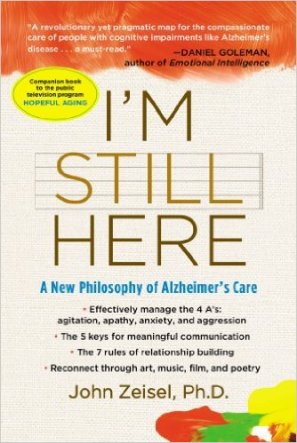
I’m Still Here: A New Philosophy of Alzheimer’s Care by John Zeisel, reviewed here. I especially liked the tone in this book.

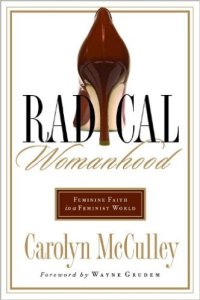
Radical Womanhood: Feminine Faith in a Feminist World by Carolyn McCulley, reviewed here. Excellent and eye-opening.

Secrets of a Charmed Life by Susan Meissner, reviewed here. Two timelines intersect: A modern reporter interviews a reclusive artist and hears a story about two girls making their way into London on the day the Blitz began. A real page-turner!

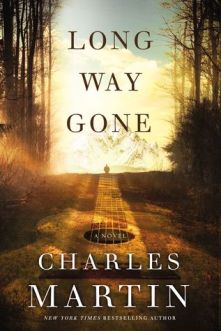
Long Way Gone by Charles Martin, reviewed here. Excellent modern-day prodigal son story.

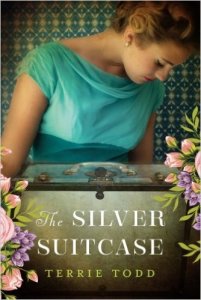
The Silver Suitcase by Terrie Todd, reviewed here. A woman in the midst of myriad problems is given her grandmother’s silver suitcase, containing her diaries. She finds her sweet, faith-filled grandmother had actually hated God at one point, and discovers what changed her. A bit of wonky angelology, but the story was good.

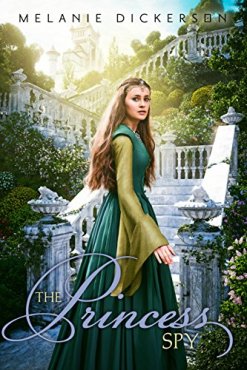
The Princess Spy by Melanie Dickerson, reviewed here. A 15th century Germany retelling of the Frog Prince.

I’m currently reading:

The Messenger by Siri Mitchell

The Voice of Experience: Stories About Health Care and the Elderly by Samuel and Jane K. Brody

From Heaven: A 28-Day Advent Devotional by A. W. Tozer

A Sandy’s Seashell Shop Christmas by Lisa Wingate

And a reread, The Women of Christmas by Liz Curtis Higgs

Up Next:

Finding Father Christmas/Engaging Father Christmas by Robin Jones Gunn

A Patchwork Christmas Collection by Judith Miller, Nancy Moser, and Stephanie Grace Whitson

The Christmas Violin by Buffy Andrews

If I get done with those, I still have plenty of books stacked up on my shelves ans well as in my Kindle app. Happy reading!


Save

Book Review: The Princess Spy

In most versions of The Frog Prince, the princess is proud, spoiled, and condescending. The frog recovers a lost ball for her, and in return asks to be taken to her house, eat from her plate, and sleep on her bed. In the version I listened to last year, she got disgusted and threw him against a wall, after which he transformed into a prince. In other versions she tolerates him until he transforms, and then, of course, they fall in love and live happily ever after.

princess-spyIn this retelling, The Princess Spy by Melanie Dickerson, set in 15th century Germany, 18-year-old Margaretha is the oldest daughter of a duke. She isn’t spoiled, but she tends to talk a lot, especially when she’s nervous. A number of suitors have come and left her home, but none seemed right to her. Currently Lord Claybrook has been visiting, and she thinks he wears weird hats and talks about things she’s not interested in, but she’s trying to get to know him better and give him the benefit of the doubt.

Meanwhile a severely injured young man has been found and taken to the healer. He only speaks English, and Margaret can understand and converse in it well enough, so she serves as translator for him. When he carries on about needing to speak to the duke, but can’t say why or reveal who he is, she thinks his ravings are coming from his injury. When he finally convinces her to do a bit of eavesdropping for him, she finds that he’s right about the danger her family and town are in. But her father and brother are away, and together she and the stranger escape to find and warn them.

Since these are realistic stories, I wondered how the author was going to portray the frog prince himself without any magic changing of form. That ended up being humorous, but I won’t spill the secret here.

In many ways, this is a fairly typical fairly tale romance, except that Margaretha is pluckier than many heroines in this genre, even to the point of bashing guards in the head with a candlestick in her escape, and the addition of an orphan boy rescued along the way. I’ve enjoyed many of Melanie’s books in the past, and this was a nice, clean read, but it just seemed – almost a little cliche for me. I saw on Amazon that it was listed as a teen/young adult novel, which I hadn’t realized before, and that may be one reason the writing just seemed a little “younger” to me than usual. I didn’t get that vibe from the others, though.

I hadn’t realized at first that some of the characters had appeared in previous stories. It had been a while since I had read them, but as I looked at descriptions of them at the end of the book, they came back to me.

One aspect I especially liked was Margaretha’s learning the difference between panic praying and actively trusting while praying.

All in all, not an unpleasant read, but not one that blew me away, either.

Genre: Christian fiction
Potential objectionable elements: None
My rating: 7 out of 10

(Sharing with Semicolon‘s Saturday Review of Books and Carol‘s Books You Loved )

Books you loved 4


Save

Save

Book Review: Radical Womanhood: Feminine Faith in a Feminist World

radical-womanhoodI got Radical Womanhood: Feminine Faith in a Feminist World by Carolyn McCulley some years ago when I caught it on sale – both because it was on sale and because I have enjoyed some of Carolyn’s writing in the past. It’s been on my TBR shelf ever since, and every now and then when I’ve noticed it, I’ve wondered why I keep getting books on this topic when I’ve already studied it out in Scripture and read several books on it and pretty much have nailed down my views. I guess because it’s one of my main interests. But I was compelled to pick it up recently (maybe due to guilt for its having been there so long) – and I was extremely glad I did.

Carolyn comes at the topic from a different angle than I have read in the past, and that makes for a refreshing viewpoint. She grew up as an unbeliever and a full-blown feminist. Her world changed completely when she became a Christian at 29, and attending church was a major culture shock. Over time and through her own study of the Bible and the preaching and teaching of it by her church, she came to different conclusions about womanhood than she had been raised with. She wrote this book partly because she wished her 30 year old self had had something like it to help her navigate through the conflicting viewpoints, but also because she discovered in her speaking engagements that a lot of women didn’t know what the Bible said plus didn’t know how our feminist-influenced culture got where it is today.

The eight chapters are divided by topic, with a history of feminism related to that topic, a Biblical perspective, and a testimony from different women about living out that particular aspect of Biblical femininity.

She points out that feminism did address some serious needs and inequalities, but then went too far. “There’s a difference between restoring God-given rights to women and setting women above both men and God. The history of the feminist movement shows that one led to another–and much earlier than the 1960s” (p. 32).

Abigail Adams wrote to her husband in 1776 concerning the fact that women were not equal in legal status to men and urging him to “remember the ladies and be more generous and favorable to them than your ancestors. Do not put such unlimited power in the hands of husbands…Men of sense in all ages abhor those customs which treat us only as the vassals of your sex; regard us then as being placed by Providence under your protection, and in imitation of the Supreme Being make use of that power only for our happiness” (p. 32). She “was not suggesting that women should throw off every aspect of feminine existence, trashing the roles of wives and mothers. She simply wanted laws that recognized women as fully legal, adult entities in this new nation” (p. 33). She predicted that failure would “foment a rebellion” in which women would “not hold ourselves bound by any laws in which we have no voice or representation” (p. 32). Unfortunately, though they had a “close and loving marriage,” he “did not take her seriously on this point” (p. 33).

Her prediction proved true, though. By 1848 the Seneca Falls Women’s Rights Convention met and compiled a “Declaration of Sentiments” including a list of their grievances.

These grievances led to needed reforms in education, marriage, suffrage, and employment for women. But mixed in with those needed social reforms was a challenge to Christianity–its church governance, biblical teaching, and community service…eventually [leading] to the destruction of biblically defined concepts of God, sin, gender differences, marriage, and more (p. 36).

Carolyn deftly details the history of feminism from there, comparing it to what the Scripture actually teaches, and providing some background information on some of its activists. I was surprised to learn–though I shouldn’t have been–that some of feminism’s most strident voices had distinctly anti-Christian views at the core of their philosophies.

I have many more places marked than I can quote here, but here are just a few quotes that stood out to me:

All my previous feminist philosophies resulted in merely kicking at the darkness, expecting it would bleed daylight. But Scripture says it is by God’s light that we see light (Psalm 36:9) (p. 26).

The irony of Stanton’s claims is that when the Bible is actually properly taught, history shows that women’s status improves (p. 38).

Spiritual battles are won or lost in the day-to-day thoughts we harbor. Ideas matter! (p. 59).

Every one of us is prone to agree with Satan’s character assassination of God. We often chafe at the good boundaries God has given us. We are easily tempted to think the worst of God. And we doubt that what God has provided is anywhere near as good as what He has restricted. In some ways, we may have more in common with self-proclaimed feminists than we may realize (p. 60).

Back to my beginning thoughts about why I should read a book like this when I’ve already studied it out, Carolyn had this to say:

If you are a longtime Christian, I pray you will be refreshed in your commitment to these godly principles. Biblical womanhood is not a one-size-fits-all mold. It’s not about certain dress styles, Jane Austen movies, tea parties, quiet voices, and exploding floral patterns…or whatever stereotype you are picturing right now. To live according to biblical principals today requires women to be bold enough to stand against philosophies and strongholds that seek to undermine God’s Word and His authority (p. 29).

This was quite an eye-opening book for me. Though every chapter was interesting and filled with information, most interesting to me was the one on the home and it’s history from home-based businesses producing goods to consuming goods, and the fact that my beloved major, home economics, was originally an outgrowth of Social Darwinism!

I wouldn’t agree with just every little thing taught by every Christian leader Carolyn quotes, but I don’t recall coming across anything I would consider a glaring error in the book.

I feel like I have only shared the tip of the iceberg and haven’t done this book justice. Let’s just say I highly recommend it.

Genre: Christian non-fiction
My rating: 10 out of 10.

(Sharing with Semicolon‘s Saturday Review of Books and Carol‘s Books You Loved )

Books you loved 4


Save

Save

Save

Save

Christmas Spirit Reading Challenge

I saw this Christmas Spirit Reading Challenge over at My Reader’s Block and thought it looked like fun. I do usually like to read a couple of Christmas-themed books during the month of December.

The basic idea is just to read Christmas-related books between Nov. 21 – Jan. 6, and Michelle has listed the following levels:

Levels:
Candy Cane: read 1 book
Mistletoe: read 2-4 books
Christmas Tree: read 5 or 6 books (this is the fanatic level…LOL!)

Additional levels:
Fa La La La Films: watch a bunch or a few Christmas movies…it’s up to you!
Visions of Sugar Plums: read books with your children this season and share what you read

*the additional levels are optional, you still must complete one of the main reading levels above

I’m going to commit to the Mistletoe Level – after that we’ll see. The two books I want to read for sure are:

Finding Father Christmas/Engaging Father Christmas by Robin Jones Gunn. I got this after seeing Pam’s comparison of the book and movie. Sounds like the movie veered too far from the book, but the book sounded really good! This copy has two novellas in one (I wonder if that counts as two books? 🙂 )

From Heaven: A 28-Day Advent Devotional by A. W. Tozer. Just got that this afternoon when I saw it on a Kindle sale for 99 cents and I have enjoyed what I have read of Tozer in the past.

Other Christmas books I have on hand and may get to if I have a chance:

A Patchwork Christmas Collection by Judith Miller, Nancy Moser, and Stephanie Grace Whitson, seen at Monica‘s. I’ve read and enjoyed the first two authors before, so I expect to enjoy this collection.

The Christmas Violin by Buffy Andrews. I got this on a Kindle sale last year based on the story description without knowing anything about the author, so I hope I am not unpleasantly surprised.

A Sandy’s Seashell Shop Christmas by Lisa Wingate, related to the shop in The Prayer Box, reviewed earlier.

The Women of Christmas by Liz Curtis Higgs is one I have read before but would like to read again.

As far as Christmas movies go, I usually just watch when and if the family does. We do usually see White Christmas at some point and maybe some of the Christmas specials (my new favorite; The Toy Story That Time Forgot).

I’d love to get to all these! But December is a busy month, so we’ll see how it goes.

Are you doing any Christmas reading?

Save

Book Review: The Silver Suitcase

silver-suitcaseI don’t remember where I saw The Silver Suitcase by Terrie Todd mentioned, but when it came up for a Kindle/Audible sale, I got it.

It begins with a young girl in Canada in the 1980s starting a school project with her grandmother about WWII. Part 1 features the grandmother, Cornelia’s, experiences at the end of the Depression and into the beginning of the war; Part 2 takes place in modern times with the granddaughter, Benita, grown and married with two children. In Part 3 Benita is given her grandmother’s old diaries and discovers much about her that she did not know. Throughout the latter parts, the scene jumps back and forth between Cornelia’s and Benita’s time frames, but it is not too confusing to follow since each chapter starts with the date.

Cornelia’s mother died when she was 12, and she had to quit school early to help her father run their farm. At a fairly young age she is doing everything a grown woman would do to maintain a household. She has never forgiven God for taking her mother so early, though she hides that fact from anyone else. Her diary is the only place she honestly pours out her heart. When she meets the son of her mother’s old friend, her life takes a turn for the better. But a tragedy and a momentous secret drive her to the point of desperation.

Benita’s husband has been out of work for some time, and the strain is wearing on their marriage. A series of losses, especially that of her grandmother, and a new opportunity for the family only add to the strain. Her mother gives her a silver suitcase that her grandmother wanted her to have. Besides several mementos, it contains decades worth of her grandmother’s old diaries. Benita learns of a side of her grandmother that she never knew and can hardly fathom: how can her sweet-faith-filled grandmother have ever been so vitriolic in her hatred of God?

The story is a good one, and there were several little touches I liked.A couple of my favorite lines:

Neither the why answers nor the how answers will satisfy your heart. One day, you will have both. But even if you could grasp them now, they would not heal your wounds. Only love can do that. And God loves you more than you can ever understand or imagine.

But most of the time, his words soothed her. It reminded her of her childhood, when she had come in crying with a skinned knee. How good it felt when her mother washed it off, pulled her onto her lap, carefully applied ointment to the knee, and gently rocked her to sleep. Although the cleansing stung, it was wonderful to feel so loved and cherished.

But one part was a major red flag to me.

This is the second book I’ve read recently involving somebody meeting their guardian angel. I hope it’s not becoming a trend. I can see it occasionally as a plot device (a la It’s a Wonderful Life), when the audience knows the writer isn’t really intending us to believe that this happened.

But in Christian fiction, it feels like cheating in a sense. Many might like a heavenly messenger to come down and tell us in person what God wants us to know and be able to ask him questions, but it’s far from likely. I think it would be more helpful and meaningful to show the character discovering spiritual truth through the Bible or a Christian friend. I know that’s not as dramatic, but it’s more realistic.

Nevertheless, I can live with an angel as part of a story, though it’s not my favorite. But there is an emphasis on Cornelia’s looking in his eyes that I find kind of disturbing, as if that’s somehow more reassuring than anything else:

When Cornelia looked directly into his eyes she could see that he spoke the truth. No one had ever looked at her like that.

She believed in a creator, and she believed in Jesus. She had found it difficult to accept that he loved her. But now, looking into this messenger’s face, there was no denying that fact.

Now, having looked into the eyes of Aziel, she saw things so much differently.

But worst of all, she writes much later in her diary, “I maintain my friendship with Jesus by talking to him daily…I read my Bible, too, but it’s still my experience of last December, of actually having his messenger beside me, which sustains me.”

The apostle Peter had one of the most marvelous experiences ever, something which only two others shared, when they saw Jesus glorified before their eyes. But after describing it, he said: “We have also a more sure word of prophecy; whereunto ye do well that ye take heed, as unto a light that shineth in a dark place, until the day dawn, and the day star arise in your hearts: Knowing this first, that no prophecy of the scripture is of any private interpretation. For the prophecy came not in old time by the will of man: but holy men of God spake as they were moved by the Holy Ghost” (II Peter 19-21). God’s Word is more sure than even the most exalted religious experience.

Thankfully the author does have Cornelia sharing spiritual truth later in the book. Cornelia doesn’t tell anyone about this experience. It’s just sad to me that that’s what “sustains” her.

I also disagreed with a section where someone says, “Jesus comes in all shapes and sizes. You need to learn to see him in every pair of eyes you lock onto.” True, we’re all made in God’s image, and Jesus said whatever we have done “unto one of the least of these my brethren, ye have done it unto me” (Matthew 25:31-46). I think the truth of either of these two passages would have made a stronger case for what the author is trying to say in this section, and probably that’s what she means by seeing Jesus in every pair of eyes. But Jesus isn’t actually in every person we meet. The distinction is made in several places in the Bible. Just one example: “Whoever has the Son has life; whoever does not have the Son of God does not have life” (I John 5:12).

So, I obviously have mixed emotions about this one. The story was fairly interesting, but due to some of the other issues, I probably won’t be seeking out this author again.

Genre: Inspirational fiction
My rating: for the story itself, maybe a 7 out of 10, but due to the theological problems, a 5 out of 10.

(Sharing with Semicolon‘s Saturday Review of Books and Carol‘s Books You Loved )

Books you loved 4

Save

Save

Save

Book Review: Long Way Gone

long-way-goneI put Long Way Gone by Charles Martin on my TBR list after reading Susanne’s review of it, and when I needed a new audiobook, checked to see if Audible had it. They did! I usually put new books back behind some of the others already waiting, but I wanted to get to this one right away.

Cooper O’Connor’s father was a traveling preacher who mainly spoke at tent revivals in Colorado and surrounding areas. Cooper’s mother had died when he was very young. A large black man named Big Ivory (or Big Big when Cooper as a boy could not pronounce Ivory), recruited by Cooper’s father when Big Big got out of prison, rounded out their ensemble and played the piano.

Cooper proved to be quite gifted at playing the guitar and singing at a very young age. When he got into his teens, talent agents began to seek him out. His dad wasn’t opposed to his making a career out of music, but he wanted him to be able to be himself and not be taken advantage of by unscrupulous producers. But eventually Cooper began to feel his father was holding him back, so he took his father’s truck, guitar, and some money and drove to Nashville. There he fell on the hardest of times, until about five years later when he met a singer named Daley Cross and gave her one of his songs. Things were riding high for a while until a betrayal and an accident took nearly everything from him.

As you might have guessed, this is a modern-day retelling of the prodigal son story in the Bible. The scene where Cooper left his father was devastating, and it was heartbreaking to see all that he had to go through. But his father, always watching for him, always ready to forgive and receive him back, was such a tender picture of the heavenly Father.

Charles Martin definitely knows how to spin a story and pull on heartstrings. I enjoyed the story, his writing, musings here and there about life, faith, and music, and even a bit of  hymn history.

We would differ on angelology – but I am not sure whether his use of angels in the story is from his belief system or just a part of the story to illustrate how people might “entertain angels unaware.”

This is a book I wish both of my parents were still alive to read. Of course, I wish they were still alive for a myriad other reasons, but what I mean is that they would have understood Cooper and his world quite well.

Narrator Adam Verner did a superb job narrating the audiobook version.

Overall, a beautiful, heart-touching story. If you read the book, be sure to read the author’s afterword as well.

Genre: Christian fiction
Potential objectionable elements: Bar scenes, drinking, 2 or 3 instances of a character almost saying a bad word, with enough of it that the word is obvious.
My rating: 9 out of 10

(Sharing with Semicolon‘s Saturday Review of Books and Literary Musing MondayCarol‘s Books You Loved )

Books you loved 4

literacy-musing-mondays-300x300

Save

Save

Save

Save

Back to the Classics Challenge Wrap-Up

BackToTheClassics2016

I’ve read the following for the Back to the Classics challenge (titles link to my reviews) hosted by Books and Chocolate:

  1. A 19th Century Classic –  Our Mutual Friend by Charles Dickens. (Finished 2/22/16)
  2. A 20th Century ClassicThe Wind in the Willows by Kenneth Grahame (Finished 6/3/16)
  3. A classic by a woman author. Little Town on the Prairie by Laura Ingalls Wilder, part of the Little House series. (Finished 2/15/2016)
  4. A classic in translation (originally written in a language other than your own): Around the World in 80 Days by Jules Verne (French) (Finished 3/15/16)
  5. A classic by a non-white author. Narrative of the Life of Frederick Douglass. (Finished 2/29/16)
  6. An adventure classic – can be fiction or non-fiction. Robinson Crusoe by Daniel Defoe (Finished 4/29/16)
  7. A fantasy, science fiction, or dystopian classic. The Sword in the Stone by T. H. White (Finished 3/24/16)
  8. A classic detective novel. The Moonstone by Wilkie Collins (Finished 4/18/16)
  9. A classic which includes the name of a place in the title. A Connecticut Yankee in King Arthur’s Court by Mark Twain. (Finished 3/8/16)
  10. A classic which has been banned or censored. Gulliver’s Travels by Jonathan Swift (Finished 6/23/16)
  11. Re-read a classic you read in school (high school or college). The Old Man and the Sea by Ernest Hemingway. (Finished 3/26/16)
  12. A volume of classic short stories. (One complete volume, at least 8 short stories, single or multiple authors). Great British Short Stories: A Vintage Collection of Classic Tales (Finished 7/5/18)

We’re allowed three children’s classics for this challenge, and I have two: The Wind in the Willows and Little Town on the Prairie. A few of the others later had children’s versions made of them and came to be thought of as children’s stories, but according to my research weren’t originally written as children’s stories.

Participants are eligible for prizes with a certain number of entries for books read. Since I read all twelve categories, I’m eligible for three entries. Yay!

I believe I listened to all of these via audiobook, but with some I got a free Kindle version because I wanted to read parts over.

I actually finished back in July: it helped that many of these were short, which I didn’t realize when I picked them. I could have read/listened to more and have accumulated more through sales, but I wanted to save them for next year’s challenge.

I’ve mentioned that I somehow missed being exposed to a lot of classics growing up, and I have made it a mission to seek them out and educate myself as an adult. Some of these I probably would not have chosen on my own, but I am thankful this challenge caused me to diversify my reading a bit. I enjoyed all of them in their own way, but probably the one I enjoyed most was Wind in the Willows.How did I get to be on the far side of 50 before reading that?!

Thanks, Karen, for the challenge! I am looking forward to next year!

Save

“Edgy” Christian Fiction

img_1904

“Edgy” Christian fiction is becoming an increasingly hot topic among authors and readers. Those for it contend that stories need to be realistic for people living in the real world with bigger problems than the color of the church carpet. Opponents say that Christian fiction, of all places, should be a safe haven from objectionable elements in literature.

I think, as do many I know, that we should take our cues from this as well as every facet of life from the Bible. Yes, the Bible is different from a novel, but even in our novels we can operate within its parameters.

There are certainly edgy people in the Bible: harlots, polygamists, thieves, liars, evil kings, adulterers, murderers, zealots, and so on. And edgy situations abound: a man rapes his half-sister and in return is murdered by his brother; a man cuts up his murdered and abused concubine in pieces and sends her out to the various tribes of Israel to drum up support for revenge; a woman seduces a young, naive man; a king sees a woman bathing and takes her to himself though they are both married, then arranges to have her husband killed in battle; a woman has been married five times and is living with a sixth man.

But nowhere in the Bible are any of these situations written in a way to entice people to sinful thoughts in the reading of them. Profane men are shown to be such without spewing profanity. Sexual sin is portrayed in ways to show how it came about and how the people were tempted, but not in enough detail to cause arousal in the reader. Violent scenes are not written with gratuitous detail.

I’ve mentioned before that I grew up in an unsaved family with a father who used bad words (in three different languages! It was humiliating and embarrassing as a child when I said something at a Hispanic neighbor’s house only to find out it was an offensive word. Thankfully I don’t remember what it was.) So it doesn’t necessarily shock me when I hear people say those words. But when I read them, they float around in my head, and I don’t want them there.

Novels will by their nature share more descriptive detail than a Biblical narrative. Good authors know how to draw a reader into a scene and make them feel and experience what the characters do. But that is the very reason Christian authors need to be so careful with sexual or violent scenes. We need to take responsibility for the fact that we’re putting thoughts, images, and ideas in people’s minds and make sure they’re not the kind that lead the reader into a lustful or lurid state.

I don’t object to edgy people or situations in books, depending on how they are handled. I can understand a person is foul-mouthed without hearing the words. I can understand a person succumbing to sexual temptation without details of bodily form and feeling. I can appreciate a violent scene, such as a murder in a crime drama or a battle scene, without descriptors like eyes bugging out, blood spattering, etc.

In addition to how such scenes and people are described and what images those descriptions put in our heads, another factor is how the situation is treated in the novel. For instance, in searching for something in my blog recently I came across a forgotten book review for a story that included a suicide. That happens, so it’s not in itself an objectionable situation in a Christian book. But in this particular novel, it was treated as the only thing the character could do, and more than that, right and sacrificial and even heroic, when Biblically it is never regarded that way. “Thou shalt not kill” certainly applies to one’s own life as well as others. There is a difference between taking a bullet for someone and aiming that bullet at yourself. Suicide is the ultimate taking of your own life into your own hands and the ultimate lack of faith in God to handle one’s life circumstances as He sees fit. There were Bible people who wanted to die, but they left the actual process to the Lord. Suicide is a tragedy, and I can understand its happening in a story, but I think it’s wrong for a Christian book to condone it or present it as a good thing. Similarly, the tone, consequences, and character responses to profanity, sexual sin, and violence can convey that those things are not right without devolving into preachiness and judgmentalism.

I think it actually takes a great deal more talent to portray certain scenes without going into unnecessary specifics. One of the most violent scenes I ever witnessed on film just showed the victim’s feet, kicking at first and then lying still. No blood, no gore, but the effect was chilling. “Less is more” applies in a number of these areas.

I do want to encourage Christian authors that readers don’t want insipid, plain vanilla plots and we do want authentic, full-bodied, real characters and believable circumstances. I know it’s hard sometimes to know where the line is, but it’s possible to write great and realistic Christian fiction without crossing it. I know; I’ve read it. And I’d love to read more.

Related posts:

Why Read? Why Read Fiction? Why Read Christian Fiction?
The Language of Christians
Sexuality in Christian Fiction
The Gospel and Christian Fiction

(Linking with Thought-provoking Thursday) and Literary Musing Monday)


literacy-musing-mondays-300x300

Save

Save

Save

Save

Book Review: Secrets of a Charmed Life

secretsSecrets of a Charmed Life by Susan Meissner begins with history student Kendra Van Zant arriving for an interview with famed watercolor artist Isabel MacFarland for a paper she is writing. Isabel almost never gives interviews, but agreed to this one because one of Kendra’s professors is her friend and arranged it. Kendra’s paper is on the effects of the blitz on London during WWII, and Isobel’s home was bombed during the war. As they start their interview, however, Isabel begins to tell the story of two sisters, teen-age Emmy and seven year old Julia.

They lived in London in the 1940s. Emmy liked to draw sketches of wedding dresses and hoped to be a designer one day. When she happened across a job opportunity in a bridal shop, she seized it. When the owner said she had a cousin who designed costumes and might be willing to take her on as an apprentice, Emmy was overjoyed.

But her plans were cut short when the city called on parents to evacuate their children into the countryside for safety. Emmy protested that she didn’t need to be evacuated, but her mother insisted. The girls were taken to a village in the Cotswolds and taken in by an older single lady and her sister. The setting was peaceful and idyllic, but when Emmy learned that her employer’s cousin was coming to London, she felt this was her only chance to make something of herself. She made arrangements to leave secretly for the rendezvous, but Julia found out in the meantime and insisted on going. Emmy decided to take her along, trusting that her mother could make arrangements to send her back. As the girls quietly sneaked out of the house to make their way back to London, what neither of them could have known was that the Luftwaffe blitz on London was going to start that very day.

I can’t go more into the plot without spoiling it, but slowly, as the story unfolds, the connections between Isabel and the two girls becomes increasingly clear.

I listened to the audiobook of this and was so drawn in, I kept looking for times other than my usual listening times to hear more. I’ve read many WWII novels, some even involving the evacuation of London’s children, but never quite from this angle. I thought the story unfolded wonderfully. I read some readers’ criticism of a section of the book near the end made up of journal entries, but I thought that was as well done as the rest of the novel. The fact that it contained a good bit of information that readers have been wondering about all through the book made it as suspenseful to me as the rest.

The faith element was perhaps a little too subtle for me. It is a vital part of the book, underpinning the plot, but mostly in the background, and only occasionally and somewhat vaguely referred to.

I thought I had not read Meissner before, but a search through my blog showed me I have, and I enjoyed those books as well, so I need to keep a lookout for more of her books.

Genre: Inspirational fiction
Potential objectionable elements: Emmy’s mother is what we would call a kept woman, and unmarried sexual encounters are mentioned, but details are not explicit. A few bad words (I can’t remember if they were “damn” or “hell” – perhaps one or two of both).
My rating: 9 out of 10

(Sharing with Semicolon‘s Saturday Review of Books, Carol‘s Books You Loved and Literary Musing Monday)

Books you loved 4

literacy-musing-mondays-300x300

Save

Save

Save

Book Review: I’m Still Here

still-hereI first came across I’m Still Here: A New Philosophy of Alzheimer’s Care by John Zeisel at Lisa’s review here. One of the main points she discusses there, of not “testing” the person with Alzheimer’s (Do you know who I am? Who this is? Do you remember…) but rather giving them the information they need first hand (Hi Mom, it’s your daughter, Barbara, and this is your grandson, Jesse. We’ve come to visit you today) was so simple and practical and yet so good and helpful, I wanted to read the rest of the book. My own mother-in-law in our home does not have Alzheimer’s, but she has had bouts of dementia, and I thought some of the general information about aging might be helpful as well as the specifics about dementia.

One of the overriding themes of the book is to concentrate not so much on what the person has lost, but to deal with what they have now. “Those living with Alzheimer’s who use parts of their brains that still function well, feel enabled and competent, and are less apathetic, agitated, anxious, and aggressive” (p. 9). Those last four “A’s,” he says, are not so much symptoms of the disease itself but rather reactions or results that can be minimized.

Another theme would be to “discard old expectations and role relationships that limit our ability to see the person and relate to him or her in a new way” (p. 11).

Another would be that Alzheimer’s is more complex than just short term memory loss. For instance, a patient “doesn’t ‘forget’ how to get dressed or brush his teeth; it is just more difficult to put all the steps in the right order for multistage activities” (p. 70). Likewise, socially, it’s not so much that they “forget” how to act, but rather “losing control over naturally occurring feelings” (p. 71).

The author discusses the medical aspects of Alzheimer’s, which parts of the brain are affected and which still work well but may need help to be accessed, and gives multitudes of ways to help access that part of the brain and reduce some of the negative reactions. So many of these are so helpful and practical, such as the supplying of information rather than asking questions I mentioned earlier, or the birthday party he described for a person who angered easily. He suggested having it in a dining room, so the setting helps the person know what is expected (rather than a living room or community room where they don’t know what to expect), seating them next to a grandchild, which “evokes hardwired caring instincts,” and having everyone wear name tags (pp. 71-73).

One chapter dealt with arranging living spaces to facilitate patients’ movement and avoid problems. One good idea was “landmarks located at points where a decision must be made, such as a corner or a doorway.” Another was “camouflaged exits.” This was a big problem at one facility my mother-in-law was in. The main doorway was set off by a hall, making it so the workers couldn’t see it unless they walked that way. A lot of the residents accumulated at the doorway, making it hard for visitor to get in and out (in fact, I got scolded once for letting a resident out, but I didn’t know she was a resident. Visitors shouldn’t be expected to police the doorways). Another tip here would have helped this facility: have walkways that are safe and go somewhere, so the patient walks instead of wanders (p. 145). This particular place had no place for patients to “go” – they just had hallways to rooms and a big sitting area, and the aides tried to herd everyone in the sitting area to sit brain dead and silent in front of a TV to keep them under control and out of trouble (as you can surmise, I do not have good feelings or memories of this place). By contrast, the first facility she was in had walking paths that made a circle through the building (she was still using a walker then, and when my husband visited, they would “take a walk” around the circle). They also had a nice screened-in porch (without a door to the outdoors) so residents could enjoy the weather and view and fresh air and still be safe. “The hormone oxytocin is released in the brain when people feel safe. This in turn contributes to lower stress and to greater trust and sociability” (p. 138), so setting up an atmosphere as safe and wired for success as possible helps.

The author asserts that one area of the brain that still works well is creativity, and he spends a good portion of the book discussing the use of the various arts. My first thought was that that would not have been helpful with my husband’s mother, as she was never one for museums or art galleries or plays and such. But as he presented it, I saw ways they might have been useful earlier in her life, though I can imagine she would not have been excited about a trip to the museum at first. But many might find these tips helpful. I did appreciate some of the helpful, thoughtful tips scattered throughout this section, like not asking “What does this painting represent,” but rather asking a specific question about something in it, explaining why they were in the museum or gallery without being asked, not asking them what they saw a half-hour ago, not pursuing a line of conversation if they get anxious, and others (pp. 96-97). Some of these would translate well to other excursions.

One of the most valuable sections is on communicating with a person with Alzheimer’s. The author puts forth these rules and elaborates on them:

  • Hear and respond to the other person’s “reality.” Don’t try to talk them out of it.
  • Be honest.
  • Always address the person directly.
  • Don’t test (as discussed in the first paragraph).
  • Don’t say “don’t”; divert and redirect instead.

A few other important points:

It’s not right to think of Alzheimer patients as entering their “second childhood.” They have knowledge and life experience children don’t have (p. 10).

“Be sure to ask the person with Alzheimer’s for expressions of emotions rather than cognitive data. Ask how they feel about a topic, not who was there a little while ago, or someone’s name” (p. 190).

When moving someone with Alzheimer’s into a new living situation, don’t buy all new things for them or their room (p. 185). Make sure they are surrounded by familiar items, clothes, wall decorations, etc.

I admit near the end I got a little frustrated, because it seemed as if the author were saying that if we just did all of these things, everything would work out fine and Alzheimer’s would be a beautiful and rewarding experience, and I know from many friends experiencing this with loved ones that it is not that way, no matter what you do. But he does advocate, in a section on caring for yourself as a caregiver, having someone you can safely “vent” to, to “pour out your heart with all its anguish and fear” and share “the ‘terrible’ feelings you have” (p. 213). It helped to see this admission that there will still be those times. These tips won’t eliminate every difficulty with Alzheimer’s, but they will help in many ways.

There were a few places I disagreed with him. In one place discussing different types of health care and aid available, he mentions nursing homes as an option as if one can just choose and make arrangements to go there. I don’t know how it works in other states, but here, it’s pretty much impossible to get into one unless you’re coming from a hospitalization. One social worker said she could put us on a waiting list, but they almost never admit someone from a waiting list because they have so many admitted from the hospital (much of this due to Medicare regulations). A few pages later he mentions staff members in both assisted living facilities and nursing homes “who want to work there because they have a natural empathy with elders living with Alzheimer’s” (p. 206). As much as we would hope so and like to think so, that is just not the case (I could tell you stories….). Maybe they started out that way but got burned out, I don’t know. Finally, there is a New Age-y/Zen/Buddhist feel to parts of the book, culminating in a chapter on mindfulness meditation that I would personally be uncomfortable with and even find harmful.

But the strength of the book, and what I appreciated most about it, is the gracious and thoughtful approach to communicating with and dealing with those with Alzheimer’s that permeates every facet of the book.

Genre: Non-fiction
Potenti
al objectionable elements: Buddhist-type philosophies
My rating: For what I mentioned in the last paragraph, I’d give it a 10 out of 10, but due to some of the philosophical differences, overall I think I’d give it a 7 out of 10.

(Sharing with Semicolon‘s Saturday Review of Books and Carol‘s Books You Loved )

Books you loved 4


Save

Save

Save