What’s On Your Nightstand: October 2016

What's On Your NightstandThe folks at 5 Minutes For Books host What’s On Your Nightstand? the last Tuesday of each month in which we can share about the books we have been reading and/or plan to read.


This is one of those odd months when there is still almost a week left after the last Tuesday, but I guess that will make next month’s reading look all the better with the extra week. 🙂  October seems to have flown by, but I’ve had some great times reading here and there.

Since last time I have completed:

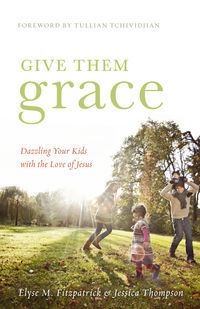
Give Them Grace: Dazzling Your Kids with the Love of Jesus by Elyse M. Fitzpatrick and Jessica Thompson, reviewed here. Mixed emotions on this one: some good things, some I didn’t agree with.

The Prayer Box by Lisa Wingate, audiobook, reviewed here. A mom of a teenager and an 8 year old escapes from an abusive relationship to start a new life and is asked to clean the house of a neighbor who has passed away. In doing so, she finds boxes of prayers the women had written out to God and is impacted by her life. Drags a little in places but in others it’s wonderful.

Five Brides by Eva Marie Everson, reviewed here. Five roommates in the early 1950s pool their resources to buy a beautiful wedding dress, and this traces the pathways of each of them. Not my favorite of her books, but a pleasant read.

I am Malala: The Girl Who Stood Up For Education and Was Shot by the Taliban by Malala Yousafzai and Christina Lamb, reviewed here. Fascinating.

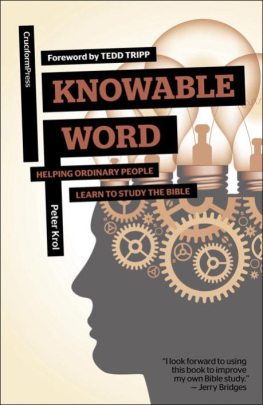
Knowable Word: Helping Ordinary People Learn to Study the Bible by Peter Krol, reviewed here. Very good.

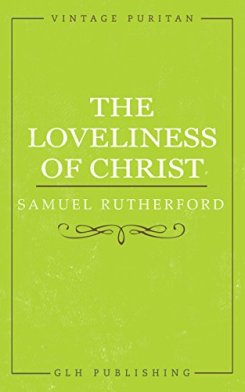
The Loveliness of Christ from the letters of Samuel Rutherford, reviewed here. Excellent.

I’m currently reading:

I’m Still Here: A New Philosophy of Alzheimer’s Care by John Zeisel

Secrets of a Charmed Life by Susan Meissner. A real page-turner!

The Princess Spy by Melanie Dickerson

Up Next:

June Bug by Chris Fabry

Waiting For Peter by Elizabeth Musser

Radical Womanhood: Feminine Faith in a Feminist World by Carolyn McCulley

As usual, I have stacks both on my shelves and in my Kindle app to choose from after these.

What are you reading?

Save

Save

Book Review: The Loveliness of Christ

loveliness-of-christPuritan Samuel Rutherford’s writings were the inspiration for one of my favorite hymns (“The Sands of Time Are Sinking“) and he’s the author of one of my favorite quotes, but I had never read anything else from him. So when The Loveliness of Christ came through on a 99 cent Kindle sale last week, I decided to give it a try.

I was disappointed that the selections weren’t essays or letters (except for a few letters at the very end): rather, the book is mainly a selection of quotes gleaned from Rutherford’s letters. The writing is a little hard to understand in places, but there are some gold nuggets here.

After a brief biography of Rutherford, the quotes are listed. I am not sure if they are in random of chronological order: except for the full-length letters at the end, we don’t know to whom or when they were written.

Here are some that most spoke to me:

You will not get leave to steal quietly to heaven, in Christ’s company, without a conflict and a cross.

Christ’s cross is such a burden as sails are to a ship or wings are to a bird.

Let our Lord’s sweet hand square us and hammer us, and strike off the knots of pride, self-love and world-worship and infidelity, that He may make us stones and pillars in his Father’s house.

The devil is but God’s master fencer, to teach us to handle our weapons.

They are not lost to you that are laid up in Christ’s treasury in heaven. At the resurrection ye shall meet with them: there they are, sent before but not sent away. Your Lord loveth you, who is homely to take and give, borrow and lend.

O, what I owe to the file, to the hammer, to the furnace of my Lord Jesus!

Why should I start at the plow of my Lord, that maketh deep furrows on my soul? I know He is no idle husbandman, He purposeth a crop.

How sweet a thing were it for us to learn to make our burdens light by framing our hearts to the burden, and making our Lord’s will a law.

Our fair morning is at hand, the day-star is near the rising, and we are not many miles from home. What does it matter if we are mistreated in the smoky inns of this miserable life? We are not to stay here, and we will be dearly welcomed by Him to whom we go.

When we shall come home and enter to the possession of our Brother’s fair kingdom, and when our heads shall find the weight of the eternal crown of glory, and when we shall look back to pains and sufferings; then shall we see life and sorrow to be less than one step or stride from a prison to glory; and that our little inch of time – suffering is not worthy of our first night’s welcome home to heaven.

Let not the Lord’s dealings seems harsh, rough, or unfatherly, because it is unpleasant. When the Lord’s blessed will bloweth cross your desires, it is best in humility to strike sail to him and to be willing to be laid any way our Lord pleaseth: it is a point of denial of yourself, to be as if ye had not a will, but had made a free disposition of it to God, and had sold it over to him; and to make of his will for your own is both true holiness, and your ease and peace.

Welcome, welcome, Jesus, what way soever Thou come, if we can get a sight of Thee! And sure I am, it is better to be sick, providing Christ come to the bedside and draw by the curtains, and say, “Courage, I am Thy salvation,” than to enjoy health, being lusty and strong, and never to be visited of God.

Faith liveth and spendeth upon our Captain’s charges, who is able to pay for all.

Glorify the Lord in your sufferings, and take his banner of love, and spread it over you. Others will follow you, if they see you strong in the Lord; their courage shall take life from your Christian carriage.

Ye may yourself ebb and flow, rise and fall, wax and wane; but your Lord is this day as he was yesterday; and it is your comfort that your salvation is not rolled upon wheels of your own making, neither have ye to do with a Christ of your own shaping.

If Christ Jesus be the period, the end and lodging-home, at the end of your journey, there is no fear, ye go to a friend…ye may look death in the face with joy.

My Lord Jesus hath fully recompensed my sadness with His joys, my losses with His own presence. I find it a sweet an a rich thing to exchange my sorrows with Christ’s joys, my afflictions with that sweet peace I have with Himself.

The favorite quote I mentioned at the beginning was here only in part: I had seen it in one of Amy Carmichael’s writings as having been a comfort to her when one of the children at her compound died. It was written by Rutherford to someone who had lost a child. The larger quote is “Ye have lost a child: nay she is not lost to you who is found to Christ. She is not sent away, but only sent before, like unto a star, which going out of our sight doth not die and vanish, but shineth in another hemisphere. We see her not, yet she doth shine in another country. If her glass was but a short hour, what she wanteth of time that she hath gotten of eternity; and ye have to rejoice that ye have now some plenishing up in heaven.”

As a collection of quotes, some quite thought-provoking and others requiring thought to process, it seemed to work best to read a few a day rather than trying to take in a lot at one sitting. Even doing that, though, it only took about a week to read.

As you can see from the sampling of quotes here, some of the themes of Rutherford’s writing include the goodness of God in the face of any circumstances, His ability to use those circumstances to shape us, the joy of Christ in this life but especially in the life to come.

I’m glad I spent time with this little book and I’m sure I will again in the future. I’m even inspired to go on to the fuller Letters of Samuel Rutherford some day.

Genre: Christian non-fiction
Potenti
al objectionable elements: None
My rating: 10 out of 10

(Sharing with Semicolon‘s Saturday Review of Books and Carol‘s Books You Loved )

Books you loved 4


Save

Save

Save

Save

Book Review: Five Brides

five-bridesFive Brides by Eva Marie Everson tells the story of five different women who come together to share an apartment in Chicago in the early 1950s. Their different work schedules and social lives leave them with little time for interaction, but one rare Saturday when they are all free, they decide to go shopping in town. They’re not shopping for a wedding dress, but they see one in a shop window that stops them in their tracks. Just for fun they decide to go in and try it on. By the time they’re done, they decide to pool their resources and buy the dress together so each of them can wear it. One girl will store it and send it to the one getting married, and each bride will have it cleaned and send it back to the girl who is storing it. The last bride gets to keep it.

The five girls:

Betty is from a rich family in Chicago who is pressuring her to marry a man she doesn’t love.

Joan immigrated from England to meet up with her pen pal, Evelyn, to live and work in Chicago. She’s working multiple jobs to send money back home and has no time for or interest in dating…yet.

Evelyn’s father is a Georgia farmer, and she is more or less expected to marry another farmer, but she wants something more from life.

Inga is breaking free from a very strict Lutheran home in Minnesota. She finds a job as a stewardess and a boyfriend in LA, but is going after her ambitions in the wrong way.

Madga is Inga’s bookish sister, who finds a job in a publishing firm and has secret aspirations of writing her own book one day.

I didn’t realize, until I got to the author’s note at the end of the book, that this was based on a true incident (it was mentioned in the acknowledgements at the beginning, but it didn’t click as I read the story). Joan’s story was factual, and while the other girls were made up, Joan really did buy the dress with four other roommates, and each of them wore the dress.

Overall it was an enjoyable story. I liked the era: you don’t see much fiction written in this time following recovery from WWII. I don’t often read romances, but it was fun to follow the girls’ different journeys and see how things worked out for them. With their bosses, coworkers, love interests, friends, and families, it was a little hard sometimes to keep up with who was whom, but usually it just took a second to get oriented when the scene or point of view changed.

The girls all live together in the first part of the book, but in the latter part they are scattered. The first one marries and goes to live with her husband, one goes to work overseas, one goes home brokenhearted, one goes home under a cloud, and the fifth stays in Chicago but has to find a different place. It seemed to me that after they separated, the story splintered and felt a little rushed at the end. We didn’t see one of the girl’s weddings, though the others’ were described, but we did see her legacy, so I guess that offset it. One of the girls whose marriage started out with the most problems is not heard from much again after the wedding: she was the one I most wondered whether everything worked out for her.

This is not a big deal, but one thing that I found irksome was how often the author referred to people pointing – some 67 0r so times, and often in situations where I would find it odd for people to be pointing. Maybe she is just more demonstrative than anyone else I know. As I said, not a big deal, but once I noticed it, it began to grate every time I’d see it again.

I would call this inspirational fiction rather than Christian fiction. The girls are from a variety of religious backgrounds, some more devout than others, and I wouldn’t quite agree with everything in that department in the book, but it is probably historically accurate.

There are others of Eva’s books I have enjoyed much more than this one, but it’s a nice story with clean romances.

Genre: Inspirational fiction
Potential objectionable elements: An unwed pregnancy, but details are not explicit.
My rating: 6 out of 10

(Sharing at Semicolon‘s Saturday Review of Books)

Save

Save

Book Review: Knowable Word

knowable-wordKnowable Word: Helping Ordinary People Learn to Study the Bible by Peter Krol lives up to its title. It begins with a section about why to study the Bible (to get to know the Person behind it). It concedes that Bible studies and commentaries and such are valuable in many ways, but promises to give the tools for the reader to mine from the Bible on their own and to get to know God better.

Sometimes…we seek a mountaintop experience where we can behold His glory and see Him face to face. We want to hear His voice speaking with clarity and power. We long to be wowed from on high. The apostle Peter had such an experience with Jesus, and he concluded that you and I don’t need to have to same experience.

“We were eyewitnesses of his majesty. For when he received honor and glory from God the Father, and the voice was borne to him by the Majestic Glory, ‘This is my beloved Son, with whom I am well pleased,’ we ourselves heard this very voice borne from heaven, for we were with him on the holy mountain. And we have the prophetic word more fully confirmed, to which you will do well to pay attention as to a lamp shining in a dark place.” (2 Peter 1:16b-19a) (pp. 13-14).

After a brief discussion of a few off-base approaches to Bible study, Krol dives into the method he advocates and teaches, which is not new but today goes by the acronym OIA:

  1. Observation – what does it say?
  2. Interpretation – what does it mean?
  3. Application – how should I change? (p. 16)

He discusses each in more detail, explains why each is important, illustrates it from everyday conversation and from Jesus’ teaching when He brought out truth from the OT. He reminds us that no method or set of tools replaces our dependence on the Holy Spirit to guide and illuminate us.

The next several chapters discuss each of these steps in more detail and shows how to use them by applying them to Genesis 1 and 2. Observation, for example, means that we don’t bring in preconceived notions or gloss over familiar passages because we think we know what they say. Observation involves considering genre, the author, repeated words, grammar, structure, and mood or tone. He similarly delves into more detail with interpretation and application.

This a short book at 117 pages, but it is densely packed and contains little to no fluff. I have sticky tabs and markings on almost every other page.

One area where I would disagree with Krol just a bit is in application. I agree that we need to be doers of the Word and not just hearers (James 1:22) and we need to be specific rather than vague. He does admit that he delves into this more in the book for illustration and that in reality he would just take one or two specific applications. I agree that we need to apply the Bible inwardly as well as outwardly, and as he advocates, apply it to head, hands, and heart. The point where I have a problem is in coming up with measurable actions steps from each day’s reading. Sometimes that might be the case. As we read, we need to be asking God for wisdom in applying what He teaches us and we need to act on anything He convicts us about. But I imagine a scenario like this: I’m convicted about my need to be more loving (often) and my need to get out of myself and reach out to others. So after reading a Bible passage about Christian love, I might sit and think of ways to show more love to others and interest in them. So I decide I’ll bake some cookies for my neighbor and make my husband’s favorite dinner. And that may be exactly what I need to do. But in my thinking, after I have done those things, I can check “be more loving” off my list because I have done my good deeds for the day. On the other hand, if I ask God’s help to carry the reminder to be more loving with me throughout the day, He can guide me into situations that I didn’t know were going to come up and apply it all day. (Actually I have found that telling myself to “be more loving” focuses on my lack and inability. But if I remind myself to “love as Jesus loved me,” that removes the focus from me to Him, from my lack to His fullness.) There are points in the day I know I will desperately need that reminder, like when someone interrupts me at the computer and I lose my train of thought for the paragraph I am writing, and I have to remind myself that people are more important than tasks. Or when I go in to change my mother-in-law. Since she’s not verbal and often groggy, it’s easy to fall into just doing the task at hand and forget the person. But I have to remind myself to look her in the eye, smile, speak even if she doesn’t respond, show love and care and interest in her as a person. As I read about loving as Christ loved, those two examples come to mind first. But I’ll need to apply that truth in multiple ways, not just the two I thought about while considering application. I think Krol would agree with this: he’s not advocating just generating lists to check off. And measurable action steps are not necessarily a bad result of Bible reading. I just don’t know that I would end every Bible reading time with such a list.

One other section that had me scratching my head a bit described his church hiring a brand new preacher who made some mistakes in his first sermon, realized it, and braced for some criticism from the leadership. I agreed with them in dealing with the issues but assuring him that Jesus had died for him, including these issues, and they’d rather he “give it his all, making a few mistakes in the process, than that he hold back out of fear of imperfection. He was free to live out his calling as a preacher with confidence that he was accepted by God and already approved” (p. 96). But what I thought odd was that, under the idea of “If you’re going to make a mistake, make a big one,” the author said, “So let’s study (and especially apply) the Bible with such great confidence that we can ‘sin boldly,’ as Martin Luther once advised his student Philip Melanchthon, ” and then he shares this quote from Luther: “Be a sinner, and let your sins be strong, but let your trust in Christ be stronger, and rejoice in Christ who is the victor over sin, death, and the world. We will commit sins while we are here, for this life is not a place where justice resides. We, however, says Peter (2. Peter 3:13) are looking forward to a new heaven and a new earth where justice will reign.” I don’t know the context of Luther’s quote, and I do know that “where sin abounded, grace did much more abound” (Romans 5:20), and I agree that we should “give it [our] all, making a few mistakes in the process, [rather] than…hold back out of fear of imperfection.” But still – I don’t see any encouragement in the Bible to “sin boldly” because we’re under grace.

As I said, I have multiple places marked in the book, but I’ll try to share just a few of the quotes I found most helpful:

Careless presumption will kill your Bible study. It will strangle observation and bear stillborn application. It will make you look like the stereotypical, narrow-minded Christian, and it will diminish your influence for the Lord. By strengthening your confidence in questionable conclusions, presumption will cloud your relationship with Jesus and your experience of his grace. When it comes to Bible study then, guard yourself against every form of unexamined presumption (p. 47).

Since we’ll continue observing new things in God’s Word until Jesus returns, our observations could be infinite in number. But interpretations are not infinite (though our grasp of them may mature over time). Biblical authors had agendas, and we are not authorized to add to those agendas. We investigate the facts of the text until we’re able to think the author’s thoughts after him. And since biblical authors wrote God’s very words, good interpretation trains us to think God’s thoughts (p. 49).

Don’t use minor details to make the text say what you want it to say. Don’t build a theology from one unclear verse (p. 51).

Ancient authors didn’t waste space with meaningless details. Every word has a purpose. Every sentence captures an idea. Every paragraph advances the agenda. And every section has a main point. The accumulation of these points promotes the goal of bringing the audience closer to the Lord. And once we understand how that main point directed the original audience toward the Lord, we’ll be ready to consider how it should shape us (p. 59).

I’d highly recommend this book to anyone, whether a new reader of the Bible or one who has read it multiple times for years.

Genre: Nonfiction
Potential objectionable elements: A couple of minor areas of disagreement.
My rating: 9 out of 10

(Sharing at Semicolon‘s Saturday Review of Books and Carol‘s Books You Loved )

Books you loved 4

Save

Save

Save

Save

Save

Book Review: I Am Malala

malalaNo doubt you remember the news story from 2012 about a 15 year old girl, Malala Yousafzai, who was an outspoken advocate of education for girls in Pakistan who was shot by the Taliban. I am Malala: The Girl Who Stood Up For Education and Was Shot by the Taliban is her story, written by herself and coauthored by journalist Christina Lamb.

The book was published about a year after the shooting and the prologue opens with the events of that day. Then the story backtracks to Malala’s birth and includes the history of her family as well as her beloved Swat Valley in Pakistan.

Normally the birth of a girl is not celebrated by her people, but her father looked into his newborn’s eyes “and fell in love,” saying he knew “there is something different about this child.” He himself was “different from most Pashtun men.” He married the girl he fell in love with in a land that usually arranged marriages. He confided in her and discussed things with her though most men in that culture considered that a weakness. Even though he was poor and not from a ruling family, he had a passion for education for both girls and boys and opened schools. He was outspoken on many issues, thus earning him respect among many in the community, but anger from those who practiced a stricter view of Islam.

The Taliban’s rise to power in the area was both fascinating and chilling. A charismatic leader swayed many through radio programs, but his ascendancy tightened the Taliban’s control over the area. The Taliban bombed schools and eventually closed them and publicly flogged people for violating their extremist rules. Women could not be in public unless accompanied by a male relative – even if the relative was five years old. Policemen were beheaded. Malala’s family fled the area for several months until they heard that the army had driven the Taliban out. They returned but discovered that the Taliban influence was still behind the scenes.

Malala would travel with her father and sometimes even speak at education rallies. in 2008 she was asked to write an anonymous blog for the BBC on life of a schoolgirl under the Taliban. A New York Times Documentary was made of the family when Malala was 11, covering the time just before their school was closed through their times as Internally Displaced Persons until they finally were able to come back. She was nominated for and won many prizes, including the National Youth Peace Prize.

Her father received death threats but refused a bodyguard. One reason was that one of their leaders was shot by his own bodyguard; another was that suicide bombers would blow themselves up right next to their target as well as bodyguards, and if he was going to die, he didn’t want anyone else to die because of him. Though the family used precautions, Malala was shot while on a school bus, and two of her classmates were shot as well.

The rest of the story details what happened for both Malala and her family after the shooting. The bullet had missed her brain, but bone fragments injured the membrane.  A  facial nerve was severed and the bullet eventually lodged in her back. Part of her skull had to be removed because of her brain swelling. It was eventually decided to move her to Birmingham, England, for more treatment and extensive rehabilitation. Her parents followed as soon as arrangements could be made. Healing required time, rehab, and a few more surgeries, one on the facial nerve and one to cover her skull.

The family had no idea they would not be returning to their valley. Though they appreciated the provision and safety in their new home, they understandably missed their friends and home. Ludicrous rumors surfaced, some of them that Malala worked for the CIA, or that her shooting was “staged” so the family could leave Pakistan and live in “luxury.”

At the time the book was published, Malala was nominated for the Nobel Peace Prize, and in 2014 she was its co-recipient. She has continued to speak out for education and has established the Malala Fund for that purpose.

This was a fascinating book. I admit I’m not as well versed as I should be in international news, so I learned a lot from the deftly-told history of the region. It was eye-opening to read of a different culture and to see what politics looks like from others’ viewpoints. Though we are from different cultures and religions, and would have different views on some aspects of politics, I highly respect Malala and her father and hope that their campaign for girls’ education and tolerance of different viewpoints is successful. I hope they get to return to their beloved Swat Valley some time. At different points in the book Malala wanted to be a doctor, an inventor, or a politician. I think she is well on her way to becoming a politician, and I think she’ll make an excellent one.

Genre: Nonfiction biography
Potential objectionable elements: Some areas of disagreement.
My rating: 9 out of 10

(Sharing at Semicolon‘s Saturday Review of Books)

Save

Save

Save

Save

Book Review: Give Them Grace: Dazzling Your Kids with the Love of Jesus

give-them-graceYou might wonder why I would read a book on parenting when my children are all grown. I read Give Them Grace: Dazzling Your Kids with the Love of Jesus by mother-daughter team Elyse M. Fitzpatrick and Jessica Thompson partly to see where they were coming from and whether or not I could recommend it to young moms. I’d heard this book mentioned quite a lot a few years ago, and, in fact, where some people took the principles they said they got from the book raised an eyebrow for me, so I also wanted to see what they said vs. what people think they said.

Areas of agreement:

The basic premise is one I agree with: our children aren’t saved by keeping rules, and though there is a place for rules and law, they need the gospel, not more rules heaped on them. Kids (and adults) can keep all the rules perfectly and still be unsaved (and, in fact, can be blinded by their need of a Savior because they’re considered “good kids”). Only Jesus kept all the law perfectly, and once we believe on Him, His record is transferred to our account, so to speak. And no parenting method is an ironclad guarantee that our children will become Christians and live for God: only the grace of God working in their hearts and their response to it will accomplish that.

They illustrate this in the introduction with Jessica’s son, Wesley, fighting with his little brother. When she separated them and told Wesley, “You must love your brother!” he responded, “But he makes me so mad! I can’t love him!” Elyse says that when she was raising her own children, she would have responded, “Oh yes you can, and you will! God says that you must love your brother, and you better start – or else!” Years later she realized that the better response would have been to tell him that he is exactly right, that we can’t obey God’s laws on our own, that Jesus died because we can’t, and that when we believe on Him, His great love for us will enable us to love others.

They warn that it is dangerous to tell children they are good, because “there is none good but God” (Mark 10:18), plus it will confuse them about their need for a Savior if they think they are already good. I wrestled with this when my sons were small. It was so easy to say “Good boy!” to encourage them when they did something right, but I wasn’t entirely comfortable with that for those reasons. I started saying “Good job!” or something similar instead, or, as my sister-in-law suggested, commented on what “big boys” they were getting to be, as kids aspire to be more “grown up.” But I think these authors take that concept way too far (more on that in a moment).

They assert that the Bible is not just a book about moral stories, and I’d agree there. It’s about God. The main point of Jonah, for instance, isn’t that if we disobey, God will send a whale (or something comparatively awful) after us, so don’t be like Jonah. The point is God’s gracious provision both for the Ninevites plus his unloving, recalcitrant prophet.

But we are instructed to discipline, warn, correct, train, etc., our children. “Discipline proves relationship. Instruction demonstrates love. Grace is not averse to training. In fact, one of the functions of grace is training in righteousness (Titus 2:11-14)”. “Grace does not forbid us from correcting our children. But gospel correction reminds us to bring correction to them in the context of what Jesus has already done for them and his great love for them.” They make a distinction between management (basic instructions like “Don’t run in the street,” chore charts, etc., that aren’t necessarily meant to “get to the heart,” but are just a part of child training), nurturing (telling and demonstrating God’s love and care for them), [gospel] training (pointing them what Jesus has done to take care of their sin and enable them to live for Him), correction, and reminding him of God’s promises. They discuss ways to know what a situation calls for and how to apply gospel truth to their situation.

They have a fairly good section on striking a balance between interacting with other families and kids yet guarding against worldly practices influencing your children through others. I agree that we shouldn’t have homes that are monasteries or pack up the family to the prairie 50 miles from neighbors to keep them from “the world,” but sometimes those interactions can be tricky to navigate.

I thought these quotes were quite good:

The one encouragement we can always give our children (and one another) is that God is more powerful than our sin, and He’s strong enough to make us want to do the right thing. We can assure them that his help can reach everyone, even them. Our encouragement should always stimulate praise for God’s grace rather than our goodness.

We are always to do our best, striving to be obedient and to love, nurture, and discipline (our children). But we are to do it with faith in the Lord’s ability to transform hearts, not in our ability to be consistent or faithful. Seeking to be faithfully obedient parents is our responsibility; granting faith to our children is his.

The only power strong enough to transform the selfishly rebellious and the selfishly self-righteous heart is grace. The law doesn’t transform the heart of either…it only hardens them in pride and despair.

Grace teaches us to rest in what Christ has done for us and to live lives of godly gratitude.

The chief end of our parenting is not out own glorification as great parents but rather that we glorify God and enjoy him forever.

It is a kindness when [God] strips us of self-reliance, because it is there, in our emptiness and brokenness, that we experience the privilege of his sustaining grace.  It is only when we arrive at the dreaded place of weakness that we discover the surpassing power of Christ.

Areas of disagreement:

They give a plethora of examples of how to apply the gospel to our children’s everyday needs and issues, but most of their examples are impossibly long. They say that, of course, you wouldn’t say all of this every single time. Still, some real life examples of these truths in short bursts would have been better than lengthy paragraphs that no parent would probably ever say. (BTW, Kevin DeYoung’s example of trying to have such a conversation with his child is hilarious – and a lot more realistic).

One of their examples is how to talk to a child who made the last out in a ball game which caused his team to lose and is understandably unhappy. They list about 4 pages of what to say to him (at least it’s 4 pages in the Kindle app – I don’t know how many in the physical book). Some of it is good, like instructing that throwing his bat when angry is harmful and wrong, and that he can congratulate his teammates even though he doesn’t feel like it because Jesus set aside His desires for him. But then they go on to suggest saying things like, “Losing a baseball game is not the worst thing that could ever happen. Losing Jesus is” and “I  understand why you’re mad about not winning. It’s because winning is all you have.” They assert that the child “needs to repent not only of his anger and desire to approve of himself but also of desiring to be perfect on his own and of ignoring the perfection Jesus has provided for him in his justifying love.” Well, there’s truth there, but maybe he just needs to be encouraged to practice more or to be comforted with the reminder that even the pros strike out sometimes, that no one performs at 100% capacity all the time.

In a section on the grief of rebellious children, they make the point (rightly, I think) that God can be glorified just as much when everything seems to have gone wrong, because His grace shines through our fallenness and need for redemption. But I was astonished to read these two sentences:

Because the Lord always acts for his glory, and because he predestined the sin of the Romans and the Jews in his Son’s cruel execution, their sin glorified him. It was the means he used to demonstrate his mercy, justice, and love…”

Everything God does is for his glory, and he is completely sovereign over everything that occurs. He uses our sin and the sin of our children to glorify him. If he did not, we would not sin.

While I agree that God works “all things together for good” (Romans 8:28), and I agree that his mercy in the light of our sin glorifies him, I have a real problem saying that God predestines us to sin. I am not of the Reformed persuasion, and the authors are, so that may be where that difference comes from, but I have never heard anyone say something like this before.

I mentioned before that I felt that the authors took the point about not telling children they are “good” way too far. They say it is always wrong to tell a child that God is pleased with them, because “God’s smile,” as they call it, is only bestowed upon us because of Jesus’ record of righteousness in our place. While it is true that nothing we can do pleases God in the sense of counting towards earning points with Him, there are several verses that talk about God being pleased. Hebrews 11:6 says, “without faith it is impossible to please him,” so all of these must be considered within that context. 1 Thessalonians 4:1 says, “Furthermore then we beseech you, brethren, and exhort you by the Lord Jesus, that as ye have received of us how ye ought to walk and to please God, so ye would abound more and more.” Hebrews 13:6 says, “But to do good and to communicate forget not: for with such sacrifices God is well pleased.” Part of the prayer in Colossians 1:9-11 is that we might “walk worthy of the Lord unto all pleasing.” Even children obeying their parents is said to be “well pleasing unto the Lord” (Colossians 3:20). 1 John 3:22 says, “And whatsoever we ask, we receive of him, because we keep his commandments, and do those things that are pleasing in his sight.”  None of these is meant in a way to work up righteousness but to work out righteousness: to live out what God has done in our hearts. I pondered this point a lot while reading this book. Positionally, yes, when we’re saved, our sins are forgiven, and God sees us through the lens of Jesus’ righteousness and not our own. Our own doesn’t count for anything. But what we usually call our sanctification is a growth process. God is constantly convicting and directing us away from what displeases Him and towards what pleases Him. Just like earthly families, children don’t earn parents’  love or belonging by their behavior: the child will always be a part of that family by birth or adoption. So the parents’ guiding and disciplining a child isn’t a matter of making that child fit to become a part of the family or keep his place there: it’s a matter of helping him grow to maturity, and part of that is letting him know what is pleasing and what is displeasing. (I found this post right about the time I was thinking through these things. Though he is coming at the idea of pleasing God from a different angle, he brings out many good points and helped assure me that I was thinking along the right lines.)

I also disagreed with them in saying that “Every time someone was mean to [Jesus], he fought to love” and He had to “work every day at not giving in to sin.” It makes it sound like Jesus had a sin nature to grapple with. He had a human nature, but not a sin nature. He battled Satan, so perhaps they mean these things in that way.

I thought the authors’ tone was somewhat condescending sometimes.

I couldn’t recommend this book unreservedly, but someone with some discernment might be able to use the best parts and disregard the rest.

Genre: Nonfiction Christian parenting advice
Potential objectionable elements: Some areas of theological disagreement.
My rating: 5 out of 10

(Sharing at Semicolon‘s Saturday Review of Books and Literary Musing Monday)

literacy-musing-mondays-300x300


Save

Save

Save

Save

Save

Save

Book Review: The Prayer Box

prayer-boxIn The Prayer Box by Lisa Wingate, Tandi Jo Reese has just escaped from a manipulative, law-breaking husband and is trying to make a new life for herself on Hatteras Island in the North Carolina Outer Banks. She’s coming out of a fog in more ways that one: after a serious accident, her doctor-husband supplied her with pain-killers, and it’s not until she determined to get off of them that she realized she had left her 14 year old daughter Zoey and 8 year old son J. T. to largely fend for themselves, and now Zoey resents any of Tandi’s intrusion into her life. She tries to find a job but doesn’t want to use references because she doesn’t want her ex-husband to find them.

She’s rented a little cottage next to an old Victorian house, and after realizing she hasn’t seen her elderly neighbor for a while, she goes to investigate and finds that the 91 year old lady, Iola Anne Poole, has passed away. Iola has left her house to the church, and someone from there asks Tandi if she would be interested in earning a little money by cleaning the house, especially getting rid of old food, etc.

As Tandi goes through the house, she discovers in Iola’s closet 81 decorated boxes. She pulls one out to investigate and finds that they are prayer boxes, each representing a year, in which Iola wrote out her prayers to God. As Tandi starts reading, she gets caught up in Iola’s past and her faith. The island people knew little about Iola, some even resented her for various reasons, but few knew the real woman.

Tandi grew up with con artist parents who often neglected their kids but wouldn’t allow her grandparents to take them. She tends to be attracted to the wrong kind of man, mainly succumbing to their admiration of her, and is stunned to realize her daughter is about to follow in her footsteps.Though Iola’s situation was much different, in reading her letters to God, Tandi finds much that speaks to her own heart.

A number of themes run through the book: the need for a healthy sense of self-worth, the truth that though we have to accept our past as part of us, it doesn’t have to bind us, and that family sometimes transcends blood ties.

I loved the setting of the book. We lived in SC for most of our married lives, and I always thought the Outer Banks would be a nice place to visit. I grew up near the coast of TX with frequent visits to Padre Island, and one of my favorite vacations with our family was right on Folly Beach in Charleston, SC. I don’t think I’d want to live on a beach, but there’s something about it that draws me, and this little coastal community in the book sounded like such a lovely place.

In some places Lisa’s writing sings: in other places it drags. I know writers are advised to tuck descriptions throughout the narrative rather than having long paragraphs of it like writers used to do. But there were a couple of times when Tandi was going through Iola’s house, and the passage described details of what she saw and wondered about so much that It seemed to take an insufferably long time. Maybe that was supposed to heighten anticipation, especially the second time (when Tandi thinks someone is in the house), but it had the opposite effect on me. And sometimes in conversations the author has Tandi thinking about something else for several paragraphs until she answers, making it seem like she just left the other person hanging while she was lost in her thoughts for a while. It may have seemed a little more like that because I was listening to an audiobook: though I love them, one problem with them is that you can’t speed up or slow down as you could when reading.

My only other complaint is that though there are great spiritual truths in the book, faith in general seemed a vague and nebulous thing. I’ve written before that I don’t think every Christian fiction book has to have a conversion scene or the plan of salvation, I understand that novels aren’t sermons, that good fiction sometimes employs nuance and suggestion rather than spelling things out for the reader. As I said there, it’s not so much the amount the the gospel that is presented in a book, but rather the clarity of the gospel (or lack thereof) that I often have trouble with. I think an unbeliever reading this book might get that some of the characters have faith (of some kind) and help people, that some of the characters’ lives change, that God the Father loves us and we can talk to Him and ask Him for forgiveness….but I don’t remember any of that being based on Jesus and what He did to make it possible or the need to believe on and accept Him personally – unless I just overlooked it. Then again, perhaps the author intended this for a Christian audience who would already understand these things. I’ve been debating with myself about whether to elaborate more, but I think I’ll just leave it at that for now.

My favorite passage in the book is from one of Iola’s letters written when she was older:

What does a lighthouse do? I ask myself. It never moves. It cannot hike up its rocky skirt and dash into the ocean to rescue the foundering ship. It cannot calm the waters or clear the shoals. It can only cast light into the darkness. It can only point the way. Yet, through one lighthouse, you guide many ships. Show this old lighthouse the way.

Here are a few more favorite quotes:

We do not choose the vessel we’re given, Iola Anne, but we choose what we pour out and what we keep inside.

Fear builds walls instead of bridges. I want a life of bridges, not walls.

The trouble with drowning in the mess of your own life is that you’re not in any shape to save anyone else. You can’t be a lighthouse when you’re underwater yourself.

Maybe there came a point in life where you had to quit categorizing whole groups of people by a few bad experiences.

Help them to show the world that our greatness is not in things we do for ourselves, but in things we do for others. In power that channels itself into kindness, in a hand outstretched in love.

Some of the hardest things you go through will teach you the most.

Overall I did enjoy it and am looking forward to reading more in this series.

Genre: Inspirational fiction
Potential objectionable elements: Someone walks in on a couple undressing and obviously heading for sex, but nothing is explicit: the scene is more about betrayal. A few instances of drinking and drunkenness, not presented favorably.
My rating: 8 out of 10

(Sharing with Carol‘s Books You Loved and Semicolon‘s Saturday Review of Books.)

Books you loved 4

Save

Save

Mount TBR Reading Challenge Checkpoint #3

Mount TBR 2016

The Mount TBR Reading Challenge (to read books one already owned) has checkpoints every quarter where we can report how we’re doing. I read 9 books for this challenge during the first quarter of the year (listed at the first checkpoint here) and 12 more by checkpoint #2.

The books I’ve read for this challenge this quarter are:

  1. Pioneer Girl: The Annotated Autobiography by Laura Ingalls Wilder and Pamela Smith Hill
  2. Thin Places: A Memoir  by Mary E. De Muth
  3. The Methusaleh Project by Rick Barry
  4. C. S. Lewis’ Letters to Children edited by Lyle W. Dorsett and Marjorie Lamp Mead
  5. Ten Fingers For God about Dr. Paul Brand by Dorothy Clarke Wilson
  6. I’m No Angel: From Victoria’s Secret Model to Role Model by Kylie Bisutti
  7. Be Faithful (1 & 2 Timothy, Titus, Philemon): It’s Always Too Soon to Quit! by Warren Wiersbe
  8. Be Mature (James): Growing Up in Christ by Warren Wiersbe
  9. Be Hopeful (1 Peter): How to Make the Best Times Out of Your Worst Times by Warren Wiersbe
  10. Home to Chicory Lane by Deborah Raney

That brings me up to 31 books, halfway up Mt. Blanc, the second level of Bev’s challenge. I’m about 5 books short of the next level, Mt. Vancouver. But I think I’ll easily get there before the end of the year. Plus these selections complete my original list of goals for the challenge.

Bev always includes some fun questions for the checkpoints:

A. Who has been your favorite character so far? And tell us why, if you like. Out of all the books read for the challenge, not just this quarter, Emile de Bonnery from Searching for Eternity by Elizabeth Musser. The book follows him from the age of 14 through adulthood, with his having to find his way amidst confusing and conflicting issues and memories. I just found him a very sympathetic character.

B. Pair up two of your reads that are opposites. C. S. Lewis’ Letters to Children and The Methusaleh Project; also Pioneer Girl and I’m No Angel: From Victoria’s Secret Model to Role Model.

C. Which book (read so far) has been on your TBR mountain the longest? Was it worth the wait? That would be hard to say for sure without going back and checking the buy dates, but off the top of my head, I think The Reunion by Dan Walsh. I’ve had it on my Kindle app since 2012, and it has turned out to be my favorite Walsh book read so far.

On to the last legs of the challenge!

Save

What’s On Your Nightstand: September 2016

What's On Your NightstandThe folks at 5 Minutes For Books host What’s On Your Nightstand? the last Tuesday of each month in which we can share about the books we have been reading and/or plan to read.

September has seemed like a long month to me, though it’s a shorter one. But I look forward each month to sharing what I’ve been reading and seeing what others have as well.

Since last time I have completed:

The Promise of Jesse Woods by Chris Fabry, audiobook, reviewed here. A young man revisits his past growing up in a small Southern town with his two best friends: a mixed race boy and a girl from the wrong side of the tracks. Good.

Home to Chicory Lane by Deborah Raney, reviewed here. Empty nesters turn their big family home into a bed and breakfast only to have one daughter show up on opening day estranged from her husband. Enjoyed it quite a lot.

I’m No Angel: From Victoria’s Secret Model to Role Model by Kylie Bisutti, reviewed here. Kylie reached the top of her profession and then walked away after concluding that it didn’t fit in with her new Christianity. A look at the seamy side of modeling. Good.

The Remains of the Day by Kazuo Ishiguro, reviewed here. A butler muses over his life, profession, the meaning of dignity, and lost opportunities. Loved it.

Be Real (I John): Turning From Hypocrisy to Truth by Warren Wiersbe. I haven’t reviewed this particular one, but I discussed a few of the others in one post here. Very helpful.

A Sparrow in Terezin by Kristy Cambron, reviewed here. A modern timeline of a newlywed’s husband being investigated for fraud and one a young woman in Prague during WWII intersects in the life of one girl. Good.

I’m currently reading:

Give Them Grace: Dazzling Your Kids with the Love of Jesus by Elyse M. Fitzpatrick and Jessica Thompson.

I’m Still Here: A New Philosophy of Alzheimer’s Care by John Zeisel

The Prayer Box by Lisa Wingate, audiobook.

Five Brides by Eva Marie Everson

Up Next:

June Bug by Chris Fabry

Waiting For Peter by Elizabeth Musser

As usual, I have stacks both on my shelves and in my Kindle app to choose from after these.

Happy Reading!

Save

Save

Book Review: A Sparrow in Terezin

sparrow-in-terezinKristy Cambron’s The Butterfly and the Violin was one of my favorite books read last year, so I was delighted when its sequel, A Sparrow in Terezin, came through on a Kindle sale.

As with her first book, this one follows two timelines. The contemporary one picks up where it left off in the last one, with William and Sera getting married, only to have him get arrested shortly afterward. In trying to sell off some of his family’s assets, he unwittingly sold some things that he didn’t realize were no longer his, and now he is being investigated for fraud. To try to clear his name, Sera delves into a past that he’s unwilling to reveal.

The other timeline begins with a young woman, Kaja, heading to a Prague train station with her family in 1939. Her father is Jewish and her mother a Christian, but being even half Jewish is enough to get one in trouble at that time in Eastern Europe. Kaja had thought her whole family was going and is stunned to learn at the train depot that only she and her sister and brother-in-law are leaving: her parents are staying behind. Kaja protests, but it has already been decided. After spending a year with her sister in Palestine, she travels to London to work at a newspaper. There she meets Liam, a reporter who is kind and helpful to her. She suspects he is involved in something covert. Just as their relationship grows to the point of commitment, Kaja learns that her parents are in danger and travels undercover to Prague to help. But she’s caught and sent with her family to the Terezin prison camp.

The two timelines intersect with a little girl named Sophie, whom Adele helped in the last book and whom Sera met at the end. Kaja’s path also crosses Sophie’s and eventually impacts William’s family.

I mentioned in my review of Butterfly that there were a few awkward places in the writing, but I felt the story superseded them. I wished I had made note of them now, because there were some here as well. There were a few things that didn’t make sense to me at first, though they were a little more clear when I looked at them again just now.

One of my pet peeves in movies in when there is some kind of calamity, and the couple involved decide that’s a good time to kiss. That happened in this book. I seriously doubt that if I’m outside with bombs falling in London, I’m going to choose that moment to kiss. No, I’m going to be running for cover, and fast.

I didn’t end up loving this one as much as I did the first one, but it’s still a good story, Kaja’s especially. I always wonder how people could not only survive, but extend grace and love in a situation as awful as a prison camp. I thought the faith element was woven in naturally.

Genre: Christian fiction
My rating: 8 out of 10
Potential objectionable elements: None that I can recall unless one is very sensitive to descriptions of war.
Recommendation: Yes.

(Sharing at Semicolon‘s Saturday Review of Books and Literary Musing Monday and Carol‘s Books You Loved)

literacy-musing-mondays-300x300


Books you loved 4

Save

Save

Save

Save