Book Review: The Wind in the Willows

I never read The Wind in the Willows by Kenneth Grahame as I was growing up: I don’t think I had even heard of it. I didn’t read it to my children, but we did watch a video of it which I thoroughly could not stand. It mainly focused on Toad’s misadventures with his car, and Toad just irritated me to no end.

But reading some of C. S. Lewis’s books over the last couple of years, particularly On Stories, I saw that he mentioned it quite a lot, and some of his comments spurred me to give it a try.

It begins with Mole getting exasperated by his spring cleaning and escaping out into the forest, running about to his heart’s content, until he comes to a river, which he has never seen before. Delighted by the sight, he notices the Water Rat, who invites him into his boat for a ride. Mole has never been in a boat and is thrilled. He ends up not only having a picnic with Rat, but going to stay at his house for a time and meeting Otter, Badger, and eventually Toad.

Otter is more of a secondary character, but Mole, Rat, Badger and Toad become fast friends. Badger is introverted and doesn’t come into society much, but is friendly when he does. He was an old friend of Toad’s father and is very wise. Rat loves his boat, believes “there is nothing – absolutely nothing – half so much worth doing as simply messing about in boats,” and likes to write poetry and songs. Mole is an all-around good fellow but gets into trouble by extending himself past his experience and ability a couple of times, until near the end, when his doing so saves the day. Toad is rich, pompous, conceited, undisciplined, and goes full-bore into whatever his current interests are (and I still don’t like him very much. 🙂 ) When he discovers motor cars, he’s almost a lost cause.

There are almost two stories intertwined in the book: the raucous Toad’s pursuit of cars, wrecks, theft of one, imprisonment, disguise, escape, wild journey back home, and defense of his home from the weasels and stoats who overtook it while he was away, and then the quieter, gentler, homier experiences of the other animals. I like the second much better, but I understand that a book especially for children needs some action.

If I had to try to sum up what the book was about overall, the theme that comes to me is friendship. Each of the friends extends himself for the others at various points (except Toad, unless you want to count his final trying to rein himself in after several false repentances as an effort for his friends’ sake). They often inconvenience themselves greatly for each other, are kind to his others’ foibles, encourage and look out for each other.

There is one odd little section where Mole and Rat are helping to search for Otter’s lost little one and come upon the god Pan playing his pipes and watching over the little Otter. There reaction personifies reverence:

Then suddenly the Mole felt a great Awe fall upon him, an awe that turned his muscles to water, bowed his head, and rooted his feet to the ground. It was no panic terror—indeed he felt wonderfully at peace and happy—but it was an awe that smote and held him and, without seeing, he knew it could only mean that some august Presence was very, very near. With difficulty he turned to look for his friend and saw him at his side cowed, stricken, and trembling violently…

Perhaps he would never have dared to raise his eyes, but that, though the piping was now hushed, the call and the summons seemed still dominant and imperious. He might not refuse, were Death himself waiting to strike him instantly, once he had looked with mortal eye on things rightly kept hidden. Trembling he obeyed, and raised his humble head; and then, in that utter clearness of the imminent dawn, while Nature, flushed with fullness of incredible colour, seemed to hold her breath for the event, he looked in the very eyes of the Friend and Helper; saw the backward sweep of the curved horns, gleaming in the growing daylight; saw the stern, hooked nose between the kindly eyes that were looking down on them humourously…

‘Rat!’ he found breath to whisper, shaking. ‘Are you afraid?’

‘Afraid?’ murmured the Rat, his eyes shining with unutterable love. ‘Afraid! Of HIM? O, never, never! And yet—and yet—O, Mole, I am afraid!’

Then the two animals, crouching to the earth, bowed their heads and did worship.

I was curious to know what Grahame might have meant by it, especially since one of his previous books is titled Pagan Papers. I found a variety of opinions about it: one professing pagan fully embraced it as pagan worship and called Pan his favorite god; one thought it was a representation of Christ, as Aslan was in the Narnia books (and was taken to task in the comments); one thought it was a personification of nature. I still don’t know Grahame’s intention, though. I know C. S. Lewis used the mythic gods as something almost like superheroes, maybe just above or below the angels but definitely above man, yet in service to the one true God. I did read that some newer editions leave out this section, and I wasn’t the only reader that thought it was anomalous. But one of the posts I read – I forget which one – pointed out that though Pan made an appearance in person, his influence was all throughout the book. And when I went back and reread the first few pages, I thought that might be true: the way nature is spoken of is the same there as it is in the section with Pan. So I am a little wary: if I was reading this to my children, we’d have to have a discussion about it.

I went back and skimmed through the couple of books by C. S. Lewis looking for one quote in particular that most influenced me to read the book, and, frustratingly, I could not find it. If my memory is correct, I thought it had to do with dealing with ridiculous people (Toad in this case), and it helped me in regarding a ridiculous person or two in my acquaintance. But here are a few other quotes from Lewis about Wind in the Willows:

Does anyone believe that Kenneth Grahame made an arbitrary choice when he gave his principal character the form of a toad, or that a stag, a pigeon, a lion would have done as well? The choice is based on the fact that the real toad’s face has a grotesque resemblance to a certain kind of human face–a rather apoplectic face with a fatuous grin on it. This is, no doubt, an accident in the sense that all the lines which suggest the resemblance are really there for quite different biological reasons. The ludicrous quasi-human expression is therefore changeless: the toad cannot stop grinning because its ‘grin’ is not really a grin at all. Looking at the creature we thus see, isolated and fixed, an aspect of human vanity in its funniest and most pardonable form; following that hint Grahame creates Mr. Toad–an ultra-Jonsonian ‘humour’ (On Stories, p. 13).

It might be expected that such a book would unfit us for the harshness of reality and send us back to our daily lives unsettled and discontented. I do not find that it does so. The happiness which it presents to us is in fact full of the simplest and most attainable things–food, sleep, exercise, friendship, the face of nature, even (in a sense) religion. That ‘simple but sustaining meal’ of ‘bacon and broad beans and a macaroni pudding’ which Rat gave to his friends has, I doubt not, helped down many a real nursery dinner. And in the same way the whole story, paradoxically enough, strengthens our relish for real life. This excursion into the preposterous sends us back with renewed pleasure to the actual (On Stories, p. 14. Incidentally, the paragraph just after this one contains the quote, “No book is really worth reading at the age of ten which is not equally (and often far more) worth reading at the age of fifty–except, of course, books of information.”)

The Hobbit escapes the danger of degenerating into mere plot and excitement by a very curious shift of tone. As the humour and homeliness of the early chapters, the sheer ‘Hobbitry’, dies away we pass insensibly into the world of epic. It is as if the battle of Toad Hall had become a serious heimsókn and Badger had begun to talk like Njal (On Stories, p. 18).

I never met The Wind in the Willows or the Bastable books till I was in my late twenties, and I do not think I have enjoyed them any the less on that account. I am almost inclined to set it up as a canon that a children’s story which is enjoyed only by children is a bad children’s story. The good ones last (On Stories, essay “On Three Ways of Writing For Children,” p. 33).

Consider Mr Badger… that extraordinary amalgam of high rank, coarse manners, gruffness, shyness and goodness. The child who has once met Mr Badger has ever afterwards, in its bones, a knowledge of humanity and of English social history which it could not get in any other way (On Stories, “On Three Ways of Writing For Children,” (p. 37).

If you subtract any one member, you have not simply reduced the family in number; you have inflicted an injury on its structure. Its unity is a unity of unlikes, almost of incommensurables…A dim perception of the richness inherent in this kind of unity is one reason why we enjoy a book like The Wind in the Willows; a trio such as Rat, Mole, and Badger symbolises the extreme differentiation of persons in harmonious union, which we know intuitively to be our true refuge both from solitude and from the collective (The Weight of Glory, essay “Membership,” p. 165).

That last one may have been the one I was searching for initially, because I remembered it had to do with unity among different kinds of people. But I had thought the quote I had in mind mentioned Toad specifically and had the word “ridiculous” in it, so maybe not.

I’ve been giving Toad a hard time, but some people do find him lovable and funny despite his foibles.

Now, for a few favorite quotes from the book itself:

He thought his happiness was complete when, as he meandered aimlessly along, suddenly he stood by the edge of a full-fed river. Never in his life had he seen a river before—this sleek, sinuous, full-bodied animal, chasing and chuckling, gripping things with a gurgle and leaving them with a laugh, to fling itself on fresh playmates that shook themselves free, and were caught and held again. All was a-shake and a-shiver—glints and gleams and sparkles, rustle and swirl, chatter and bubble.

They braced themselves for the last long stretch, the home stretch, the stretch that we know is bound to end, some time, in the rattle of the door-latch, the sudden firelight, and the sight of familiar things greeting us as long-absent travellers from far over-sea…

We others, who have long lost the more subtle of the physical senses, have not even proper terms to express an animal’s inter-communications with his surroundings, living or otherwise, and have only the word ‘smell,’ for instance, to include the whole range of delicate thrills which murmur in the nose of the animal night and day, summoning, warning, inciting, repelling. It was one of these mysterious fairy calls from out the void that suddenly reached Mole in the darkness, making him tingle through and through with its very familiar appeal, even while yet he could not clearly remember what it was. He stopped dead in his tracks, his nose searching hither and thither in its efforts to recapture the fine filament, the telegraphic current, that had so strongly moved him. A moment, and he had caught it again; and with it this time came recollection in fullest flood.

Home! That was what they meant, those caressing appeals, those soft touches wafted through the air, those invisible little hands pulling and tugging, all one way! Why, it must be quite close by him at that moment, his old home that he had hurriedly forsaken and never sought again, that day when he first found the river! And now it was sending out its scouts and its messengers to capture him and bring him in. Since his escape on that bright morning he had hardly given it a thought, so absorbed had he been in his new life, in all its pleasures, its surprises, its fresh and captivating experiences. Now, with a rush of old memories, how clearly it stood up before him, in the darkness! Shabby indeed, and small and poorly furnished, and yet his, the home he had made for himself, the home he had been so happy to get back to after his day’s work. And the home had been happy with him, too, evidently, and was missing him, and wanted him back, and was telling him so, through his nose, sorrowfully, reproachfully, but with no bitterness or anger; only with plaintive reminder that it was there, and wanted him.

The smell of that buttered toast simply spoke to Toad, and with no uncertain voice; talked of warm kitchens, of breakfasts on bright frosty mornings, of cozy parlour firesides on winter evenings, when one’s ramble was over and slippered feet were propped on the fender; of the purring of contented cats, and the twitter of sleepy canaries.

Take the Adventure, heed the call, now ere the irrevocable moment passes!’ ‘Tis but a banging of the door behind you, a blithesome step forward, and you are out of the old life and into the new! Then some day, some day long hence, jog home here if you will, when the cup has been drained and the play has been played, and sit down by your quiet river with a store of goodly memories for company.

Another theme in the book seems to be the contrast between going on adventures – usually fun and enlightening – and coming home, even more delightful.

I did not find a lot of biographical information about Grahame online or in the sketches in the books I looked at, but they all said this book grew out of stories he used to tell to his only son, Alastair. The son seemed to have a number of problems, and Toad was based on his personality. Sadly, Alastair took his own life as a young adult.

I listened to an audiobook version, and sampled several narrations before choosing the one I initially did. Unfortunately I had not listened far enough to catch the character voices, and that narrator’s voice for Mole was like fingernails on a chalkboard. Thankfully Audible allows returns, so I exchanged that one for this one narrated by Michael Hordern, and found it much more cozy and not at all grating.

WillowsAnd though I very much enjoyed the audiobook, I felt this book might best be enjoyed in a full-color illustrated version. I tried this Kindle one, but the pictures were very small. The only copy I could find in our nearby branch library just had line drawings by Ernest Shepard rather than color illustrations, but after I got over their not being in color, the drawings did enhance the story a lot. I had not thought of Toad as comical (though he is supposed to be) until seeing Shepherd’s illustrations, especially of Toad’s disguise as a washerwoman. Shepard includes a nice introduction about showing his drawings to Grahame.

IMG_1714

I hope you’ll forgive the length of this review. It’s more than a review, really: I like to try to note my thoughts and reactions for my own benefit and memory rather than just writing a shorter and more focused review like you’d find on Amazon or Goodreads, but that means some of it might be extraneous to my readers.

Except for the odd bit about Pan, I thoroughly enjoyed the book and understand why it is a classic. I am glad I finally read it and imagine I will turn to it again some time.

(Sharing at Semicolon‘s Saturday Review of Books)

Save

What’s On Your Nightstand: May 2016

What's On Your NightstandThe folks at 5 Minutes For Books host What’s On Your Nightstand? the last Tuesday of each month in which we can share about the books we have been reading and/or plan to read.

This is my favorite time for a What’s On Your Nightstand post – when the last Tuesday of the month is the actual last day of the month! Since we have all 31 days of May plus a few more since April’s Nightstand, it will probably look like I got more reading in than usual.

Since last time I have completed:

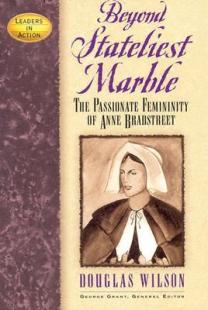
Beyond Stateliest Marble: The Passionate Femininity of Anne Bradstreet by Douglas Wilson, reviewed here. Didn’t like it as much as I expected I would, but it is still valuable in many respects.

The Renewing of the Mind Project by Barb Raveling, reviewed here. Excellent!

The Hardest Peace: Expecting Grace in the Midst of Life’s Hard by Kara Tippetts, reviewed here. Hard (the subject matter, not the reading), but good.

Robinson Crusoe by Daniel Defoe, audiobook, reviewed here. Glad to have finally worked through this classic. Enjoyed it!

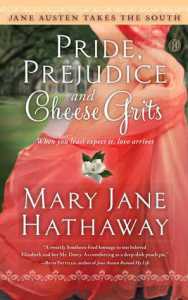
Pride, Prejudice, and Cheese Grits by Mary Jane Hathaway, reviewed here.

The Book Thief by Markus Zusak, audiobook, reviewed here. Too much bad language, but otherwise an excellent book.

One Perfect Spring by Irene Hannon, reviewed here. Overall a good story though with some odd tendencies in the writing.

Be Ready: Living in Light of Christ’s Return (NT Commentary: 1 & 2 Thessalonians) by Warren W. Wiersbe, not reviewed.

I had to lay aside one book of short stories by Ernest Hemingway. I had wanted to read more of his writings since I finished The Old Man and the Sea, but summaries of his other books either didn’t sound interesting to me or sounded like they’d have elements I object to. I thought I’d try a book of his short stories, but the language and blatant immorality got to me in the first couple of stories, and when he got graphic about a sexual encounter in the third, that was the last straw for me. Thankfully Audible allowed me to return it.

I’m currently reading:

Pioneer Girl: The Annotated Autobiography by Laura Ingalls Wilder and Pamela Smith Hill. I really am actually currently reading it this time. 🙂 I had started it a long time ago, but had not picked it up in a while.

The Wind in the Willows by Kenneth Grahame, audiobook.

Don’t Let the Goats Eat the Loquat Trees: The Adventures of an American Surgeon in Nepal by Thomas Hale

Be Faithful (1 & 2 Timothy, Titus, Philemon): It’s Always Too Soon to Quit! by Warren W. Wiersbe

Up Next:

Ten Fingers For God: The Life and Work of Dr. Paul Brand by Paul Brand. This will be a reread: I first read this in my 20s or early 30s.

Home to Chicory Lane by Deborah Raney

Are you looking forward to some summer reading?

Book Review: The Renewing of the Mind Project

Renewing the MindI first became aware of The Renewing of the Mind Project by Barb Raveling through my friend Kim’s blog. She had also introduced me to two of Barb’s other books which I reviewed together last year: I Deserve a Donut (And Other Lies That Make You Eat) and Taste For Truth: A 30 Day Weight Loss Bible Study.

Barb begins with her testimony of the joy she found when she became a believer in Christ and the changes He worked in her heart and life. After a while, though, she “left her first love” and began skipping her quiet times with her Bible and prayer. She’d make resolutions and minor changes, but the same bad habits kept resurfacing. She knew only God could change her, and she prayed for that and waited, but nothing really happened. Finally she realized Romans 12:1-2 about being “transformed by the renewing of your mind” had an expectation for her. It is God who does the changing, not our self-will or self efforts, but He does expect us to learn the truth He has given us in His Word and apply it.

She expands on this in Chapter 3, “Just Say ‘No’ to Sin?” She brings up God’s commands to the Israelites to walk around the walls of Jericho a certain number of times for a certain number of days. She points out that it was definitely God who brought the walls down, yet He required this action and obedience on their part. She notes that though Jesus won the “ultimate victory…conquered sin through His death and resurrection, and we’re already new creatures if we’re His children through faith (2 Corinthians 5:15-21, Romans 6:4-11),” there are still things He “tells us to do after we’re saved, if we want to be transformed” (p. 13). Things like “Fight with spiritual weapons (Ephesians 6:10-18); “Take your thoughts captive to the truth” (2 Corinthians 10:3-5);  Abide in Jesus (John 15:1-5); Abide in God’s Word (John 8:31-32); Walk by the Spirit (Galatians 5:16-25)” (p. 13), among others.

Do you see what an active role God asks us to play in the transformation process?…[This] list requires all kinds of effort. But there is a problem: the word effort is a no-no in the church today. People mistakenly think that if we talk about effort, suddenly we’re not believing in salvation by grace through faith, and we’re going all legalistic. Nothing could be further from the truth (p. 13).

Barb shares a couple of clarifications:

Don’t make the mistake of thinking [transformation] is the easy three-step plan to fix up your life. It’s not. Instead, it’s a way of life. A continual taking off lies and putting on truth in order to break free from our sins, bad habits, and negative emotions so we can love God and others better (p. 6)

We’re not starting from a point of having to measure up to be acceptable to God. We’re starting from a point of already being accepted by God if we’re His children through faith (Ephesians 2:4-9). This gives us a secure foundation. We can rest in His love and walk hand in hand with Him, working on this project together (p. 7).

[God] sees things right now in your life that He’d like to change. Not because He’s a demanding perfectionist who’s disgusted with you. But because He’s a loving Father who cares about you and also about the people you interact with each day. So as you look at your weaknesses, look at them from the comfort and safety of your Father’s arms. knowing that He’s looking at them with you, but through eyes of grace and love and a desire to help (p. 8).

She shares another motive for transformation: God wants us to “lay down our lives to love God and others well. The more we stay stuck in our sins and negative emotions like worry, anger, and insecurity, the harder it is to do that” (p. 14).

Some years ago, after being distressed with an angry response of mine, I looked up several verses on anger, typed them up in a neat list, and saved them to a file. That helped while I was working on them, but making lists in themselves doesn’t renew my mind. Barb describes the process like this: “The renewing of the mind is an active time of fellowship with God…but [it] is more than just reading the Word. It’s mulling over the Word, meditating on the Word, memorizing the Word, and allowing the Word to transform us” (pp. 15-16). It is “to put off your old self, which belongs to your former manner of life and is corrupt through deceitful desires, and to be renewed in the spirit of your minds, and to put on the new self, created after the likeness of God in true righteousness and holiness” (Ephesians 4:22-24).

When we’re in the midst of temptation, everything within us is screaming to just give in and do it! We’re believing lies right and left–so many lies that there’s no way we can say no to temptation in our own strength. We desperately need to go to God for help so we can see the situation from His perspective. Because when we see it from His point of view, we’ll actually want to obey Him. The truth is, Satan and the lies of this world are so convincing that unless we go to God again and again to discuss life with Him, we won’t have much of a chance of living the way He asks us to live. If we want to be victorious over our habits and emotions, we need to take time to renew our minds (p. 17).

Barb goes on to discuss ways to meditate on the Scripture, using it in fighting sin and in prayer, and a concept she calls truth journaling, a way of putting out your thoughts one by one and then applying truth to them. Sometimes it is easier to evaluate our thoughts when we can take them out of their swirl in our brain and get them down in black and white, and applying the truth to them in that way helps to reinforce truth. She walks the reader through renewing our minds to deal with negative emotions, stop a bad habit, start a good one, or accomplish a goal.

The rest of the book is divided into different headings (emotions, stopping a habit, etc.) and then subdivided into specific areas (loneliness, insecurity, entitlement, failure, pride, frustration, stress, “I’ll start tomorrow,” and many, many more.) Under each specific emotion, habit, or thought, she has a list of questions, things you might need to accept or confess, Bible verses, and tips. For instance, some questions under the Entitlement heading are:

Why do feel like you deserve your habit in this particular situation?

Do you think God agrees? Why or why not?

What usually happens when you live by your rights and feelings in this area of your life?

Would your life be better if you gave up your rights and held life and your habit with open hands?

Are boundaries easy to follow or do you usually have to give up something to follow them?

What will your life look like in a few months if you consistently follow your boundaries?

Then she lists several Bible verses applicable to this subject. She ends with these tips:

It’s hard to break free from our habits because we hear the message everywhere we go: Life should be fair. You shouldn’t have to suffer. You deserve the good life. So when something bad or unfair is going on in our lives, we automatically reach for our habits.

The best way to break free from entitlement habiting is to adopt a biblical perspective of life. God never said, “You deserve the good life.” Instead, He said, “If you want to follow me, you have to give up everything” (Matthew 19:16-22, Matthew 16:21-28).

When we hold our habits tightly with clenched fists, we’re basically saying, “I deserve this, God, and I am not willing to give it up!”

God replies, “Your habit will never make you happy. Come to me and I’ll give you the abundant life.”

The more we hold our habits with open hands, willing to give up all things for God, the more content we’ll be. If you want to gain victory over entitlement habiting, learn to hold your habits–and your “right to the good life”–with open hands (pp. 186-187).

Of course, Barb isn’t saying that if you just answer these questions, read or even memorize the verses, and read the tips, then, Voila! You’re done! You’ve conquered! You’ll no longer have trouble with that habit! No, as she said in an earlier quote, it’s a way of life. When we’re tempted, when we’ve failed, when we think we have pretty good reasons for what we want to do or feel, when we’re going into a situation where we know we’ll have trouble – these are all situations, among others, where we need to go to God’s Word and renew our minds to think like He does.

A few more quotes that stood out to me:

[Boundaries] cramp our style, but you know what? Our style needs to be cramped. Because there are consequences to doing “what we want when we want” with our habits. Just think of your own habit. What happens when you do it as much as you want to do it? Do you live a wonderful, peace-filled life, thanking God every day for your habits? Or do you live a stressful, regretful life, full of the consequences of too much habit? (pp 60-61).

Is God enough to satisfy you even if you don’t get what you want? (p. 131).

Will breaking your boundaries make you feel better?…Will it solve your problems? Will it create new problems or make the situation worse in some way? What do your boundaries protect you from? Do you need that protection today? (p. 183).

The key to gaining victory over reward habiting is to remember that boundaries make our lives better, not worse. And if boundaries makes our lives better, then breaking them is a punishment — not a reward (p. 206).

Her mention of boundaries in these quotes refers to whatever specific guidelines we set up to curb a habit – say, for instance, we’re not going to eat sweets after dinner, or open Facebook until we’ve had devotions, or whatever. “The minute we set boundaries, our first impulse is to break them. Since we feel guilty about breaking them, our minds frantically (and secretly) try to come up with some justification of why in this situation, it’s okay to break our boundaries” (p. 202). There may be some times to legitimately break our boundaries, but we need to be honest with ourselves and not just make excuses and remember why we set the boundary in the first place.

As you can surmise, I found this book immensely helpful, hopeful, and encouraging. I love Barb’s direct, practical, straightforward style and her emphasis on the power of the Word of God and not a “formula” to help us change to be more like our God. She has a website here: the “Renewing of the Mind tools” tab expands on some of the principles in the book.

(Sharing at Semicolon‘s Saturday Review of Books)

Book Review: Pride, Prejudice, and Cheese Grits

PP&CGPride, Prejudice, and Cheese Grits by Mary Jane Hathaway might sound like a Southern version of Jane Austen’s novel, and indeed it is. Set in the present-day South, it is not a point for point retelling – there are a few differences in characters and plot. But if you’re thinking of P&P while reading it, you’ll recognize a number of plot points and people. This book is the first in Hathaway’s “Jane Austen Takes the South” series. I had read the second book, Emma, Mr. Knightly, and Chili Slaw Dogs, first and then backtracked to read this one.

In this story, Shelby Roswell appreciates history, from old houses to old diaries. In fact, she is a professor of history specializing in the Civil War era working to become tenured. She had written a book with hopes of it propelling her toward her goal, but eminent Civil War expert and writer Ransom Fielding wrote a scathing review of it for a national magazine. And now he’s a visiting guest professor at her college for an entire year. She hopes to avoid him, but at their first meeting, they clash big time, and publicly at that. They each push all the wrong buttons in the other, yet find qualities attractive in each other.

Ransom is, of course, devastatingly handsome, sure of himself, and seemingly a little stuffy at first. He lost both a wife and child, leaving him bitter against God and determined to guard his heart from ever loving another woman.

Of course, following P&P, you know where this is going to go, but it is fun to see how it gets there. Jane from P&P is replaced by Shelby’s roommate, Rebecca, English professor and Jane Austen expert. Ransom’s aunt Margaret Greathouse represents the formidable Lady Catherine de Bourgh. Shelby’s family represents Elizabeth’s in a laid-back father, marriage-minded mother, and silly sisters. Mr. Collins and Wickham are combined in a David Bishop.

I’ve seen a couple of reviewers refer to this volume as more preachy than the second book, but I’d have to ask what they mean by “preachy.” To me, a preachy Christian fiction book is more a “lesson” thinly veiled as a story and may entail finger-wagging and implied “You ought…” advice to the reader. I saw none of that here. As I wrote in Why Read Christian Fiction?, you’d expect in this genre to see professing Christian characters doing Christian things like reading their Bibles and trying to figure out how to apply their faith to everyday life. I do find that here in a natural, uncontrived way, such as when Shelby, after a heated encounter with Ransom, wonders why she has a hard time with putting into practice the verse she had read that morning about being swift to hear, slow to speak, and slow to wrath when she is around him (though actually it’s not just around him – she tends to blurt things out before speaking to nearly everyone) and, when they finally talk about his wife and child, and she advises him in ways to deal with it. That’s perfectly normal. The author seemed to go the other way in the second book – I remember wondering why it was called Christian fiction when there wasn’t really anything distinctly Christian in it that I could recall. Perhaps she did so in response to criticism in this book, but I’d rather have Christianity displayed as it is here rather than being so subtle it is unobservable.

There were a couple of plot points that didn’t quite make sense to me, but overall the writing was fine. There were a couple of sections I felt didn’t need to be there: for instance, when Shelby is holding her cousin’s baby while talking to Ransom, the baby keeps putting its fist in her cleavage. Sure, babies do things like that, but in a book there was really no reason to draw attention (ours or Ransom’s) to her cleavage. And one character is framed with a fake video of a fake sexual encounter. Sure, there is scandal in P&P when Lizzie’s sister runs off with Wickham, but we are told very little about it. This book doesn’t go into all the specifics of the tape but mentions more than necessary – and I felt the conflict and tension this incident was supposed to create could have been handled in a different way. I’ve seen a couple of reviewers mention a swear word in the book, but I don’t remember any, and I am usually sensitive to that.

But I thought the theme that “love changes us” was nicely brought out, and I enjoyed the ways it changed Ransom and Shelby. And the Austen connections were fun, too.

(Sharing at Semicolon‘s Saturday Review of Books)

Book Review: The Book Thief

Book ThiefThe Book Thief by Markus Zusak begins in the Germany of the 1930s with ten year old Liesel Meminger, who is being taken to German foster parents. Her own parents were “taken away” because they were Communists and her brother dies en route, so she arrives alone and very frightened. Her foster father, Hans Hubermann, is kind and gentle and comforts her when she wakes up with nightmares. Her foster mother, Rosa, seems gruff at first, calling her and everyone else an endless stream of bad words, but soon Liesel learns it’s just Rosa’s way, that she does have a caring heart underneath the gruff exterior.

Though Liesel is ten years old, she is illiterate, so in school she is grouped with the younger children. Hans only got through third grade himself, but he tries to help Liesel with the one book in the house – the grave digger’s handbook that a worker accidentally dropped at her brother’s burial, which she stole just as a remembrance of him. Hans is a painter, and he furthers Liesel’s lessons in the basement, writing letters and words on the walls, which he can repaint as needed.

For a few years life goes on as normal, or as normal as possible as the clouds of WWII gather on the horizon. Liesel becomes best friends with neighbor and classmate Rudy Steiner and learns to read more proficiently. The children are all made to join the Hitler youth, and one activity they are required to go to is a book burning. As the crowd disperses, Liesel sees a book that is singed but hasn’t burned, and when she thinks no one is looking, she takes it – her second book theft. But then she realizes someone has seen her, and lives in terror of what might happen to her. As it turns out, her observer is the mayor’s wife, Ilsa Hermann, who, instead of turning Liesel in, invites her to her home to use her library.

Times get harder as rations are enacted, Rosa loses laundry customers due to the financial situation, and Hans loses painting customers because he’s stigmatized after painting over slurs on a Jewish man’s door.

Years earlier in WWI, Hans’s life was saved by a Jewish friend, and when he visited the man’s wife and son, he told them to call on him if they ever needed anything. They do so in quite an unexpected way: the son, Max, is now a grown Jewish young man seeking refuge. The Hubermanns hide him in their basement and share their already meager food rations with him.

The plot goes on from there with the dangers of air raids, of discovery, of being sent to war and not making it back or returning maimed, of the tightened Nazi atmosphere.

The story is told in an odd way with Death as the narrator, but he offers a unique perspective. He, or rather, the author, uses quite a lot of foreshadowing  – not even shadowing, but foretelling what’s going to happen, like one character’s death. That bugged me quite a lot at first: I’d rather have the drama of building up to it and then being surprised. In one place Death says, after revealing a significant coming situation,

“Of course, I’m being rude. I’m spoiling the ending, not only of the entire book, but of this particular piece of it. I have given you two events in advance, because I don’t have much interest in building mystery. Mystery bores me. It chores me. I know what happens and so do you. It’s the machinations that wheel us there that aggravate, perplex, interest, and astound me. There are many things to think of. There is much story.”

In another place he says he foretells a bit to soften the coming blow. He also narrates in a zig-zag way, jumping ahead, then backtracking, that’s a little confusing at times.

The worst thing about the book is the excess of profanity. I had read somewhere that there were a few bad words, but they were mostly German, so the non-German reader is spared the full impact of them. That didn’t turn out to be true. Both general bad words and taking the Lord’s name in vain pervade seemingly every page. If I had known just how extensive it was going to be, I would have been less inclined to read the book. I had read somewhere that the author didn’t specifically write this as a young adult novel, but rather wrote it for a general audience; however, it’s seems to have been marketed as a YA novel, and some of the explanation of things adults wouldn’t need explained seems to indicate it’s written more for young people, which makes the profanity all the more atrocious.

Aside from the profanity, though, it’s a beautiful story. It’s mainly about the power of words. As Liesel’s world opens up with reading, she finds books a help as she reads to Max to alleviate boredom, to comfort him when he is sick, and to help distract people in  air raids shelter. But at one point, after so much loss in her life, which she traces back to Hitler, she hates the power of words for evil and rips apart a book, vowing to never read again. Then she is given a blank book to write her own words and discovers the healing power of being able to express her own thoughts and to combat hate with words. She concludes, “I have hated the words and I have loved them, and I hope I have made them right.”

The writer does have a knack for descriptive phrasing:

The brute strength of his gentleness

A snowball in the face is surely the beginning of a lasting friendship.

The church aimed itself at the sky.

Lacerated windows

The gun clicked a hole in the night.

Her teeth elbowed each other for room in her mouth.

His blond hair peppered with dirt.

Night watched. Some people watched it back.

Somewhere, far down, there was an itch in his heart, but he made it a point not to scratch it. He was afraid of what might come leaking out.

I loved the well-drawn characters – Liesel, Hans, Rosa, Rudy, Max, Ilsa Hermann.

It’s also a book about humanity. Death often muses on humans’ penchant for good and evil:

“I’m always finding humans at their best and worst. I see their ugly and their beauty, and I wonder how the same thing can be both.”

“I guess humans like to watch a little destruction. Sand castles, houses of cards, that’s where they begin. Their great skill is their capacity to escalate.”

“So much good, so much evil. Just add water.”

“I wanted to explain that I am constantly overestimating and underestimating the human race – that rarely do I even simply estimate it. I wanted to ask her how the same thing could be so ugly and so glorious, and its words and stories so damning and brilliant…I am haunted by humans.”

The last is one of many examples of irony in the book – Death haunted by humans, when usually humans are haunted by the thought of death. Another is when Max carries a copy of Mein Kampf with him on his way to Hans, a book in which Hans had hidden a key. Thus the book which condemns him is instrumental in saving him.

As to death’s conundrum over humans, I have often pondered over the atrocities committed by people against their fellow men through the years, particularly in the case of slavery, prisoners of war, treatment of the Jews, child abuse, etc.  Humans’ occasional penchant for beauty and good comes from having been made in the image of God. But that image has been marred by sin – in all of us. It’s not a matter of fanning the flames on the good side so that it will outweigh the bad. We all fall short of the glory of God – some to a further degree than others, but none of us can ever attain that original image by our own efforts. Wondrously, God provided a Savior to forgive our sin and draw us back to that image.

In some ways, the book itself reflects Death’s summation of humans: kindness and beauty in unexpected places, profanity, darkness, and cruelty in others.

I enjoyed the audiobook, wonderfully read by Allan Corduner. I haven’t yet seen the recent film based on the book, but want to soon. From what I have read, it doesn’t have the profane words that the book does. I don’t know how they condensed almost 14 hours of reading into a 2 hour movie and what they might have changed or left out – we’ll see! Here is a trailer for it:

(Sharing at Semicolon‘s Saturday Review of Books)
Book Review: One Perfect Spring

One Perfect SpringI’ve seen many blog posts recommending Irene Hannon, so when One Perfect Spring came through on a Kindle sale, I got it. Hannon is most known for mysteries, but has written a few contemporary romance novels, this being one of them.

The story opens with workaholic Keith Watson sifting through requests for his boss’s McMillan Charitable Foundation to find the best two or three he could recommend. Among them he finds a handwritten note from an eleven year old girl named Haley asking for the firm’s help for her neighbor. Haley had seen Mr. McMillan’s picture in the newspaper and was told by her mom that he “did nice things for people.” Her neighbor was seeking for a son she had given up for adoption, and Haley wanted Mr. Macmillan to help her. Keith places the note on the reject pile to be sent a standard letter. But his boss finds the note and wants Keith to follow up on it. He sees in Keith a younger version of himself and wants to help him avoid the mistakes he made in putting his work first place for too much of his life. Keith is less than thrilled, but follows through.

The neighbor in question is Maureen Chandler, a college professor. She had just been through cancer treatments that seemed to be successful so far, but the bout caused her to reflect. She had given up her son twenty-two years ago and kept him a secret. Now she wants to make a connection and try to find some closure.

Keith’s pursuit leads him not only to Maureen, but her neighbor, Haley’s mother, Claire Summers. Claire is a single mom who bought a fixer-upper house and is trying to take one project at a time as the budget allows, doing much of the work herself to save money. Keith and Claire don’t hit it off at first, but Maureen and David MacMillan do.

While Keith works on Maureen’s case, some of each character’s past and issues are revealed. They have to learn that dealing with the past and forgiveness are necessary parts of preparing for a future, that learning to trust again is possible but takes time, and that giving a person another chance is necessary.

I enjoyed the story very much. But one aspect of Hannon’s writing grated on me after a bit.

“Mmm. Cream cheese…sweet, smooth, and yummy. Kind of like the man who’d brought it.”

“The effort to eradicate [the paint] chafed her skin, leaving an angry red blemish. Kind of like the lingering blemish left on her heart…”

“[The chair] must be stronger than it looked. Kind of like the owner of this house.”

“She transferred the [hot] dish to the table as fast as she could, touching it as briefly as possible. Kind of like the way she’d handled the events that had gotten her into a mess…Like the hot casserole, her story had the power to burn.”

“[The race] was neck and neck, making the outcome hard to predict. Kind of like the outcome of her relationship with Keith.”

There are half a dozen or so of these “kind of like” comparisons, and many more that don’t use that exact phrasing (“She picked up his glass, swirling the ice that was quickly melting in the heat of the house. Warmth could melt so many things. Including hearts.” “She swiped up a stray drip of mustard left from their dinner, the cheerful hue reminding her of Haley’s comment about Keith brightening up their house.” “It was only a room. But could it symbolize more?”) The first time, I thought, “She didn’t just do that, did she?” Symbolism is a great literary device, but it’s usually much more subtle than that. I don’t think many people see that many connections or object lessons throughout life.

But I am hoping that this isn’t characteristic of Hannon’s writing, and I liked the story well enough to seek out another of her books. In fact, the preview of one of her mysteries at the end of this book hooked me in enough to want to find out what happened.

If you like clean (except for one inexplicit yet to me kind of tacky reference) Christian fiction where characters are realistically flawed, yet learn and grow through the story, you would probably like this book.

(Sharing at Semicolon‘s Saturday Review of Books)

Book Review: Beyond Stateliest Marble

I first “discovered” Puritan poetess Anne Bradstreet in a college American Literature class, and loved her work. I focused on her for one of my 31 Days of Inspirational Biography series a couple of years ago. So when I heard there was a good biography of her life, I put it on my Christmas “wish list.”

Beyond Stateliest MarbleI finally got to it this past month: Beyond Stateliest Marble: The Passionate Femininity of Anne Bradstreet by Douglas Wilson. The title comes from a quote by Cotton Mather, leading preacher of the day, saying that Anne’s poetry provided a “monument for her memory beyond the stateliest marbles.”

In all honesty, I spent the first 3/4 or so of this book being aggravated at it for what it lacked as a biography. It took that long for me to realize it’s not really a biography. Wilson says near the end it’s a tribute to her. It’s part of a “Leaders in Action” series, so it’s presenting that aspect of her. And the great bulk of it is a treatise. So once I realized and acknowledged those things, I was able to relax and take it for what it was.

One of Wilson’s biggest purposes in writing the book (what I called his treatise) is to defend against two erroneous suppositions: that the Puritans were dour, repressed, cheerless, unimaginative, legalistic people as a whole, and, 2) that Anne was anything but a thoroughgoing Puritan. Many modern treatments of Anne will portray her as a closet feminist, or an anomaly, or as having written such bright poetry in spite of her setting and position as a wife and mother rather than her Puritans beliefs, community, and calling as a wife and mother being the springboard from which she wrote. I do believe these misunderstandings at best, or false accusations at worst, do need to be shown as mistaken and wrong, and this book does a very good job of that.

The book is divided into three parts: her life, her character, and her legacy. The chapters are generally thematic rather than linear. We do get some of Anne’s background in the first section: the kind of family she grew up in, the times and setting, her marriage to Simon Bradstreet, their decision to sail from England to America, the voyage, the adjustments for a cultured woman in a non-settled area, her children, and her writing. She had no intentions of publishing her work, but her brother-in-law took copies of her poems and had them published in 1650 in England under the title The Tenth Muse Lately Sprung Up in America (or, to be exact: The Tenth Muse, lately Sprung up in America, or Several Poems Compiled with Great Variety of Wit and Learning, Full of Delight, Wherein especially is Contained a Complete Discourse and Description of the Four Elements, Constitutions, Ages of Man, Seasons of the Year, together with an exact Epitome of the Four Monarchies, viz., The Assyrian, Persian, Grecian, Roman, Also a Dialogue between Old England and New, concerning the late troubles. With divers other pleasand and serious Poems, By a Gentlewoman in those parts.)

It was well-received, to say the least, and her poetry has been well-read ever since.

The second section deals with about 30 different character traits (each chapter focusing on one and only about three pages) with Wilson illustrating those traits in Anne’s life either through her poetry or others’ comments about her. And the last section contains four chapters dealing with her legacy.

Though I appreciated what I learned about Anne in this book, overall I felt it contained too much of Wilson and not enough of Anne. I know that “show, don’t tell” is a mantra of fiction rather than non-fiction, but I felt Wilson spent too much space telling his opinions about Anne and what he thought was right and wrong and not enough of showing her through her own writings. I also didn’t like his tone, which I felt was condescending towards those he disagreed with. He faults others for the broad brush strokes with which they portray the Puritans, but then he does the same towards other groups. But most of the reviews I perused on Goodreads voiced high praise for this book, so don’t take my word for what I consider its problems. Maybe our personalities just don’t mesh: in his chapter on humor, I didn’t think anything he brought up as an example of humor was remotely funny (for instance, he says that when Christ brought up to the woman at the well in John 4 that she’d had five husbands and the man she currently had was not her husband, that he was teasing her [p. 163]. I don’t think Jesus would tease people about their sin, and she certainly didn’t seem to take it as a joke.)

However, I do agree with him that Anne is a worthy subject, and that the Puritans were not what people think of them today, and that Anne was content as a wife and mother within a conservative Christian setting and wrote from that setting contentedly, not rebelliously.

One quote of Anne’s that stood out to me was in reference to her children: “Diverse children have their different natures; some are like flesh which nothing but salt will keep from putrefaction, some again like tender fruits that are best preserved with sugar…Those parents are wise that can fit their nurture according to their nature.”

Though some of her poetry’s subjects include theology and even the Queen, my favorites are the ones dealing with her walk with God, and her home, and family. I’ll close with my favorite two:

By night when others soundly slept
And hath at once both ease and Rest,
My waking eyes were open kept
And so to lie I found it best.

I sought him whom my Soul did Love,
With tears I sought him earnestly.
He bow’d his ear down from Above.
In vain I did not seek or cry.

My hungry Soul he fill’d with Good;
He in his Bottle put my tears,
My smarting wounds washt in his blood,
And banisht thence my Doubts and fears.

What to my Saviour shall I give
Who freely hath done this for me?
I’ll serve him here whilst I shall live
And Loue him to Eternity.

___

To My Dear and Loving Husband

If ever two were one, then surely we.
If ever man were loved by wife, then thee;
If ever wife was happy in a man,
Compare with me ye women if you can.
I prize thy love more than whole mines of gold,
Or all the riches that the East doth hold.
My love is such that rivers cannot quench,
Nor ought but love from thee give recompense.
Thy love is such I can no way repay;
The heavens reward thee manifold, I pray.
Then while we live, in love let’s so persever,
That when we live no more we may live ever.

(Sharing at Semicolon‘s Saturday Review of Books)

Book Review: Robinson Crusoe

CrusoeI tried to read Robinson Crusoe by Daniel Defoe some years ago, but, even though I know to be patient with older classics, I was bored to tears and never finished it. When I listened to The Moonstone recently, one of the characters in it referred to Robinson Crusoe quite a bit, and I thought, that’s it, I have got to finally read this thing. 🙂 I did not find it hard at all to get into this time. I think listening to an audiobook, read by David Warner’s easy-on-the-ears voice, helped immensely. I read parts in the online version on Project Gutenberg.

All I knew about the story was that Crusoe went off to sea in rebellion to his father’s wishes and somehow landed on a deserted island – deserted, he thought, until he had been there alone for some years and then was startled one day to find a single footprint that he knew wasn’t his, and that later he finds a black man whom he names Friday who becomes his servant. I didn’t realize that there were other adventures, both before and after his time on the island. In fact, the original (and very long) title to this book was The Life and Strange Surprizing Adventures of Robinson Crusoe, Of York, Mariner: Who lived Eight and Twenty Years, all alone in an un-inhabited Island on the Coast of America, near the Mouth of the Great River of Oroonoque; Having been cast on Shore by Shipwreck, wherein all the Men perished but himself. With An Account how he was at last as strangely deliver’d by Pyrates. Quite a mouthful! These days it’s usually shortened to The Life and Adventures of Robinson Crusoe or just Robinson Crusoe.

Wikipedia says this book, published in 1719, “is often credited as marking the beginning of realistic fiction as a literary genre,” and Sparknotes comments, “His focus on the actual conditions of everyday life and avoidance of the courtly and the heroic made Defoe a revolutionary in English literature and helped define the new genre of the novel. Stylistically, Defoe was a great innovator. Dispensing with the ornate style associated with the upper classes, Defoe used the simple, direct, fact-based style of the middle classes, which became the new standard for the English novel.”

The story opens with a bit of background of Crusoe’s family. “Being the third son of the family and not bred to any trade, my head began to be filled very early with rambling thoughts.” His father wanted him to go into law, but Robinson “would be satisfied with nothing but going to sea.” His father earnestly admonished him that he had an opportunity for a comfortable life that had none of the problems of the very poor or very rich, and that he feared that if Robin persisted in his plans, it would come to no good end. Robin listened and waited a year, but in all that time could not make himself settle down to a profession. When he was nineteen, an opportunity arose for him to go out on a friend’s father’s ship, and “I consulted neither father nor mother any more, nor so much as sent them word of it; but leaving them to hear of it as they might, without asking God’s blessing or my father’s, without any consideration of circumstances or consequences,” he went.

His first journey is beset by storms and seasickness; his second journey ends with the ship being overtaken by pirates and his being made a slave.  After a while he escapes with a young boy named Xury, whom he makes his servant. They are rescued by the captain of a Portuguese ship, which takes him to Brazil. He sells Xury to the captain, obtains a plantation, and gets on fairly well for a number of years. Then he goes out to sea again with some others to obtain slaves, and that ship wrecks in a storm and Robinson lands, alone, on the island where he will spend the bulk of his life.

A great part of the story is taken up with his management on the island. He’s greatly afraid at first until he explores enough to find that he is alone and there doesn’t seem to be any kind of dangerous creatures. He fashions a raft and gets as much as he can off the ship before it’s broken to bits. Then he sets about making a shelter and planning how to ration his supplies and supplement them with what he can find on the island.

He calls it the “Island of Despair.” Many times he feels bad about his situation and prays to God for help, but he’s not really repentant yet. He’s like the stony ground in the parable of the sower in which something seems to be growing at first, but as the bedrock beneath has never been broken up, spiritual life doesn’t really take root. It’s not until some time later when he is very sick with ague that he comes to the end of himself and truly repents and turns to God. The book is surprisingly frank and orthodox about spiritual issues (surprising in the sense that a book this close to Biblical truth, and, in fact, somewhat didactic at times spiritually, has been so popular for hundreds of years. I’m glad – just surprised. Even the Sparknotes and Shmoop commentaries handle this aspect with being derogatory). When he gets discouraged, he makes up a list of the bad and the good: I’m alone on a desert island/at least I’m alive; I don’t have clothes/but I’m in a hot climate where I don’t need them, etc., and thus he is encouraged.

As first Robinson is in bare survival mode, but after a while his skills and possessions increase. He knows he must make provision for when his supplies from the ship run out. He throws out some leftover seed from a bag and is surprised when corn and barley grow from what he thought was just dust and feed remains, and he thanks Providence. He finds some birds which are good to eat, as well as turtles (which he cuts open to gather their eggs). He is pretty ingenious: one thing he lacked was any kind of iron. Once when cooking something in an earthenware pot he made, a piece of it broke off in the fire and became hardened. He began to try ways of heating his clay creations to make hardened, watertight vessels. Much of this and the rest of his work was trial and error, and many things took a great deal of time. Much of the middle section of the book is his dealing with these kinds of things and musing to himself.

He learns to be pretty content expect for the lack of companionship and sometimes feels like “my majesty the prince and lord of the whole island.” He even makes different areas to live, calling one his castle and another his “country house.”

But the pivotal moment comes when, after years on the island alone, he unexpectedly finds a man’s footprint in the sand. Further investigation leads to a site where cannibals have had a disgusting feast. Robinson determines to prepare for the next time they come to the island and kill them all, but then he wrestles with his conscience about whether that would be the right thing since they don’t know they are doing wrong. When they do come again, one of their prisoners breaks away. Robinson rescues him, names him Friday (that being the day of the week he found him), and makes him his servant.

This is one area that would offend modern sensibilities: Crusoe’s making Xury and servant and then selling him, and then making Friday a servant. Friday seems happy to be a servant in exchange for his life having been saved, but it seems arrogant and ungracious for one person to enslave another. It was the way of the world then, but Sparknotes makes this interesting analysis from Chapters 24-27:

The affectionate and loyal bond between Crusoe and Friday is a remarkable feature of this early novel. Indeed, it is striking that this tender friendship is depicted in an age when Europeans were engaged in the large-scale devastation of nonwhite populations across the globe. Even to represent a Native American with the individual characterization that Defoe gives Friday, much less as an individual with admirable traits, was an unprecedented move in English literature. But, in accordance with the Eurocentric attitude of the time, Defoe ensures that Friday is not Crusoe’s equal in the novel. He is clearly a servant and an inferior in rank, power, and respect. Nevertheless, when Crusoe describes his own “singular satisfaction in the fellow himself,” and says, “I began really to love the creature,” his emotional attachment seems sincere, even if we object to Crusoe’s treatment of Friday as a creature rather than a human being.

Robinson begins to teach Friday about God and Christianity, which Friday readily seems to accept.

What happens to Crusoe and Friday, what other visitors come to the island, and their other adventures off the island, I’ll leave for you to discover.

I’m glad to finally know the story of Robinson Crusoe. Have you read it? What did you think?

(Sharing at Semicolon‘s Saturday Review of Books)


Book Review: The Hardest Peace

Some of you may know the name Kara Tippetts. She was a young pastor’s wife and mom of four who blogged at Mundane Faithfulness, first as a mom blogger, but then sharing God’s grace in her diagnosis and battle against cancer. She passed away about a year ago and her blog now runs archives of her past posts. She came to national attention when, in the midst of her own battle, she wrote an open letter to Brittany Maynard, who was planning to employ physician-assisted suicide to avoid the downward spiral and suffering of a brain tumor, to beg her not to take that route, to promise that God would meet her in her suffering.

I didn’t read Kara’s blog regularly. I would look at the occasional post that someone linked to on Facebook or their blog. But it was too raw, too intense, too much (for me) to read every post.

Hardest PeaceBut I got her book, The Hardest Peace: Expecting Grace in the Midst of Life’s Hard when it was on sale. And just recently someone asked me if I knew of anything to help a woman she knows who is struggling to face her own cancer diagnosis, so I thought I’d read this and see if it would.

Ecclesiastes 7:2 says, “It is better to go to the house of mourning than to go to the house of feasting, for this is the end of all mankind, and the living will lay it to heart.” Nothing wrong with feasting (God planned some into Israel’s calendar, Jesus attended a wedding feast), parties, joy. But someone’s death or dying turns the heart and mind turn to the eternal like perhaps no other situation. We’re reminded that eternity is real, that life really is but a vapor, that Jesus provided a way for heaven, and not this world, to be our final home. That heaven isn’t a cheery add-on to a nice life, but it’s our real home, and this world is just one we’re “strangers and pilgrims” in.

And in Kara’s situation, it was not “just” illness, suffering, and death that she had to wrestle with. It was leaving her husband and children, and finding the peace to trust God that He would work this for good in their lives, and struggling to believe that this was His best for them, even praying for the woman who might some day take her place.

Kara gives us a brief biography of the kind of home she grew up in, of coming to know Christ as Savior, of going to work at a camp as a very raw, green, and unconventional recruit but experiencing life-changing growth in that place. Of meeting her husband and having to learn to put away the anger she grew up with. Of her four children, her husband’s ministry, a difficult church situation, moving to plant a church only to find their new home in a fire zone from which they had to be evacuated. And then receiving her diagnosis, fighting it with surgery and treatments, having it spread, and finally accepting that God was calling her home. She says in this trailer to a documentary made about her that she felt like a little girl at a party whose dad was telling her she had to leave early, and she was “throwing a fit” about it.

“Jason recently said in a sermon, ‘We want suffering to be like pregnancy—we have a season, and it’s over, and there is a tidy moral to the story.’ I’ve come to sense that isn’t what faith is at all. What if there is never an end? What if the story never improves and the tests continue to break our hearts? Is God still good?”

“It would be easier to shake my fist at the test results and scream that this isn’t the right story, but to receive—humbly receive—the story no one would ever want, and know there is goodness in the midst of its horror, is not something I could ever do in my own strength. I simply cannot. That receiving comes from the One who received His own suffering for a much greater purpose than my own.”

“That though the hard might come and our hearts be broken, that brokenness isn’t bad. The tears are evidence of our love for one another. They did not stop that day, and they will not stop in the days to come. But tears are a gift, not something to withhold or bottle up—they are the essence of the best of life.”

“Trusting God when the miracle does not come, when the urgent prayer gets no answer, when there is only darkness—this is the kind of faith God values perhaps most of all. This is the kind of faith that can be developed and displayed only in the midst of difficult circumstances. This is the kind of faith that cannot be shaken because it is the result of having been shaken. Nancy Guthrie, Holding on to Hope.”

“Sometimes the hardest peace to find is the peace in saying good-bye and leaving the work of justice and reconciliation to Jesus.”

“Hard is often the vehicle Jesus uses to meet us, point us to that peace, and teach us grace.”

“If the hardest is asked of us, we believe grace will be there.”

“Dear heart, the purpose of life is not longevity.”

“But because I believe God’s plans for me are better than what I could plan for myself, rather than run away from the path he has set before me, I want to run toward it. I don’t want to try to change God’s mind—his thoughts are perfect. I want to think his thoughts. I don’t want to change God’s timing—his timing is perfect. I want the grace to accept his timing. I don’t want to change God’s plan—his plan is perfect. I want to embrace his plan and see how he is glorified through it. I want to submit. Nancy Guthrie, Holding on to Hope.”

“Seeking grace has been a theme since I met Jesus, but it wasn’t the very air I breathed to get through each moment—each scary, hard moment. The looking has now become my practice. The names of the graces, the gifts I don’t deserve, is new to me. But I do not believe you need to face cancer to see the value of looking for and naming the graces in your own moments, days, weeks, lifetime. To capture this beauty in this weariness, even if your story doesn’t look like mine, will enrich your moments, give you a new perspective, and help you lift your head in the impossibility and pain in living. Hard is hard.”

So, yes, this was a raw, wrenching read in many parts. But it was still a good and necessary one, because we all have to face our own mortality, and there is no guarantee we won’t have to do so for 60-80 years. We need to be ready.

And whatever our “hard” is, as she said in the last quote, when we know Jesus, we can trust Him for the grace to meet it.

(Sharing at Semicolon‘s Saturday Review of Books)

What’s On Your Nightstand: April 2016

What's On Your NightstandThe folks at 5 Minutes For Books host What’s On Your Nightstand? the last Tuesday of each month in which we can share about the books we have been reading and/or plan to read.

The days, they are a-flying. But it’s nice to catch a few moments to read and seemingly slow time down for a bit.

Since last time I have completed:

True Woman 201: Interior Design by Mary Kassian and Nancy Leigh DeMoss, reviewed here. Excellent resource.

The Moonstone by Wilkie Collins, audiobook, reviewed here.

The Reunion by Dan Walsh, reviewed here.

A Slender Thread by Tracie Peterson, reviewed here.

Every Waking Moment by Chris Fabry, reviewed here.

What Follows After by Dan Walsh, reviewed here.

The last four were on my Kindle app. I’ve started reading from it at night before going to sleep – amazing how much you can read in that time! Occasionally a book will keep me up later than I should be, but not often. I got one more in than I thought I would due to a sick day home from church last Sunday.

I’m currently reading:

Beyond Stateliest Marble: The Passionate Femininity of Anne Bradstreet by Douglas Wilson. Not enjoying this one as much as I had expected to. 😦

Pioneer Girl: The Annotated Autobiography by Laura Ingalls Wilder and Pamela Smith Hill

The Renewing of the Mind Project by Barb Raveling

Robinson Crusoe by Daniel Defoe, audiobook.

The Hardest Peace: Expecting Grace in the Midst of Life’s Hard by Kara Tippetts

Up Next:

Pride, Prejudice, and Cheese Grits by Mary Jane Hathaway

Ten Fingers For God by Paul Brand

If I finish these, I have a stack of books to be read on my bedroom bookcase and a multitude in my Kindle.

How about you? Have these spring days allowed you some reading time?