The Fifth Avenue Story Society

(I’m sorry not to have a “Laudable Linkage” post today. I just haven’t had time this week to do much online reading. But I did finish an audiobook I wanted to share.)

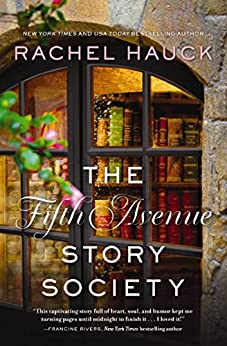
In Rachel Hauck’s novel, The Fifth Avenue Story Society, five New Yorkers receive a mysterious invitation to join said society at the library on Fifth Avenue.

Lexa is an executive assistant to the owner and originator of a growing fast food chain. She came up with her boss from the early days of the company to bring it into the limelight it enjoys now. Since she practically fulfills the CEO role, she pushes for that position. But her boss holds her off.

Jett is a college professor grieving over the loss of a marriage in which he’s not quite sure what went wrong. He’s writing his dissertation on his favorite author, determined to quell suspicions that the author is a fraud. But he secretly harbors his own doubts.

Chuck is an Uber driver. His angry response when he discovered his wife was cheating led her to acquire a temporary restraining order. Now he just wants to see his kids and be part of their lives.

Coral is the heiress and president of the multi-million dollar cosmetics company her grandmother founded. Coral became known publicly as the “panicked princess” when she fled her marriage to a prince at the last minute. And her first new product seems to be tanking, despite all the early promising test results.

Ed is an aging retired newspaper man. Now an apartment building superintendent, all he wants to do with his remaining time is write his memoir about his wonderful wife and the love they had together before she died.

When the five meet for the first time, no one knows who sent the invitation or why. After their initial wariness, curiosity and the need for friendship encourages them to continue.

Each is a wounded soul. Each has a dark, guarded secret they are not willing to share with the others. But as they get to know one another and their lives entwine, can they trust each other enough to share their deepest selves?

I had read only one Rachel Hauck novel before about nine years ago, and on purpose had not read her again. In that case, the story was mostly okay, but some of the writing grated. I did not see those problems with writing in this book. I enjoyed the characters’ stories quite a lot.

The one thing I didn’t like in this book was references to some of the characters’ intimate lives. There are no explicit sex scenes, but there are more references than I am comfortable with.

I’m also wary when both the author and one of her characters claim that God spoke audibly to them.

Also, each book had one mysterious character. The one in the previous book struck me as something of a fairy godfather. The one here merges as something akin to an angel in disguise, but is more likeable and believable than the character in the previous book I read. I don’t know if such characters are a hallmark of all this author’s books.

I had thought at first that this was a Christian fiction book, then thought that it wasn’t. But late in the story, one character does share her faith journey.

I’m left with mixed emotions. The overall story and the emerging of each character’s situation were very good. I was caught up in their lives and hoping for the best resolution for each of them. But some of these other elements put me off.

Three Short Christmas Book Reviews

I hope you’ll forgive all the book reviews this week. I happened to finish a few around the same time. Because of that, and because the first two books here are a little shorter than usual, I decided to review them together.

Christmas Hirelings

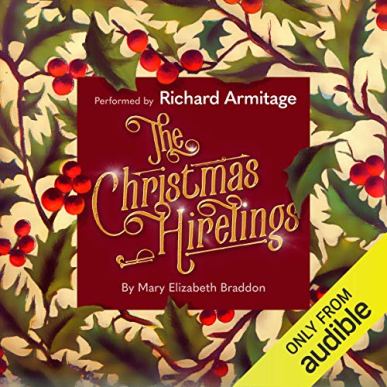
I first read, or rather listened to, The Christmas Hirelings by Mary Elizabeth Braddon a few years ago when it was free for Audible subscribers. I reviewed it here, so I won’t repeat all that. The condensed version: Sir John Penlyon is an old man in Victorian England who is not a Scrooge, but is a little gruff. He complains to his friend, Danby, that Christmas is boring. Danby replies that “Nobody knows how to enjoy Christmas if he has no children to make happy.” Then Danby proposes that they hire some children to come and stay at the manor over Christmas. He knows of a family with three children who have very nice manners but are reduced in circumstances. If Sir John would “hire” the widow’s children, it would liven up their Christmas plus be a help to the family.

Sir John thinks the idea is preposterous, but agrees as long as he doesn’t have to be involved other than paying for the experiment.

The children get off on the wrong foot with Sir John at first, but soon the children bring joy and life into the old house. Until tragedy strikes.

Sir John’s back story is quite touching. I loved listening to this again. I caught things I had missed the first time.

The audiobook is superbly narrated by Richard Armitage (Thorin Oakenshield in Peter Jackson’s Hobbit movies). I may make listening to this an annual tradition.

I got Snowed In for Christmas by Cami Checketts also through Audible. I don’t remember if it was free with my subscription or on a “2 books for 1 credit” sale.

Charlotte Oliver is a firefighter with a lifelong crush on her sister’s friend, Jace Mitchell. Charlotte suspected her sister, Virginia, and Jace were more than friends. But Jace left eight years ago to go into the military, and Virginia married someone else. Then Virginia and her unborn child tragically died in a car accident.

Now Jace is back in town, trying to establish a medical practice. Charlotte is as attracted as ever, but she thinks Jace probably still loves her sister.

Jace had always thought of Charlotte as a cute little sister, but now she’s grown up into a beautiful woman. But he knows a relationship with her is impossible. He’s sworn to secrecy over an event in his past, and he knows Char would never forgive him if she discovered it.

This book reminded me why I don’t usually read stories that are primarily romances. So much talk about kissing, anticipating kissing, remembering kissing. Sure, kissing is fun, but there is so much more to love than that.

The book actually got more interesting to me when Char did accidentally find out Jace’s secret, and they had to work through that.

I did not like how Char’s “Grams” handled things, but I don’t want to spoil the story by explaining.

If you like clean faith-based Christmas romances, you’d probably like this.

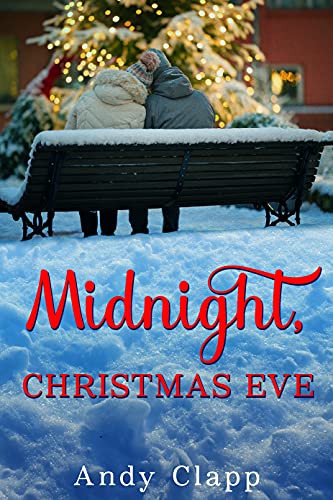
In Midnight, Christmas Eve by Andy Clapp, Brady Jameson was a high school junior out finishing some shopping on Christmas Eve when he saw a girl crying on a park bench. He approached her to see if he could help and discovered the girl was Sarah, the head cheerleader, girlfriend to the school’s best athlete. Brady provided a shoulder to cry on, and he and Sarah became friends.

Sarah’s boyfriend, Aiden, is not good for her, but she stays with him. Brady realizes Sarah has come to mean very much to him, but keeps his distance since she’s dating someone else.

After another chance encounter and another opportunity to comfort Sarah through another crises, she makes a proposition: that if neither of them are married within five years, they’ll meet at Christmas Eve at “their” bench and get married.

Brady agrees and shows up at the appointed time, but Sarah doesn’t. Their lives intersect at various times, but they never mention their promise. Brady comes every Christmas Eve, even when he tells himself he’s a fool for doing so. But Sarah never shows up.

Is Brady a picture of faithful love? Or is he deluded, letting life pass him by while he waits for an impossible dream?

I loved this book. It had me in tears in a couple of places. I appreciated that the characters’ faith was interwoven so naturally and seamlessly.

Though technically this was also a romance, it was so much deeper and so much more was involved than in the previous book I mentioned.

My Christmas reading is off to a good start!

Worthy of Legend

Worthy of Legend is the third installment in Roseanna M. White’s Secrets of the Isles trilogy. The first was The Nature of a Lady; the second was To Treasure an Heiress.

The Secrets of the Isles involves two different groups in search of legendary pirate treasure. One loves “the hunt” and the thrill of archeological finds. The other wants the fame and fortune of such discoveries and employs underhanded means in the race to discover treasure.

Lady Emily Scofield is good friends with the people in the first group. But her father and brother are the primary instigators in the bad group.

Emily has lived her entire life in the background of her brother, Nigel. Nigel was her father’s favorite, and his misdeeds were excused away. Emily is expected to desert her friends and show loyalty to her family. But she can’t.

Instead of writing off her family completely, though, she tries to show love to them. Her friends fear she’ll be taken advantage of again.

Bram Sinclair, Earl of Telford, is the brother of the heroine in the first book. He has had an interest in the King Arthur legends since childhood. As he and his friends piece together clues to the artifact that both groups are pursuing, he realizes what they are looking for might be related to King Arthur. They try to keep this information secret from the other group.

As Bram and Emily’s group works together, Bram is concerned for Emily. He recognizes her conflict with her family and her lack of confidence and self-esteem from having been dismissed and overlooked for so many years. As he tries to encourage her, he discovers a true treasure in her character and heart.

A secondary plot line involves Emily’s maid, Thomasina, who has, unknown to Emily, been violated by Nigel. When a young man from the islands becomes interested in Tommie, she feels he would not be if he knew what had happened to her.

A couple of my favorite quotes from the book:

And if she lost everything all over again . . . well then, she’d just have to trust that the Lord could do more with her shattered than He could with her as she was now, barely holding together. That He meant her to be a mosaic instead of a whole.

Your worth, Thomasina, rests on no one else’s opinion of you. It doesn’t rest even on you. It rests in the Lord. He sees your heart, your soul. And that is all the approval any of us needs.

Bram and Emily were background characters in the previous books, and I enjoyed getting to know them better. I also loved the humorous bantering between Bram and his friend, Sheridan.

I especially liked the fact that these books were in a place I had never heard of, the Isles of Scilly. Now I feel I know the isles and the people on them. And the time frame of the early 1900s isn’t one we see often in historical fiction.

I enjoyed these stories very much and am going to miss these characters.

Bringing Maggie Home

In Bringing Maggie Home by Kim Vogel Sawyer, Hazel DeFord was ten years old when her mother asked her to take her three-year-old sister, Maggie, to the blackberry thicket to pick berries for a cobbler. Hazel set Maggie down for just a moment while she chased a snake away from a baby bunnies’ nest. When Hazel came back, Maggie was gone. None of the volunteers could find a trace of Maggie besides her hair ribbon, shoe, and favorite doll.

Hazel felt incredibly guilty for leaving Maggie unguarded, especially while witnessing the downward spiral Maggie’s disappearance caused in her family. She resolved to be as good as possible so as not to cause them any more trouble.

When Hazel grew up and had her own family, she never told her daughter, Diane, about Maggie. She felt Diane would never be secure with her if she felt she couldn’t trust Hazel to take care of her.

But Diane resented and rebelled against Hazel’s perfectionism and over-protectiveness. Hazel’s concerns came across as controlling to Diane.

But Diane’s daughter, Meghan, loves her grandmother and spends several weeks with her every summer. Now grown and a cold-case detective, Meghan has survived a car crash with a severely broken ankle. She decides to go to her grandmother’s to recuperate and work on some photo albums for Hazel’s upcoming 80th birthday.

Jealous, Diane, decides to come, too, without being invited or letting anyone know. Meghan is wearied playing peacemaker between the two women.

Then an accidental discovery of a shoe box of old photos leads Hazel to tell her daughter and granddaughter the truth.

Meghan and her partner at work, Sean, decide to see if they can uncover any information about Maggie’s disappearance. With the case being 70 years older, older than any case cracked by their agency, solving it is a long shot. But they resolve to try.

I loved this book. I wasn’t sure I would at first, because Hazel’s and Diane’s bickering made me tense. Then I realized the problem was mainly Diane. Hazel’s issues were easier to understand and sympathize with. And Diane’s responses were understandable to an extent. But her bitterness and selfishness got to be a bit much. Still, I felt things would turn a corner at some point, so I persevered. I’m glad I did.

The point of view shifts from each of the women at different times in their lives, and occasionally to Sean’s viewpoint as well. I didn’t feel that the changing viewpoints, timelines, or locations were hard to keep up with at all.

I’ve often said that I appreciate Christian fiction that is unapologetically Christian. I know sometimes the message needs to be subtle, but sometimes subtlety turns into vagueness. It’s good to see an author getting down to the spiritual needs in a story without becoming preachy or beating people over the head with truth. I thought Kim did a great job both with the story and the spiritual issues underneath them.

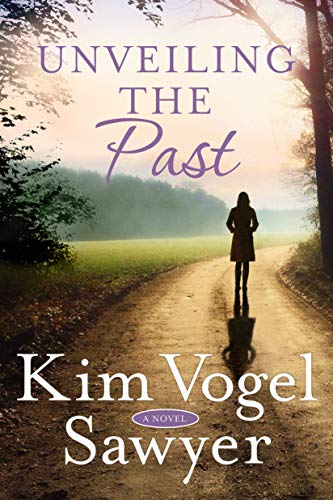
I didn’t know, when I started this book, that it had a sequel: Unveiling the Past. I will probably be reading or listening to that some time soon.

I listened to the audiobook, nicely read by Barbara McCulloh. Unfortunately, the audiobook didn’t contain any back matter, so I am not sure whether any of the story was based on anything in real life.

Christmas Reading Challenges

I always enjoy reading books about or set during Christmas in December. There are a couple of reading challenges where we can share about the Christmas books we’ve read.

I’ve participated in the Literary Christmas Challenge hosted by Tarissa at In the Bookcase for a number of years. Details about this year’s challenge, which runs from now til Dec. 31, are here.

A new challenge to me is the Ho-Ho-Ho Readathon hosted by Caffeinated Reviewer. The challenge details are here. There will be prizes! 🙂 This one runs just from November 18-30—maybe to get us in the right spirit for Christmas?

I usually try to wait til Thanksgiving to read Christmas books, but I may start earlier this year.

I like to read some kind of Christmas or Advent devotional book in December, and Tim Challies shared a good list of some I don’t have. But I decided to try Hannah Anderson’s Heaven and Nature Sings: 25 Advent Reflections to Bring Joy to the World.

I’ve collected most of these on Kindle sales over the last few years. I don’t know how many I’ll get to, but some are novellas or novella collections.

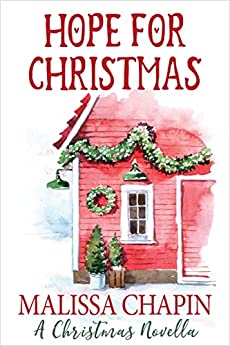
Hope for Christmas: A Small Town Christmas Romance Novella by Malissa Chapin

It’s a Wonderful Christmas: Classics Reimagined by Julie Cantrell, Lynne Gentry, Allison Pittman, Kelli Stuart, Janyre Tromp

Midnight, Christmas Eve by Andy Clapp

Christmas in Mistletoe Square
by Cara Putman, Teresa Tysinger, Pepper Basham, Janine Rosche

Magnolia Mistletoe: An Edisto Christmas Novella by Lindsey P. Brackett

A Goose Creek Christmas by Virginia Smith

The 20th Christmas by Andrea Rodgers

A Christmas Snow by Jim Stovall

A Christmas Bride by Melanie Dobson

This one is a free audiobook for Audible subscribers. I’ve not heard of the author, but the reviewers say it’s sweet and clean.

Snowed In for Christmas by Cami Checketts

I might also listen again to The Christmas Hirelings by Mary Elizabeth Braddon. I really enjoyed this audiobook a few years ago, plus I like Victorian-ish stories at Christmas, too.

I have a couple of Christmas story collections in print books: The Best of Christmas in My Heart by Joe Wheeler and Stories to Read at Christmas by Elsie Singmaster. I might try to read one or both of those.

Three Fifty-Seven

I had never heard of Hank Stewart or Kendra Norman-Bellamy, but their book, Three Fifty-Seven: Timing Is Everything was free for Audible subscribers.I really liked the premise, so I decided to give it a try.

Ms. Essie is an elderly lady who lives alone. Her husband died very young, but she never wanted to remarry. The family for whom she acted as caregiver in their last days left her their home and enough income to be comfortable.

As Ms. Essie sits on her porch and knits, she can’t help but be aware of some of her neighbors’ problems. The single mother yells a lot, and her teenage son shows disrespect and stays out past curfew. A regular jogger from down the street seems to be running from something rather than just running for her health. Angel, her best friend’s granddaughter, is married and expecting her first child. All is well with Angel and her husband until an accident seems to have harmed the baby.

Ms. Essie decides to be as helpful and available as possible. When her neighbors are outside, she invites them in for lemonade and peach cobbler. She offers a listening ear, prayer, and a bit of advice. As their problems intensify, so do her prayers.

As the subtitle indicates, time is a factor in the book. Each chapter starts with the time of day.

We all need a Ms. Essie in our lives. Though I didn’t like the ending, I loved the story and the truth that God can work through us if we’re available to Him.

My only minor complaint about Essie is that the authors may have made her a little too special in the sense of knowing just what to say or how to get people to share their troubles. One character says Essie “had a direct line to heaven, and God told her things He told no one else.” I wish that had been dialed back a bit and she were more ordinary–that would be more encouragement to those who don’t reach out because they don’t know what to do or say.

Unfortunately, for me a major flaw was bedroom scenes or descriptions that went too far. I don’t want or need to know the details. For that reason, I probably wouldn’t look into a book by these authors again. And that’s really a shame, because otherwise this was a great book.

A Daily Rate

The second free Grace Livingston Hill audiobook I mentioned yesterday was titled A Daily Rate.

Celia Murray lives in a Philadelphia boarding house. She and the other residents put up with awful food and shabby surroundings. She’s concerned about one of the younger men who is hanging out with the wrong crowd in the evenings. A couple of the young women seem giggly and frivolous and into nothing more than dating and novels. Celia wishes she could fix up the place and make it more home-like. Perhaps then some of the others would stay in for more wholesome activities.

Celia would also love to bring her Aunt Hannah to live with her. Aunt Hannah had raised Celia when her parents died. Then Hannah had taken in some other nieces ad nephews as well, but they didn’t seem to appreciate her efforts as much. Due to reduced circumstances, Hannah now lives with another niece who treats her as an unpaid servant and baby-sitter.

When Celia comes into an unexpected small inheritance at the same time her landlady has to take a leave due to medical problems, Celia is able to make both dreams come true. She brings Aunt Hannah to help her “mission of making one bright little clean home spot for a few people who had hitherto been in discomfort.” They start small with a few touches here and there, but the biggest change is in providing nourishing food in a clean and attractive setting.

Though Celia has good intentions, she comes across as somewhat judgmental. Plus she is impatient. When her efforts appear to fail, she wants to give up. But Hannah gently helps her gain the right perspective.

One level of the plot has to do with the transformation of the home and boarders, but another level focuses on Celia’s maturing.

A Daily Rate was one of Hill’s earliest novels, written in 1900. The Search, mentioned yesterday, was written 19 years later. Like any author, Hill’s growth as a writer can be seen in her later book. But this one was good as well. It was fun in both books to hear the slang of the day and to get picture of life in that era.

I especially appreciated the emphasis in A Daily Rate on how homemaking can be a ministry to a home’s inhabitants. Even though that’s my chosen profession, I can still get caught up in all the “stuff” that has to be done and have not the best attitude about it. It helps to be reminded that the “stuff” of housekeeping isn’t an end in itself.

The Kindle version of this book is available for 99 cents at the time of this writing.

The Search by Grace Livingston Hill

Somehow I never read Grace Livingston Hill, even though her books were very popular with young women when I was in my teens and twenties. I thought of them as clean, sweet romance novels. Though most fiction will include romance, no matter the genre, I prefer novels with more to them.

But recently I finished my audiobook and wouldn’t receive a new credit for my next book til the end of the month. I scrolled through Audible’s selections that are included free with membership. I found a couple of Hill’s books there, so decided to give them a try.

The first was titled The Search. Ruth Macdonald is a society girl whose life consists of parties and outings with friends. When WWI starts, Ruth helps in ways that ladies of her class did: making bandages, knitting socks and sweaters for soldiers. etc. Some of her male friends became officers. But the magnitude and meaning of the war didn’t really sink in until she accidentally came upon a group of people seeing draftees off. There Ruth saw an old classmate, John Cameron, who was not of her “set,” but who had done her a kindness when they were children. Ruth is struck by his tender good-bye to his weeping mother and his brave, resolute face. Their eyes met for a brief moment.

Ruth decides to write to John as a friend to tell him she still remembered what he did for her so long ago and to express her appreciation for his part as a soldier. She writes that she hadn’t really thought of the sacrifice young men were making until she saw him.

John is touched by Ruth’s letter, and they begin corresponding regularly. When John gets leave to come home, he asks to visit Ruth.

But then he learns that an old enemy plans to marry Ruth. Could Ruth really love someone like that?

Then this old enemy becomes an officer in John’s company and makes his life miserable.

As John knows he must be prepared for death when his company leaves for France, he tries to search for God. His home minister is not much help. But someone he meets on base gives him a New Testament, and various contacts along the way shed light. But somehow he still doesn’t comprehend.

He tells Ruth about his search, and she realizes that, even though she has been in church all her life and been a “good” girl, she doesn’t really know God either. She embarks on a search of her own.

Hill’s style and tone seemed very similar to Louisa May Alcott and D. E. Stevenson, though Hill is more overtly Christian. Hill’s lifetime was between the other two ladies, overlapping them each by a few decades.

I enjoyed the story quite a lot and wished I had read them in my younger years.

A Kindle version of the book is currently available for 99 cents.

The Italian Ballerina

The Italian Ballerina by Kristy Cambron is one of those books that makes you want to put everything aside and just read.

Delaney Coleman has just returned home to help her parents after the death of her grandfather. She learns that they’ve received notices from a family in Italy saying they have a claim to something of her grandfather’s. Delaney’s mom has ignored the messages, but Delaney looks into the claim.

She speaks to Matteo, who says that Delaney’s grandfather owned a small ivory suitcase printed with cherries on the outside. He claims that the suitcase belongs to his grandmother, and she’d like to have it back. His family offers to fly Delaney and the suitcase to Rome.

Intrigued and confused, and as a writer “between pens,” as she puts it, Delaney decides to accept the offer. In Rome, Delaney meets Calla, Matteo’s grandmother. Calla can’t speak English, but she gazes at Delaney and says, “Salvatore.” Delaney and Matteo work together to learn the connection between their grandparents.

Scenes switch back to Delaney’s grandfather’s time before and during WWII. Court Coleman had gotten himself into trouble and pushed away Penelope, the girl he loved. Roped into helping Penn’s father at their orchard in order to pay off his debts, Court begins to settle down and wonder if he might have a chance with Penn again. But then America enters WWII, and Court is sent to Italy as a medic.

One day as his unit is on a reconnaissance mission, Court and his commanding officer, AJ, are stranded while a Nazi troupe is rounding up Jews. They are horrified to watch the Nazis shoot a couple in cold blood and leave their daughter in the streets. Against orders, Court rescues the girl and is injured in the process.

He wakes up in an Italian hospital. He finds that he is in a quarantine ward, where a mysterious, deadly illness called Syndrome K is running rampant.

Except—Syndrome K is a made-up illness, created to keep the Nazis away from the ward while the doctors and Catholic priests who own the hospital hide and send out Jews.

A British ballerina named Julia and her partner are stranded at the hospital as well while he heals from a gunshot wound in his leg. She helps Court and A. J. and the little girl with them, as well as the doctors in the ward.

Unfortunately, the audiobook I listened to did not include the author’s information about what parts of the story were true, and our library system didn’t have a copy.. But the part about Syndrome K was real, as detailed here.

There are many strands nicely woven together in this novel, many developing relationships, and the unfolding mystery of the connection between Matteo’s and Delaney’s grandparents. The Amazon description says, “Based on true accounts of the invented Syndrome K sickness, The Italian Ballerina journeys from the Allied storming of the beaches at Salerno to the London ballet stage and the war-torn streets of World War II Rome, exploring the sometimes heart-wrenching choices we must make to find faith and forgiveness, and how saving a single life can impact countless others.”

I’ve gotten used to time-slip novels that go back and forth between history and present day. Kristy has written a few with three timelines. The only problem was that the scenes flashing back to Court’s earlier life weren’t in chronological order. The first scenes were in Italy during WWII–then there’s a scene at Penn’s family’s orchard before the war. The same thing happens with Julia’s timeline. The format made it a little confusing and jarring, although it only took a sentence or two to get reoriented. I had to train myself to listen for the date and location listed at the beginning of each chapter, which is a little harder to do with an audiobook.

But other than that, I loved everything about this book. I wanted to race to see what happened, yet didn’t want it to end.

I listened to the audiobook, wonderfully read by Barrie Kreinik.

The Hatmaker’s Heart

In The Hatmaker’s Heart by Carla Stewart, Nell Marchwold is an apprentice designer at Oscar Fields Millinery in 1920 New York City. Nell loves to make hats that frame a woman’s face and bring out her best features.

But Nell speaks with a lisp when she’s flustered, so Mr. Fields has kept her in the background—until one of his best clients falls in love with Nell’s designs. The prestigious Mrs. Benchley wants to commission Nell to make hats for herself and her two daughters for an upcoming event.

Then another well-known designer wants to use Nell’s talents for a show he is putting together.

Mr. Fields allows Nell to work on these other projects, but under the auspices of his shop. He’s two-faced, promoting her in public but treating her like dirt in private.

When Nell and Mr. Fields have an opportunity to go to London, Nell seeks a chance to visit her grandmother and a childhood friend, Quentin. Nell realizes she loves Quentin, but he seems to have moved on. And Mr. Fields is not giving her much time to spend with other people.

It’s hard to imagine that Nell just keeps taking what Mr. Fields is dishing out. But then, she’s young and naive. A big part of her character development is becoming her own person, deciding what she truly wants, and developing the backbone to stand up for it. Nell’s grandmother’s counsel reminds her to seek the Lord and walk with Him.

The book’s setting was interesting with the details about hatmaking. I had done just a tiny bit of that when working for a florist friend part time years ago, but we mostly just decorated hat forms. We didn’t make them from scratch like they did in the 1920s. And I never would have suspected that hat designs could be such a cutthroat business. But I guess they were a big enough fashion item in the day for designers to compete for their sales and designs.

A friend recommended a counselor to Nell to deal with her stammer. I wondered if his methods were true to the times–concluding that the stammer was related to a childhood trauma, having Nell remember specific incidents and draw pictures of them.

Quentin didn’t seem terribly well developed as a character. Since he and Nell were apart for most of the book, we really didn’t get a feel for any chemistry between them. Plus he seemed to have abrupt changes of heart in a couple of places.

So, I have mixed responses to the book. But overall it’s a good story.