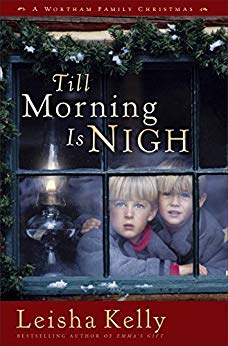
Book Review: Till Morning Is Nigh

Till Morning Is Nigh: A Wortham Family Christmas by Leisha Kelly comes about in the middle of her six-book series about the Wortham family. I finished the series back in September but wanted to save the Christmas story until now.

The Wortham family had been down and out during the Depression. With their last hope of a job fallen through, they hit rock bottom. They took shelter in an abandoned house, then got the idea that perhaps the owners would let them stay there in exchange for fixing up the place. The owner was an elderly woman named Emma who took a chance on the family. She had not been able to live home alone, but the Worthams eventually moved her back into her home with them, and she became a grandmother and mentor to the family. That was back in Book 1, Julia’s Hope.

This story opens several years later. Emma has passed away as has the Wortham’s neighbor, Mrs. Hammond, a mother of ten children. George Hammond had been devastated and unstable after his wife’s death, and the Hammond children often spent as much time at the Wortham’s house as their own.

George had seemed to settle down for a while. But now it’s the first anniversary of his wife’s death, and he’s missing. The older children think perhaps he has drowned his sorrows in a drinking binge, but they fear worse. Some of the middle children are angry. The younger children are just sad and afraid. The Worthams take them all in and try to help. On top of everything else, some of them have the flu.

While nursing the various sick ones, keeping everyone fed, praying and worrying, Samuel and Julia Wortham try to prepare a meager Christmas and discuss what they should do if the worst has happened to George.

When a friend tells Julia, “I don’t know how you do it,” Julia responds, “I don’t. Whatever you think I’m accomplishing, I really can’t manage at all. Nothing but the good Lord could have gotten me through this holiday.”

Someone suggests that they make a Nativity scene out of what materials they have. The project starts out as a diversion but eventually becomes meaningful in various ways to different ones.

This story is a reminder that not all Christmases are giddy parties. Sometimes deep grief and stark need prevent the usual Christmas we’ve come to expect. But joy, love, and light can shine in and touch hearts.

I think this book could be read easily as a stand-alone. Enough of the back story is explained that readers new to the series wouldn’t feel lost. But the story is richer for having read the rest of the Worthams’ books. I enjoyed them all, so I recommend them all to you.

(Sharing with Grace and Truth, Carole’s Books You Loved, Booknificent)
Book Review and Giveaway: Catching Christmas

 In Terri Blackstock’s novel, Catching Christmas, Finn Parrish is a grumpy cab driver called to the house of an old woman named Callie. First he’s put out to make a residential call, as he needs money and can make more in the city or at airports. Then he finds the old woman alone and asleep in her wheelchair. She wakes up and introduces herself—and continues to fall asleep, wake up, and introduce herself for the rest of their time together. When she is awake, she makes unfiltered comments on the people she sees.

Finn takes her to her doctor’s office and tries to explain to the distracted receptionist. He leaves for a few hours, but can’t get his mind off Callie. He drives back by the doctor’s office to check on her, and finds her asleep right where he left her. He makes a fuss insisting that they see her now and waits for her, then takes her home. He leaves his card in case she needs help and wonders what kind of loved ones she has, that they would leave her in such a state.

Callie’s granddaughter, Sydney, is a lawyer in a firm that is downsizing. Her job is hanging by a thread, dependent on her current ridiculous case, one she doesn’t believe in. On top of the extra work created by layoffs, her grandmother suddenly seems to be not quite in her right mind. She wished she could have accompanied her to the doctor, but they both need her job.

The next day Finn gets an early call from his dispatcher. A customer has requested him by name. He’s thrilled until he finds out it’s Callie. She wants him to take her several places in town. He doesn’t want to be stuck with her all day, doesn’t want to be responsible for her, and can’t afford to spend his day on one fare. But he goes. Callie has a way of talking people into what she wants, and she has a secret mission.

This book is outside Terri’s usual suspense dramas (though there’s a touch of suspense when a black limousine shows up). But I’m so glad she wrote it. It’s a sweet and touching story, just right for the holidays. Finn and Sydney don’t have much of a spiritual foundation, but they’re impacted by Callie and some of the people in her life. The faith element is not spelled out quite as much as I’d like: Finn and Sydney are just beginning to understand what it means. But it’s a strong undercurrent.

I also enjoyed reading Terri’s afterword about the influences that went into the story.

I’d like to give away my gently-used copy of this book. If you’d like to enter a drawing to win it, leave a comment on this post. I’ll draw a name on Wednesday morning, Dec. 18, the same day as my giveaway for The Carousel Painter. You can enter both giveaways but only win one: if you’d like to enter both but have a preference of one over the other, let me know. Due to mailing costs, I can only ship to continental US addresses. I’ll count all comments on this posts as entries for Catching Christmas unless you ask me not to.

Even if you don’t win, I hope you’ll check out this great book.

(Sharing with Global Blogging, Senior Salon, Carole’s Books You Loved, Booknificent)
 

(Update: The giveaway is closed and the winner is Becka. Congratulations, Becka!)

Book Review and Giveaway: The Carousel Painter

In the novel The Carousel Painter by Judith Miller, Carrington Brouwer has just traveled from France to Ohio. Her artist father has died and Carrington needs to find a means to support herself. She had befriended a young American women visiting France named Augusta, who had invited her to Ohio. But now Augusta’s mother, preoccupied with climbing the social ladder, is clearly not pleased. When Carrington learns that Augusta’s kindly father owns a carousel factory and needs an artist to paint the horses, Carrington assures him she could perform the job.

He hires her, but it’s uncommon for a woman to work in a factory full of men in 1890. Some protest and complain; some of the wives accost Carrie in public to try to scold her into quitting. Some men go so far as to quit or sabotage her work. Her supervisor, Josef, is not happy to have her there, but he can only abide by the boss’s wishes. The fact that Carrie is a friend of the boss’s daughter, and Carrie goes to their house every weekend, doesn’t sit well with the men, either.

Eventually Carrie’s talent speaks for itself. But a new enemy arises in the form of Augusta’s suitor, who has eyes for Carrie. Then some of Augusta’s mother’s jewelry is stolen, and Carrie is blamed.

Carrie’s mother had taken her to church, but her father “said God was for weak people who needed a crutch to get through life. Mama didn’t agree. She said believers were the strong ones because they had faith in something beyond what they could see and feel. I tended to agree with Mama. At least until she died.” Part of Carrie’s journey is realizing she has issues with besetting sins like pride.

I enjoyed the story and they way some of the relationships developed over the course of the book. Josef ended up being my favorite character. I also liked learning the background of how carousels were manufactured and painted. I guess they are probably made of molded and dyed plastic now. The old ones were individual works of art. I loved the cover.

Somehow I ended up with both a paperback and Kindle copy of this book. I read the Kindle version, so I’d like to give away the paperback. If you’d like to be entered in the drawing for the book, just leave a comment on this post. (I’ll take all comments here as entries unless you let me know you’re not interested in receiving the book). I’m afraid I can only ship to US addresses due to shipping costs. A week from today, Wednesday, Dec. 18, I’ll draw a name from the entries to determine the winner.

(Update: The giveaway is closed and the winner is Vickie. Congratulations!)

(Sharing with Carole’s Books You Loved, Booknificent)
Book Review: Canteen Dreams

 Canteen Dreams is a novel based on author Cara Putman’s own grandparents. It was her first book, released eleven years ago. But Cara wanted to fine-tune and re-release it. This edition came out on 2017.

The story opens December 6, 1941. Audrey Stone attends a dance in her home town of North Platte, Nebraska, and is asked to dance by local rancher’s son, Willard Johnson. Willard is interested and wants to get to know Audrey better.

Then Sunday morning, the Japanese attack Pearl Harbor, and everything changes.

Willard’s brother, Andrew, was in the Navy. While the family waits to hear about Andrew, Willard would like nothing better than to enlist immediately.

But Willard’s father won’t let him. Farming and ranching are exempted occupations, since the country needs their work. Willard’s father feels he needs Willard’s help more than the military needs him.

Since North Platte is a railroad hub, and lots of troops come through on their way to service, someone gets the idea to offer the boys food and coffee during their brief stop. The young men are so encouraged and appreciative of the effort that the train stop refreshments grow into a canteen, with a nearby building, music, sandwiches, and a friendly atmosphere.

Audrey throws herself into working the canteen, on top of her full-time job as a teacher. She has little time for anyone or anything else, which doesn’t help her budding relationship with Willard.

Willard’s dissatisfaction with not being able to enlist grows into resentment and jealousy of the young soldiers at the canteen, which further impacts things with Audrey.

Both Willard and Audrey are believers and struggle with seeking God’s will for their lives. I liked their pastor’s counsel, especially these bits:

Let the sure hope we have in Christ build a bedrock of faith in your life. It’s the only way to survive a storm like the one your family has entered.

He is the vine, and we are the branches. We cannot expect to have the strength to lay down our lives, our rights, for others until we are firmly growing in a deep relationship with Christ. A superficial relationship is not sufficient. Without more, we will fail every time in our attempts to die, because we attempt to do it without the strength and love God gives.

This was a sweet story in itself, but knowing it was based on a real couple made it even more enjoyable.

(Sharing with Literary Musing Monday, Carole’s Books You Loved, Booknificent)

Book Review: Jessie’s Hope

 In Jennifer Hallmark’s debut novel, Jessie’s Hope, Jessie is a young woman who lives with her grandparents. An accident that claimed her mother’s life left Jessie in a wheelchair since childhood. Jessie’s father abandoned the family.

Jessie is engaged to Matt and looks forward to their marriage. But she wrestles with several issues. Does Matt really love her, or does he just feel sorry for her? Though she longs to be independent, she worries that she won’t be able to be the wife Matt needs. And she wonders about her father and whether she should try to look him up.

Jessie’s grandfather, Homer, wants to provide Jessie with a beautiful wedding, but funds are limited. He goes to a ritzy wedding shop to see what can be done, but can feel their scorn towards a poor farmer in overalls who couldn’t possibly afford anything in their shop.

The course to a perfect wedding never did run smooth (apologies to Shakespeare), and a variety of problems crop up before the big day.

A secondary story line involves Angeline. She works at the ritzy wedding shop and had a crush on Matt, but he rebuffed her. She’s jealous of Jessie and feels Jessie views her as an enemy. But then they are thrown together in unexpected ways.

This is a sweet story with a number of underlying themes: the difficulty and necessity of forgiveness, the need to yield to God’s control instead of our own and to walk with Him by faith, the need to help others.

I love the strong sense of place Jennifer created. The contemporary Southern setting is distinct without being overly romanticized. The dialogue is just what I grew up with:

“What can I do you for?’

“If it tweren’t one thing, it was another.”

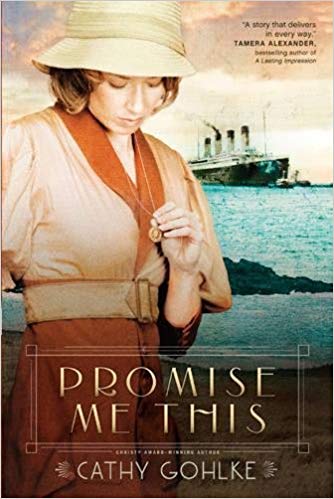
The cover is lovely and fits in well with the story.

My only quibble is that when Jessie us talking with another girl about becoming a Christian, the conversation revolves around accepting God as one’s Father. I think probably the author put it that way because both girls had father issues, and even though earthy fathers fail and forsake us, our heavenly Father never will. However, there are people who call on God as Father who do not trust Christ as Savior. Jesus and his death on the cross isn’t even mentioned in the conversation. Perhaps the author felt this character had been exposed to other aspects of the gospel in earlier encounters with Christianity. But I wish this had been a little more clear.

Otherwise, this is an excellent book. At the moment it’s on sale for the Kindle app for $3.99. You can learn more about Jennifer at Alabama Inspired Fiction.

(Sharing with Carole’s Books You Loved)

Book Review: Like a Flower in Bloom

 In the novel Like a Flower in Bloom by Siri Mitchell, Charlotte Withersby’s father is a botanist in Chesire, England, in the 1850s. Her mother was a botanist as well, and Charlotte loves to study and illustrate plants. Since her mother died, Charlotte has been her father’s assistant, secretary, and all around right-hand person.

But Charlotte is now 22, and her uncle, the Admiral, thinks it’s high time for her to go into society and find a husband. Charlotte has no interest in either society or matrimony. She loves her work, and she doesn’t think her father can possibly do without her.

But then a long-time correspondent, a Mr. Edward Trimble from New Zealand, shows up on the Withersby’s doorstep. He seems the ideal solution: he can assist Charlotte’s father so the Admiral can introduce Charlotte to society.

Besides Charlotte’s lack of interest, being presented to society is fraught with another  major problem. Charlotte’s father has never had any interest in society. He has always been the somewhat eccentric absent-minded professor type. With only her father as her main companion for life, Charlotte doesn’t know how to dress or act. Fortunately she finds a friend in Miss Templeton, who likes Charlotte’s quirky ways. Miss Templeton is younger but also tasked with finding a husband, something she dislikes as much as Charlotte, but for different reasons.

Charlotte hatches a plan. Since she can’t seem to escape her fate, she’ll go after a husband just to make her father realize that he can’t do without her. Then he’ll call off this nonsense.

But Mr. Trimble proves himself an able assistant, so that her father seems to be able to get along without her very well. And her plan to attract suitors, assisted by Miss Templeton, succeeds only too well.

I’m afraid I didn’t like Charlotte at first. Even the person who came to love her called her “the most maddening, most vexing, most exasperating woman I have ever met.” I didn’t mind the fact that she didn’t know how to fit in society, and I even agreed with her that some conventions seemed silly. But at first she seemed to see only her own viewpoint. Yet, as I got to know her, and as she broadened her horizons and learned a little humility, she grew on me.

One of my favorite quotes from the book:

Conversation, my dear Miss Withersby, is a very fragile creature. You must nourish it if you would have it survive. Its favorite food is a question.

Siri Mitchell’s books are far more than romances. I loved her note at the end of the novel where she explained the different influences that went into this story: women who contributed to the study of botany but could not be published under their own names, the conflicting views of botany between scientists and religious people, the eccentricity of botanists, the unusual collections and plant projects of the times, the Opium wars between Britain and China, the nature of introverts, the concept of a helper in the Bible, Victorian gender roles and expectations. She wove all of these together seamlessly, with warmth and humor. Above all the book illustrates the main theme of being who God created you to be.

(Sharing with Literary Musing Monday, Carole’s Books You Loved, Booknificent)


Laudable Linkage

IMG_0195

Here are a number of noteworthy reads discovered recently:

How Christians Should Respond to Kanye’s Reported Conversion, or any celebrity profession of faith. HT to Challies.

Our Words as an Instrument of Gentleness. An example of a soft word turning away wrath in a volatile situation.

Living a Legacy Life. The older we get, the more we realize how little time we have left. Make it count.

Be Patient with Us as We Learn, HT to Challies. “Older saint, we need you to make the first move and keep pursuing us. We need you to seek, mentor, disciple, and love the younger Christians in our church. I’m asking you to be patient with younger Christians with a patience such as our Lord Jesus exemplified. When we act in pride, please patiently endure us.”

How to Help an Anxious Child.

3 Things to Keep in Mind When Hospitality is Hard, HT to Story Warren.

Announcements at Church: Why Do We Do Them? HT to Challies. I love this description: “It’s being like the family at Sunday lunch, sharing about what’s happened and what’s coming up. It’s about connecting, lining up, knowing what we are all up to. It’s about love.”

For Those Who Turn Up Their Noses at Christian Fiction.

To Infinity . . . “I’m thankful for stories that awaken our imaginations and, in so doing, encourage us to press on. I’m thankful for the adventures that happen in Narnia and Middle Earth and Aerwiar and Natalia. I’m thankful for the imaginary world and surprising wisdom of Andy’s toys. And I’m thankful for the Story that all good stories ultimately point to, whether the authors themselves realize it or not . . .”

Finally, this is amazing. A man with cerebral palsy creates art using just ten keys on a typewriter:

Book Review: A Constant Heart

 A Constant Heart by Siri Mitchell takes place towards the end of Queen Elisabeth’s reign. The Earl of Lytham, a nobleman who was one of Elisabeth’s courtiers, needed to advance himself in her favor so as so as to earn a pension, knighthood, or something to increase his own fortune. To garner money to finish and maintain his homes, he found a knight paying a good dowry to marry off his daughter. Lytham did not really care about the girl, and was, in fact dismayed that she was beautiful. His first wife had been beautiful—and traitorous and unfaithful.

The earl’s new bride, Margret, had been trained since she was five only to please her future husband. Since it was obvious she could not please the earl personally, she sought to advance his interests at court. But she was an outsider, and a beautiful outsider at that. No one must outshine the queen. Marget’s life as a courtier fell flat until Lady de Winter took her in hand and advised her to do what every other female courtier did: shave her eyebrows, paint her face white with ceruse (a white lead mixed with vinegar), and dye her hair red to look like the queen’s.

The longer Margret stayed at court, the more she discovered the futility of life there. “It was a way of life that seemed to produce nothing of worth and yet consume everything of value.” And she came to understand that few there could be trusted. But she seemed to have no choice but to continually turn herself into what she was not.

And then the most dangerous development occurred. Lytham and Margret came to actually love each other. But no courtier was to love anyone more than his queen.

My thoughts:

I loved the depths of historical research deftly layered into this book. Siri states in a note to readers that the main characters were fictitious, but the circumstances were real. Elisabeth wore the ceruse paint to cover up both signs of aging and the smallpox she had endured. People didn’t realize the negative effects of lead paint until later. I had hoped Siri would also talk about some of the other details of the story in her note, but she didn’t. I did some reading about being a courtier in Elisabeth’s time, and many of the details Siri brought out were mentioned. Siri didn’t go into any of Elisabeth’s many accomplishments: perhaps all or most of those occurred before this last decade of her reign.

Some would want to know that sex is referred to often in the book. Since one method some used to curry favor involved sexual advances, that kind of thing could not help but be mentioned. But nothing is explicit.

I enjoyed Margret’s and Lytham’s journey toward learning to truly love each other and wrestling with just who the sovereign was in their lives. Grace was contrasted with the consuming machinations to court the favor of a capricious monarch. The integrity of a faithful heart was shown to have great value in all eras.

(Sharing with Carole’s Books You Loved, Booknificent Thursday)

Book Review: A Promise in Pieces

In A Promise in Pieces by Emily T. Wierenga, Clara Kirkpatrick and her best friend, Eva, just finished nursing school during WWII. Clara’s father was a pacifist preacher. “Daddy didn’t know the truth about the war . . . he just stood at his pulpit and spouted about peace while men died to make it happen.” Clara and Eva ran away to enlist as nurses.

Clara’s heart was broken many times over caring for soldiers in various states of health in the worst physical settings. On a particularly bad night, she had a patient named Gareth who was dying but singing hymns. He had been a preacher, but he and his wife, Mattie, felt he should go fight to defend people against the evils of Hitler. Gareth’s faith and example rekindled Clara’s. Gareth asked her to take a letter to his wife as soon as she could after the war.

Clara fulfilled Gareth’s wish and went to see Mattie and deliver Gareth’s letter. “Mattie’s home reached out like an old friend, with its shutters around the windows and its welcome mat and white lace at the windows.” Mattie wanted to talk extensively with the last person to see Gareth. The two became friends, and Mattie gave Clara a baby quilt she had made. Since Mattie’s own dream of having a family was now gone, the quilt was too painful to keep.

After the war, Clara became a midwife. When she delivered a baby, she loaned the blanket to the new mother and then embroidered his or her name on the quilt along with a word of blessing. She didn’t think she’d ever marry: she had seen so much loss and devastation, she didn’t want to love someone only to lose them.

But life took Clara and the quilt in surprising directions. She faced more than one tragedy and struggled with the search for significance. “I somehow missed the war, in a mournful, sadistic kind of way. I missed knowing I was needed. I missed fighting for something. I felt a little lost, not having a clear, defined purpose.”

The story is told by Clara as a grandmother sharing the details with her grandson on a family trip. Some parts of it are shared as flashback chapters. Then the last third or so of the book catches up with the family in real time. and continues from there.

Though sad in parts, the story shares Clara’s growth in faith and her finding her purpose. There are sweet and poignant moments throughout.

But there were also a couple of odd places. In one passage she tells her children:

“God is kind of like sugar. He dissolves inside our hearts. So he’s there, and he’s making us sweeter, so to speak, but he isn’t visible.” There was quiet as they ate, and I thought about the love of Oliver and these children and the friendship of Mattie and the dream of the women at the tables, and I thought, in fact, God is so very visible. We just have to have eyes to see him.”

I think she’s just trying to make the point that God works on us invisibly, from the inside out. But I have trouble with the analogy of God “dissolving” in our hearts.

In another place, she speaks of “How we are all God-in-flesh, born to die to ourselves, so others might be saved.” I think she’s just saying that God calls us to lay down our lives for others as He did. But even though He indwells believers, I wouldn’t call us “God-in-flesh” in the same way Jesus was.

I tried to look the author up online, but links to her website, Facebook page, and Twitter accounts all led to error pages or “Page Removed” messages. I found a few articles of hers online but not enough to really know where she’s coming from. Her other books are nonfiction.

This book is part of a “Quilts of Love” series, but from what I can tell, the books are individual stories unconnected to each other except with the quilting theme.

Except for the couple of odd places I mentioned, this was a good story.

(Sharing with Carole’s Books You Loved, Booknificent Thursday)

Two Book Reviews: Rachel’s Prayer and Sarah’s Promise

Leisha Kelly’s books about the Wortham family take them from the Depression through WWII. Since I finished the last two within a couple of days of each other, I decided to review them together.

In Rachel’s Prayer, WWII is in full force. Several from the Worthams’ Southern Illinois area enlisted, including Robert, the Worthams’ only son, and three of the next-door Hammond boys. Frank Hammond desperately wanted to, but his limp and inability to read kept him out of the service.

The Hammond’s father, George, handles his sons’ leaving like he handles everything else: by not handling it and withdrawing. He has not handled life well since the first books, but he took a downward turn when his wife died, leaving him with ten children. Throughout this book the family begins to think it’s not just drinking and laziness that affect George. There’s something fundamentally wrong with his thinking. He would probably be diagnosed with depression today.

Rachel is Robert’s girlfriend, and his sister and parents are getting used to the idea that he’s grown up and will probably propose once he gets back home.

With that many young men going off to war, it’s inevitable that some won’t come back and some will come back changed. The folks at home deal with uncertainty and sorrow not only across the sea, but in their own neighborhoods.

But even though there are sad parts to this book, God works through the sadness to strengthen and draw people closer to Himself. Ultimately Sarah finds it good to “to let my future, my heart, and his, rest where he said they belonged: in the hands of God. No other hands could be so capable. None could be more generous, more able to give peace in trials, strength in despair, and understanding in the midst of a confusing world.”

In Sarah’s Promise, Sarah Wortham and Franky Hammond are engaged. Frank is about to leave on a 200-mile journey to help his brother move. Folks are worried because Frank can’t read and the winter weather is iffy. But Frank has a good memory, and his brother has drawn a map and told him the succession of towns he’ll need to pass through.

Everyone assumes Frank will continue on doing wordwork with Sarah’s father. Sarah would like nothing better than to live nearby to the only home she’s ever known. But Frank wants to prove himself. All his life he’s dealt with not only being unable to read, despite desperately wanting to, but also with being thought “different.” Frank tends to think deeply to the point that he’s unaware of what’s going on around him, causing his siblings and especially his father to accuse him of being addle-brained and unable to function without supervision. Frank would love the opportunity to work on his own and provide for Sarah without the safety net of their families, which scares Sarah to death.

While Frank is away, he and Sarah both have praying to do, trials to undergo; lessons to learn. One of the most beautiful parts of the book I can’t share much about without spoiling the climax, but my heart was so touched by a pastor’s ministry to Frank when he was at his lowest, when all his father’s verbal abuse made him think he couldn’t accomplish anything.

I dearly loved all of these books. Leisha had such a skill in bringing us right into the characters’ circumstances and emotions and weaving spiritual truth into the fabric of her stories. I was sad to learn, as I mentioned in a previous review, that she and her teenage son had passed away a few years ago in a car accident. I’m sad for her family but also for readers.

I wanted to list the first four books as well, linked back to my reviews:

  1. Julia’s Hope introduces us to the Worthams, a family at their lowest point that has lost everything in the Depression. They come to an abandoned house and offer to fix it up in exchange for living there, eventually allowing the elderly owner to come back home as well.
  2. Emma’s Gift. Emma, the elderly lady from the first book, dies, as does her neighbor, Mrs. Hammond, mother of ten. The Hammonds and Worthams are not only devastated, but uncertain of their future, as Emma owned the property they all live on.
  3. Katie’s Dream. Sam Wortham’s ne-er-do-well brother brings a young girl and a convincing story that she belongs to Sam. But Sam has never been unfaithful. Why is his brother doing this? Will the town, and most importantly, his wife, believe him? And what do they do about the little girl?
  4. Rorey’s Secret. Rorey, the oldest Hammond daughter, has gotten in with a bad crowd. When a fire starts in the family’s barn, causing serious damage and injuring Mr. Wortham and Bert Hammond, Frank is blamed. He’s innocent but won’t cast the blame on anyone else. Rorey knows the truth, but will she share it?

The last three books are technically the Country Road Chronicles, but they timeline continues through all six. Each could be read as a stand-alone book, but I’d recommend reading them all in order. There’s a Christmas story in the series as well that I haven’t read yet: I’ll save it for December.

I’m going to sorely miss the Worthams and Leisha.

(Sharing with Carole’s Books You Loved, Booknificent)