Why Read? Why Read Fiction? Why Read Christian Fiction?

photo 1(1)

I have been reading Christian fiction for some 35 years or so, and for the most part have loved it. It has ministered to me in many ways. I always wince a bit when I hear someone “slam” it. Especially when they say “All Christian fiction is…” whatever it is they don’t like about it. My snarky(and probably fleshly) inward response is “You haven’t read all of it.” 🙂

I’m probably not going to convince anyone who is dead set against it, and that’s fine. We can still be friends. 🙂 But I wanted to share why I find it valuable, and to do that, it seems to me I need to start with reasons to read anything in the first place, and then reasons to read fiction, and then Christian fiction.

Why Read?

God chose to communicate to us through words. He created the world by speaking. His Son is called “the Word.” The Bible contains a number of different genres (poetry, history, letters, narrative, forensics).

To gain information

To learn – about other people’s experiences, other points of view, any of the many things we don’t know yet or know as much as there is to know

To understand how things work

To understand how others feel and develop empathy.

To gain perspective

To gain wisdom

To broaden horizons. There are places you’ll likely never go, experiences you’ll likely never have, except by reading about them. On the other hand, something you read may spark an interest in a new venture.

To understand your own culture better

To understand other cultures

To strengthen your views

To know you are not alone in your views.

To test your own beliefs against others

To understand others’ views

To improve reasoning skills

To find others who express thoughts you’ve had but couldn’t quite put into words

To improve concentration and focus

To improve vocabulary and communication skills

To relax

To be amused

To be challenged

To profitably pass time

To be surprised

To stave off boredom

To be inspired

To become a more well-rounded person

To become more creative

To immerse oneself in a subject. Randy Alcorn wrote at the end of Courageous that they wanted to write a full book after the movie partly so that people could spend 10 hours in a book thinking over the topics involved rather than just 2 hours of a film.

For enjoyment and pleasure

To understand cultural references so that when someone quotes Dickens or Frost or Shakespeare you have some idea who they’re talking about. If someone mentions “Two roads diverged….,” knowing the poem and its subject enriches your understanding of what the person is referring to.

To have a point of contact with one’s fellow man or woman. A friend’s son was planning to go into a vocational job working with his hands and struggled with literature classes. She felt that her son’s time and mental powers would be better employed just reading and studying the Bible. But even the apostle Paul quoted poets and took time to understand other people’s culture as a way of understanding them as a people and having a point of reference from which to share the gospel (Titus 1:11-13, Acts 17:21-23).

To inspire “noble action.”

“All literature, all philosophy, all history, all abounds with incentives to noble action which would be buried in black darkness were the light of the written word not flashed upon them.” – Cicero, Pro Archia

“I believe stories can broaden our empathy, helping us to love. They tell us we’re not alone. But they can also give us something to live up to, whetting our appetite for virtues we don’t yet have.” James D. Witmer, Stories That Lead By Example

To think. I found it interesting that a daughter of a friend teaching English and American culture in a Communist country said that parents there did not read books to their children for pleasure.

“Books are weapons in the war of ideas.” – U.S. Government Printing Office, Office of War Information, S. Broder (artist) 1942 World War II Poster. In totalitarian societies, books that disagree with national policy are banned.

“The books that help you most are those which make you think the most. The hardest way of learning is that of easy reading; but a great book that comes from a great thinker is a ship of thought, deep freighted with truth and beauty.” Theodore Parker (1810 – 1860) (seen at Carrie’s)

To glean from the minds of great thinkers.

“The reading of all good books is indeed like a conversation with the noblest men of past centuries who were the authors of them, nay a carefully studied conversation, in which they reveal to us none but the best of their thoughts.” Rene Descartes (1596 – 1650) (seen at Carrie’s).

To comprehend right and wrong

“The great fairy tales and fantasy stories capture the meaning of morality through vivid depictions of the struggle between good and evil, where characters must make difficult choices between right and wrong, or heroes and villains contest the very fate of imaginary worlds.” Vigen Guroian, Tending the Heart of Virtue

To gain power. Thanks to Janet for this one. She shared that

“In his autobiography, Frederick Douglass writes that his owner forbade his wife to teach a slave to read on the grounds that it would ‘forever unfit him to be a slave.’ ‘I now understood what had been to me a most perplexing difficulty — to wit, the white man’s power to enslave the black man,’ writes Douglass. ‘It was a grand achievement, and I prized it highly. From that moment I understood the pathway from slavery to freedom… I set out with high hope, and a fixed purpose, at whatever cost of trouble, to learn how to read.’”

Why Read Fiction?

You may agree with all the reasons listed so far for reading, but you want to read what’s “real” and have no room for fiction in your life. Here are some things to think about regarding reading fiction. I believe all of the above reasons apply to fiction as well as non-fiction, but here are some that apply primarily to fiction:

God employed fiction in the Bible (Nathan to David, parables in the NT, story of the bramble in the OT, plus many others). We have to be careful not to fictionalize or label as myth what the Bible indicates as fact – as someone once said of Bible interpretation, “Where common sense makes good sense don’t seek any other sense.” Some people want to categorize much of the Old Testament as myth, and that is going way too far for too many reasons to go into here. But God does make use of stories.

God created imagination and stories employ it.

A story might provide conviction and instruction when we see ourselves in the story (Nathan to David in the story about a lamb, Aesop’s fables). A lecture or direct confrontation is not always the best approach. In It Takes a Pirate to Raise a Child by Daniel B. Coupland, he tells of a time when he was trying to get across to his young son why the way he was acting towards his sisters was wrong. The son did not comprehend or agree with what his father was saying until he said, “You’re acting like Edmund” in The Lion, the Witch, and the Wardrobe by C. S. Lewis. Then he “got it” and not only realized where he was wrong, but “The reference to Edmund hit my son in a very deep place in his heart, which only stories can reach.”

Fiction fleshes out truth. Sometimes during a sermon I am following along and understanding but find myself wondering what that truth looks like in real life. A story or illustration helps us know how to apply truth or helps us understand the truth better.

Fiction appeals to our minds. Somehow most of us are wired to tune in to a story. I read one preacher who lamented that his listeners got drowsy while he exposited Scripture but perked up when he told a story. That doesn’t necessarily mean they are unspiritual and shallow. I have often fought sleepiness during a message I really wanted to hear but then found myself wide awake when the preacher began to tell a story. That’s not to say preachers should tell more stories than preach the Bible – we do need to discipline ourselves to hear sound doctrine. But it is not always due to laziness that are minds are attracted to stories.

Here are what greater minds than mine have said about fiction:

“The appeal of stories is universal, and all of us are incessant storytellers during the course of a typical day.” Justin Taylor, How Stories Work

“Good literature erects bridges between different peoples, and by having us enjoy, suffer, or feel surprise, unites us beneath the languages, beliefs, habits, customs, and prejudices that separate us. When the great white whale buries Captain Ahab in the sea, the hearts of readers take fright in exactly the same way in Tokyo, Lima, or Timbuctu.” ~Mario Vargas Llosa, Seen at Semicolon

“Reading is to the mind what exercise is to the body. As by the one, health is preserved, strengthened and invigorated; by the other, virtue (which is the health of the mind) is kept alive, cherished and confirmed. But as exercise becomes tedious and painful when we make use of it only as the means of health, so reading is apt to grow uneasy and burdensome, when we apply ourselves to it only for our improvement in virtue. For this reason, the virtue which we gather from a fable, or an allegory, is like the health we get by hunting; as we are engaged in an agreeable pursuit that draws us on with pleasure, and makes us insensible of the fatigues that accompany it.” -Joseph Addison and Richard Steele, The Tatler No. 147

“Stories give children the opportunity to think about morals, lessons, and conflict resolution. With practice, children begin to search for the moral at the end of the story, and some will even structure their own stories around a specific message. Children who listen and tell many stories begin to recognize trends in human behavior. Their perspectives expand, and they become more critical, observant thinkers. They begin to consider in broader terms what it means to be helpful, mean, practical, hopeful, spiteful or considerate. Creating characters – which teaches that multiple perspectives exist at every moment – gives children invaluable tool for understanding others and for finding their way in the world.” (page 13)  Show Me a Story: 40 Craft Projects and Activities to Spark Children’s Storytelling, HT to Carrie.

“Some Christians view fiction as the opposite of truth.  But sometimes it opens eyes to the truth more effectively than nonfiction.” – Randy Alcorn.

“It is only a novel… or, in short, only some work in which the greatest powers of the mind are displayed, in which the most thorough knowledge of human nature, the happiest delineation of its varieties, the liveliest effusions of wit and humour, are conveyed to the world in the best-chosen language” ― Jane Austen, Northanger Abbey

“Fairy Tales are more than true; not because they tell us that dragons exist, but because they tell us that dragons can be beaten.” – G.K. Chesterton

“It might be expected that such a book would unfit us for the harshness of reality and send us back into our daily lives unsettled and discontent. I do not find that it does so….Story, paradoxically enough, strengthens our relish for real life. This excursion into the preposterous [speaking here of The Wind in the Willows] sends us back with renewed pleasure to the actual” –C. S. Lewis, On Stories and Other Essays on Literature, p. 14

Since it is so likely [children] will meet cruel enemies, let them at least have heard of brave knights and heroic courage.C. S. Lewis, On Stories and Other Essays on Literature, p. 39

“The value of myth is that it takes all the things we know and restores to them the rich significance which has been hidden by the ‘veil of familiarity.’ The child enjoys his cold meat (otherwise dull to him) by pretending it is buffalo, just killed with his own bow and arrow. And the child is wise. The real meat comes back to him more savory for having been dipped in a story…If you are tired of the real landscape, look at it in a mirror. By putting bread, gold, horse, apple, or the very roads into a myth, we do not retreat from reality: we rediscover it. As long as the story lingers in our mind, the real things are more themselves. This book [LOTR] applies the treatment not only to bread and apple but to good and evil, to our endless perils, our anguish, and our joys. By dipping them in myth we see them more clearly.” – C. S. Lewis, On Stories and Other Essays on Literature, p. 90
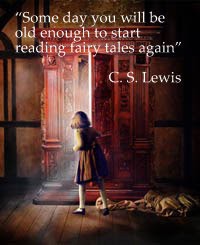
Fairy Tales

Why Read Christian Fiction?

In addition to all of the above reasons for reading, which I believe can be applied to Christian fiction as well, here are some reasons particular to Christian fiction:

The missing element. Even the best of secular stories tends to leave God out of the picture and have the characters acting on their own initiative. Christian fiction shows how a Christian might act in dependence on God in some of these scenarios.

To see how Christians act in everyday life. I’ve mentioned here before that my mother was not, as far as I know, a Christian as I was growing up. In her later years she had some questions and concerns about it, but she did not want to discuss it. It was too sensitive, too personal for her to open up about it. I began sending her some of the Christian fiction I was reading. Not only did she enjoy the stories (Terri Blackstock and Dee Henderson were a couple of her favorites), but it helped her to see what Christianity in action looked like (we lived 1,000 miles away, so though we talked and wrote, we didn’t have that everyday life contact back when there was no texting or Facebook to keep in touch every day).

To display the gospel. I don’t think every Christian story has to include the plan of salvation or show a conversion, but if the gospel affects every aspect of our lives, that would be displayed in the stories in some way. I went into this further in an earlier post titled The Gospel and Christian Fiction. To repeat one thought from that post, while not every Christian story needs to explain the whole gospel, what it does share needs to be accurate. Because some have accused Christian fiction of being too “preachy” (more on that later), the pendulum has swung the other way lately, and some authors have tried to make their message a little more subtle. That can be fine: some stories would call for the book’s message to be a little more explicit, some call for more subtlety. But in some cases subtlety has generated obscurity or even misleading statements. I would not have sent those kinds to my mom so as not to confuse her, though a mature Christian might benefit from them.

To learn spiritual truth.

To be helped in your own life by another’s example. Just one instance of this in my life: for several years of our married life, my husband had to travel quite a bit, and I was often discouraged about it. During one of those periods I was reading Janette Oke’s A Quiet Strength, and the young wife in the story was experiencing something similar with her husband having to be away much of the time to work. Even though our ages, life situations, time in history, and number of years married was different, I was still encouraged by what she found that encouraged herself.

It’s clean – or should be. There is a growing trend to use bad language or sexual scenes to be more “realistic,” but I think explicitness in either vein is detrimental. I wrote about these elements in The Language of Christians and Sexuality in Christian Fiction, so I won’t reproduce those thoughts here.

Charges against Christian fiction:

Here are some complaints about Christian fiction that I have heard or read:

“It is predictable.” The person who is not a Christian becomes one or the problem a Christian has is solved or the lesson learned. But isn’t there a measure of predictability in every genre? Usually the guy and the girl get together in a romance, the detective figures out the mystery and “whodunnit,” the good guys win in the Western, the doctor helps save the patient, etc. (unless it is a series, and then a few lost cases are thrown in for realism). We expect a certain ending with most of the books we read, and the fun is in seeing how it is done and what unexpected twists and turns arise on the journey.

“It’s too preachy” or it is more of a sermon in the guise of a story. I’ve only found that occasionally. Of course authors, Christian or secular, usually do have some kind of truth they are trying to convey, but usually they try not to be blatant about it. Sometimes they are accused of being blatant when they are not: in C. S. Lewis’s book On Stories, he quotes Dorothy L. Sayers as saying, about the assumption that she wrote to “do good”: “My object was to tell that story to the best of my ability, within the medium at my disposal — in short, to make as good a work of art as I could. For a work of art that is not good and true in art is not good and true in any other respect” (p. 93). An author’s worldview is going to seep out into his story in some way. Lewis said that the Narnia stories were not intended as an allegory. They started with a couple of pictures in his mind, one of a faun, and some “supposings,” and developed from there.

I mentioned earlier that Christian fiction will show the everyday activity of Christians, so obviously there will possibly be prayer, reading and discussing Biblical truths, going to church, etc., in the story. But those elements should be woven in as naturally as possible and not just tossed in to label a character as Christian. One of the best at this is Jan Karon in her Mitford books, which are not even marketed as Christian fiction but convey a definite element of faith.

“The characters are too perfect.” I have rarely found this to be the case in the Christian fiction I have read. Most writers strive to make their characters realistically flawed.

“It’s poorly written.” I have only a handful of times found a Christian fiction book that I thought was truly terrible. There are some Christian novels that are mediocre, but, again, that could be said of any genre. I have found plenty of Christian fiction that has kept me glued to the page, instructed or inspired me, and some that had me looking up at the ceiling thinking, “I wish I could write like that.”

“As soon as someone becomes a Christian in the book, all of their problems are solved and they live happily ever after.” Again, I have rarely found that to be the case in the Christian fiction I have read, especially in recent years.

I think some of these charges might have been more true of some of the earliest Christian fiction, but most authors I have read over the last 25+ years have striven to make their characters and plots and realistic as possible.

If someone truly feels convicted that they should not read Christian fiction, of course one shouldn’t violate conscience. I have mentioned missionary Isobel Kuhn many times. For a time she came to a place of laying aside fiction because one time, after finishing a very exciting novel, she tried to read her Bible and couldn’t engage with what she was reading. She felt the Lord was telling her that trying to read the Bible after a novel was like trying to eat dinner after ice cream. She felt the fiction was stunting her taste for the Bible (I don’t know what kind of fiction it was). To that I would say, as parents the world over have, don’t eat your dessert before your main course. 🙂 Make sure to put Bible reading before any other reading. Probably that same kind of thing would happen if trying to read the Bible just after an exciting ball game or social gathering or play: it takes a bit of time to “change gears.” But I wouldn’t argue with someone who felt this way: sometimes God does call us to put aside things that aren’t harmful in themselves in order to give first place to the best things. Later on when Isobel’s husband became a superintendent for their mission and had to travel frequently, and she was left alone in lonely mountain villages for long periods of time, she did come back to the classics for moments of respite and company. She felt like she was visiting with old friends, and because she was familiar with them, she didn’t have the temptation to neglect duties to stay glued to the book to see what happened.

I am not saying Christians should only read Christian books – not at all. One good post I’ve seen on that subject is Three Reasons to Diversify Your Reading.

I am also not endorsing all Christian fiction. Just as I wince when someone says they think it is all bad, I would also wince to hear someone say it is all good. We need to use discernment in everything we read. I have found some Christian fiction that I did feel was either poorly written or was off-base in something it said, but those have been the minority.

Conventional blogging wisdom would suggest that I divide this up into several posts – but personally I like having it all in one place even though it makes for too long a post. I hope you don’t mind. I also have a few more quotes I was going to share about books and reading, but I think I will save those for another time.

I’d love to hear your thoughts about reading fiction and Christian fiction.

“Every great story tells in some part The Great Story. Each truth revealed helps us make sense of our world. And through each tragedy, comedy, and fairy tale, the Truth is woven through the fabric of our being.” – Julie Silander, Threads

(Sharing with Booknificent Thursday)
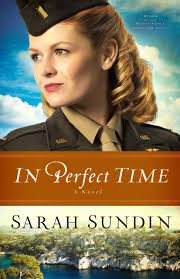
Book Review: In Perfect Time

Perfect TimeIn Perfect Time by Sarah Sundin is the third in her Wings of the Nightingale series about three friends who were flight nurses during WWII (The first was With Every Letter, the second was On Distant Shores, both linked to my reviews).

They didn’t start out as friends: they had their differences. Kay Jobson was probably the hardest to get to know for the other girls. They were Christians and she was not. She liked to flirt, to have half a dozen boyfriends at a time, was decidedly unchristian, and liked to run around with other girls who felt the same way she did. But circumstances in the previous two books have led to something of a friendship between Kay, Mellie, and Georgie.

Someone in the book called Kay a floozy, and honestly, that’s what I thought of her in the other books. But I was convicted of being judgmental. She doesn’t get physical with her boyfriends – in fact, that’s one reason she keeps so many, so that none will get too serious. When he does, she drops him. Finding out her back story and mindset was eye-opening. Girls who are flirtatious and even promiscuous are souls Jesus died for with stories and heartaches of their own.

I won’t unfold her story here except to say that part of it involved a father who only preached condemnation and who condemned her about things that weren’t her fault and were beyond her ability to change. Her life now is all about control. Her view of Christians has been shaped by her father.

Guys seem to melt like around her, except for pilot Roger Cooper. He keeps his distance and is known not to date. He has his reasons, noble to him, as we soon discover. He is a Christian anyway, which Kay doesn’t like. But one encounter opens both of their eyes a bit to the other, with a glimpse that there may be more to the other than each had thought.

Roger is a great pilot, courageous, daring, thinking outside the box, but he is not good with details like filling out forms and being on time, and he loves to pull pranks on the other guys. His father told him he would never amount to anything, which becomes kind of a self-fulfilling prophecy.

Both Roger and Kay have to learn that other people’s expectations and misjudgments and even past failures don’t define us. When Kay learns that she is, in fact, redeemable, for the first time she begins to want to be redeemed. They also have to learn that though it is okay to dream, ultimately we have to give our dreams and desires over to God. If He fulfills them, it will be better than anything we could have done. If He redirects them, it will be better than going our own way would have been.

I loved Kay and Roger’s story on several levels. I will forewarn some that this book is perhaps a little more physical than Sarah’s others, but nothing is explicit. One of the characters wrestles with sexual temptation, but that is a common temptation, and I thought Sarah handled it well.

Though characters from the other two books are in this one, I think this one can be enjoyed alone (though I’d encourage you to read the others as well. 🙂 )

(This will also be linked to Semicolon‘s Saturday Review of Books.)

Book Review: Undetected

UndetectedDee Henderson is one of my favorite authors, so I am always alert to her new releases. I’ve had Undetected on the shelf while I tried to be a good girl and keep to some of my reading commitments before delving into it, but I finally gave myself permission.

Most people acquainted with Mark Bishop only know he is a Navy submarine commander. In truth he is one of a small number of people “entrusted with half the U. S. deployed nuclear arsenal” (p. 12). He commands one of a few a ballistic submarines that is on patrol every 90 days, switching off with other submarines for the next 90. Though ready to launch a nuclear missile if ordered to by the president, their mission is to try to keep peace and to observe trouble spots. He is a widower with no children and is just starting to think about dating again.

Gina Gray is nearly 30 and unmarried, though she wants to be. Her relationships seem to end with the guy giving the “It’s not you, it’s me” speech. With above average intelligence (to put it mildly), she sailed through school and college at early ages. Though she has a vast number of interests, her brother’s being a submariner led her to map the ocean floors to help subs avoid accidents and find optimal places to hide. Further discoveries lead to improvements in sonar readings, each one further into classified territory, hugely helpful to the US but dangerous if its enemies should make the same discoveries. Thus she finds herself with a security detail posted around the clock for her safety.

Since Gina’s brother is one of Mark’s close friends, they’ve met before, but never considered each other as potential for a relationship for various reasons, chiefly their age difference. But as Gina’s work brings them into closer contact, Mark begins to see qualities he admires. He may be too late, though, as she begins dating another submariner.

Though Dee’s books are usually action-packed and suspenseful, that aspect of the story only came in the last part of the book. But I’m fine with that. The details of submarine life and Gina’s work were fascinating. In a previous book where a couple of characters dealt with rare coins, I felt there was too much detail for the average reader and it bogged down the story a bit. I didn’t feel that way in this story: there was enough detail to make it understandable, to make you feel like you were watching over someone’s shoulder, but not so much that an average reader would feel it is too technical. I’m wondering if Dee has spent time on a sub or was in the Navy: her portrayal seemed pretty realistic to me. I wondered, too, how much of Gina’s sonar work was real and in use or just from Dee’s imagination.

I’m not much for “romance for romance’s sake” books, but Dee’s books are rich in story and are mature: I don’t mean just that the characters are a bit older, but after recently finishing a different book that would be classified as a romance that I can only describe as silly, I am glad that Dee’s books aren’t that. I also like that the characters seek the Lord’s will in a genuine way.

I like the multiple shades of the book’s title, dealing with the sub’s need to stay undetected, the value of being able to see other vessels previously undetectable, and Mark and Gina’s finding value in each other previously undetected.

Bryce and Charlotte Bishop from Unspoken make an appearance in this book: Bryce is Mark’s brother. But you don’t have to have read that story first in order to understand this one. The only problem if you read them in reverse would be knowing Charlotte’s true identity, which is part of the mystery in that book.

There were just a couple of places I felt could have used a bit more editing: a couple of places that seemed repetitive, and awkward sentence or two. I thought the “competition” between two men for Gina’s interest was handled more maturely than it probably would have happened in real life. But those are all minor criticisms.

Overall I loved this book and feel Dee has another winner on her hands.

(This will also be linked to Semicolon‘s Saturday Review of Books.)

Give-away: E-version of The Tenth Plague

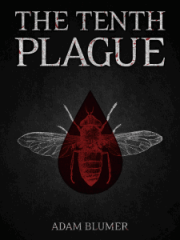
The-Tenth-PlagueSeveral days ago I commented on a post on Adam Blumer’s Facebook page to be entered in a drawing for an e-version of his book, The Tenth Plague. I had thought I was entering to win his new book – which, if I’d thought about it for a second, I would have realized that wasn’t possible because it is not even out yet (I can be a little dense sometimes. 🙂 ). I did happen to win Adam’s drawing, and since I’ve already read The Tenth Plague (reviewed here, along with an author interview), I asked him if I could have a copy sent to one of you instead, and he agreed.

The story is a sequel to Adam’s first novel, Fatal Illusions (reviewed here), but can be read independently. It involves Marc and Jillian Thayer, who have just adopted a new baby boy, and a friend has invited them to  a Christian-themed resort for some rest and time together as a new family. But soon odd things begin to happen: someone rigs the water system to dispense what appears to be blood from the faucets. At first this is thought to be a weird prank, but soon other events occur which are based on the ten plagues of Egypt found in the book of Exodus in the Bible. Marc and a retired detective friend try to find out what is going on while Gillian runs into someone from her past who has hurt her deeply. One of the major themes in the book is the need to extend forgiveness.

Adam writes suspense very well, and his characters are realistic, everyday Christian people trying to discern and apply God’s will in their circumstances.

You can read an excerpt here.

If you’d like to be entered in a drawing for a free Kindle or Nook version of The Tenth Plague, leave one comment on this post. I’ll use random.org to draw a name from among the comments next Wed. morning (June 4).

The drawing is concluded and the winner is Lou Ann! I’ll be contacting her shortly. Thank you all for entering!

Book Review: Unspoken by Dee Henderson

UnspokenI’ve mentioned before my history of reading Dee Henderson novels. Her latest is Unspoken, which involves a survivor of one of the most famous kidnappings in Chicago. Charlotte Graham was kidnapped at sixteen and found four years later but has never said a word about it to the police or much of anyone else in the eighteen years since. She has a new life and profession and tries to keep a low profile.

But her grandfather, who is evidently wealthier than most of the population, has died and wanted her to manage his estate, part of which is a massive amount of valuable old coins. That brings her to Bryce Bishop, a dealer in coins who has his own respectable family business in Chicago. Bryce had been bored and prayed for God to shake up his life a bit, and Charlotte’s coins, the way she offered them for sale, and the woman herself have certainly answered that prayer.

Charlotte has decided she is single for life, so at first she is uninterested in anything but a business relationship with Bryce. The time they spend together leads to a friendship and interest on Bryce’s part. It’s a while before she feels free enough to disclose anything about her past, and she does so in stages. She describes herself as “at best a messed-up Christian” because she can’t reconcile how God could love her and yet let this happen to her, and how He would have forgiven her kidnappers if they had repented.

As Bryce and Charlotte work through their issues, a well-known investigative reporter decides it is time to write a book about the case. Not only will the book open old wounds for Charlotte, but it opens the door for danger as well. There is a reason she hasn’t said anything to the police about her abduction, and this reporter’s book could not only jeopardize her privacy but also the safety of her loved ones.

Paul and Ann Falcon from Full Disclosure are characters in this book as well, as friends of Bryce. You don’t have to have read that book to understand this one, but it was fun to “see” them again.

As always, Dee had done a wonderful job with the story, the suspense, the characters, and the spiritual issues in a natural way. I can always count on her books to pull me right in and keep me interested all the way through. This one did get a little boggy in places with all the detail about coins: I understand some detail was needed to be authentic, but I could have used less in places. But overall I loved it!

(This will also be linked to Semicolon‘s Saturday Review of Books.)

Book Review: The Chance by Karen Kingsbury

The ChanceIn The Chance by Karen Kingsbury, teenagers Ellie Tucker and Nolan Cook have been best friends since grade school. He says he is going to marry her some day, but she just laughs. Tragedy strikes when Ellie’s parents separate because her mom has been unfaithful and her dad decides suddenly to move himself and Ellie from Savannah to San Diego. Ellie and Nolan decide to write letters to each other about their true feelings, bury the letters in a tackle box under the tree in the park that is their special place, and plan to meet together in exactly 11 years to unearth to contents. They assume they’ll be in touch in the meantime, but just in case, they’ll have this last chance to connect with each other.

As it happens, they do lose touch. Ellie’s letters don’t get to Nolan and he doesn’t have an address for her. In the years that follow, Nolan realizes his dream of playing NBA basketball and Ellie becomes a single mom, barely supporting herself and her daughter as a hair stylist, all thought of college and writing a novel long gone. Ellie has also lost her childhood faith. As their 11-year rendezvous approaches, Ellie assumes Nolan has forgotten her and wouldn’t be interested anyway since their lives are so different from one another’s now.

You probably have an idea where this plot will go (especially if you’ve ever read Kingsbury), but that’s not all bad. After all, in movies like An Affair to Remember, you know, or at least hope, it will end up as you think it’s going to, and you still enjoy the ride.

I hadn’t expected, though, the depth in the subplot with Ellie’s parents and the exploration of the hard work that is involved in forgiveness and taking the first steps toward restoration. Even though the ending is maybe a bit happily-ever-after-ish, none of the characters gets there easily. If you’ve ever known anyone with these kinds of breaches in relationships, this is how you’d wish it would end.

Some readers might object to Ellie’s mother’s adultery as a catalyst for the plot-line, but I’d just say this happens all too often, even in Christian circles, and the hard consequences are clearly spelled out. Though the author tells a bit more about it than I would personally care to know, there is nothing explicit.

If you’ve read The Bridge, also by Kingsbury, the two main characters from it make an appearance in this book, though it is not necessary to know their story to understand this one.

Though there are some unlikely and mildly problematic plot elements, overall I did really enjoy this book. I listened to the audiobook version, and the narrator was okay: I’ve heard better and worse.

(This will also be linked to Semicolon‘s Saturday Review of Books.)

Book Review: The Merchant’s Daughter

Merchants daughterI picked up The Merchant’s Daughter by Melanie Dickerson on Lisa’s recommendation.

It’s the story of Annabel Chapman in the England of 1352, whose merchant father has died and whose proud family refuses the duty of every villager to work in the lord’s fields. As punishment, someone from her family is required to be his servant for three years, and Annabel offers herself for that position.

Lord Ranulf le Wyse is said to have a very short temper and to have some sort of deformity, making him repulsive to look upon and frightening to Annabel, but she soon discovers a different side to him.

Meanwhile, the bailiff, old enough to be her father and disgusting, has set his sights on her. Unfortunately, her duties at the lord’s house bring her into more contact with him, and even worse, her brother has given the man permission to pursue her.

Annabel feels the only way to both escape the bailiff and have access to the Bible she longs to read for herself is to escape to a nunnery as soon as her servitude is over, but when the opportunity arises, she questions that desire.

This story is based loosely on Beauty and the Beast, so of course I knew where it was ultimately going, but that was actually fun, to see how it corresponded to the fairy tale. It is a realistic retelling, though – no magic wands or spells – but I enjoyed that.

Probably my favorite parts involved Annabel being asked to read the Bible to Lord le Wyse since she is one of the few people in his household who can read Latin. Reading the Bible for herself (not everyone had one: even the local priest did not) has been one of her lifelong desires, and it’s a joy to watch her pore over it and discover its treasures for herself, stopping in her reading to ponder what it says.

This book was a pleasant companion on a recent “sick day,” and I thoroughly enjoyed it. I’m looking forward to checking out Melanie’s other books.

Here’s the book trailer for The Merchant’s Daughter:

Updated: I just discovered that the Kindle edition of this book is on sale for a limited time at $2.99. You don’t have to have a Kindle to get deals on Kindle books: they have apps for computer, tablets, and phones.

(This will also be linked to Semicolon‘s Saturday Review of Books.)

And Carol‘s Books You Loved.

Books you loved 4

Book Review: Betrayal

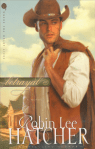
BetrayalBetrayal by Robin Lee Hatcher is the second in her Where the Heart Lives series about three orphans who were separated and try to find each other as adults. Each book focuses on one of the siblings: the first book in the series, Belonging, reviewed here, featured older sister Felicia.

In Betrayal older brother Hugh Brennan has just been released from prison where he had served as a result of his father’s betrayal. He has heard that Felicia is in Idaho and sets out to find her, but then his horse is injured and he has to stop for a while. He comes across the ranch of Julia Grace who, though wary, offers him food, a place to stay, and a few days work while his horse heals. Hugh, of course keeps his background as private as possible.

Julia has secrets of her own. She was plunged into a marriage of convenience to escape a lifetime of shame, but her husband abused and belittled her. He has passed away, and her one security is the ranch he left her, which she steadfastly refuses to sell to her husband’s brother.

Can these two wounded souls ever come to trust each other with their futures as well as the  secrets of their pasts?

I enjoyed the story and the journey Robin led Hugh and Julia through and the things they learned along the way about trust and true security.

(This will also be linked to Semicolon‘s Saturday Review of Books.)

The Tenth Plague: Book Review and Author Interview

The-Tenth-PlagueIn The Tenth Plague by Adam Blumer, Marc and Jillian Thayer have just adopted a new baby boy, and a friend has invited them to  a Christian-themed resort for some rest and time together as a new family.

When they arrive, however, the retreat is in upheaval. A company planning a new Bible translation is having meetings at the resort, and a throng has arrived to protest. Someone rigged the water system to dispense what appears to be blood from the faucets. What seems an odd prank is soon discovered to be the first in a series of events based on the Biblical ten plagues of Egypt, some of them resulting in fatalities. Marc calls on a friend, a retired homicide detective, to help with the investigation as the plagues escalate.

Gillian, meanwhile, runs into someone who has hurt her deeply in the past. She thought she had put it all behind her, but the old anger and hurt rush back in like a flood,  and she wrestles with the need to extend forgiveness.

The Tenth Plague is a sequel to Fatal Illusions, Adam’s first book (which I reviewed here), but you don’t have to have read the first book to understand and enjoy the second. Both books are tremendously suspenseful and feature realistic, everyday Christian people trying to discern and apply God’s will in their circumstances. I enjoyed them both very much!

Here is an interview with Adam:

blumer_adam_portrait

What was your inspiration behind The Tenth Plague?

 One day I was reading the book of Revelation and came across 22:18–19. “I warn everyone who hears the words of the prophecy of this book: if anyone adds to them, God will add to him the plagues described in this book, and if anyone takes away from the words of the book of this prophecy, God will take away his share in the tree of life and in the holy city, which are described in this book” (ESV). My mind began playing the “what if” game. Would God really bring a biblical plague on someone who tampered with His Word? I chatted with a few theologian friends, and the plot emerged from there.

How does this novel compare with your first novel, Fatal Illusions?

Though the plot, of course, is different, the two novels share a number of similarities. Both are set in Michigan’s Upper Peninsula, where I live. I like to write about average folks like Marc and Gillian Thayer, a pastor and his wife who face unexpected, even threatening, events. Of course, there’s another really bad killer who wants to do them harm, and their retired homicide detective friend, Chuck Riley, once again comes out of retirement to help them. I also like to weave in a historical event that somehow relates to the present day. In Fatal Illusions, it was the killer’s obsession with Houdini; in The Tenth Plague, an old mine disaster plays an important role. The past always plays an important role in the present—a running theme in my novels. Overall, I like to write about redemption: how biblical truth offers the answers to the complicated issues of life. Stories, like parables, present some of the best ways to illustrate biblical truths.

 What was one of the most important lessons you learned during the writing of this novel?

The power of the collaborative process. I had a fairly strong first draft, but I was stuck. A novel editor provided a creative springboard and helped me see where my true story lay. Without her help, I doubt this story would have seen the light of day.

 What part of writing this novel took the most work?

 This novel required a ton of research. From an old mining tragedy to autism, from adoption law to anthrax, from pheromones to the Oklahoma City bombing, the research for this one required much more than I ever expected. I’m so thankful for technology and ease of access, thanks to the Internet. Without Google and so many resources at my fingertips, I’d probably still be researching this story.

 So far, what has been your favorite work experience in life?

 During one summer between years in high school, I worked at a library, a book lover’s paradise. Granted, a lot of the work involved stocking shelves, but being surrounded by so many fascinating books and interesting authors was pure heaven. I was born a die-hard book lover, and I’ll probably die one too.

Consider the qualities that make you unique. How do these qualities come out in your writing?

 I love suspense fiction and history, so a blending of the two always seems to come out in my writing. In high school, I won awards in calligraphy; Gillian Thayer, my female lead, is into calligraphy in a big way (it’s her job). I’ve always been intrigued with how one’s past impacts his or her present and future. This is a recurring theme in my novels because it’s part of who I am. Now that I think about it, what I write is inseparable to some degree from who I am.

 Introduce your plot summary and main characters. What is your favorite part of the story?

Water turns to blood. Flies and gnats attack the innocent. Marc and Gillian Thayer’s vacation resort becomes a grisly murder scene, with a killer using the ten plagues of Egypt as his playbook for revenge.

When their friend turns up dead, Marc and Gillian put their vacation on hold, enlist the help of a retired homicide detective, and take a closer look at the bizarre plagues as they escalate in intensity. Meanwhile, a stranger is after the Thayers’ newly adopted baby. Will they uncover the truth behind the bitter agenda before the tenth plague, the death of the firstborn son?

 My favorite part is when the firstborn son is revealed and the novel culminates in the tenth plague. This is the most suspenseful and action-packed part of the story, with several key characters in jeopardy. I had a blast writing it.

 One of the main themes of The Tenth Plague is confronting and dealing with your past. What can readers take away from this theme, especially in a novel that deals with religion and death?

 Both the villain and my heroine, Gillian Thayer, grapple with heartbreaking real-life issues from their past. But how they respond shows two very different paths. My hope is that readers will see the stark contrast in the context of biblical truth presented in the story. The bottom line is that God is enough, and He offers the solution to every problem of life. This is another repeated theme in my stories. Thank you for the opportunity to talk about my latest project.

Some content used by permission of Kirkdale Press

Tenth Plague Forgiveness

The Tenth Plague is available in e-book format only from Amazon and Vyrso. You can read an excerpt here.

Thanks to Adam for sending me a copy in exchange for my honest review.

(This will also be linked to Semicolon‘s Saturday Review of Books.)

Book Giveaways

Author Adam Blumer writes edge-of-your-seat suspense infused with Biblical principles. His new book, The Tenth Plague, will be released as an e-book on January 29. I’ll have more to say about it then, but meanwhile, if you’d like to have a chance to win a copy of The Tenth Plague or a physical copy of his first book, Fatal Illusions (linked to my review), go here or click on the graphic.

10th Plague Giveaway

Adam discusses the book here, and you can read an excerpt of The Tenth Plague here.