Laudable Linkage

It’s been a little while since I have been able to share some noteworthy reads I’ve discovered the last few weeks online. Here is my latest accumulation:

Good Principle, Wrong Text. From my favorite in-real-life former Sunday School teacher. ” Every time we derive an interpretation and application of a text that is not native to the context — no matter how Biblical the concept itself may be — we are robbing that text, and ourselves in the process, of the meaning and applications that God intended when He gave it. The key is not to read any verse as a devotional island, isolated from its immediate and larger context.”

Getting Women Into the Word.

Love Serves: Showing Christ’s Love on Valentine’s Day. Ways a family can minister to others on that day in particular, but the ideas are good for any time.

4 Ways to Love Someone With Dementia or Alzheimer’s, Like God Loves Us.

To the Grown Daughter Who Has Failed to Love Her Mother Well.

In the Bleak Midwinter: When Your Heart Loses Its Song.

How Caring For Children Changes the World. Interesting consideration of the five women involved in saving the life of Moses.

Five Ways Christian Fiction Builds Faith.

Hillary, Bernie, Donald, and Me. Neat article by John Piper, not about these people’s politics, but about their and other people’s goals and accomplishments in their 60s and 70s. Encouraging as I am in the far side of my 50s.

And to end the day with a smile:

birth weight

Happy Saturday!

Book Review: The Bronte Plot

Bronte PlotIn The Bronte Plot by Katherine Reay, Lucy Alling loves working in an antique store, specializing in the books section. But in order to make her beloved books more special and valuable to customers, she incorporates several questionable practices. Her boss has no idea and would not approve if he did know.

When a handsome customer, James, comes in the store to find a gift for his grandmother, they hit it off and begin dating. But he soon finds that Lucy often embellishes the truth. She explains that her father was a con man, and she grew up with his stories. He loved classic stories, but he also made up many of his own. She hasn’t seen him in years. She “promised never to be like him and now…I suddenly hear myself and I am like him,” and her stories don’t sound quite so good when she recounts them to James, yet she feels compelled to make up stories even for things like getting seated at a restaurant without a reservation or getting a needed item for the store. Later when he finds out that she “embellished” the book he had bought for his grandmother, he breaks up with Lucy.

Oddly, however, James’s grandmother, Helen, who was quite taken with Lucy, has decided, against her family’s wishes, to take a trip to London and asks Lucy to go with her as a consultant. Lucy is not excited about the idea but eventually agrees, especially when she realizes there is a possibility they might be traveling near the place where she believes her father is.

As Helen and Lucy travel and each share their stories, Lucy realizes Helen has secrets of her own and a wrong in her past that she is trying to make right. Part of their travel takes them to antique stores, part to places of literary value, like the Bronte sisters’ home, and part to take care of the issue Helen needs to deal with.

As Lucy searches for her father, it almost seems that she feels doomed to follow in his steps since she shares his genes. But she learns that she can make her choices despite what he does, and determines to make things right with her boss and customers as much as she can, despite the risk to her reputation and job.

Reay’s specialty in all her books so far is weaving a plethora of literary references into her stories. I’m sadly not as familiar with the Bronte’s works except for Jane Eyre (one of my favorites), but I enjoyed getting to know more of their background and plan to read more of them in the future. Reay also quotes Dickens, Austen, Gaskell, and Lewis here (and possibly others I am not remembering), but she doesn’t just quote them – she incorporates something of their stories into her heroine’s story. One of my favorite quotes from this book, referencing Jane Eyre, is:

Lucy reached in her bag and pulled out the book, knowing exactly where to search. “I thank my Maker, that, in the midst of judgment, he has remembered mercy. I humbly entreat my Redeemer to give me strength to lead henceforth a purer life than I have done hitherto.” There it was. Mercy. Grace. And just as she’d told James, fiction conveyed change and truth and was loved and digested again and again because it reflected the worst, the best, and all the moments in between of the human experience (p. 267).

A couple of other favorite quotes:

All real lives hold controversy, trials, mistakes, and regrets. What matters is what you do next.

All the books have it . . . That time when you don’t know where you’ll be, but you can’t stay as you are. In life or in literature, that time rarely feels good (p. 31).

I thought all the characters were richly drawn, even the secondary characters like Dillon, their driver in England or Sid, Lucy’s boss. Looking through a few reviews here and there, I saw that many said they didn’t like Lucy. I think that’s because, though all characters should be flawed because no one is perfect, we’re hit with hers right off the bat. But I did like her as a person and sympathized with her in her journey.

It’s kind of ironic that reviews by non-Christians criticized the Christian element and reviews by Christians criticized that there was not much of a faith element. At first I felt the faith element was lacking because I didn’t recall Lucy making changes due to anything like repentance or a regard for having sinned against God, but I had forgotten the quote above referring to mercy and grace. As I went back and looked it up, in context she’s pondering her actions and thinks of Rochester in Jane Eyre: “Rochester couldn’t move–could never move–forward because he hadn’t gone back. He hadn’t laid down his sin and accepted that there was an absolute right” (p. 267). Then comes the quote from Jane about mercy and grace. So I did feel it was there, though perhaps a little more subtle than much Christian fiction. As I’ve mentioned in The Gospel and Christian Fiction and Why Read Christian Fiction?, it’s understandable that the nature of some stories would require more nuance (after all, the book of Esther does not mention God at all, but alert readers will see His hand there). But my only criticism of this book was that I did feel it was a little light in this department.

Nevertheless, all in all I enjoyed it very much. To me one sign of a great book is when you keep thinking of it and uncovering things about it long after turning the last page, and I definitely experienced that with this book.

If you’ve got half an hour, this interview with Katherine Reay was fun to listen to. I really enjoyed it, especially hearing the symbolism behind a scene that I hadn’t caught when I read it and some of the background information behind each of her books.

(Sharing at Semicolon‘s Saturday Review of Books)

Book Review: Searching For Eternity

Searching for EternitySearching for Eternity by Elizabeth Musser grabbed me right away, kept me engaged throughout the book, and made me not want it to end while at the same time eager to know what finally happened with the characters.

The story begins in the 1960s with nearly fourteen year old Emile de Bonnery finding that he and his mother have to suddenly leave France, where they have been staying with his grandmother in her 13th century chateau. Though Emile’s French father has been away “on business” often, this time it’s different. His American mother tells him that his father has found someone else and they must leave France immediately to go back to her native Atlanta. Emile protests, to no avail, and barely keeps control over his anger.

Emile feels that his father is a spy, that he’s merely on a mission, and may even be in trouble. Emile’s father, Jean-Baptiste, had been in the French resistance as a teenager during WWII, along with his parents. On each of Emile’s birthdays since he was five, his father has given him a gift of something he used in his resistance days – a book with pages cut away in which to store a switchblade, a thumbtack tin that once held a radio, etc., and told him the story behind that particular item as well as stories of his experiences. Emile knew that his father particularly hated Klaus Barbie, the “butcher of Lyon,” who was responsible for killing multitudes, including national hero Jean Moulin and Emile’s father’s father. Barbie had been condemned to death in absentia, and it was Emile’s theory that his father was hunting for Barbie. But no one agreed with him.

Meanwhile, he has to get used to life in America, especially to starting a new school. Being small for his age, new, and having an accent all seem to make him a target for the class bullies and friendless. Finally at lunch he sits near a girl named Eternity Jones, who, though somewhat aloof, at least doesn’t rebuff him. Gradually they become friends, and Emile eventually learns that Eternity comes from a broken home with a drunken, abusive mother. Eternity acts as protector for her two younger siblings. Wanting to extend help as well as friendship, Emile invites Eternity and her brother and sister to his grandmother’s home.

His grandmother and mother had been estranged for the 15 years his mother had been in France, and she and Emile showed up on her doorstep with no advance warning when they first left France. His mother had told him that her mother was controlling and they didn’t get along, but she welcomed them both with kindness, and her home radiated peace. His mother notes that her mother has changed in many ways. His mother and grandmother both try to make their home a safe haven for Eternity and her siblings.

There is so much in this book, it’s hard to know what to share. The rest of the book covers the next 23 years of Emile’s life and touches on racism, abuse, bullying, being a victim, faith, second chances, as well as what happens to Eternity and her family, Emile’s father, and even Klaus Barbie. It ended just as I hoped it would, but the author kept me guessing until nearly the last few pages.

Here are a few quotes from the book:

The wrong kind of love grabs and holds and chokes and demands and expects.

It’s a lot harder to hate a whole race of people, like the Negroes, or a type of person, like alcoholics, when you start getting to know individuals. Prejudice likes to make generalizations and stay far away. I wanted to get to know [Eternity’s mother] before I judged her too harshly.

Grandma had always said that suffering etched character into God’s people, making them stronger, better, holier, more useful to God and man. I had believed her for many years, but I did not see it on this night.

“I know it seems wrong and cruel. But this is what you must do. Let go. Give up the control, Emile. Be mad, grieve, accept that you cannot figure it out. Give up.”
“Giving up is weakness!”
“This time it will be strength.”
“How?”
“You must give up, not out of resignation, but out of trust. Trust that God knows and cares and will let you in on all the secrets you need to know in His time.”

There is more to life than looking for answers. Some answers you will never find–some you will. As long as the most important question is answered, the ‘not knowing’ of the others doesn’t seem so unbearable.

“The good thing about following Jesus is that His Word eventually seeps way down into your heart. And then, when you need to respond as He would, somehow that love blooms, watered by years of tears and tended by His Spirit. It blooms. Maybe not all at once, Emile. But eventually. He doesn’t waste your obedience. It counts. It works.” I said nothing, but I was listening, begging God to let her words–His words–penetrate my heart.

Victims could move on, but deep down they were still victims. Maybe there were parts of us that would never recover from the injuries of the past. And maybe that was all right, because we could still be useful in our maimed and injured state. ‘For when I am weak, then am I strong.’ I grabbed on to those words of the apostle Paul.

Elizabeth Musser’s being from Atlanta, being a missionary in France, and her teen boys being “third culture kids” all contribute to the realism in the book. The occasional mentions of eating at the Varsity in Atlanta have me questioning why I never went there the few years we lived in the area!

I don’t feel I have done this book justice at all, but I don’t want to say more about it and give too much away. So I’ll just say, it’s good. You should read it. It comes up occasionally on sale for the Kindle app. So far I have enjoyed all of Elizabeth Musser’s books, and I am eager to read more. And I am going to miss these characters!

(Sharing at Semicolon‘s Saturday Review of Books)

Book Review: A Prairie Collection

Prairie CollectionWhen I first began reading Christian fiction, a great many of its books were set in Western prairies. It also seemed that many of them contained one of three plot lines: a teacher from the East who came West, didn’t like it, and planned to go back home, until she fell in love; a snobby socialite, usually from Boston, who also didn’t like the rougher accommodations and culture of the West and planned to go back home; or a marriage of convenience, where two people who did not love each other and sometimes who had just barely met married each other, usually because one recently lost a spouse and for various reasons needed one, and they ended up coming to love each other by the end. Nothing wrong with any of that, but I just got burned out by it all and didn’t read anything prairie-ish or even Western for a very long time.

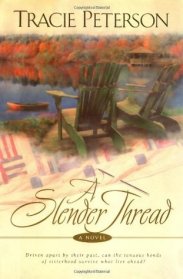
So with that background, and the fact that romances and short stories are not my favorites, either, I am not sure why I picked up A Prairie Christmas Collection: 9 Historical Christmas Romances from America’s Great Plains except that it was a good deal for the Kindle app, and I have enjoyed many of Tracie Peterson’s books and have been wanting to read Deborah Raney, two of the authors whose stories are included in this collection. The others are Tracey Bateman, Pamela Griffin, JoAnn, Grote, Maryn Langer, Darlene Mindrup, Janet Spaeth, and Jill Stengl, none of whom I had heard of before.

Sure enough, three stories contain a teacher coming from the East, a snobby Bostonian socialite, and a marriage of convenience. 🙂 But there is enough of a twist in each case that the stories aren’t cliche. Other stories include a widowed father and son moving into a new town and falling for a woman whose heart still belongs to her dead fiance; a woman who has lost everything and is greatly reduced in her circumstances coming to a new town to work as a maid; a woman determined to keep her family home after her mother’s death though her siblings and the railroad want her to sell; a tutor with a troubled background trying to make a new life and taking on a student not at all interested in his subject matter; the wife of a newly married young couple trying to make everything “just right” for her visiting mother-in-law; and a woman with a heart “colder than ice” coming to live with her estranged brother and taking on a job for the preacher. Some characters from the first story appear in the last, but I didn’t catch whether any of the other characters cross over into other stories.

One of the stories probably would have worked a little better as a novel, just because there was so much crammed into it, but overall, I really enjoyed the stories and each character’s journey of faith. They made for very pleasant Christmas and winter reading.

(Sharing at Semicolon‘s Saturday Review of Books)


Christmas afterglow and a few short reviews

We had a wonderful Christmas week and even some extended time with my oldest son – not only was he scheduled to be here a couple of days more than normal, but his flight out got canceled, so he was here for another night. I was thankful it was his first leg of the flight that was cancelled and not the second, so he could spend the time at home and not in an airport halfway there.

As you can imagine, little Timothy was the delight of this Christmas. At the last couple of family birthdays, he was really into this presents thing and was right in the middle of whosever presents they were, so I thought he’d suffer significant sensory overload with everybody getting presents. He happened to open a little kid-sized chair we had gotten for him first, and that worked out well, because he was delighted to sit in it the rest of the time. He loved opening his gifts but didn’t feel the need to help everyone else open theirs. His reactions were so cute. I wish I could upload a video without having to go through YouTube or Vimeo – his unwrapping of a stuffed dog was particularly sweet. Over the weekend we enjoyed tons of food, family time together, rewatching the first three Star Wars DVDs (and deciding we liked Star Trek better generally), playing Settlers of Catan, bowling, and visiting. And though it was all lovely, I think everyone is glad to be getting back to the routine today. I am personally reveling that there is no place I have to go today and nothing that has to get done besides laundry, dinner, and dishes, though I do hope to accomplish more than that.

Here is our yearly photo, in front of the house this time instead of in front of the tree:

Christmas 2015

We couldn’t get Timothy to smile, so we just said he was being very thoughtful. 🙂

In this transition week from the old year to the new, I’m going to have some posts later in the week about favorite books read this year and some of my favorite posts from the year. Before that, though, I have a few reviews I need to wrap up. I was actually hoping to have a couple more, but couldn’t quite get them finished yet.

Christmas LessonsChristmas Lessons by Patty Smith Hall is about a teacher named Claire who uses a cane as a result of contracting polio. She had broken off her engagement with Billy Warner some years earlier without giving him a reason: she had the absurd notion that her disability would hold him back in his coaching career. We’re not told until later in the book why she thought this. Suddenly Billy is back in town as the new coach at the school where she teaches, and the principal teams them together to work on a Christmas project. Of course, you can guess where the plot goes from there. It was just a touch predictable, and there were a few odd grammar issues (like “The old coach would have saw her” instead of “seen her), but overall it was a good, clean, Christian-based story.

365I picked up 365 Meditations for Grandmothers by Grandmothers from a clearance table long before I ever became a grandmother. I rediscovered it at the end of last year and, having a new first grandbaby, thought it would be a perfect time to read it.

It is authored by six different women, each penning two months’ worth of devotional thoughts about grandparenting. Each day’s selection includes a Bible verse, a couple of paragraphs, and a closing prayer.

Though there were a few good nuggets here and there, unfortunately, this is not a book I can recommend. My notes in the margins contain a number of question marks, “X” marks (meaning I thought something was wrong or off about a passage), and the phrase “wrong application.” The last is the biggest problem with this book. Sometimes what the devotional had to say was fine: even though it was a misapplication of what the quoted verse was saying, it was sometimes something that the Bible did say somewhere else. But sometimes it was totally wrong. Sometimes there were questions raised that didn’t need to be raised, like whether Paul was the author of 2 Timothy. Sometimes the gospel was clear; sometimes it was obscured or even contradicted; for example, one page says it is important to “help our grandchildren become like Jesus so that they will have a personal relationship with God” (p. 238) rather than showing them how to have a relationship with Jesus so that He can make them like Himself. Sometimes it’s just odd, like one devotional on Isaiah 55:10, about God’s Word being like the snow and rain that comes down from heaven and accomplishes God’s purpose, where the author goes on to say, “Can you imagine looking up into the sky and seeing God’s Word coming down from the sky? We can run into the fields like the birds and catch His Word as it falls from the sky” (p. 254). That paragraph earned a question mark beside it.

I was disappointed in the book early on but kept with it because, with six authors, I felt some parts of it would have to be better than others. I probably should not have: after the first few weeks I probably should have looked at representative excerpts from each of the others and then decided whether or not to keep it. If you know of a good devotional for grandmothers, let me know: sadly, this is not one of them.

All CreaturesFinally for today, I just finished listening to All Creatures Great and Small by James Herriot. I had enjoyed a few episodes of the old BBC series based on the books years ago but then had forgotten about them until Melanie mentioned them.

Herriot is a pen name for James Alfred Wight, and I was surprised to learn that the books are only semi-autobiographical. Maybe that was to protect the anonymity of the people he wrote about. But they are largely based on his experiences as vet in the Yorkshire area for 30 years, beginning in the 1930s.

In the books he starts out as an assistant for Sigfried Farnon, whom he describes as brilliant yet mercurial and extremely forgetful. Mostly he is very kind, though many frustrating yet comedic moments arise due to his forgetfulness. Soon Sigfried’s brother, Tristan, comes to live with them: he is an idle vet school dropout whom Sigfried keeps forgetting that he has kicked out. James’s vet skills are put to the test right away with farmers who often trust old folk remedies rather than veterinary science. In one of my favorite parts of the book, one farmer tells of putting onions in his horse’s rectum for some kind of cure, but his horse became “uneasy in the legs.” Sigfried told him he’d be uneasy in the legs, too, if someone had put onions in his rectum.

Another favorite passage is when James is invited to an elite social gathering hosted by a wealthy lady whose beloved and spoiled dog, Tricky Woo, had been treated by James. After the unfamiliar yet pleasant experiences of the evening, James is awakened in the middle of the night to come to one of the poorest farms in the district. As he contemplates the differences between the highs and lows of the night, he acknowledges that being a vet even in the most humble circumstances is where he is at home.

Sometimes his job has him nearly pulling his hair out in frustration and wondering why anyone would choose that profession, but most of the time he loves it and feels he has the best job in the world.

I enjoyed his descriptions of the Yorkshire area and people – warm, hospitable, honest, hardworking, almost a little stoic, and thrifty.

Along the way he meets a Helen Alderson, and although he hasn’t had time to think about dating much, something clicks with Helen despite two disastrous, yet humorously told, first dates.

The only flaws in the book are a fair amount of swearing and alcohol consumption, but overall it’s a funny, poignant, and heartwarming set 0f tales.

(This review will also be linked to Semicolon‘s Saturday Review of Books.)

Book Review: The Butterfly and the Violin

Butterfy and the ViolinIn The Butterfly and the Violin by Kristy Cambron, Sera James owns and manages an art gallery in Manhattan. For years she has been looking for a painting she saw as a child which held special meaning for her. She has finally found at least a copy of it, but hopes it will lead to finding the original. The owner, William Hanover, refuses to sell but wants to hire Sera because he also wants to find the original, but for very different reasons. They develop a relationship, but Sera is reluctant to open her heart again after having been left at the altar by her fiance two years ago. Unraveling the mystery of the painting at first brings them closer together but then suddenly brings a sharp division between them.

The painting portrays a young woman with piercing eyes, a shaved head, and a number tattooed on her wrist holding a violin. Cambron switches back and forth between the present day and Sera’s situation to the 1940s and the story of the woman in the painting, Adele von Braun, revealing more of Adele’s story in both narratives.

Adele’s father was a high-ranking official in the Third Reich, and she was a well-known violinist nicknamed “Austria’s sweetheart.” She loved a cellist named Vladimir, but her father would not sanction their relationship since Vladimir was only the son of a merchant. Adele kept seeing Vladimir in secret and eventually learned that he was part of a network that smuggled Jews out of the country to safety. Adele had hidden Jewish friends of her own that she secretly brought supplies to, but when she tried to help them escape, she was discovered, arrested, and sent to Auschwitz. There she became part of the prison orchestra, made to play every day as the prisoners were sent out to work, during executions, and occasionally at a Nazi social event. While she felt her spirit dying, her friend tried to help her see that there could be beauty and service to God even in such a place.

God is here. He sees. He knows what is happening in this place.

This, child, is our worship. To live and survive and play to God from the depths of our souls. This is the call that binds us. When we worship in the good times, it brings God joy. But worship in the midst of agony?…That is authentic adoration of our Creator.

One day we will be free. And we become free by living despite what they do to us. We live by working, and we work for God.

I had known that their were musicians among those in WWII prison camps who were made to play for the Nazis. And I knew that the Nazis had confiscated a lot of art during those years. But I hadn’t known that there were many paintings and other art by the prisoners themselves discovered after the camps were liberated – over 1,600 pieces in “partially destroyed warehouses and old barracks of Auschwitz,” according to the author’s note at the end. Those pieces still survive even now, though many of the artists are unknown. As one character muses in the story,

She told herself that to have something of worth in a world full of chaos was the very definition of beauty.  It felt like a spiritual liberation that couldn’t be silenced.  These prisoners, the ones who painted or wrote poetry or played in the orchestra – they refused to let that spirit die.  And this, she decided, is why the heart creates.

God plants the talent and it grows, sustained by a spirit-given strength to endure, even in the midst of darkness. It thrives in the valleys of life and ignores the peaks. It blooms like a flower when cradled by the warmth of the sun. It remains in a hidden stairwell in a concentration camp. It grows, fed in secret, in the heart of every artist.

I enjoyed both Sera’s and Adele’s stories and the themes of God’s presence in suffering and the need to create. This is Cambron’s first novel, and it has deservedly won many awards. My overactive internal editor stumbled over just a few minor places where I felt the writing was a little awkward, but I’m not even going to go into them because overall this was a gripping, fascinating, heart-breaking, yet beautiful story.

(This review will also be linked to Semicolon‘s Saturday Review of Books.)

Book Review: Through Waters Deep

Through-Waters-DeepThrough Waters Deep is the first in the the Waves of Freedom series by Sarah Sundin. All of Sarah’s books so far have been set in the WWII era, and this one is no exception. I love how she weaves historical detail into the story.

It’s the time when Europe is involved heavily in combat but America has yet to join the fray. Strong feelings among the isolationists, who don’t want the US to get involved, and the interventionists, who do, run high and cause conflicts, especially at the Navy shipyard in Boston where Mary Stirling is a secretary. Minor problems increase until some people begin to suspect that they are deliberate acts of sabotage, but is it an isolationist or an interventionist, or one trying to frame the other in order to get sympathy for his side? Mary’s work takes her all over the premises and into various offices, and she hears a lot of talk. She decides to make notes in shorthand (which no one would suspect) in case she overhears anything useful. But when she shows her notes to the FBI, they dismiss them as gossip and hearsay.

At a ship’s christening, Mary runs into an old high school friend, Jim Avery, now an ensign in the Navy. They are both changed from what they remember: they had been the quiet ones of their group and Jim had pined away for someone who was in love with someone else, so they had not really known each other well, but as Mary shows him around Boston, they each realize there is more to the other than they thought. When a definite and dangerous act of sabotage is found aboard Jim’s ship, tensions and suspicions escalate.

One underlying issue Mary has to deal with is that she has a strong aversion to being the object of attention. She wants to avoid being prideful and self-promoting, but it is more than humility. As the story unfolds we find the reason for her reluctance and panic, and she wrestles with what it means to “let your light shine” yet not put yourself forward, along with not missing opportunities God would have her take due to her wanting to stay in the background. I found this aspect of her character fascinating because I have wrestled with some of the same issues, and I have never seen this addressed anywhere except just a bit in C. S. Lewis’s Mere Christianity.

Jim describes himself as a “floater.” His two brothers who went into the Navy before him have ambitions to move up the ladder. Jim does not have that goal and just wants to float where the current of life takes him. He’s a hard worker and a caring person, yet has to realize his tendency to “float” looks like laziness and a lack of initiative. A good captain sees his potential and helps draw out his good points. That and the potential of missing opportunities in his relationship with Mary help him see that sometimes he needs to direct his steps, under God’s leadership and direction, rather than “floating.”

I’m not usually interested in romances just for the sake of romance, and Sarah’s books always go beyond just the romance to the deeper character issues as well as fleshing out what it might have been like to live in the setting. I love what Jim and Mary both had to learn and go through on their journey as well as the underlying mystery of the saboteur. Sarah does a great job conveying the feel of the times in the conversations and interactions of the various characters.

I loved this book, and I am looking forward to the next one in the series!

(This review will also be linked to Semicolon‘s Saturday Review of Books.)

Book Review: The Fairest Beauty

FairestBeautyMelanie Dickerson writes Christian fiction retellings of fairy tales and sets them in medieval Germany. She says on her web site that she has “always loved fairy tales and been fascinated by the prospect of fleshing out traditional fairy tales and turning them into an in-depth romance. I was fascinated by the idea of taking a well-known fairy tale and making it real, with realistic characters and realistic reactions to their circumstances.” There are no magic wands or fairy godmothers in her stories, so the issues have to be worked out a bit more realistically. Having previously enjoyed The Merchant’s Daughter (based on Beauty and the Beast) and The Healer’s Apprentice (based on Sleeping Beauty), I snapped up The Fairest Beauty (based on Snow White and the Seven Dwarves) when it came up on sale for the Kindle app.

Sophie is a scullery maid for the wicked Duchess Ermengard, who throws her into the dungeon for things like rescuing the puppies that the duchess had ordered to be drowned. Sophie doesn’t see any way out of her situation, so she tries to make the best of it. Believing herself to be an orphan, the cook, Petra, is the closest person Sophie has to a mother, and another servant. Roslind, is her best friend. Somehow, despite her miserable upbringing, she is good and kind, and many love her (this is a fairy tale, after all. 🙂 )

What she doesn’t know is that she is the daughter of the presumed-dead husband of the duchess, and the duchess is actually her step-mother, who treats her as she does because she is insanely jealous of her. Only two servants in the entire castle know who Sophie really is, and one of them has just escaped and traveled several days’ journey to Hagenheim Castle, the home of the man Sophie was betrothed to years ago, Valten. Unfortunately Valten is laid up with a broken leg and can’t leave immediately to investigate this claim that the girl he thought had died years ago is alive. His younger brother, Gabe, decides on his own to go and rescue Sophie. Though he sincerely feels that God would have him do so and that Sophie might be in danger, his motives are primarily to best his brother this one time and to be the hero.

Once he finds Sophie, he has to ascertain whether she really is the daughter of a duke and then try to convince her of that. Then they face several days’ journey back to Hagenheim, facing dangers from the henchmen the duchess has sent after them and wolves. Along the way they begin to fall for each other, each fighting it at first because they are both betrothed to others.

Since this is based on Snow White, we know how the story will end, but it was fun to see how Melanie worked out the details of the issues the couple faced as well as the classic fairy tale elements, like the poisoned apple and the seven dwarves (I’ll let you discover that for yourself. 🙂 )

One thing I especially enjoyed in this book were the spiritual journeys. Sophie had to learn to trust and to let God heal her from the lies the duchess had been telling her all her life. Gabe had to realize that he had acted with wrong motives and that his impetuosity could put Sophie in danger physically and possibly hurt her reputation.

One little part I didn’t like was that, as they were becoming more aware of their interest in each other, there were mentions of Sophie noticing his muscles and being disconcerted when his shirt was off due to tending a wound. I don’t doubt that those things would happen in those situations, but I just don’t like to go there in books that I read. Thankfully, that was just a small part of the book.

I did also enjoy an unexpected tie-in with a couple of characters from A Healer’s Apprentice.

Overall I enjoyed this book quite a lot and look forward to a couple of others Melanie has written in this same vein.

(This review will also be linked to Semicolon‘s Saturday Review of Books.)

Book Review: Strait of Hormuz

Strait of HormuzStrait of Hormuz by Davis Bunn starts off with a bang and keeps up a steady pace through most of the story. Marc Royce was formerly an intelligence operative for the State Department, but was fired by his boss. Since then, however, his former boss has called him for a couple of missions in which he needs someone off the grid. In this case, there is possible evidence that Iran is up to something involving nuclear bombs. The money trail leads to an art gallery in Geneva, which explodes just after Marc enters it.

Marc is unexpectedly reunited with Kitra Korban, whom he had met and fallen in love with in Israel in Rare Earth. He’s had to break off the relationship: she wanted him to stay and help lead the kibbutz her family led, but his calling was elsewhere. She had been notified by a stranger that she needed to warn Marc that he was in danger, and thus she became embroiled in his latest mission. While they both long to see each other, they also feel awkward and helpless, knowing nothing can change between them.

The Strait of Hormuz is an actual location, a narrow passage from the Persian Gulf to the ocean. In the story, American and other officials want to stop a ship they think contains components of an Iranian bomb before it gets to the Strait, but doing so will be interpreted as an act of war. In Marc’s investigation he finds unanticipated allies and enemies and follows trails that lead nowhere until he finally realizes what the actual Iranian operation and target is. But will he be in time to prevent it? And what casualties might occur in the process?

Action, adventure, espionage, an international flavor, and Christian faith elements woven in a natural and realistic way are hallmarks of this book. The pace is tense, fast most times, but Bunn handles even the stillness or times of uncertainty well. It’s a hard book to lay aside.

Strait of Hormuz is the third in the Marc Royer series, Lion of Babylon being the first and Rare Earth the second. I don’t think you have to have read those books to understand this one – enough information is given to comprehend the connections here – but you would probably enjoy this more fully for having read those.

(This review will also be linked to Semicolon‘s Saturday Review of Books.)

Book Review: Taken

TakenWhen a kidnapped victim is released, we tend to think that’s the happy ending to their story, or at least to that chapter or ordeal. But Dee Henderson starts there in her newest novel, Taken. Shannon Bliss had been missing for eleven years, having been abducted at the age of 16. She escaped on her own and sought out private investigator Matthew Dane to help her take the next steps. He’s a former police officer, but he’s also the father of a kidnap victim: his daughter had been missing for a number of years, so Shannon feels Matthew can help her in a unique way that others could not.

I’ve always pictured recovered kidnapping victims as spending their first few days, after a medical check-up, giving their testimony to various officials. I don’t know how it works in real life, but in this book, Shannon shares the details of what happened in small bits at a time. One reason is that she can’t bring herself to lay it all out at once, but there are bigger reasons: the family who took her thinks she is dead, and her life might be in danger if they find out she’s alive, plus she is waiting on one friend who also had plans to escape, plus she has evidence that could put the whole family away if it’s shared at the right time and handled the right way. Her abductors were a large network of family members involved in a number of crimes, so Shannon wants to tread carefully in order to catch as many as possible, especially the most dangerous.

Matthew is friends with FBI Special Agent Paul Falcon (from Dee’s previous novel Full Disclosure) and is able to pass along information as Shannon shares it. His experience with his daughter’s kidnapping is helpful, but he has to learn that Shannon is older and copes in her own way. Still, he recognizes that she is still in survivor mode and that at some point the emotions will hit. For now, he helps her process things, acts as a buffer between her and the public and the police, and advises and protects her.

An added wrinkle is that her brother is running for governor and has mentioned his missing sister in his campaign. Deciding when to tell and meet with him and then when and how he should make the news public requires much thought.

Most of Dee’s books are edge-of-your-seat suspenseful. This was not that way, but I still enjoyed finding out Shannon’s story as it unfolded and seeing what happened afterward.

Of particular interest, and something Matthew is surprised at, is that her faith didn’t suffer through her ordeal. In quite an interesting conversation between them about free will, Shannon says,

“But God decided to create a world where free will was more important than no one ever getting hurt. There must be something stunningly beautiful and remarkable about free will that only God can truly grasp, because God hates, literally abhors, evil, yet He created a world where evil could happen if people chose it. God sees something in free will and choice that’s worth tolerating the horrifying blackness that would appear if evil was chosen rather than good. I find that utterly remarkable” (pp. 107-108).

“God gave Adam and Eve that free will and choice. He gave them one warning: eat of any tree that is here, including the wonderful tree of life, but don’t eat from the tree of the knowledge of good and evil…I wish Adam and Eve had thought more about what knowledge meant. Eve saw it as a good thing, to know more. But how do you really know something? You experience it” (p. 108).

I disagreed when she said “God expected, fully intended, for Adam and Eve to obey what He had said,” since the Bible speaks of “the Lamb slain from the foundation of the world” (Revelation 13:8). That and other verses (besides verses about God’s omniscience) indicate that of course God knew what was going to happen. But I agree with her conclusion that man’s evil choices don’t make God evil, despite the fact that God could have stopped them, and that He gives grace and help in the midst of that pain of people’s wrong choices. “God has been acting honorably throughout history regrading what He wants. We’re the ones at fault. God is good. And I still really, truly like Him” (p. 109).

I’m always reluctant to get to the end of Dee’s books, because the characters feel like friends and I kind of miss them when the story is over. But in the last few, characters from some of her other books make appearances in the newer ones, so it’s neat to feel like you’re touching base with them again.

This was a book I made time for beyond my usual reading times, and I very much enjoyed it.

(This review will also be linked to Semicolon‘s Saturday Review of Books.)