Review: Adorning the Dark

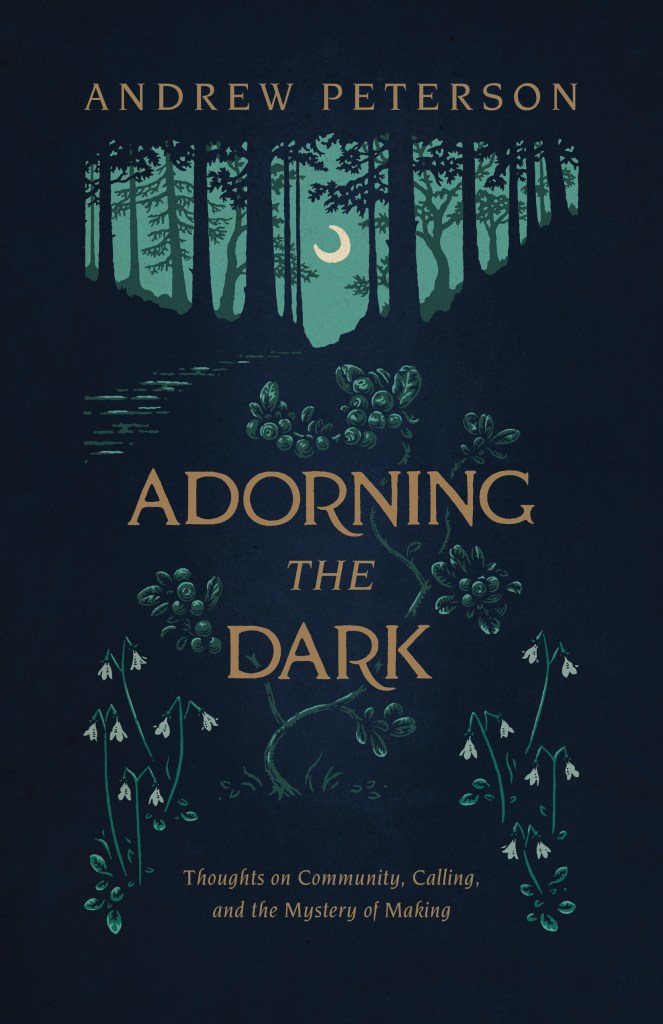
Adorning the Dark by Andrew Peterson

My first encounter with Andrew Peterson’s music was when a friend put the music video for “Dancing in the Mine Fields” on Facebook. The song is sweet one about marriage, and the video features several older couple holding their wedding portraits.

Then when I read The Yearling by Marjorie Kinnan Rawlings, I loved it so much I looked up some background information about it. I discovered another music video of Andrew’s called “The Ballad of Jody Baxter,” Jody being the main character in The Yearling.

Those songs are folksy, but many of you might be familiar with a contemporary song of Andrew’s titled “Is He Worthy?” We sing this at church sometimes.

I knew that Andrew had written a series of fantasy novels for children called The Wingfeaher Saga. I have not read them yet, but I want to. I’ve heard good things about them.

And somewhere along the way, I learned that Andrew was instrumental in forming The Rabbit Room, a site dedicated to “Cultivating and curating story, music, and art to nourish Christ-centered communities for the life of the world.” I have read a few articles there.

Even with that limited knowledge, I was interested when I saw Andrew’s Adorning the Dark: Thoughts on Community, Calling, and the Mystery of Making come up for a Kindle sale.

Andrew says he writes and speaks on this topic as “a practitioner, not an academic,” which means he “learned by doing, which is a nice way of saying that that I learned by doing it wrong half the time” (p. 4, Kindle version).

But not writing as an academic made the book extremely relatable. Andrew shares his journey, his testimony, and what he learned along he way.

Though he writes frequently of song-writing, many of of illustrations work for other kinds of writing and artistic expression as well.

In the first chapter, Andrew shares that many people know Bach wrote S. D. G., standing for Soli Deo Gloria (“glory to God alone”) on his manuscripts. But Andrew shares what few people know: that Bach also wrote “Jesu Juva,” Latin for “Jesus, help!” on his manuscripts as well. That’s an emphasis throughout the book. Andrew says is calling is “to use whatever gifts I’ve been given to tell the truth as beautifully as I can” (p. 4), and “to make known the heart of God” (p. 5).

He writes about battling self-doubt, creating as an act of worship, the fact that creating is work, not magic, that writing what we know doesn’t mean the polished end, but the struggle. He writes about humility, self-consciousness, and the fact that we don’t create to draw attention to ourselves even though “art is necessarily created by a Self” (p. 28). He references Lewis and Tolkien and others and talks about imagination, serving the work, and serving the audience.

One of the references to Lewis described his use of the word sehnsucht, an inconsolable longing which is evidence we were made for something more than we see and experience in this world.

One favorite section was about the tension between art and agenda and what makes Christian art Christian.

One great problem with much art that’s called “Christian” is agenda, which is to say that it’s either didactic, or manipulative, or merely pragmatic—in other words, the artistic purity of the work tends to take a back seat to the artist’s agenda (p. 47).

Art and agenda can and do coexist . . . Agenda is bad when it usurps the beauty. Christian art should strive for a marriage of the two, just as Christ is described as being “full of grace and truth” (John 1: 14). Truth without beauty can be a weapon; beauty without truth can be spineless. The two together are like lyric and melody (p. 47).

He describes revision, or selectivity, as “[pulling] the weeds before they choke the flowers” (p. 61) and being “able to discern what’s necessary to the aesthetic of the song and what isn’t. Then lose what isn’t” (p. 59). He points out that it takes forty gallon of maple sap to make one gallon of maple syrup. You wouldn’t put the sap on your pancakes. But once it’s boiled down, it’s perfect. On the other hand, “Revision is crucial . . . but it’s possible to monkey with something so much that the magic dies” (p. 99).

He writes that creating is not just inspiration, but also discernment and discipline—or dying to self.

He tells how art nourishes community and community nourishes art.

One of my favorite sections talks about how creativity isn’t just being “artsy.” We’re creative because we’re made in the Creator’s image. Andrew says the Rabbit Room’s conference, Hutchmoot, was meant to “encourage people to look for the glimmer of the gospel in all corners of life, that they would see their God-given creativity in both their artistic works and their front gardens, in their home repair and the making of their morning coffee, and that they would call out that glorious creativity in everyone they meet” (p. 89). His wife would “never claim to be an artist, but she’s one of the most creative people I know. Her song is our family” (p. 104).

I have multitudes of quotes marked besides what I’ve already shared. Here are a few:

Who do I think I am, anyway? We need not look anywhere but to the eyes of our Savior for our true identity, an identity which is profoundly complex, unfathomable, deep as the sea, and yet can be boiled down to one little word: beloved. That’s it. And that’s why it’s so silly (and perilous) to use your gifting to clothe yourself with meaning. Those clothes will never quite fit (p. 15).

Living as we do in dying bodies in a dying world, our best work always falls short of the initiating vision (p. 16).

If you wait until the conditions are perfect, you’ll never write a thing (p. 26).

Jesus, you’re the source of beauty: help us make something beautiful; Jesus, you’re the Word that was with God in the beginning, the Word that made all creation: give us words and be with us in this beginning of this creation; Jesus, you’re the light of the world: light our way into this mystery; Jesus, you love perfectly and with perfect humility: let this imperfect music bear your perfect love to every ear that hears it (p. 10).

The reintroduction of fairy tales to my redeemed imagination helped me to see the Maker, his Word, and the abounding human (but sometimes Spirit-commandeered) tales as interconnected. It was like holding the intricate crystal of Scripture up to the light, seeing it lovely and complete, then discovering on the sidewalk a spray of refracted colors. The colors aren’t Scripture, nor are they the light behind it. Rather, they’re an expression of the truth, born of the light beyond, framed by the prism of revelation, and given expression on solid ground (p. 41).

Somewhere out there, men and women with redeemed, integrated imaginations are sitting down to spin a tale that awakens, a tale that leaves the reader with a painful longing that points them home, a tale whose fictional beauty begets beauty in the present world and heralds the world to come. Someone out there is building a bridge so we can slip across to elf-land and smuggle back some of its light into this present darkness (p. 42).

The real flash of inspiration came not before they started working, but during the process (p. 47).

Keep working, keep straining toward a level of excellence that will most likely elude you forever, but it’s the only way your songs are ever going to move from bad to decent to good (p. 74)

Become a student of the craft. Have conversations with people whose insight dwarfs your own; they’ll teach you what to look for (p. 74).

Constraints are wonderful things, and lead you down paths you might not otherwise take (p. 99).

One holy way of mending the world is to sing, to write, to paint, to weave new worlds. Because the seed of your feeble-yet-faithful work fell to the ground, died, and rose again, what Christ has done through you will call forth praise from lonesome travelers long after your name is forgotten. They will know someone lived and loved here.

Whoever they were, they will think, they belonged to God. It’s clear that they believed the stories of Jesus were true, and it gave them a hope that made their lives beautiful in ways that will unfold for ages . . .

This is why the Enemy wants you to think you have no song to write, no story to tell, no painting to paint. He wants to quiet you. So sing. Let the Word by which the Creator made you fill your imagination, guide your pen, lead you from note to note until a melody is strung together like a glimmering constellation in the clear sky. Love the Lord your God, and love your neighbor, too, by making worlds and works of beauty that blanket the earth like flowers. Let your homesickness keep you always from spiritual slumber. Remember that it is in the fellowship of saints, of friends and family, that your gift will grow best, and will find its best expression (p. 98).

My only tiny quibble with the book is the title. Andrew speaks throughout the book of pushing back the darkness by shining light. To me, that sounds more accurate than adorning or decorating or enhancing the darkness.

Even though our tastes in music are different and I didn’t know many of the artists or songs Andrew referenced, I got so much from this book. I did add several of the books he mentioned to my want-to-read list. Parts of this book brought me to tears. But it also stirred my soul, fired my imagination, and left me with a burning desire to keep writing.

(I often link up with some of these bloggers.)

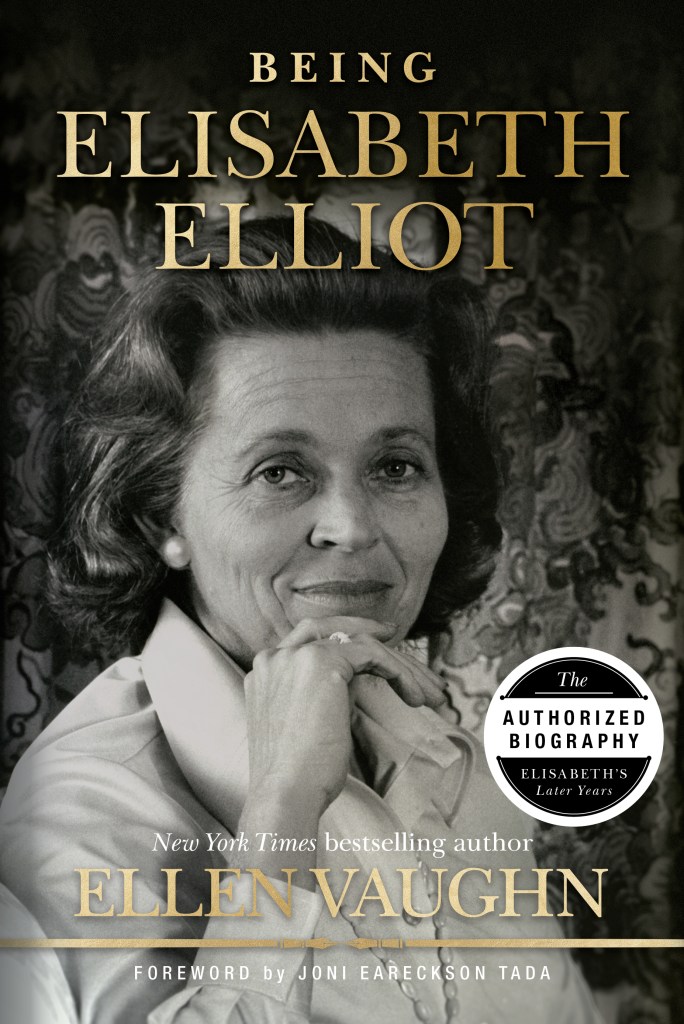
Review: Being Elisabeth Elliot

Being Elisabeth Elliot is the second of a two-part biography of Elisabeth by Ellen Vaughn. The first was Becoming Elisabeth Elliot (linked to my review).

I’ve written more about who Elisabeth was in that first review and her influence in my life here, so I won’t go into all that again.

Vaughn’s was the authorized biography: she had access to all Elisabeth’s remaining journals and many letters.

After spending months agonizing over whether to leave or stay in South America, Elisabeth finally felt God would have her go home and be a writer. This volume begins with Elisabeth’s return to the US from Ecuador in 1963 with her young daughter, Valerie.

But then she struggled with what to write, now that she had the time and freedom to.

Plus she was processing much of what had happened in her life so far. Christian literature and missions meetings were filled with victorious tales which she had not experienced. “She railed against the image-conscious habits of the Evangelical Machine, whose every story must end with glorious conversion and coherent happy endings, lest God look bad” (p. 272). She rethought some of her legalistic upbringing. She found that often, God’s ways were inscrutable. He couldn’t be boxed in, figured out, or predicted.

But she found Him trustworthy nonetheless. He may not respond the way we think He should. But He proves Himself good, wise, and holy.

Her private musings during this time period might be shocking and disturbing to some. But I think many of us ask some of the same questions at points in life.

In her first book after the initial ones about her husband, his friends, and their ministry trying to reach the Waorani tribe (then known as Aucas), she wrote a fictionalized account of her experiences in No Graven Image. The book was not well-received. Many misunderstood that the graven image in question was their man-made perceptions of what God should be like.

Vaughn goes on to tell of Elisabeth’s struggles with writing, her widening speaking ministry, her challenges raising Valerie, her surprising second marriage, her husband’s agonizing death from cancer, and her third marriage to Lars Gren. She mentions how some of her books came into being, especially the first few. I would have liked to learn more about the rest of her books.

I was surprised how often Elisabeth said in her journals that she never sought a platform, never wanted to get in the middle of a public debate on thorny issues (especially femininity in a feminist word). But she felt as God gave her openings, she needed to share His truth.

Though she came across as self-assured, she struggled with self-doubt.

I was surprised to learn that she dearly wanted to write a great work of fiction.

From the time Elisabeth Elliot returned to the United States from Ecuador in the early ’60s, she had devoured classic and modern literature that evoked the human condition against the backdrop of God’s mysterious universe. She wanted to write great novels. She wanted to engage and stir urbane New Yorkers. She wanted to call into being essential human truths through the power of story. She wanted pages that she had written to stir people’s hearts in the same way she was so deeply stirred, her heart and eyes lifted up, by well-crafted literature, visual art, and music (p. 253).

She attempted this, but ultimately felt it was beyond her. Many of us are glad God led her as He did, writing nonfiction for Christian women.

Much of what I would have liked to know more about was lost due to Lars burning “most of her journals from the years of their marriage, a choice he now regrets” (p. 274).

I started this book with reticence because I had heard negative things about it. I thought Vaughn’s writing was engaging and readable. I agree that she shared some things from Elisabeth’s journals about her physical relationship with her second husband, Addison, that would have been best left out. I agree, too, that she inserted herself into the narrative more than she should have. Vaughn’s husband died of cancer right after she wrote about Addison Leitch’s death, and having traveled this journey with Elisabeth through her journals was a help to her. But this would have been better placed in an appendix or afterword. Plus she “argues” with Elisabeth in an imaginary conversation as to whether or not she should have married Lars. In various other places, we’re aware of the author in ways we should not have been.

I appreciated Vaughn’s difficulty in trying to tell the truth about Elisabeth as best she could. I can’t imagine filtering through all the material available to her and trying to discern what to share and what to leave out. Though overall she covers the same ground as Lucy S. R. Austen in her biography, they bring out many different things as well.

Elisabeth never claimed to be perfect and would never wanted to have been portrayed as such. She was more complicated than many knew.

The very last page of the book tells about the Elisabeth Elliot Foundation, which is placing all her writings and radio programs in one spot. At the very bottom, the page says the foundation’s mission is to give “Hope in Suffering, Restoration in Conflict, and Joy and Obedience to the Lord Jesus Christ.” I thought this remarkably echoed Elisabeth’s ministry as well.

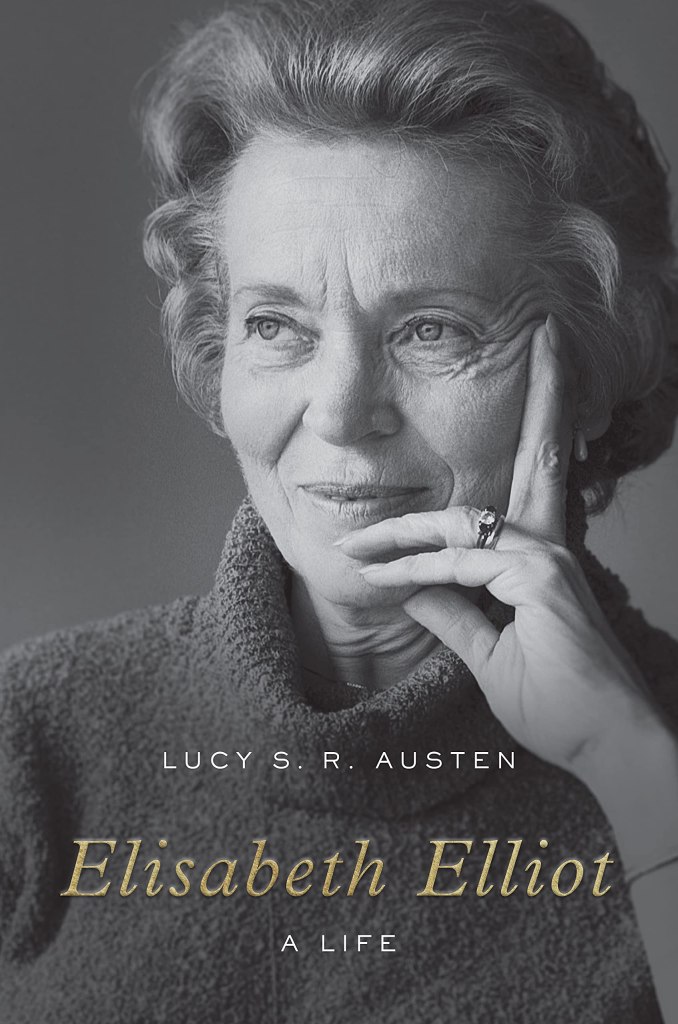
Review: Elisabeth Elliot, A Life

I’ve mentioned many times that I considered Elisabeth Elliot my “mentor from afar” for most of my adult life. I discovered her books in college, four decades ago, beginning with Through Gates of Splendor, Shadow of the Almighty, and The Journals of Jim Elliot. I’ve read almost all her books ever since, some of them several times, as well as her newsletters.

Most of you know that Elisabeth was the wife of Jim Elliot, one of five missionaries killed when trying to reach a tribe in Ecuador then known as “Aucas” (now known by their name for themselves, Waorani). A few years later, Elisabeth, her young daughter Valerie, and Rachel Saint, sister of one of the other missionaries, were invited to live with the Waorani. After writing Through Gates of Splendor about “Operation Auca” and the five missionaries, then her husband’s biography, and several articles, Elisabeth began to feel God called her into a ministry of writing. She and Valerie came back to the USA, where Elisabeth spent decades writing, speaking, and teaching.

Elisabeth’s public ministry ended in 2004 when her dementia began to make travel and speaking impossible. She passed away in 2015 at the age of 88. She’s regarded as one of the most influential Christian women of the last 100 years.

It was only a matter of time before biographers started telling her story. In Elisabeth Elliot: A Life, Lucy S. R. Austen harmonizes Elisabeth’s public writing with the journals and letters Austen had access to, which I feel is the strength of this book.

Elisabeth never put herself on a pedestal. She was quite honest about her faults and foibles. Austen takes care to present Elisabeth realistically, not idealistically.

However, I felt that Austen often sat in judgment on Elisabeth’s writing, criticizing such things as her approach to discerning God’s will in her early years, Jim’s behavior as they dated, the difference between what Elisabeth wrote in her journals and what she wrote publicly thirty years later, and so on. I have questions marks and notes of “author judgment” in several margins.

I knew much about Elisabeth’s earlier life from her books and writing. I was looking forward to learning more about what happened after she came back to the USA. But Elisabeth’s earlier life takes up two-thirds of the book, with her last fifty-two years filling only a third. That may be due to several factors: people’s interest in her missionary career; a number of questions and issues about that time; the decreasing number of family letters sent. And then, a lot of the narrative about her time in the States reads like lists of where she traveled and spoke, along with whom she visited and who visited her.

I was heartened to see some of her questions and struggles that emphasized that she was in many ways an ordinary Christian woman dealing with some of the same issues we all do. I was sad to hear of serious issues in her second and particularly third marriages.

Elisabeth seemed, by all accounts, to be a classic introvert. I was sad to see that introversion was thought to be unspiritual in her early life and that she fought against it rather than seeing it as the way God made her.

I was surprised to read that she thought speaking was not her main ministry and, in fact, took away from her writing ministry. I’m thankful to have heard her speak in person twice.

Her views on many things changed and solidified over the years, as happens with most of us. Her journals and sometimes her letters were ways of processing her thoughts. I wouldn’t be too alarmed by some of the views she seemed to hold or wrestled with along the way.

As it happened, I was midway through the book when I turned on the replay of Elisabeth’s radio program, Gateway to Joy, on BBN Radio one morning. She was doing a series called “Jungle Diaries,” reading from her journals of her time in Ecuador. She said she had not looked at them in forty years. She commented that people think she “has it all together,” but her diaries assured that she did not then, and she still did not claim to.

She also commented that her “theology has been developed” since those writings, but what she wrote was raw and real and honest. Then she mentioned that she was shocked to read of her desire to go to the Aucas. She “had no recollection of wanting to go to the Aucas, certainly not that soon after Jim died” (“Jungles Diaries #1:Journal Beginnings,” aired October 16, 2023).

I was quite surprised to hear her say that, as her books indicated that she strongly wanted to go. But then I thought about my own life forty years ago. I was four years married and would soon be expecting my first child. I remember where I worked, where we went to church, who our friends were. But there’s more I don’t remember than I do.

So I feel that Austen often made too much of the differences between what Elliot wrote over a span of forty or more years. But I think Austen tried to be faithful with the material she had.

In writing circles, we’re often told that we might have a perfectly fine manuscript that may be rejected because a similar book has just been published. For that reason, I was surprised to see Austen’s biography come out in-between the two parts of Ellen Vaughn’s “authorized” biography. Perhaps the publishers felt there was sufficient interest in Elisabeth to warrant two biographies of her published so close together. If so, I think they were right.

But I hope sometime someone writes a simple biography of Elisabeth, not analyzing or explaining or annotating, but just telling her story.

One of the main take-aways from listening to or reading about Elisabeth is that her supreme desires were to know and obey God. She was no-nonsense, yet she had a sense of humor. She was sentimental, but she wasn’t unfeeling. She wasn’t perfect, and she wouldn’t say this, but I think she went further than many of us in her spiritual journey.

(Updated to add: I thought I’d share a couple of other, more positive reviews from friends I know and trust: Ann’s is here, and Michele’s is here.)

(I often link up with some of these bloggers.)
Review: Made for More

Made for More by Hannah Anderson

In Made for More: An Invitation to Live in God’s Image, Hannah Anderson writes, “the goal of this book is to call women to recover an understanding of ourselves that is more basic than our gender. It’s a call to recover the image of God in our lives—to re-imagine not simply what it means to be a woman but what it means to be a person made in the very likeness of God Himself” (Location 131, Kindle version).

We tend to link our identity to various categories: gender, religion, vocation, location, political affiliation, etc. But such labels not only can’t embrace all of what we are, they can be divisive with people in other categories.

In order to know who we really are, we must first know who our Creator is—“accepting Him for who He is, not who we can conceive Him to be” (Location 287). Acts 17:28, Paul said, “In him we live and move and have our being.” “Simply put, there is one God and He is the Giver of all life. He created the world, and everything in it finds its source, its purpose, and its goal in Him” (Location 263).

Literally translated, imago dei simply means “in the image of God.” But in reality, imago dei means so much more. Imago dei means that your life has purpose and meaning because God has made you to be like Himself. Imago dei means that your life has intrinsic value, not simply because of who you are as an individual, but because of who He is as your God. Imago dei means that your life is sacred because He has stamped His identity onto yours (Location 402).

Yet God did not make us all alike. “We are different from each other and therefore dependent on each other. In other words, while each of us is fully made in the image of God, none of us can fully reflect and represent God alone. Instead we reveal the nature of God together; and as a result, we also find identity together” (Location 470).

Even though God created humans in His image, the first two sought their identity elsewhere, creating an identity crisis for the rest of the human race. “If they disobeyed, they would not simply be rejecting Him—they would be rejecting everything that was true about themselves as well. By choosing to turn from God to something else for knowledge, they would blind themselves to their own nature. And they would die because they would cut themselves off from the only thing that made them alive in the first place—God Himself” (Location 580).

Now, “Instead of living in dependent communion with Him, we fight for autonomy and the ability to rule our own lives; instead of loving and serving each other, we manipulate others to serve our own purposes; instead of exercising creative care of the earth, we consume it in our own greed and lust. Instead of unity, there is disunion; instead of harmony, there is brokenness” (Location 615).

The only way to get back to living in God’s image was for Jesus to identify with us that we might identity with Him.

The greatest identity shift that has ever happened was when God Himself became human and lived and died for us so we once more might live in Him. . .

[Jesus] is both the Image and the perfect Image Bearer, the Creator who deigns to live in His own creation. Despite being God, Jesus humbled Himself, took on human flesh, and came to live and die so that through His very life, death, and resurrection—through His metamorphosis—we ourselves might be changed (Location 764).

However, “Finding identity in Christ cannot be confined to one moment, because union with Christ is not simply an event; it is a state of being, a way of existing” (Location 810).

And that’s just the first third of the book. Hannah goes on to show how being made in God’s image affects what and how we love, our desires, roles, relationships, how we care for creation. Being made in God’s image, reflecting Him, guides our intellect, work, talents, and gifts.

The first book I read of Hannah’s was her advent book, Heaven and Nature Sing: 25 Advent Reflections to Bring Joy to the World, last December. I liked it so well, I wanted to read her other books. Though I didn’t do this on purpose, I ended up reading her books published at that time (two more have been written since) in reverse order according to my interest. Made for More was her first, but I read it last. Every time I considered it, I thought, “But I know what it means to be made in God’s image.” However, even though I knew basically what it meant, I had not considered it in all the depth and fullness and implications Hannah detailed here.

This is a book I should probably reread at regular intervals to remind myself of its truths.

I highly recommend this book to you, whether you have a working knowledge of what it means to be made in God’s image or not. If not, Hannah will explain it well. If so, you’ll understand it more fully and beautifully.

Blogging for God’s Glory in a Clickbait World

Blogging for God's Glory

In Blogging for God’s Glory in a Clickbait World, Benjamin Vrbicek and John Beeson propose this definition of blogging for God’s glory: “Blogging for God’s glory means . . . first, to have our motivations aligned with God’s, and second, to pursue excellence in the craft, including theological precision, beautiful prose, visual appeal, and the edification of readers, all drawing from the best industry practices” (p. 14).

First they deal with aligning our motivation with God’s. That’s often the most difficult part to maintain. Usually a Christian blogger begins by wanting to share posts that glorify God and help others. But “our own motives . . . are always layered and mixed” (p. 3). And though Christian writing instructors tell us not to worry about the numbers of those following, liking, and sharing our posts, those who want to move from blogging to publishing a book are told agents and publishers will look at those numbers and won’t consider taking a writer on unless those numbers are high. It’s a continual but necessary struggle to keep our focus on writing for God’s glory and purposes and trusting Him with the results, even when it doesn’t seem like many people are reading.

The authors apply the goal of writing for God’s glory into the everyday nuts and bolts of writing. Write with the reader in mind rather than anticipating accolades. Know your why, what difference you want to make. Serve others, not yourself. But that doesn’t mean never talking about yourself: Paul wanted to proclaim “not ourselves, but Jesus Christ as Lord” (2 Corinthians 4:5), yet 2 Corinthians is “Paul’s most autobiographical letter. He shares much of his own story not because he is narcissistic, but because he knows the church is struggling to trust him and he needs to build rapport” (p. 22).

“If we have any hope of offering others wisdom, listening to God must become a primary and ongoing habit.” We can’t share what we haven’t first taken it. That doesn’t mean every blog post needs to exposit Scripture or be a devotional, but it should still be “subject to God’s truth and ought to reflect His light” (p. 31).

Then, “Christian writers must labor not only to write what is true but also write in a manner that adorns the truth” (p. 38). We need to focus on building up, not tearing down. That doesn’t mean we never share what’s wrong, but we do so with discernment and with the purpose of helping.

The authors give helpful advice with the mechanics of blogging: discerning how much time to give to it, in connection with your other obligations; setting a schedule that works for you; dealing with writer’s block; engaging social media; blogging costs, platforms, layouts; using photos without plagiarizing; networking; monetizing; and more.

They include several appendices. One is a compilation of several bloggers’ answers to the question of whether blogging is dead. One is a glossary of blogging terms. One is a collection of sidebar quotes in the paper version that wouldn’t work in the e-book formatting.

A few other quotes that stood out to me:

Where can you offer yourself to your audience for the sake of proclaiming Jesus Christ as Lord? How can your life become a bridge for the gospel to travel? What work has God done (or is doing) in you that will encourage others? (p. 22).

Don’t feel compelled to chase whatever is hot. Be true to who God has made you to be (p. 23).

Blogging ought to grow us in holiness. When we blog for God’s glory, the discipline of writing becomes integrated into the web of our spiritual disciplines (p. 29).

It is not the size of our platform that assures us how far our words will reach, but rather it is our trust in a God whose word never returns void (Isa 55: 11) (p. 32).

Writing comes down to making and remaking slight improvements to achieve better clarity and aesthetic; writing is the pursuit of marginal gains, insignificant by themselves but significant in the aggregate (p. 37). (I loved the illustration they used here of an eye doctor trying different lenses, asking each time which is better.)

So why should we worry about getting the tone and the content right when we know fewer people will read an article if we write with discernment? We bother because God is God, and on the day of judgment we will give an account for every careless word we have ever blogged (Matt 12: 36) (p. 42).

I think this book is an excellent resource, especially when we need to adjust our motives away from the manipulative and self-focused approach of the world and remind ourselves of our real purpose: glorifying God. 

Review: Gay Girl, Good God

I think I first came across Jackie Hill Perry on Twitter. I wasn’t familiar with her work, but somehow I saw things that she had tweeted. I liked what she said, so I followed her. Unfortunately, she’s not on Twitter any more.

I don’t know at what point I learned that Jackie had written a book, Gay Girl, Good God: The Story of Who I Was and Who God Has Always Been. I saw some good reviews and put it on my To Be Read list.

Jackie grew up with a single mother and a father who breezed in and out of her life. Her father once told her that he loved her, but it wouldn’t bother him if she never wanted to see him again. His absence and lack of love plus Jackie’s being sexually abused by a boy at a young age were major factors in Jackie’s gender confusion, which then led to her becoming a lesbian.

Jackie had attended church and knew that Christians believed homosexuality was wrong. She fully believed she was going to hell. But she didn’t care.

Yet she felt God’s pursuit of her. She felt Him calling her, “haunting” her.

The only thing that made sense was that someone had obviously been talking to God about me and it was the reason why God wouldn’t leave me alone. Obviously, whatever was being asked of Him, regarding me, was making my little sinful world spin. It was dizzying to live on now-a-days. Trying to stand up straight (or should I say, queer), made everything I loved, mainly myself and my girlfriend, blurry. Nothing was clear except God’s loud voice saying, “Come.” (p. 50, Kindle version).

Eventually, Jackie did come. Yet life was not then miraculously easy. She wasn’t just saved from homosexuality. She was saved from sin, any and all sin. And like every other new believer, she learned that discipleship consists of taking up one’s cross daily and following Jesus, just as He said it would.

In the last section of her book, Jackie deals with Biblical truths like our identity in Christ and some common misconceptions, especially of what she calls the “heterosexual gospel.” In witnessing to homosexuals, well-meaning Christians sometimes promise or emphasize things which the Bible does not.

A few quotes that stood out to me:

Why hadn’t they ever mentioned the place happiness had within righteousness, or how the taking up of the cross would be a practice of obtaining delight? Delight in all that God is? Even their Savior had this kind of joy in mind as He endured His cross. So why hadn’t they set their focus on the same? In their defense, they were not to blame for my unbelief. I just wonder if they would’ve told me about the beauty of God just as much, if not more, than they told me about the horridness of hell, if I would’ve burned my idols at a faster pace (p. 64).

Because a good God made the woman, then being a woman was a good thing (p. 87).

Our sexuality is not our soul, marriage is not heaven, and singleness is not hell (p. 139).

To tell you about what God has done for my soul is to invite you into my worship (p. 140).

Do you know why we have a hard time believing that a gay girl can become a completely different creature? Because, we have a hard time believing God. The Pharisees saw the man born blind, heard his testimony, heard about his past and how it was completely different from the present one, and refused to believe the miracle because of Who the miracle pointed to. They were skeptical of the miracle because they didn’t have a real faith in the God who’d done it. The miracle was less about the blind man and more about a good God. It showed Him off. His power. His ability to do what He wants. How He wants, when He wants, and to whomever He chooses (p. 107).

I especially loved this, in telling about the man who had been born blind whom Jesus healed by combing His spit with dirt, rubbing the mixture on the man’s eyes, then telling hm to go wash in the pool of Siloam: “Using his palms to brush the stubborn sections away from his eyelids, light startled him. As more mud fell, more sight came. Until at once, he could see” (p. 106).

I looked at Goodreads yesterday to see what some of the reviews said. Not surprisingly, I saw review after review with one star scathingly critical of Jackie’s story. I thought, how sad it is that her book is rated so low just because people disagree with her. But then I scrolled up and saw that only three percent of the reviews were one star. 83% were four and five stars. Yet of the ten reviews Goodreads showed on the first page, seven were one-star.

I would love to say to those who discount Jackie’s story (one review accused her and her husband of pretending to be heterosexual)—if, according to the world, life is all supposed to be about choice these days, why would anyone argue with Jackie’s choices? If everyone’s supposed to have their own truth (which I disagree with, and Jackie would, too), why would you discount the truth of her experience? Why is it that if someone has lived a heterosexual lifestyle but then thinks they might be gay, that determination is supposed to be the real, lifelong one and there’s no turning back? Why can one supposedly only turn one way, and not the other?

One can, of course. But Satan wants to blind and deceive people.

I enjoyed Jackie’s story of God’s grace. I have not heard or read her poetry, but she has a poet’s heart and her expressiveness shines through here. Her knowledge of Biblical truth is solid.

I’d recommend her books to anyone, gay or straight, Christian or not. I think it would be particularly eye-opening to Christians who can sometimes come across as glib in their witness or opinions.

I listened to the audiobook, read by Jackie. At the moment, it’s free to those with an Audible subscription. Then I bought the Kindle version so I could keep this book on hand.

Humble Roots

If people think about humility at all these days, they usually envision self-deprecation, playing down one’s attributes, talents, or accomplishments, or, at the very least, not bragging.

In Humble Roots: How Humility Grounds and Nourishes Your Soul, Hannah Anderson explores humility from a Biblical angle. Instead of viewing humility as a club or prod when we’re feeling too proud, humility frees us and leads us to rest.

I defined humility as a correct sense of self, as understanding where you come from and where you belong in this world (p. 64, Kindle version).

Theologically speaking, humility is a proper understanding of who God is and who we are as a result (p. 102).

I would describe it as a creaturely dependence. We’re “made in His image, but we are made nonetheless (p. 11)—made originally from dirt, to which our bodies return. As Paul reminds Timothy, “we brought nothing into the world, and we cannot take anything out of the world” (1 Timothy 6:7). Everything we are and everything we have comes from God.

The problem is our obsession with ourselves. With our need to fix things, our need to make ourselves better, our need to be approved by God and others, our need to “count for something.”

But this is also why Jesus calls us to come to Him. By coming to Jesus, we remember who we are and who we are not. By coming to Him, we come face to face with God and with ourselves. “It is only in our encounter with a personal God,” writes philosopher Dietrich von Hildebrand, “that we become fully aware of our condition as creatures, and fling from us the last particle of self-glory” (p. 55).

If I can’t handle little things, what can I handle? Failure at small things reminds us of how helpless we are in this great, wide world. When little things spiral out of control, they remind us that even they were never within our control in the first place (p. 26).

Humility, instead of being a negative concept, frees us:

to be the people God created us to be (p. 11).

from the cycle of stress, performance, and competition (p. 12).

from our burdens . . . by calling us to rely less on ourselves and more on Him (p. 32).

to redirect our energies toward God and those whom He has given us to love (p. 3).

from the condemnation of others, . . . from self-condemnation and unnecessary guilt (p. 108).

to hear God’s call and leads you to a place of both rest and flourishing (p. 110).

from the oppression of our emotions, when we finally learn that “God is greater than our heart (p. 114).

from the responsibility of feeling like you have to “do it all.” You are free to do only what you have been made to do (p. 163)

. . . and so much more.

Hannah follows Jesus’ admonition to consider birds and flowers by grounding each chapter in something from the garden or nature. For instance, the chapter “Vine-Ripened” begins with all the work that goes into growing garden tomatoes, then being fooled every year into thinking the ones gassed for redness in stores will be the same. That leads into a discussion of wisdom being rooted not in acquiring facts, but in submitting to the source of wisdom–the fear of the Lord. Then an 1800 court case over whether tomatoes are vegetables or fruit is tied in, along with our relentless desire to be “right.” “Humility simply leaves room that my understanding of a situation could be wrong” (p. 124). We may not have all the facts or may be influenced by culture. Because we’re limited, “my faith cannot rest on my own knowledge . . . or ability to understand . . . humility leaves room for grace” (p. 124). How unlike most social media discussions, where everyone is right in their own eyes. Hannah then refers to an Isaac Watts book which discusses a “dogmatical spirit.” Our wisdom and safety come not from our being right, but from Jesus being right. Then the chapter goes back to the process of creating store-bought tomatoes, compares that with our search for wisdom, and extols the wisdom of waiting: “Humility teaches us to let knowledge ripen on the vine” (p. 129). The chapter is much more beautifully woven together than my cobbled summation here.

Hannah points us to Jesus, “who, though he was in the form of God, did not count equality with God a thing to be grasped, but emptied himself, by taking the form of a servant, being born in the likeness of men. And being found in human form, he humbled himself by becoming obedient to the point of death, even death on a cross (Philippians 2:6-8) and who invites us to “Take my yoke upon you, and learn from me, for I am gentle and lowly in heart, and you will find rest for your souls” (Matthew 11:20).

Besides benefiting from the truths Hannah shares, I marvel at the way she is able to weave together facts from nature, literature, Scripture, and personal example seamlessly into each chapter. I don’t know how she accomplishes this without time to just sit and think, but as a busy pastor’s wife and mom, I’m sure such time is at a premium. I first read one of her books during Advent and have been working my way through her others. She has quickly become one of my favorite authors.

Even though I just finished this book, reading one chapter a week, I am thinking about going through it again. I need to soak in its truths more.

(I often link up with some of these bloggers.)
Seven Words You Never Want to Hear

The Seven Words You Never Want to Hear that Denise Wilson writes about are from Jesus: “I never knew you; depart from me” (Matthew 7:23). Those are frightening words indeed. I struggled with them when I was unsure of my salvation. Thankfully, as Denise’s subtitle indicates, she doesn’t stop there: she tell How to Be Sure You Won’t hear those words.

Those words of Jesus occurred in what we call the Sermon on the Mount in Matthew 5-7. The full paragraph is as follows:

Not everyone who says to me, ‘Lord, Lord,’ will enter the kingdom of heaven, but the one who does the will of my Father who is in heaven. On that day many will say to me, ‘Lord, Lord, did we not prophesy in your name, and cast out demons in your name, and do many mighty works in your name?’ And then will I declare to them, ‘I never knew you; depart from me, you workers of lawlessness.’ (7:21-23).

It’s possible to “do many mighty works in your name” and yet still miss salvation, miss knowing Jesus personally.

Denise discusses several ways that could happen. One is praying “the sinner’s prayer” without faith or repentance. Another is growing up in a Christian atmosphere without ever believing on Christ personally. Or one could be deceived by the prosperity gospel or a works-based religion. Perhaps we haven’t counted the cost of discipleship and only wanted passage to heaven rather than a life of denying ourselves, taking up our cross, and following Him.

People might need to examine their hearts if they say they have been saved yet their life has not changed. We won’t be perfect after salvation. We’re forgiven and cleansed, but we still have an old nature and still need to grow. We’ll still battle with sin—yet if we’re not battling it, but letting it have full sway on our lives, something is amiss.

Denise points out that Jesus did not use a cookie-cutter approach in dealing with people. Years ago I attended classes where we were trained in how to lead someone to the Lord using the “Romans Road,” a series of verses in Romans that explain salvation. That approach is fine as far as it goes. But leading someone to the Lord is not just a matter of getting them to allow you to read them a handful of verses and then you getting them to pray. We need to be open to the Lord’s leading as we speak to people. Only He knows what obstacles to salvation are in their hearts.

Denise includes several testimonies from the Bible, from history, and from modern times. Some of them, she points out, don’t look like what we think salvation looks like. Take the thief on the cross next to Jesus. He knew he was guilty and Jesus was innocent. He asked, “Jesus, remember me when you come into your kingdom” (Luke 23:39-42). Was anyone else ever saved using those words? I don’t know. But one thing I learned in my own struggle was that becoming a Christian was not a matter of saying the “right” words, like a magic formula or an initiation rite. It’s a matter of repentance and faith in Jesus.

2 Corinthians 13:5 tells us to, “Examine yourselves, to see whether you are in the faith.” Denise provides helps to do that in this book.

The Lost Art of Discernment

Most of think of discernment from the negative side. We want to discern good from bad so we can avoid the bad. We want to teach our families to avoid the bad as well. And that’s necessary. There is a lot of bad to avoid.

But constantly looking out for the potential bad can warp our thinking. Hannah Anderson says, “Facing so many variables, with good and bad so quickly blurring, most of us find it easier to retreat to safe spaces, cluster in like-minded tribes, and let someone else do our thinking for us” (p. 11). She goes on to share:

For a long time, I didn’t think very clearly at all because my actions and choices were shaped more by the brokenness around me than the reality of God’s goodness and nearness. When faced with a decision, I played defense: What will keep me safe? What are other people expecting me to do? What will happen if I make a mistake?

But in trying to keep myself safe, in obsessing over making the “right” choices, I found myself making a whole lot of wrong ones. Because I lacked a vision for goodness, I also lacked discernment. And without discernment, I had little chance of finding the security and happiness that I wanted—that I think we all want (pp. 11-12).

Hannah suggests a different approach. Why not discern good from bad in order to pursue the good? That’s just what she proposes and demonstrates in All That’s Good: Recovering the Lost Art of Discernment.

But what if there were a way to see clearly once again? What if we could see the world as God sees it—in all its brokenness and beauty—and in seeing, be able to do more than endure this life? What if we could flourish in it? I think we can. In fact, I’m convinced of this good news: Despite all the pain, all the sorrow, all the questions, goodness still exists because God still exists. And because He does, He has not left us to sort through the mess alone (p. 11).

God created the world and the people in it and pronounced them good (Genesis 1). But sin marred the world and our hearts (Genesis 3). Yet God has promised to restore goodness some day. And for now, even in spite of a marred visage, we can still trace God’s goodness in what He created. As we believe in and follow Him, “He is busy transforming you, renewing your mind ‘so that you may discern what is [His] good, pleasing, and perfect will'” (Romans 12:2) (pp. 12-13).

Hannah explains what discernment is and isn’t, what hinders “our ability to experience His goodness,” how “simply reacting to established culture is not enough, why naïveté and isolationism can cause us to misstep just as quickly,” how discernment and virtue intertwine,  what habits we can employ, and how God walks with us (p. 12).

Then Hannah devotes a chapter apiece to the things Paul told us in Philippians 4:8 to think on: “whatever is true, whatever is honorable, whatever is just, whatever is pure, whatever is lovely, whatever is commendable, if there is any excellence, if there is anything worthy of praise.”

Hannah weaves each of these truths with observations from everyday life: detective stories, vacations, pearls, art museums, making pies.

I took this book slowly, just reading one chapter a week and letting it sink in. I appreciated so much not only what Hannah said, but how she said it. I marveled at how she wove different elements together in her chapters.

I’ve got dozens of quotes marked, but here are just a few more:

There are no hacks to discernment. No three easy steps to follow, no lists or tricks or tips to ensure that you’ll be able to make good decisions when you need to. In order to make good decisions, you must become a discerning person, a person skilled in wisdom and goodness itself. And to be these kinds of people, we must be humble enough to be willing to learn (p. 27).

What Solomon realizes is that our life on earth, all the things we experience, all the work we do, all the good things we enjoy, aren’t simply a hurdle to the next life. They are designed by God to lead us to the next life. They are designed to lead us to Him. Like the grooves on a record, God’s good gifts are designed to draw us closer and closer to the center, to draw us closer and closer to eternity and Him (p. 53).

At its essence, worldliness is a disposition of the heart—the belief that goodness comes from the immediate satisfaction of temporal desire. But because worldliness is a disposition of the heart, we can’t simply retreat into religious contexts to escape it. We also can’t rely on adopting certain positions or practices to avoid it—especially if we use them to avoid the more difficult task of examining our own heart motives. As long as we’ve picked the “right” education for our children, go to the “right” church, watch the “right” movies, and vote for the “right” candidate, we won’t have to face the deeper truth about how easily our hearts are led astray. We could be consumerist, pragmatic, and completely worldly but never know it because we see our choices as “right” and thus are convinced that we are as well (pp. 53-54).

You develop discernment by becoming a person who knows how, not simply what, to think (p. 57).

In order to become discerning people, we also must separate our need for approval from our decision making. But to do that we’ll need a source of honor that is not dependent on how people perceive us. We’ll need a source of honor that doesn’t rest on presenting just the right look at just the right moment. And we find that honor, not in image crafting, but in the One who first crafted us in His own image (p. 84).

I didn’t realize until I was almost finished with the book that the last chapter contained review points and discussion questions for each chapter. That would have been helpful to know and use.

Hannah hosts a podcast called Persuasion along with Erin Straza.

If you are a member of Audible.com, the audiobook of All That’s Good is currently free with your subscription. They shuffle their free titles around at intervals, so I am not sure how long this one will be free. I did not listen to the audiobook—I can’t listen to books like this and get as much out of them as I can when highlighting and occasionally rereading parts. But I know some of you prefer nonfiction via audio.

But I encourage you to get and partake of this book. I can’t recommend it highly enough.

(I often link up with some of these bloggers.)
 

Be Patient: Waiting on God in Difficult Times

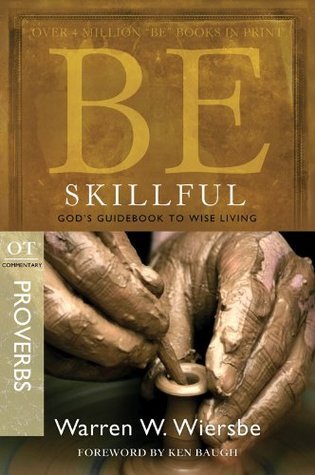
Job is not an easy book to read. The first two chapters and the last one aren’t bad, but all that bickering between Job and his friends in the middle is hard to follow. But taking it a section at a time with my ESV Study Bible and Be Patient (Job): Waiting on God In Difficult Times by Warren W. Wiersbe helped.

Job’s suffering was extreme. He lost all of his wealth and his ten children in one day. Then he lost his health. The person closest to him, his wife, was not much support (but then, she was grieving, too). Job’s friends came and sat with him in his grief for a whole week. They were better friends to him then than when they opened their mouths. They all wondered the same thing: Job, what in the world did you do to bring such suffering on yourself? God blesses the righteous and punishes the wicked, right? So you must have really done a number to warrant all this.

Job tried to point out, several times, that the wicked aren’t always punished–at least not in the time or way we would think. Therefore the opposite is true: people who do right sometimes suffer for no apparent reason.

God had said in the beginning that Job was an upright man. He didn’t allow Satan to torment Job for punishment. Rather, Satan had accused that Job only followed God because God had blessed him. Basically, he said God bought Job’s allegiance by all He had blessed him with. Take away all that, and “he will curse you to your face.”

Job never cursed God. He maintained his integrity and faith. Yet at times, knowing he was in the right caused him to question whether God was doing right in His treatment of His faithful servant.

In the end, God set straight the three friends plus Job.

Here are some of the insights Dr. Wiersbe offered:

In times of severe testing, our first question must not be, “How can I get out of this?” but “What can I get out of this?” (p. 24).

The problem with arguing from observation is that our observations are severely limited. Furthermore, we can’t see the human heart as God can and determine who is righteous in His sight. Some sinners suffer judgment almost immediately, while others spend their lives in prosperity and die in peace (Eccl. 8: 10–14) (p 37).

Nothing that is given to Christ in faith and love is ever wasted. The fragrance of Mary’s ointment faded from the scene centuries ago, but the significance of her worship has blessed Christians in every age and continues to do so. Job was bankrupt and sick, and all he could give to the Lord was his suffering by faith; but that is just what God wanted in order to silence the Devil (p. 52).

Beware of asking God to tell others what they need to know, unless you are willing for Him to show you what you need to know (p. 60).

Now Job had to put his hand over his mouth lest he say something he shouldn’t say (Prov. 30: 32; Rom. 3: 19). Until we are silenced before God, He can’t do for us what needs to be done (p. 186).

I especially appreciated what Wiersbe said at the conclusion of Job’s trials, after God had restored him: “Job’s greatest blessing was not the regaining of his health and wealth or the rebuilding of his family and circle of friends. His greatest blessing was knowing God better and understanding His working in a deeper way” (p. 192).

If you’d like even more resources on Job, I can recommend Beyond Suffering: Discovering the Message of Job by Layton Talbert and The Misery of Job and the Mercy of God, a poetic rendering of Job by John Piper (linked to my reviews of them). Also, I wrestled a few years ago with Where Is God’s Compassion and Mercy in Job?