C. S. Lewis: Christian Reflections

Reading C. S. Lewis’ nonfiction is always a stretch for the brain muscles. Even Elisabeth Elliot, a deep thinker herself, said that she could follow his line of reasoning but couldn’t always reproduce or explain it.

Lewis’ writings for the general population, like Mere Christianity, are accessible–I would not want to scare anyone away from them.

However, I checked out Lewis’ Christian Reflections several month ago–and laid them aside several times. I was about to give up on them completely when I decided to try once more, praying for understanding and discernment. And then I was able to follow the gist of what he was saying.

This book is a collection of Lewis’ essays on various topics pertaining to Christianity or from a Christian point of view. They were assembled and published by Walter Hooper, Lewis’ longtime secretary, after Lewis’ death. In Hooper’s preface, he shares which of the essays had been previously published or never before published. Many were written for Lewis’ peers, which explains the elevated level of philosophic thought (and the plethora of unfamiliar Latin phrases. I wished I had read this in my Kindle app, where at a touch I could get the translations).

There are fourteen essays in all, touching on topics like Christianity and Literature, Christianity and Culture, ethics, church music, and the psalms. Others delve into things like subjectivism and historicism and de futilitate. I’ll try to give a sentence or two about each:

“Christianity and Literature.” These first two were the ones I was most looking forward to, but they were also the most difficult. I can’t really sum them up in a short sentence or two. I think I need to come back and read them again some time in the future to get more out of them. This blogger has created a helpful outline of the essay.

“Christianity and Culture.”

“Religion: Reality or Substitute?” This essay discusses faith vs. reason and whether religion is a substitute for reality.

“On Ethics.” Lewis discusses whether “the world must return to Christian ethics in order to preserve civilization, or even in order to save the human species from destruction” p. 44).

De Futilitate.” Lewis debunks the idea that we can’t really know anything so therefore everything is futile. Doesn’t that sound depressing?

“The Poison of Subjectivism.” This sounds a lot like the postmodernism of our era: maybe the seeds of it began here. “There are modern scientists, I am told, who have dropped the words truth and reality out of their vocabulary and who hold that the end of their work is not to know what is there but simply to get practical results” (p. 72). Indignation against another person’s or country’s morality . . .

is perfectly groundless if we ourselves regard morality as a subjective sentiment to be altered at will. Unless there is some objective standard of good, over-arching Germans, Japanese and ourselves alike whether any of us obey it or no, then of course the Germans are as competent to create their ideology as we are to create ours. If ‘good’ and ‘better’ are terms deriving their sole meaning from the ideology of each people, then of course ideologies themselves cannot be better or worse than one another. Unless the measuring rod is independent of the things measured, we can do no measuring (p. 73).

“The Funeral of a Great Myth” takes a look at evolution not in the scientific sense but in the sense of society. Lewis says the thought of humanity continually getting better has been around longer than Darwin but at no point has been witnessed or proven true. Rather, just the opposite seems to be the case. Nor does the complex arise from the simple, but the complex often offers the seed of the simple.

“On Church Music.” In Lewis’ day, church music “glorifies God by being excellent in its own kind; almost as the birds and flowers and the heavens themselves glorify Him. In the composition and highly-trained execution of sacred music we offer our natural gifts at their highest to God, as we do also in ecclesiastical architecture, in vestments, in glass and gold and silver, in well-kept parish accounts, or the careful organization of a Social” (p. 95). “But in most discussions about Church Music the alternative to learned music is popular music” (p. 95) which he says can be shouted and “bellowed” as well as sung. Either one can be done to the glory of God—or simply because it’s what people like. Each one could be done with pride and condescension. Or, the musician “of trained and delicate taste” can “humbly and charitably sacrifice his own . . . desires and give people the humbler and coarser fare than he would wish” (p. 96), and the the less musically learned could “humbly and patiently, and above all silently, listen to music which he . . . cannot fully appreciate, in the belief that it somehow glorifies God (p. 96). To both, “Church Music will have been a means of grace; not the music they have liked, but the music they have disliked. They have both offered, sacrificed, their taste in the fullest sense” (p. 97) for love of others, the glory of God, and the good of the church.

“Historicism.” ““What I mean by a Historicist is a man who asks me to accept his account of the inner meaning of history on the grounds of his learning and genius” (p. 101). He doesn’t have a problem with those who find “causal connections between historical events” (p. 100), a work belongs to historians. “The mark of the Historicist, on the other hand, is that he tries to get from historical premises conclusions which are more than historical; conclusions metaphysical or theological or (to coin a word) atheo-logical” (pp. 100-101).

“The Psalms.” I’ve always appreciated the psalms for their humanness, their depth of emotion. So I was a little surprised Lewis called them “shockingly alien,” until he described his religious experience of “Anglican choirs, well laundered surplices, soapy boys’ faces, hassocks, and organ, prayer books” (p. 114). He has an interesting discussion on the call for justice in the psalms, “not something that the conscience-stricken believer fears but something the downtrodden believer hopes for” (p. 123), “the continual hope of the Hebrews for ‘judgement’, the hope that some day, somehow, wrongs will be righted” (p. 124). I would disagree with his view of imprecatory psalms, but I admit I don’t always know how to interpret them.

“The Language of Religion.” Lewis begins by discussing different kinds of language: ordinary (his example: “It was very cold.”), scientific (“There were 13 degrees of frost.”), and poetic, with several lines from Keats. He discusses how each type conveys some level of accuracy and elicits some degree of emotion, yet each has its failings. Then he applies this to apologetics, which he compares to trying to convey a certain shade of color to a blind man who has never seen color.

“Petitionary Prayer: A Problem Without an Answer.” Lewis struggles here with the difference between biblical promises that we receive whatever we ask for in faith vs. Jesus’ prayer in Gethsemane that the cup be removed, yet “not my will but Yours be done.” He doesn’t have a problem with a loving providence saying no. But he seems to have a problem with so many promises of answers to prayers of faith for what one asks, even of mountains being moved (acknowledging the metaphorical aspect), that it would seem that Jesus did not pray with that kind of faith. But I think Jesus did pray with that kind of faith–faith that the Father’s will would ultimately be done. To me, the mystery is that Jesus prayed that the cup would be removed when that cup was the very reason He came, as He said earlier. I’ve only been able to conclude that this shows the human side of our Lord. And it shows that deep dread of a coming crisis in the will of God is not necessarily sin. Jesus had planed and prepared for this before creation–it was His own will (I lay down my life, no on can take it from me) as well as the Father’s. Yet His human side shrank from it. That gives me great comfort.

“Modern Theology and Biblical Criticism.” This essay was not only fairly easy to follow, it was delightful. Lewis takes on the problem of modern theologians who “ask me to believe they can read between the lines of the old texts; the evidence is their obvious inability to read (in any sense worth discussing) the lines themselves” (p. 157). These Biblical critics “seem to me to lack literary judgement, to be imperceptive about the very quality of the texts they are reading” (p. 154). “I have been reading poems, romances, vision-literature, legends, myths all my life. I know what they are like. I know that not one of them is like this [the Biblical text]” (p. 155).

Lewis speaks not as a theologian, but as a “sheep telling shepherds what only a sheep can tell them” (p. 152). He claims some authority on the basis of how people have wrongly evaluated his writings and that of his friends, assuming things about the background and meaning which weren’t true. A longer quote:

A theology which denies the historicity of nearly everything in the Gospels to which Christian life and affections and thought have been fastened for nearly two millennia—which either denies the miraculous altogether or, more strangely, after swallowing the camel of the Resurrection strains at such gnats as the feeding of the multitudes–if offered to the uneducated man can produce only one or other of two effects (p. 153).

Those effects, Lewis goes on to say, would be to look elsewhere for spiritual truth or to become an atheist.

“The Seeing Eye.” Lewis here refers to the Russian astronauts who said they had not found God in space. He replies, ‘It is not in the least disquieting that no astronauts have discovered a god of that sort. The really disquieting thing would be if they had” (p. 167).

Space-travel really has nothing to do with the matter. To some, God is discoverable everywhere; to others, nowhere. Those who do not find Him on earth are unlikely to find Him in space. (Hang it all, we’re in space already; every year we go a huge circular tour in space.) (p. 171).

He then discusses various scenarios of what kinds of other creatures we might find on other worlds and how we’d likely respond to them. He explored this to a degree in his science fiction series.

In the end, I was glad I persevered. I did enjoy and benefit from several of the essays, though it would take multiple readings to really grasp everything Lewis was saying in some of them. But it’s good to give one’s brain a workout.

I’m counting this book for the essay category for the Nonfiction Reading Challenge.

Be Right (Romans): How to Be Right with God, Yourself, and Others

Warren W. Wiersbe sheds some light on the book of Romans in Be Right (Romans): How to Be Right with God, Yourself, and Others. The title comes from the fact that some form of the word “righteousness” is used over sixty times in Romans. Also, the most important pursuits in the world are being right with God and our fellow humans.

Romans has some of the most familiar verses in the Bible, but also many difficult passages.

We typically use verses from Romans when sharing the gospel with others.

“For all have sinned and fall short of the glory of God” (Romans 3:23).

For the wages of sin is death, but the free gift of God is eternal life in Christ Jesus our Lord” (Romans 6:23).

God shows his love for us in that while we were still sinners, Christ died for us” (Romans 5:8)

“If you confess with your mouth that Jesus is Lord and believe in your heart that God raised him from the dead, you will be saved. 10 For with the heart one believes and is justified, and with the mouth one confesses and is saved” (Romans 10:9-10).

But these are not isolated verses. They come from a context of Paul’s detailed explanation of man’s sin, Christ’s sacrifice, and more.

Chapters 6-8 detail the struggle between the flesh and Spirit.

Romans also discusses God’s plan for Jews and Gentiles. He has not forsaken the Jews, but he has “grafted in” the Gentiles (chapters 9-11). Paul shows that this was God’s plan all along. The section about election and free will from Romans 9 was very helpful to me.

Then chapters 12-14 are full of practical instructions. Paul often deals with the doctrinal first, then shows how doctrine manifests itself in everyday lives. Romans 14:1-15:7 particularly deal with disagreements among Christians over what we call “debatable” matters.

Romans ends with Paul’s warm greetings to several individuals.

As always, I have several passages marked. Here are a couple that stood out to me:

In the Christian life, doctrine and duty always go together. What we believe helps to determine how we behave. It is not enough for us to understand Paul’s doctrinal explanations. We must translate our learning into living and show by our daily lives that we trust God’s Word.

Christian living depends on Christian learning; duty is always founded on doctrine. If Satan can keep a Christian ignorant, he can keep him impotent.

The law was a signpost, pointing the way. But it could never take them to their destination. The law cannot give righteousness; it only leads the sinner to the Savior who can give righteousness.

Does a strong Christian think he is making a great sacrifice by giving up some food or drink [for the sake of a weaker believer]? Then let him measure his sacrifice by the sacrifice of Christ. No sacrifice we could ever make could match Calvary.

A person’s spiritual maturity is revealed by his discernment. He is willing to give up his rights that others might be helped. He does this, not as a burden, but as a blessing. Just as loving parents make sacrifices for their children, so the mature believer sacrifices to help younger Christians grow in the faith.

Spiritual gifts are tools to build with, not toys to play with or weapons to fight with. In the church at Corinth, the believers were tearing down the ministry because they were abusing spiritual gifts. They were using their gifts as ends in themselves and not as a means toward the end of building up the church. They so emphasized their spiritual gifts that they lost their spiritual graces! They had the gifts of the Spirit but were lacking in the fruit of the Spirit—love, joy, peace, etc. (Gal. 5: 22–23)

This is a fairly short commentary, so Wiersbe didn’t go into as much detail as he could have in some sections. But I think this is a good book for those who want more insight from Romans without slogging through a massive volume.

The Devil in Pew Number Seven

“The story you are about to read actually happened, every last detail of it. As the plot unfolds, my hunch is that you’ll need to remind yourself of this reality more than once.” So Rebecca Nichols Alonzo opens her book The Devil in Pew Number Seven.

Her hunch was right.

Rebecca tells the story of a man who harassed—no, terrorized her family for several years as she was growing up.

Rebecca’s father was the new pastor of a small church in Sellerstown, NC, in 1969. He found that one man, a Mr. Watts, held key positions in the church even though he was not a member. Recognizing Mr. Watts’ “stranglehold” on the church, Pastor Nichols “made changes to end his dominance” (p. 48).

Mr. Watts did not take his loss of position well, nor the pastor’s difference of opinion over issues like the style of the new church roof. Mr. Watts started acting up in church from pew number seven, making faces at the pastor while he preached, tapping on his watch, walking out and slamming the door loudly before the sermon was finished.

The Nichols family started receiving threatening anonymous phone calls in the middle of the night and unsigned letters. One letter promised the pastor’s family would leave “crawling or walking, running or riding, dead or alive” (p. 54).

Then followed several incidents of escalating attacks: home invasions while the family was away, which one time included water in the fuel tank and oil in the water pump; shots fired at the outside walls; dynamite set off near the house.

The Nichols family, the neighbors, the church, and even the police knew who was behind these attacks, but no one could prove it. Some of the incidents occurred while Mrs. Nichols was pregnant and then while the family had a newborn.

Finally events came to a tragic head. (It’s no spoiler to say this since it’s mentioned in the first chapter).

The rest of the book tells of the long-term effects these years had on the family and the necessity of learning to forgive those involved.

Rebecca was a child when much of this happened, but she read her parents’ journals, newspaper reports, court documents, and interviewed several people from the town.

It’s hard to fathom how far this man went to drive out the pastor. Rebecca’s father felt he couldn’t leave, because that would mean Mr. Watts would again assert his dominance over the church if Pastor Nichols left. The pastor and his wife also believed and modeled for their children “Love your enemies and pray for those who persecute you” (Matthew 5:44).

I first heard of this book from my friend Lou Ann. But I kept passing it by on my TBR list because I thought it might be too hard to read. I finally listened to the audiobook nicely read by Pam Ward. Then I checked the book out of the library to see the pictures and read the afterword.

The book was not hard to read or listen to. Rebecca doesn’t sensationalize the violence. She begins with the climactic incident, but then backtracks to tell how her parents met, were called to the ministry, how they came to Sellerstown, and other “normal” occurrences.

Some of my favorite quotes:

With a few rare exceptions, everyone in Sellerstown was related to one another in some way. Which is why at times, shotguns in hand, they watched out for one another. The Sellers kin are true salt-of-the-earth people . . . although some were saltier than others (p. 31).

I knew [God] said in the Bible that He’s a father to the fatherless and to the brokenhearted. I was both, so we had a perfect fit. There was one more insight I came to embrace. I needed God more than I needed to blame God (p. 235).

I didn’t ask for this abrasion on my soul to be a part of my life; it just is. Now, day by day, I have the choice to forgive the two men who took so much from me, or I can choose to wallow in a toxic brew of bitterness. True, I forgave . . . a long time ago. But that doesn’t mean I still don’t have to forgive him again and again . . . (p. 250).

I’m the one who remains in jail if I withhold God’s grace by failing to forgive when wronged (p. 251).

My one critique is that the author seems to belabor some points overmuch. For instance, with the first threatening phone call, a little more than a page is spent on describing what happens inside the phone when it rings, explaining how phones in those days didn’t have optional ring tones and couldn’t be left off the hook without setting off a warning tone, how her father couldn’t take the phone off the hook anyway because a country pastor was “on call” 24/7 just like a country doctor was. Maybe this was supposed to build suspense with three rings leading up to the first threat, but it just seemed extraneous and a touch irritating. But, this is a minor criticism and for the most part doesn’t hinder the story.

Sometimes the circumstances were hard to read about and illustrated how “truth is stranger than fiction,” But I highly recommend this book. Ultimately it’s about God’s grace and strength through the most difficult of times.

Be Strong: Study of Joshua

Our church has been reading through the book of Joshua the last few weeks. I read Be Strong (Joshua): Putting God’s Power to Work in Your Life by Warren W. Wiersbe along with our daily Bible reading.

Joshua marks two major transitions in Israel’s history. First, Moses, their leader of over forty years, had just passed away. Then the Israelites had just finished forty years of wandering and were about to enter the land God had promised their ancestors long ago.

Either situation would be daunting to a new leader. So God encourages Joshua right off the bat:

No man shall be able to stand before you all the days of your life. Just as I was with Moses, so I will be with you. I will not leave you or forsake you. Be strong and courageous, for you shall cause this people to inherit the land that I swore to their fathers to give them (Joshua 1:5-6).

God also gives Joshua vital instruction:

Only be strong and very courageous, being careful to do according to all the law that Moses my servant commanded you. Do not turn from it to the right hand or to the left, that you may have good success wherever you go. This Book of the Law shall not depart from your mouth, but you shall meditate on it day and night, so that you may be careful to do according to all that is written in it. For then you will make your way prosperous, and then you will have good success. Have I not commanded you? Be strong and courageous. Do not be frightened, and do not be dismayed, for the Lord your God is with you wherever you go (Joshua 1:7-9).

Joshua seems to have followed God’s instruction faithfully throughout the rest of his life. He made a couple of costly mistakes: going up to Ai and making a pact with the Gibeonites without seeking counsel of the Lord. But Wiersbe spends a lot of time pointing out that when we err, we don’t give up: we confess our sins, pick up again, and get back on the right path.

Wiersbe discusses the difficulty of God having His people slaughter the nations in Canaan. He points out that the Canaanites weren’t innocent: they were known for cruel acts like sacrificing their children to their gods and vile sexual acts in the name of worship. And he reminds that God gave them plenty of space to repent. Rahab was one who heard of the God of Israel and turned to Him in faith (eventually becoming an ancestor of the Messiah).

Some hymns have portrayed the promised land as symbolic of heaven. But Wiersbe repeatably points out that the symbolism doesn’t fit: we don’t battle our way either into heaven or after we get there. He says that entering the promised land symbolizes our maturity in Christ. God often said that He was the one driving out the nations before Israel, yet they had to pick up their swords and fight (most of the time. Jericho and some of the other cities had different battle plans). So with us: we’re saved by grace through faith plus nothing. And we’re sanctified by grace as well. Yet we only become mature Christians as we pick up our “sword of the Spirit,” God’s Word, and believe it and apply it. We can and should pray for God’s grace and help in taking temptation away and helping us overcome, but He expects us to read and apply the Word He gave us. “What Paul’s letter to the Ephesians explains doctrinally, the book of Joshua illustrates practically. It shows us how to claim our riches in Christ. But it also shows us how to claim our rest in Christ (p. 22, Kindle version). Wiersbe discusses briefly the different kinds of rest Hebrews 4 and 5 tell about, then says, “This ‘Canaan rest’ is a picture of the rest that Christian believers experience when they yield their all to Christ and claim their inheritance by faith” (p. 22).

The victorious Christian life isn’t a once-for-all triumph that ends all our problems. As pictured by Israel in the book of Joshua, the victorious Christian life is a series of conflicts and victories as we defeat one enemy after another and claim more of our inheritance to the glory of God (p. 23).

The main point of Joshua is that God kept His promises to His people. Not only did He give them the land He originally promised Abraham, but He provided for each of the tribes. At the end of the book, Joshua tells the people, “You know in your hearts and souls, all of you, that not one word has failed of all the good things that the Lord your God promised concerning you. All have come to pass for you; not one of them has failed” (Joshua 23:14). He encourages them to “cling to the Lord your God just as you have done to this day” (23:8) and warns that just as God kept His promises to give them the land, He’ll keep His promise to punish them if they go after other gods.

Wiersbe has a closing chapter of the example of Joshua himself in his following the Lord and leading the people.

As always, I appreciate Dr. Wiersbe’s insights into this book of the Bible.


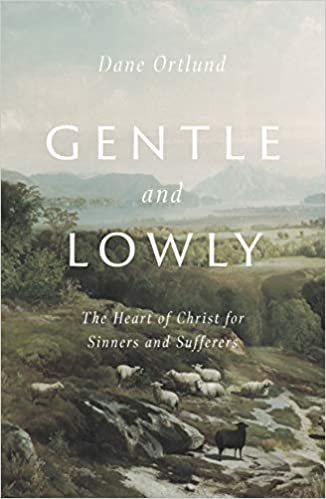
Gentle and Lowly

When I first saw Dane Ortlund’s book, Gentle and Lowly, I thought the subject would be encouraging Christians to be humble and kind in their dealings.

But then I learned that the book explores the gently and lowly aspect of Jesus. Jesus described himself this way, but often when people emphasize His gentleness, they deemphasize His holiness, His righteousness, His anger at sin, etc. I wasn’t familiar with Dane Ortlund, so I wasn’t sure how he would handle this topic. I began the book warily.

I need not have worried. Ortlund takes great care to keep in mind the whole picture of who Jesus is.

Yes, he is the fulfillment of the Old Testament hopes and longings (Matt. 5: 17). Yes, he is one whose holiness causes even his friends to fall down in fear, aware of their sinfulness (Luke 5: 8). Yes, he is a mighty teacher, one whose authority outstripped even that of the religious PhDs of the day (Mark 1: 22). To diminish any of these is to step outside of vital historic orthodoxy. But the dominant note left ringing in our ears after reading the Gospels, the most vivid and arresting element of the portrait, is the way the Holy Son of God moves toward, touches, heals, embraces, and forgives those who least deserve it yet truly desire it (p. 27. All page numbers are from the Kindle version).

As we zero in on the affectionate heart of Christ, how do we ensure that we are growing in a healthy understanding of the whole counsel of God and a comprehensive and therefore proportionate vision of who Christ is? Three comments are needed here. First, the wrath of Christ and the mercy of Christ are not at odds with one another, like a see-saw, one diminishing to the degree that the other is held up. Rather, the two rise and fall together. The more robust one’s felt understanding of the just wrath of Christ against all that is evil both around us and within us, the more robust our felt understanding of his mercy (pp. 28-29).

In fact, Jesus’ holiness and righteousness makes it all the more a marvel that “The point in saying that Jesus is lowly is that he is accessible. For all his resplendent glory and dazzling holiness, his supreme uniqueness and otherness, no one in human history has ever been more approachable than Jesus Christ” p. 20). “This is deeper than saying Jesus is loving or merciful or gracious. The cumulative testimony of the four Gospels is that when Jesus Christ sees the fallenness of the world all about him, his deepest impulse, his most natural instinct, is to move toward that sin and suffering, not away from it” (p. 29). “His holiness finds evil revolting, more revolting than any of us ever could feel. But it is that very holiness that also draws his heart out to help and relieve and protect and comfort” (pp. 69-70).

Ortlund reminds us that “’Gentle and lowly’ does not mean ‘mushy and frothy,’” and “This is not who he is to everyone, indiscriminately. This is who he is for those who come to him, who take his yoke upon them, who cry to him for help” (p. 21).

What elicits tenderness from Jesus is not the severity of the sin but whether the sinner comes to him. Whatever our offense, he deals gently with us. If we never come to him, we will experience a judgment so fierce it will be like a double-edged sword coming out of his mouth at us (Rev. 1: 16; 2: 12; 19: 15, 21). If we do come to him, as fierce as his lion-like judgment would have been against us, so deep will be his lamb-like tenderness for us (cf. Rev. 5: 5–6; Isa. 40: 10–11). We will be enveloped in one or the other. To no one will Jesus be neutral (p. 53).

Even after so many years of walking with the Lord, we can feel that He gets tired of us falling, failing, begging for mercy again and again. But “He does not get flustered and frustrated when we come to him for fresh forgiveness, for renewed pardon, with distress and need and emptiness. That’s the whole point. It’s what he came to heal. He went down into the horror of death and plunged out through the other side in order to provide a limitless supply of mercy and grace to his people” (p. 36).

For those united to him, the heart of Jesus is not a rental; it is your new permanent residence. You are not a tenant; you are a child. His heart is not a ticking time bomb; his heart is the green pastures and still waters of endless reassurances of his presence and comfort, whatever our present spiritual accomplishments. It is who he is (p. 66).

These qualities of mercy and accessibility and readiness to forgive come from the whole Trinity, the Father and Holy Spirit as well as the Son. ““Our redemption is not a matter of a gracious Son trying to calm down an uncontrollably angry Father. The Father himself ordains our deliverance. He takes the loving initiative” (p. 60).

A few more quotes:

Your salvation is not merely a matter of a saving formula, but of a saving person (p. 91)

The mercy of God reaches down and rinses clean not only obviously bad people but fraudulently good people, both of whom equally stand in need of resurrection (p. 177).

Do not minimize your sin or excuse it away. Raise no defense. Simply take it to the one who is already at the right hand of the Father, advocating for you on the basis of his own wounds. Let your own unrighteousness, in all your darkness and despair, drive you to Jesus Christ, the righteous, in all his brightness and sufficiency (p. 94).

Nothing can now un-child you. Not even you (p.196).

I’m so thankful for Linda sponsoring a book club to read through this book together the last few weeks. I had seen the book mentioned and thought, “Hmm, I might look into that some time.” But the opportunity to read and discuss the book with others spurred me on to read it now. It will stay with me for a long time.

(I often link up with some of these bloggers.)

The Good Portion

Most of us don’t get terribly excited about doctrine. We don’t rub our hands together before opening the Bible eagerly, anticipating what doctrine we’ll encounter this time. We think of doctrine as dry and dusty, full of highfalutin polysyllabic words that go over our heads.

We think doctrine is boring.

But right doctrine is our bedrock. Knowing what we believe and why comforts us and keeps us on course.

If we’re feeling insignificant, lonely, unloved, we might be inspired by an Instagram meme or a friend’s compliment—for a little while. But what truly ministers to our hearts is the foundational truths that God is with us even if we don’t “feel” Him, that He loves us even when we feel most unlovable, that we matter to Him because He created us and redeemed us.

Almost every NT book encourages right doctrine and warns against false doctrine. Doctrine determines and directs our thinking and actions.

With that in mind, Keri Folmar wrote The Good Portion: Scripture: The Doctrine of Scripture for Every Woman “to shed light on the treasure and sweetness of the sacred Scriptures. The book attempts to summarize the doctrine of the Word of God in a way that keeps the relational nature of the Bible at the forefront. After all, the Bible is God speaking to us. It is God revealing Himself with words and calling us into relationship with Him.” The title comes from the example of Mary of Bethany, who chose “the good portion, which will not be taken away from her” (Luke 10:42) by sitting at Jesus’ feet and listening to His teaching.

The eight chapters cover how we can know God through His Word, the Bible’s inspiration, trustworthiness, authority, clarity (ability to be understood), necessity, and sufficiency. Keri does a wonderful job keeping ” the relational nature of the Bible at the forefront.” The chapters are not “dry” at all, and each feeds into knowing God better and developing our relationship with Him.

A few of the quotes I noted in the book:

God is not silent. He has revealed Himself. He will speak to us if we will take our Bibles off the shelf and taste and see His goodness. It is through regularly hearing God speak that we can know Him and enjoy relationship with Him.

Churches want ‘customers’, so they work hard not to offend. Pretty soon the cross is bloodless, and Jesus becomes merely a good example for some to follow. It all starts with sidelining the Bible. We are told, “Let’s not put God in a box or a ‘book.”’ The Bible may remain a “participa[nt] in all our conversations,” but it loses its authority as the Word of God—all in an attempt to make Christianity more palatable to modern sensibilities. But the apostle Paul would not have agreed. He preached to pagan peoples, using the pure Word of God, declaring, ‘We refuse to practice cunning or to tamper with God’s word’ (2 Cor. 4: 2). We should also refuse to tamper with God’s Word, not judging it to be obsolete, but letting it sit in judgment over us.

If we believe the Bible is universal truth, we should use it to interpret our experiences and circumstances, not the other way around.

God has communicated to us in a clear way, yet Paul tells Timothy to ‘rightly handl[e] the word of truth’ (2 Tim. 2: 15), implying that we can wrongly handle it. Our goal in reading, studying or teaching the Bible is to understand the author’s intended meaning. Hermeneutics can help us in this endeavor. Let’s look at several overarching principles or guidelines to interpreting the Bible.

Mary has chosen Jesus over completing her tasks. Mary has chosen Jesus over pleasing or impressing others with her clean house and good food. She has chosen Jesus over everything else that is tugging at her heart and her time. Mary knows what’s necessary. She wants to know Jesus.

Don’t miss the impact of this passage: Jesus was commending a woman, 2,000 years ago in the Middle East, for sitting under His teaching. He wants women to know Him and be grounded in the Scriptures. He wants women to be serious students of the Bible, studying it and hearing it taught. Godly women choose the good portion by going to Jesus in His Word. And Jesus says this good portion will not be taken away.

Keri writes as a pastor’s wife in Dubai. Her experience sharing God’s Word in another culture and dealing with people from other religions helps to illustrate the truths she shares.

This book is the first in a series of three. “This series of books on doctrine for women is an attempt to fuel your enjoyment of God by encouraging a greater knowledge of Him.” I’ve not read the others, but I greatly enjoyed and highly recommend this one.

(I often link up with some of these bloggers.)

Call of a Coward

As Marcia Moston worked on laying slate stones for a patio outside her comfortable New Jersey home, a sudden thought came to mind. Her husband, Bob, was on a mission trip to Guatemala. What if he returned home saying their entire family should go back? Marcia brushed the thought off as absurd.

But two days later, that’s exactly what happened. The mission Bob had helped needed a couple to oversee a home for widows and orphans, and he felt God was calling his family to the job.

Marcia tells of her family’s experiences following God’s call in Call of a Coward: The God of Moses and the Middle-Class Housewife.

Marcia didn’t eagerly jump at the chance to go to a Central American country.

Years earlier we had pledged to follow the Lord wherever he led, but after ten years of marriage, my fervor had settled around me like a cozy comforter on a winter’s night. Zealous promises made on a beach under a starry sky lay buried under the security of paychecks and health insurance. Bob’s return from his mission trip with the conviction that we go to Guatemala unleashed a torrent of fears that shattered my tidily defined world (p. 17).

They were already heavily involved in Christian work. Guatemala was dangerous with rebel activity. What about their ten-year-old daughter, Lily?

Adamant as I was about not going, a glaring contradiction in my theology nagged me. I wondered how I could so easily believe in Someone who created the universe, parted the Red Sea, and rose from the dead, but not trust him to take care of my daughter (p. 18).

God kept working on Marcia’s heart until she finally surrendered. Then the family prepared to drive all the way from New Jersey to a Mayan village in Guatemala. Marcia tells the story of their journey, time in Guatemala, call to a small pastorate in Vermont, and the joy of leading several mission trips back to Guatemala. She writes with with both humor and conviction that God calls and works in and through His people today.

Marcia’s writing first came to my attention in columns for The Write Conversation. I enjoyed what she had to say and her style, and I loved the title of her book. So I bought it and finally read it.

Here are a few of my favorite quotes from the book:

Those kicking and screaming death-throes moments when you realize you aren’t and you can’t are God’s opportunities to show you he is and he can (p. 34).

Saying grace before eating took on a whole new importance for me. A blithely spoken, “Lord, bless this food” came to mean a seriously earnest, “Kill it, purify it, and give me the grace to eat it” (p. 36).

It’s a noble thing to say you would lay down your life for a loved one. It’s quite another if you are called upon unexpectedly to share your last bit of chocolate (p. 90).

The hepatitis had left us with about as much energy as a sloth on sedatives (p. 121).

Later, I found out that my sister in New York, who had no idea where we were at the time, had woken up that same night we were in the town of the sorcerers, with an urgency to pray for us (p. 133).

The downside of a miracle is the predicament required to precipitate it. That’s also the very place where faith grows (p. 155).

Reflecting on the biblical admonition that any works not built on Christ would be burned, I imagined the glow filling the eastern horizon of heaven as my works went up in a bonfire if I didn’t stop throwing myself pity parties (p. 162).

I looked at the engrossed, saucer-eyed faces and breathed a silent prayer of thanks for being witness to this “first” in someone’s life, for the privilege of bearing words of life (p. 181).

You can find an interview with Marcia here.

I’ve always identified with Moses’s list of excuses why he couldn’t possibly answer God’s call to lead the Israelites out of Egypt. And I identified with Marcia’s trepidation as well, and was encouraged by how God answered and enabled her. 

(I often link up with some of these bloggers)

Be Equipped: Acquiring the Tools for Spiritual Success

When we’re about to step into a new phase of life, we stop and reflect about where we’ve been so far, how we got to this place and time, and what we need to do for the future. We even do this at the end of one calendar year and the beginning of another.

So it’s not surprising that Moses and the children of Israel stopped to review their history and look ahead just before they entered Canaan, their promised land.

This was not just a moment of nostalgia, though. Israel had been wandering in the wilderness for 40 years because the previous generation balked right at this point. And Moses knew he could not go in with them: God had told him he would die beforehand. So Moses wanted both to encourage the people that God would keep all His promises to their forefathers to lead and care for them plus instruct them as to what God required of them.

The book of Deuteronomy covers these reminders and instruction. Warren Wiersbe’s Be Equipped (Deuteronomy): Acquiring the Tools for Spiritual Success shares some helpful insights on each chapter.

It’s when we forget our high calling that we descend into low living (p. 29).

The verb “to hear” is used nearly one hundred times in the book of Deuteronomy. . . . hearing the Word of God involves much more than sound waves impacting the human ear. Hearing God’s Word is a matter of focusing our whole being—mind, heart, and will—on the Lord, receiving what He says to us and obeying it. The Word of God must penetrate our hearts and become a part of our inner beings if it is to change our lives (p. 34).

“His commandments are not burdensome” (I John 5:3, NKJV). Obeying the Lord becomes a joyful privilege when you realize that His commandments are expressions of His love, assurances of His strength, invitations to His blessing, opportunities to grow and bring Him glory, and occasions to enjoy His love and fellowship as we seek to please Him. God’s Word is the open door into the treasury of His grace (p. 35).

Most people find it easier to handle adversity than prosperity (see Phil. 4: 10–20), because adversity usually drives us closer to God as we seek His wisdom and help. When things are going well, we’re prone to relax our spiritual disciplines, take our blessings for granted, and forget to “praise God from whom all blessings flow.” The material things that we wait for and sacrifice for seem to mean much more to us than the gifts that fall in our laps without our help (p. 58).

In this part of his farewell address, Moses painted the people of Israel as they really were, “warts and all.” It was important for their spiritual lives that Moses do this, for one of the first steps toward maturity is accepting reality and doing something about it (p. 73).

I enjoyed and learned from our time In Deuteronomy and was helped by Wiersbe’s comments.

Ten Words to Live By

The Ten Words are the Hebrew designation for what we know as the Ten Commandments.

In Jen Wilkin’s book, Ten Words to Live By: Delighting in and Doing What God Commands, she cites a study showing that more Americans could name all the ingredients in a Big Mac than the Ten Commandments.

“When the Ten Commandments are not forgotten, they are often wrongly perceived. They suffer from a PR problem. They are seen by many as the obsolete utterances of a thunderous, grumpy God to a disobedient people, neither of whom seem relatable or likeable” (p. 12).

Even when people accept that these commandments come from a righteous God, they set them aside because they think they don’t apply since we’re under grace. “Thus, law and grace have come to be pitted against one another as enemies, when in fact, they are friends. The God of the Old Testament and the God of the New have been placed in opposition, when, in fact, they are one and the same” (p. 13). Christianity is based on relationship with God rather than rules, but “rather than threaten relationship, rules enable it” (p. 13). “Without rules, our hopes of healthy relationship vanish in short order. Jesus did not pit rules against relationship. It was he who said, ‘If you love me, you will keep my commandments” (John 14:15) (p. 14). We see this even in our earthly relationships: there are none without boundaries and preferences.

Though we rightly want to avoid legalism, the Bible also condemns the other extreme of lawlessness. “Legalism is external righteousness only, practiced to curry favor. Legalism is not love of the law, but its own form of lawlessness, twisting the law for its own ends” (p. 14).

By contrast, “Obedience to the law is the means of sanctification for the believer. . . . not out of dread to earn his favor, but out of delight because we already have it” (p. 15).

“The Ten Words show us how to live holy lives as citizens of heaven while we yet dwell on earth” (p. 17).

The Ten Words are an expression of love. When asked which commandment was the greatest, Jesus said, “ You shall love the Lord your God with all your heart, and with all your soul, and with all your mind, and with all your strength.’ The second is this, ‘You shall love your neighbor as yourself'” (Mark 12:30-31). A former pastor used to say that if our hearts were right, these two would be all we needed. But they’re not, so we need things spelled out for us. “For the commandments, “You shall not commit adultery, You shall not murder, You shall not steal, You shall not covet,” and any other commandment, are summed up in this word: “You shall love your neighbor as yourself.” Love does no wrong to a neighbor; therefore love is the fulfilling of the law” (Romans 13:9-10).

With these premises in place, Jen devotes a chapter to each of the ten commandments. She argues not for a letter-of-the-law merest obedience possible, but for an expansive obedience of the spirit of the law. She employs Jesus’s explanation that the law doesn’t cover just outward action, but our hearts.

Take, for instance, the sixth commandment: “Thou shalt not kill,” literally, “You shall not murder.” Most of us would say we’re safe from transgressing that one. But Jesus said, “You have heard that it was said to those of old, ‘You shall not murder; and whoever murders will be liable to judgment.’ But I say to you that everyone who is angry with his brother will be liable to judgment; whoever insults his brother will be liable to the council; and whoever says, ‘You fool!’ will be liable to the hell of fire” (Matthew 5:21-22).

Is Jesus adding to the law by broadening our attention from murder to anger and contempt? By no means. He is pointing out the seedling that grows into the thorny vine that chokes out life. He is appealing to us to fastidiously weed the garden of our personal holiness. He is teaching that if every person dealt with anger quickly and rightly, there would be no need for the sixth word at all (p. 94).

Jen also points out the progression of thought from anger to devaluing another.

First, I am angry with you in response to a hurt. Next, I begin to question your character with an insult. Then, I begin to question your worth as a person. As anger degrades into contempt, the personhood of another is devalued (p. 93).

But an expansive obedience “will not be content to simply be not-murderers, or not contemptuous, or not angry. We will not merely refrain from taking life—we will run toward giving it. Let us read in the sixth word’s prohibition of murder the exhortation to take every care to preserve life. Let us run to be life-protectors and esteem-givers and peacemakers” (p. 96).

Thus Jen couches each commandment in its initial setting, then examines how it applies today, then explores not just the letter, but the spirit of the law from the rest of the Bible.

I have markings on most of the pages, but here are just a few other quotes from the book:

Every transgression of one of the Ten Words begins by transgressing the first, to have no other gods before him (p. 34).

When we look to Christ, imitating him, we begin to see restored what sin has diminished. Bearing the image of God does not mean we look like him in physical terms but rather in spiritual terms—not so that others may worship us, but so that they may worship him (p. 42).

Our patterns of work and rest reveal what we believe to be true about God and ourselves. God alone requires no limits on his activity. To rest is to acknowledge that we humans are limited by design. We are created for rest just as surely as we are created for labor. An inability or unwillingness to cease from our labors is a confession of unbelief, an admission that we view ourselves as creator and sustainer of our own universes (pp. 64-65).

No one ever set out to sin against God or neighbor without first desiring something out of bounds (p. 140).

Our actions are the incarnation of our belief (p. 135).

My recent post A Better Blade for Killing Sin grew out of Jen’s comment on what Jesus said about cutting off whatever tempted us to sin. As Jesus always went to the heart,  not just the outward actions, so this admonition shows us something: even if we could cut off the lusting eye or the stealing hand, we’d still have a problem in our hearts.

We need a better blade than any formed by human hands, one aimed at ridding our hearts of disordered desires.

Praise God, we have one. The blade that slays the beast is the word of God, made living and active by the Spirit of God, dividing thoughts and intentions of the heart (Heb. 4:12). By the word of God we learn to delight our hearts in the Lord, and the outcome is that which the psalmist predicts: “Delight yourself in the LORD, and he will give you the desires of your heart” (Ps. 37:4) (p. 106).

That blade doesn’t just lop off offending members until there is nothing left. It transforms us as we delight in Him. “The antidote to the lust of the eyes is not self-inflicted blindness, but seeing as God sees (pp. 106-107).”

I wish I could share some of the core truths of each chapter, but that would make this post too long. Instead, I encourage you to read the book. It’s one that I probably need to revisit regularly. I was convicted in each chapter.

I’m counting this for the “Published in 2021” category of the Nonfiction Reading Challenge

(I often link up with some of these bloggers)


Be Diligent (Mark): Serving Others

The gospel of Mark is a book of action. Many of the verbs are present participle, indicating continuing action: saying, going, teaching. The word “immediately” occurs in Mark 35 times (in the ESV), more than any other book, though Mark is the shortest of the four gospels.

In Warren Wiersbe’s short commentary, Be Diligent (Mark): Serving Others as You Walk with the Master Servant, he says:

Mark wrote for the Romans, and his theme is Jesus Christ the Servant. If we had to pick a “key verse” in this gospel, it would be Mark 10: 45—“For even the Son of man came not to be ministered unto, but to minister, and to give his life a ransom for many.”

The fact that Mark wrote with the Romans in mind helps us understand his style and approach. The emphasis in this gospel is on activity. Mark describes Jesus as He busily moves from place to place and meets the physical and spiritual needs of all kinds of people.

Mark does not record many of our Lord’s sermons because his emphasis is on what Jesus did rather than what Jesus said.

Mark was written by a man known elsewhere in Scripture as John Mark. He and his mother were among the early disciples. When Peter was supernaturally released from prison, he fled to the house of Mark and his mother, where a prayer meeting was held. Mark left early from a mission trip with Paul and Barnabas for unnamed reasons, causing Paul to decline taking Mark along the next time. But later on in 2 Timothy 4:11, Paul asks for Mark to come, “for he is profitable to me for the ministry.” So they must have reconciled. Peter calls Mark “my son” (1 Peter 5:13), indicating Peter was probably the one who led Mark to the Lord. Most of Mark’s material came from Peter.

A few more observations from Wiersbe:

Jesus placed a great deal of importance on the hearing of the Word of God. In one form or another, the word hear is used thirteen times in Mark 4: 1–34. Obviously, our Lord was speaking, not about physical hearing, but about hearing with spiritual discernment. To “hear” the Word of God means to understand it and obey it (see James 1: 22–25).

Faithful women were the last at the cross on Friday and the first at the tomb on Sunday. What a contrast to the disciples, who had boasted that they would die for Him! The church of Jesus Christ owes much to the sacrifice and devotion of believing women.

The world’s philosophy is that you are “great” if others are working for you, but Christ’s message is that greatness comes from our serving others.

Because Mark’s gospel was so jam-packed, it was a little hard to discuss in our church’s Bible study time. But the study of Mark was profitable, as were the insights offered by Wiersbe.