On Short-Term Missions, Part 3: More Than Good Intentions. “One of the first things that students on my teams would learn is that the African Christians with whom they were working 1) were their spiritual superiors in nearly every way, and 2) were absolutely necessary to their ministry success. We weren’t there to ‘help the poor Africans’; we were there to labor alongside them and learn a lot in the process.”
Glorifying God and Glorifying Mountains. “A friend recently asked, ‘What does it mean to glorify God?’ It is a phrase we know and a phrase we often repeat. But what does it actually mean? How do we go about it? And in what ways may we do the very opposite?”
Give Humble Counsel, HT to Challies. “As a childless, unmarried, single man with no money, I was brimming with counsel about raising children, marriage, and money. And I didn’t just have counsel, I had the conclusive word from God. I had Bible verses; therefore I had the answer. But the interesting thing about God’s word is that it can be twisted (2 Peter 3:16), taken out of context (Matt 4), and must be rightly divided (2 Tim 2:15). I was very good at reading and applying the Bible, but I lacked discernment, wisdom, and humility.”
When to Seek Justice or Bear Injustice, HT to Challies. “What do we do about injustice? Options range from setting up campaigns and waging unrelenting war against it right the way through to actively encouraging it ourselves. But what should be our response as believers? I think there is a time to pus back against injustice and there is a time to wear it. The big question is, how do we know when to do either?”
Let God Prove Himself, in this case, but trusting and obeying Him in regard to money.
You’re Only Human, HT to Challies. “God’s grace in that moment finally pierced my self-berating accusations and I was reminded: I’m human and in the process of sanctification as I seek to raise these sinful, imperfect, ‘in the process of sanctification’ little humans. God has given me circumstances as a mom that demand my attention, carry immense weight, and drain me physically, emotionally, and often spiritually. And he knows that.”
For the Mom Dropping Her Student Off at College, HT to Challies. “When you feel the temptation to hold on tighter, to micromanage, to over-protect, or to succumb to despair as your student moves into the dorm, remember Whose they are. They belong to the Lord. This is a new opportunity to practice trusting the One who loves both you and your son or daughter.”
A Hand on My Shoulder, HT to Challies. This is a sweet and touching story of one’s man’s influence coming full circle in another’s life.
Since my birthday is this week, and I had a “milestone” birthday last year, I’ve been thinking about aging.
My husband and I often remark that we don’t feel “old” (“old,” to me, has always been about twenty years beyond where I am now). We might tire a little more easily and have a plethora of aches and pains. But looking closely in the mirror often yields unpleasant surprises. When did that happen?
Seeing my mother-in-law through her last ten years of life brought up a long list of concerns about what we’ll face as we age. I once heard a preacher say that one reason our bodies start to fail us as we get older is so that we’ll be more willing to let loose of them. Each year reminds us that we’re in a temporary habitation.
But probably what most concerns me about aging is not being taken seriously any more, being thought of as out of touch or irrelevant.
On the other hand, there are perks to getting older. I’m more settled in my own skin. I’ve wrestled through questions and problems. Hopefully I’ve gained some wisdom through the years.
I wish Elisabeth Elliot had written a book on aging. She was my mentor-from-afar since my college days and helped me prepare for womanhood, marriage, motherhood, and Christian life and service. I did just discover that she had a series about aging on her radio program. I might spend my birthday week listening to those.
But I found in my files of her old e-mail devotionals an excerpt from her book On Asking God Why titled “Happy Birthday—You’re Heading Home.” She writes what she would say to an old friend on her birthday. The last few paragraphs encourage me:
You’ve heard those bad news/good news jokes. Well, this isn’t cheap birthday card humor. The bad news is that another year has gone by and we haven’t done all we meant to do and it’s not going to come back to give us another chance. The good news is the Gospel. We can be reconciled to God–sins forgiven, fears taken care of. That old cross, the emblem of suffering and shame, stands between us and our sins and fears, our past and future, and on its outstretched arms we see Love. The Love that would die for us is the Love that lives for us–Jesus Christ, Lord, Master, Savior of the World, wanting to give you (for your birthday if you’ll take it) something that will really quench your thirst, rivers among the sand dunes and wells in the valley; wanting to hold your hand, help you, give you–not only a happy birthday, but everlasting joy.
I’m not the least bit bashful about telling my age. I’m glad for every birthday that comes, because it is the Lord, my faithful Guide, who “summoned the generations from the beginning.” I look in the mirror and see the increasingly (and creasingly) visible proofs of the number of years, but I’m reconciled. Christ reconciles me to God and to God’s wonderful plan. My life is his life. My years are his years. To me life is Christ, and death is nothing but gain. When I remember that, I really can’t think of a thing I ought to be afraid of. I can’t be sorry I’m a year older and nearer to absolute bliss.
I pray for you on your birthday, that your path, as is promised to the just man, will shine not less and less but more and more; that you will still bring forth fruit in old age; that the Lord will give you a thankful heart like the psalmist’s who sang,
O God, thou hast taught me from boyhood, all my life I have proclaimed thy marvellous works: and now that I am old and my hairs are gray, forsake me not, O God…. Songs of joy shall be on my lips; I will sing thee psalms, because thou has redeemed me. All day long my tongue shall tell of thy righteousness.
(Psalms 71:17, 18, 23, 24 NEB)
So–happy birthday! If you have friends and parties and presents, be thankful for such bonuses. If you have no friends with you today, no party, not a package to open, you still have a long list of things to thank God for, things that matter much more. A birthday filled with thanksgiving and hope is the happiest kind of birthday. Have one of those! Deck yourself with joy!
I agree with Elisabeth and Paul that “to me to live is Christ, and to die is gain” (Philippians 1:21) and that heaven will be bliss. But I am encouraged that many through Scripture pleaded for more years of this life in which to serve and praise the Lord.
Elisabeth quoted the first part of Psalm 71:18. The whole verse, along with 17, stood out to me as I read it recently:
So even to old age and gray hairs, O God, do not forsake me, until I proclaim your might to another generation, your power to all those to come.
That’s what I want to do with as many days as God gives me.
I don’t remember what I came to talk about with my elderly pastor’s wife that day four decades ago. Probably some besetting sin, some struggle of faith, some kind of burden. But I remember her shining, earnest face as she repeated, “Look away to Jesus.”
When do you need to look to Jesus?
Do you know where you’re going when you die? Do you have inner peace? Are you burdened with the weight of the world’s problems, and with your own as well? Do you have regrets, guilt, shame? Look to Jesus.
Look to Me, and be saved, All you ends of the earth! For I am God, and there is no other (Isaiah 45:22, NKJV).
Jesus said to him, “I am the way, and the truth, and the life. No one comes to the Father except through me” (John 14:6).
Do you need to change? Are you discouraged because of a lack of transformation and growth? Look to Jesus.
And we all, with unveiled face, beholding the glory of the Lord, are being transformed into the same image from one degree of glory to another. For this comes from the Lord who is the Spirit (2 Corinthians 3:18).
Do you need focus as you run the race of life? Do you stumble and fall spiritually? Look to Jesus.
Let us also lay aside every weight, and sin which clings so closely, and let us run with endurance the race that is set before us, looking to Jesus, the founder and perfecter of our faith, who for the joy that was set before him endured the cross, despising the shame, and is seated at the right hand of the throne of God (Hebrews 12:1b-2).
Do you long for something more than this life has to offer? Do you need hope to persevere? Look to Jesus.
For the grace of God that brings salvation has appeared to all men, teaching us that, denying ungodliness and worldly lusts, we should live soberly, righteously, and godly in the present age, looking for the blessed hope and glorious appearing of our great God and Savior Jesus Christ, who gave Himself for us, that He might redeem us from every lawless deed and purify for Himself His own special people, zealous for good works (Titus 2:11-14, NKJV).
Do you need grace and help and wisdom for every day life? Look to Jesus.
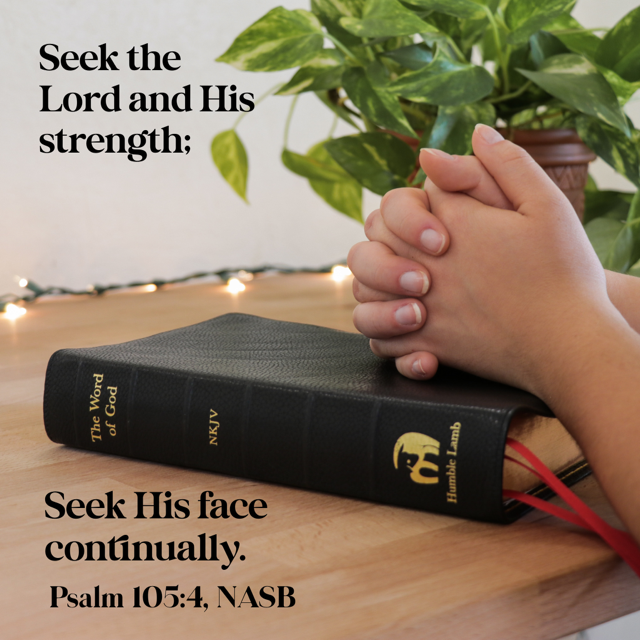
Seek the LORD and His strength; Seek His face continually (Psalm 105:4, NASB).
You have said, “Seek my face.”My heart says to you, “Your face, Lord, do I seek” (Psalm 27:8).
Looking to Jesus day after day, Trusting His love each step of the way, Knowing that He so willingly shares All of my sorrows, troubles and cares.
Refrain: Looking to Jesus—looking to Him, Whether the path be sunny or dim; Holding His hand by night and by day, Trusting His love each step of the way.
Looking to Jesus when I am sad, Looking to Jesus when I am glad, Having no fear of tempest or foe, Singing His praises, onward I go.
Looking to Jesus when I’m opprest, Looking to Him for comfort and rest, Shunning the world, its clamor and strife, Looking to Him who crowneth my life.
Looking to Jesus me to defend, Shield and encourage unto the end; Knowing that He has buried my past, Looking to Him for glory at last.
There is so much good reading online. Here are a few that stood out to me. It’s probably a good time for my occasional reminder that linking to any source does not imply 100% endorsement of everything on that site.
Why’d the Pigs Have to Die? HT to Challies. I’ve often wondered about this, from when Jesus cast a legion of demons out of one man, and the demons went into a herd of pigs and destroyed them. I appreciate the answer.
The Secret Meaning of YHWH, HT to Knowable Word. “I think God is not pleased by the herculean efforts some people go to look so hard for hidden meanings—whether linguistic or allegorical or what have you—that they miss the simple point of what he said.”
One of the Weirdest Articles I’ve Ever Written. Mike Leake uses and absurd example to illustrate the point that “Just because a word means something somewhere doesn’t mean it carries that same meaning elsewhere.” We can end up with this kind of extreme interpretation in Bible word studies when we “find all the uses of that word and then you shove each of those passages and all of their meaning into the Scripture you’re studying.”
Ambassadors for Marriage, HT to Challies. “It’s one thing for me, a 50-something, Christian mother of four, grandmother of two, to say, ‘Yes, get married! Don’t wait for the ‘perfect’ person or perfect timing! Don’t wait to get the whole rest of your life in order first! Marriage is great—it’s totally worth it!’ But it’s another thing entirely coming from someone who is under the age of 30.”
God is Near: Certain Comforts for Moms, HT to Challies. “In my role as the Director of Children’s Ministries at my church, I’m privy to the thoughts of many mothers. As moms think about ‘back to school,’ one emotion keeps bubbling to the surface over and over. I hear it in their voices, in the questions they ask, and the conversations they have. It’s not a pretty emotion. It’s one that can sometimes paralyze us. Fear.”
The most recent newsletter from the Elisabeth Elliot Foundation shared that the Museum of the Bible in Washington D.C is hosting an exhibit called Through Gates of Splendor: The Elisabeth Elliot Story through the end of 2023. I’d love to see it, but I doubt I’ll get to D.C. before the end of this year. Thankfully, this article says they’re working on a traveling exhibit. The newsletter shared this video of opening day:
I have a question for those of you who receive my blog posts via email. Have you had any problems receiving them lately? Of course, if you have, you might not be seeing this. 🙂 I ask because a long-time reader just told me this week she hasn’t received my blog posts via email for some time now. I am trying to discern whether this is a widespread problem. I see them both via email and Feedly so I can make sure they’re coming through, and I have not had any problem with either venue. WordPress handles the sending, so I can let them know about it. But it helps to have as much information as I can when I report a problem to them. How long has it been since the emails stopped coming? If you try to subscribe, do you get any error messages? If so, what do they say? Thanks so much for your help.
Now on to this week’s links. I hope you see something that sparks your interest.
Come, HT to Challies. “He came to the dead; the bleeding; the hopeless. To the ones on the side of life’s roads, passed over. To the grieving and the outcast. To the ones desperate to be seen; those hungry to belong.”
Do Not Grieve the Holy Spirit. “What does it mean to grieve the Holy Spirit? My initial reaction to the word grieve in reference to the Holy Spirit was a negative one: Surely the Spirit of God does not actually grieve, does he? Perhaps this is a poor translation. Isn’t sorrow a too-human reaction to ascribe to the holy God? Doesn’t it diminish the Spirit to suggest that my sin can make him feel genuine sorrow?”
How Were the Books of the Bible “Chosen,” HT to Challies. “The earliest Christians did not view themselves as choosing books, nor did they view themselves as having the right/power to do such a thing. Instead, they viewed themselves as receiving the books that had been handed down to them by the apostles.”
A Light to My Path, HT to Challies. “When the sun streams into my kitchen window, it cheers my soul. Everything literally seems brighter. Its brilliance however, illuminates more than just the room. Particles of dust flicker through its rays, grandchildren’s sticky handprints on the window pane bother me, and tiny bits of red dirt speckle the floor. When the light shines into my room, I see things otherwise hidden.”
Are You Satisfied with Your Prayer Life or Is Prayer Simply a Means to an End? “In the Pie Chart that is your life, how big is the slice devoted to prayer? “I don’t ask to induce guilt or to point the finger of condemnation. It’s actually a question I’m asking myself, and it’s been prompted by a statistic I just bumped into once again.”
When You Feel Powerless to Influence Your Children. “More important, they revealed the lie I had believed—that my children were safe as long as I was nearby. And that I had the ultimate power to protect them from harm, bad influences, and spiritual apostasy. Without intending to, I had usurped God’s role, at least in my mind, as their guardian and protector.”
If we become concerned about a character trait we see in ourselves that we’d like to change, we might search Google for blog posts. “Ten Ways to Tame Your Temper” or “Six Ways to Curb a Sharp Tongue.” *
We might read a book on the subject, seek counsel, or even do a topical Bible study.
We might set standards and rules for ourselves.
There’s nothing wrong with any of those approaches. I’ve used them all and found help in each one.
But we often forget the primary means God gave us to change.
“And we all, with unveiled face, beholding the glory of the Lord, are being transformed into the same image from one degree of glory to another. For this comes from the Lord who is the Spirit” (2 Corinthians 3:18).
We’re changed bit by bit by beholding His glory.
Well, how does that work?
When Moses asked to see God’s glory, God said, “I will make all my goodness pass before you.” Then “the Lord passed before him and proclaimed, ‘The Lord, the Lord, a God merciful and gracious, slow to anger, and abounding in steadfast love and faithfulness” (Exodus 33:18-23; 34:5-7).
GotQuestions defines the glory of God as “the beauty of His spirit . . . that emanates from His character, from all that He is.”
John Piper says, “The glory of God is the manifest beauty of his holiness. It is the going-public of his holiness. It is the way he puts his holiness on display for people to apprehend. So, the glory of God is the holiness of God made manifest.”
When we read and study our Bibles or listen to sermons, we don’t just look for principles, helpful as those are. We look for God. What does this passage say about Him? What is it demonstrating to me about Him? We behold Him, see Him, worship Him in all His goodness.
When I’m battling pride, nothing helps me more than thinking of Jesus, “who, though he was in the form of God, did not count equality with God a thing to be grasped, but emptied himself, by taking the form of a servant, being born in the likeness of men. And being found in human form, he humbled himself by becoming obedient to the point of death, even death on a cross” (Philippians 2:6-8).
When I’m craving things I shouldn’t have, I think of Jesus being tempted with bread after 40 days of fasting in the wilderness. He had a legitimate need to eat, but He resisted Satan’s temptations to partake on his terms.
When I have trouble loving others as I should, I think how Jesus loved me when I was unlovable and undeserving.
When I’d rather hold a grudge than forgive, I think how He has forgiven me so much more than anything I’m asked to forgive others.
When I see Him in the gospels meeting people’s needs, busy but not stressed, I’m helped to avoid becoming frenzied with all I need to do.
Interruptions are my biggest pet peeves. Realizing that the incident with the woman with the issue of blood was an interruption to Jesus’ journey to heal Jairus’ daughter added a dimension to these situations I had not realized before. Jesus was not ruffled at the delay. He took it in stride.
When I behold Him, I see my limitations. I’m painfully aware I am not Him. I’m humbled to realize just how much I need Him.
When I behold Him, anxiety flees away. He can take care of any problem that comes up.
Hannah Anderson wrote in Humble Roots: How Humility Grounds and Nourishes Your Soul about the Colossians who “believed they could reach purity by adhering to certain standards” and were “holding fast to their regulations” instead of Christ.
Ultimately the Colossians’ pride was revealed by what they were looking at, by what had captured their attention. Instead of being concerned with eternal realities, they were concerned with regulating temporary realities. Instead of being consumed with Christ’s glory, they were consumed with their own. But it is only by beholding Christ that we are changed. It is only by beholding Christ who Himself took “on the form of a servant” that we learn to serve each other (p. 94).
Standards and regulations have their place. But real heart change occurs as we behold God’s glory.
May our heart’s cry be like David’s:
O God, you are my God; earnestly I seek you;my soul thirsts for you;my flesh faints for you,as in a dry and weary land where there is no water.So I have looked upon you in the sanctuary,beholding your power and glory.Because your steadfast love is better than life, my lips will praise you (Psalm 63:1-3).
One thing have I asked of the Lord,that will I seek after:that I may dwell in the house of the Lordall the days of my life,to gaze upon the beauty of the Lord and to inquire in his temple (Psalm 27:4).
Imagine a good friend tells you she’s thinking of leaving her husband. The magic is gone. They don’t love each other any more. They’re just going through the motions.
After listening to your friend, if she’s open, you might suggest several things. As I thought of these, I realized many of them paralleled how we could return to our first love spiritually.
In Revelation 2:1-7, God instructs John to write a letter to the church at Ephesus. They are commended for several things: They’ve worked hard and endured patiently for His name’s sake. They cared for truth and have tested and rooted out false apostles. Those are all good traits. Yet, Jesus said, “I have this against you, that you have abandoned the love you had at first.” It’s possible to work hard for the Lord and stand for truth, yet not do so out of love for Him.
Jesus commands them to “Remember therefore from where you have fallen; repent, and do the works you did at first.” Otherwise, He warns, He’ll have to remove them.
So how do we return to our first love? We can’t just flip a switch and turn on the right feelings.
Pray. The first step is to ask for help. A marriage on the brink of divorce has a lot of deep issues. Usually by the time a couple gets to that point, they’ve already made up their minds, and it’s extremely hard to turn things around. They’re going to need God’s help.
Spiritually, we start at the same place. We may be confused. “I thought I was doing everything right.” We need wisdom and insight to see how we’ve drifted into serving without love. It’s true, love is not just a feeling. But according to this passage and 1 Corinthians 13, love is not just service, either.
Romans 5:5 tells us “God’s love has been poured into our hearts through the Holy Spirit who has been given to us.” And love is a fruit of the Holy Spirit (Galatians 5: 22-23).
Paul prays for love in various churches:
That they might be “rooted and grounded in love” and “may have strength to comprehend with all the saints what is the breadth and length and height and depth, and to know the love of Christ that surpasses knowledge” (Ephesians 3:18-19).
That their “love may abound more and more, with knowledge and all discernment” (Philippians 1:9).
That “the Lord make you increase and abound in love for one another and for all” (1 Thessalonians 3:12).
We can pray these things for ourselves in our relationships with others and the Lord.
Remember His attributes. You could ask your friend to remember what attracted her to her husband in the first place. Sure, his looks and physique changed over the years (so did hers). But she probably married him because she saw something in his character that she liked.
Remember your past history. When a couple has been together for a while, they accumulate a lot of shared experiences: fun times, the trials they worked through, the inside jokes. They have a history they share with no one else. Remembering those times might draw them closer together.
The apostle John wrote, “We love Him because He first loved us” (1 John 4:19, NKJV). Calling to mind the ways God has shown love to me inspires love for Him.
Looking back over my history with God warms my heart. He set off a series of events to bring me to faith in Himself. He loved me and drew me before I knew Him.
He has blessed me in countless ways ever since. Some years ago, I was inspired to create a list of “Ebenezers.” Samuel once set up for Israel a stone he called an Ebenezer, meaning “a stone of help,” to commemorate what God had done for them. So one year I wrote an extensive list of those special moments in my life when God intervened in a way that could only have come from Him. Remembering answered prayer and times God spoke to my heart from His Word, and so many other evidences of His care in my life, fuels my love for Him.
Psalm 63 gives a vivid picture of such remembrances:
My soul will be satisfied as with fat and rich food, and my mouth will praise you with joyful lips, when I remember you upon my bed, and meditate on you in the watches of the night; for you have been my help, and in the shadow of your wings I will sing for joy (verses 5-7).
Spend focused time together. Life can settle into routines, and couples end up just passing each other while doing errands, talking only about the mundane affairs of life. We need time to set aside everything and just focus on each other, share our hearts, and listen to each other. That may be a date night or just sitting at the table with coffee.
The same happens with God. As I said last week, routines help establish time with the Lord. But after a while, they can feel just routine, like we’re just working through a list and not connecting. Remembering that I am meeting with my Lord alone helps me refocus.
Forgive. A couple on the brink of divorce has accumulated a lot of hurts and slights. It’s easy to only see the negative. It may take time and counseling to work through all of that, but at some point, they’ll need to learn to forgive each other.
Elisabeth Elliot said once that a wife may like 80% of what her husband says and does, yet focus and harp on the 20% she doesn’t like. Once we get fixated on the negative, it fills our vision til that’s all we can see.
This one is different in our relationship with God. Some people speak of “forgiving God” when He does things we don’t like, but I cringe at such talk. We don’t need to forgive Him. He’s the Holy, pure, all-wise, all-powerful, righteous God of the universe! He does nothing wrong. It’s a little audacious to think of us forgiving Him.
Yet, He does things that confuse us. He may not have answered a heartfelt prayer. He may have allowed a tragedy. We might be hurt, resentful, or even angry. But we’re in trouble if we hold these things against Him. Jesus said, ” Blessed is the one who is not offended by me” (Matthew 11:6).
Thankfully, we have the psalms and prophets as examples of people pouring out their hearts before God, sometimes in confusion and anguish and anger. They remind themselves of what they know to be true about God—that He loves them, that He will take care of them and meet their needs— and they find peace. So we need to remind ourselves of who God is and His right to rule in our lives according to His purposes. And we remind ourselves that He doesn’t bring suffering in our lives capriciously. “For the Lord will not cast off forever, but, though he cause grief, he will have compassion according to the abundance of his steadfast love; for he does not afflict from his heartor grieve the children of men” (Lamentations 3:31-33).
Put the other first. When human relationships are on the verge of breaking up, selfishness has likely crept in, probably on both sides. One of my former professors (Dr. Walter Fremont) used to say love is the self-sacrificing desire to meet the need of the cherished object. It’s easy to focus on what we want others to do for us—or what they’re failing to do for us—and overlook our own failings.
God doesn’t “need” anything from us. But there are things He asks of us. We ask Him to bless our plans without considering whether they are His plans. Paul reminds us, “If then you have been raised with Christ, seek the things that are above, where Christ is, seated at the right hand of God.Set your minds on things that are above, not on things that are on earth” (Colossians 3:1-2).
I don’t mean to be simplistic about either romantic love or spiritual love. There may be a lot of layers to peel back and issues to work through. People may need help and counsel in either case. But these steps can get us started in the right direction.
Here are some of the thought-provoking blogs discovered this week:
If You Don’t Believe in Hell, HT to Challies. “Beliefs ripple. But we make a concerted effort to ignore that. Especially within the system of Christian faith, people can be tempted to pick and choose which doctrines they are “okay with” and which ones they leave behind. The problem lies in the ripples. Christians don’t always see how disbelief in one thing affects belief in another.”
The Glory of Godliness. “Frequently, I hear Christians talk about being more faithful, loving, or active in church. But I can’t remember the last time I heard someone say, ‘I want to be more godly.’ Why is there so little interest in godliness? Perhaps it’s because we don’t understand what it is.”
Don’t Fail to Capture the Train of Thought. “One of our greatest failures in Bible study is our tendency to treat the text atomistically. We look for inspirational words or sayings, while failing to grasp how the author used those words or sayings to persuade his audience of a message.”
I’ll Be More Faithful When I’m Older. “It’s folly to expect to wake up faithful twenty years from now if you’re not feeding your faithfulness today. If you desire to walk with Jesus more ten years from now, twenty years from now, or thirty years from now, you need to be feeding your faithfulness today.”
Slogging Blogging. This is an older post that Tim Challies recently linked back to, but it resonates with me. “I have little capacity to predict which articles will fall flat and which will make an impact on myself and others. I have trouble knowing in advance which are excellent and which are drab, which ones will somehow serve or challenge people and which will only irritate or confuse them. So all I can do is slog. All I can do is keep going and trust that the long effort will be rewarded with occasional success—the success of knowing that I’ve been able to bless or encourage or equip another person.”
I did not start going to church regularly until my mid-teens. It seems like we sang a lot of songs then about being free from sin.
One our youth choir sang was called “Set Me Free.” That’s the only place I ever heard this particular song. I haven’t been able to remember enough of the words to look it up.
One we sang often in my early married years was “Free From the Law.”
Would you be free from the burden of sin? There’s pow’r in the blood, pow’r in the blood; Would you o’er evil a victory win? There’s wonderful pow’r in the blood.
Would you be free from your passion and pride? There’s pow’r in the blood, pow’r in the blood; Come for a cleansing to Calvary’s tide– There’s wonderful pow’r in the blood.
There is pow’r, pow’r, wonder-working pow’r In the blood of the Lamb; There is pow’r, pow’r, wonder-working pow’r In the precious blood of the Lamb. – Lewis E. Jones
I was bruised, but Jesus healed me; Faint was I from many a fall; Sight was gone, and fears possessed me, But He freed me from them all. – Francis H. Rowley
It occurred to me that I don’t hear these kinds of songs, or the theme of freedom from sin in Christ, much any more.
Jesus once said “if the Son sets you free, you will be free indeed” (John 8:36). I wonder if the world doesn’t appreciate the impact of that statement because they don’t understand that they’re not free.
They think they are.
2 Peter warns of false prophets and teachers who use false words to entice people. They appeal to greed and lust to deceive. “They promise them freedom, but they themselves are slaves of corruption. For whatever overcomes a person, to that he is enslaved” (verse 19).
Their chains are so pleasurable, they don’t realize they are bound. They’re so comfortable and having such fun, they don’t want to be free.
But the pleasures of sin, Hebrews 11:25 says, are only for a short season.
Jesus also said that He is the light of the world. We need to pray that He will shine in people’s hearts and show them their need of Him and His love for them.
Jesus said He is the bread of life. He invites, “If anyone thirsts, let him come to me and drink” (John 7:37). We need to pray God would create in hearts hunger and thirst for Him greater than what the world has to offer.
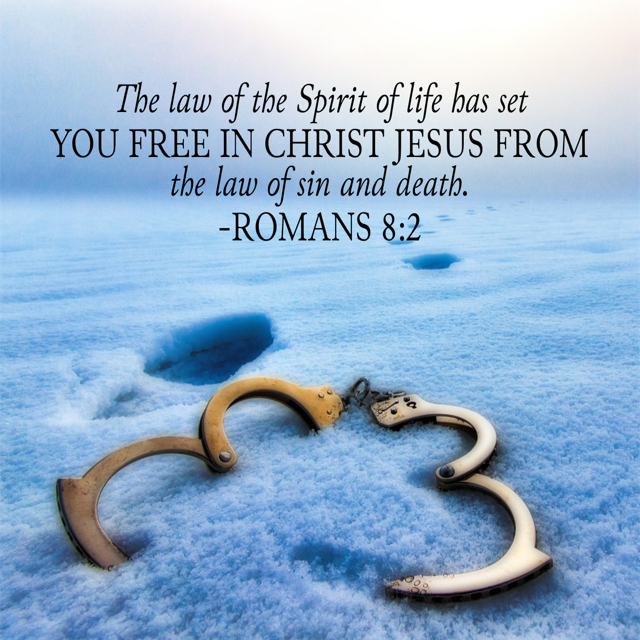
And we need to tell them about Him. May they find that “the law of the Spirit of life has set you free in Christ Jesus from the law of sin and death” (Romans 8:2).
The whole world was lost in the darkness of sin, The Light of the world is Jesus! Like sunshine at noonday, His glory shone in; The Light of the world is Jesus!
No darkness have we who in Jesus abide; The Light of the world is Jesus! We walk in the light when we follow our Guide! The Light of the world is Jesus!
Ye dwellers in darkness with sin-blinded eyes, The Light of the world is Jesus! Go, wash at His bidding, and light will arise; The Light of the world is Jesus!
Come to the light, ’tis shining for thee; Sweetly the light has dawned upon me; Once I was blind, but now I can see: The Light of the world is Jesus! – P. P. Bliss
One September morning almost twenty-eight years ago, my left hand started feeling a little funny, like I’d slept on it wrong. I shook and flexed it while I continued packing my husband’s lunch for the day.
After a while, I realized that numbish feeling was spreading up my arm.
Then it started in both feet, spreading upward.
Within three hours, my left arm, both legs, and my lower torso were numb. I couldn’t walk on my own. I developed a laundry list of other symptoms.
After multitudes of tests and blood draws over eight days in the hospital, I was diagnosed with transverse myelitis.
Transverse Myelitis occurs when a virus hits the spine, triggering an autoimmune response which causes the body to attack the myelin sheath around the nerves as well as the virus. Symptoms vary depending on where along the spine the attack occurred. If the lower spine is affected, one might experience numbness and tingling. An attack high on the spine, however, could result in losing the ability to breathe, requiring a ventilator.
My spine was affected in the thoracic region. With much prayer and months of physical therapy, I progressed from a wheelchair to a walker to a cane to wobbly steps on my own.
I still have numb areas and odd sensations. But my biggest problem is balance.
I can walk in a straight line on level ground without problems most days. But uneven ground, slopes, and stairs are a challenge.
Sometimes people will offer me an arm for support, which helps. But what helps the most is a handrail, something solid and unmovable.
Oddly, though, I have the most trouble with balance when standing still.
Proprioreception has to do with knowing where your body is in space. Some people might not know where their hands and feet are without looking at them. I don’t have that problem, but if I stand still for more than a few minutes I lose balance. Usually I’ll inch towards a chair or wall to touch as a reference point to reset my bearings.
I told you all of that to tell you this:
A few years ago when I read 2 Peter 2 in a new-to-me translation, the word “unsteady” jumped out at me because I well knew what being unsteady felt like.
Peter talks in this chapter about those with unsteady souls. Other translations say unstable, unestablished, unsettled. These souls are easily enticed by false teachers (verse 14).
How do false teachers entice these souls? 1 Peter speaks of the false prophets’ sensuality, lust, greed, passion, so they “entice by sensual passions” (verse 18). James 1:14 uses the same Greek word for “entice,” which carries the idea of baiting, alluring, deceiving, when it says, “But each person is tempted when he is lured and enticed by his own desire.” They “despise authority” (verse 10). “They promise them freedom, but they themselves are slaves of corruption” (verse 19). They “exploit you with false words” (verse 3). They’re blasphemous (verses 10-13).
Probably many of the people who fall away to false teachers are not saved in the first place, but weak or new believers are susceptible as well. A true Christian can’t lose his or her salvation, but a believer can get tangled in false doctrines to their own confusion as well as that of everyone in their sphere of influence. But even those of us who think we’re strong need to “take heed lest we fall.” (1 Corinthians 10:12).
How can we make sure we’re not unsteady or unstable spiritually?
By orienting ourselves with the solid, unchanging Word of God.
Rest on the Bible’s sure foundation. Earlier in his letter, Peter told his readers that God’s Word was more sure than even his experience watching Jesus’ transfiguration (2 Peter 1:16-19, KJV).
Know that Scripture comes from God. Peter assured that that “no prophecy of Scripture comes from someone’s own interpretation. For no prophecy was ever produced by the will of man, but men spoke from God as they were carried along by the Holy Spirit” (2 Peter 1:20-21).
Know God Through His Word. Peter said “His divine power has granted to us everything pertaining to life and godliness, through the true knowledge of Him who called us by His own glory and excellence,” which we learn about from “His precious and magnificent promises, so that by them you may become partakers of the divine nature, having escaped the corruption that is in the world on account of lust.” (1:3-4, NASB). Everything pertaining to life and godliness! The first time this verse impacted me, I was nearly bowled over. There may be many things we don’t comprehend about God, but He’s given us everything we need to live for Him through knowing Him through His Word.
Don’t twist the Scriptures as the unstable do. “There are some things in them that are hard to understand, which the ignorant and unstable twist to their own destruction, as they do the other Scriptures” (2 Peter 3:15-16). The unsteady twist (wrest in the KJV) the very thing which could stabilize them. We read it in context so we understand its meaning. We don’t wrangle it to make it say what we want it to say. We don’t adjust it to us: we adjust ourselves to it.
Be watchful. “Take care that you are not carried away with the error of lawless people and lose your own stability (2 Peter 3:17).
Keep growing “in the grace and knowledge of our Lord and Savior Jesus Christ” (3:18).
Listen to sound teaching. Contrast the characteristics Peter lists of false teachers in 2 Peter to what he says about godly shepherds in 1 Peter 5. Paul tells Timothy in 2 Timothy 4: “preach the word; be ready in season and out of season; reprove, rebuke, and exhort, with complete patience and teaching. For the time is coming when people will not endure sound teaching, but having itching ears they will accumulate for themselves teachers to suit their own passions, and will turn away from listening to the truth and wander off into myths.” We seek to feed our souls His truth rather than feeding our own desires.
Jesus said the one who hears his words and does them is like a man who built his house on a rock which was unshaken by winds and flood waters.
So we watch ourselves, that we’re not being led away of wrong desires. We read and listen to God’s Word as it’s written, in context, not trying to twist it. We listen to pastors and teachers who faithfully proclaim God’s Word. We we obey it. We get to know our Savior better and better and remind ourselves of His truth. and we keep growing spiritually. Doing all of these things might bring persecution, which Peter discusses often in both of his letters. But we can trust God to keep us and deliver us. Then we can say, “My steps have held to Your paths; my feet have not slipped” (Psalm 17:5).
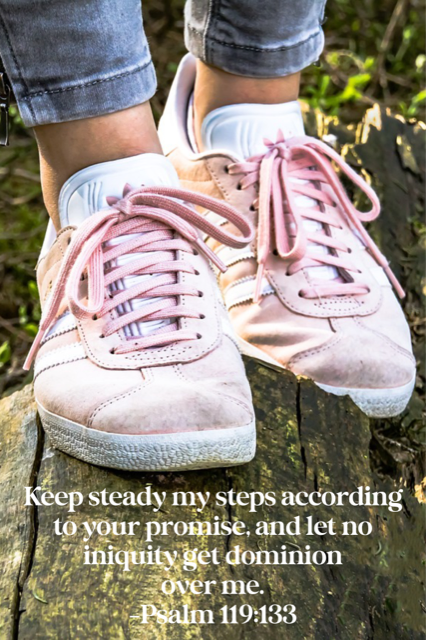
Keep steady my steps according to your promise, and let no iniquity get dominion over me (Psalm 119:133).











 Stray Thoughts