Review: The Christmas Book Flood

Christmas Book Flood

Jolabokaflod is an Icelandic tradition that translates to “Christmas Book Flood.” It began in 1944 near the end of WWII. Iceland was occupied by the Americans, and their willingness to spend money in town and help arrange for exports of the country’s fish helped Iceland become a little more prosperous than many European nations occupied by Germany.

But many items were still in short supply due to rationing. Icelanders were already great readers and storytellers, but this particular year, books were the main gifts. A tradition began Christmas night of people reading the books they had gotten for Christmas, often while enjoying hot chocolate. Sounds like a great idea to me!

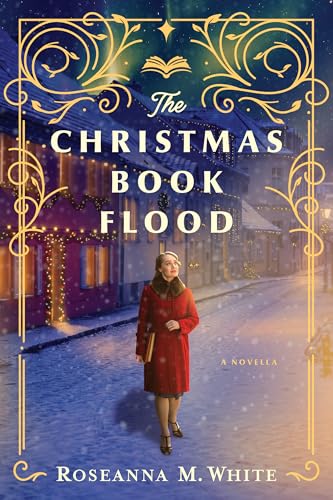
Roseanna M. White has set her novella, The Christmas Book Flood, in this time and place.

Tatiana Eliasdottir is her uncle’s assistant at his publishing house. Tatiana’s sister calls to ask if she can send her seven-year-old daughter for the holidays. Her sister is having difficulties in her pregnancy, and has lost several unborn babies. Her sister’s husband has injured his leg and is out of work. They felt their daughter, Elea, needed a brighter, happier setting for Christmas. Tatiana agrees to host Elea. At first the girl is disconsolate over not being home for Christmas. But getting into some of the traditions and learning she’ll be able to go to work with Tatiana, where her favorite author, Anders Johannsson, also works, begins to lift her spirits.

Author, illustrator, and editor Anders and his secretary agree to help Tatiana watch Elea when Tatiana can’t be at her desk. Tatiana has liked Anders for a while, but he is so shy and quiet and easily flustered that it’s hard to talk much with him.

Anders’ personality tends toward quietness, but he is also that way because he feels like a misfit. His brothers are all hardy, big, strapping fishermen who make fun of him for his shyness and bookish ways.

A true part of the story deals with the publishing companies teaming to form a “Book Bulletin” sent to every home.. The results were so successful–a flood of orders–that they weren’t sure they would be able to fill the orders before Christmas.

Another part deals with Tatiana and Anders getting to know one another and overcoming their misconceptions.

Woven in with the plot was some Icelandic folklore. They don’t have Saint Nicholas, but they do have the “Yule lads“–Troll brothers who take turns visiting in December and leaving gifts in shoes if they find everything to their liking.

This was a delightful novella. I knew very little about Iceland and its traditions and folklore. Then the plot was so different from many Christmas novellas. And, though there’s a slow romance, the book is not at all cheesy. The characters have things to learn and ways to grow along the way.

There were a couple of anachronisms–I don’t know if they talked about “patriarchal” expectations of women then, or “fighting the patriarchy”–at least not in those terms.

Happily, this audiobook did include the author’s notes about the inspiration and research for this book.

I listened to the audiobook, nicely read by Talon David. The only negative to listening was I had no idea what some of the Icelandic terms and names looked like. But there was usually enough explanation that I understood what was going on.

Review: A Royal Christmas

Melody Carlson must be the queen of Christmas novellas–she’s written dozens of them.

In A Royal Christmas, Adelaide Smith is a law student working her way through college as a barista. Her mother passed away three years earlier, and she’s still grieving.

One day she gets an official-looking letter saying that her DNA in a registry has indicated she is the daughter of King Maximillian Konig of Montovia, a small European country near Lichtenstein.

At first, Adelaide believes the letter is a scam. But upon further investigation, she begins to think it might be legitimate. Her mother had never said a word about her father.

She calls the phone number provided in the letter and is told her father is dying. He would very much like to meet her while he can. He will pay all her expenses to travel to Montovia.

So Adelaide travels to Montovia for the month of December. She’s met by a member of Parliament named Anton, who has been assigned to be her guide and help her with anything she needs.

Adelaide meets with the king and is soon drawn to him. She learns the particulars of her parents’ relationship. She discovers her father would like for her to rule in his place when he passes on. Though Adelaide comes to love Montovia, she’s not even a citizen. What would she know about being a queen?

Not everyone would be happy about her staying on, especially not her father’s wife, who has been grooming her son from a previous marriage to take over for the king.

Amidst learning the privileges and problems of royal life, evidence of some kind of intrigue arises.

This book had Princess Diaries vibes at first. Though there are some similarities, the plot is different. Some parts were predictable. But it was a nice, short Christmas read.

The audiobook was free from Audible’s Plus Catalog, and the ebook was $1.99 at the time I purchased it (and still was as of yesterday).

Winter Fire: Christmas with G. K. Chesterton

Winter Fire: Christmas with G. K. Chesterton

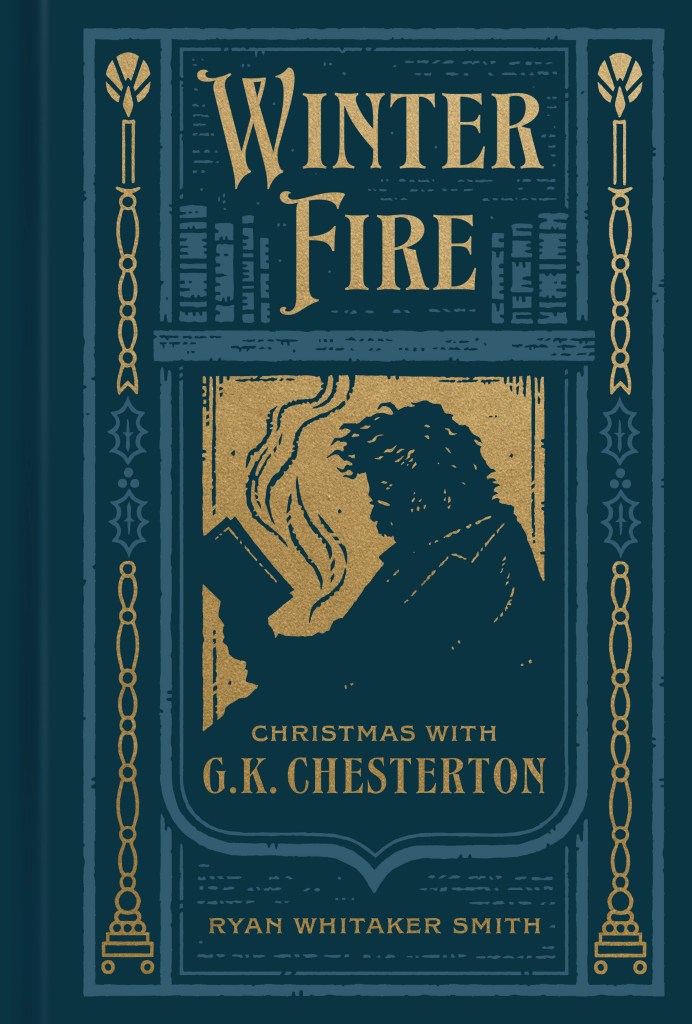
I’ve not read G. K. Chesterton except for one novel, The Man Who Was Thursday, and a few pithy quotes. The quotes were enough to entice me to read more. So I was excited to see Winter Fire: Christmas with G. K. Chesterton by Ryan Whitaker Smith.

When I looked at the sample of the book at Amazon, however, I was disappointed that the book seemed to be less of Chesterton and more on Smith commenting on Chesterton. I eventually decided to get the book anyway, and I am glad I did.

Smith says that reading Chesterton is an “acquired taste,” and I agree. I would not have gotten nearly so much out of Chesterton’s quotes here without Smith drawing out the meaning.

If you’re not familiar with Chesterton, Wikipedia says he “wrote around 80 books, several hundred poems, some 200 short stories, 4,000 essays (mostly newspaper columns), and several plays. He was a literary and social critic, historian, playwright, novelist, and Catholic theologian and apologist, debater, and mystery writer.” He was a columnist for several newspapers and even wrote some Encyclopedia Britannica entries (including the one for Charles Dickens). He might be known best for his Father Brown stories about a priest who also does detective work.

He was baptized into the Church of England as a child, dabbled in the occult, then came back to the Anglican church as an adult, and later converted to Catholicism. I am curious how and why he embraced Catholicism but haven’t read enough to know his thinking. But “Christian themes and symbolism appear in much of his writing.”

Smith says Chesterton wrote prolifically about Christmas, much more than could be included in this book.

Winter Fire contains thirty days of readings, with Smith expanding on, explaining, and giving the cultural background to quotes about Christmas from some of Chesterton’s essays. After each reading is a Bible verse and questions for thought.

Then there are a variety of Chesterton’s other writings: several poems, a few essays, and a couple of short stories. Finally, Smith included recipes and games prevalent at the time Chesterton lived (1874-1936). The weirdest game, called Snapdragon, involved raisins doused in brandy, then set on fire. Then children tried to reach into the fire quickly and grab a raisin.

One of the readings here inspired a blog post, A Christmas Boomerang, and I have another post or two in mind based on thoughts read here.

Smith says the title of this book “is taken from a quote featured in the reading for Day 13: ‘Christ is not merely a summer sun of the prosperous but a winter fire for the unfortunate.’ The image of a fire burning amid the frosts of winter seemed a fitting image to draw from for a book that not only celebrates the comfort, joy, and revelry of Christmas, but the mercy of God who has called us to His everlasting feast” (p. 12). He writes that “The purpose of our journey is not so much to dwell in ‘the place from which Christmas came,’ but to allow that place to dwell in us, to return to our own country with christened eyes, to look upon our everyday surroundings with a baptized imagination” (p. 17).

I have scores of quotes marked, but I’ll try to share just a few:

In the majestic march of Progress, we have first vulgarised Christmas and then denounced it as vulgar. Christmas has become too commercial; so many of these thinkers would destroy the Christmas that has been spoiled, and preserve the commercialism that has spoiled it” (Chesterton, p. 32).

I have never understood what people mean by domesticity being tame; it seems to me one of the wildest of adventures (Chesterton, p. 45).

Omnipotence and impotence, or divinity and infancy, do definitely make a sort of epigram which a million repetitions cannot turn into a platitude. It is not unreasonable to call it unique. Bethlehem is emphatically a place where extremes meet. (Chesterton, p. 84).

Christmas did not merely borrow certain traditions from paganism; it survived paganism. It was a stronger thing than all the pagan world could offer. It was fiercer than its creeds, more potent than its rituals (Smith, p. 116).

The land endures the harshness of winter in order to be reborn in the vigor of spring. Everywhere we look, nature is rehearsing resurrection, preparing for the day when all things will be made new, when measurable time gives way to immeasurable eternity (Smith, p. 128).

These are a couple of stanzas from Chesterton’s poem “The House of Christmas”:

A Child in a foul stable,
Where the beasts feed and foam;
Only where He was homeless
Are you and I at home;
We have hands that fashion and heads that know
But our hearts we lost—how long ago!
In a place no chart nor ship can show
Under the sky’s dome.

To an open house in the evening
Home shall men come,
To an older place than Eden
And a taller town than Rome.
To the end of the way of the wandering star,
To the things that cannot be and that are,
To the place where God was homeless
And all men are at home.

The book cover, texture, and illustrations have a lovely old-fashioned feel to them.

Chesterton uses a lot of irony, and often. as Smith says, is “saying several things at once” (p. 11). I have question marks at a couple of places in the book. But I was inspired, taught, and encouraged by much that I read, and I am sure I’ll read this again in future Advent seasons.

(Sharing with Bookish Bliss Quarterly Link-Up)

Two Christmas Books

The Everyday Gospel Christmas Devotional was taken from Paul David Tripp’s larger book, Everyday Gospel: A Daily Devotional Connecting Christmas to All of Life. The 25 selections are only two pages, easy to incorporate in one’s devotional time. Each day’s reading begins with Scripture,and they cover a wide variety of topics related to Christmas. Excellent resource.

Some of my favorite quotes from the book:

The beginning of Matthew presents us with a majestic one-time moment in history that you shouldn’t run past in your desire to complete your daily Bible reading. God has recorded and preserved it for you because he wants it to leave you in gratitude and awe. And that awe is meant to capture your heart with such force that it changes the way you think about who you are and how you live your life.

The one who designed us to sing recorded and preserved songs for us. These songs are meant to focus our hearts, instruct us in the ways of the Lord, motivate our joy, and put words to our worship.

The entire biblical story is about a God who gives his creatures what they do not know they need, what they often do not want, and what they could never earn or do for themselves—but which they cannot live without.

The end of the reign of evil on earth began with the birth of Jesus. Later Satan would be defeated at Christ’s temptation, he would be defeated on the cross, and he would be defeated by the empty tomb. Jesus was victorious on our behalf and now reigns in glory. His reign guarantees the end of sin and death and an eternity of peace and righteousness for all who believe. The dragon is defeated. The Son reigns. Hallelujah!

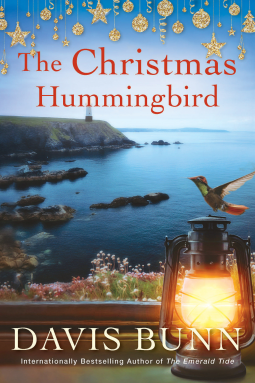
The Christmas Hummingbird by Davis Bunn is perhaps the most unusual Christmas novella I have ever read (or listened to).

Ethan Lange lives in Miramar Bay, CA, and is awakened by banging on his front door. He finds a female police officer telling him an out-of-control fire is heading their way and he must vacate immediately.

A few weeks later, Ethan is in a rental property, having lost everything in the fire. When he runs into the police officer who saved his life, Ryan Eames, she asks if he would be willing to be deputized to help with a problem: people are robbing some of the vacation houses belonging to out-of-towners just before fire reaches them. In fact, police suspect the fires were started on purpose as a cover for the robberies.

As Ethan helps Ryan, he rescues a number of homeless animals, including a hummingbird overcome by smoke. Later we learn why hummingbirds mean so much to Ethan. Ryan’s mostly silent son takes an interest in helping the hummingbird, which he names Trevor.

Ethan contacts homeowners in the affected area offering to transfer their valuables to a vault in his bank.

Ethan has a side interest in art and often makes miniatures used in films to depict cities or neighborhoods. His contact in Hollywood calls to say a company is making a film series of his favorite childhood fantasy series, and does Ethan want in? Yes, of course.

Both Ethan and Ryan have been hurt before, so they are slow to consider another relationship. As Ethan gets to know Ryan and her son, Liam, he forges a special relationship with Liam. He finds that Liam is a gifted artist, though he rarely lets anyone see his work.

I love that there are so many layers to this book: the mystery of the fires and robberies, Ethan’s relationship with both Ryan and Liam individually and together, the hummingbird, the fantasy story Ethan’s latest project is based on.

Most of what I have read from Bunn has been Christian fiction. I don’t recall anything of a spiritual nature mentioned in this book, but I listened to the audiobook read by Graham Winton, and it’s impossible to flip back through pages. Nevertheless, this is a lovely story. I just discovered it’s also part of a Mirarmar Bay series by Bunn.

(Sharing with Bookish Bliss Quarterly Link-Up)

A Few Short Christmas Book Reviews

I was able to finish some Christmas reading the last couple of weeks, but didn’t have time to review them. Many of them were short, so I’ll bunch them all together here.

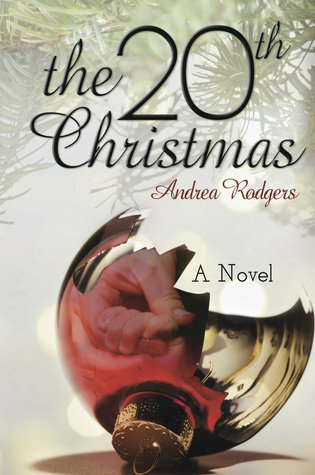
The 20th Christmas

In The 20th Christmas by Andrea Rodgers, Arianna Tate faces a parent’s worst nightmare: her almost 2-year-old son is taken from her in a coffee shop just before Christmas.

Al the searching, detectives, and appeals come up with zero results. People remembered seeing a young woman in the coffee shop, but no one could remember much about her.

For the next 20 years, Andrea and her husband descend into the lowest depths of despair. They almost lose their marriage, but make determined efforts to make things work. They’re finally able to move on, though the pain never goes away.

Meanwhile. Lydia Feller’s estranged, drug-abusing sister shows up on her doorstep with a child. Lydia had heard her sister was pregnant a while back, but the timing doesn’t seem to match up with the age of this child. When her sister dies of an overdose, Lydia adopts her child to show him love and grant some stability to his life.

Twenty years later, the pathways of all involved meet.

I felt Arianna’s life before the kidnapping was almost too perfect. And there were a number of parenthetical statements in the writing I was surprised got past an editor.

But this was a good book overall.

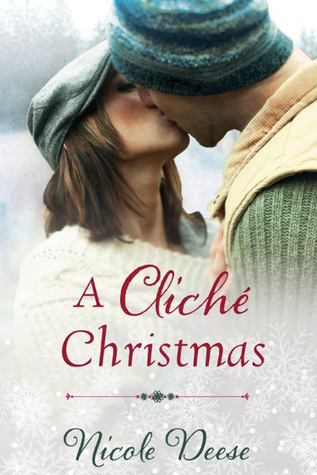
A Cliche Christmas

In A Cliche Christmas by Nicole Deese, Georgia Cole left heartache and humiliation in her home town of Lenox, Orgeon to become a Hollywood screenwriter famous for heartwarming but cliched Christmas movies. Since she works with Christmas themes all year, in December she usually takes her grandmother on an exotic vacation to get away from traditional Christmases.

But this year, her grandmother ropes her into putting on a Christmas play in her hometown to benefit a little girl with cancer.

Georgia runs smack into her old crush, Weston, who happens to be the uncle of the girl in question. She thought he lived elsewhere. They clash at every encounter until they finally start listening to each other.

Though in many ways this was a sweet story, I didn’t like all the manipulation going on with Georgia’s grandmother and Weston. Weston seems kind and caring in many respects, but he’s also a little pushy, pinning Georgia to a car at one point until she answers him. I don’t think the writer intended to make him seem as controlling as he came across sometimes, but in real life, I would’ve had reservations about him.

I read this because I loved a couple of Nicole’s other novels and I liked the unusual premise. Though I didn’t like this as well, I loved where the story ultimately ended up.

Shepherds Abiding

My friend Melanie mentioned rereading Shepherds Abiding at Christmas. The book comes in the middle of Jan Karon’s Mitford series. When I wanted something warm and Christmasy to finish out the year, I decided to listen to this again. I was afraid it might pull me into wanting to reread all the Mitford books. That’s a bit of a temptation, but this can be easily read as a Christmas book alone.

For me, this book was a beloved reread, enhanced by listening to the excellent audiobook version read by John McDonough.

Various subplots are going on among Mitford’s residents, but the overarching story involves Father Tim trying to restore a mismatched Nativity set bought from local antiques dealer, Andrew Gregory. He wants to do it as a surprise for his wife, but keeping a secret is hard in Mitford.

This book showcases Karon’s trademark blend of warmth, humor and truth. The version I listened to also included short stories “Esther’s Gift” and “The Mitford Snowmen.”

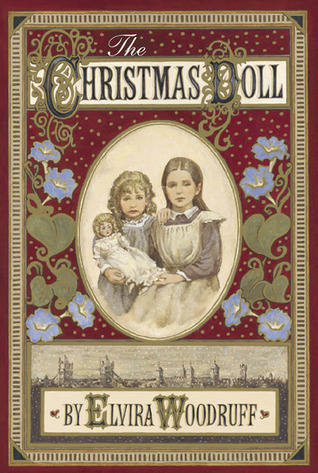
The Christmas Doll by Elvira Woodruff reads like an old-fashioned nineteenth-century classic, but it was published in 2000.

Two young sisters, Lucy and Glory, are orphaned and spend several years in a London workhouse with barely enough food. A deadly fever sweeps through the facility, claiming many of their friends. When Glory becomes ill, Lucy knows that if she’s taken to the infirmary, she’ll never come back. So she takes Glory and escapes.

But city streets are unfriendly to the poor, especially on winter nights. The girls suffer various mishaps. Finally someone tells them of “mudlarkers,” people who dig around in the muck by the river looking for things to sell. Lucy finds a dirty old doll with a quirky smile, setting off an unexpected series of events.

This book has some of the melodrama and fancifulness of a Dickens story. It was sweet and very well done. The audiobook was free for Audible subscribers at the time and wonderfully read by Bernadette Dunn.

I had not heard of the Christmas in My Heart series by Joe Wheeler, but apparently he’s compiled several books of Christmas stories, his own as well as others’.

The Best of Christmas in My Heart is made of several heartwarming stories from the series gathered over the years. Many are old-fashioned, but some are new. Most are fiction, but some, like John Cain’s account of Christmas in a POW camp, are true. I had not heard of most of the authors, but a few familiar ones are represented, like O. Henry and McCain. One story about a tablecloth made the rounds of the Internet a few years back.

Wheeler begins the book with telling how he came to start writing and then start compiling this series.

There are eighteen stories, so it would be easy to spread this out over December with almost a story a night.

That wraps up my Christmas reading! Have you read any of these? Did you read anything Chrismasy in December?

Review: The Christmas Angel Project

In The Christmas Angel Project by Melody Carson, five friends who are different ages and from different walks of life have been meeting together regularly for a book club. Just after Thanksgiving, one of the women, Abby, dies unexpectedly. She seems to have been the glue that kept them together and inspired them.

Some days after Abby’s memorial service, the other women meet together to decide what to do about the group–whether to keep meeting, invite more people, or disband. Abby’s husband gave the group a bag of Christmas gifts that Abby had prepared for them before she passed. They opened them together at their meeting. Abby had made an angel ornament for each of them with their individual characteristics.

Inspired by Abby’s example, the women decide to change their book club to a “Christmas angel” club. Each will choose a project involving their own unique gifts, talents, and resources and report back to each other once a week in lieu of reading books.

Belinda is Abby’s long-time personal friend, divorced with a college-age child. She started a thrift shop years ago that has become something of a boutique.

Cassidy is the youngest, a single veterinarian who struggles with self-confidence.

Grace is newest to the group. She and Belinda had an undercurrent of rivalry for Abby’s friendship. Grace and her husband argue over their twin’s lack of effort in college, among other things. Grace has her own home design business.

Louisa is the oldest of the group. Her husband passed away the year before. Now Abby’s passing has really affected her. She had been an artist, but hasn’t been inspired to create anything since her husband died. She wonders what she’s still doing here, why God didn’t take her instead of Abby.

As each woman struggles to decide what to do for her project, they each experience ups and downs, successes and failures, and learn more about themselves and others in the process.

It’s understandable that the book would start off sad. But it did seem a little depressing at first, especially for a Christmas story. The years when we were most grieving a loss, I don’t know if it would have been helpful to read a book like this or not.

But once they got going on their projects, the story picked up. I did enjoy the book overall. I was happy I discovered the audiobook free in Audible’s members’ Plus Catalog.

Three Short Christmas Book Reviews

I hope you’ll forgive all the book reviews this week. I happened to finish a few around the same time. Because of that, and because the first two books here are a little shorter than usual, I decided to review them together.

Christmas Hirelings

I first read, or rather listened to, The Christmas Hirelings by Mary Elizabeth Braddon a few years ago when it was free for Audible subscribers. I reviewed it here, so I won’t repeat all that. The condensed version: Sir John Penlyon is an old man in Victorian England who is not a Scrooge, but is a little gruff. He complains to his friend, Danby, that Christmas is boring. Danby replies that “Nobody knows how to enjoy Christmas if he has no children to make happy.” Then Danby proposes that they hire some children to come and stay at the manor over Christmas. He knows of a family with three children who have very nice manners but are reduced in circumstances. If Sir John would “hire” the widow’s children, it would liven up their Christmas plus be a help to the family.

Sir John thinks the idea is preposterous, but agrees as long as he doesn’t have to be involved other than paying for the experiment.

The children get off on the wrong foot with Sir John at first, but soon the children bring joy and life into the old house. Until tragedy strikes.

Sir John’s back story is quite touching. I loved listening to this again. I caught things I had missed the first time.

The audiobook is superbly narrated by Richard Armitage (Thorin Oakenshield in Peter Jackson’s Hobbit movies). I may make listening to this an annual tradition.

I got Snowed In for Christmas by Cami Checketts also through Audible. I don’t remember if it was free with my subscription or on a “2 books for 1 credit” sale.

Charlotte Oliver is a firefighter with a lifelong crush on her sister’s friend, Jace Mitchell. Charlotte suspected her sister, Virginia, and Jace were more than friends. But Jace left eight years ago to go into the military, and Virginia married someone else. Then Virginia and her unborn child tragically died in a car accident.

Now Jace is back in town, trying to establish a medical practice. Charlotte is as attracted as ever, but she thinks Jace probably still loves her sister.

Jace had always thought of Charlotte as a cute little sister, but now she’s grown up into a beautiful woman. But he knows a relationship with her is impossible. He’s sworn to secrecy over an event in his past, and he knows Char would never forgive him if she discovered it.

This book reminded me why I don’t usually read stories that are primarily romances. So much talk about kissing, anticipating kissing, remembering kissing. Sure, kissing is fun, but there is so much more to love than that.

The book actually got more interesting to me when Char did accidentally find out Jace’s secret, and they had to work through that.

I did not like how Char’s “Grams” handled things, but I don’t want to spoil the story by explaining.

If you like clean faith-based Christmas romances, you’d probably like this.

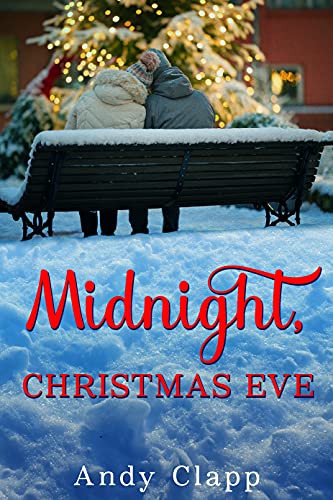
In Midnight, Christmas Eve by Andy Clapp, Brady Jameson was a high school junior out finishing some shopping on Christmas Eve when he saw a girl crying on a park bench. He approached her to see if he could help and discovered the girl was Sarah, the head cheerleader, girlfriend to the school’s best athlete. Brady provided a shoulder to cry on, and he and Sarah became friends.

Sarah’s boyfriend, Aiden, is not good for her, but she stays with him. Brady realizes Sarah has come to mean very much to him, but keeps his distance since she’s dating someone else.

After another chance encounter and another opportunity to comfort Sarah through another crises, she makes a proposition: that if neither of them are married within five years, they’ll meet at Christmas Eve at “their” bench and get married.

Brady agrees and shows up at the appointed time, but Sarah doesn’t. Their lives intersect at various times, but they never mention their promise. Brady comes every Christmas Eve, even when he tells himself he’s a fool for doing so. But Sarah never shows up.

Is Brady a picture of faithful love? Or is he deluded, letting life pass him by while he waits for an impossible dream?

I loved this book. It had me in tears in a couple of places. I appreciated that the characters’ faith was interwoven so naturally and seamlessly.

Though technically this was also a romance, it was so much deeper and so much more was involved than in the previous book I mentioned.

My Christmas reading is off to a good start!

Christmas Reading Challenges

I always enjoy reading books about or set during Christmas in December. There are a couple of reading challenges where we can share about the Christmas books we’ve read.

I’ve participated in the Literary Christmas Challenge hosted by Tarissa at In the Bookcase for a number of years. Details about this year’s challenge, which runs from now til Dec. 31, are here.

A new challenge to me is the Ho-Ho-Ho Readathon hosted by Caffeinated Reviewer. The challenge details are here. There will be prizes! 🙂 This one runs just from November 18-30—maybe to get us in the right spirit for Christmas?

I usually try to wait til Thanksgiving to read Christmas books, but I may start earlier this year.

I like to read some kind of Christmas or Advent devotional book in December, and Tim Challies shared a good list of some I don’t have. But I decided to try Hannah Anderson’s Heaven and Nature Sings: 25 Advent Reflections to Bring Joy to the World.

I’ve collected most of these on Kindle sales over the last few years. I don’t know how many I’ll get to, but some are novellas or novella collections.

Hope for Christmas: A Small Town Christmas Romance Novella by Malissa Chapin

It’s a Wonderful Christmas: Classics Reimagined by Julie Cantrell, Lynne Gentry, Allison Pittman, Kelli Stuart, Janyre Tromp

Midnight, Christmas Eve by Andy Clapp

Christmas in Mistletoe Square
by Cara Putman, Teresa Tysinger, Pepper Basham, Janine Rosche

Magnolia Mistletoe: An Edisto Christmas Novella by Lindsey P. Brackett

A Goose Creek Christmas by Virginia Smith

The 20th Christmas by Andrea Rodgers

A Christmas Snow by Jim Stovall

A Christmas Bride by Melanie Dobson

This one is a free audiobook for Audible subscribers. I’ve not heard of the author, but the reviewers say it’s sweet and clean.

Snowed In for Christmas by Cami Checketts

I might also listen again to The Christmas Hirelings by Mary Elizabeth Braddon. I really enjoyed this audiobook a few years ago, plus I like Victorian-ish stories at Christmas, too.

I have a couple of Christmas story collections in print books: The Best of Christmas in My Heart by Joe Wheeler and Stories to Read at Christmas by Elsie Singmaster. I might try to read one or both of those.

Three Christmas Reads

I thought I’d group together short reviews of three books I enjoyed this December.

Expecting Christmas is a 40-day devotional book by multiple authors. I didn’t know any of the author names except one (Jennifer Dukes Lee). It’s put out by New Hope Publishers.

The selections are short, which is appreciated in a month like December. Each began with a verse or two of Scripture, a page and a half to two pages (at least in the Kindle version) of text, then three questions for refection.

The readings cover a variety of Christmas topics, though several deal with light.

A couple of samples: Day 15 talks about how horses in past years were seen as “labor animals, forms of transportation, and even weapons of war” (p. 44). After describing war horses, the writer points out Zechariah 9:9-10: Jesus did not come as an overthrowing conqueror, at least as the kind of conqueror society expected. His second coming will be more like that. But this time, He came humbly on a donkey. The author concludes, “Take time now to thank the Lord for being both just and humble, for bringing salvation instead of condemnation, for riding peacefully on a colt rather than on a warhorse. Ask Him to help you trust Him, especially when you don’t understand His ways. When you find yourself confused by His methods, remember the salvation He brought and the joys of that great gift” (p. 46).

In mediating on Jesus being given “the tongue of the learned” (Isaiah 40:4-5), another writer says, “Jesus didn’t use His deep knowledge and gift for oratory to make a name for Himself or climb social ladders. Rather, as seen in the Gospel accounts of His ministry, Jesus used His words to unburden people, free minds from the lies they had learned from false religions, and draw weary hearts closer to the Living God” (p. 54).

Another points out that people responded differently in praise and worship of the Savior, and that’s okay. “Mary’s response was one of quiet introspection as she treasured the good news of the gospel in her heart. The shepherds, on the other hand, left young Jesus, glorifying God and praising Him with outward enthusiasm and passion. People celebrate the gospel in different ways” (p. 77).

I only wish this book was 25 or 31 days so it would fit within the month of December. I didn’t get started 40 days ahead, so I have a bit yet to finish up. But I wanted to mention it before the month was over. Overall, I enjoyed it.

The second book I mentioned in my top twelve post yesterday. I had never heard of Letters From Father Christmas by J. R. R. Tolkien. I discovered it while looking for a short Christmas audiobook to finish out the year. This fit the bill nicely.

Tolkien sent letters and drawings as if from Father Christmas to his children from 1920 to 1943. He wrote with a shaky script because he was so old, he said (probably also to disguise his handwriting). The letters would comment on happenings in the children’s lives as well as at the North Pole. The North Polar Bear was Father Christmas’s helper and companion, a cheerful but bumbling fellow who unwittingly caused a lot of accidents. Polar Bear adds his own commentaries with a thick script because of his paws. Later an elf named Ilbereth acts as Father Christmas’s secretary. The last few letters mention “this horrible war” (WWII) and the people displaced, the shortage of supplies even at the North Pole, etc.

I got the audiobook superbly narrated by Derek Jacobi as Father Christmas and a couple of others for the infrequent voices of the bear and elf. But when I realized the book had photos of the letters and drawings, I had to get the Kindle version, too.

I thought in passing of Tolkien’s penchant for languages but figured that wouldn’t have a place in this book. But he did come up with a made-up language called Arktic that is spoken at the North Pole, and Polar Bear shares a few lines of it.

He also included some battles with goblins, who at times liked to raid Father Christmas’s supplies.

These letters are wonderfully imaginative. I especially loved the banter between Father Christmas, Polar Bear, and Ilbereth.

My last Christmas book this year is The Ornament Keeper, a contemporary fiction novella by Eva Marie Everson.

It’s Felicia Morgan’s custom to begin decorating the Christmas tree with the special, customized ornaments her husband has given her, one each year except for the last year. Each represented something special about their year: their first Christmas together, their children, her job advancement, etc.

This year, though, Felicia is dragging her feet. She and Jackson have separated after twenty years of marriage. Her daughter convinces Felicia to put up decorations as usual, but the memories are painful.

As Felicia hangs each ornament, we see a flashback to the circumstances surrounding each of them. Felicia’s marriage began with a mistake which has haunted the couple’s twenty years. Though God has redeemed and worked together for good their indiscretion, seeds of resentment and unforgiveness threaten to destroy what they have. Can they find their way back to each other before it’s too late?

I enjoyed the story and the truths brought out. I appreciated that the book wasn’t superficial or treacly.

Have you read any of these? Did you read any Christmas books this year?

Literary Christmas 2021

I enjoy reading Christmas books after Thanksgiving through the end of the year. Tarissa at In the Bookcase hosts a Literary Christmas challenge for that purpose. You can find the details here, but the basic idea is to read Christmas books and write posts about them.

I have several unread Christmas books in my Kindle app. Here are a few I’d like to get to:

A Quilt for Christmas by Sandra Dallas, set during the Civil War. I am listening to it currently.

A Christmas by the Sea by Melody Carlson. This appealed to me because I grew up on the Texas coastline, so my early Christmases were more seaside than wintery. I had this on last year’s list and regretted not getting to it.

Expecting Christmas by multiple authors, a daily devotional. Free for the Kindle as of this writing.

The Ornament Keeper by Eva Marie Everson, contemporary fiction about a couple separated after 20 years of marriage (99 cents as of this writing).

The Yuletide Angel by Sandra Ardoin, an author new to me. A woman in the 1890s who helps people behind the scenes may be in need if help herself.

I have eight more, but we’ll see how I do with these first.

Do you like to read Christmas books in December? What’s in your stack?