Review: The Mystery of Edwin Drood

The Mystery of Edwin Drood was the last of Charles Dickens’ novels and only about half-finished when he died.

The story opens in an opium den as a man awakens from his drug-induced stupor, then goes to the cathedral, where he is the choirmaster.

A little later, this man, John Jasper, tells his nephew, Edwin Drood, that he takes opium for a physical condition. The reader is left unsure for a while whether Jasper is telling the truth or leading a double life.

Edwin is a young man engaged to Rosa Bud. They are both orphans, but their fathers were good friends and arranged their marriage. Edwin comments that the prearrangement “flattens” the excitement of their courtship. But he’s willing to go along with the plan. He and Rosa often end up arguing.

Twin siblings, Neville and Helena Landless, also newly orphaned, arrive from Ceylon with their guardian. Neville is to study with the minor canon, Rev. Crisparkle, while Helena will attends the nuns’ boarding school. She and Rosa, also a student there, become good friends.

Nevile has been mistreated by his stepfather and has a quick temper. He is secretly attracted to Rosa and can’t stand the way Edwin treats her. The two young men argue, goaded on by Jasper.

Crisparkle urges the two to settle their differences. The day after they do, Edwin disappears. Neville is immediately suspect, but there’s no proof of his guilt.

Dickens always has multiple threads and quirky characters woven into his plots. Mr. Durdles is a stonemason and undertaker. Jasper asks Durdles to take him on a nighttime tour of the crypts. “Deputy” is the nickname of a street child who throws rocks at people out at night but who also sees and hears much that goes on. Mr. Sapsea is a somewhat self-important auctioneer who later becomes the mayor. Dick Datchery comes into the story later, a man of independent means supposedly looking for a pleasant place to stay. A former sea captain, Mr. Tartar, arrives later, too, and ends up living next to where Neville is hiding out. At first I thought Tartar was spying on Neville for Jasper, but later I didn’t think so.

One of the most touching moments for me involved Mr. Grewgious, Rosa’s guardian. At first he comes across as a little silly and fussy. But later, as he remembers the women he silently loved, who died long ago, he wonders whether the man she married ever suspected him of having feelings for her. As he catches sight of himself in the mirror, he says “A likely someone, you, to come into anybody’s thoughts in such an aspect! There! There! There! Get to bed, poor man, and cease to jabber!” The narrator notes, “There are such unexplored romantic nooks in the unlikeliest men.”

Another favorite quote, said of Rev. Crisparkle: “He was simply and staunchly true to his duty alike in the large case and in the small. So all true souls ever are. So every true soul ever was, ever is, and ever will be. There is nothing little to the really great in spirit.”

I liked the turn of phrase that a bombastic man targeted another as “kind of human peg to hang his oratorical hat on.” Then, “the remainder of the party lapsed into a sort of gelatinous state, in which there was no flavour or solidity, and very little resistance.”

And this brought a smile: “The two shook hands with the greatest heartiness, and then went the wonderful length—for Englishmen—of laying their hands each on the other’s shoulders, and looking joyfully each into the other’s face.”

Wikipedia lists some of the theories about how Dickens intended to finish the novel. I feel pretty sure I know what happened to Edwin and why and by whom–the clues seem to point one direction. But it would have been fun to learn whether I was right and to see the plot unravel and the bad guy get his comeuppance.

I listened to the audiobook, narrated by David Thorn. He did a great job, except I had a little trouble understanding a few of the characters. I also got the Kindle version, which was free at the time, to go over the passages which weren’t clear to me.

Some years ago I set myself a mission to read all the Dickens novels I hadn’t read yet. Now I have read all of them except Barnaby Rudge, which, honestly, doesn’t sound very exciting. But I will still read it some day.

While Edwin Drood isn’t my favorite of Dickens’ novels–those would be A Tale of Two Cities and David Copperfield--I did enjoy it and got caught up in the mystery.
Review: Little Lord Fauntleroy

Little Lord Fauntleroy has never been on my to-read lists. But I was looking through Audible‘s Plus Catalog of free books they rotate in and out, and this title caught my eye. I saw that the novel was written by Frances Hodgson Burnett, who also wrote The Little Princess, which I loved, and The Secret Garden, which I had mixed emotions about. I decided to give it a try.

Cedric Errol is a little boy living with his mother in “genteel poverty.” His father had been the third son of an earl in England. When he came to America, he fell in love and married. His father hated Americans and felt this one was just after his son’s money. So he cut his son off from his inheritance and position.

Cedric’s parents lived happily together for several years until his father became sick and died. Cedric calls his mother “Dearest” because that’s what his father had always called her, and it seems to make her happy.

Cedric is seven years old at the story’s beginning. “He had never heard an unkind or uncourteous word spoken at home; he had always been loved and caressed and treated tenderly, and so his childish soul was full of kindness and innocent warm feeling.” He’s special friends with the grocer, Mr. Hobbs, a young bootblack named Dick, and the “apple woman.” Even when winning a race with another boy, he encourages him by saying he only won because he’s three days older and his legs are a little longer.

Then one day a stranger from England, a lawyer named Mr. Havisham, arrives at Cedric’s home. Cedric’s father’s brothers have all died, and Cedric is the heir to his grandfather’s estate. His grandfather wants Cedric to come to England, live with him, and learn how to become an earl. He would become Lord Fauntleroy. His mother is invited, too, but the earl doesn’t want to see her. She’s be provided another home nearby so she and Cedric can visit every day.

Cedric’s mother believes his father, who loved his home in England, would have wanted Cedric to accept this invitation. She doesn’t want Cedric to start out with bad feelings against his grandfather, so she doesn’t tell him why his grandfather won’t see her.

The earl is described as “sitting in his great, splendid, gloomy library at the castle, gouty and lonely, surrounded by grandeur and luxury, but not really loved by any one, because in all his long life he had never really loved any one but himself; he had been selfish and self-indulgent and arrogant and passionate.” Everyone is intimidated by him. But Cedric’s mother said he was kind and generous. So Cedric approaches him without fear, which impresses the earl.

He wants Cedric to realize the riches at his disposal, so he gives instructions that Cedric can have anything he likes (perhaps not realizing that this was what ruined his two older sons). Instead of indulging himself, Cedric wants to use the money to help others.

Just when I thought the book was going to be fairly predictable, an unforeseen crisis arises.

Cedric is almost too good to be true. I haven’t found anything to explain why Burnett wrote the book: this was her first children’s book, though she had written for adults before. Perhaps she wanted to give children an example to follow. It’s interesting to trace the development of characters in her children’s books (at least the three I have read). Sarah in A The Little Princess is ideal as well, but not so perfect. Mary in The Secret Garden is spoiled and nasty.

Wikipedia says this book was as popular as Harry Potter in its day, and it started a fad of boys wearing the long curls and white frilly shirt that Cedric was known for.

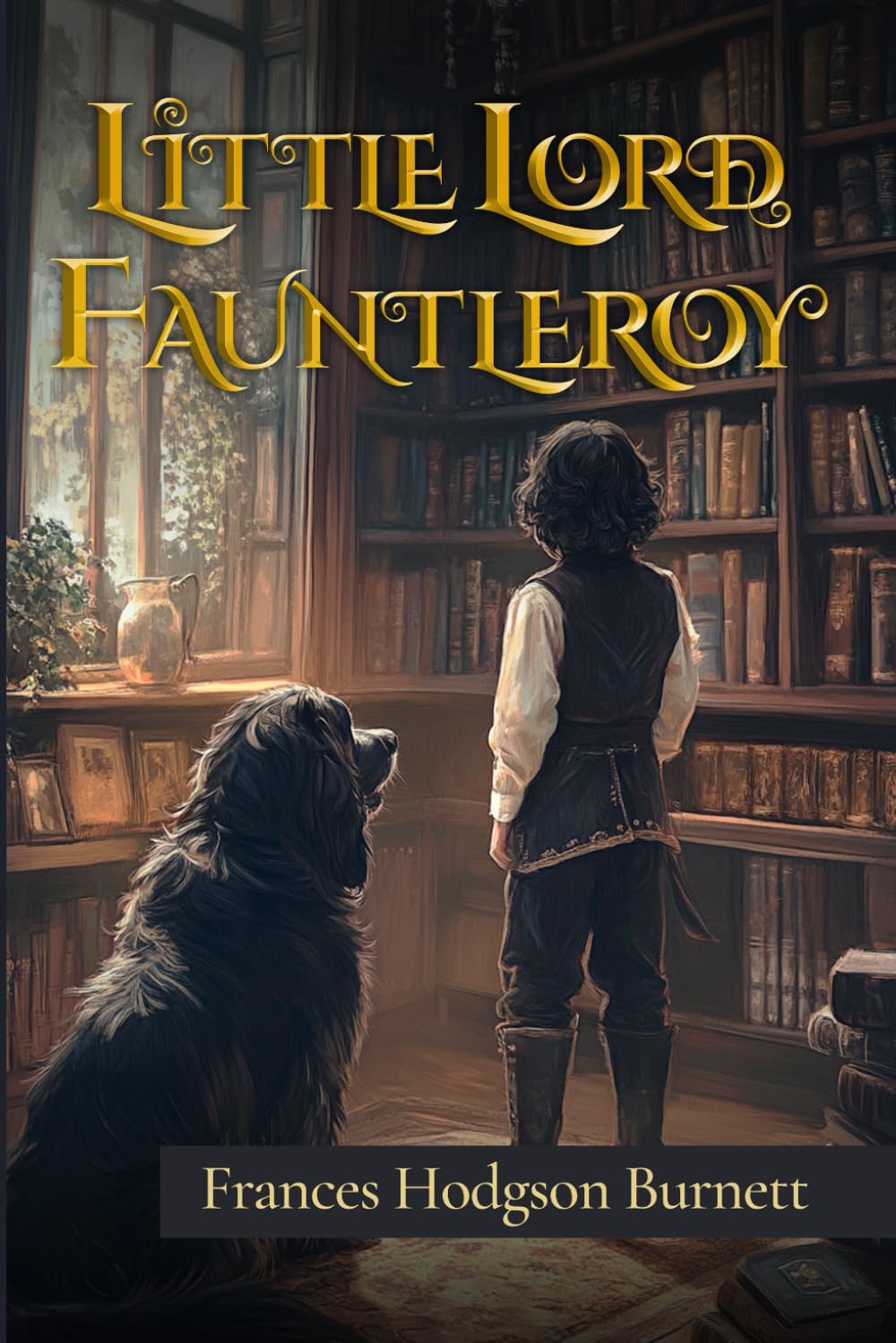
Virginia Leishman did a nice job narrating the audiobook. It’s free through September to Audible subscribers, and only about six and a half hours long. I also got the Kindle version for 99 cents, which includes some of the original illustrations, which were fun to see. I don’t know why the newer cover shows Cedric with dark hair when the book repeatedly mentions his golden curls.

Even though Cedric and his mother are somewhat idealized, this was a sweet story that I enjoyed very much.

Ruth by Elizabeth Gaskell

Ruth is a novel written by Elizabeth Gaskell (sometimes listed as Elizabeth Cleghorne Gaskell) in the 1850s.

Ruth’s mother died when she was twelve. Her father, absorbed in his own grief, did not pay much attention to Ruth and died when she was fifteen. The man named as Ruth’s guardian had never met her before, but obtains a postilion for her with a dressmaker.

Ruth is naive and immature, not having had her mother’s instruction as she became a young woman. When she accidentally meets a Henry Bellingham, a well-to-do young man in his twenties, he is struck by her beauty. He observes that she goes to church alone on Sundays and arranges to be where he can interact with her afterwards. After several weeks of meetings, he offers to walk with her to where she used to live, as she has often described how much she loved the area.

Ruth’s boss sees her so far from home with a young man, draws the wrong conclusion, and tells Ruth she is fired. Distressed and alone in the world, Ruth succumbs to Bellingham’s persuasion to accompany him to London.

Some time later, Ruth and Bellingham are visiting Wales when he falls seriously ill. The inn’s proprietor sends for his mother, who disgustedly ousts Ruth.

A Mr. Benson is a dissenting minister visiting the same area who ascertains Ruth’s situation. He intercepts her as she plans to attempt suicide and persuades her to live with him and his sister, Faith, and their crusty but kind-hearted housekeeper, Sally.

Faith and Sally don’t think well of Ruth at first. But her sweetness and humbleness win them over.

None of them realize that Ruth is with child at first–not even Ruth. When Ruth’s pregnancy is discovered, Mr. Benson’s sister, Faith, persuades him to say that Ruth is a distant relative who has recently been widowed. They want to give Ruth a fresh start but also want to protect her child.

As Ruth attends Mr. Benson’s church, she realizes she has done wrong and repents.

Eventually she becomes a governess to the daughters of the town’s leading citizen. But then her secret becomes known.

Mrs. Gaskell is one of the first authors to make a “fallen woman” the heroine of her story (The Scarlet Letter by Nathaniel Hawthorne came a few years earlier; Tess of the d’Urbervilles by Thomas Hardy came a few decades later). The book was controversial in its Victorian era. Gaskell rightly asserted that sometimes the fallen woman is the wronged party, that grace and forgiveness are available to all who have sinned, and that the child born of such a situation does not deserve to be branded.

Gaskell comes from a Unitarian background, which, from what I have read, I would not agree with. But much of what is said of Christ in this book seems accurate. However, there’s also talk about penance and “self-redemption,” which I don’t think are scriptural concepts.

Besides the themes of forgiveness and compassion, the book deals with the dangers of gossip and hypocrisy.

This novel is a product of its times. It’s wordy, with a lot of detailed description. Ruth is presented as almost too perfect. Some interactions are a bit overwrought.

But I loved the story. And I loved what Gaskell conveyed through the story. Both the main and secondary characters were well-developed.

I listened to the audiobook, nicely read by Eve Matheson.

(I often link up with some of these bloggers.)

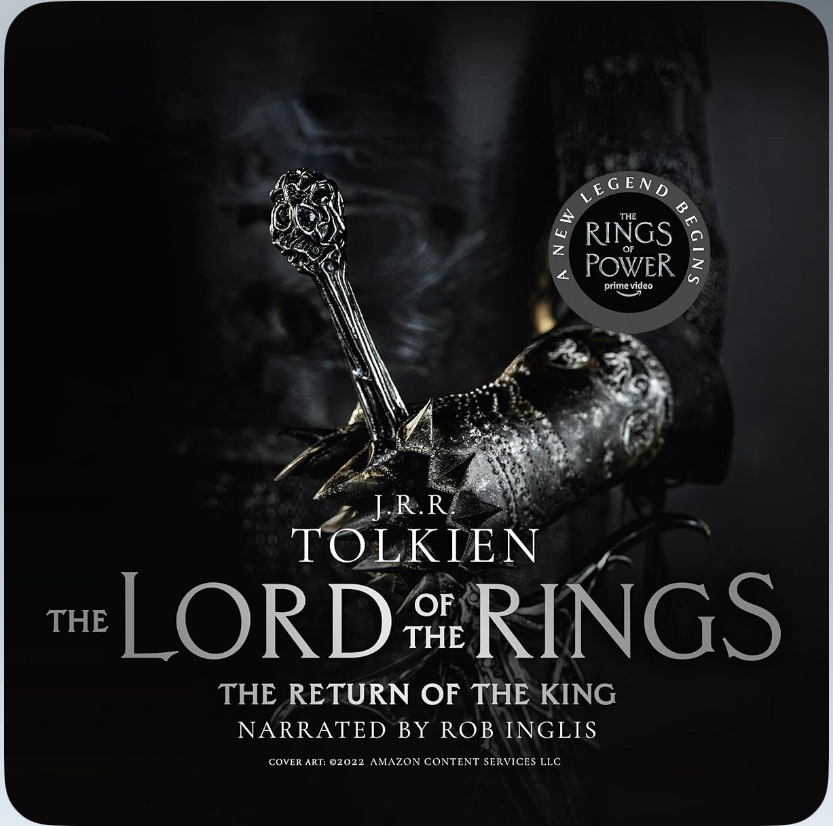
Review: The Return of the King

The Return of the King

The Return of the King is the third in J. R. R. Tolkien’s trilogy, The Lord of the Rings.

If you’re not familiar with the story, the ring in question was created by Sauron, originally an angelic-type creature who rebelled against his creators. There were actually nine rings made, but that’s a different story. The “one ring” somehow had the power to influence those who had the other rings and would grant Sauron dominion over everyone in Middle Earth. The ring and its power could only be destroyed by being tossed back into the fires of Mordor, from which it was made.

The ring had been lost for thousands of years, but was found by Bilbo Baggins in The Hobbit.

The Fellowship of the Ring told of a group of nine companions on a mission to take the ring to Mordor: Gandalf the wizard; Frodo, the designated ring-bearer and Bilbo’s nephew; Samwise Gamgee, his friend and servant; two more hobbits, Merry and Pippin; one elf, Legolas, a dwarf, Gimli; and two men, Boromir and Aragorn. Aragorn is also know as Strider and is the long-awaited heir to the throne of Gondor, though not everyone knows that at first.

The rest of FOTR and the second book, The Two Towers, tell what happened to the group on their long and dangerous journey.

At the beginning of The Return of the King, Frodo and Sam have been separated from the rest to continue their journey to Mordor. But Frodo had been captured and imprisoned. Sam braves various dangers to rescue him.

Meanwhile, Sauron has sent a great army or orcs (vile creatures) and other beings to Gondor. Gandalf and Pippin go there to warn the steward.

Aragorn, Legolas, and Gimli gather help from an unusual source and Merry joins them to battle Sauron’s troups.

There are a number of subplots with the steward of Gondor and his son (Boromir, his favorite, died, and Faramir, his younger son, isn’t appreciated until almost too late); the area of Rohan with its famous riders and their joining in to help, Merry and the king of Rohan’s daughter being severely wounded, and all kinds of other things going on.

The one ring negatively affects those who have it, especially if they wear it for any length of time. The ring grants the wearer invisibility but builds a craven desire to keep it, plus awakens Sauron to its presence. Frodo is beyond weary with all he has suffered on his long journey plus the increasing influence of the ring the closer he gets to Mordor.

After the last great battle, the fellowship splits up and we see each one as he goes back to his land and people. I didn’t realize that there would be a fairly long section when the hobbits arrive back to the shire. It had been taken over by “ruffians,” and took some time and effort to set right again. The hobbits were not very adventurous folks, but Merry and Pippin had fought orcs and other evil beings. They were not about to put up with some ruffians!

Tolkien said he disliked allegory and didn’t write his saga of the rings that way. But he did feel fairy stories and myths could convey truth. It’s not hard to see Sauron as an instrument of Satan. And the king of Gondor coming into his long-awaited throne has some parallels with Christ, especially in this quote:

But when Aragorn arose all that beheld him gazed in silence, for it seemed to them that he was revealed to them now for the first time. Tall as the sea-kings of old, he stood above all that were near; ancient of days he seemed and yet in the flower of manhood; and wisdom sat upon his brow, and strength and healing were in his hands, and a light was about him (p. 121).

Some of my other favorite quotes:

Yet it is not our part to master all the tides of the world, but to do what is in us for the succour of those years wherein we are set, uprooting the evil in the fields that we know, so that those who live after may have clean earth to till (p. 73).

In that hour of trial it was the love of his master that helped most to hold him firm; but also deep down in him lived still unconquered his plain hobbit-sense: he knew in the core of his heart that he was not large enough to bear such a burden, even if such visions were not a mere cheat to betray him (p. 83).

As a sweet rain will pass down a wind of spring and the sun will shine out the clearer, his tears ceased, and his laughter welled up, and laughing he sprang from his bed (p. 111).

It must often be so, Sam, when things are in danger: some one has to give them up, lose them, so that others may keep them (p. 154).

And this from the appendix: “Let us not be overthrown at the final test, who of old renounced the Shadow and the Ring. In sorrow we must go, but not in despair. Behold! we are not bound for ever to the circles of the world, and beyond them is more than memory” (p. 174).

My favorite quote of all comes when Frodo has reached the end of his strength, and Sam says, “Come, Mr. Frodo! I can’t carry [the ring] for you, but I can carry you and it as well” (p. 105).

On a side note, for many years, we avoided anything to do with witches, wizards, magic, etc., in stories and film. I had to think through those things when the LOTR films came out and the kids wanted to see them. I wrote more about that here, but I concluded most “fairy tale magic” is a different thing than the occult. Gandalf is more like a wise superhero than what we think of as a wizard. But these things require caution and discernment: I’ve seen some alarming aspects of some stories containing “magic.”

Both the audiobook (nicely read by Rob Inglis) and the Kindle version have appendixes at the back, but they are not the same. The audiobook has sections explaining the different races and their characteristics, a history of the kings, a more detailed account of Aragorn’s and Arwen’s lives and romance, a brief account of events in The Hobbit, and a few others. The Kindle ebook has “Annals of the Kings and Rulers,” family trees, a shire calendar, and information about writing and spelling in some of the languages of the book.

I read The Hobbit and the first two books of this trilogy years ago. I had started The Return of the King, but then didn’t finish it when the Peter Jackson films came out. I always meant to get back to it but never did. After I read The Silmarillion (Tolkien’s history and mythology of the world he created in these books), I thought about reading The Return of the King. I wasn’t sure I wanted to get into another lengthy foray into Middle Earth. But then I thought it might be good to read the last book while all the information in The Silmarillion was still fresh. That turned out to be true: I “got” many references that I think I would have otherwise missed.

I almost wish I had started again at The Hobbit and read all the books through. But I am sure I’ll read them again some time.

I thought it would take a little while to get back into Tolkien’s world. But it didn’t: I was caught up in it again right away.

There are many things to love about these books. Yes, they go into much more detail than if they had been written in modern times. But the older style of writing fits in with a story of ancient lore. Tolkien put so much time and thought into the stories, even inventing different languages for the different races.

But what I love most of all is the truth of human nature they contain, and the bravery, heroism, and overcoming evil as well as one’s own limits to accomplish a great quest. And the books contain a couple of sweet love stories as well.

(I often link up with some of these bloggers.)

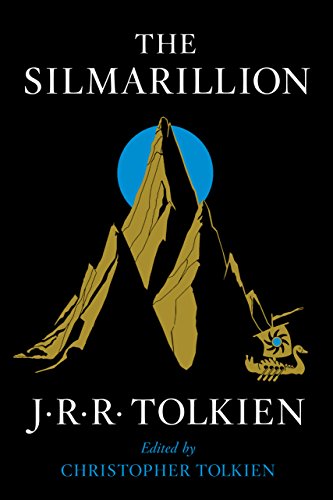
Review: The Silmarillion

The Silmarillion by J. R. R. Tolkien is a collection of stories and history which precedes The Hobbit and The Lord of the Rings in its setting. Wikipedia says a draft of it was written after The Hobbit’s success, but it was rejected by the publisher. Tolkien went on to write The Lord of the Rings trilogy. After his death in 1973, his son, Christopher, edited, arranged, and added material to publish this book in 1977.

My volume has a foreword by Christopher, in which he says the notes and stories in The Silmarillion, though it wasn’t called that at the time, date back half a century earlier and were added to by his father even in his last years. Christopher writes that his father came to view this book as seeming like a compendium from different (fictional) characters, added to through the years. That helps account for differences of style and tone through the book. It also contains a few separate works and a short summary of The Lord of the Rings at the end. One of these stories was “The Rings of Power,” which the recent series is based on. Taken all together, this provides the history of Tolkien’s mythology.

This edition also contains a very long letter from Tolkien to an editor friend “justifying and explaining” why he thought The Silmarillion and the Lord of the Rings should be published together (for what it’s worth, I think it was wise to separate them). Christopher said he thought this letter was “a brilliant conception of his conception of the earlier ages,” so he included it here are well.

Tolkien says here that he dislikes allegory and writes in the style of myth and fairy tales, though he acknowledges both of those genres use allegorical language. These stories have to do with “Fall, Mortality, and the Machine,” though also with “Art (and Sub-creation) and Primary Reality.” (p. 2, Kindle version). He writes “I believe that legends and myths are largely made of ‘truth’, and indeed present aspects of it can only be received in this mode” (p. 2). C. S. Lewis said something similar: after he had written directly about spiritual truth in Mere Christianity and other books, he wove some of the same truths in stories.

The Silmarillion covers the first two “ages” of Tolkien’s stories, beginning with the creation of the world by Eru, also called Ilúvatar. The angelic-type being he created, the Ainur, then created other things through music. But “it came into the heart of one of them, Melkor [also called Morgoth], to interweave matters of his own imagining that were not in accord with the theme of Ilúvatar; for he sought therein to increase the power and glory of the part assigned to himself” (p. 4).

Some of the Ainur went to live on the world their music created. Later came Elves, called the Firstborn, and later still Men, called Followers.

Much of the book is good vs. evil, the rise and fall of individuals and empires. Some of it is written as history, but a few stories are interwoven.

I thought these lines were particularly apt:

Reward on earth is more dangerous for men than punishment! (p. 2).

There are three phases in their fall from grace. First acquiescence, obedience that is free and willing, though without complete understanding. Then for long they obey unwillingly, murmuring more and more openly. Finally they rebel–and a rift appears between the King’s men and rebels, and the small minority of persecuted Faithful (pp. 2-3).

The title comes from three rings, called the Silmarils crafted with the light of the Two Trees of Valinor before Melkor destroyed them. Melkor stole them and put them in his crown, but battles are fought for them later on.

In the latter part of the book, Sauron, something of a disciple of Melkor, becomes the main villain. He creates the “one ring to rule them all” which figures into The Lord of the Rings.

The wizards and hobbits don’t come into the story until the last few pages. Gandalf shares a line which will become a theme in LOTR: “Help shall oft come from the hands of the weak when the Wise falter” (p. 307).

I listened to the audiobook, read well by Andy Serkis, who played Gollum/Smeagol in the Peter Jackson LOTR films several years ago. I also have the Kindle version, and I think it might have been better to read it than listen to it. Though I enjoyed the audiobook, I found my attention wavering in the historical parts. Plus I think seeing all the names would have helped cement them in my mind.

Many individuals and groups have more than one name, which makes for some confusion at first.

Christopher Tolkien added an index of names as well as “family trees” of some of the main characters in the back of the book.

I was inspired to read this book after seeing the first two seasons of The Rings of Power. I’ll never be an expert on Tolkien lore, but that wasn’t my aim. There are several sites online where we can look up particular people, groups, or events in his books. But reading this did give me a better understanding of events in the LOTR. Some things clicked into place, like Aragorn’s heritage, the buried shards of a sword which are found in the later books, the ancestor of the evil giant spider Shelob, who attacks Frodo, the giant eagles who come to various people’s rescue, etc.

So, though this book doesn’t flow as well as The Hobbit and The Lord of the Rings, I’m glad I finally read it.

(I often link up with some of these bloggers.)

Review: Mrs. Tim of the Regiment

Mrs. Tim of the Regiment by D. E. Stevenson

In the foreword of the reprinting of Mrs. Tim of the Regiment, author D. E. Stevenson says the book came about in the 1930s when a friend’s daughter was about to marry an officer in the Highland Regiment. The family wondered what military life would be like. Stevenson lent them her diary from her days as a young military wife. The friend returned it, saying her family had laughed heartily over it, and if she “pepped it up a bit,” she could publish it as a novel.

So Stevenson did expand and “pep up” the story. Two volumes that were originally published were combined as one in Mrs. Tim of the Regiment. Three more volumes followed over the next few years.

The book is written in a journal format, Mrs. Tim, or Hester, having received a new diary for Christmas. Her husband is an officer and they have two children, Brian and Betty. Although they have a cook, a governess, and a few servants, they talk all the time about how financially strapped they are.

The first part of the book doesn’t actually have a plot per se. It’s more a recording of Hester’s encounters with friends, run-ins with servants, and happenings with her children. In the second half (which was originally a separate book), Hester and her daughter, Betty, spend two weeks with a friend on holiday in Scotland.

At the center of it all is Hester’s wry observations and likeable personality. As a senior officer’s wife, she visits the other wives and children to encourage them. She’s not timid, but has a hard time standing up to her cook and others.

On interviewing a headmistress of a school for her daughter, and saying that Betty’s governess found her very quick, Hester is told, “Quickness is more often than not a sign of of a superficial brain.” Hester writes, “I relapse into a species of jelly but still have sufficient strength to say that I think she will find Betty is a good child and very reasonable.”

One of my favorite sentences in the book: “The oldest antiquity whose beard is quite white–or was, previous to the tomato soup–pricks up his ears.”

Sometimes Stevenson waxes poetic, especially when describing scenery:

The rolling hills give place to mountains which stand back in sullen splendor and allow us pass. The cattle become sheep, snowy lambs with black wobbly legs and cheeky little  black faces interrupt their breakfast to stare at the train. Streams leap down the hillsides among the rocks and dive beneath the wheels to emerge on the other side in beds of gravel and yellow stones.

Of course, I don’t expect secular authors to have Christian values, but I still like to see how they think and write about spiritual things. There’s mention of an occasional prayer and going to church, with comments like, “The singing was good but the sermon was dull.” One “hellfire” type of sermon seems to have shaken Hester, but is brushed off by the other church members.

There are a few “damns” and occasionally a gossipy, negative attitude towards some people. One family friend seems to fall in love with Hester, though she is too “hedged with innocence” to realize it. (One thing I found odd about those times was that it was thought wrong for a woman to go around by herself, but no one had a problem with a married woman and single man going off to have picnics or visits sites alone together.) 

I found the book mildly amusing. I didn’t like it quite as well as I did the Barbara Buncle books and Amberwell and it sequel, Summerhills. Those earlier books had a homey feel about them, somewhat in tone like Little Women or Anne of Green Gables (though written in a different style and era). I didn’t get quite that same feeling until near the end of this book.

I listened to the audiobook narrated by Christine Rendel. I’ll listen to the next book in the series, since I have it free via Audible‘s “Plus catalog,” then decide whether to read the other Mrs. Tim books.

Review: Martin Chuzzlewit

There are two Martin Chuzzlewits in Charles Dickens’ eponymous novel, originally titled The Life and Adventure of Martin Chuzzlewit.

The older Martin feels bitter because his relatives fight over his money. He tries to steer clear of them all, except his grandson with the same name. He has hired a young woman named Mary with no family as his caregiver and companion. He pays her well but promises that he will not put her in his will. He reasons that with no expectations after he is gone, she’ll be motivated to keep him alive.

Problems arise when young Martin, the grandson, falls in love with Mary. Grandfather and grandson have a falling out, resulting in young Martin leaving home and being disinherited.

Martin goes to apprentice with a distant relative, an architect named Seth Pecksmith. Mr. Pecksmith’s other apprentice is a good-natured but naive young man named Tom Pinch.

Old Martin asks Pecksmith to kick young Martin out, so he does, to curry old Martin’s favor. Young Martin decides to go to America to see if he can make a success of himself there.

The main theme of the novel is selfishness in various forms, displayed by two main villains as well as several minor characters. A few of the good characters, by contrast, are kind, considerate, and willing to help others. One character transforms from bad to good. One remains good but learns wisdom through painful circumstances. One who appears good at first is revealed to be bad. And one who is moderately bad becomes evil.

As always, Dickens weaves several minor plots and characters throughout the story, some more interesting than others.

Mr. Pecksmith has two daughters, Mercy and Charity, who do not live up to their names.

Anthony Chuzzlewit, the brother of the older Martin, has a son named Jonas. Jonas is surly and wishes his father would go ahead and die so he can get his inheritance. Anthony takes care of an elderly clerk named Mr. Chuffey.

Mark Tapley works at the local inn and likes to be “jolly,” a word he uses often. Oddly, he wants “credit” for being jolly in circumstances where happiness might be hard to come by. He decides to go to America with young Martin.

Sarah Gamp works at various jobs: midwife, caregiver, and one who helps prepare dead people for their funerals. She drinks alcohol often and takes advantage of the hospitality of those she serves.

John Westlock was a student of Pecksmith’s who does not like him and can’t fathom why his friend, Tom Pinch, likes him so well.

Montague Tigg is a swindler.

Mr. Nadgett is said to be one of the first private detectives in literature.

And those are just the English characters, not to mention the American ones.

Dickens wrote this novel not long after his own visit to America, where he was unimpressed. The American section is heavy with satire. He writes in the preface, “As I had never, in writing fiction, had any disposition to soften what is ridiculous or wrong at home, so I then hoped that the good-humored people of the United States would not be generally disposed to quarrel with me for carrying the same usage abroad. I am happy to believe that my confidence in that great nation was not misplaced.” This book was written in the 1840s, when slavery was still rampant in America. Dickens points out the irony of people bragging about their freedom while keeping so much of the population as slaves. Plus many of the American characters ask Martin what he thinks of their country and then get offended if he mentions its problems. They think they know more about England than he does. The newspapers threaten to ruin anyone who doesn’t do things their way. I wonder think Dickens may have had direct experience with this. He says in his preface:

Even the Press, being human, may be sometimes mistaken or misinformed, and I rather think that I have in one or two rare instances observed its information to be not strictly accurate with reference to myself. Indeed, I have, now and again, been more surprised by printed news that I have read of myself, than by any printed news that I have ever read in my present state of existence.

His portrayal of America won him no friends here and garnered much criticism. Dickens visited America again in 1868 and commented on the many positive changes he saw at that time. He gave a speech saying so and declaring that he would have an addendum added to all future publications of this book saying so as well.

I have to say that this isn’t one of my favorites of Dickens (those would be David Copperfield and A Tale of Two Cities). It took a very long time to get into it. But I knew the bad guys would get their comeuppance and everything would be brought together in the end. By the last part of the book, I was eager to listen to it as much as I could, and I loved how it ended.

The audiobook I listened to was read by Derek Jacobi, who did a marvelous job except when the older Martin and Sarah Gamp got excited–then he was a little hard to understand.

The audiobook also contained an introduction by a William Boyd, which I didn’t listen to until after finishing the book to avoid spoilers. He commented that this book did not sell well, and he felt it was because it was primarily comedic, with the serious and moral bits taking away from the fun parts. I heartily disagree. Most, if not all, of Dickens’ books contain some comedic elements even when dealing with some of the darkest elements of human nature. But I wouldn’t say the main thrust of this book is comedy.

Boyd also commented that young Martin is supposed to be the main character but only appears in about a fifth of the book. By contrast, in Dickens’ other books with a name in the title, like David Copperfield and Oliver Twist, we see much more of the main character throughout the book. He may have a point there, that readers expected Chuzzlewit to be more like those stories.

He also felt that the selfishness theme equaled lust for money. Not necessarily. Many of the selfish characters were after more money or someone else’s money. But Sarah Gamp, for instance, was selfish in other ways. Young Martin himself, even after being cut off from his inheritance, doesn’t seem concerned about money except that he wants to be able to marry and support Mary. His selfishness appears in the way he treats Mark Tapley as a servant.

Both Boyd and Wikipedia say this is a “picaresque” novel which centers on a lovable, appealing rogue.  I didn’t really see young Martin that way. He’s not a likeable character at first but has a transforming character arc, so he’s more appealing at the end.

For me, part of my dislike arose from the first chapter detailing Chuzzlewit lineage. It’s tongue in cheek and not meant to be dry, but we don’t really care enough about the Chuzzlewits enough yet to be interested in their family history. Then the story focuses on the Pecksmiths for a long time before the older Chuzzlewit makes an appearance. Mr. Pecksmith was hard to figure out at first, because he’s highly regarded in the town and seems moral and almost too polite. Yet there’s something off about him from the beginning. I don’t usually look up information on a classic before reading it because I want the story to unfold as it would have originally. But I did look up Pecksmith, and then understood where Dickens was going with him.

But, as I said, by the latter half of the novel, I started to enjoy it a great deal. Tom Pinch, especially, is a favorite character.

Have you read Martin Chuzzlewit? What did you think?

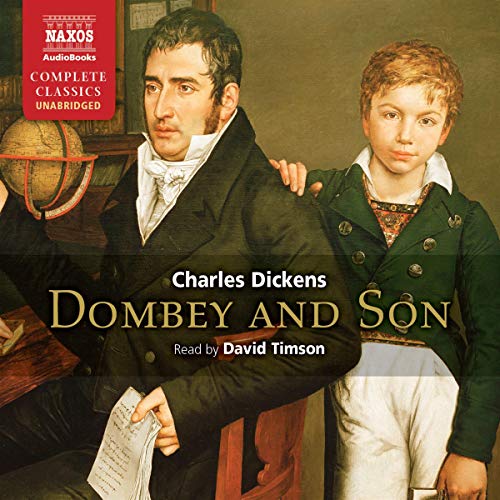
Review: Dombey and Son

Dombey and Son

Mr. Dombey of Charles Dickens’ Dombey and Son was originally the son of the establishment by that name. Now he’s the father, his only son having just been born. Already he has plans and dreams for when his son is old enough to go into the family shipping business with him.

The Dombeys had a girl six years before, “But what was a girl to Dombey and Son! In the capital of the House’s name and dignity, such a child was merely a piece of base coin that couldn’t be invested” (p. 8, Kindle version).

Mr. Dombey’s wife, however, weakens fast and dies before the baby, little Paul, is a day old.

A wet nurse is hired, and Paul grows, but he’s never very strong. He and Florence are sent to Brighton to be aided by the sea air. Paul does so well that he stays there for school, with Florence helping him with his studies.

But Paul dies at age six.

Mr. Dombey does not open his heart to grieve with Florence. He’s barely aware of her.

Some years later, on a vacation with a friend, Mr. Dombey meets a widowed Mrs. Edith Granger, who is beautiful but proud and cold—just his type. Her mother and his friend connive to get the two together. Eventually they marry.

But once again, Mr. Dombey is disappointed. He had thought his wife’s pride would be blended with his own and transferred to his reputation, standing, and business. But proud people do not usually blend their pride with others. Thus the Dombey establishment is set for conflict.

In one brief scene, we see the reason behind Edith’s demeanor. For all her coldness to everyone else, the new Mrs. Dombey loves Florence. Yet Mr. Dombey is jealous that Florence receives the attention and warmth he doesn’t, and he takes it out on her.

Aside from his dysfunctional household, Dombey has a conniving, obsequious assistant named Mr. James Carker. We know Mr. Carker is up to no good, despite his flattery, but it takes a while before we find just what he is planning.

As always, Dickens weaves together many subplots into his narrative.

A young boy named Walter Gay works for Dombey. His uncle runs a shop where he makes and sells shipping instruments. One day when Florence is separated from the children’s nurse and lost, she runs into Walter, who sees her safely home. Though Mr. Dombey appreciates the effort, he doesn’t like him. When he misunderstands an action of Walter’s, he sends him to Barbados. But the ship is not heard of again, and Walter’s uncle goes to look for him.

A creepy, avaricious elderly woman named Mrs. Brown finds Florence when she is lost and makes her change her fine clothes and shoes for rags so she could sell them. Later, Mrs. Brown’s daughter returns from prison nursing a hatred for Mr. Carker, who had some part in sending her there. These two appear at intervals through the book.

Mr. Toots is a kind-hearted but weak-minded fellow student at Paul’s school who loves Florence and also turns up at intervals.

Mr. Carker’s brother, John, was guilty of wrongdoing in the firm some years earlier, but is repentant, humbled, and reformed. James continually belittles and argues with him. Their sister, Harriet, went to help John in his trouble, causing James to cut off relations with her. A mysterious stranger shows up later to John and Harriet’s home to offer help when they need it.

Besides these, there are a number of colorful characters, some comic and some cruel.

I love how Dickens phrases some things:

Son lay tucked up warm in a little basket bedstead, carefully disposed on a low settee immediately in front of the fire and close to it, as if his constitution were analogous to that of a muffin, and it was essential to toast him brown while he was very new (page 7, Kindle version).

Time and his brother Care had set some marks, as on a tree that was to come down in good time—remorseless twins they are for striding through their human forests, notching as they go (p. 7).

. . . the nurse, a simpering piece of faded gentility (p. 8).

He was a slow, quiet-spoken, thoughtful old fellow, with eyes as red as if they had been small suns looking at you through a fog (p. 27).

Snails were constantly discovered holding on to the street doors, and other public places they were not expected to ornament, with the tenacity of cupping-glasses (p. 70).

It being part of Mrs. Pipchin’s system not to encourage a child’s mind to develop and expand itself like a young flower, but to open it by force like an oyster . . . (p. 71).

There was never a man who stood by a friend more staunchly than the Major, when in puffing him, he puffed himself (p. 185).

Sometimes she tried to think if there were any kind of knowledge that would bespeak his interest more readily than another. Always: at her books, her music, and her work: in her morning walks, and in her nightly prayers: she had her engrossing aim in view. Strange study for a child, to learn the road to a hard parent’s heart!  (p. 208).

Harriet complied and read—read the eternal book for all the weary and the heavy-laden; for all the wretched, fallen, and neglected of this earth—read the blessed history, in which the blind lame palsied beggar, the criminal, the woman stained with shame, the shunned of all our dainty clay, has each a portion, that no human pride, indifference, or sophistry, through all the ages that this world shall last, can take away, or by the thousandth atom of a grain reduce—read the ministry of Him who, through the round of human life, and all its hopes and griefs, from birth to death, from infancy to age, had sweet compassion for, and interest in, its every scene and stage, its every suffering and sorrow (pp. 520-521).

I think I can say the story is redemptive without giving away the ending. And though this is a sad story in many ways, Dickens sprinkles many choice comic moments throughout.

I wanted to read this book partly because I’ve purposed to read the Dickens books I’ve not read yet, and partly because this book played a significant part in The British Booksellers by Kristy Cambron, which I recently read. I wondered if there was some connection between the stories or whether it was included because it would have been popular at the time.

I listened to the audiobook superbly read by David Timson. His voice characterizations and inflections added so much to my enjoyment of the book. When I look for my next Dickens’ book, I am going to see if I can find one narrated by Timson. That may be soon, as this book reminded me how much I love Dickens.

Favorite Books of 2023

Favorite books of 2023

One of my most enjoyable posts to write is naming my favorite books read each year. It’s like revisiting old friends, almost like enjoying the books all over again.

Most of these weren’t published in 2023, but were read this year.

I published a list of all the books I read in 2023 here.

As usual, the titles link back to my reviews.

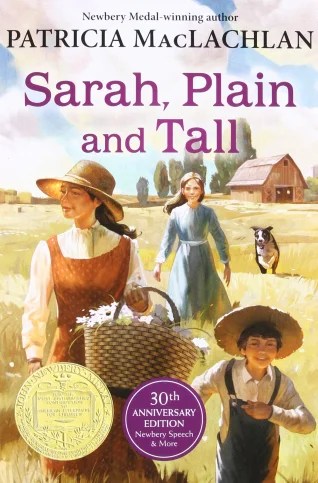
Sarah Plain and Tall

Sarah, Plain and Tall by Patricia MacLachan is a classic, but not one I had ever read. I did see the movie version with Glenn Close years ago and loved it. A widowed farmer with two children on the prairie places an ad for a new wife. He receives a reply from Sarah in Maine, who wants to come out and visit the family. There are some bumps along the way, but the blending of a new family is told with gentleness and tenderness.

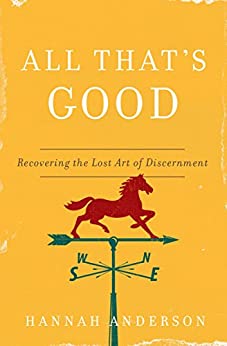
All That's Good: Recovering the Lost Art of Discernment by Hannah Anderson

All That’s Good: Recovering the Lost Art of Discernment by Hannah Anderson. I read Hannah’s Advent devotional, Heaven and Nature Sing, in 2022 and loved it. So I read three more of Hannah’s earlier books this year (as well as reading Heaven and Nature Sing again). I could honestly list each of them among my favorites this year. But I figured I’d just list one, and chose the first one I read. I love that Hannah approaches discernment not from the standpoint of avoiding the bad, though we need to do that. But she proposes discerning bad from good in order to pursue the good. That shift has many ramifications to our thinking.

Becoming Free Indeed by Jinger Duggar Vuolo

Becoming Free Indeed: My Story of Disentangling Faith from Fear by Jinger Duggar Vuolo. Jinger was a member of the Duggar family featured on 19 Kids and Counting. As Jinger grew up and talked with other Christian young people, including her fiance and her sister’s husband, she began to realize some of the things she had been taught were wrong. Though writing about difficult subject matter, Jinger displays a gracious spirit. I especially appreciated that she didn’t “deconstruct” her faith and throw everything out. She studied and read and sought counsel to “disentangle” the good from the bad.

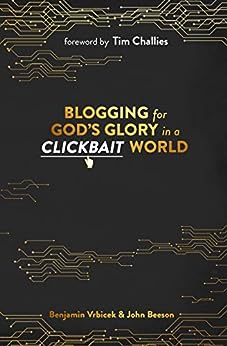
Blogging for God's Glory in a Clickbait World

Blogging for God’s Glory in a Clickbait World by Benjamin Vrbicek and John Beeson helps not only with the mechanics of blogging but also with keeping our motives in the right place.

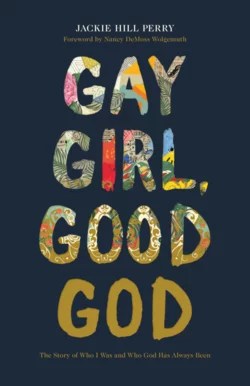
Gay Girl. Good God by Jackie Hill Perry

Gay Girl, Good God: The Story of Who I Was and Who God Has Always Been by Jackie Hill Perry is her testimony first of all of becoming a Christian, then how Christ changed her heart and her sexuality. She’s received a lot of flack, because the world cheers people who go from straight to gay, but not gay to straight. Jackie dispels a lot of glib Christian notions about what it means to become straight. This book opened my eyes to many things. Plus I appreciated Jackie’s poetic way of expressing herself.

I read so many good novels this year, they’re harder to narrow down to a few favorites.

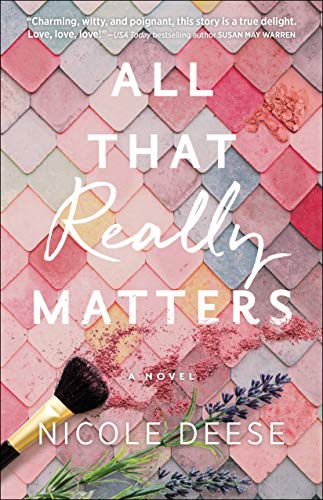
All That Matters by Nicole Deese

All That Really Matters by Nicole Deese is the first of Nicole’s books that I read, and so far it’s my favorite. It’s a novel of a perky social media influencer with half a million followers who needs to show a compassionate, involved side to potentially get a gig as a show host. Her brother recommends a a mentor program for kids transitioning out of the foster care program. The director, Silas, is not impressed and thinks Molly is shallow. But once they start working together, they are both changed. I loved that this book isn’t silly or frothy but goes deep.

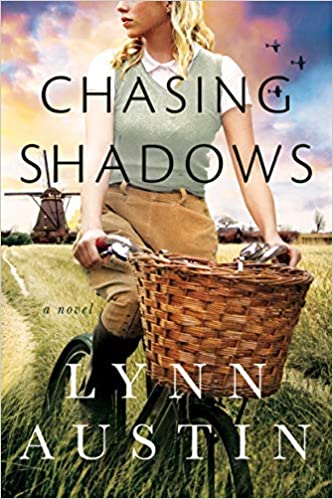
Chasing Shadows by Lynn Austin

Chasing Shadows by Lynn Austin is a novel that follows three women in the Netherlands through WWII. One is a farmer’s wife trying to keep things together at home with food shortages, a husband absent first as a soldier, then as a member of the Resistance, and helping others in desperate need. Another is a Jewish young woman trying to find a safe place for herself and her father. The third is a young woman in her first employment outside her home. She’s dating a policeman when the Nazis take over and commandeer the police force. She’s astonished by the changes she sees in her town and starts helping the Resistance.

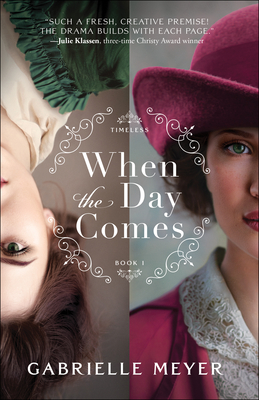
When the Day Comes by Gabrielle Meyer

When the Day Comes by Gabrielle Meyer has a most unusual premise for a novel: Libby Conant is a time crosser, living on alternating days in 1774 Williamsburg and 1914 New York. On her twenty-first birthday, she’ll have to decide which time she wants to stay in the rest of her life. I loved everything about this book: the characters, the history, both timelines, and the ending.

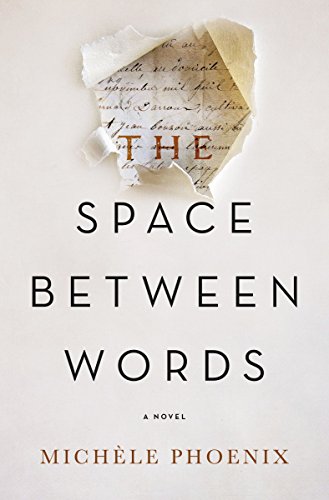
The Space Between Words by Michele Phoenix

In The Space Between Words by Michele Phoenix, a trip with friends to Paris is shattered when bombers attack a nightclub the friends were visiting. Jessica is shot, traumatized, and wants to go home as soon as possible. One friend does go home, but the other urges her to stay and go on to their flea market excursions. Jessica finds an antique sewing box with a secret compartment containing several sheets of handwritten paper and a few pages from an antique French Bible. Jessica feels compelled to learn more about the writer, who was from a family of seventeenth-century Huguenots. This story was captivating and touching and makes me want to find more of Michelle’s books.

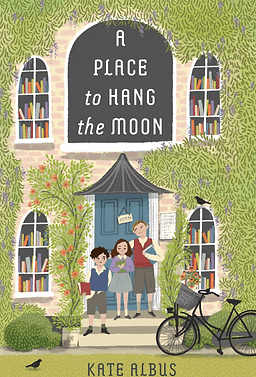
A Place to Hang the Moon by Kate Albus

A Place to Hang the Moon by Kate Albus reads like a classic children’s book, but was just published in 2022. I agree with C. S. Lewis that children’s books can and should be enjoyed by adults, too. Three children in 1940s England were orphaned and taken in by their aloof grandmother. When the grandmother dies, the solicitor suggests the children join the evacuees being sent to the countryside: perhaps they might find a foster family that will take them in permanently. The children are billeted in a couple of problem homes and seek refuge often in the library. The kind librarian is something of an outcast herself, having a German husband who is away. I loved the well-told story, the beautifully drawn characters, the descriptions of both warm and cozy and difficult scenes, references to beloved classic children’s books, and Polly Lee’s British accent narrating the audiobook. I didn’t want the book to end.

Though part of me wants to keep listing good books. I think I’ll stop at an even ten.

Have you read any of these? What were your favorite books read last year?

(I often link up with some of these bloggers.)

Review: Nathan Coulter

Nathan Coulter was Wendell Berry’s first book, published when he was 27. This is the beginning of his eight novels set in Port William, a fictitious town based on his own Port Royal.

Nathan grows up on a family farm in Port William with his brother Tom, who he usually just calls Brother, and his parents. His father’s parents live next door on the farm that had been passed down through the generations.

Nathan’s mother is sick, so he and his brother are told to stay out of the house in the afternoons so she can rest. They wander all over, getting into various kinds of mischief.

When Nathan’s mother dies, he and Brother go to live with their grandparents. One source said this was so because the father blamed the boys for their mother’s death, but I don’t recall that being the case. One problem with an audiobook is that it’s hard to go back and look up details like this. Another source cited the father’s depression.

Whatever the father’s issues, he was a taciturn man, generally quiet, tending to motivate the boys by taunting them rather than encouraging them. His reason for living was work. He handled everything by working. He was determined to outwork everyone else.

We see events unfold from Nathan’s point of view, though he doesn’t say much. The book mainly describes life on a farm in a small Kentucky community. But the theme seems to be Nathan’s journey to becoming a man. One scene where all the men are working hard to get a tobacco harvest in on time reads with the tension of Ben-Hur’s chariot race as the father challenges Tom, who has never beat him before but is coming closer all the time. The men seem to be in the various stages of manhood: the grandfather lamenting his decline and inability to do what he used to, the father in his prime, the oldest son growing in strength almost to the point of the father.

Unfortunately, Nathan doesn’t have many good examples. His grandfather and father are harsh and distant. His uncle Burley is kind, but has a wild streak.

The version of the book I read ends with the death of Nathan’s grandfather, when Nathan was sixteen, almost like the baton is passing to the next generation. I’ve read that the book originally was longer, telling of Nathan’s growing into adulthood.

I got this audiobook (wonderfully read by Paul Michael) because it’s currently in Audible’s Plus Catalog of free titles for members and because I wanted to read more of Berry. I’ve only read his Jayber Crow until now, which I had mixed emotions about.

I had mixed emotions about this book, too. Berry’s writing is lyrical in places, his characters well-drawn, and with a strong sense of place. None of my relatives were farmers, but many did live in rural settings which Berry’s story reminded me of.

There’s a smattering of bad language. But the most offensive thing in the book is when Tom and Nathan go to a carnival, part of which has a strip-tease act–which, for some reason, boys were allowed into. Berry describes the act in too much detail, and I almost stopped the book there. The only reason I continued was because the act was presented as somewhat sad rather than titillating. If this is a story about becoming a man, unfortunately, men at some point come across this type of thing. Thankfully Nathan felt sorry for the woman and wasn’t attracted by the display. But I think the author could have gotten across his point with much less visual detail.

Also, most of the characters who are religious to any degree are odd.

I got Hannah Coulter at the same time as this book, for the same reason. I was going to review the books together, but I ended up saying more about this book than I planned to. So I’ll wait til next week to talk about Hannah, though I’ll say that I liked her story much, much more. Some of the themes Berry is know for are represented in seed form in Nathan Coulter but come to fruition in Hannah Coulter. Hannah is Berry’s seventh novel. It was written 44 years after Nathan, but its story begins just a few years later.

I started reading Berry because I know so many people who love him. His poem “The Blue Robe” is one of my favorites, along with “They Sit Together on the Porch” and “To Tanya on My Sixtieth Birthday.” I love the way he writes, lyrical and tender in places, with a strong sense of place and relationships. But I disagree with him in some areas. I’m still trying to figure him out.

Are you a Wendell Berry fan? What do you like about him?