

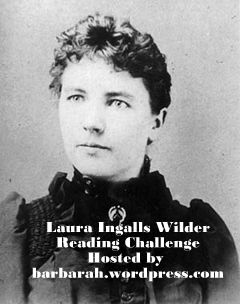
For several years, I hosted a Laura Ingalls Wilder Reading Challenge during the month of February. I often referred to Annette Whipple’s site, the Laura Ingalls Wilder Companion. Now Annette has written a book: The Laura Ingalls Wilder Companion: A Chapter-by-Chapter Guide.
A chapter is devoted to each book in the Little House series. Annette summarizes the plot, then, as the title suggests, she goes chapter by chapter sharing interesting background information, discussing life in Laura’s time, explaining concepts or situations that might be confusing, etc. Sidebars share even more information.
Laura had not written the Little House books as strict autobiographies. So some information is made up to smooth out the story. For instance, her nemesis, Nellie Olsen, was actually based on three different girls Laura knew. Annette’s “Fact or Fiction?” inserts discuss some of those made-up parts.
Next, each chapter shares instructions and illustrations for several Little-House-related activities. For instance, the first chapter, based on Little House in the Big Woods, tells how to make homemade butter, paper dolls, vinegar pie, snow pictures, pancake people, snow maple candy, and more–all activities that Laura’s family did in the books.
Each chapter ends with a “House Talk” section, several questions for thought and discussion. A few from the first chapter: what would you like and dislike about living in the Big Woods, what kind of work did Laura and Mary do to help their parents, how do you help your family, how did Charlie lie, why didn’t Pa shoot the deer at the end of the book?
Scattered throughout the book are photos of the Ingalls family, their various homes, news photos from the times (like a snowed-in train in The Long Winter chapter).
A final chapter tells “What Happened Next”—what ultimately happened with each of the Ingalls family members.
Annette didn’t shy away from or gloss over the difficulties in Laura’s book, like how African-Americans were depicted or the treatment and feelings towards the Indians.She points out what was wrong and how attitudes have changed today.
[Laura] didn’t tell readers how or what to believe. Instead, she let readers like you decide what to think.
We change and grow as a country and a people. When we do, we realize the ways people lived and thought in the past weren’t always right. We can learn from the past and make changes in ourselves (p. 42).
An extensive glossary defines unfamiliar terms, and a final section lists resources to explore.
This book is a great companion for exploring the Little House books personally, as a family, or as a class or home school. Highly recommended.
(Sharing with Carole’s Books You Loved, Booknificent, Senior Salon)



 Stray Thoughts