31 Days of Inspirational Biography: Young Mother Trying to Find Time For Bible Reading

The following is another excerpt from Climbing by Rosalind Goforth, which I have mentioned the last couple of days and  many times before. This book shares a very human view of a woman after God’s own heart who also was “of like passions” as we are.

A devoted Christian missionary, Mrs. S, was holding a series of special meetings for our Christian women at Changte. On one occasion, this dear woman, who had no children, told me that I could never have the peace and joy I longed for unless I rose early and spent from one to two hours with the Lord in prayer and Bible study.

I longed intensely for God’s best — for all He could give me, not only to help me live the true Christian life but also for peace and rest of soul. So I determined to do what Mrs. S. had advised.

The following morning, about half-past five o’clock, I slipped as noiselessly as possible out of bed. (My husband had already gone to his study.) I had taken only a step or two when first one and then another little head bobbed up; then came calls of, “Mother is it time to get up?”

“Hush, hush, no, no,” I whispered as I went back, but too late; the baby had wakened! So, of course, the morning circus began an hour too soon.

But I did not give up easily. Morning after morning I tried rising early for the morning watch, but always with the same result. So I went back to the old way of just praying quietly — too often just sleeping! Oh, how I envied my husband, who could have an hour or more of uninterrupted Bible study while I could not. This led me to form the habit of memorizing Scripture, which became an untold blessing to me. I took advantage of odd opportunities on cart, train, or when dressing, always to have a Bible or Testament at hand so that in the early mornings I could recall precious promises and passages of Scripture.

In another place she writes of finding at the last minute that the woman who was supposed to speak at a certain function couldn’t, and she was asked to. She nursed the baby with one arm while looking through her Bible and jotting notes as she could with the other. When Jonathan came through and saw her, he wondered how she could possible get ready for a meeting under such conditions in so short a time. She replied that if she’d had hours to work on it, she would have taken it, but she trusted God would give her just what she needed in the time available.

A few pages later she writes that sometimes she got out a concordance and her Bible to study out something which she needed help on at the time. She ended up with forty outlines resulting from her studies which the Lord used first in her own life, and then in talks to other ladies.

I expanded on this theme of trying to have devotions with young children in the house in an earlier post titled Encouragement For Mothers of Young Children. I went through quite a spiritual slump at one point due to a lack of spending time with God, and He showed me some ways to do so at that super-busy time of having little ones that wasn’t my usual routine, wasn’t even a setting where I would normally “get anything” from his Word, but He enabled me in those times. I hope perhaps it will be an encouragement to some of you in that stage of life – or any stage.

photo 3(2)

For the 31 Days writing challenge, I am sharing 31 Days of Inspirational Biography. You can find others in the series here.

31 Days of Inspirational Biography: Ann Judson, Brave and Faithful

Every missionary has to have dedication and has to be willing to make sacrifices, even in our day. But the amount of dedication and sacrifice and willingness to step into the unknown displayed by Adoniram and his wife and the small group who stepped out with them just amazes me. His wife, Ann Hassletine (also called Nancy) is one of the bravest women I have ever read of, going into the great unknown as she did and facing all that she did in later years. The letter Adoniram wrote to ask her father for her hand in marriage in July of 1810 is an atypical proposal, but frank:

I have not to ask, whether you can consent to part with your daughter early next Spring, to see her no more in this world; whether you can consent to her departure, and her subjection to the hardships and sufferings of missionary life; whether you can consent to her exposure to the dangers of the ocean; to the fatal influence of the climate of India; to every kind of want and distress; to degradation, insult, persecution, and perhaps a violent death. Can you consent to all this, for the sake of Him who left His heavenly home and died for her and for you; for the sake of perishing immortal souls, for the sake of Zion, and the glory of God?

He was not being melodramatic: he was being realistic. It says a lot about Nancy that she accepted such a proposal, especially as it was written only a month after they had met. It took her two months to respond.

Adoniram and Ann were among the first missionaries that we know of that America sent out. I wrote about Adoniram’s biography, To the Golden Shore, last year, but this time I want to focus on Ann.

Ann had come to saving faith in Christ as a teenager, and since that time had developed a strong sense of reverence and dedication to God and a desire to be useful in His service. She would not have taken such an offer as Adoniram’s lightly. She consented and married him more than a year later.

Theirs is one of the most fascinating and, in many ways, heartbreaking stories in Christendom. They sailed for India with a few others. They left as Congregationalists, but during their months at sea their study of baptism in Scripture led them to become Baptists. This step of what they felt was obedience was also a step of faith, as it meant they would no longer be supported by the Congregationalists. Whatever your feelings about modes of baptism and denominations, it says a lot about their character that they would follow through with what they believed to be right as a matter of conscience even though it would cost them in many ways.

Through a variety of circumstances too long to tell here, they ended up in Burma (now known as Myanmar) rather than India. During they voyage Ann had delivered a baby which died and was buried at sea. They labored for six years without a convert and worked on translating the Bible into the native language. Within a year after that first convert, they had baptized 18 Christians. Ann opened a school for women and children. Another son was born and died.

Adoniram was imprisoned for a year and a half due to circumstances too long and detailed to go into here, but involved the Burmese misunderstanding of Adoniram’s banking situation, and they thought they money he was receiving for support from the British, with whom they were at war, meant he was a spy. Ann faithfully visited, bribed the guard so she could see Adoniram, brought him food and encouragement, smuggled his Bible translation work to him a hard pillow, repeatedly appealed for his release, and did what she could to relieve the suffering of the other prisoners as well. When Adoniram and other prisoners were forced to walk barefoot 8 miles to another prison, Ann took her baby daughter and followed. She wrote to her brother around this time, “But the consolation of religion, in these trying circumstances, were neither ‘ few nor small!’ It taught me to look beyond this world, to that rest, . . . where Jesus reigns and oppression never enters.” She fell severely ill with smallpox and spotted fever, and Adoniram was able to nurse her back to health when he got out, though she remained weak. Some time later she contracted another fever she could not fight off. She died at the age of 36, and her baby daughter died soon after.

She had wanted to be  “useful,” and God certainly did use her throughout her life and since. After her death God worked through a book she had written about the early mission work in Burma to inspire interest in missions. He works through her biographies today to encourage us to a closer walk with God and closer dedication to Him. To the Golden Shore naturally has much about her as well as Adoniram, and My Heart In His Hands: Ann Judson of Burma by Sharon James tells Ann’s life story primarily through her journals and letters. Unfortunately it is not in print, but used copies can be found for just a few dollars (somebody needs to work on getting some of these books on Kindle!) Some years ago I read The Three Mrs. Judsons by Cecil Hartley, but I don’t remember much about it. It is available online here. In looking for that one I came across Lives of the Three Mrs. Judsons by Arabella Stuart that is free for the Kindle: I haven’t read it but just ordered it. It is also available online here.

The title from Sharon’s book comes from a journal entry of Ann’s after she accepted Mr. Judson’s proposal:

If nothing in providence appears to prevent, I must spend my days in a heathen land. I am a creature of God, and he has an undoubted right to do with me, as seems good in his sight… He has my heart in his hands, and when I am called to face danger, to pass through scenes of terror and distress, he can inspire me with fortitude, and enable me to trust in him. Jesus is faithful; his promises are precious. Were it not for these considerations, I should sink down with despair…But whether I send my days in India or America, I desire to spend them in the service of God, and be prepared to spend an eternity in his presence. O Jesus, make me to live to thee, and I desire no more.

photo 3(2)

For the 31 Days writing challenge, I am sharing 31 Days of Inspirational Biography. You can find others in the series here.


31 Days of Inspirational Biography: Margaret Paton, Missionary to Cannibals in the South Sea Islands

Margaret PatonI wrote last year about John Paton, a missionary to the New Hebrides in the 1800s and a great man of God, who is the source of one of my all time favorite missionary quotes. Before he went to the field, some regarded him as foolish for going to minister where there were cannibals. To one man’s warning about his potential fate, he replied, “Mr. Dixon, you are advanced in years and your own prospect is soon to be laid in the grave, there to be eaten by worms. I confess to you that if I can but live and die serving and honoring the Lord Jesus, it will make no difference to me whether my body is eaten by cannibals or by worms.”

Some time ago I happened upon a book titled Margaret Paton: Letters From the South Seas, which, as its name implies, is a collection of letters that John Paton’s wife sent out over the years. The letters were written primarily to family back home, though there are a few to other individuals. They are quite long, but that is because they did not have the opportunity to send and receive mail very often. Since they were written to family, they contain more personal glimpses and anecdotes than a prayer letter to supporters would, and Margaret (or Maggie, as she signs herself) often had an amusing way of telling them. But there were also times of tragedy and perplexity that they experienced, and Maggie’s letters convey the situations and the wrestlings of heart they had in trying to discern the Lord’s will and His grace through every trial.
Rather than trying to summarize the whole book, I just want to give you a few excerpts here and there.

Maggie was John’s second wife: his first wife and son had died of malaria on the island of Tanna. When Maggie first came to the island with John, he pointed out “that Sacred Spot [the grave of his wife and child], so indelibly photographed on his memory. Oh, how I longed to spend a quiet hour by the grave of her whose footsteps I feel so unfit to follow, and who met her trials so unshrinkingly and alone — alone, so far as regards female companionship and sympathy!”

They were going to another island to labor and dropping off fellow missionaries at their respective islands on the way. On one island, “Great crowds of people came to look at us, as I believe we are the first white women who eve landed on Fotuna. The ladies were, in consequence, very curious to have us examined properly; and they went about it in a business-like way, as I can testify from the pokes and thumps received. They always felt themselves at the same time, to see how far we were alike. Poor things, they had yet to learn that we were sisters, resting under the same penalty and equally in need of and entitled to the same Saviour.” Then she mentioned having to “escape” when “their examinations” became “rather too minute.”

One thing that some missionaries struggle with, especially in primitive areas, is whether their living arrangements should be just like the natives or closer to what they are used to. There is no one right answer: it depends on the place, the people, health issues, and the leading of the Lord in each circumstance. The Paton’s home would have been nothing really like European homes, but Maggie writes, “I am trying my best to make it the prettiest and most inviting home I know — as refined, as civilized, and as nearly what we have been accustomed to, as our limited resources will permit. We must not let ourselves ‘down’ because we are among Savages, but try rather to lift them up to our Christian level in all things. One’s home has so much influence on one’s work, and on life and character; and it is due to our two wee boys to make it a bright one…it is no part of my creed to believe that…everything pleasant in sinful.” She then writes that, before she left for the field, one lady told her, “that missionaries’ wives were expected to live and dress in the most primitive way, and to set an example of great gravity and solemnity, else they would get to be talked about.” After wrestling with the “old Adam” in her, Maggie “controlled myself to retort, that in my Bible there was no separate code of rules for missionaries’ wives, any more than for other Christian gentlewomen.” She then wonders “that any one can be blind to the fact that our kind Creator has given us such wealth of beauty in Nature.” He could have made everything just useful, yet He chose to scatter beauty and charm throughout creation. This could probably be a separate post, but it all comes back to balance: I’ve read other stories of missionaries trying to find the right balance. I’m thinking of Isobel Kuhn in particular, who had some nice things from her wedding in her new home in a primitive area of China only to have them ruined by such practices the people then had of blowing their nose in their hands and then wiping them on the (new!) furniture, or letting babies use the bathroom on the beloved rug. She had to learn that though it isn’t wrong to “nest” or have nice things, it’s wrong to let them have priority over people’s souls or the work they were called to. I don’t think Maggie went too far the other way, but I’m just offering the other side of the balance for perspective.

In struggling to learn the language, she writes, “How the Apostles must have appreciated the gift of tongues on the Day of Pentecost! I wonder if it was accorded to their wives as well!” She writes how “provoking” it s to think you’ve mastered enough to converse a little, only to see them “looking at each other wonderingly.” “I got Mr. Paton’s help in any great difficulty — though he did not at all times enjoy the interruption, especially if the point in question turned out to be only about a needle and a thread, while he had been called away” from his work.

To some children who had given toward the Dayspring, the mission ship that transported people and supplies to the islands, she wrote, ”Now, if I tell you how really grateful all the missionaries are to the children who give their money so willingly to keep the Dayspring in nice order, and how the little vessel actually helps to keep the missionaries alive, as well as those so dear to them, by bringing them food and medicine and all they require, I am sure you will not grudge having denied yourselves many little gratifications to help in so important a work.”

There is a section I wish I had space to include answering some who criticize a missionary having a family. “The life of the Christian home is the best treatise on Christianity — a daily object lesson, which all can…’read, mark, learn, and inwardly digest.’” She also has a good section answering the comments some make that “ seem to grudge a man of burning enthusiasm and magnetic eloquence going to the foreign field, as if it were so much power and genius being wasted.” She argues convincingly for sending our best to the field.

I’ll forewarn you that there is a bit of perspective that’s not what we would think of as politically correct by today’s standards but I think is probably common for the times.

All of this comes just from the first third of the book! There’s so much more I wish I could include. I hope I’ve inspired you to read it for yourself.

photo 3(2)

For the 31 Days writing challenge, I am sharing 31 Days of Inspirational Biography. You can find others in the series here.

(This will also be linked to Semicolon‘s Saturday Review of Books.)

31 Days of Inspirational Biography: Mimosa

783046_the_sensitive_flower

Sometimes people who work in children’s ministries can get discouraged due to the seeming lack of fruit or the fact that they have some children just a few times and then never see them again. Mimosa by Amy Carmichael tells the story of a little girl who was marvelously changed by just a short encounter with the gospel.

When Amy Carmichael was a missionary in India she learned that some little girls were sold to the temples for immoral purposes. Whenever she could, she tried to rescue these girls, to talk their parents into letting them stay with her instead. One such little girl was named Star. She had been with Amy for a while when her father came, bringing her sister, Mimosa, with him, to try to take Star back. He met and talked with Amy and Mr. Walker, the director, and at one point even stretched out his arm to take Star — yet he felt he could not move, that some strange power was preventing him.

Mimosa saw this. Some of the workers had a short time to talk with her, not even time enough to present the gospel completely. Mimosa asked her father to let her stay: he would not hear of it.

Those who had met with Mimosa longed for her: she seemed intelligent and interested. They lamented that they had not had time to tell her more. “How could she possibly remember what we had told her? It was impossible to expect her to remember……Impossible? Is there such a word where the things of the Lord are concerned?”

Something of what she heard about a God who loved her stayed with her. She knew instinctively she could no longer rub the ashes of her family’s god on her forehead, as was their custom. The women in the house thought her naughty or “bewitched” and beat her with a stick. She was bewildered, but she knew God loved her, in spite of all she could not understand of her circumstances.

After she was married at age seventeen, she found she had been deceived by her husband’s family: He was “landless [and] neck-deep in debt.” It was no shame to be in debt: in that culture: “”If you have no debt, does it not follow that no one trusts you enough to lend you anything, and from that is it not obvious that you are a person of small consequence?” But Mimosa’s character could not endure it, though she had never been taught against it. She encouraged him to sell the land in her name, the only piece of land he had that he had given as a dowry, to pay off the debt, and then suggested they would work. He was amazed at such a thing, but agreed. His unscrupulous elder brother suggested they start a salt market and that Mimosa sell her jewels to get them set up: he would take care of it. He instead somehow misused the money. She gave some money to her mother to keep for her, but then her mother would not give it to her when she asked for it: her mother was angry with her over the loss of the jewels that had been passed to her. “Let thy God help thee!” she told her daughter.

Mimosa went out to pray: “O God, my husband has deceived me, his brother has deceived me, even my mother has deceived me, but You will not deceive me…Yes, they have all deceived me, but I am not offended with you. Whatever You do is good. What should I do without you? You are the Giver of health and strength and will to work. Are not these things better than riches or people’s help?….I am an emptiness for You to fill.”

Thus her life went. She was a derision because she would not worship the false gods or engage in idolatrous practices. She worked hard because her husband would not. There were times when she was weak and could not work that God worked in unusual ways to provide for her. She had three sons; then a snake bite left her husband blind and crazy. In a couple of instances she received a bit more information about the God she loved, and she clung to it and to Him.

Meanwhile, Star was concerned for her sister. She felt led to write to her and prayed someone would read the letter to Mimosa. A cousin did read it to her, as often as Mimosa asked him, but neither of them thought to write back to Star, so she and the ladies of Dohnavur were left to wonder and pray.

A mysterious illness which took the life of one of her sons caused the neighbors to torment her further with their words. They felt it was all her fault since she would do nothing to appease the gods. Mimosa replied, “ My child God gave; my child has God taken. It is well.” Though weak, ill, grieving, and alone, she still told God, “I am not offended with you.”

The years followed in much the same way. She had two more sons. The oldest one was taken by the father (who had regained something of his right mind) to another town to work but, to Mimosa’s grief, required him to rub the god’s ashes on his forehead.

She began to long that her children should have “what she had never had, the chance to learn fully of the true and living and holy God and themselves choose His worship.” It would take too much space here to tell how God wondrously worked out the all the details to go to Dohnavur, even, miraculously, her husband’s approval. Her sister, Star, was strongly burdened to pray for Mimosa and discovered later that was just the time when all of this was coming to pass. Twenty-two years after she first visited Dohnavur, she returned. It can only be imagined what she felt as she soaked up Christian fellowship, learned to read, studied the Bible, was baptized. After a time she went back to her husband, determined to win him. He was in a less tolerant caste, yet amazingly he did not put her away. Her life was not easy. “But then, she has not asked for ease; she has asked for the shield of patience that she may overcome.”

“Is not the courage of the love of God amazing?” Amy Carmichael wrote. “Could human love have asked it of a soul? Fortitude based on knowledge so slender; deathless, dauntless faith — who could have dared to ask it but the Lord God Himself? And what could have held her but Love Omnipotent?”

photo 3(2)

For the 31 Days writing challenge, I am sharing 31 Days of Inspirational Biography. You can find others in the series here.

31 Days of Inspirational Biography: Facing the Darkness

photo 3(2)

For the 31 Days writing challenge, I am sharing 31 Days of Inspirational Biography. You can find others in the series here.

Last year I wrote about Don Richardson and his book, Peace Child. I wanted to include one passage that I thought was somewhat symbolic of what most missionaries, and indeed, what most Christians must face at one time or another if they want to shine light into darkness. This was written about Don’s first foray into the jungle in which he was going to work:

 The wildness of the locale seemed to taunt me. Something in the mood of the place seemed to say mockingly, “I am not like your tame, manageable Canadian homeland. I am tangled. I am too dense to walk through. I am hot and steamy and drenched with rain. I am hip-deep mud and six-inch sago thorns. I am death adders and taipans and leeches and crocodiles. I am malaria and dysentery and filariasis and hepatitis.

“Your idealism means nothing here. Your Christian gospel has never scrupled the conscience of my children. You think you love them, but wait until you know them, if you can ever know them! You presume you are ready to grapple with me, understand my mysteries, and change my nature. But I am easily able to overpower you with my gloom, my remoteness, my heedless brutality, my indolence, my unashamed morbidity, my total otherness.

“Think again before you commit yourself to certain disillusionment! Can’t you see I am no place for your wife? I am no place for your son. I am no place for you…”

The voices of the leafy arena seemed to swell and then fade into the masses of creeping tendrils and twisted vines…

It’s only a bluff, I thought. This swamp is also part of my Father’s creation. His providence can sustain us here as well as anywhere else. Then the peace of God descended on me, and suddenly this strange place became home! My home! I turned to Ken and John and said, “This is where I want to build!”

That, in turn, reminds me of a poem I just recently rediscovered from Gracia Burnham’s book To Fly Again. I wrote about Gracia last year as well.

His lamp am I, to shine where He shall say,
And lamps are not for sunny rooms,
Nor for the light of day;
But for the dark places of the earth,
Where shame and wrong and crime have birth,
Or for the murky twilight gray
Where wandering sheep have gone astray;
Or where the lamp of faith grows dim
And souls are groping after Him.
And as sometimes a flame we find,
Clear-shining, through the night
So bright we do not see the lamp,
But only see the light:
So may I shine — His light the flame,
That men may glorify His name.

~ Annie Johnson Flint


31 Days of Inspirational Biography

For the past few years Myquillyn Smith (The Nester) has hosted 31 Days on her blog, a writing challenge wherein bloggers can choose a topic to write on every day in October in 9 different categories. It has gotten so big that this year it has its own site: 31 Days. You can find more information at What is 31 Days?

I really enjoyed participating for the first time last year with 31 Days of Missionary Stories. I decided this year to write about 31 Days of Inspirational Biography. I was originally going to call it Christian Biography, but rather than just give you an overview of someone’s life that you can find on Wikipedia, I want to share what inspired me about that person’s life. It may be an overview in some cases, or it may be one incident.

photo 3(2)

Reading Christian biographies has been one of the most influential activities of my life: I’ve learned so much by seeing faith in action, growth, example, victories as well as defeats, all of which has aided me in my own walk with the Lord.  I hope to share some of that with you.

I got several comments last year about how much time it must take to write these posts: most of them will come from newsletter articles I’ve already written. For nine years in a previous church I compiled a newsletter for our ladies’ group with a biographical section, for the same reasons listed above, and the Lord has opened the door for me to do something similar in our current church. I’ll be editing and tweaking them, but for the most part I won’t be writing these “from scratch,” so it is not taking as much time as it might appear to be.

I hope you’ll join me! As I post each day, I’ll put the links on this post so that they’ll all be in one place.

And in the meantime you might check out the 31 Days site and see if you’d like to participate. Let me know if you do!

Day 1: Frances Ridley Havergal’s Response to a Rude Waitress.
Day 2: If I Perish. Refusing to bow down to falsehood.
Day 3: A Sense of Him: One of Isobel Kuhn’s “Second Mile People
Day 4: Facing the Darkness.
Day 5: Lady Huntingdon. Saved by an “M”
Day 6: One Woman Against the Reich: The True Story of a Mother’s Struggle to Keep Her Family Faithful to God in a World Gone Mad.
Day 7: Bill Maher, “Missionary to the Handicapped
Day 8: Mimosa: Great Faith From Small Seeds.
Day 9: Dr. Sa’eed of Iran.
Day 10: Margaret Paton, Missionary to Cannibals in the South Sea Islands
Day 11: Walter Wilson, Caring Ambassador For Christ.
Day 12: Georgi and Natasha Vins, Christianity Behind the Iron Curtain
Day 13: William Tyndale, Bringing the Scripture to the People at Risk to Himself
Day 14: Anne Bradstreet, Puritan Poetess
Day 15: The “Uncommon Union” of Jonathan and Sarah Edwards
Day 16: Sarah Edwards As a Mother
Day 17: Rosaria Butterfield: How a Leftist, Feminist, Lesbian Professor Who Hated Christians…Became One.
Day 18: Darlene Deibler Rose learns “faith stripped of feelings, faith without trappings
Day 19: Corrie Ten Boom Repurposes a Concentration Camp
Day 20: Louis Zamperini: Olympian, POW, Christian
Day 21: Ann Judson, Brave and Faithful First American Woman Missionary
Day 22: Margaret Baxter, Overcoming Natural Fear to Face Persecution and Hardship
Day 23: Mrs. C. H. Spurgeon
Day 24: Rosalind Goforth: How I Know God Answers Prayer
Day 25: Rosalind Goforth Learns Submission
Day 26: Rosalind Goforth As a Young Mother Tries to Find Time For Bible Reading
Day 27: The Last CIM Missionaries in Communist China
Day 28: Charlie Wedemeyer, Living With ALS and Giving Hope to Others
Day 29: Nabeel Qureshi: A Devout Muslim Encounters Christianity
Day 30: A list of several other good biographies
Day 31: Why Read Biographies?

Laudable Linkage

It’s been a while since I’ve had time to share links to posts I found interesting, so this will be a bit longer than usual, but I hope you find something here of interest:

Wonderful Hope by Bobbi’s dad, who is facing a terminal diagnosis at the same time his wife is undergoing cancer treatments.

Advice On Seeking Answers to Spiritual Issues.

Becoming Christ-Like: The Goal of the Christian’s Life? There is a subtle but important point here that resonated with me.

God Does Not View Your Labors as Filthy Rags. We have this tendency to take one verse and run away with it.

Are Christian Missionaries Narcissistic Idiots? No. Here’s why.

The Risk of Practical Love.

The girltalk blog has had a series on training your children in dealing with their emotions. 7 Reminders When Talking to Your Teen About Emotions and Helping Children Handle Their Emotions were two that stood out to me.

Give Me Gratitude or Give Me Debt.

12 Strategies for Singles and Hospitality. The tips are good whether you’re single or married.

Why Courtship Is Fundamentally Flawed. Courtship vs. dating is a hot button debate and I am a bit hesitant to just post the link without discussing it further. I may come back and do so at some point. I may not agree with every little thing but overall he made some excellent points. I did read the book in question before my kids got to that age and pulled some principles from it but did not follow it exactly. We did feel dating – at a certain age and under certain guidelines – was a good way to get to know someone before taking the relationship further but we did want to avoid continued serious relationships and breakups one after another: we didn’t feel the latter was good emotionally nor good training for marriage.

Why Prison Isn’t Restful. We need to be careful about throwaway quips on topics we really know nothing about.

For the Quiet Child (And For Their Parents)…You Can Stop Apologizing For Who You Are.

Ten Things Your Husband Hates.

5 Myths You Might Still Believe About the Puritans.

On Writing Negative Reviews. Good reasons to do so when necessary.

Have a good weekend!


Laudable Linkage

Wow, I can’t believe it has been about a month since I’ve shared interesting links with you! Here’s some thought-provoking reading:

From my son’s blog: 4 things that have kept me sane in the NICU and Dealing with Disappointment in the NICU.

The Story. The importance of reading the Scriptures as a whole rather than isolated parts.

The Church Is a Body, Not a Body Part.

On parenting:

I’m Not Enough For My Kids.

Godly Feelings Flourish Behind Walls of Self-Control. The girltalk blog has been discussing teaching children self-control, and I especially appreciated this post about teaching a very emotional toddler to rein herself in.

Teaching Toddlers Emotional Self Control: A Few Practical Thoughts, another in the above series.

The Morning When My Mother Got Up Anyway.

I Want My Kids to Serve.

My Child….My Friend?

His Time, His Plan, His Way, a story of a premature birth.

Hospitality For Introverts.

What a child with food allergies would want you to know.

Why I Am Sick of Women’s Conferences. Though the title is maybe a little harsh, this is a good post about the wrong message being emphasized at some conferences.

Dear Inaccessible Church.

Do You Know Your Missionaries? Eight Ideas to get to know them better.

Could Quitting Facebook Be A Mistake? HT to Bobbi.

Web Sites For Writers.

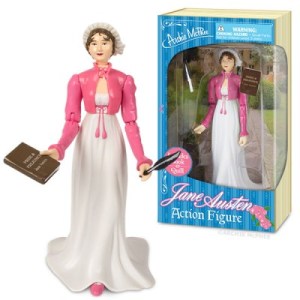
This just made me smile – a friend saw at a shop in Williamsburg Jane Austen Action Figures.

jane-austen-action-figure

Happy Saturday!

Book Review: Ida Scudder: Healing Bodies, Touching Hearts

Ida Scudder grew up in India as a sixth child and only Scudderdaughter of missionary parents in the late 1870s. Her father was a doctor in a poor section of the country where frequent famines and epidemics took their toll. Ida decided early on that she did not want to live in India. The smells, the poverty, the diseases all seemed too much, especially after Ida’s family went back to the US on furlough. When her parents went back to India, Ida was left with an aunt and uncle, but when they decided to go to India, too, Ida was sent to a boarding school. Though she felt lonely and abandoned, she became known for her pranks.

She had to withdraw before graduating because her mother was ill and her parents needed her help in India. Ida was determined that she wouldn’t stay longer than necessary. One night someone came to the door seeking medical assistance for his wife, who was in labor and was having trouble. Ida had answered the door and went to send for her father, but the man stopped her. In their culture at that time, a man would not be allowed to attend a woman in labor, not even a doctor. The man asked Ida to come, but she was untrained and couldn’t help. The man turned away. That was hard enough, but the scenario was repeated two more times that night with two different men. Ida learned the next morning that all three women had died during the night. Ida was deeply affected and realized that her plans and dreams were trivial. She told God that if He wanted her to, she would spend the rest of her life in India helping these women.

She returned to the US, but finances were a problem. Medical school at that time would cost about $150 a year, and she only had $10. It had only been about fifty years since the first woman doctor had begun practice, so it was still a new idea to people. Even churches were hesitant, but one Woman’s Auxiliary Board, after hearing about the night that three women died for lack of female help, decided to support Ida. She enrolled in the Woman’s Medical College of Pennsylvania, but when Cornell University opened its doors to women medical students, she transferred and graduated from there.

She returned to India with dreams of helping her father in his practice, but his life ended unexpectedly due to cancer. It took a while for people to open up to Ida, but eventually they did. She established what she called roadside clinics to go out to where the people were diagnose and treat them. She eventually became convinced that she needed a school to help train women to be nurses, and then another school to train women doctors. How God provided funds through a Depression and two wars was miraculous.

Ida was active throughout her life. Once when a friend wanted her to take a real vacation to relax, she decided to go hiking through mountains, and loved it. She received many awards for her medical work and initiatives and remained in India until she died in 1960 just before her 9oth birthday.

I had first read of Ida years ago, but I couldn’t remember which book: I think it was probably The Story of Dr. Ida Scudder of Vellore by Dorothy Clarke Wilson, because the church library that I used at that time had other books by Wilson that I had read. I had wanted to talk about her story for my 31 Days of Missionary Stories, but all I could really remember was that one night when the three men came for help, and that Ida had gone on to become a doctor. I wanted to reacquaint Ida Scuddermyself with her life, so this time I read Ida Scudder: Healing Bodies, Touching Hearts by Janet and Geoff Benge both because it was a shorter book and because it is part of a Christian Heroes Then and Now series for children that I wanted to check out. I’d still like to go back to Wilson’s book some time, but this one is a good resource.

(This will also be linked to Semicolon‘s Saturday Review of Books.)

Laudable Linkage

Here are a few interesting reads found this week:

Head Knowledge = Good. Heart Knowledge = Good. We need both.

Reading the Bible Like Jesus: Matt. 22:31 and Reading the Bible Like Jesus: Luke 24. I would just caution, with the first one, that though we do need to read the Bible as written directly to us, we need to remember that not every instruction or promise is for us to follow. Some things were given specifically to Israel or to an individual. But, yes, even that is written to us for a purpose.

Don’t Pray in Circles!

Coming Home: When Missionaries Come Off the Field. Ways to be helpful rather than hurtful.

Rescued. Beautiful.

How Do Birds Keep Warm in Winter? HT to FFF friend Kathie (who always has gorgeous photos!) I thought our resident cardinals were just getting fat, and though they do eat more to stay warm, they also fluff layers of air amidst their wings as insulation. Very interesting article.

Saw this at Bobbi‘s. Very sweet. I don’t know if falling makes you stronger, as it says at the end, but I do hope I’ve taught my kids that falling isn’t the end. This is a good reminder, too, that though Olympic athletes are talented, they also have years of hard word leading up to their feats.

Have a good weekend!