Two Reading Challenge Wrap-ups

I have been finished with these two challenges for months, but just have not written the wrap-up posts for them until now.

Karen at Books and Chocolate hosts the Back to the Classics Challenge for reading classics at least 50 years old.

I enjoy this challenge because I was not exposed to many classics as I grew up, and this challenge inspires me to expand my horizons and explore books I might not otherwise read. I’m happy to report that I have read all 12 classics on my list (I actually read 13, but no extra points for extra books. 🙂 ). The titles link back to my reviews:

  • A 19th century classic. Villette by Charlotte Bronte (1853)(Finished 6/30/18)
  • A 20th century classic (published before 1968). The Story of My Life by Helen Keller (1903)(Finished 3/31/18)
  • A classic by a woman author. Adam Bede by George Eliot (Mary Anne Evans)(1859)(Finished 5/19/18)
  • A classic in translation (Any book originally written published in a language other than your native language.) 20,000 Leagues Under the Sea by Jules Verne (1870)(Finished 1/26/18)
  • A children’s classic. The Secret Garden by Frances Hodgson Burnett (1911)(Finished 2/3/18)
  • A classic crime story, fiction or non-fiction, which she goes on to say can be a detective or spy novel. The Man Who Was Thursday by G. K. Chesterton. (1908)(Finished 1/18/18)
  • A classic travel or journey narrative, fiction or non-fiction. Journey to the Center of the Earth by Jules Verne (Finished 2/17/18)
  • A classic with a single-word title (no articles). Frankenstein by Mary Shelley (Finished 3/12/18)
  • A classic with a color in the title. Where the Red Fern Grows by Wilson Rawls (1961)(Finished 3/17/18)
  • A classic by an author that’s new to you. He Fell in Love With His Wife by Edward Payson Roe (1866)(Finished 4/8/18) and Invincible Louisa: The Story of the Author of Little Women by Cornelia Meigs (1933) (Finished 6/25/18)
  • A classic that scares you (due to its length or it intimidates you in some way). The Hunchback of Notre Dame by Victor Hugo. (1831)(Finished 8/4/18).
  • Re-read a favorite classic. Ben-Hur: A Tale of the Christ by Lew Wallace, (1880)(Finished 4/17/18)

Karen allows for three children’s classics, and I am counting Where the Red Fern Grows, The Secret Garden, and Journey to the Center of the Earth for those. I’m not counting 20,000 Leagues Under the Sea because nothing I read about it indicated it was written for children.

Karen likes for us to let her know how many entries we earned for her drawing: I earned three. She also requests an email here: mine is barbarah06 (at) gmail (dot) com.

I enjoyed all of these except Journey to the Center of the Earth, but I think my favorite is He Fell in Love With His Wife. Adam Bede would be a close second. Frankenstein was the biggest surprise.

2018tbrbutton
Adam at Roof Beam Reader hosts the TBR Pile Challenge to encourage us to get to those books on our shelves, Kindles, or TBR lists. For this one we had to name the books we were going to read, along with two alternates (in case we couldn’t get through a couple on our list). The books for this challenge had to have been published 2016 and earlier.

I read thirteen books altogether. Titles link back to my reviews.

  1. The Secret Garden by Frances Hodgson Burnett (Finished 2/3/18)
  2. The Man Who Was Thursday by G. K. Chesterton (Finished 1/18/18)
  3. Frankenstein by Mary Shelley (Finished 3/12/18)
  4. Where the Red Fern Grows by Wilson Rawls (Finished 3/17/18)
  5. Adam Bede by George Eliot (1859)(Finished 5/19/18)
  6. He Fell in Love With His Wife by Edward Payson Roe (1866, Finished 4/8/18)
  7. 20,000 Leagues Under the Sea by Jules Verne (1870, Finished 1/26/18)
  8. Journey to the Center of the Earth by Jules Verne (Finished 2/17/18)
  9. Ghost Boy: The Miraculous Escape of a Misdiagnosed Boy Trapped Inside His own Body by Martin Pistorious (2013, Finished 1/8/18)
  10. Going Like Sixty by Richard Armour. Set this one aside, disappointed in the content.
  11. Sins of the Past by Dee Henderson, Dani Pettrey, and Lynette Easton (2016, Finished 3/28/18)
  12. Another Way Home by Deborah Raney (2015, Finished 4/16/18)

Alternates: Anchor in the Storm by Sarah Sundin (2016, Finished 5/7/18) and Mozart’s Sister by Nancy Moser (2006)(Finished 1/28/18)

I enjoy both of these challenges and plan to participate in them again next year. Karen already has the 2019 Back to the Classics Challenge categories here.

I’m still working on the Mount TBR Challenge and the Literary Christmas Challenge.

Laudable Linkage

IMG_0195

Here’s my latest list of good reads found online recently:

Should Christians Abandon Christmas? HT to Challies. “When churches ‘ignore’ Christmas, how much preaching and teaching are they likely to receive on the incarnation?” “The abuse of something shouldn’t be allowed to destroy its proper use.”

On the Death of John Allen Chau. Good points all, especially the first one: “We don’t need to rush to judgment.”

3 Internet Accusations Against Missionaries, HT to Challies.

Singleness Is Not a Problem to Be Solved, HT to True Woman.

Gospel Hope for a Weary Mom, HT to True Woman.

Pastors: Preach, Don’t Rant, HT to Challies. Good advice for writers and teachers, too.

The 50% Lie, HT to Challies. Turns out it has never been true that 50% of marriages end in divorce, by any way of measuring. “Imagine the difference to our collective consciousness about marriage and divorce if we began to say ‘Most marriages last a lifetime’ [8 out of 10] rather than ‘Half of marriages end in divorce.'”

Why J. I. Packer Reads Mystery Novels (Or, In Defense of Light Reading), HT to Challies. “Light reading is not for killing time (that’s ungodly), but for refitting the mind to tackle life’s heavy tasks (that’s the Protestant work ethic, and it’s true).”

And finally, a smile found on Pinterest:

Happy Saturday!

Literary Christmas Reading Challenge

e7f96-a-literary-christmas-banner-2017

Tarissa hosts the Literary Christmas Challenge in December: actually, it started in November, but I like to hold off on Christmas reading til after Thanksgiving. The main rule: read Christmas books! And link up your posts about them (via a blog, Goodreads review, etc.).

Here’s what I am planning to read this month:

Finding Christ in Christmas by A. W. Tozer (99 cents for the Kindle app as of this writing. Tozer always makes one think.)

Tozer Christmas

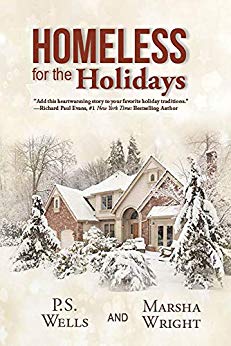
Homeless for the Holidays by P. S. Wells and Marsha Wright.

Homeless

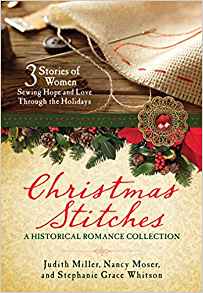
Christmas Stitches by Judith Miller, Nancy Moser, and Stephanie Grace Whitson. I’ve read many of Judith and Nancy’s books, so I am looking forward to this Christmas collection.

Stitches

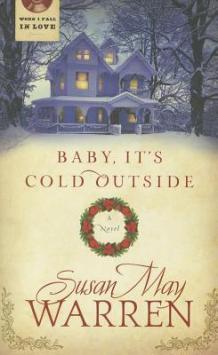
Baby, It’s Cold Outside by Susan May Warren

Cold Outside

I’ll Be Home For Christmas: Four Inspirational Holiday Novellas by Lenora Worth, Belle Calhoune, Jill Kemerer, and Allie Pleiter. This is not showing up on Amazon anymore, but you can read more about it on Goodreads here. I’ve not read any of these authors, but I used to follow a blog that Lenora contributed to, so that’s probably what prompted this purchase.

Home

If I should finish all these and I’m not tired of Christmas stories at that point, I’d love to get Terri Blackstock’s Catching Christmas and Michelle Griep’s Once Upon a Dickens Christmas series, Twelve Days at Bleakly Manor and A Tale of Two Hearts. I’m trying to read what I have already accumulated through sales before I add any more.

And that’s it for this year! Do you plan to do any Christmas-themed reading this month?

Book Review: Florian’s Gate

FlorianIn T. Davis Bunn’s novel, Florian’s Gate, American Jeffrey Sinclair is bored in his job. His mysterious uncle, Alexander Kantor, has a glowing reputation in the antiques business in London. Alexander never reveals where his exquisite pieces come from, but their high quality always fetches good prices and willing buyers. When Alexander invites Jeffrey to become his assistant, Jeffrey jumps at the chance, quickly learning both the details and the instincts needed.

Jeffrey hires a part-time helper who rapidly becomes a valuable assistant, Katya. Jeffrey falls head over heels for her, but she is guarded around him. He senses her past contains pain, but she’s not willing to reveal it to him yet. Plus she is a believer, but he has turned his back on God after a family tragedy.

When Alexander asks Jeffrey to take a trip to Poland, Jeffrey is thrilled to be trusted enough to be asked. There he meets Alexander’s brother, Gregor, and begins to learn some of Alexander’s sources. Poland is still reeling from being trampled underfoot by WWII and then Soviet occupation. At first Jeffrey thinks everyone looks sad and depressed, understandably. But he soon finds an underlying resilience in their character. Alexander, Jeffrey, and Gregor visit some of the most unlikely places to find some of the poorest people with great treasures they’ve been holding on to for years but are now in desperate enough straits to sell.

Surprisingly, Alexander comes face to face with his own painful past, which Jeffrey learns of for the first time. When Alexander is incapacitated for while, Katya comes to assist and translate. What Jeffrey learns through all these experiences helps him understand his uncle and Katya and helps him come to grips with his own past as well.

A few quotes from the book:

Dissatisfaction tends to lift one’s eyes toward the horizon. Those who are comfortable rarely make the effort to search out something better. They may yearn for more, but they do not often receive it. They are too afraid of losing what they already have, you see, to take the risk. And there is always risk involved, Jeffrey. Always. Every major venture contains a moment when you must step off the cliff and stretch your wings toward the sky.

Even in the darkest of hours, people have a choice. They can turn toward self, or they can turn toward God. They can turn toward hate, or they can turn toward forgiveness and love.

The world says there is no greater tribute you can grant yourself than to say, I can make it on my own. My perspective says there is no greater deception. The power within our own will and our own body and our own confined little world is comfortable, and it is tempting. It gives us a wonderful sensation of self-importance. Thus most of us will try to live outside of God until our own strength is not enough. Yet the way of the cross is the way of inadequacy. We need what we do not have, and therefore we seek what is beyond both us and this world.

There are an infinite number of lessons to be drawn from the cross, my boy….All human hope lies at the foot of the cross. In the two thousand years since it first rose in a dark and gloomy sky, it has lost none of its luster, none of its power, none of its divine promise.

Normally Bunn’s stories involve quick-moving plots and page-turning intrigue. There was intrigue here, but a different sort than I am used to from him. His mother’s former ownership of an antiques gallery and management of others informed his knowledge of antiques. He says at the beginning of the book that each piece he describes is real. The different Polish people and stories that he shares are based on real people and situations in his wife’s family in Poland.

I thought the story ended somewhat abruptly, but then I found that this book is the first of three in the Priceless Collection series. So maybe some day I’ll find out what’s next for Jeffrey, Katya, and the others.

(Sharing with Semicolon‘s Saturday Review of Books, Literary Musing Monday, Carole’s Books You Loved)

What’s On Your Nightstand: November 2018

Nightstand82

The folks at 5 Minutes For Books host What’s On Your Nightstand the last Tuesday of each month in which we can share about the books we have been reading and/or plan to read.

A few sick days this month afforded more reading time than usual.

Since last time I have completed:

Alvin York: A New Biography of the Hero of the Argonne by Douglas V. Mastriano (audiobook), reviewed here. How a Christian conscientious objector stopped an onslaught of the Germans in WWI, captured 132 of them, and won the Medal of Honor. Well-researched, good true story.

Amazing Grace: William Wilberforce and the Heroic Campaign to End Slavery by Eric Metaxas, reviewed here. Good.

Perfect Piece by Rebeca Seitz, fiction, reviewed here with the rest of the series about four grown adopted sisters of different ethnicities. Good.

Fly Away by Lynn Austin, fiction, reviewed here. A disgruntled retiree crosses paths with an unbeliever with a terminal diagnosis. Loved this one.

Hidden Places by Lynn Austin, fiction, reviewed here. A young widow struggles to support herself and her children when a mysterious stranger arrives to lend a hand. Very good.

Someday Home by Lauraine Snelling, fiction, reviewed here. A widow opens her home to share with two other ladies. Okay.

Florian’s Gate by Davis Bunn. Review coming soon.

I’m currently reading:

Reading the Bible for Life: Your Guide to Understanding and Living God’s Word by George Guthrie.

Christian Publishing 101: by Ann Byle

Susie: The Life and Legacy of Susannah Spurgeon, Wife of Charles H. Spurgeon by Ray Rhodes, Jr., audiobook

Come Back, Barbara by C. John Miller and Barbara Miller Juliani

Homeless for the Holidays by P. S. Wells and Marsha Wright

Up Next:

In the next few days I’ll be rustling up a list of Christmas reads for Tarissa’s Literary Christmas Challenge. I’ll also need to choose a new audiobook soon but have no idea which one yet. (Update: My Christmas reading picks are here.)

Happy reading!

Book Review: Amazing Grace: William Wilberforce and the Heroic Campaign to End Slavery

WilberforceA few years ago a video titled Amazing Grace and a companion book, Amazing Grace: William Wilberforce and the Heroic Campaign to End Slavery by Eric Metaxas, were published to commemorate the 200th anniversary of the abolition of the slave trade in Great Britain.  I saw and enjoyed the film, but somehow was not aware of the book until this year.

Wilberforce did not accomplish abolition single-handedly, of course, but he was the driving force behind abolition and a host of other social causes.

William was born into a well-to-do family. He was always small, with poor eyesight and stomach issues (modern historians think he suffered from ulcerative colitis all his life). But he had a sparkling wit, an entertaining personality, and loads of ambition.

As a boy he stayed for two tears with an aunt and uncle to attend school nearby. Unbeknownst to William’s parents, these folks were Methodists whose frequent guest was John Newton. Methodists were thought at the very least to carry religion too far, as evidenced by the nickname used for them, Enthusiasts. Others thought they were radicals. Newton and Wilberforce seemed quite fond of each other, but William’s mother whisked him away as soon as she became aware of the religious climate of her relatives’ home.

Before long William forgot his early religious leanings and became the life of many parties. If he wasn’t hosting, he was a frequent guest. Deaths of his grandfather and uncle had left him wealthy. His friend William Pitt, who was planning to enter into politics (and eventually became Prime Minister), urged William to enter politics as well. William became a Member of Parliament (MP) as an independent at the age of 21. Then he set his sights on “the most coveted seat in all of Parliament” (p. 42), Yorkshire, and was elected to it at the age of 24.

That same year, William was on a holiday with friends and spent most of the journey with the brilliant Isaac Milner. As they traveled, they read and discussed The Rise and Progress of Religion in the Soul by Phillip Doddridge. William had a tendency to think through every aspect of a decision before making it. He came to an intellectual agreement of Christianity’s doctrines first, then heart and will yielded to what he thereafter called “the Great Change.”

At first he thought such a change would necessitate his leaving government. John Newton encouraged him to “stay his post” and assured him God could use him where he was. Newton wrote to his friend, William Cowper, of Wilberforce: “I hope the Lord will make him a blessing both as a Christian and a statesman. How seldom do these characters coincide!! But they are not incompatible” (p. 61).

As William began to be convicted with how he used his resources and time, his attention was drawn to those in need. Slavery was just a given fact in Britain then. The entire economy was built upon it. Because most of the slaves were in the West Indies, they were hardly thought of. But as word began to get out of their harsh and inhumane treatment, various individuals began to call for action on their behalf. Writers and poets like Hannah More and William Cowper used their pens. Artist and industrialist Josiah Wedgwood, of Wedgwood pottery fame, produced medallions with a cameo of a slave kneeling and asking, “Am I not a man and a brother?” People who had been aboard slave ships reported their findings. Others circulated and signed petitions. They thought Wilberforce should be their voice in Parliament, and after giving the matter his characteristic thorough consideration, he agreed.

They thought it would be an easy victory. Who, after all, would disagree with their cause? The ones who benefited from the slave trade, first of all, not only opposed any reforms but used lies and other tactics to sway public opinion. Then when the French Revolution broke out, anything smacking of liberty and equality was decidedly unpopular.

It was twenty long years before legislation passed to outlaw the slave trade. But even then there was still work to be done in enforcing it, dealing with smugglers who would fly other countries’ flags so as not to be stopped, etc. Those fighting for abolition realized they could not stop there: they needed to fight for emancipation.

Abolition of slavery was one of two main objectives in Wiliiam’s life: the other was the “reformation of manners.” By “manners” he did not mean etiquette and politeness. The Clapham Sect or society was a group of people who want to change some of the cruelties common in society then, like hangings for small offenses, public dissection of criminals’ bodies, and even bull-baiting and bear-baiting. Wilberforce financed schools for the poor run by Hannah More and her sisters even though society at large thought their education would either be fruitless or would upset “the order of things.” He was involved in penal reform, improving conditions for laborers, and a host of other causes. Yet he felt he had not done enough. He wrote to a friend:

I am filled with the deepest compunction from the consciousness of my having made so poor a use of the talents committed to my stewardship. The heart knows its own bitterness. We alone know ourselves the opportunities we have enjoyed, and the comparative use we have made of them…. To your friendly ear… I breathe out my secret sorrows. I might be supposed by others to be fishing for a compliment. Well, it is an unspeakable consolation that we serve a gracious Master, who giveth liberally and upbraideth not…. I always spoke and voted according to the dictates of my conscience, for the public and not for my own private interest…. Yet I am but too conscious of numerous and great sins of omission, many opportunities of doing good whether not at all or very inadequately improved.

In his later years he turned his attention to India and the East India Company’s abominable practices like keeping underage mistresses (what we would call a child sex trade today, only it was legal at the time) and the country’s inhumane practices like burning widows at their husband’s funeral pyres.

By the end of his life, most of his wealth was gone. He had heavily invested in his oldest’s son’s business venture, which failed. But before that he had given much to various causes and needs. He had to sell his home and take turns living with his two other sons.

Though most of the book focuses on Wilberforce’s public life, the author gives us glimpses into his private life as well. William married later in life, but was absolutely smitten once he found his wife. Visitors to the Wilberforce home would find the family in the midst of mild but happy bedlam with children and animals running around indoors and out.

Wilberforce was sometimes called the moral conscience of the nation. He did not ask for that position nor think of himself that way, but his character was such that, when he saw a wrong he could help to right, he felt obligated to do so.

My only complaints with the book were with some aspects of the author. Though Wilberforce is an admirable man, and even Lincoln and Frederick Douglass cited him as inspiration, Metaxas laid the praise on a little thick at times. Plus I felt too conscious of Metaxas as the author: usually in a biography the author does not insert himself into the subject’s story so much. Part of that insertion was evidenced in seeming attempts to be witty and clever. Plus, everything I have ever read about writing encourages using recognizable words, not in an attempt to “dumb down” the text, but to make it more accessible to the average reader. But this author sprinkled his narrative with words like uxoriousness that did increase my vocabulary but interrupted the text while I looked them up.

Oddly, Metaxas does not have a list of footnotes or endnotes with citing the sources he used, though he does close with a list of other worthy Wilberforce biographies.

However, overall I thought this was a very good book. I knew a bit about Wilberforce from the Amazing Grace film, Hannah More‘s biography, and assorted other references, but I was glad to hear about the rest of his life and to have a fuller picture of the character of the man himself. He is an example for all of us to use our resources and influences to help others.

(Sharing with Semicolon‘s Saturday Review of Books, Literary Musing Monday, Carole’s Books You Loved)

Book Review: Hidden Places

Hidden PlacesIn Lynn Austin’s novel Hidden Places, Eliza Wyatt is a young widow with three children in the 1930s. After her husband’s death she had stayed on with her intractable father-in-law at Wyatt Orchards. But now he has died as well. She’s not sure how she is going to manage, but she wants to keep the house and orchards, the only true home she has ever known. With the Depression, she couldn’t sell it, anyway.

One night while doing chores outside she is startled by a hobo. She’s not opposed to helping hobos, so she invites him in and feeds him. Then she discovers he has a nasty gash on his leg and ends up tending him through a nearly fatal infection. In the meantime, her husband’s Aunt Betty – usually called Aunt Batty because she seems to have some mental issues — ends up moving in with Eliza when Betty’s roof caves in during a heavy snowfall. But Aunt Batty turns out to be an able hand around the house, and Eliza soon relies on her help. The hobo, Gabe, offers to stay on and help to pay back what Eliza has done for him.

Gabe proves an able hand as well, but seems to have an uncanny familiarity with the farm and its needs. She is drawn to him, but afraid of the past he is not revealing to her. Yet she hides her own past, too: not even her husband knew her background.

It turns out Aunt Batty has a hidden past as well, and an unexpected underlying wisdom.

One theme or motif throughout the book is that of angels, from an opening admonition to “Be not forgetful to entertain strangers: for thereby some have entertained angels unawares” (Hebrew 13:2), to Aunt Batty’s prayer for God to send a guardian angel to Eliza, to other references. Harsh, self-willed fathers turn up in a number of families, and several characters have to learn to follow their dreams despite such fathers and other obstacles. “Hidden places” in each heart come to light eventually, and, by God’s grace, are healed.

A couple of favorite quotes:

“Why did God have to make our lives so fragile and so short?” Walter thought for a moment before answering. “Because life is very precious to Him. He treasures each life He created and He wants us to treasure it, too—like fine porcelain china. God knows what it’s like to live and die in a frail human body like ours. His Son suffered physical death, Betsy, so that you and I can face it without ever being afraid.”

“All these troubles you’ve been having aren’t a punishment from God. He wants to use them to draw you closer to himself.”

Lynn’s writing and characterizations here are stellar. I was drawn in to each character’s story and ached with them through their trials and rejoiced in their triumphs. Excellent book overall.

(Sharing with Semicolon‘s Saturday Review of Books, Carole’s Books You Loved)

Book Review: Fly Away

Fly AwayIn the novel Fly Away by Lynn Austin, Wilhelmina Brewster faces forced retirement after teaching music at a Christian college all her adult life. She’s depressed and doesn’t know what to do with herself. She never married, never had any other hobbies or interests.

She volunteers playing piano at a cancer center sometimes, and one day there she runs into Mike Dolan – and they got off very much on the wrong foot.

Mike is a widower and a pilot who still flies for the business that he started and his son now runs. But Mike has just learned that he has cancer with a life expectancy of only three months. He doesn’t want to put his family through the same agony they experienced when his wife died, so he plans not to tell them. When the cancer gets too bad, he plans to fly – “and forget to land.”

Somehow he ends up telling Wilhelmina his plans, and she is horrified, especially when she learns he is not a Christian. But she has never witnessed to someone in her life. She talks to her pastor, but he feels like she should be the one to talk to Mike, since she knows him. She talks to her pastor brother, but he has someone over the evangelism department in his church and is not much help. She appeals to her professor brother, and he gives her several detailed arguments from Christian apologetics that she knows she won’t remember and doesn’t think Mike would respond to anyway. No one seems to know how to simply tell a dying man about the Savior and hope of heaven.

Wilhelmina tries to give Mike some tracts, but her efforts are thwarted. Somehow, though they keep finding reasons to see each other, and a tentative relationship begins. Mike feels sorry for her when he learns she has been retired against her will and tries to think of things to cheer up up – like a kite-flying contest with his grandchildren, something Wilhelmina never thought in a million years that she would do.

She learns that Mike isn’t just a project. And even though he’s dying, he knows how to enjoy life much more than she does.

My favorite line in the book comes from advice Wilhelmina’s father gives to a friend: “We have two choices, you and I; we can lose ourselves in despair or find ourselves in Christ” (p. 170).

My thoughts:

I loved this story. I could identify with Wilhelmina’s personality so much. There were so many comical moments, yet serious ones, too. The book blurb says one of them is “figuring out how to live, the other how to die.” Lynn’s notes in the book share that this was one of the first books she wrote. The story takes place in 1987, later than her many historical books, but too far back to be called contemporary. It was published in 1996 and went out of print, but has since been reprinted, keeping the 1987 references, which I enjoyed. I am so glad it was reprinted. I would have hated to miss this story.

(Sharing with Semicolon‘s Saturday Review of Books, Literary Musing Monday, Carole’s Books You Loved)

What’s On Your Nightstand: October 2018

Nightstand82The folks at 5 Minutes For Books host What’s On Your Nightstand the last Tuesday of each month in which we can share about the books we have been reading and/or plan to read.

Here we are near the end of another month, and it’s time to look over my reading activity.

Since last time I have completed:

Emma’s Gift by Leisha Kelly, reviewed here. Two women in a close neighborhood pass away, and one women owns their property. The remaining families not only deal with their grief, but also the uncertainty of whether they’ll keep their homes. Very good.

The Lost Castle by Kristy Cambron, reviewed here. A moment of clarity for Ellie’s grandmother leads Ellie to a lost castle in France where she uncovers stories of strong women in two different timelines. Very good.

My Hands Came Away Red by Lisa McKay, reviewed here. A group of teens on a backpacking mission trip get caught up in village fighting and have to hike three weeks to safety. Excellent.

Borders of the Heart by Chris Fabry, reviewed here. A farmhand near the border of Arizona and Mexico comes across a dehydrated, injured woman and, instead of calling border patrol, decides to help her, leading them both into danger. Okay.

Women of the Word: How to Study the Bible With Both Our Hearts and Our Minds by Jen Wilkin, a reread, reviewed here. Loved it just as much as the first time through.

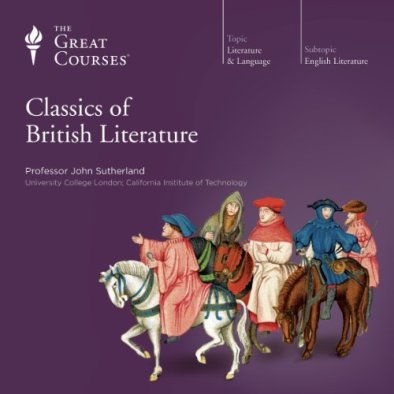
Classics of British Literature by John Sutherland was not a book, but a series of lectures about British literature. Reviewed here. Very informative.

Coming Unglued and Scrapping Plans by Rebeca Seitz. I’ll review them together with the last book in the series when I finish it.

I’m currently reading:

Reading the Bible for Life: Your Guide to Understanding and Living God’s Word by George Guthrie.

Alvin York: A New Biography of the Hero of the Argonne by Douglas V. Mastriano (audiobook)

The Elements of Style by William Strunk and E. B. White

Christian Publishing 101: by Ann Byle

Perfect Piece by Rebeca Seitz

Fly Away by Lynn Austin

Up Next:

There’s a Reason They Call It GRANDparenting by Michele Howe, recommended by Michele Morin.

Amazing Grace: William Wilberforce and the Heroic Campaign to End Slavery by Eric Metaxas

Close to Home by Deborah Raney

Katie’s Dream by Leisha Kelly

Are you reading anything good?


Classics of British Literature Lectures

When I think of lectures, I picture sitting in a large room with spiral notebook and pen in hand and that question uppermost on the minds of students: “Will this be on the test?”

So, although I actually enjoyed lectures in college, I wasn’t inclined use my precious audiobook time to listen to them. I tend to do better listening to stories while I do something else with my hands. If I am reading for instruction, I need to have pencils and sticky tabs to mark important places, and I need to be able to flip back a few pages to get a better grasp on a concept.

British classicsBut when Hope reviewed the Great Courses lectures on Classics of British Literature, I decided to get the series (which only cost one Audible credit). I’ve mentioned before that I was not exposed to many classics in my education, so I have made a deliberate point to read them as an adult. While I have enjoyed working through many of the obvious classics, I figured this series would bring more to my attention as well as enhancing my enjoyment of the ones I already knew.

John Sutherland is the lecturer, revealing a wide range of knowledge not only about British classics and authors, but the prevailing influences and philosophies of the times.

There are 48 lectures in the series, each lasting from 30-45 minutes. They begin with Beowulf and Chaucer, traveling over the years to Salman Rushdie, covering plays, poetry, and novels. Some lectures cover a person (some, like Shakespeare and Jane Austen, merit two lectures); some cover an segment of time (“The 1840s—Growth of the Realistic Novel”); some cover a group (“The Metaphysicals—Conceptual Daring,” “The Augustans—Order, Decorum, and Wit”). Some of the lectures cover one particular work (“The King James Bible,” “Frankenstein—A Gothic Masterpiece”). Others explore a particular genre (“Lyrical Ballads—Collaborative Creation,” “Voices of Victorian Poetry”).

Sutherland covers varying philosophies with the qualifier that we don’t have to agree with them, but understanding them helps us better understand the works in a particular time frame. He discusses some bawdy material with a fair amount of discretion, but I do wonder at the selection of those choices to share: however, I guess some of those are a part of the progression of literary history. Likewise, the tawdry content of some authors lives are shared for explanation, not titillation.

When covering several hundred years of literature, one can’t go into everything in depth. However, I was sad that Robert Burns, one of my favorites, received only 10-15 minutes, and his only work quoted was “Auld Lang Syne.” Oddly missing are C. S. Lewis and J. R. R. Tolkien and their works (although mention is made that Tolkien was a Beowulf scholar).

However, Sutherland did cover an immense swath of ground in this series. Time and again he brought out what was going on in history, how that influenced literature, and how literature in turn influenced life. This series might be better titled the History and Development of British Literature. Thankfully a PDF copy of Sutherland’s notes is available for further perusal.

It would be impossible to share even a fraction of the information gained from these lectures here, but here are a few points of interest and quotes that stood out to me.

  • The first literature was oral and communal rather than written and solitary. (I wonder what people who don’t think listening to audiobooks is “real” reading would say about that. 🙂 )
  • “Great literature is timeless. That is one of the main connotations of the word classic.” (Introduction)
  • Churches were “the nation’s chroniclers” until the 11th century.
  • “Literature is a time machine. It can take us back and connect us
    with people who are no longer here. It is, in the best sense, a conversation with the dead. In fact, this is the reason we read and study literature and the
    reason that it lives for us. This living quality of literature—the fact that it is
    still animated over centuries—makes it worth our time and effort and makes
    a historical approach to literature valuable” (from Lecture 1: “Anglo-Saxon Roots: Pessimism and Comradeship”)
  • “Literature has many functions in society. That’s one of the things that makes it so interesting to read and to study and to reread. Literature, good and bad, can instruct; it can entertain; it can educate. In some circumstances, literature can even corrupt us. Given literature’s dramatic power to influence readers, it perhaps isn’t
    surprising that exactly which works of literature are corrupting has been much disputed throughout the centuries.” (Lecture 4: “Spenser: The Faerie Queen”)
  • “If literature can corrupt, it can also civilize or at least contribute to the civilizing process by articulating the elements that hold a society together. Literature defines the core values on which a civilization is founded.” (Lecture 4: “Spenser: The Faerie Queen”)
  • I was astonished that Robinson Crusoe was seen not as a classic prodigal son story, but “an allegory of English colonialism in the 18th and 19th centuries” and an example of capitalism. (Lecture 17: “Defoe–Crusoe and the Rise of Capitalism)
  • Sutherland demonstrates a broad understanding of Christianity expressed in literature, but I felt he missed the boat on the last sentence here (unless the philosophy is of the people he is quoting, in which case the misunderstanding is theirs): “It’s interesting to note that many thinkers, such as Marx, Max Weber, and R. H. Tawney, have argued that the rise of capitalism is intimately connected with Protestantism and Puritanism. Just as capitalism stresses the individual acquisition of wealth, so do Protestantism and Puritanism stress the individual’s private, personal relationship with, and responsibilities to, God. The individual has credit with his maker and must earn his salvation.” (Lecture 17: “Defoe–Crusoe and the Rise of Capitalism) Neither Puritanism nor Protestantism teach that we have any credit with God or that we can earn our salvation.
  • I wondered at the statement “The novel would not exist in the form that we have it if it were not for women readers, because the novel is a domestic form” (Lecture 18: “Behn–Emancipation in the Restoration”). Weren’t other types of books read in homes before novels were invented? Or perhaps women generally weren’t as interested in reading until the novel came along?
  • “Literature expresses or embodies the noblest aspirations, the finest articulations, of idealism which a culture or society has.”
  • In William Blake’s “The Lamb” and “The Tyger,” Sutherland brings out the innocence of the lamb and its symbolism. He says, “The answer Blake hints at is that without the destructive tiger—without crucifixion, to allegorize it in Christian terms—the innocence of the lamb would be nothing. It would be literally bloodless. And it is the blood of the lamb, not the innocence of the lamb, that the Christian William Blake believes will save us” (Lecture 24: Blake–Mythic Universes and Poetry). But Christians believe that the Lamb’s – Jesus’ – innocence is vital as well. If He were just any other human, He could not have saved us. And part of salvation is not just forgiveness, but that His righteousness goes on our account: He fulfilled all of God’s law in our place.
  • Sutherland considers Chaucer, Shakespeare, and Jane Austen the “greater than great,” the “giants” of English literature.
  • In discussing 20th century poetry, Sutherland pointed out that no one could support himself by writing poetry as a main profession any more. One reason, he felt, was that the energy and creativity that in an earlier era would have gone to lyric poetry now went to popular music.
  • “The story of [British] literature is a constant series of beginnings or breaks—sometimes violent breaks—with tradition, or revolutions and new starts. … Literature advances … by rejection, contradiction, and radical innovation.” (Lecture 48: New Theatre, New Literary Worlds)

I definitely learned a lot! Overall, I really enjoyed the series and may explore other Great Courses now.

(Sharing with Semicolon‘s Saturday Review of Books, Carole’s Book’s You Loved)