Literary Christmas Reading Challenge Wrap-up 2019

A Literary Christmas: Reading Challenge // inthebookcase.blogspot.comTarissa of In the Bookcase hosts the Literary Christmas Reading Challenge each year in November and December. The basic idea is to read Christmas books!

I didn’t get to all the books I would have liked, but I enjoyed finished these (titles link back to my reviews):

I started Good Tidings of Great Joy: A Collection of Christmas Sermons by Charles Spurgeon but am only about halfway through. I thought I could read a short section at a time, like a devotional book. I could, but I just didn’t get as much from the sermon until I read each one as a whole. Since they’re a bit long, I’m having to wait til Saturdays when I have a bit more time to read them in one sitting.

I always enjoy reading Christmas books in December. It’s even more fun to do so with this challenge. Than you, Tarissa, for hosting it!

Books Read in 2019

Reading, as you know, is one of my favorite pastimes. By my count, I read 76 books this year. I didn’t distinguish between Kindle, paper, or audiobooks. Most of the classics were audiobooks, but I usually looked up parts in a Kindle or library or online Gutenberg version. I think I had a good variety of fiction and nonfiction, old and new.

Here’s what I read this year:

Classics:

84, Charing Cross Road by Helene Hanff

Anna Karenina by Leo Tolstoy

The Gilded Age: A Tale of Today by Mark Twain and Charles Dudley Warner

How Green Was My Valley by Richard Llewellyn

The Inheritance by Louisa May Alcott

King Lear by William Shakespeare

A Little Princess by Frances Hodgson Burnett

The Magnificent Ambersons by Booth Tarkington.

The Mill on the Floss by George Eliot

Moby Dick by Herman Melville

The Pickwick Papers by Charles Dickens

Swiss Family Robinson by Johann David Wyss.

Wuthering Heights by Emily Bronte

Christian Fiction:

All the Way Home by Ann Tatlock

Among the Fair Magnolias by Dorothy Love, Tamera Alexander, Elizabeth Musser, and Shelley Gray

Annabel Lee by Mike Nappa

Baby, It’s Cold Outside by Susan May Warren.

Canteen Dreams by Cara Putnam

The Carousel Painter by Judith Miller

Catching Christmas by Terri Blackstock

Christmas Stitches: A Historical Romance Collection: 3 Stories of Women Sewing Hope and Love Through the Holidays by Judith Miller, Nancy Moser, and Stephanie Grace Whitson

Close to Home by Deborah Raney

The Christmas Heirloom by Karen Witemeyer, Kristi Ann Hunter, Sarah Loudin Thomas, and Becky Wade

A Constant Heart by Siri Mitchell

Every Secret Thing by Ann Tatlock

The Fashion Designer by Nancy Moser

A Flower in Bloom also by Siri Mitchell

Home at Last by Deborah Raney

I’ll Watch the Moon by Ann Tatlock

Jessie’s Hope by Jennifer Hallmark

Katie’s Dream by Leisha Kelly

Kill Order by Adam Blumer

A Place Called Morning by Ann Tatlock

The Printed Letter Bookshop by Katherine Reay

A Promise in Pieces by Emily T. Wierenga

Promises to Keep by Ann Tatlock

Rachel’s Prayer by Leisha Kelly

The Returning by Ann Tatlock

A Room of My Own by Ann Tatlock

Rorey’s Secret by Leisha Kelly

Sarah’s Promise by Leisha Kelly

Saving Amelie by Cathy Gohlke

She Makes It Look Easy by Marybeth Whalen

Steal Away Home: Charles Spurgeon and Thomas Johnson, Unlikely Friends on the Passage to Freedom by Matt Carter and Aaron Ivey

Sweet Mercy by Ann Tatlock

Till Morning Is Nigh: A Wortham Family Christmas by Leisha Kelly

Travelers Rest by Ann Tatlock

Yuletide Treasure, two novellas by Lauraine Snelling and Jillian Hart

Other fiction:

Becoming Mrs. Lewis: The Improbable Love Story of Joy Davidman and C. S. Lewis by Patti Callahan

Marilla of Green Gables by Sarah McCoy

Murder in an English Village by Jessica Ellicot

The Other Alcott by Elise Hooper

Strange Planet by Nathan W. Pyle, review coming soon.

The Wednesday Letters by Jason F. Wright

Nonfiction:

Booked: Literature in the Soul of Me by Karen Swallow Prior

Buried Dreams, Planted Hope by Katie and Kevin Neufeld

Christians Publishing 101 by Ann Byle. A writer’s conference in book form.

Daily Light on the Daily Path compiled by Samuel Bagster, not reviewed, read yearly for decades now.

Engaging the Scripture: Encountering God in the Pages of His Word by Deborah Haddix

Homebody: A Guide to Creating Spaces You Never Want to Leave by Joanna Gaines

Honey, I Don’t Have a Headache Tonight by Sheila Wray Gregoire

How to Understand and Apply the New Testament by Andrew David Naselli

I’d Rather Be Reading: The Delights and Dilemmas of the Reading Life by Anne Bogel.

Journaling for the Soul: A Handbook of Journaling Methods by Deborah Haddix

Laura Ingall’s Wilder’s Fairy Poems, compiled by Stephen Hines

The Laura Ingalls Wilder Songbook compiled and edited by Eugenia Garson

The Little Women Treasury by Carolyn Strom Collins and Christina Wyss Eriksson

Love Is Not a Special Way of Feeling, a reprint of Charles G. Finney’s Attributes of Love

Loving People: How to Love and Be Loved by John Townsend

On the Way Home and The Road Back by Laura Ingalls Wilder

On Writing Well by William Zinsser

Read the Bible for Life: Your Guide to Understanding and Living God’s Word by George H. Guthrie

Seasons of the Heart: A Year of Devotions from One Generation of Women to Another compiled by Donna Kelderman.

Suffering Is Never For Nothing by Elisabeth Elliot

There’s a Reason They Call It GRANDparenting by Michele Howe

In just a moment I’ll post my top ten books of the year.

Do you make a list of the books you read each year?

_____________________________________________

See also:

Why Read? Why Read Fiction? Why Read Christian Fiction?
Finding Time to Read
Why Listen to Audiobooks?

(Sharing with Senior Salon, Sherry, Hearth and Soul, Purposeful Faith, Happy Now, InstaEncouragement, Carole’s Books You Loved, Anchored Abode,
Worth Beyond Rubies, Booknificent, Grace and Truth)

Mount TBR Challenge Wrap-up

mount-tbr-2017These are the books I’ve read this year that qualify for Bev’s Mount TBR Challenge. I’m listing them in the order I finished them. The publication dates are in parentheses. The titles link back to my reviews.

  1. Annabel Lee by Mike Nappa. (2016)(Finished 1/13/19)
  2. Among the Fair Magnolias: Four Southern Love Stories by Elizabeth Musser, Tamera Alexander, Shelley Gray, and Dorothy Love. (2015)(Finished 1/14/19)
  3. Baby, It’s Cold Outside by Susan May Warren (2011)(Finished 1/15/18)
  4. Marilla of Green Gables by Sarah McCoy (2018)(Finished 2/1/19)
  5. Murder in an English Village by Jessica Ellicott (2017)(Finished 2/5/19)
  6. Katie’s Dream by Leisha Kelly (2004)(Finished 2/9/19)
  7. Read the Bible for Life: Your Guide to Understanding and Living God’s Word by George H. Guthrie. (2011)(Finished 2/4/19)
  8. A Little Princess by Frances Hodgson Burnett (1905)(Finished 2/14/19)
  9. Journaling for the Soul by Deborah Haddix (2018)(Finished 2/19/19)
  10. I’d Rather Be Reading by Anne Bogel (2018)(Finished 2/20/19)
  11. Becoming Mrs. Lewis: The Improbable Love Story of Joy Davidman and C. S. Lewis by Patti Callahan (2018)(Finished 3/5/19)
  12. Steal Away Home: Charles Spurgeon and Thomas Johnson, Unlikely Friends on the Passage to Freedom by Matt Carter and Aaron Ivey (2017)(Finished 3/8/19)
  13. If I Run by Terri Blackstock. (2016)(Finished 1/27/19)
  14. If I’m Found by Terri Blackstock (2017)(Finished 2/1/19)
  15. If I Live by Terri Blackstock (2018)(Finished 3/9/19)
  16. Saving Amelie by Cathy Gohlke (2014)(Finished 3/17/19)
  17. Love Is Not a Special Way of Feeling by Charles G. Finney (1963)(Finished 3/25/19)
  18. She Makes It Look Easy by Marybeth Whalen (2011)(Finished 3/24/19)
  19. The Wednesday Letters by Jason F. Wright. (2007)(Finished 3/27/19)
  20. How Green Was My Valley by Richard Llewellyn (1939)(Finished 3/31/19)
  21. The Fashion Designer by Nancy Moser (2018)(Finished 4/1/19)
  22. I’ll Watch the Moon by Ann Tatlock (2013)(Finished 4/6/19)
  23. Booked: Literature in the Soul of Me by Karen Swallow Prior (2012)(Finished 4/23/19)
  24. A Room of My Own by Ann Tatlock (2016)(Finished 4/29/19)
  25. Travelers Rest by Ann Tatlock (2012)(Finished 5/4/19)
  26. The Pickwick Papers by Charles Dickens (1836)(Finished 5/20/19)
  27. All the Way Home by Ann Tatlock (2011)(Finished 5/28/19)
  28. How to Understand and Apply the New Testament by Andrew David Naselli (2017)(Finished 5/31/19)
  29. Promises to Keep by Ann Tatlock (2011)(Finished 6/2/19)
  30. The Returning by Ann Tatlock (2009)(Finished 5/28/10)
  31. Close to Home by Deborah Raney (2016)(Finished 6/3/19)
  32. Wuthering Heights by Emily Bronte (1847)(Finished 6/12/19)
  33. Home at Last by Deborah Raney (2018)(Finished 6/14/19)
  34. The Other Alcott by Elise Hooper (2017)(Finished 6/20/19)
  35. Rorey’s Secret by Leisha Kelly (2005)(Finished 7/24/19)
  36. There’s a Reason They Call It GRANDparenting by Michele Howe (2017)(Finished 9/4/19)
  37. A Promise in Pieces by Emily T. Wierenga (2014)(Finished 9/22/19)
  38. A Constant Heart by Siri Mitchell (2008)(Finished 9/27/19)
  39. Honey, I Don’t Have a Headache Tonight by Sheila Wray Gregoire (2004)(Finished 10/2/19)
  40. Like a Flower in Bloom by Siri Mitchell (2014)(Finished 10/24/19)
  41. Canteen Dreams by Cara Putnam (2017)(Finished 11/17/19)
  42. On Writing Well by William Zinsser. (1976)(Finished 12/4/19)
  43. The Carousel Painter by Judith Miller (2009)(Finished 12/8/19)
  44. Catching Christmas by Terri Blackstock (2018)(Finished 12/12/19)
  45. Christmas Stitches: A Historical Romance Collection: 3 Stories of Women Sewing Hope and Love Through the Holidays by Judith Miller, Nancy Moser, and Stephanie Grace Whitson (2018)(Finished 12/26/19)
  46. Seasons of the Heart: A Year of Devotions from One Generation of Women to Another compiled by Donna Kelderman (2013)(Finished 12/31/19)(Review coming soon)

Bev’s goal markers are in the form of different mountains. I made it up to Mt. Vancouver, which was 36 books. I was just two short of Mt. Ararat’s 48. I enjoyed the climb!

If you’d like to get some of your already-owned books read next year, Bev is hosting this challenge again. Details are here.

Laudable Linkage

This is my latest collection of thought-provoking online reads:

Is the God of the Bible a Genocidal Maniac? HT to Challies. No, but some have made that accusation. Here is a thoughtful response.

When Joy Feels Far Away, HT to True Woman. “What do you do when you have tried everything, but joy still feels far away?”

How to Study the Bible. I have not had a chance to watch these videos yet, and I normally wouldn’t post something I haven’t checked out for myself first. But Jen Wilkin’s Women of the Word is one of my favorite books. An updated version has just been released, and Jen published a series of videos showing how to use the Bible study method she writes about.

A Stack of Bibles. “The power of the Reformation was the power of the Word of God in the hands of normal people.”

How to Hope in God When a Door Closes.

My Love Cannot Save You, HT to Challies. As deep and wide and strong as a mother’s love is, we’re still limited in how much we can protect our children. “I can’t prevent her pain or her tears, but I know the One who wraps his arms around her and catches every tear in a bottle, present and attentive to each one.”

How TO (and how NOT to) Raise a Monstrous Son, HT to Lou Ann. “For his own good, and for the good of all the women he will encounter in life, he needs you to stand up to him when he crosses the line, especially in regard to using his physical strength to harm others.”

Four Things the Princess Culture Gets Wrong, HT to True Woman. “Rather than jumping on the bandwagon of the mommy wars—to princess or not to princess—I’ve opted to reframe the concept according to biblical truth.”

Why NO ONE Should Object to Clean Teen Fiction. Believe it or not, some do! These are good reasons they shouldn’t.

I don’t follow many comics online, but xkcd is one. Here are a couple of recent entries:

Happy Saturday!

Laudable Linkage

Here are some of the thought-provoking reads I’ve discovered in the last couple of weeks:

How Can a Survivor Thrive After Sexual Abuse? HT to Challies. “Jenn Greenberg is one of those stories. She was abused by her church-going father. Yet she has retained her faith. She has recently written a courageous, compelling book that reflects on how God brought life and hope in the darkest of situations. Greenberg shows how the gospel enables survivors to navigate issues of guilt, forgiveness, love, and value. And she challenges church leaders to protect the vulnerable among their congregations.”

Seek the Giver, Not the Gift? HT to Challies. “The idea that we should seek the giver, not the gift, has truth behind it, but it can be misleading.”

Without Apology, HT to Challies. “When my children see me admit wrong and ask forgiveness, it is a powerful example. When my children see me struggle, yet choose right, it is even better. It teaches them victory over sin is possible with Jesus’ strength.”

Love Through the Awkward, HT to Challies. “It shouldn’t surprise us that the key to surviving awkward moments is really the key to the rest of Christian living: forgetting personal comfort and choosing selfless service.”

Do You Like Yourself?

For My Angry Friends. Thoughts about a biblical perspective on governmental authorities.

In Defense of Owning Too Many Books. “The volumes of books I continue to bring home are not reminders of guilt or inadequacy, but rather invitations to the vast world of ideas and stories worth exploring.”

8 Ways to Take Care of You. Self care is a hot topic these days, but this is the most rightly focused and balanced list I have seen.

The Life-Changing Magic of Making Do, HT to The Story Warren. “Making do is a deeply pragmatic philosophy. It means asking of our things the only question we should ever ask of them: ‘Can you fulfill your intended use for me?’ The answer – if we can be honest, and resist a moment of discomfort, inconvenience or boredom – is, extraordinarily often, yes. Making do is about taming the reflex to discard, replace or upgrade; it’s about using things well, and using them until they are used up.”

A to Z Activities for Kids and Parents, HT to Story Warren.

Seen on Pinterest, though I couldn’t find the original source:

Have a great weekend!

Louisa May Alcott Reading Challenge

LMA-reading-challenge

Tarissa at In the Bookcase hosts a Louisa May Alcott Reading Challenge every June. The idea is to encourage reading or listening to books by or about Louisa or about her family during June.

I’m planning to read The Other Alcott by Elise Hooper, a fictionalized account of Louisa’s youngest sister, May, on whom Amy was based in the Little Women books.

I just ordered The Little Women Treasury used from Amazon. I am not sure yet if I’ll read it through or just peruse parts of it: I’ll decide when I see it.

I would love to listen to The Inheritance by Louisa – I enjoyed the film version a few years ago. But so far I have not found it available on either audio or Kindle, and I am not sure the library has it (found the title online but the page showed a different book.) If I can’t find this one, I might reread Eight Cousins or Rose in Bloom, as it’s been years since I read either.

Hop on over to Tarissa‘s if you’d like to join in the challenge!


Book Review: A Room of My Own

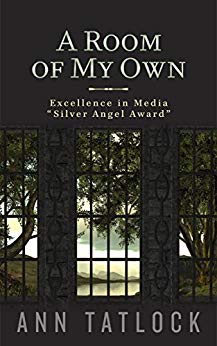
Room of my ownIn A Room of My Own by Ann Tatlock, Virginia Eide’s family was not rich, by her father’s definition, but they were better off than most during the Depression. He was a doctor, which at least provided steady work, even if some people paid in goods and services rather than cash.

But not everyone had steady work. Ginny’s uncle’s loss of his job led to his whole family living with the Eides, with Ginny having to give up her room and sleep with her younger sisters.

The Depression also led to a shanty camp being set up outside of town called Soo City. People who had lost their jobs had nowhere else to go. They tried to rig up some kind of shelter to stay in while they looked for work.

When Virginia’s father was called to help a woman in labor in Soo City, Virginia’s mother had misgivings. Every time he was called there, she had a feeling that something bad was going to happen.

Of course, there were the usual opinions around town that the Soo City residents were bums, that they could find work if they wanted to. To combat those attitudes and develop Ginny’s empathy, her father asked her to assist him in his rounds there. He didn’t tell her his purpose: he just told her he could use her help. Likewise, when he gave some of their home-canned goods to Soo City residents, he asked if they could take the old jars of food off their hands because his wife was getting ready to start this year’s canning. He made them feel like they were doing him a favor.

Ginny feels important helping her father, and she comes to know many of the residents by name.

Meanwhile, her uncle has become involved with a man trying to set up a labor union, while townspeople accuse strikers and unionists of Communism.

Things come to a head with both the strikers and Soo City, bringing tragedy to Virginia’s world and jolting her out of childhood.

I loved the back-and-forth between Ginny’s girlish activities with her friend and her fledgling forays into being grown up. I loved her father’s gentle and thoughtful example. And I loved Ginny’s coming-of-age in a manner she had not expected.

Some of my favorite quotes:

We can’t help worrying sometimes. But in spite of what we feel, we can still trust God to do what’s right.

Fear, I discovered in that moment, is as contagious as disease–maybe even more so because it takes only a moment, a few words, or a look for it to leap from one person to the next.

Most people might just be glad it was the other fellow hit by hard times, but a sensitive person like you probably can’t look on the suffering of another without feeling guilty that you aren’t suffering in the same way. But you have to look at it this way. If you and I had nothing, we’d have nothing to give. And if we had nothing to give, our friends down in Soo City might be just a little bit worse off.

I was so overwhelmed by feelings that I couldn’t feel anything anymore.

I missed home. I missed the routines of our lives, all the otherwise unnoticed customs–meals together around the kitchen table, and evenings together on the porch or around the radio, all the untroubled hours of work and play and rest. How sweet all those simple things seemed now. How much I longed for that completely unromantic but loveliest of lives.

American flags waved from front porches all up and down our street. I saw the patriotic gesture as ironic–people had been complaining about our country all year long, but now that it was Independence Day, they went right ahead and celebrated as usual. Maybe it wasn’t hypocrisy that led to the flags and the fireworks. Maybe it was hope.

So for a time, with Charlotte at my side, I almost forgot where I was and why I was there. Friends can do that, bring a bit of real comfort in a time of distress like balm on a wound.

I love this one for the description, as one who grew up with oscillating fans before central air-conditioning was common: “The one small fan in the corner turned its head from side to side, giving off mechanical sighs of contentment as it blew warm air across the room.”

When I looked this book up on Amazon, I was surprised to see a note that it was written for the general market but “may contain content of an inspirational nature.” There is a natural faith element woven into the story without being at all preachy.

All in all, a very good book.

(Sharing with Booknificent, Literary Musing Monday, Carole’s Books You Loved)

Book Review: Booked: Literature in the Soul of Me

Karen Swallow Prior is a professor of English at Liberty University. In Booked: Literature in the Soul of Me, she shares how books taught and influenced her throughout her life.

Books have formed the soul of me. I know that spiritual formation is of God, but I also know—mainly because I learned it from books—that there are other kinds of formation, too, everyday gifts, and that God uses the things of this earth to teach us and shape us, and to help us find truth (p. 10).

In commenting on her parents being pretty free in what they allowed her to read, Karen says:

It seems to be to be an entirely negative, not to mention ineffective, strategy to shield children from reality rather than actively expose them to the sort of truth that merges organically from the give-and-take of weighing and reckoning competing ideas against one another (p. 14).

That sounds a lot like Hebrews 5:14 (ESV): “But solid food is for the mature, for those who have their powers of discernment trained by constant practice to distinguish good from evil.” Karen goes on to say:

Books meet with disapproval because of their objectionable content. Wisdom, however, considers not only what a book says (its content), but how it says it (its form). Just as important–or perhaps more important than–whether a book contains questionable themes like sex or violence or drugs or witchcraft or candy is how those topics are portrayed. Are they presented truthfully in terms of their context and their consequences? Are dangerous actions, characters, or ideas glamorized in such a way that makes them enticing? (pp. 14-15).

Karen came to these conclusions not only from her own experience, but also from John Milton’s Areopagitica, a tract against censorship. Milton’s fellow Puritans wanted to ban books that they deemed unworthy. Milton argued instead that books should be “promiscuously read.” “Promiscuous” did not have the sexual connotations then that it does today: it just meant “indiscriminate mixing” (p. 22).

The essence of Milton’s argument is that truth is stronger than falsehood; falsehood prevails through the suppression of countering ideas, but truth triumphs in a free and open exchange that allows truth to shine (p. 10).

Milton goes on to argue that “our faith and knowledge thrives by exercise,” that “Moses, Daniel, and Paul . . . were steeped in the writings of their surrounding pagan cultures,” and even bad books “to a discreet and judicious reader serve in many respects to discover, to confute, to forewarn, to illustrate”(pp. 22-23). He asserts, “Truth is strong . . . Let her and falsehood grapple; who ever knew Truth put to the worse, in a free and open encounter?” (pp. 23-24).

I don’t think either Milton or Karen are saying that “anything goes.” But we don’t have to restrict our reading to just that with which we already agree. Karen quotes 1 Thessalonians 5:21: “Test all things and hold fast that which is good” (p. 22).

I’ve spent the most time on this first chapter because I found it so fascinating. I don’t remember exactly when I started to come to some of these same conclusions– I think maybe during or not long after college. I realized that the Bible itself contains what many would consider objectionable elements, but it handles them in a way that does not glorify sin but exposes truth.

Karen goes on to discuss several different literary works and how they influenced her thinking. Charlotte’s Web had much in common with her own childhood and her grandparents’ farm (though her pet rooster wasn’t granted the same reprieve as Wilbur). Gerald Manley Hopkins’s “Pied Beauty” revealed the unexpected beauty found in surprising places. Jane Eyre’s quest to become her own person rather than Rochester’s mistress or St. John’s missionary wife gave insight to Karen’s emerging self between eighth-grade cliques. Vocation, sexuality, faith, doubt, love, and marriage were likewise informed by Karen’s reading.

I greatly enjoyed Karen’s discussion of books I was familiar with. Her chapter on Gulliver’s Travels helped clear up aspects of the book I had been confused about. Her discussion of Tess of the D’Urbervilles and Madame Bovary made me want to read both of those books. I knew the former was about a girl in Victorian times who got pregnant and the latter was about an adulteress, and I had figured both would be somewhat risque.  But Tess has to do with purity of heart. Either due to naivete or rape, she had gotten pregnant, which at that time meant she was “ruined.” Yet Hardy presents her purer of heart than the society that so harshly judged her. And Madame Bovary shows Emma’s struggle between the idealized life she longed for that would never be true while she missed the joys of everyday reality.

Madame Bovary changed my worldview. It made me realize that happiness is in here, not out there. That the imperfect love of a real person is far greater than the perfect love that exists only in fairy tales or movies. That living happily-ever-after begins with embracing life–not fleeing to fantasies–today (pp. 176-177).

Karen mentions throughout the book that she grew up in a home with believing parents and regular church attendance. Though she “asked Jesus into her heart” at a young age, she led a double life of sex, drugs, and drinking. She realized as an adult that she had never asked Jesus into her mind, and the Bible tells us to love Him with all our heart, soul, and mind. Furthermore, she realized that repentance involves a change of mind that results in a change of actions. While much of the book tells how God brought her to this place step by step, I wish she had included a little more about how this change came about from professing faith to really embracing it for herself.

I will warn some readers that Karen is quite frank about some of her thinking and activities in this split part of her life. But I think it’s important to realize that many young people (and even older people) are the same way, and hearing their stories will help us understand them better.

A few more quotes that stood out to me:

In focusing my attention on things much bigger than myself, ironically, I learned who I was. It’s the lesson, once again, that beholding is becoming (p. 142).

[Jonathan] Swift’s orthodox theology led him to a realistic understanding that all of man is fallen, and this includes man’s reason . . . His method was to expose the errors of rationalism by taking it to its logical extreme (p. 129).

I wanted not only to comfort the young woman, but also to get her to see that talking about such an event in a book was a safe, constructive way of dealing with these issues (pp. 101-102).

I’d love to audit Karen’s classes. I enjoyed the insights she brought out from the various works she cited and how they influenced her own growth.

(Sharing with Carole’s Books You Loved, Booknificent)

Book Review: I’d Rather Be Reading

ReadingAnne Bogel’s I’d Rather Be Reading is aptly subtitled The Delights and Dilemmas of the Reading Life. Anne is the blogger behind Modern Mrs. Darcy, where books and reading are among her primary topics.

In this book Anne covers nearly every aspect of being an avid reader communicating with other avid readers.

Since she writes so much about books, people sometimes feel compelled to divulge their guilty reading secrets: hating books that everyone else loves, never having gotten around to reading a well-loved classic, having books on their shelves for decades that they haven’t read yet.

She discusses the books that we seem to come across at just the right time, even though we picked them up randomly, the books that “hooked” us into lifelong readership, the puzzling love for books that make us cry, the charm of libraries and bookstore, books that we keep because they were given to us or remind us of friends, how reading enhances real-life experiences, “bookworm problems” like never having enough storage space for books or needing to stop just at the best part of a book to go to work  or pick up a child from school, the different types of readers we are at different stages of life, the discoveries made in an author’s extra notes (acknowledgements, introductions, afterwords), and much more. Along the way she references a plethora of books she’s read.

Maybe because I am only an occasional visitor rather than a regular follower of Anne’s blog, I didn’t have the same sense of conspiratorial camaraderie I might have had in discussing some of these same topics with friends. But I enjoyed plenty of head-nodding and “me, too!” moments, which, along with Anne’s breezy style, made this book a pleasant read.

(Sharing with Carole’s Books You Loved)

Book Review: Murder in an English Village

EnglishIn Murder in an English Village by Jessica Ellicott, Beryl Helliwell seeks adventure all over the world in the 1920s. Brash, impulsive, and outspoken, she’s become famous as newspapers cover her exploits. “Beryl had a great deal of experience with people in the throes of shock. It tended to happen to others at an alarming rate when she was in the vicinity.”

But she has become bored and restless. After a while “one camel caravan is very much like another.” Finding an ad for a room to rent in the small English village of Walmsley Parva, Beryl decides to take a break and rest a while.

Edwina Davenport has been a quiet pillar in Walmsley Parva for decades, but the economy after WWI has greatly reduced her resources. When she decides to rent a room, she’s delighted when her old school chum, Beryl, asks to rent it. As the two get reacquainted, Edwina admits that she’s embarrassed to go into the village and face scrutiny and gossip because of her financial constraints. Beryl takes it upon herself to help out: she tells the chief rumormonger in town that she and Edwina are secret agents, and “Ed’s” seemingly reduced circumstances are just a front.

Edwina’s dismay at Beryl’s storytelling morphs into deep concern after someone makes an attempt on Edwina’s life in her own back yard. Who in sleepy little Walmsley Parva would have a secret that they don’t want investigated?

I had not heard of this book or author until I was sorting through a 2-for-1 sale at Audible. I had found one book I wanted, but couldn’t find another among the sale items. Then I saw this title. Normally I am wary of modern fiction, because usually it contains bad language or sexual scenes. But I perused a few reviews that said this was a clean story, so I took a chance on it.

As a “cozy mystery,” it’s a lot of fun. Well, except for a murder investigation and several sad tales connected with it. But Beryl and Edwina play well off each other. The story has a cast of distinctive characters. It dragged just a bit for me in the middle as the two women interviewed several people, but as the clues unfolded, the mystery came together satisfactorily. The ending left the possibility open for more Beryl and Edwina stories, and I found that a sequel has been written. The two have good potential for a running series.

I don’t recall that there was any bad language except Beryl uses one word as an idiom which I didn’t understand. Edwina didn’t, either, but her sensibilities were “shocked.” (I wasn’t about to look it up…). Besides that one incident, and the mention of a man having “octopus hands,” the book is clean. Someone is found to have had an adulterous relationship, but nothing explicit is discussed or shown. Beryl does have a penchant for alcohol and divorce.

I saw some reviews criticizing the narrator of the audiobook, Barbara Rosenblat, for some odd hesitations. But I did not find them distracting and thought she did a great job.

Overall I thought it an enjoyable story.

(Sharing with Carole’s Books You Loved)