Review: Wildwood Creek

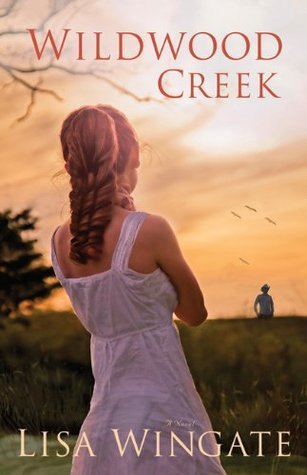
Wildwood Creek

Wildwood Creek is the fourth and final book in Lisa Wingate’s Shores of Moses Lake series. Unlike the others, this is a dual-timeline story.

In the 1850s, Bonnie Rose O’Brien and her family were captured by the Comanche. Her parents were killed, and Bonnie Rose and her younger sister, Maggie May, were held captive for years. Upon their deliverance, Bonnie feels soiled and shameful, even though nothing that happened to her was her fault. When the missionaries she’s staying with recommend her for a teaching position in the wilderness, she sees it as a chance to start over.

In 1861, a man named Harland Delavan is starting a new community called Wildwood to search for gold in Texas. He hires Bonnie as well as others to fill the town’s needs. But he rules with an iron hand. Soon individuals and then whole families disappear without explanation. Rumors and myths spread like wildfire, creating legends that linger through the centuries.

In 2014, Allie Kirkland is following in her father’s footsteps. He was a film director, and her earliest memories involve being with him on set. When he died, Allie’s life was never the same. Her mother remarried a lawyer, and they both urged Allie to work in his firm and major in law. Allie feels she doesn’t fit in with her step-siblings and half-siblings.

When Allie learns of a summer internship for a reality TV show, she jumps at the opportunity and is hired. A famous filmmaker wants to recreate the town of Wildwood near Moses Lake Texas, and have actors represent the townspeople and live as they did while exploring the mysteries of what could have happened to them.

Before long, mysterious things begin to happen in this Wildwood, too. Allie feels a kinship with the young teacher, Bonnie Rose. Can she find out what happened before it’s too late?

It was fun to see some of the characters from the previous books again. That’s one nice thing about reading a series one right after the other–I recognized people I might not have otherwise. I think there’s enough explanation in each book that they could be read alone, but they do build on each other.

Each of the Moses Lake books involves someone whose plans are upended in some way, causing them to reconnect with a faith they’ve neglected. Each story also contains some level of mystery and the importance of community.

Reading four books of one author in succession also brings to light an author’s quirks. I think in every book, someone is said to “flash an eye tooth” at someone. I’d never heard that phrase before–I suppose it’s an idiom for a wide grin.

I listened to the audiobook, which had two different women reading Bonnie Rose’s and Allie’s sections: Morgan Hallett and Heather O’Neill. Then I checked the ebook out via Libby to look at some passages there.

I think this book is the best of the four. My only disappointment is that I was looking forward to the author’s notes about her inspiration for this series and whether any of the details or characters were based in fact, yet there were none. At the end of the third book, the author says her husband, like one of the main characters there, got an unexpected job offer in a small Texas town. So I imagine many of the details of the Moses Lake community came from that experience. I did find a guest blog post from Lisa about the book here and an interview here.

Review: Firefly Island

Firefly Island

Firefly Island is the third of four novels in Lisa Wingate’s Shores of Moses Lake series. This story doesn’t start there, however.

Mallory Hale is a congressional staffer in Washington, D. C. following in the footsteps of her lobbyist father, when she unexpectedly meets Daniel Webster Everson, a biochemist working for the USDA. After a whirlwind romance, Daniel is offered a job in tiny Moses Lake, Texas. He asks Mallory to marry him and move to Moses Lake with him and his four-year-old son, Nick.

Mallory agrees. She’s not sure kind of job a congressional staffer can find there, but she can’t live without Daniel and Nick.

A series of mishaps begins their married life in less than fairy-tale happily ever afters. The house provided with Daniel’s job has not been lived in and is infested with vermin. Daniel’s new boss, Jack, is taciturn and erratic. The small community seems to eye Jack warily.

Suddenly thrust into a new marriage, motherhood, and setting, Mallory struggles. She finds friendship with her cowgirl neighbor, Al, and a young teacher, Keren.

Mallory is suspicious of Jack. Rumors circulate about his possible involvement in the disappearance of his wife and son. He’s secretive to the point of paranoia about his business. When his politician older son, with whom he has not been involved with in years, comes to visit, more details don’t add up. Jacks’ old cabin on Firefly Island is supposedly deserted, yet there are strange boats moored there. Mallory’s search for information leads to tie-ins with her old job. Can Mallory find out what’s going on and bring it to light before a disaster happens?

If I had read this book first in the series, I probably would not have continued. It starts out like a romance novel with what seems to me a lot of silliness (does anyone say hubba hubba any more?) Though there are no explicit scenes, there are more references to the couple’s physical relationship than I care for. Then the plot seems to drag in the middle.

But the latter half of the novel comes together nicely with mystery and intrigue. I enjoyed the interactions with characters from the first two books.

Besides the adjustments with a new marriage and the mystery behind her husband’s boss, Mallory deals with interactions with the more disadvantaged section of Moses Lake. Mallory has been raised the sheltered youngest daughter of a comfortable family. When she takes Nick to a children’s activity and sees a lot of unkempt kids, she worries about lice and bad attitudes. But over time she gets to know the kids and their needs, sees them differently, and looks for ways to help. “Was I really so entrenched in the world I’d been raised in, so set in my ways that I couldn’t look beyond the surface of another person and see a human being? Was I that shallow?” (p. 214).

I also thought this was a sweet line after an encounter with Nick: “Watching him skitter away, I felt the process of loving and parting and holding on and letting go that would be our future together, his and mine” (p. 203).

So, while this wasn’t my favorite of Lisa’s books, I gained from it.

(Sharing with Bookish Bliss)

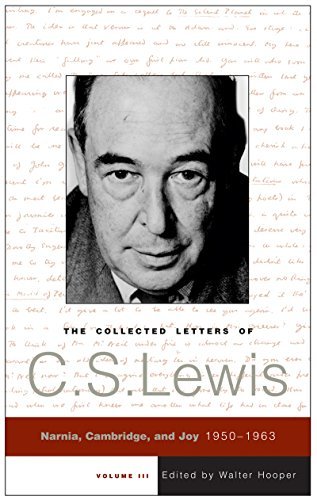
The Collected Letters of C. S. Lewis, Volume 3

Walter Hooper was an American who became something of a secretary to C. S. Lewis, or Jack, as he was known, in the latter’s final years. After Jack’s death, Hooper helped care for Warnie, Jack’s older brother, and tried to preserve some of Jack’s memorabilia. Many of Jack’s letters had been quoted by Warnie in an earlier book titled Letters of C. S. Lewis, but none is quoted in its entirety. Hooper scoured the various libraries where Jack’s papers were kept to present a comprehensive volume of his letters.

That volume ultimately became three. Volume 1 is titled Family Letters and covers 1905-1931. Volume 2 is titled Books, Broadcasts, and the War, from 1931-1949. The final volume is titled Narnia, Cambridge, and Joy, covering 1950-1963.

I chose to read the last volume first. I had read of Jack’s earlier life in Surprised by Joy and other books, but knew the least about his last several years. This book was a whopping 6,328 pages, so it has taken me a while to read it.

Lewis was a prolific letter-writer, corresponding by hand. Warnie helped him when he was home, then Hooper later. It’s obvious Jack enjoyed a great many of the letters he wrote, but answering correspondence also put pressure on him. He even asked some of his friends not to write in December, because he received so much extra mail then.

One question I had was where these letters came from. Lewis says in this volume that he did not keep copies of the letters he answered once he was done with them. He didn’t appear to use carbon copies. It’s understandable the letters to family members were kept by the recipients. But Hooper doesn’t explain how he obtained the letters written to so many people. I don’t know if he, or Warnie, or someone else put out a request to Jack’s correspondents asking for any of his letters, which were then included in various collections.

Some of the letters are lengthy and thoughtful. Some are short notes. I think some of the short notes about where to meet someone for dinner or when they were coming to visit could have been left out. But even some of these have funny or interesting spots. He writes to lifelong friend Arthur Greeves of their travel plans that since Arthur was a light sleeper and Jack “an unreasonably early riser,” they should ask at the places where they were staying to “be put in rooms not adjacent. (This is not meant as a joke!)”

Some letters were news between friends. Others were answers to questions about his writings or philosophical or spiritual queries. Some gave requested writing advice like that “wh. old Macan gave me long ago ‘Don’t put off writing until you know everything or you’ll be too old to write decently.'”

Some of his letters provided critiques requested by his correspondent of their writing. He didn’t pull any punches! But he was not unkind.

By this time, he refused most of the requests for forewords or prefaces to other people’s books. He just didn’t have time. We forget that, with all his writing, he had a full-time job teaching. He writes to one friend, “I am so busy marking examination papers that I can hardly breath! The very good ones and the very bad ones are no trouble, but the in-between ones takes ages.” Plus, he said to most of these authors that his reputation was such that he didn’t think his name in their books would be a help to them.

I thought it a little odd that no letters to Joy were here. Of course, their main correspondence would have occurred before she moved to England. Perhaps she didn’t bring those letters over, or maybe she or Jack destroyed them. They may have been too personal, concerning her own soul-searching plus problems with her first husband.

It was funny to read how he described her when she visited, though. Evidently she liked to talk a lot. He wrote one friend: “I am completely circumvented by a guest, asked for one week but staying three, who talks from morning till night.” To another he said, “Perpetual conversation is a most exhausting thing.” (I agree!)

Jack said he never appreciated parents before–her two boys were good kids, he said, but whirlwinds that left the “two old bachelors” exhausted by the end of the day.

But he tells through various letters of his developing relationship with Joy, their marriage of convenience so she could remain in England, her illness, a “real” marriage ceremony (the first was legal, but when they began to care for each other, they found a minister who would marry them in her hospital room), her miraculous recovery, and a few good years they had until she began to decline again. He writes near the end of her life, “May it please the Lord that, whatever is His will for the body, the minds of both of us may remain unharmed; that faith unimpaired may strengthen us, contrition soften us and peace make us joyful.”

Jack’s letters are filled with literary references. Hooper painstakingly annotated these, sharing the source, the location within the source, and the full quote Lewis cited.

It’s fun to see humor laced through many of the notes. He asked one friend, “What is a ‘rumpus room’? Rumpus with us means a loud noise, or row, or ‘shindy’. Do you have a special room for shouting in? (I’ve known houses where it wd. be convenient!) To another: “There’s no news at all about Cambridge cats. I never see one. No news and no mews.”

One of the great sorrows of his life was his brother Warnie’s alcoholism. Warnie would go off on benders and then go to a place to dry out, then come home, only to repeat the process later. Jack would let close friends know what was going on, but would tell others that Warnie was sick or in the hospital.

It was sad to read of Jack’s final days, knowing when he was going to die. He was to have one last trip with his friend, Arthur. But they had to cancel due to illness on both their parts. Lewis writes that he is comfortable, “But, oh, Arthur, never to see you again! . . .”

As you can imagine, I have multitudes of quotes highlighted. Here are some that stood out to me:

Of course we differ in temperament. Some (like you–and me) find it more natural to approach God in solitude: but we must go to church as well. Others find it easier to approach Him thro’ the services: but they must practice private prayer & reading as well. For the Church is not a human society of people united by their natural affinities but the Body of Christ in which all members however different (and He rejoices in their differences & by no means wishes to iron them out) must share the common life, complementing and helping and receiving one another precisely by their differences.

God loves us: not because we are lovable but because He is love, not because He needs to receive but because He delights to give.

I am going to be (if I live long enough) one of those men who was a famous writer in his forties and dies unknown–

I don’t wonder that you got fogged in Pilgrim’s Regress. It was my first religious book and I didn’t then know how to make things easy.

[On Queen Elisabeth’s coronation] Over here people did not get that fairy-tale feeling about the coronation. What impressed most who saw it was the fact that the Queen herself appeared to be quite overwhelmed by the sacramental side of it. Hence, in the spectators, a feeling of (one hardly knows how to describe it)–awe–pity–pathos–mystery. The pressing of that huge, heavy crown on that small, young head becomes a sort of symbol of the situation of humanity itself: humanity called by God to be His vice-regent and high priest on earth, yet feeling so inadequate. As if He said ‘In my inexorable love I shall lay upon the dust that you are glories and dangers and responsibilities beyond your understanding.’

How little they know of Christianity who think that the story ends with conversion: novelties we never dreamed of may await us at every turn of the road.

As long as we have the itch of self-regard we shall want the pleasure of self-approval: but the happiest moments are those when we forget our precious selves and have neither, but have everything else (God, our fellow-humans, animals, the garden & the sky) instead.

If only people (including myself: I also have fears) were still brought up with the idea that life is a battle where death and wounds await us at every moment, so that courage is the first and most necessary of virtues, things wd. be easier. As it is, fears are all the harder to combat because they disappoint expectations bred on modern poppycock in which unbroken security is regarded as somehow ‘normal’ and the touch of reality as anomalous.

We should mind humiliation less if [we] were humbler.

I’m so pleased about the Abolition of Man, for it is almost my favourite among my books but in general has been almost totally ignored by the public.

At the end of this volume, Hooper included a series of letters between Lewis and his friend, Owen Barfield, called “the Great War” in which Lewis tries to “dissuade Barfield from his belief in anthroposophy,” a “system of theosophy . . . based on the premise that the human soul can, of its own power, contact the spiritual world.” The timing of these belonged to one of the earlier volumes, but Hooper didn’t receive them until he was working on this one. I didn’t read these, because they were quite long and I couldn’t follow the reasoning. I scanned some of them.

Hooper also includes extensive biographies in the back of Jack’s regular correspondents as well as interesting details about them or their interactions with Jack (which, along with the index, makes up some of the lengthy page count). I did not read all of these, either.

I very much enjoyed reading these letters and getting to know Lewis a little better. Someday I’ll get back to the other two volumes.

(Sharing with Bookish Bliss)

How to Find Good Christian Fiction

How to find good Christian fiction

Someone asked me recently how to find good Christian fiction. I thought I’d expand on that conversation here.

I wince when people say there is no good Christian fiction. I’ve been reading Christian fiction for around 45 years. Yes, there’s good and bad, just as there is in any genre. But for the most part, my life has been enriched and edified by my Christian fiction reading.

I wrote a very long post here about reasons to read Christian fiction. On top of all the other reasons to read generally–to learn, grow, expand our horizons, gain empathy by seeing other people’s situations and viewpoints, and so much more–Christian fiction contains the missing element: learning to look to God for help, to conform our lives to His will.

The best way to find good Christian fiction is to ask recommendations from someone you trust. I think my early forays into Christian fiction were from books loaned to me by friends. I remember one older lady in the church we attended when we were first married who was a big fan of Christian fiction and loaned out her books.

Another helpful source is Christian book bloggers. This isn’t foolproof: I’ve been burned a few times by such recommendations. But by trial and error, you can find some whose tastes are similar to yours.

Book reviews on Amazon, GoodReads, or Christian blogs are helpful. Reviews can be somewhat confusing, because I’ve seen rave reviews for books I hated and scathing reviews of books I’ve loved. But if you look at what people praise and criticize about the book, that can give you clues.

If I am looking into a new author, I look at the one- and two-star reviews of their books. If there’s some kind of problem, it’s usually mentioned there.

Another good source is the library. Our library happens to have a good section of Christian fiction. They don’t always have the latest releases, but they have more than enough to keep me busy. You can take a few books to a table and leaf through them, or check them out to try at home. Then you haven’t invested money that you’ll regret if the books aren’t to your liking.

Kindle sales are also a good way to try a new author. I don’t mind taking a chance for a dollar or two. I haven’t returned enough Kindle books to know what Amazon’s policy for returning books is for sure, but I think they have a window of time where you can return an ebook if you don’t like it.

If by “good Christian fiction” you mean something totally in line with all your beliefs and preferences, that’s going to be a little harder. You’re going to run into different preferences among Christians, among your friends, in your church, anywhere where you interact with other people. The key is to know what you believe and why and then exercise discernment.

For instance, say you don’t believe in Christians drinking alcohol, but the characters in your book do. There are probably people in your church who do as well. You would likely still interact with them and be friends with them, unless they really pushed the issue and tried to get you to drink.

I’ve handled different preferences in Christian books the same way. I can overlook the difference–unless the author seems to be making a point of emphasizing whatever the difference is.

One of the highlights of my college experience was a lecture by Dr. Ron Horton in Literary Criticism class on Objectionable Elements in Literature. One point he brought out was to look at how the element was handled.

For instance, most would agree that adultery is wrong. Some would not read a book in which a character committed adultery. But we see people who committed adultery in the Bible.

What’s essential is how the author handles adultery. Is it presented as acceptable or written in a way that promotes lust? Or, like the story of David and Bathsheba, are we spared sordid details and shown clear consequences.

Or take the whole issue of violence. War stories, murder mysteries, police dramas, and such are all going to contain violence. The Bible has a lot of violent, even gory scenes, too. But the Bible never presents violence as gratuitous. It’s not written to promote or feed into someone’s lust for violence.

Some of us are going to be sensitive to various areas, and we shouldn’t violate our conscience. For instance, I don’t want anything to do with horror or the occult, even if the “good guys” win in the end. I read a Christian fiction book once that contained extensive detail of an occult ritual. The author was not promoting the occult: he was warning against it. But that scene bothered me immensely. I didn’t need to know the details involved in those rituals. When the Bible mentions these things, it doesn’t go into enough detail to pique curiosity.

Likewise, I pretty much don’t want to know anything about a character’s sexual life. Yes, God created sex and it’s a wonderful part of life. But it’s not a spectator sport. I don’t want to know the details of a character’s intimate life any more than my friends’ or neighbors’. Most Christian fiction authors are not going to be explicit in this area, but there are a few I don’t read because I felt they crossed the line.

I hope this has been of some help. You can search in the box at the upper right hand corner above for particular books and authors I might have reviewed. Or you can email me if you have a question about one, and I’ll be glad to help if I can.

Do you have any other tips for finding good Christian fiction?
_____
Other posts here about Christian fiction:

(I often link up with some of these bloggers.)

Reading Plans for 2025

Reading Plans for 2025

I like to set some goals for my reading year. If I mean to read more of a certain author, or get to particular titles, those things don’t happen unless I plan for them.

But I also like having flexibility to read a new find or pick up something I am in the mood for or feel the need to read about.

Some of my reading goals this year:

  • One Dickens book I’ve not read yet.
  • A couple of classic books.
  • One C. S. Lewis book I’ve not read yet.
  • A book about writing.
  • A book about productivity, time management, or organization.
  • At least one biography, autobiography, or memoir.
  • A Bible study book.
  • A Christian living book.
  • A book related to midlife or aging.
  • Some of the unread books on my shelves or in my Kindle.

I like reading challenges that help me reach my goals and expand my horizons. Plus, reading challenges are a fun way to share about books we love. But I don’t like being involved in too many because of the record-keeping involved.

These challenges best intersect with my goals:

Mount TBR challenge

Bev at My Reader’s Block hosts the Mount TBR Reading Challenge, where we set a goal to read a certain number of books we already own. Details and rules are here. Bev has set the challenge up in increments of twelve, each set represented by a particular mountain. Last year I read 31 books from my shelves and Kindle app. This year I’m aiming for Mt. Blanc again, which is 24 books.

TBR 25 in '25

The TBR 25 in ’25 Challenge hosted by Rose City Reader dovetails nicely with the Mount TBR challenge. It’s the same idea—to read books you own but haven’t read it (though rereads count, too). The difference is, we aim for 25 and list them some time during the challenge. I don’t have my whole list figured out yet, but I know I want to read Ron Hamilton: The Man Behind the Patch by Shelly Hamilton, Bloom In Your Winter Season by Deborah Malone, Writing for Busy Readers: Communicate More Effectively in the Real World by Todd Rogers and Jessica Lasky-Fink, The Testament by John Grisham (have not read anything by him. I got this at a library sale a few years ago), The Wingfeather series by Andrew Peterson, and Rembrandt Is in the Wind: Learning to Love Art through the Eyes of Faith by Russ Ramsey, to name a few.

I listed this challenge last year but then forgot about it since it was new to me.

2025 Nonfiction Reader Challenge

Shelly Rae at Book’d Out hosts the Nonfiction Reader Challenge. This can be done one of two ways. Shelly has twelve books in different categories that we can aim for. Or we can be a “Nonfiction Grazer” and make our own goals. Although I might hit a few of her categories, I’ll go the grazer route and incorporate the nonfiction goals mentioned above.

Historical Fiction Reading Challenge

Finally, The Intrepid Reader. hosts the Historical Fiction Reading Challenge. A lot of my fictional reads fit this category. I’m going to aim for the Medieval level at 15 books.

Do you have any reading goals or participate in any book challenges?

(Sharing with Bookish Bliss Quarterly Link-Up)

Review: Tending Roses

In Tending Roses by Lisa Wingate, Kate Bowman drives with her husband and baby son to her grandmother’s Missouri farm a few weeks before Christmas. But this will be no idyllic holiday season.

Kate’s grandmother “had a talent for stirring up unpleasantness, she was an expert on every subject, and she felt the need to control everyone” (p. 16). She acted like a martyr when she didn’t get her way. She was so fussy about her house, Kate often felt she loved it more than her.

Kate’s grandmother has become forgetful and nearly burned the farmhouse down. Kate’s father and aunt are coming for Christmas and planning to move Grandma Rose into a nursing home.

All the family has not been together and has rarely spoken to each other since Kate’s mother died.

So this holiday family reunion has all the makings of a potential war.

Kate and her husband have been elected to go to the farm early, under the guise of an extended visit, to help keep an eye on Grandma and prevent any other fires or disasters til the rest of the family comes. Kare is still on maternity leave due to her son’s heart condition, and her husband works remotely, so they are the perfect candidates.

But worries over the baby’s health, the piles of medical bills, and her assistant taking over her job have Kare distracted.

At first the visit goes about as well as Kate expected. But one day she finds her grandmother’s journal and discovers the hopes, dreams, and trials she experienced as a younger woman. That and getting to know her on an everyday level have Kate questioning her own future as well as the family’s decision about Grandma’s.

There’s naturally a lot of tension at first in the book with all the personality clashes and problems. But I loved the story arc and the slow understanding that developed between Kate and her grandmother.

A secondary story line involves Dell, an impoverished child living nearby in a shack with her ailing grandmother. “Poverty and ignorance were characters we saw on TV, or sometimes passed on the highway while traveling to some vacation hideaway. They were not our neighbors. They did not have faces with soft brown eyes and down-turned mouths that never smiled” (p. 83).

A few sentences that stood out to me:

I felt a little like a wishbone in a tug-of-war (p. 146).

Grandma sensed World War III coming on and stepped in like Switzerland (p. 175).

That’s the problem with people. We’ll starve to death looking over the fence when we’re knee-deep in grass where we are (p. 206).

Years have mellowed my joy in Christmas, as in all things. The packages, the tree, the fire, all carry memories to me—reminders that I am the last. Looking at them, I relive, remember, and regret. And an ache blossoms in my breast that I am no longer young (p. 232).

This had been the hardest year of my life, when all the colors ran outside the lines I had drawn, but also the year when I finally discovered myself (pp. 272-273).

This story is more than a reminder to “stop and smell the roses.” It weaves together themes of family, forgiveness, faith, materialism versus contentment, aging, caring for each other, especially the elderly.

This book is the first in a series of five. I’m looking forward to the rest of the series.

Review: Written on the Wind

Written on the Wind by Elizabeth Camden

In Written on the Wind by Elizabeth Camden, Natalia Blackstone has an unusual position for a woman in 1900. Her father owns a major bank in New York. Natalia rose through the ranks until she became one of his main analysts. Because her mother was Russian and Natalia speaks Russian fluently, she heads the analysis and funding for the Trans-Siberian Railway project.

She has communicated so often with the man in charge of the project, Count Dimitri Sokolov, that the two have become friends. Their correspondence veers into music, literature, and a number of other interests.

Lately, however, Natalia hasn’t heard from Dimitri. When she inquires about him, she is only told that he is no longer on the project.

Unknown to Natalia, Dimitri had been ordered to take part in an appalling crime. When he refused, he was arrested, stripped of his title and lands, and exiled to a Siberian penal colony. His only hope is to escape and tell the truth about what happened. But the incident will reflect poorly on the czar, so Dimitri must tread carefully. Without cash and contacts, he plans an impossible journey to get to Natalia, the only trustworthy person able to help him.

I very much enjoyed that the plot, setting, and characters were all much different than anything I have read before.

The only other book I have read from this author, The Rose of Winslow Street, had characters from Romania. With that and this book having Russian characters, I wondered if the author had a Russian heritage or a special interest in that region. The audiobook had an end note with details about the Trans-Siberian Railway, but nothing about the author personally.

Unfortunately, the narrator of the audiobook had an annoying way of over-enunciating. Plus she emphasized minor words in sentences, like propositions. (“He navigated THROUGH mirrored hallways”; “AFTER arriving IN New York . . .,” etc.). She made a faint attempt at the accent of an Irish character but none with any of the Russians. I am going to avoid this narrator in the future.

I didn’t realize, when I started the book, that it was the middle volume in a series. But it read well as a stand-alone. I looked through my Kindle library and saw I had the first book in the series on hand, so I’ll look into that one some time.

April Reflections

April Reflections

There are some months I’m glad to finish. January is one, especially this year. But I am not so eager to get through April. I’ve loved the more moderate temperatures between the cold of winter and heat of summer. And seeing the landscape fill with color and life again is heartening.

Nevertheless, time marches on!

Family

Someone asked Jim recently if he had adjusted to retirement. He said there always seemed to be plenty to do, and much of it was a lot more physical than his regular job.

Jim, Jason, Mittu, and Timothy went camping right at the end of last month. Jesse and I joined them for lunch and dinner one day.

Then Jim, Jason, and Timothy drove to OH to see the eclipse. Jeremy, in RI, drove to Montreal for the same reason and made a weekend of it, exploring the city. Cloud cover prevented our seeing much here in Knoxville, but I caught a brief glimpse through a break in the clouds. We were all texting each other leading up to and during the eclipse.

We celebrated Timothy’s tenth birthday. It’s hard to believe it’s been ten years since he entered the world as a 3 lb. preemie. Now he’s almost as tall as I am.

The lowest part of the month was a tooth extraction for me. But the procedure and recovery went much better than expected.

Overall, we had a nice blend of activities and rest, and enjoyed dinners at each others houses and other get-togethers. We also enjoyed a school play of “Winnie the Pooh” and dinner at a Mexican food restaurant afterwards.

Creating

I only made one card this month, for Timothy’s birthday:

Ten year old birthday card

The “Happy birthdays” were embossed with the Cuttlebug. The 10 was made with the Cricut machine.

Watching

Jim and I watched Damsel on Netflix, kind of a twist on the fairy tale trope. It starts like a fairy tale: a king running out of money arranges for his oldest daughter to marry the prince of a neighboring kingdom. The prince seems nice enough, so the daughter agrees. The stepmother (not evil this time) senses something wrong and tries to advise against the marriage, but she doesn’t have any concrete reason enough to stop it. I won’t spoil the twist, but the “damsel in distress” ends up having to rescue herself. We started watching it mainly because we liked Millie Bobby Brown so much in the Enola Holmes movies as Sherlock Holmes’ little sister. An added treat was that the queen was played by Robin Wright, who was Buttercup in The Princess Bride. Damsel was a little heavy on the girl-power theme, and gory in a few spots (which you’d expect when fighting dragons). But overall we enjoyed it.

One night when was Jim was camping, I watched the Barbie movie, mainly due to nostalgia. Barbies were my main toys. In fact, my family nickname is Barbie. I thought that came from the doll until I learned she came on the market when I was four. So maybe Barbie was a common nickname then.

I had one of the iconic first Barbies in the black and white striped swimsuit. If I still had it now, it would probably be worth a lot of money! But I gave all of that stuff to my four sisters, so I’m sure none of it survived all those years.

Since I was on the early end of the Barbie craze, I was totally unaware of all the variations and accessories that came later.

The film had a couple of offensive comments. And there was a heavy feminist slant.

But there was also an underlying theme about become “real” (although the narrator had a funny line about trading the plastic of Barbieland for the plastic of L.A., so maybe not totally real after all).

The worst and most disturbing part, to me, was the opening scene, Little girls playing “house” with their baby dolls until the new large-than-life Barbie arrives on the scene. Then they start crashing their baby dolls against the ground while a smiling Barbie looks on, to the tune of the opening music of 2001: A Space Odyssey. I’d never seem that movie, but I’ve read it opens in a similar way: an ape-like creature using another creature’s thigh bone to smash the other bones in the desert. I read somewhere that this was supposed to show that one of the first steps of evolution was to create a weapon. Then the next scene showed a space ship, which, I suppose, is meant to show how far man had evolved. But since I’ve heard that the ship computer goes rogue, maybe it’s saying that man hasn’t evolved very far after all, for all his neat inventions. Or else AI’s next step in evolution is creating a weapon (a scary thought).

Not knowing all that, Barbie’s opening scene seemed at first like an anti-motherhood rant (although later a character concedes that motherhood is okay of that’s what you want). But maybe it’s just meant to show that girls “evolved” beyond baby dolls to more grown-up dolls. I read a comment that this scene was also supposed to show that when Barbie came on the scene, she “smashed” the baby doll industry (although during my entire life, I have always seen baby dolls still for sale).

Also, after the “It’s so hard to be a woman” speech, I thought someone could write how hard it is to be a man in this era as well, especially one in Barbieland.

Anyway. . . enough Barbie philosophizing. 🙂

Reading

Since last time I finished:

I’m currently reading:

  • Be Satisfied (Ecclesiastes): Looking for the Answer to the Meaning of Life by Warren W. Wiersbe, nonfiction
  • The Lazy Genius Way: Embrace What Matters, Ditch What Doesn’t, and Get Stuff Done by Kendra Adachi, nonfiction
  • Lenten Lands: My Childhood with Joy Davidman and C. S. Lewis by Douglas H. Gresham, nonfiction
  • Now and Then and Always by Melissa Tagg, fiction, audiobook
  • Yours Is the Night by Amanda Dykes, fiction

Blogging

Besides the weekly Friday Fave Fives, Saturday Laudable Linkage, and book reviews, I’ve posted these since last time:

Writing

Our critique group will finish its current round through everyone’s turn presenting this week, and we’re gearing up to start a new round.

I did actually get some writing/revising in last month! I hope to do more in the future.

How was your April?

(I often link up with some of these bloggers.)

Review: You’re the One that I Want

You're the One that I Want by Susan May Warren

You’re the One that I Want is the sixth book in Susan May Warren’s Christiansen family series set in Deep Haven. Minnesota.

Though each book involves the whole family, each focuses primarily focuses on one of the adult children. This time it’s Owen’s turn, the fifth child and youngest brother.

Owen had figured heavily in the first two books as well, especially the second. He had played hockey since his earliest childhood and excelled through the ranks until he landed a spot on the MN pro team. The fame, acclaim, and money all went to his head, however. He became something of an entitled jerk until a tragic accident took the sight in one eye, derailing his career.

Exploding with anger and grief, Owen roamed about, working different jobs, leaving a trail of one-night stands behind him.

What he doesn’t know is that one of those encounters resulted in a pregnancy. The girl in question later met and fell in love with Owen’s brother, Casper.

If that sounds kind of soap-opera-ish, yes, even one character admitted as much. However, people do get themselves entangled in such messes, though maybe not within their own family.

As this book opens, Owen’s anger has been spent. He’s cleaned up his act, more or less, no longer involved in reckless behavior. He’s on a crab-fishing boat in the Bering Sea with a reputation for kindness and hard work. He just takes life a day at a time, too ashamed to go home.

Scotty is the captain’s daughter and first mate. Her mother had died in childbirth. Her father makes her call him Red rather than Dad and suppresses emotion. Scotty has been on the boat most of her life. She’s had to be tough to command the men in her father’s stead and ward off any unwanted attention.

When Scotty is swept overboard in a storm, Owen jumps in to save her. They spend a night in a life raft until they’re rescued, nursing injuries and telling each other their lives.

Casper and Raina had worked out their issues in the fourth book. Casper wants to marry Raina and raise her daughter as his own. But he feels the right thing to do would be to track down Owen, tell him the situation, and bring him home. He wants to get Owen’s blessing and ask him to sign over his rights to his daughter.

Meanwhile, Casper is unaware that he’s wanted for questioning in the murder of Raina’s old boyfriend, Monty. He and Casper had an altercation the night Monty was killed, and Casper seems to be the last one who saw him alive.

When Owen and Casper try to fly home, Casper is taken into custody. Scotty, who has taken a job in the police force in Alaska since her dad is selling their boat, agrees to accompany them back to Deep Haven in an official capacity. Owen is thrilled to have more time with her.

There, Scotty encounters the love and loyalty of a family like she has never known. Though she’s drawn to them, she’s also not sure she would ever fit in. She’s had a very different upbringing and has no use for faith—even though she did break down and pray through Owen’s injuries.

If that sounds like a lot of drama for one book—it is! I’ve mentioned before that though these books fall into the romance genre, they’re something of a family drama as well.

Reading, or listening to, six of these books in a row, one catches some of the writer’s repeated quirks. Here are a few:

  • Several of the female characters are said to catch their lip in their teeth.
  • All the males are “sculpted” and “chiseled.”
  • Most of the kissing scenes involve saying what one or the other “tastes” like, usually involving whatever they last ate or drank (yuck) and and then adding that they taste of “freedom” or “summer days” or some such.

I roll my eyes at some of that, but that seems to go with this genre—one reason I don’t read it much.

I did like how the series wrapped up, though. Amid some of the silly moments were embedded some deep truths about faith, grace, and forgiveness.

Some of my favorite quotes:

In order to live without the haunting voice of regret, you must learn to forgive yourself, to embrace mercy, to open your eyes and see God in your past and His grace in your future. Your mistakes don’t define you. Your past doesn’t define you. You are not the sum of your bad decisions. You are the decision you make right now.

Fresh-baked cookies do not make a successful marriage . . . It’s knowing each other, valuing the same things, being what the other person can’t be, making each other better people.

So you made some bad choices. Some of God’s best players were His imperfect, broken prodigals. In fact, iffy players are God’s best picks. He specializes in short-tempered, reckless, flawed people to accomplish his plans.

God is constantly using broken, messy people to restore the world and bring glory to Himself, to touch other people.

Once you became a Christiansen, you had to get used to being loved large, to belonging to a family that didn’t have it all figured out, but weathered life by holding on to faith.

Unfortunately, the audiobooks didn’t include author’s notes, and Susan didn’t have any notes or background information on her website for the last two books in the series as she did for the previous ones.

Besides these major books in the series, there’s a prequel novella focused on the relationship of the parents, John and Ingrid, as well as two Christmas novellas. There’s also another collection of novels set in Deep Haven written after the Christiansen family series with other authors. However, though I enjoyed the series, I want to get away from romances for a while. I’ll probably read John and Ingrid’s story just to finish out the series and save the Christmas ones for December.

Review: It Had to Be You

In It Had to Be You by Susan May Warren, Eden Christiansen feels like she’s forever on the sidelines. Her other siblings have stand-out talents. Eden always dreamed of being a reporter. She landed a job with the city newspaper, but she’s stuck as an obituary writer.

Since she lives in the same town as her younger hockey-player brother, Owen, and she’s the only family member there, she goes to his games and watches out for him. She sees that the fame, acclaim, and money has gone to his head. But he won’t listen to her admonitions. It doesn’t help that Owen idolizes his team captain, Jace, who has a bad-boy reputation on and off the ice.

When Jace and Eden meet, they clash immediately. She berates him for not being a better example to his team.

Jace, meanwhile, has his own problems. Several slams on the ice have resulted in too many concussions and regular migraines. He has nothing else but hockey, so he keeps going despite doctors’ warnings. When he tries to avoid fights during games, his value drops in the eyes of his team, agent, and the spectators.

And there is a side to Jace that others rarely see. He helps his best friend, Sam, run a restaurant and helps Sam take care of his daughter, a heart transplant patient.

Owen, in a moment of carelessness, sustains a devastating injury. While visiting him in the hospital, Jace and Eden accidentally discover a John Doe, an unidentified patient in a coma. They are thrown together to try to find John Doe’s family.

I don’t read romance novels very often. They can be somewhat silly and too focused on the physical. But Susan’s don’t seem to be that way so far.

I got a little irritated with both characters’ tendency to create a whole scenario of what they thought the other was thinking from a line or gesture or silence. It’s not usually good to assume motives no matter how well we know someone. But learning not to judge or assume is part of what they experienced here.

Another theme throughout the book is letting go of things we can’t and weren’t meant to control.

Overall, I enjoyed the story. A couple of my favorite quotes:

Minnesota grew hockey players like pine trees.

There’s always light . . . God’s love is too bright for the darkness to win.

This book is the second in the Christiansen family series. The first was Take a Chance on Me. Since the sequels were free in Audible’s Plus Catalog, I am listening to them before they are rotated out.