Laudable Linkage

Here are some interesting reads rounded up from the last couple of weeks:

Dr. George H. Guthrie has been publishing a series dealing with Bible translations that I have found very helpful, especially these (HT to Challies):

6 Reasons We Shouldn’t Freak Out over Word Variations in our Modern Translations

6 Surprising Ideas the KJV Translators Had about Other Bible Translations. The preface to the KJV is pretty fascinating if your Bible contains it and if you can read it. A couple of the fascinating ideas: they used and endorsed other translations and never claimed that theirs was the only one that should be used.

4 Interesting Facts about the Production of the King James Translation

Some Things You Should Know About Christians Who Struggle With Anxiety.

What the Pro-Choice and Pro-Life Miss About Simone Biles

Top 10 things I Wish Worship Leaders Would Stop Saying and Top 10 Things I Love That Worship Leaders Do

With Love, Your Single Daughter

10 Things to DO Instead of Asking, “What Can I Do to Help?

A couple about writing:

Avoid These Sneaky (But Deadly) Point of View Mistakes.

A Quick Lesson in the Writing Process.

And finally, this is just adorable:

Happy Saturday!

31 Days with Elisabeth Elliot: Loneliness

Elisabeth Elliot2

This is from Elisabeth’s book On Asking God Why, from a chapter entitled “Singleness Is a Gift”  drawn from the life of Amy Carmichael. Because of its length, I am not adding any commentary.

With all her heart she determined to please him who had chosen her to be his soldier. She was awed by the privilege. She accepted the disciplines.

Loneliness was one of those disciplines. How–the modern young person always wants to know–did she “handle” it? Amy Carmichael would not have had the slightest idea what the questioner was talking about. “Handle” loneliness? Why, it was part of the cost of obedience, of course. Everybody is lonely in some way, the single in one way, the married in another; the missionary in certain obvious ways, the schoolteacher, the mother, the bank teller in others.

Amy had a dear co-worker whom she nicknamed Twin. At a missions conference they found that in the posted dinner lists, Twin and a friend named Mina had been seated side by side.

“Well, I was very glad that dear Mina should have Twin,” Amy wrote to her family, “and I don’t think I grudged her to her one little bit, and yet at the bottom of my heart there was just a touch of disappointment, for I had almost fancied I had somebody of my very own again, and there was a little ache somewhere. I could not rejoice in it. . .I longed, yes longed, to be glad, to be filled with such a wealth of unselfish love that I should be far gladder to see those two together than I should have been to have had Twin to myself. And while I was asking for it, it came. For the very first time I felt a rush, a real joy in it, His joy, a thing one cannot pump up or imitate or force in any way. . .Half-unconsciously, perhaps, I had been saying, ‘Thou and Twin are enough for me’–one so soon clings to the gift instead of only to the Giver.”

Her letter then continued with a stanza from the Frances Ridley Havergal hymn:

Take my love, my Lord, I pour
At Thy feet its treasure-store.
Take myself and I will be
Ever, only, all for thee.

After writing this, Amy felt inclined to tear it out of the letter. It was too personal, too humiliating. But she decided the Lord wanted her to let it stand, to tell its tale of weakness and of God’s strength. She was finding firsthand that missionaries are not apart from the rest of the human race, not purer, nobler, higher.

“Wings are an illusive fallacy,” she wrote. “Some may possess them, but they are not very visible, and as for me, there isn’t the least sign of a feather. Don’t imagine that by crossing the sea and landing on a foreign shore and learning a foreign lingo you ‘burst the bonds of outer sin and hatch yourself a cherubim.’ “

Amy landed in India in 1897 and spent the first few years in itinerant evangelism. She began to uncover a secret traffic in little girls who were being sold or given for temple prostitution. She prayed that God would enable her find a way to rescue some of them, even though not one had ever been known to escape.

Several years later, God began to answer that prayer…and in a few years Amy Carmichael was Amma (“Mother”) to a rapidly growing Indian family that, by the late 1940s, numbered about 900. In a specially literal way the words of Jesus seemed to have been fulfilled: “Everyone who has left houses or brothers or sisters or father or mother or children or fields for my sake will receive a hundred times as much and will inherit eternal life” (Matthew 19:29).

In answer to a question from one of her children who years later had become a close fellow worker, Amy described a transaction in a cave. She had gone there to spend the day with God and face her feelings of fear about the future. Things were all right at the moment, but could she endure years of being alone?

The Devil painted pictures of loneliness that were vivid to her years later. She turned to the Lord in desperation. “What can I do, Lord? How can I go on to the end?”

His answer: ”None of them that trust in me shall be desolate” (from Psalms 34:22 KJV). So she did not “handle” loneliness–she handed it to her Lord and trusted his Word.

“There is a secret discipline appointed for every man and woman whose life is lived for others,” she wrote. “No one escapes that discipline, nor would wish to escape it; nor can any shelter another from it.”

Her commitment to obedience was unconditional. Finding that singleness was the condition her Master had appointed for her, she received it with both hands, willing to renounce all rights for his sake and, although she could not have imagined it at the time, for the sake of the children he would give her–a job she could not possibly have done if she had had a family of her own.

Many whose houses, for one reason or another, seem empty, and the lessons of solitude hard to learn, have found strength and comfort in the following Amy Carmichael poem:

O Prince of Glory, who dost bring
Thy sons to glory through Thy Cross,
Let me not shrink from suffering,
Reproach or loss .…

If Thy dear Home be fuller, Lord,
For that a little emptier
My house on earth, what rich reward
That guerdon* were.

 *recompense; something earned or gained

See all the posts in this series here.

_____________________________________________________

DaySpring.com is celebrating all of the amazing Write 31 Days readers who are supporting nearly 2,000 writers this October! To enter to win a $500 DaySpring shopping spree, just click on this link & follow the giveaway widget instructions by October 30. Best wishes, and thanks for reading!


Laudable Linkage and Videos

Here are just a few good reads from the past week, with more commentary than usual:

A Tale of Two Comparisons. Most times we get into trouble when we compare ourselves with others, and the Bible warns against the wrong kinds of comparisons that provoke jealousy, envy, discouragement, or discontent. But we can do so in a way that spurs us on to grow and to follow them as they follow Christ.

7 Do’s and Don’ts of Welcoming People to Your Congregation.

Gary Thomas’ ‘Sacred Marriage’: Not the Last Word on Marriage, HT to Challies. I kept thinking “Yes!” as I read through this. The author takes issue with the premise “What if God designed marriage to make us holy more than to make us happy?” by pointing out that marriage was created before the fall and its purpose is primarily companionship rather than sanctification (although God can use it in our sanctification, but I have read so many “holy, not happy” posts about marriage that if I weren’t married and read those things, I’d be discouraged from ever getting married, because they made it sound so dreary.)

Let Your Husband Love You, HT to Challies. “I get it. The kids have been climbing on you all day…you’re sick of being clawed at, sucked on, licked, punched, kicked, pulled, snotted on, cried on, spit up on, pooped on, and peed on….I know you don’t want to be touched and for some reason, an innocent compliment can offend you. But…” Excellent. She also responds here to some of the feedback she got from her post.

My friend Lou Ann has been conducting a survey of singles and shares some results of it in The Singles Survey: Introduction and Part 2. Very important. We so often unwittingly wound our single friends..

And here are a couple of short videos that made me smile:

Shared by my son, a little girl meets her father’s twin brother for the first time and gets confused. The look on her face is priceless.

And I clicked on this after looking at one The Story Warren shared about a camera shaped like an egg in a penguin colony. That was pretty neat, but this one was funny:

Have a great Saturday!


31 Days of Missionary Stories: Amy Carmichael and Singleness

If you’ll indulge me one more anecdote from the life of Amy Carmichael, the following vignette is excerpted from a chapter entitled “Singleness Is a Gift” from the book On Asking God Why by Elisabeth Elliot.

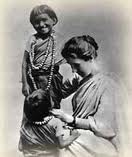
Amy CarmichaelWith all her heart she determined to please him who had chosen her to be his soldier. She was awed by the privilege. She accepted the disciplines.

Loneliness was one of those disciplines. How–the modern young person always wants to know–did she “handle” it? Amy Carmichael would not have had the slightest idea what the questioner was talking about. “Handle” loneliness? Why, it was part of the cost of obedience, of course. Everybody is lonely in some way, the single in one way, the married in another; the missionary in certain obvious ways, the schoolteacher, the mother, the bank teller in others.

Amy had a dear co-worker whom she nicknamed Twin. At a missions conference they found that in the posted dinner lists, Twin and a friend named Mina had been seated side by side.

“Well, I was very glad that dear Mina should have Twin,” Amy wrote to her family, “and I don’t think I grudged her to her one little bit, and yet at the bottom of my heart there was just a touch of disappointment, for I had almost fancied I had somebody of my very own again, and there was a little ache somewhere. I could not rejoice in it. . .I longed, yes longed, to be glad, to be filled with such a wealth of unselfish love that I should be far gladder to see those two together than I should have been to have had Twin to myself. And while I was asking for it, it came. For the very first time I felt a rush, a real joy in it, His joy, a thing one cannot pump up or imitate or force in any way. . .Half-unconsciously, perhaps, I had been saying, ‘Thou and Twin are enough for me’–one so soon clings to the gift instead of only to the Giver.”

Her letter then continued with a stanza from the Frances Ridley Havergal hymn:

Take my love, my Lord, I pour
At Thy feet its treasure-store.
Take myself and I will be
Ever, only, all for thee.

After writing this, Amy felt inclined to tear it out of the letter. It was too personal, too humiliating. But she decided the Lord wanted her to let it stand, to tell its tale of weakness and of God’s strength. She was finding firsthand that missionaries are not apart from the rest of the human race, not purer, nobler, higher.

“Wings are an illusive fallacy,” she wrote. “Some may possess them, but they are not very visible, and as for me, there isn’t the least sign of a feather. Don’t imagine that by crossing the sea and landing on a foreign shore and learning a foreign lingo you ‘burst the bonds of outer sin and hatch yourself a cherubim.’ “

Amy landed in India in 1897 and spent the first few years in itinerant evangelism. She began to uncover a secret traffic in little girls who were being sold or given for temple prostitution. She prayed that God would enable her find a way to rescue some of them, even though not one had ever been known to escape.

Several years later, God began to answer that prayer…and in a few years Amy Carmichael was Amma (“Mother”) to a rapidly growing Indian family that, by the late 1940s, numbered about 900. In a specially literal way the words of Jesus seemed to have been fulfilled: “Everyone who has left houses or brothers or sisters or father or mother or children or fields for my sake will receive a hundred times as much and will inherit eternal life” (Matthew 19:29).

In answer to a question from one of her children who years later had become a close fellow worker, Amy described a transaction in a cave. She had gone there to spend the day with God and face her feelings of fear about the future. Things were all right at the moment, but could she endure years of being alone?

The Devil painted pictures of loneliness that were vivid to her years later. She turned to the Lord in desperation. “What can I do, Lord? How can I go on to the end?”

His answer: ”None of them that trust in me shall be desolate” (from Psalms 34:22 KJV). So she did not “handle” loneliness–she handed it to her Lord and trusted his Word.

“There is a secret discipline appointed for every man and woman whose life is lived for others,” she wrote. “No one escapes that discipline, nor would wish to escape it; nor can any shelter another from it.”

Her commitment to obedience was unconditional. Finding that singleness was the condition her Master had appointed for her, she received it with both hands, willing to renounce all rights for his sake and, although she could not have imagined it at the time, for the sake of the children he would give her–a job she could not possibly have done if she had had a family of her own.

Many whose houses, for one reason or another, seem empty, and the lessons of solitude hard to learn, have found strength and comfort in the following Amy Carmichael poem:

O Prince of Glory, who dost bring
Thy sons to glory through Thy Cross,
Let me not shrink from suffering,
Reproach or loss .…

If Thy dear Home be fuller, Lord,
For that a little emptier
My house on earth, what rich reward
That guerdon* were.

 *recompense; something earned or gained

 (You can see a list of other posts in the 31 Days of Missionary Stories here.)

Other posts about Amy Carmichael:

Isn’t “No” an Answer?
What We Wanted All the Time.
Missionaries’ Letters to Mothers.
It’s the Little Things.
The Melting Point.
Thy Calvary Stills All Our Questions
From the worlding’s hollow gladness.
Make Me Thy Fuel.
Shadow and Coolness.
With All Our Feebleness.
Amy Learns to Die to Self.
A Book of Amy Carmichael Poems.

Laudable Linkage

Here are some interesting reads from the last couple of weeks:

8 Evangelism Lessons From an Unlikely Convert.

Gospel-Centered Counsel For Moms. “So often, in our sincere desire to be gospel-centered, we skip over a biblical diagnosis and assume we know what the problem is.” Excellent post.

When Your Friend Is Paralyzed With Fear.

How Cancer Changed Me For Good.

When You’ve Lost Your Joy in the Midst of Marriage and Motherhood.

Help for the Blindsided, when a past sin blindsides you with shame and sorrow.

Sanctification In the Season of Singleness.

Bosses Don’t Give Gold Stars — and Other Career Advice.

DOMA and the Rock.

Hope you have a great weekend!