Valentine’s Cards

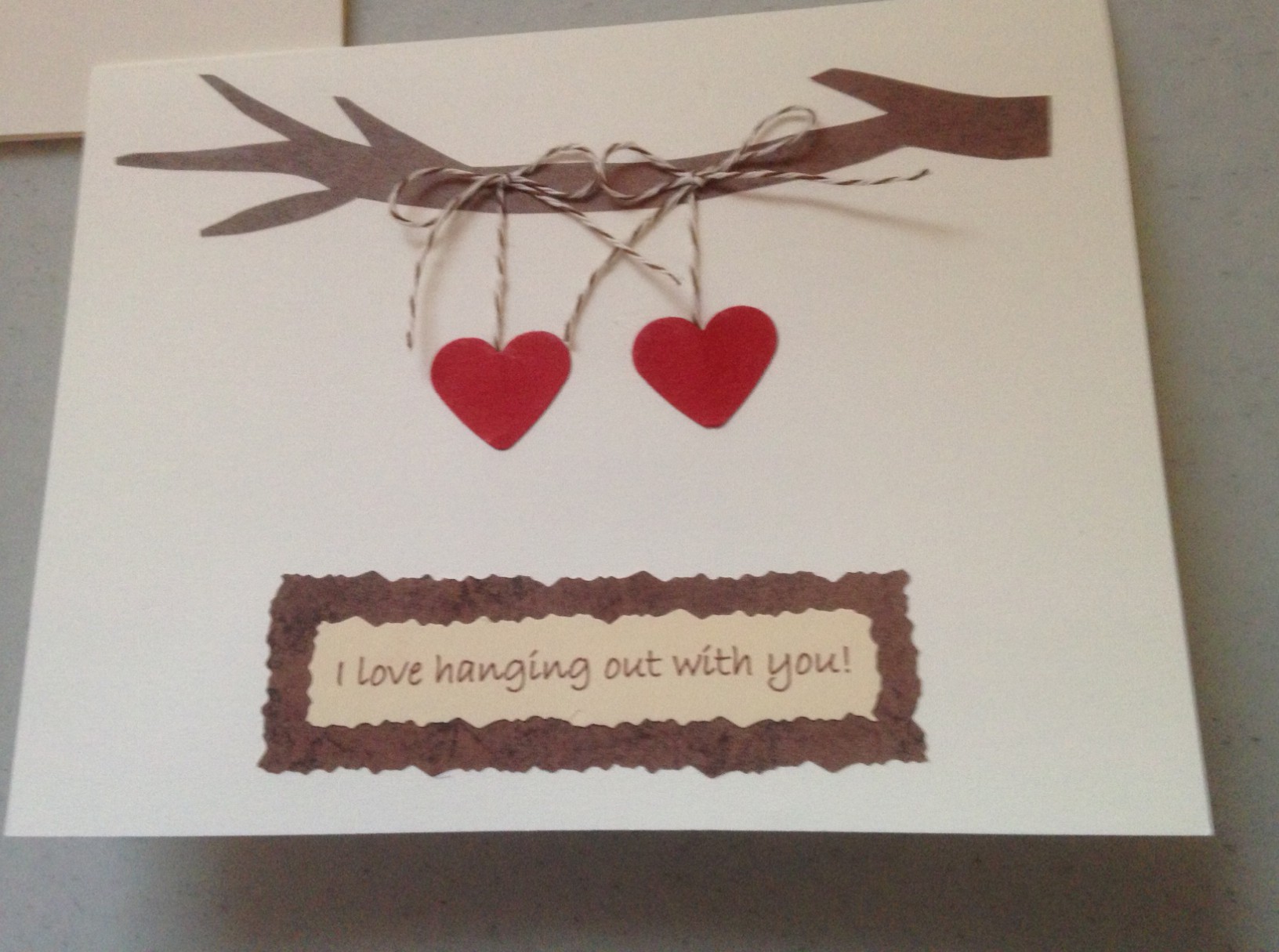
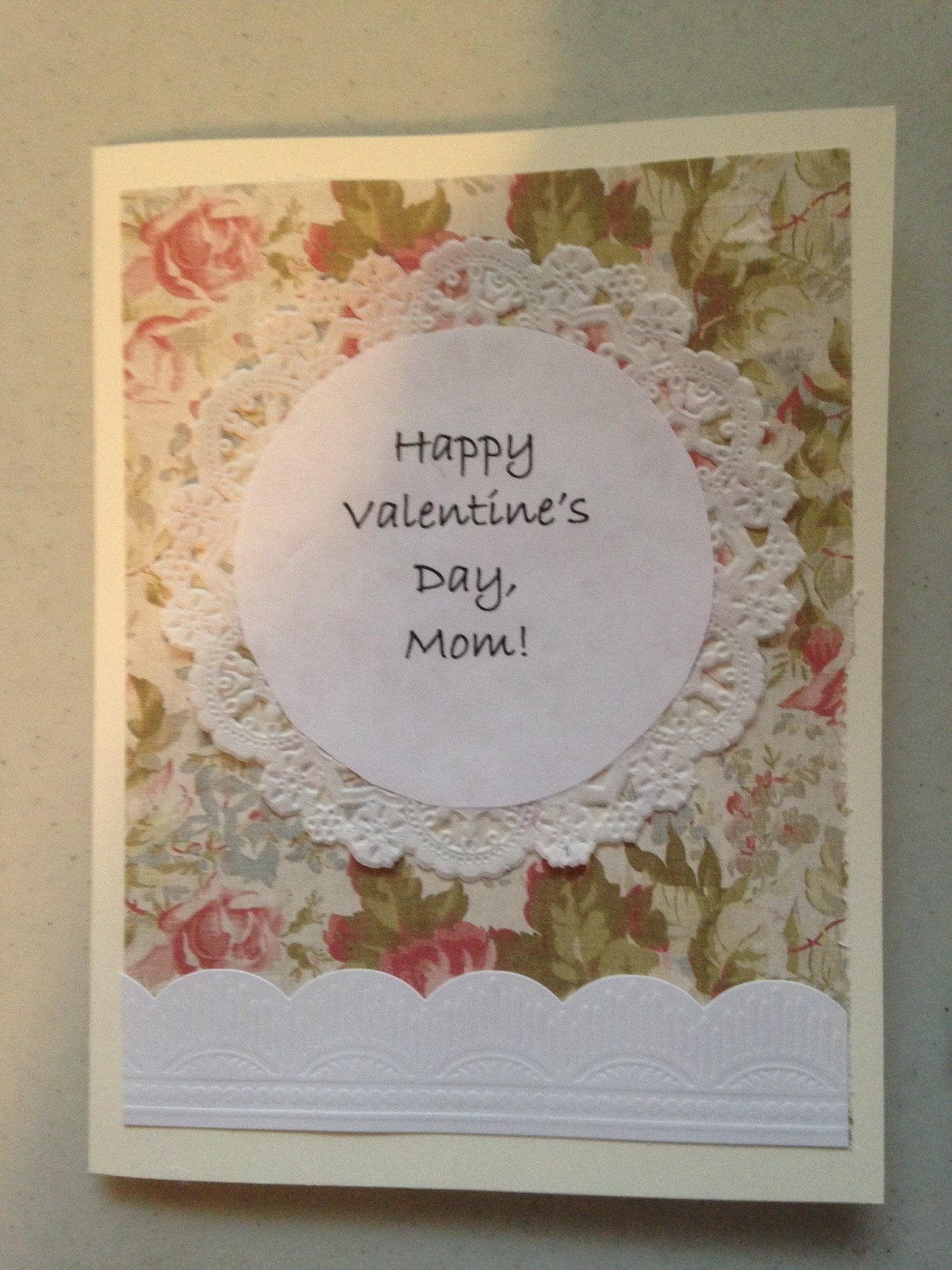
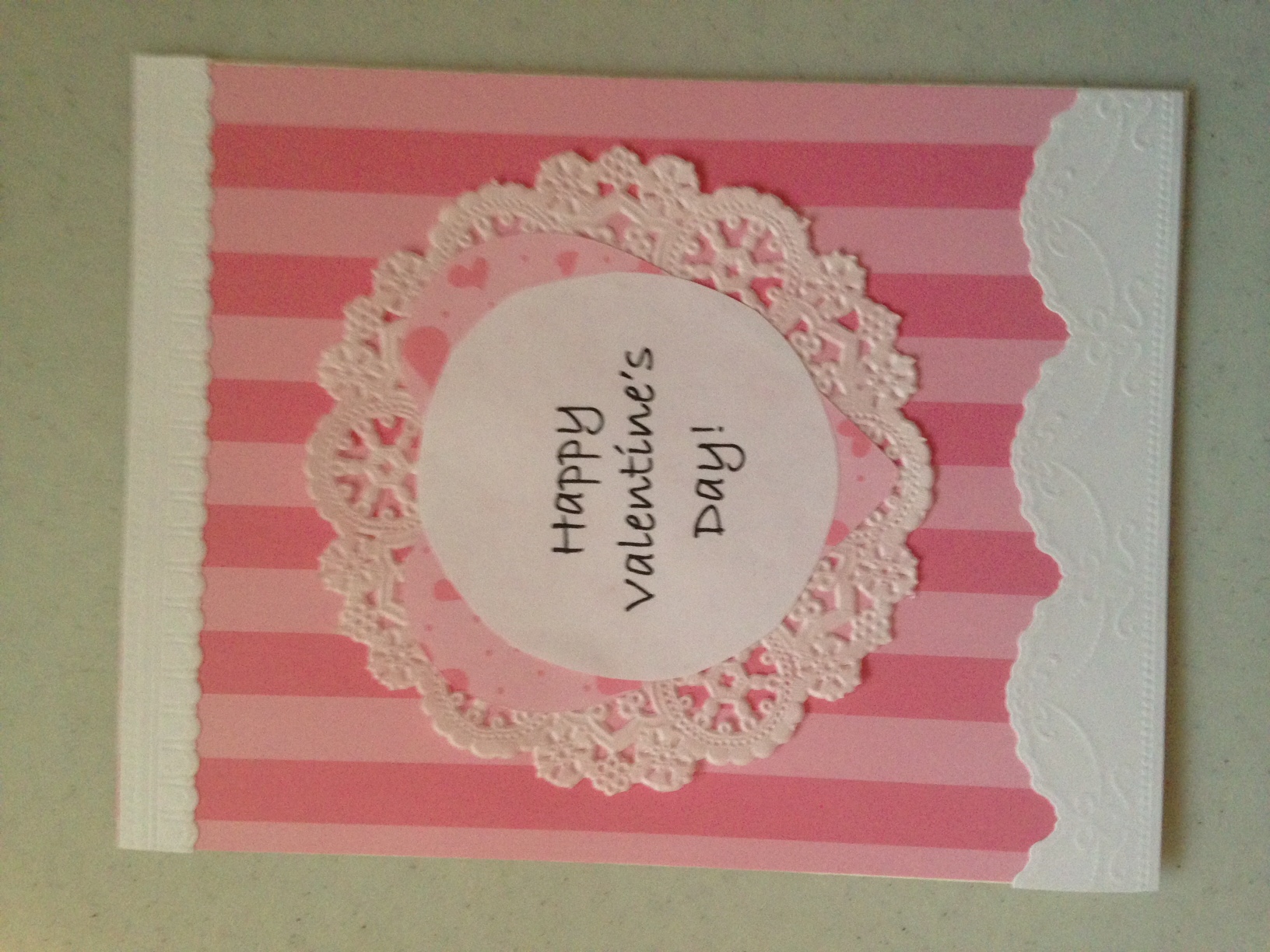
I have an embarrassingly large supply of materials  to make cards. Most have been picked up on sales or with coupons. I have used some over the years to make personal cards or for projects for our ladies’ group and missionaries, but I have quite a lot on hand still. Often by the time I think of making a card for an event. I don’t have enough time. But this year I determined it make Valentine’s Day cards for the family, and I thought I’d show them to you. I perused my Cards and Papercrafts and Valentine’s Ideas Pinterest boards for inspiration and used a few there as springboards but came up with a few others on my own.

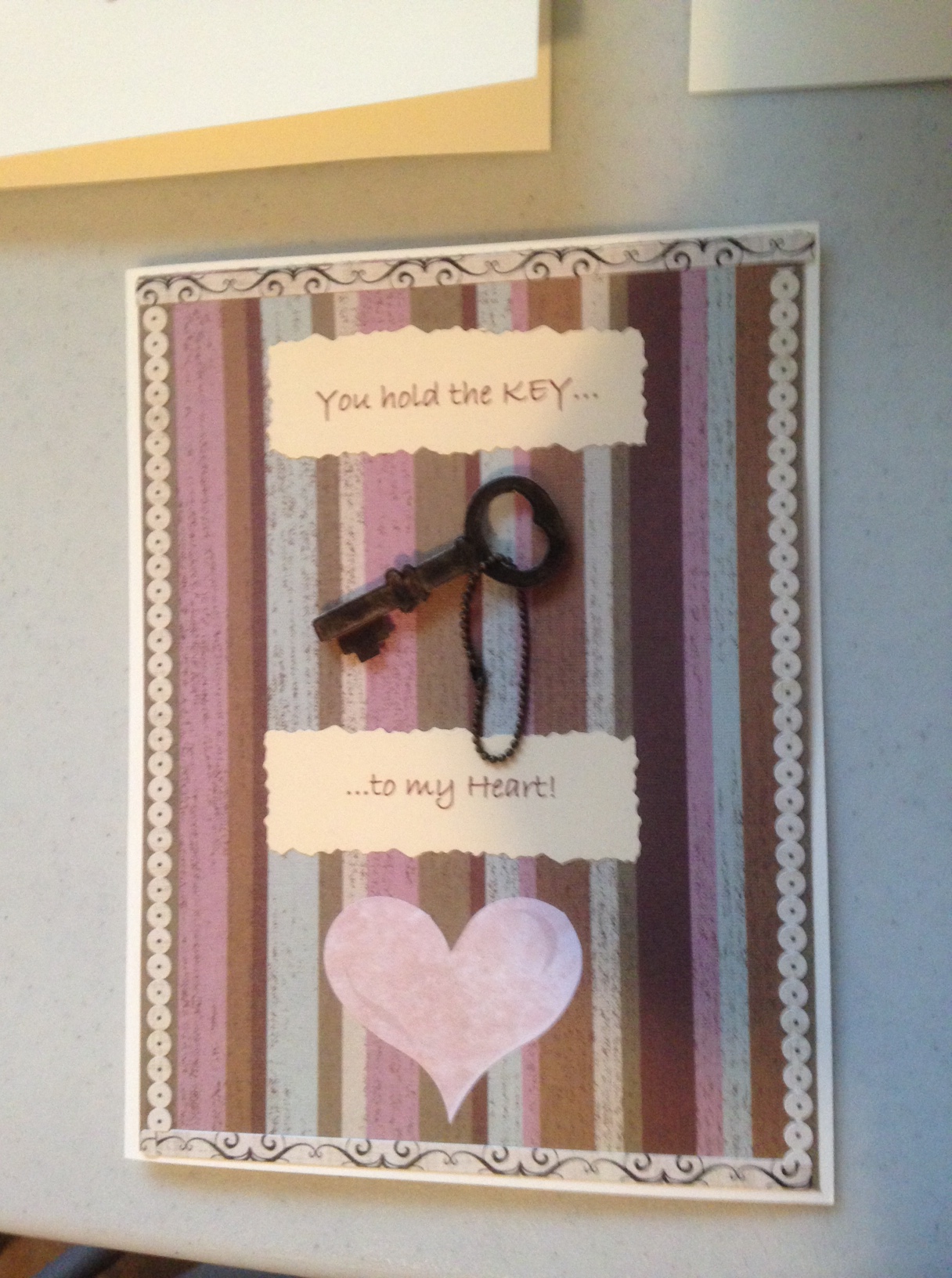
This was Jim’s:

IMG_1039

The key is a little 3-d sticker and the only thing I bought especially for these cards: everything else I had on hand. He’s enjoyed joking that keys to my heart can be bought at Hobby Lobby. 🙂

This was Jeremy’s:

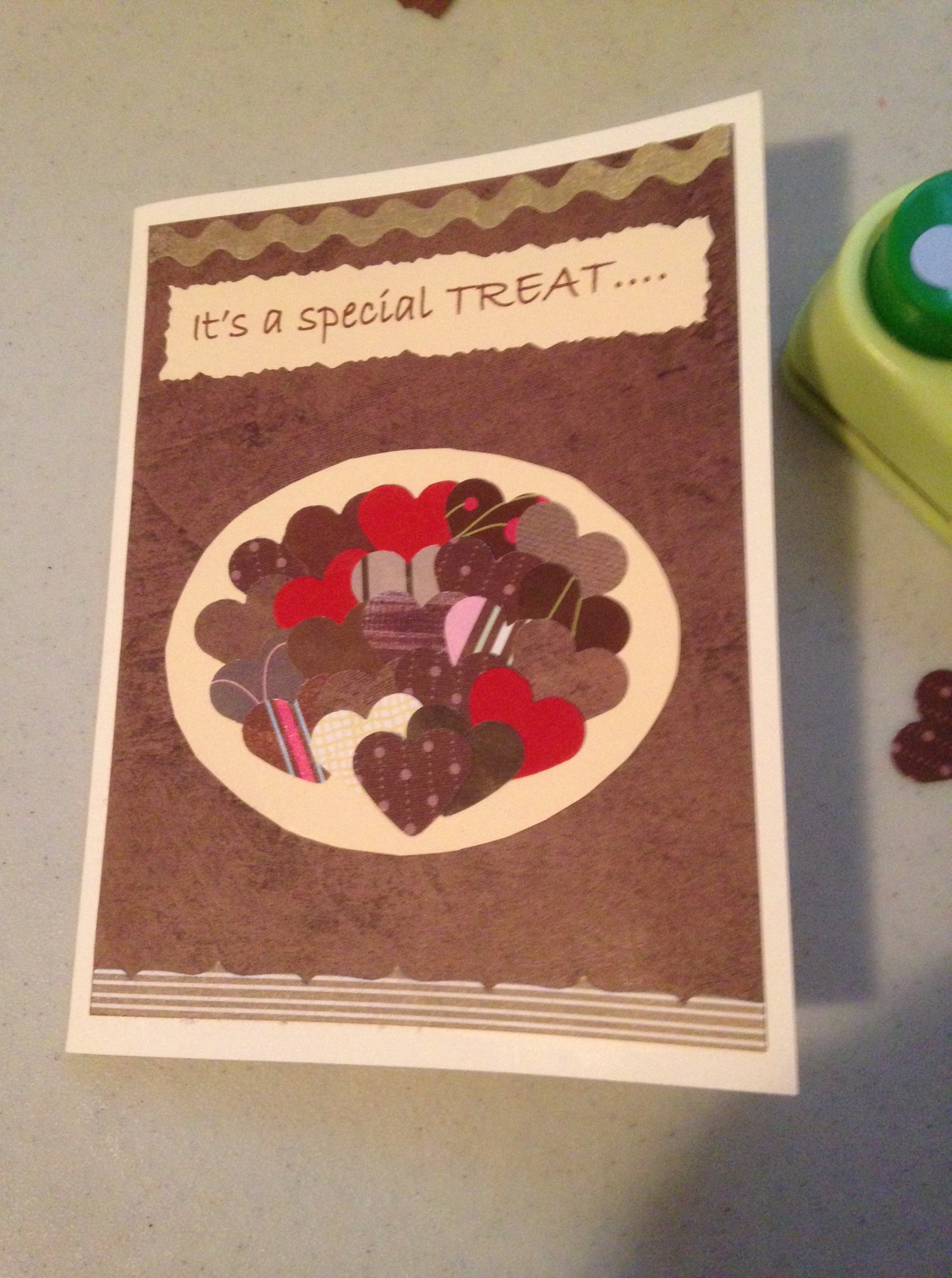
IMG_1035

The inside said “…To wish you a Happy Valentine’s Day.” I think the brown hearts look like chocolate, and they’re a great way to get hearts on a man’s card so it’s more masculine looking than the pink ones I gravitate to. 🙂 I usually make heart-shaped chocolate cupcakes decorated with sprinkles or icing for Valentine’s Day, and I thought these were reminiscent of those or of chocolate candies. Most of the hearts of various sizes on the cards were made with punches.

This was Jason’s:

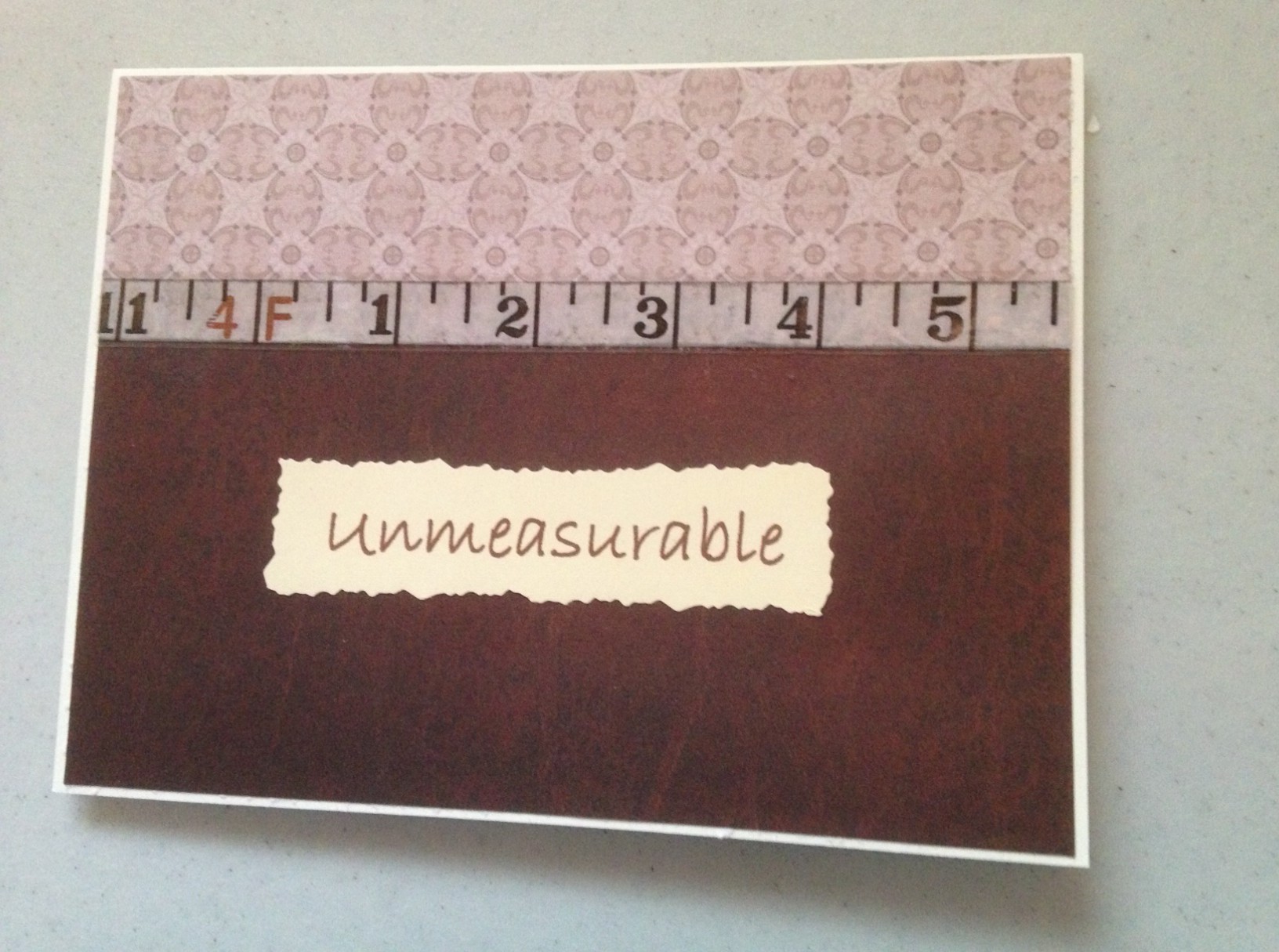
IMG_1041

The inside says “That’s our love for you,” meaning it’s so great it can’t be measured. I just realized last night or some time this morning that I didn’t have a heart on his. Sorry about that, Jason! Here’s one for you: 🙂

This was Mittu’s:

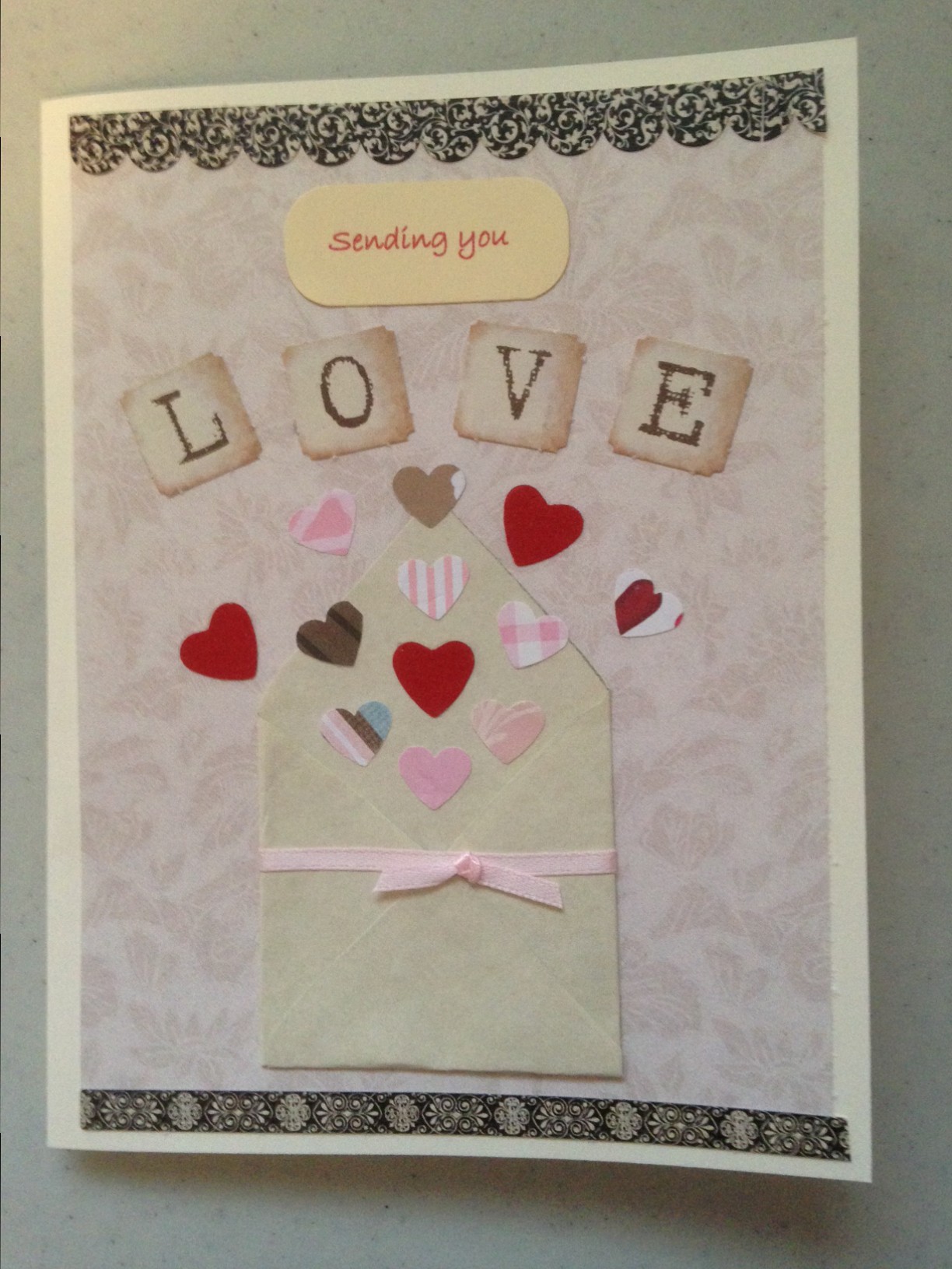
IMG_1044

The inside says “On Valentine’s Day and every day!” The little envelope was made with help from a template I found by searching online for “small envelope templates.” I have a neat punch that rounds off corners and used that for the words here. By the way, the words were all printed out on the computer with the Bradley Hand ITC font except for the letters for “LOVE” here, and those were from a page of punch-out letters. My own handwriting, I’m sorry to say, would not make for a pretty card. The words on the other cards I cut out with a scissors with a torn-paper-looking edge. That one is a little more forgiving than, say, a scalloped edge. I have a hard time cutting in a straight line, so this particular scissors helps. I have a mini paper cutter for longer straight lines.

This was Timothy’s:

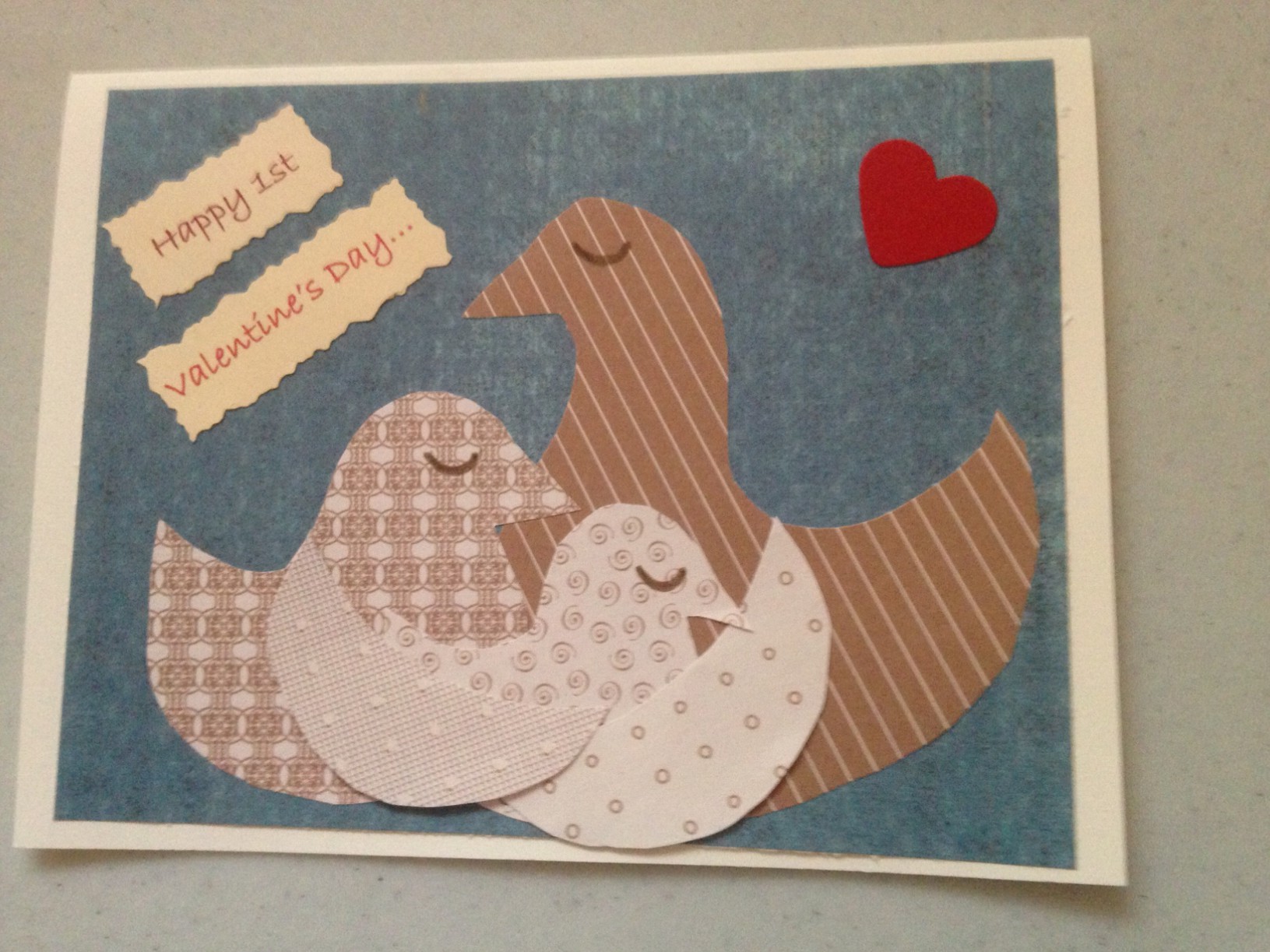
IMG_1042

The inside says, “To our favorite snuggle buddy.” It was inspired by this pin, but when I tried to click through to the site to see if the card maker had instructions or a pattern, I couldn’t find the original site, nor could I find it by searching Google using the terms I thought I had originally found it with. So I had to wing it (pun intended. 🙂 ). Then I realized this card was going to be from both my husband and I, so I needed more than just one adult with the baby bird.

This one was Jesse’s:

IMG_1040

I think the inside just said “Happy Valentine’s Day!”

With the last two, I was running out of both time and ideas, so they are somewhat similar. This was Great-Grandma’s (or Mom, to my husband and me):

IMG_1046

Sorry about the shadow on this one. The inside says, “Your example has taught us how to love….May we show you as much love as you have shown us.”

This was for Jesse’s girlfriend, Meaghan:

IMG_1045

All of the borders were from packages of stick-on strips – very handy! And Hobby Lobby has them on sale 1/2 price pretty frequently in the scrapbooking section.

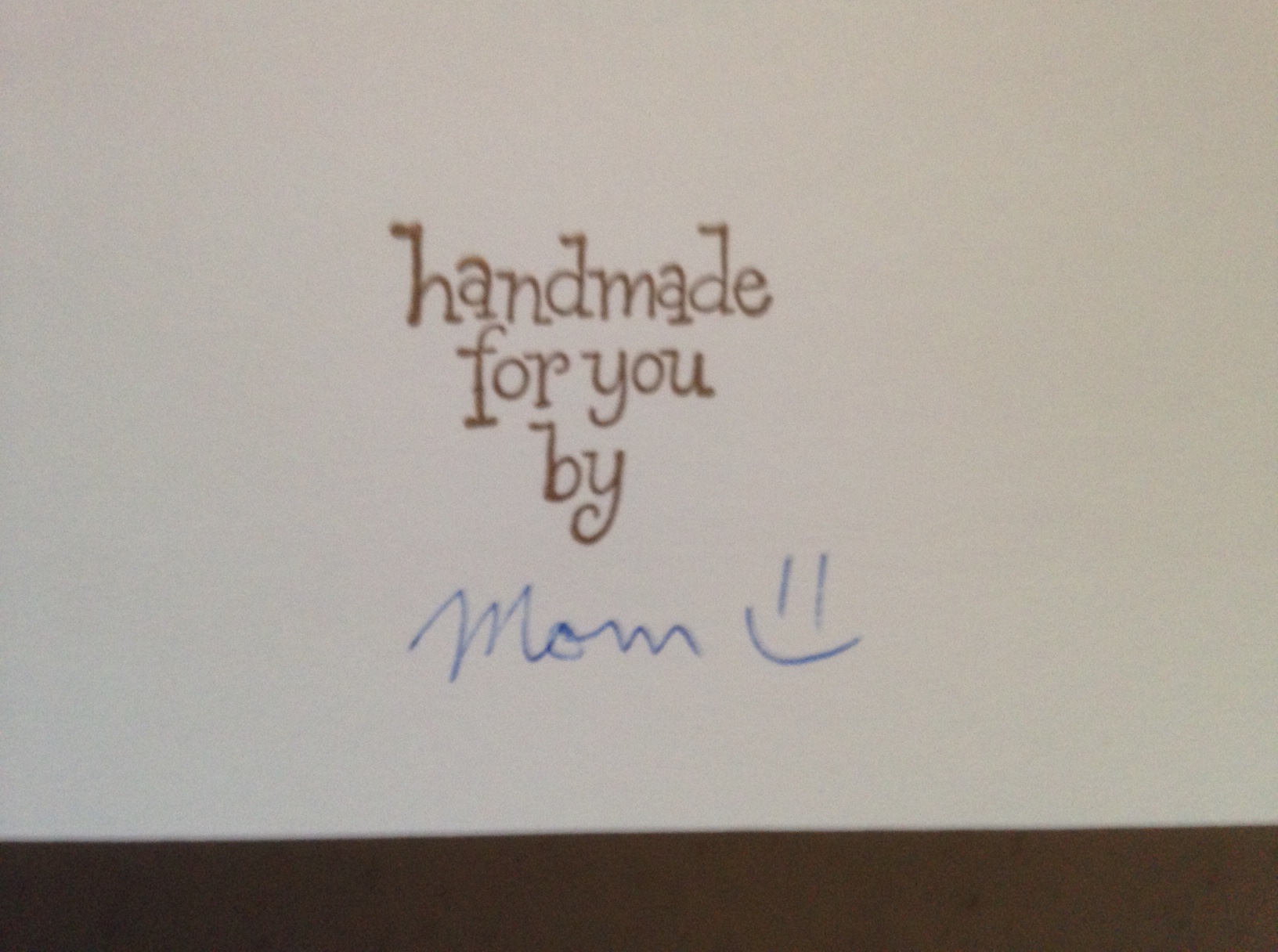
And on the back of each card was this stamp with either Mom, Grandma, or Barbara written in accordingly:

IMG_1047

They were a lot of fun to make, though they did take quite a bit of time. Actually once I decided what to do for each one and chose the decorative papers, it didn’t take long to put them together: the decision-making was the hardest part.

I’m hoping this will jump-start me into making more cards rather than buying them this year. It will probably depend on how much time I have before each occasion and whether I remember to start on then in time. But I think they add a nice touch.

Occasionally I’ve thought about starting an Etsy shop to sell things like this. But I’d also like to do more writing and various other things, so I am not sure of which way the Lord would have me use my time yet. So for now I’ll just do them as I have time for the family and think about the possibility of expanding on them later.


Quotes about love beyond Valentine’s Day

balloon

In the past I have written about how much I love Valentine’s Day, how we celebrate it, foods we use, favorite love songs, quotes, etc., and I plan to enjoy some of those things to the hilt today (I hope you can, too!) This year I wanted to do something different. All of those other things are fun, but real love (not just romantic love, but loving our families, our neighbors, and even our enemies) involves more and is often difficult, especially when our different wills, desires, or habits clash. These quotes help me in the everyday life, rubber meeting the road kind of challenges of loving other people. Maybe they’ll be a help to you, too.

The springs of love are in God, not in us. It is absurd to look for the love of God in our hearts naturally; it is only there when it has been shed abroad in our hearts by the Holy Spirit.

— Oswald Chambers, My Utmost for His Highest, April 30

Love means to love that which is unlovable; or it is no virtue at all.

– G K Chesterton

To love those whom we do not like means that we treat them as if we did like them — to choose to act kindly toward them even though we do not like them….The Bible does not ask us to like the brethren, it asks us to love them, and that means, therefore, something like this: we may not like certain Christians. I mean by that, there is none of this instinctive, elemental attraction; they are not the people whom we naturally like; yet what we are told is that to love them means that we treat them exactly as if we did like them. Now, the men and women of the world do not do that; if they do not like people, they treat them accordingly and have nothing to do with them. But Christian love means that we look beyond that. We see the Christian in them, the brother or sister, and we even go beyond what we do not like, and we help that person. Love your brethren — that is the exhortation with which we are concerned.

— Martyn Lloyd-Jones on I John 3:16-18 in his book Children of God

How many of you will join me in reading this chapter (I Corinthians 13) once a week for the next three months? A man did that once and it changed his whole life. Will you do it? It is for the greatest thing in the world. You might begin by reading it every day, especially the verses which describe the perfect character. “Love suffereth long, and is kind; love envieth not; love vaunteth not itself.” Get these ingredients into your life. Then everything that you do is eternal. It is worth doing. It is worth giving time to. No man can become a saint in his sleep; and to fulfill the condition required demands a certain amount of prayer and meditation and time, just as improvement in any direction, bodily or mental, requites preparation and care. Address yourselves to that one thing; at any cost have this transcendent character exchanged for yours.

– Henry Drummond, The Greatest Thing in the World

Being in love is a good thing, but it is not the best thing. There are many things below it, but there are also many things above it. You cannot make it the basis of a whole life. It is a noble feeling, but it is still a feeling. Now no feeling can be relied on to last in its full intensity, or even to last at all. Knowledge can last, principles can last, habits can last; but feelings come and go. And in fact, whatever people say, the state called “being in love” usually does not last. If the old fairy-tale ending “They lived happily ever after” is taken to mean “They felt for the next fifty years exactly as they felt the day before they were married,” then it says what probably was never was or ever could be true, and would be highly undesirable if it were. Who could bear to live in that excitement for even five years? What would become of your work, your appetite, your sleep, your friendships? But, of course, ceasing to be “in love” need not mean ceasing to love. Love in this second sense — love as distinct from “being in love” is not merely a feeling. It is a deep unity, maintained by the will and deliberately strengthened by habit; reinforced by (in Christian marriages) the grace which both parents ask, and receive, from God. They can have this love for each other even at those moments when they do not like each other; as you love yourself even when you do not like yourself. They can retain this love even when each would easily, if they allowed themselves, be “in love” with someone else. “Being in love” first moved them to promise fidelity: this quieter love enables them to keep the promise. It is on this love that the engine of marriage is run: being in love was the explosion that started it.

– C. S. Lewis, Mere Christianity

The labor of self-love is a heavy one indeed. Think whether much of your sorrow has not arisen from someone speaking slightingly of you. As long as you set yourself up as a little god to which you must be loyal, how can you hope to find inward peace? – A.W. Tozer

As we remember the lovingkindness of the Lord, we see how good it was to find our own strength fail us, since it drove us to the strong for strength. – Spurgeon

Walk worthy of the vocation wherewith ye are called, With all lowliness and meekness, with longsuffering, forbearing one another in love; Endeavouring to keep the unity of the Spirit in the bond of peace. Ephesians 4:1b-3.

Love is patient and kind; love does not envy or boast; it is not arrogant or rude. It does not insist on its own way; it is not irritable or resentful; it does not rejoice at wrongdoing, but rejoices with the truth. Love bears all things, believes all things, hopes all things, endures all things. I Corinthians 13:4-7, ESV.


Friday’s Fave Five

friday fave five 12

It’s Friday, time to look back over the blessings of the week with Susanne at Living to Tell the Story and other friends.

I try to keep a running list during the week for things to possibly include for the Friday’s Fave Five, and it’s a good thing, because sometimes on Friday when I sit down at the computer, I can’t even remember what happened yesterday, much less since last week. That’s one of many reasons why I love the FFF: it reminds me of my blessings and reminds me to be thankful for them. Here are a few from this week:

1. A baby shower for a lady at church. I love brunch showers and all the breakfasty things, the time to fellowship with other ladies, and watching all the cute little baby things being unwrapped. (Something that amused me for this shower: usually when I wrap a baby gift, I’ll write “Baby…” and the last name on the card: Baby Smith, Baby Jones, etc. This family’s last name was Bottoms, and it didn’t strike me until I started to address the card that it would be to Baby Bottoms. 🙂 Got a good chuckle out of that.)

2. A hairdresser who makes house calls. One thing we had to iron out when Great-Grandma came to live with us was haircuts. It would be difficult, though not impossible, to get her to a salon, but then we’d have no way to get her in one of their chairs, and her Broda chair is too high in the back for someone to reach around to cut her hair while she’s in it. Her former caregiver used to do it: it was above her job description, but she offered to give it a try, and it worked out well. When she left last December, we weren’t sure what we were going to do. I tried it once but wasn’t pleased with it (I have no hair-cutting skills!) Our current caregiver said that she knew a lady who came out to the home of her last patient, so we arranged for her to come out this week. Everything worked out well and she charged us less than what we were expecting. She cut her hair while she was in bed, and she was leaning forward enough for her to be able to reach. She had one of those hairdresser capes that caught most of the hair, but it was done right before her shower, so we were able to change her and the sheets afterward.

3. Kyle eating. A man from our church had a lung transplant over a year ago (it may have been a double lung transplant – I can’t remember for sure.) They’re still dealing with issues related to that and working on his healing. He has had trouble with his esophagus for some time – not sure whether it is connected to the lung issue or a separate issue, but it caused him to aspirate some food into his lungs: not good when you have lung issues in the first place. So he has not been able to eat or drink by mouth for months now. I just cannot imagine – what I can imagine isn’t pleasant! But just this week he passed a swallowing test and was able to eat real food again. That just made my day, maybe my whole week, when I heard.

4. Ground beef on sale. That might sound silly to include, but the price of lean ground beef has been so high for months that I just haven’t bought any. We use ground turkey for most things anyway, but I have a few recipes where ground beef works best. I was going to splurge and buy some for the little heart-shaped meat loaves I often make for Valentine’s Day, and lo and behold, they were marked down. Still too high in my opinion, but I figured I wasn’t going to see that price again any time soon, so I bought 4 packs in order to be able to make some of those other recipes later on as well. I was delighted.

5. Button decorations. I finished off the last of my Christmas gift card to Hobby Lobby with these cute button decorations for my sewing/craft room. They’re each 7 1/2″ across. Honestly, I thought they were way overpriced, but I got one with my 40% off coupon one week, and when I went to do the same another week, they were on sale 1/2 price, so that made them fairly reasonable. Now I have to decide where to hang them.

IMG_1038

Sorry for so many lengthy explanations. 🙂 Hope you’re having a good week, and Happy Valentine’s Eve! 🙂

The Quiet Person in the Small group

A church’s small groups or Bible studies can help people to get to know one another and provide a more interactive approach than the main preaching service. I’ve seen a number of articles and blog posts about how to help one’s small group function at its best, and one item that always comes up is what to do about the quiet person who doesn’t say much.

The usual advice is to call on that person by name during the discussion time with a direct question, such as “Mary, what do you think?” May I say on behalf of quiet people everywhere: please don’t do that. Asking the group members to “turn to their neighbor” to discuss one on one a question from the study isn’t much better.

People may be quiet for any number of reasons. Maybe they’re introverts, shy, lacking in confidence to speak out, or just a quiet personality. All of those things don’t necessarily go together: introverts are not always shy and quiet people aren’t always lacking in confidence. But all of them cringe at being put on the spot, especially in front of others.

Small group leaders should naturally make leading their group a matter of prayer, part of which would be asking for wisdom in how to minister to the various personalities in the group and facilitate the best kinds of interaction.

Some people may not feel comfortable about speaking out in a group. I’m not talking butterflies in the stomach nervousness: I’m talking full-blown anxiety. Calling on them will only increase that fear and make them unlikely to come next time. It helps that person to be friendly and talk with them before or after the group: maybe over time she’ll feel comfortable enough to speak out. If she does share something while talking alone with the group leader, perhaps the leader can say something like, “That’s a great thought, Susan. Would you mind of I shared that with the others during discussion time, or would you like to, perhaps?”

Some may be mulling things over. Introverts in particular take a while to process what they hear and learn. That person honestly may not have an answer for you, or she may still be thinking about something from two questions ago. It might help someone like that to ask at the end of the discussion if anyone has any thoughts on anything discussed that day: that way she can feel comfortable bringing up a thought from earlier without feeling like she’s holding up progress for everyone else. Or, at the beginning of the next session the leader could ask if anyone has any thoughts from last week’s discussion: if someone has been processing the discussion through the week, she’ll be more likely to have something to say about it after some extending time to think about it.

Some might not contribute to the discussion due to fear of saying the wrong thing, especially in a Christian discussion. While we don’t need to let a falsehood pass just to be nice, we can handle it in a gracious way: “I can see how you might come to that conclusion. But consider this aspect…” People are more likely to contribute to the discussion if they feel safe doing so.

Some of my blog friends have mentioned their small groups getting together socially apart from their regular study, perhaps after one study and before beginning another. This is a great way for group members to feel more comfortable with each other and might facilitate more interaction in the regular group meetings. A quiet person is not likely to be the life of the party even in a purely social setting, but she may get to know one or two people a little better, and that’s progress.

Naturally small groups work best if there is a good deal of balanced interaction. Some translate that into thinking their group time has been a “success” only if everyone has participated, i.e., spoken and shared something with the group, every time. But may I suggest that’s putting form above function. It can breed thoughts like, “I have to think of something to say so people don’t think I’m unspiritual,” which adds even more pressure to the quiet person. A person may be benefiting greatly from her time there, yet never say a word, at least during the group discussion. After all, listening is participating.

OK, you might say, she might be getting something, but what is she giving? Maybe nothing to the group that day except her presence. But maybe she takes the truths she has learned and applies them in her own life, or teaches them to her children, or discusses them with a close friend, or expands on them in a blog post.

Sometimes one aspect of wanting to see everyone participate is wanting to see results, and those are not always for us to see: sometimes we just have to trust that God is using His Word in people’s lives even if they don’t tell us about it.

I’m not suggesting that everyone reading this opt for silence during the next Bible study or small group get-together, nor am I suggesting that quiet people should never extend themselves (perhaps a topic for a separate post some time). They We should. But they’ll we’ll be more likely to without the artificial pressure of trying to come up with something to say just because it is expected.

Finding Time to Read

girl reading

(Photo Courtesy of Wallpaper Craft)

I frequently get asked how I find time to read, so I thought I would expand on the answer here.

If you’ve been reading here any length of time, you know books are important to me. A few months ago I listed every reason to read I could think of, and all of those reasons are important. So because reading is a priority, I make time for it. But I really don’t find that hard to do. Granted, I am in a season of life that makes it a little easier: when I had young children in the home, I may not have read as much, but I did always try to spend some time each day reading. A few years ago I saw a comment on 5 Ways to Make More Time to Read that resonated with me: a Michael D. Perkins commented, “Reading allows me to thrive.  If I don’t, then I feel stagnant.” I feel exactly the same way. If I don’t have some time to read every day, I feel mentally and intellectually dry and dull.

I read more some days than others, but I do try to read (from books, not just the computer) every day. I rarely just sit down during the day for a lengthy time with a book unless I’m in a part where I don’t want to put it down or unless I am not feeling well. Here’s where I usually fit in in:

1. In the bathroom. I hope that isn’t crass or TMI. 🙂 I used to have a link to a cute article on that, but apparently it has been taken down. In searching for it I did find Why Do Some People Read in the Bathroom amusing. It’s mainly a profitable way to spend the necessary time in there, rather than just staring at the wall. More than one person referred to it as their Fortress of Solitude. 🙂 Some think it is unsanitary, but I don’t think a book left in the bathroom is tainted any more than the clothes you’re wearing while in there, your toothbrush, etc.

2. Any waiting time. If I am going to a doctor or dentist, a book is a must. Not only does it help pass the time in an edifying way, but it helps me combat nervousness by occupying my mind. Also, before the boys started driving on their own, I usually took a book with me when I picked them up from a youth activity or ball practice. That way if their event ran overtime, instead of stewing in impatience I looked on it as a few stolen moments to read.

3. Driving. Well, not while I’m driving. But if we’re going somewhere more than 20-30 minutes away, I bring something to read. I’m thankful I can do that: I know it makes some people carsick to read in the car.

4. Sundays. We’re not legalistic about it, but we try to make Sundays different and more restful than other days by not doing any work other than what it takes to get to and from church and meals on the table and then cleaned up. Sometimes we don’t really get to rest until after the evening services, but it’s nice to come home then and relax, knowing that I don’t have to toss some laundry in or whatever. Sometimes these days we’re Face Timing with Jeremy or doing something with the kids or doing stuff on the computer on Sunday evenings, but otherwise, if there is time, I like to stretch out on the couch with a good book.

5. Evenings. If there’s nothing on TV and everyone is otherwise occupied, I might pull out a book.

6. Meals. Usually if I am home by myself, I am at the computer for breakfast and lunch. But sometimes when I have had enough of the computer, I’ll read a bit while eating.

7. In conjunction with devotions. If I am reading a Christian non-fiction book that is not a biography, this is when I’ll usually work it in. Just occasionally I will take a break from reading the Bible through and read a book like this in place of devotions, or I might read it after devotions. But it takes a different mindset for me to read non-fiction: I can’t just pick it up here and there and get as much out of it like I can with fiction. I like to read it in chapters or at least in sections at a time.

8. Audiobooks. I began listening to them when we moved to our present location and I had more driving time than I was used to. I don’t enjoy time in the car at all, and I used to chafe at a 20-minute drive (though I know some people would think that is a dream commute time). But listening to an audiobook if I am by myself makes the time fly by. Now I also listen to them while getting dressed and fixing my hair in the mornings and occasionally while cooking. Classics are especially good for that: they often have some slow passages, and I don’t mind that nearly as much if I am doing something with my hands while listening. They’ve enabled me to get to many more books that I would otherwise.

9. Exercising. I know some who read while on the treadmill or stationary bike. I couldn’t do that on the treadmill – I guess my head bobs too much, but the constant up and down motion made it hard to read. I have listened to audiobooks, however, while exercising, and they made the time go much faster.

I used to be pretty much a one book at a time person. But now I usually have one in the bathroom, one with my Bible, one  audiobook, and one on my Kindle app for those unexpected waiting times. As I said earlier, I rarely just sit down and spend an hour with a book: usually I read in snatches anywhere from 5-20 minutes at a time. But you can get through a decent amount of material in 15 minutes or so a day.

How about you: do you fit reading into times I haven’t thought of?

Happy Birthday, Laura Ingalls Wilder!

Today is the birthday of two of my favorite authors: Charles Dickens and Laura Ingalls Wilder. Sherry at Semicolon posted a great tribute to Charles Dickens that I really enjoyed reading, so I thought I might borrow  a couple of ideas from her format to do the same for Laura. Mine won’t be as extensive because I am just now sitting down to the computer and want to post this today – but maybe I’ll expand on it for next year.

Some facts about Laura you may or may not know:

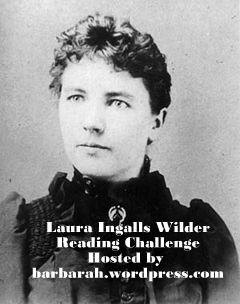
  • She was born on February 7, 1867 and died February 10, 1957 (that’s why we hold the Laura Ingalls Wilder Reading Challenge in February).
  • She didn’t start writing the Little House books until she was in her 60s.
  • She had originally written one book called Pioneer Girl, but was advised to expand it. This manuscript has just been published for the first time (it was out of stock when I ordered it and I am eagerly awaiting it!)
  • Laura’s daughter, Rose, was already a successful writer by the time Laura started writing, and the two collaborated on the Little House books. There is a great deal of controversy over exactly how the collaboration worked: some say Rose basically wrote them, others say she merely helped shape them. My opinion, from what I have read, is the latter, and I am wary of writers that claim to “know” one way or the other.
  • Before Laura wrote her books, she wrote a column for the Missouri Ruralist: most, if not all, of those columns have been compiled into a book called Little House in the Ozarks (liked to my review.) There are over 140 articles or columns arranged by topic, and the topics range from WWI, women’s progress, and “the greatness and goodness of God,” but most are just observations drawn from everyday life.
  • There was a Japanese series based on Laura’s novels called Laura, The Prairie Girl.
  • Both Laura and Almanzo were fairly short. She was 4’11” and he was 5’4″. They had the kitchen in the last house built for their height.
  • When asked why she didn’t write more books, one time she replied that the money she received from them cost her more in taxes. “She never found taxes on those who had labored their way to prosperity to be an incentive for even more labor” (Stephen W. Hines, I Remember Laura, p. 97). But another time she said that if she wrote more, she’d have to get into some of the sad times of her life (p. 122).

Some of my favorite quotes of Laura’s from her columns in Little House in the Ozarks:

  • “Let’s be cheerful! We have no more right to steal the brightness out of the day for our own family than we have to steal the purse of a stranger. Let us be as careful that our homes are furnished with pleasant and happy thoughts as we are that the rugs are the right color and texture and the furniture comfortable and beautiful” (p. 37).
  • “It is a good idea sometimes to think of the importance and dignity of our everyday duties. It keeps them from being so tiresome; besides, others are apt to take us at our own valuation” (p. 130).
  • “Just as a little thread of gold, running through a fabric, brightens the whole garment, so women’s work at home, while only the doing of little things, is like the golden gleam of sunlight that runs through and brightens all the fabric of civilization” (p. 207).
  • “Here and there one sees a criticism of Christianity because of the things that have happened [during WWI]…. ‘Christianity has not prevented these things, therefore it is a failure’ some say. But this is a calling of things by the wrong names. It is rather the lack of Christianity that has brought us where we are. Not a lack of churches or religious forms but of the real thing in our hearts” (p. 265).

Favorite moments in Laura’s books:

  • When Mr. Edwards endured an arduous journey to bring Christmas presents to the Ingalls girls.
  • When Pa played his fiddle in the evenings.
  • When they thought they lost their dog, Jack, and he found them.
  • The church Christmas party where Laura gets her fur cape and muff.
  • The girls bringing in all the firewood during a storm when Ma and Pa are away after they heard about a house of children who froze.
  • When Laura admires the kitchen Almanzo built for her in the first home together.

Fun links about Laura:

I think Laura is one of those people who gets prettier as they age. Here are pictures of her at different stages of life:

1884:

laura_ingalls_wilder

1918:

Laura-Ingalls-Wilder-1918

1936:

lauraingallswilder1936

Every time I read Laura’s books, I admire the strength and resolve of their family. It wasn’t a perfect family, but there was love, industry, strength, and much more to respect and learn from.

Friday’s Fave Five

FFF birds on a wire

It’s Friday, time to look back over the blessings of the week with Susanne at Living to Tell the Story and other friends.

Another week flown by already! Once again we did not get snow that was forecast (yay!). But I had a 2 hour long dentist appointment to do the first part of getting a bridge put in (boo! I was so wrung out when it was over!). Most weeks are like that – a mixture of highs and lows. Here are some favorite parts of this week:

1. Timothy being excited to see us. He has smiled for months, but for the last couple of weeks, when he sees us, he smiles and gurgles and bounces and kicks and waves his arms. So sweet and fun!

2. Eating in and out. Friday night Jim brought Red Lobster home, and Saturday Jason and Mittu invited us out to a breakfast/brunch restaurant they found called The Egg & I. It was a fun excursion and good food.

3. The end of road construction. They’ve been working on adding a stretch of road and an overpass and repaving part of the old road for what seems like ages, and it was finally completed this week. So nice to have all lanes open and the orange and white barrels taken up! I think I was one of the first people to drive on the new part: it was still closed when I passed by running errands, but open on my way back, so I gave it a test drive. 🙂

4. Time alone. When my kids were in high school, I had seven hours a week day to myself, and thought that pattern would continue on as they got older and left home. That hasn’t been the case, especially with Great-grandma and her helper here and Jesse working evenings. Don’t get me wrong, I don’t mean to complain and I love my family, but like any introvert, I operate best with some alone time to “hear myself think,” as my mom used to say. I’ve learned not to go around and lament about it or insist on it, but just to trust that God will provide it when He knows I need it, and this week He did. It was delicious. 🙂

5. Reaching out. At the risk of sounding antisocial with my last two here…I had noticed that I could spend a whole morning at church without really saying much to anyone but a surface, “Hi, how are you, fine, thanks.” And church is for more fellowship than that. So I’ve been trying to remember to pray on Saturday nights or Sunday mornings that God would help me not to be so closed in but to be open and friendly and to interact more with people, and He has. I share that partly as an encourage to others who feel the same way: we may not be comfortable as “greeters” shaking hands with everyone who comes in the door, but God can lead us to interact with others in quieter, one on one ways.

Happy Friday!

Book Review: Emily Climbs

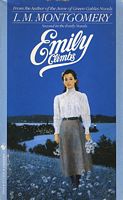
EmilyFor Carrie‘s Lucy Maud Montgomery Reading Challenge and her Reading to Know Classics Book Club for January, I read Emily Climbs by L. M. Montgomery, the second in her Emily of New Moon series. In the first book (reviewed here), Emily’s father had died and she was taken in by his people, the proud Murray clan. They did right by her in taking her in and taking care of her, but she and her Aunt Elizabeth, with whom she stayed, clashed at nearly every turn. Finally toward the end of the book they came to something of an understanding.

In this second book, Emily wants to go with her friends to high school in another town, Shrewsbury. Aunt Elizabeth says she may if she will board with her Aunt Ruth and if she will agree not to write during the years she is at school. Aunt Elizabeth has always felt that Emily’s “scribblings” were a waste of time, but to Emily they were a much-needed outlet. Emily refuses this. Cousin Jimmy, always her friend and champion, suggests a compromise: that Emily not write any fiction during that time, but she would be free to write articles and poems and write in her journal. Emily doesn’t think this idea is much better at first, but finally she and Aunt Elizabeth agree.

Aunt Ruth is in many ways worse than Aunt Elizabeth. She is much harsher, suspicious of everything Emily does and not believing her explanations. Emily finds some consolation in the beautiful landscape outside her window and in her friends, despite the various scrapes they get into.

When some of her writing is actually published, her family begins to wonder if it might be worthwhile after all, and when it opens a possible opportunity to leave the area and write as a career, Emily is sorely tempted.

The Emily books are more autobiographical than the Anne books, and if much of what Emily went through is what Maud went through, I can understand a bit why she was so unhappy as an adult. To be honest, I really didn’t like this book much at all until the last few chapters. Of course I didn’t expect them to be just like the Anne books: they would be redundant if they were. There are similarities between the two: both are orphaned and taken in to live with a single older lady who is a bit stern, with an older male relative who softens the situation. Both have a love of nature and imagination. The towns of both are full of busybodies and gossips. Each has a close friend and an arch-enemy. But there is a charm and a winsomeness about the Anne books that is largely missing in the Emily books, in my opinion anyway. There is a harshness and cattiness in the books, and even in Emily herself. She is quite sarcastic and rightly earns her aunt’s accusation of being impertinent. Her friend Ilse’s primary characteristic is her temper. When someone questions Emily after hearing that Ilse had slapped a Mrs. Adamson, Emily replies, “Mrs. Adamson needed it. She’s an odious woman — always crying when there’s no need in the world for her to cry. There’s nothing more aggravating.” If I had read this when my kids were younger, I don’t think I would have recommended it to them, at least not without a lot of discussion.

There are also a couple of weird psychic experiences in the book. When a biographer of L. M. M.‘s talked about pagan influences and attributed much of the nature loving in the Anne books to paganism, I disagreed, but this book makes me think she might possibly be right. Even one of Emily’s teachers tells her one of her poems is “sheer Paganism.” Emily comments often that there seems to be a someone or something urging that kind of thing in her thinking.

There were a couple of things I liked. When Emily first comes to her room at Aunt Ruth’s house and doesn’t like anything about it, she looks out the window at a beautiful scene that gladdens her heart. She says to herself, “Oh, this is beautiful. Father told me once that one could find something beautiful to love everywhere. I’ll love this.” In a later chapter, while reading a book that had belonged to her father, Emily says, “The book I’m reading tonight is a wonderful one – wonderful in plot and conception — wonderful in its grasp of motives and passions. As I read it I feel humbled and insignificant — which is good for me. I say to myself, ‘You poor, pitiful little creature, did you ever imagine you could write? If so, your delusion is now stripped away from you forever and you behold yourself in your naked paltriness.'” It’s an experience I think every would-be writer probably has at some point and shows a rare glimpse of humility in her. She does determine to keep writing and do her best and improve along the way. I also was much amused by a later chapter involving a meeting with a famous author and a dog.

I was pretty sure I was not going to go on and read the last book in the series, but near the end of this one there were some improvements. It doesn’t exactly redeem itself, but there are signs that Emily is maturing and that her family  is starting to see and appreciate her in new ways and vice verse, so probably by the next book that trend will continue. But if I do read it, I’ll save it for next year’s L. M. M. Reading Challenge.

L. M. Montgomery Reading Challenge Reading to Know - Book Club


(This will also be linked to Semicolon‘s Saturday Review of Books.)


How Not to Become an Old Biddy

Crabby-Old-Lady

After I was married but before I had children, I worked for some years at a fabric shop. We had a variety of customers of all ages, but some of the ones that stood out to me were the older ladies. Some were very sweet. I remember one, after I had spent a great deal of time helping her (to choose some buttons, if I remember correctly), saying, “You’ve been so kind – here, let me buy you a cocoa” while she put some change on the counter. I don’t remember what I did in response: I remember thinking I probably shouldn’t take her money, but I didn’t want to offend her, either.

On the other hand, other older ladies were…cantankerous, to put it nicely. Really, all customers could fit into either of these categories, but somehow they seemed sharper and more focused in old age.

I remember thinking that I hoped when I became an old lady, I’d be one of the nicer ones. Then, of course, it dawned on me that I was in the process of becoming the kind of older lady I would be, and I needed to start working on that now.

Now I am in my “middle years,” but with “old age” looming some time in the future (when exactly it starts keeps getting pushed back further and further 🙂 ), I’ve started to think in a more concentrated manner about becoming the right kind of older lady. So I thought I’d preach to myself a little bit in preparation. You’re welcome to read along. Keep in mind I am preaching to myself, not older ladies – that’s not my place.

Avoiding the wrong kind of old age:

Having a know-it-all attitude. Years and experience can provide more wisdom, but we should never get to the place where we can’t humbly receive what someone else has to say.

“The way we always did it” syndrome. Every new generation brings with it new vocabulary, new technology, new methods. Older people can help younger ones discern between new methods and old truth and try to keep the latter from sliding into oblivion, but we shouldn’t insist that everything be done the way we always did it (or gripe when it isn’t).

Being busybodies. Many years ago, an older lady in our church at the time told one young mom of seven that she was having too many children too close together, and another young married lady, who with her husband wanted to wait until he was out of school before starting a family, that she needed to get busy and start having children. You can imagine that both women were hurt and offended. I am sure that was not the older woman’s intent and that she thought she was helping others with the benefit of her accumulated wisdom, but she overstepped. Before sharing advice, we really need to seek the Lord about whether it is really needed and how and when it should be shared.

Being quick to judge.

Gossiping.

Impatience. You would think a person would increase in patience over the years, but I have not found that to be the case for myself. This is one area I know I especially need to work on.

Forgetting what it is like to be young, to have small children. etc.

Sharp words.

Being caught up in our physical issues. I have mixed emotions about this one. One does start having more physical issues the older one gets, and we shouldn’t expect older people to try to cover that up: we need to listen and empathize. We know how we feel now when we’re ill or hurting for a few days or weeks: imagine if that was the norm and not the occasional occurrence. On the other hand, if I expand my horizons a little bit, it will probably help my own outlook as well as give me something else to talk about.

Developing into the right kind of old age.

Keep in the Word of God. If you’ve read it through several times during your life, you may feel like you’ve got it all down. But we always have room to learn and grow spiritually: we always need fresh communion with our heavenly Father.

Take an interest in others. One serious problem for older people in our churches, as they wane in energy or start having physical problems and can’t attend as often, is that we tend to forget them. Or we hope they’re doing ok but neglect taking the time to make contact, especially if they don’t have e-mail or aren’t on Facebook where we can do so easily. As we age we may get to a place where we can’t contact others, but until then, as much as possible we can take the initiative to make a phone call or send a note.

Look for ways to serve others. You may not be able to head VBS or organize a banquet or serve in the ways you used to, but you can look for ways you can serve in your present capacity.

Don’t stop learning and growing.

Come to terms with a failing body. I don’t mean that we stop taking care of ourselves, but we realize that our physical bodies come with a limited shelf life. Years ago I heard a radio preacher say that one reason God lets our bodies start failing us as we get older is to make us more willing to give them up when the time comes. Each aging problem is a reminder that I won’t live on this earth forever, and I need to be prepared for eternity.

Don’t be bitter. People have failed us and will continue to. “Let all bitterness, and wrath, and anger, and clamour, and evil speaking, be put away from you, with all malice: And be ye kind one to another, tenderhearted, forgiving one another, even as God for Christ’s sake hath forgiven you.” (Ephesians 4:31-32).

Seek God’s will and wisdom in sharing advice. The Bible does say one thing older women are supposed to do is teach the younger (Titus 2:3-5), but it’s not always easy to know how to go about it. Dispensing unwanted advice right and left is not usually received well, especially, when it is done with harshness and impatience and a superior attitude. We need to pray much and be sensitive to the Holy Spirit’s leading in speaking to others.

Remember God has a purpose for your being here. I’ve heard older women wonder why they are still here when many of their loved ones have passed on and they can’t do much any more. Perhaps God wants you to minister in prayer for others or to be a godly example in your circumstances: perhaps He want to bless and grow others as they care for you.

Throughout my life, from my teens until now, God has placed older women at the stage just ahead of where I am whose example I can learn from. From single college girls to young wives to young parents to parents of older kids and then teens, and now facing the almost empty nest years and “middle age,” I’ve had godly examples to look to. I was inspired by one older lady where we used to live who was put into a frustrating situation of having to retire earlier than expected from a job she loved. She could have become bitter at the situation, but she came to terms with it and went on to find other ways to serve. I watched her make a point to welcome new people at church and invite them to sit with her, have other women two or three at a time over to her house for lunch, and visit with a couple of ladies in assisted living a few times a month. A couple of older ladies in our church now are consistently cheerful and take an active interest in others. One writes notes to my mother-in-law and gets together regularly with another older lady (neither of them drives, but the daughter of one takes them to a restaurant and then picks them up when they’re done).

My own mother-in-law has been a great example to me. I used to say I wanted to live until I was 100: after seeing what she has gone through in the last several years, I’ve amended that to “I want to live until I’m 100 if I can live in my own home, go to the bathroom by myself, and take care of myself.” I hope that will be the case, but God may allow something different in my life as He has in hers. So often when we’re changing her or positioning her or giving her a shower, I think, “You know, I would hate this – I would hate having other people have to handle me and take care of my most intimate needs and not be able to do anything for myself.” She probably would have felt the same way: everyone wants to be able to take care of themselves. But now that she is in this situation, she doesn’t complain (except maybe when our hands are too cold or when we have to wash a contracted hand that hurts) and is usually upbeat and cheerful. She thanks us for the least little thing we do for her. I remind myself that God gives grace for what we need when we need it: I don’t have the grace for old age now, but whatever situation God puts me in at that time, He will provide the grace then for it.

The Bible does have specific instruction for older women:

The aged women likewise, that they be in behaviour as becometh holiness, not false accusers, not given to much wine, teachers of good things; That they may teach the young women to be sober, to love their husbands, to love their children, To be discreet, chaste, keepers at home, good, obedient to their own husbands, that the word of God be not blasphemed. Titus 2:3-5

A godly example of an older lady is found in I Timothy 3:9b-10:

…having been the wife of one man. Well reported of for good works; if she have brought up children, if she have lodged strangers, if she have washed the saints’ feet, if she have relieved the afflicted, if she have diligently followed every good work.

Some of the older women in the Bible that stand out to me are Elisabeth, Mary’s cousin; Anna, who served God in the temple and told others about the coming Messiah; Lois, Timothy’s grandmother, whose “unfeigned faith,” along with that of his mother Eunice, surely influenced him.

And there is specific encouragement for that time of life:

Cast me not off in the time of old age; forsake me not when my strength faileth. Psalm 71:9

Those that be planted in the house of the Lord shall flourish in the courts of our God. They shall still bring forth fruit in old age; they shall be fat and flourishing; To shew that the Lord is upright: he is my rock, and there is no unrighteousness in him. Psalm 92:13-15

And even to your old age I am he; and even to hoar hairs will I carry you: I have made, and I will bear; even I will carry, and will deliver you.  Isaiah 46:4

Can you think of any other truths we need to keep in mind for our old age? Have you had any godly examples of older ladies in your life?

Book Review: Becoming More Than a Good Bible Study Girl

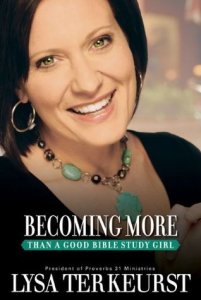
LysaA few years ago I served a very brief stint as a book reviewer for a particular publisher. I love to read and love to talk about books, so what could be better than being given books for FREE to review, right? But the publisher sent me six books at a time every month. They didn’t expect me to read and review all six every month, but still – I didn’t want reviewing for a publisher to take over my reading time, so I dropped out. One of the books I received for review during that time was Becoming More Than a Good Bible Study Girl by Lysa TerKeurst. I don’t think I had heard of Lysa before that time (since then I have read two of her other books), but this title caught my eye. I determined to read it “sometime,” and it got put in a box of unread books all awaiting the opportunity to see the light of day. I did get it out at one point and put it on a bookshelf – but still didn’t get to it. That’s one reason the TBR Challenge is good for me. At any rate, the copy I have is an advanced reader copy from 2009 (ahem…blush!), and on the back it says it is an “uncorrected proof,”  so it may be  a bit different in places from the version you can buy today. But the bulk of it should be the same.

When I first saw this book, I thought it was going to be about getting more from one’s Bible study. Though Lysa does discuss that in a couple of chapters, the overall purpose of the book is to move Bible study from our to-do list and just acquiring knowledge, to living out what God is teaching us, to enjoy a deeper connection with God.

Lysa says in the first chapter:

I want my life with Jesus to be fulfilling. I want my beliefs to work no matter what life throws at me. I want to be so certain of God’s presence that I never feel like I have to face anything in my own strength or rely on my own perspectives. My strength will weaken during hard times. My perspectives get skewed by my emotions.

I want total security no matter what happens. In other words, I want my relationship with Jesus to be enough to keep me sane and together and still fully devoted. Is this possible? True fulfillment no matter what?

Fulfillment means to be completely satisfied. How might our lives look if we were so filled with God’s truths we could let go of the pain of our past, not get tripped up by the troubles of today, or consumed by worries about tomorrow?…Just going through the motions [of prayer, Bible study, etc.] will not in and of themselves fill our souls. They must be done with the great expectation and heart cry for God to lead us into a deeper and more life-changing connection with Him (p. 25).

The rest of the book fleshes out that purpose, discussing being “good enough” (and how we aren’t except through Christ), not feeling like we measure up, our relationships, our thoughts, our ministries, when our “ugly comes out,” when we’re hurt or offended by God.

A few more quotes I noted:

“Why doesn’t Jesus work for me?” is never the right question. Instead, when circumstances shift and we feel like we fall short, we should ask, “How can I see Jesus even in this?” (p. 41).

Don’t we get into God’s Word so it can get into us? So that it can interrupt us, change us, satisfy us? How sad to simply settle for learning facts about the Bible when it was meant for so much more (p. 74).

Just because you…achieve what you always thought would make you feel special does not fix that deep-down internal insecurity. External achievement never equals internal acceptance (pp. 86-87).

Too many of us live with an uncontrolled thought life. It is possible to learn to identify destructive thoughts and make wiser choices. Instead of letting those thoughts rumble freely about in my mind, I make the choice to harness them and direct them toward truth (pp. 99-100).

Grace doesn’t give me a free pass to act out how I feel, with no regard to His commands. Rather, His grace gives me consolation in the moment, with a challenge to learn from this situation and become more mature in the future (p. 123).

Satan would love for us to pick ourselves apart, to obsess on the negative. When we do, we become hyper self-focused and take our eyes off of Jesus and the mission set before us. Many of us spend years trying to hide or fix what we perceive as personal flaws. Jesus would love for us to see ourselves as a package deal of unique qualities that He – the author and perfecter of our faith – saw as necessary for the life He’s calling us to live (p. 164). (She’s not talking here about not confessing sin: she discusses that in other places, but here she is referring to accepting how God made us).

Ask Jesus to help you fully understand the joys of obedience. Also, ask Him how you can be a woman fully committed to obedience without slipping into a legalistic approach to life. We must always remember our goal is pursuing revelations of Him. Our focus can’t be just following rules but following Jesus Himself (pp. 174-175).

I realized that most times it’s not the big things along my spiritual journey that tempt me to get off track. It’s a culmination of small daily aggravations I know God could fix but doesn’t. But what if instead of seeing these aggravations as inconveniences, I saw them as reminders to draw near to God? (p. 197).

How I long never to diminish God by loving lesser things. Rather, I want to make much of God by diminishing lesser things. May I make less of me, less of this world, less of the temporary…so that I may be a vessel more full of God, more full of eternal perspectives, more full of His everlasting! (p. 200).

Having a set of goals is a good thing for many people. But when a goal takes your focus off God and His daily intentions for you, it can cause trouble. Being driven by my plans can shift the focus of my heart from following God and being open to His unfolding invitations, to following only that which leads me closer to my desires. For me, I started falling into a trap of making plans each day around what I wanted to see happen. Anything that wasn’t part of my plan became a distraction and an unwelcome interruption (p. 211).

I have many more marked but should probably stop there. I particularly liked the chapters “Beyond Sunday Morning,” where she talks about looking at a verse phrase by phrase to discern its meaning, and “Unlikely Lessons From a Pineapple,” a great chapter talking about drawing lessons from the lives of people in the Bible, even familiar ones that we might feel we’ve known all there is to know since we were children.

I was especially blessed by a chapter where she talks about waiting for God’s timing in our calling and serving Him in the mundane, everyday tasks He has placed before us until then, realizing that they are our ministry unto Him, not a hindrance or interruption of our ministry. I came to that chapter the day after posting The Back Burner, which is along a similar vein, and was touched at God’s timing and confirmation of the truths He had been teaching me.

I appreciated Lysa’s personal experiences, transparency, and sense of humor throughout the book, but most of all I appreciated her high view of Scripture that was not an end in itself but a means of knowing and experiencing God.

There were just 2-3 minor places where I disagreed with her interpretation or application just a smidgen, but they’re not big enough to go into. I would just mention one place where, in communion with God, things were flooding her mind that she felt were from the Lord, she says, “Bits and pieces of Scripture were woven throughout, and it made me smile. It confirmed that this was, in fact, God speaking” (p. 197-198). Satan uses Scripture, too (Matthew 4), and just because thoughts come to our minds that contain Scripture doesn’t mean they are automatically from the Lord. A lot of cults have been founded on bits of Scripture wrongly interpreted and taken out of context. I’m not trying to diminish the experience she was telling about, and I feel sure she’d agree with what I am saying, but just the way it was phrased could, I thought, be confusing to some readers who might think that if a thought contained Scripture, that meant it was confirmation from the Lord.

Overall I thought this was a wonderful book that fulfilled its purpose to encourage women to go beyond checking the boxes in their Christian lives to deepening their relationship with God.


(This will also be linked to Semicolon‘s Saturday Review of Books.)