Book Review: The Printed Letter Bookshop

The Printed Letter Bookshop is the name of a book store as well as the title of Katherine Reay’s novel.

Madeline’s aunt Maddie, for whom she was named, has just died. Madeline has fond memories of staying with her aunt and uncle years ago and helping out in their bookshop. But some altercation came up between Madeline’s father and his sister. In loyalty to her dad, Madeline has kept her distance from Maddie.

Madeline thought she was going to make partner in her law firm, but she doesn’t. At a crossroads, she learns that Maddie has left her store, home, car, everything to Madeline. Madeline figures she will probably sell everything in a few months. For now she goes to check things out.

Janet was one of Maddie’s employees, the one who stayed with her in the last weeks of her illness. Janet has a kind heart but a crusty exterior, at least at first. Her base-level emotion is anger. Her marriage split up recenty, and her children, blaming her, want little to do with her.

Claire, Maddie’s other main employee, is a wife and mom. Her husband is a busy, successful consultant. Her children are constantly busy with friends, school, and activities. Her once close relationship with her daughter has cooled. Claire feels invisible.

Janet and Claire feel uneasy about Madeline, especially with her distance from her aunt and the uncertainty of her future plans for the shop. For them, the shop is their refuge, the place where they find purpose. But in working together and getting to know each other, the three women eventually form new relationships and gain new insights into themselves and each other.

The chapters rotate between the different womens’ points of view. I thought it odd that Madeline’s and Janet’s chapters were written in the first person and Claire’s in the third until near the end. But as Claire’s story unfolds, the reason for the difference in the story’s points of view becomes clear.

Katherine’s books all contain a wealth of literary references, usually to classics. With this story revolving about a bookshop and stories, literary references flow delightfully freely. Her list of classic and modern works referred to at the end covers three and a third kindle-sized pages.

A couple of my favorite quotes from the book:

That’s what books do, Maddie used to say; they are a conversation, and introduce us to ourselves and others.

You could lose yourself in a book and, paradoxically, find yourself as well.

I am from a different faith community than the main spiritual spokesperson in the book. I have dear friends within that community, but we know there are significant areas where we disagree. While I wish a couple of spiritual aspects were clearer, I felt the book did bring out some good spiritual truths.

I enjoyed the literary references and each woman’s unfolding journey individually and together. And I loved the book cover!

(Sharing with Carole’s Books You Loved, Booknificent)

End of October Musings

October was supposed to be a blank slate, a respite between “birthday season” and holiday busyness. As it turned out, I had a couple of activities come up each week, shared mostly in the weekly Friday’s Fave Fives. But most of the activities were fun fellowship without a lot of advance preparation, so little to no pressure. And we did have some restful spots here and there.

Though we’re still not experiencing the full color that eastern TN usually provides in the fall, I’ve seen more in the last week than in the whole month before. Unfortunately I wasn’t in a a place where I could park and take pictures. But I tried to look as long as I safely could while driving and soak in the beauty.

We’ve enjoyed some deliciously cool days the last couple of weeks. I haven’t turned on the heat or broken out the winter clothes yet, but we’ve had a couple of oven meals that we haven’t had since last spring because it’s been too hot to turn the oven on.

Timothyisms – cute or funny sayings from my five-year-old grandson

He was trying to put on a pair of well-loved pjs that had lost the tag. He took them off again, and his dad asked why and were they on backwards. Timothy said, “I don’t know. I don’t know.” Then he let out a dramatic sigh and said, “My life is so hard.” I’ve sometimes felt that way over little frustrations, too.

I think I have mentioned before that he loves “balloon men” (also known as air dancers) that you see at car lots and such. His parents had found a couple of small ones they got for him. Then they found some fall inflatables for about $15 at Aldi’s—similar to balloon men. That put him over the moon for a while.

Creating

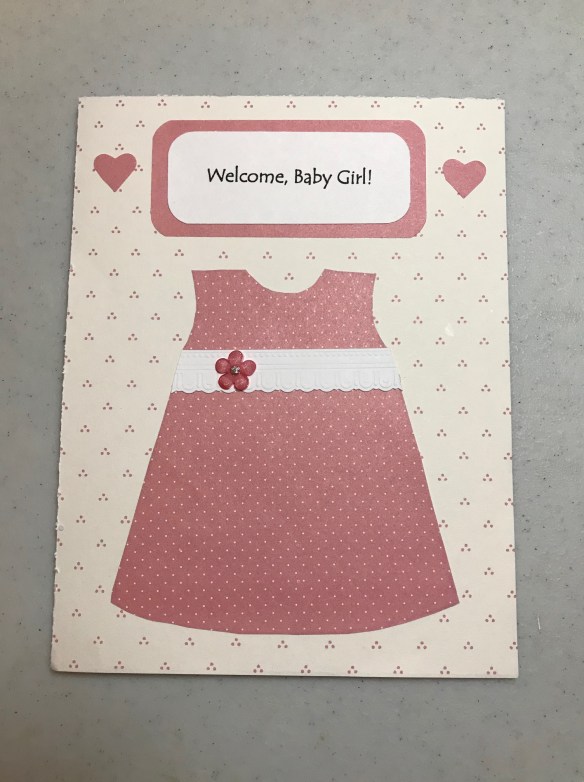
I made a couple of cards this month, one for a baby shower:

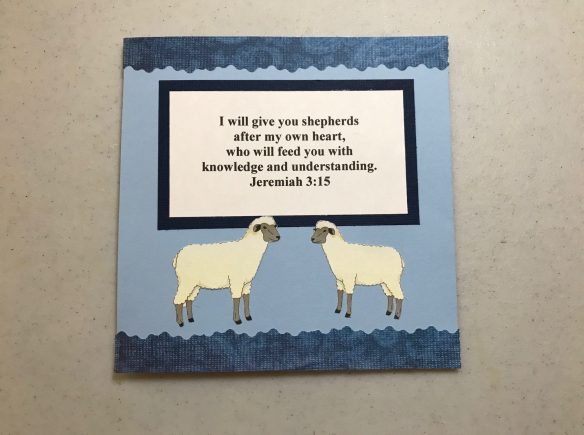
And one for Pastor Appreciation Month:

The sheep were some free clip art I printed from the computer and cut out. I made the borders out of scrapbooking paper with decorative scissors.

Reading is always a favorite pastime. Here’s what I completed this month:

  • A Constant Heart by Siri Mitchell. An arranged marriage of two courtiers during Queen Elizabeth’s reign. Quite a picture into those times and the uncertain standing in the lives of courtiers.
  • A Flower in Bloom, also by Siri Mitchell. the daughter and main assistant of a botanist feels set aside when her father hires another assistant so she can be free to marry. Her plan to attract a suitor so her father will see what her marriage will mean to him and give up the idea backfires. Though this is a different time and type of people than the above book, Siri wonderfully waves together historical detail from the times with the story of people’s hearts.
  • Honey, I Don’t Have a Headache Tonight by Sheila Wray Gregoire. Good resource.
  • Loving People: How to Love and Be Loved by John Townsend. Finally finished this! It wasn’t as helpful as I had hoped, but it did give me a few things to ponder.
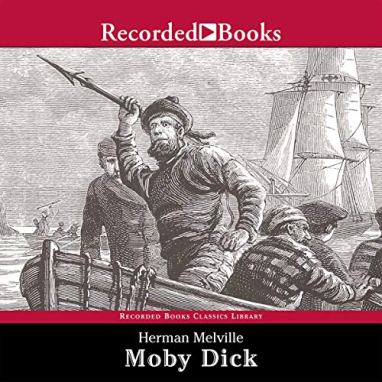
  • Moby Dick by Herman Melville, about Captain Ahab’s obsessive hunt for the white whale that cost him his leg. Thrilling in many places, tedious in others.
  • The Printed Letter Bookshop by Katherine Reay. Just finished this one a couple of days ago. I’m hoping to review it tomorrow.

I’m currently reading:

  • On Writing Well by William Zinsser
  • Swiss Family Robinson by Johann Wyss
  • Jessie’s Hope by Jennifer Hallmark

Blogging

Around the blog, besides the regular the Friday’s Fave Fives, Laudable Linkage, and book reviews, I’ve shared thoughts on:

  • Making the Bible Come Alive. We can’t—it IS alive. We’re the ones who need to be made alive by the Word of God.
  • Just Wait: It Gets Harder.” That’s something younger moms hear too often instead of encouragement.
  • Do You Want to Be Near God? Results of a short Bible study about drawing near to God.
  • Look Up. Like Bunyan’s Muckraker, we can sometimes keep our eyes and thoughts on what’s right in front of us and forget to look up to Him and to the needs of others around us.
  • Is It a Sin to Be Rich? Being wealthy isn’t politically correct these days (unless you’re in entertainment or sports—go figure). But what does the Bible say about it?

Writing

I’ve had some good editing sessions on my book, but chafe that I don’t get to it as often as I’d like. Sometimes I’m really excited about it, and it seems not too far from being done. Other times it seems awful or a long way from completion. From what I’ve read, it’s pretty normal for writers to fluctuate between those feelings.

I’m also following some agents’ blogs to get to know them and try to decide which one to approach. About the time I’ve decided to ask one, something changes my mind to consider another. If you feel led, I’d appreciate your prayers for God’s direction in that step.

And that’s my October. How was yours?

(Sharing with Wise Woman, Linda, Let’s Have Coffee, Grace and Truth, Faith on Fire,
Faith ‘n Friends, Create, Bake, Grow, & Gather, Shannan, Senior Salon,
Literary Musing Monday, Happy Now, Hearth and Soul,
InstaEncouragement, Tea and Word, Worth Beyond Rubies)


Book Review: Moby Dick

According to Wikipedia, Herman Melville wrote to his publisher that he was working on “a romance of adventure, founded upon certain wild legends in the Southern Sperm Whale Fisheries, and illustrated by the author’s own personal experience, of two years & more, as a harpooneer.” That book was Moby Dick, based on a real whale named Mocha Dick.

Unfortunately, the book did not do well during Melville’s life time. Interest in it was renewed at the centennial of his birth, with many then praising it.

One of literature’s most famous opening lines, “Call me Ishmael,” may indicate that Ismael is not his real name. On the other hand, most of the characters go by one name, first or last, so maybe Ishmael sets the precedent right off the bat. Ishmael is not a full-time seaman. He is a schoolmaster who gets a hankering to go out to sea sometimes when land life gets too much for him. He’s a loquacious narrator, telling minute details of the story, giving several examples of a concept, and going into teacher mode to describe whaling practices, features of the whale, whales depicted in art and why the artists get them wrong, etc. etc.

Ishmael starts off making his way to Nantucket to look for a sailing vessel. He explains that instead of going to sea as a passenger who has to pay, he goes as sailor who gets paid for the voyage. The inns are crowded, so he has to share not only a room, but a bed with a stranger. He’s mortified to discover in the middle of the night that his bedmate is a cannibal, Queequeg. But eventually the two become fast friends.

They are hired for the Pequod, a whaling vessel, by the owners. They don’t meet the captain yet, as he is recovering from an illness.

Even before they set sail, foreshadowings abound that something dire might happen. The preacher in Nantucket gives a sermon about Jonah and a strange man calling himself Elijah gives cryptic warnings.

The sailors meet the three mates with vastly different personalities. Starbuck, the first mate, is 30, thin, serious, pious, a bit superstitious, courageous but not foolish. The second mate, Stubb, was “happy-go-lucky; neither craven nor valiant; taking perils as they came with an indifferent air; and while engaged in the most imminent crisis of the chase, toiling away, calm and collected as a journeyman joiner engaged for the year. Good-humored, easy, and careless, he presided over his whale-boat as if the most deadly encounter were but a dinner, and his crew all invited guests.” It was quite funny to hear how Stubb both scolded and encouraged his crewmen when they were in the thick of capturing a whale. The third mate, Flask, was “short, stout, ruddy young fellow, very pugnacious concerning whales, who somehow seemed to think that the great leviathans had personally and hereditarily affronted him; and therefore it was a sort of point of honor with him, to destroy them whenever encountered.”

We don’t see Captain Ahab until chapter 28. He’s described as grim with grey hair and a scar down one side of his face. He had lost one leg and replaced it with a prosthesis made of whale bone. Later he tells the crew that he had lost his leg in a battle with a legendary white whale named Moby Dick, and his main mission is finding and exacting his revenge on the whale.

As the Pequod meets up with other boats (which meetings are called gams), Ahab has no interest in chatting with the other captains about anything except whether they’ve seen Moby Dick.

If you’re at all familiar with the story, you know the voyage doesn’t end well.

Ahab’s mission is more of an obsession. Though Starbuck tries to talk Ahab out of his vengeance, Ahab won’t listen.

When Melville is telling the story, it’s as exciting, riveting, and hard to put down as anything I’ve ever read. But interspersed between story incidents are detailed explanations and Ismael’s thoughts about everything that could possibly be connected with whales and whaling. Wikipedia cites various theories about the reasons behind the book’s layout. Some of these side excursions are interesting, some boring. With some, you wonder if the narrator is writing tongue in cheek, like when he posits that perhaps St. George’s dragon was actually a whale. He wonders what the stuff the whale spouts is made up of and muses:

He is both ponderous and profound. And I am convinced that from the heads of all ponderous profound beings, such as Plato, Pyrrho, the Devil, Jupiter, Dante, and so on, there always goes up a certain semi-visible steam, while in the act of thinking deep thoughts. While composing a little treatise on Eternity, I had the curiosity to place a mirror before me; and ere long saw reflected there, a curious involved worming and undulation in the atmosphere over my head. The invariable moisture of my hair, while plunged in deep thought, after six cups of hot tea in my thin shingled attic, of an August noon; this seems an additional argument for the above supposition.

When he comments that pirates think themselves above whalers:

I should like to know whether that profession of theirs has any peculiar glory about it. It sometimes ends in uncommon elevation, indeed; but only at the gallows. And besides, when a man is elevated in that odd fashion, he has no proper foundation for his superior altitude. Hence, I conclude, that in boasting himself to be high lifted above a whaleman, in that assertion the pirate has no solid basis to stand on.

Ishmael comments on his own storytelling:

So far as what there may be of a narrative in this book; and, indeed, as indirectly touching one or two very interesting and curious particulars in the habits of sperm whales, the foregoing chapter, in its earlier part, is as important a one as will be found in this volume; but the leading matter of it requires to be still further and more familiarly enlarged upon, in order to be adequately understood, and moreover to take away any incredulity which a profound ignorance of the entire subject may induce in some minds, as to the natural verity of the main points of this affair.

Like a lot of older books, this one has some Christian overtones. But I wouldn’t call it a Christian book. Ismael calls himself a Presbyterian, but I disagreed with Ishmael when he felt that joining in with Queequeg’s worship of a little idol he carried around with him was doing unto his neighbor as he would want his neighbor to do to him—not with all that the Bible says about idols. Starbuck is probably the closest to a genuine Christian. Ahab is full-out blasphemous.

I listened to the audiobook superbly read by Frank Muller. When the narration first started, I was disappointed Muller didn’t give Ishmael and craggy old sea-dog kind of a voice. But then I quickly realized that voice would not have been right for Ishmael as an educated man who was not a full-time sailor. Muller does give that kind of voice to Ahab, though, to great effect. Muller did all the voices and inflections well, and I am thankful I experienced the book with this narration.  I also read some parts online via Project Gutenberg here.

I read (or listened to) Moby Dick for the Back to the Classics Challenge category of a “Classic From Africa, Asia, or Oceania (includes Australia).” Moby Dick covers a lot of territory—in fact a beautifully illustrated map is here. But a great chunk of the plot takes place in the waters between those continents.

(Sharing with Carole’s Books You Loved, Booknificent)

Is It a Sin to Be Rich?

I’ve seen some sentiment recently “shaming” rich people. One said that the category of billionaires should not be allowed to exist because no one should have that much more money than anyone else.

Is it a sin to be rich? The Bible has much more to say about the subject than can be contained in one blog post, but here are a few thoughts.

Some of the patriarchs were rich: Abraham, Job, David, Solomon. Joseph of Arimathea was a rich man who took Jesus’ body from the cross and laid it in his own tomb (Matthew 27:57). There were also bad people in the Bible who were rich: Nabal in the Old Testament and the rich man at whose gate Lazarus stayed (Luke 16) as well as others. So just the fact of having riches doesn’t indicate whether one is good or bad.

Problems and dangers of riches

There are some who gain riches unjustly, and they are certainly wrong, grasping for more than God intended for them and oppressing others to do so. Some put all rich people in this category, but not all fit.

Yet God does warn that “those who desire to be rich fall into temptation, into a snare, into many senseless and harmful desires that plunge people into ruin and destruction. For the love of money is a root of all kinds of evils. It is through this craving that some have wandered away from the faith and pierced themselves with many pangs” (1 Timothy 6:9-10). Notice it doesn’t say money is the root of all kinds of evil, but the love of money is.

There are certainly dangers to being rich. One of the worst is trusting riches instead of God.

See the man who would not make God his refuge, but trusted in the abundance of his riches and sought refuge in his own destruction! Psalm 52:7

  If riches increase, set not your heart on them. Psalm 62:10b

Whoever trusts in his riches will fall, but the righteous will flourish like a green leaf. Proverbs 11:28

Another danger is that “the deceitfulness of riches” can choke the Word of God from taking root in the soul (Matthew 13:18-23). Jeremiah told Jehoiakim:  “I spoke to you in your prosperity, but you said, ‘I will not listen’” (Jeremiah 22:21). Jesus warned “Take care, and be on your guard against all covetousness, for one’s life does not consist in the abundance of his possessions” (Luke 12:15). He told of a rich man who increased in goods and built bigger barns but neglected his soul, concluding:

But God said to him, “Fool! This night your soul is required of you, and the things you have prepared, whose will they be?” So is the one who lays up treasure for himself and is not rich toward God. (Luke 12:13-21).

Jesus told His disciples:

Truly, I say to you, only with difficulty will a rich person enter the kingdom of heaven. Again I tell you, it is easier for a camel to go through the eye of a needle than for a rich person to enter the kingdom of God.” When the disciples heard this, they were greatly astonished, saying, “Who then can be saved?” But Jesus looked at them and said, “With man this is impossible, but with God all things are possible” (Matthew 19:16-26).

Lady Selina Shirley Huntingdon used to say she was “saved by an M,” pointing out that 1 Corinthians 1:26 did not say “not any noble,” but rather that “not many noble” after the flesh are called. She rejoiced to be counted among those called and used her wealth and influence to further the cause of Christ.

Not all rich people are oppressive, but the Bible warns those who are:

Whoever oppresses the poor to increase his own wealth, or gives to the rich, will only come to poverty. Proverbs 22:16

Like the partridge that gathers a brood that she did not hatch, so is he who gets riches but not by justice; in the midst of his days they will leave him, and at his end he will be a fool. Jeremiah 17:11 (see also Micah 6:10-16).

Righteous poor are better than evil rich:

Better is the little that the righteous has than the abundance of many wicked (Psalm 37:16).

Better is a little with righteousness than great revenues with injustice (Proverbs 16:8).

Better is a poor man who walks in his integrity than a rich man who is crooked in his ways. Proverbs 28:6

Riches are not reliable. The Bible warns in many places of the fleeting, temporary nature of riches (James 1:9-11). Proverbs 23:4-5 says of wealth: “suddenly it sprouts wings, flying like an eagle toward heaven.

Right perspectives

In Psalm 73, Asaph is troubled over the prosperity of the wicked until he goes to the sanctuary and is reminded of their end. He encourages himself that God is with him and will take care of him.

David had the right perspective in 1 Chronicles 29. The people had just given tremendously toward the building of the temple. Overwhelmed and grateful, David prayed, “Both riches and honor come from you, and you rule over all. In your hand are power and might, and in your hand it is to make great and to give strength to all” (verse 12). He went on to say, “But who am I, and what is my people, that we should be able thus to offer willingly? For all things come from you, and of your own have we given you” (verse 14). He acknowledged that everything he had came from God and was His in the first place.We’re only stewards of what God has entrusted us with.

Both riches and poverty have their own problems and temptations. I have often felt like Agur in Proverbs 30: 7-9, desiring to be somewhere between the two:

Two things I ask of you; deny them not to me before I die: Remove far from me falsehood and lying; give me neither poverty nor riches; feed me with the food that is needful for me, lest I be full and deny you and say, “Who is the Lord?” or lest I be poor and steal and profane the name of my God.

Jeremiah 9:22-24 clarifies: “Thus says the Lord: ‘Let not the wise man boast in his wisdom, let not the mighty man boast in his might, let not the rich man boast in his riches, but let him who boasts boast in this, that he understands and knows me, that I am the Lord who practices steadfast love, justice, and righteousness in the earth. For in these things I delight, declares the Lord.’”

After Timothy warns about the love of money, mentioned above, he says a few verses later:

As for the rich in this present age, charge them not to be haughty, nor to set their hopes on the uncertainty of riches, but on God, who richly provides us with everything to enjoy. They are to do good, to be rich in good works, to be generous and ready to share, thus storing up treasure for themselves as a good foundation for the future, so that they may take hold of that which is truly life. (1 Timothy 6:17-19).

He also encourages contentment: “But godliness with contentment is great gain, for we brought nothing into the world, and we cannot take anything out of the world. But if we have food and clothing, with these we will be content” (1 Timothy 6:6-8).

James warns against partiality towards the rich (James 2:1-13) and has harsh words for those who “have lived on the earth in luxury and in self-indulgence” (James 5:1-6).

On the other hand we have the “prosperity gospel,” which promises believers that God will shower His followers with riches. Those who preach and follow this somehow miss all that the Bible says about trials, persecutions, contentment, and warnings about riches. But that’s another post for another day.

I have no problem with the person at the top receiving more money. After all, if you received a promotion that called for more responsibility, would you be nearly as excited about it if you didn’t also receive more compensation? However, the CEO shouldn’t be living in luxury while the lowest workers are living in poverty.

Practically speaking, it’s often the rich who provide jobs and put money into the economy. In one article I saw, a man who had come from a rich family wanted to turn his back on the lifestyle. Among the things he wanted to do away with was the yacht industry. But what about all the people who work in that industry, who would lose their jobs if that industry shut down?

Some rich people also begin and sustain charities.

A Sunday School teacher once commented that God needs and uses people at all economic levels, all classes, all types, to reach those within their influence.Wealthy people have a platform as well as money, and many use that influence for good.

We’re all richer than someone. If you’ve ever traveled to a third world country, you know that most Americans seem rich by comparison. Before we condemn the rich and advocate stringent measures towards them, we need to stop and evaluate our own position.

Lawbreaking, corrupt rich should be taken to court, of course. But is being rich in itself a sin? It depends. We need to seek God’s wisdom for making the best use of the resources He has allowed. In Christian history, some, like Lady Huntingdon, have used their wealth and position to help others and further the gospel. Others, like missionary C. T. Studd, have given almost everything away. Our ultimate example is Christ: “For you know the grace of our Lord Jesus Christ, that though he was rich, yet for your sake he became poor, so that you by his poverty might become rich” (2 Corinthians 8:9). Not rich with worldly goods: “Blessed be the God and Father of our Lord Jesus Christ, who has blessed us in Christ with every spiritual blessing in the heavenly places” (Ephesians 1:3).

We don’t need to worry that some have more than others. We’re all accountable to God for what we do with what He gave us. When we know Him, we can be content, trusting Him to supply our needs. We’re not to covet or envy what others have; we’re to be generous and giving towards others.

I like how the writer of Ecclesiastes puts it: “In the day of prosperity be joyful, and in the day of adversity consider: God has made the one as well as the other, so that man may not find out anything that will be after him” (7:14). If God gives us plenty, we can enjoy it, being careful to do what Timothy said above by being generous towards others. If God allows adversity, we lean on Him and learn what He has for us.

(Sharing with Inspire me Monday, Global Blogging, Senior Salon, Kingdom Bloggers, Literary Musing Monday, Hearth and Home, Purposeful Faith, Tea and Word, Happy Now, InstaEncouragement, Anchored Abode, Recharge Wednesday, Wise Woman,
Share a Link Wednesday, Let’s Have Coffee, HeartEncouragement, Grace and Truth,
Faith on Fire, Faith ‘n Friends)

Laudable Linkage

IMG_0195

Here’s my latest collection of good online reads:

Seven Deadly Sins for Writers. Even though this post is aimed at writers, its discussion of the pervasiveness of pride applies to anyone.

Tolerance Trouble, HT to Challies. “The Corinthian church boasted about its tolerance of the incestuous man who was permitted to retain membership and acceptance within the Corinthian church. They were congratulating themselves for such open-mindedness when they should have been weeping.”

And concerning tolerance of a different kind: What Does 2 John Have to Teach Us about Partnering with False Teachers?, HT to Challies. This was refreshing to read because this is what I’ve believed for years, but have not seen many people writing this publicly.

What It Means to Pray “Your Kingdom Come.” The True Woman blog, which is under the umbrella of Nancy DeMoss Wolgemuth’s Revive Our Hearts ministry, is doing a series on the individual phrases in what we call “the Lord’s prayer.” I thought this one was particularly good.

Wives Who Churn About Husbands “Leading Spiritually,” HT to Lou Ann. Though this is addressed to home school moms, it applies to any Christian wife.

Sorry, Banning Plastic Bags Won’t Save Our Planet, HT to Challies. “As with other environmental issues, instead of tackling the big-picture problems to actually reduce the plastic load going into oceans, we focus on relatively minor changes involving consumers, meaning we only ever tinker at the margins.”

A True (Humorous) Look at the Writing Process. Although I have only reached the first three stages, and I’m writing nonfiction, I can relate!

Finally, I thought this was funny: a dog’s melodramatic reaction to having its nails clipped:

Happy Saturday!

Friday’s Fave Five

It’s Friday, time to look back over the blessings of the week
with Susanne and other friends at Living to Tell the Story .

It’s been deliciously cool this week! Here are some other high points:

1. Lunch with friends. Our church had a potluck dinner Sunday, then I met with a friend for lunch later in the week. Good times!

2. Water bottle rockets. We did these with our kids, and it was fun to do them with Timothy. It was fun to hear him count down and then get so excited watching them blast off and land.

3. A bit of color on two different fronts. We haven’t had much fall color this year, they say because we haven’t had much rain. The leaves in our neighborhood look mostly rusty. But as I was out yesterday, I saw some bright orange and yellow trees here and there. I miss the full-blown fall color we usually have, but that little bit cheered me.

Then I looked out the back door and was surprised to see my hydrangea with fresh blooms:

The roses and begonias are still going strong as well some of the petunias.

4. Lindt candy. Lindt milk chocolate truffles are my favorite candy. But my husband found and bought this Lindt variety pack last weekend. Usually with these kinds of candy collections, there are a few duds in the mix that no one likes. But these were all really good!

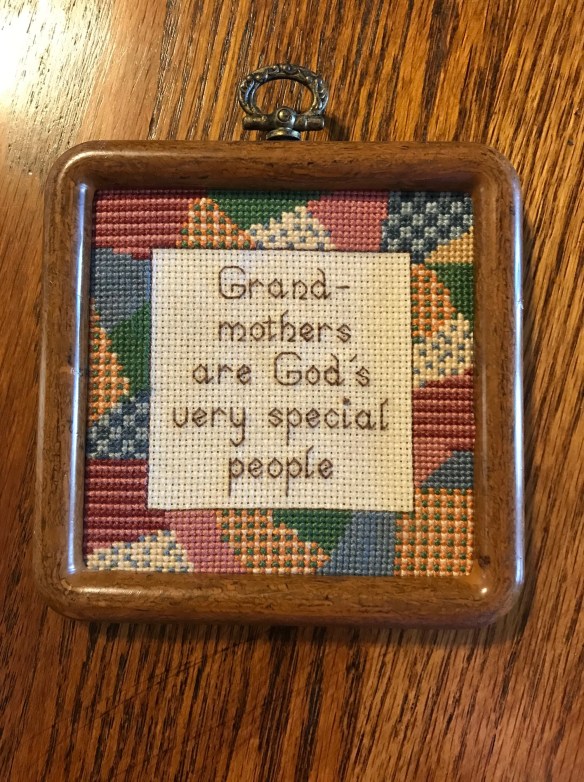
5. A special discovery. Several years ago, I made this little plaque for my mother-in-law. Since her passing, this was the one thing of hers I wanted to keep personally, but I had no idea where it was. Last weekend, Jim and I were going through some boxes of his mom’s things in our attic, and we found this. I was thankful.

Happy Friday!

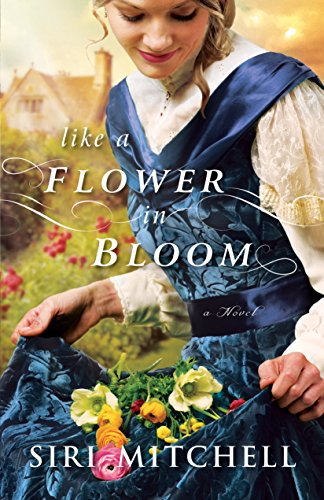
Book Review: Like a Flower in Bloom

 In the novel Like a Flower in Bloom by Siri Mitchell, Charlotte Withersby’s father is a botanist in Chesire, England, in the 1850s. Her mother was a botanist as well, and Charlotte loves to study and illustrate plants. Since her mother died, Charlotte has been her father’s assistant, secretary, and all around right-hand person.

But Charlotte is now 22, and her uncle, the Admiral, thinks it’s high time for her to go into society and find a husband. Charlotte has no interest in either society or matrimony. She loves her work, and she doesn’t think her father can possibly do without her.

But then a long-time correspondent, a Mr. Edward Trimble from New Zealand, shows up on the Withersby’s doorstep. He seems the ideal solution: he can assist Charlotte’s father so the Admiral can introduce Charlotte to society.

Besides Charlotte’s lack of interest, being presented to society is fraught with another  major problem. Charlotte’s father has never had any interest in society. He has always been the somewhat eccentric absent-minded professor type. With only her father as her main companion for life, Charlotte doesn’t know how to dress or act. Fortunately she finds a friend in Miss Templeton, who likes Charlotte’s quirky ways. Miss Templeton is younger but also tasked with finding a husband, something she dislikes as much as Charlotte, but for different reasons.

Charlotte hatches a plan. Since she can’t seem to escape her fate, she’ll go after a husband just to make her father realize that he can’t do without her. Then he’ll call off this nonsense.

But Mr. Trimble proves himself an able assistant, so that her father seems to be able to get along without her very well. And her plan to attract suitors, assisted by Miss Templeton, succeeds only too well.

I’m afraid I didn’t like Charlotte at first. Even the person who came to love her called her “the most maddening, most vexing, most exasperating woman I have ever met.” I didn’t mind the fact that she didn’t know how to fit in society, and I even agreed with her that some conventions seemed silly. But at first she seemed to see only her own viewpoint. Yet, as I got to know her, and as she broadened her horizons and learned a little humility, she grew on me.

One of my favorite quotes from the book:

Conversation, my dear Miss Withersby, is a very fragile creature. You must nourish it if you would have it survive. Its favorite food is a question.

Siri Mitchell’s books are far more than romances. I loved her note at the end of the novel where she explained the different influences that went into this story: women who contributed to the study of botany but could not be published under their own names, the conflicting views of botany between scientists and religious people, the eccentricity of botanists, the unusual collections and plant projects of the times, the Opium wars between Britain and China, the nature of introverts, the concept of a helper in the Bible, Victorian gender roles and expectations. She wove all of these together seamlessly, with warmth and humor. Above all the book illustrates the main theme of being who God created you to be.

(Sharing with Literary Musing Monday, Carole’s Books You Loved, Booknificent)


Look Up

I don’t know how to type correctly. Somehow I never had a typing or keyboarding class. Over the years I have developed my own “hunt and peck” method, which is slow and riddled with mistakes.

Since I’m not trained to know which keys are what direction, I have to look down at the keyboard. You’d think, after typing for 40 years, that I’d know the keyboard by now. Because I’m looking down, I don’t realize what mistakes I’ve made until I look up again. Sometimes I don’t realize I accidentally hit the “Caps Lock” button until I look up and see a sentence or two capitalized. Sometimes I highlight something to delete or move, and when I look up again, I can’t even recognize my paragraph because somehow my highlighting shifted and caught more words than I meant for it to. I’m abundantly thankful for Control+Alt+Z to undo my last action! Other times, I miss a prompt that would have saved me a few keystrokes.

I may not be able to help looking down at a keyboard: my (bad) habits have been ingrained for so long, I don’t know if a typing class could help me now.

But this continual looking down reminds me of a character in the second half of John Bunyan’s Pilgrim’s Progress. Part 1 of the story focuses on Christian; Part 2 features his wife, Christiana. In one scene, the Interpreter takes Christiana to a room “where was a man that could look no way but downwards, with a Muckrake in his hand. There stood also one over his head with a Celestial Crown in his Hand, and proffered to give him that Crown for his Muck-rake ; but the man did neither look up, nor regard; but raked to himself the Straws, the small Sticks, and Dust of the Floor.”

Then said Christiana, “I persuade myself that I know somewhat the meaning of this: For this is a Figure of a man of this World : Is it not, good Sir?”

“Thou hast said the right,” said he, “and his Muck-rake, doth shew his Carnal mind. And whereas thou seest him rather give heed to rake up Straws and Sticks, and the
Dust of the Floor, than to what he says that calls to him from above with the Celestial Crown in his Hand ; it is to show, that Heaven is but as a Fable to some, and that things here are counted the only things substantial. Now whereas it was also shewed thee, that the man could look no way but downwards, it is to let thee know that earthly things when they are with Power upon Men’s minds, quite carry their hearts away from God.”

Then said Christiana, “O! deliver me from this Muck-rake.”

“That Prayer,” said the Interpreter, “has lain by till ’tis almost rusty: Give me not Riches, is scarce the Prayer of Prov. 30. 8. One of ten thousand. Straws, and Sticks, and Dust, with most, are the great things now looked after.”

With that Mercy and Christiana wept, and said, “It is alas! too true.”

I assume this was in the days of dirt floors, so this man’s task was a necessary one. But it wasn’t the only thing in life that needed his attention. He was so caught up in the everyday tasks that he missed the most important things.

In the parable of the sower, Jesus described some “who hear the word, but the cares of the world and the deceitfulness of riches and the desires for other things enter in and choke the word, and it proves unfruitful.”

We can get so caught up with the cares of this word, can’t we? Floors have to be cleaned, as well as the rest of the house, errands run, meals cooked, laundry washed, dried, and folded, family tended to, and so on, and so on, and so on. And then the desire for other things distracts our thoughts.

But we need to take time to look up.

Lift up your eyes on high and see: who created these? He who brings out their host by number, calling them all by name; by the greatness of his might and because he is strong in power, not one is missing. (Isaiah 40:26, ESV).

All our tasks and pursuits here are only temporary. There’s a greater reality beyond our muckraking.

Lift up your eyes to the heavens, and look upon the earth beneath: for the heavens shall vanish away like smoke, and the earth shall wax old like a garment, and they that dwell therein shall die in like manner: but my salvation shall be for ever, and my righteousness shall not be abolished (Isaiah 51:6).

And when these things begin to come to pass, then look up, and lift up your heads; for your redemption draweth nigh (Luke 21:28).

The muckraker didn’t believe in anything higher to look up to. Let’s not follow his mistake.

They shall look upon me whom they have pierced, and they shall mourn for him, as one mourneth for his only son (Zechariah 12:10b).

Look unto me, and be ye saved, all the ends of the earth: for I am God, and there is none else (Isaiah 45:22).

And I, if I be lifted up from the earth, will draw all men unto me. (John 12:32).

Even after salvation, we have to continually remind ourselves to keep the right perspective, to put God first, to seek His ways.

My voice shalt thou hear in the morning, O Lord; in the morning will I direct my prayer unto thee, and will look up (Psalm 5:3).

If then you have been raised with Christ, seek the things that are above, where Christ is, seated at the right hand of God. Set your minds on things that are above, not on things that are on earth (Colossians 3:1-2, ESV).

We look up to acknowledge our need for the only One who can help:

I lift up my eyes to the hills. From where does my help come? My help comes from the Lord, who made heaven and earth (Psalm 121:1-2, ESV).

And we need to look from our pursuits to minister to others:

Look, I tell you, lift up your eyes, and see that the fields are white for harvest (John 4:35b).

Let each of you look not only to his own interests, but also to the interests of others. Have this mind among yourselves, which is yours in Christ Jesus (Philippians 2:4-5a, ESV).

God has given us good work to do, but He never meant for those tasks to eclipse Him. Much of our life and ministry is in the mundane, everyday moments of life. But that work and those moments are given meaning by the time we look up to Him. It’s vital to spend time with Him, and then carry those thoughts we gain from His Word back into our everyday lives.

Looking unto Jesus the author and finisher of our faith. ~ Hebrews 12:2a

O soul, are you weary and troubled?
No light in the darkness you see?
There’s light for a look at the Savior,
And life more abundant and free!

Turn your eyes upon Jesus,
Look full in His wonderful face,
And the things of earth will grow strangely dim,
In the light of His glory and grace.

Helen H. Lemmel, 1922

(Sharing with Inspire Me Monday, Global Blogging, Senor Salon, Literary Musing Monday, Tell His Story, Purposeful Faith, Tea and Word, Hearth and Soul, Happy Now, InstaEncouragement, Anchored Truth Tuesday, Recharge Wednesday, Wise Woman,
Let’s Have Coffee, HeartEncouragement, Grace and Truth, Faith on Fire, Faith ‘n Friends.
Linking does not imply 100% agreement.)


Laudable Linkage

Here’s my latest collection of thought-provoking posts:

Do Christians, Jews, and Muslims Worship the Same God? HT to Challies.

When You’re Tempted to Hate People, Part 10. Aspects of God’s forgiveness that we don’t often think about: He knows whether our repentance is sincere and He knows we’re going to fall again in the same way, yet still forgives.

For Childhood Fears, Bible Memory is Not Enough. “Did you notice how God doesn’t just speak to the mind, but also to the imagination?”

Exactly Where I Need to be When I Need to Be There. “Recently the Lord took a frustrating situation that tested my patience and reminded me my timing and priorities are different than His and that He often places me exactly where I need to be when I need to be there.”

The Importance Of Doing What Anyone Could Do, HT to Challies. “It’s a good thing for all of us that people have developed these skills. It’s also true that the world is always in need of the non-specialised abilities that all of us are capable of using: Love. Friendship. Shared time. A listening ear. A hard day’s work. Loyalty. Respect.”

Embodying Masculinity in a World that Rejects It.

A Writer’s Evening Prayer.

Getting Your Digital Accounts Ready in Case of Death, HT to Challies.

101 Fun Fall Activities for Kids, HT to the Story Warren.

Finally, someone posted this on Facebook. I couldn’t figure out who originally made it to give them credit, but it made me smile.

Happy Saturday!

Friday’s Fave Five

It’s Friday, time to look back over the blessings of the week
with Susanne and other friends at Living to Tell the Story .

Fall has well and truly arrived here in eastern TN. It’s been downright chilly in the mornings, though we’ve not turned on the heat yet. Someone posted on FaceBook a funny meme that we get all four seasons in one day: winter in the early morning, spring mid-morning, summer early afternoon, and fall late afternoon. That’s about right.

Here are some favorites from the last week:

1. “Girl time” with Mittu. I met my son and daughter-in-law and grandson for lunch at the mall Saturday, and then Mittu and I saw a movie that none of the guys were interested in. We wondered that we hadn’t done more girl things over the years. With Timothy’s babyhood and then caring for my mother-in-law, there wasn’t as much opportunity. But maybe now there is!

2. Ladies group from church met Saturday morning. Always a joy to get into the Word of God with these ladies.

3. Family time. Jason and Mittu came over and made burritos Saturday night. Then Jim and Timothy shot off some rockets made from plastic soda bottle and propelled by water. By the time we got outside, it was a little too dark to see how far they went up, so we’ll have to do them again some time when it’s light outside. But Timothy enjoyed watching them take off and land. Then the next day we met for lunch and wandered around an antique show for a bit. Not all of it was antiques: many of the displays looked like things Chip and Joanna Gaines (from Fixer Upper) would use.

4. Toy Story 4 was part of our family time as well, but I wanted to give it its own slot. When I first heard they were making a fourth installment, I was wary. I didn’t want the franchise run into the ground, and I felt the third movie had wrapped things up nicely. But this fourth movie was really good and as heart-touching as the others.

5. Surprise treats. Since I was away from home most of Saturday, I asked Jim if he would pick up a few things from the store for me. For the next couple of days, I found small packs of my favorite candy hidden in spots around the house. I hadn’t had them on my list—he saw them and wanted to surprise me.

Then when I picked up a grocery order from W-Mart, they handed me a surprise bag of goodies, too.

It’s been a great week! Hope yours has been, too.