The Power of God’s Word

When I was in college, the “Iron Curtain” separated the extended Soviet Union from the rest of the world. One campus group I participated in prayed regularly for Christians who had been arrested for their faith in eastern European countries under the rule of communism. Georgi Vins was one of the prisoners we prayed for, and it was a thrill when he was released.

One occasional guest speaker in chapel was an evangelist who made clandestine trips into the Soviet Union to encourage the Christians there. He may have smuggled Bibles and Christian literature in—I don’t remember. It’s probably a good thing that I can’t remember his name.

Once he told of a particular couple in one underground church. The wife was a Christian. The husband was not, but went with his wife to church meetings even though he was deathly afraid of being arrested.

The church didn’t have enough Bibles for everyone. It would have been too conspicuous for people to have Bibles in their homes, anyway. So when the church met in the woods, the leaders would tear out pieces of a Bible and hand the scraps to the congregants.

This particular man got a piece of Scripture that read, in part, “The Lord said to Jeremiah . . . ” Frustrated, the man thought, “Jeremiah? Who is this Jeremiah? Who has even heard of him?”

After a while, though, the man was encouraged. “If God can speak to this Jeremiah, who no one has even heard of, then God sees me and can speak to me, too.” This was the first step that led to the man becoming a believer in the one true God.

Such is the power of the Word of God that He can use even an obscure phrase of it to draw someone to Himself.

God’s Word is so powerful, He made everything in the world, except people, just by speaking. Over and over in Genesis 1, God said, “Let there be. . . ,” and there was. “By faith we understand that the universe was created by the word of God, so that what is seen was not made out of things that are visible” (Hebrews 11:3).

Jesus “is the radiance of the glory of God and the exact imprint of his nature, and he upholds the universe by the word of his power (Hebrews 1:3).

Jesus healed, stilled a storm, cast out demons, and raised the dead all by His words.

Jesus resisted Satan with Scripture (Matthew 4:1-11). Ephesians 6:16-17 says the Word of God is our spiritual sword. As Luther wrote in “A Mighty Fortress Is Our God”:

The prince of darkness grim,
we tremble not for him;
his rage we can endure,
for lo! his doom is sure;
one little word shall fell him.

Jesus is the Living Word. The Holy Spirit breathed out God’s Word through the people He used to give us the written Word in Scripture.

God’s Word is so powerful that people who sought to disprove it, like Lee Strobel and Viggo Olsen, were instead converted by it.

God’s Word is powerful to convict of sin. When Peter preached it, men were “cut to the heart, and said to Peter and the rest of the apostles, ‘Brothers, what shall we do?'” (Acts 2:37).

“For the word of the cross is folly to those who are perishing, but to us who are being saved it is the power of God” (1 Corinthians 1:18).

“For I am not ashamed of the gospel, for it is the power of God for salvation to everyone who believes, to the Jew first and also to the Greek” (Romans 1:18).

God’s power, though His Word, enables us to live for Him. “His divine power has granted to us all things that pertain to life and godliness, through the knowledge of him who called us to his own glory and excellence, by which he has granted to us his precious and very great promises, so that through them you may become partakers of the divine nature, having escaped from the corruption that is in the world because of sinful desire” (2 Peter 1:3-4).

God’s Word is so powerful, we can lean the weight of our entire soul upon it. It’s not a magic wand: it doesn’t promise healing or prayers answered just the way we want. But it promises God’s wisdom and grace. When it says we can be saved by trusting Jesus, we can. When it says He will meet our needs, He will.

God’s Word is so powerful, we can use it even when people say they don’t believe it. We shouldn’t club them with it or be obnoxious about sharing it. But as we share with people what God said, He will use His Word to open their eyes and shine His light in their hearts.

Don’t be afraid to rely on and share God’s Word. He promises it “shall accomplish that which I purpose, and shall succeed in the thing for which I sent it” (Isaiah 55:11). “For the word of God is living and active, sharper than any two-edged sword, piercing to the division of soul and of spirit, of joints and of marrow, and discerning the thoughts and intentions of the heart” (Hebrews 4:12).

(I often link up with some of these bloggers.)


Laudable Linkage

Here’s my latest set of interesting reads discovered this week.

The Courage of Confession. “The gift of repentance only comes to the penitent heart, providing the courage of confession. Yet instead of coming to God in sorrow and humility, we come bearing an armload of excuses for our sin, finding true confession and subsequent forgiveness difficult.”

The Gospel of Self-Forgiveness, HT to Challies. “Can you point me to one example of someone forgiving themselves in the Bible? There is no category of self-forgiveness in the Bible. And that is a freeing truth! Your shame and guilt is not dependent upon your ability to forgive yourself.”

See Me, HT to Challies. “We all have a need–a craving–to be noticed. And in the noticing, praised. Esteemed. Wanted. Loved. But too often our parents disappoint us. And our friends become our competition.”

Squinting for the Glory of God, HT to Challies. “Your greatest weakness may be the kingdom’s greatest asset since it can become an occasion for God to flex his might.”

Your Past Does Not Have to Be Your Future, HT to Challies. “Are you on the sidelines because you messed up? Have you checked out because something went wrong? Do you believe you are damaged goods because of your failures?”

Encouragement for Fainting Disciplers. It’s hard when you work with someone to help them come to know the Lord and grow in Him, and then they suddenly seem to lose interest. This article offers some help for that scenario.

Friday’s Fave Five

Winter has come back for what I hope is its last hurrah before spring settles in. We’ve had freeze warnings, but thankfully no icy precipitation. Meanwhile, it’s time to pause once again with Susanne and friends at Living to Tell the Story to look back at the highlights of the last week.

1. A Saturday outing. During the early part of the pandemic, Jason, Mittu, and Timothy went to explore Fort Loudoun. The visitor’s center was closed, but people could walk around the grounds. They wanted to go back and visit last week and invited us along. We ate a picnic lunch of egg salad sandwiches Mittu made and some chips. There were several picnic tables where we had a nice view of the Little Tennessee River and the mountains in the distance.

The weather was just a bit too cold–I had brought both my hoodie and jacket, not sure which would be best. I ended up wearing both and was still cold. But we warmed up when we started walking around.

The fort was originally built by the British during the French and Indian War in 1756. It was reconstructed in the 1920s and later made into a historical site. The visitor’s center was open this time.

We missed a live reenactment by a week. But we didn’t want to make the hour drive again so soon, so we’re not planning to go back tomorrow. Though it might have been fun to see, I enjoyed having the place almost to ourselves during our visit.

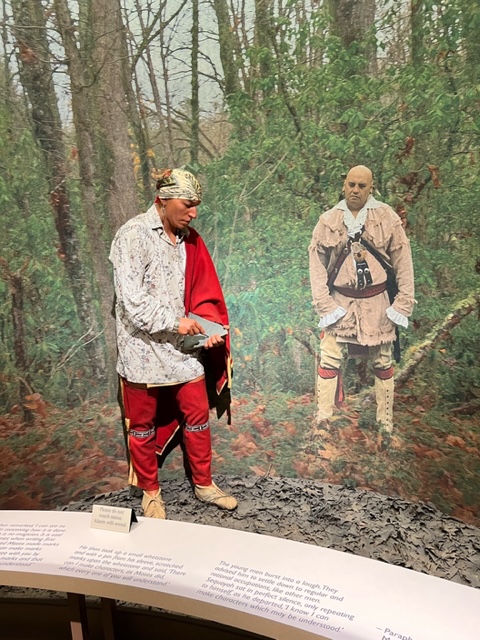
Due to missing our turn into the park area, we went past it and discovered the Sequoyah Birthplace Museum. We went and explored that after visiting the fort. I’m sorry to say that at first I thought Sequoyah referred to a tribe. Jim said no, Sequoyah was the Cherokee who developed a system of writing for his tribe. He was right (I didn’t feel so bad when my brother-in-law had the same thought I did).

This was a small museum, but exceedingly well done. The murals on several walls and life-like figures in places as well as the video presentations were really good quality and informative. I enjoyed learning about Sequoyah. It was fascinating that he not only worked for years to develop his system, but then had to convince the rest in the tribe that reading and writing would be valuable. But once he did, his system took off.

Sequoyah Museum

All in all, it was a fun day.

2. A serendipitous coupon. I got an email from Audible giving me a $10 coupon. I looked at their sale section and found two books I’d been wanting to read, one at $4.99 and the other at $5.99. With tax and the coupon, I only paid a little over a dollar for two audiobooks.

3. Bay leaves. We seem to get an invasion of ants once or twice a year. When Timothy was little, I didn’t want to use insecticides in the house. So I looked for natural ways to repel ants, and one site suggested bay leaves. We keep a few spread around in our cabinets now, and don’t have any problems with ants in them any more. I have to replace them with fresh leaves about once a year. This week, though, the little nuisances have been on our kitchen counter. So I spread a few bay leaves there for a few days. (As a side note, it’s not good for kids or pets to chew on bay leaves. When Timothy was young, we placed them where he couldn’t reach them. Now, of course, he knows better than to put them in his mouth). I’m thankful not only for a safe method of discouraging ants, but also that the leaves are not as messy as some of the other natural methods I read about.

4. Chocolate drizzled popcorn. Jason and Mittu brought a couple of types over last week. One even had peanut butter along with the chocolate. The sweet and salty combination was just right, and the calorie content wasn’t very high. I didn’t find the same brand they had when I went to the store, but the brand I found was just as good.

5. Brazi Bites Brazilian Cheese Bread. I can’t remember which store I found these in, but they were gluten-free, so I thought we’d give them a try for those in the family that have gluten issues. The flavor I got was Garlic Asiago. We warmed them up last night, and they were so good. I will definitely be looking for them again.

Bonus: It’s been another light cooking week.Jim was out of town most of the week, and I got take-out one night and then just made easy stuff the other nights.

We missed Pi Day (where we eat pie on 3.14) partly because Jim was away and partly because I was working on a project. But Mittu offered to make a belated Pi Day dinner tonight, so we’re looking forward to that.

That was our week. How was yours?

Becoming Free Indeed by Jinger Duggar Vuolo

I didn’t watch any of the TV shows about the Duggars, an ultra-conservative Christian family with 19 Children (19 Kids and Counting, Counting On). But I’d heard about them. I knew people who were caught up in the same teachings they were, though perhaps not to the same extent. I didn’t realize, at first, that those teachings came from Bill Gothard. I had heard of him, too, and knew he was some kind of Bible teacher. But somehow I never heard him speak or read anything he wrote.

Jinger Duggar Vuolo is the sixth of the Duggar children, the fourth girl. It wasn’t until one of her sisters married a man who was a Christian who loved God but didn’t hold to all the things the Duggars did that Jinger began to question her own beliefs. She discovered some of what she had been taught was not in the Bible. To her credit, she didn’t “deconstruct” her faith and throw everything out, good and bad. She sought counsel and studied the Bible for herself. She tells about her journey in Becoming Free Indeed: My Story of Disentangling Faith from Fear.

There are areas that the Bible doesn’t speak to directly and that Christians can differ on and follow their consciences. But Gothard made those issues concrete right or wrong, which produced a kind of legalism. Those convictions also produced a lot of fear for Jinger.

So much of my fear and anxiety after I became a Christian was tied to my overactive conscience. I had created false standards of righteousness: standards that were impossible for me, or anyone, to measure up to. But where did those false standards come from? At the time, I thought my convictions came from the Bible. Now I know that wasn’t the case. Now I know that instead of coming from the perfect Word of God, they came from the mind of an imperfect man (p. 23-24).

According to Gothard, following his principles was the same as obeying God (p. 28).

But even worse was Gothard’s misinterpretation of the Bible.

I believed that God had a specific, individualized interpretation for me. Bill Gothard called these personal interpretations of Scripture rhemas—communication from God to one person and no one else. The IBLP website defines a rhema as “a verse or portion of Scripture that the Holy Spirit brings to our attention with application to a current situation or need for direction” (p. 111).

I assumed the same thing was supposed to happen to me when I read the Bible. I was hoping to discover a hidden meaning that would be revealed not through words but through thoughts I would have as I was reading those words.

Gothard’s rhemas weren’t limited to the Bible. He also saw God communicating His will through personal experiences (pp. 111-112).

When I was younger, I didn’t realize that when Gothard told stories, he was finding truth in analogies, not in the Word of God (p. 113).

Gothard was eventually accused of sexual harassment. Jinger writes that he surrounded himself in his offices with young blond women, many of whom did not have a father or grandfather. Even though girls working in an office “outside the home was forbidden among IBLP families” (p. 167), somehow Gothard followers just thought this a quirk. Only later did stories of his misconduct emerge.

I appreciate Jinger’s use of the word “disentangling.” That’s just what she had to do as she studied the Bible for herself: disentangle the false things she had been taught from what the Bible actually said.

Jinger is very gracious and doesn’t throw her parents under the bus. She credits her mom, in particular, with pointing her to grace. But Jinger does firmly expose Gothard’s false teachings and actions. She does so not only to share her story, but to be a help to anyone caught up in his teachings or the false teachings of anyone.

But this book is helpful even for those of us who weren’t Gothard followers. It helped me understand where some of my friends caught up in these teachings were coming from. And I could identify with a good deal of what Jinger wrote, even though my issues were not exactly the same as hers. I think as we grow in the Lord, we all have to disentangle some of the false ideas we’ve encountered from the truth of God’s Word.

It took a lot of courage for Jinger to speak out against the false teachings and actions she grew up with. I’m thankful God led her to a right understanding and that she shared what she learned for the benefit of others.

(I often link up with some of these bloggers.)

Grace When Others Fail Us

Grace when others fail us

As I puttered around the kitchen, the radio preacher shared a hypothetical story.

In the context of teaching women to love their husbands from Titus 2, the speaker told of a man whose main conversations with his wife at home centered on her telling him what needed to be done around the house. Then when the man went to his workplace, his pretty young secretary built up his ego by pointing out how well he did his job, how capable he was, etc. Since the husband felt starved for attention and affirmation, he was ripe for at least an emotional and perhaps even a physical affair with his secretary—and it was all his wife’s fault.

Now, a sermon illustration by its nature is sometimes oversimplified. But this one stirred a few thoughts.

First of all, should women be careful how they speak to their husbands? Of course. When Jesus said to love our neighbors as ourselves, our family members are our first neighbors. All the Bible says about speech being kind, gracious, and edifying needs to be applied at home before anywhere else. Sometimes we’re on our guard when we speak to others outside the home, but get careless within our own walls.

When the honeymoon is over and life gets busy, it’s easy to fall into utilitarian conversation and forget to talk just to enjoy each other. We need to remember to thank each other for the things that are done and not take each other for granted.

We need to treat our husbands respectfully (Ephesians 5:33). I cringe when I hear women talk to their husbands like children or give them a dressing down or ridicule or belittle them.

So yes, I agree, how we speak to our husbands is a big factor in how we show love to them. And building them up at home will help them be less susceptible to the flattery of others.

However . . .

A husband is not justified in seeking attention elsewhere if he feels he’s not getting enough at home.

When we stand before God some day to give an account of our lives, we’re not going to be able to point to anyone else and blame them for our sins.

God provides a way out of temptation. “No temptation has overtaken you that is not common to man. God is faithful, and he will not let you be tempted beyond your ability, but with the temptation he will also provide the way of escape, that you may be able to endure it” (1 Corinthians 10:13).

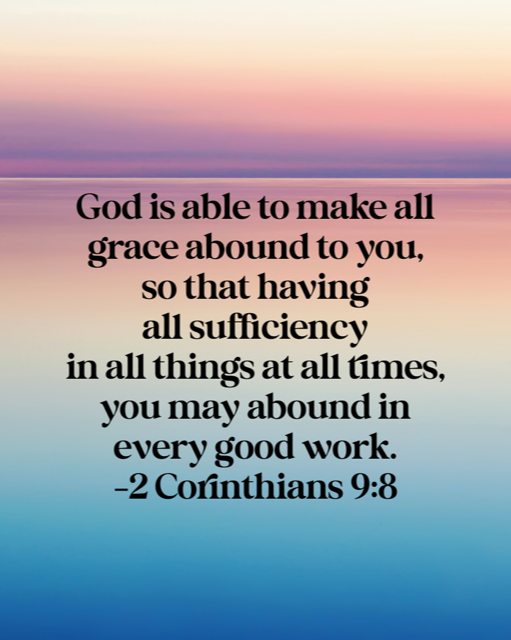
God’s grace is sufficient for whatever He requires of us. “And God is able to make all grace abound to you, so that having all sufficiency in all things at all times, you may abound in every good work.” (2 Corinthians 9:8).

God has given us everything we need to live godly lives. “His divine power has granted to us all things that pertain to life and godliness, through the knowledge of him who called us to his own glory and excellence, by which he has granted to us his precious and very great promises, so that through them you may become partakers of the divine nature, having escaped from the corruption that is in the world because of sinful desire” (2 Peter 1:3-4).

The Bible warns us about flattery, particularly the dangers to men of a flattering woman.

“Wisdom will save you also from the adulterous woman, from the wayward woman with her seductive words” (Proverbs 2:16, NIV. Other translations say “smooth” words or “flattering” words).

With much seductive speech she persuades him; with her smooth talk she compels him. All at once he follows her, as an ox goes to the slaughter, or as a stag is caught fast till an arrow pierces its liver; as a bird rushes into a snare; he does not know that it will cost him his life.”

“And now, O sons, listen to me, and be attentive to the words of my mouth. Let not your heart turn aside to her ways; do not stray into her paths, for many a victim has she laid low, and all her slain are a mighty throng. Her house is the way to Sheol, going down to the chambers of death” (Proverbs 7:21-27).

For the lips of a forbidden woman drip honey, and her speech is smoother than oil,
but in the end she is bitter as wormwood, sharp as a two-edged sword” (Proverbs 5:3-4).

If one of my kids or grandkids or any other young person under my influence came to me with the situation in the sermon illustration and asked what to do, I’d advise two things.

First, at a relaxed time, talk to your spouse. Don’t accuse or act defensive, but just honestly state you’re feeling more like a handyman than a husband (or, if the situation is reversed, feeling more like a maid than a wife). Perhaps say, “I don’t know if you realize it, but all of our conversation lately is about stuff that needs to be done. I’d like to talk about more.”

Second, take the initiative. Talk to her as you want her to talk to you. Ask how her day was. Ask what she thinks about something in the news. Find out her “love language” and express it to her. Let her know you care about her beyond what she does for the home and family. In fact, this could possibly be the first or only step.

All of these principles—the fact that we’re responsible for our own reactions and can’t blame anyone else for our sin, that God provides a way out of temptation, that He gives grace to do right, that we need to guard against being led astray by flattery, that we can look for ways to rectify the problem rather than responding negatively—are true for men and women in multitudes of situations.

If we’re feeling unappreciated or uncared for, the first thing to do is go to God and ask Him what to do and how to respond. Even our dearest earthly loves will fail us sometimes. But He never will.

2 Corinthians 9:8 God's grace

(I often link up with some of these bloggers.)

Laudable Linkage

Here’s a list of some of the good reads found online this week:

The Scariest Thing Jesus Ever Said, HT to Challies. “Both Jesus and James are putting a spotlight on our inclination to replace Jesus’ call to deny ourselves, take up our crosses, and follow him. We replace his call with a self-serving path in which we deny our neighbors, take up our comforts, and follow our dreams. When we do this, we exchange true faith for a counterfeit.”

Don’t Be a Fig Leaf, HT to Challies. “The inadequate fig leaves of ‘don’t beat yourself up,’ ‘you did your best,’ or ‘It’s okay’ pale in comparison to the robe that Christ puts on us.”

Hurt, Injustice, and Dealing with Reality, HT to Challies. “As much as I don’t want to diminish the reality of bad experiences, I also think there is some balance needed in how we think about these things. None of what I am about to say is meant to undercut real experience of hurtful things. None of what I am about to say is intended to say that when people have hurt us it isn’t real. But, nevertheless, I did want to make some broad observations.

Bible Engagement for Those Who Struggle to Read, HT to Challies. “When I first became a Christian, I was told that reading the Bible was like food and prayer was like breathing. That was great advice, but there was a problem. I’m not a good reader. I have gotten better over the years, but I wouldn’t say I’m a great reader even now. So how do I and others like me get the Bible into our minds, hearts and spirits?”

Whining vs. Biblical Complaint in Caregiving, HT to Challies. Though the context is caregiving, the principles can apply to distinguish whining vs. Biblical lament in any situation.

The Grandmother Who Helped a Child See. I’ve read and heard hymn writer Fanny Crosby’s biography, but don’t remember anything about her grandmother’s influence. I’m glad someone shared about her.

Never Underestimate the Power of a Handwritten Note, HT to Challies. “We live in a day and time where life is lived digitally more than ever before. We communicate primarily through apps, texts, and emails. Businesses increasingly send advertisements, bills, and communications via email than snail mail. Even birthday cards are now sent virtually. This means, a handwritten note is a rare gift.” Christina includes some tips for what to write in notes.

Friday’s Fave Fives

Here we are at the second Friday of March already. I enjoy pausing the merry-go-round of life to share the blessings of the week with Susanne and friends at Living to Tell the Story.

1. My husband’s birthday.

2. Fun birthday accessories. This was a “milestone” birthday, and the cake topper says, “I’m not old, I’m classic.” 🙂

I was also excited to find these paper birthday plates:

3. Lunch with Jason, Mittu, and Timothy. Jim was out of town last Friday, and my son and his family invited me to lunch at a Mexican food restaurant. Good food and company. 🙂

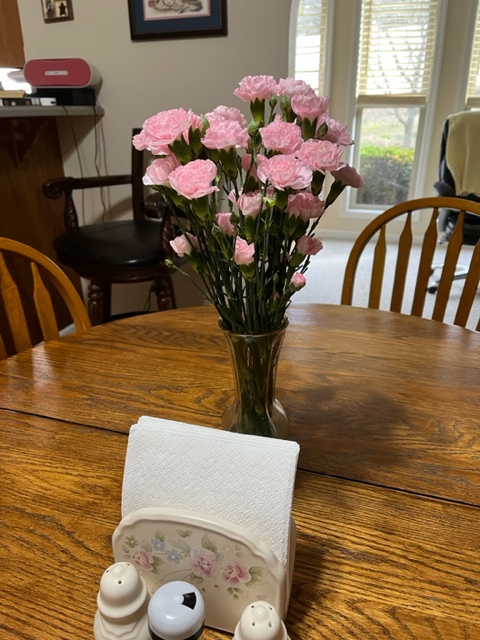
4. Flowers from my middle son’s family. This was actually from last week, but I forgot to mention them. They are still looking good!

5. Girl Scout cookies. My husband brought some home one day. I like the Tagalongs–chocolate and peanut butter combination. They had a new one this year that had a chocolate base with a caramel and sea-salt topping. It would have been better if the chocolate cookie part was soft rather than so hard it scattered crumbs whenever you bit into it. They also had one gluten-free variety, Toffee-tastic, that he got for Mittu.

That’s it for my week. How was yours?

Wrestling with an Angel

Wrestling with an Angel: A Story of Love, Disability, and the Lessons of Grace

When Greg Lucas and his wife adopted a baby that had been abandoned to the hospital where his wife worked, they had no idea what was ahead of them. Their son, Jake, seemed normal, healthy, and happy at first. But after his first birthday, he began having seizures where he’d suddenly stop breathing. Various doctors and medications were tried. The seizures eventually stopped, but Jake was left with a series of issues: Sensory Integration Disorder, Obsessive-Compulsive Disorder, Pervasive Developmental Disorder, and autism—just to name a few.

I had read a few of Greg’s blog posts at Wrestling with an Angel via links from Tim Challies. Then in 2010, Greg’s book was published as Wrestling with an Angel: A Story of Love, Disability and the Lessons of Grace. I’ve had the Kindle version for a while, but just recently the audio version was included free with my Audible subscription.

Greg tells of what he’s learned through helping Jake over eighteen years. Jake operated at the level of a two-year-old. Every bath time became a wresting match due to Jake’s severe sensory issues. As Jake got older and stronger, taking care of him became harder.

How do you care for someone who resists your love with violence, who opposes your very presence even when that presence is necessary for his good? How do you keep on loving when the person you are devoted to seems incapable of affection? The only way to make any sense of this kind of relationship is to experience it through the truly unconditional love of the Father (p. 23, Kindle version).

Over and over, Greg and his wife were brought to the total end of themselves in caring for Jake. But they found that a good place to be, because there they could only lean on God’s grace.

Greg writes with raw honesty but also with great sensitivity and beauty. He writes of the grace of an occasional easy day, a glimpse of his son as normal; how humiliation leads to humility, how they found ways to communicate when Jake had only five words in his vocabulary, how dangerous it is when someone can’t express himself, concerns over whether and how much Jake can understand about Jesus and salvation, Jake’s tendency towards injury, concerns about how to take care of Jake as he got older, agonizing over whether to send him to a specialized residential school away from home.

I think this would be an excellent book for someone with a mentally or developmentally disabled child or relative or friend. But I found it beneficial as well, even though I don’t know anyone with problems as severe as Jake’s. The lessons of faith and grace shine through as we realize the spiritual disabilities we all have and our Father’s abundant love in caring for us.

Dakota December and Dakota Destiny

Lauraine Snelling’s Dakota Plans series is made up of five novellas about Norwegian immigrants to North Dakota in the early 1900s. The first three, Dakota Dawn, Dakota Dream, and Dakota Dusk, were packaged together in an audiobook I reviewed here.

The last two, Dakota December and Dakota Destiny, were packaged together in a separate audiobook.

In Dakota December, Sheriff Caleb Stenesrude’s dog needed to go out during a Christmas Eve blizzard, but then stayed out yipping instead of coming back in. Caleb went out to see what was wrong and found a woman collapsed on a horse. He caught her as she fell and discovered a young child clinging to her. When he brought them into the house, he saw that the woman was with child. Her cries let him know she was in labor. He was in for a unique Christmas Eve.

Later, the woman, Johanna Carlson, is ensconced with her children in a widow’s home until she can recover and the weather settles down. She’s reluctant to tell these good people her troubles. But she needs to get away as soon as possible, before her angry and violent husband finds them.

In Dakota Destiny, Pastor Moen’s daughter, Mary, is grown up and in a teacher’s school, thanks to a wealthy benefactress. Mary is in love with Will, the blacksmith’s apprentice we met in the second book, who is also now grown up. But when World War I begins, Will feels he must enlist. Mary spends the summer taking care of a sick woman’s children while Will goes to training camp and then out to sea. When Mary goes back to school, she receives the devastating news that Will is missing and presumed dead.

She carries on with her school and finds her first job as a teacher. A year later, another man seeks her hand. But she can’t shake the feeling that Will is still alive.

The last book was much shorter and seemed a little underdeveloped. It was odd that characters in books 3 and 4 had the same last name, but didn’t seem to be related to each other. The narrator of all the books was really good, but used a different voice for the pastor in book 4 than in the rest of the books. And I disagreed with a statement in the last book that we are all God’s children (we’re not).

But otherwise, I enjoyed both these books. A few characters from the previous books were rarely mentioned again, but others played prominent parts. I’m going to miss this little community. I especially appreciated an older lady, Mrs. Norgard, and the ways she found to help and encourage people.

Tips for Getting Out of a Devotional Rut

Tips for getting out of a devotional rut

Do you ever chafe at the routine things you have to do?

Some days I am irked at having to take a shower. I know, I know, people didn’t always bathe every day, and I don’t have to. But if I don’t, I won’t be able to stand myself before the day is over.

Then we unload and reload the same dishes in the dishwasher, wash the same clothes, buy the same groceries only to have them disappear.

Sometimes that sense of sameness can creep into my time with the Lord as well. I’ve mentioned before that I like to start with what we call “the Lord’s prayer” and expand my prayer time from there. But when I see those same words every day, it’s easy to run through them without even thinking.

We know reading God’s Word and talking with Him in prayer are precious privileges. What can we do when they seem just part of the day’s routine?

Here are some ideas:

Pray. Ask God to help you treasure time with Him and give you wisdom to keep it fresh.

Change the order of what you do. If you normally pray and then read, reverse the order. Or pray as you read, letting the Scripture prompt your prayers.

Change your time or location. If you normally have your quiet time in a comfy living room chair, try the kitchen table or the patio or the park.

Listen to the passage instead of reading or while reading. Some Bible apps have the ability to hear the passage read.

Go back to basics. Journals, markers, commentaries, etc., can all aid in Bible study. But sometimes we get more caught up in the aids than the Word itself. Just pick up the Bible sometimes and ask God to speak to you through it rather than looking at your time with God as a homework assignment to get through.

Use a study Bible or commentary. I don’t mean to contradict what I just said. But if you are used to just reading through a passage, then a study Bible can shed new light or bring in insights with background information or connection to other passages.

Use a different aid. If you use the same aids all the time, ask a trusted friend for recommendations of others.

Vary how much you read. If you usually read a chapter or two a day, try slowing down and digging all you can out of a few verses. Or, if you like to go slowly, try reading through a whole chapter or book. We benefit from both the larger overview reading and camping out in one place for a time.

Start with a hymn or psalm. Some people like to sing during their devotional time. But even just reading through the words of a hymn can spur our hearts to worship. And the psalms remind us God is interested in our hearts.

Read from a different translation. I see things I didn’t notice before when I read from a translation I am not used to. Or a familiar verse won’t sound familiar and I’ll question, “Is that what it really says,” prompting further study.

Have a Bible reading project. Some years ago, I heard someone say that Jesus never claimed to be God. I knew that wasn’t true, but I also knew He didn’t stand on a mountaintop and proclaim His identity to the world in a public way. So as I read through the gospels, I put a “C” by every verse where Jesus claimed something about Himself. That was such a rich study. It woke me up in my reading since I was looking for particular things. You could also go through the gospels and put a “P” by every verse which fulfills a prophecy from the Old Testament. Someday I’d like to note every verse which speaks about creation and what we learn from it.

Take a break from the book you are in. I like to read through a book of the Bible rather than hopping around at random. You get the context of the overall message that way and see how the individual points fit together. But some books, like Leviticus and Chronicles, can be a little dry. Take a break one day and read a few psalms or a short epistle like Philippians.

Build in a free day. The church we attended the last few years had a Bible reading plan that spanned five days of the week. We discussed the week’s reading on Sunday. Saturday was a catch-up day. Since I didn’t usually need to catch up, and I didn’t want to get ahead of where we were reading as a group, I used Saturdays to work through a different Bible study book or Christian nonfiction book. I benefit more from those kinds of books when I set aside time to dig in; I can’t just pick them up at random and read a few paragraphs like I can other books (at least I can’t get as much out of them that way). I’ve come to treasure my different routine on Saturdays. I read from Daily Light on the Daily Path every day, so I am getting something directly from God’s Word even if I don’t read a whole chapter.

Remind yourself of the benefits. It helps to get through routine tasks when I remind myself of their benefits. On occasional days I don’t make my bed, I am reminded that the room does look more neat when the largest item in it is neat. When the room is neat, I feel less cluttered mentally. I remind myself to be thankful that I can take a shower easily: in some eras and cultures, that wasn’t always possible. Though going to the grocery store is tiring, we’re blessed to have food readily available.

There are almost innumerable benefits to reading the Bible and praying. God’s Word sheds light, gives wisdom, peace, comfort, teaches us who and how great God is, and so much more.

Read and pray anyway, even if you don’t particularly feel like doing so. The worst thing we can do on those days is avoid the Bible and prayer or just give them short shrift. God’s Word revives us, so if we avoid it, we’re avoiding the very means God can use to enliven our hearts and renew our love for His Word. “Unless thy law had been my delights, I should then have perished in mine affliction. I will never forget thy precepts: for with them thou hast quickened me” (Psalm 119:92-93, KJV). One of our former pastors said that one of his best times of prayer happened when he had to start out confessing that he didn’t feel like praying.

Every meal is not a Thanksgiving feast, but every meal nourishes us. In the same way, some times with the Lord in His Word will be special and deeply meaningful. Other times may not feel that way, but they still nourish our souls and help us grow spiritually.

What have you found to help when your devotional time is in a rut?

Your testimonies are my delight and counselors. Psalm 119:24

(I often link up with some of these bloggers.)