What Would Mary Say?

What Would Mary Say?

Mary, the mother of Jesus, is called the “favored one” and “blessed among women” in Luke 1. She’s such a wonderful example of someone wholly yielding to the Lord even though His plans for her would drastically affect her life.

As blessed and favored as Mary is, some go beyond what the Bible says to elevate her to a position almost alongside Jesus. What would Mary say about that?

We only have a few of her words recorded in Scripture, but I think they reveal a firm grasp of who she was.

She’s not sinless. A Christmas special we watched posited that because Mary didn’t have original sin, she might not have experienced labor pains. Yet the Bible doesn’t portray her as sinless. Jesus is the only person who was born without a sin nature and who never sinned once. Mary said, “My spirit rejoices in God my Savior” (Luke 2:47), acknowledging her own need for a Savior.

She is not the one we pray to. I suppose some might get the idea of praying to Mary from the incident where Jesus and his family attended a wedding where the wine ran out. Mary went to Jesus and told Him of the problem. He eventually turned water into wine, even though He told her his “hour has not yet come” (John 2:1-12). Some have taken from this scene the idea that we can go to Mary to get her to persuade Jesus to meet our needs.

Yet the Bible doesn’t advocate praying to anyone but God. Even here, Mary was not asked to appeal to Jesus for help.

Even in Mary’s prayer in Luke 1:46-55, her emphasis is on magnifying the Lord.

The Old Testament emphasized that we don’t have access to God except through the sacrificial system He gave to Israel. When Jesus died on the cross, the veil of the temple, which was a barrier only the high priest could enter once a year on the Day of Atonement, was torn from the top to the bottom. Hebrews 10:19-22 says, “Therefore, brothers, since we have confidence to enter the holy places by the blood of Jesus, by the new and living way that he opened for us through the curtain, that is, through his flesh, and since we have a great priest over the house of God, let us draw near with a true heart in full assurance of faith, with our hearts sprinkled clean from an evil conscience and our bodies washed with pure water.” We have direct access to God! As blessed and wonderful as Mary is, why would we try to go through her (which the Bible never tells us to do) when we can go directly to Him?

In the last scene where we see Mary in the Bible, she is with the other disciples of Jesus, male and female, after His ascension back into heaven. Acts 1:12-14 shows them “with one accord . . . devoting themselves to prayer.” She wasn’t being prayed to: she was praying along with them to God.

Mary’s last recorded words. The last thing that the Bible tells us Mary said was to the servants at the wedding in Cana, where Jesus turned water into wine: “Do whatever he tells you” (John 2:5). Her emphasis is always on Him. Do what He says. She claims no authority for herself. Even with Jesus’ followers in Acts, the disciples are in leadership, not Mary.

There’s much we can admire and emulate about Mary. Her humility. Her faith. Her willingness to do God’s will. Her grasp of God’s truth shown in her prayer. Her tendency to treasure and ponder in her heart things that occurred when Jesus was born. Her faithfully standing by Him during His crucifixion.

But she wouldn’t want us to worship her or elevate her to the same, or nearly the same, status as her Son. She would want us to honor, believe in, and glorify Him.

He is the way, the truth, and the life. He is our mediator. He is the one who changes us as we behold Him. He is our peace. In Him is our wisdom, righteousness, sanctification, and redemption.

Let’s proclaim along with Mary, “My soul magnifies the Lord, and my spirit rejoices in God my Savior” (Luke 1:46-47).
Luke 1:46-47

(I often link up with some of these bloggers.)

Laudable Linkage

Laudable Linkage

This week we observed the anniversaries of the passing of both of my parents. They died in different years, but the fact that they died so near Christmas, and at a relatively young age (late 60s), can cast a shadow over the holidays. Even a loss earlier in the year or decades ago can cause pangs at Christmas. It seems like every year, someone I know has experienced a fresh loss. I don’t usually include my own links in this space, but I wanted to share some thoughts that helped me, written several years ago: Christmas Grief, Christmas Hope, Christmas Joy.

And while I am at it, I am starting to see posts about choosing a word for the next year. I want to remind us that You Don’t Have to Choose a Word for the Year. If you find that practice beneficial, it’s fine to do. But it’s not something Scripture tells us to do. However, He does tell us to mediate on His Word day and night.

What If I Don’t Desire Jesus This Advent? “We are an unapologetically over-the-top Christmas family. But this year, somehow, feels different. As I write this, we are preparing to walk into the Advent season, and to be honest . . . I haven’t been feeling it. At all.”

Mama, You Don’t Have to Save Christmas, HT to Challies. “I always seemed to face the holiday season in a state of low-key panic that I wouldn’t be able to pull it off. I certainly have bigger regrets as a mother, but I do wish I could go back and tell my younger self to take a deep breath.”

Combating Imposter Syndrome by Embracing God’s Presence, HT to Challies. “I don’t know if I’ve ever felt like I was the right person for the job, whether as a dad, a pastor, or even a friend. There has always been a small voice in my head telling me that I’m not good enough. Sometimes, even in the wake of a compliment, I feel added pressure to prove to myself that I deserve the affirmation.”

The Blessing Paradox. “God’s good blessings have the potential to ruin us. If we aren’t careful, we’ll take the good things God gives and turn inward so that we consider ourselves the hero rather than the one who needs rescuing.”

Waiting in the Hope of Coming Redemption: Walking with Our Sister Anna. Anna is one of my favorite lesser-known people in the Christmas story. I enjoyed these observations from her life.

7 Practical Ways to Cultivate Faith in Children from a Young Age. “It’s still a learning curve to coach my kids in following Jesus through the different ages. But I’m convinced that teaching the next generation about God’s faithfulness means laying a biblical foundation before the teenage years arrive.”

Motherhood Is a Refining Fire, HT to Challies. “Weary mom, take heart. Those moments — the hardest, the most broken — are precisely when God can, in the words of John Bunyan, do his “wounding work,” conforming you into the image of his Son.”

Chris Anderson quote

Only as man could He die as a substitute for other men.
And only as God could He suffer infinitely, paying for the sins of all the redeemed.
Chris Anderson, Gospel Meditations for Christmas

Friday’s Fave Five

Friday's Fave Five

It’s time again to share blessings from the week with Susanne and friends at Living to Tell the Story.

1. Steady progress. I have been discouraged that my lower back pain is still there. I start to feel pretty normal one day and worse the next. It’s like two steps forward and one back. But at least there is progress–it’s much better than it was originally.

2. A visit from Melanie. We usually get together once every few weeks but hadn’t seen each other since late September/early October due to scheduling and health issues. We wanted to try to get a visit in before the holidays and then my procedure in January. So she offered to come to my house for coffee or tea and a snack. Since Jim went to the store for me that morning, I ended up getting a lot of sweet and savory snacks. 🙂 So we had something of a finger food feast, but we had both missed lunch, so it worked out great.

3. Live streaming church. It’s always better to be there in person, but when we can’t, I am so thankful we can join in via live stream. I remember the days when sermons were audiotaped and then we had to wait a week to get a copy. That was better than nothing, but I so enjoy watching in real time.

4. Christmas cards. The first ones are starting to come in. I hope to get mine out this week.

5. A new microwave installed. I mentioned in October that our over-the-range microwave had died. It was still under a service contract, so the company sent someone out to fix it. After five service visits over two months replacing various parts (some twice), they finally replaced it. We had a little microwave from my husband’s office (from when my mother-in-law stayed there) to get us through, but it’s nice to have the kitchen back to normal.

6. A ingenious fix. I have trouble reaching items in the cabinet above the range unless they’re right on the edge. But often they get bumped back, or I can touch them but not get my fingers around them. We don’t keep a lot up there, but there was no good place to move them to. My husband solved the problem by putting a tension rod behind the items so it keeps them all at the forefront.

How was your week? I hope you’re getting done the things you need to while enjoying the season as well.

Review: Exodus for You

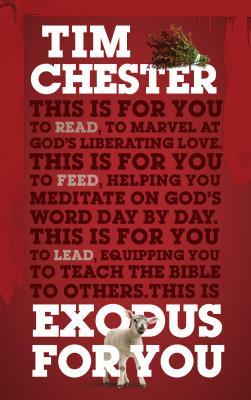
Exodus for You

The book of Exodus has some of the most exciting and touching passages in the Bible, but also some chapters of details that aren’t quite so inspiring to read. Our ladies’ Bible study at church used Exodus for You: Thrilling You with the Liberating Love of God, where Tim Chester shares insights to better help us get the most from Exodus.

The narrative in Exodus begins some 400 years after Genesis ends. Jacob’s whole family had come to Egypt to escape famine, under the favor of son Joseph. But now a king had arisen who did not Joseph and didn’t regard his leadership and help during the famine crisis so many years ago. All this king knew was that there were enough Israelites to potentially rise up against Egypt. So he had them enslaved and commanded that male Israelite babies be killed.

During this time, Moses was born. You’re probably familiar with the story of his mother making a waterproof basket to put her baby in and setting it upon the Nile, where it was found by Pharaoh’s daughter, who took Moses to raise as her own.

The next several chapters detail Moses’ life, call of God to deliver Israel, and development as a leader.

Then we have the ten plagues in Egypt, the Israelites’ exodus, God’s deliverance through the Red Sea, the giving of the law, and the golden calf incident and its consequences. Some of the tenderest passages occur as Moses intercedes for God’s forgiveness for His people and then asks to see God’s glory. There are several chapters of details about the law and instructions for the tabernacle, it’s furnishings, and the priest’s garments. The book ends with the people obeying God by constructing the tabernacle and the glory of the Lord filling it.

God had promised to dwell with His people, and the tabernacle was a vivid picture of His fulfillment of that promise, which ultimately pointed to a fuller fulfillment to come in Christ.

Some of my favorite chapters in Chester’s book dealt with the symbolism of everything about the tabernacle. One of our Sunday School teachers from another church taught symbolism that the Bible doesn’t corroborate, like the four corners of the altar representing the four gospels, and the two cherubim over the mercy seat representing the Old and New Testaments. I don’t know if he got such ideas from a source or from his own musings. Chester does a much better job of showing from the rest of Scripture what each item symbolizes and points to.

Chester draws several parallels between the tabernacle and the garden of Eden, which was new thought for me. The cherubim guarding the entrance to Eden after Adam and Eve sinned and the cherubim oven into the curtain between the Holy and Most Holy place were pretty obvious parallels. I am still pondering some of the others (some are listed here).

I had never before heard of Chester’s description of God’s judgment and restoration through the Red Sea incident and others.as “uncreating” and “recreating.” I’m not quite sure I agree with that depiction–I have to think about it some more.

Some of my favorite quotes from Exodus for You:

God “remembered his covenant with Abraham”. What is going to drive this story is the promise to Abraham. “Remembering” is a covenantal term. It means deciding to act in order to fulfil a covenant. It’s not that the promise to Abraham had somehow slipped God’s mind. It’s not that he got distracted by other things. “Remembering” means 20
God is about to take the next step in the fulfilment of his promises (pp. 19-20).

One of the many ways in which God works good from suffering is that he uses it to make us cling to him in faith, to clarify our identity as his children and to increase our longing for the new creation (p. 21).

Moses will discover who God is through God’s saving acts. God is self-defining, and he is about to provide a definition of his name–and that definition is the exodus. In the exodus we will see the holiness of God in his judgment on Egypt. We will see the power of God in his triumph over Pharaoh and the gods of Egypt. We will see the grace of God in the redemption of Isarel. And we will see the rule of God in his words on Mt. Sinai (p. 41). 

God intends not only to make himself known to Israel but also through Israel. The law is given to shape Israel’s life so that they display the character of God. It is missional in intent (p. 141).

“You shall not make for yourself an image” (v. 4). This is to reduce God to something of our own making–not to replace him, but to make him manageable, to understand him according to our notions rather than according to his revelation in his word. Have you ever judged God or reduced him? (p. 176).

For the most part, I greatly benefited from what Chester shared in this book. 

If you’d like an overview of Exodus, the Bible Project shares it in two videos–Part 1 is here, part 2 is here

Review: A Royal Christmas

Melody Carlson must be the queen of Christmas novellas–she’s written dozens of them.

In A Royal Christmas, Adelaide Smith is a law student working her way through college as a barista. Her mother passed away three years earlier, and she’s still grieving.

One day she gets an official-looking letter saying that her DNA in a registry has indicated she is the daughter of King Maximillian Konig of Montovia, a small European country near Lichtenstein.

At first, Adelaide believes the letter is a scam. But upon further investigation, she begins to think it might be legitimate. Her mother had never said a word about her father.

She calls the phone number provided in the letter and is told her father is dying. He would very much like to meet her while he can. He will pay all her expenses to travel to Montovia.

So Adelaide travels to Montovia for the month of December. She’s met by a member of Parliament named Anton, who has been assigned to be her guide and help her with anything she needs.

Adelaide meets with the king and is soon drawn to him. She learns the particulars of her parents’ relationship. She discovers her father would like for her to rule in his place when he passes on. Though Adelaide comes to love Montovia, she’s not even a citizen. What would she know about being a queen?

Not everyone would be happy about her staying on, especially not her father’s wife, who has been grooming her son from a previous marriage to take over for the king.

Amidst learning the privileges and problems of royal life, evidence of some kind of intrigue arises.

This book had Princess Diaries vibes at first. Though there are some similarities, the plot is different. Some parts were predictable. But it was a nice, short Christmas read.

The audiobook was free from Audible’s Plus Catalog, and the ebook was $1.99 at the time I purchased it (and still was as of yesterday).

A Plea to Older Women

A Plea to Older Women

The Bible tells us older folks to mentor, teach, and be an example to younger people.Though I’ve never had a formal mentoring relationship with an older woman, I have been blessed by the testimony, example, and encouragement from women just ahead of my own life situation. Sometimes a passing remark from one of them has stayed with me for days, even years.

Now being in the “older” category myself, I understand concerns about trends in our world today.

It’s good for older people to share from their experience or express their opinions. But how we share our concerns is as important as what we share.

I’ve winced at memes on social media from older people extolling the ways life was superior “back in our day.” But I wonder if we realize how that sentiment comes across. Some might be meant as a joke, but many have a bite to them.

I think those kinds of posts either make people roll their eyes or get defensive. These memes can come across as condescending or finger-wagging, causing unnecessary offense.

Before we post such memes, here are some things that might be good to consider:

We did many things differently from our parents’ generation, didn’t we? So why would we be surprised when the next generation does as well?

Our view of “our day” may not even be correct. We tend to wax nostalgic, reframing the good and forgetting the bad.

We need to remember the struggles we had as younger women–the feeling that we’re failing at motherhood, at life in general, that we’ll never catch up or measure up.

Sometimes the issues some like to gripe about reflect cultural changes that aren’t good or bad in themselves.

For one example, a particular meme said something catchy (though I have forgotten how it was worded) about how we survived without taking water bottles or to-go coffee cups with us everywhere.

My first thought was, “So . . . what’s so bad about that?” So people like to bring their drink of choice with them. Is that a character flaw?

Another meme (or maybe the same one) went on to decry the bringing of our beverages into church. However, some people may think it makes for a more hospitable atmosphere to bring beverages. Many churches have coffee brewing and offer to-go cups from before Sunday school until after the morning service. Some of us who have physical problems like postnasal drip, with its frequent throat-clearing, or dry mouth, call less attention to ourselves and distraction for others by being able to take a sip rather than having to go out to the water fountain during a service.

I’ve known people adamantly opposed to bringing food or beverages into the sanctuary. But this is a cultural rather than a biblical issue. Churches didn’t have sanctuaries in Bible times. They met in homes, where there well might have been something to drink. There’s nothing sinful about carrying beverages with us, even bringing them into church.

It’s true we might not understand some of the practices of younger folks. And our practices might even actually be better. I’ve seen memes about phone usage and discipline that I actually agreed with. But the sarcastic tone didn’t invite dialogue or conversation.

Instead of ridiculing or talking down to younger women, let’s edify them. Instead of sharing what we think of as our better ways, let’s share from our own failures and faults how the Lord gave us grace and helped us overcome. Let’s encourage them that God loves them and wants them to draw close to Him and seek His help. His grace is always available in times of need. Let’s look for the positive and the well-meaning intentions to praise. Let’s tell them they are doing a good job when they are and pray for them when they need help. Let’s make our speech healthful rather than stabbing.

Isaiah foretold of the Servant of the Lord, Jesus, “The Lord GOD has given me the tongue of those who are taught, that I may know how to sustain with a word him who is weary. Morning by morning he awakens; he awakens my ear to hear as those who are taught” (Isaiah 50:4). May we meet each day with Him, learn of His truth and character, and share with others in humility and love. May our words–and memes–be full of grace.

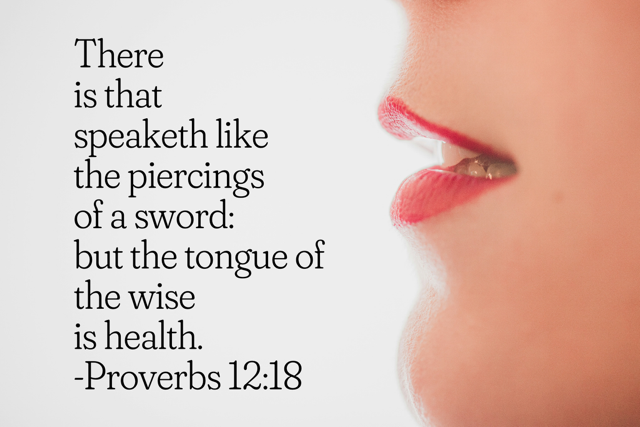
Proverbs 12:18

(I often link up with some of these bloggers.)

Friday’s Fave Five

Friday's Fave Five

This has been a challenging week, but one where it’s especially good to look for the highlights along the way. It’s not a matter of just “looking on the bright side,” but counting God’s blessings. I’m sharing with Susanne and friends at Living to Tell the Story.

1. Christmas decorating. I’m so thankful the whole family comes over to help decorate for Christmas (except for our out-of-state one 😦 ). Not only does everything get done in good time, but we have fun reminiscing over the decorations.

One tradition that arose over the years is that one of the boys–I think Jason, usually–puts one of our snowflake ornaments in an unusual place. Once it was on the ceiling above a chair. Another time it was on a shelf with some figurines. This time there was a whole line of them. 🙂

Snowflakes

2. Mittu makes dinner on decorating night, this time a chili with cornbread baked on top dish.

3. Heating pads. My lower back was hurting last week, which happens every now and then. Usually Tylenol and Icy Hot over a couple of days take care of it. But Saturday night, one particular muscle in my back kept spasming painfully. Tylenol and Icy Hot weren’t touching it. I spent a couple of days and one night in my desk chair with a heating pad. I know they say to ice muscles, but a heating pad usually works for me. It’s much better now, but still twinging a little. So I am moving slowly and carefully.

4. My dear husband outdid himself this week, making dinner, taking care of the house, fetching things for me.

5. Cyber Monday shopping. We got most of our shopping done, finding some great deals.

Bonus: Procedure scheduled. I finally got a call back from the cardiologist’s office and have the ablations for atrial flutter and atrial fibrillation scheduled for January.

Special Bonus: My heart rate went back to normal last night after being in atrial flutter for two weeks!

How was your week?

Review: Amy Snow

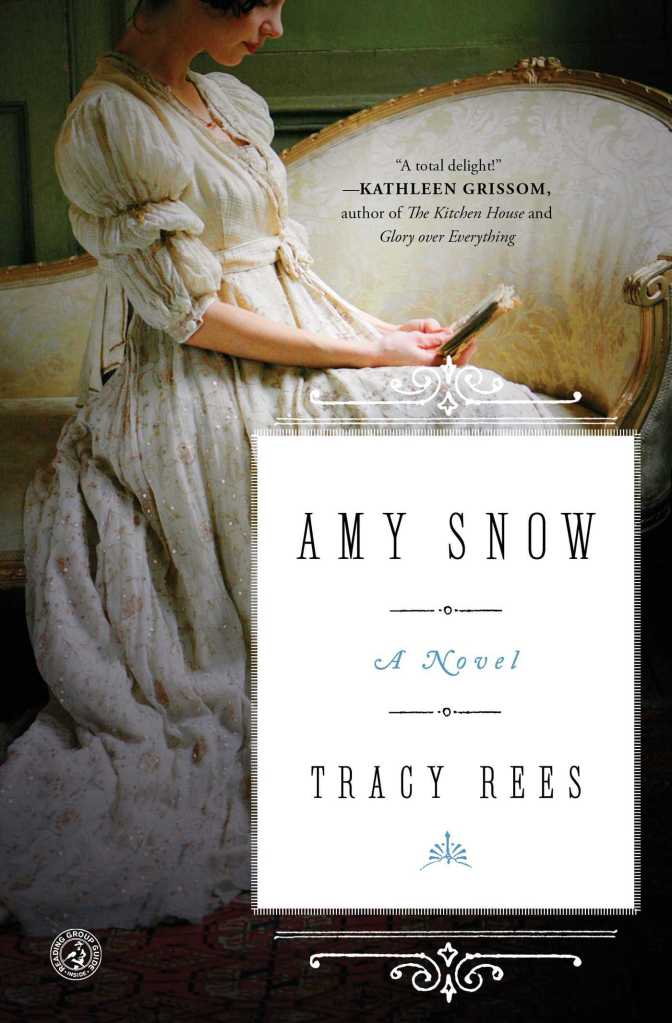
Amy Snow

I found Amy Snow by Tracy Rees on my long list of reading recommendations with a link back to where I saw it. But the blogger who recommended it stopped blogging and took all her content down. So I don’t remember what inclined me to add it to my list. But I decided to give it a try.

The book is set in Victorian England. Eight-year-old Aurelia Vennaway is bored with an aristocratic ladies’ gathering in her home and escapes to play out in the snow. She finds an abandoned baby, alive but naked and blue. She wraps the baby up in her coat and brings it in, to her mother’s horror. Only two things save the baby from being sent to an orphanage or poor house: the other ladies and the visiting rector all comment on how fortunate the baby was to be found on Vennaway property, where it could be so well cared for. To uphold their reputation, the Vennaways agree the child can stay. But they consign it to the servants’ quarters to be cared for there.

Aurelia, however, becomes quite attached to the little one, names her Amy, after her favorite doll, and Snow, to commemorate where she was found. She comes down to take Amy out to play, despite her mother’s wishes.

Bright, vivacious Aurelia doesn’t like the strictures her parents try to place on her and almost always gets her way. When she becomes of marriageable age, however, her father puts his foot down that he will choose the husband he deems best for her, and Aurelia has no choice in the matter.

Then Aurelia becomes ill. The doctor finds that she has a weak heart and is not expected to live long. A pregnancy could kill her. Yet her parents still plan to marry her off.

She insists on one last trip with a friend and ends up being gone much longer than expected, almost a year. When she comes home, the man her parents wanted her to marry has found someone else, and no one else wants to marry someone so ill. Aurelia wants Amy moved up to her rooms to be her companion and nurse.

When Aurelia dies a few years later, she leaves Amy a sentimental piece of jewelry and ten pounds. Everyone is relieved: if she had left Amy a great deal of money, the Vennaways would likely have contested the will.

But the next day, a friend brings Amy a box from Aurelia with some money and a letter. Aurelia has a secret she wants to share with Amy, but she can’t tell her outright–she especially can’t write it down lest her parents discover it. So she developed a treasure hunt with clues, like she used to do when Amy was a child. This first letter contains Amy’s next step, which hopefully she can decipher but no one else who sees the letter could.

So Amy sets off alone for parts unknown, finding another letter from Aurelia, more clues, and more revelations.

The external plot is the treasure hunt and Aurelia’s secret (which I figured out just before Amy did). But part of the story, maybe the main part, is Amy’s coming into her own–her transformation from an unwanted orphan and servant to a young woman making her way into society.

I found all of that very intriguing, but I thought the story moved very slowly. The Vennaways seemed a touch too villainous to be believable.

The story is not from a Christian viewpoint, so the people were not going to act like Christians. But I found that the views of many of them about immorality and femininity were anachronistic for the era. It made sense for one old, powerful, rich, and scandalous woman, but not for so many. There was one brief paragraph bordering on vulgarity when some “gentlemen” were not acting gentlemanly. But I feel sure we could figure out their character without the scene going so far.

There were a couple of quotes I liked near the end:

After falling in love, actually being in love—marriage—those things require thought and sensitivity and patience. [He] was impatient, and that impatience was one burden too many for you at a difficult time, so you fled. You may be forgiven! Only his impatience came from loving you and caring about you, I think. Perhaps, then, he may also be forgiven?

I realize how sweet solitude is when it is not enforced, how contented it is possible to be in one’s own company when it is not the only possibility one has.

Though there was much about the book that I liked, the problem areas would keep me from reading this author again.