Unknown's avatar

About Barbara Harper

https://barbarah.wordpress.com

Time Alone with God

Time Alone With God

One of my college roommates didn’t seem to be able to study alone. Often, when I came back to my dorm room after dinner, I’d find a group of girls studying (and talking and laughing) with my roommate. A roommate’s study group in my room meant I had to find another quiet place to study. I’m the type that can’t concentrate when there is noise and commotion in the room.

I knew students who couldn’t seem to go to lunch or the bookstore or much of anywhere without a companion.

Of course, the opposite is true of some. I liked to go many places (other than lunch) alone because it was more efficient. If you have three or four girls running errands together, it’s going to take three or four times as long to get done. But sometimes the fellowship is worth the extra time. We need a balance of time alone and time with others.

The same is true in the church. The last several years, I have seen an emphasis on community among believers, along with reminders that we’re not “lone rangers.”

While that emphasis is needed, I feel some take it too far. Some say we were never meant to read God’s Word alone, but in community. It’s true that for many years, people didn’t have their own copies of the Scriptures. All they had was what was shared and discussed when they gathered together. But that doesn’t mean no one should ever read the Bible alone now.

One writer said the preaching time at church is our main spiritual meal. I’m not sure what she based that conclusion on. It’s a vital part of our Christian life, but meeting God alone is vital as well. In fact, though I learn a lot and have been convicted during church and Bible studies, I think the main time I do serious business with God is home alone when I can process what I have heard.

Those who believe in the Lord Jesus Christ as Savior are part of God’s family. Yet we don’t relate to Him only as “one of the kids.”

God knew us individually before we were born. “Before I formed you in the womb I knew you, and before you were born I consecrated you” (Jeremiah 1:5; see also Psalm 139:13-16).

God knows us by name. “The sheep hear his voice, and he calls his own sheep by name and leads them out” (John 10:3).

God knows our thoughts. “O Lord, you have searched me and known me! You know when I sit down and when I rise up; you discern my thoughts from afar. You search out my path and my lying down and are acquainted with all my ways. Even before a word is on my tongue, behold, O Lord, you know it altogether” (Psalm 139:1-4).

God knows our ways. “I the Lord search the heart and test the mind, to give every man according to his ways, according to the fruit of his deeds” (Jeremiah 17:10).

Even the number of our hairs is known by Him. “Are not five sparrows sold for two pennies? And not one of them is forgotten before God. Why, even the hairs of your head are all numbered. Fear not; you are of more value than many sparrows” Luke 12:6-7).

We’ll each give account of ourselves personally to God. “For we must all appear before the judgment seat of Christ, so that each one may receive what is due for what he has done in the body, whether good or evil” (2 Corinthians 5:10).

The psalms in the Bible are songs which were sung by the children of Israel. Some of them have plural pronouns, but many have personal pronouns. That means even though the congregation is singing about the truths of the passage together, the passage was written by someone’s experience with the Lord alone. Those singing can take those truths into their own individual relationship with the Lord.

I sought the LORD, and he answered me and delivered me from all my fears (Psalm 34:4).

He drew me up from the pit of destruction, out of the miry bog, and set my feet upon a rock, making my steps secure. (Psalm 40:2).

My soul will be satisfied as with fat and rich food, and my mouth will praise you with joyful lips, when I remember you upon my bed, and meditate on you in the watches of the night; for you have been my help, and in the shadow of your wings I will sing for joy. My soul clings to you; your right hand upholds me (Psalm 63:5-8).

I rise before dawn and cry for help; I hope in your words. My eyes are awake before the watches of the night, that I may meditate on your promise (Psalm 119:147-148).

God spoke to individuals as well as groups. Many New Testament letters were written to individuals (Luke, Acts, Titus, Philemon, 1 and 2 Timothy) as well as churches.

Saints of old had some of their most meaningful encounters with God alone.

Moses met with God alone many times.

David “encouraged himself in the Lord” (1 Samuel 30:6) when the men of Israel were ready to stone him.

Joseph spent years as the only apparent believer in the one true God when he was a slave in Egypt. His witness spread to others. But he had to remind himself of God’s truth on his own.

Two turning-point meetings with God in Jacob’s life happened when he was alone.

Daniel had friends of the same faith, but he faced the lion’s den alone, received visions alone, and prayed alone.

Paul ministered with companions but sometimes was alone.

Jesus dealt with crowds of people yet sought His Father alone.

In Revelation 2:17, God says, “He who has an ear, let him hear what the Spirit says to the churches. To the one who conquers I will give some of the hidden manna, and I will give him a white stone, with a new name written on the stone that no one knows except the one who receives it.”

Spurgeon wrote in the October 12 reading from Morning and Evening, “There are times when solitude is better than society, and silence is wiser than speech. We should be better Christians if we were more alone, waiting upon God, and gathering through meditation on His Word spiritual strength for labour in His service. We ought to muse upon the things of God, because we thus get the real nutriment out of them.

Elisabeth Elliot wrote in On Asking God Why, “Few people know what to do with solitude when it is forced upon them; even fewer arrange for solitude regularly. This is not to suggest that we should neglect meeting with other believers for prayer (Hebrews 10:25), but the foundation of our devotional life is our own private relationship with God. . . . Christians may (and ought to) pray anytime and anywhere, but we cannot well do without a special time and place to be alone with God.”

We’re to meet together frequently (Hebrews 10:25), “stir one another up to love and good works” (Hebrews 10:24), learn from the incredible gifts God gave to the church in pastors and teachers (Ephesians 4:11-13), sing worshipful, Scripture-based songs together (Colossians 3:16).

Time with other believers learning God’s Word is vital and wonderful. I learn much from the observations of others. But we only meet together once or twice a week. The Bible is our spiritual food, and we need to eat more than that.

Our time alone with God should feed into our time with others, and our time in the Word together should edify our inner souls and equip us in our daily walk.

We often tell unbelievers that Christianity is not a religion, but a personal relationship with God. Relationships are developed with communication and interaction. God loves and cares about us individually as well as a body of believers. We don’t have to pit time alone with God against time with Him as a group. We need both.

Psalm 59:10a

(After I wrote a portion of this post, I searched my blog and saw I had written on this topic a couple of times before. So I pulled excerpts from both of those posts into this one.)

(I often link up with some of these bloggers.)

Laudable Linkage

Laudable Linkage

Here’s some of the good blogging found this week:

How Jesus Helps My Unbelief, HT to Challies. “If I’m honest, I have felt a bit like I need to be brought back to life. My spirit has been heavy, weighed down by depression that has returned after a long hiatus, and it has left me sad and discouraged and so very defeated. I must remind myself daily (sometimes hourly) that my life is a good life, that I am loved, that it will not always feel this way.”

Have You Considered? (10 Things to Think About), HT to Challies. Ten things the Bible tells us to “consider.”

I Know God’s a Writer, HT to Challies. “God is far more than any one description. We just tend to see more of his beauty down the avenues we love—the ones we know. My years spent writing has tuned my ear to catch the way the Lord demonstrates his own writing chops—how his poetry and beauty spill out of his world. In turn, my husband, who spends time problem solving, building, and dealing with the particulars of spreadsheets and numbers, notices the way the Lord orders every minute detail to perfect harmony.”

The Digital Allure of Being Attended To, HT to Challies. “I’ve been wrestling with the implications of people turning to AI Chatbots for friendship or, even more distressingly, romantic relationships, and what that means about our social fabric. I can’t help but feel that this is a bigger concern than we realize, or at least a more significant sign of the state of our society.” The last paragraph is especially good.

Small Injustices. “If we aren’t careful, we can allow the small injustices to make us spiritually blind. It’s like staring at the sun. If we focus on the small injustices, that’s all we’ll be able to see, and then pretty soon, we won’t see anything at all. We’ll live in the darkness of woe-is-me, and we will be completely incapable of thinking of others, being grateful, seeing God’s goodness in all that comes our way. We will forget the value in suffering, and we will quit our reliance on God.”

Five Things You Can Control, HT to Challies. “I had confided to my wise mother-in-law, who is now in her ninth decade of life, that I have felt at a loss some days over not having control over things that used to feel very controllable. This precious saint understands all too well the challenges of losing control over some of life’s circumstances.”

The Ministry of Small Things, HT to Challies. “Wanting to rise above the comfortable and predictable is far better than making an idol of our personal comfort and ease. But we don’t have to be notable or do notable things. In the pursuit of meaningful service for Christ, oftentimes the little things are the big things.”

How to Make Yourself at Home At (Almost) Any Church. HT to Challies. “The church is the gathering where the Word is preached, God is worshiped, the people serve one another and the community through their gifts, and the light of God’s salvation shines to the world. But how do you make the church home? Here are some recommendations:”

Parenting Is Hard, HT to Challies. “Yes, parenting is hard. I think parenting is supposed to be. Being an excellent parent, the kind we always thought we would be, is just…beyond…reach. Just…past…our outstretched finger tips. Oh, how this impossible task shows us our need for a Savior like nothing else we are called to do!”

Rubbing Shoulders Throughout Eternity, HT to Challies. This is a nice article about the people we’ll rub shoulders with in eternity. “Life is full of such encounters. You rub shoulders with a soul, perhaps only for a moment, and then your paths never again cross. And yet, just sometimes, there exists within these brief encounters a touch of some unknown and mysterious quality; a mingling between souls that cannot be put into words, though it is felt deeply.”

C. H. Spurgeon quote

Christians are not so much in danger when they are persecuted as when they are admired
–C. H. Spurgeon

Friday’s Fave Five

Friday's Fave Five

This has not been a great week. I started coming down with a head cold late Sunday night. I think it might be a sinus infection now, but I am waiting to see if it goes away on its own. I can’t take decongestants due to afib, so I muddle through with Tylenol, cough drops, and rest.

Then I did something to my back one day this week. Though it feels much better now, it’s also a little twingy. So I’m trying to remember to move slowly and deliberately rather than suddenly.

But even on the not-so-good weeks, there are blessings to be found. I’m thankful Susanne at Living to Tell the Story started this weekly exercise in cultivating gratefulness.

1. A peaceful transfer of power. I forgot to mention the inauguration last week. I’m thankful that, whatever political affiliations are represented, we have a peaceful transfer.

2. Lunch with Melanie was also from the week before. I always enjoy our lunches. We met on a Friday, and I had already published my FFF for the day. Then I forgot last week. We went to Red Lobster courtesy of some gift cards I had received. The waitress even gave us some extra Cheddar Bay biscuits to take home with our leftovers.

3. Home improvements. One of the things we looked at during our excursion to Home Depot last week was new knobs for our kitchen cabinets. We discussed painting the cabinets but weren’t sure if that’s what we really wanted to do. But I did want to go ahead and change out the plain brassy knobs. We bought three to try out, then after we made a decision, Jim took back the ones we didn’t choose and bought enough of our choice to do the whole kitchen–something like 29 knobs. I took a picture when he was part-way through installing the new ones:

New kitchen knobs

New ones are on the left, old ones are on the right.

I liked some of the antique brass ones we saw. But if we ever do paint the cabinets, I want to paint them grey, and the black would look better on those. I think they look better now. 🙂 Funny how such a little thing can spruce up a whole room.

Jim is almost done painting the family room, probably the most used room in the house. That room and one other had off-white window blinds that looked old and discolored–plus would not go well with the light grey walls. I’ve wanted to get rid of them for a long time, and now Jim replaced them with white ones. They look so nice!

4. Dry cleaning sheets. With painting the window frames, we wanted to clean our valances. The fabric I used for them is dry clean only. Woolite makes sheets for the dryer for dry clean items. Jim cleaned off dust and cobwebs from the curtain, and I popped them into the dryer with the Woolite sheet for twenty minutes. So much nicer than trying to find a dry cleaner and paying their prices! The valances came our great.

5. A “Bed Buddy” pad that can be used for heat or cold. I put it in the microwave to heat and use when my back was bothering me and Icy Hot and Tylenol weren’t working. It helped a great deal. I wish it was unscented, but at least the scent didn’t give me a headache like scented things usually do.

Just sharing the highlights of the week has lifted my spirits.

How was your week?

January Reflections

January Reflections

I don’t want to pine away the time by always looking ahead, but January is one month I am glad to see come to an end.

In some ways, it has been a quiet month. We had one excursion with Jason, Mittu, and Timothy to a pizza place, and they dropped by one day. There have been a lot of activities and meetings at church involving one or more of them, plus snow and colds. Hopefully we’ll see them more next month!

We spent the first few days of January putting away Christmas decorations and presents and recuperating from the much-enjoyed but busy holidays.

My dear husband has spent much of the month painting the interior of our house. We’ve lived here fourteen years and only painted a couple of bedrooms and bathrooms, so the rest of the rooms were in need of refreshing. He wanted to put painting off til he retired so he didn’t have to maneuver around his work schedule. I mentioned on a previous Friday’s Fave Five that he has been wiping down wall plaques and such before putting them back up, which has been much appreciated! He also cleaned the blinds of one room while I washed and ironed the curtains. We’ll do the same as we come to the last couple of rooms with windows. It’s a nice feeling to have a paced spring cleaning.

I didn’t made any cards this month.

Watching

We’re enjoying the return of Masterpiece Theatre’s production of All Creatures Great and Small.

We also watched Blitz Spirit with Lucy Worsley, a documentary in which she tries to prove that the brave camaraderie of WWII was a myth. From what little I have seen of her productions, she’s somewhat iconoclastic in her approach generally. She tried to prove her point with six different stories drawn from governmental archives of personal stories. I’ve read so much from this era, I can’t help but think she’s wrong to a degree. Yes, people were afraid, sometimes desperate, and experienced horrible things. But overall, I think society in general was more brave and more apt to pull together than any time in history.

Reading

Since last time I finished:

  • Winter Fire: Christmas with G. K. Chesterton by Ryan Whitaker Smith, nonfiction. This was a good introduction to Chesterton and sparked three or four blog posts.
  • Set the Stars Alight by Amanda Dykes, audiobook. A watchmaker’s daughter and her childhood friend reunite to discover what happened to the Jubilee, a fictional English ship supposedly taken over by a traitor named Frederick Handford. The dual timeline shows us the real story of Frederick. Amanda writes books that touch the heart, and this was no exception.
  • Miramar Bay by Davis Bunn, fiction, audiobook. A secular but clean story about a Hollywood star determining what he really wants in life, a restaurant owner striving to keep her business despite troubles, and a mother seeking courage to reunite with the daughter she abandoned. This is the first in the Miramar Bay series; The Christmas Hummingbird was the eighth.
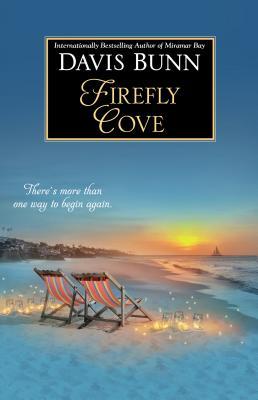
  • Firefly Cove by Davis Bunn. fiction, audiobook. The second in the Miramar Bay series. It’s kind of an odd story about a man who dies in the 1960s and wakes up in someone else’s body in modern time. Not the kind of story I usually go for, but it was touching and interesting.

Everyday Gospel for Christmas by Paul David Tripp and The Christmas Hummingbird by Davis Bunn were both finished right at the end of December, but not reviewed until this month together here.

I’m currently reading:

  • Ezekiel: The God of Glory by Tim Chester
  • Hebrews for You by Michael Kruger with the ladies’ Bible study group.
  • What’s a Disorganized Person to Do? by Stacey Platt
  • The Collected Letters of C.S. Lewis, Volume 3: Narnia, Cambridge, and Joy, 1950 – 1963, compiled by Walter Hooper
  • The Librarian of Saint-Malo by Mario Escobar, fiction
  • Between the Sound and the Sea by Amanda Cox, fiction

I started Hans Brinker or the Silver Skates by Mary Mapes Dodge as one of Audible’s free books for subscribers, but it was pulled out of rotation before I could finish it. I will probably look for it, maybe from the library, just to complete it, though it wasn’t really grabbing me. But I think the best of it might be nearer the end.

I’m also dipping into parts of one of my favorite books on writing, Write Better: A Lifelong Editor on Craft, Art, and Spirituality by Andrew T. Le Peau.

Blogging

Besides the weekly Friday Fave Fives, Saturday Laudable Linkage, and book reviews, I’ve posted these since last time:

Writing

Our critique group started back up this month. Though I appreciated and needed the time off during the last couple of months of the year, I am happy we’re meeting again. I learn so much from the discussions even when the focus is on the other writers’ pieces.

I had hoped to delve into my own manuscript since January is usually less busy. But it hasn’t worked out for various reasons. My turn to present to the group is coming up in March–there’s nothing like a deadline to spark motivation. 🙂

How was your January?

Review: Firefly Cove

Firefly Cove is the second in Davis Bunn’s Miramar Bay series.

Lucius Quarterfield lived in the 1960s and developed pleurisy when he was seven. The illness damaged his heart to the point that doctors did not give him long to live.

Though often weak and in pain, when Lucius was grown, he bought a small automobile dealership, which eventually turned into a chain.

He fell in love with a woman named Jessica, who was opposite from him in almost every way. However, since he knew he would die young, he felt it was best to pull away, to spare Jessica the pain of losing him.

After eleven months, he wants to see her and drives back to Miramar. His worst fears are realized when he has a heart attack and dies in her arms.

But then he wakes up in a cold room with a sheet over his face. People call him Luke, not Lucius. His hands and face are not his own. He discovers the date is almost fifty years ahead of his own time.

Nothing in the book’s descriptions said anything about this, and the other books in the series that I have read so far don’t have any kind of supernatural or science fiction elements. So it was jarring. Maybe the author wanted it to be as disorienting to the reader as it would have been to the character.

I don’t believe in reincarnation because Hebrews 9:27 says, “It is appointed for man to die once, and after that comes judgment.” There’s also nothing in Scripture about any human inhabiting any other human’s body. From what I have read of the author, I think he believes the same way. So I am not sure why he would have this occur in his story.

I decided to view the situation as a plot device, just like other impossibilities such as time travel.

In Lucius’s situation, the young man whose body he woke up in had just attempted his third try at suicide. His therapist’s supervisor is ready to have him locked up. He would be even more ready if Lucius told him he had actually lived fifty years before. All Lucius wants to do is find out what happened to Jessica.

Luke’s therapist, a Persian young woman named Asha, notices several differences about him right away. He looks the same but carries himself differently, speaks differently, and has even lost his French-Canadian accent. She and her supervisor think Luke’s “near death experience” led to Dissociative Identity Disorder, or a split personality. Yet he doesn’t manifest certain hallmarks of that illness.

At it’s heart, this book is a love story, though an unconventional one. The story was well-written. We’re drawn in as Lucius’s situation slowly unfolds, figuring out modern gadgets and ways, what kind of man Luke was, how he should proceed, what his future should look like. The characters were well-developed–besides Lucius, I particularly liked Asha and her grandmother. The intrigue of what’s going to happen to Luke–will he ever find Jessica, what will he do when he does, will he be able to avoid being committed to an institution, will anyone else ever believe his story–keeps us engaged, as does Asha’s story. I’m still processing what I think about the book. Even though I normally wouldn’t care for this kind of story, I found it engaging.

I’m inclined to think this might have worked better as a stand-alone novel, except that the theme of the Miramar Bay books has to do with second chances.

(Sharing with Bookish Bliss Quarterly Link-Up)

When Habits Hinder Rather Than Help

When habits hinder

Someone has said that if you don’t make a plan, all you have is a wish. When we want to establish spiritual disciplines or meet a need at church, we set up routines or programs.

But then sometimes those routines themselves can get in the way of meeting needs.

I see this on several levels:

We follow routine and forget purpose.

To try to be more self-disciplined, we establish habits to aid in godliness, like regular times of reading the Bible or prayer, church attendance, etc. And that’s a good thing. But we all know what it is to have days when we’re just going through the motions, when our eyes are dragging across the page. We check “Have devotions” off our list of things to do but haven’t really engaged with the text or been affected spiritually. Or we “feel spiritual” if we’ve crossed that duty off or don’t “feel spiritual” if we haven’t.

Sometimes we feel we can’t stop and ponder a passage of Scripture because we need to get through our planned reading for the day.

One book I read on Bible study strongly emphasized application. That’s good: Jesus said to be doers, not just hearers. This author recommended specific, measurable results. For instance, instead of saying “I need to pray more,” he advocated praying for a certain number of minutes, and then slowly increasing the time.

That may be a good beginning. But it seems to me that the more natural approach would be to list things to pray about–usually once we get started, the list increases. Another idea would be to study prayers of the Bible, like Colossians 1:9-14.

Likewise, if we read about loving our neighbor, we might take them a plate of cookies or shovel snow from their sidewalk and think, “There! I’ve loved my neighbor today.” But then we forget about the need to love our neighbor when he forgets to return a tool or plays loud music at midnight.

It’s not that measurable results are wrong, but they are only one aspect of applying Scripture. Sometimes measurable responses can lead to outward actions without accompanying inward change. Sometimes we need to carry the truth we learned, like loving our neighbor, with us all through the day and pray for grace to implement it when it’s difficult.

We seek formulas rather than truth.

We’ve all seen clickbait titles like How to Be a Better Wife in Three Easy Steps or Follow These Steps to Curb Your Temper. Many raised children according to the plan of the day and were surprised to find their children did not respond in the expected way.

I saw a post sharing a routine for visiting the sick. But every sick person might not have the same needs. And if they sense we’re just going through a script, they are not going to feel ministered to.

I’ve sometimes gotten good results (or so I thought) by praying a certain way in a particular situation, only to have that prayer not “work” the next time that situation arose. I finally learned God doesn’t work by formulas, because then we trust in formulas and not Him. He wants our hearts.

Our routine hinders our purpose.

One church we visited had a greeting time during the service. No one interacted with us or even looked at us until the greeting time. Then, while someone played the piano, everyone smiled, shook hands, and spoke to visitors. But as soon as the music stopped, it was like someone flipped a switch, and everyone closed up again.

Other examples: we feel like our obligation to witness is fulfilled when we go to our church’s visitation night. Or, because our church has official greeters at the door, we feel no one else needs to greet visitors. Or we don’t pick up trash on the floor because someone is paid to do that.

Once when we were visiting my husband’s parents, a couple of women from church came by to see my mother-in-law. They brought a plant and card and conversed for a few minutes. When my mother-in-law thanked them profusely, one of the women said, “Well, you were on our list today.” My mother-in-law never discussed the comment, but I felt it deflated any good feelings about the visit since it seemed to be only motivated by a list.

We try to force results.

Bible study leaders naturally want people to participate. But we had a pair of leaders who felt everyone had to say something every time. If you didn’t speak up, they were going to make you! So instead of interaction and conversation happening naturally, the quieter people felt nervous, on edge, or put on the spot.

Small group leaders want people to “go deep” in their conversations and relationships, so some have “turn to your neighbor and bare your heart on command” sessions instead of letting those opportunities arise in a more natural way.

Or would-be mentors feel they need to work through an artificial list of probing questions instead of developing a personal relationship with their mentee.

We don’t think we can change what we do.

For years, I followed the same Bible reading plan because it was what I was taught. It took years to realize that there are many ways to engage with the Bible, and changing things up helped me stay engaged and see new things in the Word.

For many years, churches in my area had Sunday evening services at 7 o’clock. Then one church changed their service time to 6. It was amazing how many conversations there were about whether that change was right or wise. Eventually, other churches did the same. These days, I am happy to see a variety of services in churches, like small groups in the afternoon or lunch together after the morning service and a short time together before everyone goes home. But forty years ago, those solutions would have been unheard of.

Some programs are useful for a while, but fizzle out after a time. It’s vain to keep them just because “that’s what we’ve always done.”

Routines have a purpose.

It’s true, sometimes we need systems and routines because we don’t always “feel like” doing what we need to. A former pastor once said that one of his best times of prayer occurred when he had to start by confessing to the Lord that he didn’t feel like praying. Sometimes just doing what we should whether we feel like it or not is the first step to feeling like it.

But we should seek God’s grace to serve not just out of duty, and not to check off all the designated boxes, but with a right heart. The mechanics of ministry and spiritual disciplines are tools, but not the main focus, not the end-all of our efforts.

Our ministry isn’t boxed into a particular time, place, or group of people. Our programs don’t take care of all of our obligations. There is a sense in which we should always be “on,” always ready to serve. Even if there are official greeters at church, we can greet people when we see them or help a confused visitor find the right class. Even if there is someone designated to send cards to sick Sunday School class members, we can send one, too. If God has placed on our hearts that we need to help someone else in the church, we need to pray about how to do that rather than just dismissing it because our church has a benevolence committee to take care of those things.

On the other hand, sometimes we can perfectly follow all of our routines, and our programs can seem to be going swimmingly, but we’re unaware that we’re missing something vital. The Pharisees were famous for this. All through the Bible, God reminds His people not to serve Him only with outward performance, but with their hearts.

A. W. Tozer said this in The Pursuit of God:

The simplicity which is in Christ is rarely found among us. In its stead are programs, methods, organizations and a world of nervous activities which occupy time and attention but can never satisfy the longing of the heart. The shallowness of our inner experience, the hollowness of our worship and that servile imitation of the world which marks our promotional methods all testify that we, in this day, know God only imperfectly, and the peace of God scarcely at all. If we would find God amid all the religious externals, we must first determine to find Him, and then proceed in the way of simplicity.

Routines, habits, and programs can be a great help. But they are an avenue of ministry, not an end in themselves. May God give us grace to keep our hearts engaged and our focus on others’ needs and His glory.

Ephesians 6:6

(Revised from the archives)

(I often link up with some of these bloggers.)

Laudable Linkage

Laudable Linkage

This is a good time for my occasional reminder that links here do not imply 100% endorsement of everything on a site I’ve linked to or from.

Why Don’t We Read the Bible More? Three Common Misunderstandings, HT to Challies. “That we should read the Bible is rarely questioned. Why we should read it is also fairly well-established. What we rarely do is examine why we, as confessing Christians, don’t read the Bible despite saying that we should. In my years of lay and vocational ministry, I’ve known the acceptable answers to this question and what we perceive to be ‘unacceptable’ answers.”

To (Almost) Die Is Gain, HT to Challies. A young wife and mom contemplates the gains she experienced after a dangerous brain surgery.

Biblical Theology Is for Nerds, HT to Challies. “When Marvel fans piece together the interconnected stories of the MCU across multiple films, they’re exercising the same muscles needed to trace biblical themes from Genesis to Revelation. The skills that make someone an expert in Star Wars lore or DC Comics continuity might be preparing him or her for something far more profound: biblical theology.”

What Does “Love Your Enemies” Not Mean? HT to Challies. “I recently preached on Jesus’s most revolutionary ethical teaching––love your enemies (Matt. 5:44). It stands as a Mount Everest among ethical instructions that both Christians and non-Christians respect. Yet, because we have a certain modern definition of love, it is easy to misunderstand Jesus’s teaching. What did Jesus actually mean by enemy love and how do we integrate it with Old Testament texts that seem to contradict it?”

The Sweet Honey of Forgiveness. “I’m thinking we make forgiveness way harder than it needs to be. It seems cumbersome, impossible … and somehow so wrong.”

How Are Children a Gift From the Lord? HT to the Story Warren. “If kids are a blessing and having a house full of them is a gift, we are going to have to structure our lives a little differently than the cultural norm.”

Our Answer to “Imagine.”Just before I stepped up to speak at the funeral of a professing believer, I had to endure the playing of John Lennon’s ‘Imagine.’ The opening words are ‘Imagine there’s no heaven!’ . . . I began to pray that the Lord would give me wisdom about what to say about this choice of music for a funeral.”

How to Pray for a Cancer Survivor. Much of what’s written here can be applied to other kinds of major illnesses as well. Sometimes the mental, emotional, or spiritual healing from trauma takes longer than the physical.

The Darkness of Winter, HT to Challies, subtitled, “It’s Not the Villain I Once Pegged it For: How the Lord uses Winter to Grow my Faith.” I share the author’s aversion to winter, though her winters are harder to deal with than mine. But she shares how God uses them.

When Everyone Else Is Getting the Blessings You Want. It’s easy to focus on the one thing we want that we don’t have. But God has poured out many blessings on all of us. Lois shares several.

Food (Allergies) and Fellowship. “Food plays an important part in corporate worship and the fellowship of God’s people. It did in Scripture, and it does so today. So, one of the issues we should perhaps consider is the challenge of food allergies. While food allergies may seem simply like a personal health issue for individuals, it can also impact that individual’s fellowship with other believers in a local assembly.” I can “amen” all of this as we have family members with gluten, dairy, nut, and other food issues. I’d especially highlight being careful of cross-contamination–sometimes people who mean well don’t realize this is a problem, too.

C. S. Lewis quote

God’s presence is not the same as the feeling of God’s presence
and He may be doing most for us when we think He is doing least.
–C. S. Lewis

Friday’s Fave Five

Friday's Fave Five

January is one month that I am glad to see speeding by. This has been a frigid week: you know it’s been cold when 30 degrees seems like warming up. Today, I’m looking for blessings with Susanne and friends at Living to Tell the Story.

1. Light! This is the first week it was still light outside when we left for Bible study! I know we get more daylight each day after the winter solstice, but this is the first I’ve seen actual evidence of it. On top of that, the sunset was gorgeous that day, and we got to view it on our drive.

2. An impromptu visit with the kids. Jason, Mittu, and Timothy popped in for a while one afternoon this week. Timothy made some brownies from a recipe in the Minecraft cookbook he had received for Christmas, and he wanted to share some with us.

3. A field trip and dinner out. I don’t know why I think an excursion to Home Depot is a field trip, but I do. 🙂 Jim and I had gone together to look at several things for the house. We got done right at dinner time, and he suggested we go out to the same Mexican food restaurant we had taken the kids to over the holidays. We hadn’t eaten out in a while–we usually get take-out to bring home. And though the restaurant was a bit noisy, it was enjoyable.

4. Nights off from the kitchen. When Jim was painting in the kitchen/dining area, he suggested getting takeout since everything was in disarray. He went out and got Panda Express for us. The next night we ate leftovers from that meal. Then we had the dinner outing mentioned above.

5. Another area painted. This week, Jim worked on painting another bathroom and hallway. This hallway has six doors–one to the bathroom, one to the garage, and four closet doors. We’re blessed with a lot of storage space in this house, but the doors do take longer to paint than the walls.

How was your week?

Review: Miramar Bay

Miramar Bay by Davis Bunn

When I started listening to The Christmas Hummingbird by Davis Bunn, I didn’t realize that it was the eighth novel in a series. The first few books in the series were free for Audible subscribers, so I decided to try them out.

In the first novel, Miramar Bay, Connor Larkin is an actor known for his “bad boy” good looks and for dying onscreen (97 times so far). His current gig is a fake “reality” show featuring his relationship with a Hollywood starlet. But now the studio has written an on-air wedding into the script, and Connor bolts. He had visited Miramar, on California’s central coastline, some years before, and it seemed a quiet place to hide out and think.

Connor steps into a Miramar restaurant playing Sinatra music and is drawn in. He had originally wanted to be a musician playing this type of music, but his early acting roles led him another direction. He finds himself applying for a waiter’s job at the restaurant.

Sylvie Cassick had put all her money and hopes into the restaurant and named it Castaways. Her father had been an artist, a kind man but an impractical dreamer. When her mother left them, Sylvie took on the role of trying to keep things in order and the bills paid. She had not heard from her mother in years, and her father passed away, so she’s on her own. Her staff has become dear friends. But everything hangs by a thread: one major problem or repair could cost her everything.

And then the unthinkable happens when illegal drugs are found in her fish order.

As Conner and Sylvie get to know each other, they bond over music. But when Sylvie learns who Connor really is, she can’t get over the fact that he lied to her.

Miramar is known as a place of second chances. Will Connor and Sylvie find theirs as they each face their separate crises?

Some of the characters in the later book were here, too: the sheriff, the head waitress, and a few others.

I looked online to see if Miramar is a real place, and it is: you can read more here.

I loved the small-town, close-knit community Bunn created. The characters seemed real and relatable. The plot kept me invested and interested.

As with the Christmas book, there’s not much mention of anything of a spiritual nature in this book, though everything else I’ve read from Bunn has been Christian fiction. One character visits a chapel a couple of times and prays for help. Perhaps Bunn meant this as a crossover into the general market, which would then draw readers back to his many other books. This is a good, clean read, but it was a little sad to me that the author, who knows real peace can only be found in Christ, had Connor find his peace in a community.

The only other thing some readers might find objectionable is a fair amount of alcohol consumption. One example: Sylvie’s friends “make” her drink brandy to brace herself before sharing bad news. I know this is an area where good people can differ, but to me alcohol seemed to be mentioned a lot.

I listened to the audiobook nicely read by Graham Winton. If you’re familiar with the Adventures in Odyssey radio program by Focus on the Family, Graham’s voice sounds a lot like the actor who portrays character Jason Whitaker there–so much so, that I had to look up that actor. But that actor’s name is Townsend Coleman.

(Sharing with Bookish Bliss Quarterly Link-Up)

Lesser Lights

Lesser lights

Before the invention of electricity, it was rare to see a whole city lit up. One could see candlelight or lanterns in windows. Gaslights helped illuminate sidewalks. But if the whole city seemed alight, that meant something unusual was going on.

These days, though, cities seem to dwell in perpetual light.

G. K. Chesterton commented on this in The Illustrated London News in 1927:

In every civilised age and country, it has been a natural thing to talk of some great festival on which “the town was illuminated.” There is no meaning nowadays in saying that the town was illuminated. There is no point or purpose in having it illuminated for any normal and noble enthusiasm, such as the winning of a victory or the granting of a charter. The whole town is illuminated already, but not for noble things. It is illuminated solely to insist on the immense importance of trivial and material things, blazoned from motives entirely mercenary. . . .

It is no good to send up a golden and purple rocket for the glory of the King and Country, or to light a red and raging bonfire on the day of St. George, when everybody is used to seeing the same fiery alphabet proclaiming the importance of Tibble’s Tooth Paste or Giggle’s Chewing Gum. The new illumination has not, indeed, made Tibble and Giggle so important as St. George and King George; because nothing could. But it has made people weary of the way of proclaiming great things, by perpetually using it to proclaim small things. It has not destroyed the difference between light and darkness, but it has allowed the lesser light to put out the greater (quoted in Winter Fire: Christmas with G. K. Chesterton by Ryan Whitaker Smith, pp. 107-108).

Light is one of my favorite symbols of Christmas and one of the things I miss most when we take decorations down.

But light is not just a symbol of Christmas. It’s a symbol of God, a thread running through the whole Bible.

From the Old Testament: “The Lord is my light and my salvation; whom shall I fear?
The Lord is the stronghold of my life; of whom shall I be afraid?” (Psalm 27:1).

To the New: “Again Jesus spoke to them, saying, ‘I am the light of the world. Whoever follows me will not walk in darkness, but will have the light of life'” (John 8:12).

From prediction: “The people who walked in darkness have seen a great light; those who dwelt in a land of deep darkness, on them has light shone.” (Isaiah 9:2).

To fulfillment: “And leaving Nazareth he went and lived in Capernaum by the sea, in the territory of Zebulun and Naphtali, so that what was spoken by the prophet Isaiah might be fulfilled: ‘The land of Zebulun and the land of Naphtali, the way of the sea, beyond the Jordan, Galilee of the Gentiles—the people dwelling in darkness have seen a great light, and for those dwelling in the region and shadow of death, on them a light has dawned'” (Matthew 4:13-16).

From the Father: “God is light, and in him is no darkness at all” (1 John 1:5b).

To the Son: “In him was life, and the life was the light of men. The light shines in the darkness, and the darkness has not overcome it. . . . The true light, which gives light to everyone, was coming into the world.” (John 1:4-5, 9).

My husband loves astronomy and will take his telescope out when some phenomenon is happening in the sky. He often says that to really see the stars best, one needs to get away from the lights of cities, towns, or neighborhoods.

It’s not that lesser lights put out the light of the stars, but they obscure and distract from them.

The lesser lights in our lives do the same. They may be harmless in themselves, but their number and seeming urgency take our attention. They can’t put out the Light. But they make it harder to see Him.

Some day, there will be no lesser lights: “And night will be no more. They will need no light of lamp or sun, for the Lord God will be their light, and they will reign forever and ever” (Revelation 22:5).

Until then, may our hearts cry out with the psalmist, “There are many who say, ‘Who will show us some good? Lift up the light of your face upon us, O Lord!’” (Psalm 4:6).

Psalm 36:9

(I often link up with some of these bloggers.)