Unknown's avatar

About Barbara Harper

https://barbarah.wordpress.com

Friday’s Fave Five

Friday's Fave Five

April is here! A new calendar page, a new month squarely situated in springtime. We’re still having some cold mornings, but the days have been very pleasant.

I woke up around 2 a.m. Monday to discover we were under a tornado watch. Thankfully, nothing happened. If we got the thunderstorms that were in the forecast, I didn’t hear them until after I got up. I was thankful the Carolinas got some of the rain, as they’ve had some serious wildfires there.

I’m sharing blessings of the week with Susanne and friends at Living to Tell the Story. Feel free to join in!

1. Impromptu dinner with Jason, Mittu, and Timothy. They had asked to come over to see Jim’s new-to-us camper and truck, but ended up not getting here til dinner time. So they brought frozen pizza.

2. Sunday dinner gathering. Jason and Mittu had invited a couple over from church who were about our ages, so they asked if we wanted to come, too. We enjoyed the great pot roast and fellowship.

3. Another family dinner. I was to make a dessert for the dinner mentioned above. I tried two things, and they both flopped. So Jim ended up buying a gluten-free cake at the store.The one cake I made tasted great, but looked terrible. The blondies were not great, but were edible. Since we had all this sugar in the house with two of us who are trying to keep sugar under control, I invited the family over for dinner and dessert Tuesday. I was able to send some food home with them as well.

I’m not sure if it’s considered a promotion or just a lateral change, but Jesse is in a new position. It did come with a raise! But it’s also third shift to start with. When he came for dinner, we got to catch up with how everything was going.

4. Youth Sunday. Once a year, our church has a special emphasis on our youth, praying for them and having them participate in the service. It’s always so encouraging to see all those bright faces and to be reminded to pray for them as they seek God’s guidance and grow in Him.

5. Dinner out. I had an appointment one afternoon and stopped to get my hair cut afterwards. I got home just before dinnertime and suggested either getting take-out or using a gift card someone had given us to Olive Garden. We did the latter. Sometimes when we go out, we wish we had stayed in after dealing with the excess noise and bustle. But this time, we were seated in a quiet side section with just two rows of tables and had a nice view out of the windows. We had a great waiter. Instead of my usual choices, I tried something new: chicken and shrimp carbonara. It was so good! Plus I had leftovers to bring home for lunch today.

How was your first week of April?

The First Step to Murder

The First Step to Murder

If we look through the Ten Commandments, most of us breathe a sigh of relief when we come to the sixth one: “You shall not murder.” At least that’s one thing we haven’t done.

However, Jesus takes the issue beyond outward action to the heart. He said, “You have heard that it was said to those of old, ‘You shall not murder; and whoever murders will be liable to judgment.’ But I say to you that everyone who is angry with his brother will be liable to judgment; whoever insults his brother will be liable to the council; and whoever says, ‘You fool!’ will be liable to the hell of fire” (Matthew 5:21-22).

Some translations show the middle of verse 22 saying “And whoever says to his brother, ‘Raca!’ shall be in danger of the council” (NKJV). According to the Berean Study Bible notes here, “‘Raca’ is an Aramaic term of contempt, roughly equivalent to calling someone ’empty-headed’ or ‘worthless.'” Other translations use the word “idiot.”

The notes go on to say, “Calling someone a ‘fool’ implies moral and spiritual deficiency, not just intellectual lack. In biblical terms, a fool is someone who rejects God and His wisdom (Psalm 14:1). This phrase highlights the destructive power of words and the importance of speaking with love and respect.”

We can understand how lust is the first step toward sexual sin, as Jesus said earlier in Matthew: “You have heard that it was said, ‘You shall not commit adultery.’ But I say to you that everyone who looks at a woman with lustful intent has already committed adultery with her in his heart” (Matthew 5:27-28).

But how are anger and name-calling precursors to murder?

They both dehumanize other people and cheapen their worth. Jen Wilkin describes the progression in her book on the Ten Commandments, Ten Words to Live By: “First, I am angry with you in response to a hurt. Next, I begin to question your character with an insult. Then, I begin to question your worth as a person. As anger degrades into contempt, the personhood of another is devalued” (p. 93).

I’ve often wondered at the atrocities humans have committed against each other during the days of slavery or the Holocaust or in prisoner of war camps. Some people thought of slaves or Jews or enemies as something less than human, and that was the first step to treating them horribly.

Even now, online battles reveal a shocking wish for harm towards others who disagree with opposing politics or views. Seven years ago, author and teacher Karen Swallow Prior was hit by a bus and had a long recovery. Recently, she shared a post on X where someone said he wished that bus had better aim. Like her or not, disagree or agree with her, wishing for her demise is appalling.

But these kinds of things are common online. Harm is wished towards people of differing opinions. Cancel culture is a smaller version of wanting to wipe out, to remove from public view, those we disagree with.

A few years ago, I was in a WalMart when I first realized that Covid was going to be a major issue. I had heard of it, but we’d been warned about viruses before (like H1N1), which didn’t have a great effect on our everyday lives. We figured this new virus would be the same.

But that day in WalMart, shelves were empty of disinfecting wipes, antibacterial soap, and toilet paper, among other things. I had never seen anything like this. I was rattled, wondering what was going on, how big this thing was going to be, and where I was going to find what I needed.

In my preoccupied state, I turned in front of another cart to get something from a shelf. It was the equivalent of cutting someone off in traffic. I wasn’t being malicious: I just wasn’t thinking clearly. But I was definitely in the wrong. I couldn’t seem to form the thoughts or words to apologize.

The person I offended pulled his mask down, looked straight in my eyes, and said to his companion, “I hope she gets the Coronavirus. I hope she dies from it.”

I watched him pass by with my mouth gaping open. I couldn’t believe he said that. I was even more rattled.

Genesis 1 tells us God created people in His image or likeness. Everyone has worth because God made them, even though that image is marred because of sin.

When we become believers, we “put on the new self, created after the likeness of God in true righteousness and holiness” (Ephesians 4:24). We start to look and act more like our Father. The more we behold Him and walk with Him, the more we’ll look like Him. Therefore we take care to “Be angry and do not sin; do not let the sun go down on your anger, and give no opportunity to the devil” (Ephesians 4:24-27).

We don’t keep the sixth commandment just by avoiding murder. We value others as God’s creation.

Jen Wilkin continues:

Because we are accepted in the beloved, we will not be content to simply be not-murderers, or not-contemptuous, or not-angry. We will not merely refrain from taking life—we will run toward giving it. Let us read in the sixth word’s prohibition of murder the exhortation to take every care to preserve life. Let us run to be life-protectors and esteem-givers and peacemakers.

To do so will require that we take stock of how we might be participating in the anger-worship of our cultural moment. It will require that we strive to preserve life in a culture that believes entire categories of image bearers are worthy of our contempt or our disregard—the unborn, the elderly, the physically or mentally challenged, the poor, the powerless, the foreigner. And in a world defined by living at odds with others, it will require that we strive to live at peace with others, as far as it is possible with us. It will ask us to be our brothers’ keepers, even as Christ has been ours (p. 96).

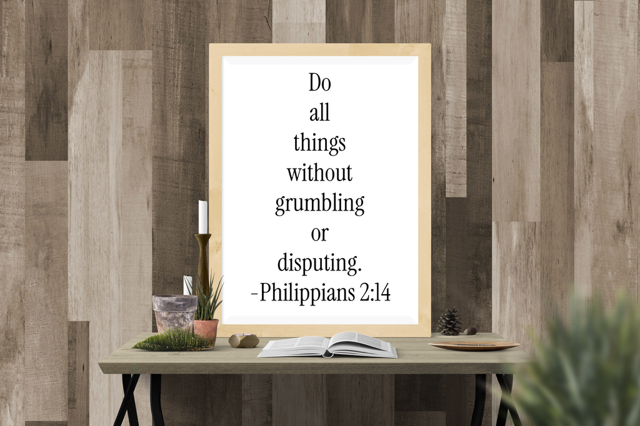
Paul writes in Philippians 2: “Do nothing out of selfish ambition or conceit, but in humility consider others as more important than yourselves. Everyone should look not to his own interests, but rather to the interests of others” (verses 3-4, CSB).

He points us to Jesus’ example: “Adopt the same attitude as that of Christ Jesus, who, existing in the form of God, did not consider equality with God as something to be exploited. Instead he emptied himself by assuming the form of a servant, taking on the likeness of humanity. And when he had come as a man, he humbled himself by becoming obedient to the point of death —even to death on a cross” (verses 5-8, CSB).

If anyone had a right to be angry with others, Jesus did. But He became as a servant and humbled Himself, even to the point of death, for people who, at best, did not understand Him, and, at worst, plotted to do away with Him.

We can’t have the attitude Jesus did in ourselves. We need His grace. We need to look long at Him so that we might become more like Him, showing love instead of contempt.

Philippians 2:3

(I often link up with some of these bloggers.)

Laudable Linkage

Laudable Linkage

A variety of good reads found this week:

When God Used a Stutterer, HT to Challies. “Must limitations and weaknesses keep us from effective ministry? And how should we think about others in the church who have glaring, limiting imperfections?” This is a neat story.

If I Have Matching Dishes, But Have not Love . . . HT to Challies. “If I have matching dishes but have not love, my kitchen cupboard becomes a higher priority to me than the most important person to me in this life.”

People Over Perfection: 5 Tips to Help You When Tiny Distractions Take Over. “Have you ever found yourself in a friend’s living room when you suddenly noticed a picture on the wall that was crooked? Did it occupy your attention for too long, leaving you unsettled and distracted until you walked over and straightened it?”

You’re Beautiful, HT to Challies. “In this month’s letter, I share my personal journey with female beauty standards—a topic that’s been on my mind ever since my daughter was born. I share what life was like growing up with contradicting beauty standards, and how they shaped my insecurities as an Asian Australian woman. I then explore how my new faith, motherhood, and entering my late 30’s has redefined my perspectives on outward beauty.”

Why Christian Men Need Friendship, Not Just “Accountability,” HT to Challies. Yes, yes yes! I’ve always felt there was something off, even artificial, about “accountability partners,” and this helps explain why.

The 10%, HT to Challies.”What does that say about us as a society? We, with the requisite number of chromosomes, determine your fate before we even meet you, before we experience one of your open-hearted hugs or witness your exuberant spirit. How far have we fallen, that we will only welcome you if your test results declare you worthy of our care?”

Why Are There Four Gospels? A great illustration helps answer this question.

You Can’t Do It Alone. “Productivity is not the solution to all of your problems. That’s the promise of secular productivity, isn’t it? Peace, order, simplicity, abundance—the life you want—is just on the other side of one simple system/technique/app/framework.”

The Theology of Work and the Stay-at-Home Mom: Embracing the Value of Our Calling, HT to Redeeming Productivity. “It’s easy to feel like our work doesn’t “count” because we’re not bringing home a paycheck. We don’t get the flashy title that comes with being a high-powered professional, and sometimes, it feels like society only values work that earns money. But if we believe, as Christian moms, that God has called us to this specific work, does the absence of financial gain truly define our calling’s worth?”

God Is Writing Your Story: You Need to Tell It. “God has given each one of us a story. It may not be as dramatic as Corrie ten Boom’s or as screen-worthy as Louis Zamperini’s, but each and every one can be used by God to connect with someone and to ultimately point them to Jesus. And we’re not supposed to keep these stories to ourselves.”

Charles Spurgeon quote

The LORD may not give gold, but He will give grace: He may not give gain, but He will give grace. He will certainly send us trial, but He will give grace in proportion thereto. We may be called to labor and to suffer, but with the call there will come all the grace required.
— Charles Spurgeon

Friday’s Fave Five

Friday's Fave Five

March has felt both long and short. Here we at at the last Friday and FFF of the month. I’m sharing with Susanne and friends at Living to Tell the Story.

1. Shared dinner. Timothy texted one day to ask if his family could bring dinner over. Sure! A few hours later, they brought Salsarita’s to share.

2. Blooming trees. It’s been so nice to see trees blossoming in the neighborhood and around town. Of course, that means pollen is in the air as well. As someone said, there’s a cloud behind every silver lining. 🙂 But I love seeing color come back into the landscape.

3. Back to church. I have not been in a couple of weeks due to the digestive effects of antibiotics. But things have settled down enough that I was able to go Sunday and Wednesday.

4. A different camper. My husband had been contemplating trading in our RV for a camper that is pulled behind a car. The RV is more expensive to maintain with insurance and a service plan (needed in case of a breakdown on the road). Plus, we don’t use it as much as we thought we might. He went to a few places to look and found one he liked, and was able to negotiate the trade pretty much the way he wanted.

4. A new-to-us car. Jim had thought he could have a trailer hitch installed on his car to pull the camper, but found his car wasn’t rated to pull that much weight. At first we thought that would nix the RV trade. But then we discussed trading in Jim’s car for one that would be able to pull the camper. He found a small truck on his first scouting trip to look at what was available. He has always wanted a truck. 🙂 Plus, the cash from trading in the RV, along with trading in his old car, is going to just about pay for the new car. I’m thankful for God’s provision and a husband with a head for handling these things well.

How is your last week of the month wrapping up?

March Reflections

March Reflections

Though we still have a few days left in March, this seemed like a good time for my monthly wrap-up.

Like many of you are experiencing, spring has come in fits and spurts. We’re still having some cold nights and mornings, but the trend is toward warmer weather. I love this in-between season of not being too hot or cold.

Much of March has been taken up with healing from cellulitis. Like the change of seasons, and growth of any kind, and so many other things, healing seems to be an up and down endeavor. My spirits have risen and fallen multiple times a day, depending on how my leg looked at any given moment. But I think we’ve turned a corner. The area is looking better rather than worse most of the time now.

Family activities

We celebrated Jim’s birthday early in the month, and then “Pi Day” on 3.14. He, Jason, and Timothy stayed up late to watch the lunar eclipse. Otherwise, it’s been a fairly quiet month.

Creating

I just made one card this month, for Jim’s birthday.

Husband birthday card

This was done on the Cricut. It looks black, but it’s actually dark green card stock. That’s not quite Jim’s hair style. 🙂 I didn’t think to trim it. After I got this all done, I thought of ways I could have dressed it up a bit–but I didn’t have time to go back to it.

Watching

British period dramas are not Jim’s favorite viewing genre, but he’ll watch one with me occasionally. We both enjoyed North and South, based on Elizabeth Gaskell’s classic novel of the same title. A vicar has a crisis of conscience, causing him to step down from his ministry. A friend finds him a teaching position in a northern English town, which is an industrial area with a busy, dirty, harsher feel to it. His daughter, Margaret, has a negative run-in with the head of the local textile mill, Mr. Thornton. She also becomes friend with a girl whose lungs are diseased from working in the mill and her father, leader of the local labor union. There’s a bit of Pride and Prejudice vibe–not in balls and match-making mothers, but in the interactions and misunderstandings of the main characters. Jim had worked in textiles for much of his career, so the history of the textile industry was interesting to both of us. Watching the story has me wanting to read the book again.

Reagan was a 2024 movie about our 40th president, starring Dennis Quaid. Reagan was the first president I voted for and my favorite president of my lifetime, though of course he was not perfect. So much of this was history I lived through and remember. I especially loved the “Tear down this wall” scene before the Berlin wall. I thought Quaid portrayed him well. Oddly, the story is told from the viewpoint of a Soviet spy telling a younger spy how Reagan kept communism from spreading. The film may have leaned a little toward hero worship, but overall it was very good.

The Long Game was based on a book about a true story. In 1955 Texas, a group of Mexican-American young men worked as caddies at the local country club. They built their own golf course to play among themselves. A new principle, friends with a local golf pro (Dennis Quaid again), forms them into a high school team and struggles to get them accepted into tournaments. The prejudice they faced was maddening. I won’t spoil the ending, but it was very good. There are some mild language issues and some crude interactions, especially at the beginning.

House of David is a current series based on David of the Bible. There is a screen at the beginning of every episode saying the show creators are not attempting to be historically or biblically accurate, but have taken creative liberties for storytelling purposes. :/ I was dismayed that they portrayed David as an illegitimate son and showed Saul’s wife consorting with a witch or sorceress. Then Susanne told me about a video interview with the show’s creator and his reasoning. Evidently some Jewish people do believe David was illegitimate. I researched the reasoning for this, and I disagree with it. But I was glad to know the show’s creator wasn’t just inserting that idea for drama. I don’t usually watch Bible-based shows because they’re not always biblically accurate. I think when we say, “The Bible doesn’t say it happened this way, but it doesn’t say it didn’t,” we open ourselves up for just about anything. But keeping an eye open for inaccuracies, this has had some good features. I particularly liked the scene where David was anointed king by Samuel, and all the brothers looked at each other like, “What is going on?” Plus, I knew David was anointed long before he actually became king, but I don’t think I ever really caught the tension of being in Saul’s house as a musician, knowing David as been anointed as the next king but having to keep it a secret.

Do you have any good, clean, program recommendations?

Reading

Since last time, I finished (linked to my reviews):

I’m currently reading:

  • Hebrews for You by Michael Kruger with the ladies’ Bible study group
  • The Collected Letters of C.S. Lewis, Volume 3: Narnia, Cambridge, and Joy, 1950 – 1963, compiled by Walter Hooper.
  • The Return of the King by J. R. R. Tolkien
  • He Should Have Told the Bees by Amanda Cox
  • On the Edge of the Dark Sea of Darkness, Volume 1 of the Wingfeather Saga by Andrew Peterson.

Blogging

Besides the weekly Friday Fave Fives, Saturday Laudable Linkage, and book reviews, I’ve posted these since last time:

Writing

My latest chapter was up for critique this month with our writing group. As always, I received great advice from the other women in the group. I always leave those sessions energized and wishing I could do nothing else but write for a few days.

Next month, we have Timothy’s birthday and Easter to look forward to–as well as more consistent nice temperatures!

How was your March? Are you looking forward to anything in April?

Review: All the Lost Places

All the Lost Places

In All the Lost Places by Amanda Dykes, Daniel Goodman is a former thief in 1904 California who is trying to make restitution. He saves money from his lowly wages to repay those he robbed from. He has not seen his mother since he got out of prison: he feels he can’t face her until he has righted his wrongs.

When he hears that his mother may lose her home due to lack of finances, he looks for additional work. A seemingly chance encounter finds him interviewing with a man whose boss wants to make a “little Venice” in CA. At first Daniel applies just for physical labor. But upon finding out that someone is needed to translate one of Daniel’s favorite books and travel to Venice to sketch famous buildings, Daniel pushes hard for that role. His mother had come from Venice. She had sent him the book in question when he was in prison. He used to be able to draw–a head injury has left him unable to draw from memory any more, but he can draw something if he can see it.

The man is skeptical at first, but when Daniel draws a nearby building for him, the man agrees.

Daniel had kept himself pretty isolated after his prison confinement, so traveling and interacting with so many people is a strain on his nerves. He barely arrives in Venice when he literally runs into Vittoria, a bookseller. One of his tasks is to try to find the original copy of the book he’s supposed to translate, The Book of Waters. Daniel’s copy is one of only a few, which are all unfinished. It’s hoped that the original will have the closing chapters. He enlists Vittoria’s help to try to find the book.

As Daniel translates, he’s drawn into the story of Sebastien, who was put in a basket and floated toward an orphanage in Venice in 1807. Instead, a gondolier notices the basket, picks him up, and takes him to a guild of five artisans, who adopt him and train him in each of their skills. Though Sebastien loves his blended family, he wrestles all his life with his identity and purpose. One day, a woman washes up on the shore of the island Sebastien lives on, changing both their lives forever.

Sebastien’s story occurs when Napoleon had taken over Venice. Some Venetians planned that at some point, they would revolt and set up their Doge, or governor.

Sebastien and Daniel wrestle with some of the same questions. Though Daniel knows his origins, he can’t free himself from the guilt and losses of his past. Yet just as Venice was “the city that came from a swamp . . . a lost place that grew hope,” perhaps God can build something new and beautiful on the swampy places of a man’s life.

The Napoleonic era is one I know very little about, and I was glad to learn more of that time frame and Venice’s history. Amanda shares a lot of interesting details in in her end notes, including the fact that an Abbot Kinney really did build a “Venice of America” in CA in the early 1900s.

Some of the quotes that stood out to me:

Isn’t that the way of miracles? Something extraordinary because of the faithful ordinary (p. 53, Kindle version).

Found means someone was searching for you, running after you. You, the greatest treasure in all the world. That is what Trovato—Found—means. Sebastien Trovato, you are Found. Always and forever (p. 74).

Life had taught them hope was a dangerous and fragile thing . . . Faith sang a different song: hope was as necessary as breath, and so strong that it carried its own heartbeat (p. 115).

He dug instead for the tiniest slip of hope. And in doing so, hope became . . . purpose (p. 120).

Mosaic . . . it is the art of empty spaces. Broken things, harvested as treasure and pieced together into something entirely . . . different. Old, but new. Broken, but whole (p. 219).

“Do not be downcast, O your soul!’” He raised his face to the sun, reciting a psalm—or what sounded like one.
“Do you mean ‘O my soul’?”
“My soul is very happy in this moment. I mean your soul” (p. 249). 

Perhaps you are becoming a new tool for a new work. God is not bound by the way things used to be (p. 254).

She stood before him, inches and a universe away, all at once (p. 285).

Amanda’s writings always touch the heart. This book took a little longer for me to get into than some of her others, but I loved how all the threads came together in the end.

(I often link up with some of these bloggers.)

Review: Daniel for You

Daniel for You

The Biblical Daniel was a young man, probably a teenager, when he and others were taken captive and exiled to Babylon. He ended up spending his entire life in exile. The first six chapters of the book of Daniel show him and his friends living for God in an atmosphere that’s foreign to them and their beliefs. The last six chapters share visions and messages given to Daniel that reach far into the future, even to end times.

In Daniel for You, David Helm posits that, though God gave His people into the Babylonians’ hands as punishment for their disobedience and idolatry, He had additional purposes in mind.

This book shows that God intends to do more than merely judge an ungodly nation. Instead, he offers a saving word to those under his wrath—his deserved, settled anger. And for that, he will need his people dwelling there. They will need to be at home in Babylon, revealing God’s king and kingdom in ways that ultimately find their fulfillment in Christ (pp. 8-9).

Daniel and three of his friends were among those chosen to be educated, assimilated into Babylonian culture, and taken into the king’s service. They were given Babylonian names. One of their first challenges came with the food apportioned to them.

Daniel felt that eating the king’s food would be defiling to him. Helm shares different reasons that might be the case, among them the possibilities that the food violated Israel’s dietary laws, or possibly had been offered to Babylonian idols. But Daniel doesn’t rail against this requirement. He very respectfully asks the person in charge of them if they could eat vegetables and water for ten days and see how they fared. At the end of that time, Daniel and his three friends “were better in appearance and fatter in flesh than all the youths who ate the king’s food” (Daniel 1:15). So the steward let them eat what they wanted.

This set the tone for the rest of Daniel’s interactions. He never seemed hateful or bitter. He seemed to genuinely care about the king when he had bad news to deliver.

In addition, Daniel was faithful to God, praying three times a day toward Jerusalem, even when threatened with the lion’s den for doing so.

Besides the famous lion’s den story, Daniel contains the account of his three friends who were threatened with the fiery furnace for not bowing down to the king’s statue. Their famous words continue to encourage us in our day: “Our God whom we serve is able to deliver us from the burning fiery furnace, and he will deliver us out of your hand, O king. But if not, be it known to you, O king, that we will not serve your gods or worship the golden image that you have set up” (3:17-18).

And then there’s Nebuchadnezzar’s fall from pride to live like an animal for seven years, until he acknowledges God and is restored to sanity and to his kingdom.

To a mother, Daniel is an encouraging example that young people can live in an ungodly culture and not be taken in by it: they can be “in the world and not of it,” and even more, be a testimony to it.

Daniel is also a stellar example of standing faithful to God in a way that is not condescending or demeaning to those who don’t believe as he does.

The second half of Daniel’s book is what Helm calls apocalyptic literature, which he defines as “an unveiling–a pulling back of the curtain on the unseen transcendent world and its role in bringing this present world to an end (p. 127).

These chapters in Daniel contain some of the most argued-over passages of the Bible. But Helm encourages us not to get lost in numbers and predictions and to remember the purposes for which God gave these visions and dreams to Daniel. They show God’s sovereignty over world affairs, the fact that He has a timeline in mind, His care for His people, His remembrance and faithfulness to His covenant.

In fact, these themes are woven throughout Daniel. One section of Helm’s book that had the biggest impact on me was his pointing out the phrase “The Lord gave” in chapter 1.

  • “The Lord gave Jehoiakim king of Judah into [Nebuchadnezzar’s] hand” (verse 2).
  • “God gave Daniel favor and compassion in the sight of the chief of the eunuchs” in charge of their food (verse 9).
  • “As for these four youths, God gave them learning and skill in all literature and wisdom, and Daniel had understanding in all visions and dreams” (verse 17).

Even though I know looking for repeated words or phrases is a key factor in Bible study, somehow I never noticed these or put them together.

Helm also brings out how various parts of the book point to Christ.

Some of the other quotes that stood out to me:

What Daniel has to offer us is the same thing those first readers must have gleaned: a knowledge that God is still at work, and a confidence that as with those who came before us, it is possible to remain faithful to Christ in our own day and fruitful in our life work (p. 15).

The bulk of Daniel’s life (and ours) is orchestrated by God to be lived out in regulated and strikingly ordinary ways. If we are looking to be useful to him and his ever-expanding kingdom, we ought to be prepared to show up day after day, and decade after decade, simply playing our regular part in the melodic line he is orchestrating (p. 70). [This is said in the context that there are only nine events recorded over the seventy years of Daniel’s life. The rest of his days were “ordinary.”]

God is in the business of revealing himself to prominent, powerful people. He often uses a difficulty in life to get their attention, as well as an ordinary follower of Christ who is ready to speak into the situation (p. 84).

As followers of Christ, we don’t need to be happy about the humiliation of others. Remember, God intends to make a worshiper out of this king (p. 90).

I didn’t agree with every little point Helm made. But overall, this book was a great companion in reading Daniel.

(I often link up with some of these bloggers.)

Tending the Soil of Your Heart

Tending the Soil of Your Heart

In Mark 4, Jesus tells a story about different kinds of soil and how they each react to seed. Later, the disciples come to Him privately and ask what the story means.

Jesus said that the seed is the word of God. Some seed in the story fell on the hardened pathway, and birds came and ate the seed. This represents people for whom Satan immediately comes and takes the word from their minds.

Others are like rocky ground. The seed may sprout, but there’s no depth of soil, so the plant dies.

Others are like ground covered with thorns, which represent “the cares of the world and the deceitfulness of riches and the desires for other things.” These “choke” the word, so, again, plants can’t grow.

But the good soil is like people who hear the word, accept it, and bear fruit.

On first reading this parable, you might get to the end of it and think something like, “Well, that’s that. I feel bad for the people whose hearts didn’t receive the word, but what can you do?”

I don’t think that’s meant to be the end of the story, though. Surely, at the end of our lives when we stand before the Lord, we’ll be responsible for how we heard and received God’s word.

But right now, there’s still time to hear and respond.

The word “hear” is repeated eleven times in this chapter. Twice, Jesus says, “If anyone has ears to hear, let him hear.” Then “he said to them, ‘Pay attention to what you hear: with the measure you use, it will be measured to you, and still more will be added to you. For to the one who has, more will be given, and from the one who has not, even what he has will be taken away.'” When you listen and respond, you’ll hear more. But if you turn away, you can lose whatever you have heard.

So what do we do if our hearts seem unfruitful, rocky, shallow, or choked by distractions and concerns?

Pray, asking God to search us and change our hearts:

Search me, O God, and know my heart! Try me and know my thoughts! And see if there be any grievous way in me, and lead me in the way everlasting! (Psalm 139:23-24).

Incline my heart to your testimonies, and not to selfish gain! Turn my eyes from looking at worthless things; and give me life in your ways (Psalm 119:36-37).

Examine ourselves:

Let us test and examine our ways, and return to the Lord! Let us lift up our hearts and hands to God in heaven (Lamentations 3:40-41).

Break up our fallow ground:

Sow for yourselves righteousness; reap steadfast love; break up your fallow ground, for it is the time to seek the LORD, that he may come and rain righteousness upon you. (Hosea 10:12).

For thus says the LORD to the men of Judah and Jerusalem: “Break up your fallow ground, and sow not among thorns (Jeremiah 4:3).

Fallow ground is unplowed, uncultivated. It needs to be dug into, loosened, aerated, so seed can grow down deep. The Hosea passage goes on to talk about plowing iniquity and trusting in one’s own way. Jeremiah adds, “Circumcise yourselves to the Lord; remove the foreskin of your hearts.” We need to get rid of anything we know is standing between us and the Lord. 

Don’t harden your heart.

Today, if you hear his voice, do not harden your hearts as in the rebellion, on the day of testing in the wilderness, where your fathers put me to the test and saw my works for forty years (Hebrews 3:7-9; also verses 13 and 15 and 4:7; also Psalm 95:8).

Other passages associate hardened hearts with pride, unbelief, willfulness, and disobedience.

God would not have said “Don’t harden your hearts” if there was no hope. We can ask Him to soften us and help us to repent of our unbelief and pride. Hebrews 3:13 says, “Exhort one another every day, as long as it is called ‘today,’ that none of you may be hardened by the deceitfulness of sin.” If we haven’t been listening to that exhortation, it’s a good time to start.

Pull out the weeds.

“The cares of the world and the deceitfulness of riches and the desires for other things enter in and choke the word, and it proves unfruitful (Mark 4:19).

This reminds me of the man we call the “rich young ruler” in Mark 10. He came to Jesus asking what he could do to inherit eternal life, thinking he had a pretty good chance since he kept the commandments. But Jesus told him to sell all he had, give it to the poor, and follow Him. Jesus does not call everyone to do this, but he knew this man loved his possessions too much. The man went away sorrowing rather than obeying.

Jesus remarked how difficult it was for a wealthy person to be saved–more difficult than a camel going through the eye of a needle. Astonished, the disciples wondered who then could be saved. Jesus said it was impossible with man, but not with God. Because of what Jesus said here, and the man’s sorrowfulness, and the fact that the text says Jesus loved him, I have hope that this man eventually did repent and turn to God.

But riches and possessions aren’t the only “thorns” that can choke the word. The cares of this world can distract us as well, like John Bunyan’s muckraker in The Pilgrim’s Progress, who wouldn’t look up from his busyness to see the hand of mercy extended to him.

Jesus warned that the desire for other things can distract us from His word as well. Five seconds after we die, we’ll realize that whatever we were holding onto wasn’t worth it. “For what does it profit a man to gain the whole world and forfeit his soul? For what can a man give in return for his soul?” (Mark 8: 36-37).

Sometimes the rocks or weeds in our hearts are intellectual. A woman in one of our former churches had been a biology major, and her biggest obstacle to salvation was her belief in evolution. One doesn’t have to believe in creation rather than evolution to be saved, but evolution was a hindrance to this particular woman’s faith. When God opened her heart to believe in His creation, she was able to believe in Him for salvation as well.

Likewise, Lee Strobel (author of The Case for Christ) and Viggo Olsen (Daktar) didn’t believe in God because they didn’t believe in things like the Bible’s reliability or the resurrection of Christ. Both men set out to disprove Christianity. But each became believers when they researched the truth. What we call apologetics (“the study and practice of giving answers for the reasonableness and truth of the Christian faith,” as defined by Answers in Genesis), is not in itself the gospel, but it can pave the way for the gospel by removing intellectual obstacles.

Read the Bible.

The unfolding of your words gives light; it imparts understanding to the simple (Psalm 119:130).

So faith comes from hearing, and hearing through the word of Christ (Romans 10:17).

Even if you don’t believe the Bible yet, or you’re not sure, God can speak to you through scripture and open your heart to Him.

If you don’t know the Lord, I pray you’ll leave no stone unturned to come to Him, and that He’ll give you understanding, repentance, and faith. 

Jeremiah 24:7

(I often link up with some of these bloggers.)

Laudable Linkage

Laudable Linkage

Here are some of the good reads found this week:

I Feel an Imprecatory Prayer Comin’ On. “Growing up, I never heard anyone mention imprecatory prayers, which are mostly found in the Psalms. What are they? Imprecatory prayers are prayers in which you ask God to send calamity or hardship upon someone else.”

What Does the Bible Teach About Demons and Spiritual Warfare? HT to Challies. “I haven’t done this, but I suspect that polling our youth groups about whether or not the devil and demons are real would have troubling results. Perhaps a poll among youth pastors would fare similarly. It’s simply something we don’t talk about. And I get it. But it’s also a very important topic, and is far too dangerous to overlook.”

Why We Do What We Do. What the Bible teaches about our desires and the way they can change after we become believers.

I’d Never Do That!” I haven’t read the book mentioned, but I appreciate the application about offering help with humility.

Praying for Dreams to Come True, HT to Challies. “Dreams and desires are like butterflies in our hands. We cannot hold onto them too tightly or we will crush them. But if we hold them with open hands, at the right time, God will breathe the breath of his Spirit and they may launch and fly.”

How Marriage Vows Work, HT to Challies. “This distinction matters because marriage is sustained by more than warm feelings. When a couple faces challenges—as every couple will—they need the foundation of clear, mutual commitments rather than memories of how they once felt.”

How to Respect the Dignity of Loved Ones with Dementia, HT to Challies. “Contrary to what we might think, the gift of presence is perhaps most significant in the advanced stages of dementia. It is not infrequent at that time for loved ones to feel that their visits do not count for anything. They assume that they won’t be recognized or their visit remembered, which may be precisely the wrong conclusion.”

The Etiquette of Speech, HT to Challies. “There are three grave errors I think we can fall into when it comes to speech etiquette, and we should be wary of each of them.”

Wounds That Cannot Wholly Be Cured. “I’ve never known grief as strong or wounds as deep as I have been through this year. In January, my youngest brother died unexpectedly. It has been a season of loss and heartache that far surpasses anything that I have yet experienced.”

A. W. Tozer quote

The Bible is not an end in itself, but a means to bring men to an intimate and satisfying knowledge of God, that they may enter into Him, that they may delight in His Presence, may taste and know the inner sweetness of the very God Himself in the core and center of their hearts. A. W. Tozer, The Pursuit of God

Friday’s Fave Five

Friday's Fave Five

This has been an up and down kind of week. I was in atrial fibrillation for about fifteen hours one day. And I am on my third round of antibiotics for a stubborn case of cellulitis. :/ Today I am focusing on the good things with Susanne and friends at Living to Tell the Story.

1. Pi Day. 3/14–the number of pi–is as good a day as any to have pies. 🙂 We started the morning with a breakfast quiche Mittu has sent over with Jason and Timothy when they came to watch the lunar eclipse the night before. Then I made spaghetti pie (thanks to a link from Susan) and Brazi bites while Mittu made hamburger pie, vegetables, and chocolate pretzel pie.

Pi Day

At some point during the night, I heard Mittu say she was glad she married into a family of nerds. 🙂

2. Winning a gift card. Speaking of Susan, I won an Amazon gift card from a give-away she had.

3. Safety in storms. One night this week, our area was predicted to receive severe storms and possibly tornadoes. Thankfully, all we got was some rain. But at one point when we had the TV on, we saw the local news channel had preempted all scheduled programming to cover the storms. They said a possible tornado was heading to the town where my youngest son lives. We called him to let him know and discussed the best places in his house to stay if a tornado did come. He only got hail. None of us lost power. We were very thankful.

4. Snail mail. With digestive issues from the antibiotics I’ve been taking, I haven’t been to church in a few weeks. A couple of sweet ladies sent me cards. Then my friend Dianna and I both mentioned liking a particular author (Michele Phoenix), and Dianna asked if I’d like to have some of her books by that author. I got her package and a lovely note last Friday.

5. Friends who pray. I’m so thankful to have friends I can email or text with prayer requests.

Bonus: The first day of spring. I’ve been looking forward to this for weeks. 🙂 Even though it was overcast and cool, it’s a promise of better weather to come!

How was your week?