Unknown's avatar

About Barbara Harper

https://barbarah.wordpress.com

Book Review: On Stories and Other Essays on Literature

On StoriesSomeone recommended On Stories and Other Essays on Literature by C. S. Lewis some time last year. I asked for and received it for Christmas, but then set it aside when I entered a number of reading challenges for this year. But something in How to Read Slowly touched off a train of thought that reminded me of Lewis’s book, so I was happy to pick it up recently. Then realizing it could qualify for Carrie’s Narnia Reading Challenge for July made me push a little harder to try to get through it by the end of the month.

Nineteen of Lewis’s essays were compiled for this book by Walter Hooper, one of his biographers, his private secretary for a time, and eventually the literary executor of his estate. The last selection in the book is a transcript of a discussion recorded with Lewis and two colleagues. Many of the essays were previously published in magazines or in Lewis’s books: others had been unpublished until this book. Some are Lewis’s thoughts on fiction, science fiction, writing for children, etc., while others are critiques of other writers’ work (Dorothy L. Sayers, Rider Haggard, George Orwell, Tolkien, and others).

There is no way to really review a book like this, so I am just going to share some observations.

I hadn’t known and was fascinated to learn in Hooper’s mini-biography which introduces the book that in Lewis’s time “the most vocal of the literary critics were encouraging readers to find in literature almost everything, life’s monotony, social injustice, sympathy with the downtrodden poor, drudgery, cynicism, and distaste: everything except enjoyment. Step out of line and you were branded an ‘escapist'” (p ix). I’m glad Lewis not only stepped out of the box but succeeded and made it okay to enjoy stories as stories.

Lewis states many times in various essays that he did not write the Narnia series or his science fiction trilogy with morals or symbolism in view, as many people in his time and since have thought. They started with certain pictures in his mind (a faun carrying an umbrella) and developed from there. “Never…did he begin with a message or moral, but…these things pushed their own way in during the process of writing” (p. xv). He says in the transcript at the end, “The story itself should force its moral on you. You find out what the moral is by writing the story” (p. 145).

Reepicheep and Puddleglum the Marshwiggle were his favorite characters (p. xi).

He decried the kind of fiction where “the author has no expedient for keeping the story on the move except that of putting his hero into violent danger. In the hurry and scurry of his escapes the poetry of the basic idea is lost” (p. 10). Of course he had no problem with putting the hero in danger, as you know if you’ve read Narnia or the Space Trilogy: sometimes that’s a necessary part of the plot. But if that’s all the story is, it might be enjoyable to some, but there’s no deeper meaning.

He also believed that the “marvels in a good Story” should not be “mere arbitrary fictions stuck on to make the narrative more sensational” (p. 12). In other words, the story itself should be intrinsic to the “world” in the story. A story about pirates should  have a different feel and problems than a story about giants and dragons. The plot shouldn’t be such that it could be stuck into any setting.

He quotes Dorothy L. Sayers as saying, about the assumption that she wrote to “do good”: “My object was to tell that story to the best of my ability, within the medium at my disposal — in short, to make as good a work of art as I could. For a work of art that is not good and true in art is not good and true in any other respect” (p. 93).

When asked what he thought of a certain book, he replied, “I thought it was pretty good. I only read it once; mind you, a book’s no good to me until I’ve read it two or three times” (p. 146).

I found his thoughts on critiques and book reviews quite interesting in “On Criticism” and in his answering of some criticisms of his work in “On Science Fiction.” Then to see/read him “in action” critiquing other books was enlightening. He didn’t pull any punches, but he wasn’t mean or belittling, and he complimented and praised the good while sharing honestly what he thought was bad. He made a strong case for truly evaluating what was good and bad and not deeming a book bad just because one doesn’t like a particular genre.

He thought The Lord of the Rings would “soon take its place among the indispensables” (p. 90). He was right. 🙂

I didn’t look up every word I didn’t know in this book, but I should have, especially with a dictionary app at hand on my phone. I eventually started doing so partway through the book.

Though Lewis has such a wealth of knowledge, I found him very readable and not hard to follow for the most part. I’d love to have sat in on one of his classes.

And here are some of my favorite quotes:

“It might be expected that such a book would unfit us for the harshness of reality and send us back into our daily lives unsettled and discontent. I do not find that it does so….Story, paradoxically enough, strengthens our relish for real life. This excursion into the preposterous [speaking here of The Wind in the Willows] sends us back with renewed pleasure to the actual” (p. 14).

“No book is really worth reading at the age of ten which is not equally (and often far more) worth reading at the age of fifty – except, of course, books of information” (p. 14).

On the topic of frightening elements in children’s literature, he agreed that “we must not do anything likely to give the child those haunting, disabling, pathological fears against which ordinary courage is helpless,” but to withhold “the knowledge that he is born into a world of death, violence, wounds, adventure, heroism and cowardice, good and evil…would be to give children a false impression and feed them on escapism in the bad sense. There is something ludicrous in the idea of so educating a generation which is born to the Ogpu and the atomic bomb. Since it is so likely they will meet cruel enemies, let them at least have heard of brave knights and heroic courage. Otherwise you are making destiny not brighter but darker. Nor do most of us find that violence and bloodshed, in a story, produce haunting dread in the minds of children…Let there be wicked kings and beheadings, battles and dungeons, giants and dragons, and let villains be soundly killed at the end of the book…I think it possible that by confining your child to blameless stories of child life in which nothing at all alarming ever happens, you would fail to banish the terrors, and would succeed in banishing all that can ennoble them or make them endurable” (pp. 39-40) (emphasis mine).

On The Lord of the Rings: “Here are beauties which pierce like swords or burn like cold iron; this is a book that will break your heart” (p. 84).

“‘But why,’ some ask, ‘why, if you have a serious comment to make on the real life of men, must you do it by talking about a phantasmagoric never-never land of your own?’ Because, I take it, one of the main things the author wants to say is that the real life of men is that of mythical and heroic quality” (p. 89).

“The value of myth is that it takes all the things we know and restores to them the rich significance which has been hidden by the ‘veil of familiarity.’ The child enjoys his cold meat (otherwise dull to him) by pretending it is buffalo, just killed with his own bow and arrow. And the child is wise. The real meat comes back to him more savory for having been dipped in a story…If you are tired of the real landscape, look at it in a mirror. By putting bread, gold, horse,apple, or the very roads into a myth, we do not retreat from reality: we rediscover it. As long as the story lingers in our mind, the real things are more themselves. This book [LOTR] applies the treatment not only to bread and apple but to good and evil, to our endless perils, our anguish, and our joys. By dipping them in myth we see them more clearly” (p. 90).

I love that – that by seeing truth in stories we sometimes see it more clearly than we otherwise would have.

If you like Lewis or like literature, I highly recommend this book to you.

Chronicles of Narnia Reading Challenge

(This will also be linked to Semicolon‘s Saturday Review of Books.)
Book Review: Just Jane

Just JaneJust Jane: A Novel of Jane Austen’s Life by Nancy Moser caught my eye when it came through as free or inexpensive for the Kindle app because I so enjoyed How Do I Love Thee?, her novelization of Elizabeth Barrett Browning’s life.

The novel is written from Jane’s point of view beginning when she is in her early twenties. She’s the seventh of eight children, the youngest of two girls. She enjoys writing and her family enjoys hearing her stories, but there doesn’t seem to be much thought of publishing yet. She has had some encounters with a Tom Lefroy to the point where she believes they have an understanding. While he is away at law school she cherishes hopes of their coming union. But, if you know her life story, you know she never hears from Tom and he marries someone else.

She continues at home doing all the things a single woman in the 1800s would do, with the addition of writing, until her family moves to Bath. She not only doesn’t want to go, but she is furious that the decision was made without even consulting her. She has lived in the rural village of Steventon all her life and hates Bath. She has no choice but to move with her family, but she does not write during the years they live there.

Though she has another romantic encounter or two, she never marries. When her family moves again to more commodious accommodations, she is inspired to pick up her pen again. Her first novel is rejected, which may be an additional reason she stops writing for a while, but eventually, as the world knows, she is finally published. She writes anonymously at first but eventually her secret comes out.

The book ends some years before her death, but the author provides a postscript with details of her remaining years. I much appreciated a section at the back where Moser tells what is fact and fiction in the book. Unfortunately, many of Jane’s letters were destroyed, and though Moser drew from them and even seamlessly wove some into the story, she had to fill in the best she could with what she knew.

I thought I would really like this book since I liked the earlier book of Moser’s and since I generally enjoy Austen’s books. I didn’t dislike it per se, I just didn’t love it as much as I thought I would. Sometimes when you approach a book with high expectations it makes it especially hard for it to live up to them. I felt there was too much information about her family: by the time she’s in her mid-twenties, most of her brothers have either already married or are getting married, and the drama of their relationships wasn’t really what I was reading the book for. Then again, I’m sure she and her parents and sister would have been involved and interested, so it was definitely a part of her life and I can understand its inclusion. I missed her humor: some of her writing has been described as “biting satire” (some of the “bite” goes a little too far for me sometimes),  but some of it has a lighter touch. I just finished listening to Northhanger Abbey and loved some of the humorous interchanges with Henry especially (also the name of her favorite brother) and the way she subtly gets across to the reader some of the things naive Catherine Morland misses in her first foray away from home. I also thought she came across as somewhat negative (downright grouchy sometimes), but near the end she did say that she wrestled with discontentment and was guilty of “the unforgivable act of complaining. For what good comes from that particular vice – for the complainer or her unlucky listener?” Moser says in her afterword that Jane was “witty, wise, discerning, creative, loyal. She was also stubborn, judgmental, insecure, and needy. She was…a lot like us.” She did learn along the way that she could “wallow in unhappiness or make a determined choice to leave it behind and move forward. Life is not fair – nor often understandable. But it is ours to live to the best of our ability.”

I did empathize with what seemed to be an inclination towards introversion: though she loved visiting family and having them visit, there were times she declined certain activities because she just needed some time alone. She “embraces silence and solitude.” Though she attended balls in her younger years, she seemed to be more of a homebody later on.

So…upon reflection I guess I did appreciate more from it than I thought. 🙂 That’s one thing reviews are good for – going back over the story and trying to put it all into perspective. I did enjoy her more at the end of the book than at the beginning or middle and appreciated what she learned about contentment and life and finding one’s place.

And I loved the cover!

One last note that I especially liked: when one reviewer seems to portray Jane’s work as “educational,” she says, “I didn’t mean for it to be educational…at least not with any conscious intent.” Her sister Cassandra replies, “Your stories portray true life. In that there is always education.” Amen to that. I think that’s what resonates with us in the books that most appeal to us, no matter the setting: when they depict something of real life and touch our hearts with truth.

Linking to the Austen in August challenge:

Austen in August

(This will also be linked to Semicolon‘s Saturday Review of Books.)


Friday’s Fave Five

 FFF spring2

It’s Friday, time to look back over the blessings of the week with Susanne at Living to Tell the Story and other friends.

I didn’t think I’d get to a FFF today – it has been a busy day, plus at first I just couldn’t think of anything to mention that I haven’t mentioned before. But it is ok to be thankful for things again/still. 🙂 This is where the value of an exercise like this manifests itself: after just a few concentrated minutes of thinking it over, I found that there were more than five, as usually happens. So here they are:

1. Another ladies’ newsletter completed. Some months I pretty much know what I am going to include in it, so it is just a matter of getting it down and formatted. Some months I have no idea, and this was one of those. But after praying for the Lord to direct me in what to put in, it’s so neat to have different things come to mind and then see it all come together.

2. Cake pops. I was craving something caky, but I don’t dare make a whole cake for just three of us. I was in Wal-Mart and remembered these (that’s the only place I have ever seen them):

nlFit the bill perfectly!

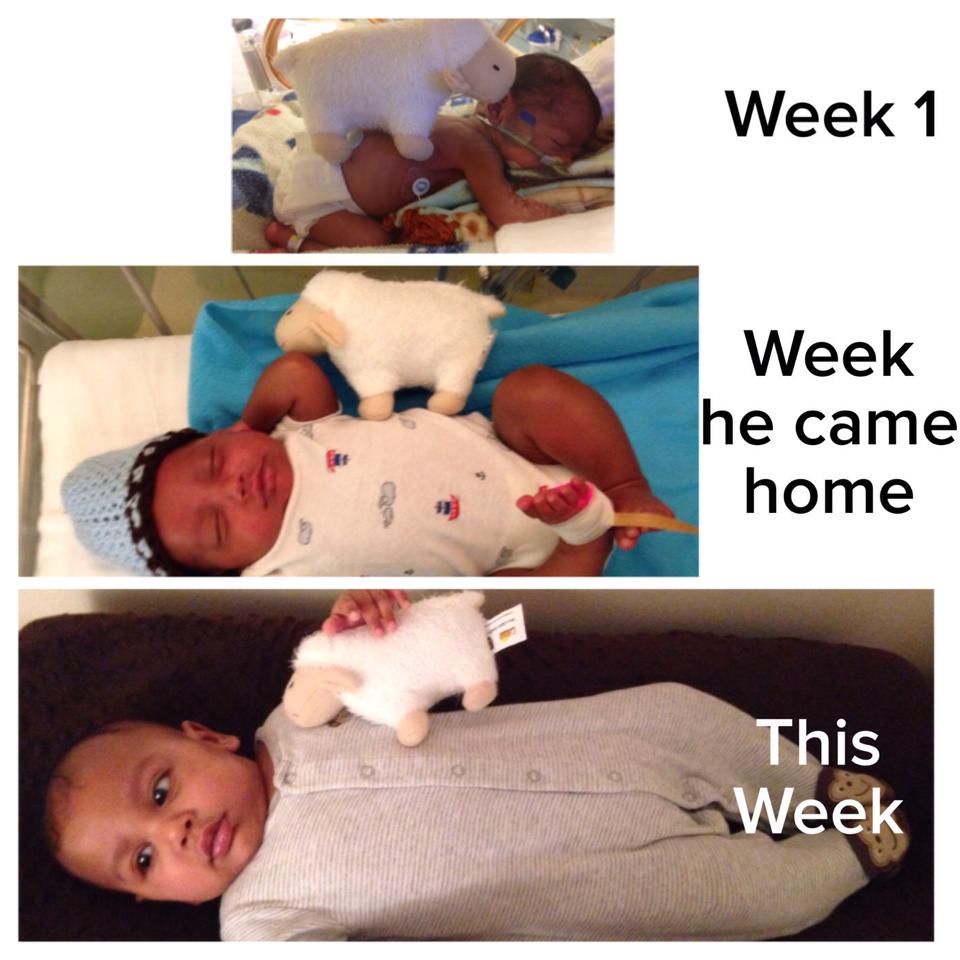
3. Face Time with Jason, Mittu, and Timothy. We don’t see Jason and Mittu as much as we used to since they have a new baby in the house and their own washer and dryer now. 🙂 And we got so used to seeing Timothy several days a week while he was in the hospital, that to go a couple of weeks without seeing him seems like half of forever. I was craving a visit and texted to ask if they wanted to Face Time, and we did. It was nice to catch up and fun to see him almost in person, though I enjoy pictures, too. It was nice, too, to talk to him a bit – don’t want him to forget Grandma and Grandpa’s voice! 🙂

4. An appointment deferred, or actually not deferred, but I thought I had an appointment for my physical Thursday but was relieved to find it was actually scheduled for next Monday. It was just a busy week, and though I could’ve worked around it, it was nice to discover I didn’t have to after all.

5. Take-out a couple of times this week. My husband brought home Chinese food Saturday night, and then one night when he had to be out of town Jesse and I got take-out from Ruby Tuesday’s.

Other little blessings: I’ve enjoyed our hummingbird visitor coming more frequently, bringing his mate, and getting a little less skittish about seeing us through the window, plus seeing a baby rabbit in the back yard (we’ve seen adults plenty of times but this is the first baby we’ve seen). I’ve also made some more progress on my stitching during the evenings and my new project last weekend. Here is a sneak peek:

photo(3)

A major blessing this week has been your gracious comments on my 8th blogiversary post. Thanks so much – you’re all very kind. 🙂


A-Z Homemaking Meme

Back in the early days of blogging, someone would frequently start what they called a meme of interesting questions, tag their friends, and pass it around. It was a fun way to interact and get to know each other, but for whatever reason, they kind of fell by the wayside over time. But someone has started (or resurrected?) a new one that Susanne tagged me for, and I’m happy to participate.

Aprons – Y/N If Y what does your favorite look like?

I rarely wear aprons. I just don’t think to get it out. Around the house I often wear denim dresses, which show remarkably little staining. Recently I’ve gotten a couple of lighter-colored summer dresses, and I have started wearing an apron with them if I am cooking something messy (like spaghetti). The one I have been using is leftover from the days when Jim’s mom ate regular food at the table but was not always coordinated feeding herself – we used an apron rather than a bib for her, thinking she might feel a little humiliated about a bib. It’s just a plain denim one.

Baking – Favorite thing to bake?

Cookies! I am not so good at cakes and haven’t tried yeast breads since early marriage, though quick breads turn out ok.

Clothesline – Y/N

Nope. I like the smell of clothes hung to dry outside, and we used to have a clothesline, but after developing allergies and battling not only pollen but bird poop and inadvertently bringing in bugs with the clean clothes, I decided it wasn’t worth it.

Donuts – Have you ever made them?

Only the quickie cheating kind where you take canned biscuits and poke a hole in the middle and then fry them and frost or sprinkle, and haven’t done that in ages.

Everyday – One homemaking thing you do everyday?

There are always dishes to wash even if we’ve eaten out.

Freezer – Do you have a separate deep freeze?

Just got one this year and LOVE it and don’t know how I lived without one.

Garbage Disposal – Y/N

Yes. This is our first house to have one.

Handbook – What is your favorite homemaking resource?

These days, the Internet. It’s so easy to look up what to substitute for something you’re out of or how to get out a certain stain or whatever. I used to keep files of tips taken from magazines, but nowadays it would take longer to find what I need there than just looking it up online. I had various homemaking books in early marriage but can’t remember what they were.

Ironing – Love it or hate it?

Neither extreme but closer to hate than love. 🙂

Junk drawer- Y/N – Where is it?

I was thinking I had more than one, but most of them actually do have a purpose and are designated for certain things even if other things are in there. The one main one is in the kitchen.

Kitchen – Color and decorating scheme?

This kitchen doesn’t have any wall space, so I don’t have any decorations on the wall there. Here is a picture I took of it before we moved in (it is not quite camera-ready right now. 🙂

The counter tops and part of the back-splash are grey. What decorations I do have in there have pink and blue accents, as do my dishes. This is my favorite little corner, though the little pitcher has flowers in it now.

CIMG4222

I also like to have little things on the kitchen windowsill and change then out according to the season.

photo(2)

I like pretty decorations just for their prettiness, but I especially like the ones with meaning. The little Boyd’s Bear figurine is a grandmother and grandson with a cookie they’ve just made, given to me on Mother’s Day (my first one as a grandmother). The clear rectangle Jesse gave me last Christmas. It has a laser-etched group of hummingbirds inside, and I love when the light shines the colors into the sink. The little stick-on birdfeeder and hummingbird feeder on the outside are new additions.

Love – What is your favorite part of homemaking?

Completion. 🙂 I can’t say I enjoy most homemaking tasks in themselves, but once I get started I’m fine, especially if I put on some music or an audiobook. I do love setting things to rights and bringing the chaos back into order and I love the feeling when the kitchen is cleaned up or the bathrooms have just been done, etc. If we’re talking about more than just cleaning, decorating is my favorite part of making a house into a home.

Mop – Y/N

I use a Swiffer Wet Jet. Love not having to deal with a bucket of water.

Nylons – Wash by hand or in washing machine?

I never wear nylons any more, even with dresses. Most people here don’t. If I were going somewhere really super-formal, maybe I would then, and I’d wash them by hand.

Oven – Do you use the window to check on things or do you open the door?

Most often the door, though I know heat is lost that way. Occasionally the window.

Pizza – What do you put on yours?

Most often sausage and peperoni. I love a meaty pizza, and a couple of local restaurants have pizzas with four or five kinds of meat on them, which I love.

Quiet – What do you do during the day when you get a quiet moment?

Read, spend some time on the computer or my phone apps, nap.

Recipe Card Box – Y/N

No. I have cookbooks and notebooks. I do have an old file box I need to clean out.

Style of house

The house itself is a ranch. Other than that there’s not much I can think of to describe the style of the house itself. If the question means decorating, I’ve often described it as being between country and Victorian. I’d like to get further away from the “country” look, and I don’t like the fussiness of Victorian, so I don’t know exactly how I’d describe my decorating style now. I used to get a magazine called Romantic Homes whose style I really liked, and I’ve incorporated some of what I saw there over the years.

Tablecloth and napkins – Y/N

Pretty much only on holidays, maybe on special occasions if I think of it. For regular everyday meals we use paper napkins.

Under the kitchen sink – Organized or toxic wasteland?

It is fairly organized just now since we recently had a leak under there and had to clean everything out in order for it to be worked on.

Vacuum – How many times per week?

I am ashamed to say not even once a week (blush!) We have more hardwood floors than carpet, and most of the carpet doesn’t show anything, though I should vacuum more just for the sake of dust.

Wash – How many loads per week?

About 8, not including my mother-in-law’s stuff.

X’s – Do you make a daily to-do list and check it off as you do things?

Not daily but usually weekly unless it is a super-busy day, and I love to cross things off. As Susanne said, if I end up doing something I didn’t have on the list, I do sometimes write it down after the fact just for the pleasure of crossing it off.

Yard – Y/N – Who does what?

My husband and youngest son do all of the yard work. I water the flowers (unless my husband beats me to it) and cut or pinch off the dead blooms.

Zzz’s – What is the last homemaking task you do for the day before you go to bed?

Usually gather up any evening snack dishes and take them to the sink. If the dishwasher was nearly full at dinner, sometimes I’ll go ahead and put the evening cups and such in and start it before going to bed.

That was fun! Thanks for tagging me, Susanne! I’ll tag Dianna, Monica, Becka, and Ann. Please don’t feel obligated – I won’t be offended if you don’t like to do this type of thing. Not knowing if people would be interested is the one thing that keeps me from tagging more people, but if anyone reading would like to do this, let me know and I’ll come read your answers.

My 8th Blogiversary!

Photo Courtesy of marthastewart.com

Photo Courtesy of marthastewart.com

It’s hard to believe I have been blogging for 8 years!

Our family has experienced a lot of life changes in that time: high school and college graduations, a wedding, a grandson, a mother-in-law moving in from out of state and then into our home, surgeries, a move to a different state, crossing from the forties into the fifties. More grey hair, more wrinkles, hopefully a little more wisdom and experience.

When I first stepped into the blogosphere eight years ago yesterday, the blogging community for the most part felt more like neighbors chatting across the backyard fence than a business, and I’ve endeavored to share my “stray thoughts” about family, home, Christianity, and just about anything else I find interesting or amusing with other online neighbors. I’ve always wished I had come up with a more creative name, but it still aptly describes the content. I’ve been amazed and so grateful that anyone has stopped by at all to read, and that some of you have stayed for years amazes me even more. Occasionally I’ll read blogging advice articles and wonder if I should think more about my “niche” and “platform,” but then I think…nah. If I ever need to have a professional blog for any reason, I’ll probably start a new one: I hope to keep this one as a personal and  hodgepodgy place to fellowship.

I’m so thankful for any way in which God has redeemed and used anything here.

Thank YOU so much for reading and commenting! Thank you for your patience with my foibles, your words of encouragement, your prayers through our various family crises. Without you this wouldn’t be much more than an online journal. You make it both more fun and more of a blessing.

In appreciation, I am going to host a little giveaway of one of a couple of different gifts to two different winners. I traditionally like to give away something that I have enjoyed, so I am going to offer a copy of the book Women of the Word by Jen Wilkins (linked to my review)

WOTW


…and a copy of the Galkin Evangelistic Team‘s CD Be Still. It is actually a set of two CDs. One has very peaceful and soothing instrumental settings of various hymns and spiritual songs, and the other has Scripture readings with the same music as background. You can hear clips of the songs on the CD  at the Galkin’s site here or on iTunes or Amazon.

Be Still

For many months this has been my go-to CD while puttering in the kitchen, especially on Sunday mornings, and it has greatly ministered to me.

If you’d like to be entered for either of these gifts, just leave a comment below. Let me know if you have a preference for one or the other and whether you’d like the electronic or physical versions (you would need a Kindle app for your computer, phone, or tablet for the electronic version of the book, but the apps are free). I can only send the physical versions to US addresses (and possibly Canada – will have to check on shipping prices there), but the electronic versions can of course be sent anywhere. And this isn’t required, but just for fun in your comment let me know how you first came across “Stray Thoughts” and how long you’ve been reading here. I’ll draw a name using random.org a week from today (August 4).

Thank you, once again, for a very enjoyable eight years.

The giveaway is now closed. Congratulations to Ivory Spring for winning the book and Amy for winning the CDs! And thank all of you for your kind and lovely comments.

Laudable Linkage

Here are some noteworthy reads discovered this week:

Testing Your Faith in Divine Intervention. On blaming God instead of people when tragedies happen and on why God does not always intervene, among other things.

The Kind of Complaint That’s Pleasing to God. HT to Challies. “If the Father appeared and spoke with us face to face, his words would have no more weight in our hearts than the ones he has already spoken. If we find his words in Scripture to fall short, we would also find his personal visitation unsatisfactory.”

The Myth of God’s Silence.

How to (and How Not to) Minister to Families Battling Cancer.

22 Facts About Sleeping That Will Surprise You.

This had me smiling:

Happy Saturday!

Friday’s Fave Fives

FFF spring2

It’s Friday, time to look back over the blessings of the week with Susanne at Living to Tell the Story and other friends. Wow, it’s hard to believe we’re so near the end of July! Here are some of the favorite parts of the past week or so:

1. Jason’s birthday. As new parents, they’re not getting out much, so it was a joy not only to celebrate his birthday but just to get together.

2. Getting to hold this little guy again:

photo

3. Taking up my stitching again. I think I put it aside at Christmastime. I don’t know why it took me so long to take it back up.

photo(1)

4. Vacation Bible School. We don’t have children young enough to be in it and can’t participate except through small contribution and prayers, but the coordinator has been sending e-mail updates after each night’s events. It has been wonderful to hear of the gospel going out, the children being responsive, a few of them coming to know the Lord, and a number of behind-the-scenes ministries.

5. Getting started on a new project, one I have been contemplating for a long time. It takes me nearly forever to decide what I want to do on things like this, and I have a tendency to make it more complicated, but I finally have an idea in mind and have started on it. I hope to be, if not finished, at least far enough along to show a picture next week.

Happy Friday!

“But if not…”

Since our pastor has been diagnosed with cancer and given only 6 months or so to live, he has had a couple of sessions of combined adult Sunday School classes in order to discuss with us some issues and some of his vision and burden for us. A couple of weeks ago he was feeling poorly enough not to be able to make it for Sunday School for one of these sessions. Our assistant pastors took that opportunity to share a bit of their perspective and then a few men prayed for the family. That time was greatly beneficial and therapeutic for me: outside of our own family and sharing of thoughts on blogs or Facebook with other members, I hadn’t really had a chance to partake of that kind of sharing and praying together. Though I’m sorry our pastor was feeling so sick that day, I think the time was very well spent.

Though those who prayed aloud mentioned varying aspects – the pastor’s physical needs, grace for his wife and family, his two daughters who were getting married in what was supposed to have been one of the best summers of their lives, direction for the youngest daughter scheduled for college in the fall, and many others – there was a recurring theme in several of them. They prayed for the miracle of healing (and it would take a true miracle) and promised to give God the glory for it, but, acknowledging that might not be God’s will, prayed for His grace for the family and our church.

I’ve known some who belittle the Christian faith to point to this kind of praying as a lack of faith, as providing an “out” if God doesn’t answer prayer the way we ask, or even a lack of evidence for God since we can explain away the lack of an answer with it’s not being God’s will. But that’s not why we pray that way. We have good Biblical precedent.

In Daniel 3, Shadrach, Meshach, and Abednego were threatened with being thrown in a fiery furnace if they did not bow down and worship the king’s golden image. They refused and replied, “Our God whom we serve is able to deliver us from the burning fiery furnace, and he will deliver us out of thine hand, O king.  But if not, be it known unto thee, O king, that we will not serve thy gods, nor worship the golden image which thou hast set up” (verses 17-18).

Jesus, in the garden of Gethsemane the night before He was crucified, prayed, “Father, if thou be willing, remove this cup from me: nevertheless not my will, but thine, be done” “Luke 22:42).

Someone once said, “Prayer is asking God to align you with His will rather than asking Him to be aligned with yours.”

Can God heal someone diagnosed with cancer and only months to live? Sure. Why doesn’t He do so every time we ask Him to? I don’t know.

In Goforth of China when Rosalind recounted their miraculous deliverance during the Boxer rebellion, she had been asked why God didn’t deliver all the missionaries in China at that time. Some were horribly murdered. She responded:

Truly a vital question, which could not lightly be set aside! Humbly and prayerfully we pondered this “Why” in the light of Scripture. In the twelfth chapter of Acts, we read of Herod’s succeeding in putting James to death by the sword, and directly after comes the story of how Herod was hindered in carrying out his intention to kill Peter who was delivered by a miracle. Then who could read that marvelous eleventh chapter of Hebrews with its record of glorious martyrdom and miraculous deliverances without being thrilled? In face of these and many other passages, while still unable to answer the “why” we saw our Almighty God used His own prerogative to glorify His name whether in the glorious martyrdom of some or in the miraculous deliverance of others (p. 129-130).

James was killed while Peter was delivered. Uriah was killed while David lived. Many Hebrew babies died while Moses was rescued. Not only was Moses answered “no” to his request to see the Promised Land, but God admonished him not to speak about it any more. Jesus escaped Herod while the rest of the children under 2 in Bethlehem were slaughtered. Many people were healed, but God answered Paul’s request for deliverance with a “No” and a promise of His grace instead. The people in the first part of Hebrews 11 experienced glorious deliverance: the people at the end experienced trials, mocking, imprisonment, stoning, being sawn asunder, homelessness, “being destitute, afflicted, tormented” – yet these were included with the rest as “having obtained a good report through faith” (verse 39) even though they weren’t delivered.

Sometimes there are reasons why prayer isn’t answered, or at least isn’t answered the way we’d like. God has many reasons for allowing suffering, but we can’t know all the reasons or see the big picture of what He is doing in the world or even in the life of any one person and his or her sphere of influence. But those who know Him can trust Him as a father. Even the best of fathers has to sometimes say “no.”

Why does God have to use such means to accomplish His purposes? Somewhere I read that Elisabeth Elliot wrote that, though she had heard many wonderful stories of how God used her husband Jim’s death in many people’s lives, that knowledge still didn’t really satisfy. Didn’t God save people and call them to His service through other means than someone’s death? Sure, all the time. Why was that required this time? She didn’t know, but she trusted that God had His reasons. In “Thy Calvary Still All Our Questions” in the book Rose From Brier, Any Carmichael wrestled with this:

This is a Why? of a different order from that of the little mosquito. It is immeasurable greater. It strikes at the root of things. Why is pain at all, and such pain? Why did God ask Satan the question which (apparently) suggested to the Evil One to deal so cruelly with an innocent man? Why do the innocent so often suffer? Such questions generally choose a time when we are in keen physical or mental suffering, and may (the questioner hopes will) forget our comfort. They seize us like fierce living things and claw at our very souls.

Between us and a sense of the pain of the world there is usually a gate, a kind of sluice gate. In our unsuffering hours it may be shut fast. Thank God, it is shut fast for tens of millions. But let severe pain come, and it is as though the torture in us touched a secret spring, and the door opens suddenly, and straight upon us pour the lava floods of the woe of a Creation that groans and travails together….

O Lord, why?

After considering several answers which did not really satisfy her, she wrote,

But, though, indeed, we know that pain nobly born strengthens the soul, knits hearts together, leads to unselfish sacrifice (and we could not spare from our lives the Christ of the Cross), yet, when the raw nerve in our own flesh is touched, we know, with a knowledge that penetrates to a place which these words cannot reach, that our question is not answered. It is only pushed farther back, for why should that be the way of strength, and why need hearts be knit together by such sharp knitting needles, and who would not willingly choose relief rather than the pity of the pitiful?

…What, then, is the answer? I do not know. I believe that it is one of the secret things of the Lord, which will not be opened to us till we see Him who endured the Cross, see the scars in His hands and feet and side, see Him, our Beloved, face to face. I believe that in that revelation of love, which is far past our understanding now, we shall “understand even as all along we have been understood.”

And till then? What does a child do whose mother or father allows something to be done which it cannot understand? There is only one way of peace. It is the child’s way. The loving child trusts.

I believe that we who know our God, and have proved Him good past telling, will find rest there. The faith of the child rests on the character it knows. So may ours, so shall ours. Our Father does not explain, nor does He assure us as we long to be assured… But we know our Father. We know His character. Somehow, somewhere, the wrong must be put right; how we do not know, only we know that, because He is what He is, anything else is inconceivable. For the word sent to the man whose soul was among lions and who was soon to be done to death, unsuccored, though the Lord of Daniel was so near, is fathomless: “And blessed is he whosoever shall not be offended in me.”

There is only one place we can receive, not an answer to our questions, but peace — that place is Calvary. An hour at the foot of the Cross steadies the soul as nothing else can. “O Christ beloved, Thy Calvary stills all our questions.” Love that loves like that can be trusted about this.

There are many strong and positive verses about prayer that we can rely on, yet we have to include “if it be Thy will” and trust that even if God doesn’t heal or deliver or provide like we wanted Him to, He is still good and wise and accomplishing His purpose.

God is doing good things in our own church and across the country through our pastor’s situation. One of our church members has shared some of those things. If you feel led, I’m sure all involved would appreciate your prayers. In addition, some are attempting to help raise funds for the family’s needs through https://www.idoitfor.org/Tom/.

tom

Book Review: The Adventures of Sherlock Holmes

Adventures of Sherlock HolmesThe Adventures of Sherlock Holmes by Sir Arthur Conan Doyle is a collection of short stories published after the first two novels. All were originally published in magazines. I’m not a great fan of short stories, but it was a nice break to have each case end with the chapter rather than having novel-long plots and twists and characters to keep up with. I enjoyed the audiobook read very nicely by actor Derek Jacobi.

The format of the stories is much the same as the novels. The ones in this volume are not told in chronological order: some occured while Watson still lived with Homes, others occured after Watson married. At the beginning of many of them Watson explained why he chose to chronicle that particular case out of the many Holmes had solved. Though there are similar characteristics in each story, Doyle did an excellent job in keeping them from becoming formulaic and predictable. Some involve the police, some don’t. In a few Holmes let the perpetrator go for various reasons (in one, the man did not have long to live; another involved a young man whom Holmes thought would go right after the scare of almost getting into big trouble). Some involved a crime that had already been done, some involved a crime that had yet to be committed, some involved other mysteries.

This book contains twelve stories: probably the most notable is “A Scandal in Bohemia” for the mention of Irene Adler. Some portrayals of this story of Holmes cast her as a love interest, but in this story she is not that. He admires her wit, which rivals his own, and the fact that she is one of very few people who have ever outsmarted him. In fact, Watson says,

It was not that he felt any emotion akin to love for Irene Adler. All emotions, and that one particularly, were abhorrent to his cold, precise but admirably balanced mind. He was, I take it, the most perfect reasoning and observing machine that the world has seen, but as a lover he would have placed himself in a false position. He never spoke of the softer passions, save with a gibe and a sneer. They were admirable things for the observer — excellent for drawing the veil from men’s motives and actions. But for the trained reasoner to admit such intrusions into his own delicate and finely adjusted temperament was to introduce a distracting factor which might throw a doubt upon all his mental results. Grit in a sensitive instrument, or a crack in one of his own high-power lenses, would not be more disturbing than a strong emotion in a nature such as his.

I thought it interesting, after wondering aloud in my review of The Sign of Four whether a genius in one area has to be unbalanced in others, that Watson says Holmes has a “precise but admirably balanced mind” while explaining that emotions were “abhorrent” to him — which seems a little unbalanced to me. 🙂

I enjoyed more unfolding of Holmes’ personality. Some accounts I’ve read cast him as manic-depressive or autistic, but I think (at least so far) that he was just a classic introvert. He claims Watson as his only actual friend, spends a great deal of time alone and thinking, but can be genial and even soothing when he needs to be. Some modern versions also portray him as rude, but in these first three books I haven’t seen that, at least that I can remember.

I’m glad that more modern versions of Holmes’ stories cast Watson as a strong character rather than a doddering old man who is only along as a sidekick. He is a skilled doctor and apparently handy with a revolver (from his army days) since Holmes asks him to bring it along for particularly dangerous cases.

I’m trying to read the Holmes stories in publication order, and the next is another collection of short stories, The Memoirs of Sherlock Holmes. I may skip ahead to The Hound of the Baskervilles, which I’ve been particularly wanting to get to. I don’t think the reader will lose anything by reading them in any order: I just wanted to partake of them as the general public would have at first in order to see how they unfold. But I’ll put off that decision for a little while in order to take a break from Holmes to participate in the Austen in August challenge.

(This will also be linked to Semicolon‘s Saturday Review of Books.)

Austen in August Challenge

Austen in August

I just saw yesterday, while perusing the What’s on Your Nightstand posts, that Lost Generation Reader is sponsoring an Austen in August reading challenge (HT to Bluerose). As the name indicates, the idea is to read something by or about Jane Austen during the month of August. Since I’ve already started Just Jane, a novelization of her life by Nancy Moser, I’m delighted to be able to jump in without straining much from the other challenges I am participating in this year. I’ll also listen to Northhanger Abbey via audiobook. I have more Austen books both on hand and in my audiobook library, so after I finish these two I’ll decide if I want to add any more.