Unknown's avatar

About Barbara Harper

https://barbarah.wordpress.com

What’s On Your Nightstand: July 2014

What's On Your NightstandThe folks at 5 Minutes For Books host What’s On Your Nightstand? the fourth Tuesday of each month in which we can share about the books we have been reading and/or plan to read.
Ack! This is one of those early 4th Tuesdays that snuck up on me! I didn’t realize it was a Nightstand Tuesday until seeing others in my feed reader. Here goes:

Since last time I have completed:

The Knowledge of the Holy by A. W. Tozer, reviewed here.

Women of the Word by Jen Wilkin, reviewed here, easily one of my top ten books of the year.

How to Read Slowly: Reading for Comprehension by James W. Sire, reviewed here.

The Sign of the Four by Sir Arthur Conan Doyle, second of the Sherlock Homes novels, via audiobook, reviewed here.

The Book of Three by Alexander Lloyd, first book in the Prydain Chronicles, reviewed here.

I will Repay by Baroness Orzcy, part of The Scarlet Pimpernel series, via audiobook primarily, reviewed here.

I’m currently reading:

Just Jane: A Novel of Jane Austen’s Life by Nancy Moser

On Stories by C. S. Lewis

Gospel Meditations for the Hurting by Chris Anderson and Joe Tyrpak

The Adventures of Sherlock Holmes by Sir Arthur Conan Doyle, audiobook.

Next up:

Why We Are Not Emergent: By Two Guys Who Should Be by Kevin DeYoung, Ted Kluck, and David F. Wells. This will finish my TBR Challenge list. Woot! Unless I do the alternates, which I’d like to do, but I’m going to take a break from this list and read some other things that have stacked up in the meantime.

Undetected by Dee Henderson

I also did a fun little A-Z Bookish Questionnaire if you’d like to look in or maybe try it yourself.

Happy reading!

Book Review: How to Read Slowly

How to Read SlowlyI don’t remember how the book How to Read Slowly: Reading For Comprehension by James W. Sire first came to my attention, but it caught my eye when it did. I didn’t want to change my reading speed necessarily, but I did want to learn how to retain more from what I read, especially non-fiction (stories seem to stay with me longer and better with less effort). Even with marking quotes, using sticky tabs to mark the most important passages, and sometimes even outlining the chapters, I still tend to forget a great deal. Even though this was a book about comprehension rather than retention, I figured the one would aid the other.

I had not known Sire was a Christian when I bought the book, but right at the beginning he states that though this book would be beneficial to any reader, he primarily wanted to encourage “Christians to think and read well. Christians, of all people, should reflect the mind of their Maker. Learning to read well is a step toward loving God with your mind. It is a leap toward thinking God’s thoughts after Him” (p. 12). To which I say a hearty “Amen!”

With both instruction and example, Sire shows how to detect an author’s world view, how to read “between the lines” while not “inventing or imagining what is not really there” (p. 42),  how to “track the flow” of author’s argument or reasoning process. He has a whole chapter on poetry, another on reading fiction, another on reading in context (not imprinting our current way of thinking on older books, but understanding the context in which they were written). He gives tips for how to read, what to look for, what to mark, and encourages a lot of rereading. He talks about the difference between reading nonfiction and imaginative literature.

Here are some quotes that stood out to me:

What is the primary reason for reading poetry or any imaginative literature? Beyond all psychologizing as to real or apparent motives, we read literature because we enjoy it — and we enjoy it because we are grabbed by it, our attention is arrested. We say, “Aha! Yes, that’s how it is.”

In great literature — poetry and fiction — we see ourselves, our friends, our enemies, the world around us. We see our interests portrayed in bold relief — our questions asked better than we can ask them, our problems pictured better than we can picture them by ourselves, our fantasies realized beyond our fondest dreams, our fears confirmed in horrors more horrible than our nightmares, our hopes fulfilled past our ability to yearn or desire. In literature we catch reality in a mirror…

Life is short, but art is long. Sophocles is dead, but Oedipus lives on…Each of us when we read a great piece of literature is a little more human than before (pp 58-59).

Well-wrought poems and works of imaginative literature can do for us what stone-cold prose can never do. They can help us grasp the full dimension of ways of life other than our own (p. 86).

Our ability to read well depends to a large degree on just how clearly we understand ourselves and how much we realize ours is not the only way to look at reality….I am not saying we ought not to disagree with anything we read. Indeed not. We must disagree if the thrust is in opposition to what we take — after reflection, study, and prayer — to be the truth. But we must also be sure that we have “heard” the other person as he or she wishes to be heard (p. 141).

We have more to fear from naivete with regard to error than we do from clear knowledge of error that we recognize as error….A knowledge of the truth is the best defense against error (p. 146).

One thing the Bible does not do: it does not denigrate the mind. The Bible is not anti-intellectual. Rather it gives the reason why all of us know what we know, why we can think with some degree of accuracy, and why we fail to think with complete accuracy (p. 148).

Every avid reader struggles with the sheer amount of good books on our shelves that we haven’t gotten to as well as the ones we see in stores or online or recommended by friends. Sire says, “We will never catch up. But we can get on with it…Reading does get done. The point is to start and then to read well. How far we get, how many books we read, must not become the issue” (p. 155).

I don’t know if I would say that I enjoyed the book – it’s not something I’d pick up for fun. But I did benefit from it. It feels a little like high school or college English class in some places (not surprisingly, Sire taught English literature and philosophy at various colleges), but I liked classroom English, so I didn’t mind that aspect of the book. The section on the mechanics of poetry got a little technical for me (I had not known, or else had forgotten, what a spondee was), but I appreciate his illustration that even the meter and rhythm of a poem illustrate its message. I just don’t know how many people are seriously going to count syllables and abab cdcd the rhyming lines outside of a classroom unless they’re really into poetry. But that’s the only part that went a little overboard (for me. Someone else may have found it fascinating). This is a book I would highly recommend for anyone interested in the subject.

(This will also be linked to Semicolon‘s Saturday Review of Books.)

Laudable Linkage

Here are some links I found interesting in the last couple of weeks:

This quote is resonating with me from an article about preaching, though I am not a preacher: “That little voice inside your head saying ‘That’s just not who I am’ is not your friend. Sanctification is the process by which the Holy Spirit overcomes ‘who I am’ and shapes me into who He wants me to be.” The article is 5 Reasons Why Some Preachers Get Better and Others Don’t, HT to Challies.

15 Beautiful Benefits of the Word of God.

Five Specific Prayers for the Unsaved People in Your Life.

3 reasons you should not try to bind Satan.

Letting Parenting Struggles Make You Strong.

Ten Things My Parents Did Right.

Home Decor and Trendiness: Who Makes the Rules You Live By? Yes! I kept thinking that all through this post.

I am Ryland – The Story of a Male-Identifying Little Girl Who Didn’t Transition. In light of a recent case where parents started treating their daughter like a boy when she liked boy things, this blogger tells of growing up as what we used to call a tomboy or “late bloomer” who nevertheless did not identify herself as transgender. With the current climate, we’re going to run into these kinds of situations, and she makes some good points.

I’m not linking to 6 Reflections on Sleepovers so much for anything to do with sleepovers: it’s a response to a post on why this family doesn’t allow sleepovers, but I’m linking to it because the principles he discusses when Christians have different views cover many things. It is good to keep these things in mind when disagreeing on secondary issues.

Paralyzed? Or Medically Fragile?

Facts about the Hobby Lobby ruling that even some Christian seem to be missing.

Skip to the Loo, My Darling, HT to Lou Ann. An interesting look at bathroom facilities in other countries by missionary women. This reinforces the thought I’ve had that this aspect would be one of the things I’d have a hard time with if I ever traveled out of the country!

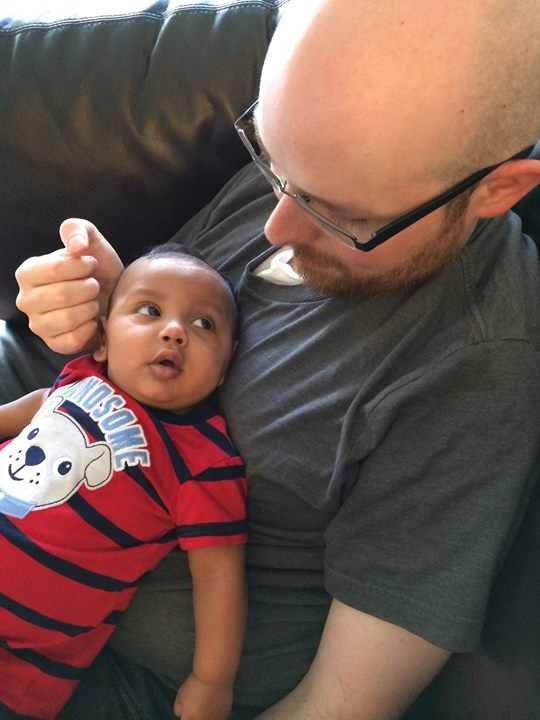
And lastly, I forget where I saw this, but it had me chuckling out loud. As my sister-in-law said when she saw it, “Baby: 1; Dad: 0.” (As an aside, for safety concerns it is probably not wise for an adult to climb into a baby’s crib.)

Happy Saturday!


Friday’s Fave Five

FFF spring2

It’s Friday, time to look back over the blessings of the week with Susanne at Living to Tell the Story and other friends. Here are some of the favorite parts of the past week or so:

1. Online registries. We’ve had a lot of bridal showers, weddings, and baby showers at church the last few months. I love registries so that I can get the person something they want rather than providing their first yard sale fodder. I especially like that most store registries can be accessed online now. It helps a lot to be able to look them over and pick out a couple of ideas beforehand instead of roaming all over the store first.

2. Hummingbirds. We just put a feeder put a few weeks ago and hadn’t had any visitors. But just recently we saw that the level of nectar had gone down, and more recently we’ve seen a little visitor. They are so amazing to watch.

3. A new cell phone. My phone had been having trouble making or keeping a charge, so my husband took it in, and evidently it had a lot of dust in it – more than they could clean out by their usual methods. 😦 But it was under warranty, so they gave me a new one, and now I am trying to take special care to keep dust out of it. I usually keep it in my pocket, which seems to produce a lot of very fine lint. Just saw online recently some silicone plugs for the various ports in a phone, so may look into those. Anyone tried them?

4. A husband who deals with issues like phone troubles. 🙂 Dealing with the “genius bar” is not one of his favorite things, but I appreciate his going there for me.

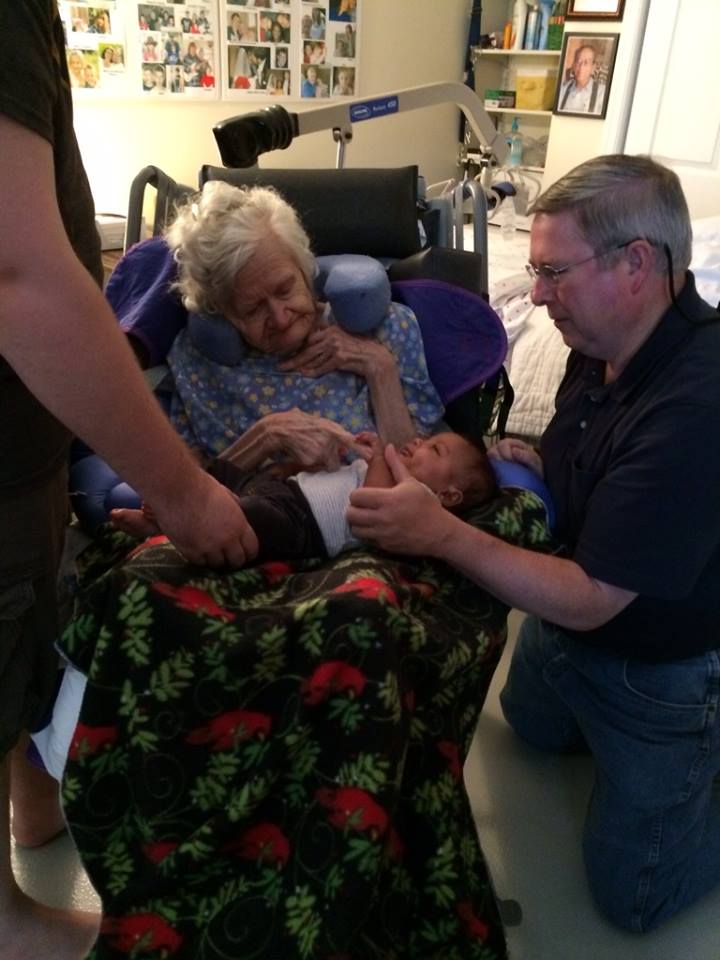
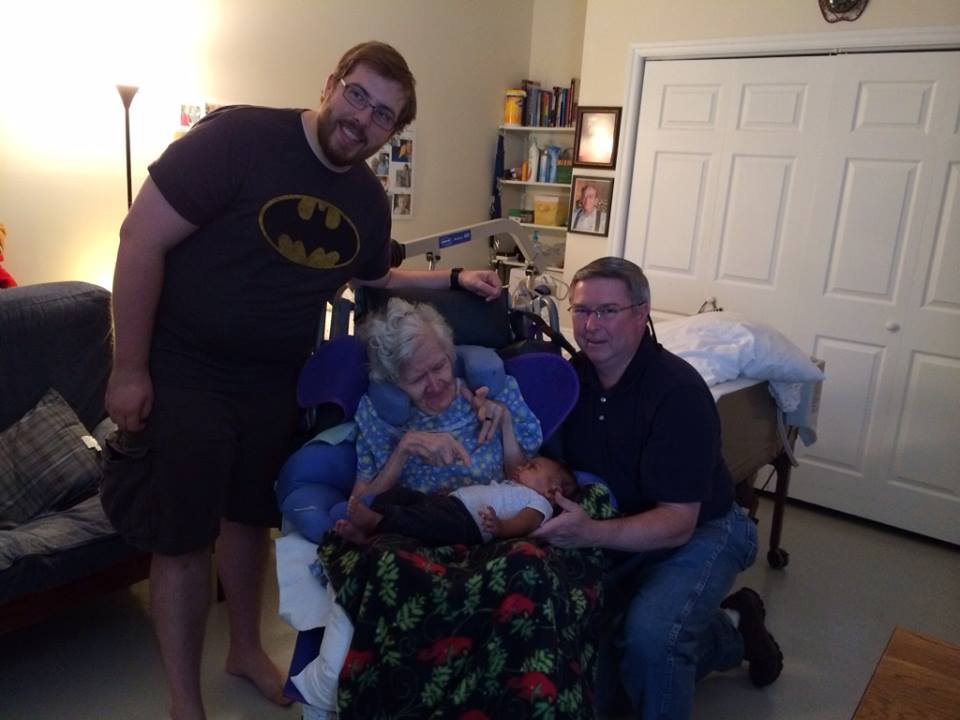
5. A volunteer. We had made plans to go to Jason and Mittu’s tomorrow for his birthday (which is actually today), but got word that Great-Grandma’s weekend caregiver would not be available this weekend. Her weekday caregiver volunteered to come on Saturday since she knew we had plans. Much appreciated!

Hope you have a great weekend!

When People Say the Wrong Thing

In the last couple of years I have seen an abundance of articles about “What not to say to…” single people, a pregnant person, a childless couple, adoptive parents, a depressed person, the chronically ill etc. Some are actually quite helpful and enlightening. For the record, never ask a single person why they’re not married yet (they may be wondering the same thing themselves), or a couple when they’re going to start a family (it’s not our business, and if they’ve been trying without success such questions are extremely painful), or any lady when she’s due (unless you know she’s pregnant!) I remember when my husband and I were dating during college, whenever we’d come back from any kind of break, I”d hear remarks like, “Let me see that left hand!” or “Are you engaged yet?” I wanted to whimper, “We’re trying to figure it out. When we have news to share, you can be sure we’ll tell everyone we know.” We can easily make people feel hurt or pressured or frustrated by such questions. A friend shared on Facebook a chart of some of these common statements (or thoughts) to parents, and a lively discussion ensued of those on the receiving end of some of these comments:

how many kids

Sometimes it’s not so much hurtful speech as thoughtless speech.Years ago friends with the last name of Fox had their first child, and when I saw them at church I smilingly quipped the verse about “little foxes spoiling the vine.” The husband looked at me and said wearily, “Everyone says that.” I instantly realized what a thoughtless, inane statement that was, and later was convicted that it was a horrible misuse of Scripture.

Sometimes people can rival Job’s “miserable comforters,” who meant well, sympathized (at least at first), and said many true things, but misapplied much of the truth they shared. We need to be especially careful about telling people why we think God allowed something to happen in their lives. We don’t really know, but we can comfort and encourage them in many others ways.

Ephesians 4:29b reminds us make our speech “that which is good to the use of edifying, that it may minister grace unto the hearers,” and Colossians 4:6 says, “Let your speech be alway with grace, seasoned with salt, that ye may know how ye ought to answer every man.” We need to be careful, thoughtful, prayerful, and edifying in what we say.

Yet not everyone is going to get the memo or read these kinds of articles. Eventually we’re all going to have someone say or ask something that hits us wrong. What’s the best way to react?

Avoid sarcastic retorts. Most times they don’t realize they’ve said something hurtful. Sending back a zinger will only escalate the incident.

Educate if needed. If they’ve never been in our situation, of course they are not going to understand. A friend with a child with severe life-threatening allergies has often had to shed light on common misconceptions, as have many others in different situations.

Appreciate their interest. At least they are interested in your life and they’re not ignoring you.

Give the benefit of the doubt. Most people truly do mean well. If they are trying to say hurtful things on purpose – then we need to have a different kind of conversation with them.

Realize sometimes we’re the problem. Sometimes something is meant well but we take it the wrong way.

View the opposite end of the spectrum. Sometimes, particularly when a person is in a very difficult situation like marital problems or illness or a death in the family, people are so afraid of saying the wrong thing that they say nothing and avoid them. We can foster that by too much complaining about the wrong things that have been said.

Give them grace, the same grace we would want people to extend to us if we said the wrong thing…because we likely will at some point. In fact, we probably have at some time without realizing it.

You may need to talk to them about why their comment hurt and try to resolve the issue. (Matthew 18:15: “If your brother sins against you, go and tell him his fault, between you and him alone. If he listens to you, you have gained your brother.”)

Or you may decide just to overlook it (I Peter 4:8: “Above all, keep loving one another earnestly, since love covers a multitude of sins,” Proverbs 10:12: “Above all, keep loving one another earnestly, since love covers a multitude of sins.”)

But we need to deal with it one way or the other and let it go. Don’t hold it against them, don’t carry a grudge, don’t let it fester, don’t avoid them afterward.

We need to forgive:

Matthew 6:14-15: “For if you forgive others their trespasses, your heavenly Father will also forgive you, but if you do not forgive others their trespasses, neither will your Father forgive your trespasses.”

We need to forgive on the basis of the great wrongs we have been forgiven, not on the basis of whether or not they “deserve” it (See Matthew 18:20-35). We didn’t deserve God’s forgiveness, and He has forgiven us so much more than anything anyone has done or said to us.

We need to exercise patience and forbearance:

Colossians 3:12-13: “Put on then, as God’s chosen ones, holy and beloved, compassionate hearts, kindness, humility, meekness, and patience, bearing with one another and, if one has a complaint against another, forgiving each other; as the Lord has forgiven you, so you also must forgive.”

Ephesians 4:1-3: “I therefore, a prisoner for the Lord, urge you to walk in a manner worthy of the calling to which you have been called, with all humility and gentleness, with patience, bearing with one another in love, eager to maintain the unity of the Spirit in the bond of peace.”

We need to be filled with and manifest the fruit of the Holy Spirit:

Galatians 5:22-23: “But the fruit of the Spirit is love, joy, peace, patience, kindness, goodness, faithfulness, gentleness, self-control; against such things there is no law.“

Whether we’re the speakers or the receivers, we need to walk closely with the Lord, seek His guidance, and manifest His grace.

(Update: I’m not saying there is anything at all wrong with those “What not to say” type posts. Sometimes they are very informative and enlightening and usually help dispel our notions of stereotypes. There is nothing wrong with telling someone that something they’ve said is off-base or hurtful. But I’ve known people to carry around a personal bitterness because of something another person has said in ignorance about their situation, and that’s not healthy.)

Adventures in Elder Care: Ministering to the Elderly and Their Caregivers

Eldercare
I didn’t feel I could conclude this series without a post about ministering to the elderly. Some of what I wrote about how to help parents as they age would apply generally, but I wanted specifically to address ways to minister to an elderly person who is not your parent.

Neighbors. If you live near an elderly person who is still in his or her own home, just being a good neighbor is a great first step. Greeting them, talking over the back fence or the mailbox, sharing from your garden, taking them treats (after asking about dietary restrictions), etc., are all ways to keep in touch. Most would welcome a visit, but don’t assume that because they’re older and at home most of the time that they don’t mind if you drop in any time. Some wouldn’t, but some would: as you get to know your neighbor, you’ll be able to discern whether she likes to have company or not, or when might be a good time. You want to be alert for ways that they might need help, but you don’t want to run roughshod into their lives or make them feel useless and helpless. Some might love to have you cut their grass, for instance, but some might take pride that they’re still able to do it and might like the exercise. You might especially be alert to checking on them if you haven’t seen them out for a while.

Visiting facilities. If someone you know is in an assisted living facility or a nursing home, visiting them is probably the number one way to minister to them. Even if they have family that visits often, there are still a number of hours in the day when they don’t have visitors (and it helps the family to know that they are not the only ones who care about the loved one). Some will be more involved in the activities of their facilities than others: you might check with them (depending on their mental abilities) or their family members or even one of the staff members to ask when would be the best time.

Some churches have a regular visitation program for their senior members, which is nice. Just don’t do what one lady did: we happened to be visiting my in-laws at their home when a couple of ladies from their church came to visit my husband’s mom. I believe they brought her a flower, and after she exclaimed about it and expressed thanks for their visit (probably more than once), one of them said, “Well, you were on our list.” If you’re doing something for someone just because they’re on a list of some kind — there is no need to say that! It would be much better to ask the Lord before visiting to help you be a blessing and to have wisdom to know how to best minister to and encourage that person.

What might you do when you visit? Ask about the person, how they’re doing, what their day was like. I read a post about visiting the sick where the writer concentrated only on spiritual issues, like praying with them or reading the Bible or encouraging them with the Word, but left out anything personal. Yes, do those spiritual things: an elderly person might not to be able to or remember to read the Bible on their own, and even if they do, the fellowship of doing it with other believers is a great benefit. But don’t make them feel like they’re a project, like the ladies in the above paragraph. Show a personal interest in them. When you do read the Bible to them, remember some might be hard of hearing. It helps to sit right in front of them so they can see your lips moving and to read in a firm, clear, loud but not yelling voice. One friend used to read aloud and discuss something from the large print Readers Digest with my mother-in-law. Going through a photo album and talking about her loved ones was one of her favorite activities as well.

Often when visiting the person you know in a facility, you’ll have occasion to talk for a bit with other residents. Many in assisted living are fine mentally but can’t live at home for various reasons, and we enjoyed chatting with and getting to know some of them.  I mentioned in an earlier post that things can get a little more complicated when the other residents have a higher degree of dementia. The number one thing we were told was “Don’t alter their reality.” If you try to talk them out of whatever they think is happening, they can get greatly agitated, and that causes more problems not only for the person but also for the staff. When my mother-in-law was in a memory care unit made up primarily of Alzheimer’s patients, residents would often stop visitors to ask for their help in some way. Most of them were constantly trying to figure out a way to get out, not because it was so terrible, but just because they knew on some level that they were not home. When we couldn’t help them in whatever way they wanted, they’d get upset, which again caused more problems for everyone involved. Sometimes you can redirect them: once my husband told a resident who wanted him to help her find her car so she could go home, “Well, they’re just about to serve dinner – why don’t you eat with us and we’ll see about the car later.” She graciously accepted. 🙂 Other times we’d just say, “I’m sorry, I’m just visiting, but maybe that person can help you” and point them to a staff member. Honestly, in that place, sometimes we’d just try to avoid eye contact and go straight to my mother-in-law’s room. I felt bad about that, but that seemed the best way to keep the peace. In the nursing home, when someone said they needed help or wanted to get up or whatever, we’d just pat their hand and tell them someone would be along to help them in a few minutes. If someone seemed in real distress, we’d go find a staff member. I’d caution against giving a person other than your family member any physical help or even going into their room. If someone has fallen, you could do more harm than good and open yourself and the facility up to a lawsuit if something negative happened (or even if the resident accused you of something negative). I wouldn’t even help wheel a resident from one place to another without asking a staff member if it is all right: it may be they are supposed to be where they are rather than back in their room at that point in time.

Gifts. Sometimes people like to bring things when they visit. Most of the time it’s not necessary: just the time with you is the best gift. But there are things that make for good gifts and things that don’t. A lot depends on the individual person. Before bringing any food item, check on food allergies or dietary restrictions. Unless you know the person to be in sound mind, I’d check with someone other than them. Again, depending on a person’s abilities, a fruit basket may not be best. It’s healthy, but some might not be able to peel fruit or might not have knives in their room to cut them up, and it might spoil before they can finish it. I’d generally avoid decorative items unless you know the person could use them. Most have had to downsize their possessions to be able to live in one or two rooms and only have limited space on their walls or end tables. An exception would be anything that children have drawn or colored – most love that and can tape the items on a door or somewhere.

Some items that have made good gift baskets for my mother-in-law in the past:

All-occasion greeting cards (back when she was still sending cards)
Stationery and stamps (when she was still writing)
Pens and pencils
Lotions (some might have skin sensitivities)
Bath items: nice-smelling shampoo, body wash, powder. Avoid bath oils – too slippery
Large-print books, magazines, crossword or word search puzzle books
Small individually wrapped chewable candies
Small packages of cookies
Small throw blankets
Slip-proof socks
Magnifying glass
Tissues
Flowers or plants (see note below)

In our experience, cut flowers (even from the visitor’s own garden) worked better than plants. The staff in a facility doesn’t have time to care for a plant. I personally do not have a green thumb. Unless the resident is aware enough to care for one or has family members who visit often enough and don’t mind caring for a plant, cut flowers are best to brighten up the room for a few days and then can be discarded.

Most facilities do not allow any medication in resident’s rooms: all medication has to be dispensed by the staff (though we did get away with Tums), so I wouldn’t include medicine in a gift basket to someone in a facility.

Cards and notes. My mother-in-law has also been blessed by friends and family sending cards. That is a highlight of her day when I bring in a note or card someone has sent and read it to her.

Value. Sometimes we might wonder how much good we’re doing when we visit or send cards, especially if the person has dementia and might not even remember who we are or that we visited or wrote. They might not remember, but for those few minutes you’ve brightened their day and brought them joy, so I’d say, yes, it’s worth it. I wrote in an earlier post, when I struggled whether it was worth it to drive for 40 minutes round trip for 10-15 minutes of groggy conversation, “But really, visiting her shouldn’t be about making me ‘feel useful.’ It’s about letting her know she’s loved and not forgotten and ministering to her in whatever way she needs.” Remember to minister “with good will doing service, as to the Lord, and not to men” (Ephesians 6:7).

Ministering to caregivers. I wanted to mention ministering to caregivers briefly, rather than a separate post, because I don’t have that much to say about it. It has greatly ministered to our hearts when someone have ministered to my mother-in-law in any way. I can’t tell you how much of an encouragement it is when someone goes to see her or writes to her. It’s encouraging when people ask about her, too, but if I can say this without it sounding wrong – ask about her, but ask about other things, too. When my husband was going through months of issues with his eye after a detached retina, he said that all anyone ever talked to him about was his mom and his eye. It’s not that he didn’t appreciate those questions: he did, but it would have been nice to talk about something else sometimes. Often when asked about my mother-in-law, there is really nothing new to say. When people ask me how she’s doing, I generally say, “About the same.” Some seem a little perturbed by that, so sometimes I go on to say, “She sleeps a lot, eats well, talks a lot sometimes but not at all other times.” I figure they don’t really want to know about bowel difficulties or things like that. 🙂 That’s pretty much her life right now. I don’t want people to forget about her and I appreciate their asking, but just understand there is often not much to say. “About the same” is at least a better answer than “She’s declining,” which is what we had to answer for several months before we brought her home. Sometimes people would seem startled by that response, but as a person gets older, that’s what happens.

A few times, especially when we first brought my mother-in-law home, it greatly ministered to me when someone asked, “How are you doing?” and listened with empathy and without judging when I said I was struggling with the idea.

It also helps when people understand that people caring for a parent might not be as available as they once were. A friend’s mother still lives in her own home an hour away and has had so many medical needs and procedures that my friend has had to lay aside some ministries she was involved in to be able to take her mother to various doctors and help her after procedures. In our case, my mother-in-law can’t be left alone, so we can only do things during the morning and early afternoon while we have home health care here, or we have to take turns or just have one of us go to events in the afternoons or evenings. Some times that’s fine, other times I’d rather stay at home than go by myself, and I don’t like to be out too often and leave my husband to spend his evenings or weekends caring for his mom alone after working 50-60 hours a week. Occasionally we’ll pay extra for home health care to be here in the evening, usually when the family is all here so we can go out, but otherwise we just accept that this is going to be a quiet and somewhat limited phase of life. It’s similar to having a new baby in the home: for a period of time, caring for that family member is one’s primary ministry.

Besides showing an interest in my mother-in-law, there is not really much that we need personally. We haven’t needed meals or errands run or that kind of thing. I did come across one article with some ideas along those lines, and Sandy, whose husband received a heart-breaking diagnosis of early-onset Alzheimer’s while in his 40s, has mentioned in passing things that people have done that have blessed her family.

I’d love to hear more ideas from you. If you have an older loved one, what are some things that people have done that have been a help to you?

Other posts in the Adventures in Elder Care series:

Helping Parents As They Age.
Making Decisions for a Parent’s Care.
Our Experiences With Assisted Living and Nursing Homes.
Caring for a Parent at Home.
A Plea to Caregivers.

Book Review: Women of the Word

WOTWI have to confess that my first thought when I saw Women of the Word by Jen Wilkin mentioned favorably around the blogosphere was, “Hey! She took my title!” That’s not a very spiritual reaction, I know. 🙂 I’ve been blessed to have been able to compile a ladies’ newsletter for our current church for a couple of years and for a former church for about 9 years, and one column I’ve had in it  for a long time has gone by that same title, “Women of the Word.” It began after a discussion about devotions during one of our ladies’ meetings and the realization that no matter how long one has been a believer, there are always going to be struggles either maintaining a devotional time or making it what it ought to be. So I began the column to encourage ladies along that line and have begun to wonder lately if perhaps I might put them all together and see if they might possibly form a book.

My second thought, after reading a little bit about this book, was that I must get it. Everything I’d heard about it indicated that the author had the same passion as I do for getting women into the Word of God.

And the book definitely did not disappoint in any way.

Jen is not content to just get you into the Bible, however. She wants to equip women to dig for the true meaning of the Bible rather than using the Xanax approach (just seeking something to get through the day) or any number of other faulty approaches. She reminds us that God wants us to love Him not just with our hearts and souls, but also with our minds. She says that when she first began to read her Bible, she approached it with questions like, “Who am I?” and “What should I do?” Though the Bible did give her some insight for those questions, she eventually realized that “I held a subtle misunderstanding about the very nature of the Bible. I believed that the Bible was a book about me…I believed the purpose of the Bible was to help me” (p. 24). She learned that “We must read and study the Bible with our ears trained on hearing God’s declaration of Himself” (p. 26).

When I read that God is slow to anger, I realize that I am quick to anger. When I realize that God is just, I realize that I am unjust. Seeing who He is shows me who I am in a true light. A vision of God high and lifted up reveals to me my sin and increases my love for Him. Grief and love lead to genuine repentance, and I begin to be conformed to the image of the One I behold.

If I read the Bible looking for myself in the text before I look for God there, I may indeed learn that I should not be selfish. I may even try harder not to be selfish. But until I see my selfishness through the lens of the utter unselfishness of God, I have not properly understood its sinfulness (pp. 26-27).

“It’s possible to know Bible stories, yet miss the Bible story” (p. 11). In our quest for Biblical literacy, “we may develop habits of engaging the text that at best do nothing to increase literacy and at worst actually work against it” (p. 37). “We must be those who build on the rock-solid foundation of mind-engaging process, rather than on the shifting sands of ‘what this verse means to me’ subjectivity” (p. 87).

The author then shares ways to read the text within the context and to read it for comprehension, interpretation, and application. There is  an excellent chapter as well for teachers, one section of which makes an excellent case for women Bible teachers. She appears to believe, as I do, that women should teach women rather than men, but she gives some excellent reasons why women should teach other women.

I also appreciated how she dealt with an issue in the conclusion that I have seen some up in just the last couple of years. These days, when you try to encourage Bible reading and study or try to bring to bear what the Bible says on a conversation, you can sometimes be accused of “worshiping the Bible.” Jen answers:

I want to be conformed to the image of God. How can I become conformed to an image I never behold? I am not a Bible-worshiper, but I cannot truly be a God-worshiper without loving the Bible deeply and reverently. Otherwise, I worship an unknown God. A Bible-worshiper loves an object. A God-worshiper loves a person (p. 147).

In short, I love this book and highly recommend it. I do more than recommend it: I don’t often do this, but I encourage you to get it. I’m more than happy that the title I was considering using for a book has been attached to such a one as this.

I’ll close with one last quote:

We must make a study of our God: what He loves, what He hates, how He speaks and acts. We cannot imitate a God whose features and habits we have never learned. We must make a study of Him if we want to be like Him. We must seek His face…

We see Him for who He is, which is certainly a reward in itself, but it is a reward with the secondary benefit of being forever altered by the vision (p. 150).

(This will also be linked to Semicolon‘s Saturday Review of Books.)

Is This the Right Road Home?

dark_forest_path_shadows_m44453

Is this the right road home, O Lord?
The clouds are dark and still,
The stony path is hard to tread,
Each step brings some fresh ill.
I thought the way would brighter grow,
And that the sun with warmth would glow,
And joyous songs from free hearts flow.
Is this the right road home?

Yes, child, this very path I trod,
The clouds were dark for Me,
The stony path was sharp and hard.
Not sight but faith, could see
That at the end the sun shines bright,
Forever where there is no night,
And glad hearts rest from earth’s fierce fight,
It IS the Right Road Home!

I don’t know the author to this little poem. I rediscovered it in a devotional book yesterday, and when I looked it up online today, found this neat story of God’s using it in the life of Rosalind Goforth. That’s probably where I had seen it before, in one of her books.  That link goes on to tell about its inspiring a song, which I’ve not heard.

But we have this treasure in earthen vessels, that the excellency of the power may be of God, and not of us. We are troubled on every side, yet not distressed; we are perplexed, but not in despair; Persecuted, but not forsaken; cast down, but not destroyed; Always bearing about in the body the dying of the Lord Jesus, that the life also of Jesus might be made manifest in our body. For we which live are always delivered unto death for Jesus’ sake, that the life also of Jesus might be made manifest in our mortal flesh…

For which cause we faint not; but though our outward man perish, yet the inward man is renewed day by day. For our light affliction, which is but for a moment, worketh for us a far more exceeding and eternal weight of glory; While we look not at the things which are seen, but at the things which are not seen: for the things which are seen are temporal; but the things which are not seen are eternal. II Corinthians 4:7-11, 16-18.

Friday’s Fave Five

FFF spring2

It’s Friday, time to look back over the blessings of the week with Susanne at Living to Tell the Story and other friends. Here are some of the favorite parts of the past week:

1. A three day weekend. It was so nice that Independence Day fell on a Friday this year – it was like having two Saturdays in a row.

2. A neighborhood potluck. A few of the neighbors organized a community get-together for the 4th. I met some I didn’t know and renewed acquaintances with others. We took Great-Grandma out in her wheelchair, and she really enjoyed it. I wasn’t sure how she would react – she’s never liked crowds and having a lot of activity around her, but she was smiling and waving. Many people came up to say hello to her.

3. A special Sunday. Since my Pastor’s announcement about his diagnosis with pancreatic cancer, we’ve had some guest speakers come in – mostly some who have had a long connection with our ministry and wanted to be here to support him and our church, but it has also helped him to be able to rest during some part of the regular Sunday services while others spoke. This last Sunday he was unable to make it to Sunday School, and we had a time of sharing and praying for him during that time. It did my heart a lot of good to have that time together. Then our former youth and music pastor had flown in and spoke to us during the Sunday morning service and sang Sunday night. The message was just what many of us felt we needed, and it meant a lot to have this young man, who means so much to so many of us, here. I recommend the message to you, especially if you’re going through any kind of hard time or think you might in the future 🙂 : Everything Beautiful In God’s Time from Ecclesiastes 3:1-14.

4. A much more relaxed week than the last several have been. I haven’t gotten all the things done that I had been wanting to get to when I couldn’t. 🙂 But I did get caught up on the housecleaning.

5. A crossed-off list. I keep a running list of things I need to do and remember for the week on my desk, and usually whenever I change it for a new one, I have to transfer one or two items from it to the next list. It felt good this week to have every item crossed off. That doesn’t mean everything was done that could possibly need doing – I keep a longer list on my electronic devices of projects to get to when there is time. But having those items crossed off for that brief moment of time felt good. 🙂

Bonus: I just tried today (Thursday) a Grilled Chicken Cool Wrap from Chick-Fil-A. Wow! Why have I waited so long to try this?! Because I thought I wouldn’t like it (some restaurant grilled chicken tastes rubbery to me), and because I like their regular sandwiches so much. It’s nice to have a lighter alternative, especially during the summer.

Happy Friday!


A-Z Bookish Questionnaire

booksflr

I saw this at Carrie‘s, who saw it at Amy‘s, and thought it looked like fun. All links behind book titles are to my reviews.

Author you’ve read the most books from: Probably Elisabeth Elliot.

Best sequel ever: I had to sit and think about this one for a long time. I don’t know if I’d say this is the best sequel ever, but I do like the sequels of the Mitford books, especially In This Mountain.  It’s not quite as light and cheery as the others, because Father Tim struggles with retirement, his wife’s fame while his work (and importance, so he thinks) seems to be declining, depression, and a serious setback with his diabetes. But I love how he works through it and comes out of it. Then again, I also like the sequels to the Narnia series, Little Women, the Little House books, Anne of Green Gables (especially the book of the first year of Anne’s marriage), and others.

Currently reading: Just Jane by Nancy Moser (a fictionalized account of Jane Austen’s life), How to Read Slowly by James W. Sire, Women of the Word by Jen Wilkens, and listening to The Adventures of Sherlock Holmes via audiobook.

Drink of choice while reading: Decaf coffee or Decaf Diet Coke.

E-reader or physical book? I prefer physical books, but now that I have gotten used to using the Kindle app for my iPad mini, I enjoy it, too. Can’t beat the free or inexpensive books for it – my library has grown exponentially.

Fictional character you probably would have actually dated in high school: Hmm. I don’t usually think of the characters I read about in that way, and so far I’m not coming up with anyone high school or college age that I would have been interested in back then. Except maybe Laurie in Little Women as played by Christian Bale in the film – though he really wasn’t my type.

Glad you gave this book a chance: The Woman in White by Wilkie Collins. I read descriptions about several of his books, but they just didn’t sound interesting to me. But when so many who read a different book of his for Carrie’s Classic Book Club loved it, I thought maybe I should give him a chance. Loved this and plan to read more in the future.

Hidden gem book: Five Little Peppers and How They Grew. It’s been a long time since I’ve read it and I probably should again, but it was rather a plain book that I didn’t know anything about when I started, but I loved it.

Just finished: I Will Repay by Baronness Orczy and The Knowledge of the Holy by A. W. Tozer.

Kinds of books you won’t read: Anything sexually explicit or with too much bad language, horror books, mysteries that are creepy or too scary.

Longest book you’ve read: Les Miserables by Victor Hugo. All 1440+ pages of the unabridged version.

Major book hangover because of: I’m not sure what a book hangover is supposed to be. If it means one that continues to impact or speak to you after you’ve read it, that would be the Bible.

Number of bookcases you own: 3 tall ones, 2 short ones, and I have at least 4 boxes of books in closets.

One book you have read multiple times. Oh, my. Many, for many reasons. If I had to choose just one….well, let’s make it one nonfiction and one fiction. 🙂 Fiction: Little Women – fun to read at different stages of life and see it through different characters. Nonfiction, besides the Bible: Through Gates of Splendor.

Preferred place to read: Sitting sideways on the couch in the family room.

Quote that you like, from a book you’ve read: Oh my, again. I usually have multiple quotes marked in every book. To go with a recent one: “I believe there is scarcely an error in doctrine or a failure in applying Christian ethics that cannot be traced finally to imperfect and ignoble thoughts about God,” A. W. Tozer in The Knowledge of the Holy.

Reading regret: The only book that comes to mind that I have regretted reading (I think that’s what this question is asking) is one that we picked up at a library visit when my kids were little. When my son asked about it, I just felt a check in my spirit about it, but we got it anyway. When I looked at it when we got home, it was a pretty awful (both in writing and in subject) New Age book encouraging kids to disobey and drop everything they’d ever believed, complete with a “spirit guide” coauthor who had his own afterword in the back. 😦 It did open up a discussion with the one son who had shown interest in it. The only others that just came to mind were some unsavory ones my dad had around the house in my preteen years (he was not a Christian at the time and I wasn’t yet, either). 😦 It pays to be careful what you read, because those things do come back to your mind.

Series you started and need to finish: The Mysterious Benedict Society, Sherlock Holmes (working on the latter.)

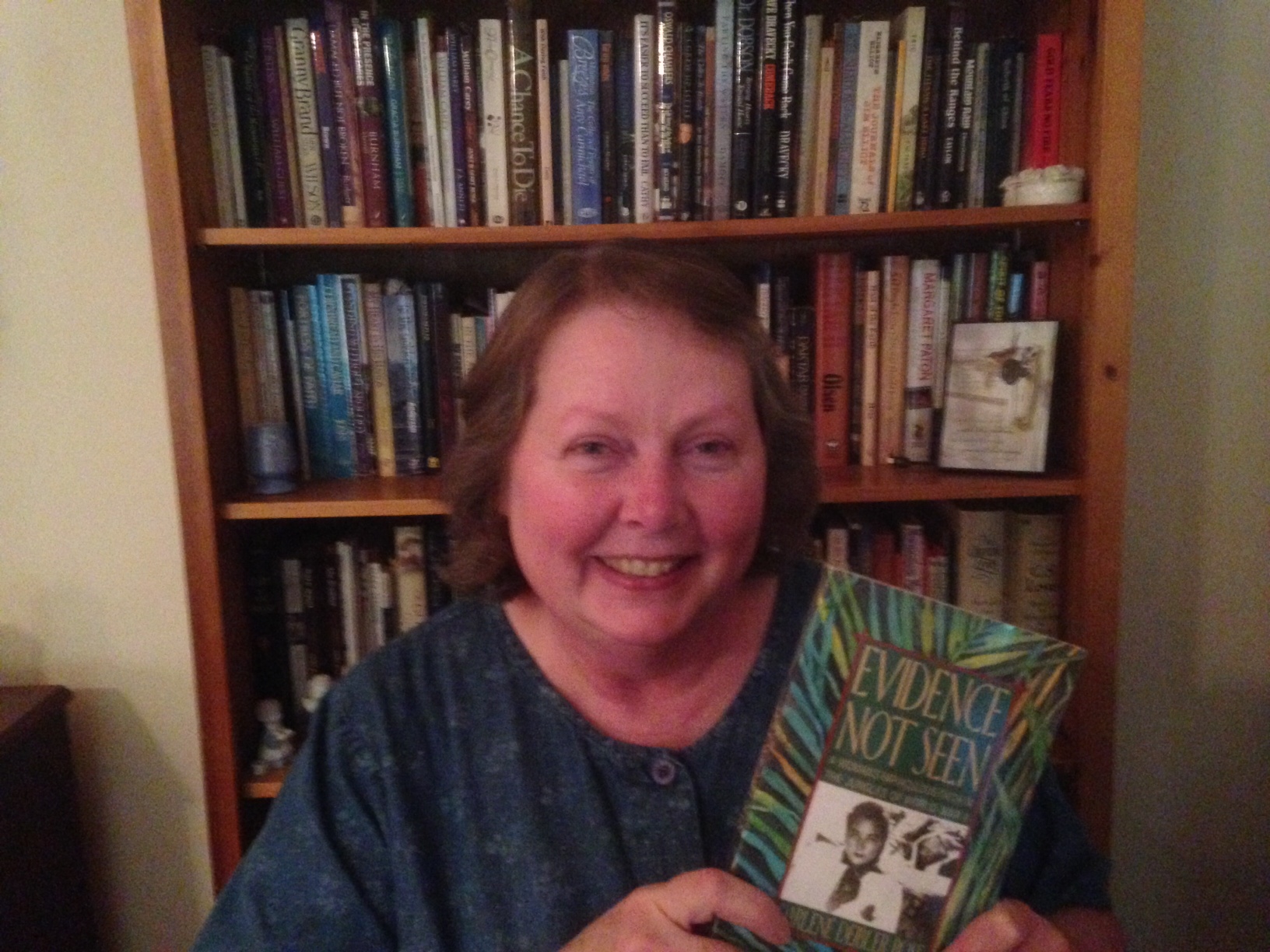
Three of your all-time favorite books: This is another hard one. I’m going to invoke my executive privilege as owner of this blog and name 3 nonfiction and 3 fiction. 🙂 Aside from the Bible and the ones I mentioned before as having read multiple times, By Searching by Isobel Kuhn, Climbing by Rosalind Goforth, Evidence Not Seen by Darlene Deibler Rose. For fiction: Jane Eyre, Les Miserables, and A Tale of Two Cities.

Unapologetic fangirl for: The Incorrigible Children of Ashton Place series, especially the audiobooks read by Katherine Kellgren. Clever writing, rollicking good fun, but not without some pathos. I hope, when the series ends and we finally find out how the children got left in the woods to be raised by wolves and what their connection is to some others in the story, that it’s not going to be something I’d have a problem with.

Very excited for this release more than all the others: Besides the next in the above-mentioned Ashton Place series (I don’t know when it might be), a new one in Jan Karon’s Mitford series due out in September: Somewhere Safe With Somebody Good.

Worst bookish habit: My husband would probably say buying and keeping too many books. 🙂 I honestly can’t think of one. I like to take good care of them. Unless it’s the urge to get ahead of the story, but I generally don’t like to read or skip ahead any more. I like to read it as it unfolds even if it drags a bit in places.

X marks the spot: If this means bookmarks, I tend to use just whatever scrap of paper is at hand, though I have some nice bookmarks in my desk drawer (I just don’t think to go get them). If it refers to marking quotes or points I want to remember, I use the little Post-it notes sticky tab strips. But I do mark my books with a pencil as well – most of them, anyway.

Your latest book purchase: Physical book: Women of the Word by Jen Wilkins; Kindle app: Hidden Places by Lynn Austin.

Zzz snatcher book: If this means a book that has kept me awake reading it – it has been a while since that happened. I tend to fall asleep if I read past bedtime. But the ones with the potential to are Dee Henderson’s books, the last one being Unspoken. I’ve got her newest one on my shelf but have been trying to save it as a reward after I finish some of my reading challenge lists.

Let me know if you do this, and I’ll come by and see what you have to say.